2
To ImproveSkills of participants on scaffolding safety requirements
To Transfer Technical knowledge to participants and to make them aware about
Scaffolding Safety Practices
To make participants familiar with International Scaffolding Standards / practices
To make them fully understand with types of scaffold , scaffolding components /
material
To make participants familiar with hazards associated in erection / dismantling
and use of scaffolds
Roles and responsibilities of Scaffold supervisor / Engineer
Precautionary measure to be taken while erection / dismantling & use of scaffold
Aim & Objectives of Trainings
Aim & Objectives of Trainings
7
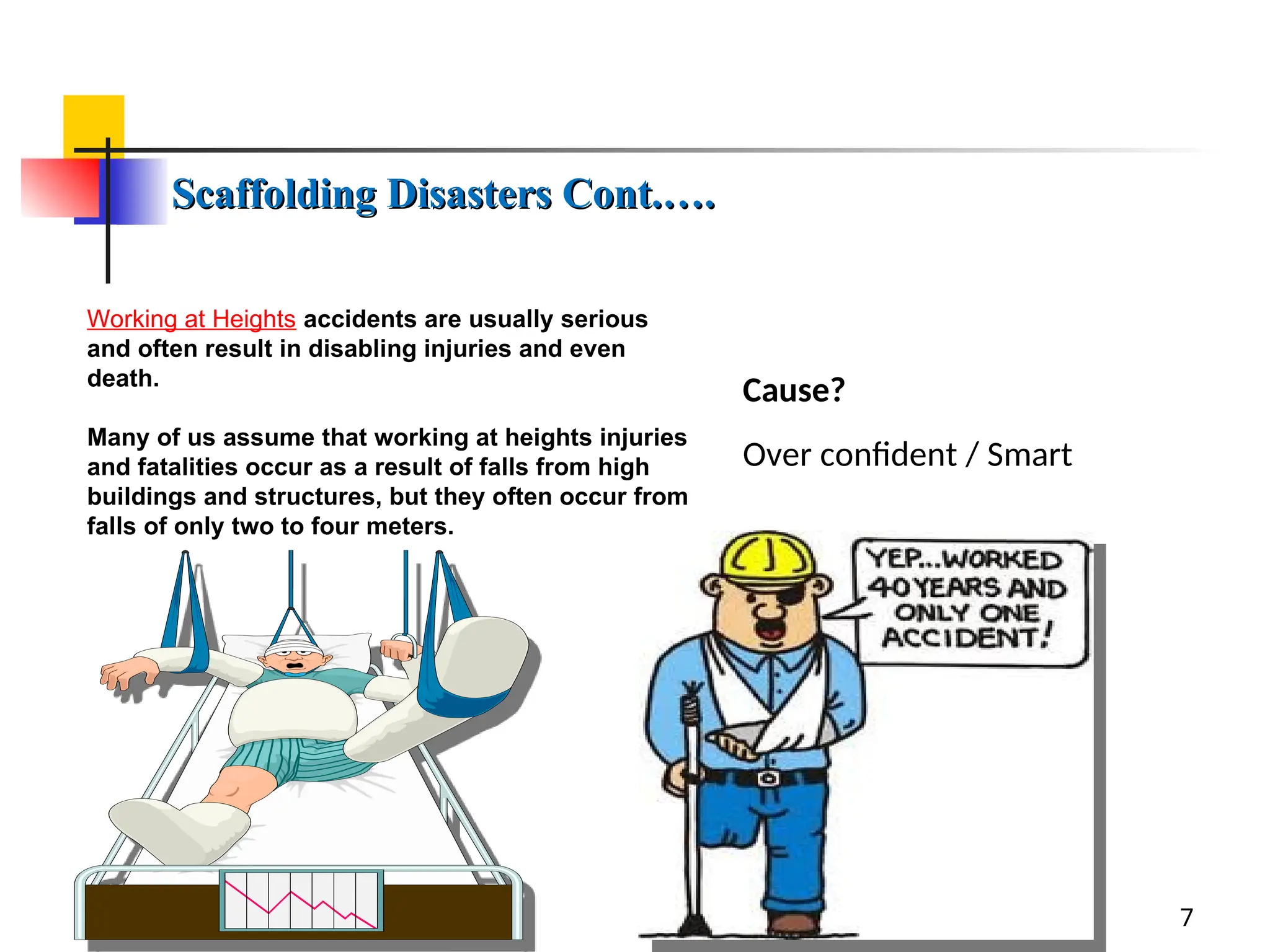
Working at Heightsaccidents are usually serious
and often result in disabling injuries and even
death.
Many of us assume that working at heights injuries
and fatalities occur as a result of falls from high
buildings and structures, but they often occur from
falls of only two to four meters.
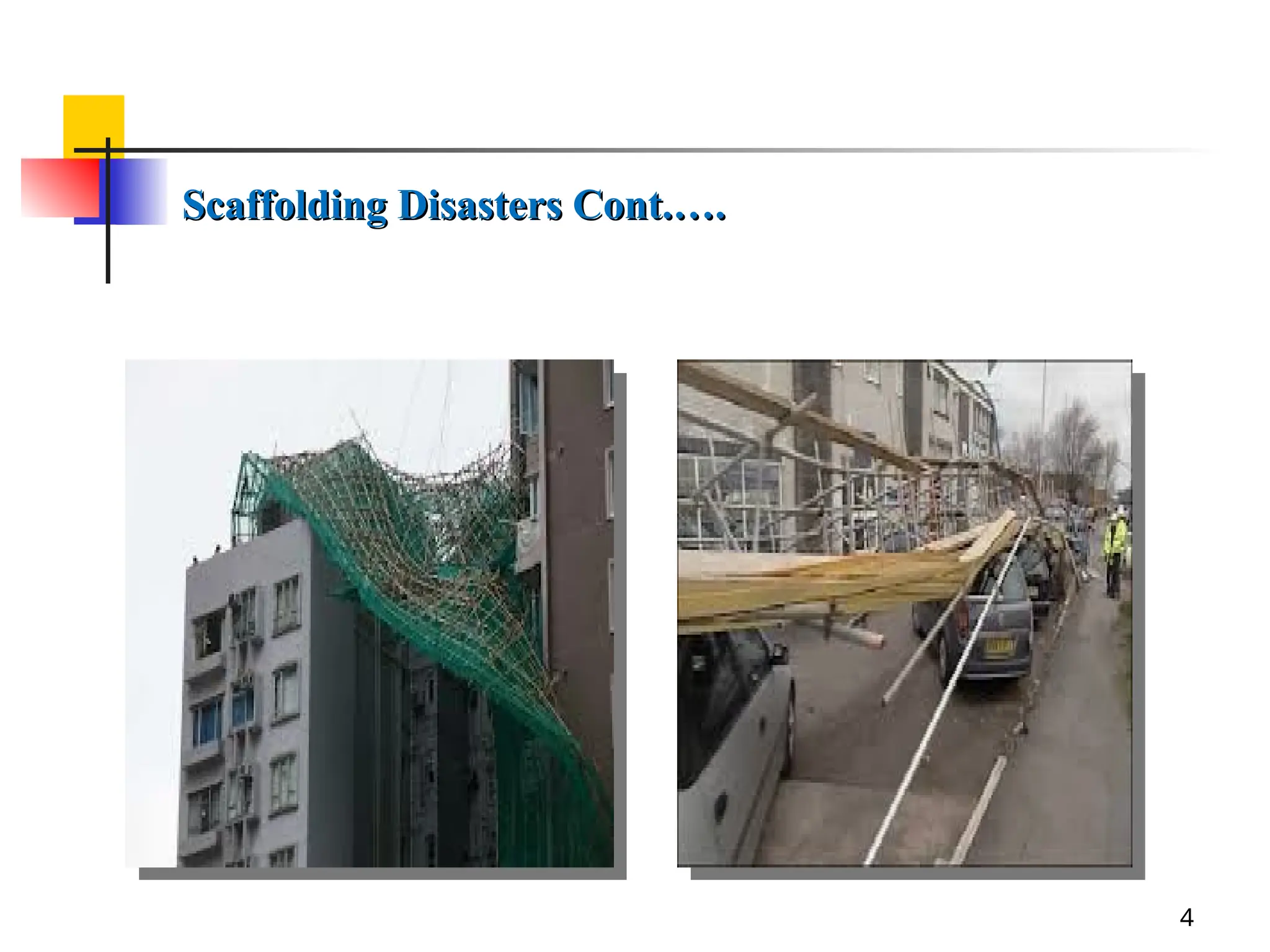
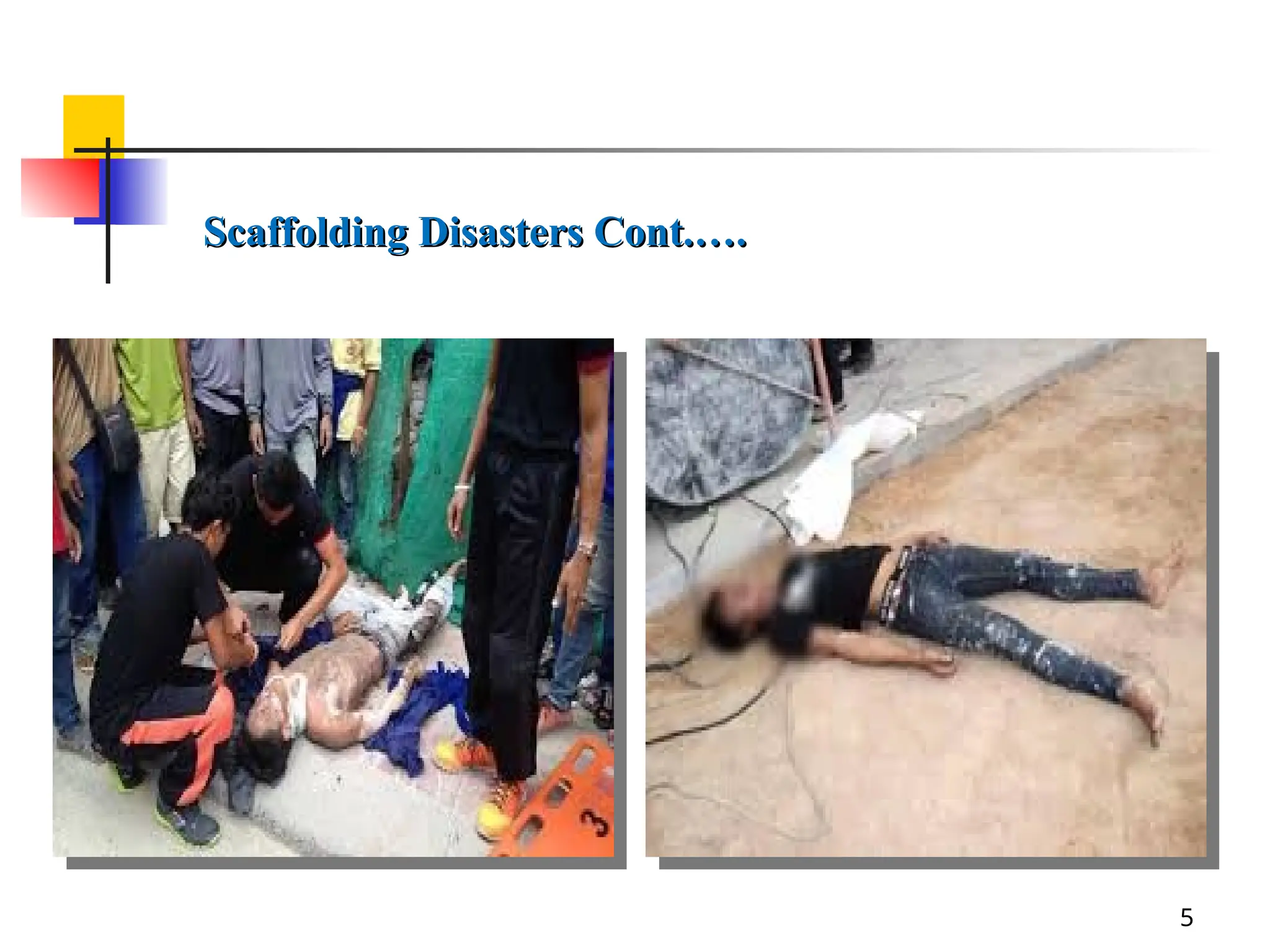
Scaffolding Disasters Cont.….
Scaffolding Disasters Cont.….
Cause?
Over confident / Smart
8.
8
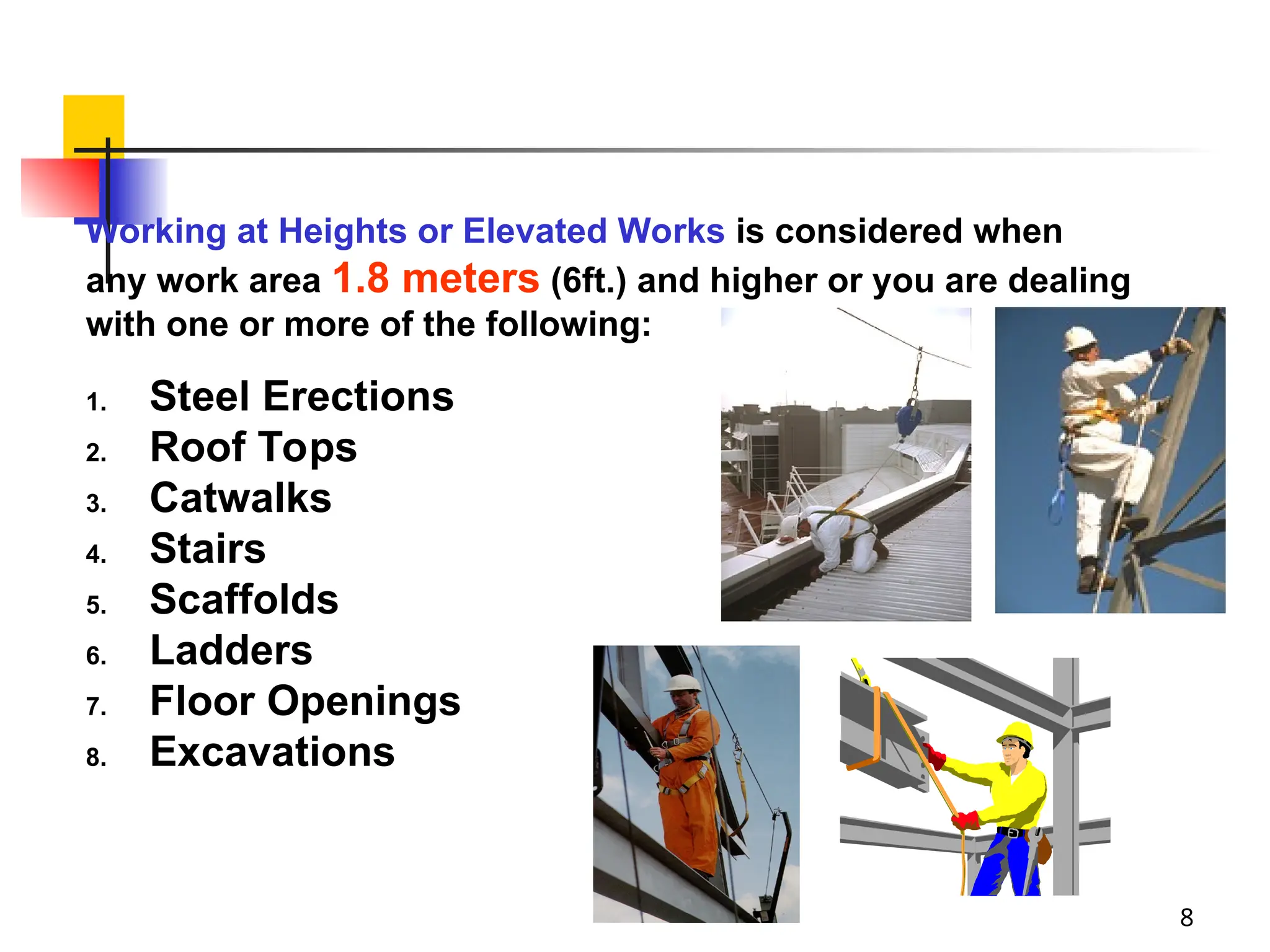
Working at Heightsor Elevated Works is considered when
any work area 1.8 meters (6ft.) and higher or you are dealing
with one or more of the following:
1. Steel Erections
2. Roof Tops
3. Catwalks
4. Stairs
5. Scaffolds
6. Ladders
7. Floor Openings
8. Excavations
9.
Five Most SeriousWAH / Scaffold Hazards
Five Most Serious WAH / Scaffold Hazards
9
10.
10
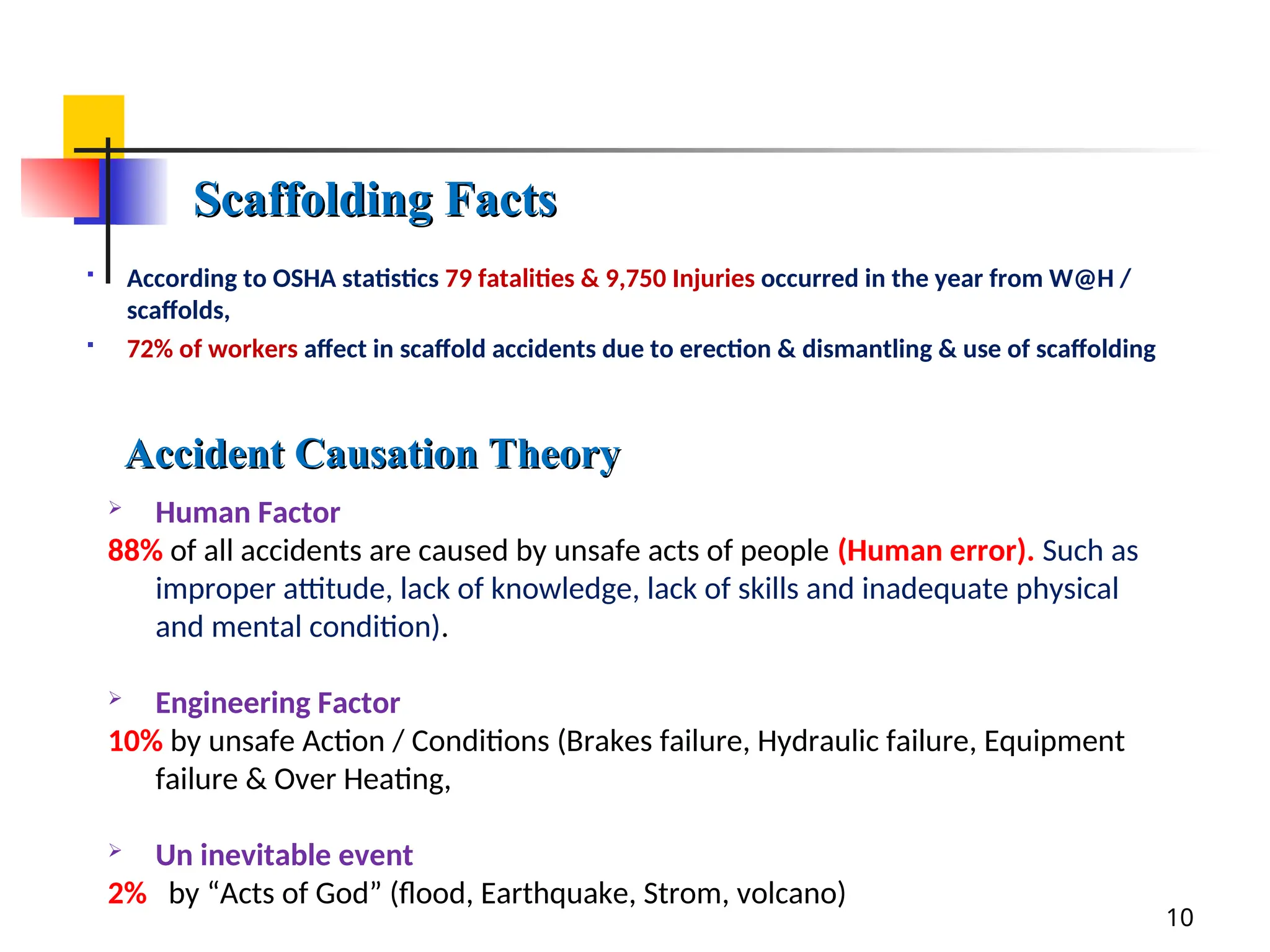
According toOSHA statistics 79 fatalities & 9,750 Injuries occurred in the year from W@H /
scaffolds,
72% of workers affect in scaffold accidents due to erection & dismantling & use of scaffolding
Scaffolding Facts
Scaffolding Facts
Human Factor
88% of all accidents are caused by unsafe acts of people (Human error). Such as
improper attitude, lack of knowledge, lack of skills and inadequate physical
and mental condition).
Engineering Factor
10% by unsafe Action / Conditions (Brakes failure, Hydraulic failure, Equipment
failure & Over Heating,
Un inevitable event
2% by “Acts of God” (flood, Earthquake, Strom, volcano)
Accident Causation Theory
Accident Causation Theory
11.
OSHA SCAFFOLD FATALITIES
OSHASCAFFOLD FATALITIES
STATCISTICS
STATCISTICS
11
SCAFFOLD FATALITIES HEIGHT
SCAFFOLD FATALITIES HEIGHT
OF FALLS
OF FALLS
12.
12
Elapsed
Time
Distance
Traveled
Velocity
ft per
second
Speed
MPH
Force of
Impact
0.616 ft 20 14 2,400 lbs
Working at Height / PFAS
Working at Height / PFAS
European standards state impact force
must not exceed 6kN=611 Kilograms
European standards state that ¼ Sec
required worker to have protect his self
from falling
Fixed Anchor
Fixed Anchor
Point
Point
6.75
metres
Safety Margin=1.0m
Body Height = 2.0m
Shock Absorber =1.75m
Lanyard = 2.0m
Rule of Thumb: 100kg person that falls
1mtr will generate 10kN (1,000kg) of
force on the body
13.
13
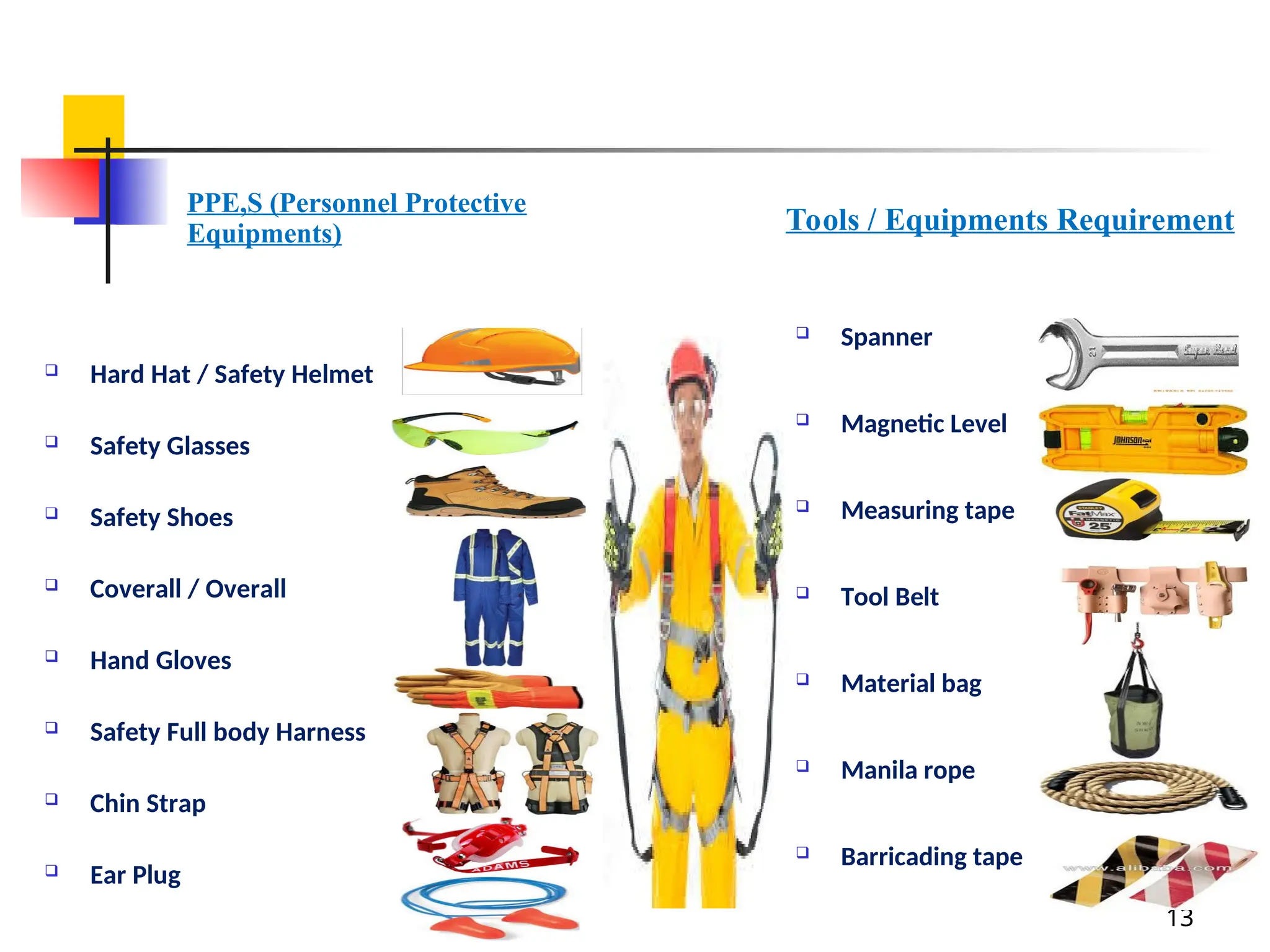
Hard Hat/ Safety Helmet
Safety Glasses
Safety Shoes
Coverall / Overall
Hand Gloves
Safety Full body Harness
Chin Strap
Ear Plug
PPE,S (Personnel Protective
Equipments)
Spanner
Magnetic Level
Measuring tape
Tool Belt
Material bag
Manila rope
Barricading tape
Tools / Equipments Requirement
14.
Types of Scaffold
Typesof Scaffold
Mobile Scaffolding
Mobile Scaffolding
Bracket Scaffold
Bracket Scaffold
Four basic types of scaffolds are following:
Four basic types of scaffolds are following:
Suspended / Hanging Scaffold
Suspended / Hanging Scaffold
Tower / Base Supported Scaffold
Tower / Base Supported Scaffold
15
15.
17
Uncompacted ground/ Soil
Poor Initial Design
Inadequate Bracing
Overloading
Obstructions at platform and access / egress blockage
Un authorize alteration
Impact from passing vehicles
Inadequate Construction of Scaffold
Working at Height / Falls from Height
Manual material handling
Electrical / Power lines
Substandard material used for scaffold erection
Scaffolding material dropped / dropped objects
Potential Injuries due to above hazards ( Pinch point , hand injury , head injury , face injury etc.)
Hazards in Scaffolding ( Erection, Dismantling, Use
Hazards in Scaffolding ( Erection, Dismantling, Use
16.
18
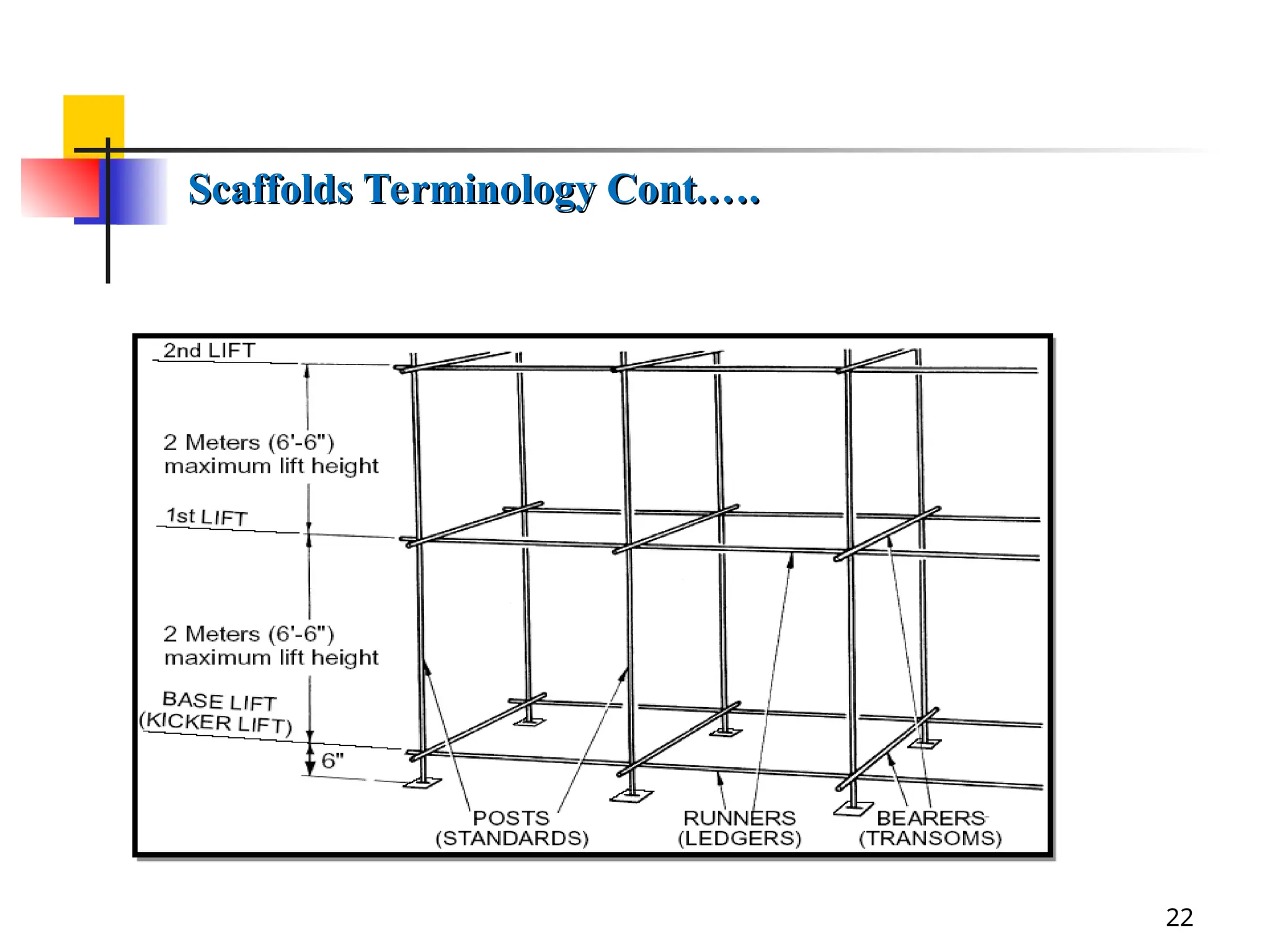
Scaffolding Parts
Scaffolding Parts
1.SoleBoard / Sill Sole Boards
2.Base Plates
3.Post Standards
4.Bearers ( Transoms)
5.Runner ( ledgers)
6.Base Lift ( Kicker Lift)
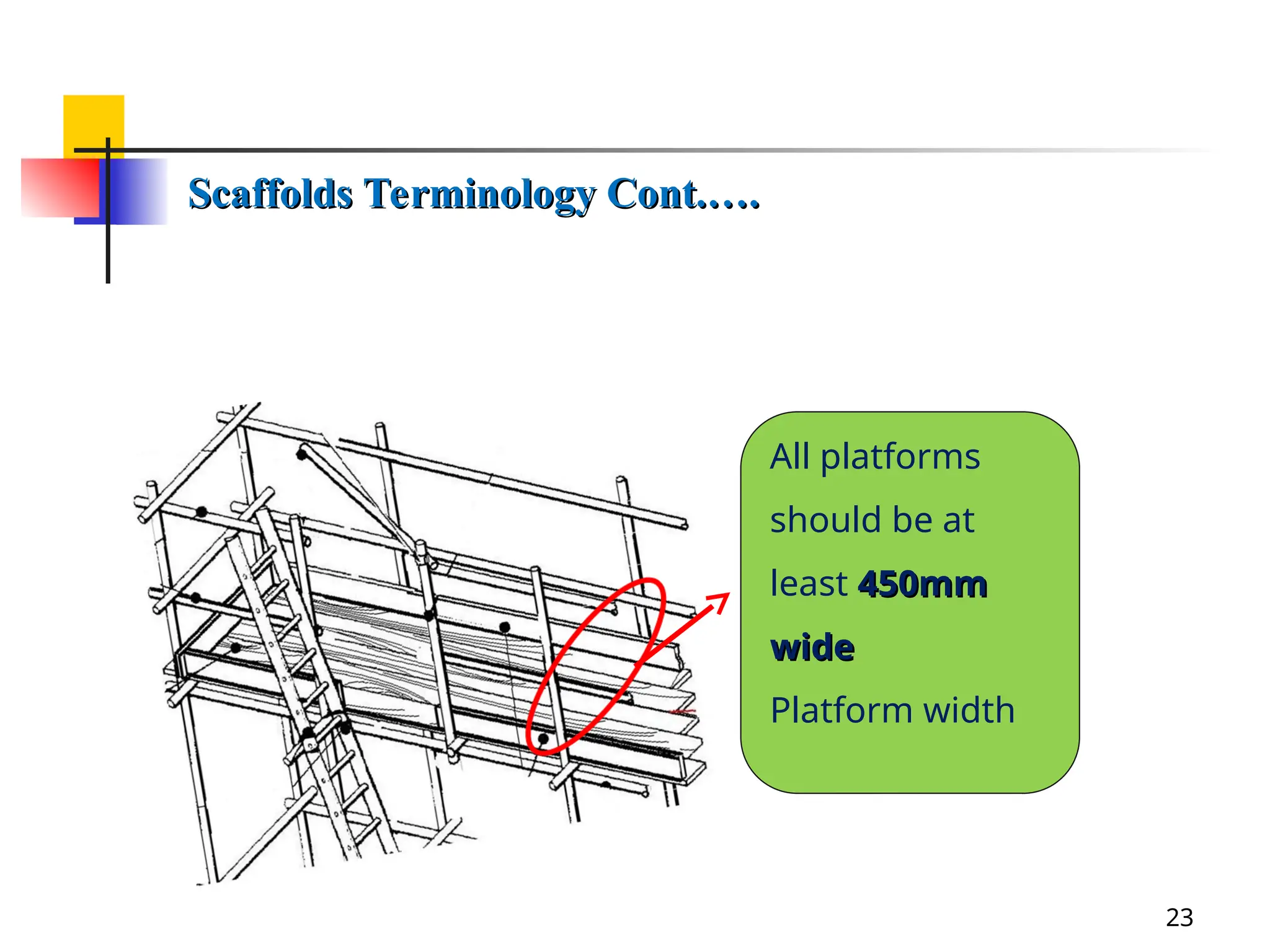
7.Scaffold Planks ( Boards)
8.Bracing Transverse /diagonal
9.Top Rail
10.Mid Rail
11.Toe Board
12.Self Supporting Drop Bar
Scaffolds Terminology
Scaffolds Terminology
17.
Scaffolds Terminology
Scaffolds Terminology
Ofa minimum size 100 mm (4’’)high x 25 mm (1”) thick. (50 lbs)
General Note:
Top-rails, mid-rails and toe-boards are installed on the inside of support posts on
all open sides and ends of platforms.
The top horizontal rail of the
guard rail system to be
(38’’ – 45’’) above platform, it
should withstand 200 lbs of
horizontal force.
The horizontal rail installed midway
between the top rail and platform.
(150 lbs)
Guard Rail System
Guard Rail System
Top-
rail
Mid-
rail
Toe-board
Toe Board
Toe Board
Mid Rail
Mid Rail
Top Rail
Top Rail
19
18.
44
20’
5’
Scaffolds Terminology Cont.….
ScaffoldsTerminology Cont.….
The height of the
scaffold should
not be more than
four (4) times its
(4) times its
minimum base
minimum base
dimension unless
guys, ties, Out
riggers or braces
are used
Scaffolding Height
19.
21
Scaffolds Terminology Cont.….
ScaffoldsTerminology Cont.….
The first vertical tie
must be
installed at a height
less than
4 times
4 times the minimum
base dimension.
The tie must be
installed at a
horizontal member
that
supports at every
every
30 ft.
30 ft.
Scaffolds Terminology Cont.….
ScaffoldsTerminology Cont.….
Brace: A tie that holds one
scaffold member in a fixed
position with respect to another
member. Brace also means a rigid
type of connection holding a
scaffold to a building or structure.
Type of Bracings
1-Diagonal Bracing
2-Transverse
3-Cross Bracing
4-Ledger Bracing
5-Zigzag Bracing
6-Longitudinal
7-Plan Bracing
24
23.
All time mostunstable scaffold!
All time most unstable scaffold!
26
Ø
24.
Scaffold Components
27
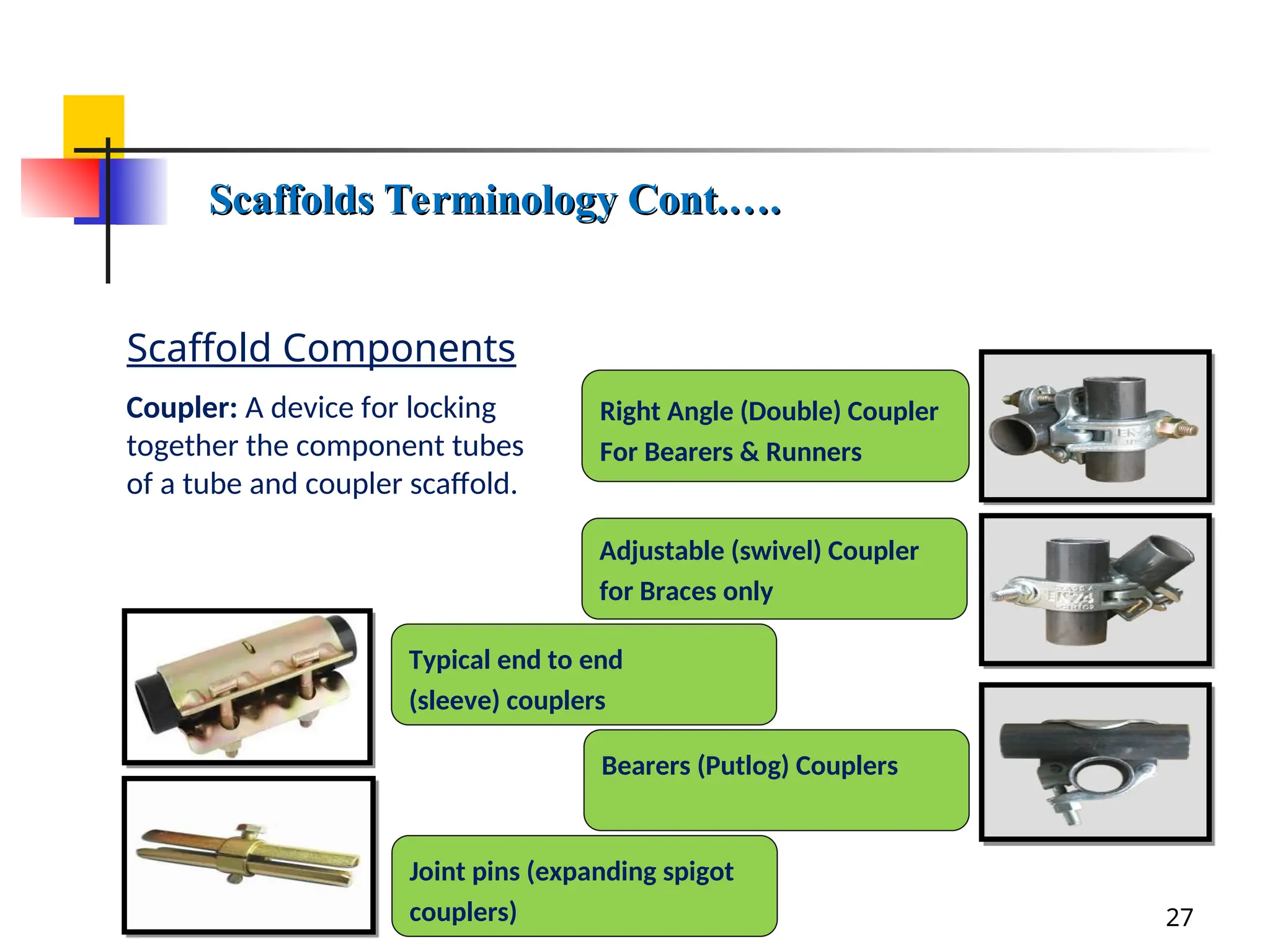
Coupler: Adevice for locking
together the component tubes
of a tube and coupler scaffold.
Scaffolds Terminology Cont.….
Scaffolds Terminology Cont.….
Right Angle (Double) Coupler
For Bearers & Runners
Adjustable (swivel) Coupler
for Braces only
Bearers (Putlog) Couplers
Typical end to end
(sleeve) couplers
Joint pins (expanding spigot
couplers)
25.
Metal / SteelPlank & Deck Identification
Must incorporate a slip
resistant surface
Must not be less than 6-
inches wide
Commonly 12-inches to
32-inches wide
Load rating must have a
4:1 ratio
T-2” X W-12” X L-12’
Scaffolds Terminology Cont.….
Scaffolds Terminology Cont.….
28
26.
Electrical Clearance
Electrical Clearance
30
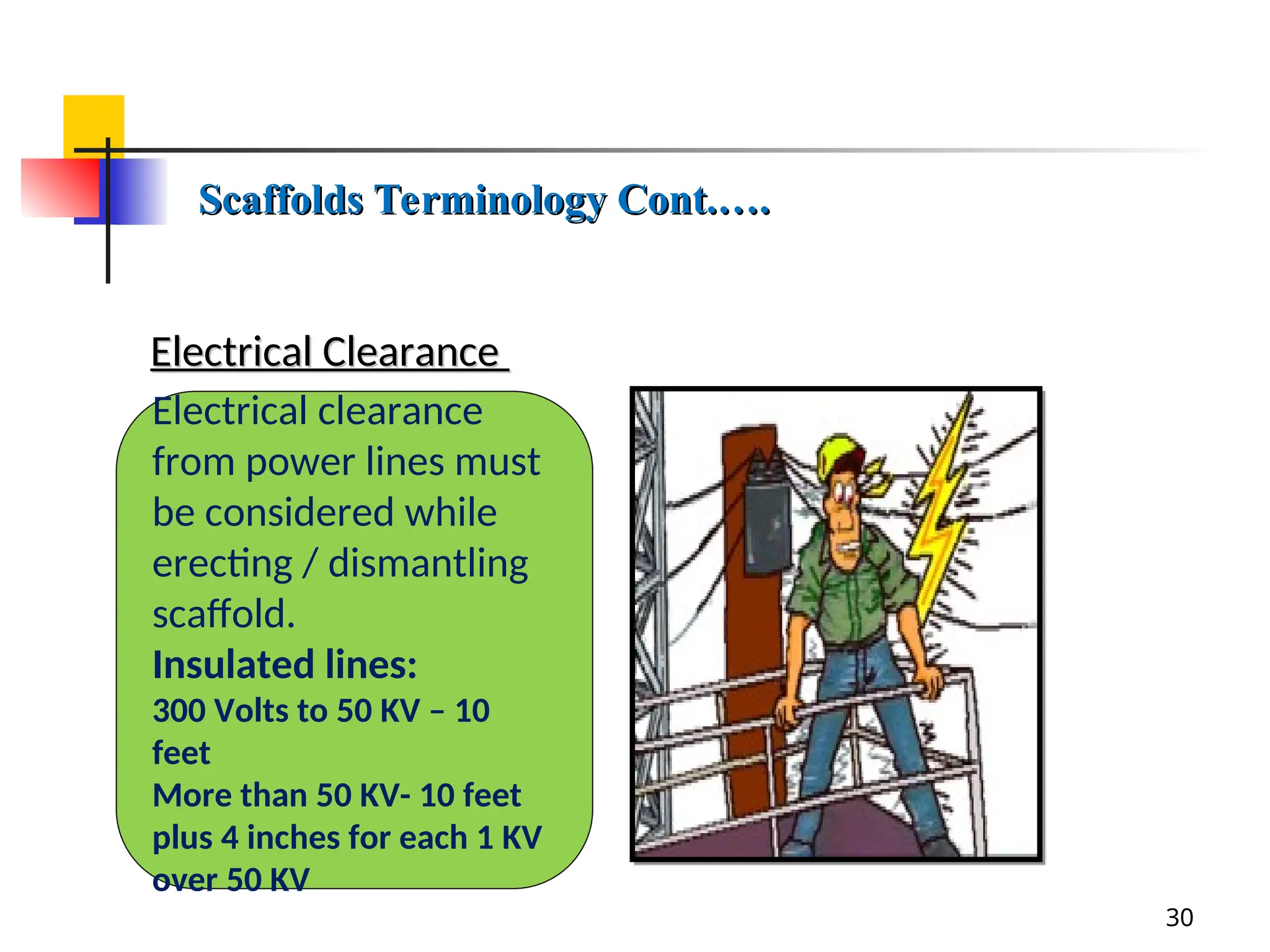
Electricalclearance
from power lines must
be considered while
erecting / dismantling
scaffold.
Insulated lines:
300 Volts to 50 KV – 10
feet
More than 50 KV- 10 feet
plus 4 inches for each 1 KV
over 50 KV
Scaffolds Terminology Cont.….
Scaffolds Terminology Cont.….
27.
A.
A. Standards notcentred on the baseplate or sole board
B.
B. Soleboard not fully bedded
C.
C. Standard not evenly bearing on baseplate, soleboard
and baseplate not horizontal
Improper techniques for scaffolding erection
Scaffolds Terminology Cont.….
Scaffolds Terminology Cont.….
31
28.
Moving Mobile Scaffold
MovingMobile Scaffold
which could cause a person to fall
Scaffolds Terminology Cont.….
Scaffolds Terminology Cont.….
32
29.
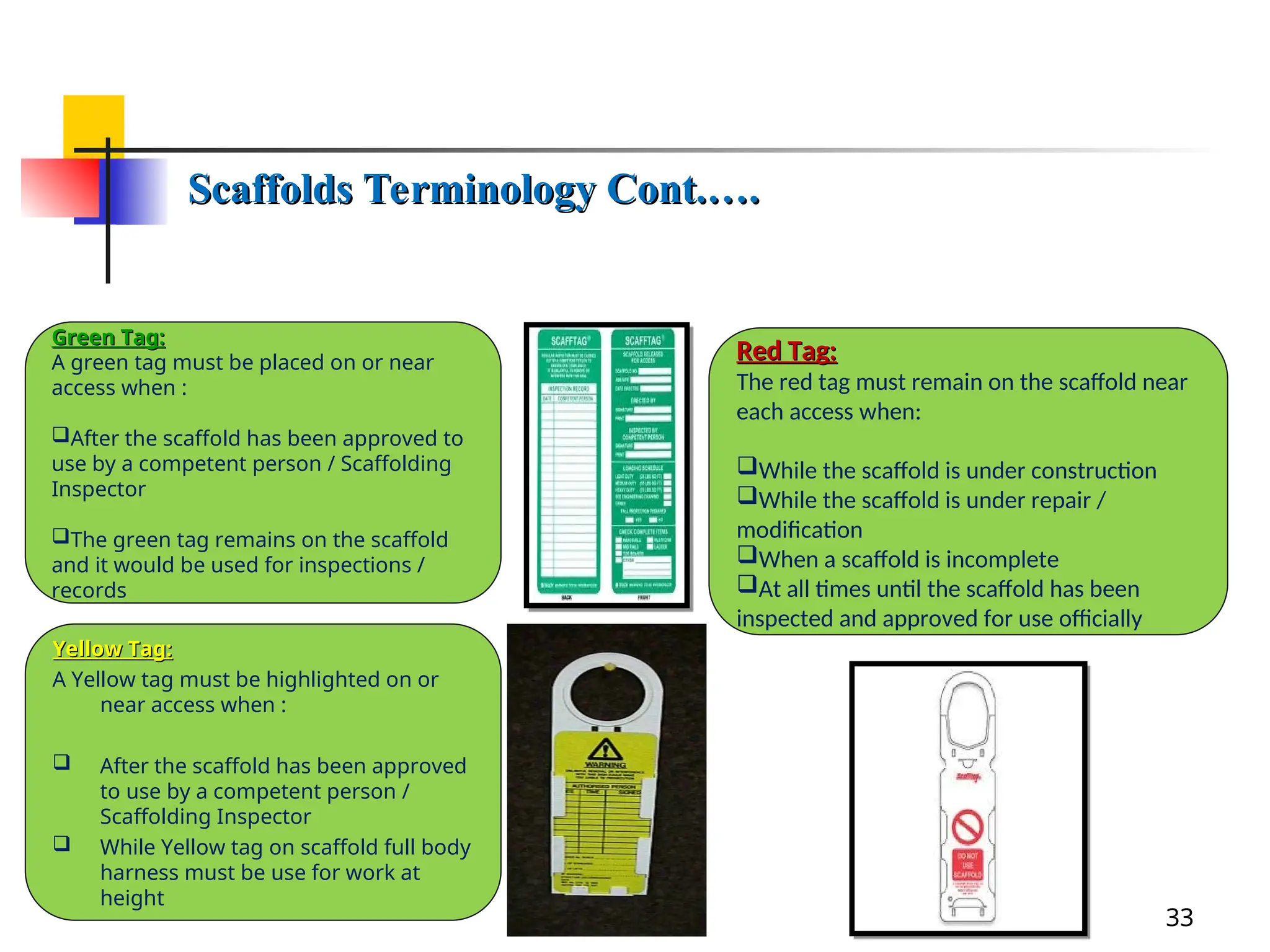
Green Tag:
Green Tag:
Agreen tag must be placed on or near
access when :
After the scaffold has been approved to
use by a competent person / Scaffolding
Inspector
The green tag remains on the scaffold
and it would be used for inspections /
records
Scaffolds Terminology Cont.….
Scaffolds Terminology Cont.….
33
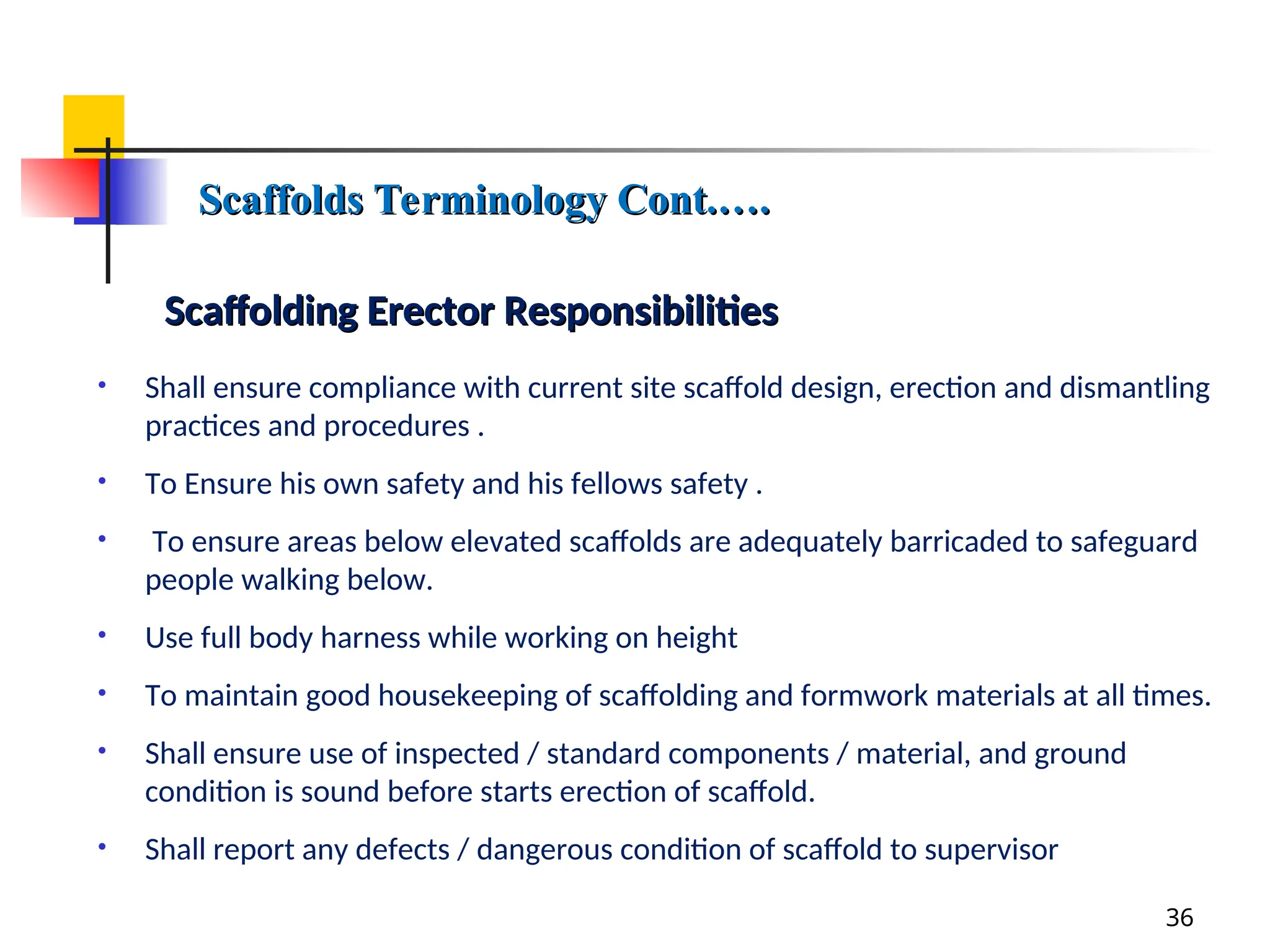
Yellow Tag:
Yellow Tag:
A Yellow tag must be highlighted on or
near access when :
After the scaffold has been approved
to use by a competent person /
Scaffolding Inspector
While Yellow tag on scaffold full body
harness must be use for work at
height
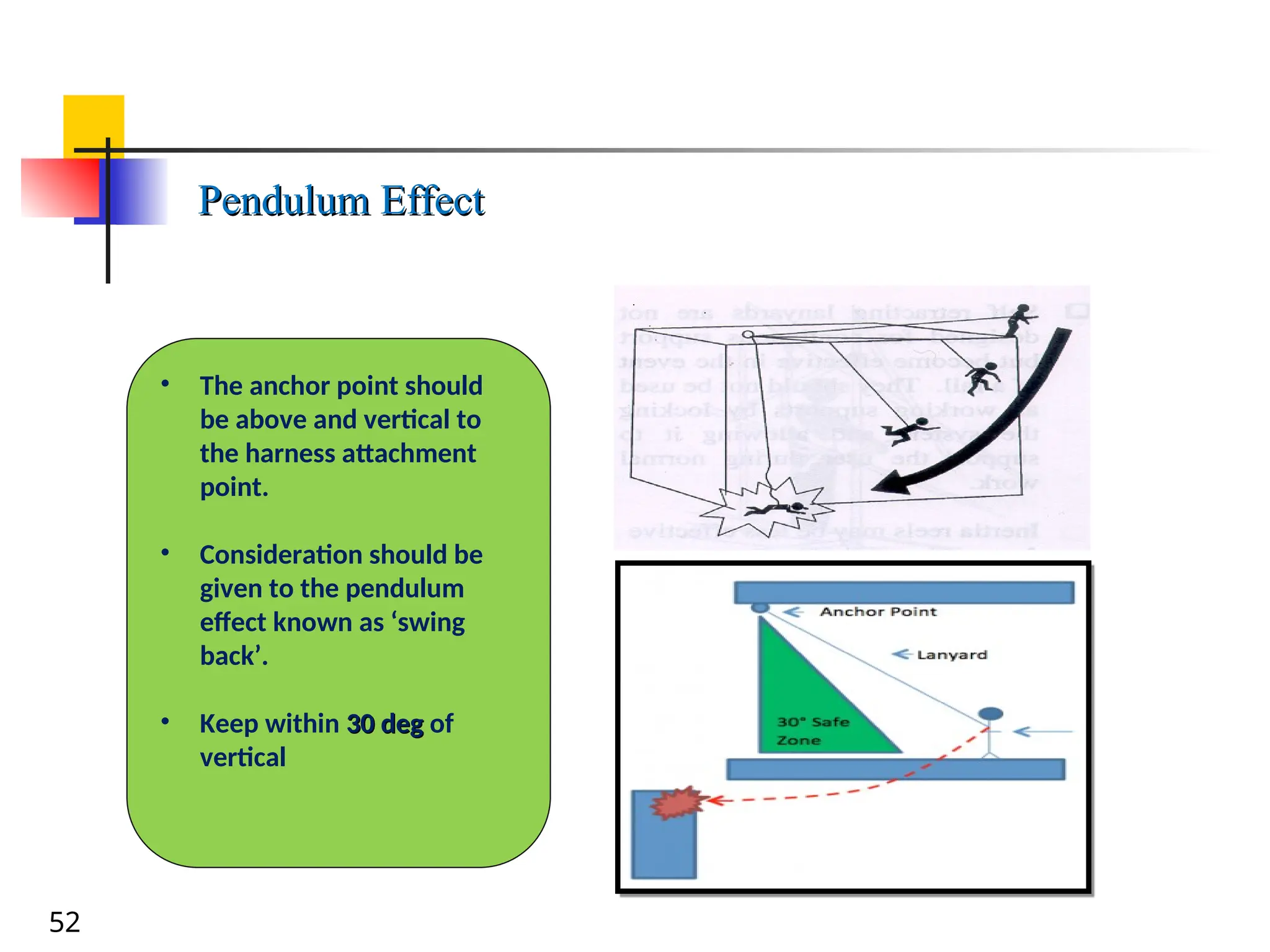
Red Tag:
Red Tag:
The red tag must remain on the scaffold near
each access when:
While the scaffold is under construction
While the scaffold is under repair /
modification
When a scaffold is incomplete
At all times until the scaffold has been
inspected and approved for use officially
30.
36
• Shall ensurecompliance with current site scaffold design, erection and dismantling
practices and procedures .
• To Ensure his own safety and his fellows safety .
• To ensure areas below elevated scaffolds are adequately barricaded to safeguard
people walking below.
• Use full body harness while working on height
• To maintain good housekeeping of scaffolding and formwork materials at all times.
• Shall ensure use of inspected / standard components / material, and ground
condition is sound before starts erection of scaffold.
• Shall report any defects / dangerous condition of scaffold to supervisor
Scaffolding Erector Responsibilities
Scaffolding Erector Responsibilities
Scaffolds Terminology Cont.….
Scaffolds Terminology Cont.….
31.
37
Inspector havea responsibility to inspect scaffold as describe in company
procedure.
If Scaffold meets the inspection criteria , inspector shall sign tag
authorizing continued to use scaffold for task.
If Scaffold fails to meet inspection criteria , inspector shall remove
authorization tag , should notify to Supervisor / Engineer to fix the
problems , prior next inspection.
Scaffolding Inspector should maintain log of scaffolds inspected in the
workplace.
Scaffolding Inspector Responsibilities
Scaffolding Inspector Responsibilities
Scaffolds Terminology Cont.….
Scaffolds Terminology Cont.….
32.
38
1 metre extension
pastthe landing
platform
Ladder set at a
4 to 1
4 to 1 ratio
Stile feet resting
on a firm and level
surface
Clamped or lashed
with rope to
prevent movement
Ladder Safety Cont.….
Ladder Safety Cont.….
33.
39
Inspection ofLadder all time before use
May be use for light tasks of low risk and short duration (in conjunction
with a safety harness); or access and egress to a work platform.
Ladder should be on firm surface , must be secure with rope / clamps
One person to climb at ladder one time
Maintain three point contacts
Ladder should be free from oil / grease / slipping agents
Both hands should be free while climbing at ladder
FEET
ON THE RUNGS
OF LADDER
ONE HAND
HOLDING ON THE
RUNG OF LADDER
Ladder Safety Requirements:
Ladder Safety Requirements:
Ladder Safety Cont.….
Ladder Safety Cont.….
34.
42
Use ofmechanical aid during manual
material shifting such as gen wheel
Use material shifting bag to shift material
Always Barricade the area while shifting
the material
Use hand gloves to prevent any hand
injury
Load should not be lift maximum 50kg
lift maximum 50kg
Use safety signs around material shifting
area
Make drop zone always to ensure no
body will come in that area
16 mm rope should be used
Manual Material Handling
Manual Material Handling
Ensure whileworking at height /
scaffold erection user / erector must
use Personnel fall arrest system to
avoid major injuries / death.
Personnel fall arrest system must be
able to do following:
Limit the arresting force to 1800 lbs.
1800 lbs.
Allow neither a free fall of more than
than
6
6 feet nor contact with a lower level.
Maximum deceleration distance of
3.5 feet.
3.5 feet.
Working at Height / PFAS
Working at Height / PFAS
46
Personal Energy Absorbers
PersonalEnergy Absorbers
49
To reduce shock load from Fall Arrest.
Will extend in length in operation.
Up to 1.75 metres
Up to 1.75 metres
Starts to opening at 2 kN (200 kg) force
2 kN (200 kg) force
Limits force to less than 6 kN (600 kg)
6 kN (600 kg)
Attach to rear “D” ONLY
2kN
6kN
41.
Pendulum Effect
Pendulum Effect
52
•The anchor point should
be above and vertical to
the harness attachment
point.
• Consideration should be
given to the pendulum
effect known as ‘swing
back’.
• Keep within 30 deg
30 deg of
vertical
42.
Consider W@H when
excavationdepth is more
than 6 feet
Provide hard barrication
(1 Mtr) away from edge
Working at Height / PFAS
Working at Height / PFAS
53
43.
SUSPENSION TRAUMA
SUSPENSION TRAUMA
•Suspension trauma will affect anyone
hanging motionless with his legs dangling
• Suspension trauma can start within 5
minutes.
• unconscious within 10 minutes and can
die within 15 minutes due to the stale
blood returning from their legs and
stopping the heart
• The brain is starved of oxygen and begins
to die
• Maximum Retrieval time of causality is
10 ~ 20 minutes .
• After Retrieval, keep the person in
Crouching Position at least 30 minutes.
So the blood circulation may not start
immediately which can cause an impact
on his heart.
SUSPENSION
SUSPENSION
TRAUMA
TRAUMA
SYMPTOMS:
SYMPTOMS:
Hot flushes,
sweating, anxiety,
numbness
Rapid pulse and
breathing
Sudden loss of
consciousness
(fainting)
Working at Height / PFAS
Working at Height / PFAS
54
#41 A good point to remember...
Point out the two practices and solicit responses from the group on why the unsafe position is unsafe.
Answer: The person is overreaching, this violates the belt buckle rule (which we will discuss little later). This makes the ladder unstable and easy to fall over.
Ask: What should the person do instead of reaching?
Answer: Get down from the ladder and move it over closer to the work area.