What is SAP FICO?
SAP FICO, short for Financial Accounting (FI) and Controlling (CO), is a comprehensive financial
management solution within the SAP Enterprise Resource Planning (E R P) system. It helps
organizations streamline their financial processes, maintain accurate financial records, and generate
insightful reports for informed decision-making.
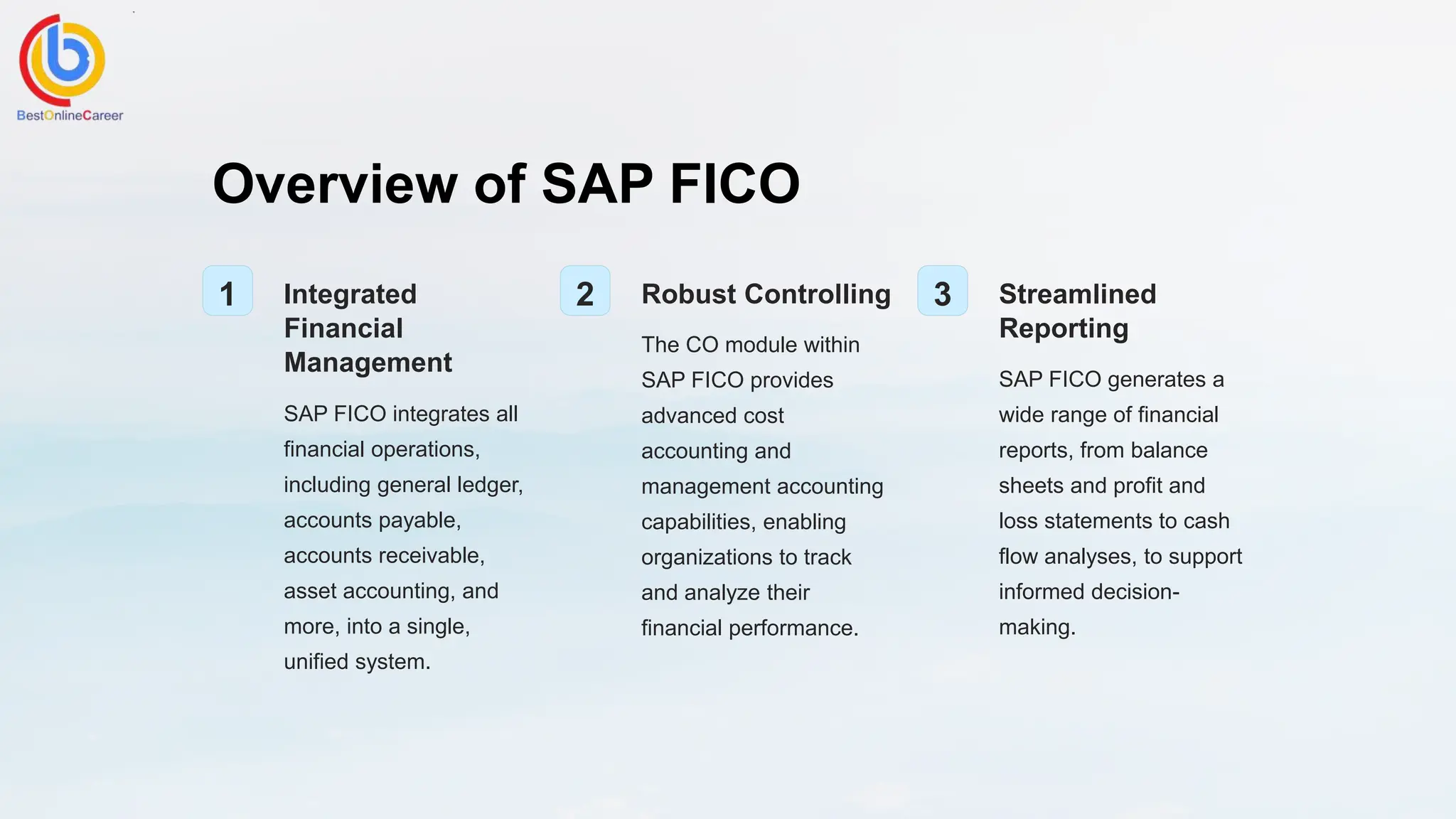
Overview of SAP FICO
1 Integrated
Financial
Management
SAP FICO integrates all
financial operations,
including general ledger,
accounts payable,
accounts receivable,
asset accounting, and
more, into a single,
unified system.
2 Robust Controlling
The CO module within
SAP FICO provides
advanced cost
accounting and
management accounting
capabilities, enabling
organizations to track
and analyze their
financial performance.
3 Streamlined
Reporting
SAP FICO generates a
wide range of financial
reports, from balance
sheets and profit and
loss statements to cash
flow analyses, to support
informed decision-
making.
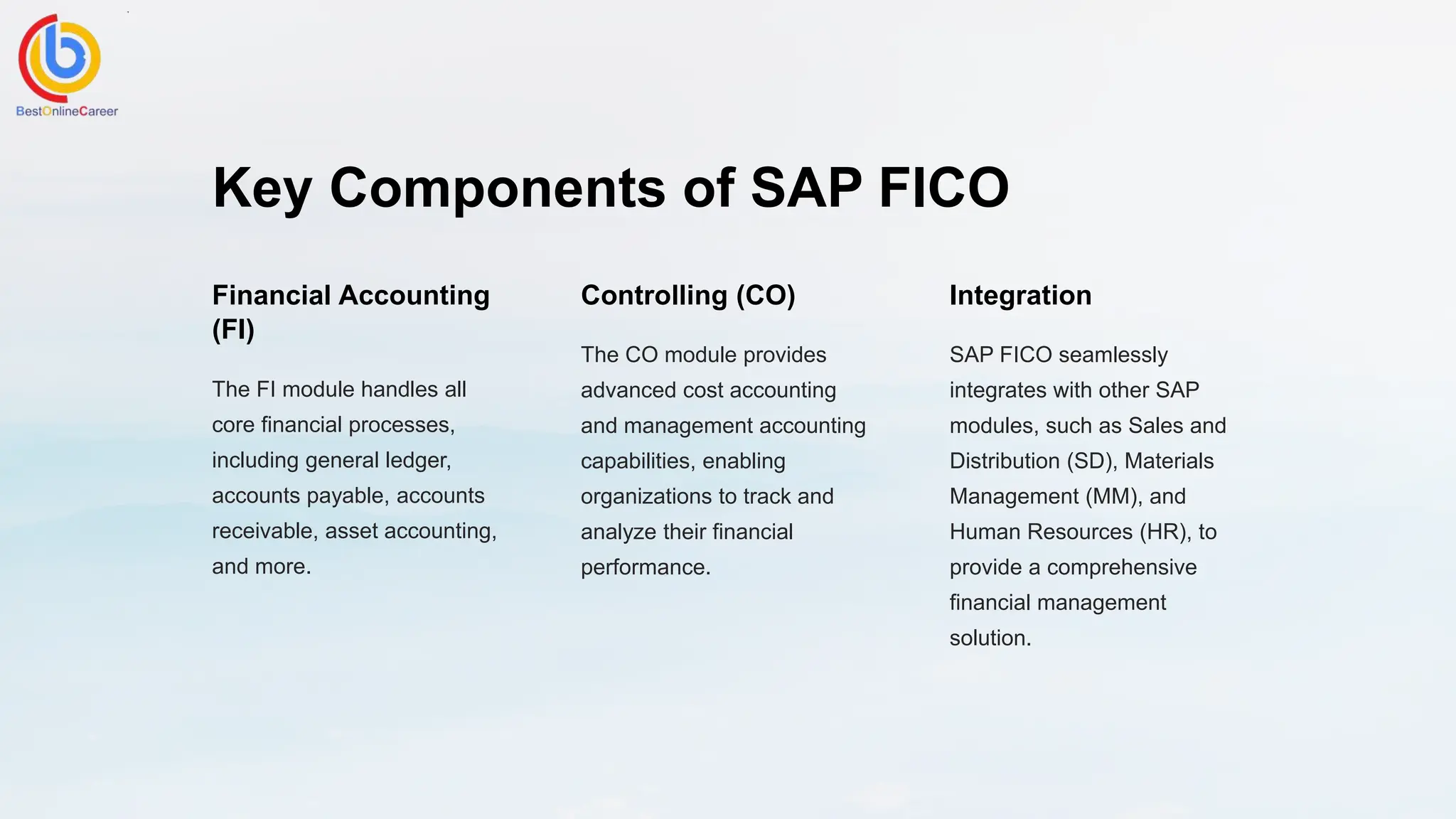
Key Components of SAP FICO
Financial Accounting
(FI)
The FI module handles all
core financial processes,
including general ledger,
accounts payable, accounts
receivable, asset accounting,
and more.
Controlling (CO)
The CO module provides
advanced cost accounting
and management accounting
capabilities, enabling
organizations to track and
analyze their financial
performance.
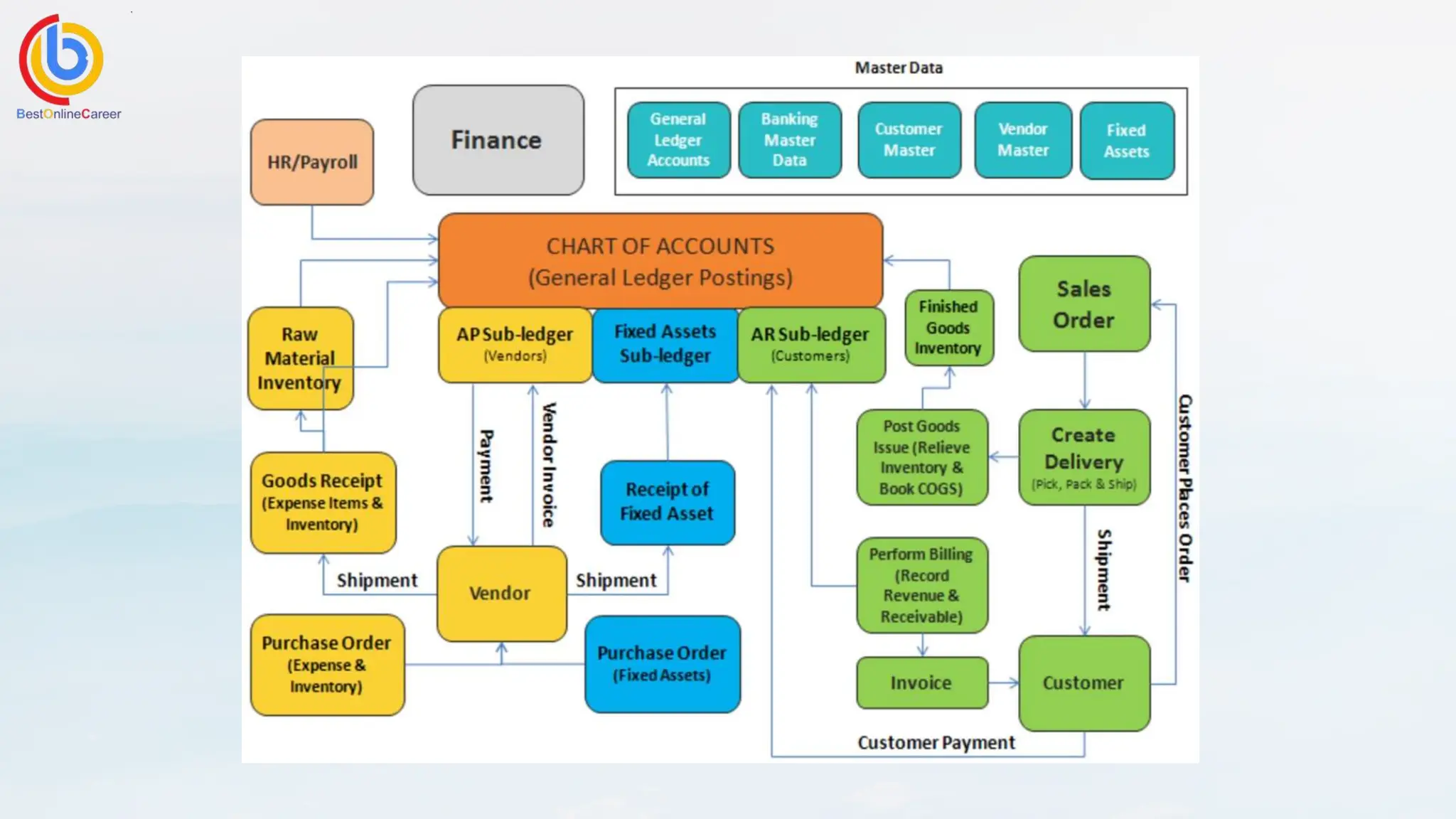
Integration
SAP FICO seamlessly
integrates with other SAP
modules, such as Sales and
Distribution (SD), Materials
Management (MM), and
Human Resources (HR), to
provide a comprehensive
financial management
solution.
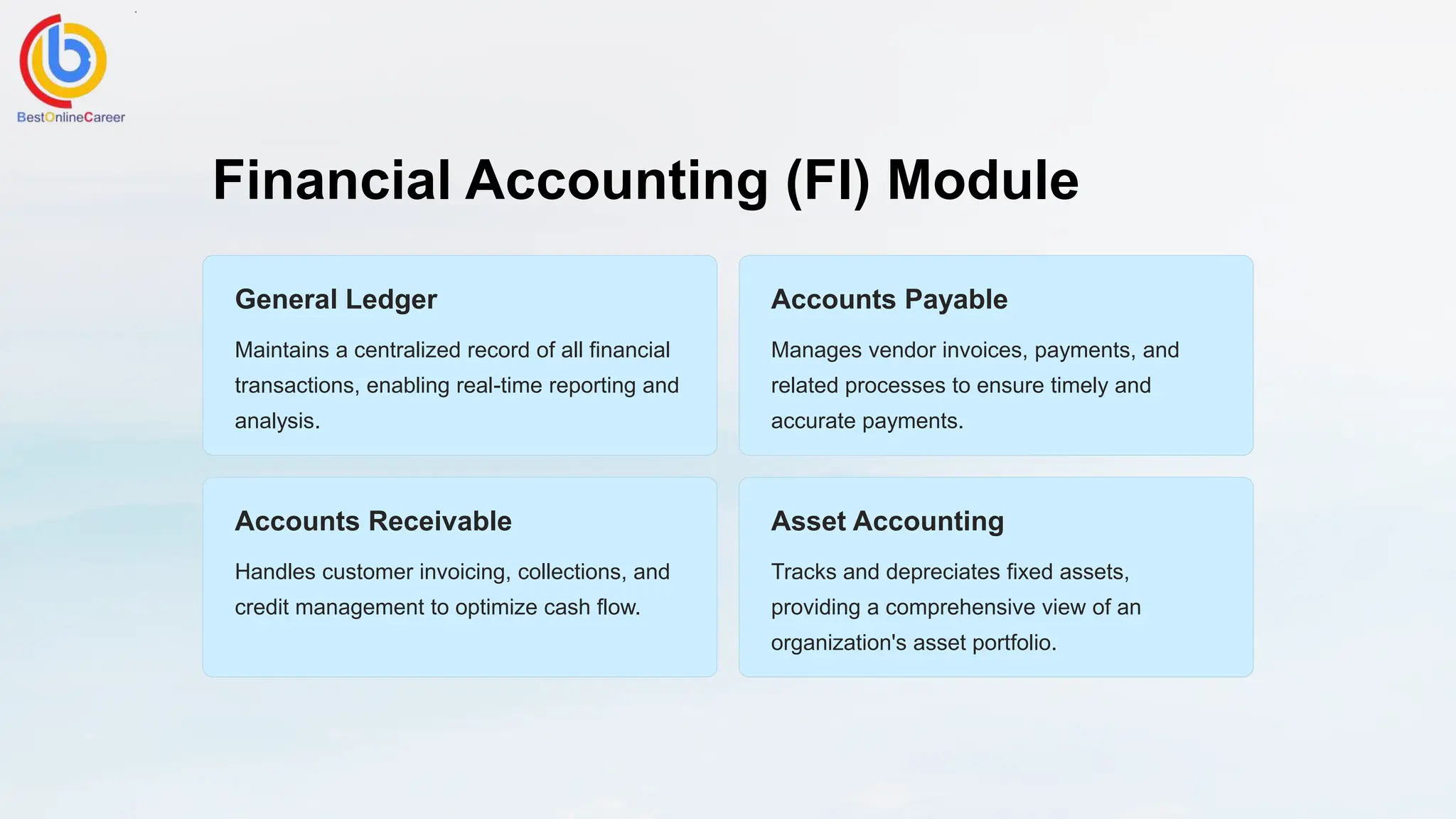
Financial Accounting (FI) Module
General Ledger
Maintains a centralized record of all financial
transactions, enabling real-time reporting and
analysis.
Accounts Payable
Manages vendor invoices, payments, and
related processes to ensure timely and
accurate payments.
Accounts Receivable
Handles customer invoicing, collections, and
credit management to optimize cash flow.
Asset Accounting
Tracks and depreciates fixed assets,
providing a comprehensive view of an
organization's asset portfolio.
Controlling (CO) Module
Cost Element
Accounting
Provides detailed cost
analysis and cost allocation to
various cost centers and profit
centers.
Cost Center
Accounting
Enables organizations to
track and manage their costs
by responsibility centers, such
as departments or business
units.
Profitability Analysis
Allows organizations to
analyze the profitability of
products, customers, and
other business entities to
optimize their financial
performance.
Integration with Other SAP Modules
Sales and Distribution (SD)
SAP FICO integrates with the SD module to manage customer invoicing, credit
management, and cash collection.
Materials Management (MM)
SAP FICO integrates with the MM module to handle vendor payments, inventory
valuation, and procurement-related financial processes.
Human Resources (HR)
SAP FICO integrates with the HR module to manage payroll, employee expenses, and
other personnel-related financial transactions.
Benefits of SAP FICO Implementation
Automation
Streamlines financial
processes and
reduces manual
effort.
Data-Driven
Decisions
Provides real-time
financial insights for
informed decision-
making.
Compliance
Ensures adherence to
financial regulations
and accounting
standards.
Cost
Optimization
Enables better cost
management and
financial performance
analysis.
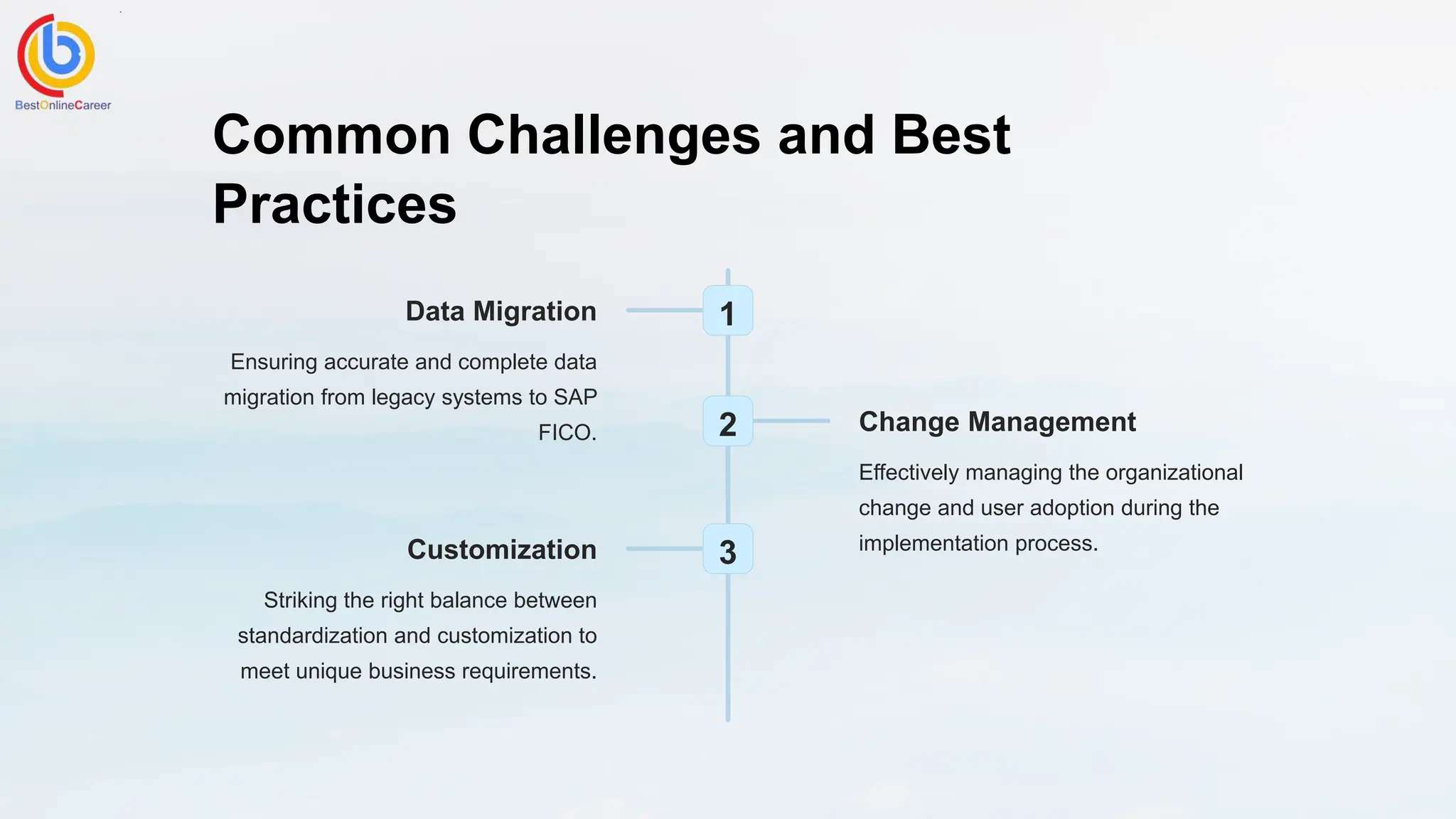
Common Challenges and Best
Practices
1
Data Migration
Ensuring accurate and complete data
migration from legacy systems to SAP
FICO. 2 Change Management
Effectively managing the organizational
change and user adoption during the
implementation process.
3
Customization
Striking the right balance between
standardization and customization to
meet unique business requirements.

SAP-FICO Modules fundamental for company

  • 1.
    What is SAPFICO? SAP FICO, short for Financial Accounting (FI) and Controlling (CO), is a comprehensive financial management solution within the SAP Enterprise Resource Planning (E R P) system. It helps organizations streamline their financial processes, maintain accurate financial records, and generate insightful reports for informed decision-making.
  • 2.
    Overview of SAPFICO 1 Integrated Financial Management SAP FICO integrates all financial operations, including general ledger, accounts payable, accounts receivable, asset accounting, and more, into a single, unified system. 2 Robust Controlling The CO module within SAP FICO provides advanced cost accounting and management accounting capabilities, enabling organizations to track and analyze their financial performance. 3 Streamlined Reporting SAP FICO generates a wide range of financial reports, from balance sheets and profit and loss statements to cash flow analyses, to support informed decision- making.
  • 3.
    Key Components ofSAP FICO Financial Accounting (FI) The FI module handles all core financial processes, including general ledger, accounts payable, accounts receivable, asset accounting, and more. Controlling (CO) The CO module provides advanced cost accounting and management accounting capabilities, enabling organizations to track and analyze their financial performance. Integration SAP FICO seamlessly integrates with other SAP modules, such as Sales and Distribution (SD), Materials Management (MM), and Human Resources (HR), to provide a comprehensive financial management solution.
  • 4.
    Financial Accounting (FI)Module General Ledger Maintains a centralized record of all financial transactions, enabling real-time reporting and analysis. Accounts Payable Manages vendor invoices, payments, and related processes to ensure timely and accurate payments. Accounts Receivable Handles customer invoicing, collections, and credit management to optimize cash flow. Asset Accounting Tracks and depreciates fixed assets, providing a comprehensive view of an organization's asset portfolio.
  • 5.
    Controlling (CO) Module CostElement Accounting Provides detailed cost analysis and cost allocation to various cost centers and profit centers. Cost Center Accounting Enables organizations to track and manage their costs by responsibility centers, such as departments or business units. Profitability Analysis Allows organizations to analyze the profitability of products, customers, and other business entities to optimize their financial performance.
  • 6.
    Integration with OtherSAP Modules Sales and Distribution (SD) SAP FICO integrates with the SD module to manage customer invoicing, credit management, and cash collection. Materials Management (MM) SAP FICO integrates with the MM module to handle vendor payments, inventory valuation, and procurement-related financial processes. Human Resources (HR) SAP FICO integrates with the HR module to manage payroll, employee expenses, and other personnel-related financial transactions.
  • 8.
    Benefits of SAPFICO Implementation Automation Streamlines financial processes and reduces manual effort. Data-Driven Decisions Provides real-time financial insights for informed decision- making. Compliance Ensures adherence to financial regulations and accounting standards. Cost Optimization Enables better cost management and financial performance analysis.
  • 9.
    Common Challenges andBest Practices 1 Data Migration Ensuring accurate and complete data migration from legacy systems to SAP FICO. 2 Change Management Effectively managing the organizational change and user adoption during the implementation process. 3 Customization Striking the right balance between standardization and customization to meet unique business requirements.