What is SAFe?
SAFe, short for the Scaled Agile Framework, offers a set of organizational
and workflow patterns designed to assist enterprises in scaling lean and agile
practices. It delivers a streamlined and adaptable approach to software
development, ensuring scalability and flexibility
Scalability and Flexibility
1. Adaptable to Growth
SAFe allows organizations to
expand and adapt to changing
demands while maintaining agility,
productivity, and quality.
2. Flexibility in Processes
It provides the flexibility to
incorporate different methodologies
and frameworks while ensuring
seamless execution.
Alignment Across Teams and Departments
1 Unified Goals
SAFe ensures that all teams work towards
common goals, fostering better collaboration
and coordinated efforts.
2 Consistent Communication
It promotes consistent communication and
alignment among cross-functional teams and
different departments.
Improved Communication and Collaboration
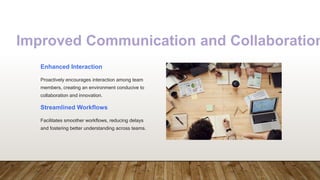
Enhanced Interaction
Proactively encourages interaction among team
members, creating an environment conducive to
collaboration and innovation.
Streamlined Workflows
Facilitates smoother workflows, reducing delays
and fostering better understanding across teams.
Enhanced Transparency and Visibility
1. Real-time Insights
Provides real-time visibility into
project status, enabling better
decision-making and improved risk
management.
2. Increased Accountability
Enhances accountability by making
data and information readily
accessible to all stakeholders.
Faster Time to Market
1 Reduced Lead Time
SAFe promotes rapid development cycles, reducing lead time and accelerating time to market
for products and solutions.
Reduced Risk and Increased Predictability
Risk Mitigation
Provides a structured approach to identify, assess, and mitigate risks, ensuring increased predictability in
project outcomes.
Continuous Improvement
and Learning
1 Culture of Adaptability
Encourages a culture of continuous
improvement and learning, fostering
adaptability and resilience in the
face of change.
2 Feedback Loops
Establishes mechanisms for
continuous feedback, allowing for
iterative enhancements and constant
learning.

SAFE Certification: Ensuring Safety Standards

  • 1.
    What is SAFe? SAFe,short for the Scaled Agile Framework, offers a set of organizational and workflow patterns designed to assist enterprises in scaling lean and agile practices. It delivers a streamlined and adaptable approach to software development, ensuring scalability and flexibility
  • 2.
    Scalability and Flexibility 1.Adaptable to Growth SAFe allows organizations to expand and adapt to changing demands while maintaining agility, productivity, and quality. 2. Flexibility in Processes It provides the flexibility to incorporate different methodologies and frameworks while ensuring seamless execution.
  • 3.
    Alignment Across Teamsand Departments 1 Unified Goals SAFe ensures that all teams work towards common goals, fostering better collaboration and coordinated efforts. 2 Consistent Communication It promotes consistent communication and alignment among cross-functional teams and different departments.
  • 4.
    Improved Communication andCollaboration Enhanced Interaction Proactively encourages interaction among team members, creating an environment conducive to collaboration and innovation. Streamlined Workflows Facilitates smoother workflows, reducing delays and fostering better understanding across teams.
  • 5.
    Enhanced Transparency andVisibility 1. Real-time Insights Provides real-time visibility into project status, enabling better decision-making and improved risk management. 2. Increased Accountability Enhances accountability by making data and information readily accessible to all stakeholders.
  • 6.
    Faster Time toMarket 1 Reduced Lead Time SAFe promotes rapid development cycles, reducing lead time and accelerating time to market for products and solutions.
  • 7.
    Reduced Risk andIncreased Predictability Risk Mitigation Provides a structured approach to identify, assess, and mitigate risks, ensuring increased predictability in project outcomes.
  • 8.
    Continuous Improvement and Learning 1Culture of Adaptability Encourages a culture of continuous improvement and learning, fostering adaptability and resilience in the face of change. 2 Feedback Loops Establishes mechanisms for continuous feedback, allowing for iterative enhancements and constant learning.