Race, Evolution,
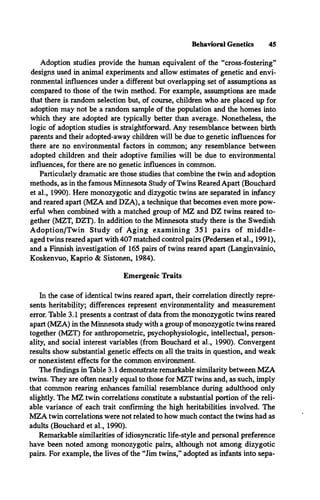
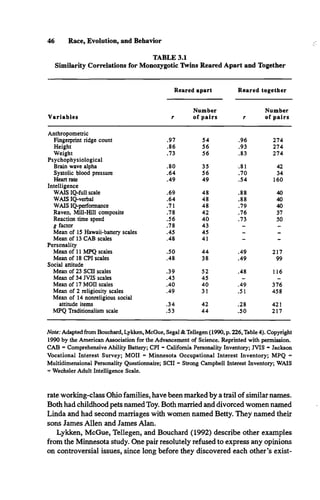
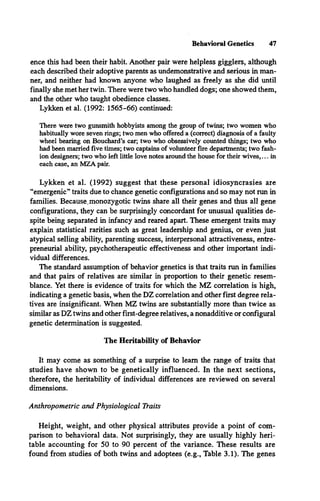
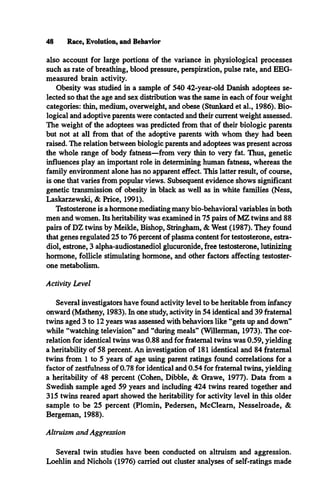
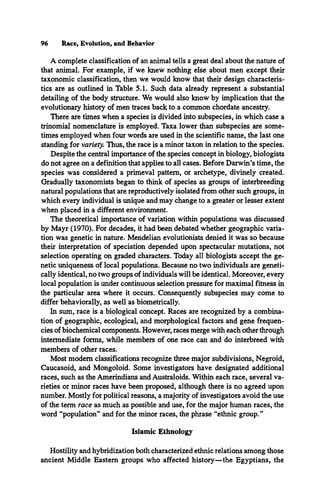
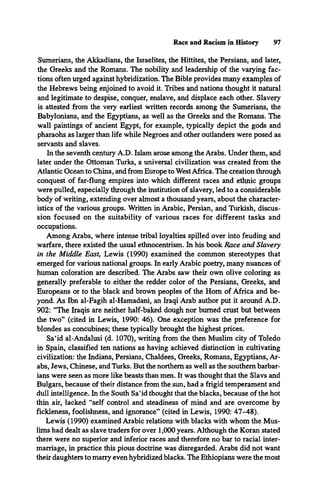
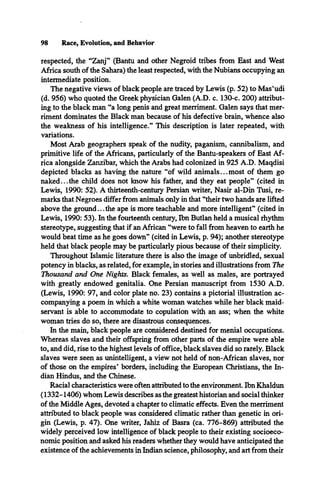
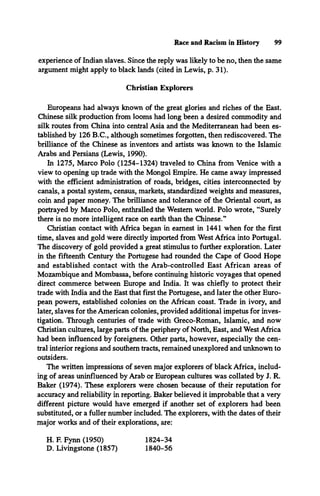
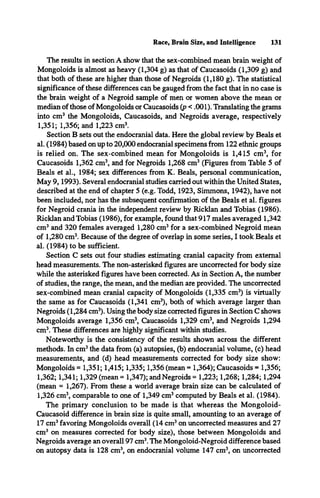
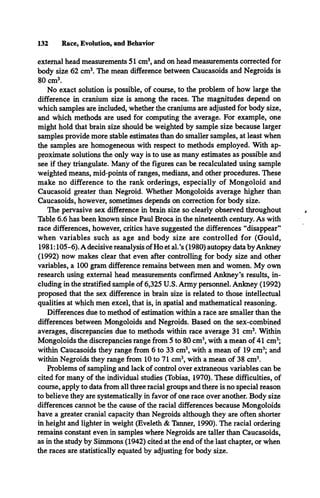
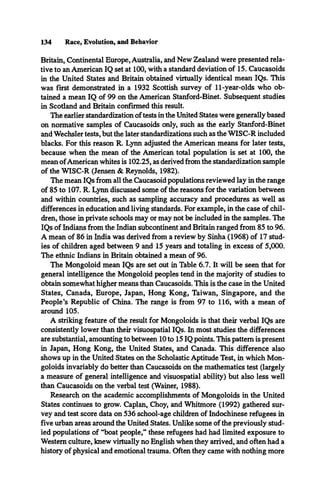
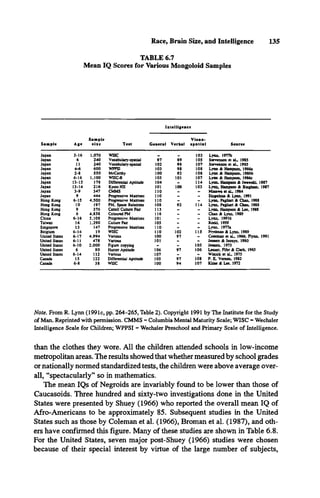
and Behavior:
A Life History Perspective
Third Edition
J. Philippe Rushton
Commentary on J. Philippe Rushton’s
Race, Evolution, and Behavior
“(An) incendiary thesis....that separate races of human beings evolved different
reproductive strategies to cope with different environments and that these
strategies led to physical differences in brain size and hence in intelligence.
Human beings who evolved in the warm but highly unpredictable environment
of Africa adopted a strategy of high reproduction, while human beings who
migrated to the hostile cold of Europe and northern Asia took to producing fewer
children but nurturing them more carefully.”
—Malcolm W. Browne, New York Times Book Review
“Rushton is a serious scholar who has assembled serious data. Considerjust one
example: brain size. The empirical reality, verified by numerous modem studies,
including several based on magnetic resonance imaging, is that a significant and
substantial relationship does exist between brain size and measured intelligence
after body size is taken into account and that the races do have different
distributions of brain size.”
—Charles Murray, Afterword to The Bell Curve
“Describes hundreds of studies worldwide that show a consistent pattern of
human racial differences in such characteristics as intelligence, brain size, genital
size, strength of sex drive, reproductive potency, industriousness, sociability, and
rule following. On each of these variables, the groups are aligned in the order:
Orientals, Caucasians, Blacks.”
—Mark Snyderman, National Review
"Rushton's Race, Evolution, and Behavior, which is about race differences in IQ
and cranial capacity, is an attempt to understand these differences in terms of
life-history evolution....Perhaps there ultimately will be some serious
contribution from the traditional smoke-and-mirrors social science treatment of
IQ, but for now Rushton's framework is essentially the only game in town."
— Henry Harpending, Evolutionary Anthropology
“The remarkable resistance to racial science in our times has led to comparisons
with the inquisition of Rome, active during the Renaissance.... Astronomy and
the physical sciences had their Copernicus, Kepler, and Galileo a few centuries
ago; society and the welfare of humanity is the better for it today. In a directly
analogous fashion, psychology and the social sciences today have their Darwin,
Galton, and Rushton.”
—Glayde Whitney, Contemporary Psychology
“This brilliant book is the most impressive theory-based study...of the
psychological and behavioral differences between the major racial groups that
I have encountered in the world literature on this subject. Rushton has assembled
evidence that henceforth should make it impossible to avoid considering
evolutionary principles and biological variables in the study of racial differences
in behavioral traits. To shun this essential message of his work is to reject
scientific coherence.”
—Arthur R. Jensen, University of California, Berkeley
“Professor Rushton is widely known and respected for the unusual combination
of rigour and originality in his work....Few concerned with understanding the
problems associated with race can afford to disregard this storehouse of well-
integrated information which gives rise to a remarkable synthesis.”
—Hans J. Eysenck, University of London
“The only acceptable explanation of race differences in behavior allowed in
public discourse is an entirely environmental one...Professor Rushton deserves
our gratitude for having the courage to declare that ‘this emperor has no clothes,’
and that a more satisfactory explanation must be sought...Rushton has pulled
another pillar out from under its superstructure. Whether his particular theory
will survive the onslaught of empirical tests remains to be seen. It is, in Popper’s
terms, a bold hypothesis and provides considerable food for thought.”
—Thomas J. Bouchard, Jr., University of Minnesota
“In Race, Evolution, and Behavior Rushton offers a brilliant synthesis of a vast
collection of biological, behavioral, and social data in terms of human
evolutionary development. Rushton is fully alive to contemporary sensitivities
in this field and he advances the myriad details of his thesis with great tact and
care. Should his argument prove successful Rushton will have produced a major
scientific advance in understanding the development of our human species.”
—Barry R. Gross, York College, CUNY
“In my view this theory has the simplicity and explanatory power that indicate
truth. It is all to the good that this book will interest many people solely for its
documentation of the race differences themselves, quite apart from then-
explanation. In a society in which all race differences in attainment are explained
by ‘racism,’ it is vitally important to be aware of alternative possibilities.
Rushton writes as a scientist, describing the way things are without prescribing
how they should be, but without data like Rushton’s intelligent prescriptions are
impossible.”
—Michael Levin, City College, CUNY
“The data are startling to the uninitiated....Race, Evolution, and Behavior
confronts us as few books have with the dilemmas wrought in a democratic
society by individual and group differences in key human traits.”
—Linda Gottfredson, Politics and the Life Sciences
“Should, if there is any justice, receive a Nobel Prize.”
—Richard Lynn, Spectator
"Undoubtedly, Race, Evolution, and Behavior is the best wide-ranging read in
differential psychology since Jensen's (1981) Straight TalkAboutMental Tests'"
— Christopher Brand, Personality and Individual Differences
“Both Lynn (1997) and Rushton (1997) insist that racial differences in the mean
measured sizes of skulls and brains (with East Asians having the largest,
followed by Whites and then Blacks) support their genetic hypothesis. They rely
on the averaged results of the many anthropometric studies reviewed by Rushton
(1995) in his book Race, Evolution, and Behavior....there is indeed a small
overall trend in the direction they describe.”
— Ulric Neisser, Chairman of the American Psychological Association
Task Force on Intelligence, American Psychologist
"A frank attempt to rehabilitate the concept of race as a primary descriptive
category."
- - Steve Blinkhom, Nature
"Race is in the public eye again, and once more biological anthropologists
must address problems with racial taxonomy and related misapplications of
evolutionary theory. Rushton's book focuses on racial variation from an
evolutionary perspective. His basic thesis is that race differences in behavior
are explainable from the viewpoint of life history analysis, particularly the
differences between r- and /C-selected evolutionary strategies."
— John H. Relethford, American Journal of Physical Anthropology
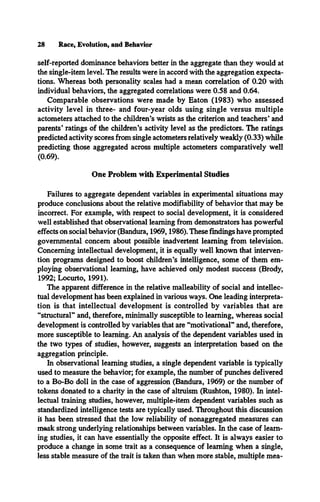
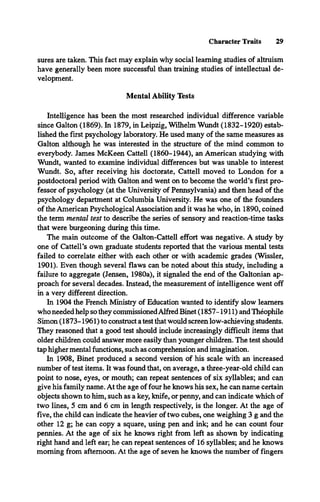
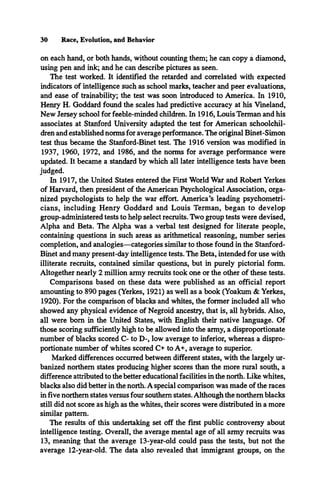
General impressions are never to be trusted.
Unfortunately when they are of long standing
they become’
fixed rules of life, and assume a
prescriptive right not to be questioned.
Consequently, those who are not accustomed
to original inquiry entertain a hatred and a
horror of statistics. They cannot endure the
idea of submitting their sacred impressions to
cold-blooded verification. But it is the triumph
of scientific men to rise superior to such
superstitions, to devise tests by which the value
of beliefs may be ascertained, and to feel
sufficiently masters of themselves to discard
contemptuously whatevermay befound untrue.
—Sir Francis Galton
Race, Evolution,
and Behavior:
A Life History Perspective
Third Edition
J. Philippe Rushton
Contents
Preface to Third Edition p-l
List of Tables ix
List of Figures xi
Preface to First Edition xiii
Acknowledgments xvii
1. Revamping Social Science 1
2. Character Traits 17
3. Behavioral Genetics 43
4. Genetic Similarity Theory 69
5. Race and Racism in History 91
6. Race, Brain Size, and Intelligence 113
7. Speed of Maturation, Personality, and Social Organization 147
8. Sexual Potency, Hormones, and AIDS 165
9. Genes Plus Environment 185
10. Life-History Theory 199
11. Out of Africa 217
12. Challenges and Rejoinders 235
13. Conclusions and Discussion 259
Afterword 277
Glossary 299
References 307
Author Index 339
Subject Index 353
Preface to the Third Edition
This 3rd edition ofRace, Evolution, and Behavior is published by the Charles
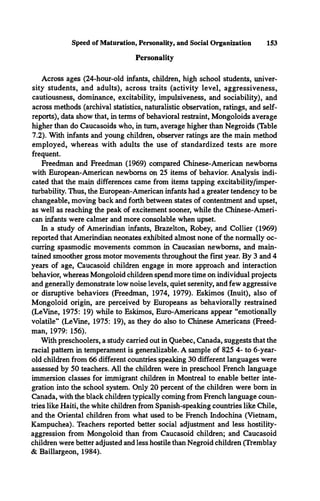
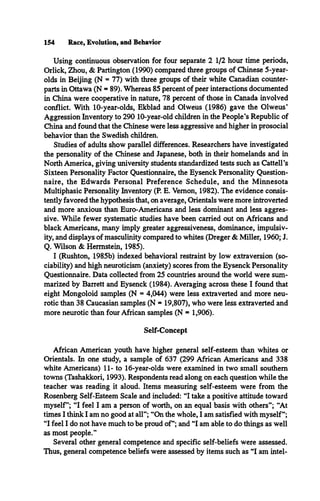
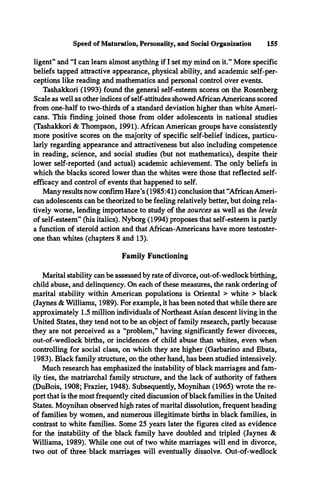
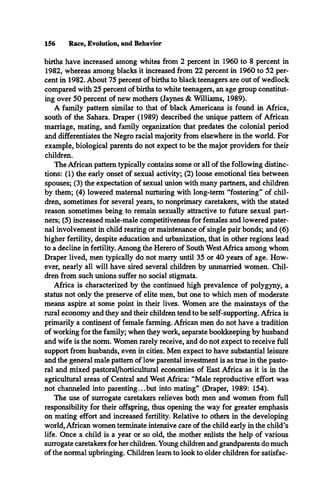
Darwin Research Institute (www.charlesdarwinresearch.org). In this Preface I
update the main scientific findings that have taken place since the 2nd edition
(1997) which had a new Afterword by me updating the science since the 1st
edition (1995). The Preface is followed by the exact text as it appeared in the 1st
edition and then by the Afterword as it appeared in the 2nd edition so as to
maintain precisely the earlier page numbering and citations for reference
purposes.
Transaction Publishers brought out the 1st and 2nd editions of Race,
Evolution, and Behavior. The 1st edition was deemed sufficiently important that
Takuya Kura, an ethologist at the University of Kyoto, and his brother Kenya
Kura, an economist at the University of San Diego, translated it into Japanese.
It was published in 1996 by Hakuhin-sha of Tokyo.
Transaction relinquished the copyright after a firestorm of controversy
engulfed their 1999 publication of a Special Abridged Edition of this same book.
The Special Abridged Edition presented the same research in a condensed and
popularly written style, similar to that used for articles in Discover Magazine,
Reader's Digest, and Scientific American. But when it was mailed out to
thousands of academics, the Progressive Sociologists, a self-proclaimed radical
group within the American Sociological Association, and some other self-styled
“anti-racist” groups, objected to its distribution and threatened Transaction with
loss of a booth at annual meetings, advertising space in journals, and access to
mailing lists if they continued to send it out.
Transaction caved in to this pressure, withdrew from publishing the book,
and even apologized for having distributed it. They claimed that their copyright
should never have appeared on the Special Abridged Edition and that it had “all
been a mistake.” Transaction’s letter of apology appeared on the inside front
cover of their flagshipjournal Society (January/February, 2000). Accounts of the
affair appeared in the Chronicle of Higher Education (January 14, 2000),
Canada’s National Post (January 31, 2000), National Report (February 28,
2000), and elsewhere.
Why then this attempt to trash or suppress this book? Because there is no
stronger taboo today than talking about race. In many cases, just being accused
of “racism” can get you fired. Some vocal groups in academia and the media
simply forbid an open discussion of race. It is difficult to disagree with Charles
Murray's (1996, p. 575) conclusion in his analysis of the aftermath to The Bell
Curve controversy, that in regard to heritable variation and race, science has
P 10 Race, Evolution, and Behavior
“become self-censored and riddled with taboos -- in a word, corrupt.”
The goal of all editions of Race, Evolution, and Behavior has been purely
scientific — to describe and explain the world around us as it really is. As
Charles Darwin, the father of evolution, said: “Science consists in grouping facts
so that general laws or conclusions may be drawn from them.” I have no
suggestions or programs to offer, but I do believe decision makers would benefit
from knowing the facts about race. Both science and justice depend on truth.
Both should reject error and falsehood, however well meant.
Is Race Really Only Skin Deep?
For the past twenty years I have studied the three major races of Orientals
(East Asians, Mongoloids), Whites (Europeans, Caucasoids), and Blacks
(Africans, Negroids). An “Oriental” is anyone most of whose ancestors were
bom in East Asia. A “White” is anyone most of whose ancestors were bom in
Europe. And a “Black” is anyone most of whose ancestors were bom in
sub-Saharan Africa. In the main I have not addressed other groups and sub­
groups. '
What I've found is that in brain size, intelligence, sexual behavior, fertility,
personality, maturation, life span, crime and family stability, Orientals fall at one
end of the spectrum, Blacks fall at the other end, and Whites fall in between. On
average, Orientals are slower to mature, less fertile, and less sexually active,
have larger brains and higher IQ scores. Blacks are at the opposite end in each
of these areas. Whites fall in the middle, often close to Orientals. I've shown that
this three-way pattern is true over time and across nations, which means that we
cannot ignore it. Only a theory that looks at both genes and environment in terms
of Darwin's theory of evolution can explain why the races differ so consistently
throughout the world and over the course of time.
The patterns make up what is called a “life-history,” a genetically organized
suite of traits that evolved together to meet the trials of life — survival, growth,
and reproduction (see Chapter 10). Following E. O. Wilson’s (1975)
Sociobiology, evolutionary biologists scale these life-histories along an r-K
continuum. At one end are r-strategies that rely on high reproductive rates. At
the other end are ^-strategies that rely on high levels of parental care. This scale
is generally used to compare the life histories of different species of animals. I
have used it to explain the smaller but real differences between the human races.
On this scale, Orientals are more ^-selected than Whites, while Whites are
more ^-selected than Blacks. Highly^-selected women produce fewer eggs (and
have bigger brains) than r-selected women. Highly A'-selected men invest time
and energy in their children rather than the pursuit of sexual thrills. They are
“dads” rather than “cads.”
The race differences in reproductive strategies make sense in terms of human
Preface P 11
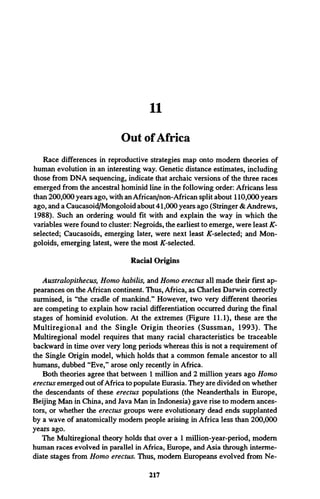
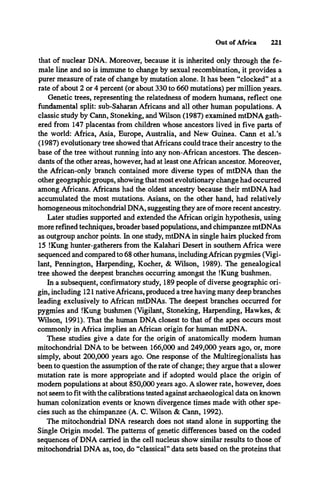
evolution. Modem humans evolved in Africa about 200,000 years ago. Africans
and non-Africans then split about 100,000 years ago. Orientals and Whites split
about 40,000 years ago (Chapter 11). The further north the people went “Out of
Africa,” the harder it was to get food, gain shelter, make clothes, and raise
children. So the groups that evolved into today’s Whites and Orientals needed
larger brains, more family stability, and a longer life. But building a bigger brain
takes time and energy during a person’s development. So, these changes were
balanced by slower rates of growth, lower levels of sex hormones, less
aggression, and less sexual activity.
Why? Because Africa, Europe, and Asia had very different climates and
geographies that called for different skills, resource usage, and lifestyles. Blacks
evolved in a tropical climate which contrasted with the cooler one of Europe in
which Whites evolved and even more so with the cold Arctic lands where
Orientals evolved.
Because intelligence increased the chances of survival in harsh winter
environments, the groups that left Africa had to evolve greater intelligence and
family stability. This called for larger brains, slower growth rates, lower
hormone levels, less sexual potency, less aggression, and less impulsivity.
Advanced planning, self-control, rule-following, and longevity all increased in
the non-Africans.
Of course, these three-way racial differences are averages. The full range
of behaviors, good and bad, is found in every race. No group has a monopoly on
virtue or vice, wisdom or folly. Moreover, many readers may be asking
themselves, “Isn’t race just a social construction, not a biological reality?” Or
repeating, “Even if race has some biological basis, there are no important
differences between races.”
Let’s consider athletic ability. Jon Entine’s new book, Taboo: Why Black
Athletes Dominate Sports and Why WeAreAfraidto TalkAbout It provides new
evidence for the reality of race. Addressing the old cliché that “White Men Can’t
Jump” (and the new one that Asian menjump even less well), Entine shows that
Black men — and women — have a genetic edge.
The physical facts that Entine reviews are quite well known. Compared to
Whites, Blacks have narrower hips which gives them a more efficient stride.
They have longer legs which makes for a longer stride. They have a shorter
sitting height which provides a higher center of gravity and a better balance.
They have wider shoulders, less body fat, and more muscle. Their muscles
include more fast twitch muscles which produce power.
Blacks have from 3 to 19% more of the sex hormone testosterone than
Whites or East Asians (see Chapter 8 in this book). These testosterone
differences translate into more explosive energy, which gives Blacks the edge
in sports like boxing, basketball, football, and sprinting. However, some of these
race differences, like heavier bone mass and smaller chest cavities, pose a
P 12 Race, Evolution, and Behavior
problem for Black swimmers.
Race differences show up early in life. Black babies are bom a week earlier
than White babies, yet they are more mature as measured by bone development
(see Chapter 7). By age five or six, Black children excel in the dash, the long
jump, and the high jump, all of which require a short burst of power. By the
teenage years, Blacks have faster reflexes, as in the famous knee-jerk response.
East Asians run even less well than Whites. These same narrow hips, longer
legs, more muscle, and more testosterone that give Blacks an advantage over
Whites, give Whites an advantage over East Asians. But acknowledging the
existence of genetic race differences in sports leads to the greater taboo area —
considering the possibility of race differences in brain size and crime.
The reason why Whites and East Asians have wider hips than Blacks, and so
make poorer runners, is because they give birth to larger brained babies (see
Chapter 6). During evolution, increasing cranial size led to women who had a
wider pelvis (see Chapters 10 & 11). Further, the hormones that give Blacks an
edge at sports makes them more masculine in general — physically active in
school, and more likely to get into trouble (see Chapter 7). That is why it is taboo
to even say that Blacks are better at many sports.
Brain Size
Four different methods have been used to measure brain size: Magnetic
Resonance Imaging (MRI), weighing the brain at autopsy, measuring the volume
of an empty skull, and measuring the outside of the head. All four methods
produce roughly the same results. The race differences in average brain size
remain even after you adjust for body size (see Chapter 6).
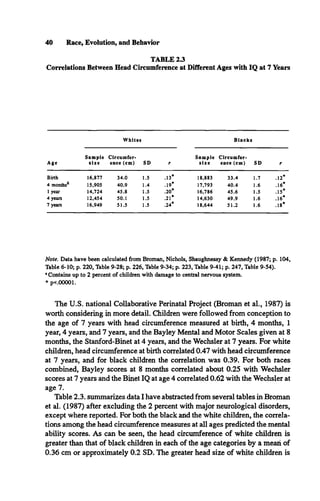
Race differences in brain size show up early in life. One of the studies, the
Collaborative Perinatal Project, followed 17,000European American and 19,000
African American children from birth to seven years. Head circumference was
measured using a tape. The White children consistently averaged larger head
circumferences than did the Black children.
I wondered what the data would show if Asian American children had been
included. So in October, 1996,1visited the National Institute of Neurological
and Communicative Disorders and Stroke (NINCDS) in Bethesda, Maryland. I
identified 100 Asian American children who also had IQ scores available at age
7 from the Collaborative Perinatal Project’s data set which are stored on
microfiche. For each subject I recorded data separately on the race/nationality of
the mother and father, the sex of child, the child’s IQ at age 7, and the child’s
height, weight, and head circumference at birth, 4 months, 1 year, and 7 years.
The sample in this study consisted of 53 girls and 47 boys. Most of the Asians
were Chinese, Korean, and Japanese.
My results were published in the 1997 issue ofIntelligence (Rushton, 1997a).
Preface P 13
The children’s head circumferences were transformed into cranial capacities so
as to make the results comparable with those on adults. Cranial capacity at birth
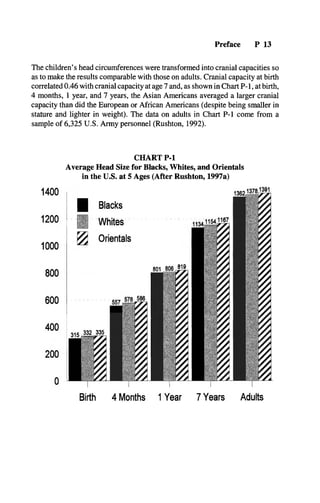
correlated 0.46 with cranial capacity at age 7 and, as shown in Chart P-1, at birth,
4 months, 1 year, and 7 years, the Asian Americans averaged a larger cranial
capacity than did the European or African Americans (despite being smaller in
stature and lighter in weight). The data on adults in Chart P-1 come from a
sample of 6,325 U.S. Army personnel (Rushton, 1992).
CHART P-1
Average Head Size for Blacks, Whites, and Orientals
in the U.S. at 5 Ages (After Rushton, 1997a)
P 14 Race, Evolution, and Behavior
Intelligence and Brain Size
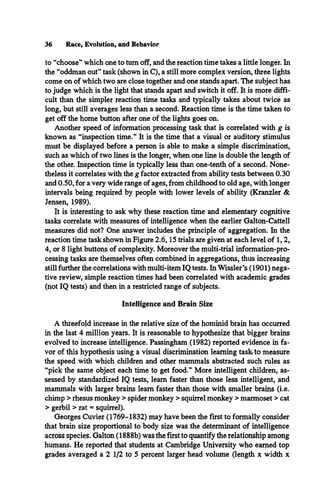
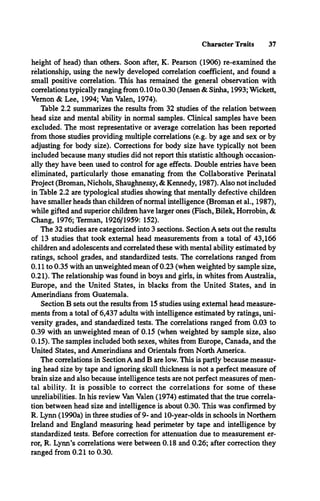
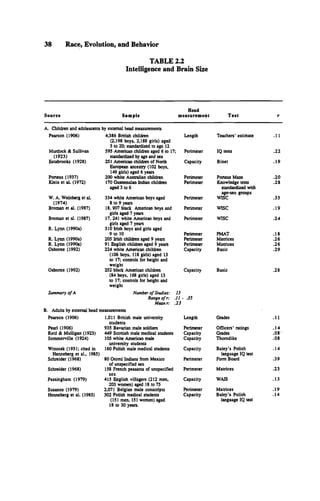
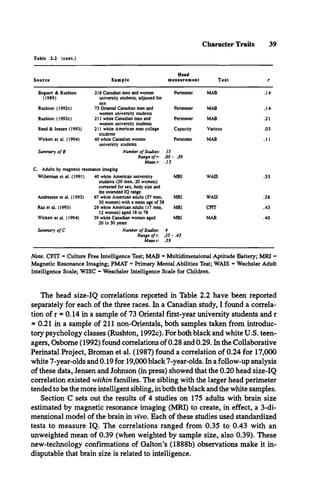
The Asian sub-sample in the above study averaged a higher IQ (110) at age
7 than did the White (102) or the Black sub-samples (90). Moreover, their head
circumferences at age 7 correlated 0.21 with their IQ test scores at age 7. As
such these data corroborated the results of my review article with C. D. Ankney
“Brain Size and Cognitive Ability” in the 1996 issue of Psychonomic Bulletin
and Review in which we surveyed all the published research on this topic. It
included studies that used the state-of-the-art technique known as Magnetic
Resonance Imaging (MRI) which gives a very good image of the human brain
in a living person. We reviewed eight such studies with a total sample size of 381
adults. The overall correlation between IQ and brain size measured by MRI was
0.44. This more accurate measure of brain size is much higher than the 0.20
correlation found in earlier research using simple head size measures (though
0.20 is still significant) and suggests that brain size underlies intelligence.
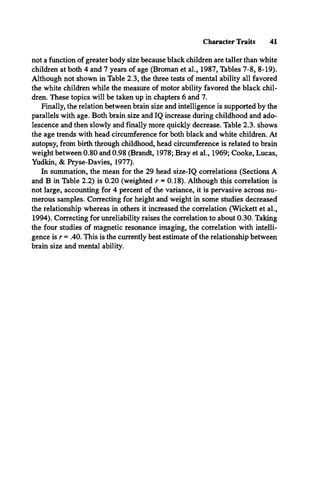
The correlations of about 0.30 between cognitive ability and head size/brain
size are as replicable a set of results as one will find in the behavioral sciences.
I reviewed several additional corroborating studies at the annual meeting of the
American Association ofPhysical Anthropologists in Columbus, Ohio (Rushton,
1999a). Two of the studies examined the relation using head circumference
measures (Furlow, Armijo-Prewitt, Gangestad & Thornhill, 1997; Rushton,
1997a) and six examined the relation using Magnetic Resonance Imaging. For
these six studies there was a total sample size of 422, with a mean correlation of
r = 0.31 (when weighted by sample size, r = 0.36; Flashman et al., 1998; Reiss
et al., 1996; Schoenemann, 1997; Tan et al., 1999; Tramo et al., 1998; Wickett
et al., in press). Subsequently, Gur et al. (1999) found an overall correlation
between MRI measured brain volume and IQ of 0.41.
In his encyclopedic book on mental ability, The g Factor, Arthur Jensen
(1998) cited my reviews of the literature on race differences in brain size (see
Chapter 6 of this book) finding that East Asians and their descendants average
about 17 cm3 (1 in3) larger brain volumes than do Europeans and their
descendants, whose brains average about 80 cm3(5 in3) larger than do those of
Africans and their descendants. Jensen (pp. 442-443) then extended my results
by calculating an “ecological” correlation (used in epidemiological studies) of
+0.998 between median IQ and mean cranial capacity across the three
populations of “Mongoloids,” “Caucasoids,” and “Negroids.”
Is The Mean African IQ = 70?
Chapter 6 of this book also reviews the data on race and intelligence.
Hundreds of studies on millions of people show a three-way pattern. IQ tests are
often made to have an average score of 100, with a “normal” range from 85 to
Preface P 15
115. Whites average from 100 to 103. Orientals in Asia and the U.S. tend to have
slightly higher scores, about 106, even though IQ tests were made for use in a
European American culture. Blacks in the U.S., the Caribbean, Britain, Canada,
and in Africa average lower IQs - about 85. The lowest average IQs are found
for sub-Saharan Africans -- from 70 to 75.
The IQ of 70 for Blacks living in Africa is the lowest group mean ever
recorded and it caused consternation when brought to public attention in the
debates over The Bell Curve and Race, Evolution, and Behavior. However, there
have been several replications of the mean African IQ being in the 70s. For
example, Mervyn Skuy and his colleagues (2000) found South African
secondary students (in South Africa) had IQ equivalents in the 70s range on
several tests, including the Wechsler Intelligence Scale for Children-Revised
(WISC-R), the Rey Auditory Verbal Learning Test, the Stroop Color Word Test,
the Wisconsin Card Sorting Test, the Bender Gestalt Visual Motor Integration
Test, the Rey Osterreith Complex Figure Test, the Trail Making Test, the Spatial
Memory Task, and various Drawing Tasks.
The implied conclusion that in abstract reasoning ability, 50% of Black
Africa is “mentally retarded” by European standards, was considered not only
an injustice but an absurdity by many reviewers. Some therefore dismissed The
Bell Curve and Race, Evolution, and Behavior as nonsensical for even reporting
such data for serious consideration. But of course the facts are the facts and must
be presented. Alternative explanations can then be offered for them.
One argument has been that an IQ of 70 in abstract reasoning ability
manifests itself differently in Blacks than in Whites. Jensen (1972, pp. 5-6)
pointed out that Black children with IQs of 70 appear much brighter socially than
do White children with IQs of 70, who don’t play normally and appear to be
more mentally retarded all round, not just in their performance in scholastic
subjects and on IQ tests. Black children of IQ 70 routinely learn to speak, to play
games, learn names, and act friendly with playmates and teachers. They appear
quite normal, whereas White children with similar IQs “look” abnormal. This
race difference may be consistent with a genetic interpretation of the mean
African IQ of 70 in that it implies that a very low IQ is “normal” in the African
population.
In October 1998 I traveled to Johannesburg in South Africa to collect data
that might help to resolve this debate. I decided to find a high-IQ population of
Africans such as university students who were likely to be at least one standard
deviation above the African mean and familiar with paper-and-pencil tests. I
teamed up with Mervyn Skuy, Chairman of the Division of Specialized
Education at the University of the Witwatersrand.
To ensure they were motivated, we paid over three hundred first year
psychology students $10 each to take an untimed Raven’s Progressive Matrices
test. We gave the students an hour-and-a-half to do the test, although the great
P 16 Race, Evolution, and Behavior
majority had done it in 30 minutes. Our final sample consisted of 173 African
and 136 White 17- to 23-year-olds. The Africans solved an average of 44 of the
60 problems, and the Whites solved an average of 54. By U.S. standards, this
translated into the African university students being at the 14th percentile,
equivalent to American 14-year-old high school students. The African students
had an IQ equivalent of 84 (Rushton & Skuy, in press).
Assuming that Black university students in South Africa are 1 SD above the
average of the general population of that country (as university students typically
are), then my finding of an IQ of 84 in that select sample implies that the general
population of that country has an average IQ of 70. As such, this study confirms
the earlier reviews of the literature (see Lynn, 1997, for an updated review).
In a second study carried out with university students in South Africa, we
(Skuy, Gewer, & Rushton, 2000) again found an IQ equivalent of 84. This was
an intervention study that looked for ways to boost IQ scores. We therefore gave
the study participants several hour-long training sessions in the type of abstract
reasoning methods required to solve Raven’s Matrices. At pre-test, we found
once again that Black Africans averaged an IQ equivalent of 84. The training
sessions managed to raise the test group mean to an IQ equivalent of 91.
The full explanation for the low African IQ has yet to be discovered. Perhaps
the cultural contribution to IQ scores is greater in Africa than it is in North
America and so has a greater suppressant effect. South African Blacks have far
higherunemployment rates and poorer schools, libraries, and study facilities than
do Whites. Thus, Africans may have had less exposure to or stimulation on the
constructs measured by IQ tests. They also live in overcrowded homes, often
with no running water or electricity, and have poorer nutrition. Therefore their
poor performance is partly the result of these cultural disadvantages.
The g Factor
As discussed throughout this book (pp. 33-36,54-55,138-139,186-188,280­
281), the more a test measures the general factor of mental ability (technically,
the higher its g-loading), the more heritable it is, the more predictive of
intelligent behavior it is, and the more it differentiates between the races. In his
new book, The g Factor, Jensen describes the results from 17 independent data
sets on a total of nearly 45,000 Blacks and 245,000 Whites derived from 171
psychometric tests. The g loadings for the various tests consistently predict the
magnitude of the Black-White difference (r = 0.63) on the same tests. This was
borne out even among three-year-olds administered eight subtests of the
Stanford-Binet. The rank correlation between the g-loadings and the
Black-White differences was 0.71 (p <0.05).
In Rushton and Skuy’s (in press) South African study, cited above, we
carried out several internal psychometric analyzes which showed that the items
Preface P 17
“behaved” the same way in all groups. For example, those items the White
students found difficult, the African students did as well. It was just that the
thresholds were different for passing the items. The African-White differences
were also found to be greater on those items of the Raven’s with the highest
item-total correlations, indicating a higher g-loading.
The jewel in the crown of Jensen’s legacy is his development of the method
of correlated vectors. A “vector” of scores is a set that possesses both direction
and quantity. Jensen has applied his method of correlated vectors to many
variables in addition to the Black-White difference scores. He has shown that the
vector of a test’s g loadings is the best predictor notjust of that test’s correlation
with scholastic and work-place performance, but with brain size, brain pH, brain
glucose metabolic rate, average evoked potential, reaction time, and other
physiological factors, hence establishing the biological (as opposed to the mere
statistical) reality of g.
Consider, for example, the correlation between IQ and brain size. Numerous
modem studies confirm that the correlation between IQ and head circumference
measured by tape is about 0.20 and that between IQ and brain volume measured
by Magnetic Resonance Imaging is about 0.40. Using the method of correlated
vectors shows the correlation of those two measures with g to be between 0.60
and 0.70! Jensen’s method has distilled the essence of intelligence.
In a recent special issue of the journal Intelligence honoring Jensen’s
accomplishments, I proposed that when a significant correlation occurs between
the two vectors, the result be called a Jensen Effect because otherwise there is no
name for it, only a long explanation of how the effect was achieved (Rushton,
1998). The Jensen Effect can be seen whenever there is a significant correlation
between the vector of the sub-tests’ g loadings and the vector of the same sub­
tests’ loadings on variable X (where X is some other, usually non-psychometric,
variable).
The Flynn Effect is Not a Jensen Effect
Jensen Effects are not omnipresent and their absence can be as informative
as the converse. An important absence of the Jensen Effect is that shown for the
secular increase in test scores, which has become known as the “Flynn Effect”
after Flynn’s massive documentation of the phenomenon. Simply stated, the one
study done to date shows that the “Flynn Effect” is not a “Jensen Effect.”
Flynn (1999a, 1999c) has long championed the view that the “massive IQ
gains over time” in the industrialized world show that the average Black-White
IQ difference is environmental in origin. Because the populations of several
countries have increased in average IQ by about 3 points a decade for 5 decades,
Flynn hypothesized that the Black-White differences are caused by the same
processes that produce these secular gains (such as improvements in schooling
P 18 Race, Evolution, and Behavior
and test taking skills).
On the surface, Flynn’s hypothesis seems very reasonable. Yet so far the data
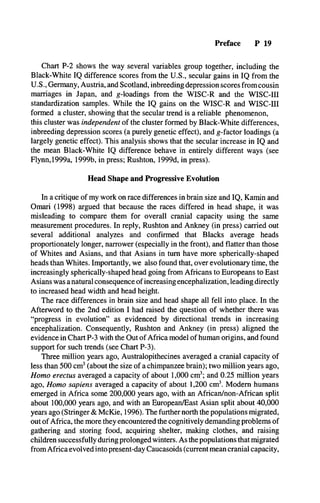
do not bear it out. In a principal components analysis, I (Rushton, 1999d) found
the secular increase is unrelated to g and other heritable measures, while the
magnitude of the Black-White difference is related to heritable g and inbreeding
depression (see Chart P-2).
CHART P-2
Principal Components Analysis and Varimax Rotation for
Pearson Correlations of Inbreeding Depression Scores, Black-
White Differences, g-loadings, and Gains Over Time on the
Wechsler Intelligence Scales for Children After Reliability Has
Been partialled Out (After Rushton, 1999d)
Variable
Principal Components
Unrotated
Loadings
Varimax
Rotated
I II 1 2
Inbreeding depression scores 0.31 0.61 0.26 0.63
U.S. Black-White differences 0.29 0.70 0.23 0.72
WISC-R g loadings from U.S. -0.33 0.90 -0.40 0.87
WISC-III g loadings from U.S. -0.61 0.64 -0.66 0.59
U.S. gains 1 0.73 -0.20 0.75 -0.13
U.S. gains 2 0.81 0.40 0.77 0.47
German gains 0.91 0.03 0.91 0.11
Austria gains 0.87 0.00 0.86 0.07
Scotland gains 0.97 0.08 0.96 0.17
Percent of total variance 48.60 25.49 48.44 25.65
Preface P 19
Chart P-2 shows the way several variables group together, including the
Black-White IQ difference scores from the U.S., secular gains in IQ from the
U.S., Germany, Austria, and Scotland, inbreeding depression scores from cousin
marriages in Japan, and g-loadings from the WISC-R and the WISC-III
standardization samples. While the IQ gains on the WISC-R and WISC-III
formed a cluster, showing that the secular trend is a reliable phenomenon,
this cluster was independent of the cluster formed by Black-White differences,
inbreeding depression scores (a purely genetic effect), and g-factor loadings (a
largely genetic effect). This analysis shows that the secular increase in IQ and
the mean Black-White IQ difference behave in entirely different ways (see
Flynn, 1999a, 1999b, in press; Rushton, 1999d, in press).
Head Shape and Progressive Evolution
In a critique of my work on race differences in brain size and IQ, Kamin and
Omari (1998) argued that because the races differed in head shape, it was
misleading to compare them for overall cranial capacity using the same
measurement procedures. In reply, Rushton and Ankney (in press) carried out
several additional analyzes and confirmed that Blacks average heads
proportionately longer, narrower (especially in the front), and flatter than those
of Whites and Asians, and that Asians in turn have more spherically-shaped
heads than Whites. Importantly, we also found that, over evolutionary time, the
increasingly spherically-shaped head going from Africans to Europeans to East
Asians was a natural consequence of increasing encephalization, leading directly
to increased head width and head height.
The race differences in brain size and head shape all fell into place. In the
Afterword to the 2nd edition I had raised the question of whether there was
“progress in evolution” as evidenced by directional trends in increasing
encephalization. Consequently, Rushton and Ankney (in press) aligned the
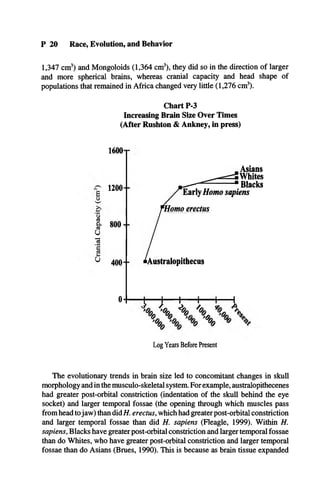
evidence in Chart P-3 with the Out of Africa model of human origins, and found
support for such trends (see Chart P-3).
Three million years ago, Australopithecines averaged a cranial capacity of
less than 500 cm3(about the size of a chimpanzee brain); two million years ago,
Homo erectus averaged a capacity of about 1,000 cm3; and 0.25 million years
ago, Homo sapiens averaged a capacity of about 1,200 cm3. Modem humans
emerged in Africa some 200,000 years ago, with an African/non-African split
about 100,000 years ago, and with an European/East Asian split about 40,000
years ago (Stringer & McKie, 1996). The further north the populations migrated,
out of Africa, the more they encountered the cognitively demanding problems of
gathering and storing food, acquiring shelter, making clothes, and raising
children successfully during prolonged winters. As the populations that migrated
from Africa evolved into present-day Caucasoids (current mean cranial capacity,
P 20 Race, Evolution, and Behavior
1,347 cm3) and Mongoloids (1,364 cm3), they did so in the direction of larger
and more spherical brains, whereas cranial capacity and head shape of
populations that remained in Africa changed very little (1,276 cm3).
Chart P-3
Increasing Brain Size Over Times
(After Rushton & Ankney, in press)
1600
1200
ä
&
u
73
800
400 ■Australopithecus
Early Homo sapiens
Asians
Whites
Blacks
o
0 - t — j— 1
— 1
— 1
— i
3
O
O ^oo % 
°o„ °o„ "o- V
’°o
o °° °° °
Log Years Before Present
The evolutionary trends in brain size led to concomitant changes in skull
morphology and in the musculo-skeletal system. For example, australopithecenes
had greater post-orbital constriction (indentation of the skull behind the eye
socket) and larger temporal fossae (the opening through which muscles pass
from head tojaw) than did H. erectus, which had greater post-orbital constriction
and larger temporal fossae than did H. sapiens (Fleagle, 1999). Within H.
sapiens, Blacks have greater post-orbital constriction and larger temporal fossae
than do Whites, who have greater post-orbital constriction and larger temporal
fossae than do Asians (Brues, 1990). This is because as brain tissue expanded
Preface P 21
in the temporal and parietal lobes, it did so at the expense of the temporalis
muscles, which run through the temporal fossa in each zygomatic arch, and serve
to close the jaw. Since smaller temporalis muscles cannot close as large a jaw,
jaw size was reduced. Consequently, there is less room for teeth, resulting in
smaller teeth, shorter roots, and fewer teeth. (Asians and Europeans have smaller
jaws, fewer and smaller teeth, and shorter roots than do Africans; Brues, 1990;
Stringer & McKie, 1996).
The decrease in jaw size (orthognathism replacing prognathism) in turn led
to decreased size of neck muscles and the bony protuberances where they attach
(nuchal crests, cervical spinous process), which are no longer required for
supporting heavy prognathic faces. (Asians and Europeans have reduced neck
muscles and smaller spinous processes and less prognathic faces than do
Africans; Binkley, 1989). As brain tissue in the frontal lobes expanded, it took
up the space previously occupied by bony super-orbital rims, thereby causing a
decrease in glabellas. (Asians and Europeans have less pronounced glabellas
than do Africans; Krogman & Ypcan, 1986). Further down the postcranial
skeleton, increased encephalization required a wider pelvic opening, formed by
the pubic and ischial bones, rather than just by the iliac bone, in order to allow
birth of larger-brained infants. (Asians and Europeans have wider pelvises than
do Africans; Krogman & Ypcan, 1986). There is no explanation for these
changes in the musculo-skeletal system other than for accommodating increased
brain size.
Finally, because larger brains require more time to develop, trends in
maturation rate can also be seen. Gestational age approximates 33 weeks in
chimpanzees and 38 weeks in modem humans. Puberty is reached around eight
years in chimpanzees and 13 years in humans. Life span averages 30 years in
chimpanzees and 45 to 75 years in modem humans (see Chapter 10). These
trends are also found across human groups. Asians and Europeans give birth at
later gestational ages than do Africans, and their children reach puberty later and
live longer (Chapter 7). Thus, changes in brain size have cascading effects on
other traits which requires a general (both within and cross-species) “life-
history” theory to explain their co-evolution, such as the one proposed in this
book.
Sexual Behavior
One of the more contentious topics addressed in Race, Evolution, and
Behavior is reproductive behavior (see Chapter 8). Race differences in sexual
behavior have tragic results in real life. For example, they affect the incidence
of sexually transmitted diseases (e.g., syphilis, gonorrhea, herpes and
chlamydia). Unpleasant though it is to examine these STDs, the rates provide
another test of the evolutionary theory of race differences. These differences are
P 22 Race, Evolution, and Behavior
hard to explain from a culture-only theory.
Reports from the U.S. Centers for Disease Control and Prevention, the
UNAIDS, and the World Health Organization, corroborate over and over again
the three-way racial pattern, both within and between countries. Low levels of
sexually transmitted diseases are reported in China and Japan and high levels in
Africa. European countries are in the middle. The racial pattern of these diseases
is also true in the U.S. The 1997 syphilis rate among Blacks was 24 times the
White rate. A recent report found up to 25% of inner city girls (mainly Black)
have chlamydia.
Racial differences clearly show in the current AIDS crisis. Over 30 million
people around the world are living with HIV or AIDS. Many Blacks in the U.S.
do get AIDS through drug use, but more get it through sex. At the other extreme,
more AIDS sufferers in China and Japan are hemophiliacs. European countries
have intermediate HIV infection rates (mostly among homosexual men).
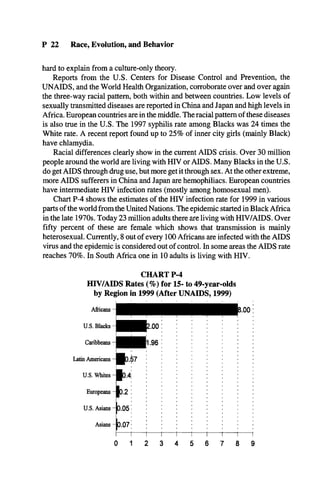
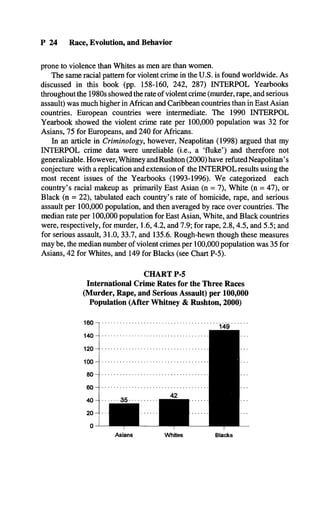
Chart P-4 shows the estimates of the HIV infection rate for 1999 in various
parts of the world from the United Nations. The epidemic started in Black Africa
in the late 1970s. Today 23 million adults there are living with HIV/AIDS. Over
fifty percent of these are female which shows that transmission is mainly
heterosexual. Currently, 8 out of every 100 Africans are infected with the AIDS
virus and the epidemic is considered out of control. In some areas the AIDS rate
reaches 70%. In South Africa one in 10 adults is living with HIV.
CHART P-4
HIV/AIDS Rates (%) for 15- to 49-year-olds
by Region in 1999 (After UNAIDS, 1999)
Preface P 23
The HIV infection rate is also high in the Black Caribbean; about 2%.
Thirty-three percent of the AIDS cases there are women. This high figure among
women shows that the spread tends to be from heterosexual intercourse. The
high rate of HIV in the 2,000 mile band of Caribbean countries extends from
Bermuda to Guyana, and is highest in Haiti, with a rate close to 6%. The
Caribbean has the highest rates outside of Black Africa. Data published by the
U.S. Centers for Disease Control and Prevention show that African Americans
have HIV rates similar to those found in the Black Caribbean and parts of Black
Africa. Three percent of Black men and 1% of Black women in the U.S. are
living with HIV (Chart P-4). The rate for White Americans is less than 0.1%,
while the rate for Asian Americans is less than 0.05%. Rates for Europe and the
Pacific Rim are also low. Of course AIDS is a serious public health problem for
all racial groups, but it is especially so for Africans and people of African
descent.
Crime
Chapter 7 of this book examines crime statistics. Those from the United
States show Orientals are a “model minority.” They have fewer divorces, fewer
out-of-wedlock births, and fewer reports of child abuse than Whites. More
Orientals graduate from college and fewer go to prison. On the other hand
Blacks are 12% of the American population but make up 50% of the prison
population. One out of every three Black men in the U.S. is either in jail, on
probation, or awaiting trial. That is much more than the number who graduate
from college.
New analyzes by Jared Taylor and Glayde Whitney (1999) have found that
throughout the 1990s, Blacks in the U.S. committed five times more violent
crimes than did Whites, while Asians committed only about half as many. Taylor
and Whitney also corroborated the stark asymmetry of interracial crime in the
U.S. Blacks were 50 times more likely to commit a crime of violence (assault,
robbery, rape) against Whites than Whites were against Blacks. They also
examined “hate crimes,”for which the FBI have been collecting national
statistics since passage of the Hate Crime Statistics Act of 1990. Defined as
criminal acts “motivated, in whole or in part, by bias,” Taylor and Whitney found
that Blacks were more than twice as likely to commit hate crimes as Whites.
The analysis by Taylor and Whitney (1999) also compared race differences
in crime against sex differences in crime. They found that Blacks were as
disproportionately more likely to commit an act of criminal violence than Whites
as were men more likely than women. Data from around the world and over the
course of history show that males commit more crimes, especially violent crimes,
than do females. And just about all scientists agree this difference has some
biological basis. Taylor and Whitney concluded that Blacks are as much more
P 24 Race, Evolution, and Behavior
prone to violence than Whites as men are than women.
The same racial pattern for violent crime in the U.S. is found worldwide. As
discussed in this book (pp. 158-160, 242, 287) INTERPOL Yearbooks
throughout the 1980s showed the rate of violent crime (murder, rape, and serious
assault) was much higher in African and Caribbean countries than in East Asian
countries. European countries were intermediate. The 1990 INTERPOL
Yearbook showed the violent crime rate per 100,000 population was 32 for
Asians, 75 for Europeans, and 240 for Africans.
In an article in Criminology, however, Neapolitan (1998) argued that my
INTERPOL crime data were unreliable (i.e., a ‘fluke’) and therefore not
generalizable. However, Whitney and Rushton (2000) have refutedNeapolitan’s
conjecture with a replication and extension of the INTERPOL results using the
most recent issues of the Yearbooks (1993-1996). We categorized each
country’s racial makeup as primarily East Asian (n = 7), White (n = 47), or
Black (n = 22), tabulated each country’s rate of homicide, rape, and serious
assault per 100,000 population, and then averaged by race over countries. The
median rate per 100,000 population for East Asian, White, and Black countries
were, respectively, for murder, 1.6,4.2, and 7.9; for rape, 2.8,4.5, and 5.5; and
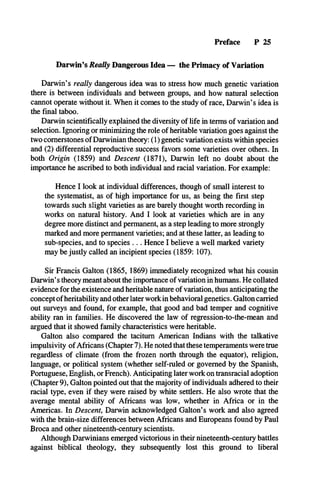
for serious assault, 31.0, 33.7, and 135.6. Rough-hewn though these measures
may be, the median number of violent crimes per 100,000 population was 35 for
Asians, 42 for Whites, and 149 for Blacks (see Chart P-5).
CHART P-5
International Crime Rates for the Three Races
(Murder, Rape, and Serious Assault) per 100,000
Population (After Whitney & Rushton, 2000)
Asians Whites Blacks
Preface P 25
Darwin’s Really Dangerous Idea — the Primacy of Variation
Darwin’s really dangerous idea was to stress how much genetic variation
there is between individuals and between groups, and how natural selection
cannot operate without it. When it comes to the study of race, Darwin’s idea is
the final taboo.
Darwin scientifically explained the diversity of life in terms of variation and
selection. Ignoring or minimizing the role of heritable variation goes against the
two cornerstones of Darwinian theory: (1) genetic variation exists within species
and (2) differential reproductive success favors some varieties over others. In
both Origin (1859) and Descent (1871), Darwin left no doubt about the
importance he ascribed to both individual and racial variation. For example:
Hence I look at individual differences, though of small interest to
the systematist, as of high importance for us, as being the first step
towards such slight varieties as are barely thought worth recording in
works on natural history. And I look at varieties which are in any
degree more distinct and permanent, as a step leading to more strongly
marked and more permanent varieties; and at these latter, as leading to
sub-species, and to species . .. Hence I believe a well marked variety
may be justly called an incipient species (1859: 107).
Sir Francis Galton (1865, 1869) immediately recognized what his cousin
Darwin’s theory meant about the importance of variation in humans. He collated
evidence for the existence and heritable nature of variation, thus anticipating the
concept of heritability and other later work in behavioral genetics. Galton carried
out surveys and found, for example, that good and bad temper and cognitive
ability ran in families. He discovered the law of regression-to-the-mean and
argued that it showed family characteristics were heritable.
Galton also compared the taciturn American Indians with the talkative
impulsivity of Africans (Chapter 7). He noted that these temperaments were true
regardless of climate (from the frozen north through the equator), religion,
language, or political system (whether self-ruled or governed by the Spanish,
Portuguese, English, or French). Anticipating later work on transracial adoption
(Chapter 9), Galton pointed out that the majority of individuals adhered to their
racial type, even if they were raised by white settlers. He also wrote that the
average mental ability of Africans was low, whether in Africa or in the
Americas. In Descent, Darwin acknowledged Galton’s work and also agreed
with the brain-size differences between Africans and Europeans found by Paul
Broca and other nineteenth-century scientists.
Although Darwinians emerged victorious in their nineteenth-century battles
against biblical theology, they subsequently lost this ground to liberal
P 26 Race, Evolution, and Behavior
egalitarians, Marxists, cultural-relativists, and literary deconstructionists. From
Herbert Spencer (1851) to the world depressions of the late 1920s and 1930s, the
political right gained the ascendancy in using evolutionary theory to support their
arguments, while the political left came to believe that "survival of the fittest"
was incompatible with social equality. Darwinism has been marginalized ever
since the mid-1920s when the Boasian school of anthropology succeeded in
decoupling the biological from the social sciences (Degler, 1991).
The data on race differences reviewed in this book and the evolutionary
models proposed to explain them conflict with what has become known as
“political correctness,” a mind set that subordinates knowledge and inquiry to
ideological discipline about social equality. Presenting misinformation, and the
deliberate withholding of evidence, have become all too characteristic of even
evolutionary scientists when they write about race. Three well known scientists
exemplify this trend: Stephen J. Gould, author of the revised and expanded
edition of The Mismeasure of Man (1996), Jared Diamond, author of Guns,
Germs, and Steel (1997), and Christopher Stringer, co-author with Robin McKie
of African Exodus (1996). I have reviewed the first two books in detail (see
Rushton, 1997b, 1999c).
In his 1981 edition of Mismeasure, Stephen J. Gould charged
nineteenth-century scientists with “juggling” and “finagling” brain size data in
order to place Northern Europeans at the apex of civilization. Implausibly, he
argued that Paul Broca, Francis Galton, and Samuel George Morton all
“finagled” in the same direction and by similar magnitudes using different
methods. Gould asks readers to believe that Broca “leaned” on his autopsy scales
when measuring wet brains byjust enough to produce the same differences that
Morton caused by “overpacking” empty skulls and that Galton caused with his
“extra loose” grip on calipers while measuring heads!
Yet even before Mismeasure's first edition (1981), new research was
confirming the work of these nineteenth-century pioneers. Gould neglected to
mention Van Valen’s (1974) review which established a positive correlation
between brain size and intelligence. As reviewed earlier in this Preface (and
especially Chapter 6), the single most devastating development for Gould is the
latest research on brain size. How could his revised and expanded edition have
missed all that research in the 1990s - called, with good reason, “The Decade
of the Brain”?
Jared Diamond, another well-known evolutionary biologist also joined the
debate over racial differences in IQ. In a few ex cathedra pronouncements,
Diamond branded the genetic argument “racist” (pp. 19-22), declared Hermstein
and Murray’s (1994) The Bell Curve “notorious” (p. 431), and claimed that:
“The objection to such racist explanations is notjust that they are loathsome but
also that they are wrong” (p. 19). He summarized his views in one creedal
sentence: “History followed different courses for different peoples because of
Preface P 27
differences among people’s environments, not because of biological differences
among peoples themselves” (p. 25).
Diamond’s thesis is that the peoples of the Eurasian continent were
environmentally, rather than biologically, advantaged. They had the good fortune
to have lived in centrally located homelands that were oriented along an
east-west axis, thereby allowing ready diffusion of their abundant supply of
domesticable animals, plants, and cultural innovations. The north-south axis of
Africa and of the Americas inhibited diffusion due to severe changes in climate.
Thus, the agriculturally wealthy Eurasians had a long head start in developing a
surplus population with a division of labor that enabled civilization to arise. Yet,
as an evolutionary biologist, Diamond should have informed his readers that
different environments cause, via natural selection, biological differences among
populations in brain size, just as they do in skin coloring and external
morphology.
Paleontologist Christopher Stringer of the British Museum of Natural
History, and author (with journalist Robin McKie) of African Exodus, provides
a final example of an important scholar who probably knew better. The parts of
the book that review human origins are excellent. Unfortunately, major errors
appear in the book when it engages in the obligatory trashing of both The Bell
Curve and my own work. Perhaps the desire to be politically correct compelled
the authors to write: “In any case, the story of our African Exodus makes it
unlikely that there are significant structural or functional differences between the
brains of the world’s various peoples” (p. 181).
The logic here is especially odd given that other parts of the book present a
fascinating discussion of how populations vary in jaw size and in number of
teeth. For example, page 215 states that compared to Africans, up to 15 percent
of Europeans have “at least two wisdom teeth missing...while in east Asia, the
figure can be as much as 30 percent in some areas.” While Stringer and McKie
describe how noses and skin color have been shaped in different regions, and
how Europeans and Asians have fewer teeth than Africans, they deny that there
are any brain size differences and they withhold from readers the modem
literature on brain size and IQ.
In fact, in a subsequent scientific paper, Stringer, Dean and Humphreys
(1999) cited racial differences in various mandibular traits (jaws and teeth)
including the bichondylar breadth of the mandible (i.e., the distance between the
two surfaces at the back of the jaw that attach to the base of the cranium) as
evidence to support the Out-of-Africa theory. In Asians bichondylar breadth is
wide, in Africans it is narrow, and Europeans are in between. The widening
bichondylar breadths occurred as a result of the widening brain cases!
These attempts to deny race differences amount to a new form of creationism
(Levin, 1997; Rushton, 1999b; Sarich, 1995). The scientific data fit the
Darwinian-Galtonian viewpoint; not the egalitarian one. The
P 28 Race, Evolution, and Behavior
Darwinian-Galtonian viewpoint has been abandoned for political reasons, not
because scientific research proved it wrong. In a search of the Medline database
for articles published in the last decade that referenced the keywords -- evolution,
genetics, behavior, and human - and the combination of those words, Bailey
(1997, p. 82) found that although each word alone was referenced by several
thousand articles, only one article referenced all four. Ruling out evolution and
genetics in explaining human behavior violates the consilient approach by which
E. O. Wilson predicts all knowledge can be unified in a grand synthesis (Wilson,
1998). It leaves the social sciences closer to medieval theology or Renaissance
humanitarianism than to modem science.
The life-history theory proposed in this book unites the evolutionary tradition
begun by Darwin with the behavior genetic tradition begun by Galton. Only by
studying race, evolution, and behavior, not studiously avoiding them, can we
truly stand on the shoulders of these giants who have come before us.
References
Bailey, J. M. (1997). Are genetically based individual differences compatible
with species-wide adaptations? In N. L. Segal, G. Weisfeld, & C. Weisfeld
(Eds.), Uniting Psychology andBiology: Integrative Perspectives on Human
Development (pp. 81-100). Washington, DC: American Psychological
Association.
Binkley, K. M. (1989). Racial Traits of American Blacks. Springfield, IL:
Charles C. Thomas.
Brues, A. M. (1990). People and Races. Prospect Heights, IL: Waveland Press.
Darwin, C. (1859). The Origin of Species. London: Murray.
Darwin, C. (1871). The Descent ofMan. London: Murray.
Degler, C. N. (1991). In Search ofHuman Nature. New York. Oxford University
Press.
Diamond, J. (1997). Guns, Germs, and Steel: The Fates of Human Societies.
New York: Norton.
Entine, J. (2000). Taboo: Why Black,Athletes Dominate Sports and Why WeAre
Afraid To Talk About It. New York: Public Affairs Press.
Fleagle, J. (1999). Primate Adaptation and Evolution (2nd. ed.). New York:
Academic Press.
Flashman, L. A., Andreasen, N. C., Flaum, M., & Swayze, V. W. II. (1998).
Intelligence and regional brain volumes in normal controls. Intelligence, 25,
149-160.
Flynn, J. R. (1999a). Evidence against Rushton: The genetic loading of WISC-R
subtests and the causes of between-group IQ differences. Personality and
Individual Differences, 26, 373-379.
Flynn, J. R. (1999b). Reply to Rushton: A gang ofgs overpowers factor analysis.
Preface P 29
Personality and Individual Differences, 26, 391-393.
Flynn, J. R. (1999c). Searching forjustice: The discovery of IQ gains over time.
American Psychologist, 54, 5-20.
Flynn, J. R. (in press). Reply to Rushton. American Psychologist.
Galton, F. (1865). Hereditary talents and character. Macmillan's Magazine, 12,
157-166,318-327.
Galton, F. (1869). Hereditary Genius. London: Macmillan.
Gould, S. J. (1981). The Mismeasure ofMan. New York: Norton.
Gould, S. J. (1996). The Mismeasure ofMan (Revised and Expanded Edition).
New York: Norton.
Gur, R. C., Turetsky, B. I., Matsui, M., Yan, M., Bilkur, W., Hughett, P., & Gur,
R. E. (1999). Sex differences in brain gray and white matter in healthy young
adults: Correlations with cognitive performance. Journal of Neuroscience,
19, 4065-4072.
Hermstein, R. J., & Murray, C. (1994). The Bell Curve: Intelligence and Class
Structure in American Life. New York: Free Press.
Interpol. (1993-1996). International Crime Statistics, 1963-1996. Lyons, France:
Interpol General Secretariat.
Jensen, A. R. (1972). Genetics and Education. London: Methuen.
Jensen, A. R. (1998). The g Factor. Westport, CT: Praeger.
Johanson, D. C., & Edey, M. A. (1981). Lucy: The Beginnings ofHuman Kind.
New York: Simon & Schuster.
Kamin, L., & Omari, S. (1998). Race, head size, and intelligence. South African
Journal of Psychology, 28, 119-128.
Krogman, W. M., & Ypcan, M. Y. (1986). The Human Skeleton in Forensic
Medicine (2nd edition). Springfield, IL: Charles C. Thomas.
Levin, M. (1997). Why Race Matters. Westport, CT: Praeger.
Lynn, R. (1997). Geographical variation in intelligence. In H. Nyborg (Ed.), The
Scientific Study ofHuman Nature. Oxford: Elsevier.
Neapolitan, J. L. (1998). Cross-national variation in homicides: Is race a factor?
Criminology, 36, 139-155.
Murray, C. (1996). Afterword. In R. J. Hermstein & C. Murray The Bell Curve
(Paperback Edition). New York: Free Press.
Reiss, A. R., Abrams, M. T., Singer, H. S., Ross, J. R., & Denckla, M. B.
(1996). Brain development, gender and IQ in children: A volumetric study.
Brain, 119, 1763-1774.
Rushton, J. P. (1992). Cranial capacity related to sex, rank, and race in a
stratified random sample of 6,325 U.S. military personnel. Intelligence, 16,
401-413.
Rushton, J. P. (1995). Race, Evolution, and Behavior: A Life-History
Perspective. New Brunswick, NJ: Transaction.
Rushton, J. P. (1997a). Cranial size and IQ in Asian Americans from birth to age
P 30 Race, Evolution, and Behavior
seven. Intelligence, 25, 7-20.
Rushton, J. P. (1997b). Race, intelligence, and the brain: The errors and
omissions of the ‘revised’ edition of S. J. Gould’s The Mismeasure of Man
(1996). Personality and Individual Differences, 23, 169-180.
Rushton, J. P. (1998). The “Jensen Effect” and the “Spearman-Jensen
Hypothesis” of Black-White IQ differences. Intelligence, 26, 217-225.
Rushton, J. P. (1999a, April 29). Brain Size and Cognitive Ability: A Review
With New Evidence. Presented at the Annual Meeting of the American
Association of Physical Anthropologists, Columbus, OH.
Rushton, J. P. (1999b). Darwin’s really dangerous idea - the primacy of
variation. In J. M. G. van der Dennen, D. Smillie, and D. R. Wilson (Eds.),
The Darwinian Heritage and Sociobiology (pp. 210-229). Westport, CT:
Praeger.
Rushton, J. P. (1999c). [Review of Jared Diamond’s Guns, Germs, and Steel:
The Fates of Human Societies. New York: Norton]. Population and
Environment, 21, 99-107.
Rushton, J. P. (1999d). Secular gains in IQ not related to the g factor and
inbreeding depression — unlike Black-White differences: A reply to Flynn.
Personality and Individual Differences, 26, 381-389.
Rushton, J. P. (in press). Flynn effects not genetic and unrelated to race
differences. American Psychologist.
Rushton, J. P., & Ankney, C.D. (1996). Brain size and cognitive ability:
Correlations with age, sex, social class and race. Psychonomic Bulletin and
Review, 3, 21-36.
Rushton, J. P., & Ankney, C.D. (in press). Size matters: A review of racial
differences in cranial capacity and intelligence that refute Kamin and Omari.
Personality and Individual Differences.
Rushton, J. P., & Skuy, M. (in press). Performance on Raven’s Matrices by
African and White university students in South Africa. Intelligence.
Sarich, V. M. (1995). In defense of The Bell Curve. Skeptic, 3(3), 84-93.
Schoenemann, P. T. (1997). An MRI Study ofThe Relationship Between Human
Neuroanatomy andBehavioralAbility. Unpublished dissertation, Department
of Anthropology, University of California, Berkeley.
Skuy, M., Gewer, A., & Rushton, J. P. (2000). An Intervention Study of
University Student's Performance on Raven's Progressive Matrices in South
Africa. Unpublished manuscript, Division of Specialized Education,
University of the Witwatersrand, Johannesburg 2050, South Africa.
Skuy, M., Schutte, E., Fridjhon, P., & O’Carroll, S. (2000). Suitability of
Published Neuropsychological Test Norms for Urban African Secondary
School Students in South Africa. Unpublished manuscript, Division of
Specialized Education, University ofthe Witwatersrand, Johannesburg 2050,
South Africa.
Preface P 31
Spencer, H. (1851). Social Statistics. London: Chapman.
Stringer, C. & McKie, R. (1996). African Exodus. London: Cape.
Stringer, C. B., Dean, M. C., & Humphrey, L. T. (1999). Regional variation in
human mandibular morphology. American JournalofPhysicalAnthropology,
Supplement 28, (Abstract).
Tan, U., Tan, M., Polat, P., Ceylan, Y., Surna, S., & Okur, A. (1999). Magnetic
resonance imaging brain size/IQ relations in Turkish university students.
Intelligence, 27, 83-92.
Taylor, J., & Whitney, G. (1999). Crime and racial profiling by U.S. police: Is
there an empirical basis? Journal ofSocial, Political, and Economic Studies,
24, 485-510.
Tramo, M. J., Loftus, W. C., Stukel, T. A., Green, R. L., Weaver, J. B., &
Gazzaniga, M. S. (1998). Brain size, head size, and intelligence quotient in
monozygotic twins. Neurology, 50, 1246-1252.
UNAIDS. (1999). AIDS Epidemic Update: December 1999. New York: United
Nations.
Van Valen, L. (1974). Brain size and intelligence in man. American Journal of
Physical Anthropology, 40, 417-424.
Whitney, G., & Rushton, J. P. (2000). Race and crime: A Reply to Neapolitan
with New Evidence. Unpublished Manuscript, Department of Psychology,
Florida State University, Tallahassee, Florida 32306-1270.
Wickett, J. C., Vernon, P. A., & Lee, D. H. (in press). The relationships between
the factors of intelligence and brain volume. Personality and Individual
Differences.
Wilson, E. O. (1975). Sociobiology: The new synthesis. Cambridge, MA:
Harvard University Press.
Wilson, E. O. (1998). Consilience: The unity of knowledge. New York: Knopf.
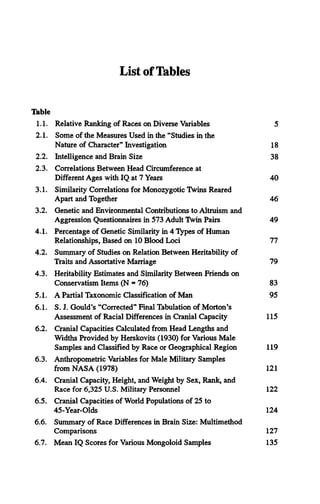
List of Tables
Table
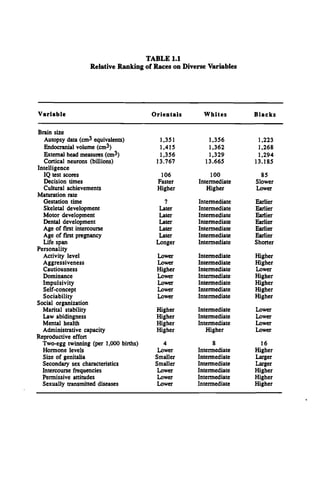
1.1. Relative Ranking of Races on Diverse Variables 5
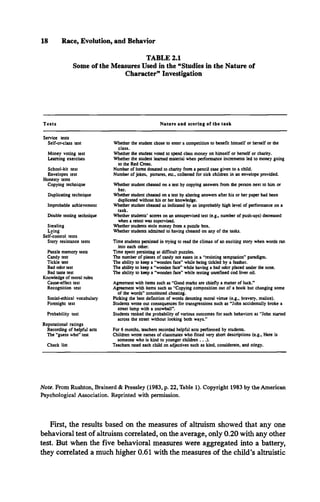
2.1. Some of the Measures Used in the “Studies in the
Nature of Character” Investigation 18
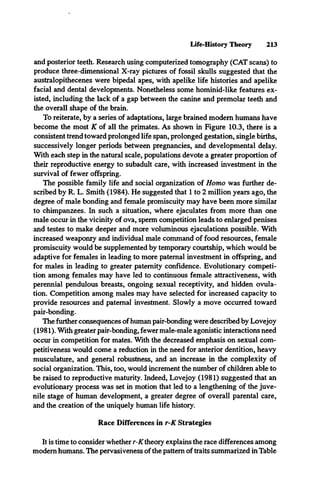
2.2. Intelligence and Brain Size 38
2.3. Correlations Between Head Circumference at
Different Ages with IQ at 7 Years 40
3.1. Similarity Correlations for Monozygotic Twins Reared
Apart and Together 46
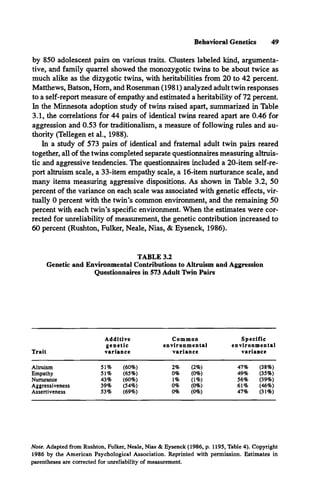
3.2. Genetic and Environmental Contributions to Altruism and
Aggression Questionnaires in 573 Adult Twin Pairs 49
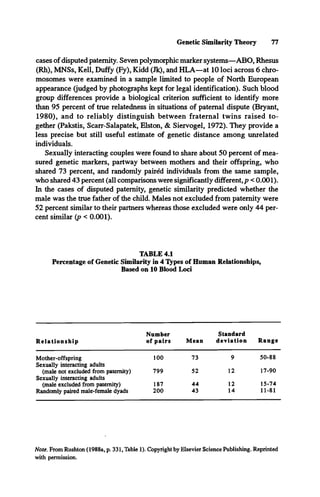
4.1. Percentage of Genetic Similarity in 4 Types of Human
Relationships, Based on 10 Blood Loci 77
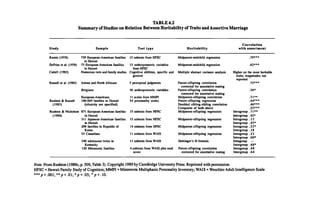
4.2. Summary of Studies on Relation Between Heritability of
Traits and Assortative Marriage 79
4.3. Heritability Estimates and Similarity Between Friends on
Conservatism Items (N = 76) 83
5.1. A Partial Taxonomic Classification of Man 95
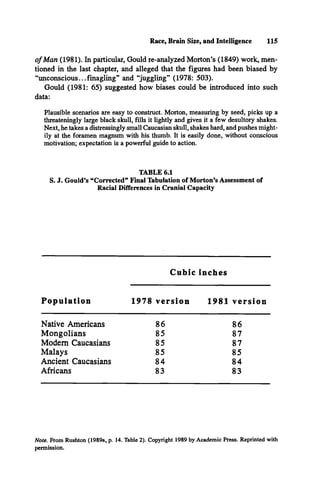
6.1. S. J. Gould’s “Corrected” Final Tabulation of Morton’s
Assessment of Racial Differences in Cranial Capacity 115
6.2. Cranial Capacities Calculated from Head Lengths and
Widths Provided by Herskovits (1930) for Various Male
Samples and Classified by Race or Geographical Region 119
6.3. Anthropometric Variables for Male Military Samples
from NASA (1978) 121
6.4. Cranial Capacity, Height, and Weight by Sex, Rank, and
Race for 6,325 U.S. Military Personnel 122
6.5. Cranial Capacities of World Populations of 25 to
45-Year-Olds 124
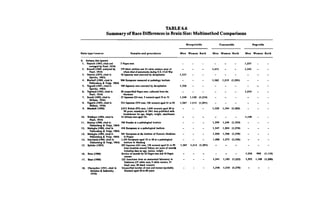
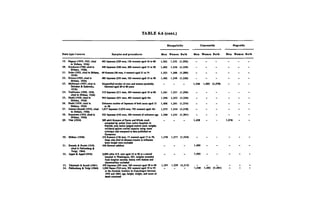
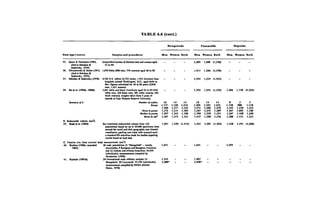
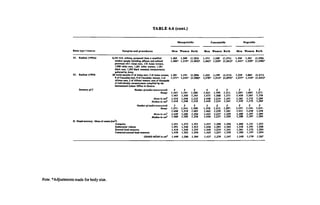
6.6. Summary of Race Differences in Brain Size: Multimethod
Comparisons 127
6.7. Mean IQ Scores for Various Mongoloid Samples 135
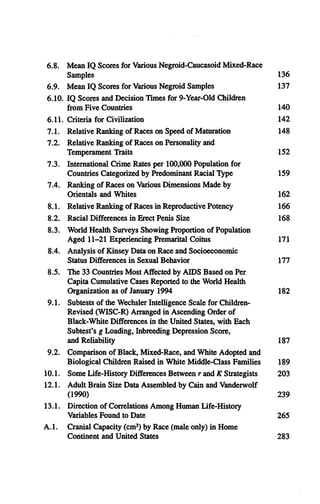
6.8. Mean IQ Scores for Various Negroid-Caucasoid Mixed-Race
Samples 136
6.9. Mean IQ Scores for Various Negroid Samples 137
6.10. IQ Scores and Decision Times for 9-Year-Old Children
from Five Countries 140
6.11. Criteria for Civilization 142
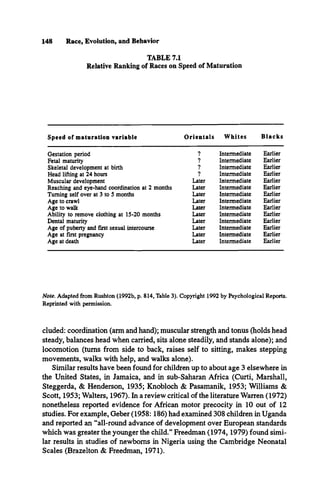
7.1. Relative Ranking of Raceson Speed of Maturation 148
7.2. Relative Ranking of Races on Personality and
Temperament Traits 152
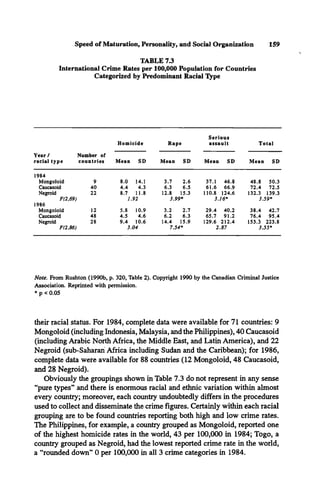
7.3. International Crime Rates per 100,000 Population for
Countries Categorized by Predominant Racial Type 159
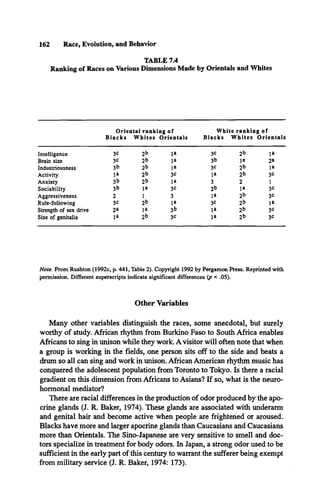
7.4. Ranking of Races on Various Dimensions Made by
Orientals and Whites 162
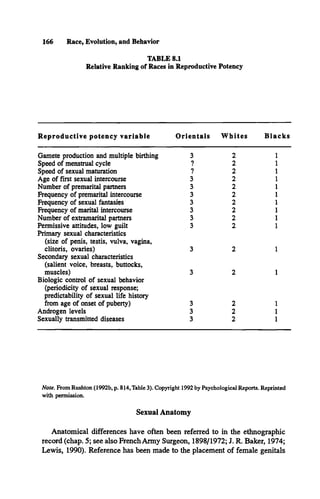
8.1. Relative Ranking of Races in Reproductive Potency 166
8.2. Racial Differences in Erect Penis Size 168
8.3. World Health Surveys Showing Proportion of Population
Aged 11-21 Experiencing Premarital Coitus 171
8.4. Analysis of Kinsey Data on Race and Socioeconomic
Status Differences in Sexual Behavior 177
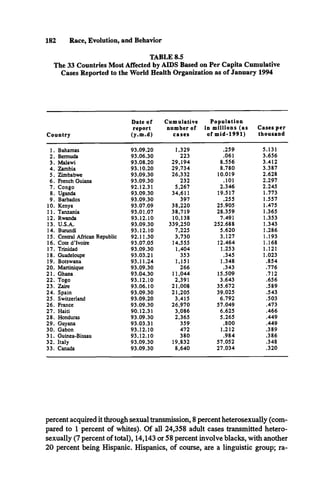
8.5. The 33 Countries Most Affected by AIDS Based on Per
Capita Cumulative Cases Reported to the World Health
Organization as of January 1994 182
9.1. Subtests of the Wechsler Intelligence Scale for Children-
Revised (WISC-R) Arranged in Ascending Order of
Black-White Differences in the United States, with Each
Subtest’s g Loading, Inbreeding Depression Score,
and Reliability 187
9.2. Comparison of Black, Mixed-Race, and White Adopted and
Biological Children Raised in White Middle-Class Families 189
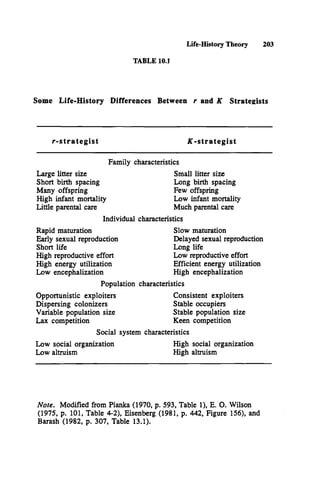
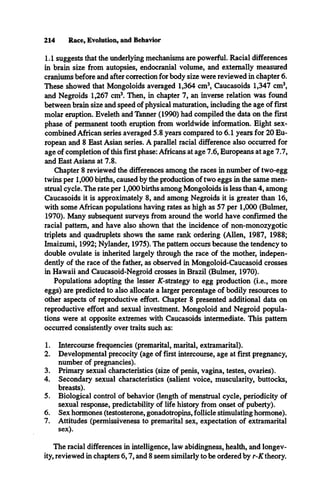
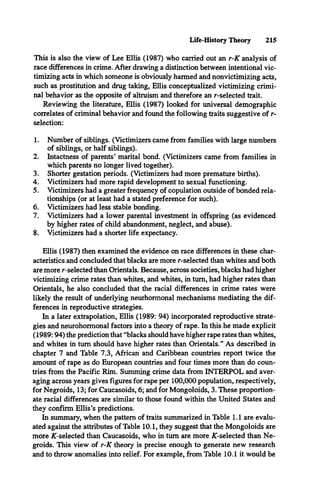
10.1. Some Life-History Differences Between r and K Strategists 203
12.1. Adult Brain Size Data Assembled by Cain and Vanderwolf
(1990) 239
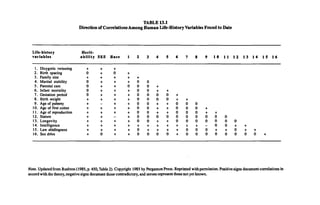
13.1. Direction of Correlations Among Human Life-History
Variables Found to Date 265
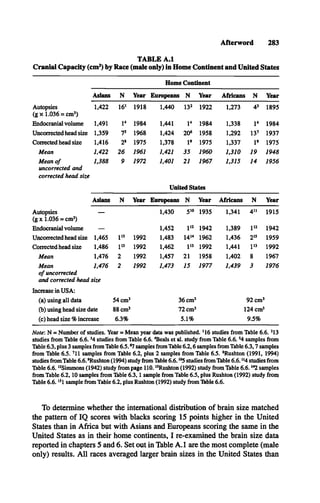
A. 1. Cranial Capacity (cm3) by Race (male only) in Home
Continent and United States 283
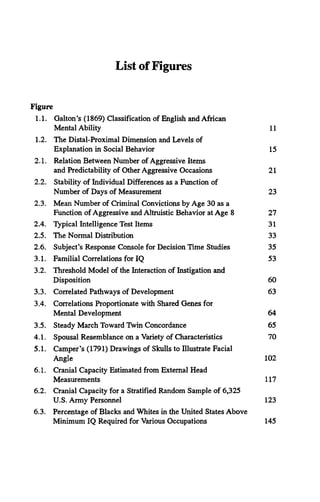
List of Figures
Figure
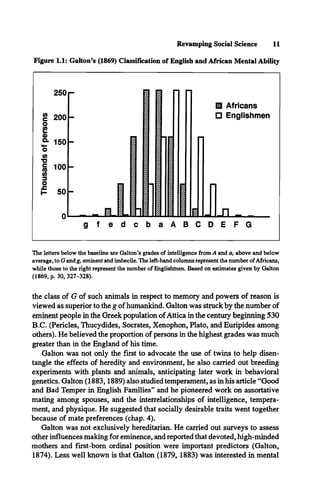
1.1. Galton’s (1869) Classification of English and African
Mental Ability 11
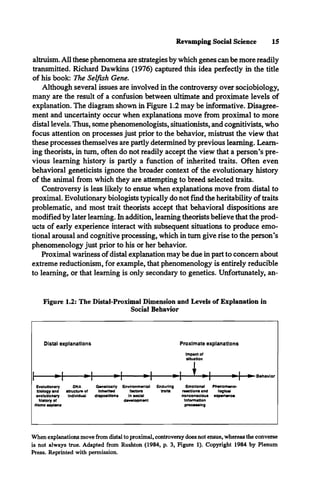
1.2. The Distal-Proximal Dimension and Levels of
Explanation in Social Behavior 15
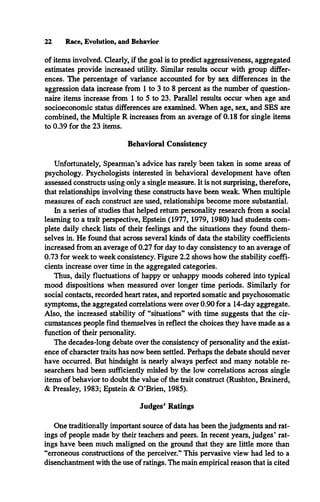
2.1. Relation Between Number of Aggressive Items
and Predictability of Other Aggressive Occasions 21
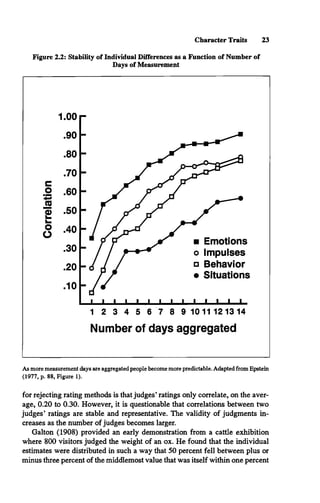
2.2. Stability of Individual Differences as a Function of
Number of Days of Measurement 23
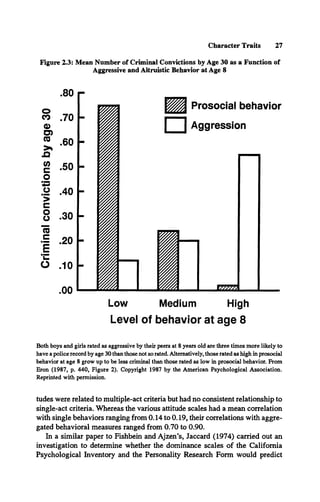
2.3. Mean Number of Criminal Convictions by Age 30 as a
Function of Aggressive and Altruistic Behavior at Age 8 27
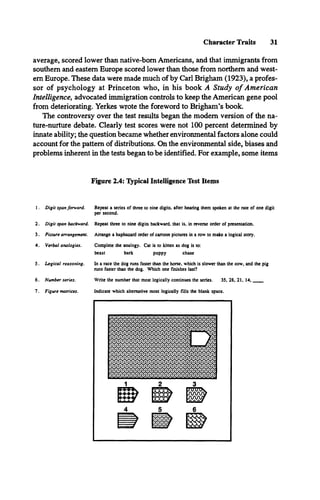
2.4. Typical Intelligence Test Items 31
2.5. The Normal Distribution 33
2.6. Subject’s Response Console for Decision Time Studies 35
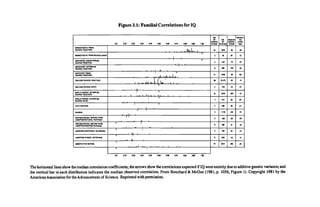
3.1. Familial Correlations for IQ 53
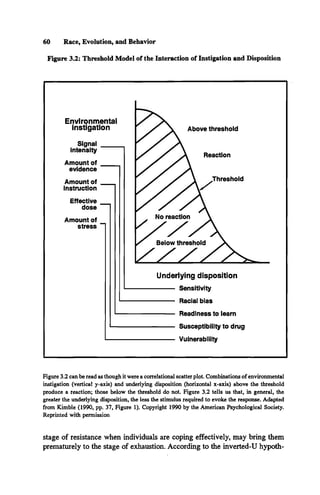
3.2. Threshold Model of the Interaction of Instigation and
Disposition 60
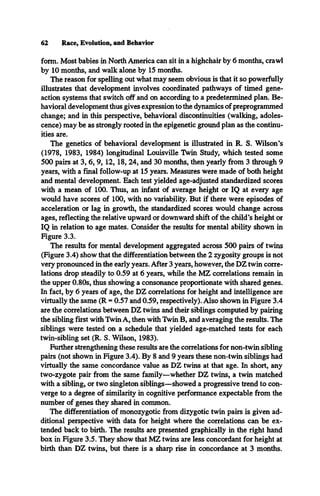
3.3. Correlated Pathways of Development 63
3.4. Correlations Proportionate with Shared Genes for
Mental Development 64
3.5. Steady March Toward Twin Concordance 65
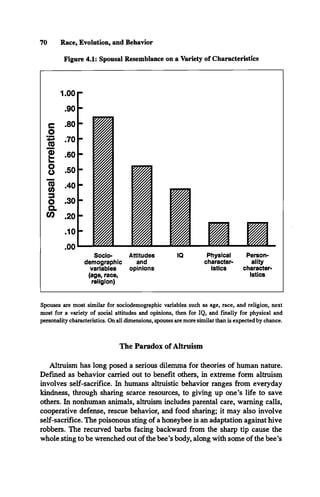
4.1. Spousal Resemblance on a Variety of Characteristics 70
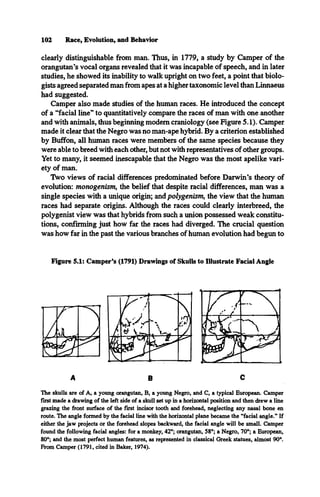
5.1. Camper’s (1791) Drawings of Skulls to Illustrate Facial
Angle 102
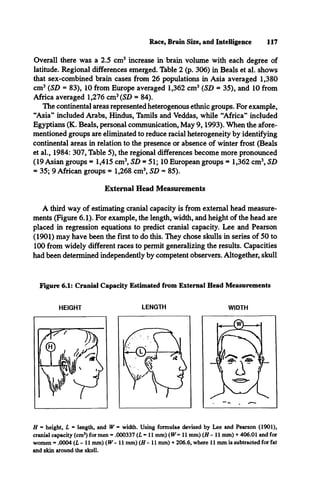
6.1. Cranial Capacity Estimated from External Head
Measurements 117
6.2. Cranial Capacity for a Stratified Random Sample of 6,325
U.S. Army Personnel 123
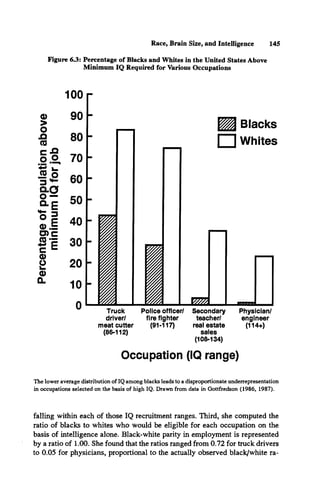
6.3. Percentage of Blacks and Whites in the United States Above
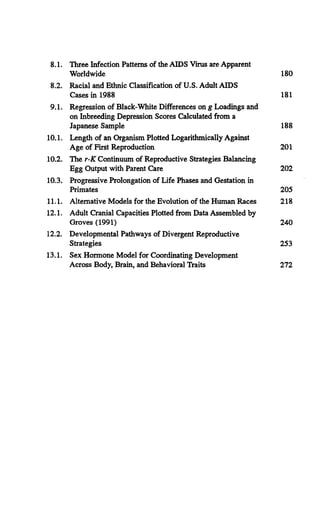
Minimum IQ Required for Various Occupations 145
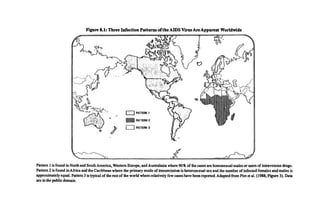
8.1. Three Infection Patterns of the AIDS Virus are Apparent
Worldwide 180
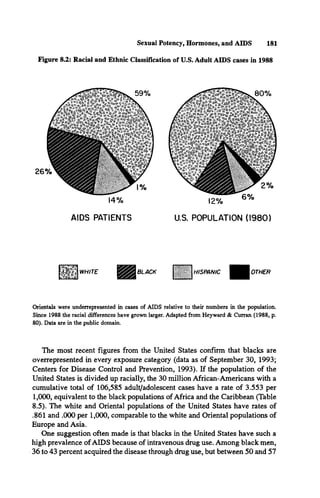
8.2. Racial and Ethnic Classification of U.S. Adult AIDS
Cases in 1988 181
9.1. Regression of Black-White Differences on g Loadings and
on Inbreeding Depression Scores Calculated from a
Japanese Sample 188
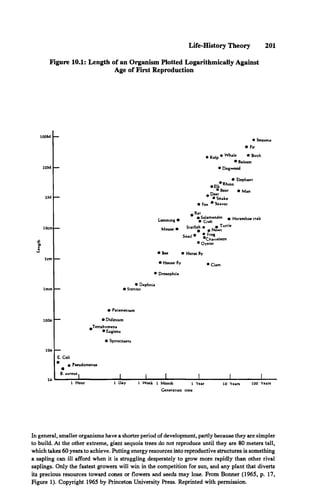
10.1. Length of an Organism Plotted Logarithmically Against
Age of First Reproduction 201
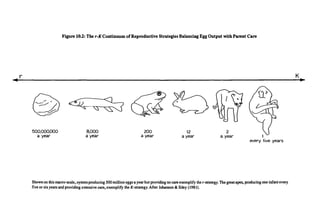
10.2. The r-K Continuum of Reproductive Strategies Balancing
Egg Output with Parent Care 202
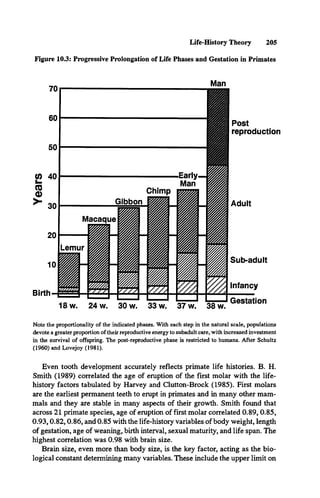
10.3. Progressive Prolongation of Life Phases and Gestation in
Primates 205
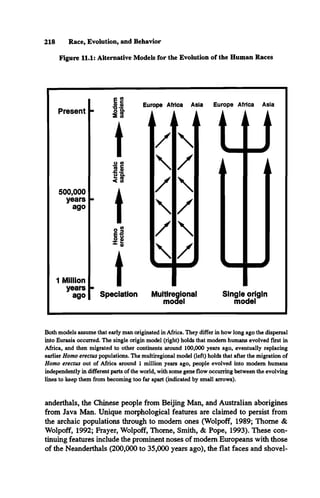
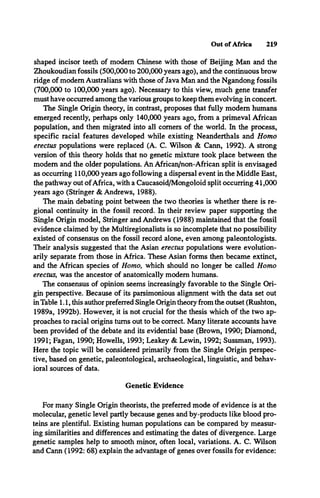
11.1. Alternative Models for the Evolution of the Human Races 218
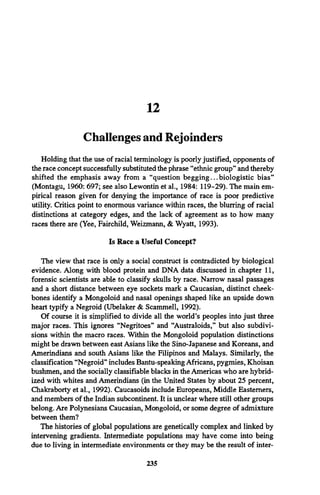
12.1. Adult Cranial Capacities Plotted from Data Assembled by
Groves (1991) 240
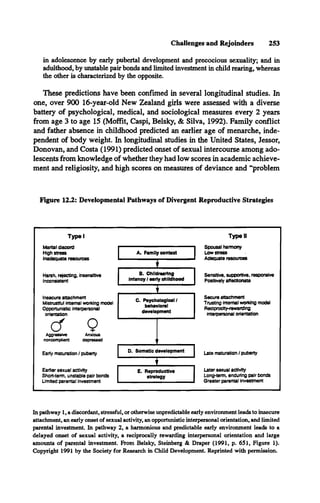
12.2. Developmental Pathways of Divergent Reproductive
Strategies 253
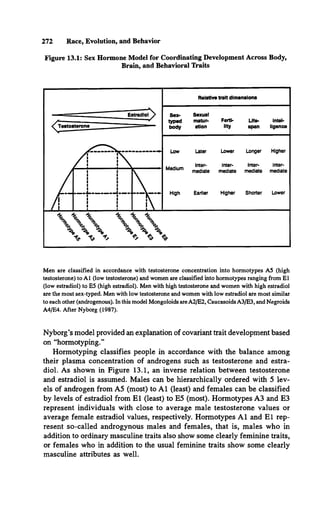
13.1. Sex Hormone Model for Coordinating Development
Across Body, Brain, and Behavioral Traits 272
Preface to the First Edition
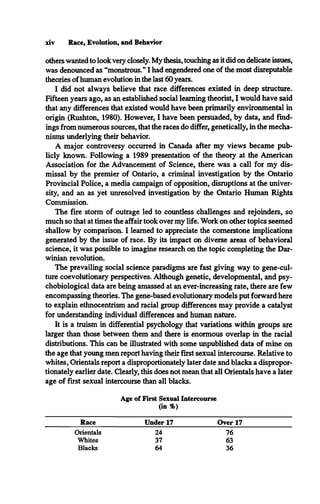
Over the last several years I have reviewed the international literature on
race differences, gathered novel data and found a distinct pattern. On more
than 60 variables, people of east Asian ancestry (Mongoloids, Orientals) and
people ofAfrican ancestry (Negroids, blacks) define opposite ends of the spec­
trum, with people of European ancestry (Caucasoids, whites) falling interme­
diately, and with much variability within each broad grouping (see Glossary
regarding terminology). This racial matrix emerges with measures of brain
size, intelligence, reproductive behavior, sex hormones, twinning rate, speed
of physical maturation, personality, family stability, law-abidingness, and so­
cial organization.
To account for the pattern, I proposed a gene-based evolutionary theory
familiar to biologists as the r-K scale of reproductive strategy. At one end of
this scale are r-strategies, which emphasize high reproductive rates, and, at
the other, /f-strategies, which emphasize high levels of parental investment.
This scale is generally used to compare the life histories of widely disparate
species but I used it to describe the immensely smaller variations within the
human species. To emphasize that all human beings are ^-selected relative to
other animals this proposal was referred to as “differential K theory” (Rushton,
1984,1985a). I hypothesized that Mongoloid people are more ^-selected than
Caucasoids, who in turn are more ^-selected than Negroids.
I also mapped the r-K scale onto human evolution. Molecular genetic evi­
dence indicates that modem humans evolved in Africa sometime after 200,000
years ago, with an African/non-African split occurring about 110,000 years
ago and a Mongoloid/Caucasoid split about 41,000 years ago. Evolutionary
selection pressures are far different in the hot African savanna where Negroids
evolved, than in the cold Arctic environment, where Mongoloids evolved.
Hence, it was predictable that these geographic races would show genetic dif­
ferences in numerous traits. African populations, the earliest to emerge, are
least AT-selected, and Mongoloids, emerging latest, are most ^-selected, with
Caucasoids falling intermediately. Such an ordering explains how and why
the variables clustered.
It is provocative, to say the least, to treat each of these vast races as a separate
human subspecies whose multifarious patterns ofbehavior are reduced to an aver­
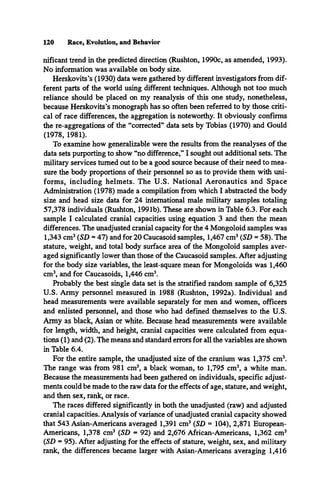
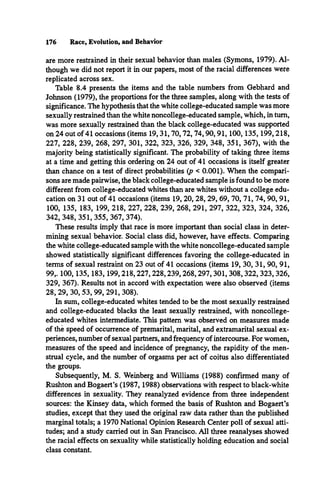
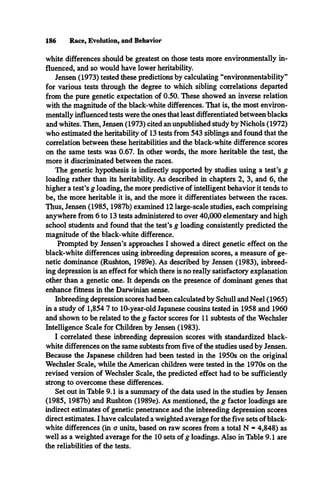
age position on a gene-based scale of reproductive strategy. But the question I
asked myselfrepeatedly was: Did the facts fit the theory? Unfortunately not many
xiii
xiv Race, Evolution, and Behavior
others wanted to look very closely. My thesis, touching as it did on delicate issues,
was denounced as “monstrous.” I had engendered one of the most disreputable
theories ofhuman evolution in the last 60 years.
I did not always believe that race differences existed in deep structure.
Fifteen years ago, as an established social learning theorist, I would have said
that any differences that existed would have been primarily environmental in
origin (Rushton, 1980). However, I have been persuaded, by data, and find­
ings from numerous sources, that the races do differ, genetically, in the mecha­
nisms underlying their behavior.
A major controversy occurred in Canada after my views became pub­
licly known. Following a 1989 presentation of the theory at the American
Association for the Advancement of Science, there was a call for my dis­
missal by the premier of Ontario, a criminal investigation by the Ontario
Provincial Police, a media campaign of opposition, disruptions at the univer­
sity, and an as yet unresolved investigation by the Ontario Human Rights
Commission.
The fire storm of outrage led to countless challenges and rejoinders, so
much so that at times the affair took over my life. Work on other topics seemed
shallow by comparison. I learned to appreciate the cornerstone implications
generated by the issue of race. By its impact on diverse areas of behavioral
science, it was possible to imagine research on the topic completing the Dar­
winian revolution.
The prevailing social science paradigms are fast giving way to gene-cul­
ture coevolutionary perspectives. Although genetic, developmental, and psy­
chobiological data are being amassed at an ever-increasing rate, there are few
encompassing theories. The gene-based evolutionary models put forward here
to explain ethnocentrism and racial group differences may provide a catalyst
for understanding individual differences and human nature.
It is a truism in differential psychology that variations within groups are
larger than those between them and there is enormous overlap in the racial
distributions. This can be illustrated with some unpublished data of mine on
the age that young men report having their first sexual intercourse. Relative to
whites, Orientals report a disproportionately later date and blacks a dispropor­
tionately earlier date. Clearly, this does not mean that all Orientals have a later
age of first sexual intercourse than all blacks.
Age of First Sexual Intercourse
(in %)
Race Under 17 Over 17
Orientals 24 76
Whites 37 63
Blacks 64 36
Preface xv
On any single dimension to be discussed the racial differences are not large.
Typically they range from 4 to 34 percentile points. Although often modest,
the mean differences do exist, and they do so in a stubborn and consistent
pattern. Obviously, however, it is problematic to generalize from a propor­
tionate difference or group average to any particular individual. At the level of
the individual, it must be recognized that almost all will have a mixture of r
and K characteristics.
It is also necessary to emphasize the indisputable fact that much more re­
search is needed. Objective hypothesis testing about racial differences in be­
havior has been much neglected over the past 60 years and knowledge is not
as advanced as it ought to be. Many of the data sets and theoretical accounts
provided here need much improvement. Rough-hewn though some of the evi­
dence may be, it is clear that substantial racial differences do exist and that
their pattern cannot be explained adequately except from an evolutionary
perspective.
Although the thesis of this book is that genetic variation contributes impor­
tantly to the differences between human groups, it is obvious that environ­
mental factors do so too. I would hold, on the currently available evidence,
that the genetic and environmental contributions are about equal. Note that
genetic effects, like environmental effects, are necessarily mediated by neu­
roendocrine and psychosocial mechanisms. These offer numerous ways for
intervention and the alleviation of suffering.
Acknowledgments
This work belongs in the “London School" tradition founded by Sir Francis
Galton. It has had a long gestation. Although I was educated at the University
of London, earning a B.Sc. (1970) in psychology from Birkbeck College and
a Ph.D. (1973) in social psychology from the London School of Economics
and Political Science, I was not aware at the time how much my thinking was
influenced by this unique amalgam of evolutionary biology, behavioral genet­
ics, psychometrics, and neuroscience. Until 1980 I pursued my primary re­
search trajectory in social learning theory. However, the discussion about the
genetics of intelligence and the biological basis of behavior that occurred there
stimulated vital thoughts that might not have happened elsewhere.
The work's specific origin was a book chapter written during an academic
term (1981) as the guest of Paul Mussen at the Institute of Human Develop­
ment of the University of California at Berkeley. In this chapter I broadened
my social learning paradigm to encompass sociobiology (Rushton, 1984).
Effort continued during a sabbatical (1982-1983) with Hans Eysenck at the
University of London's Institute of Psychiatry.
The awarding of a Faculty of Social Science Research Professorship from
the University of Western Ontario allowed me a year’s relief from teaching
duties (1987-1988). So did a fellowship in the John Simon Guggenheim Me­
morial Foundation (1988-1989), and then another sabbatical from the Uni­
versity of Western Ontario (1989-1990).
My research was initially supported by the Social Sciences and Humanities
Research Council of Canada. During 1988-1989 it was assisted by a fellow­
ship from the John Simon Guggenheim Foundation. For the last several years
it has been sustained by The Pioneer Fund (U.S.A.). I am deeply grateful to
Harry Weyher, president of the Pioneer Fund, for his unwavering support.
Two colleagues at Western provided magnificent help over many years.
Douglas Jackson in psychology expanded my knowledge of psychometrics
and Davison Ankney in zoology enlightened my thinking on evolution. Their
wisdom, however, extends greatly beyond these central areas of expertise.
Excellent long-distance encouragement was provided by Arthur Jensen at
the University of California at Berkeley and Richard Lynn at the University of
Ulster. Both brought a stream of important items to my attention and regularly
consulted on difficult issues. Their research discoveries form important parts
of this book.
xvii
xviii Race, Evolution, and Behavior
I am much beholden to those who provided specific advice on earlier drafts
of the book: Davison Ankney, Hans Eysenck, Desmond ffolliett, Jeffrey Gray,
Barry Gross, Richard Hermstein, Douglas Jackson, Arthur Jensen, Sandi
Johnson, Michael Levin, Richard Lynn, Edward Miller, Travis Osborne, and
Harry Weyher. Others prefer to remain anonymous. Because my advisers and
benefactors may not approve of all that I have written, they cannot be held
accountable for any of the book’s failings. I alone am responsible for these.
Finally, I am more indebted to my family than I can possibly express. With­
out their encouragement, the book might never have been completed.
1
Revamping Social Science
Favoritism for one’s own ethnic group may have arisen as an extension of
enhancing family and social cohesiveness (chap. 4). Because people give pref­
erential treatment to those who genetically resemble themselves in order to
help propagate their genes more effectively, xenophobia may represent a dark
side of human altruism.
The propensity to defend one’s own group, to see it as special, and not to be
susceptible to the laws of evolutionary biology makes the scientific study of
ethnicity and race differences problematic. Theories and facts generated in
race research may be used by ethnic nationalists to propagate political posi­
tions. Antiracists may also engage in rhetoric to deny differences and suppress
discoveries. Findings based on the study of race can be threatening. Ideologi­
cal mine fields abound in ways that do not pertain to other areas of inquiry.
For scientific progress to be made it is necessary to rise above both “racist”
and “antiracist” ideology. Suppose that a team of extraterrestrial scientists
arrived on earth to study humans. Obviously they would quickly observe that,
like many other species, humans showed considerable geographical variation
in morphology. Three major geographical populations or “races” would be
identified immediately and investigation mounted into how many others ex­
isted. Questions about the origin of the body types would be asked and also
whether they covaried with life history variables including reproductive tac­
tics in particular. If these scientists had a solid understanding of evolutionary
biology, they would also investigate if these populations differed behavior­
ally, for example with respect to parental investment and social organization,
and, if they did, how the differences might have evolved. Such an approach
has proved very fruitful for population biologists studying other animals, par­
ticularly since E. O. Wilson’s (1975) synthesis of sociobiology. If we are as
interested in gaining knowledge as would be these “extraterrestrials”, then we
should apply similar procedures to our study of Homo sapiens.
For some, it would have been better if Mother Nature had made people,
genetically, all the same. Cooperation would be easier and we could design
just one type of society that would fit everybody. However, we are not all the
same. Even children within the same family substantially differ from each
other both genetically and behaviorally (Plomin & Daniels, 1987). If we ex­
1
2 Race, Evolution, and Behavior
amine how wide the differences can be between brothers and sisters who share
the same food, watch the same TV, go to the same schools, and have the same
parents, how much more different from each other must we expect other hu­
mans to be, especially those living in regions far apart that are normally clas­
sified as “races”?
The Nature-Nurture Debate
One of the great worldviews of social science has been that economic and
other environmental forces are preeminent in the causation of individual be­
havior. Modem social scientists have also been egalitarian, promoting the idea
that all babies are bom with essentially equal endowments. It follows that
subsequent inequalities in wealth and poverty, success and failure, happiness
and misery, and sickness and health are the product of social forces.
John B. Watson (1878-1958), the founder of behaviorism articulated what
was to become the social science orthodoxy (1924: 104):
Give me a dozen healthy infants, well formed, and my own specified world to
bring them up in and F ll guarantee to take any one at random and train him to
become any type of specialist I might select—doctor, lawyer, artist, merchant-chief
and, yes, even beggar-man and thief, regardless of his talents, penchants, tenden­
cies, abilities, vocations, and race of his ancestors. I am going beyond my facts and
I admit it, but so have the advocates of the contrary and they have been doing it for
many thousands of years. Please note that when this experiment is made I am to be
allowed to specify die way the children are to be brought up and the type of world
they have to live in.
Benevolent environmentalism generated a plethora of strategies for inter­
vention in the home, the workplace, the mass media, and the criminal justice
system. Psychotherapies and self-help systems flourished as people attempted
to rectify blemishes and achieve self-fulfillment. Social workers battled the
harmful effects of poverty, unemployment, and other factors.
Environmentalism dovetailed with political philosophies striving to gener­
ate sweeping changes in human affairs. From capitalist democracies to totali­
tarian collectivities, social engineering began in earnest. Marxists took the
argument furthest, preaching that public ownership of the economic base of
society was a necessary precondition for social harmony.
Especially following World War II (1939-1945) and the revulsion to Hitler’s
racial policies, egalitarianism led to the virtual elimination of Darwinian think­
ing among Western social scientists (Degler, 1991). The doctrine of biological
equality was taken to an extreme among Communists in the Soviet Union and
elsewhere (Clark, 1984). Throughout the world, leftists took up the cry “Not
in Our Genes” and vociferously asserted that social inequalities were due en­
tirely to repressive environments (Lewontin, Rose, & Kamin, 1984; Lewontin,
1991).
Revamping Social Science 3
The nature-nurture debate is fought between those who, in effect, advo­
cate an extreme 100 percent environmentalist position and those who advo­
cate a moderate, even 50-50, position. No behavioral geneticist believes in a
100 percent genetic determinism because it is obvious that physical growth
and mental development require good nutrition, fresh air, and exercise and
that children and neophytes learn best with access to experienced role models.
Genetic influence (not determinism) is the key phrase, for genetic effects are
necessarily mediated by neuroendocrine and psychosocial systems that have
independent influence on phenotypic behavior.
The burning question is how substantial is the genetic contribution to hu­
man nature and the differences therein? While lip service has been paid to the
view that people are a product of both genes and culture, until recently, many
social scientists and philosophers acted as though the human mind was a blank
slate and each person exclusively a product of his or her history and economic
arrangement.
During the 1980s there was an increased acceptance of behavioral genetics
and evolutionary theorizing. Even the most rigid opponents acquiesced as sci­
entific breakthroughs made headlines. Major reviews of the twin and adop­
tion literature appeared in Science and other prestigious journals, leading to
the widely accepted conclusion that “genetic factors exert a pronounced and
pervasive influence on behavioral variability” (Bouchard, Lykken, McGue,
Segal, & Tellegen, 1990: 223).
Discoveries in medical genetics heralded what was to come with gene
therapy a possibility for a variety of classic psychological disorders including
anxiety, depression, and schizophrenia. The project to sequence the entire
human genome got underway, a multibillion dollar international undertaking.
Although hard-core naysayers such as Science for the People remained im­
placably opposed to developments (Lewontin, 1991), clearly, the climate was
changing.
A renewal of interest in human racial origins also characterized the 1980s
with Africa identified as the Garden of Eden. In the 1970s dramatic fossil
discoveries in East Africa of Homo habilis and Homo erectus, along with the
3.7 million-year-old footprints and bones of “Lucy” and her fellow
australopithecenes captured the public imagination. By the 1980s, through
genetic analyses of existing human populations, “Eve” was thought to be a
long-armed, thick-boned, well-muscled, dark-skinned woman who lived some
200,000 years ago on the East African savanna. She appeared on the front
cover of Newsweek (January 11,1988) and helped center a debate on the evo­
lution of human origins.
Race differences in behavior, although a necessary concomitant of these
revisionist viewpoints, were not included in these studies, and constituted an
embarrassment for scholars who omitted them. On the topic of race, a righ­
teous conformity had come to prevail. A sign of the times was Sandra Scarr's
4 Race, Evolution, and Behavior
presidential address to the Behavior Genetics Association in 1986. She ob­
served, in a talk entitled “Three Cheers for Behavioral Genetics,” that “the
war is largely over.... The mainstream of psychology has joined our tribu­
tary, and we are in danger of being swallowed up in a flood of acceptance”
(Scarr, 1987: 228). While accepting that genetics underlay social class differ­
ences in IQ, she rejected a genetic explanation for racial differences because
racial barriers were less permeable. Scarr (1987) interpreted her own work as
showing an environmental causation for racial variation.
In this book, new truths about racial group differences are advanced. The
stepwise function of racial characteristics made explicit in Table 1.1 is the
starting point for discussion. Mongoloids and Caucasoids have the largest
brains, whether indexed by weight at autopsy, external head size, or intracra­
nial volume, but have the slowest rate of dental development, indexed by on­
set of permanent molar teeth, and produce the fewest gametes, indexed by
frequency of twin birthing and size of the testes. For example, blacks produce
more than 16 two-egg twins per 1,000 live births whereas the figure for whites
is 8 and for Orientals it is less than 4.
Most psychological work on race has focused on differentials between blacks
and whites in the United States where whites achieve disproportionately higher
than blacks. Ever since Arthur Jensen’s (1969) classic monograph, a contro­
versy has raged over whether the causes of this disparity involved genetic as
well as environmental factors (Eysenck & Kamin, 1981; Loehlin, Lindzey, &
Spuhler, 1975). Extensive surveys now show that a plurality of experts be­
lieve that Jensen was correct in attributing a portion of the racial variance to
genetic differences (Snyderman & Rothman, 1987, 1988).
The intelligence debate was broadened by Richard Lynn (1982, 1991c)
who gathered global data showing that Orientals had higher test scores than
whites. Others described physiological, maturational, and other behavioral
differences among the races (Eysenck, 1971; Jensen, 1973; R. Lynn, 1987).
The scientific discussion was also expanded with data on activity level and
temperament (Freedman, 1979), crime (J.Q. Wilson & Hermstein, 1985), per­
sonality (P.E. Vernon, 1982), family structure (Moynihan, 1965), and health
and longevity (Polednak, 1989).
The present book explores these and other variables in detail. It includes
extensive evidence from (a) Mongoloid samples (one-third of the world’s
population), (b) Negroid samples from other than the United States (most black
people live in postcolonial Africa), and (c) multifarious characteristics in ad­
dition to mental ability. I conclude that the racial group differences in intelli­
gence are observed worldwide, in Africa and Asia, as well as in Europe and
North America, and that they are paralleled by differences in brain size, speed
of dental maturation, reproductive physiology, and numerous other variables.
The central theoretical question is: Why should Caucasian populations av­
erage so consistently between Negroid and Mongoloid populations on so many
TABLE 1.1
Relative Ranking of Races on Diverse Variables
V a r ia b le O r ie n ta ls W h ite s B la c k s
Brain size
Autopsy data (cm3 equivalents) 1,351 1,356 1,223
Endocranial volume (cm3) 1,415 1,362 1,268
External head measures (cm3) 1,356 1,329 1,294
Cortical neurons (billions) 13.767 13.665 13.185
Intelligence
IQ test scores 106 100 85
Decision times Faster Intermediate Slower
Cultural achievements Higher Higher Lower
Maturation rate
Gestation time ? Intermediate Earlier
Skeletal development Later Intermediate Earlier
Motor development Later Intermediate Earlier
Dental development Later Intermediate Earlier
Age of first intercourse Later Intermediate Earlier
Age of first pregnancy Later Intermediate Earlier
Life span Longer Intermediate Shorter
Personality
Activity level Lower Intermediate Higher
Aggressiveness Lower Intermediate Higher
Cautiousness Higher Intermediate Lower
Dominance Lower Intermediate Higher
Impulsivity Lower Intermediate Higher
Self-concept Lower Intermediate Higher
Sociability Lower Intermediate Higher
Social organization
Marital stability Higher Intermediate Lower
Law abidingness Higher Intermediate Lower
Mental health Higher Intermediate Lower
Administrative capacity Higher Higher Lower
Reproductive effort
Two-egg twinning (per 1,000 births) 4 8 16
Hormone levels Lower Intermediate Higher
Size of genitalia Smaller Intermediate Larger
Secondary sex characteristics Smaller Intermediate Larger
Intercourse frequencies Lower Intermediate Higher
Permissive attitudes Lower Intermediate Higher
Sexually transmitted diseases Lower Intermediate Higher
6 Race, Evolution, and Behavior
traits? It is not simply IQ scores that require explanation. A network of evi­
dence such as that shown in Table 1.1 allows more chance of finding powerful
theories than do single dimensions drawn from the set. No environmental fac­
tor is known to produce the inverse relation between brain size, maturational
speed, and reproductive potency nor to cause so many diverse variables to
correlate in so comprehensive a fashion. There is, however, a genetic factor:
evolution.
The explanation proposed for the racial pattern originates in life-history
theory. A life history is a genetically organized suite of characters that have
evolved so as to allocate energy to survival, growth, and reproduction. For
example, across 21 primate species, age of eruption of first molar correlates
0.89, 0.85, 0.93, 0.82, 0.86, and 0.85 with body weight, length of gestation,
age of weaning, birth interval, sexual maturity, and life span. The highest cor­
relation is 0.98 with brain size (B. H. Smith, 1989).
Theories concerning large brains and long life in primates take on particu­
lar importance because humans are the most encephalized and the longest
lived of primates. Humans can be viewed as the most extreme on an evolu­
tionary scale trading parental care and social organization for egg production
and reproductive potency. This tradeoff may be conceptualized along a con­
tinuum of r-K reproductive strategies (E. O. Wilson, 1975).
At one extreme the great apes exemplify the ^-strategy, producing one
infant every five or six years and providing much parental care. At the other
extreme, oysters exemplify the r-strategy, producing 500 million eggs a year
but providing no parental care. A female mouse lemur, an r-strategist among
primates, produces her first offspring at 9 months of age and has a life expect­
ancy of 15 years. A mouse lemur may mature, have offspring, and die before
a ^-strategist gorilla has her first offspring.
This cross-species scale may be applied to the immensely smaller variation
among human groups. Although all human beings are at the ^-selected end of
the continuum, some may be more so than others, a proposal introduced as
“differential K theory” (Rushton, 1984, 1985a, 1988b). Black women, com­
pared to white women, average a shorter period of ovulation and produce
more eggs per ovulation in addition to all the other characteristics in Table
1.1. As mentioned, the rate of dizygotic twinning, a direct index of egg pro­
duction, is less than 4 per 1,000 births among Mongoloids, 8 per 1,000 among
Caucasoids, and 16 or greater per 1,000 among Negroids. Conversely, Mon­
goloid populations average the largest brains, the highest IQ scores, and the
most complex social organizations.
Archaic versions of the three major races appear to differ in antiquity, with
Mongoloids being the most recently evolved and Negroids the earliest. As I
mentioned in the Preface, Africans emerged from the ancestral Homo line
about 200,000 years ago, with an African/non-Affican split occurring about
110,000 years ago, and a Caucasoid/Mongoloid split about 41,000 years ago
Revamping Social Science 7
(Stringer & Andrews, 1988). Because Bonner (1980) had shown that, in gen­
eral, animals that emerged later in earth history had larger brains and greater
culture than those that had emerged earlier, I extrapolated to the human suc­
cession (Rushton, 1992b). Because groups migrating out of Africa into the
colder climate of Eurasia encountered more challenging environments, in­
cluding the last ice age, which ended just 12,000 years ago, they were more
stringently selected for intelligence, forward planning, sexual and personal
restraint, and a /C-parenting strategy. The Siberian cold experienced by Orien­
tal populations was the most severe and exerted the greatest selection.
Few social scientists, however, were willing to examine the evidence or to
engage in scientific debate. Charles Leslie, an advisory editor of Social Sci­
ence and Medicine exemplified the opposition. Outraged that the journal had
published my work on how racial variation in sexuality contributed to the
global epidemiology of AIDS, Leslie (1990: 896) used his opening address at
the Eleventh International Conference on the Social Sciences and Medicine to
condemn the editorial decision to publish me. The justification for his de­
nouncement is illuminating of the state of much social science research.
[M]ost of the influential work in the social sciences is ideological, and most of our
criticisms of each other are ideologically grounded. Non social scientists generally
recognize the fact that the social sciences are mostly ideological, and that they
have produced in this century a very small amount of scientific knowledge com­
pared to the great bulk of their publications. Our claim to being scientific is one of
the main intellectual scandals of the academic world, though most of us live com­
fortably with our sham e.... By and large, we believe in, and our social science is
meant to promote, pluralism and democracy.
This view of social science was also exemplified by Caporael and Brewer
(1991:1) who edited a special volume of the Journal o fSocial Issues, a publi­
cation of the American Psychological Association, to “recapture” evolution­
ary theory from people like me for those more “socially responsible.”Asserted
the editors, “Biological explanations of human social behavior tend to be ideo­
logically and politically reactive”. One contributor (Fairchild, 1991:112) went
further:
If ideology is inextricably tied to the generation of knowledge, then all social sci­
ence writings—including this one—involve certain ideological biases or political
agendas__ These biases are typically unstated. The author’s ideological biases
are as follows: (a) The idea of inherited “racial** differences is false; instead, “race**
is a proxy for a host of longstanding historical and environmental variables, (b)
Social science has the mandate of applying its theories and methods to alleviate
human suffering and inequality.
The evolutionary psychology of race differences has become the most po­
litically incorrect topic in the world today. On no other issue are the outmoded
paradigms and obsolete models of the social science orthodoxy so clearly re­
8 Race, Evolution, and Behavior
vealed. And on no other topic does the intellectual battle fuse with the politi­
cal and so much distort basic scientific values. Although nobody denies that
some ethnic groups are disproportionately represented in wealth, education,
health, and crime, alternative explanations for the differences constitute ideo­
logical warfare. Ultimately, the battle is over nothing less than how to concep­
tualize human nature.
The Revolution Ahead
In the next 10 years, scientists worldwide will devote billions of dollars to
the Human Genome Project. In the process, they will decipher all 100,000
human genes, cure certain inherited diseases, (like cystic fibrosis in northern
Europeans, Tay Sachs in European Jews, beta thalassemia in eastern
Mediterraneans, and sickle-cell in those of West African descent), and inform
us more about ourselves than many of us are prepared to know. This knowl­
edge will include why ethnic and racial groups are disproportionately repre­
sented in various spheres of activity.
Just as women doctors have advocated that to conceptualize women as
being the same as men leads to a neglect of women’s problems and their treat­
ment (e.g., premenstrual symptoms and menopause and hormone replacement
therapy), so black doctors have become concerned that treating blacks the
same as whites is to neglect black problems. For example, 30 percent of the
people who have kidney failure and undergo dialysis are black, but estimates
are that fewer than 10 percent of organ donors are black. Blacks fare better
with organs donated from blacks.
Another example is that genetics contributes to black hypertension. Black
men experience a faster heart rate when performing moderate exercise, al­
though the pulse rates of the black and white men while resting showed no
significant differences. Black men have higher rates of cancer of the prostate
than white men who in turn have higher rates than Oriental men, one determi­
nant of which is testosterone (Polednak, 1989).
Racial differences exist in risk for AIDS with blacks being most at risk and
Asians least so (chap. 8). In the United States, blacks, who make up 12 per­
cent of the population, represent 30 percent ofthose withAIDS. Among women,
53 percent of those with AIDS are black. Fifty-five percent of children with
AIDS are black.
Race is also a critical factor in the success of many medicines. For ex­
ample, Asians are more sensitive to the drugs used to treat anxiety, depres­
sion, and schizophrenia, requiring lower dosages; they are also more likely to
have side effects with lower dosages (Levy, 1993). Another widely cited ex­
ample is that Asians are more sensitive to the adverse effects of alcohol, espe­
cially to marked facial flushing, palpitation, and tachycardia. Levy (1993:
143) argues that ethnicity should be taken into account in formulary selection
and prescribing decisions for individual patients.
Revamping Social Science 9
Ethnically related disparities exist in every field of endeavor. Continuing
with Asians and blacks in the United States, the clear and publicly acknowl­
edged fact is that one has a disproportionately high number who qualify for
college educations and the other has a disproportionately high number who
qualify for successful careers in professional athletics. In numerous other im­
portant outcomes, such as economic standing, crime, illiteracy, poverty, and
unemployment, one group or another is disproportionately represented. These
disproportionate representations are stubborn, and in America, Britain, and
Canada they have resisted strenuous efforts to eliminate them.
With respect to IQ differences in the United States, their possible causes
were the subject of a survey of 661 scientists in relevant disciplines (Snyderman
& Rothman, 1987,1988). Of the respondents, 94 percent regarded differences
within the white population to have a significant genetic component, the aver­
age estimate of the amount being 60 percent. A majority (52 percent) of those
responding to the question believed that part of the black-white difference
was genetic, compared to only 17 percent of those answering the question
who believed it was entirely environmental. The case for genetic determina­
tion is even more strongly felt for socioeconomic status differences.
The origin of modem humans is one of the largest unsolved problems in
evolution. Explaining race differences may give clues to what happened dur­
ing early human evolutionary history. It may also provide a universal model
of human action. Groups are but aggregates of individuals and ultimately it is
at the level of the individual that an account must be sought. Gene-based re­
productive strategies provide a better explanation of behavior than sociologi­
cal forces alone.
It is the thesis of this book that the principles of evolution and sociobiology
should be applied to the study of racial group differences among Homo sapi­
ens. Lumsden and Wilson (1983: 171) set the stage:
A guiding principle has nevertheless reemerged from the combined efforts that once
inspired Comte, Spencer, and other nineteenth-century visionaries before dying from
premature birth and Social Darwinism: that all of the natural science and social sci­
ences form a seamless whole, so that chemistry can be unified with physics, biology
with chemistry, psychology with biology, and sociology with psychology—all the way
across the domain of inquiry by means of an unbroken web of theory and verification.
In the early years the dream was bright.... The bridge between biology and psychol­
ogy is still something of an article of faith, in the process of being redeemed by neuro­
biology and the brain sciences. Connections beyond, to the social sciences, are being
resisted as resolutely as ever. The newest villain of the piece, the embattled spearhead
of the natural-science advance, is sociobiology.
Sir Francis Galton
The work to be presented in this book is part of a historical tradition some­
times known as the “Galton School” and sometimes as the “London School”
of Psychology. Started by Sir Francis Galton (1822-1911), the cousin of Charles
10 Race, Evolution, and Behavior
Darwin (1809-1882), the tradition has been continued by Karl Pearson, Charles
Spearman, Cyril Burt, Hans Eysenck, Richard Lynn, and Arthur Jensen, among
others. This historical tradition is too often unacknowledged in contemporary
research.
Galton is the originator of scientific research on individual differences.
His 1865 article “Hereditary Talents and Character” was published 14 years
before Wundt “founded” psychology, at a time when Freud was only 9
years old. A forerunner to Hereditary Genius (1869), the article was con­
cerned with the heritability, distribution, and measurement of individual
differences in “zeal and industry,” as well as intelligence, and appeared 6
years after The Origin o f Species (Darwin, 1859), and 6 years before The
Descent o f Man (Darwin, 1871). Providing early evidence that individual
differences in intelligence were heritable, this article was the first to advo­
cate using twins for proof.
It was Galton who made the first attempt to place the racial question into
psychological and statistical terms. Galton’s (1853) anthropological work,
exploring the tribes of southwest Africa, had stimulated his interest in human
differences. To Galton, mathematics did not exist among the Africans, with
fingers being used to help count (chap. 5). Galton said it would “sorely puzzle”
the Ovaherero to realize that if one sheep cost two sticks of tobacco, two
sheep would cost four. Galton (1869: 337) also contrasted an easily stirred
impulsive temperament in Africans with a complacency in Chinese. Follow­
ing the publication of Darwin’s (1859) Origin o f Species, Galton applied
Quetelet’s (1796-1874) statistical advances regarding deviations from an av­
erage and the normal distribution to explain natural selection.
It occurred to Galton (1869) that intellectual ability might be normally dis­
tributed. He examined marks from various examinations and found that middle
scores were consistently more frequent than very high or very low scores. He
applied fourteen grades to human intellect, seven on each side of the mean,
using capital and lowercase letters (Figure 1.1). He concluded that 1 person in
about 79,000 would fall in the highest grade, G, and necessarily the same
number in the lower grade of imbeciles, g; 1 in 4,300 in grade F and inf, but
1 in only 4 in each of the average grades, A and a. To allow for a few persons
of such outstanding intellect that they were too few for statistical treatment he
designated a grade as X, and to its opposite, x.
Galton postulated that the distribution of intellect would be the same in all
ethnic taxa, but that the mean would differ. Figure 1.1 shows that in his opin­
ion Africans averaged lower than Europeans, but with a large overlap. Galton’s
estimates turn out to be remarkably similar to those obtained from normative
samples of black and white Americans 100 years later (Jensen, 1973: 212-13;
see also Figures 2.5 and 6.3).
Galton also judged the range of intellect available in other populations,
including dogs and other intelligent animals, and postulated overlap. Thus,
Revamping Social Science 11
Figure 1.1: Galton’s (1869) Classification of English and African Mental Ability
The letters below the baseline are Galton’s grades of intelligence from A and a, above and below
average, to G and g, eminent and imbecile. The left-hand columns represent the number of Africans,
while those to the right represent the number of Englishmen. Based on estimates given by Galton
(1869, p. 30, 327-328).
the class of G of such animals in respect to memory and powers of reason is
viewed as superior to the g of humankind. Galton was struck by the number of
eminent people in the Greek population ofAttica in the century beginning 530
B.C. (Pericles, Thucydides, Socrates, Xenophon, Plato, and Euripides among
others). He believed the proportion of persons in the highest grades was much
greater than in the England of his time.
Galton was not only the first to advocate the use of twins to help disen­
tangle the effects of heredity and environment, he also carried out breeding
experiments with plants and animals, anticipating later work in behavioral
genetics. Galton (1883,1889) also studied temperament, as in his article “Good
and Bad Temper in English Families” and he pioneered work on assortative
mating among spouses, and the interrelationships of intelligence, tempera­
ment, and physique. He suggested that socially desirable traits went together
because of mate preferences (chap. 4).
Galton was not exclusively hereditarian. He carried out surveys to assess
other influences making for eminence, and reported that devoted, high-minded
mothers and first-born ordinal position were important predictors (Galton,
1874). Less well known is that Galton (1879, 1883) was interested in mental
12 Race, Evolution, and Behavior
imagery and invented the word association test, creating stimulus words and
gathering statistical information on their unconscious associations. These were
published in Brain (1879), and Freud can almost certainly be included among
the readers of this issue, although he never referred to Galton’s paper nor
credited Galton with priority in suggesting the existence of unconscious men­
tal processes (Forrest, 1974).
The longest-standing contributions of Galton are statistical. He was among
the first to apply the normal distribution, deviation scores, and percentiles to
psychological characteristics (1869). He invented the concepts of regression
and correlation (1888a, 1889). He was influential in founding the journal
Biometrika (1901), which, by promulgating statistical techniques for the study
of biological variation, including psychological characteristics, helped begin
the psychometric tradition. In his anthropometric laboratory, Galton (1883,
1889) pioneered many measurement techniques including those of head size.
During the 1880s and 1890s more than 17,000 individuals of all ages from
diverse walks of life were tested. For a small fee visitors could have various
measurements taken and recorded.
Galton (1888b) was the first to report a quantitative relationship between
cranial capacity and mental ability in humans. Galton’s subjects were 1,095
Cambridge undergraduates divided into those who had achieved first class
honors degrees and those who had not. Galton computed head volume by
multiplying head length by breadth by height and plotting the results against
age (19 to 25 years) and class of degree (A, B, C). He reported that (1) cranial
capacity continued to grow after the age of 19, and (2) men who obtained
high honors degrees had a brain size from 2 to 5 percent greater than those
who did not.
Years later, when Galton’s data were reworked using correlation coeffi­
cients, the relation between head size and college grades was found to lie
between 0.06 and 0.11 (Pearson, 1906). Pearson (1924: 94) reported Galton’s
response: “He was very unhappy about the low correlations I found between
intelligence and head size, and would cite against me those ‘front benches*
[the people on the front benches at Royal Society meetings who Galton per­
ceived as having large heads]; it was one of the few instances I noticed when
impressions seemed to have more weight with him than measurements.” As
reviewed in chapter 2, volumetric measures of brain size from magnetic
resonance imaging give the substantially higher correlations Galton had
predicted.
When Galton died in 1911, his will endowed Karl Pearson with a Chair of
Eugenics (later Genetics) at the University of London. Pearson, later Galton’s
biographer (1914-1930), invented the product-moment correlation and the
chi-square goodness-of-fit statistic, and helped inaugurate the great biometric
trajectory that included R. A. Fisher (inventor of the analysis of variance) and
Sewall Wright (inventor of path analysis), both of whom are best known, along
Revamping Social Science 13
with J. B. S. Haldane, for the “Modem Synthesis” of Darwinian evolution
with Mendelian genetics. Few social scientists are aware that the statistics
they use were originated for the purpose of estimating the transmission of
genetic variance.
A rival to Pearson’s Department of Eugenics was the University of Lon­
don’s Psychology Department headed by another Galtonian, Charles Spearman.
Spearman invented rank order correlations, factor analysis, discovered the g
factor in tests of intelligence, and investigated the interaction of personality
and intelligence, finding, like Galton before him, that socially desirable traits
such as honesty and intelligence often went together (Spearman, 1927).
Spearman’s successor was Sir Cyril Burt, and two of Burt’s most famous stu­
dents, Raymond Cattell (1982) and Hans Eysenck (1981) have promulgated
this unique amalgam of evolutionary biology, behavioral genetics, psycho­
metrics, and neuroscience to the present day.
Arthur Jensen (1969) also wears the Galton mantle. It is not well known
that Jensen’s early research was concerned with personality factors in educa­
tional attainment. After receiving his doctoral degree at Columbia University,
he moved to London to carry out postdoctoral research with Eysenck, learned
about the g factor in tests of intelligence, and subsequently pursued the impli­
cations. So many psychologists have been influenced by the evolutionary think­
ing arising out of sociobiology that the Galtonian identity may be lost in what
is hopefully an emerging paradigm (Buss, 1984; Rushton, 1984).
Counterrevolution
It may be important to consider why the Galtonian tradition is not better
appreciated. Many of the earliest psychologists including Freud, Dewey, James,
McDougall, and Thorndike embraced Darwinism with enthusiasm, as did other
social thinkers including Karl Marx and Herbert Spencer. At this time, the
eugenics movement too was widely supported, as much by socialist reformers
as by right-wing traditionalists (Clark, 1984; Kevles, 1985). The mix of po­
litical ideology with human biology, however, eventually led to Galton’s un­
popularity.
By the mid-1930s the political right had gained the ascendancy in claim­
ing evolutionary theory to support their arguments while the political left
had come to believe that the concept of “survival of the fittest” was in­
compatible with the notion of equality. Powerful ideologues, such as the
anthropologist Franz Boas (1912, 1940) and his student Margaret Mead,
fought against the idea of biological universals. Boas (1912) reported that
the head shapes of thousands of immigrants to New York City changed
with the amount of time spent in the United States. In Coming o f Age in
Samoa (Mead, 1928) purported to discover a “negative instance” of ado­
lescence being a time of emotional stresses, and its conclusion added sig­
14 Race, Evolution, and Behavior
nificantly to the increasingly antibiological orthodoxy (Caton, 1990; Degler,
1991; Freeman, 1984).
Opposition to the Nazis played a significant role in blunting Galton's im­
pact. From the 1930s onward, scarcely anyone outside Germany and its Axis
allies dared to suggest that groups of individuals might be in any genetic re­
spect different to any other lest it should appear that the author was supporting
or excusing the Nazi cause. Those who believed in the biological equality of
people were free to write what they liked, without fear of contradiction. They
made full use of their opportunity in the decades that followed. Politically
fueled also by European decolonization and by the U.S. civil rights move­
ment, the idea of a genetically based core of human nature on which individu­
als and social groups might differ was consistently derogated.
Among the refugees who fled Nazi persecution and entered Britain and the
United States in the 1930s and 1940s there were many who exerted a power­
ful influence on the Zeitgeist of the social sciences, helping to create an ortho­
doxy of egalitarianism and environmentalism (Degler, 1991). As Degler
reminds us, however, from the longer historical perspective it is the decoupling
of biology and human behavior that requires explanation. Evolutionary stud­
ies of human nature are inherently mainstream. Radical environmentalism and
cultural determinism are the anomalous conditions in need of justification.
The Distal-Proximal Continuum
In 1975, E. O. Wilson published Sociobiology: The New Synthesis. This
was a monumental founding document, an epic treatment of animal behavior
and evolutionary theory. In it, Wilson defined the new science as “the system­
atic study of the biological basis of all social behavior” (p. 4) and named
altruism the “central theoretical problem of sociobiology” (p. 3). How could
altruism, which by definition reduced personal fitness, possibly evolve by
natural selection?
At the roots of the new synthesis was a modernization of Samuel Butler’s
famous aphorism that a chicken is only an egg’s way of making another egg,
that is, “the organism is only DNA’s way of making more DNA” (E. O. Wil­
son, 1975: 3). This represented a conceptual advance over Darwin’s idea of
the survival of the “fittest” individual, for it is now DNA, not the individual,
that is “fit.” According to this view, an individual organism is only a vehicle,
part of an elaborate device that ensures the survival and reproduction of genes
with the least possible biochemical alteration. Thus, an appropriate unit of
analysis for understanding natural selection and a variety of behavior patterns
is the gene. Any means by which a pool of genes, in a group of individuals,
can be transmitted more effectively to the next generation will be adopted
(Hamilton, 1964). Here, it is suggested, are the origins of maternal behavior,
sterility in castes of worker ants, aggression, cooperation, and self-sacrificial
Revamping Social Science 15
altruism. All these phenomena are strategies by which genes can be more readily
transmitted. Richard Dawkins (1976) captured this idea perfectly in the title
of his book: The Selfish Gene.
Although several issues are involved in the controversy over sociobiology,
many are the result of a confusion between ultimate and proximate levels of
explanation. The diagram shown in Figure 1.2 may be informative. Disagree­
ment and uncertainty occur when explanations move from proximal to more
distal levels. Thus, some phenomenologists, situationists, and cognitivists, who
focus attention on processes just prior to the behavior, mistrust the view that
these processes themselves are partly determined by previous learning. Learn­
ing theorists, in turn, often do not readily accept the view that a person’s pre­
vious learning history is partly a function of inherited traits. Often even
behavioral geneticists ignore the broader context of the evolutionary history
of the animal from which they are attempting to breed selected traits.
Controversy is less likely to ensue when explanations move from distal to
proximal. Evolutionary biologists typically do not find the heritability of traits
problematic, and most trait theorists accept that behavioral dispositions are
modified by later learning. In addition, learning theorists believe that the prod­
ucts of early experience interact with subsequent situations to produce emo­
tional arousal and cognitive processing, which in turn give rise to the person’s
phenomenology just prior to his or her behavior.
Proximal wariness of distal explanation may be due in part to concern about
extreme reductionism, for example, that phenomenology is entirely reducible
to learning, or that learning is only secondary to genetics. Unfortunately, an-
Figure 1.2: The Distal-Proximal Dimension and Levels of Explanation in
Social Behavior
Distal explanations Proximate explanations
Impact of
situation
Behavior
Evolutionary DNA Genetically Environmental Enduring Emotional Phenomeno­
biology and structure of Inherited factors traits reactions and logical
evolutionary Individual dispositions In social nonconsdous experience
history of development Information
Homo aapions procasslng
When explanations move from distal to proximal, controversy does not ensue, whereas the converse
is not always true. Adapted from Rushton (1984, p. 3, Figure 1). Copyright 1984 by Plenum
Press. Reprinted with permission.
16 Race, Evolution, and Behavior
other reason for dispute arises from lack of knowledge. Most researchers seem
devoted to an exclusive orientation. It is rare for cognitive social learning
theorists to know much about evolution or genetics; or for humanistic
phenomenologists to understand psychometrics, or for trait theorists to pur­
sue behaviorism. The psychoanalytic and radical behaviorist schisms even
create their own journals and professional schools.
2
Character Traits
The belief in a core of human nature around which individuals and groups
consistently differed was widely derogated during the 1960s and 1970s. Three
main explanations have been advanced for why this occurred. First, the pre­
dictive power of trait theories was judged to be weak. Second, the interven­
tionist power of social learning theory was affirmed to be strong. Third, the
socially committed emphasized malleability to change an unjust society.
The main empirical reason given for rejecting the trait concept is that dif­
ferent indices of the same trait only correlate, on the average, 0.20 to 0.30, too
low a figure to make the trait concept very useful. Major reviews of the litera­
ture by trait psychologist Philip E. Vernon (1964) and by social learning theo­
rist Walter Mischel (1968) concluded that 0.30 was the representative
correlation of consistency across situations. As Eysenck (1970) and many others
have shown, this conclusion is incorrect.
The Altruistic Personality
The most important and largest study of the problem of generality versus
specificity in behavior concerned altruism. This is the classic “Character Edu­
cation Enquiry” carried out by Hartshorne and May in the 1920s and pub­
lished in three books (Hartshorne & May, 1928; Hartshorne, May, & Mailer,
1929; Hartshorne, May, & Shuttleworth, 1930). These investigators gave 11,000
elementary and high school students some 33 different behavioral tests of
altruism (referred to as the “service” tests), self-control, and honesty in home,
classroom, church, play, and athletic contexts. Concurrently, ratings of the
children’s reputations with teachers and classmates were obtained. Altogether,
more than 170,000 observations were collected. Scores on the various tests
were correlated to discover whether behavior is specific to situations or con­
sistent across them.
This study is still regarded as a landmark that has not been surpassed by
later work. It will be discussed in some detail because it is the largest exami­
nation of the question ever undertaken, it raises most of the major points of
interest, and it has been seriously misinterpreted by many investigators. The
various tests administered to the children are summarized in Table 2.1.
17
18 Race, Evolution, and Behavior
TABLE 2.1
Some of the Measures Used in the “Studies in the Nature of
Character” Investigation
Te sts
Service tests
Self-or-class test
Money voting test
Learning exercises
School-kit test
Envelopes test
Honesty tests
Copying technique
Duplicating technique
Improbable achievement
Double testing technique
Stealing
Lying
Self-control tests
Story resistance tests
Puzzle memory tests
Candy test
Tickle test
Bad odor test
Bad taste test
Knowledge of moral rules
Cause-effect test
Recognition test
Social-ethical vocabulary
Foresight test
Probability test
Reputational ratings
Recording of helpful acts
The “guess who” test
Check list
N a tu re and scoring o f the task
Whether the student chose to enter a competition to benefit himself or herself or the
class.
Whether the student voted to spend class money on himself or herself or charity.
Whether the student teamed material when performance increments led to money going
to the Red Cross.
Number of items donated to charity from a pencil case given to a child.
Number of jokes, pictures, etc., collected for sick children in an envelope provided.
Whether student cheated on a test by copying answers from the person next to him or
her.
Whether student cheated on a test by altering answers after his or her paper had been
duplicated without his or her knowledge.
Whether student cheated as indicated by an improbably high level of performance on a
task.
Whether students’ scores on an unsupervised test (e.g., number of push-ups) decreased
when a retest was supervised.
Whether students stole money from a puzzle box.
Whether students admitted to having cheated on any of the tasks.
Time students persisted in trying to read the climax of an exciting story when words ran
into each other.
Time spent persisting at difficult puzzles.
The number of pieces of candy not eaten in a “resisting temptation” paradigm.
The ability to keep a “wooden face” while being tickled by a feather.
The ability to keep a “wooden face” while having a bad odor placed under the nose.
The ability to keep a “wooden face” while testing unrefined cod liver oil.
Agreement with items such as “Good marks are chiefly a matter of luck.”
Agreement with items such as “Copying composition out of a book but changing some
of the words” constituted cheating.
Picking the best definition of words denoting moral virtue (e.g., bravery, malice).
Students wrote out consequences for transgressions such as “John accidentally broke a
street lamp with a snowball”.
Students ranked the probability of various outcomes for such behaviors as “John started
across the street without looking both ways.”
For 6 months, teachers recorded helpful acts performed by students.
Children wrote names of classmates who fitted very short descriptions (e.g., Here is
someone who is kind to younger children . . . ) .
Teachers rated each child on adjectives such as kind, considerate, and stingy.
Note. From Rushton, Brainerd & Pressley (1983, p. 22, Table 1). Copyright 1983 by the American
Psychological Association. Reprinted with permission.
First, the results based on the measures of altruism showed that any one
behavioral test of altruism correlated, on the average, only 0.20 with any other
test. But when the five behavioral measures were aggregated into a battery,
they correlated a much higher 0.61 with the measures of the child’s altruistic
Character Traits 19
reputation among his or her teachers and classmates. Furthermore, the teach­
ers’ and peers’ perceptions of the students’ altruism were in close agreement
(r = 0.80). These latter results indicate a considerable degree of consistency in
altruistic behavior. In this regard, Hartshorne et al. (1929:107) wrote:
The correlation between the total service score and the total reputation scores is .61... Al­
though this seems low, it should be borne in mind that the correlations between test
scores and ratings for intelligence seldom run higher than .50.
Similar results were obtained for the measures of honesty and self-control.
Any one behavioral test correlated, on average, only 0.20 with any other test.
If, however, the measures were aggregated into batteries, then much higher
relationships were found either with other combined behavioral measures,
with teachers’ratings of the children, or with the children’s moral knowledge
scores. Often, these correlations were on the order of 0.50 to 0.60. For ex­
ample, the battery of tests measuring cheating by copying correlated 0.52 with
another battery of tests measuring other types of classroom cheating. Thus,
depending on whether the focus is on the relationship between individual
measures or on the relationship between averaged groups of behaviors, the
notions of situational specificity and situational consistency are both supported.
Which of these two conclusions is more accurate?
Hartshorne and colleagues focused on the small correlations of 0.20 and
0.30. Consequently, they argued (1928: 411) for a doctrine of specificity:
Neither deceit nor its opposite, “honesty” are unified character traits, but rather
specific functions of life situations. Most children will deceive in certain situations
and not in others. Lying, cheating, and stealing as measured by the test situations
used in these studies are only very loosely related.
Their conclusions and data have often been cited in the subsequent litera­
ture as supporting situational specificity. For example, Mischel’s (1968) in­
fluential review argued for specificity on the ground that contexts are important
and that people have different methods of dealing with different situations.
Unfortunately Hartshorne and May (1928-30), P. E. Vernon (1964), Mischel
(1968), and many others, including me (Rushton, 1976), had seriously
overinterpreted the results as implying that there was not enough cross-situ­
ational consistency to make the concept of traits very useful. This, however,
turned out to be wrong. By focusing on correlations of 0.20 and 0.30 between
any two measures, a misleading impression is created. A more accurate pic­
ture is obtained by examining the predictability achieved from a number of
measures. This is because the randomness in any one measure (error and speci­
ficity variance) is averaged out over several measures, leaving a clearer view
of what a person’s true behavior is like. Correlations of 0.50 and 0.60 based
on aggregated measures support the view that there is cross-situational con­
sistency in altruistic and honest behavior.
Further evidence for this conclusion is found in Hartshorne and May’s data.
Examination of the relationships between the battery of altruism tests and
batteries concerned with honesty, self-control, persistence, and moral knowl­
edge suggested a factor of general moral character (see, e.g., Hartshorne et al.,
1930: 230, Table 32). Mailer (1934) was one of the first to note this. Using
Spearman’s tetrad difference technique, Mailer isolated a common factor in
the intercorrelations of the character tests of honesty, altruism, self-control,
and persistence. Subsequently, Burton (1963) reanalyzed the Hartshorne and
May data and found a general factor that accounted for 35-40 percent of com­
mon variance.
As Eysenck (1970), among others, has repeatedly pointed out, failures to
take account of the necessity to average across a number of exemplars in or­
der to see consistency led to the widespread and erroneous view that moral
behavior is almost completely situation specific. This, in turn, led students of
moral development to neglect research aimed at discovering the origins of
general moral “traits”. The fact that, judging from the aggregated correla­
tional data, moral traits do exist, and, moreover, appear to develop early in
life, poses a considerable challenge to developmental research.
The Principle of Aggregation
20 Race, Evolution, and Behavior
The argument presented for the existence of moral traits applies, of course,
to other personality traits and the ways of assessing them. Focusing on corre­
lations between just two items or situations can lead to major errors of inter­
pretation. The more accurate assessment is to use a principle o f aggregation
and average across a number of measures. As mentioned, this is because the
randomness in any one measure (error and specificity variance) is averaged
out over several measures, leaving a clearer view of underlying relationships.
Perhaps the most familiar illustration of the effect of aggregation is the rule
in educational and personality testing that the reliability of an instrument in­
creases as the number of items increases. For example, single items on the
Stanford-Binet IQ test only correlate about 0.15; subtests based on four or
five items correlate around 0.30 or 0.40, but the aggregated battery of items
that make up the performance subscale correlates around 0.80 with the battery
of items that make up the verbal subscale.
One of the earliest illustrations of the principle of aggregation is the so-
called “personal equation” in astronomy. In 1795, Maskelyne, the head of the
Greenwich observatory, discharged an otherwise capable assistant because he
recorded transits of stars across a vertical hairline in the telescope about half a
second “too late.” Maskelyne estimated the error of his assistant’s measure­
ments by comparing them to his own observations, which he naturally as­
sumed to be correct. An account of these facts in a Greenwich observatory
report was noted by a German astronomer, Bessel, some decades later, and led
Character Traits 21
him to test astronomers against each other, with the result that no two agreed
precisely on the time of a transit. Clearly, the only sensible estimate of a star’s
transit across the hairline was some average of many observations, not one.
Researchers in the psychometric tradition had long made the argument for
aggregation. An early paper by Spearman (1910:273-74) on the proper use of
correlation coefficients contains the following observations:
It is the superposed accident (measurement error) that the present paper attempts to
eliminate, herein following the custom of all sciences, one that appears to be an
indispensable preliminary to getting at nature’s laws. This elimination of the acci­
dents is quite analogous to, and serves just the same purpose as, the ordinary pro­
cess of “taking means” or “smoothing curves.”
The method is as follows. Let each individual be measured several times with re­
gard to any characteristic to be compared with another.
The principle of aggregation is applied in Figure 2.1 to an aggression ques­
tionnaire where correlations of stability increase as a function of the number
Figure 2.1: Relation Between Number of Aggressive Items and Predictability of
Other Aggressive Occasions
1 2 3 4 5 6 7 8 9 10 11
Number of items averaged
As the number of items being correlated increases from 1 to 7 to 11, the corresponding
predictabilities increase from 0.10 to 0.44 to 0.54. From Rushton & Erdle (1987, p. 88, Figure 1).
Copyright 1987 by the British Psychological Society. Reprinted with permission.
22 Race, Evolution, and Behavior
of items involved. Clearly, if the goal is to predict aggressiveness, aggregated
estimates provide increased utility. Similar results occur with group differ­
ences. The percentage of variance accounted for by sex differences in the
aggression data increase from 1 to 3 to 8 percent as the number of question­
naire items increase from 1 to 5 to 23. Parallel results occur when age and
socioeconomic status differences are examined. When age, sex, and SES are
combined, the Multiple R increases from an average of 0.18 for single items
to 0.39 for the 23 items.
Behavioral Consistency
Unfortunately, Spearman’s advice has rarely been taken in some areas of
psychology. Psychologists interested in behavioral development have often
assessed constructs using only a single measure. It is not surprising, therefore,
that relationships involving these constructs have been weak. When multiple
measures of each construct are used, relationships become more substantial.
In a series of studies that helped return personality research from a social
learning to a trait perspective, Epstein (1977, 1979, 1980) had students com­
plete daily check lists of their feelings and the situations they found them­
selves in. He found that across several kinds of data the stability coefficients
increased from an average of 0.27 for day to day consistency to an average of
0.73 for week to week consistency. Figure 2.2 shows how the stability coeffi­
cients increase over time in the aggregated categories.
Thus, daily fluctuations of happy or unhappy moods cohered into typical
mood dispositions when measured over longer time periods. Similarly for
social contacts, recorded heart rates, and reported somatic and psychosomatic
symptoms, the aggregated correlations were over 0.90 for a 14-day aggregate.
Also, the increased stability of “situations” with time suggests that the cir­
cumstances people find themselves in reflect the choices they have made as a
function of their personality.
The decades-long debate over the consistency of personality and the exist­
ence of character traits has now been settled. Perhaps the debate should never
have occurred. But hindsight is nearly always perfect and many notable re­
searchers had been sufficiently misled by the low correlations across single
items of behavior to doubt the value of the trait construct (Rushton, Brainerd,
& Pressley, 1983; Epstein & O’Brien, 1985).
Judges’ Ratings
One traditionally important source of data has been the judgments and rat­
ings of people made by their teachers and peers. In recent years, judges’ rat­
ings have been much maligned on the ground that they are little more than
“erroneous constructions of the perceiver.” This pervasive view had led to a
disenchantment with the use of ratings. The main empirical reason that is cited
Character Traits 23
Figure 2.2: Stability of Individual Differences as a Function of Number of
Days of Measurement
■ ■ ■ ■ ■ ■ ■ ■ ■ ■ ■ ■ ■ I
1 2 3 4 5 6 7 8 9 1011 1 2 1 3 1 4
Number of days aggregated
As more measurement days are aggregated people become more predictable. Adapted from Epstein
(1977, p. 88, Figure 1).
for rejecting rating methods is that judges’ratings only correlate, on the aver­
age, 0.20 to 0.30. However, it is questionable that correlations between two
judges’ ratings are stable and representative. The validity of judgments in­
creases as the number of judges becomes larger.
Galton (1908) provided an early demonstration from a cattle exhibition
where 800 visitors judged the weight of an ox. He found that the individual
estimates were distributed in such a way that 50 percent fell between plus or
minus three percent of the middlemost value that was itself within one percent
24 Race, Evolution, and Behavior
of the real value. Galton likened the results to the votes given in a democracy
where, with the reservation that the voters be versed in the issues, the vox
populi was correct. Shortly thereafter, K. Gordon (1924) had subjects order a
series of objects by weight. When the number of subjects making the judg­
ment increased from 1 to 5 to 50, the corresponding validities increased from
0.41 to 0.68 to 0.94.
In everyday life, similar averaging techniques are used in subjective deci­
sion-making situations. For example, the reliability of decisions about to whom
prizes should be awarded for cooking, handicrafts, wine making, physical
beauty, and so on is enhanced by averaging the decisions of several judges.
This procedure is also routine in forms of athletic competition where perfor­
mance criteria are partially subjective (e.g., diving, gymnastics). When grada­
tion in qualities to be discriminated are fine, the only fair procedure is to
obtain many judgments.
Longitudinal Stability
The question of cross-situational consistency becomes a question about
longitudinal consistency when the time dimension is introduced. To what ex­
tent, over both time and situation, do a person’s behaviors stem from enduring
traits of character? When studies measure individual differences by aggregat­
ing over many different assessments, longitudinal stability is usually found.
But when single measurements or other less reliable techniques are used, lon­
gitudinal stability is less marked.
Intelligence is the trait with the strongest stability over time. The ordering
of an individual relative to his or her age cohort over the teenage and adult
years shows typical correlations of 0.62 to 0.94 over 7 to 40 years (Brody,
1992). The trend is for the correlations to decline as the period of time be­
tween administrations of the test increases. But the correlations can be in­
creased by further aggregation. For example, the combined score from tests
administered at ages 10,11, and 12 correlate 0.96 with a combined score from
tests administered at ages 17 and 18 (Pinneau, 1961). This latter finding sug­
gests that there was initially no change at all in an individual’s score relative
to his or her cohorts over the high school years.
Intelligence in infancy, however, is either slightly less stable or somewhat
less easy to measure. The correlations between a composite of tests taken
from 12 to 24 months predicts the composite at ages 17 and 18 around 0.50
(Pinneau, 1961). Newer techniques based on infant habituation and recogni­
tion memory (the infant’s response to a novel or familiar stimulus) made in
the first year of life predict later IQ assessed between 1 and 8 years of age with
a weighted (for sample size) average of between 0.36 and 0.45 (McCall &
Carriger, 1993).
Character Traits 25
The stability of personality has been demonstrated over several 30-year
longitudinal studies. To summarize these, Costa and McCrae (1994:21) quote
William James (1890/1981), saying that once adulthood has been reached,
personality is “set like plaster.” At younger ages, personality stability was
demonstrated by Jack Block (1971, 1981) in work where the principle of ag­
gregation was strictly adhered to. For about 170 individuals data were first
obtained in the 1930s when the subjects were in their early teens. Further data
were gathered when the subjects were in their late teens, in their mid-30s, and
in their mid-40s. The archival data so generated were enormously wide-rang­
ing and often not in a form permitting of direct quantification. Block system­
atized the data by employing clinical psychologists to study individual dossiers
and to rate the subject’s personality using the Q-sort procedure—a set of de­
scriptive statements such as “is anxious,” which can be sorted into piles that
indicate how representative the statement is of the subject. To ensure indepen­
dence, the materials for each subject were carefully segregated by age level,
and no psychologist rated the materials for the same subject at more than one
time period. The assessments by the different raters (usually three for each
dossier) were found to agree with one another to a significant degree, and they
were averaged to form an overall description of the subject at that age.
Block (1971,1981) found personality stability across the ages tested. Even
the simple correlations between Q-sort items over the 30 years between ado­
lescence and the mid-40s provided evidence for stability. Correlations indi­
cating stability were, for example, for the male sample: “genuinely values
intellectual and cognitive matters,” 0.58; “is self-defeating,” 0.46; and “has
fluctuating moods,” 0.40; for the female sample, “is an interesting, arresting
person,” 0.44; “aesthetically reactive,” 0.41; and “is cheerful,” 0.36. When
the whole range of variables for each individual was correlated over 30 years,
the mean correlation was 0.31. When typologies were created, the relation­
ships became even more substantial.
Using self-reports instead of judgments made by others, Conley (1984)
analyzed test-retest data from 10 to 40 years for major dimensions of person­
ality such as extraversion, neuroticism, and impulsivity. The correlations in
different studies ranged from 0.26 to 0.84 for periods extending from 10 to 40
years, with an average of about 0.45 for the 40-year period. Overall the per­
sonality traits were only slightly less consistent over time than were measures
of intelligence (0.67, in this study).
Longitudinal stability has been cross-validated using different procedures.
Thus, one method is used to assess personality at Time 1 (e.g., ratings made
by others) and a quite different method at Time 2 (e.g., behavioral observa­
tions). Olweus (1979), for example, reported correlations of 0.81 over a 1-
year time period between teacher ratings of the aggressive behavior of children
and frequency count observations of the actual aggressive behavior. Conley
26 Race, Evolution, and Behavior
(1985) reported correlations of about 0.35 between ratings made by a person’s
acquaintances as they were about to get married and self-reports made some
20 years later.
In a 22-year study of the development of aggression, Eron (1987) found
that children rated as aggressive by their peers when they were 8 years old
were rated as aggressive by a different set of peers 10 years later and were 3
times more likely to have been entered on police record by the time they were
19 than those not so rated. By age 30, these children were more likely to have
engaged in a syndrome of antisocial behavior including criminal convictions,
traffic violations, child and spouse abuse, and physical aggressiveness outside
the family. Moreover, the stability of aggression was found to exist across
three generations, from grandparents to children to grandchildren. The 22-
year stability of aggressive behavior is 0.50 for men and 0.35 for women.
Also in the 22-year data, early ratings of prosocial behavior were posi­
tively related to later prosocial behavior and negatively related to later antiso­
cial behavior. Children rated as concerned about interpersonal relations at age
8 had higher occupational and educational attainment as well as low aggres­
sion, social success, and good mental health, whereas aggression at age 8 pre­
dicted social failure, psychopathology, aggression, and low educational and
occupational success. In all of these analyses, social class was held constant.
Eron’s (1987) data suggested that aggression and prosocial behavior are at
two ends of a continuum (see Figure 2.3).
The general conclusion is that once people reach the age of 30 there is little
change in the major dimensions of personality. McCrae and Costa (1990; Costa
& McCrae, 1992) reviewed six longitudinal studies published between 1978
and 1992, including two of their own. The six had quite different samples and
rationales but came to the same conclusions. Basic tendencies typically stabi­
lized somewhere between 21 and 30. Retest measures for both self-reports
and ratings made by others are typically about 0.70. Moreover, anything these
dimensions affect stabilizes as well, such as self-concept, skills, interests, and
coping strategies.
Predicting Behavior
Although a great deal of effort has gone into refining paper and pencil and
other techniques for measuring attitudes, personality, and intelligence, rela­
tively little attention has been given to the adequacy of measurements on the
behavioral end of the relationship. Whereas the person end of the person-
behavior relationship has often been measured by multi-item scales, the be­
havior to be predicted has often comprised a single act.
Fishbein and Ajzen (1974) proposed that multiple-act criteria be used on
the behavioral side. Using a variety of attitude scales to measure religious
attitudes and a multiple-item religious behavior scale, they found that atti-
Character Traits 27
Figure 2.3: Mean Number of Criminal Convictions by Age 30 as a Function of
Aggressive and Altruistic Behavior at Age 8
Low Medium High
Level of behavior at age 8
Both boys and girls rated as aggressive by their peers at 8 years old are three times more likely to
have a police record by age 30 than those not so rated. Alternatively, those rated as high in prosocial
behavior at age 8 grow up to be less criminal than those rated as low in prosocial behavior. From
Eron (1987, p. 440, Figure 2). Copyright 1987 by the American Psychological Association.
Reprinted with permission.
tudes were related to multiple-act criteria but had no consistent relationship to
single-act criteria. Whereas the various attitude scales had a mean correlation
with single behaviors ranging from 0.14 to 0.19, their correlations with aggre­
gated behavioral measures ranged from 0.70 to 0.90.
In a similar paper to Fishbein and Ajzen’s, Jaccard (1974) carried out an
investigation to determine whether the dominance scales of the California
Psychological Inventory and the Personality Research Form would predict
28 Race, Evolution, and Behavior
self-reported dominance behaviors better in the aggregate than they would at
the single-item level. The results were in accord with the aggregation expecta­
tions. Whereas both personality scales had a mean correlation of 0.20 with
individual behaviors, the aggregated correlations were 0.58 and 0.64.
Comparable observations were made by Eaton (1983) who assessed
activity level in three- and four-year olds using single versus multiple
actometers attached to the children’s wrists as the criterion and teachers* and
parents* ratings of the children’s activity level as the predictors. The ratings
predicted activity scores from single actometers relatively weakly (0.33) while
predicting those aggregated across multiple actometers comparatively well
(0.69).
One Problem with Experimental Studies
Failures to aggregate dependent variables in experimental situations may
produce conclusions about the relative modifiability of behavior that may be
incorrect. For example, with respect to social development, it is considered
well established that observational learning from demonstrators has powerful
effects on social behavior (Bandura, 1969,1986). These findings have prompted
governmental concern about possible inadvertent learning from television.
Concerning intellectual development, it is equally well known that interven­
tion programs designed to boost children’s intelligence, some of them em­
ploying observational learning, have achieved only modest success (Brody,
1992; Locurto, 1991).
The apparent difference in the relative malleability of social and intellec­
tual development has been explained in various ways. One leading interpreta­
tion is that intellectual development is controlled by variables that are
“structural” and, therefore, minimally susceptible to learning, whereas social
development is controlled by variables that are “motivational” and, therefore,
more susceptible to learning. An analysis of the dependent variables used in
the two types of studies, however, suggests an interpretation based on the
aggregation principle.
In observational learning studies, a single dependent variable is typically
used to measure the behavior; for example, the number of punches delivered
to a Bo-Bo doll in the case of aggression (Bandura, 1969) or the number of
tokens donated to a charity in the case of altruism (Rushton, 1980). In intel­
lectual training studies, however, multiple-item dependent variables such as
standardized intelligence tests are typically used. Throughout this discussion
it has been stressed that the low reliability of nonaggregated measures can
mask strong underlying relationships between variables. In the case of learn­
ing studies, it can have essentially the opposite effect. It is always easier to
produce a change in some trait as a consequence of learning when a single,
less stable measure of the trait is taken than when more stable, multiple mea-
Character Traits 29
sures are taken. This fact may explain why social learning studies of altruism
have generally been more successful than training studies of intellectual de­
velopment.
Mental Ability Tests
Intelligence has been the most researched individual difference variable
since Galton (1869). In 1879, in Leipzig, Wilhelm Wundt (1832-1920) estab­
lished the first psychology laboratory. He used many of the same measures as
Galton although he was interested in the structure of the mind common to
everybody. James McKeen Cattell (1860-1944), an American studying with
Wundt, wanted to examine individual differences but was unable to interest
Wundt. So, after receiving his doctorate, Cattell moved to London for a
postdoctoral period with Galton and went on to become the world’s first pro­
fessor of psychology (at the University of Pennsylvania) and then head of the
psychology department at Columbia University. He was one of the founders
of the American Psychological Association and it was he who, in 1890, coined
the term mental test to describe the series of sensory and reaction-time tasks
that were burgeoning during this time.
The main outcome of the Galton-Cattell effort was negative. A study by
one of Cattell’s own graduate students reported that the various mental tests
failed to correlate either with each other or with academic grades (Wissler,
1901). Even though several flaws can be noted about this study, including a
failure to aggregate (Jensen, 1980a), it signaled the end of the Galtonian ap­
proach for several decades. Instead, the measurement of intelligence went off
in a very different direction.
In 1904 the French Ministry of Education wanted to identify slow learners
who needed help so they commissionedAlfred Binet (1857-1911) and Théophile
Simon (1873-1961) to construct a test that would screen low-achieving students.
They reasoned that a good test should include increasingly difficult items that
older children could answer more easily than younger children. The test should
tap higher mental functions, such as comprehension and imagination.
In 1908, Binet produced a second version of his scale with an increased
number of test items. It was found that, on average, a three-year-old child can
point to nose, eyes, or mouth; can repeat sentences of six syllables; and can
give his family name. At the age of four he knows his sex, he can name certain
objects shown to him, such as a key, knife, or penny, and can indicate which of
two lines, 5 cm and 6 cm in length respectively, is the longer. At the age of
five, the child can indicate the heavier of two cubes, one weighing 3 g and the
other 12 g; he can copy a square, using pen and ink; and he can count four
pennies. At the age of six he knows right from left as shown by indicating
right hand and left ear; he can repeat sentences of 16 syllables; and he knows
morning from afternoon. At the age of seven he knows the number of fingers
30 Race, Evolution, and Behavior
on each hand, or both hands, without counting them; he can copy a diamond,
using pen and ink; and he can describe pictures as seen.
The test worked. It identified the retarded and correlated with expected
indicators of intelligence such as school marks, teacher and peer evaluations,
and ease of trainability; the test was soon introduced to America. In 1910,
Henry H. Goddard found the scales had predictive accuracy at his Vineland,
New Jersey school for feeble-minded children. In 1916, Louis Terman and his
associates at Stanford University adapted the test for American schoolchil­
dren and established norms for average performance. The original Binet-Simon
test thus became the Stanford-Binet test. The 1916 version was modified in
1937, 1960, 1972, and 1986, and the norms for average performance were
updated. It became a standard by which all later intelligence tests have been
judged.
In 1917, the United States entered the First World War and Robert Yerkes
of Harvard, then president of the American Psychological Association, orga­
nized psychologists to help the war effort. America’s leading psychometri­
cians, including Henry Goddard and Louis Terman, began to develop
group-administered tests to help select recruits. Two group tests were devised,
Alpha and Beta. The Alpha was a verbal test designed for literate people,
containing questions in such areas as arithmetical reasoning, number series
completion, and analogies—categories similar to those found in the Stanford-
Binet and many present-day intelligence tests. The Beta, intended for use with
illiterate recruits, contained similar questions, but in purely pictorial form.
Altogether nearly 2 million army recruits took one or the other of these tests.
Comparisons based on these data were published as an official report
amounting to 890 pages (Yerkes, 1921) as well as a book (Yoakum & Yerkes,
1920). For the comparison of blacks and whites, the former included all who
showed any physical evidence of Negroid ancestry, that is, all hybrids. Also,
all were bom in the United States, with English their native language. Of
those scoring sufficiently high to be allowed into the army, a disproportionate
number of blacks scored C- to D-, low average to inferior, whereas a dispro­
portionate number of whites scored C+ to A+, average to superior.
Marked differences occurred between different states, with the largely ur­
banized northern states producing higher scores than the more rural south, a
difference attributed to the better educational facilities in the north. Like whites,
blacks also did better in the north. A special comparison was made of the races
in five northern states versus four southern states. Although the northern blacks
still did not score as high as the whites, their scores were distributed in a more
similar pattern.
The results of this undertaking set off the first public controversy about
intelligence testing. Overall, the average mental age of all army recruits was
13, meaning that the average 13-year-old could pass the tests, but not the
average 12-year-old. The data also revealed that immigrant groups, on the
Character Traits 31
average, scored lower than native-born Americans, and that immigrants from
southern and eastern Europe scored lower than those from northern and west­
ern Europe. These data were made much of by Carl Brigham (1923), a profes­
sor of psychology at Princeton who, in his book A Study o f American
Intelligence, advocated immigration controls to keep the American gene pool
from deteriorating. Yerkes wrote the foreword to Brigham’s book.
The controversy over the test results began the modem version of the na­
ture-nurture debate. Clearly test scores were not 100 percent determined by
innate ability; the question became whether environmental factors alone could
account for the pattern of distributions. On the environmental side, biases and
problems inherent in the tests began to be identified. For example, some items
Figure 2.4: Typical Intelligence Test Items
1. Digit span forward.
2
3.
4.
5.
6.
7.
Digit span backward.
Picture arrangement.
Verbal analogies.
Logical reasoning.
Number series.
Figure matrices.
Repeat a series of three to nine digits, after hearing them spoken at the rate of one digit
per second.
Repeat three to nine digits backward, that is, in reverse order of presentation.
Arrange a haphazard order of cartoon pictures in a row to make a logical story.
Complete the analogy. Cat is to kinen as dog is to:
beast bark puppy chase
In a race the dog runs faster than the horse, which is slower than the cow, and the pig
runs faster than the dog. Which one finishes last?
Write the number that most logically continues the series. 35, 28, 21, 1 4 ,_____
Indicate which alternative most logically fills the blank space.
32 Race, Evolution, and Behavior
depended on highly specific cultural knowledge, a flaw that was particularly
disadvantageous to recent immigrants, and those outside the educational main­
stream. Moreover, testing conditions had not been standardized; for some, the
tests were administered in cramped and noisy conditions. On the genetic side,
adoption and twin studies for systematically examining the relative roles of
heredity and environment in intelligence were begun.
Dozens of publishing firms sprang up to service industrial and clinical needs
as well as educational ones. Measures of specific aptitudes and personality as
well as general intelligence were produced. In 1926 the Scholastic Aptitude
Test (SAT) came into being for college admissions. In 1939 David Wechsler
published what was to become the Wechsler Adult Intelligence Scale (WAIS),
the most widely used individually administered intelligence test for adults,
and in 1949 he published the Wechsler Intelligence Scale for Children (WISC).
The professionalized testing industry generated sophisticated new techniques
for examining the reliability and validity of tests. The introduction of ma­
chine-scoring techniques greatly facilitated research and development.
Diverse items have become available and a large technical literature has
grown on the characteristics of good items (Jensen, 1980a). They can be ad­
ministered individually or given to many people simultaneously. On group
tests, to make scoring easier, the subject is asked to select the correct answer
from the several alternatives provided. Figure 2.4 illustrates typical item types
from both individually and group administered tests (see Jensen, 1980a, for a
full range). Ideally, items should not take too long to solve as there is only a
limited time for testing and many must be given. Also, items must be so de­
vised as to have a single correct answer. Preferably, items should not involve
specific knowledge such as “How far is it between San Francisco and Los
Angeles?” so much as problem solving where all the elements are equally
known or equally unknown to the subjects. One exception is vocabulary where
the subject may be asked to explain the meaning of words going from very
easy and familiar words like summer and strange to more rare and difficult
words like adumbrate and cacophony.
One reason for thinking that items such as those in Figure 2.4 tap intelli­
gence is the observation that children grow more intelligent in an absolute
sense as they grow older. The average ten-year-old is brighter than the aver­
age four-year-old, and can pass more test items. Thus, mental age is an index
of mental ability, and in relation to chronological age gives some indication of
the degree to which a child is advanced or retarded. This was the original
concept on which mental testing was based. Indeed the equation for IQ, or the
intelligence quotient is:
IQ = x 100
where MA stands for mental age and CA stands for chronological age and the
100 is introduced to get rid of the decimal point.
Character Traits 33
Figure 2.5: The Normal Distribution
Areas (in percentages) under the normal curve and the baseline of the curve are scaled to standard
deviations and cumulative percentages
The equation for IQ is no longer used. Because test scores for large num­
bers of representative people are more or less normally distributed (Figure
2.5) scores from almost any system can be converted into a standard score.
For convenience the average IQ is set at 100 with a standard deviation of
of 15.
Spearman’s g
Spearman (1927) discovered that a general factor of mental ability (sym­
bolized g) exists in any and every large collection of diverse tests of cognitive
performance, regardless of its specific information content, sensory modality,
or form of response. He posited that the g factor reflects whatever it is that
causes individual differences in performance.
The degree to which various tests are correlated with g, or are “g-loaded,”
can be determined by factor analysis, a statistical procedure for grouping items.
Differences in g loading, however, are not predictable from superficial fea­
tures of the item. Other than performing a factor analysis, the best clue to an
item’s g loading is the degree of its cognitive demand. For example, backward
digit span (Item 2, Figure 2.3) has a higher g loading than forward digit span
(Item 1). Other highly g-loaded tests are verbal analogies (Item 4), series
completions (Item 6), and figure matrices (Item 7). Several of these last items
(#7), involving two-dimensional perceptual analogies with both horizontal
and vertical transformations, were combined into a g-saturated test, the Raven’s
Progressive Matrices by Lionel Penrose, the British geneticist, and John Raven,
a British psychologist, and student of Spearman (Penrose & Raven, 1936). It
has become the best known and most researched of all “culture-reduced” tests
(Raven & Court, 1989).
34 Race, Evolution, and Behavior
Most conventional tests of mental ability are highly g-loaded although they
usually measure some admixture of other factors in addition to g, such as
verbal, spatial, and memory abilities, as well as acquired information of a
scholastic nature (Brody, 1992). Test scores with the g factor statistically re­
moved have virtually no predictive power for scholastic performance. Hence,
it is the g factor that is the “active ingredient.” The predictive validity of g
applies also to performance in nearly all types of jobs. Occupations differ in
their complexity and g demands as much as do mental tests, so as the com­
plexity of a job increases, the better cognitive ability predicts performance on
it (e.g., managers and professions 0.42 to 0.87, sales clerks and vehicle opera­
tors 0.27 to 0.37; see Hunter, 1986, Table 1; Hunter & Hunter, 1984).
Gottfredson (1986, 1987) summarized meta-analyses of decades of per­
sonnel selection research and showed the following: (a) intelligence tests pre­
dict performance in training and on the job in all kinds of work; (b) job
performance is more correlated with test performance in higher-level, more
complex jobs than in lower-level ones; (c) the relation of tested intelligence to
job performance is linear, meaning that there is no threshold above which
higher levels of intelligence are not associated with higher mean levels ofjob
performance; (d) it is almost entirely the g factor in psychometric tests that
accounts for their validity for predicting job performance; (e) the predictive
validity of intelligence tests remains largely the same but that of experience
fades among workers with higher mean levels of experience; (f) intelligence
tests predictjob performance even after controlling for differences injob knowl­
edge; and (g) intelligence tests predictjob performance equally well for blacks
and whites, whether performance is measured objectively or subjectively.
Decision-Making Speed
Convincing proof for the pervasiveness of g comes from recent work on
brain efficiency in decision making. The Galton-Cattell type of tasks found
lacking at the beginning of the century are again in the forefront. The tasks are
simple, calling on very elementary cognitive processes in which there is little
or no intellectual content. All subjects can easily perform the tasks, the only
source of reliable individual differences being the speed (measured in milli­
seconds) with which the subject responds. These have been shown to be highly
correlated with intelligence as measured by traditional IQ tests (Brody 1992).
One type of reaction time apparatus, described by Jensen (1993), is shown
in Figure 2.6. Covers are placed on the console, exposing either one, two,
four, or eight of the light button combinations. In the “simple reaction time”
task (shown in A), a single light is exposed and when it comes on the subject
moves his hand to switch it off. This response normally takes around half a
second. In the more complicated “choice reaction time” task (shown in B), all
the light buttons are exposed and when one of them comes on, the subject has
Character Traits 35
Figure 2.6: Subject’s Response Console for Decision Time Studies
Console A is for simple reaction time, B is for choice reaction time, and C is for odd-man-out
reaction time. The black dot in the lower center of each panel is the home button. The open
circles, 15 cm from the home button, are green under-lighted push buttons. In conditions A and B ,
only one green push button lights up on each trial; in C , three push buttons light up simultaneously
on each trial, with unequal distances between them, the remotest one from the other two being the
odd-man-out, which the subject must touch. From Jensen (1993, p. 53, Figure 1). Copyright 1993
by Ablex Publishing Corporation. Reprinted with permission.
36 Race, Evolution, and Behavior
to “choose” which one to turn off, and the reaction time takes a little longer. In
the “oddman out” task (shown in C), a still more complex version, three lights
come on of which two are close together and one stands apart. The subject has
to judge which is the light that stands apart and switch it off. It is more diffi­
cult than the simpler reaction time tasks and typically takes about twice as
long, but still averages less than a second. Reaction time is the time taken to
get off the home button after one of the lights goes on.
Another speed of information processing task that is correlated with g is
known as “inspection time.” It is the time that a visual or auditory stimulus
must be displayed before a person is able to make a simple discriminatioil,
such as which of two lines is the longer, when one line is double the length of
the other. Inspection time is typically less than one-tenth of a second. None­
theless it correlates with the g factor extracted from ability tests between 0.30
and 0.50, for a very wide range of ages, from childhood to old age, with longer
intervals being required by people with lower levels of ability (Kranzler &
Jensen, 1989).
It is interesting to ask why these reaction time and elementary cognitive
tasks correlate with measures of intelligence when the earlier Galton-Cattell
measures did not? One answer includes the principle of aggregation. In the
reaction time task shown in Figure 2.6,15 trials are given at each level of 1,2,
4, or 8 light buttons of complexity. Moreover the multi-trial information-pro­
cessing tasks are themselves often combined in aggregations, thus increasing
still further the correlations with multi-item IQ tests. In Wissler’s (1901) nega­
tive review, simple reaction times had been correlated with academic grades
(not IQ tests) and then in a restricted range of subjects.
Intelligence and Brain Size
A threefold increase in the relative size of the hominid brain has occurred
in the last 4 million years. It is reasonable to hypothesize that bigger brains
evolved to increase intelligence. Passingham (1982) reported evidence in fa­
vor of this hypothesis using a visual discrimination learning task to measure
the speed with which children and other mammals abstracted such rules as
“pick the same object each time to get food.” More intelligent children, as­
sessed by standardized IQ tests, learn faster than those less intelligent, and
mammals with larger brains learn faster than those with smaller brains (i.e.
chimp > rhesus monkey > spider monkey > squirrel monkey > marmoset > cat
> gerbil > rat = squirrel).
Georges Cuvier (1769-1832) may have been the first to formally consider
that brain size proportional to body size was the determinant of intelligence
across species. Galton (1888b) was the first to quantify the relationship among
humans. He reported that students at Cambridge University who earned top
grades averaged a 2 1/2 to 5 percent larger head volume (length x width x
Character Traits 37
height of head) than others. Soon after, K. Pearson (1906) re-examined the
relationship, using the newly developed correlation coefficient, and found a
small positive correlation. This has remained the general observation with
correlations typically ranging from 0.10 to 0.30 (Jensen & Sinha, 1993; Wickett,
Vernon & Lee, 1994; Van Valen, 1974).
Table 2.2 summarizes the results from 32 studies of the relation between
head size and mental ability in normal samples. Clinical samples have been
excluded. The most representative or average correlation has been reported
from those studies providing multiple correlations (e.g. by age and sex or by
adjusting for body size). Corrections for body size have typically not been
included because many studies did not report this statistic although occasion­
ally they have been used to control for age effects. Double entries have been
eliminated, particularly those emanating from the Collaborative Perinatal
Project (Broman, Nichols, Shaughnessy, & Kennedy, 1987). Also not included
in Table 2.2 are typological studies showing that mentally defective children
have smaller heads than children of normal intelligence (Broman et al., 1987),
while gifted and superior children have larger ones (Fisch, Bilek, Horrobin, &
Chang, 1976; Terman, 1926/1959: 152).
The 32 studies are categorized into 3 sections. Section Asets out the results
of 13 studies that took external head measurements from a total of 43,166
children and adolescents and correlated these with mental ability estimated by
ratings, school grades, and standardized tests. The correlations ranged from
0.11 to 0.35 with an unweighted mean of 0.23 (when weighted by sample size,
0.21). The relationship was found in boys and girls, in whites from Australia,
Europe, and the United States, in blacks from the United States, and in
Amerindians from Guatemala.
Section B sets out the results from 15 studies using external head measure­
ments from a total of 6,437 adults with intelligence estimated by ratings, uni­
versity grades, and standardized tests. The correlations ranged from 0.03 to
0.39 with an unweighted mean of 0.15 (when weighted by sample size, also
0.15). The samples included both sexes, whites from Europe, Canada, and the
United States, and Amerindians and Orientals from North America.
The correlations in Section A and B are low. This is partly because measur­
ing head size by tape and ignoring skull thickness is not a perfect measure of
brain size and also because intelligence tests are not perfect measures of men­
tal ability. It is possible to correct the correlations for some of these
unreliabilities. In his review Van Valen (1974) estimated that the true correla­
tion between head size and intelligence is about 0.30. This was confirmed by
R. Lynn (1990a) in three studies of 9- and 10-year-olds in schools in Northern
Ireland and England measuring head perimeter by tape and intelligence by
standardized tests. Before correction for attenuation due to measurement er­
ror, R. Lynn’s correlations were between 0.18 and 0.26; after correction they
ranged from 0.21 to 0.30.
TABLE 2.2
Intelligence and Brain Size
38 Race, Evolution, and Behavior
Head
S ource S am ple m easurem ent T e s t r
A. Children and adolescents by external head measurements
Pearson (1906) 4,386 British children Length Teachers’ estimate .11
Murdock & Sullivan
(2,198 boys, 2,188 girls) aged
3 to 20; standardized to age 12
595 American children aged 6 to 17; Perimeter IQ tests .22
(1923)
Estabrooks (1928)
standardized by age and sex
251 American children of North Capacity Binet .19
Porteus (1937)
European ancestry (102 boys,
149 girls) aged 6 years
200 white Australian children Perimeter Porteus Maze .20
Klein et al. (1972) 170 Guatemalan Indian children Perimeter Knowledge tests .28
W. A. Weinberg et al.
aged 3 to 6
334 white American boys aged Perimeter
standardized with
age-sex groups
wise .35
(1974)
Broman et al. (1987)
8 to 9 years
18, 907 black American boys and Perimeter wise .19
Broman et al. (1987)
girls aged 7 years
17, 241 white American boys and Perimeter wise .24
R. Lynn (1990a)
girls aged 7 years
310 Irish boys and girls aged
9 to 10 Perimeter PMAT .18
R. Lynn (1990a) 205 Irish children aged 9 years Perimeter Matrices .26
R. Lynn (1990a) 91 English children aged 9 years Perimeter Matrices .26
Osborne (1992) 224 white American children Capacity Basic .29
Osborne (1992)
(106 boys, 118 girls) aged 13
to 17; controls for height and
weight
252 black American children Capacity Basic .28
(84 boys, 168 girls) aged 13
to 17; controls for height and
weight
Summary of A Number of Studies: 13
Range of r: .11 - 3 5
Meanr: .23
B. Adults by external head measurements
Pearson (1906) 1,011 British male university
students
Length Grades .11
Pearl (1906) 935 Bavarian male soldiers Perimeter Officers’ ratings .14
Reid & Mulligan (1923) 449 Scottish male medical students Capacity Grades .08
Sommerville (1924) 105 white American male
university students
Capacity Thorndike .08
Wrzosek (1931; cited in
Henneberg et al., 1985)
160 Polish male medical students Capacity Baley’s Polish
language IQ test
.14
Schreider (1968) 80 Otomi Indians from Mexico
of unspecified sex
Perimeter Form Board .39
Schreider (1968) 158 French peasants of unspecified
sex
415 English villagers (212 men,
203 women) aged 18 to 75
Perimeter Matrices .23
Passingham (1979) Capacity WAIS .13
Susanne (1979) 2,071 Belgian male conscripts Perimeter Matrices .19
Henneberg et al. (1985) 302 Polish medical students
(151 men, 151 women) aged
Capacity Baley’s Polish
language IQ test
.14
18 to 30 years.
Character Traits 39
Table 2.2 (cont.)
Head
Source S am p le m easurem ent T e s t r
Bogaert & Rushton
(1989)
216 Canadian men and women
university students, adjusted for
sex
Perimeter MAB .14
Rushton (1992c) 73 Oriental Canadian men and
women university students
Perimeter MAB .14
Rushton (1992c) 211 white Canadian men and
women university students
Perimeter MAB .21
Reed & Jensen (1993) 211 white American men college
students
Capacity Various .03
Wickett et al. (1994)
Summary o f B
40 white Canadian women
university students
Number of Studies:
Perimeter
15
MAB .11
Range of r: .03 • .39
Meanr: .15
C. Adults by magnetic resonance imaging
Willerman et al. (1991) 40 white American university M RI WAIS .35
Andreasen et al. (1993)
students (20 men. 20 women);
corrected for sex. body size and
the extended IQ range
67 white American adults (37 men. M RI WAIS .38
Raz et al. (1993)
30 women) with a mean age of 38
29 white American adults (17 men. M RI CFIT .43
Wicken et al. (1994)
12 women) aged 18 to 78
39 white Canadian women aged M RI MAB .40
Summary o f C
20 to 30 years
Number of Studies: 4
Range of r: 3 5 - .43
Meanr: .39
Note. CFIT - Culture Free Intelligence Test; M AB - Multidimensional Aptitude Battery; M R I »
Magnetic Resonance Imaging; PMAT = Primary Mental Abilities Test; W AIS = Wechsler Adult
Intelligence Scale; W ISC - Weschsler Intelligence Scale for Children.
The head size-IQ correlations reported in Table 2.2 have been reported
separately for each of the three races. In a Canadian study, I found a correla­
tion of r = 0.14 in a sample of 73 Oriental first-year university students and r
= 0.21 in a sample of 211 non-Orientals, both samples taken from introduc­
tory psychology classes (Rushton, 1992c). For both black and white U.S. teen­
agers, Osborne (1992) found correlations of 0.28 and 0.29. In the Collaborative
Perinatal Project, Broman et al. (1987) found a correlation of 0.24 for 17,000
white 7-year-olds and 0.19 for 19,000 black 7-year-olds. In a follow-up analysis
of these data, Jensen and Johnson (in press) showed that the 0.20 head size-IQ
correlation existed within families. The sibling with the larger head perimeter
tended to be the more intelligent sibling, in both the black and the white samples.
Section C sets out the results of 4 studies on 175 adults with brain size
estimated by magnetic resonance imaging (MRI) to create, in effect, a 3-di­
mensional model of the brain in vivo. Each of these studies used standardized
tests to measure IQ. The correlations ranged from 0.35 to 0.43 with an
unweighted mean of 0.39 (when weighted by sample size, also 0.39). These
new-technology confirmations of Galton’s (1888b) observations make it in­
disputable that brain size is related to intelligence.
40 Race, Evolution, and Behavior
TABLE 23
Correlations Between Head Circumference at Different Ages with IQ at 7 Years
Age
Whites Blacks
Sample
size
Circumfer­
ence (cm) SD r
Sample
size
Circumfer­
ence (cm) SD r
Birth 16,877 34.0 1.5 .13* 18,883 33.4 1.7 .12*
4 months3 15,905 40.9 1.4 .19* 17,793 40.4 1.6 .16*
1year 14,724 45.8 1.5 .20* 16,786 45.6 1.5 .15*
4 years 12,454 50.1 1.5 .21* 14,630 49.9 1.6 .16*
7 years 16,949 51.5 1.5 .24* 18,644 51.2 1.6 .18*
Note. Data have been calculated from Broman, Nichols, Shaughnessy & Kennedy (1987; p. 104,
Table 6-10; p. 220, Table 9-28; p. 226, Table 9-34; p. 223, Table 9-41; p. 247, Table 9-54).
1Contains up to 2 percent of children with damage to central nervous system.
* p<.00001.
The U.S. national Collaborative Perinatal Project (Broman et al., 1987) is
worth considering in more detail. Children were followed from conception to
the age of 7 years with head circumference measured at birth, 4 months, 1
year, 4 years, and 7 years, and the Bayley Mental and Motor Scales given at 8
months, the Stanford-Binet at 4 years, and the Wechsler at 7 years. For white
children, head circumference at birth correlated 0.47 with head circumference
at 7 years, and for black children the correlation was 0.39. For both races
combined, Bayley scores at 8 months correlated about 0.25 with Wechsler
scores at 7 years and the Binet IQ at age 4 correlated 0.62 with the Wechsler at
age 7.
Table 2.3. summarizes data I have abstracted from several tables in Broman
et al. (1987) after excluding the 2 percent with major neurological disorders,
except where reported. For both the black and the white children, the correla­
tions among the head circumference measures at all ages predicted the mental
ability scores. As can be seen, the head circumference of white children is
greater than that of black children in each of the age categories by a mean of
0.36 cm or approximately 0.2 SD. The greater head size of white children is
Character Traits 41
not a function of greater body size because black children are taller than white
children at both 4 and 7 years of age (Broman et al., 1987, Tables 7-8, 8-19).
Although not shown in Table 2.3, the three tests of mental ability all favored
the white children while the measure of motor ability favored the black chil­
dren. These topics will be taken up in chapters 6 and 7.
Finally, the relation between brain size and intelligence is supported by the
parallels with age. Both brain size and IQ increase during childhood and ado­
lescence and then slowly and finally more quickly decrease. Table 2.3. shows
the age trends with head circumference for both black and white children. At
autopsy, from birth through childhood, head circumference is related to brain
weight between 0.80 and 0.98 (Brandt, 1978; Bray et al., 1969; Cooke, Lucas,
Yudkin, & Pryse-Davies, 1977).
In summation, the mean for the 29 head size-IQ correlations (Sections A
and B in Table 2.2) is 0.20 (weighted r = 0.18). Although this correlation is
not large, accounting for 4 percent of the variance, it is pervasive across nu­
merous samples. Correcting for height and weight in some studies decreased
the relationship whereas in others it increased the correlation (Wickett et al.,
1994). Correcting for unreliability raises the correlation to about 0.30. Taking
the four studies of magnetic resonance imaging, the correlation with intelli­
gence is r = .40. This is the currently best estimate of the relationship between
brain size and mental ability.
3
Behavioral Genetics
From an evolutionary point of view, individual differences are the alterna­
tive genetic combinations and adaptations that compete through the mecha­
nism of natural selection. A mountain of data has now accumulated showing
that genes bias the development of complex social behavior in one direction
over alternatives, even of political attitudes and choice of marriage and other
social partners. As Turkheimer and Gottesman (1991) proposed, it is time to
enshrine H2* 0 as the “first law of behavior genetics” and to argue that H2= 0
is no longer an interesting null hypothesis.
Methods
The basic assumption of behavior genetic studies is that phenotypic vari­
ance in measurements can be partitioned into environmental (E) and genetic
(G) components, which combine in an additive manner. A nonadditive inter­
action term (G x E) allows for combinations of genetic and environmental
effects. Symbolically:
Phenotypic variance = G + E + (G x E)
The percentage of phenotypic variance attributable to genetic influences is
often referred to as the heritability coefficient and can be represented as H2.
All procedures for estimating genetic influence involve measuring family
groups and unrelated people and comparing the resultant correlations with
those expected from a genetic hypothesis. Adoption studies and the compari­
son of twins are the most widely used procedures. In twin studies, monozy­
gotic (MZ) or identical twins are assumed to share 100 percent of their genes
and dizygotic (DZ) or fraternal twins are assumed to share, on average, 50
percent of their genes. If the correlation between scores on a trait is higher for
the monozygotic than for the dizygotic twins, the difference can be attributed
to genetic effects if it is assumed that the environments of each type of twin
are roughly equal.
While critics have argued that the twin method is invalid for estimating
heritability, detailed empirical work demonstrates the critiques to be of lim­
43
44 Race, Evolution, and Behavior
ited importance. For example, in cases where parents and twins misclassify
zygosity, the degree of twin similarity on many traits is better predicted by
true zygosity (defined by blood and fingerprint analysis) than by social defi­
nition. Moreover, when measures of the differences that do exist in the treat­
ment of twins are correlated with personality and other scores, there is no
evidence that differences in treatment have any effect (Plomin, DeFries, &
McCleam, 1990).
One of the less appreciated aspects of twin studies is the information they
also provide about environmental effects. If the raw data are the between-pair
and within-pair sibling variances and covariances, then between-sibling mean
squares reflect both sibling resemblances and sibling differences, while the
within-pairs mean squares reflect only sibling differences. The genetic mod­
els are fitted to these mean squares. The total phenotypic variance can be
partitioned into the following three sources: V(G), additive genetic effects;
V(CE), common environmental influences that affect both siblings equally;
and V(SE), specific environmental influences that affect each sibling indi­
vidually. This last one is a residual term that is comprised of many sources,
including measurement error and certain kinds of interaction between geno­
types and environments. Thus, the total phenotypic variance is partitioned as
V(G) + V(CE) + V(SE).
In many studies, the statistics used are correlations, including regres­
sions and a special form of the correlation, the intraclass (R) correlation
(Plomin et al., 1990). Herifabilities can be estimated by comparing these
correlations, as in doubling the difference between monozygotic and dizy­
gotic twin similarities, that is, H2 = 2(RMZ - RDZ). Doubling the similar­
ity correlation among siblings presents another evaluation (or multiplying
by four the correlation among half-siblings). Another estimate of herita-
bility is obtained by taking the correlation between the “midparent” value
(mean of two parents) and “midchild” value (mean of all children). These
methods, however, have to assume there is no nongenetic cause of resem­
blance between offspring and parents; to the degree to which there are, the
heritabilities may be overestimated.
Environmental influences can also be estimated from within families. In
twin studies, the effects of common environment (CE) can be estimated by
subtracting the monozygotic twin correlation from double the dizygotic twin
correlation, that is, CE = 2RDZ - RMZ. Any specific environmental (SE), or
nonshared environmental influences, including error of measurement, can be
estimated from subtraction, that is, SE = 1 - H2- CE, which should agree with
1 - RMZ if certain basic assumptions of the twin method are met. Because
monozygotic twins are genetically identical, RMZ in itself constitutes an up­
per-bound estimate of H2(if CE = 0), and 1 - RMZ constitutes an estimate of
environmentality, that is, the proportion of individual differences in a popula­
tion unexplained by genetic factors.
Behavioral Genetics 45
Adoption studies provide the human equivalent of the “cross-fostering”
designs used in animal experiments and allow estimates of genetic and envi­
ronmental influences under a different but overlapping set of assumptions as
compared to those of the twin method. For example, assumptions are made
that there is random selection but, of course, children who are placed up for
adoption may not be a random sample of the population and the homes into
which they are adopted are typically better than average. Nonetheless, the
logic of adoption studies is straightforward. Any resemblance between birth
parents and their adopted-away children will be due to genetic influences for
there are no environmental factors in common; any resemblance between
adopted children and their adoptive families will be due to environmental
influences, for there are no genetic influences in common.
Particularly dramatic are those studies that combine the twin and adoption
methods, as in the famous Minnesota Study of Twins Reared Apart (Bouchard
et al., 1990). Here monozygotic and dizygotic twins are separated in infancy
and reared apart (MZA and DZA), a technique that becomes even more pow­
erful when combined with a matched group of MZ and DZ twins reared to­
gether (MZT, DZT). In addition to the Minnesota study there is the Swedish
Adoption/Twin Study of Aging examining 351 pairs of m iddle-
aged twins reared apart with 407 matched control pairs (Pedersen et al., 1991),
and a Finnish investigation of 165 pairs of twins reared apart (Langinvainio,
Koskenvuo, Kaprio & Sistonen, 1984).
Emergenic Traits
In the case of identical twins reared apart, their correlation directly repre­
sents heritability; differences represent environmentality and measurement
error. Table 3.1 presents a contrast of data from the monozygotic twins reared
apart (MZA) in the Minnesota study with a group of monozygotic twins reared
together (MZT) for anthropometric, psychophysiologic, intellectual, person­
ality, and social interest variables (from Bouchard et al., 1990). Convergent
results show substantial genetic effects on all the traits in question, and weak
or nonexistent effects for the common environment.
The findings in Table 3.1 demonstrate remarkable similarity between MZA
twins. They are often nearly equal to those for MZT twins and, as such, imply
that common rearing enhances familial resemblance during adulthood only
slightly. The MZ twin correlations constitute a substantial portion of the reli­
able variance of each trait confirming the high heritabilities involved. The
MZA twin correlations were not related to how much contact the twins had as
adults (Bouchard et al., 1990).
Remarkable similarities of idiosyncratic life-style and personal preference
have been noted among monozygotic pairs, although not among dizygotic
pairs. For example, the lives of the “Jim twins,” adopted as infants into sepa-
46 Race, Evolution, and Behavior
TABLE 3.1
Similarity Correlations for Monozygotic Twins Reared Apart and Together
V a r ia b le s
Reared apart R eared together
r
Num ber
o f p a irs r
Num ber
o f p a irs
Anthropometric
Fingerprint ridge count .97 54 .96 274
Height .86 56 .93 274
Weight .73 56 .83 274
Psychophysiological
Brain wave alpha .80 35 .81 42
Systolic blood pressure .64 56 .70 34
Heart rate .49 49 .54 160
Intelligence
W AIS IQ-full scale .69 48 .88 40
W AIS IQ-verbal .64 48 .88 40
W AIS IQ-performance .71 48 .79 40
Raven, Mill-Hill composite .78 42 .76 37
Reaction time speed .56 40 .73 50
g factor .78 43 -
Mean of 15 Hawaii-battery scales .45 45
Mean of 13 CAB scales .48 41
Personality
Mean of 11 MPQ scales .50 44 .49 217
Mean of 18 CPI scales .48 38 .49 99
Social attitude
Mean of 23 SCII scales .39 52 .48 116
Mean of 34 JVIS scales .43 45 - -
Mean of 17 M On scales .40 40 .49 376
Mean of 2 religiosity scales .49 31 .51 458
Mean of 14 nonreligious social
attitude items .34 42 .28 421
MPQ Traditionalism scale .53 44 .50 217
Note: Adapted from Bouchard, Lykken, McGue, Segal & Tellegen (1990, p. 226, Table 4). Copyright
1990 by the American Association for the Advancement of Science. Reprinted with permission.
C A B - Comprehensive Ability Battery; CPI - California Personality Inventory; JV IS - Jackson
Vocational Interest Survey; M O II - Minnesota Occupational Interest Inventory; M PQ »
Multidimensional Personality Questionnaire; SCII - Strong Campbell Interest Inventory; W AIS
» Wechsler Adult Intelligence Scale.
rate working-class Ohio families, have been marked by a trail of similar names.
Both had childhood pets named Toy. Both married and divorced women named
Linda and had second marriages with women named Betty. They named their
sons James Allen and James Alan.
Lykken, McGue, Tellegen, and Bouchard (1992) describe other examples
from the Minnesota study. One pair resolutely refused to express any opinions
on controversial issues, since long before they discovered each other’s exist­
Behavioral Genetics 47
ence this had been their habit. Another pair were helpless gigglers, although
each described their adoptive parents as undemonstrative and serious in man­
ner, and neither had known anyone who laughed as freely as she did until
finally she met her twin. There were two who handled dogs; one showed them,
and the other who taught obedience classes.
Lykken et al. (1992: 1565-66) continued:
There were two gunsmith hobbyists among the group of twins; two women who
habitually wore seven rings; two men who offered a (correct) diagnosis of a faulty
wheel bearing on Bouchard’s car; two who obsessively counted things; two who
had been married five times; two captains of volunteer fire departments; two fash­
ion designers; two who left little love notes around the house for their w ives,... in
each case, an MZA pair.
Lykken et al. (1992) suggest that these personal idiosyncrasies are
“emergenic” traits due to chance genetic configurations and so may not run in
families. Because.monozygotic twins share all their genes and thus all gene
configurations, they can be surprisingly concordant for unusual qualities de­
spite being separated in infancy and reared apart. These emergent traits may
explain statistical rarities such as great leadership and genius, or even just
atypical selling ability, parenting success, interpersonal attractiveness, entre­
preneurial ability, psychotherapeutic effectiveness and other important indi­
vidual differences.
The standard assumption of behavior genetics is that traits run in families
and that pairs of relatives are similar in proportion to their genetic resem­
blance. Yet there is evidence of traits for which the MZ correlation is high,
indicating a genetic basis, when the DZ correlation and other first degree rela­
tives are insignificant. When MZ twins are substantially more than twice as
similar as DZ twins and other first-degree relatives, a nonadditive or configural
genetic determination is suggested.
The Heritability of Behavior
It may come as something of a surprise to learn the range of traits that
studies have shown to be genetically influenced. In the next sections,
therefore, the heritability of individual differences are reviewed on several
dimensions.
Anthropometric and Physiological Traits
Height, weight, and other physical attributes provide a point of com­
parison to behavioral data. Not surprisingly, they are usually highly heri­
table accounting for 50 to 90 percent of the variance. These results are
found from studies of both twins and adoptees (e.g., Table 3.1). The genes
48 Race, Evolution, and Behavior
also account for large portions of the variance in physiological processes
such as rate of breathing, blood pressure, perspiration, pulse rate, and EEG-
measured brain activity.
Obesity was studied in a sample of 540 42-year-old Danish adoptees se­
lected so that the age and sex distribution was the same in each of four weight
categories: thin, medium, overweight, and obese (Stunkard et al., 1986). Bio­
logical and adoptive parents were contacted and their current weight assessed.
The weight of the adoptees was predicted from that of their biologic parents
but not at all from that of the adoptive parents with whom they had been
raised. The relation between biologic parents and adoptees was present across
the whole range of body fatness—from very thin to very fat. Thus, genetic
influences play an important role in determining human fatness, whereas the
family environment alone has no apparent effect. This latter result, of course,
is one that varies from popular views. Subsequent evidence shows significant
genetic transmission of obesity in black as well as in white families (Ness,
Laskarzewski, & Price, 1991).
Testosterone is a hormone mediating many bio-behavioral variables in both
men and women. Its heritability was examined in 75 pairs of MZ twins and 88
pairs of DZ twins by Meikle, Bishop, Stringham, & West (1987). They found
that genes regulated 25 to 76 percent of plasma content for testosterone, estra­
diol, estrone, 3 alpha-audiostanediol glucuronide, free testosterone, lutinizing
hormone, follicle stimulating hormone, and other factors affecting testoster­
one metabolism.
Activity Level
Several investigators have found activity level to be heritable from infancy
onward (Matheny, 1983). In one study, activity in 54 identical and 39 fraternal
twins aged 3 to 12 years was assessed with behaviors like “gets up and down”
while “watching television” and “during meals” (Willerman, 1973). The cor­
relation for identical twins was 0.88 and for fraternal twins was 0.59, yielding
a heritability of 58 percent. An investigation of 181 identical and 84 fraternal
twins from 1 to 5 years of age using parent ratings found correlations for a
factor of zestfulness of 0.78 for identical and 0.54 for fraternal twins, yielding
a heritability of 48 percent (Cohen, Dibble, & Grawe, 1977). Data from a
Swedish sample aged 59 years and including 424 twins reared together and
315 twins reared apart showed the heritability for activity level in this older
sample to be 25 percent (Plomin, Pedersen, McCleam, Nesselroade, &
Bergeman, 1988).
Altruism and Aggression
Several twin studies have been conducted on altruism and aggression.
Loehlin and Nichols (1976) carried out cluster analyses of self-ratings made
Behavioral Genetics 49
by 850 adolescent pairs on various traits. Clusters labeled kind, argumenta­
tive, and family quarrel showed the monozygotic twins to be about twice as
much alike as the dizygotic twins, with heritabilities from 20 to 42 percent.
Matthews, Batson, Hom, and Rosenman (1981) analyzed adult twin responses
to a self-report measure of empathy and estimated a heritability of 72 percent.
In the Minnesota adoption study of twins raised apart, summarized in Table
3.1, the correlations for 44 pairs of identical twins reared apart are 0.46 for
aggression and 0.53 for traditionalism, a measure of following rules and au­
thority (Tellegen et al., 1988).
In a study of 573 pairs of identical and fraternal adult twin pairs reared
together, all of the twins completed separate questionnaires measuring altruis­
tic and aggressive tendencies. The questionnaires included a 20-item self-re­
port altruism scale, a 33-item empathy scale, a 16-item nurturance scale, and
many items measuring aggressive dispositions. As shown in Table 3.2, 50
percent of the variance on each scale was associated with genetic effects, vir­
tually 0 percent with the twin’s common environment, and the remaining 50
percent with each twin’s specific environment. When the estimates were cor­
rected for unreliability of measurement, the genetic contribution increased to
60 percent (Rushton, Fulker, Neale, Nias, & Eysenck, 1986).
TABLE 3.2
Genetic and Environmental Contributions to Altruism and Aggression
Questionnaires in 573 Adult Twin Pairs
Trait
Additive
genetic
variance
Common
environmental
variance
Specific
environmental
variance
Altruism 51% (60%) 2% (2%) 47% (38%)
Empathy 51% (65%) 0% (0%) 49% (35%)
Nurturance 43% (60%) 1% 0% ) 56% (39%)
Aggressiveness 39% (54%) 0% (0%) 61% (46%)
Assertiveness 53% (69%) 0% (0%) 47% (31%)
Note. Adapted from Rushton, Fulker, Neale, Nias & Eysenck (1986, p. 1195, Table 4). Copyright
1986 by the American Psychological Association. Reprinted with permission. Estimates in
parentheses are corrected for unreliability of measurement.
50 Race, Evolution, and Behavior
At 14 months of age, empathy was assessed in 200 pairs of twins by the
child’s response to feigned injury by experimenter and mother (Emde et al.,
1992). Ratings were based on the strength of concern expressed in the child’s
face, the level of emotional arousal expressed in the child’s body as well as
prosocial intervention by the child (e.g., comforting by patting the victim or
bringing the victim a toy). About 36 percent of the variance was estimated to
be genetic.
Attitudes
Although social, political and religious attitudes are often thought to be
environmentally determined, a twin study by Eaves and Eysenck (1974) found
that radicalism-conservatism had a heritability of 54 percent, tough-mindedness
had a heritability of 54 percent, and the tendency to voice extreme views had
a heritability of 37 percent. In a review of this and two other British studies of
conservatism, Eaves and Young (1981) found for 894 pairs of identical twins
an average correlation of 0.67 and for 523 fraternal twins an average correla­
tion of 0.52, yielding an average heritability of 30 percent.
In a cross-national study, 3,810 Australian twin pairs reared together re­
ported their response to 50 items of conservatism such as death penalty, di­
vorce, and jazz (Martin et al., 1986). The heritabilities ranged from 8 percent
to 51 percent (see Table 4.4, next chapter). Overall correlations of 0.63 and
0.46 were found for identical and fraternal twins, respectively, yielding a heri­
tability of 34 percent. Correcting for the high assortative mating that occurs
on political attitudes raised the overall heritability to about 50 percent. Martin
et al. (1986) also replicated the analyses by Eaves and Eysenck (1974) on the
heritability of radicalism and tough-mindedness.
Religious attitudes also show genetic influence. Although Loehlin and
Nichols (1976) found no genetic influences on belief in God or involvement
in organized religious activities in their study of 850 high school twins, when
religiosity items were aggregated with other items, such as present religious
preference, then a genetic contribution of about 20 percent became observ­
able (Loehlin & Nichols, 1976, Table 4-3, Cluster 15). Using a more complete
assessment battery, including five well-established scales of religious attitudes,
interests and values, and estimates of heritability from twins reared apart as
well as together, the Minnesota study estimated the genetic contribution to the
variance in their instruments to be about 50 percent (Table 3.1; also Waller,
Kojetin, Bouchard, Lykken, & Tellegen, 1990).
Criminality
The earliest twin study of criminality was published in 1929 in Germany
by Johannes Lange. Translated into English in 1931, Crime as Destiny re­
Behavioral Genetics 51
ported on the careers of a number of criminal twins, some of them identical,
others fraternal, shortly after the distinction between the two kinds had be­
come generally accepted. Lange compared the concordance rates for 13
monozygotic and 17 dizygotic pairs of twins in which at least 1 had been
convicted of a criminal offense. Ten of the 13 monozygotic pairs (77 percent)
were concordant, whereas only 2 of the 17 dizygotic pairs (12 percent) were
concordant. A summary of Lange’s (1931) study and of the literature up to the
1960s was provided by Eysenck and Gudjonsson (1989). For 135 monozy­
gotic twins the concordance rate was 67 percent and for 135 dizygotic twins,
30 percent.
Among subsequent studies is an investigation of the total population of
3,586 male twin pairs bom on the Danish Islands from 1881 to 1910, record­
ing serious offenses only. For this nonselected sample, identical and fraternal
twin concordances are 42 percent versus 21 percent for crimes against per­
sons and 40 percent versus 16 percent for crimes against property (Christiansen,
1977). Three small studies carried out in Japan showed similar concordance
rates to those in the West (see Eysenck & Gudjonsson, 1989: 97-99).
Replicating the concordance ratios based on official statistics are those from
studies based on self-reports. Sending questionnaires by mail to 265 adoles­
cent twin pairs, Rowe (1986) sampled the eighth through twelfth grades in
almost all the school districts of Ohio. The results showed that identical twins
were roughly twice as much alike in their criminal behavior as fraternal twins,
the heritability being about 50 percent.
Converging with the twin work are the results from several American, Dan­
ish, and Swedish adoption studies. Children who were adopted in infancy were
at greater risk for criminal convictions if their biological parents had been so
convicted than if their adoptive parents had been. For example, in the Danish
study, based on 14,427 adoptees, for 2,492 adopted sons who had neither adop­
tive nor biological criminal parents, 14 percent had at least one criminal con­
viction. For 204 adopted sons whose adoptive (but not biological) parents
were criminals, 15 percent had at least one conviction. If biological (but not
adoptive) parents were criminal, 20 percent (of 1,226) adopted sons had crimi­
nal records; if both biological and adoptive parents were criminal, 25 percent
(of 143) adopted sons were criminals. In addition, it was found that siblings
raised apart showed 20 percent concordance and that half-siblings showed 13
percent concordance while pairs of unrelated children reared together in the
same adoptive families showed 9 percent concordance (Mednick, Gabrielli,
& Hutchings, 1984).
Dominance
Using a variety of assessment techniques, several studies have found indi­
vidual differences in interpersonal dominance to be largely inherited (e.g.,
52 Race, Evolution, and Behavior
Gottesman, 1963, 1966; Loehlin & Nichols, 1976). In a longitudinal study of
42 twin pairs, Dworkin, Burke, Maher, and Gottesman (1976) found that indi­
vidual differences in dominance, as assessed on the California Psychological
Inventory, remained stable over a 12-year time period, as did the heritability
estimate. Carey, Goldsmith, Tellegen, and Gottesman (1978), in a review of
the literature, reported that, of all traits, dominance is one of those most reli­
ably found to be heritable, with a weighted mean heritability coefficient, over
several samples, of 56 percent. In the Minnesota study (Table 3.1) this is also
the correlation for 44 pairs of identical twins reared apart for the trait of social
potency (a leader who likes to be the center of attention).
Emotionality
The largest heritability study of emotional reactivity, or the speed of arousal
to fear and anger, was carried out by Floderus-Myrhed, Pedersen, and
Rasmuson (1980). They administered the Eysenck Personality Inventory to
12,898 adolescent twin pairs of the Swedish Twin Registry. The heritability
for neuroticism was 50 percent for men and 58 percent for women. Another
large twin study, carried out in Australia, involving 2,903 twin pairs, found
identical and fraternal twin correlations of 0.50 and 0.23 for neuroticism (Martin
& Jardine, 1986). The opposite side of the neuroticism continuum, emotional
stability, as measured by the California Psychological Inventory’s Sense of
Well-Being scale, is also found to have a significant heritability, both in ado­
lescence and 12 years later (Dworkin et al., 1976).
The studies of twins raised apart substantiate the genetic contribution to a
neuroticism “superfactor.” In the Minnesota study (Table 3.1), the correlation for
the 44 MZA twins is 0.61 for the trait of stress reaction, 0.48 for alienation, and
0.49 for harm avoidance (Tellegen et al., 1988). In a Swedish study of 59-year-
olds the correlation for emotionality in 90 pairs of identical
twins reared apart is 0.30 (Plomin et al., 1988). Other adoption studies also con­
firm that the familial resemblance for neuroticism is genetically based. In a re­
view of three adoption studies, the average correlation for nonadoptive relatives
was about 0.15 and the average correlation for adoptive relatives was nearly zero,
suggesting a heritability estimate of about 0.30 (Henderson, 1982).
Intelligence
Ever since Galton (1869), more genetic studies of intelligence have been
carried out than for any other trait. The early data were reviewed by Erlenm-
eyer-Kimling and Jarvik (1963) and were compatible with a heritability as
high as 80 percent. Newer data and reviews have confirmed the high heritabil­
ity of intelligence, showing that it is 50 percent or greater. The most extensive
review is that by Bouchard and McGue (1981) based on 111 studies identified
Figure 3.1: Familial Correlations for IQ
ox o.io u o ojs 0.40 oxo oxa 0.20 oxo oxa i.oo
NO.
OF
CORREL­
ATIONS
NO.
OF
FAIRINGS
ME0IAN
CORREL­
ATION
WEIGHT­
ED
AVER­
AGE
MONOZYGOTIC TWINS
REAREO TOGETHER 34 4822 .IS IB
MONOZYGOTIC TWINS REAREO AFART 3 IS .62 22
WOFARENT-MIOOFFSFRING
REAREO TOGETHER
I *
1 4IB .23 n
M0FAREHT-0FFSFR1NG
REAREO TOGETHER
.. . . J . U .
B n z .42S so
DIZYGOTIC TWINS
REAREO TOGETHER
1 *
. . — ........ : : . s.tL .
41 »40 SI GO
SIOLINGS REAREO TOGETHER
. . : iL h a ..i: i a .
CO 2B.423 .41 42
SIBLINGS REAREO AFART
*1*
2 203 24 24
SINGLE FARENT-OFFSFRING
REAREO TOGETHER
1 *
. . : r . . . . : .. . . .
a 1433 J8S 42
SINGLE FARENT-OFFSFRING
REAREO AFART
1 *
. . I . .
4 814 22 32
HALFSIBLINGS
I *
* 1 •
2 200 JS J l
COUSINS
4 1
. . 1 . .
4 1.126 .141 IS
NON-BIOLOGICAL SIBLING FAIRS
IA00FTE0ZNATURAL FAIRINGS)
i 1
S 34S 29 21
NON-BIOLOGICAL SIBLING FAIRS
IAOOFTEO/AOOFTEO FAIRINGS)
---------- i— '---------------*------------ T ----------*------------------------------------------------------------------------------------------------------
B 381 J l 34
A00FT1NG M10FARENT-0FFSFRING
4 i
B zsi IB 24
A00FT1NG FARENT-OFFSFRING
l ’ T '
.. t. .
B 1302 IB 19
ASSORTATIVE MATING
å ;
IB 3812 38S J l
4 1
"Öx OLIO 020 Ö
j Ö OXO OXO Ö
j Ö qT
tO OXO öxä ixö"
The horizontal lines show themedian correlation coefficients; the arrows show the correlations expected if IQ were entirely due to additive genetic variance; and
the vertical bar in each distribution indicates the median observed correlation. From Bouchard & McGue (1981, p. 1056, Figure 1). Copyright 1981 by the
American Association for the Advancement of Science. Reprinted with permission.
54 Race, Evolution, and Behavior
in a survey of the world literature. Altogether there were 652 familial correla­
tions, including 113,942 pairings. Figure 3.1 displays the correlations between
relatives, biological and adoptive, in the 111 studies.
Several heritability estimates can be calculated from Bouchard and McGue’s
(1981) review. Doubling the difference between the correlations for identical
and fraternal twins reared together produces a heritability estimate of 52 per­
cent. Doubling the correlation for parents and offspring adopted apart yields
an estimate of 44 percent. Doubling the correlation for siblings adopted apart
provides an estimate of 48 percent. Doubling the difference between the cor­
relation for biological parents and offspring living together (0.42) and the
correlation for adoptive parents and their adopted children (0.19) leads to a
heritability estimate of 46 percent. Doubling the difference between the corre­
lation for biological siblings reared together (0.47) and the correlation for
adoptive siblings (0.32) provides an estimate of 30 percent. The sample of
identical twins reared apart yields the highest estimate, 72 percent. As shown
in Table 3.1, the ongoing study of reared-apart identical twins at the Univer­
sity of Minnesota also yields estimates of substantial heritability (Bouchard et
al., 1990).
The Swedish Adoption/Twin Study of Aging provided corroborative data
for high heritability. There were 46 pairs of identical twins reared apart, 67
pairs of identical twins reared together, 100 pairs of fraternal twins reared
apart, and 89 pairs of fraternal twins reared together. Their average age was
65 years. The heritabilities for general intelligence was about 80 percent and
for 13 specific abilities somewhat less. Thus, average heritabilities for verbal,
spatial, perceptual speed, and memory tests were, respectively, 58 percent, 46
percent, 58 percent, and 38 percent (Pedersen, Plomin, Nesselroade, &
McCleam, 1992).
It is the g factor that is the most heritable component of intelligence tests.
In Bouchard et al.’s study (Table 3.1) the g factor, the first principal compo­
nent extracted from several mental ability tests, had the highest heritability
(78 percent). Similarly in Pedersen et al.’s (1992) study, the first principal
component had a heritability of 80 percent whereas the specific abilities aver­
aged around 50 percent.
Remarkably, the strength of the heritability varies directly as a result of a
test’s g loading. Jensen (1983) found a correlation of 0.81 between the g load­
ings of the 11 subtests of the Wechsler Intelligence Scale for Children and
heritability strength assessed by genetic dominance based on inbreeding de­
pression scores from cousin marriages in Japan. Inbreeding depression is de­
fined as a lowered mean of the trait relative to the mean in a non-inbred
population and is especially interesting because it indicates genetic dominance,
which arises when a trait confers evolutionary fitness.
Jensen took the figures on inbreeding depression from a study by Schull
and Neel (1965) who calculated them from 1,854 7- to 10-year-old Japanese
children. Since about 50 percent of the sample involved cousin marriages, it
Behavioral Genetics 55
was possible to assess the inbreeding depression on each subtest, expressed as
the percentage decrement in the score per 10 percent increase in degree of
inbreeding. These were calculated after statistically controlling for child’s age,
birth rank, month of examination, and eight different parental variables, mostly
pertaining to SES. The complement of inbreeding depression was found by
Nagoshi and Johnson (1986) who observed “hybrid vigor” in offspring of
Caucasoid-Mongoloid matings in Hawaii.
Subsequently, Jensen (1987a) reported rank order correlations of 0.55 and
0.62 between estimates of genetic influence from two twin studies and the g
loadings of the Wechsler Adult Intelligence Scale subtests, and P. A. Vernon
(1989) found a correlation of 0.60 between the heritabilities of a variety of
speed of decision time tasks and their relationship with the g loadings from a
psychometric test of general intelligence. More detailed analyses showed that
the relationship among the speed and IQ measures are mediated entirely by
hereditary factors. Thus, there are common biological mechanisms underly­
ing the association between reaction time and information-processing speed
and mental ability (Baker, Vernon, & Ho, 1991).
Heritabilities for mental ability have been examined within black and Ori­
ental populations. A study by Scarr-Salapatek (1971) suggested the heritabil-
ity might be lower for black children than for white children. Subsequently,
Osborne (1978, 1980) reported heritabilities of greater than 50 percent both
for 123 black and for 304 white adolescent twin pairs. Japanese data for 543
monozygotic and 134 dizygotic twins tested for intelligence at the age of 12
gave correlations of 0.78 and 0.49 respectively, indicating a heritability of 58
percent (R. Lynn & Hattori, 1990).
Related to intelligence at greater than 0.50 are years of education, occupa­
tional status, and other indices of socioeconomic status (Jensen, 1980a). All
of these have also been shown to be heritable. For example, a study of 1,900
pairs of 50-year-old male twins yielded MZ and DZ twin correlations of 0.42
and 0.21, respectively for occupational status, and 0.54 and 0.30 for income
(Fulker & Eysenck, 1979; Taubman, 1976). An adoption study of occupa­
tional status yielded a correlation of 0.20 between biological fathers and their
adult adopted-away sons (2,467 pairs; Teasdale, 1979). A study of 99 pairs of
adopted-apart siblings yielded a correlation of 0.22 (Teasdale & Owen, 1981).
All of these are consistent with a heritability of about 40 percent for occupa­
tional status. Years of schooling also shows substantial genetic influence; for
example, MZ and DZ twin correlations are typically about 0.75 and 0.50 re­
spectively, suggesting that heritability is about 50 percent (e.g., Taubman,
1976).
Locus o f Control
The Internal-External Locus of Control Scale was developed as a continu­
ous measure of the attitude with which individuals relate their own behavior
56 Race, Evolution, and Behavior
to its contingent reward or punishment. That one’s own actions are largely
affected by luck or chance or some more powerful force was labeled a belief
in external control. The converse attitude, that outcomes are contingent on
one’s own behavior, was termed internal control. A study by Miller and Rose
(1982) reported a family twin study in variation of locus of control. In this
study, the heritability estimates based on the comparison of MZ and DZ twins
were corroborated by also estimating the heritability through the regression of
offspring on parent and the correlation between non-twin siblings. The com­
bination of results revealed heritability estimates greater than 50 percent.
Longevity and Health
Work on the genetics of longevity and senescence was pioneered by Kallman
and Sander (1948, 1949). These authors carried out a survey in New York of
over 1,000 pairs of twins aged 60 years or older and found that intra-pair
differences for longevity, disease, and general adjustment to the aging process
were consistently smaller for identical twins than for fraternal twins. For ex­
ample, the average intra-pair difference in life span was 37 months for identi­
cal twins and 78 months for fraternal twins. In an adoption study of all 1,003
nonfamilial adoptions formally granted in Denmark between 1924 and 1947,
age of death in the adult adoptees was predicted better by knowledge of the
age of death in the biological parent than by knowledge of the age of death in
the adopting parent (Sorensen, Nielsen, Andersen, & Teasdale, 1988).
Many individual difference variables associated with health are heritable.
Genetic influences have been found for blood pressure, obesity, resting meta­
bolic rate, behavior patterns such as smoking, alcohol use, and physical exer­
cise, as well as susceptibility to infectious diseases. There is also a genetic
component of from 30 to 50 percent for hospitalized illnesses in the pediatric
age group including pediatric deaths (Scriver, 1984).
Psychopathology
Numerous studies have shown substantial genetic influences on reading
disabilities, mental retardation, schizophrenia, affective disorders, alcohol­
ism, and anxiety disorders. In a now classic early study, adopted-away off­
spring of hospitalized chronic schizophrenic women were interviewed at the
average age of 36 and compared to matched adoptees whose birth parents had
no known psychopathology (Heston, 1966). Of 47 adoptees whose biological
parents were schizophrenic, 5 had been hospitalized for schizophrenia. None
of the adoptees in the control group was schizophrenic. Studies in Denmark
confirmed this finding and also found evidence for genetic influence when
researchers started with schizophrenic adoptees and then searched for their
adoptive and biological relatives (Rosenthal, 1972; Kety, Rosenthal, Wender,
Behavioral Genetics 57
& Schulsinger, 1976). A major review of the genetics of schizophrenia has
been presented by Gottesman (1991).
Alcoholism also runs in families such that about 25 percent of the male
relatives of alcoholics are themselves alcoholics, as compared with less than 5
percent of the males in the general population. In a Swedish study of middle-
aged twins who had been reared apart, twin correlations for total alcohol con­
sumed per month were 0.71 for 120 pairs of identical twins reared apart and
0.31 for 290 pairs of fraternal twins reared apart (Pedersen, Friberg, Floderus-
Myrhed, McCleam, & Plomin, 1984). A Swedish adoption study of males
found that 22 percent of the adopted-away sons ofbiological fathers who abused
alcohol were alcoholic (Cloninger, Bohman, & Sigvardsson, 1981).
Sexuality
A questionnaire study oftwins found genetic influence on strength of sex drive
in turn predictive of age offirst sexual intercourse, frequency of intercourse, num­
ber of sexual partners, and type of position preferred (Eysenck, 1976; Martin,
Eaves, & Eysenck, 1977). Divorce, or the factors leading to it at least, is also
heritable. Based on a survey ofmore than 1,500 twin pairs, their parents, and their
spouses* parents, McGue and Lykken (1992) calculated a 52 percent heritability.
They suggested the propensity was mediated through other heritable traits relat­
ing to sexual behavior, personality, and personal values.
Perhaps the most frequently cited study of the genetics of sexual orienta­
tion is that of Kallman (1952), in which he reported a concordance rate of 100
percent among homosexual MZ twins. Bailey and Pillard (1991) estimated
the genetic component to male homosexuality to be about 50 percent. They
recruited subjects through ads in gay publications and received usable ques­
tionnaire responses from 170 twin or adoptive brothers. Fifty-two percent of
the identical twins, 22 percent of the fraternal twins, and 11 percent of the
adoptive brothers were found to be homosexual. The distribution of sexual
orientation among identical co-twins of homosexuals was bimodal, implying
that homosexuality is taxonomically distinct from heterosexuality.
Subsequently, Bailey, Pillard, Neale, and Agyei (1993) carried out a twin
study of lesbians and found that here, too, genes accounted for about half the
variance in sexual preferences. Of the relatives whose sexual orientation could
be confidently rated, 34 (48 percent) of 71 monozygotic co-twins, 6 (16 per­
cent) of 37 dizygotic cotwins, and 2 (6 percent) of 35 adoptive sisters were
homosexual. «
Sociability
In one large study, Floderus-Myrhed et al. (1980) gave the Eysenck Per­
sonality Inventory to 12,898 adolescent twin pairs of the Swedish Twin Reg­
58 Race, Evolution, and Behavior
istry. The heritability for extraversion, highly related to sociability, was 54
percent for men and 66 percent for women. Another large study of extraver­
sion involving 2,903 Australian twin pairs, found identical and fraternal twin
correlations of 0.52 and 0.17 with a resultant heritability of 70 percent (Mar­
tin & Jardine, 1986). In a Swedish adoption study of middle-aged people, the
correlation for sociability in 90 pairs of identical twins reared apart was 0.20
(Plomin et al., 1988).
Sociability and the related construct of shyness show up at an early age. In
a study of 200 pairs of twins, Emde et al. (1992) found both sociability and
shyness to be heritable at 14 months. Ratings of videotapes made of reactions
to arrival at the home and the laboratory and other novel situations, such as
being offered a toy, along with ratings made by both parents showed herita-
bilities ranging from 27 to 56 percent.
Values and Vocational Interests
Loehlin and Nichols’s (1976) study of 850 twin pairs raised together pro­
vided evidence for the heritability of both values and vocational interests.
Values such as the desire to be well-adjusted, popular, and kind, or having
scientific, artistic, and leadership goals were found to be genetically influ­
enced. So were a range of career preferences including those for sales, blue-
collar management, teaching, banking, literature, military, social service, and
sports.
As shown in Table 3.1, Bouchard et al. (1990) reported that, on measures
of vocational interest, the correlations for their 40 identical twins raised apart
are about 0.40. Additional analyses from the Minnesota Study ofTwins Reared
Apart suggest the genetic contribution to work values is pervasive. One com­
parison of reared-apart twins found a 40 percent heritability for preference for
job outcomes such as achievement, comfort, status, safety, and autonomy
(Keller, Bouchard, Arvey, Segal, & Dawis, 1992). Another study of MZAs
indicated a 30 percent heritability forjob satisfaction (Arvey, Bouchard, Segal,
& Abraham, 1989).
Threshold Model
The genetic model typically proposed to explain the experimental results is
the polygenic threshold model, which assumes that a large number of genes
contribute equally and additively to the trait, and that there is a threshold point
beyond which the phenotype is expressed. In addition to the genetic effects,
environmental factors can act to shift the distribution, thus influencing the
position of a given genotype with respect to the threshold (Falconer, 1989).
This interaction of polygenic threshold inheritance with environmental influ­
ences is termed the multifactorial model.
Behavioral Genetics 59
Thus, genetic “influence,” not genetic “determinism” is the appropriate
catchphrase when it comes to social behavior. Although genes affect a person’s
threshold for activation, for some only a small stimulus is needed to activate
behavior, while for others a greaterrstimulus is required. An analogy drawn
from medicine is of someone with a genetic disposition for flu who may never
succumb in a benevolent environment although even a person relatively resis­
tant may suffer if the environment is sufficiently hostile. Often the environ­
ment may override genetic differences. About 50 percent of the variance in
human social behavior seems to be of genetic origin, with the remaining 50
percent environmental.
Figure 3.2 illustrates Kimble’s (1990) threshold model showing the inter­
actions that bring expression to a variety of potentials. The underlying predis­
position (x-axis) is largely genetic in origin but may have been strengthened
or weakened during development. The y-axis is the strength of the environ­
mental effect. The threshold function within these axes divides the figure into
two parts: reaction and no reaction.
The threshold model has great generality, offering a unifying principle to
wide areas of psychology (Kimble, 1990). Its generality is achieved by treat­
ing numerous behaviors in terms of the occurrence or nonoccurrence of re­
sponses and its incorporation of human differences that enter the model as
differences in predisposition and reaction thresholds. Kimble (1990) provides
several examples: (1) from sensory perception, the rule is that the greater the
sensitivity of an observer, the lower the stimulus intensity required to make a
signal detectable; (2) in stress models of mental disorder, the greater an
individual’s vulnerability, the lower the stress required to produce a patho­
logical reaction; (3) in psychopharmacology, the greater the susceptibility of
a person to a drug, the smaller the dose required to produce a specific effect;
(4) in education, the greater the readiness of a child to learn, the less instruc­
tion needed to impart a given skill or bit of knowledge; and (5) with social
attitudes, the more racial bias a person has, the less evidence it takes to elicit a
prejudicial statement.
Whether a predisposition is activated depends upon the net effect of other
tendencies that are activated with it and that encourage or discourage the ex­
pression of that potential. For example, students pass or fail their courses for
reasons that depend on their abilities, but also on their willingness to work
hard enough to meet the standards of a course. The ease with which new learn­
ing occurs depends on previous learning, response biases and innate stimulus
preferences.
The strength of environmental effects may combine in unique ways. Addi­
tive effects may be found with stress. As stress accumulates, it takes the or­
ganism upward on the y-axis of Figure 3.2 and above the thresholds for a
succession of cumulative responses—alarm, resistance, and exhaustion. In­
teractive complexities may also occur. A new stressor, delivered during the
Figure 3.2: Threshold Model of the Interaction of Instigation and Disposition
60 Race, Evolution, and Behavior
Environmental
instigation
Signal ____
intensity
Amount o f ____
evidence
Amount o f ____
instruction
Effective
dose
Amount of
stress "I
Underlying disposition
--------- Sensitivity
--------- Racial bias
--------- Readiness to learn
--------- Susceptibility to drug
--------- Vulnerability
Figure 3.2 can be read as though it were a correlational scatter plot. Combinations of environmental
instigation (vertical y-axis) and underlying disposition (horizontal x-axis) above the threshold
produce a reaction; those below the threshold do not. Figure 3.2 tells us that, in general, the
greater the underlying disposition, the less the stimulus required to evoke the response. Adapted
from Kimble (1990, pp. 37, Figure 1). Copyright 1990 by the American Psychological Society.
Reprinted with permission
stage of resistance when individuals are coping effectively, may bring them
prematurely to the stage of exhaustion. According to the inverted-U hypoth­
Behavioral Genetics 61
esis, up to a point increasing arousal benefits performance; beyond that point
it interferes.
In cases such as this it is useful to think of the entire behavioral scale{not
isolated points on it, as the genetically based trait that has been fixed by natu­
ral selection (E. O. Wilson, 1975: 20-21). Events may slide individual re­
sponses up or down a scale of stress (or aggression), but each of the various
degrees may be adaptive at the appropriate level of instigation—short of the
rarely recurring pathological level.
Genetic dispositions are simply one set of causes contributing to behavior.
Alcoholism provides a good example of the qualification that must often be
made to how genes and environment combine to influence behavior. No mat­
ter how strong the hereditary propensity toward alcoholism might be, no one
will become alcoholic unless large quantities of alcohol are consumed over
long periods of time.
Epigenesis in Development
Genes do not cause behavior directly. They code for enzymes, which, un­
der the influence of the environment, lay down tracts in the brains and ner­
vous systems of individuals, thus differentially affecting people’s minds and
the choices they make about behavioral alternatives. In regard to aggression,
for example, some people may inherit temperaments that dispose them to irri­
tability, impulsivity, or a lack of conditionability. There are many plausible
routes from genes to behavior, and collectively, these routes may be referred
to as epigenetic rules.
Epigenetic rules are genetically based recipes by which individual de­
velopment is guided in one direction over alternatives. Their operation is
probably most apparent in embryology in which the construction of ana­
tomical and physiological features occurs (Waddington, 1957). To take a
familiar example, the physical development from fertilized egg to neonate
follows a preordained course in which development starts in the head re­
gion and works its way down the body. By the end of the first month, a
brain and spinal cord become evident, and a heart has formed and begun to
beat. By the end of the eighth week, the developing fetus has a face, arms,
legs, basic trunk, and internal organs. By the sixth or seventh month, all
major systems have been elaborated and the fetus may survive if bom pre­
maturely. However, development continues, and the last months of preg­
nancy are important for the buildup of body fat, tissue, and antibodies and
for the refinement of other systems.
Average newborns weigh about 7 1/2 pounds, but they can double their
birth weight by 6 months and triple it by their first birthday. After age 2 and
until puberty, children grow 2 to 3 inches in height and gain 6 to 7 pounds in
weight each year. The sequence of growth during infancy is rapid and uni­
62 Race, Evolution, and Behavior
form. Most babies in North America can sit in a highchair by 6 months, crawl
by 10 months, and walk alone by 15 months.
The reason for spelling out what may seem obvious is that it so powerfully
illustrates that development involves coordinated pathways of timed gene-
action systems that switch off and on according to a predetermined plan. Be­
havioral development thus gives expression to the dynamics of preprogrammed
change; and in this perspective, behavioral discontinuities (walking, adoles­
cence) may be as strongly rooted in the epigenetic ground plan as the continu­
ities are.
The genetics of behavioral development is illustrated in R. S. Wilson’s
(1978, 1983, 1984) longitudinal Louisville Twin Study, which tested some
500 pairs at 3, 6, 9, 12, 18, 24, and 30 months, then yearly from 3 through 9
years, with a final follow-up at 15 years. Measures were made of both height
and mental development. Each test yielded age-adjusted standardized scores
with a mean of 100. Thus, an infant of average height or IQ at every age
would have scores of 100, with no variability. But if there were episodes of
acceleration or lag in growth, the standardized scores would change across
ages, reflecting the relative upward or downward shift of the child’s height or
IQ in relation to age mates. Consider the results for mental ability shown in
Figure 3.3.
The results for mental development aggregated across 500 pairs of twins
(Figure 3.4) show that the differentiation between the 2 zygosity groups is not
very pronounced in the early years. After 3 years, however, the DZ twin corre­
lations drop steadily to 0.59 at 6 years, while the MZ correlations remain in
the upper 0.80s, thus showing a consonance proportionate with shared genes.
In fact, by 6 years of age, the DZ correlations for height and intelligence are
virtually the same (R = 0.57 and 0.59, respectively). Also shown in Figure 3.4
are the correlations between DZ twins and their siblings computed by pairing
the sibling first with Twin A, then with Twin B, and averaging the results. The
siblings were tested on a schedule that yielded age-matched tests for each
twin-sibling set (R. S. Wilson, 1983).
Further strengthening these results are the correlations for non-twin sibling
pairs (not shown in Figure 3.4). By 8 and 9 years these non-twin siblings had
virtually the same concordance value as DZ twins at that age. In short, any
two-zygote pair from the same family—whether DZ twins, a twin matched
with a sibling, or two singleton siblings—showed a progressive trend to con­
verge to a degree of similarity in cognitive performance expectable from the
number of genes they shared in common.
The differentiation of monozygotic from dizygotic twin pairs is given ad­
ditional perspective with data for height where the correlations can be ex­
tended back to birth. The results are presented graphically in the right hand
box in Figure 3.5. They show that MZ twins are less concordant for height at
birth than DZ twins, but there is a sharp rise in concordance at 3 months.
Behavioral Genetics 63
Figure 3.3: Correlated Pathways of Development
Age
months years
Age
Age
months years
Age
The two sets of M Z twins shown in panels A and B display quite different trends in mental
development, but there is a high degree of congruence within each pair. Note especially the upward
trend for the twins in panel A and how it contrasts with the downward trend in panel B. It appears
that the inner programming can dictate trends in either direction, and the degree of advancement
or lag in the early months has little bearing on the ultimate level reached by school age. The two
sets of dizygotic twins shown in panel C and D display a greater divergence in trend during
childhood, although the main directional shifts are somewhat the same. This is in accord with
what would be expected from individuals who share half their genes in common. The developmental
synchronies index (DSI) reflects the goodness of fit between the two curves and can be used to
quantify the relative similarity of the two groups. Synchronies between lags and spurts in mental
development are found to average about 0.90 for identical twins and about 0.50 for fraternal
twins. From R .S. Wilson (1978, p. 942, Figure 1). Copyright 1978 by the American Association
for the Advancement of Science. Reprinted with permission.
Subsequently, the MZ concordance for height moved incrementally upward
while that for DZ progressively dropped. The comparative data for mental
ability starting at 3 months (left box) is less pronounced, but still clear. Inci-
Figure 3.4: Correlations Proportionatewith Shared Genes forMental Development
64 Race, Evolution, and Behavior
I I I I I I I I______ I I I I I I— Z / I—
0 I 3 6 12 18 24 30 36 | | 4 5 6 7 8 9 15 I
months years
Age
Due to common and specific environmental influences, during the first months of life the
differentiation between the two zygosity groups is not very pronounced whereas that between D Z
twin-sibling sets is over pronounced. Genetic influences are continually at work and by 6 years of
age, while the M Z twin correlations remained in the upper 0.80s, the D Z twin correlations had
dropped and the D Z twin-sibling correlations had risen and were not significantly different from
each other. Adapted from R .S. Wilson (1983, p. 311, Figure 4). Copyright 1983 by the Society for
Research in Child Development. Reprinted with permission.
dentally, these and similar data also suggest that, after 18 months of age, the
growth gradients for height and mental development are independent of one
another (R. S. Wilson, 1984).
R. S. Wilson’s (1983) data are considered a benchmark for quality in hu­
man behavior genetics. They are also pivotal for the ideas presented in this
book. The data show that genes are like blueprints or recipes, providing a
template for propelling development forward to some targeted end point. The
mechanism could be simple: If a gene produces an enzyme, then all that is
required is that a switch mechanism operates to turn on when feedback in­
forms that insufficient enzyme exists in the system and to turn off when
feedback informs that the deficit has been corrected. Homeostatic mechanisms
Behavioral Genetics 65
Figure 3.5: Steady March Toward Twin Concordance
Age Age
At birth the M Z twins are less concordant for height (right panel) than are D Z twins, perhaps due
to monochorionicity and competition effects during gestation. By 3 months, however, the M Z
concordance for height has moved sharply upward and thereafter moves incrementally upward
until reaching R - 0.94 at 6 years. By contrast, the D Z pairs dropped from an initially high value
of R = 0.78 at birth until they reached an intermediate value of R - 0.57 at 6 years. The comparative
data for mental ability starting at 3 months (left panel) is less pronounced, but still clear. Adapted
from R. S. Wilson (1984, p. 155, Figure 4).
are well established in the physiology and psychology of motivation (Toates,
1986).
“Catch-up growth” following deficits caused by malnutrition or illness
also demonstrates that development requires constant self-corrections until
some targeted end state is reached. Deprived children subsequently develop
very rapidly to regain the growth trajectory they would have been on if the
diversion had not occurred, following which growth slows down and devel­
opment proceeds at the normal rate (Tanner, 1978). Developmental processes
are constantly involved in a match-to-model process with an inherent growth
equation.
Other genetic timing mechanisms include the age at peak height velocity,
age at menarche, age of development of secondary sex characteristics, age of
first sexual intercourse, and age of menopause. In all of these, identical twins,
whether reared apart or together show greater concordance than dizygotic twins
raised apart or together.
66 Race, Evolution, and Behavior
Gene-Culture Correlation
In Genes, Mind and Culture, Lumsden and Wilson (1981) outline the co­
evolutionary process between genes and culture and how epigenetic rules guide
psychological development from sensory filtering through perception to fea­
ture evaluation and decision making. In Genes, Culture and Personality, Eaves,
Eysenck, and Martin (1989) describe some of the individual difference vari­
ables that play themselves out in social behavior.
The concept of geneotype-environment correlation, originally proposed by
Plomin, DeFries, and Loehlin (1977), has been developed by Sandra Scarr
(Scarr & McCartney, 1983; Scarr, 1992). When there is a correlation between
genetic and environmental effects it means that people are exposed to envi­
ronments on the basis of their genetic propensities. For example, if intelli­
gence is heritable, then gifted children will have, on average, intellectually
gifted parents who provide them with an intellectual environment as well as
genes for intelligence. Alternatively, the individual might be picked out as
gifted and given special opportunities. Even if no one does anything about the
individual’s talent, the individual might gravitate toward intellectual environ­
ments. These three scenarios represent three types of gene-environment cor­
relation: passive, reactive, and active, respectively.
An example of how genotypes drive experience, or of active genotype-
environment correlation, was provided in an analysis of television effects by
Rowe and Herstand (1986). Although same-sex siblings were found to re­
semble one another in their exposure to violent programs, it was the most
aggressive sibling who (1) identified most with aggressive characters, and (2)
viewed the consequences of the aggression as positive. Within-family studies
of delinquents find that both IQ and temperament distinguishes delinquent
siblings from those who are nondelinquent (Hirschi & Hindelang, 1977; Rowe,
1986). It is not difficult to imagine how intellectually and temperamentally
different siblings acquire alternate patterns of social responsibility. Nor to
see how children with higher IQs may accumulate better language skills and
greater knowledge of more diverse areas than their lower IQ peers, and how
some personality types gravitate to one rather than an alternative work
environment.
Genetic canalization provides an explanation for the important finding,
mentioned earlier, that common family environment has little impact on longer-
term intellectual and personality development. Such factors as social class,
family religion, parental values, and child-rearing styles are not found to have
a common effect on siblings (Plomin & Daniels, 1987). Within the same up­
bringing environment, the more belligerent sibling observationally learns the
items from the parents’ aggressive repertoire, whereas the more nurturant sib­
ling selects from the parents’ altruistic responses. As Scarr (1992) highlights,
the unit of environmental transmission is not so much the family as the micro­
Behavioral Genetics 67
environment within the family, and this is largely the construction of indi­
viduals in the ways “they evoke responses from others, actively select or ig­
nore opportunities, and construct their own experiences” (p. 14).
That genes guide experience is shown in studies examining variables
more often considered as environmental causes than as genetic outcomes
(reviewed by Plomin & Bergeman, 1991). Thus, genes influence not only
the amount of television watched but also the nurturance of parents, the
nature of the peer group, the sense of well-being experienced and a host of
life history events. For genetic reasons parents initiate more similar ac­
tions to MZ twins than they do to DZ twins while MZ twins reared apart
retrospectively recall the warmth of their unlike environments more simi­
larly than do their DZ counterparts. The heritability of family environ­
ment measures is about 25 percent.
Both twin and adoption studies show genetic influence on sibling gravita­
tions to college-oriented, delinquent, or popular peer groups (Daniels & Plomin,
1985; Rowe & Osgood, 1984). Although television viewing has been used as
an environmental measure in thousands of studies, the correlation for the
amount of television viewing for biological siblings is 0.48, whereas the cor­
relation for adoptive siblings is 0.26, suggesting substantial genetic influence
(Waller, Kojetin, Bouchard, Lykken, & Tellegen, 1990). The Swedish Adop­
tion Twin Study of Aging showed that life events are heritable. For reared
apart monozygotic twins (MZA) the correlation for controllable life events
(e.g., serious conflict) is 0.54 and for uncontrollable life events (e.g., serious
illness) it is 0.22. The typical heritability for life events is 40 percent (Plomin,
Lichtenstein, Pedersen, McCleam, & Nesselroade, 1990).
Dramatic evidence of how genes influence exposure to trauma comes from
ongoing studies of combat experience in twin pairs who served in the U.S.
military during the Vietnam era (1965-1975). The Vietnam Era Twin Registry
consists of 4,042 male-male twin pairs who were bom between 1939 and 1957
and served on active duty in the U.S. armed forces. A 35 percent heritability
was found on the probability of serving in Vietnam, a 47 percent heritability
for exposure to combat, and a 54 percent heritability for receiving a combat
decoration (Lyons et al., 1993). Subsequent liability for experiencing symp­
toms associated with posttraumatic stress disorder had a heritability of about
30 percent (True et al., 1993).
The potential effects of epigenetic rules on behavior and society may go
well beyond ontogeny. Through cognitive phenotypes and group action, altru­
istic inclinations may find their expression in charities and hospitals, creative
and instructional dispositions in academies of learning, martial tendencies in
institutes of war, and delinquent tendencies in social disorder. Thus, genes
may have extended effects beyond the body in which they reside, biasing in­
dividuals toward the production of particular cultural systems (Rushton,
Littlefield, & Lumsden, 1986).
68 Race, Evolution, and Behavior
That genotypes seek out maximally conducive environments is well illus­
trated by findings that aggressive and altruistic individuals select similar oth­
ers with whom to associate, not only as friends but also as marriage partners
(Huesmann, Eron, Lefkowitz, & Walder, 1984; Rowe & Osgood, 1984). As
discussed in the next chapter, the epigenetic rules that bias people to choose
each other on the basis of similarity may be particularly fine-tuned, inclining
individuals to assort most according to the more genetically influenced of sets
of attributes.
4
Genetic Similarity Theory
Choosing mates and other social partners are among the most important
decisions individuals make affecting their social environment. The tendency
is to choose similarity. For example, spouses tend to resemble each other in
such characteristics as age, ethnic background, socioeconomic status, physi­
cal attractiveness, religion, social attitudes, level of education, family size and
structure, intelligence, and personality.
As can be seen in Figure 4.1, the median assortative mating coefficient for
standardized IQ measures averaged over 16 studies involving 3,817 pairings
is 0.37 (Bouchard & McGue, 1981). Correlations tend to be higher for opin­
ions, attitudes, and values (0.40 to 0.70) and lower for personality traits and
personal habits (0.02 to 0.30 with a mean of about 0.15). Spouses also re­
semble each other in a variety of physical features. Rushton, Russell, and
Wells (1985) combined anthropometric data from a wide range of studies and
found low but positive correlations for more than 60 different measures, in­
cluding height (0.21), weight (0.25), hair color (0.28), eye color (0.21), chest
breadth (0.20), and interpupillary breadth (0.20)—even curious outliers like
0.40 for ear lobe length, 0.55 for wrist circumference, and 0.61 for length of
middle finger.
Most explanations of the role of similarity in human relationships focus
on immediate, environmental effects, for example, their reinforcement
value (Byrne, 1971). Recent analyses, however, suggest that genetic influ­
ences may also be involved. According to “genetic similarity theory” (Rushton,
Russell, and Wells, 1984; Rushton, 1989c), genetic likeness exerts subtle
effects on a variety of relationships and has implications for the study of
social behavior in small groups and even in large ones, both national and in­
ternational.
In this chapter, genetic similarity theory is introduced in connection with
altruism. It is proposed that genetically similar people tend to seek one an­
other out and to provide mutually supportive environments such as marriage,
friendship, and social groups. This may represent a biological factor underly­
ing ethnocentrism and group selection.
69
70 Race, Evolution, and Behavior
Figure 4.1: Spousal Resemblance on a Variety of Characteristics
variables opinions istics character-
(age, race, Istics
religion)
Spouses are most similar for sociodemographic variables such as age, race, and religion, next
most for a variety of social attitudes and opinions, then for IQ , and finally for physical and
personality characteristics. On all dimensions, spouses are more similar than is expected by chance.
The Paradox of Altruism
Altruism has long posed a serious dilemma for theories of human nature.
Defined as behavior carried out to benefit others, in extreme form altruism
involves self-sacrifice. In humans altruistic behavior ranges from everyday
kindness, through sharing scarce resources, to giving up one’s life to save
others. In nonhuman animals, altruism includes parental care, warning calls,
cooperative defense, rescue behavior, and food sharing; it may also involve
self-sacrifice. The poisonous sting of a honeybee is an adaptation against hive
robbers. The recurved barbs facing backward from the sharp tip cause the
whole sting to be wrenched out of the bee’s body, along with some of the bee’s
Genetic Similarity Theory 71
vital internal organs. These barbs have been described as instruments of altru­
istic self-sacrifice.
As recognized by Darwin (1871), however, a genetic basis for altruism
would represent a paradox for theories of evolution: How could altruism evolve
through “survival of the fittest” when, on the face of it, altruistic behavior
diminishes personal fitness? If the most altruistic members of a group sacri­
fice themselves for others, they run the risk of leaving fewer offspring to pass
on the very genes that govern the altruistic behavior. Hence, altruism would
be selected against, and selfishness would be selected for.
The resolution of the paradox of altruism is one of the triumphs that led to
the new synthesis called sociobiology. By a process known as kin selection,
individuals can maximize their inclusive fitness rather than only their indi­
vidual fitness by increasing the production of successful offspring by both
themselves and their genetic relatives (Hamilton, 1964). According to this
view, the unit of analysis for evolutionary selection is not the individual or­
ganism but its genes. Genes are what survive and are passed on, and some of
the same genes will be found not only in direct offspring but in siblings, cous­
ins, nephews/nieces, and grandchildren. If an animal sacrifices its life for its
siblings’offspring, it ensures the survival of common genes because, by com­
mon descent, it shares 50 percent of its genes with each sibling and 25 percent
with each sibling’s offspring.
Thus, the percentage of shared genes helps determine the amount of altru­
ism displayed. Social ants are particularly altruistic because of a special fea­
ture of their reproductive system that gives them 75 percent of their genes in
common with their sisters. Ground squirrels emit more warning calls when
placed near relatives than when placed near nonrelatives; “helpers” at the nest
tend to be related to one member of the breeding pair; and when social groups
of monkeys split, close relatives remain together. When the sting of the honey
bee is tom from its body, the individual dies, but the bee’s genes, shared in the
colony of relatives, survive.
Thus, from an evolutionary perspective, altruism is a means of helping
genes to propagate. By being most altruistic to those with whom we share
genes we help copies of our own genes to replicate. This makes “altruism”
ultimately “selfish” in purpose. Promulgated in the context of animal behav­
ior this idea became known as “kin-selection” and provided a conceptual break­
through by redefining the unit of analysis away from the individual organism
to his or her genes, for it is these that survive and are passed on.
Another way sociobiologists have suggested that altruism could evolve is
through reciprocity. Here there is no need for genetic relatedness; performing
an altruistic act need only lead to an altruistic act in return. For example, two
male baboons in coalition are able to supplant a single male consorting with a
female; on any particular occasion, one of the two males copulates while the
72 Race, Evolution, and Behavior
other, the “altruist,** does not. On a later occasion when another female is in
estrus, the same two males are likely to get together again, but this time their
roles are reversed, the former beneficiary now assuming the role of the altruist.
Detecting Genetic Similarity
In order to pursue a strategy of directing altruism toward kin, the organism
must be able to recognize degrees of relatedness. There is clearly no such
thing as “genetic extra-sensory perception.” For individuals to direct altruism
selectively to genetically similar individuals, they must respond to pheno­
typic cues. This is typically accomplished by detecting similarities between
self and others in physical and behavioral cues. Four processes have been
suggested by which animals recognize relatives: (a) innate feature detectors,
(b) matching on appearance, (c) familiarity, and (d) location. They are not
mutually exclusive. If there are evolutionary advantages to be gained from the
ability to detect genetic similarity, all the mechanisms may be operative.
Innate Feature Detectors
Individuals may have “recognition alleles” that control the development of
innate mechanisms allowing them to detect genetic similarity in strangers.
Dawkins (1976) suggested a thought experiment to illustrate how this could
come about, known as the “green beard effect.” In this theory, a gene has two
effects: It causes individuals who have it to (1) grow a green beard, and (2)
behave altruistically toward green-bearded individuals. The green beard serves
as a recognition cue for the altruism gene. Altruism could therefore occur
without the need for individuals to be directly related.
Matching on Appearance
The individual may be genetically guided to learn its own phenotype, or
those of its close kin, and then to match new, unfamiliar individuals to the
template it has learned—for example, Dawkins’s (1982) “armpit effect.” Indi­
viduals that smell (or look or behave) like oneself or one’s close kin could be
distinguished from those that smell (or look or behave) differently. This mecha­
nism would depend on the existence of a strong correlation between genotype
and phenotype.
Familiarity or Association
Preferences may also depend on learning through social interaction. This
may be the most common means of kin recognition in nature. Individuals that
are reared together are more likely to be kin than non-kin. This may also in­
Genetic Similarity Theory 73
volve a more general mechanism of short-term preference formation. Zajonc
(1980) has shown experimentally that the more one is exposed to a stimulus,
the more one prefers it. Based on studies of Japanese quail and of humans,
respectively, Bateson (1983) and van den Berghe (1983) have suggested that
sexual preferences may be established early in life through an imprinting-like
process.
Location
The fourth kin recognition mechanism depends on a high correlation be­
tween an individual’s location and kinship. The rule states: “If it’s in your
nest, it’s yours.’’Where an individual is and whom the individual encounters
can also be based on similar genes—for example, if parents exert discrimina­
tory influence on where and with whom their offspring interact.
Kin Recognition in Animals
There is dramatic experimental evidence that many animal species recog­
nize genetic similarity. Greenberg (1979) showed that the sweat bee,
Lasioglossum zephyrum, can discriminate between unfamiliar conspecifics of
varying degrees of relatedness. Guard bees of this species block the nest to
prevent intruders from entering. In this study, bees were first bred for 14 dif­
ferent degrees of genealogical relationship with each other. They were then
introduced near nests that contained sisters, aunts, nieces, first cousins, or
more distantly related bees. In each case the guard was expected to make a
binary decision—either permitting the bee that was introduced to pass or ac­
tively preventing it from doing so. There was a strong linear relationship (r =
0.93) between the ability to pass the guard bee and the degree of genetic relat­
edness. The greater the degree of genetic similarity, the greater the proportion
of bees that were allowed to enter the hive. The guard bees appear to be able to
detect the degree of genetic similarity between themselves and the intruder.
Subsequent kin recognition studies have shown that the honeybee, Apis
mellifera, is able to discriminate between full and half sisters raised in neigh­
boring cells.
There is also evidence that the ability to detect genetic similarity exists in
various species of plants, tadpoles, birds, rodents, and rhesus monkeys. In
studies of the frog Rana cascadae, by Blaustein and O’Hara (1982), tadpoles
were separated before hatching and reared in isolation. The individual tad­
poles were then placed in a rectangular tank with two end compartments cre­
ated by plastic mesh. Siblings were placed in one compartment and nonsiblings
in the other. The separated tadpoles spent more time at the siblings’end of the
tank. Because the tadpoles were separated as embryos and raised in complete
isolation, an ability to detect genetic similarity is implicated.
Mammals are also able to detect degrees of genetic relatedness (Fletcher &
Michener, 1987). For example, Belding’s ground squirrels produce litters that
contain both sisters and half sisters. Despite the fact that they shared the same
womb and inhabit the same nest, full sisters fight less often than half sisters,
come to each other’s aid more, and are less prone to chase one another out of
their home territory. Similar findings have been noted among captive multimale,
multifemale groups of rhesus monkeys growing up outdoors in large social
troops. Adults of both sexes are promiscuous, but mothers appear to chase
paternal half siblings away from their infants less often than they do unrelated
juveniles, and males (despite promiscuity) appear to “recognize” their own
offspring, for they treat them better (Suomi, 1982). In the preceding examples,
the degree of genetic relatedness was established by blood tests. Walters (1987)
has reviewed well-replicated data from several primate species indicating that
grooming, alliance formation, cooperative defense, and food sharing occur
more readily in kinship groups.
Kin Recognition in Humans
Building on the work of Hamilton (1964), Dawkins (1976), Thiessen and
Gregg (1980), and others, the kin-selection theory of altruism was extended
to the human case. Rushton et al. (1984) proposed that, if a gene can better
ensure its own survival by acting so as to bring about the reproduction of
family members with whom it shares copies, then it can also do so by benefit­
ing any organism in which copies of itself are to be found. This would be an
alternative way for genes to propagate themselves. Rather than merely pro­
tecting kin at the expense of strangers, if organisms could identify genetically
similar organisms, they could exhibit altruism toward these “strangers” as
well as toward kin. Kin recognition would be just one form of genetic similar­
ity detection.
The implication of genetic similarity theory is that the more genes are shared
by organisms, the more readily reciprocal altruism and cooperation should
develop because this eliminates the need for strict reciprocity. In order to pur­
sue a strategy of directing altruism toward similar genes, the organism must
be able to detect genetic similarity in others. As described in the previous
section, four such mechanisms by which this could occur have been consid­
ered in the literature.
Humans are capable of learning to distinguish kin from non-kin at an early
age. Infants can distinguish their mothers from other women by voice alone at
24 hours of age, know the smell of their mother’s breast before they are six
days of age, and recognize a photograph of their mother when they are 2 weeks
old. Mothers are also able to identify their infants by smell alone after a single
exposure at 6 hours of age, and to recognize their infant’s cry within 48 hours
of birth (see Wells, 1987, for review).
74 Race, Evolution, and Behavior
Genetic Similarity Theory 75
Human kin preferences also follow lines of genetic similarity. For example,
among the Ye’Kwana Indians of South America, the words “brother” and “sis­
ter” cover four different categories ranging from individuals who share 50
percent of their genes (identical by descent) to individuals who share only
12.5 percent of their genes. Hames (1979) has shown that the amount of time
the Ye’Kwana spend interacting with their biological relatives increases with
their degree of relatedness, even though their kinship terminology does not
reflect this correspondence.
Anthropological data also show that in societies where certainty of pater­
nity is relatively low, males direct material resources to their sisters’offspring
(to whom their relatedness is certain) rather than to their wives’ offspring
(Kurland, 1979). An analysis of the contents of 1,000 probated wills reveals
that after husbands and wives, kin received about 55 percent of the total amount
bequeathed whereas non-kin received only about 7 percent; offspring received
more than nephews and nieces (Smith, Kish, & Crawford, 1987).
Paternity uncertainty also exerts predictable influence. Grandparents spend
35 to 42 percent more time with their daughters’ children than with their sons’
children (Smith, 1981). Following a bereavement they grieve more for their
daughters’children than for their sons’ children (Littlefield & Rushton, 1986).
Family members feel only 87 percent as close to the fathers’ side of the family
as they do to the mothers* side (Russell & Wells, 1987). Finally, mothers of
newborn children and her relatives spend more time commenting on resem­
blances between the baby and the putative father than they do about the re­
semblance between the baby and the mother (Daly & Wilson, 1982).
When the level of genetic similarity within a family is low, the consequences
can be serious. Children who are unrelated to a parent are at risk; a dispropor­
tionate number of battered babies are stepchildren (Lightcap, Kurland, & Bur­
gess, 1982). Children of preschool age are 40 times more likely to be assaulted
if they are stepchildren than if they are biological children (Daly & Wilson,
1988). Also, unrelated people living together are more likely to kill each other
than are related people living together. Converging evidence shows that adop­
tions are more likely to be successful when the parents perceive the child as
similar to them (Jaffee & Fanshel, 1970).
Spouse Selection
A well-known phenomenon that is readily explained by genetic similarity
theory is positive assortative mating, that is, the tendency of spouses to be
nonrandomly paired in the direction of resembling each other in one or more
traits more than would be expected by chance. Although the data shown in
Figure 4.1 are widely accepted, it is less well known that spouses also re­
semble each other in socially undesirable characteristics, including aggres­
siveness, criminality, alcoholism, and psychiatric disorders such as
76 Race, Evolution, and Behavior
schizophrenia and the affective disorders. Although alternative reasons can be
proposed for this finding, such as losing the competition for the most attrac­
tive and healthiest mates (Burley, 1983), it does suggest that the tendency to
seek a similar partner may override considerations such as mate quality and
individual fitness.
A study of cross-racial marriages in Hawaii found more similarity in per­
sonality test scores among males and females who married across ethnic groups
than among those marrying within them (Ahem, Cole, Johnson, & Wong,
1981). The researchers posit that, given the general tendency toward ho­
mogamy, couples marrying heterogamously with respect to ethnicity tend to
“make up” for this dissimilarity by choosing spouses more similar to them­
selves in other respects than do persons marrying within their own ethnic group.
It could be argued that human assortative mating has nothing to do with
questions about genetic similarity, that it results only from common environ­
mental influences. This view cannot easily account for the incidence of assor­
tative mating in other animals ranging from insects to birds to primates, in
laboratory as well as in natural settings (Fletcher & Michener, 1987; Thiessen
& Gregg, 1980). Assortative mating also occurs in many species of plants
(Willson & Burley, 1983). To have evolved independently in such a wide va­
riety of circumstances, assortative mating must confer substantial advantage.
In humans these may include (1) increased marital stability, (2) increased re­
latedness to offspring, (3) increased within-family altruism, and (4) greater
fecundity.
The upper limit on the fitness-enhancing effect of assortative mating for
similarity occurs with incest. Too much genetic similarity between mates in­
creases the chances that harmful recessive genes may combine. The negative
effects of “inbreeding depression” have been demonstrated in many species,
including humans (Jensen, 1983; Thiessen & Gregg, 1980). As a result, many
have hypothesized that the “incest taboo” has an evolutionary basis, possibly
mediated through negative imprinting on intimate associates at an early age
(van den Berghe, 1983). Optimal fitness, then, may consist in selecting a mate
who is genetically similar but not actually a relative. Van den Berghe (1983)
speculates that the ideal percentage of relatedness is 12.5 percent identical by
descent, or the same as that between first cousins. Other animal species also
avoid inbreeding. For example, several experiments have been carried out
with Japanese quail, birds that, although promiscuous, proved particularly
sophisticated. They preferred first cousins to third cousins, and both of these
relatives to either unrelated birds or siblings, thus avoiding the dangers of too
much or too little inbreeding (Bateson, 1983).
Blood Tests of Sexually Interacting Couples
To directly test the hypothesis that human mating follows lines of genetic
similarity, Rushton (1988a) examined blood antigen analyses from nearly 1,000
Genetic Similarity Theory 77
cases of disputed paternity. Seven polymorphic marker systems—ABO, Rhesus
(Rh), MNSs, Kell, Duffy (Fy), Kidd (Jk), and HLA—at 10 loci across 6 chro­
mosomes were examined in a sample limited to people of North European
appearance (judged by photographs kept for legal identification). Such blood
group differences provide a biological criterion sufficient to identify more
than 95 percent of true relatedness in situations of paternal dispute (Bryant,
1980), and to reliably distinguish between fraternal twins raised to­
gether (Pakstis, Scarr-Salapatek, Elston, & Siervogel, 1972). They provide a
less precise but still useful estimate of genetic distance among unrelated
individuals.
Sexually interacting couples were found to share about 50 percent of mea­
sured genetic markers, partway between mothers and their offspring, who
shared 73 percent, and randomly pairéd individuals from the same sample,
who shared 43 percent (all comparisons were significantly different,/? < 0.001).
In the cases of disputed paternity, genetic similarity predicted whether the
male was the true father of the child. Males not excluded from paternity were
52 percent similar to their partners whereas those excluded were only 44 per­
cent similar (p < 0.001).
TABLE 4.1
Percentage of Genetic Similarity in 4 Types of Human Relationships,
Based on 10 Blood Loci
R e la tio n s h ip
N um ber
o f p a ir s M ea n
Stand ard
d e v ia tio n R a n g e
Mother-offspring 100 73 9 50-88
Sexually interacting adults
(male not excluded from paternity) 799 52 12 17-90
Sexually interacting adults
(male excluded from paternity) 187 44 12 15-74
Randomly paired male-female dyads 200 43 14 11-81
Note. From Rushton (1988a, p. 331, Table 1). Copyright by Elsevier Science Publishing. Reprinted
with permission.
Heritability Predicts Spousal Similarity
If people choose each other on the basis of shared genes, it should be pos­
sible to demonstrate that interpersonal relationships are influenced more by
genetic similarity than by similarity attributable to a similar environment. A
strong test of the theory is to observe that positive assortative mating is greater
on the more heritable of a set of homogeneous items. This prediction follows
because more heritable items better reflect the underlying genotype.
Stronger estimates of genetic influence have been found to predict the de­
gree of matching that marriage partners have engaged in on anthropometric,
attitudinal, cognitive, and personality variables. Thus, Rushton and Nicholson
(1988) examined studies using 15 subtests from the Hawaii Family Study of
Cognition and 11 subtests from the Wechsler Adult Intelligence Scale. With
the Hawaii battery, genetic estimates from Koreans in Korea correlated posi­
tively with those from Americans of Japanese and European ancestry (mean
r = 0.54, p < 0.01). With the Wechsler scale, estimates of genetic influence
correlated across three samples with a mean r = 0.82.
Consider the data in Table 4.2 showing heritabilities predicting the similar­
ity of marriage partners. Note, though, that many of the estimates of genetic
influence in this table are based on calculations of midparent-offspring re­
gressions using data from intact families, thereby combining genetic and
shared-family environmental effects. The latter source of variance, however,
is surprisingly small (Plomin & Daniels, 1987) and has not been found to add
systematic bias. Nonetheless, it should be borne in mind that many of the
estimates of genetic influence shown in Table 4.2 were calculated in this way.
Reported in Table 4.2 is a study by Russell, Wells, and Rushton (1985) who
used a within-subjects design to examine data from three studies reporting
independent estimates of genetic influence and assortative mating. Positive
correlations were found between the two sets of measures (r = 0.36, p < 0.05,
for 36 anthropometric variables; r =0.73, p <0.10, for 5 perceptual judgment
variables; and r = 0.44, p < 0.01, for 11 personality variables). In the case of
the personality measures, test-retest reliabilities over a three-year period were
available and were not found to influence the results.
Another test of the hypothesis reported in Table 4.2 was made by Rushton
and Russell (1985) using two separate estimates of the heritabilities for 54
personality traits. Independently and when combined into an aggregate, they
predicted similarity between spouses (rs = 0.44 and 0.55,ps <0.001). Rushton
and Russell (1985) reviewed other reports of similar correlations, including
Kamin’s (1978) calculation of r = 0.79 (p < 0.001) for 15 cognitive tests and
DeFries et al.’s (1978) calculation of r = 0.62 (p <0.001) for 13 anthropometric
variables. Cattell (1982) too had noted that between-spouse correlations tended
to be lower for the less heritable, more specific cognitive abilities (tests of
vocabulary and arithmetic) than for the more heritable general abilities (g,
from Progressive Matrices).
78 Race, Evolution, and Behavior
TABLE 4.2
Summary of Studies on Relation Between Heritability of Traits and Assortive Marriage
S tu d y S a m p le T e s t ty p e H e r i t a b i l i t y
C o r r e la t io n
w ith a s s o r tm e n t
Kamin (1978) 739 European-American families 15 subtests from HFSC Midparent-m idchild regression . 7 9 * * *
DcFries ct al. (1978)
in Hawaii
73 European-American families 13 anthropometric variables Midparcnt-m idchild regression .6 2 * * *
Cattell (1982)
in Hawaii
Numerous twin and family studies
from HFSC
Cognitive abilities, specific and M ultiple abstract variance analysis Higher on the more heritable
Russell et al. (1985) Asians and North Africans
general
5 perceptual judgments Parent-offspring correlation
traits; magnitudes not
reported
.7 3 * * *
Rushton & Russell
Belgians
European-Americans
100-669 families in Hawaii
36 anthropometric variables
11 scales from M M P I
54 personality scales
corrected for assortativc mating
Parent-offspring correlation
corrected for assortative mating
Midparent-offspring correlation
Parent-offspring regression
.3 6 *
.7 1 * *
.4 4 * * *
(1 9 85 )
Rushton & Nicholson
(ethnicity not specified)
871 European-American families 15 subtests from HFSC
Doubled sibling-sibling correlation
Composite o f both above
Midparent-offspring regression
. 4 6 * * *
. 5 5 * * *
Intragroup .7 1 * *
(1 9 88 ) in Hawaii
311 Japanese-American families 15 subtests from HFSC Midparent-offspring regression
Intergroup .43+
Intragroup . 13
in Hawaii
209 families in Republic of 14 subtests from HFSC Midparent-offspring regression
Intergroup .4 7 *
Intragroup .5 3 *
Korea
55 Canadians 11 subtests from W A IS Midparent-offspring regression
Intergroup .18
Intragroup .23
240 adolescent twins in 11 subtests from W A IS Holsinger’s H formula
Intergroup .6 0 *
Intragroup -
Kentucky
120 Minnesota families 4 subtests from W A IS plus total Parent-offspring correlation
Intergroup .6 8 *
Intragroup .6 8
score corrected for assortative mating Intergroup .6 4
Note. From Rushton (1989c, p. 509, Table 3). Copyright 1989 by Cambridge University Press. Reprinted with permission.
H FSC = Hawaii Family Study of Cognition; MM PI = Minnesota Multiphasic Personality Inventory; W AIS = Weschler Adult Intelligence Scale
*** p < .001; ** p < .01; < .05; + p < . 10.
Also shown in Table 4.2 are analyses carried out using a between-subjects
design. Rushton and Nicholson (1988) analyzed data from studies using 15
subtests from the Hawaii Family Study of Cognition (HFSC) and 11 subtests
from the Wechsler Adult Intelligence Scale (WAIS); positive correlations were
calculated within and between samples. For example, in the HFSC, parent­
offspring regressions (corrected for reliability) using data from Americans of
European ancestry in Hawaii, Americans of Japanese ancestry in Hawaii, and
Koreans in Korea correlated positively with between-spouse similarity scores
taken from the same samples and with those taken from two other samples:
Americans of mixed ancestry in California and a group in Colorado. The overall
mean r was 0.38 for the 15 tests. Aggregating across the numerous estimates
to form the most reliable composite gave a substantially better prediction of
mate similarity from the estimate of genetic influence (r = 0.74, p < 0.001).
Similar results were found with the WAIS. Three estimates of genetic influ­
ence correlated positively with similarities between spouses based on differ­
ent samples, and in the aggregate they predicted the composite of spouse
similarity scores with r = 0.52 (p < 0.05).
Parenthetically, it is worth noting that statistically controlling for the ef­
fects of g in both the HFSC and the WAIS analyses led to substantially lower
correlations between estimates of genetic influence and assortative mating,
thus offering support for the view that marital assortment in intelligence oc­
curs primarily with the g factor. The g factor tends to be the most heritable
component of cognitive performance measures (chap. 3).
Intrafamilial Relationships
One consequence of genetic similarity between spouses is a concomitant
increase of within-family altruism. Several studies have shown that not only
the occurrence of relationships but also their degree of happiness and stability
can be predicted by the degree of matching on personal attributes (Bentler &
Newcombe, 1978; Cattell & Nesselroade, 1967; Eysenck & Wakefield, 1981;
Hill, Rubin & Peplau, 1976; Meyer & Pepper, 1977; Terman & Buttenwieser,
1935a, 1935b). Because many of the traits on the basis of which spouses choose
each other are about 50 percent heritable, it follows that the matching results
in genetic similarity. Whereas each trait may add only a tiny amount to
the total genetic variance shared by spouses, the cumulative effects could be
considerable.
The quality of marriage of 94 couples was examined in a study by Russell
and Wells (1991). The couples were also given the Eysenck Personality Ques­
tionnaire. On average, couples showed a significant tendency to assort on
Eysenck Personality Questionnaire items. Likewise, on average, similarity
between spouses at the item level was predictive of a good marriage. The
degree to which similarity on an item predicted a good marriage correlated
80 Race, Evolution, and Behavior
Genetic Similarity Theory 81
weakly but significantly (p < 0.05) with the heritability of the item, as esti­
mated independently by Neale, Rushton, & Fulker (1986). Thus, some sup­
port was found for the hypothesis that quality of marriage depends on genetic
similarity.
A related prediction can be made about parental care of offspring that dif­
fer in similarity. Sibling differences within families have often been over­
looked as a topic of research. Positive assortative mating for genetically based
traits may make some children genetically more similar to one parent or sib­
ling than to another. For example, if a father gives his child 50 percent of his
genes, 10 percent of them shared with the mother, and the mother gives the
child 50 percent of her genes, 20 percent shared with the father, then the child
will be 60 percent similar to the mother and 70 percent similar to the father.
Genetic similarity theory predicts that parents and siblings will favor those
who are most similar.
Littlefield and Rushton (1986) tested this hypothesis in a study of bereave­
ment following the death of a child. It was predicted that the more similar the
parent perceived the child to be, the greater would be that parent’s grief expe­
rience. (Perceived similarity with offspring is correlated with genetic similar­
ity measured by blood tests [Pakstis et al., 1972].) Respondents picked which
side of the family the child “took after** more, their own or their spouse’s.
Spouses agreed 74 percent on this question. Both mothers and fathers grieved
more intensely for children perceived as resembling their side of the family.
Other evidence of within-family preferences comes from a review by Segal
(1993) of feelings of closeness, cooperation, and altruism in twin pairs. Com­
pared with fraternal twins, identical twins worked harder for their co-twins on
tasks, maintained greater physical proximity, expressed more affection, and
suffered greater loss following bereavement.
A Genetic Basis for Friendship
Friendships also appear to be formed on the basis of similarity. This as­
sumption holds for similarity as perceived by the friends, and for a variety of
objectively measured characteristics, including activities, attitudes, needs,
personality, and, also, anthropometric variables. Moreover, in the experimen­
tal literature on who likes whom, and why, one of the most influential vari­
ables is perceived similarity. Apparent-similarity of personality, attitudes, or
any of a wide range of beliefs has been found to generate liking in subjects of
varying ages and from many different cultures.
According to genetic similarity theory, there is a genetic basis to friendship
and friendship is one of the mechanisms that leads to altruism. Many social
psychological studies show that altruism increases with the benefactor’s ac­
tual or perceived similarity to the beneficiary. For example, Stotland (1969)
had subjects observe a person who appeared to be receiving electric shocks.
82 Race, Evolution, and Behavior
When Stotland manipulated the subjects’ beliefs about their similarity to that
person, perceived similarity was correlated with reported empathy as well as
with physiological skin conductance measures of emotional responsiveness.
Krebs (1975) has found that apparent similarity not only increases physiological
correlates of emotion such as skin conductance, vasoconstriction, and heart
rate, but also the willingness to reward the victim. In young children, the fre­
quency of social interactions between friends corresponds closely to the fre­
quency of acts of altruism between them (Strayer, Wareing, & Rushton, 1979).
Data show that the tendency to choose similar individuals as friends is
genetically influenced. In a study of delinquency among 530 adolescent twins
by Rowe and Osgood (1984), path analysis revealed not only that antisocial
behavior was about 50 percent heritable, but that the correlation of 0.56 be­
tween the delinquency of an individual and the delinquency of his friends was
mediated genetically, that is, that adolescents genetically disposed to delin­
quency were also genetically inclined to seek each other out for friendship. In
a study of 396 adolescent and young adult siblings from both adoptive and
nonadoptive homes, Daniels and Plomin (1985) found that genetic influences
were implicated in choice of friends: Biological siblings were more similar to
each other in the types of friends they had than were adoptive siblings.
Blood Tests among Friends
I (Rushton, 1989d) used blood tests to determine whether friends are more
similar to each other using methods parallel to those used in the study of het­
erosexual partners. Seventy-six long-term, nonrelated, nonhomosexual male
Caucasian friendship pairs ranging in age from 18 to 57 years were recruited
by advertisements from the general community. A control group was formed
by randomly pairing individuals from the sample. At the testing session, a 12-
to 14-milliliter blood sample was drawn from each person.
The best friends were 54 percent similar to each other using 10 loci from 7
polymorphic blood systems—ABO, Rhesus (Rh), MNSs, P, Duffy (Fy), Kidd
(Jk), and HLA. An equal number of randomly chosen pairs were only 48 per­
cent similar (z[150] = 3.13, p < 0.05). Stratification effects were unlikely be­
cause within-pair differences in age, education, and occupation did not correlate
with the blood similarity scores (mean r = -0.05).
Heritability and Friendship Similarity
I also examined similarity on several questionnaire items chosen because
estimates had been calculated of the degree of genetic influence on the vari­
ous components. For example, 36 heritabilities were available with respect to
50 social attitude items (see Table 4.3) from data on 3,810 Australian twin
pairs (Martin et al., 1986). For 90 items from the Eysenck Personality Ques­
tionnaire, two independent sets of heritability estimates were available for a
Genetic Similarity Theory 83
TABLE 4.3
Heritability Estimates and Similarity Between Friends on Conservatism Items
(N = 76)
Ite m
H e r it a b ilit y
e s tim a te
F rie n d s h ip
s im ila r it y
s c o re
T e s t-
re te s t
r e li a b i li t y
S im ila r it y s co re
co rec te d fo r
u n r e lia b ilit y
S im ila r it y s c o re
c o rre c te d fo r
ag e, e d u c a tio n ,
a nd o c c u p a tio n
1. Death penalty .51 .28 .87 .30 .38
2 . Evolution theory - .08 .95 .08 .2 0
3. School uniforms - .20 .99 .20 .42
4 . Striptease shows - .13 .97 .13 .2 4
S . Sabbath observance .35 .08 .91 .08 .09
6 . Hippies .27 .03 .97 .03 .15
7 . Patriotism - .10 .89 .11 .13
8. Modem art - .02 .93 .02 .09
9 . Self-denial .28 .08 .79 .09 .1 2
10. Working mothers .36 .07 .83 .08 .13
11. Horoscopes - .23 .92 .2 4 .2 0
12. Birth control - .0 4 -.01 .00 .19
13. M ilitary drill .40 .10 .96 .10 .22
14. Coeducation .07 -.05 .74 -.06 -.0 5
15. Divine law .22 .25 .82 .28 .2 0
16. Socialism .26 .08 .83 .09 .1 4
17. White superiority .40 .22 .68 .27 .11
18. Cousin marriage .35 .0 4 .89 .0 4 .2 4
19. Moral training .29 .07 .77 .08 .16
2 0 . Suicide - .08 .86 .09 .08
2 1 . Chaperones - .00 .9 4 .00 .11
2 2. Legalized abortion .32 .13 .96 .13 .29
2 3. Empire building - .02 .85 .02 .05
2 4. Student pranks .30 -.02 .88 -.0 2 .07
2 5. Licensing law - -.2 0 .85 -.2 2 -.13
2 6. Computer music .26 .02 .91 .02 .16
2 7. Chastity - .00 .76 .00 .13
28. Fluoridation .34 .08 .86 .09 .0 4
2 9. Royalty .44 .15 .92 .16 .16
30. Women judges .27 .03 1.00 .03 .08
31. Conventional clothes .35 .31 .83 .34 .29
32. Teenage drivers .26 .02 .78 .02 .2 0
33. Apartheid .43 .14 .69 .17 .1 0
3 4. Nudist camps .28 .08 .85 .09 -.0 9
35. Church authority .29 .08 .86 .09 .21
3 6. Disarmament .38 .07 .96 .07 .19
3 7. Censorship .41 .03 .81 .03 .1 0
38. White lies .35 .06 .76 .07 -.01
39. Caning .21 .14 .83 .15 .11
4 0. M ixed marriage .33 .25 .79 .28 .29
4 1. Strict rules .31 .25 .81 .28 .19
4 2. Jazz .45 .42 .77 .48 .4 0
4 3. Straitjackets .09 .00 .85 .00 .0 0
4 4. Casual living .29 .18 .63 .23 .55
4 5. Learning Latin .26 .03 .97 .03 .1 0
4 6. Divorce .40 .03 .92 .03 .09
4 7. Inborn conscience - .20 .70 .2 4 -.11
48. Colored immigration - .06 .88 .06 .1 0
4 9. Bible truth .25 .30 .95 .31 .47
5 0. Pajama parties .08 .08 .91 .08 .2 4
Note. From Rushton (1989d, p. 365, Table 1). Copyright 1989 by Elsevier Science Publishing.
Reprinted with permission.
84 Race, Evolution, and Behavior
total of 81 of the items, one set from 3,810 Australian twin pairs (Jardine,
1985), and the other set from 627 British twin pairs (Neale et al., 1986). These
intercorrelated with r =0.44 (p < 0.001) and were aggregated to form a more
reliable composite. For 13 anthropometric measures, estimates of genetic in­
fluence were available based on midparent-offspring regressions from data on
125 families in Belgium (Susanne, 1977).
Examples of varying heritabilities include: 51 percent for attitude to the
death penalty versus 25 percent for attitude to the truth of the Bible (see Table
4.3), 41 percent for having a preference for reading versus 20 percent for
having a preference for many different hobbies (Neale et al., 1986), and 80
percent for mid-finger length versus 50 percent for upper arm circumference
(Susanne, 1977). When evaluating these results, it should be kept in mind that
the friendship heritabilities were generalized from one sample (e.g., Austra­
lian twins) to another (Canadian friends). This result is a conservative test of
the genetic similarity hypothesis because the predicted effect has to be suffi­
ciently generalizable to overcome these differences.
Across the measures, close friends were found to be significantly more
similar to each other than to randomly paired individuals from the same sample.
Pearson product-moment correlations showed that compared with random
pairs, friendship dyads are more similar in age (0.64 vs. -0.10, p < 0.05),
education (0.42 vs. 0.11, p < 0.05), occupational status (0.39 vs. -0.02, p <
0.05), conservatism (0.36 vs. -0.02, p <0.05), mutual feelings of altruism and
intimacy (0.32 vs. -0.04 and 0.18 vs. -0.08, ps < 0.05), 13 anthropometric
variables (mean = 0.12 vs. -0.03, ns), 26 personality scale scores (mean =
0.09 vs. 0.00, ns), and 20 personality self-rating scores (mean = 0.08 vs. 0.00,
ns). Although these similarities are very small, significantly more are positive
than could be expected by chance (13/13 of the anthropometric variables, 18/
26 of the personality scale scores, and 15/20 of the personality self-rating
scores, all p < 0.05, binomial sign test). It should be noted that these relative
magnitudes parallel the between-spouse similarities (Figure 4.1).
Similarity between friends was strongest on the most heritable characteris­
tics. For the 36 conservatism items (Table 4.3), the heritabilities correlated r =
0.40 (p < 0.01) with the degree of similarity between friends, a relationship
not altered when corrected for test-retest reliability or age, education, and
occupational status. For the 81 personality items, the heritabilities correlated
0.20 (p <0.05) with friendship similarities, a relationship also not changed by
a correction for test-retest reliability or socioeconomic similarity. For the 13
anthropometric variables, however, the correlation between heritabilities and
similarities was not significant (r = 0.15).
Independent corroboration that attitudes with high heritability are stronger
than those with low heritability has come from a series of studies by Tesser
(1993). Each subject responded “agree” or “disagree” to attitudes with known
heritabilities, including some of those in Table 4.3. Attitudes higher in herita-
Genetic Similarity Theory 85
bility were accessed more readily as measured by response time, changed less
readily when attempts were made at social influence, and predicted better in
the attitude-similarity attraction relationship. Thus, Tesser (1993) found that
the more heritable attitudes correlated most with attraction to a stranger imag­
ined as a potential friend, a romantic partner, and as a spouse.
Ethnocentrism
The implications of the finding that people moderate their behavior as a
function of genetic similarity are far-reaching. They suggest a biological basis
for ethnocentrism. Despite enormous variance within populations, it can be
expected that two individuals within an ethnic group will, on average, be more
similar to each other genetically than two individuals from different ethnic
groups. According to genetic similarity theory, people can be expected to fa­
vor their own group over others.
Ethnic conflict and rivalry, of course, is one of the great themes of histori­
cal and contemporary society (Horowitz, 1985; Shaw & Wong, 1989; van den
Berghe, 1981). Local ethnic favoritism is also displayed by group members
who prefer to congregate in the same area and to associate with each other in
clubs and organizations. Understanding modem Africa, for example, is im­
possible without understanding tribalism there (Lamb, 1987). Many studies
have found that people are more likely to help members of their own race or
country than they are to help members of other races or foreigners, and that
antagonism between classes and nations may be greater when a racial element
is involved.
Traditionally, political scientists and historians have seldom considered
intergroup conflict from an evolutionary standpoint. That fear and mistrust of
strangers may have biological origins, however, is supported by evidence that
animals show fear of and hostility toward strangers, even when no injury has
ever been received. Direct analogies have been drawn between the way mon­
keys and apes resent and repel intruding strangers of the same species and the
way children attack another child who is perceived as being an outsider (Gruter
& Masters, 1986; Hebb & Thompson, 1968). Many influential social psy­
chologists have pondered whether the transmission of xenophobia could be
partly genetic. W. J. McGuire (1969:265) wrote:
[I]t appears possible for specific attitudes of hostility to be transmitted genetically
in such a way that hostility is directed towards strangers of one’s own species to a
greater extent than towards familiars of one’s own species or towards members of
other species. It would not be impossible for xenophobia to be a partially innate
attitude in the human.
Theorists from Darwin and Spencer to Allport and Freud and now Alexander,
Campbell, Eibl-Eibesfeldt, and E. O. Wilson have considered in-group/out-
86 Race, Evolution, and Behavior
group discrimination to have roots deep in evolutionary biology. (For a his­
torical review, see van der Dennen, 1987.) Recent developmental psychologi­
cal studies have found that even very young children show clear and often
quite rigid disdain for children whose ethnic and racial heritages differ from
their own, even in the apparent absence of experiential and socialization ef­
fects (Aboud, 1988).
Many of those who have considered nationalist and patriotic sentiment from
a sociobiological perspective, however, have emphasized its apparent irratio­
nality. Johnson (1986) formulated a theory of patriotism in which socializa­
tion and conditioning engage kin-recognition systems so that people behave
altruistically toward in-group members as though they were genetically more
similar than they actually are. In Johnson’s analysis, for example, patriotism
may often be an ideology propagated by the ruling class to induce the ruled to
behave contrary to their own genetic interests, while increasing the fitness of
the elite. He noted that patriotism is built by referring to the homeland as the
“motherland” or “fatherland,” and that bonds between people are strength­
ened by referring to them as “brothers” and “sisters.”
According to genetic similarity theory, patriotism is more than just “ma­
nipulated” altruism working to the individual’s genetic detriment. It is an epi­
genetically guided strategy by which genes replicate copies of themselves more
effectively. The developmental processes that Johnson (1986) and others have
outlined undoubtedly occur, as do other forms of manipulated altruism. How­
ever, if these were sufficient to explain the human propensity to feel strong
moral obligation toward society, patriotism would remain an anomaly for evo­
lutionary biology. From the standpoint of optimization, one might ask whether
evolutionarily stable ethical systems would survive very long if they consis­
tently led to reductions in the inclusive fitness of those believing in them.
If epigenetic rules do incline people toward constructing and learning those
ideologies that generally increase their fitness, then patriotic nationalism, re­
ligious zealotry, class conflict, and other forms of ideological commitment
can be seen as genetically influenced cultural choices that individuals make
that, in turn, influence the replication of their genes. Religious, political, and
other ideological battles may become as heated as they do partly because of
implications for fitness; some genotypes may thrive more in one ideological
culture than another. In this view, Karl Marx did not take the argument far
enough: Ideology serves more than economic interest; it also serves genetic
purpose.
Two sets of falsifiable propositions follow from this interpretation. First,
individual differences in ideological preference are partly heritable. Second,
ideological belief increases genetic fitness. There is evidence to support both
propositions. With respect to the heritability of differences in ideological pref­
erence, it has generally been assumed that political attitudes are mostly deter­
mined by the environment; however, as discussed in chapter 3, both twin and
Genetic Similarity Theory 87
adoption studies reveal significant heritabilities for social and political atti­
tudes as well as for stylistic tendencies (see also Table 4.3).
Examples of ideologies that increase genetic fitness are religious beliefs
that regulate dietary habits, sexual practices, marital custom, infant care, and
child rearing (Lumsden & Wilson, 1981; Reynolds & Tanner, 1983).
Amerindian tribes that cooked maize with alkali had higher population densi­
ties and more complex social organizations than tribes that did not, partly
because cooking with alkali releases the most nutritious parts of the cereal,
enabling more people to grow to reproductive maturity (Katz, Hodiger, &
Valleroy, 1974). The Amerindians did not know the biochemical reasons for
the benefits of alkali cooking, but their cultural beliefs had evolved for good
reason, enabling them to replicate their genes more effectively than would
otherwise have been the case.
By way of objection, it could be argued that although some religious ide­
ologies confer direct benefits on the extended family, ideologies like patrio­
tism decrease fitness (hence, most analyses of patriotism would ultimately
rest entirely on social manipulation). Genetic similarity theory may provide a
firmer basis for an evolutionary understanding of patriotism, for benefited
genes do not have to be only those residing in kin. Members of ethnic groups,
for example, often share the same ideologies, and many political differences
are genetic in origin. One possible test of genetic similarity theory in this
context is to calculate degrees of genetic similarity among ideologues in order
to examine whether ideological “conservatives” are more homogeneous than
the same ideology’s “liberals.” Preserving the “purity” of an ideology might
be an attempt to preserve the “purity” of the gene pool.
Because ethnic conflict has defied explanation by the standard social sci­
ence disciplines, genetic similarity theory may represent an advance in under­
standing the causes of these conflicts, as well as of ethnocentric attitudes in
general. Eibl-Eibesfeldt (1989) agreed that if attraction toward similarity has
a genetic component then it provides the basis for xenophobia as an innate
trait in human beings, a phenomenon manifested in all cultures so far studied.
Van den Berghe (1989) also endorsed the genetic similarity perspective on
ethnocentrism, stating that ethnicity has a “primordial dimension.” In his 1981
book, The Ethnic Phenomenon, he had suggested that ethnocentrism and rac­
ism were explainable as cases of extended nepotism. He had shown that even
relatively open and assimilative ethnic groups police their ethnic boundaries
against invasion by strangers and he showed how they used badges as markers
of group membership. These were likely to be cultural rather than physical, he
argued, such as linguistic accent or even clothing style. Subsequently, it seemed
to him, the ability to recognize others who shared traits of high heritability
provided a better means for identifying fellow ethnics. Genetic markers would
be more reliable than flexible cultural ones, although these other membership
badges could also be used.
88 Race, Evolution, and Behavior
Adopting a gene-based evolutionary perspective for ethnic conflict may
prove illuminating, especially in the light of the conspicuous failures of envi­
ronmentalist theories. With the breakup of the Soviet Bloc, many Western
analysts have been surprised at the outbreak of the fierce ethnic antagonisms
long thought over. Richard Lynn (1989: 534) put it directly:
Racial and ethnic conflict is occurring throughout the world—between Blacks and
Whites in the United States, South Africa, and Britain; Basques and Spaniards in
Spain; and Irish and British in Northern Ireland. These conflicts have defied expla­
nations by the disciplines of sociology, psychology, and econom ics.... genetic
similarity theory represents a major advance in the understanding of these conflicts.
R. Lynn (1989) raised the question of why people remain as irrationally
attached as they do to languages, even almost dead ones such as Gaelic and
Welsh. One function of language barriers, he suggested, was to promote in­
breeding among fellow ethnics. The close mapping recently found to occur
between linguistic and genetic trees supports Lynn’s hypothesis. Cavalli-Sforza,
Piazza, Menozzi, and Mountain (1988) grouped gene frequencies from 42
populations into a phylogenetic tree based on genetic distances and related it
to a taxonomy of 17 linguistic phyla (chap. 11). Despite the apparent volatility
of language and its capacity to be imposed by conquerors at will, considerable
parallelism between genetic and linguistic evolution was found.
Selection of Groups
Humans have obviously been selected to live in groups, and the line of
argument presented so far may have implications for determining whether
group selection occurs among humans. Although the idea of group selection,
defined as “selection that operates on two or more members of a lineage group
as a unit” (E. O. Wilson, 1975: 585), and as “the differential reproduction of
groups, often imagined to favor traits that are individually disadvantageous
but evolve because they benefit the larger group” (Trivers, 1985: 456), was
popular with Darwin, Spencer, and others, it is not currently thought to play a
major role in evolution. Hamilton’s (1964) theory of inclusive fitness, for ex­
ample, is regarded as an extension of individual selection, not group selection
(Dawkins, 1976, 1982). Indeed, in recent times group selection has “rivaled
Lamarkianism as the most thoroughly repudiated idea in evolutionary theory,”
as D. S. Wilson put it (1983: 159). Mathematical models (reviewed in D. S.
Wilson, 1983) show that group selection could override individual selection
only under extreme conditions such as small intergroup migration rate, small
group size, and large differences in fitness among groups.
In the recent past it was Wynne-Edwards (1962) who brought the altruism
issue to theoretical center stage. He suggested that whole groups of animals
collectively refrain from overbreeding when the density of population becomes
Genetic Similarity Theory 89
too great—even to the point of directly killing their offspring if necessary.
Such self-restraint, he argued, protects the animals’ resource base and gives
them an advantage over groups that do not practice restraint and become ex­
tinct as a result of their profligacy. This extreme form of the group selection
claim was immediately disputed. A great deal of argument and data was sub­
sequently marshaled against the idea (Williams, 1966). There did not seem to
exist a mechanism (other than favoring kin) by which altruistic individuals
could leave more genes than selfish individuals who cheated.
A compromise was offered by E. O. Wilson (1975), who suggested that
although genes are the units of replication, their selection could take place
through competition at both the individual and the group levels; for some
purposes these can be viewed as opposite ends of a continuum of nested, ever-
enlarging sets of socially interacting individuals. Kin selection is thus seen as
intermediate between individual and group selection. Genetic similarity theory,
according to which genes maximize their replication by benefiting any organ­
ism in which their copies are to be found, may provide a mechanism by which
group selection can be enhanced.
Among humans, the possibility of conferring benefits on genetically simi­
lar individuals has been greatly increased by culture. Through language, law,
religious imagery, and patriotic nationalism, all replete with kin terminology,
ideological commitment enormously extends altruistic behavior. Groups made
up of people who are genetically predisposed toward such moral behaviors as
honesty, trust, temperence, willingness to share, loyalty, and self-sacrifice will
have a distinct genetic advantage over groups that do not. In addition, if strong
socialization pressure, including “mutual monitoring” and “moralistic aggres­
sion,” is used to shape behavior and values within the group, a mechanism is
provided for controlling, and even removing, the genes of cheaters.
Moreover, as reviewed earlier, social learning is biased by individualized
epigenetic rules. Social psychological studies of cultural transmission show
that people pick up trends more readily from role models who are similar
(Bandura, 1986). Taken together it is likely that different ethnic groups learn
from different trendsetters and the variance among groups is increased, thereby
increasing the efficacy of group selection. Those groups adopting an optimum
degree of ethnocentric ideology may have replicated their genes more suc­
cessfully than those that did not. Evolution under bioculturally driven group
selection, including migration, war, and genocide, may account for a substan­
tial amount of change in human gene frequencies (Alexander, 1987; Ammerman
& Cavalli-Sforza, 1984; Chagnon, 1988; D. S. Wilson, 1983). E. O. Wilson
(1975: 573-74) put it forcefully:
If any social predatory mammal attains a certain level of intelligence, as the early
hominids, being large primates, were especially predisposed to do, one band would
have the capacity to consciously ponder the significance of adjacent social groups
and to deal with them in an intelligent organized fashion. A band might then dis-
90 Race, Evolution, and Behavior
pose of a neighboring band, appropriate its territory, and increase its own genetic
representation in the metapopulation, retaining the tribal memory of this success­
ful episode, repeating it, increasing the geographic range of its occurrence, and
quickly spreading its influence still further in the metapopulation. Such primitive
cultural capacity would be permitted by the possession of certain genes.... The
only combination of genes able to confer superior fitness in contention with geno­
cidal aggressors would be those that produce either a more effective technique of
aggression or else the capacity to preempt genocide by some form of pacific
manoeuvering. Either probably entails mental and cultural advance. In addition to
being autocatalytic, such evolution has the interesting property of requiring a se­
lection episode only very occasionally in order to proceed as swiftly as individual-
level selection. By current theory, genocide or genosorption strongly favoring the
aggressor need take place only once every few generations to direct evolution.
This alone could push truly altruistic genes to a high frequency within the bands.
5
Race and Racism in History
For millennia, racism was not a word, it was a way of life. Ethnic nepotism
and prohibitions against hybridization are a matter of historical record. Down­
grading the importance of race not only conflicts with people’s evolved ten­
dency to classify and build histories according to putative descent, but ignores
the work of biologists studying other species (Mayr, 1970). In his 1758 work,
Linnaeus classified four subspecies of Homo sapiens: europaeus, afer, asiatic,
and americanus. Most subsequent classifications recognize at least the three
major subdivisions considered in this book: Negroid, Caucasoid, and Mon­
goloid (see Glossary for terminology).
Racism
The most fundamental relationship recognized by tribal man is that of blood,
or descent; in many cases anyone not made a relative becomes an enemy.
Primitive society often seems to be organized on two major principles: that
the only effective bond is a bond of blood, and that the purpose of society is to
unite for wars of offense and defense. Sometimes tribes take the name “men,”
meaning we alone are men, whereas outsiders are something else, often not
defined at all.
Like groups of baboons, macaques, and chimpanzees, aboriginal tribes of
people occupy territory as a closed group system. After a critical population
density is reached, within-group antagonisms often lead to splits along kin­
ship lines. Among the Yanomamo of South America, when the population
reaches about 300, tensions within the village increase, arguments are more
frequent, and, typically following a fight, a fission occurs (Chagnon, 1988).
Identification of racial variation in man based on differences in morphol­
ogy and pigmentation is as old as recorded history. As referenced by Loehlin
et al. (1975), in 1200 B.C. the Egyptians of the Nineteenth Dynasty painted
polychromatic human figures on the walls of their royal tombs depicting
peoples of different skin color and hair form: red (Egyptians), yellow (Asiatic
and Semitic), black (sub-Saharan African), and white (western and northern
European, also shown with blue eyes and blond beards).
91
92 Race, Evolution, and Behavior
In the Bible, from a single ancestor, the three sons of Noah are mythically
divided into the descendents of Shem (Semites), Ham (non-Semitic
Mediterraneans, sometimes said to include Negroids), and Japheth (northern
peoples, sometimes said to mean Indo-Europeans, or Aryans). The Jews were
descended from Shem and were warned by Jehovah to preserve themselves as
“a special people unto himself, above all the people that are upon the face of
the earth” (Deut. 7: 6). The patriarch Noah condemned Canaan, one of Ham’s
sons and his descendents to be “a servant of servants...unto his brethren”
(Gen. 9: 25-27). This verse was used by the Israelites to sanction their subju­
gation of the Canaanites when they conquered the Promised Land and later by
both Christians and Muslims to justify their slavery of blacks.
Other groups generated their own religious justifications for separateness.
The Aryan or Indo-European people who invaded India 2,500 years ago built
up a complex caste system to preserve their original physical type. They be­
gan to compose the Rig-Veda, a distillation of their religious beliefs. Eventu­
ally these were combined in the Upanishads (composed c. 800 B.C., first written
c. 1300 A.D.) which, among other things, placed strong social barriers against
free hybridization. The caste system may have been the most elaborate and
effective barrier against the mixing of contiguous ethnic groups that the world
has ever known. It continues to this day despite the attempts of governments
to dismantle it. Nonetheless, the once fair complexions of the Brahmans have
darkened considerably.
At the Battle of Blood River in Zululand, South Africa, on Sunday, Decem­
ber 16, 1838, the White Boer Voortrekkers entered into a covenant with God.
If he would deliver them from the overwhelming numbers of Zulu warriors
that surrounded them, they would observe the day as an anniversary every
year and conduct their lives in accord with the spirit of the covenant. In the
battle, 4,000 Zulu soldiers armed with assegai and shields were killed while
one member of the small force of Boer soldiers, armed with rifles and a can­
non, suffered a cut hand. The Boer nation had become a theocracy (Michener,
1980).
Caucasoids, of course, are not the only ethnocentrics. It is impossible to
understand modem Africa without comprehending the nature of tribal rivalry
(Lamb, 1987). For example, The Times Higher Education Supplement (Au­
gust 30, 1985: 8) reported that the Kenyan government had warned lecturers
and administrators at the University of Nairobi to stop awarding higher marks
to students of their own tribe.
The character yi, “barbarian,” has been the normal Chinese word applied to
all non-Chinese peoples for over 2,000 years (Cameron, 1989: 13). The Chi­
nese had always felt superior to the rest of the world, long before women of
the Roman Empire craved the alluring effects of Chinese silk to the point of
alarming the Roman Senate about the drain on its treasury. The European
traders, priests, and soldiers who came later gave the Chinese no reason to
Race and Racism in History 93
doubt theirjudgment about themselves. The very name that the Chinese called
their country, Chung Kuo, the centrally located “Middle Kingdom,” from
whence culture radiated outward, was ethnocentric. Today China is convinced
that her communism is the only right and true communism, and that her way
out of communism is the only right and true way forward.
By the late eighteenth and early nineteenth centuries, most of mankind had
been categorized by white scientists according to race. Along with the classi­
fications came value judgments. Since white people had now conquered or
settled much of the earth they proposed for themselves an innately superior
bloodline.
A theory of North European racial supremacy was assisted and expanded
by the discovery of a surprising linguistic relationship between the Aryans,
Persians, Hittites, Greeks, and Romans of the ancient world, and the peoples
of modem Europe. The Indo-European languages gave rise to the hypothesis
of a common race, in which a blond, light complexioned people with rare
creative gifts continuously refertilizes dying and decadent civilizations.
Among the chief advocates of this “Aryan” hypothesis was Arthur de
Gobineau (1816-1882), a French count who wrote the first racial interpreta­
tion of history. The Comte de Gobineau’s (1853-1855) Essays on the Inequality
o f Human Races portrayed the Aryans as an ancient race of European peas­
ants, fishermen, hunters, and shepherds who gave flower to the genius of the
Greek and Roman civilizations, among many others. Gobineau felt the virtues
of the European aristocracy—love of freedom, honor, and spirituality was
racially ordained and from there downward went a hierarchy of capacity based
partly on linguistic ability.
The bourgeoisie, for example, corrupted the nobility. The “yellow race”
was bourgeois, preoccupied with a steady uncreative drive toward material
prosperity. Blacks had little intelligence but had crude, overdeveloped senses.
Gobineau’s ideas were later incorporated with those of other theorists to pro­
vide a means of racial identification, particularly the idea that a common lan­
guage rooted Europeans together. Many of these ideas were taken over by the
Nazis to justify their attacks on “alien” Jews (Mosse, 1978).
Mostly anthropologists ignored Jewish people, regarding them as part of
the Caucasian race and capable of assimilation into European life. Gobineau,
himself, thought of the Jews as a race that had succeeded in everything it did,
a free, strong, intelligent people that had produced as many men of learning as
merchants. Moreover, for Gobineau, the ancient Jews demonstrated that the
value of race was independent of the material conditions of the environment.
Great races could flourish anywhere, and did so.
Others who supported the doctrine of Nordic superiority included: Hous­
ton Stewart Chamberlain (1855-1927), an Englishman who detected Aryan
genes in almost all the great men of the past, including Jesus Christ; Madison
Grant (1865-1937), American lawyer and naturalist whose book The Passing
94 Race, Evolution, and Behavior
o f the Great Race (1916) treated the decline of the Nordic people and whose
arguments helped pass the restrictive U.S. immigration laws in the early 1920s;
and Lothrop Stoddard (1883-1950), also active in the immigration issue, who
warned in The Rising Tide of Color (1920) that white people would eventually
be overwhelmed by the fecundity of the nonwhite, colored races.
As late as the 1950s, the word “race” was still widely used to designate
peoples and national groups that today would be called ethnic groups. In Brit­
ain the word was applied to the English, Welsh, Scottish, and Irish compo­
nents of the country. Winston Churchill, in his History ofthe English Speaking
Peoples, habitually used the term for ethnic or “tribal” differences, as be­
tween Angles, Saxons, Danes, Jutes, and Normans. Few words in the Western
world have undergone such significant changes, primarily as a result of the
aftermath of World War II. For example, a survey showed that among the
writers of physical anthropology textbooks in the United States, whereas 65
percent between 1932 and 1969 accepted that races of man exist, only 32
percent of those that appeared between 1970 and 1979 did so (Littlefield,
Lieberman, & Reynolds, 1982).
Race as Breeding Group
Classifying animals into types is the special concern of the science of tax­
onomy, or systematics. To impart order to the biological world, a classifica-
tory scheme was originated by Carolus Linnaeus (1707-1778), a Swedish
naturalist at the University of Uppsala. The system that is currently in use is
known as the Linnaean Hierarchy and dates in its (near) present form to 1758
and the tenth edition of Linnaeus’s Systema Naturae. It is based on the propo­
sition that animals with similar body construction may be regarded as mem­
bers of the same classification group. Moreover, an evolutionary inference is
made: the more closely two animals resemble each other, the more closely
they are likely to be related. Thus, taxonomy directly correlates the structural
organization of animals and indirectly their evolutionary histories.
Within a given classification group, it is often possible to distinguish sev­
eral subgroups, each containing animals characterized by even greater simi­
larity of body structure and, by inference, evolutionary history. Each such
subgroup may then be further subclassified, and a whole hierarchy of classifi­
cation groups can be established. In this hierarchy, from highest (most inclu­
sive) to lowest (least inclusive) the seven main ranks are: kingdom, phylum,
class, order, family, genus, and species. Intermediate ranks may also be as­
signed by the prefixes sub- or super- (e.g., superorder, suborder, and so on).
The specific animal groups encompassed by a given category are often re­
ferred to as taxa. For example, mammals are a taxon at the class rank.
In the hierarchy as a whole, progressively lower ranks consist of progres­
sively more but smaller groups. Thus, animals make up one kingdom, some 2
dozen phyla, and about 2 million species. Also, the groups at successively
Race and Racism in History 95
lower ranks exhibit an increasing resemblance of body forms and an increas­
ingly similar evolutionary history. For example, the members of a class re­
semble each other to a great extent, but the members within one of the orders
of that class resemble each other to an even greater extent. A similar correla­
tion holds for evolutionary histories.
According to Linnaean tradition and the International Code of Zoological
Nomenclature, all species (and only species) should be identified by two names,
their genus name and their species name. These are in Latin or latinized form
and used universally. For example, the species to which we belong is Homo
sapiens. Such species names are always underlined or printed in italics, and
the first name is capitalized. Thus, the human species belongs to the genus
Homo. Homo sapiens happens to be the only presently living species within
the genus Homo. The genus name is always a noun, and the specific name is
usually an adjective.
TABLE 5.1
A Partial Taxonomic Classification of Man
R an k N am e C h a r a c te r istic s
Phylum Chordata With notochord, dorsal hollow nerve cord, and gills
in pharynx at some stage of life cycle
Class Mammalia Young nourished by milk glands, skin with hair, body
cavity divided by diaphragm; aortic arch only on left;
red corpuscles without nuclei; constant body
temperature; 3 middle-ear bones; brain with well-
developed cerebrum
Order Primates Basically tree-dwelling; usually with fingers, flat nails;
sense of smell reduced
Family Hominidae Upright, bipedal locomotion; living on ground; hands
and feet differently specialized; family and tribal
social organization
Genus Homo Large brain; speech; life span extended, with long youth
Species Homo sapiens Prominent chin, high forehead, thin skull bones; spine
double-curved; body hair sparse
96 Race, Evolution, and Behavior
A complete classification of an animal tells a great deal about the nature of
that animal. For example, if we knew nothing else about men except then-
taxonomic classification, then we would know that their design characteris­
tics are as outlined in Table 5.1. Such data already represent a substantial
detailing of the body structure. We would also know by implication that the
evolutionary history of men traces back to a common chordate ancestry.
There are times when a species is divided into subspecies, in which case a
trinomial nomenclature is employed. Taxa lower than subspecies are some­
times employed when four words are used in the scientific name, the last one
standing for variety. Thus, the race is a minor taxon in relation to the species.
Despite the central importance of the species concept in biology, biologists
do not agree on a definition that applies to all cases. Before Darwin’s time, the
species was considered a primeval pattern, or archetype, divinely created.
Gradually taxonomists began to think of species as groups of interbreeding
natural populations that are reproductively isolated from other such groups, in
which every individual is unique and may change to a greater or lesser extent
when placed in a different environment.
The theoretical importance of variation within populations was discussed
by Mayr (1970). For decades, it had been debated whether geographic varia­
tion was genetic in nature. Mendelian evolutionists denied it was so because
their interpretation of speciation depended upon spectacular mutations, not
selection operating on graded characters. Today all biologists accept the ge­
netic uniqueness of local populations. Because no two individuals are geneti­
cally identical, no two groups of individuals will be identical. Moreover, every
local population is under continuous selection pressure for maximal fitness in
the particular area where it occurs. Consequently subspecies may come to
differ behaviorally, as well as biometrically.
In sum, race is a biological concept. Races are recognized by a combina­
tion of geographic, ecological, and morphological factors and gene frequen­
cies of biochemical components. However, races merge with each other through
intermediate forms, while members of one race can and do interbreed with
members of other races.
Most modem classifications recognize three major subdivisions, Negroid,
Caucasoid, and Mongoloid. Some investigators have designated additional
races, such as the Amerindians and Australoids. Within each race, several va­
rieties or minor races have been proposed, although there is no agreed upon
number. Mostly for political reasons, a majority of investigators avoid the use
of the term race as much as possible and use, for the major human races, the
word “population” and for the minor races, the phrase “ethnic group.”
Islamic Ethnology
Hostility and hybridization both characterized ethnic relations among those
ancient Middle Eastern groups who affected history—the Egyptians, the
Race and Racism in History 97
Sumerians, the Akkadians, the Israelites, the Hittites, the Persians, and later,
the Greeks and the Romans. The nobility and leadership of the varying fac­
tions often urged against hybridization. The Bible provides many examples of
the Hebrews being enjoined to avoid it. Tribes and nations thought it natural
and legitimate to despise, conquer, enslave, and displace each other. Slavery
is attested from the very earliest written records among the Sumerians, the
Babylonians, and the Egyptians, as well as the Greeks and the Romans. The
wall paintings of ancient Egypt, for example, typically depict the gods and
pharaohs as larger than life while Negroes and other outlanders were posed as
servants and slaves.
In the seventh century A.D. Islam arose among the Arabs. Under them, and
later under the Ottoman Turks, a universal civilization was created from the
Atlantic Ocean to China, and from Europe to WestAfrica. The creation through
conquest of far-flung empires into which different races and ethnic groups
were pulled, especially through the institution of slavery, led to a considerable
body of writing, extending over almost a thousand years, about the character­
istics of the various groups. Written in Arabic, Persian, and Turkish, discus­
sion focused on the suitability of various races for different tasks and
occupations.
Among Arabs, where intense tribal loyalties spilled over into feuding and
warfare, there existed the usual ethnocentrism. In his book Race and Slavery
in the Middle East, Lewis (1990) examined the common stereotypes that
emerged for various national groups. In early Arabic poetry, many nuances of
human coloration are described. The Arabs saw their own olive coloring as
generally preferable to either the redder color of the Persians, Greeks, and
Europeans or to the black and brown peoples of the Hom of Africa and be­
yond. As Ibn al-Fagih al-Hamadani, an Iraqi Arab author put it around A.D.
902: “The Iraqis are neither half-baked dough nor burned crust but between
the two” (cited in Lewis, 1990: 46). One exception was the preference for
blondes as concubines; these typically brought the highest prices.
Sa‘id al-Andalusi (d. 1070), writing from the then Muslim city of Toledo
in Spain, classified ten nations as having achieved distinction in cultivating
civilization: the Indians, Persians, Chaldees, Greeks, Romans, Egyptians, Ar­
abs, Jews, Chinese, and Turks. But the northern as well as the southern barbar­
ians were seen as more like beasts than men. It was thought that the Slavs and
Bulgars, because of their distance from the sun, had a frigid temperament and
dull intelligence. In the South Sa‘id thought that the blacks, because of the hot
thin air, lacked “self control and steadiness of mind and are overcome by
fickleness, foolishness, and ignorance” (cited in Lewis, 1990: 47-48).
Lewis (1990) examined Arabic relations with blacks with whom the Mus­
lims had dealt as slave traders for over 1,000 years. Although the Koran stated
there were no superior and inferior races and therefore no bar to racial inter­
marriage, in practice this pious doctrine was disregarded. Arabs did not want
their daughters to marry even hybridized blacks. The Ethiopians were the most
respected, the “Zanj” (Bantu and other Negroid tribes from East and West
Africa south of the Sahara) the least respected, with the Nubians occupying an
intermediate position.
The negative views of black people are traced by Lewis (p. 52) to Mas’udi
(d. 956) who quoted the Greek physician Galen (A.D. c. 130-c. 200) attribut­
ing to the black man “a long penis and great merriment. Galen says that mer­
riment dominates the Black man because of his defective brain, whence also
the weakness of his intelligence.” This description is later repeated, with
variations.
Most Arab geographers speak of the nudity, paganism, cannibalism, and
primitive life of the Africans, particularly of the Bantu-speakers of East Af­
rica alongside Zanzibar, which the Arabs had colonized in 925 A.D. Maqdisi
depicted blacks as having the nature “of wild animals... most of them go
naked... the child does not know his father, and they eat people” (cited in
Lewis, 1990: 52). A thirteenth-century Persian writer, Nasir al-Din Tusi, re­
marks that Negroes differ from animals only in that “their two hands are lifted
above the ground...the ape is more teachable and more intelligent” (cited in
Lewis, 1990: 53). In the fourteenth century, Ibn Butlan held a musical rhythm
stereotype, suggesting that if an African “were to fall from heaven to earth he
would beat time as he goes down” (cited in Lewis, p. 94); another stereotype
held that black people may be particularly pious because of their simplicity.
Throughout Islamic literature there is also the image of unbridled, sexual
potency in blacks, as related, for example, in stories and illustrations from The
Thousand and One Nights. Black females, as well as males, are portrayed
with greatly endowed genitalia. One Persian manuscript from 1530 A.D.
(Lewis, 1990: 97, and color plate no. 23) contains a pictorial illustration ac­
companying a poem in which a white woman watches while her black maid­
servant is able to accommodate to copulation with an ass; when the white
woman tries do so, there are disastrous consequences.
In the main, black people are considered destined for menial occupations.
Whereas slaves and their offspring from other parts of the empire were able
to, and did, rise to the highest levels of office, black slaves did so rarely. Black
slaves were seen as unintelligent, a view not held of non-African slaves, nor
of those on the empires’ borders, including the European Christians, the In­
dian Hindus, and the Chinese.
Racial characteristics were often attributed to the environment. Ibn Khaldun
(1332-1406) whom Lewis describes as the greatest historian and social thinker
of the Middle Ages, devoted a chapter to climatic effects. Even the merriment
attributed to black people was considered climatic rather than genetic in ori­
gin (Lewis, p. 47). One writer, Jahiz of Basra (ca. 776-869) attributed the
widely perceived low intelligence of black people to their existing socioeco­
nomic position and asked his readers whether they would have anticipated the
existence of the achievements in Indian science, philosophy, and art from their
98 Race, Evolution, and Behavior
Race and Racism in History 99
experience of Indian slaves. Since the reply was likely to be no, then the same
argument might apply to black lands (cited in Lewis, p. 31).
Christian Explorers
Europeans had always known of the great glories and riches of the East.
Chinese silk production from looms had long been a desired commodity and
silk routes from China into central Asia and the Mediterranean had been es­
tablished by 126 B.C., although sometimes forgotten, then rediscovered. The
brilliance of the Chinese as inventors and artists was known to the Islamic
Arabs and Persians (Lewis, 1990).
In 1275, Marco Polo (1254-1324) traveled to China from Venice with a
view to opening up trade with the Mongol Empire. He came away impressed
with the efficient administration of roads, bridges, cities interconnected by
canals, a postal system, census, markets, standardized weights and measures,
coin and paper money. The brilliance and tolerance of the Oriental court, as
portrayed by Marco Polo, enthralled the Western world. Polo wrote, “Surely
there is no more intelligent race on earth than the Chinese.”
Christian contact with Africa began in earnest in 1441 when for the first
time, slaves and gold were directly imported from West Africa into Portugal.
The discovery of gold provided a great stimulus to further exploration. Later
in the fifteenth Century the Portugese had rounded the Cape of Good Hope
and established contact with the Arab-controlled East African areas of
Mozambique and Mombassa, before continuing historic voyages that opened
direct commerce between Europe and India. It was chiefly to protect their
trade with India and the East that first the Portugese, and later the other Euro­
pean powers, established colonies on the African coast. Trade in ivory, and
later, slaves for the American colonies, provided additional impetus for inves­
tigation. Through centuries of trade with Greco-Roman, Islamic, and now
Christian cultures, large parts of the periphery of North, East, and West Africa
had been influenced by foreigners. Other parts, however, especially the cen­
tral interior regions and southern tracts, remained unexplored and unknown to
outsiders.
The written impressions of seven major explorers of black Africa, includ­
ing of areas uninfluenced by Arab or European cultures was collated by J. R.
Baker (1974). These explorers were chosen because of their reputation for
accuracy and reliability in reporting. Baker believed it improbable that a very
different picture would have emerged if another set of explorers had been
substituted, or a fuller number included. The explorers, with the dates of their
major works and of their explorations, are:
H. F. Fynn (1950)
D. Livingstone (1857)
1824-34
1840-56
100 Race, Evolution, and Behavior
F. Galton (1853) 1850-51
B. P. Du Chaillu (1861) 1856-59
J. H. Speke (1863) 1860-63
S. W. Baker (1866) 1862-65
G. Schweinfurth (1873) 1869-71
As J. R. Baker (1974) describes it, the impression gained is of a poor level
of civilization, including naked or near naked appearance, sometimes broken
by an amulet or ornament rather than a covering of the genital area; self­
mutilation as in filing down the teeth and piercing the ears and lips to admit
large ornaments; poorly developed toilet and sanitary habits; one-story dwell­
ings of simple construction; villages rarely reaching 6 or 7 thousand inhabit­
ants or being interconnected with roadways; simple canoes excavated from
large trees with no joining parts; no invention of the wheel for pottery or
grinding com or vehicular transport; little domestication of animals or using
them for labor or transport; no written script or recording of historical events;
no use of money; no invention of a numbering system, nor of a calendar.
Some explorers were struck by the absence of administration and code of
law. Examples were told of chiefs despotically killing at will for minor breaches
of etiquette or even for pleasure. When the explorer Speke gave Mutesa, the
king of Buganda, a rifle, the king tried it out on a woman prisoner. When
witchcraft was suspected, hundreds might be slaughtered often with grotesque
forms of execution. When slavery was practiced, slave owners were at liberty
to kill their slaves. In some places cannibalism was practiced. Nowhere did
there appear to exist any formal religion with sanctified traditions, beliefs
about the origin of the world, or ethical codes with sentiments of mercy.
The explorers found Africans to be of low intelligence with few words to
express abstract thoughts and little interest in intellectual matters. Speke wrote
that the Negro thinks only for the moment and prefers to spend the day as
lazily as possible. Livingstone wrote that the tribes lacked foresight, thinking
it futile of the explorer to plant date seeds in full knowledge that he would
never see the fruit. S. W. Baker (1866: 396-397) thought that young black
children were “in advance, in intellectual quickness, of the white child of similar
age” but that “the mind does not expand—it promises fruit, but does not ripen.”
Whenever a bright individual did arise, as in one story told to Livingstone
about a man who built an irrigation system to his garden to help cultivate
potatoes, the idea typically died with its creator. Occasional stories were told
about individuals attempting to invent written scripts. The explorers tended to
see the hybrid groups as being more intelligent and the darker more Negroid
groups as less intelligent. Thus, Livingstone remarked that the tribes ofAngola
were “by no means equal to the Cape Caffires in any respect whatever” (S. W.
Baker, 1866: 397). However, some tribes were notably accomplished in pot­
tery, iron forging, wood art, and musical instrumentation.
Race and Racism in History 101
As also reported by the Islamic writers, Africans were perceived to have
great musical virtuosity in precision of timing and accuracy of pitch, whether
of voice or tuning of instruments. The native dances that the explorers wit­
nessed tended to be voluptuous, with obscene motions made to other dancers.
This was not true of ceremonial war dances, particularly those given by the
Zulus, where great discipline, order, sedateness, and regularity were to be
observed. The Zulus had been one of the greatest warrior tribes ever known in
Africa, creating a military empire from Zululand through Tanzania to the Congo
for much of the nineteenth century, until being defeated finally by the British
in 1879.
The Enlightenment
Europe’s scientific revolution, begun with Galileo (1564-1642) and New­
ton (1642-1727), produced profound and far-reaching changes. Science al­
tered in meaning from simply “knowledge” to “systematically formulated
knowledge, based on observation and experiment.” It became, as never be­
fore, necessary to “prove” the rules. The Enlightenment of the eighteenth cen­
tury was characterized by belief in the power of human reason to comprehend
the natural world. The study of human nature and human differences was
brought within its ambit.
In the seventeenth century, as explorers discovered more and more about
varieties of ape and human, there was much confusion about the degree of
overlap. Some humans lived very simple lives as food gatherers, without knowl­
edge of agriculture. Some apes were able to be trained to eat dinner at a table.
It was possible to conjecture that apes were a lower form of man that refused
to speak in order to avoid being made into slaves, while pygmies, for example
because of their flat noses and short statures, were a higher form of ape. In
1699, the English physician Edward Tyson was the first to make a careful
study of the anatomy of a chimpanzee, showing it to be structurally more
similar to humans than to monkeys. He hypothesized that African pygmies
were intermediate to apes and humans (Baker, 1974: 31-32).
Carl Linnaeus supposed that anthropoid apes were structurally not very
distinguishable from humans. By 1758, in the tenth edition of his System
Naturae, he assigned two species to the genus Homo, H. sapiens (man) and H.
troglodytes (anthropoid apes). As mentioned at the beginning of this chapter,
Linnaeus also classified Homo sapiens into four subspecies: europaeus, afer,
asiaticus, and americanus. He used mental as well as physical qualities to
distinguish them. Thus, europaeus was described as “active, very acute, a dis­
coverer. .. ruled by custom” and afer (African blacks) were judged as “crafty,
lazy, careless... ruled by caprice.”
Later, Leclerc de Buffon (1707-1788), a French naturalist, and Petrus
Camper (1722-1789), a Dutch anatomist, demonstrated that apes were more
102 Race, Evolution, and Behavior
clearly distinguishable from man. Thus, in 1779, a study by Camper of the
orangutan’s vocal organs revealed that it was incapable of speech, and in later
studies, he showed its inability to walk upright on two feet, a point that biolo­
gists agreed separated man from apes at a higher taxonomic level than Linnaeus
had suggested.
Camper also made studies of the human races. He introduced the concept
of a “facial line” to quantitatively compare the races of man with one another
and with animals, thus beginning modem craniology (see Figure 5.1). Camper
made it clear that the Negro was no man-ape hybrid. By a criterion established
by Buffon, all human races were members of the same species because they
were able to breed with each other, but not with representatives of other groups.
Yet to many, it seemed inescapable that the Negro was the most apelike vari­
ety of man.
Two views of racial differences predominated before Darwin’s theory of
evolution: monogenism, the belief that despite racial differences, man was a
single species with a unique origin; and polygenism, the view that the human
races had separate origins. Although the races could clearly interbreed, the
polygenist view was that hybrids from such a union possessed weak constitu­
tions, confirming just how far the races had diverged. The crucial question
was how far in the past the various branches of human evolution had begun to
The skulls are of A , a young orangutan, B, a young Negro, and C , a typical European. Camper
first made a drawing of the left side of a skull set up in a horizontal position and then drew a line
grazing the front surface of the first incisor tooth and forehead, neglecting any nasal bone en
route. The angle formed by the facial line with the horizontal plane became the “facial angle.“ If
either the jaw projects or the forehead slopes backward, the facial angle will be small. Camper
found the following facial angles: for a monkey, 42°; orangutan, 58°; a Negro, 70°; a European,
80°; and the most perfect human features, as represented in classical Greek statues, almost 90°.
From Camper (1791, cited in Baker, 1974).
Figure 5.1: Camper’s (1791) Drawings of Skulls to Illustrate Facial Angle
Race and Racism in History 103
diverge. If the divergence had occurred very far back, the varieties may have
become distinct enough to be considered as species.
Many of those supporting the inequalities of race were political liberals,
opposed to the religious monarchists of their day. Jean Jacques Rousseau
(1712-1778), the French political philosopher, posited in his 1775 Discourse
on the Origins o fInequality, that whereas primitive man was solitary and there­
fore knew nothing of his inequality, great civilizations necessarily threw un­
equal people together thereby causing misery. Rousseau argued that it was
only by accepting the great diversity that existed in society that one could
construct a legitimate social order in which the citizenry would be willing to
renounce their natural liberty for sake of a superior freedom. The power of
law and democracy, Rousseau argued, would make men independent of one
another by making them all equally dependent on the law of the republic.
Voltaire (1694-1778), too, stressed the immutable physical differences
between the races, for example, emphasizing the size of the labia and external
genitalia in the female Hottentot (see J. R. Baker, 1974: 313-317 for engrav­
ings and details). By the seventeenth century it was recognized that skin color
was not solely due to the action of the sun’s rays during the life of the indi­
vidual. White babies bom in the tropics and black babies bom in Europe were
seen to resemble their parents and to keep their color throughout life. Voltaire
argued that such diversity inclined against the religious belief that all human
races were descended in recent time from a single Adam and Eve ancestor.
David Hume (1711-1776), Scottish philosopher and historian, wrote that
the races had originated independently and those that lived beyond the polar
circles or between the tropics were inferior to those of the temperate zone.
The people of Africa were less intelligent and accomplished than the rest of
mankind, he claimed, and that although many had been freed, none had made
a major contribution to art or science. Hume held many political posts, includ­
ing head of the British Colonial Office in 1766. He argued that the character
of the different races was partly inborn, for he noted the uniform nature of the
Chinese despite their distribution over a huge area varying in climate.
Immanuel Kant (1724-1804) wrote much about national character but only
little about differences between the major races, agreeing in the main with
Hume’s assessment. Kant was particularly impressed by the African belief in
fetishes, the teeth of leopards and the skin of snakes worn for their magical
powers. Fetishistic beliefs implied intellectual inferiority, sinking “as deep in
foolishness as seems to be possible for human nature” and far away from the
sense of innate moral duty he called “Categorical Imperative,” wherein max­
ims of conduct served as universal laws.
George Wilhelm Friedrich Hegel (1770-1831) also scorned the use of fe­
tishes to control the forces of nature, believing that Africans were incapable of
acquiring complicated religious belief systems and that they stood outside his
theory of historical development. For Hegel, Africa was “no historical part of
104 Race, Evolution, and Behavior
the world; it has no movement or development to exhibit.” Although Karl
Marx (1818-1883) did not make it public knowledge, he was later to share
Hegel’s view of African people when he transformed Hegel’s theory of his­
tory to fit his own political philosophy (Weyl, 1977).
Johann Friedrich Blumenbach (1752-1840), a German professor of medi­
cine, researched the physiology and comparative anatomy of the different races
and confirmed they were all members of the same species. Although he did
not know about evolution, he was aware that plants and animals became modi­
fied as a result of climatic changes and domestication, a process he referred to
as degeneration from the God-given original. Assuming the truth of the Bible,
he contended that Caucasoids were the closest to Adam and Eve and that the
other varieties arose by a process of degeneration through exposure to cli­
matic extremes. Although Blumenbach thought the European forms the most
beautiful, he insisted that many racial differences had been greatly exagger­
ated in the telling, including the size of the external genitalia of the female
Hottentot, emphasized by Voltaire.
Samuel Thomas Soemmering (1755-1830), a German anatomist still known
today for his work on the sympathetic nervous system, wrote on the compara­
tive anatomy of the Negro and European. He dissected the various body parts
to systematically examine the claim that, anatomically, the Negro approxi­
mated more closely to the apes than did the European. He concluded that
Negroes were strikingly human, clearly distinguishable from apes and other
animals, although there were many primitive features. For example, the lower
jaw of the Negro is more robust than the European, and the part to which the
masseter muscle is attached is very broad; also, the upper and lower incisor
teeth project forward so as to meet at an angle.
It was Soemmering in 1785 (cited by Todd, 1923) who first published an
estimate of cranial capacity. His method was the simple one of filling the skull
with water. He reasonably assumed that the cavity of the human skull reflected
the size of the brain it once contained. He reported that the cranium of a Euro­
pean is more capacious than that of a Negro. Saumarez (cited by Todd, 1923),
also using the water method, confirmed Soemmering’s statement. Vicey, too,
in 1817 (cited by Todd, 1923), also using the water method, found the
relationship.
Not all biologists of the time believed that Africans differed from Europe­
ans. Franz Joseph Gall (1758-1828), the German physician most responsible
for establishing that the brain was the organ of the mind, specifically rejected
the view that the Negroid skull contained less brain than that of the European.
On the other hand, Gall had rejected classification schemes altogether, hold­
ing that each skull was unique. He invented phrenology, a theory in which a
person’s talents and qualities were traced from the configurations of the skull
to particular areas of the brain.
Race and Racism in History 105
Friedrich Tiedemann (1781-1861), a German comparative anatomist and
physiologist, pointed out that Camper’s facial angle did not give a measure of
brain size, as certain authors had supposed. Measuring endocranial volume he
found no differences between Africans and Europeans. Using autopsies, how­
ever, he found African brains to be slightly smaller than those of Europeans,
especially in their frontal parts. Structurally he also found the brains to be
similar, except that the African brain seemed less convoluted. In facial fea­
tures Tiedemann reiterated that Africans showed more similarities to the ape
than did Europeans. Relative to Europeans, he found Africans had larger fa­
cial and flatter nasal bones, a more strongly projecting jaw and incisor teeth,
and a less anterior foramen magnum, the position where the backbone meets
the skull.
Louis Agassiz (1807-1873), the Swiss naturalist famous for studying fos­
sil fishes, traveled to America in 1846 and was persuaded to stay on as profes­
sor of zoology at Harvard, where he founded and directed the Museum of
Comparative Zoology. He theorized that the creation of species occurred in
discrete geographical centers with minimum variation, a view he later applied
to the human situation. Agassiz believed that God had created the races as
separate species; the biblical tale of Adam referred only to the origin of Cau­
casians. For him, mummified remains from Egypt implied that Negroes and
Caucasians were as distinct 3,000 years earlier as they were in his day, and
since the biblical story of Noah’s Ark had been dated only 1,000 years before
that, there would not have been time for all the sons of Noah to have devel­
oped their distinct attributes. For Agassiz, these included intellectual and moral
qualities, with Europeans ranking higher than Amerindians and Orientals, and
Africans ranking the lowest. Agassiz lived to become America’s leading op­
ponent of the Darwinian revolution.
Samuel George Morton (1799-1851), America’s great physical anthropolo­
gist, collected more than 1,000 human skulls. In his illustrated Crania Ameri­
cana, published in 1839, Morton reported that Amerindian and Mongoloid
skulls were intermediate in size to those of Caucasoids and Negroids; for 144
Amerindian skulls the mean cranial capacity was 82 in3 as compared to the
mean of 87 in3for whites and 78 in3for blacks. For a second study, the Crania
Aegyptiaca of 1844, Morton categorized by race more than 100 skulls he had
been sent from the tombs of ancient Egypt. His two Negroid groups averaged
73 and 79 in3and his Caucasian groups averaged from 80 to 88 in3. By 1849,
in Morton’s final tabulation of 623 skulls the size ranking remained Caucasoid
> Mongoloid > Negroid; among Caucasoids, North Europeans typically came
out on top.
Although problematic by today’s standards, Morton’s work is still debated
(chap. 6). One problem was that Morton often randomly combined male with
female skulls. Another was his tendency to average his subsamples using a
106 Race, Evolution, and Behavior
weighted rather than an unweighted procedure, thus allowing an over­
representation of extreme groups. Among Indians for example, the small­
sized Incas were overrepresented relative to the large-sized Iroquois, thus low­
ering the Amerindian average. In its time, however, Morton’s was a major
achievement.
Paul Broca (1824-1880), the great French neurologist who also founded
the Anthropological Society of Paris in 1859, was a world leader in the field
of brain-behavior relationships. He used a comparative approach, examining
brains either damaged by strokes or compared across races. Today, “Broca’s
area” refers to that part of the left cerebral hemisphere that controls the pro­
duction of speech, and the difficulty in speaking after damage to this area is
called “Broca’s aphasia.”
Broca weighed brains at autopsy and refined the techniques for estimating
endocranial volume by filling skulls with lead shot. He concluded that varia­
tion in brain size was related to intellectual achievement: skilled workers had
larger brains than unskilled workers, mature adults had larger brains than
either children or the very elderly, eminent individuals had larger brains
than those who were less eminent, and Europeans had larger brains than
Africans.
Broca was struck by the variation in the size of brains. Those of eminent
men donated after their deaths ranged from about 1,000 grams for Gall, the
founder of phrenology, and Walt Whitman, the American poet, through 1,492
grams for the great German mathematician Gauss, to nearly 2,000 grams for
Georges Cuvier, the French naturalist. Broca’s own brain was later found to
weigh 1,424 grams. It began to be realized that brain size varied with several
nonintellectual factors, including age, body size, health, cause of death, time
after death before weighing the brain, and so on. The only way to examine the
true relationship between brain size and eminence was to take an average of
many brains and to try to statistically control for extraneous variables.
Broca provided additional distinctions among the brains of the races. These
included the ratio of the anterior part of the brain to the posterior (Negroids
had a lower ratio, with less in the front), the relative number of convolutions
(Negroids had fewer), the speed and order with which sutures between the
skull bones closed (Negroids closed faster), and the relative position of the
foramen magnum (Negroids further back). Broca noted that in some samples
of Mongoloid populations the cranial capacities surpassed those of Europe­
ans. Also with respect to the Negro skull, Broca (1858; cited by J. R. Baker,
1974) remarked:
In him, the bones of the cranium are conspicuously thicker than ours, and have
at the same time much greater density; they scarcely contain any diploe, and
their resistance is such that they can sustain truly extraordinary blows without
breaking.
Race and Racism in History 107
After Darwin
In 1859, in the first edition of The Origin o f Species, Charles Darwin
(1809-1882) was very guarded on the subject of human evolution. He merely
remarked tentatively that as a result of future investigations, “Psychology will
be based on a new foundation, that of the necessary acquirement of each men­
tal power and capacity by gradation.” These words were slightly strengthened
in later editions, and by 1871, in The Descent o f Man, Darwin made explicit
the application of evolution to human faculties. Evolutionary thinking de­
stroyed the creationist debate between monogenists and polygenists; it af­
firmed human unity but left the question open as to how far back in prehistoric
time a common ancestor had been shared, and by what routes the various
races had taken to their present adaptions.
Human fossil evidence had begun to enter the picture in the seventeenth
century when Isaac de la Payrére, from France, discovered stone tools used by
primitive men who, he claimed, lived in the time before Adam. In 1655 his
findings and theory were greatly disapproved of and his books publicly burned
by Church authorities. Shortly thereafter, human bones began to turn up along
with those of extinct animals throughout western Europe. In 1796 Georges
Cuvier, the French naturalist, found the remains of ancient mammoths and
gigantic reptiles, and soon paleoanthropology was established as a scientific
discipline.
In 1856, three years before Darwin propounded his theory of evolution,
Neanderthal Man was discovered in Germany’s Neander Valley near
Dusseldorf. The skeleton possessed a number of peculiar traits that defined
them as very ancient, including a low, narrow, sloping forehead, heavy eye­
brow ridges, and a deep depression at the root of the nose. This began the long
tradition of a club-wielding, uncouth, “caveman” ancestor and the search for a
still more primitive “missing link” between man and ape.
The German biologist Ernst Haeckel (1834-1919) predicted that the sought-
after link would be found in a warmer climate such as Africa or southern Asia
where the living would be easier than in glaciated Europe. Toward the end of
the nineteenth century, a member of the Dutch colonial army, Eugene Dubois,
ventured out to Sumatra and Java in the hopes of discovering such a manlike
ape. Between 1890 and 1892, Dubois found pieces of “Java Man,” now dated
to about 800,000 years B.P., that everyone agreed was more apelike than the
Neanderthal. This meant that early humans, later named Homo erectus, had
been in Asia before Europe. The importance of H. erectus was vastly increased
from 1927 to 1937 as more than 40 similar fossils were found in limestone
caves at Zhoukoudian, outside of Beijing. Also found were thousands of stone
tools and evidence that H. erectus used fire. “Beijing Man” was somewhat
like the Java erectus and has been dated at 200,000 to 500,000 years.
108 Race, Evolution, and Behavior
Homo erectus and Neanderthals were more manlike than apelike. Then, in
South Africa, in 1924, Raymond Dart discovered a real apelike missing link.
It was followed by the discovery of similar apelike creatures in Africa, with a
brain only slightly bigger than a chimpanzee’s. The nose was flat. The jaw
dominated the face and the mouth thrusted forward. But the teeth were hu­
manlike and it had a bit of a forehead. Most importantly, it walked upright! Its
spinal cord entered the brain not at the back of the head, like a gorilla’s, but at
the bottom of the skull, suggesting bipedalism. Although that didn’t make it
human, it allowed it to fall into the broader category of “hominid.” Later termed
Australopithecus, these apelike creatures existed 3 million or so years before
Java Man.
In all of the fossil finds, however, in the progression from the apelike
Australopithecus to the manlike erectus and then Neanderthal man, there was
no evidence of where and when anatomically modem humankind first arose.
Although it seemed fairly certain thatAustralopithecus had turned into erectus,
and that erectus, after originating in Africa, had then spread around the Old
World, the question was: How had erectus turned into Homo sapiens!
There were two rival theories: multi-regional continuity versus single-ori­
gin. The first of these was propounded by the German anthropologist Franz
von Weidenreich (1873-1948), who meticulously described fossils from around
the world including those from Java and China. The theory was elaborated by
his follower, the American anthropologist, Carleton S. Coon (1904-1982), of
Harvard University, the Peabody Museum, and the University of Pennsylva­
nia. Their theory postulated a separate but parallel evolution for several dif­
ferent groups of Homo erectus occurring simultaneously in various regions of
the world, beginning about 1 million years ago. Half a million years ago,
Homo erectus, already divided into geographic races, gradually evolved into
the different races of Homo sapiens.
Living in their own territory, Coon (1962) postulated that each race could
be at different points along the evolutionary path and could pass the critical
threshold from primitive to sapient state at different times. To account for
observed differences in cranial capacity and cultural attainment, Coon (1962)
suggested that African populations lagged behind the other races and that
living Australian aborigines still retained primitive erectus characteristics.
Although these “racist” elements were later discarded as an embarrassment,
the multiregional hypothesis has remained viable to contemporary times (see
chap. 11).
Predictable consequences followed from the theory. Because each race had
its own distinct rootstock, remnants of the original people should be detect­
able in modem populations, despite admixture and migration. Thus, the
800,000-year-old erectus Java Man, and his descendants, the Australian ab­
origines, were considered to share ridges in their skull tops and enormously
Race and Racism in History 109
thick brows above their eyes. In China, the 200,000- to 500,000-year-old
erectus, Beijing Man, was said to share, with modem Mongoloids, a flat face
and a distinct shovel-shaped incisor.
At the other extreme of the forum were those who claimed that all cur­
rently living races are but local varieties of the expansion of a single popula­
tion of Homo sapiens that colonized the entire world. Much debate centered
on the origin of this single population, many suggesting Asia as a likely con­
tender because of its large, centrally located population. At the time, much of
Europe would have been under ice. Intermediate theories suggested separate
parallel evolutions from distinct Neanderthal populations, with local differ­
ences continuously modified by intermittent migration and admixture. This
compromise multiregional theory was probably the most accepted view until
modem genetic theories entered the debate with their “Out of Africa” hypoth­
esis suggesting that “Eve” was a blackAfrican woman who lived only 200,000
years ago (chap. 11).
Meanwhile, in nineteenth-century Europe, the science of craniometry flour­
ished (Topinard, 1878). Cesare Lombroso (1836-1909), an Italian physician
and anthropologist who founded the discipline of criminology believed that
Darwin’s theory of evolution provided a biological basis for why some people
were more likely to develop criminal tendencies than others, and why physi­
cal indicators may exist to allow prediction. He carried out several
anthropometric surveys of the heads and bodies of criminals and noncrimi­
nals, including a sample of 383 crania from dead convicts. He claimed that, as
a group, criminals averaged many primitive features including smaller brains,
greater skull thickness, simplicity of cranial sutures, large jaws, preeminence
of the face over the cranium, a low and narrow forehead, long arms, and large
ears. He also studied African tribes in the Upper Nile region and thought they
displayed so many primitive traits that criminality would be considered nor­
mal behavior among them.
Maria Montessori (1870-1952), the well-known Italian educational reform­
ist, not only devised a system of self-education for young children, but also
lectured on anthropology at the University of Rome. She accepted evolution­
ary-based differences in criminality and intelligence from the work of Broca
and Lombroso. She also measured the circumference of children’s heads in
her schools and concluded that faster learning was made by children with
bigger brains.
Todd (1923) gives some of the history of attempts to measure skull capac­
ity using linear formulations and packing material. Sand was used in 1831,
millet in 1837, white pepper or mustard seed in 1839, and shot in 1849. These
were poured inside of a sealed skull and then emptied into a graduated cylin­
der to read the skull’s volume in cubic centimeters. Head circumferences,
lengths, breadths, and heights were measured across races to predict internal
110 Race, Evolution, and Behavior
capacity. At the Western Reserve University in Cleveland, Todd (1923) found
that the sex-combined cranial capacity for 198 whites was 1,312 cm3and for
104 blacks it was 1,286 cm3.
The collection of wet brains and dry skulls for comparing blacks and whites
was reviewed by Pearl (1934). This included the study by Samuel Morton
already described and an autopsy study of soldiers who had died of pneumo­
nia during the American Civil War (1861-1865). Pearl calculated that the brains
of black soldiers weighed 1,342 grams and white soldiers 1,471 grams. Pearl
also cited a studyjust then published by Vint (1934) of 389 adult male Kenyans
with an average brain weight of 1,276 grams. Altogether, Pearl concluded, the
Negro brain averaged about 100 grams, or about 8 to 10 percent lighter than
the white brain.
With notable exceptions, for example, American anthropologist Franz Boas
and his school, this view was dominant until World War II. Even during the
war, Simmons (1942) reported a study of 2,241 skulls from the permanent
collection at Western Reserve University, Cleveland, Ohio. Using a new tech­
nique of filling skulls with plastic material rather than seed or water, she found
that 1,179 white men averaged 1,452 cm3in contrast to 661 black men who
averaged 1,389 cm3, and 182 white women averaged 1,275 cm3as against 219
black women who averaged 1,238 cm3 (white and black means = 1,364 and
1,314 cm3
). Simmons was also able to show that the race differences in cranial
capacity were not due to racial differences in body size because black men
and women were taller than white men and women.
Bean (1906) reported that structurally, the anterior part of the Negro brain
was smaller and less complexly convoluted than the Caucasian brain. He also
reported that the weight of the Negro brain at autopsy varied with the amount
of Caucasian admixture, from 0 admixture = 1,157 grams, 1/16 = 1,191, 1/8 =
1,335, 1/4 = 1,340, and 1/2 = 1,347. Later reports of brain complexity differ­
ences and size covariations with white admixture came from Vint (1934) and
Pearl (1934). Debates were generated. Mall (1909), for example, disputed
Bean’s (1906) claim that whites had relatively larger frontal lobes than blacks,
although he accepted that there was an overall size difference of about 100
grams.
Mongoloid populations were not as intensely studied, at least not by Euro­
peans. Morton’s (1849) craniometric data on Amerindians had suggested a
capacity intermediate to whites and blacks. Analyses and reviews of 15 au­
topsy studies on hundreds of Japanese and Koreans by Spitzka (1903) and
Shibata (1936), however, suggested that Asians and Europeans were more or
less comparable in brain weight. Brains from Asia were larger than those from
Africa although Asians were often smaller in height and lighter in weight than
were Africans.
Regardless, during World War II (1939-1945), ethnic nepotism led to un­
paralleled degrees of discrimination and killing. After the Holocaust, the as­
Race and Racism in History 111
sociation with Nazism discredited even the mildest attempts to produce ge­
netic explanations of human affairs. Craniometry became associated with ex­
treme forms of racial prejudice. For many years, research on race differences
in brain size (and intelligence) virtually ceased, and the literature underwent
vigorous critiques, notably from Philip V. Tobias (1970), Leon Kamin (1974),
and Stephen Jay Gould (1981). As we shall see in the next chapter, their con­
clusions in favor of the null hypothesis do not hold.
6
Race, Brain Size, and Intelligence
From weighing wet brains at autopsy and calculating cranial capacity from
skulls and external head measurements, it will be seen from modem as well as
historical studies that Mongoloids and Caucasoids average larger brains than
Negroids. The Mongoloid > Negroid finding is especially striking. When ad­
justments are made for body size, Mongoloids have even larger and heavier
brains than do Caucasoids. Although sampling and methodological difficul­
ties may be identified in particular studies, results obtained from multimethod
comparisons allow a triangulation on probable truth.
The racial differences in brain size show up early in life. Analyses of the
U.S. Collaborative Perinatal Project discussed in chapter 2 showed that 17,000
white infants and 7-year-olds had significantly larger head perimeters than
their 19,000 black counterparts, even though, by 7 years, black children were
taller and heavier (Broman et al., 1987). In all groups, head perimeter at birth
and at age 7 correlated with IQ at age 7 from 0.10 to 0.20.
Small differences in brain volume translates into greater brain efficiency
and millions of excess neurons and helps to explain the global distribution of
intelligence test scores. It will be seen that Caucasoids from North America,
Europe, and Australasia generally obtain mean IQs of around 100. Mongol­
oids from both North America and Pacific Rim countries typically obtain higher
means in the range of 101-111. Negroids from south of the Sahara, the Carib­
bean, or the United States obtain means of from 70-90. Studies of mental
decision times, measured in milliseconds, which correlate with conventional
IQ tests (chap. 2), show that Mongoloids have the fastest reaction times, fol­
lowed by Caucasoids, and then by Negroids.
Brain Weight at Autopsy
In a review highly critical of the literature on wet brain weight measured at
autopsy, Tobias (1970) claimed that all interracial comparisons were “invalid,”
“misleading,” and “meaningless” because 14 crucial variables had been left
uncontrolled. These included “sex, body size, age of death, nutritional state in
early life, source of the sample, occupational group, cause of death, lapse of
113
114 Race, Evolution, and Behavior
time after death, temperature after death, anatomical level of severance [of
brain from spinal cord], presence or absence of cerebrospinal fluid, of meninges,
and of blood vessels” (pp. 3 and 16/ Tobias pointed out that each of these
variables alone could increase or decrease brain size by 10 to 20 percent, an
amount equivalent or greater than any purported race difference. He equally
opposed conclusions of race differences in structural variables such as corti­
cal thickness, size of frontal lobe, or complexity of the brain’s convolutions.
Because I was curious to know what the data would show, despite method­
ological weaknesses, and because I believed that the principle of aggregation
(chap. 2) often cancels measurement error, I calculated the mid-points of the
range of scores provided by Tobias (1970: 6, Table 2) and found that Mongol­
oids averaged 1,368 grams, Caucasoids 1,378 grams, and Negroids 1,316 grams
(Rushton, 1988b). I also averaged a related measure, the “millions of excess
nerve cells” estimated by Tobias for 8 subgroups and nationalities (1970: 9,
Table 3). These were the number of neurons available for general adaptive
purposes over and above that necessary for maintaining bodily functioning
and were derivable from equations based on brain/body weight ratios (Jerison,
1963,1973). Tobias was skeptical of the value of this “exercise” and provided
few details. Nonetheless, I found that in millions of excess neurons, Mongol­
oids = 8,990, Caucasoids = 8,650, and Negroids = 8,550 (Rushton, 1988c).
Subsequent to Tobias’s (1970) review, a major autopsy study was carried
out by Ho et al. (1980a, 1980b) who provided original brain weight data for
1,261 adult subjects aged 25 to 80 from Cleveland, Ohio. Ho et al. excluded
those brains obviously damaged and avoided most of the problems cited by
Tobias. Sex-combined differences were found between 811 American whites
(1,323 g; SD = 146) and 450 American blacks (1,223 g; SD = 144), a differ­
ence that, according to Ho et al., remained significant after controlling for
age, stature, body weight, and total body surface area.
In the introduction to their article, Ho et al. (1980a) briefly reviewed addi­
tional literature from which I calculated that Mongoloids averaged 1,334 grams,
Caucasoids 1,307 grams, and Negroids 1,289 grams. Averaging the three sets
of estimates (Tobias’s review, Ho et al.’s review, and Ho et al.’s data), I found
a sex-combined brain weight for Mongoloids of 1,351 grams, Caucasoids 1,336
grams, and Negroids 1,286 grams (Rushton, 1988b). Further, Ho et al.’s re­
view suggested that, whereas the Caucasoid brain weight began to decline at
age 25, the Mongoloid brain weight may not do so until age 35.
Endocranial Volume
Many more studies have estimated brain size from cranial capacity, for, as
J. R. Baker (1974: 429) remarked, “Skulls are many, freshly removed brains
are few.” This literature too has undergone serious critiques, for example, by
Gould, first published in Science (1978), and then his book, The Mismeasure
Race, Brain Size, and Intelligence 115
of Man (1981). In particular, Gould re-analyzed Morton’s (1849) work, men­
tioned in the last chapter, and alleged that the figures had been biased by
“unconscious...finagling” and “juggling” (1978: 503).
Gould (1981: 65) suggested how biases could be introduced into such
data:
Plausible scenarios are easy to construct. Morton, measuring by seed, picks up a
threateningly large black skull, fills it lightly and gives it a few desultory shakes.
Next, he takes a distressingly small Caucasian skull, shakes hard, and pushes might­
ily at the foramen magnum with his thumb. It is easily done, without conscious
motivation; expectation is a powerful guide to action.
TABLE 6.1
S. J. Gould’s “Corrected” Final Tabulation of Morton’s Assessment of
Racial Differences in Cranial Capacity
C u b ic inches
P o p u la tio n 1978 v e rsio n 1981 v e r s io n
Native Americans 86 86
Mongolians 85 87
Modem Caucasians 85 87
Malays 85 85
Ancient Caucasians 84 84
Africans 83 83
Note. From Rushton (1989a, p. 14. Table 2). Copyright 1989 by Academic Press. Reprinted with
permission.
116 Race, Evolution, and Behavior
Table 6.1 represents Gould’s summary of Morton’s data after correcting
Morton’s alleged errors. The first column reports Gould’s 1978 summary and
the second column his 1981 summary following an admission of his own bias
in calculating the 1978 figures for modem Caucasians. In both his 1978 and
1981 writings, Gould dismissed the differences between groups as “trivial.”
I have averaged Gould’s 1978 and 1981 figures on cranial capacity and
found, on both occasions, that Mongoloids (Native Americans + Mongoloids)
> Caucasoids (Modem Caucasians + Ancient Caucasians) > Negroids (Afri­
cans). After excluding “Malays” due to uncertainty as to their racial category,
the figures from column 1 are 85.5, 84.5, and 83 cubic inches (1,401; 1,385;
and 1,360 cm3) and from column 2 they are 86.5, 85.5, and 83 cubic inches,
respectively (1,418; 1,401; 1,360 cm3). The figures did not change apprecia­
bly if Malays were included as either Mongoloids or Caucasoids. Clearly,
despite Gould’s conclusions, Mongoloids and modem Caucasians had an ad­
vantage of 4 cubic inches (64 cm3) over Africans in these “corrected” data
(Rushton, 1988b, 1989b). Differences of even 1 cubic inch (16 cm3) should
probably not be dismissed as “trivial.”
In any case, Gould’s charge that Morton “unconsciously” doctored his re­
sults to show Caucasian racial superiority has been refuted. A random sample
of the Morton collection was remeasured by Michael (1988) who found that
very few errors had been made and that these were not in the direction that
Gould had asserted. Instead, errors were found in Gould’s own work. Michael
(1988: 353) concluded that Morton’s research “was conducted with in­
tegrity... (while)... Gould is mistaken.”
I also averaged other data on endocranial volume and found support for my
ranking based on Gould’s analyses. For example, Coon (1982) had calculated
capacities for 17 populations from detailed measurements made by Howells
(1973) of 2,000 skulls recorded on a tour of the world’s museums. Coon had
concluded that “Asiatic Mongols, Eskimoes, and Polynesians have the largest
brains, European Caucasoids the next largest, Africans and Australoids still
smaller, and the small or dwarfed peoples the smallest” (1982: 18). Coon’s
book began with a preface from Howells warning readers not to be too easily
dismissive. Combining the sexes, I found that Mongoloids = 1,401 cm3,
Caucasoids =1,381 cm3, and Negroids =1,321 cm3.1 also averaged capacities
from a table provided by Molnar (1983: 65) based on data from Montagu
(1960) and found that Mongoloids = 1,494 cm3, Caucasoids = 1,435 cm3, and
Negroids = 1,346 cm3.1 then averaged across Coon’s and Molnar’s figures to
find Mongoloids = 1,448 cm3, Caucasoids = 1,408 cm3, and Negroids = 1,334
cm3(Rushton, 1988b).
An international database of up to 20,000 endocranial specimens from 122
ethnic groups has been computerized and classified in terms of climate and
geography by Beals et al. (1984). It showed that endocranial volume varied
according to climate in various regions of the world, including the Americas.
Race, Brain Size, and Intelligence 117
Overall there was a 2.5 cm3 increase in brain volume with each degree of
latitude. Regional differences emerged. Table 2 (p. 306) in Beals et al. shows
that sex-combined brain cases from 26 populations in Asia averaged 1,380
cm3(S£> = 83), 10 from Europe averaged 1,362 cm3(SD = 35), and 10 from
Africa averaged 1,276 cm3(SD = 84).
The continental areas represented heterogenous ethnic groups. For example,
“Asia” included Arabs, Hindus, Tamils and Veddas, while “Africa” included
Egyptians (K. Beals, personal communication, May 9,1993). When the afore­
mentioned groups are eliminated to reduce racial heterogeneity by identifying
continental areas in relation to the presence or absence of winter frost (Beals
et al., 1984: 307, Table 5), the regional differences become more pronounced
(19 Asian groups = 1,415 cm3, SD = 51; 10 European groups = 1,362 cm3, SD
= 35; 9 African groups = 1,268 cm3, SD = 85).
External Head Measurements
A third way of estimating cranial capacity is from external head measure­
ments (Figure 6.1). For example, the length, width, and height of the head are
placed in regression equations to predict cranial capacity. Lee and Pearson
(1901) may have been the first to do this. They chose skulls in series of 50 to
100 from widely different races to permit generalizing the results. Capacities
had been determined independently by competent observers. Altogether, skull
Figure 6.1: Cranial Capacity Estimated from External Head Measurements
H - height, L = length, and W - width. Using formulae devised by Lee and Pearson (1901),
cranial capacity (cm3) for men - .000337 (1= 11 mm) (W ° 11 mm) (Zf - 11 mm) + 406.01 and for
women - .0004 ( I - 11 mm) (W - 11 mm) (Zf - 11 mm) + 206.6, where 11 mm is subtracted for fat
and skin around the skull.
118 Race, Evolution, and Behavior
dimensions based on the greatest length, the greatest breadth, and the height
measured from the auricular line were examined for 941 men and 516 women
including representatives of the Asian, European, and African continents (p.
246, Table XX).
Lee and Pearson (1901) showed that their equations, including a “panracial”
equation (p. 252, Number 14; p. 260), provided cranial capacity estimates
more accurate for the individual skull than the direct method of using sand,
seed, or shot. Their equations predicted both male and female capacities with
errors of less than 1 percent, or about 2 to 5 cm3on crania of 1,300 to 1,500
cm3(p. 244, Table XVIII), considerably less than the 30 cm3difference typi­
cally found between two observers measuring the same series of skulls using
an internal “packing” procedure.
Lee and Pearson’s (1901) panracial equations were:
for men,
CC (cm3) = 0.000337 (L-llmm)(B-llmm)(Br
-llm m ) + 406.01 (1)
for women,
CC (cm3
) = 0.0004 (L-llmm)(B-llmm)(/Z-llmm) + 206.6 (2),
where CC is cranial capacity and L
>B, and /fare length, breadth, and height in
millimeters and 11mm is subtracted for fat and skin around the skull. When
data for height of head are missing, cranial capacity can be estimated from
another equation given by Lee and Pearson (1901: 235, Table VII, Number 5;
as used by Passingham (1979) and amended by Rushton (1993) to subtract
11mm for fat and skin around the skull):
for men,
CC (cm3) = 6.752 (L-llmm) + 11.421 (B-llmm) - 1434.06 (3)
for women,
CC (cm3) = 7.884 (L-llmm) + 10.842 (B-llm m) - 1593.96 (4).
I have applied these equations to four different anthropometric data sets.
One set, compiled by Melville Herskovits (1930), a student of Franz Boas,
has often been cited as showing an absence of racial differences because of
the amount of overlap in the distributions. As can be seen in Table 6.2, a sample
of 961 American Negroes had larger head measurements than a sample of
Swedes. However, Herskovits’s monograph actually contained information
on head length and width for 26 intematioanl samples (N = 54,454; males
only).
Race, Brain Size, and Intelligence 119
TABLE 6.2
Cranial Capacities Calculated from Head Lengths and Widths Provided
by Herskovits (1930) for Various Male Samples and Classified by
Race or Geographical Region
Race/region and grou p
Sa m p le
s iz e
L e n g th
(m m )
W id th
(m m)
C r a n ia l
c a p a c ity
(cm 3)
Mongoloids/Asian
Pure Sioux 540 194.90 155.10 1,453
Half-blood Sioux 77 194.40 154.30 1,441
Montagnais-Naskapi 50 194.00 157.10 1,470
Marquesans 83 193.20 153.20 1,420
Hawaiians 86 191.25 158.93 1,472
Mean 193.55 155.73 1,451
Caucasoids/European
Old Americans 727 197.28 153.76 1,454
Foreign-bom Scotch 263 196.70 153.80 1,451
Oxford students 959 196.05 152.84 1,435
Aberdeen students 493 194.80 153.40 1,433
Swedes 46,975 193.84 150.40 1,393
Cambridge students 1,000 193.51 153.96 1,431
Cairo natives 802 190.52 144.45 1,302
Foreign-bom Bohemians 450 189.80 159.10 1,465
American-born Bohemians 60 188.00 156.50 1,423
Mean 193.39 153.13 1,421
Negroids/African
American Negroes 961 196.52 151.38 1,422
Masai 91 194.67 142.49 1,308
Lotuko 34 192.90 141.30 1,283
Kajiji 55 192.31 144.56 1,316
Somali 27 191.81 143.19 1,297
Ekoi 19 191.05 143.16 1,291
Vai 40 188.85 142.45 1,268
Akikuyu 384 188.72 143.25 1,276
Kagoro 72 188.19 142.43 1,263
Akamba 128 187.80 143.63 1,275
Ashanti 48 187.33 145.01 1,287
Acholi 30 187.30 141.80 1,250
Mean 190.62 143.72 1,295
Note. From Rushton (1993, p. 230, Table 1). Copyright 1993 by Pergamon Press. Reprinted with
permission. Cranial capacity (cm3
) - [6.752 x (L - 11mm)] + [11.421 x (W - 11mm)] - 1434.06.
Formula is from Lee and Pearson (1901).
Using equation 3 ,1 calculated cranial capacities for each sample and then
took averages. I found that 5 “Mongoloid” samples (in this case, mostly North
American Indians) averaged 1,451 cm3{SD = 22), 9 Caucasoid samples aver­
aged 1,421 cm3{SD = 49), and 12 Negroid samples averaged 1,295 cm3{SD =
44). Treating each sample mean as an independent entry, a one-way ANOVA
revealed that the races differed significantly in brain size with a highly sig-
120 Race, Evolution, and Behavior
nificant trend in the predicted direction (Rushton, 1990c, as amended, 1993).
No information was available on body size.
Herskovits’s (1930) data were gathered by different investigators from dif­
ferent parts of the world using different techniques. Although not too much
reliance should be placed on my reanalysis of this one study, nonetheless,
because Herskovits’s monograph has so often been referred to by those criti­
cal of race differences, the aggregation is noteworthy. It obviously confirms
the re-aggregations of the “corrected” data sets by Tobias (1970) and Gould
(1978, 1981).
To examine how generalizable were the results from the reanalyses of the
data sets purporting to show “no difference,” I sought out additional sets. The
military services turned out to be a good source because of their need to mea­
sure the body proportions of their personnel so as to provide them with uni­
forms, including helmets. The U.S. National Aeronautics and Space
Administration (1978) made a compilation from which I abstracted the body
size and head size data for 24 international male military samples totaling
57,378 individuals (Rushton, 1991b). These are shown in Table 6.3. For each
sample I calculated cranial capacities using equation 3 and then the mean
differences. The unadjusted cranial capacity for the 4 Mongoloid samples was
1,343 cm3(SD = 47) and for 20 Caucasoid samples, 1,467 cm3(SD = 58). The
stature, weight, and total body surface area of the Mongoloid samples aver­
aged significantly lower than those of the Caucasoid samples. After adjusting
for the body size variables, the least-square mean for Mongoloids was 1,460
cm3, and for Caucasoids, 1,446 cm3.
Probably the best single data set is the stratified random sample of 6,325
U.S. Army personnel measured in 1988 (Rushton, 1992a). Individual and
head measurements were available separately for men and women, officers
and enlisted personnel, and those who had defined themselves to the U.S.
Army as black, Asian or white. Because head measurements were available
for length, width, and height, cranial capacities were calculated from equa­
tions (1) and (2). The means and standard errors for all the variables are shown
in Table 6.4.
For the entire sample, the unadjusted size of the cranium was 1,375 cm3.
The range was from 981 cm3, a black woman, to 1,795 cm3, a white man.
Because the measurements had been gathered on individuals, specific adjust­
ments could be made to the raw data for the effects of age, stature, and weight,
and then sex, rank, or race.
The races differed significantly in both the unadjusted (raw) and adjusted
cranial capacities. Analysis of variance of unadjusted cranial capacity showed
that 543 Asian-Americans averaged 1,391 cm3(SD = 104), 2,871 European-
Americans, 1,378 cm3 (SD = 92) and 2,676 African-Americans, 1,362 cm3
(SD = 95). After adjusting for the effects of stature, weight, sex, and military
rank, the differences became larger with Asian-Americans averaging 1,416
TABLE 6.3
Anthropometric Variables for Male Military Samples from NASA (1978)
Race/NASA identification
number, and group
Sample
size
Head
length
(mm)
Head
breadth
(mm)
Head
height
(mm)
Stature
(cm)
Weight
(gms)
Surface
area
(m2)
Cranial
capacity
(cm3)
Encephal­
ization
quotient
Orientals
84. Thai military, 1963 2,950 179.0 152.0 128.0 163.40 56,300 1.60 1,340 7.33
85. Vietnam military, 1964 2,129 181.9 149.0 123.3 160.43 51,100 1.52 1,299 7.58
86. South Korean Air Force, 1961 264 184.1 154.9 130.4 168.66 62,840 1.72 1,408 7.16
87. South Korean military, 1965 3,747 179.0 153.0 125.0 165.20 59,400 1.65 1.323 6.98
Mean 181.0 752.2 126.7 164.42 57,410 1.62 1,343 7.26
SD 2J 2.5 3.2 3.38 4,983 .08 47 .26
Caucasoids
18. U.S. Air Force fliers, 1950 4,063 197.0 154.1 129.7 175.56 74,100 1.90 1,471 6.69
19. U.S. Air Force, 1965 3,827 196.2 153.1 131.8 175.28 70,980 1.86 1,477 6.92
24. U.S. Navy fliers, 1965 1,549 198.3 155.6 131.1 177.64 77,760 1.95 1,502 6.62
25. U.S. Air Force, 1967 2,420 198.7 156.0 134.5 177.34 78,740 1.96 1,539 6.72
30. U.S. Army, 1966 6,682 194.7 152.7 132.3 174.52 72,160 1.87 1,470 6.81
31. U.S. Navy, 1966 4,095 194.2 152.3 135.4 175.33 71,560 1.87 1,491 6.95
32. U.S. Navy divers. 1972 100 197.5 154.0 142.6 176.22 81,520 1.98 1,589 6.78
33. U.S. Marines, 1966 2,008 194.3 152.8 133.8 174.56 72,650 1.87 1,482 6.83
34. U.S. Army aviators, 1959 500 197.3 155.4 126.7 176.52 71,100 1.87 1,455 6.81
36. U.S. Army aviators, 1970 1,482 197.0 152.6 132.9 174.56 77,630 1.93 1,488 6.56
48. NATO military. 1961 3,356 189.7 155.5 131.8 170.22 67,660 1.79 1,457 7.05
59. German Air Force, 1975 1,465 191.6 156.8 129.2 176.66 74,730 1.91 1,455 6.58
65. British soldiers, 1972 500 197.8 155.1 127.3 174.05 73,190 1.88 1,461 6.70
66. British Air Force, 1971 2,000 199.0 157.8 130.3 177.44 75,040 1.92 1,516 6.84
68. Canadian Air Force, 1961 314 193.5 152.9 131.5 177.44 76,410 1.94 1,458 6.50
69. Canadian Air Force, 1961 290 193.8 152.9 129.7 176.68 75,550 1.92 1,444 6.49
70. New Zealand Air Force, 1973 238 197.1 152.1 132.5 176.95 75,280 1.92 1,481 6.67
75. Latin American Forces, 1972 1,985 186.0 152.0 122.0 167.00 65,900 1.74 1,329 6.54
77. French young men, 1967 2,000 195.0 154.5 125.1 171.99 63,850 1.75 1,421 7.14
90. Iranian military, 1969 9.414 187.4 148.6 127.1 166.85 61,630 1.69 1,356 6.98
Mean 195.3 153.9 130.9 / 74.66 72,872 1.88 1,470 6.76
SD 3.7 2.1 4.4 3.21 5,114 .09 58 .20
Note. From Rushton (1991b, pp. 356-357, Table 1). Copyright 1991 by Ablex Publishing Corporation. Reprinted with permission.
Surface area (m2) = [wt (kgms)0425x ht (cm)0-7
2
5x 0.007184].
Cranial capacity (cm3
) = 0.000337 (Head length - 11 mm) (Head Breadth - 11 mm) + 406.01.
Encephalization quotient = Observed cranial capacity (cm3
)/Expected cranial capacity, i.e., (0.12) (Body weight in gms)067.
122 Race, Evolution, and Behavior
TABLE 6.4
Cranial Capacity, Height, and Weight by Sex, Rank, and Race for
6,325 U.S. Military Personnel
C ra n ia l
c a p a c ity (c m ^ ) H e ig h t (c m ) W e ig h t (k g )
S a m p le
Sex, r a n k / ra c e s iz e M e a n SE M e a n S E M e a n S E
Female, enlisted
Negroid 1,206 1,260 2.73 163.0 .18 6 2.2 .23
Caucasoid 1,011 1,264 2 .8 4 162.9 .20 6 1.6 .25
Mongoloid 116 1,297 9.38 158.1 .61 5 8.6 .91
Female, officer
Negroid 89 1,270 10.05 164.0 .66 6 4 .4 .85
Caucasoid 270 1,284 5.49 164.7 .37 62.3 .55
Mongoloid 16 1,319 34.20 157.1 1.44 5 6.2 2 .2 0
Male, enlisted
Negroid 1,336 1,449 2 .6 4 175.5 .18 7 8 .4 .31
Caucasoid 1,302 1.468 2.52 176.0 .18 77.9 .30
Mongoloid 388 1,464 4 .7 4 168.9 .32 7 3.2 .60
Male, officer
Negroid 45 1,467 14.17 176.5 1.10 80.3 1.29
Caucasoid 288 1,494 5.48 177.6 .39 80.5 .57
Mongoloid 23 1,485 17.60 169.4 1.64 7 1 .4 2.05
Note. From Rushton (1992a, p. 405, Table 1). Copyright 1992 by Ablex Publishing Corporation.
Reprinted with permission.
cm3, European-Americans 1,380 cm3, and African-Americans 1,359 cm3. At­
tempts to diminish the differences in cranial capacity by numerous correc­
tions for body size were unsuccessful (Figure 6.2).
A fourth study was made possible by a 1990 review of ergonomically im­
portant body measurements compiled by the International Labour Office in
Geneva (Jurgens, Aune, & Pieper, 1990). Head and body size measurements
had been gathered over a 30-year period for tens of thousands of men and
women aged 25 to 45 years. Some 300 references had been examined from 7
sources: handicraft workers such as tailors and shoemakers, anthropology stud­
ies, medical records, sports participation, growth surveys, forensic and legal
investigations, and ergonomic studies. Notably lacking were the studies of
Cranial
capacity
(cm3)
Figure 6.2: Cranial Capacity for a Stratified Random Sample of 6,325 U.S. Army Personnel
Caucasoid mate (1,675) $ Caucasoid female (1,332)
2 Negroid male (1,435) 4 Negroid female (1,339)
■ ■ ■ ■ | | |_| |_| | | | J J_|
1 2 3 4 5 6 7 8 9 10 11 12 13 14 15 16 17 18 19 20
Analysis number
The data, grouped into six sex by race categories, are collapsed across military rank. They show, across 20 different analyses controlling for body size, men
averaging larger cranial capacities than women and Asian-Americans averaging larger than European-Americans or African-Americans. Analysis 1presents the
data, unadjusted for body size. From Rushton (1992a, p. 408, Figure 1). Copyright 1992 by Ablex Publishing Corporation. Reprinted with permission.
TABLE 6.5
Cranial Capacities of World Populations of 25 to 45-Year-Olds
124 Race, Evolution, and Behavior
R eg io n , n u m b e r o f referen ces,
and source countries
M e n W om en
S tature
(m m )
Head
le n g th
(m m )
Head
breadth
(m m )
C ra n ia l
c a p a c ity
(c m 3 )
S tature
(m m )
Head
le n g th
(m m )
Head
breadth
(m m )
C ra n ia l
c a p a c ity
(c m 3 )
1. North America (34 refs, from
Canada and U.S.A.)
1,790 195 155 1,453 1,650 180 145 1,191
2. Latin America (2 0 refs, from
Indian populations in Bolivia,
Peru, etc.)
1,620 185 ISO 1,328 1.480 175 145 1,152
3 . Latin America (IS refs, from
European-Negroid populations
in Chile, the Caribbean Island
States, etc.)
1.750 190 155 1.419 1,620 175 150 1,206
4 . Nonhem Europe (28 refs, from
Denmark, Sweden, etc.)
1,810 195 155 1,453 1,690 180 150 1,246
5 . Central Europe (42 refs, from
Austria. Switzerland, etc.)
1.770 190 155 1.419 1,660 180 145 1,191
6. Eastern Europe (14 refs, from
Poland and Soviet Union)
1,750 190 155 1.419 1,630 180 150 1,246
7. South-eastern Europe (40 refs,
from Bulgaria. Romania, etc.)
1.730 190 155 1.419 1,620 175 150 1.206
8. France (20 refs.) 1.770 195 155 1.453 1,630 180 140 1,137
9. Iberian Peninsula (6 refs, from
Spain and Portugal)
1.710 185 155 1.385 1,600 180 150 1.246
10. North Africa (10 refs, from
Algeria, Ethiopia, Sudan, etc.)
1,690 190 145 1,305 1,610 185 140 1,177
11. West Africa (10 refs, from
Congo. Ghana, Nigeria, etc.)
1,670 195 145 1,339 1,530 180 135 1,083
12. South-eastern Africa (16 refs,
from Angola, Kenya, etc.)
1,680 195 145 1.339 1,570 180 135 1,083
13. Near East (5 refs, from Iraq,
Lebanon, Turkey, etc.)
1,710 190 150 1,362 1,610 180 140 1,137
14. North India (23 refs, from
Bangladesh. Nepal, etc.)
1,670 190 145 1,305 1.540 180 135 1,083
15. South India (3 refs, from India
and Sri Lanka)
1.620 180 145 1.237 1,500 175 130 989
16. North Asia (5 refs, from China,
Mongolia, etc.)
1,690 190 150 1.362 1,590 180 145 1,191
17. South China (9 refs, from
Macao, Taiwan, etc.)
1,660 190 ISO 1,362 1,520 180 145 1,191
18. South-East Asia (11 refs, from
Brunei, Indonesia, Malaysia,
Philippines, etc.)
1.630 185 145 1.271 1,530 175 13S 1.043
19. Australia (6 refs, from
European population in
Australia and New Zealand)
1,770 192 155 1.433 1,670 180 145 1,191
20. Japan (26 refs, from Japan
and Korea)
1,720 190 155 1.419 1,590 180 145 1,191
Note. From Rushton (1994, Table 1).
Cranial capacity for men (cm3
) ° [6.752 x (Head length - 11 mm) + 11.421 x (Head breadth - 11
mm)] - 1434.06.
Cranial capacity for women (cm3
) » [7.884 x (Head length - 11 mm) + 10.842 x (Head breadth -
11 mm) - 1593.96. Formulas are from Lee and Pearson (1901).
military personnel examined above, thus making these new data independent
of previous sets.
Jurgens et al. (1990) grouped their data into 20 world regions. Summarized
in Table 6.5 are the 50th percentile measures of stature, head length, and head
breadth, separately for men and women as well as the number of references
cited to arrive at the summarized figures. From these I derived cranial capaci­
ties using equations (4) and (5) above (Rushton, 1994).
Race, Brain Size, and Intelligence 125
Because the regions were fully described in the research report with
respect to the included countries (see Table 6.5), it was possible to elimi­
nate ambiguous categories, thereby facilitating racial comparisons. Ex­
cluded from statistical analysis were 6 regions: No. 2 (Amerindians), Nos.
3 and 10 (combining Caucasoid and Negroid populations), Nos. 14 and 15
(North and South India), and No. 18 (combining Caucasoid and Mongol­
oid populations).
If each of the male/female sample means is treated as an independent entry
for analysis, there are 6 clear Mongoloid samples (Regions 16, 17, and 20),
18 predominately Caucasoid samples (Regions 1,4, 5, 6, 7, 8, 9, 13, and 19),
and 4 clear African samples (Regions 11 and 12). Analysis of variance carried
out on the unadjusted (raw) means showed that the east Asians (M = 1,286
cm3, SD = 117) and Caucasoids (M = 1,311 cm3, SD = 103) averaged larger
absolute cranial capacities than Africans (M = 1,211 cm3, SD = 144). After
adjusting for the effects of stature, the differences became more pronounced
with east Asians averaging 1,308 cm3, Caucasians 1,297 cm3, and Africans
1,241 cm3. Subsidiary analyses weighted by the number of references or some
other combination of countries did not alter the overall pattern of the results
(Rushton, 1994).
Brain Size from Infancy to Adolescence
Race differences in brain size are evident in infants and young children.
Ho, Roessmann, Hause, and Monroe (1981) collated brain weights at autopsy
from 782 newborns. In absolute terms (unadjusted for other variables), white
babies averaged heavier brains than black babies: 272 grams versus 196 grams.
Many of these babies were premature (49 percent of the white sample and 78
percent of the black sample). When the criteria of a gestational age of 38
weeks and a body weight at birth of 2,500 grams was employed to define “full
term” in both groups, the racial differences disappeared. Black babies, how­
ever, have a biologically based shorter gestation than white babies (chap. 7)
and so the appropriateness of imposing these criteria for racial comparisons
can be questioned.
The U.S. Collaborative Perinatal Project discussed in chapter 2 examined
and followed up approximately 17,000 white children and 19,000 black chil­
dren from conception to the age of 7 years in the United States (Broman et al.,
1987). In both blacks and whites, head perimeter at birth, 4 months, 1 year, 4
years, and 7 years predicted IQ scores at age 7 from 0.12 to 0.24 (Table 2.3).
I have calculated from the appropriate tables in Broman et al. (1987) that the
white children are bom with larger heads and larger bodies (a 16 percentile
point advantage in each). However, I have also calculated that catch-up growth
favors black children in height but not in head perimeter. By age 4 black chil­
dren are 11 percentile points taller than white children, and by age 7 they are
16 percentile points taller, but at age 7 their head perimeter remains 8 percen­
126 Race, Evolution, and Behavior
tile points smaller. With IQ measured at 4 and at 7 years of age, white children
show a 34 percentile point advantage (1 standard deviation).
Adolescents have also been examined. R. Lynn (1993) used Lee and
Pearson’s (1901) equations (1) and (2) to calculate cranial capacities from
external head measurements on 36 samples of 7- to 15-year-olds gathered by
the Philadelphia Growth Center (Krogman, 1970). The core sample consisted
of 169 white males, 224 black males, 135 white females, and 220 black fe­
males. The boys and girls had all been screened for serious illnesses or dental
problems and were middle-class from “a solid, stable responsible cross sec­
tion of the population” (Krogman, 1970: 4). After adjusting for the effects of
age, stature, and sex, white children averaged 1,250 cm3 and black children
averaged 1,236 cm3.
Summary of Brain Size Data
Table 6.6 summarizes the results from 44 studies of race differences in
adult brain size from the 3 different methods discussed: wet brain weights
from autopsies (grams), endocranial volume (cm3), and external head mea­
surements (cm3). The brain size in grams can be converted to cranial capacity
in cubic centimeters and vice versa. J. R. Baker (1974: 429) provided an equa­
tion for changing cm3to grams:
Brain weight [g] = 1.065 cm3- 195 (5)
To convert brain weight into cranial capacity, a specific gravity of 1.036
has often been assumed. Thus:
Cranial capacity (cm3) = 1.036 g (6)
These equations do not result in the same product. Equation (6) has been
used in modem studies (e.g., Hofman, 1991) and will be used here to convert
the autopsy data in Table 6.6 from grams to cm3.
There are four sets of data itemized and then averaged in Table 6.6. Section A
sets out the results of autopsy studies. There were 38 of these, including 16reports
of data from Korea and Japan, 18 from Caucasoids in Europe and the United
States, and 8from Negroids inAfrica and the United States. The results are shown
for men and women separately where possible. For some studies, key reviews
were used because the originals were unpublished, in a foreign language, or other­
wise difficult to obtain. In the studies cited by Dekaban and Sadowsky (1978) I
calculated the mean as the midpoint of a range. Double entries have been elimi­
nated whenever found. After the 38th autopsy study, summary statistics are pro­
vided for each racial group showing the number of studies, the range, the mean,
and the median. The sex-combined averages are calculated by adding the mean
and median figures for men and women and dividing by two. Following this, the
mean is transformed into cm3using equation (6).
TABLE 6.6
Summary of Race Differences in Brain Size: Multimethod Comparisons
M o n g o lo id s C a u c a s o id s N e g ro id s
D a ta t y p e /s o u r c e Sam p les an d p ro ce d u res M e n W o m e n B o th M e n W o m e n B o th M e n W o m en B o th
A . Autopsy data (grams)
1. Peacock (1865, cited and S Negro men - - - - - - 1,257 - -
averaged by Pearl. 1934)
2 . Russell (1869, analyzed by
Pearl. 1934)
379 bl8ck soldiers and 24 white soldiers most of
whom died o f pneumonia during U.S. Civil War
■ 1,471 1.342
3 . Doenitz (IR 74, cited in 10 Japanese men executed by decapitation 1,337
Spitzka, 1903)
4 . Bischoff (1880. cited in 906 Europeans measured at pathology institute - - - 1.362 1.219 (1 .2 91 ) - - -
Pakkenberg & Voigt. 1964)
S. Taguchi (IR R I, cited in 100 Japanese men executed by decapitation 1,356 - - - - - - • t* -
Spitzka, 1903)
6 . Topinard (IR8S, cited in
Pearl. 1934)
29 unspecified Negro men, collected from the
literature
- - 1.234
7 . Suzuki (IR 92. cited in ■ 27 Japanese (24 men, 3 women) aged 35 to 73 1,348 1,120 (1.2 34 ) - - - - - -
Shibata, 1936)
8 . Taguchi (IR 92. cited in S24 Japanese (374 men. ISO women) aged 21 to 9S 1,367 1,214 (1.2 91 ) - - - - - -
Shibata, 1936)
9 . Marshall (IB 92) 2,012 British (972 men. 1,040 women) aged 20 to
90 years; rcanalysis of 1861 data published with
breakdowns for age, height, weight, sane/insane
1.329 1.194 (1.2 62 )
10. Waldeyer (1894, cited In 12 African men aged IS * - - - - - - 1,148 - -
Pearl. 1934)
11. Retzius (1900, cited in 700 Swedes at a pathological institute - - - 1,399 1,248 (1.3 24 ) - - -
Pakkenberg & Voigt. 1964)
12. Matiegka (1902, cited in 416 Europeans at a pathological institute - - - 1,347 1,204 (1 .2 7 6 ) - - -
Pakkenberg ft Voigt, 1964)
13. Matiegka (1902, cited in
Pakkenherg ft Voigt. 1964)
S8I Europeans at the Institute of Forensic Medicine
in Prague
1,45 0 1,306 (1 .3 78 )
14. Marchand (1902. cited in
Pakkenberg A Voigt. 1964)
1,169 Europeans aged 18 to SO at a pathological
institute in Marburg
1.400 1.275 (1.3 38 )
IS . Spitzka (1903) 597 Japanese (421 men, 176 women) aged 21 to 95
from hospitals around Tokyo; ten years o f records
including data on age. stature, weight
1,367 1,214 (1.2 91 )
16. Bean (1906) Review o f records for 22 Negro men and 10 Negro
women
1,256 98 0 (1 ,1 18 )
17. Bean (1906) 125 Americans from an anatomical laboratory in
Baltimore (37 white men, 9 white women, SI
black men, 28 black women)
1,341 1,103 (1.2 22 ) 1,292 1,108 (1.2 00 )
18. Chernyshev (1911, cited in
Dckaban ft Sadowsky,
Unspecified number of men and women (probably
Russian) aged 20 to 80 years
1.346 1,210 (1 .2 78 )
1978)
T A B L E 6.6 (cont.)
M o n g o lo id s C a n c a s o ld s N e g ro id s
D a ta ty p e /s o u r c e Sam p les ond p ro ce d u res M e n W o m e n B o th M e n W o m e n B o th M e n W o m e n B o th
19. Nagayo (1919. 1925. cited
In Shibata. 1936)
485 Japanese (329 men, 156 women) aged 16 to 60 1.362 1.242 (1 .3 0 2 ) - - - - - -
20 . Kurokawa (1920, cited in
Shibata. 1936).
440 Japanese (240 men, 200 women) aged IS to 50 1.402 1.256 (1.3 29 ) -
21 . Kubo (1922, cited In Shibata,
1936)
60 Koreans (56 men, 4 women) aged 21 to 74 1.353 1.206 (1 .2 8 0 ) - - - -
2 2 . Kimura (1925. cited in
Shibata. 1936)
405 Japanese (243 men, 162 women) aged 15 to 50 1.402 1.249 (1.3 26 ) -
23 . Muhlmann (1927, cited In
Dckaban A Sadowsky,
1978)
Unspecified number o f men and women (probably
Oerman) aged 20 to 80 yean
1,346 1,205 (1 .2 76 )
2 4 . Yoshizawa (1929, 1930.
cited ht Shibata, 1936)
315 Japanese (211 men. 104 women) aged 16 to 80 1,361 1.231 (1 .2 9 6 ) -
25 . Iloshi (1930, cited In
Shibata. 1936)
954 Japanese (551 men, 403 women) aged 16* 1.396 1,255 (1 .3 2 6 ) - -
26 . Iloshi (1930. cited In
Shibata. 1936)
Unknown number of Japanese o f both sexes aged IS
to SO
1,406 1,261 (1 .3 3 4 ) -
2 7 . Amano-llayashi (1933, cited
In Shibata. 1936)
1,817 Japanese (1.074 men, 743 women) aged 16+ 1,375 1,244 (1.3 10 ) -
28 . Kusumoto (1934, dted in
Shibata. 1936)
522 Japanese (342 men, 180 women) o f unknown age 1,360 1,241 (1 .3 0 1 ) - -
2 9 . Vint (1934) 389 adult Kenyans o f Dante and Nilotic stock
autopsied by author from native hospitals hr
Nairobi; only brains Judged normal used; weights
validated against cranial capacity using water
technique and compared to data published on
F-uropeans
1.428 1.276
3 0 . Shibata (1936) 153 Koreans (136 men. 17 women) aged 17 to 78;
those who died of diseases known to influence
brain weight were excluded
1,370 1,277 (1 .3 2 4 )
31 . Roessle & Route! (1938.
cited In Pakkenberg A
Voigt. 1964)
456 German soldiers 1.405
32 . Appel A Appel (1942) 2,080 white U.S. men aged 12 to 96 at a mental
hospital In Washington, DC; weights recorded
from hospital records; brains with lesions and
abnormalities excluded
1,305
33. Takahashi A Suzuki (1961) 470 Japanese (301 men. 169 women) aged 30 to 69 1,397 1.229 (1 .3 1 3 ) - - - - - -
34 . Pakkenberg A Voigt (1964) 1,026 Danes (724 men, 302 women) aged 19 to 95 - - - 1.440 1,282 (1.3 61 ) - -
al Ihe Forensic Institute In Copenhagen between
1959 and 1962; age. height, weight, and cause o f
death examined
T A B LE 6.6 (cont.)
M o n g o lo id * C a n c a a o ld a N e g ro id s
D a ta ty p e Z s o o rc e Sam p les and p ro ce d u res M e n W o m e n B o th M e n W o m e n B o th M e n W o m e n B o th
35. Spann A Dustmann (1965, Unspecified number of German men and women aged 1,403 1,268 (1.3 36 )
cited in Ikkaban &
Sadowsky. 1978)
IS Io 94
36. Chrzanowska & Rcben (1973, 1,670 Poles (896 men, 774 women) aged 20 Io 89 - - - 1,413 1,266 (1.3 40 ) - - -
cited in Dckaban &
Sadowsky. 1978)
37. Dekaban & Sadowsky (1978) 4.736 U S. whites (2.733 males, 1.963 females) from - - - 1,392 1,254 (1.3 23 ) - - -
hospitals around Washington. D.C., aged birth to
86*; figures calculated for 16 to 86 years (2,036
men. 1,411 women)
38. Ho et al. (1980a, 1980b) 1,261 white and black Americans aged 25 to 80 (416 - - - 1,392 1,252 (1.3 22 ) 1,286 1,158 (1 .2 2 2 )
white men. 228 black men, 395 white women, 222
black women); weights taken from 5 years of
records at Case Western Reserve University
Summary o f A Number o f studiet 16 14 14 18 14 14 8 3 3
Range 1,337- 1,120- 1,234- 1,305- 1,103- 1.222- 1,148- 980- 1,118-
1.406 1.277 1.334 1.471 1,306 1,37 8 1,342 1,15 8 1,222
Mean in grams 1,372 1,231 1,304 1.38 7 1.235 1,30 9 1.261 1.082 1,180
Median In grams 1,367 1.242 1,306 1,39 6 1,250 1,323 1,267 1.10 8 1.2 0 0
Mean In en3 1,421 1,275 1,351 1,43 7 1,28 0 1,356 1.30 6 1,121 1,223
B. Endocranial volume (cnP)
39. Beab et *1. (1984) Sex-combined endocranial volume from 122 1,491 1,340 (1.4 15 ) 1,441 1,283 (1 .3 62 ) 1,338 1,191 (1 .2 68 )
populations based on up to 20,000 specimens from
around the world and their geographic and climatic
coordinates; packing was made with mustard seed;
a standard 6% reduction made for studies reporting
results based on lead shot
C. Cranium sire from external head measurements (em^)
40. Rushton (1990c, amended
1993)
26 male populations (5 ”Mongoloid" - mostly
Amerindian, 9 European and European-American
and 12 African and African-American; 54,454
individuals); measurements compiled by
llcrskovils (1930)
1,451 - 1,421 - 1,295
41. Rushton (1991b) 24 international male military samples (4 1.343 - - 1,467 - - - - -
Mongoloid, 20 Caucasoid; 57,378 individuals); 1,46 0* - - 1 ,4 4 6 * - - - -
measurements compiled by NA SA (United
States. 1978)
TA B LE 6.6 (cont.)
D a ta ty p e /s o u rc e S am p les and p ro ce d u res
M o n g o lo id s C a n c a s o ld s N e g ro id s
M e n W o m e n R o th M e n W o m e n B o th M e n W o m e n B o th
42. Rashton (1992a) 6 3 2 5 U 5 . military personnel from a stratified 1.465 1,300 (1.3 83 ) 1.473 1.268 (1.3 71 ) 1,450 1,261 (1 .3 5 6 )
random sample inclading officers and enlisted
personnel (411 Asian men. 132 Asian women.
1,590 white men, 1.281 white women, 1.381
black men. 1,295 Mack women); measurements
gathered by Army
1 ,48 6* 1,31 9* (1 .4 0 3 )* 1 .46 2* 1,25 9* (1 .3 6 1 )* 1.44 1* 1.2 5 0 * (1 .3 4 6 )*
43. Rashton (1994) 28 world samples (3 o f Asian men, 3 of Asian women. 1.381 1,191 (1.2 86 ) 1,422 1,199 (1.3 11 ) 1,339 1,083 (1 .2 II>
9 o f Caucasian men, 9 of Caucasian women, 2 of
African men. 2 of African women; lens o f thousands
o f individuals); measurements compiled by the
International Labour Office in Geneva
1.37 1* 1 ,24 4* (1 .3 0 8 )* 1,3 7 8 * 1.2 1 5 * (1 .2 9 7 )* 1 ,33 7* 1 ,14 4* (1 .2 4 1 )*
Summary o f C Number o fttu iU ti (uncorreclfd) 4 2 2 4 2 2 3 2 2
Range 1.343- 1 ,1 9 b 1.286- 1.42 b 1,199- 1 .3 1 b 1,295- 1,083- 1,21 b
1.465 1.30 0 1,383 1,473 1 .26 8 1,371 1,4 5 0 1,261 1,35 6
Mean In cm3 1.4 1 0 1,246 1,333 1 ,44 6 1,23 4 1,341 1,361 1.172 1,284
Median in cm3 1,416 1,246 1.333 1.44 3 1,23 4 1,341 1.3 3 9 1.172 1.2 8 4
Number o f studies (corrected) 3 2 2 3 2 2 2 2 2
Range 1 ,3 7 b 1.244- 1.308- t.3 7 8 - 1,215- 1.297- 1.337- 1,144- 1 ,2 4 b
1,48 6 1,31 9 1,403 1,46 2 1.23 9 1.361 1,441 1 .2 5 0 1.346
Mean in cm3 1,43 9 1,282 1,336 1.423 1.2 3 7 1,32 9 1.38 9 1,1 9 7 1.29 4
Median in cm? 1.46 0 1.28 2 1,33 6 1.44 6 1,23 7 1.32 9 1 .38 9 1.197 1.29 4
D. Grand summary: Mean o f means (cm-1)
Autopsies 1.421 1.275 1,351 1.437 1,280 1,356 1,306 1,121 1.223
Endncranial volume 1.491 1,340 1.415 1,446 1,283 1.362 1,338 1,191 1.268
External head measures 1,41 0 1,246 1,335 1,446 1,234 1,341 1,361 1,172 1.284
Corrected external head measures 1,439 1,282 1,35 6 1,425 1,237 1,329 1,389 1,197 1.294
GRAND M EA N in cm3 1 .44 0 1,286 1 .36 4 1.43 7 1,25 9 1.34 7 1 .34 9 1 .17 0 1.2 6 7
Note. *Adjustments made for body size.
Race, Brain Size, and Intelligence 131
The results in section A show that the sex-combined mean brain weight of
Mongoloids is almost as heavy (1,304 g) as that of Caucasoids (1,309 g) and
that both of these are higher than those of Negroids (1,180 g). The statistical
significance of these differences can be gauged from the fact that in no case is
the brain weight of a Negroid sample of men or women above the mean or
median of those of Mongoloids or Caucasoids (p <.001). Translating the grams
into cm3 the Mongoloids, Caucasoids, and Negroids average, respectively
1,351; 1,356; and 1,223 cm3.
Section B sets out the endocranial data. Here the global review by Beals et
al. (1984) based on up to 20,000 endocranial specimens from 122 ethnic groups
is relied on. The sex-combined mean for Mongoloids is 1,415 cm3, for
Caucasoids 1,362 cm3, and for Negroids 1,268 cm3(Figures from Table 5 of
Beals et al., 1984; sex differences from K. Beals, personal communication,
May 9,1993). Several endocranial studies carried out within the United States,
described at the end of chapter 5 (e.g. Todd, 1923, Simmons, 1942), have not
been included, nor has the subsequent confirmation of the Beals et al. figures
for Negroid crania in the independent review by Ricklan and Tobias (1986).
Ricklan and Tobias (1986), for example, found that 917 males averaged 1,342
cm3and 320 females averaged 1,280 cm3for a sex-combined Negroid mean
of 1,280 cm3. Because of the degree of overlap in some series, I took Beals et
al. (1984) to be sufficient.
Section C sets out four studies estimating cranial capacity from external
head measurements. The non-asterisked figures are uncorrected for body size
while the asterisked figures have been corrected. As in Section A, the number
of studies, the range, the mean, and the median are provided. The uncorrected
sex-combined mean cranial capacity of Mongoloids (1,335 cm3) is virtually
the same as for Caucasoids (1,341 cm3
), both of which average larger than
Negroids (1,284 cm3). Using the body size corrected figures in Section C shows
Mongoloids average 1,356 cm3, Caucasoids 1,329 cm3, and Negroids 1,294
cm3. These differences are highly significant within studies.
Noteworthy is the consistency of the results shown across the different
methods. In cm3the data from (a) autopsies, (b) endocranial volume, (c) head
measurements, and (d) head measurements corrected for body size show:
Mongoloids = 1,351; 1,415; 1,335; 1,356 (mean = 1,364); Caucasoids = 1,356;
1,362; 1,341; 1,329 (mean = 1,347); and Negroids = 1,223; 1,268; 1,284; 1,294
(mean = 1,267). From these a world average brain size can be calculated of
1,326 cm3, comparable to one of 1,349 cm3computed by Beals et al. (1984).
The primary conclusion to be made is that whereas the Mongoloid-
Caucasoid difference in brain size is quite small, amounting to an average of
17 cm3favoring Mongoloids overall (14 cm3on uncorrected measures and 27
cm3 on measures corrected for body size), those between Mongoloids and
Negroids average an overall 97 cm3.The Mongoloid-Negroid difference based
on autopsy data is 128 cm3, on endocranial volume 147 cm3, on uncorrected
132 Race, Evolution, and Behavior
external head measurements 51 cm3, and on head measurements corrected for
body size 62 cm3. The mean difference between Caucasoids and Negroids is
80 cm3.
No exact solution is possible, of course, to the problem of how large the
difference in cranium size is among the races. The magnitudes depend on
which samples are included, whether the craniums are adjusted for body size,
and which methods are used for computing the average. For example, one
might hold that brain size should be weighted by sample size because larger
samples provide more stable estimates than do smaller samples, at least when
the samples are homogeneous with respect to methods employed. With ap­
proximate solutions the only way is to use as many estimates as possible and
see if they triangulate. Many of the figures can be recalculated using sample
weighted means, mid-points of ranges, medians, and other procedures. These
make no difference to the rank orderings, especially of Mongoloid and
Caucasoid greater than Negroid. Whether Mongoloids average higher than
Caucasoids, however, sometimes depends on correction for body size.
The pervasive sex difference in brain size so clearly observed throughout
Table 6.6 has been known since Paul Broca in the nineteenth century. As with
race differences, however, critics have suggested the differences “disappear”
when variables such as age and body size are controlled for (Gould,
1981:105-6). A decisive reanalysis of Ho et al.’s (1980) autopsy data by Ankney
(1992) now makes clear that even after controlling for body size and other
variables, a 100 gram difference remains between men and women. My own
research using external head measurements confirmed Ankney*s results, in­
cluding in the stratified sample of 6,325 U.S. Army personnel. Ankney (1992)
proposed that the sex difference in brain size is related to those intellectual
qualities at which men excel, that is, in spatial and mathematical reasoning.
Differences due to method of estimation within a race are smaller than the
differences between Mongoloids and Negroids. Based on the sex-combined
averages, discrepancies due to methods within race average 31 cm3. Within
Mongoloids the discrepancies range from 5 to 80 cm3, with a mean of 41 cm3;
within Caucasoids they range from 6 to 33 cm3, with a mean of 19 cm3; and
within Negroids they range from 10 to 71 cm3, with a mean of 38 cm3.
Problems of sampling and lack of control over extraneous variables can be
cited for many of the individual studies (Tobias, 1970). These difficulties, of
course, apply to data from all three racial groups and there is no special reason
to believe they are systematically in favor of one race over another. Body size
differences cannot be the cause of the racial differences because Mongoloids
have a greater cranial capacity than Negroids although they are often shorter
in height and lighter in weight (Eveleth & Tanner, 1990). The racial ordering
remains constant even in samples where Negroids are taller than Caucasoids,
as in the study by Simmons (1942) cited at the end of the last chapter, or when
the races are statistically equated by adjusting for body size.
Race, Brain Size, and Intelligence 133
Within humans, Haug (1987: 135) has reported a correlation of r = .479 (n
= 81, p < .001) between the number of neurons in the human cerebral cortex
and brain volume in cm3, including both men and women in the sample. The
regression equating the two is given as: (# of cortical neurons [in billions] =
5.583 + 0.006 [cm3brain volume]). This means that on this estimate, Mongol­
oids, who average 1,364 cm3have 13.767 billion cortical neurons (13.767 x
109). Caucasoids who average 1,347 cm3have 13.665 billion such neurons,
102 million less than Mongoloids. Negroids who average 1,267 cm3, have
13.185 billion cerebral neurons, 582 million less than Mongoloids and 480
million less than Caucasoids.
Overall the human brain has been estimated to contain up to 100 billion
(101
1
) nerve cells classifiable into about 10,000 different types (Kandel, 1991).
There may be 100,000 billion synapses. Even storing information at the low
average rate of one bit per synapse, which would require two levels of synap­
tic activity (high and low), the structure as a whole would generate 101
4bits.
Contemporary supercomputers, by comparison, command a memory of about
109bits of information.
Most neural tissue goes to maintain bodily functions. Over and above this
are “excess neurons” available for general adaptive purposes (Jerison, 1973).
However crude the current estimates, hundreds of millions of cerebral cortex
neurons differentiate Mongoloids from Negroids (582 x 106based on those
just calculated; 440 x 106based on those averaged from Tobias as described
on page 114). These are probably sufficient to underlie the proportionate
achievements in intelligence and social organization. The half-billion neuron
difference between Mongoloids and Negroids are probably all “excess neu­
rons” because, as mentioned, Mongoloids are often shorter in height and lighter
in weight than Negroids. The Mongoloid-Negroid difference in brain size across
so many estimation procedures is striking.
Intelligence Test Scores
Since the time of World War I, when widespread testing began, African-
descended people have scored lower than whites on assessments of intelli­
gence and educational attainment (Loehlin et al., 1975). Fewer people are
aware that Orientals often score higher than whites on the same tests whether
assessed in Canada and the United States, or in their home countries (P. E.
Vernon, 1982). In an overview of mathematics education, for example, Steen
(1987) showed that within the United States, the proportion of Oriental-Ameri­
can students who achieve high mathematics scores (above 650) on the Scho­
lastic Aptitude Test is twice the national average while the proportion of black
students who do so is much less than one-fourth the national average.
A review of the global distribution of intelligence test scores has been pro­
vided by Richard Lynn (1991c). The mean IQs for whites in the United States,
134 Race, Evolution, and Behavior
Britain, Continental Europe, Australia, and New Zealand were presented rela­
tive to an American IQ set at 100, with a standard deviation of 15. Caucasoids
in the United States and Britain obtained virtually identical mean IQs. This
was first demonstrated in a 1932 Scottish survey of 11-year-olds who ob­
tained a mean IQ of 99 on the American Stanford-Binet. Subsequent studies
in Scotland and Britain confirmed this result.
The earlier standardization of tests in the United States were generally based
on normative samples of Caucasoids only, such as the early Stanford-Binet
and Wechsler tests, but the later standardizations such as the WISC-R included
blacks. For this reason R. Lynn adjusted the American means for later tests,
because when the mean of the American total population is set at 100, the
mean ofAmerican whites is 102.25, as derived from the standardization sample
of the WISC-R (Jensen & Reynolds, 1982).
The mean IQs from all the Caucasoid populations reviewed lay in the range
of 85 to 107. R. Lynn discussed some of the reasons for the variation between
and within countries, such as sampling accuracy and procedures as well as
differences in education and living standards. For example, in the case of chil­
dren, those in private schools may or may not be included in the samples. The
IQs of Indians from the Indian subcontinent and Britain ranged from 85 to 96.
A mean of 86 in India was derived from a review by Sinha (1968) of 17 stud­
ies of children aged between 9 and 15 years and totaling in excess of 5,000.
The ethnic Indians in Britain obtained a mean of 96.
The Mongoloid mean IQs are set out in Table 6.7. It will be seen that for
general intelligence the Mongoloid peoples tend in the majority of studies to
obtain somewhat higher means than Caucasoids. This is the case in the United
States, Canada, Europe, Japan, Hong Kong, Taiwan, Singapore, and the
People’s Republic of China. The range is from 97 to 116, with a mean of
around 105.
A striking feature of the result for Mongoloids is that their verbal IQs are
consistently lower than their visuospatial IQs. In most studies the differences
are substantial, amounting to between 10to 15 IQ points. This pattern is present
in Japan, Hong Kong, the United States, and Canada. This difference also
shows up in the United States on the Scholastic Aptitude Test, in which Mon­
goloids invariably do better than Caucasoids on the mathematics test (largely
a measure of general intelligence and visuospatial ability) but also less well
than Caucasoids on the verbal test (Wainer, 1988).
Research on the academic accomplishments of Mongoloids in the United
States continues to grow. Caplan, Choy, and Whitmore (1992) gathered sur­
vey and test score data on 536 school-age children of Indochinese refugees in
five urban areas around the United States. Unlike some of the previously stud­
ied populations of “boat people,” these refugees had had limited exposure to
Western culture, knew virtually no English when they arrived, and often had a
history of physical and emotional trauma. Often they came with nothing more
Race, Brain Size, and Intelligence 135
TABLE 6.7
Mean IQ Scores for Various Mongoloid Samples
S am p le A g e
S am p le
s iz e T eat
In te llig e n c e
Sonrce
G e n e n il V e rb a l
V ia n o -
s p a tia l
Japan 5-16 1.070 WISC 103 Lynn. 1977b
Japan 6 240 Vocabulary-spatial 97 89 105 Stevenson et al.. 1985
Japan 11 240 Vocabulary-spatial 102 98 107 Stevenson et al., 1985
Japan 4-6 600 WPPSI 103 98 108 Lynn & Hampton, 1986a
Japan 2-8 550 McCarthy 100 92 108 Lynn & Hampton. 1986b
Japan 6-16 1.100 W1SC-R 103 101 107 Lynn &. Hampton, 1986c
Japan 13-15 178 Differential Aptitude 104 114 Lynn. Hampton & Iwawaki, 1987
Japan 13-14 216 Kyoto NX 101 100 103 Lynn. Hampton & Bingham. 1987
Japan 3-9 347 CMMS 110 - - Misawa et aL. 1984
Japan 9 444 Progressive Matrices 110 - - Shigehisa & Lynn. 1991
Hong Kong 6-15 4.500 Progressive Matrices no - - Lynn. Pagliari & Chan. 1988
Hong Kong 10 197 PM, Space Relations 108 92 114 Lynn. Pagliari & Chan. 1988
Hong Kong 9 376 CatteU Culture Fair 113 - - Lvnn. Hampson & Lee, 1988
Hong Kong 6 4.858 Coloured PM 116 - - Chan & Lynn, 1989
China 6-16 5.108 Progressive Matrices 101 - Lynn, 1991b
Taiwan 16 1.290 Culture Fair 105 Rodd. 1959
Singapore 13 147 Progressive Matrices no - - Lynn. 1977a
Belgium 6-14 19 wise no 102 115 Frvdman & Lynn. 1989
United States 6-17 4.994 Various 100 97 - Coieman et aL. 1966; Flynn. 1991
United States 6-11 478 Various 101 - - Jensen & Inouye, 1980
United States 6-10 2.000 Figure copying 105 Jensen. 1973
United States 6 80 Hunter Aptitude 106 97 106 Lesser. Ftfer & Clark. 1965
United States 6-14 112 Various 107 - - Wmick et aL. 1975
anarfa 15 122 Differential Aptitude 105 97 108 P. E. Vernon. 1982
C anarfa 6-8 38 wise 100 94 107 Kline & Lee. 1972
Note. From R. Lynn (1991c, pp. 264-265, Table 2). Copyright 1991 by The Institute for the Study
of Man. Reprinted with permission. CM M S - Columbia Mental Maturity Scale; W ISC - Wechsler
Intelligence Scale for Children; W PPSI = Wechsler Preschool and Primary Scale of Intelligence.
than the clothes they wore. All the children attended schools in low-income
metropolitan areas. The results showed that whether measured by school grades
or nationally normed standardized tests, the children were above average over­
all, “spectacularly” so in mathematics.
The mean IQs of Negroids are invariably found to be lower than those of
Caucasoids. Three hundred and sixty-two investigations done in the United
States were presented by Shuey (1966) who reported the overall mean IQ of
Afro-Americans to be approximately 85. Subsequent studies in the United
States such as those by Coleman et al. (1966), Broman et al. (1987), and oth­
ers have confirmed this figure. Many of these studies are shown in Table 6.8.
For the United States, seven major post-Shuey (1966) studies were chosen
because of their special interest by virtue of the large number of subjects,
136 Race, Evolution, and Behavior
because they yield IQs for the verbal and visuospatial abilities, or because
they are derived from young children. These show that the Negroid mean IQ
of approximately 85 is present among children as young as 2 to 6 years old. In
Britain, three studies of Afro-Caribbeans obtained mean IQs of 86, 94, and
87, broadly similar to those in the United States. Figures are available for two
of the Caribbean islands, namely Barbados (mean IQ = 82) and Jamaica (mean
IQ = 66-75).
As a result of these studies, carried out across different intelligence tests
and cohorts, it is sometimes assumed that the mean IQ of all Negroids is ap­
proximately 85. R. Lynn noted, however, that most African-Americans are
Negroid-Caucasoid hybrids with about 25 percent Caucasian admixture
(Chakraborty, Kamboh, Nwankwo, & Ferrell, 1992) and he believed a similar
proportion was probably true of blacks in the West Indies and Britain. It is
possible, therefore, that the mean IQs of non-mixed Africans will be lower
than that of the hybrids. R. Lynn tested this hypothesis by examining the lit­
erature from Africa (see Table 6.9).
TABLE 6.8
Mean IQ Scores for Various Negroid-Caucasoid Mixed-Race Samples
S am p le A ge
S am p le
a ia e Teat
In te llig e n c e
Source
G eneral V e rb a l
V is u o -
s p a tia l
United States 362 Studies 85 Shuey. 1966
United States 7 19.000 Wechsler 90 89 93 Broman et al.. 1987
United States 2 46 Stanford-Binet 86 Montie & Fagan. 1988
United States 6-18 4.995 Verbal and non-verbal 84 89 - Coleman et al.. 1966
United States 6 111 WISC 81 86 80 Miele. 1979
United States 6-16 305 WISC-Revised 84 87 88 Jensen &. Reynolds. 1982
United States 7-14 642 PMA 77 77 83 Baughman & Dahlström, 1968
United States 6-11 2.518 Various 84 Jensen & lnouye, 1980
S. Africa colored 10-14 4.721 Army Beta 84 - Fick. 1929
Barbados 9-15 108 WISC-Revised 82 84 84 Galleret aL. 1986
Britain 11 113 NFER 86 87 Mackintosh & Mascie-Taylor.1985
Britain 10 125 British Ability Scales 94 92 Mackintosh & Mascie-Taylor.1985
Britain 8 - P 205 NFER 87 - - Scan* et aL. 1983
Jamaica 10-11 so Various 75 82 90 P. E. Vernon, 1969
Jamaica 11 1.730 Moray House 72 72 Manley, 1963; P. E. Vernon, 1969
Jamaica 5-12 71 wise 66 74 64 Hertzig et al., 1972
Note. From R. Lynn (1991c, p. 269, Table 4). Copyright 1991 by The Institute for the Study of
Man. Reprinted with permission. NFER = National Federation of Educational Research; PM A =
Primary Mental Abilities; W ISC - Wechsler Intelligence Scale for Children.
Race, Brain Size, and Intelligence 137
TABLE 6.9
Mean IQ Scores for Various Negroid Samples
S am p le A ge
S am p le
s iz e T est
In te llig e n c e
S ource
G enenal V e rb a l
V is o o -
s p a tia l
Congo adulu 320 Progressive Matrices 65 Ombredane et a t. 1952
Ghana adults 223 Culture Fair 80 - Buj, 1981
Nigeria 6*13 87 Colored Matrices. PMA 75 81 Fahrmeier. 1975
Nigeria adults - Progressive Matrices 86 Wober. 1969
South Africa 8*16 1.220 Progressive Matrices 81 Notcutt. 1950
South Afnca adulu 703 Progressive Matrices 75 Notcutt, 1950
South Africa 10-14 293 Army Beta 65 - Fick, 1929
South Africa 9 350 Progressive Matrices 67 Lynn & Holmshaw, 1990
South Africa 16 1.093 Junior Aptitude 69 60 69 Owen, 1989
Uganda 12 50 Various 80 P. E Vernon, 1969
Zambia adulu 1.011 Progressive Matrices 75 - - Pont, 1974; Crawford Nutt, 1976
Note. From R. Lynn (1991c, pp. 267, Table 3). Copyright 1991 by The Institute for the Study of
Man. Reprinted with permission. PM A = Primary Mental Abilities.
An early study of the intelligence of “pure” African Negroids was carried
out in South Africa by Fick (1929). He administered the American Army Beta
Test, a nonverbal test designed for those who could not speak English, to 10-
to 14-year-old white, black African, and mixed-race (mainly Negroid-
Caucasoid hybrid) schoolchildren. In relation to the white mean of 100, based
on more than 10,000 children, largely urban black African children obtained a
mean IQ of 65, while urban mixed-race children obtained a mean IQ of 84.
Thus South African mixed races obtained a mean IQ virtually identical to that
of African-Americans.
The other studies of the IQs of black Africans summarized in Table 6.9
show means in the range of 65 to 86, with a mean of about 75. R. Lynn cited
the work of Owen (1989) as the best single study. Owen presented results for
1,093 16-year-olds in the eighth grade who had been in school for around
eight years and should have been knowledgable about paper and pencil tests.
The test used was the South African Junior Aptitude, which provides mea­
sures of verbal and nonverbal reasoning, spatial ability, verbal comprehen­
sion, perceptual speed, and memory. The mean IQ of the sample in comparison
with white South African norms is 69, which is also around the median of the
studies listed in Table 6.6. R. Lynn rounded this figure to 70 and took it as the
approximate mean for pure Negroids.
138 Race, Evolution, and Behavior
Since R. Lynn’s review, Owen (1992) has published another South Af­
rican study. He gave Raven’s Standard Progressive Matrices to four groups
of high school students. The results showed clear racial mean differences
with 1,065 whites = 45.27 (SD = 6.34); 1,063 East Indians = 41.99 (SD =
8.24); 778 mixed races = 36.69 (SD = 8.89); and 1,093 pure Negroids =
27.65 (SD = 10.72). Thus, Negroids are from 1.5 to 2.7 standard devia­
tions below the two Caucasoid populations and about 1 standard deviation
lower than the mixed races. The four groups showed little difference in
test reliabilities, the rank order of item difficulties, item discrimination
values, and the loadings of items on the first principal component. Owen
(1992: 149) concluded: “Consequently, from a psychometric point of view,
the [test] is not culturally biased.”
R. Lynn also summarized the results of studies of the intelligence of
Amerindians. The mean IQs have invariably been found to be somewhat be­
low that of Caucasoids. The largest study is that of Coleman et al. (1966),
which obtained a mean of 94, but a number of studies have reported means in
the 70 to 90 range. The median of the 15 studies listed is 89, which Lynn took
as a reasonable approximation, indicating that the Amerindian mean IQ falls
somewhere between that of Caucasoids and Negroid-Caucasoid hybrids. The
same intermediate position is occupied by Amerindians in performance on the
Scholastic Aptitude Test (Wainer, 1988).
In addition, all the studies ofAmerindians have found that they have higher
visuospatial than verbal IQs. The studies listed are those where the Amerindians
speak English as their first language, so this pattern of results is unlikely to be
solely due to the difficulty of taking the verbal tests in an unfamiliar language.
The verbal-visuospatial disparity is also picked up in the Scholastic Aptitude
Test, where Amerindians invariably score higher on the mathematical test than
on the verbal (Wainer, 1988).
Finally, R. Lynn examined the published IQ scores for several Southeast
Asian peoples, including Polynesians, Micronesians, Melanesians, Maoris, and
Australian aborigines. Apart from the low mean of 67 for a small sample of
Australian aborigine children, all the mean IQs lie in the range of 80-95. The
one study to include measures of general, verbal, and visuospatial abilities for
New Zealand Maoris shows that this population does not share the strong
visuospatial-weak verbal ability profile of Mongoloids and Amerindians. Al­
though the intelligence of this group of peoples has not been extensively re­
searched, R. Lynn suggested there are sufficient studies to suggest a mean IQ
of about 90.
Spearman’s g
Although the black and white populations in the United States differ, on
average, by about 15 IQ points, they differ by various amounts on different
Race, Brain Size, and Intelligence 139
tests. These relative differences are directly related to the g loadings of the
particular tests, g being the general factor common to all complex tests of
mental ability (chap. 2). Jensen (1985) termed this important discovery about
black-white differences Spearman s hypothesis, because it was first suggested
by Charles Spearman (1927:379), the English psychologist who invented factor
analysis and discovered g. In a series of studies, Jensen investigated and found
support for Spearman’s hypothesis.
Thus, Jensen (1985) examined 11 large-scale studies, each comprising any­
where from 6 to 13 diverse tests administered to large black and white samples
aged 6 to 16 1/2, with a total sample size of 40,000, and showed that a signifi­
cant and substantial correlation was found in each between the test’s g load­
ings and the mean black-white difference on the same tests. In a follow up,
Jensen (1987b; Naglieri & Jensen, 1987) matched 86 black and 86 white 10-
to 11-year-olds for age, school, sex, and socioeconomic status and tested them
with the Wechsler Intelligence Scale for Children-Revised and the Kaufman
Assessment Battery for Children for a total of 24 subtests. The results showed
that the black-white differences on the various tests correlated r = 0.78 with
the test’s g loading.
Hence, Jensen concluded, in accord with Spearman’s hypothesis, the aver­
age black-white difference on diverse mental tests may be interpreted as chiefly
a difference in g, rather than as a difference in the more specific sources of test
score variance associated with any particular informational content, scholas­
tic knowledge, acquired skill, or type of test.
Decision Times
As described in chapter 2, speed of information processing in decision time
or on elementary cognitive tasks rests on the neurological efficiency of the
brain in analysis and decision making. Early studies of black-white differ­
ences in speed of reaction time were reviewed by Jensen (1980a) who con­
cluded that the more complex the task, the more it loaded on Spearman’s g,
the more it tapped neurological efficiency, and the faster whites performed
relative to blacks.
To further examine the racial difference in reaction times and their rela­
tionship to g, P. A. Vernon and Jensen (1984) gave a battery of eight tasks to
50 black and 50 white college students who were also tested on the Armed
Services Vocational Aptitude Battery (ASVAB). Despite markedly different
content, the reaction time measures correlated significantly at about 0.50 with
the ASVAB in both the black and the white samples. Blacks had significantly
slower reaction time scores than whites, as well as lower scores on the ASVAB.
The greater the complexity of the reaction time task, measured in millisec­
onds, the stronger its relationship to the g factor extracted from the ASVAB,
and the greater the magnitude of the black-white difference.
140 Race, Evolution, and Behavior
In his global review, R. Lynn (1991c) summarized several of his own cross­
cultural investigations of reaction times with 9-year-old children from five
countries (R. Lynn, Chan, & Eysenck, 1991; R. Lynn & Holmshaw, 1990; R.
Lynn & Shigehisa, 1991). There were Mongoloids from Hong Kong (N =
118) and Japan (N = 444), Caucasoids from Britain (N = 239) and Ireland (N
= 317), and Negroids from South Africa (N = 350). All the children were
drawn from typical primary schools in their respective countries, except the
Irish children who came from rural areas. All 1,468 children were adminis­
tered the Raven Progressive Matrices intelligence test.
Three reaction time tasks were used for different degrees of difficulty from
“simple” through “complex” to “odd-man-out,” all taking under a second to
perform (chap. 2). The results are shown in Table 6.10. It will be seen that the
Mongoloid children are consistently faster in decision times than the Caucasoid,
who in turn are consistently faster than the Negroid; All the differences are
statistically significant. The figures given are the times in milliseconds, so
that the Mongoloids have the shortest times and the Negroids the longest. The
table also gives the IQ scores on the Progressive Matrices. R. Lynn concluded
TABLE 6.10
IQ Scores and Decision Times for 9-Year-Old Children from Five Countries
Decision time (msecs)
Progressive ____________________________________
Racial type /
country
Sample
size
matrices
IQ score Simple Complex Odd-man-out
Mongoloid
Hong Kong 118 113 361 423 787
Japan 444 110 348 433 818
Caucasoid
Britain 239 100 371 480 898
Ireland 317 89 388 485 902
Negroid
South Africa 350 67 398 a 489 a 924 a
SD 64 67 187
Note. From R. Lynn (1991c, pp. 275, Table 7). Copyright 1991 by The Institute for the Study of
Man. Reprinted with permission.
a Errata, The Mankind Quarterly, Vol. 31, No. 3, Spring 1991, p. 192.
Race, Brain Size, and Intelligence 141
that the racial differences lie at the neurological level, reflecting the efficiency
of the brain in analysis and decision making.
Meanwhile, Jensen (1993; Jensen & Whang, 1993) used similar decision
time tasks as R. Lynn to extend his test of Spearman’s hypothesis. Thus, Jensen
(1993) gave 585 white and 235 black 9- to 11-year-old children from middle-
class suburban schools in California a battery of 12 reaction time tasks based
on the simple, choice, and oddman procedures. The response time loadings on
psychometric g were estimated by their correlations with scores on Raven’s
Progressive Matrices. In another procedure, the chronometric tasks assessed
speed of retrieval of easy number facts such as addition, subtraction, or mul­
tiplication of single digit numbers. These have typically been learned before
the children are 9 years old, and all children in the study were able to perform
them correctly.
In both studies, Spearman’s hypothesis was borne out as strongly as in the
previous studies using conventional psychometric tests. Blacks scored lower
than whites on the Raven’s Matrices and were slower than whites in decision
time. In addition, the size of the black-white difference on the decision time
variables was directly related to the variables* loadings on psychometric g.
Moreover, when the response time was separated into a cognitive decision
component and a physical movement component, blacks were found to be
slower than whites on the cognitive part and faster than whites on the physical
part.
Using the same procedures as in the studyjust described, Jensen and Whang
(1993), also in California, compared 167 9- to 11-year-old Chinese American
children with the 585 white children. On Raven’s Matrices there was a 0.32
standard deviation advantage to the Oriental children (about 5 IQ points), al­
though they were lower in socioeconomic status. Also, compared to the white
American children, the Chinese American children were faster in the cogni­
tive aspects of information processing (decision time) but slower in the motor
aspects of response execution (movement time).
Cultural Achievement
The third focus of R. Lynn’s (1991c) review of intelligence around the
world was on discoveries and inventions. Here R. Lynn followed Galton and
other early psychologists who proposed that civilization results from the
presence in a population of very talented people. Because there will be
more of these in a population where the average level of intelligence is high,
the intelligence levels of populations can be inferred from their intellectual
achievements.
Twenty-one criteria by which a civilization could be judged were set up by
J. R. Baker (1974), some of whose work was described in chapter 5. J. R.
Baker suggested that in civilized societies, the majority of people complied
with most of the requirements set out in Table 6.11. He then proceeded to
analyze the historical record to ascertain which races have originated civiliza­
tions. His conclusion was that the Caucasoid peoples developed all 21 compo­
nents of civilization in four independent locations, the Sumerian in the valley
of the Tigris and the Euphrates, the Cretan, the Indus Valley, and the ancient
Egyptian. The Mongoloids also developed a full civilization in the Sinic civi­
lization in China. The Amerindians achieved about half of the 21 components
in the Maya society of Guatemala, a little less in the Inca and Aztec societies,
but these peoples never invented a written script, the wheel (except possibly
in children’s toys), the principle of the arch in their architecture, metal work­
ing, or money for the exchange of goods. The Negroids and the Australian
aborigines achieved virtually none of the criteria of civilization.
While J. R. Baker confined his analysis to the achievements of the races in
originating civilizations, parallel racial differences occur in later cultural de­
velopment. During the last 3,000 years the many discoveries required for de­
veloped civilizations have been made primarily by Caucasoid and Mongoloid
142 Race, Evolution, and Behavior
TABLE 6.11
Criteria for Civilization
1. In the ordinary circumstances of life in public places, they cover the greater part of the trunk with clothes.
2. They keep the body clean and take care to dispose of its waste products.
3 . They do not practice severe mutilation or deformation of the body, except for medical reasons.
4. They have knowledge of building in brick or stone, if the necessary materials are available in their territory.
3 . Many of them live in towns or cities, which are linked by roads.
6 . They cultivate food plants.
7. They domesticate animals and use some o f the larger ones for transport (or have in the past so used them), if
suitable species are available.
8. They have knowledge of the use of metals, if these are available.
9. They use wheels.
10. They exchange property by the use of money.
11. They order their society by a system of laws, which are enforced in such a way that they ordinarily go about their
various concerns in times of peace without danger of attack or arbitrary arrest.
12. They permit accused persons to defend themselves and to bring witnesses for their defense.
13. They do not use torture to extract information or for punishment.
14. They do not practice cannibalism.
13. Their religious systems include ethical elements and are not purely or grossly superstitious.
16. They use a script (not simply a succession of pictures) to communicate ideas.
17. There is some facility in the abstract use of numbers, without consideration of actual objects (or, in other words, at
least a start has been made in mathematics).
18. A calendar is in use. accurate to within a few days in the year.
19. Arrangements are made for the instruction of the young in intellectual subjects.
2 0. There is some appreciation o f the fine arts.
21. Knowledge and understanding are valued as ends in themselves.
Note. Adapted from J. R. Baker (1974, pp. 507-508). Copyright 1974 by J. R. Baker.
Race, Brain Size, and Intelligence 143
peoples. As mentioned in chapter 5, during much of this period the Mongol­
oid civilization in China was equal to or in advance of the Caucasoid civiliza­
tions in Europe.
As early as 360 B.C., the Chinese had invented the cross bow and trans­
formed the nature of warfare. The key to its effectiveness is the pressure sen­
sitive trigger that releases the string of the bow mounted crosswise on a wooden
stock. Cities became transformed for the manufacture and trade in weaponry.
Around 200-100 B.C. the Han period saw the introduction of written ex­
aminations for candidates for the Mandarin civil service, an idea that was
considered an advance when it was introduced into Britain some 2,000 years
later (Klitgaard, 1986; Bowman, 1989). Printing was invented in China by
about 800, some 600 years before it was developed in Germany. Paper money
was used in China in 1300 but not in Europe until the nineteenth and twentieth
centuries. By 1050 A.D. Chinese knowledge of chemistry allowed them to
invent gunpowder, along with hand grenades, fire arrows, and rockets of oil
and poison gas. By 1100 A.D. there were industrially organized complexes
involving upward of 40,000 workers making rockets in factories. Flame
throwers, guns, and cannons were used by the thirteenth century, meaning that
the Chinese had the cannon at least a century before Europe did.
The Chinese were the first to invent the principle of the magnetic compass.
In 1422 the Chinese reached the east coast of Africa with a great fleet of sixty
or more ships provisioned for ocean cruising, carrying 27,000 men, and their
horses, and a year’s supply of grain, herds of pigs, and jars of fermenting
wine. There was nothing comparable in Europe, and certainly not in Africa.
With gunpowder weapons, great navigational and organizational skills, the
latest charts and magnetic compasses, the Chinese could have gone around
the Cape of Good Hope and “discovered” Europe! The Chinese may have had
the compass as early as 100 A.D.; it is not mentioned in European writing
until 1190.
For centuries China was the richest and most powerful nation on earth. The
Chinese technology for the manufacture of high quality porcelain was ahead
of Europe until the late eighteenth century. However, the Chinese were an
inward-looking people. The earlier sailing expedition had been for bringing
back giraffes, lions, and rhinoceroses to the emperor. After the voyage, Con-
fucian civil servants destroyed many records of the travels including the build­
ing plans of the vessels. In place of foreign voyages, they began the task of
rebuilding the Great Wall, constructed from rammed earth some 1700 years
earlier. When completed it was planned to wind across northern China for
1400 miles, 25 feet high, faced with brick, and with a 12-foot wide cobbled
road running along the top between guard houses—one of the greatest man­
made structures ever built. The goal was to keep foreigners out.
During the last five centuries the Caucasoids have pulled ahead of the
Mongoloids in science and technology. Nevertheless, although the Europeans
144 Race, Evolution, and Behavior
have generally been ahead of the Mongoloids during the last five centuries,
since 1950 the Japanese have provided a major challenge and have surpassed
the West in the production of high quality technological goods. Other Pacific
Rim countries are similarly rising to prominence relative to the United States
and Europe, let alone to the Third World and Africa (McCord, 1991).
Another source noted by R. Lynn (1991c) for evaluating racial contribu­
tions to science and technology, is Isaac Asimov’s (1989) Chronology o f Sci­
ence and Discovery. This lists approximately 1,500 of the most important
scientific and technological discoveries and inventions that have ever been
made. Virtually every one was made by the Caucasian or Mongoloid peoples,
thus confirming the historical record.
Finer grain analysis within the United States suggests that the differences
in cultural achievement may be far-reaching. The relatively strong visuospatial
and weak verbal abilities of Oriental Americans may result in a tendency to do
well in professions like science, architecture, and engineering, which call for
strong visuospatial abilities, and less well in law, which calls for strong verbal
abilities. This is the pattern of occupational achievement documented by Weyl
(1989) in studies of American ethnic populations.
Weyl’s method involves the analysis of the frequencies of ethnic names
among those who have achieved occupational distinction calculated in rela­
tion to their frequencies in the general population. Thus, he finds that typical
Chinese names like Chang and Yee are greatly overrepresented in American
Men and Women of Science as compared with their frequency in the general
population, but they are underrepresented in Who *
sWho inAmerican Law. On
the basis of this method Weyl constructs a performance coefficient for which
average achievement is 100. A coefficient of 200 means that an ethnic group
appears twice as frequently in reference works of occupational distinction as
would be expected from its numbers in the total population, while a coeffi­
cient of 50 means that it appears half as often. In the 1980s, ethnic Chinese
obtained performance coefficients of over 600 for science, while for law their
performance coefficient was only 24. (African-American representation was
negligible on all rosters.) ,>
Gottfredson (1986, 1987) suggested that occupations be viewed as analo­
gous to differentially g-loaded mental tests. Large-scale studies from World
War I through the 1980s have shown that occupations differ considerably in
the mean intelligence levels of their incumbents. The mean level of intelli­
gence of the occupation, in turn, correlates highly with the prestige level of
the occupation. Gottfredson reasoned that the overall intellectual complexity
of the work should effect the percentage of workers who are black. Figure 6.3
provides data relevant to this conjecture.
Gottfredson first determined the IQ ranges from which workers have most
often been recruited to different occupations. Then, she used nationally repre­
sentative mental test data to determine the proportions of blacks and whites
Race, Brain Size, and Intelligence 145
Figure 6.3: Percentage of Blacks and Whites in the United States Above
Minim um IQ Required for Various Occupations
(108-134)
Occupation (IQ range)
The lower average distribution of IQ among blacks leads to a disproportionate underrepresentation
in occupations selected on the basis of high IQ. Drawn from data in Gottfredson (1986, 1987).
falling within each of those IQ recruitment ranges. Third, she computed the
ratio of blacks to whites who would be eligible for each occupation on the
basis of intelligence alone. Black-white parity in employment is represented
by a ratio of 1.00. She found that the ratios ranged from 0.72 for truck drivers
to 0.05 for physicians, proportional to the actually observed black/white ra­
146 Race, Evolution, and Behavior
tios of 0.98 to 0.30. Note that observed black-white differences in employ­
ment are smaller than those expected on the basis of intelligence alone, a find­
ing consistent with data showing that mean IQs are lower for blacks than for
whites in the same occupational category and for black versus white appli­
cants for the same jobs.
Gottfredson (1987) noted that different assumptions about the distribution
of intelligence in the black and white populations and about the intelligence
requirements of occupations would produce somewhat different estimated
black-white ratios for individual occupations, but the overall pattern of ratios
would probably be the same under any set of reasonable assumptions. For
example, even when recruitment standards are set half a standard deviation
(7.5 IQ points) lower for blacks, the ratios are only 1 to 5 for physicians and
engineers and 1 to 3 for secondary school teachers and real estate salesper­
sons. She concluded that “racially blind worker selection can be expected to
produce especially striking deviations from black-white parity in higher level
jobs” (p. 512).
7
Speed of Maturation, Personality,
and Social Organization
In this chapter there are fewer stratified random samples than in the previ­
ous chapter and more errors in collecting information on small groups. Some
studies, often with poorly standardized methodologies, fail to show a racial
difference. When differences are found, however, they support the Mongol-
oid-Caucasoid-Negroid gradient. The racial pattern is discernible in speed of
development, mortality rates, personality, family functioning, mental durabil­
ity, law abidingness, social organization, and other variables.
Speed of Maturation
Table 7.1 summarizes the racial differences on several measures of life
span development. In the United States, black babies have a shorter gestation
period than white babies. By week 39, 51 percent of black children have been
bom while the figure for white children is 33 percent; by week 40, the figures
are 70 and 55 percent respectively (Niswander & Gordon, 1972). Similar results
have been obtained in Paris. Collating data over several years, Papiemik, Cohen,
Richard, de Oca, and Feingold (1986) found that French women of European
ancestry had longer pregnancies than those of mixed black-white ancestry
from the French Antilles, or black African women with no European admix­
ture. These differences persisted after adjustments for socioeconomic status.
Other observations, made within equivalent gestational age groups estab­
lished by ultrasonography, find that black babies are physiologically more
mature than white babies as measured by pulmonary function, amniotic fluid,
fetal birth weight between 24 and 36 weeks of gestation, and weight-specific
neonatal mortality (reviewed in Papiemik et al., 1986). I am unaware of data
on gestation time for Mongoloids.
Black precocity continues throughout life. Revised forms of Bayley*sScales
of Mental and Motor Development administered in 12 metropolitan areas of
the United States to 1,409 representative infants aged 1-15 months showed
black babies scored consistently above whites on the Motor Scale (Bayley,
1965). This difference was not limited to any one class of behavior, but in-
147
148 Race, Evolution, and Behavior
TABLE 7.1
Relative Ranking of Races on Speed of Maturation
Speed of maturation variable Orientals Whites Blacks
Gestation period
Fetal maturity
Skeletal development at birth
Head lifting at 24 hours
Muscular development
Reaching and eye-hand coordination at 2 months
Turning self over at 3 to 5 months
Age to crawl
Age to walk
Ability to remove clothing at 15-20 months
Dental maturity
Age of puberty and first sexual intercourse
Age at first pregnancy
Age at death
? Intermediate Earlier
Later Intermediate Earlier
Note. Adapted from Rushton (1992b, p. 814, Table 3). Copyright 1992 by Psychological Reports.
Reprinted with permission.
eluded: coordination (arm and hand); muscular strength and tonus (holds head
steady, balances head when carried, sits alone steadily, and stands alone); and
locomotion (turns from side to back, raises self to sitting, makes stepping
movements, walks with help, and walks alone).
Similar results have been found for children up to about age 3 elsewhere in
the United States, in Jamaica, and in sub-Saharan Africa (Curti, Marshall,
Steggerda, & Henderson, 1935; Knobloch & Pasamanik, 1953; Williams &
Scott, 1953; Walters, 1967). In a review critical of the literature Warren (1972)
nonetheless reported evidence for African motor precocity in 10 out of 12
studies. For example, Geber (1958:186) had examined 308 children in Uganda
and reported an “all-round advance of development over European standards
which was greater the younger the child.” Freedman (1974,1979) found simi­
lar results in studies of newborns in Nigeria using the Cambridge Neonatal
Scales (Brazelton & Freedman, 1971).
Speed of Maturation, Personality, and Social Organization 149
Mongoloid children are motorically delayed relative to Caucasoids. In a
series of studies carried out on second- through fifth-generation Chinese-
Americans in San Francisco, on third- and fourth-generation Japanese-Ameri­
cans in Hawaii, and on Navajo Amerindians in New Mexico and Arizona,
consistent differences were found between these groups and second- to fourth-
generation European-Americans using the Cambridge Neonatal Scales (Freed­
man, 1974, 1979; Freedman & Freedman, 1969). One measure involved
pressing the baby’s nose with a cloth, forcing it to breathe with its mouth.
Whereas the average Chinese baby fails to exhibit a coordinated “defense
reaction,” most Caucasian babies turn away or swipe at the cloth with the
hands, a response reported in Western pediatric textbooks as the normal one.
On other measures including “automatic walk,” “head turning,” and “walk­
ing alone,” Mongoloid children are more delayed than Caucasoid children.
Mongoloid samples, including the Navajo Amerindians, typically do not walk
until 13 months, compared to the Caucasian 12 months and Negro 11 months
(Freedman, 1979). In a standardization of the Denver Developmental Screen­
ing Test in Japan, Ueda (1978) found slower rates of motoric maturation in
Japanese as compared with Caucasoid norms derived from the United States,
with tests made from birth to 2 months in coordination and head lifting, from
3 to 5 months in muscular strength and rolling over, at 6 to 13 months in
locomotion, and at 15 to 20 months in removing garments.
Eveleth and Tanner (1990) discuss race differences in terms of skeletal
maturity, dental maturity, and pubertal maturity. Problems include poorly stan­
dardized methods, inadequate sampling, and many age/race/method interac­
tions. Nonetheless, when many null and idiosyncratic findings are averaged
out the data suggest that African-descended people have a faster tempo than
others.
With skeletal maturity, the clearest evidence comes from the genetically
timed age at which bone centers first become visible. Africans and African-
Americans, even those with low incomes, mature faster up to 7 years. Mon­
goloids are reported to be more delayed at early ages than Caucasoids but
later catch up, although there is some contradictory data. Subsequent skeletal
growth varies widely and is best predicted by nutrition and socioeconomic
status.
With dental development, the clearest pattern comes from examining the
first phase of permanent tooth eruption. For beginning the first phase, a com­
posite of first molar and first and second incisors in both upper and lower jaws
showed an average for 8 sex-combined African series of 5.8 years compared
to 6.1 years each for 20 European and 8 east Asian series (Eveleth & Tanner,
1990, Appendix 80, after excluding east Indians and Amerindian samples from
the category “Asiatics”). For completion of the first phase, Africans averaged
7.6, Europeans 7.7, and east Asians 7.8 years. (The significance of this pattern
will be discussed in chapter 10, where the predictive value of age of first
150 Race, Evolution, and Behavior
molar for traits like brain size has been shown in other primate species.) No
clear racial pattern emerged with the onset of deciduous teeth nor with the
second phase of permanent tooth eruption.
In speed of sexual maturation, the older literature and ethnographic record
suggested that Africans were the fastest to mature and Orientals slowest with
Caucasian people intermediate (e.g., French Army Surgeon, 1898/1972). De­
spite some complexities this remains the general finding. For example, in the
United States, blacks are more precocious than whites as indexed by age at
menarche, first sexual experience, and first pregnancy (Malina, 1979). A na­
tional probability sample of American youth found that by age 12, 19 percent
of black girls had reached the highest stages of breast and pubic hair develop­
ment, compared to 5 percent of white girls (Harlan, Harlan, & Grillo, 1980).
The same survey, however, found white and black boys to be similar (Harlan,
Grillo, Coroni-Huntley, & Leaverton, 1979).
Subsequently, Westney, Jenkins, Butts, and Williams (1984) found that 60
percent of 11-year-old black boys had reached the stage of accelerated penis
growth in contrast to the white norm of 50 percent of 12.5-year-olds. This
genital stage significantly predicted onset of sexual interest, with over 2 per­
cent of black boys experiencing intercourse by age 11. While some surveys
find that Oriental girls enter puberty as early as whites (Eveleth & Tanner,
1990), others suggest that in both physical development and onset of interest
in sex, the Japanese, on the average, lag one to two years behind their Ameri­
can counterparts (Asayama, 1975).
Mortality Rates
Death rates between blacks and other populations in the United States are
substantial (National Center for Health Statistics, 1991). For example, the 1980
annual age-adjusted death rate per 1,000 resident population was 3.5 for Chi­
nese Americans in contrast to 5.6 for white Americans, and more for black
Americans (Yu, 1986). In numerous specific studies these statistics are borne
out. For example, in a study of 2,687 deaths among U.S. Navy personnel be­
tween 1974 and 1979, blacks had higher mortality rates than whites for nu­
merous types of accidental and violent occurrences, improper use of
medication, toxic effects, accidental drownings, and shootings (Palinkas, 1984).
The gap in the death rate between blacks and whites has widened over the last
26 years (Angel, 1993; Pappas, Queen, Hadden, & Fisher, 1993).
Black babies in the United States show a greater mortality rate than white
babies. In 1950, a black infant was 1.6 times as likely to die as a white infant.
By 1988, the relative risk had increased to 2.1. Controlling for some maternal
risk factors associated with infant mortality or premature birth, such as age,
parity, marital status, and education, does not eliminate the gap between blacks
and whites within those risk groups. For instance, in the general population,
Speed of Maturation, Personality, and Social Organization 151
black infants with normal birth weights have almost twice the mortality of
their white counterparts.
One recent study examined infants whose parents were both college gradu­
ates in a belief that such a study would eliminate obvious inequalities in ac­
cess to medical care. The researchers compared 865,128 white and 42,230
black children but they found that the mortality rate among black infants was
10.2 per 1,000 live births as against 5.4 per 1,000 among white infants
(Schoendorf, Carol, Hogue, Kleinman, & Rowley, 1992).
The reason for the disparity appears to be that the black women give birth
to greater numbers of low birth weight babies. When statistics are adjusted to
compensate for the birth weight of the babies, the death rates for the two groups
become virtually identical. Newborns who are not underweight, bom to black
and white college-educated parents, had an equal chance of surviving the first
year. Thus, in contrast to black infants in the general population, black infants
bom to college-educated parents have higher mortality rates than similar white
infants only because of their higher rates of low birth weight.
The racial differences in mortality persist into adulthood. Polednak (1989)
examined mortality rates for black and white adults in the United States from
various National Health Surveys. For most causes of death, including cancers,
hypertensive and ischemic heart disease, cerebrovascular diseases, pneumo­
nia, tuberculosis, and chronic liver diseases, at most ages (15-24,25-34,35-44,
45-54, 55-64, 65-74, 75-84), blacks had higher mortality rates than whites.
For all causes of death combined and across all age groups, using an age-
standardized procedure, Polednak (1989) calculated that in 1980 the death
rate per 100,000 for whites was 1,018 and for blacks was 1,344.
The summary statistics obviously obscure particular patterns, such as the
death rate for black adults being highest in young adults (ages 25-54) and
lower at age 75 years and older than among whites when death rates are typi­
cally the highest. Also the death rate differentials were highest of all for blacks
at all ages from 15 to 85 and older for homicide with a reversal at all ages for
suicide. With motor vehicle accidents, more whites died than blacks at very
young and very old ages with a reversal in the middle age range. This latter
statistic has been replicated with infant deaths and may be due to lower access
by blacks to motor vehicles and a greater reliance on public transport
(Schoendorf et al., 1992).
Polednak (1989) also examined the international data by compiling mor­
tality rates from various sourcebooks. The total annual death rates were con­
sistently higher for African countries (18 per 1,000) than for other least
developed countries (17.1 per 1,000) and the rest of the world (11.3 per 1,000).
For 52 reporting countries from the World Health Organization’s World Health
Statistics Annual of 1987, Polednak (1989) calculated age-standardized mor­
tality rates per 100,000 for selected causes of death (infectious and parasitic
diseases, cancers, circulatory diseases, ischemic heart disease, stroke, etc.).
I have aggregated Polednak’s data on “all causes” of death and found that 8
Carribbean countries (mostly black) averaged an age-standardized mortality
rate of about 713 per 100,000, 34 European and North American countries
(mostly white) averaged about 615 per 100,000, and Japan and Singapore
averaged about 550 per 100,000. Interestingly, the racial pattern showed a
reversal for suicide with Caribbean countries lowest (about 4 per 100,000),
Pacific countries highest (about 15 per 100,000), and European countries in­
termediate (about 12 per 100,000).
152 Race, Evolution, and Behavior
TABLE 7.2
Relative Ranking of Races on Personality and Temperament Traits
T ra it O rie n ta ls W h ites B la c k s
Activity level Low Medium High
Aggressiveness Low Medium High
Cautiousness High Medium Low
Dominance Low Medium High
Excitability Low Medium High
Impulsivity Low Medium High
Self-concept Low Medium High
Sociability Low Medium High
Note. Adapted from Rushton (1992b, p. 815, Table 5). Copyright 1992 by Psychological Reports.
Reprinted with permission.
Speed of Maturation, Personality, and Social Organization 153
Personality
Across ages (24-hour-old infants, children, high school students, univer­
sity students, and adults), across traits (activity level, aggressiveness,
cautiousness, dominance, excitability, impulsiveness, and sociability), and
across methods (archival statistics, naturalistic observation, ratings, and self­
reports), data show that, in terms of behavioral restraint, Mongoloids average
higher than do Caucasoids who, in turn, average higher than Negroids (Table
7.2). With infants and young children, observer ratings are the main method
employed, whereas with adults the use of standardized tests are more
frequent.
Freedman and Freedman (1969) compared Chinese-American newborns
with European-American newborns on 25 items of behavior. Analysis indi­
cated that the main differences came from items tapping excitability/imper-
turbability. Thus, the European-American infants had a greater tendency to be
changeable, moving back and forth between states of contentment and upset,
as well as reaching the peak of excitement sooner, while the Chinese-Ameri­
can infants were calmer and more consolable when upset.
In a study of Amerindian infants, Brazelton, Robey, and Collier (1969)
reported that Amerindian neonates exhibited almost none of the normally oc­
curring spasmodic movements common in Caucasian newborns, and main­
tained smoother gross motor movements throughout the first year. By 3 and 4
years of age, Caucasoid children engage in more approach and interaction
behavior, whereas Mongoloid children spend more time on individual projects
and generally demonstrate low noise levels, quiet serenity, and few aggressive
or disruptive behaviors (Freedman, 1974, 1979). Eskimos (Inuit), also of
Mongoloid origin, are perceived by Europeans as behaviorally restrained
(LeVine, 1975: 19) while to Eskimos, Euro-Americans appear “emotionally
volatile” (LeVine, 1975: 19), as they do also to Chinese Americans (Freed­
man, 1979: 156).
With preschoolers, a study carried out in Quebec, Canada, suggests that the
racial pattern in temperament is generalizable. A sample of 825 4- to 6-year-
old children from 66 different countries speaking 30 different languages were
assessed by 50 teachers. All the children were in preschool French language
immersion classes for immigrant children in Montreal to enable better inte­
gration into the school system. Only 20 percent of the children were bom in
Canada, with the black children typically coming from French language coun­
tries like Haiti, the white children from Spanish-speaking countries like Chile,
and the Oriental children from what used to be French Indochina (Vietnam,
Kampuchea). Teachers reported better social adjustment and less hostility-
aggression from Mongoloid than from Caucasoid children; and Caucasoid
children were better adjusted and less hostile than Negroid children (Tremblay
& Baillargeon, 1984).
154 Race, Evolution, and Behavior
Using continuous observation for four separate 2 1/2 hour time periods,
Orlick, Zhou, & Partington (1990) compared three groups of Chinese 5-year-
olds in Beijing (N = 77) with three groups of their white Canadian counter­
parts in Ottawa (N = 89). Whereas 85 percent of peer interactions documented
in China were cooperative in nature, 78 percent of those in Canada involved
conflict. With 10-year-olds, Ekblad and Olweus (1986) gave the Olweus*
Aggression Inventory to 290 10-year-old children in the People’s Republic of
China and found that the Chinese were less aggressive and higher in prosocial
behavior than the Swedish children.
Studies of adults show parallel differences. Researchers have investigated
the personality of the Chinese and Japanese, both in their homelands and in
North America, giving university students standardized tests such as Cattell’s
Sixteen Personality Factor Questionnaire, the Eysenck Personality Question­
naire, the Edwards Personal Preference Schedule, and the Minnesota
Multiphasic Personality Inventory (P. E. Vernon, 1982). The evidence consis­
tently favored the hypothesis that, on average, Orientals were more introverted
and more anxious than Euro-Americans and less dominant and less aggres­
sive. While fewer systematic studies have been carried out on Africans and
black Americans, many imply greater aggressiveness, dominance, impulsiv-
ity, and displays of masculinity compared to whites (Dreger & Miller, 1960; J.
Q. Wilson & Hermstein, 1985).
I (Rushton, 1985b) indexed behavioral restraint by low extraversion (so­
ciability) and high neuroticism (anxiety) scores from the Eysenck Personality
Questionnaire. Data collected from 25 countries around the world were sum­
marized by Barrett and Eysenck (1984). Averaging across these I found that
eight Mongoloid samples (N = 4,044) were less extraverted and more neu­
rotic than 38 Caucasian samples (N = 19,807), who were less extraverted and
more neurotic than four African samples (N = 1,906).
Self-Concept
African American youth have higher general self-esteem than whites or
Orientals. In one study, a sample of 637 (299 African Americans and 338
white Americans) 11- to 16-year-olds were examined in two small southern
towns (Tashakkori, 1993). Respondents read along on each question while the
teacher was reading it aloud. Items measuring self-esteem were from the
Rosenberg Self-Esteem Scale and included: “I take a positive attitude toward
myself*; “I feel I am a person of worth, on an equal basis with others”; “At
times I think I am no good at all”; “On the whole, I am satisfied with myself”;
“I feel I do not have much to be proud of*; and “I am able to do things as well
as most people.”
Several other general competence and specific self-beliefs were assessed.
Thus, general competence beliefs were assessed by items such as “I am intel­
ligent” and “I can learn almost anything if I set my mind on it.” More specific
beliefs tapped attractive appearance, physical ability, and academic self-per­
ceptions like reading and mathematics and personal control over events.
Tashakkori (1993) found the general self-esteem scores on the Rosenberg
Scale as well as other indices of self-attitudes showed African Americans scored
from one-half to two-thirds of a standard deviation higher than white Ameri­
cans. This finding joined those from older adolescents in national studies
(Tashakkori & Thompson, 1991). African American groups have consistently
more positive scores on the majority of specific self-belief indices, particu­
larly regarding appearance and attractiveness but also including competence
in reading, science, and social studies (but not mathematics), despite then-
lower self-reported (and actual) academic achievement. The only beliefs in
which the blacks scored lower than the whites were those that reflected self­
efficacy and control of events that happened to self.
Many results now confirm Hare’s (1985:41) conclusion that “African Ameri­
can adolescents can be theorized to be feeling relatively better, but doing rela­
tively worse, lending importance to study of the sources as well as the levels
of self-esteem” (his italics). Nyborg (1994) proposes that self-esteem is partly
a function of steroid action and that African-Americans have more testoster­
one than whites (chapters 8 and 13).
Family Functioning
Marital stability can be assessed by rate of divorce, out-of-wedlock birthing,
child abuse, and delinquency. On each of these measures, the rank ordering of
marital stability within American populations is Oriental > white > black
(Jaynes & Williams, 1989). For example, it has been noted that while there are
approximately 1.5 million individuals of Northeast Asian descent living in the
United States, they tend not to be an object of family research, partly because
they are not perceived as a “problem,” having significantly fewer divorces,
out-of-wedlock births, or incidences of child abuse than whites, even when
controlling for social class, on which they are higher (Garbarino and Ebata,
1983). Black family structure, on the other hand, has been studied intensively.
Much research has emphasized the instability of black marriages and fam­
ily ties, the matriarchal family structure, and the lack of authority of fathers
(DuBois, 1908; Frazier, 1948). Subsequently, Moynihan (1965) wrote the re­
port that is the most frequently cited discussion of black families in the United
States. Moynihan observed high rates of marital dissolution, frequent heading
of families by women, and numerous illegitimate births in black families, in
contrast to white families. Some 25 years later the figures cited as evidence
for the instability of the black family have doubled and tripled (Jaynes &
Williams, 1989). While one out of two white marriages will end in divorce,
two out of three black marriages will eventually dissolve. Out-of-wedlock
Speed of Maturation, Personality, and Social Organization 155
156 Race, Evolution, and Behavior
births have increased among whites from 2 percent in 1960 to 8 percent in
1982, whereas among blacks it increased from 22 percent in 1960 to 52 per­
cent in 1982. About 75 percent of births to black teenagers are out of wedlock
compared with 25 percent of births to white teenagers, an age group constitut­
ing over 50 percent of new mothers (Jaynes & Williams, 1989).
A family pattern similar to that of black Americans is found in Africa,
south of the Sahara. Draper (1989) described the unique pattern of African
marriage, mating, and family organization that predates the colonial period
and differentiates the Negro racial majority from elsewhere in the world. For
example, biological parents do not expect to be the major providers for their
children.
The African pattern typically contains some or all of the following distinc­
tions: (1) the early onset of sexual activity; (2) loose emotional ties between
spouses; (3) the expectation of sexual union with many partners, and children
by them; (4) lowered maternal nurturing with long-term “fostering” of chil­
dren, sometimes for several years, to nonprimary caretakers, with the stated
reason sometimes being to remain sexually attractive to future sexual part­
ners; (5) increased male-male competitiveness for females and lowered pater­
nal involvement in child rearing or maintenance of single pair bonds; and (6)
higher fertility, despite education and urbanization, that in other regions lead
to a decline in fertility. Among the Herero of South West Africa among whom
Draper lived, men typically do not marry until 35 or 40 years of age. How­
ever, nearly all will have sired several children by unmarried women. Chil­
dren from such unions suffer no social stigmata.
Africa is characterized by the continued high prevalence of polygyny, a
status not only the preserve of elite men, but one to which men of moderate
means aspire at some point in their lives. Women are the mainstays of the
rural economy and they and their children tend to be self-supporting. Africa is
primarily a continent of female farming. African men do not have a tradition
of working for the family; when they work, separate bookkeeping by husband
and wife is the norm. Women rarely receive, and do not expect to receive full
support from husbands, even in cities. Men expect to have substantial leisure
and the general male pattern of low parental investment is as true in the pasto­
ral and mixed pastoral/horticultural economies of East Africa as it is in the
agricultural areas of Central and West Africa: “Male reproductive effort was
not channeled into parenting...but into mating” (Draper, 1989: 154).
The use of surrogate caretakers relieves both men and women from full
responsibility for their offspring, thus opening the way for greater emphasis
on mating effort and increased fertility. Relative to others in the developing
world, African women terminate intensive care of the child early in the child’s
life. Once a child is a year or so old, the mother enlists the help of various
surrogate caretakers for her children. Young children and grandparents do much
of the normal upbringing. Children learn to look to older children for satisfac­
tion of basic needs during the day, and pre-teen and teenage peer groups exist
relatively independently of the family unit. With reduction of weaning, ovula­
tion is restored and the mother is capable of conceiving again. Large numbers
of births per women at relatively short birth intervals results.
The persistence of adult mating and parenting strategies in the face of
countervailing environmental cues is to be found in the literature on West
African couples living in London, England. As summarized by Draper (1989),
young couples who migrate to England for postsecondary education often
foster their children to European families in the larger metropolitan region.
The foster parents interpret the infrequent visiting of their wards by the par­
ents as signs of parental neglect; the African parents consider that they have
made safe and responsible arrangements for the care of their children.
Mental Durability
Indices of social breakdown are also to be gained from figures of those
confined to mental institutions or who are otherwise behaviorally unstable.
Most of the data to be reviewed come from the United States. In 1970, 240
blacks per 100,000 population were confined to mental institutions, compared
with 162 whites per 100,000 population (Staples, 1985). Blacks also use com­
munity mental health centers at a rate almost twice their proportion in the
general population. The rate of drug and alcohol abuse is much greater among
the black population, based on their overrepresentation among patients re­
ceiving treatment services. Moreover, it is estimated that over one-third of
young black males in the inner city have serious drug problems (Jaynes &
Williams, 1989).
Kessler and Neighbors (1986) have demonstrated, using cross-validation
on eight different surveys encompassing more than 20,000 respondents, that
the effect of race on psychological disorders is independent of class. They
observed an interaction between race and class such that the true effect of race
was suppressed and the true effect of social class was magnified in models
that failed to take the interaction into consideration. Again, in contrast, Orien­
tals are underrepresented in the incidence of mental health problems (P. E.
Vernon, 1982).
Speed of Maturation, Personality, and Social Organization 157
Law Abidingness
With respect to crime, J. Q. Wilson and Hermstein (1985) review much of
the relevant literature. Afro-Americans currently account for about half of all
arrests for assault and murder and two-thirds of all arrests for robbery in the
United States, even though they constitute less than one-eighth of the popula­
tion. Since about the same proportion of victims say their assailant was black,
the arrest statistics cannot be attributed to police prejudice. Blacks are also
158 Race, Evolution, and Behavior
overrepresented among persons arrested for most white-collar offenses. For
example, in 1980 blacks made up about one-third of those arrested for fraud,
forgery, counterfeiting, and receiving stolen property, and about one-fourth of
those arrested for embezzlement. Blacks are underrepresented only among
those white-collar offenses that ordinarily require, for their commission, ac­
cess to high status occupations (tax fraud, securities violations).
A similar racial pattern is to be found in other industrialized Western coun­
tries. In London, England, for example, while comprising 13 percent of the
population, African-descended people account for 50 percent of the crime
(Daily Telegraph, March 24,1983). The dark-skinned Caucasoids from Paki­
stan, India, and Bangladesh, however, who are also recent immigrants, do not
appear to be higher in crime than white populations. In Toronto, Canada, un­
official figures suggest that recent Afro-Caribbean immigrants, while making
up 2 to 5 percent of the population, are responsible for between 32 and 40
percent of the crime (The Globe and Mail, February 8, 1989). Immigrants
from the Pacific Rim, however, are underrepresented in crime.
In the 1920s the underrepresentation of the Chinese in the U.S. crime fig­
ures led American criminologists to consider the ghetto as a place that pro­
tected members from the disruptive tendencies of the outside society (J. Q.
Wilson & Hermstein, 1985: 473). Among blacks the ghetto is said to foster
crime. Detailed analyses made in the United States show that currently one in
four black males between the ages of 20 and 29 is either in jail, on probation,
or on parole and that this is not due to bias in the criminal justice system
(Klein, Petersilia, & Turner, 1990).
I have found that, internationally, African and Caribbean countries report
twice the amount of violent crime (murder, rape, and serious assault) as do
European countries and three times more than do countries from the Pacific
Rim (Rushton, 1990b). Summing crime data from the International Police
Organization (INTERPOL) and averaging across years gives figures per
100,000 population, respectively, of 142, 74, and 43. These proportionate ra­
cial differences are similar to those found using statistics from within the United
States. It is worth considering these data in more detail.
I consulted the published statistics provided by INTERPOL (Rushton,
1990b). INTERPOL’Scrime statistics for 1983-1984 and 1985-1986 provided
data on nearly 100 countries in 14 crime categories. Because the figures for
some crimes are highly dependent on a country’s laws (e.g., sex offenses) or
on availability (e.g., theft of motor cars), I focused on the three most serious
crimes, which were relatively well defined: murder, rape, and serious assault.
I collated the figures per 100,000 population for 1984 and 1986 (or the
next nearest year) and aggregated across the three categories (see Table 7.3).
Countries for which data could not be found in all three categories were
dropped. Countries were then grouped by primary racial composition with
only Fiji and Papua, New Guinea being eliminated due to uncertainty as to
Speed of Maturation, Personality, and Social Organization 159
TABLE 7.3
International Crime Rates per 100,000 Population for Countries
Categorized by Predominant Racial Type
Year/
racial type
Number of
countries
Homicide Rape
Serious
assault Total
Mean SD Mean SD Mean SD Mean SD
1984
Mongoloid 9 8.0 14.1 3.7 2.6 37.1 46.8 48.8 50.3
Caucasoid 40 4.4 4.3 6.3 6.5 61.6 66.9 72.4 72.5
Negroid 22 8.7 11.8 12.8 15.3 110.8 124.6 132.3 139.3
F(2,69) L.92 3.99* 3J6* 3.59*
1986
Mongoloid 12 5.8 10.9 3.2 2.7 29.4 40.2 38.4 42.7
Caucasoid 48 4.5 4.6 6.2 6.3 65.7 91.2 76.4 95.4
Negroid 28 9.4 10.6 14.4 15.9 129.6 212.4 153.3 223.8
F(2,86) 3.04 7.54* 2.87 3.55*
Note. From Rushton (1990b, p. 320, Table 2). Copyright 1990 by the Canadian Criminal Justice
Association. Reprinted with permission.
* p < 0.05
their racial status. For 1984, complete data were available for 71 countries: 9
Mongoloid (including Indonesia, Malaysia, and the Philippines), 40 Caucasoid
(including Arabic North Africa, the Middle East, and Latin America), and 22
Negroid (sub-Saharan Africa including Sudan and the Caribbean); for 1986,
complete data were available for 88 countries (12 Mongoloid, 48 Caucasoid,
and 28 Negroid).
Obviously the groupings shown in Table 7.3 do not represent in any sense
“pure types” and there is enormous racial and ethnic variation within almost
every country; moreover, each country undoubtedly differs in the procedures
used to collect and disseminate the crime figures. Certainly within each racial
grouping are to be found countries reporting both high and low crime rates.
The Philippines, for example, a country grouped as Mongoloid, reported one
of the highest homicide rates in the world, 43 per 100,000 in 1984; Togo, a
country grouped as Negroid, had the lowest reported crime rate in the world,
a “rounded down” 0 per 100,000 in all 3 crime categories in 1984.
160 Race, Evolution, and Behavior
The means and standard deviations for the three racial groups broken down
by type of crime are shown in Table 7.3. If each country is treated as an inde­
pendent entry, the results of one-way ANOVAS reveal that the races differ
significantly in crime production. Using the aggregates, significant linear trends
show Mongoloids < Caucasoids < Negroids for both 1984 [F (1,69) = 5.20, p
< 0.05] and 1986 [F (1, 86) = 4.99, p < 0.05]. A nonparametric analysis of
these ratio figures shows that the exact probability of getting this particular
ranking twice in a row is 1/6 x 1/6 = 0.027.
Social Organization
A similar racial pattern is found when assessing administrative cohesion
and political organization, either contemporaneously or historically. Twenty-
five hundred years ago, China governed 50 million people via an imperial
bureaucracy with universally administered entrance exams leading to the In­
ner Cabinet, an achievement that surpassed those of equivalent European civi­
lizations, including that of the Roman Empire. In Africa, however, written
languages were not invented and the degree of bureaucratic organization there­
fore necessarily limited.
One way of assessing a government’s administrative ability is its capacity
for conducting an accurate census. The United States conducts one of these
every ten years and there is, of course, a margin of error. The amount of error
in the U.S. census is considered small relative to African and Caribbean coun­
tries whose population statistics are notoriously poor, but large compared to a
census conducted over ten days beginning July 1,1990 in the People’s Repub­
lic of China. There were over 1 million census takers organized for the popu­
lation of 1 billion people.
The disorganization of African and African-American societies relative to
those elsewhere in the world is increasingly the focus of concerned commen­
tary. In the United States, the optimism generated by the Civil Rights move­
ment of the 1950s, culminating in the Civil Rights Act of 1964 has almost
completely dissipated. The abysmal social and financial conditions of poverty
and unemployment, drugs and crime, teenage parenthood, and wretched edu­
cational achievement in black urban centers provide problems of gigantic pro­
portion for the future (Jaynes & Williams, 1989).
Some see the city of Detroit as a harbinger of what is to come. In the early
1960s Detroit seemed like a model American city. Industry was booming as
both blacks and whites found steady work in the automobile industry. But in
1967 the worst race riot in American history erupted. Overnight, Detroit was
violently jerked from being a prosperous, integrated industrial center to that
of a chaotic, seething ghetto. The anarchic conditions and political rhetoric
surrounding black city-states like Detroit have been recorded by the Israeli
writer, Ze’ev Chafets (1990) in Devil's Night and Other True Tales o f Detroit,
an account of, among other events, how local citizens bum down houses, aban­
doned buildings, and unused factories each Halloween night. Chafets refers to
Detroit as “America’s first Third World City.”
InAfrica, as the imperial powers of Europe began decolonization after World
War II there were high hopes and intensive, forward-looking interest in the
countries of sub-Saharan Africa. Hundreds of billions of dollars of foreign aid
and private investment poured in. However, unlike South Asia, a region gen­
erally considered to be in a somewhat similar situation thirty-five years ago,
Africa’s economy has substantially declined in size and dereliction and decay
are everywhere. The crumbling infrastructure often forces companies to pro­
vide their own generators for electricity, their own water for drinking and
their own radio transmitters for communication. In an age of computers and
fax machines, it is difficult to raise a dial tone in many African cities (Duncan,
1990; Lamb, 1987). Studies by the World Bank and others show that by every
indicator conditions will only worsen in the 1990s and that the relentless
peripheralization of Africa from the world economy will continue.
One ominous feature is Africa’s inability to control its population growth,
currently at 3.2 percent a year, the highest rate in Africa’s known history or in
the world (Caldwell & Caldwell, 1990). South Asia and Latin America, whose
rates stand at 2.1 percent and 2.5 percent respectively, have reduced popula­
tion growth since 1960. In the United States the average woman will be a
source of 14 children, grandchildren, and great-grandchildren; the compa­
rable figure for an African woman is 258. As a result, the African continent,
which accounted for 9 percent of the world’s population in 1950, accounts for
12 percent today.
If these trends continue, Africans will constitute more than a quarter of the
human race by late in the next century and for a long time thereafter (Caldwell
& Caldwell, 1990). In spite of a staggering death toll from AIDS of about 20
million people, the United Nations world population projections say that
Africa’s population will double by the year 2015 (Briefings, Science, Septem­
ber 18, 1992, vol. 257, p. 1627).
Racial Rankings
Table 1.1 summarized the results for some 6 categories of variables re­
ported in the empirical literature. I have found that general rankings made
by Orientals, as well as by whites reflect these racial orderings (Rushton,
1992c). As shown in Table 7.4, whites and Orientals rank whites intermediate
to Orientals and blacks on measures of industriousness, activity, sociability,
rule following, strength of the sex drive, genital size, intelligence, and brain
size.
Speed of Maturation, Personality, and Social Organization 161
162 Race, Evolution, and Behavior
TABLE 7.4
Ranking of Races on Various Dimensions Made by Orientals and Whites
O rien tal ranking o f
B la c k s W h ites O rie n tals
W hite ran k in g o f
B la c k s W h ites O rie n ta ls
Intelligence 3C 2b l a 3C 2b l a
Brain size 3C 2b l a 3b l a 2a
Industriousness 3b 2b l a 3C 2b l a
Activity l a 2b 3C l a 2b 3C
Anxiety 3b 2b l a 3 2 1
Sociability 3b l a 3C 2b l a 3C
Aggressiveness 2 1 3 l a 2b 3C
Rule-following 3C 2b l a 3C 2b l a
Strength of sex drive 2a l a 3b l a 2b 3C
Size of genitalia l a 2b 3C l a 2b 3C
Note. From Rushton (1992c, p. 441, Table 2). Copyright 1992 by Pergamon Press. Reprinted with
permission. Different superscripts indicate significant differences (p < .05).
Other Variables
Many other variables distinguish the races, some anecdotal, but surely
worthy of study. African rhythm from Burkino Faso to South Africa enables
Africans to sing in unison while they work. A visitor will often note that when
a group is working in the fields, one person sits off to the side and beats a
drum so all can sing and work in unison. African American rhythm music has
conquered the adolescent population from Toronto to Tokyo. Is there a racial
gradient on this dimension from Africans to Asians? If so, what is the neuro­
hormonal mediator?
There are racial differences in the production of odor produced by the apo­
crine glands (J. R. Baker, 1974). These glands are associated with underarm
and genital hair and become active when people are frightened or aroused.
Blacks have more and larger apocrine glands than Caucasians and Caucasians
more than Orientals. The Sino-Japanese are very sensitive to smell and doc­
tors specialize in treatment for body odors. In Japan, a strong odor used to be
sufficient in the early part of this century to warrant the sufferer being exempt
from military service (J. R. Baker, 1974: 173).
Blacks have deeper voices than whites. In one study, Hudson and Holbrook
(1982) gave a reading task to 100 black men and 100 black women volunteers
ranging in age from 18 to 29 years. The fundamental vocal frequencies were
measured and compared to white norms. The frequency for black men was
110 Hz, lower than the 117 Hz for white men, and the frequency for black
women was 193 Hz, lower than the frequency of 217 Hz for white women.
Differences in bone density between blacks and whites have been noted at
a variety of ages and skeletal sites and remain even after adjusting for body
mass (Pollitzer & Anderson, 1989). Racial differences in bone begin even
before birth. Divergence in the length and weight of the bones of the black
and white fetus is followed by greater weight of the skeleton of black infants
compared with white infants. Blacks have not only greater skeletal calcium
content, but also greater total body potassium and muscle mass. These find­
ings are important for osteoporosis and fractures, especially in elderly people.
Body structure differences likely account for the differential success of
blacks at sporting events. Blacks are disproportionately successful in sports
involving running and jumping but not at all successful at sports such as swim­
ming. For example in the 1992 Olympic Games in Barcelona, blacks won
every men’s running race. On the other hand, no black swimmer has ever
qualified for the U.S. Olympic swim team. The bone density differences men­
tioned above may be a handicap for swimming.
The physique and physiology of blacks may give them a genetic advantage
in running and jumping, as discussed in Runner’
s World by long time editor
Amby Burfoot (1992). For example, blacks have less body fat, narrower hips,
thicker thighs, longer legs, and lighter calves. From a biomechanical perspec­
tive, this is a useful package. Narrow hips allow for efficient, straight-ahead
running. Strong quadricep muscles provide horsepower, and light calves re­
duce resistance.
With respect to physiology, West Africans are found to have significantly
more fast-twitch fibers and anaerobic enzymes than whites. Fast-twitch muscle
fibers are thought to confer an advantage in explosive, short duration power
events such as sprinting. East and South African blacks, by contrast, have
muscles that provide great endurance by producing little lactic acid and other
products of muscle fatigue.
A number of direct performance studies have shown a distinct black supe­
riority in simple physical tasks such as running and jumping. Often, the sub­
jects in these studies were very young children who had no special training.
Blacks also have a significantly faster patellar tendon reflex time (the familiar
knee-jerk response) than white students. Reflex time is obviously an impor­
tant variable for sports that require lightning reflexes. It would be interesting
to know if the measures on which blacks performed best were the ones on
which Orientals performed poorest, and vice versa. Do reflex times and per­
centage of fast-twitch muscle show a racial gradient, and is it one opposite to
that of cognitive decision time? Is this ultimately a physiological tradeoff?
Speed of Maturation, Personality, and Social Organization 163
8
Sexual Potency, Hormones, and AIDS
An inverse relation is found between the racial pattern reported on brain
size and intelligence and that reported in this chapter on gamete production
and sexual behavior. Mongoloid populations, who average highest in brain
size and intelligence, are lowest in egg production and reproductive effort.
Caucasoids average intermediately. The racial gradient is found on numerous
physiological, anatomical, and behavioral measures, including AIDS. Sex
hormones may mediate this pattern.
Reproductive Potency
The average woman produces one egg every 28 days in the middle of the
menstrual cycle. Some women, however, have shorter cycles than others and
some produce two eggs in a cycle. Both events translate into greater fecundity
because of the greater opportunities they provide for a conception. Occasion­
ally double ovulation results in the birth of dizygotic (two-egg) twins.
The races differ in the rate at which they double ovulate. Among Mongol­
oids, the frequency of dizygotic twins per 1,000 births is less than 4, among
Caucasoids the rate is 8 per 1,000, and among Negroids the figure is greater
than 16 per 1,000, with some African populations having twin frequencies of
more than 57 per 1,000 (Bulmer, 1970). Recent reviews of twinning rates in
the United States (Allen, 1988) and Japan (Imaizumi, 1992) confirm the racial
differences. Note that the frequency of monozygotic twinning is nearly con­
stant at about 4 per 1,000 in all groups. Monozygotic twinning is the result of
a single fertilized egg splitting into two identical parts.
The frequency of three-egg triplets and four-egg quadruplets shows a com­
parable racial ordering. For triplets, the rate per million births among Mon­
goloids is 10, among Caucasoids 100, and among Negroids 1,700; and for
quadruplets, per million births, among Mongoloids 0, among Caucasoids 1,
and among Negroids, 60 (Allen, 1987; Nyländer, 1975). Data from racially
mixed matings show that multiple births are largely determined by the race of
the mother, independently of the race of the father, as found in Mongoloid-
Caucasoid crosses in Hawaii, and Caucasoid-Negroid crosses in Brazil (Bulmer,
1970).
165
166 Race, Evolution, and Behavior
TABLE 8.1
Relative Ranking of Races in Reproductive Potency
R e p r o d u c tiv e p o ten cy v a ria b le O r ie n ta ls W h ite s B la c k s
Gamete production and multiple birthing 3 2 1
Speed of menstrual cycle ? 2 1
Speed of sexual maturation ? 2 1
Age of first sexual intercourse 3 2 1
Number of premarital partners 3 2 1
Frequency of premarital intercourse 3 2 1
Frequency of sexual fantasies 3 2 1
Frequency of marital intercourse 3 2 1
Number of extramarital partners 3 2 1
Permissive attitudes, low guilt 3 2 1
Primary sexual characteristics
(size of penis, testis, vulva, vagina,
clitoris, ovaries) 3 2 1
Secondary sexual characteristics
(salient voice, breasts, buttocks,
muscles) 3 2 1
Biologic control of sexual behavior
(periodicity of sexual response;
predictability of sexual life history
from age of onset of puberty) 3 2 1
Androgen levels 3 2 1
Sexually transmitted diseases 3 2 1
Note. From Rushton (1992b, p. 814, Table 3). Copyright 1992 by Psychological Reports. Reprinted
with permission.
Sexual Anatomy
Anatomical differences have often been referred to in the ethnographic
record (chap. 5; see also French Army Surgeon, 1898/1972; J. R. Baker, 1974;
Lewis, 1990). Reference has been made to the placement of female genitals
Sexual Potency, Hormones, and AIDS 167
(Orientals highest, blacks lowest); the angle and texture of erection (Orientals
parallel to body and stiff, blacks at right angles to the body and flexible); the
size of genitalia (Orientals smallest, blacks largest); and the salience of mus­
cularity, buttocks, and breasts (Orientals least, blacks most).
Rushton and Bogaert (1987) averaged the ethnographic data on erect penis
size and estimated them to approximate: Orientals, 4 to 5.5 inches in length
(10-14 cm) and 1.25 inches in diameter (3.2 cm); Caucasians, 5.5 to 6 inches
in length (14-15.3 cm) and 1.3 to 1.6 inches in diameter (3.3-4.1 cm); blacks,
6.25 to 8 inches in length (15.9-20.3 cm) and 2 inches in diameter (5.1 cm).
Women were proportionate to men, with Orientals having smaller vaginas
and blacks larger ones, relative to Caucasians. Variations were noted: in the
French West Indies, the size of the penis and vagina covaried with amount of
black admixture.
New focus on penis size has come in the wake of the AIDS crisis. It has
become increasingly obvious that one size of condom does not fit all. Because
condom use is considered an essential element of AIDS prevention, and be­
cause condom size is a critical determinant in user satisfaction, both the World
Health Organization’s Specifications and Guidelines for Condom Procure­
ment and the United Nations* International Organization for Standardization
have recommended a 49-mm flat width condom for Asia, a 52-mm flat width
for North America and Europe, and a 53-mm size for Africa (e.g., World Health
Organization, 1991). China is reported to be manufacturing its own condoms—
49 mm, plus or minus 2 mm.
In Thailand, where several ergonomic studies have been conducted, female
prostitutes say that size 52 mm condoms bunch up during intercourse causing
irritation and adolescent male users report that even 49 mm slip off during
intercourse. Other indications are that size 52 mm condoms may be too small
for some Caucasian and African men. As a result of such information, studies
are currently underway to establish typical penis size and shape in various
parts of the world (e.g., Program for Appropriate Technology in Health, 1992).
The research currently available suggests that at least three sizes are needed
to cover the 10th to 90th percentile, based on Kinsey Institute (see 8.6 below)
and Thailand data (Table 8.2). These sizes would be: (1) 45 mm flat width, (2)
52 mm flat width, and (3) 57 mm flat width. It seems evident, based on penile
size data collected in Thailand, that the current “Asian” size of 49 mm flat
width is too large for approximately 15 percent of the male population. It also
seems possible, assuming the Kinsey data for African American males are
relevant, that the 52 mm nominal flat width condom is too small for at least 25
percent of the African population, and that flat widths of 55-56 mm would be
more suitable for that region (Program for Appropriate Technology in Health,
1991).
Another aspect of size—length—poses less of a problem for universal fit.
Condoms that rely on general elasticity to prevent slip-off can be unrolled to
168 Race, Evolution, and Behavior
TABLE 8.2
Racial Differences in Erect Penis Size
Percentage of sample
Penis size Thailand8 W hite/U.S.b Black/U.S.b
Length (mm)
75-100 3 0 0
100-125 27 3 0
126-150 51 27 15
151-175 17 53 59
176-200 2 15 20
> 200 0 2 5
Circumference (mm)
<75 0 2 2
76-100 16 3 2
101-112 37 13 9
113-127 30 53 53
128-137 14 10 11
138-150 3 15 15
>150 0 5 9
Note. From World Health Organization Global Programme on A ID S Specifications and Guidelines
for Condom Procurement (1991, p. 33, Table 5). Data are in the public domain.
a Measured at point of maximum circumference; b Measured at base
Sexual Potency, Hormones, and AIDS 169
any of a variety of lengths, provided that the condom is sufficiently long to
accommodate at least the 95th percentile. Based on Kinsey Institute data for
African American and white males in the United States and additional data
from Thailand, the optimum lengths might be 180 mm for the Asian popula­
tions, 190 mm for the Caucasian populations, and 200 mm for the African
populations (Program for Appropriate Technology in Health, 1991).
Data provided by the Kinsey Institute have confirmed the black-white dif­
ference in penis size (Table 8.2, and items 70-72 of Table 8.4). Alfred Kinsey
and his colleagues instructed their respondents on how to measure their penis
along the top surface, from belly to tip. The respondents were given cards to
fill out and return in preaddressed stamped envelopes. Nobile (1982) pub­
lished the first averages of these data finding the length and circumferences of
the penis for the white samples was smaller than for the black sample. (Flac­
cid length = 3.86 inches [9.80 cm] vs. 4.34 inches [11.02 cm]; erect length =
6.15 inches [15.62 cm] vs. 6.44 inches [16.36 cm]; erect circumference = 4.83
inches [12.27 cm] vs. 4.96 inches [12.60 cm] respectively.)
Measures of the size of the testes, either taken from living subjects or from
those at autopsy, show that this is twofold lower in Asian men than Europeans
(9 vs. 21 g). These differences are too large to be accounted for in terms of
body size (Harvey & May, 1989; Short, 1979, 1984). According to Harvey
and May (1989) this size differential means that individual Caucasians pro­
duce about twice the number of spermatozoa per day than do Chinese (185-253
x 106compared with 84 x 106). Larger scrotal circumferences have sometimes
been reported in Africans than in Europeans (Short, 1979; Ajmani, Jain, &
Saxena, 1985).
Sex Hormones
In an early study by W. Freeman (1934), racial-group differences in the
weight of the hypophysis (pituitary) were suggested, with blacks having the
heaviest (800 mg), whites being intermediate (700 mg), and Orientals having
the lightest (600 mg). The pituitary is directly involved with the release of
gonadotropins, which stimulate the testicles and ovaries in their functions (the
release of testosterone, estradiol, and progesterone on the one hand, and sperm
and eggs on the other). This would order the population differences in rate of
multiple birthing, for gonadotropin levels differentiate the races in the pre­
dicted direction (Soma, Takayama, Kiyokawa, Akaeda, & Tokoro, 1975), as
well as distinguish mothers of dizygotic twins from mothers with no dizygotic
twins (Martin, Olsen, Thiele, Beaini, Handelsman, & Bhatnager, 1984).
The proposition of a Negroid-Caucasoid-Mongoloid gradient for maternal
gonadotropin was supported by R. Lynn (1990b) in a review of the medical
literature. He provided indirect evidence from racial differences in the sex
170 Race, Evolution, and Behavior
ratio, that is, the proportion of male to female infants. It is known that the sex
ratio is low in black populations, moderate in Caucasoids, and high in Mon­
goloids, and there is also evidence that high levels of gonadotropin lowers the
sex ratio, suggesting that high gonadotropin levels in black women are par­
tially responsible for the low sex ratio (James, 1986). The maternal hormonal
gradient may also be the explanation for the same racial pattern that exists for
premenstrual syndrome (Janiger, Riffenburgh, & Kersh, 1972).
R. Lynn (1990b) suggested that paralleling the gonadotropin gradient in
women is a testosterone gradient in men. One study of matched groups of 50
black and 50 white male college students in California found that testosterone
levels were 19 percent higher in blacks than in whites (Ross, Bernstein, Judd,
Hanisch, Pike, & Henderson, 1986). A 3 percent difference favoring blacks
has been found among an older group of 3,654 white and 525 black U.S. male
Vietnam era military veterans (Ellis & Nyborg, 1992).
The incidence of cancer of the prostate provides indirect evidence. Numer­
ous medical surveys show that Oriental populations experience less than half
the U.S. incidence whereas U.S. blacks have a much higher lifetime risk than
U.S. whites (Hixson, 1992; Polednak, 1989). By turning over cells in the pros­
tate, the conversion of testosterone to dihydrostestosterone by the enzyme 5-
alpha reductase is most widely considered to be one major source of the
m utations leading to cancer. M easurements of two m etabolites of
dihydrostestosterone show markedly lower levels in the serum of Japanese
natives and 10 to 15 percent higher concentrations inAmerican blacks (Hixson,
1992).
There is also evidence that biological factors differentially influence sexual
behavior across the races, the direction being blacks > whites > Orientals.
Inspection of Figures 1 vs. 2 and 3 in Udry and Morris (1968), for example,
shows a higher periodicity, or greater frequency of intercourse at midcycle,
the time that is most likely to result in pregnancy, among black women than
among white women. In a recent comparison of Oriental and white students at
a Canadian university, Oriental women reported less periodicity of sexual re­
sponse than white women (Rushton, 1992c).
Biological factors similarly predict the onset of sexual interest, dating, first
intercourse, and first pregnancy better for blacks than for whites or for Orien­
tals (Presser, 1978; Goodman, Grove, & Gilbert, 1980; Westney et al., 1984).
The converse may also be true. Social factors such as religious beliefs and
sex-role attitudes predict the sexual behavior of white women better than that
of black women (Tanfer & Cubbins, 1992).
Intercourse Frequency and Attitudes
Racial differences exist in frequency of sexual intercourse. Examining
Hofmann’s (1984) review of the extent of premarital coitus among young
Sexual Potency, Hormones, and AIDS 171
TABLE 83
World Health Surveys Showing Proportion of Population
Aged 11-21 Experiencing Premarital Coitus
Population
% sexually experienced
Men Women Both
Asians 12 5 9
Europeans 46 35 40
Africans 74 53 64
Note. From Rushton & Bogaert (1987, p. 535, Table 2).
Copyright 1987 by Academic Press. Reprinted with
permission. The table summarizes a review by Hofmann
(1984).
people around the world, Rushton and Bogaert (1987) categorized the 27 coun­
tries by primary racial composition and averaged the figures. The results
showed that African adolescents are more sexually active than Europeans,
who are more sexually active than Asians (see Table 8.3). While some varia­
tion occurs from country to country, consistency is found within groups. As is
typical of such surveys, young men report a greater degree of sexual experi­
ences than young women (Symons, 1979). It is clear from Table 8.3, however,
that the population differences are replicable across sex, with the men of the
172 Race, Evolution, and Behavior
more restrained group having less experience than the women of the less
restrained.
A confirmatory study was carried out in Los Angeles which held the set­
ting constant and fully sampled the ethnic mix. Of 594 adolescent and young
adults, 20 percent were classified as Oriental, 33 percent as white, 21 percent
as Hispanic, and 19 percent as black. The average age at first intercourse was
16.4 for Orientals and 14.4 for blacks, with whites and Hispanics intermedi­
ate, and the percentage sexually active was 32 percent for Orientals and 81
percent for blacks, with whites and Hispanics intermediate (Moore & Erickson,
1985).
A Youth Risk Behavior Survey with a reading level for 12-year-olds was
developed by the Centers for Disease Control in the United States to examine
health-risk behaviors including sexual behaviors. In 1990, a representative
sample of 11,631 students in grades 9-12 (ages 14 to 17) from across the
United States anonymously completed the questionnaire during a 40-minute
class period. Students were asked whether they had ever had sexual inter­
course, with how many people they had had sexual intercourse, and with how
many people they had had sexual intercourse during the past 3 months. They
were also asked about their use of condoms and other methods of preventing
pregnancy (Centers for Disease Control, 1992a).
Of all students in grades 9-12,54 percent reported ever having had sexual
intercourse and 39 percent reported having had sexual intercourse during the
3 months preceding the survey. Male students were significantly more likely
than female students to ever have had sexual intercourse (61 percent and 48
percent, respectively) and to have had sexual intercourse during the 3 months
preceding the survey (43 percent and 36 percent, respectively). Black stu­
dents were significantly more likely than white students to ever have had sexual
intercourse (72 percent and 52 percent, respectively), to have had sexual in­
tercourse during the 3 months preceding the survey (54 percent and 38 per­
cent, respectively), and to have had four or more sex partners in their lifetime
(38 percent and 16 percent, respectively). Four percent of all students reported
having had a sexually transmitted disease. Black students (8 percent vs. 3
percent) were significantly more likely to report having had a sexually trans­
mitted disease than white students (Centers for Disease Control, 1992a, 1992b).
The rate of premarital intercourse is matched by that following marriage.
Rushton and Bogaert (1987) inspected a section on cross-cultural intercourse
frequency in a review by Ford and Beach (1951) and categorized the tribal
peoples listed into three main groups. The Oceanic and Amerindian people
tended to have a lower rate of sexual intercourse per week average (1-4) than
U.S. whites (2-4) and Africans (3-10). Subsequent surveys tend to support
the same conclusion. For married couples in their twenties, the average fre­
quency of intercourse per week for the Japanese approximates 2 (Asayama,
1975), for American whites 4, and for American blacks 5 (Fisher, 1980).
Sexual Potency, Hormones, and AIDS 173
Sex surveys are also beginning in the People’s Republic of China where,
according to Time Magazine (May 14, 1990), a new era of relative permis­
siveness is beginning. According to the Time account, in one survey, 500 vol­
unteer social workers have interviewed 23,000 people in 15 provinces using a
240-question survey. Results from a smaller survey, of about 2,000 men and
women from urban centers throughout China have now been published (Bo &
Wenxiu, 1992). The results show much restraint relative to that in the West.
For example, over 50 percent of the men and women reported never having
discussed sex with others and over 20 percent of spouses had never talked
about sex with each other. This compared to less than 5 percent of respondents
in England (Eysenck, 1976).
Over 50 percent thought that masturbation (and even loss of semen) was
debilitating. Only 19 percent of males who admitted masturbating had en­
gaged in the practice before the age of 17 years, and no female masturbators
reported that they had done it before that age, while over 90 percent of the
women stated that they had commenced after the age of 20. One reason for the
older average age of masturbation is a later puberty. Of the males, about 50
percent reported that they had experienced their first seminal emission above
the age of 17.
The frequency of reported intercourse may also be slightly lower in urban
China than in the urban West. For married couples aged 20-30 the average is
about 12 times a month or 3 times a week (Bo & Wenxiu, 1992, Table 7). Only
5 percent of the males and 3 percent of the females reported frequencies of
one or more sexual outlets a day. The incidence of reported extramarital inter­
course is also lower in China. About 29 percent of the males and 23 percent of
the females admitted that they had been or were engaged in it. In the United
States, one set of figures indicate 45 percent and 34 percent, respectively {Play­
boy Magazine, 1983).
Not all surveys find racial differences in the predicted direction. Tanfer and
Cubbins (1992) found that 20- to 29-year-old single black women cohabiting
with a sexual partner reported only 4.3 occasions of intercourse in the previ­
ous four weeks as compared with 6.9 among cohabiting white women (p <
.05). The authors suggested that these black women’s partners had other sexual
partners as well and were less available than the white women’s partners.
Another possible reason was that more of the black sample were pregnant
(Tanfer & Cubbins, 1992, Table 3).
Concomitant racial differences are found in sexual attitudes. In Ford and
Beach’s (1951) survey, the Asian groups were the most likely to endorse be­
liefs concerning the weakening effects of intercourse. A review by P. E. Vernon
(1982) led him to conclude that both the Chinese and the Japanese were not
only less experienced in premarital sex, but were also less permissive, and
less concerned with sexual display than Caucasians. Thus, Connor (1975,1976)
had found that three generations of Japanese Americans, as well as Japanese
174 Race, Evolution, and Behavior
students in Japan, reported less interest in sex than Caucasian samples.
Abramson and Imari-Marquez (1982) observed that each of three generations
of Japanese Americans showed more sex guilt than matched Caucasian Ameri­
cans. In studies carried out in Britain and Japan using a sex fantasy question­
naire, Iwawaki and Wilson (1983) found that British men reported twice as
many fantasies as Japanese men, and British women admitted to four times as
much sex fantasy as Japanese women.
In contrast, African-descended people are more permissive than Cauca­
sians. Reiss (1967) observed this with several hundred black and white uni­
versity students in the United States on scales measuring premarital sexual
attitudes (e.g., approving of or feeling guilt about petting and intercourse in
casual and romantic relationships); results replicated with other samples and
measuring instruments (Heltsley & Broderick, 1969; Sutker & Gilliard, 1970).
Johnson (1978) also compared black and white premarital sexual attitudes
and behavior and included a Swedish sample who were expected to be (and
were) more permissive than American whites. The black sample (particularly
males) was found to have had intercourse earlier and with a greater number of
casual partners, and with less feelings of distaste, than either white sample.
The Kinsey Data
To explore racial differences in behavior, Rushton and Bogaert (1987,1988)
examined the Kinsey data. As is generally known, Kinsey, Pomeroy, Martin,
and Gebhard created the Institute for Sex Research at Indiana University in
1947. In 1948 they published Sexual Behavior in the Human Male and in
1953 Sexual Behavior in the Human Female. In these books they did not ad­
dress the issue of group differences but did leave a promissory note:
The present volume is confined to a record on American and Canadian whites, but
we have begun accumulating material which will make it possible to include the
American and Canadian Negro groups in later publications. Several hundred histo­
ries from still other race cultural groups begin to show the fundamental differences
which exist between American and other patterns of sexual behavior, but the mate­
rial is not yet sufficient for publication. (1948: 76)
Early impressions based on some of these data suggested that if blacks
were found to be sexually precocious compared to whites on some measures
(Gebhard, Pomeroy, Martin, & Christenson, 1958), the differences would prob­
ably be small and overstated (Bell, 1978). Only recently has it become pos­
sible to provide tests of significance on a full range of variables.
In 1979, Gebhard and Johnson published a supplementary volume contain­
ing novel information, as well as a “cleaning** of the original data (eliminating
individuals derived from sources with a known sexual bias such as prosti­
tutes). This volume presented nearly 600 tables of percentages for a range of
Sexual Potency, Hormones, and AIDS 175
sexual practices and morphological data by race, socioeconomic status, sexual
orientation, etc. From these data, we chose 41 items to compare black-white
differences. Because the black sample was a privileged group, consisting of
university students from 1938 to 1963, a period of time during which it was
more difficult for blacks in the United States to go to a university than it is
today, and because they were also of high socioeconomic and religiously de­
vout background (Gebhard & Johnson, 1979: Tables 3-6, 9, 295), it was pos­
sible to compare social class differences. The white sample was divided into
those who were college-educated and those who were not.
The Kinsey interview method along with some of its strengths and weak­
nesses has been described by Gebhard and Johnson (1979). Personal inter­
views were conducted from 1938 to 1963 assessing some 300 items of
demographic, physical, and sexual information on over 10,000 white and 400
black respondents. It is not a random sample, as most respondents were col­
lege educated and between 20 and 25 years of age when interviewed. They are
most representative of the middle classes and the Midwest of the United States
at the time (Indiana and Illinois, including Chicago). Because the black sample
was a relatively elite group, a restricted test of race differences is made. If
more normative samples of black people had been used, it is likely that the
differences would be greater.
Rushton and Bogaert examined the 600 tables in Gebhard and Johnson
(1979) to choose those that seemed most relevant. As often as possible, a
cutoff was chosen at the place where 50 percent of the black respondents had
fallen. For example, if 10 percent of the black sample’s fathers were under age
20 when the respondent was bom, 20 percent were between the ages of 20 and
26, and 35 percent were between the ages of 26 and 30, the 50th percentile
would be found in the category of age 26-30. It was then possible to calculate
the percentage of the two white samples falling in this category to see if they
differed from the black percentage. Where feasible, data was collapsed across
males and females, thus providing the most reliable number of data points.
The percentages were turned into proportions based on the number who had
answered the question and a z test was calculated for the significance of dif­
ferences between proportions. Analysis in terms of dichotomous proportions
rather than means and standard deviations was necessitated by the limitations
of the archival data.
It is worth noting that the proportions of females in the black and white
groups were not entirely equivalent. For example, considering the item con­
cerning year of birth (Gebhard & Johnson, 1979, Table 2) for which fairly
complete data were available, males comprised 52 percent of the 9023 white
college students responding, 44 percent of the 399 black college students, and
43 percent of the 1794 noncollege whites. Because females comprised a sig­
nificantly higher percentage of black than of white students (X2 = 9.2) the
results were biased against finding race differences since females typically
176 Race, Evolution, and Behavior
are more restrained in their sexual behavior than males (Symons, 1979). Al­
though we did not report it in our papers, most of the racial differences were
replicated across sex.
Table 8.4 presents the items and the table numbers from Gebhard and
Johnson (1979), the proportions for the three samples, along with the tests of
significance. The hypothesis that the white college-educated sample was more
sexually restrained than the white noncollege-educated sample, which, in turn,
was more sexually restrained than the black college-educated was supported
on 24 out of 41 occasions (items 19,31,70,72,74,90,91,100,135,199,218,
227, 228, 239, 268, 297, 301, 322, 323, 326, 329, 348, 351, 367), with the
majority being statistically significant. The probability of taking three items
at a time and getting this ordering on 24 out of 41 occasions is itself greater
than chance on a test of direct probabilities (p < 0.001). When the compari­
sons are made pairwise, the black college-educated sample is found to be more
different from college-educated whites than are whites without a college edu­
cation on 31 out of 41 occasions (items 19,20, 28, 29, 69, 70, 71, 74, 90, 91,
100, 135, 183, 199, 218, 227, 228, 239, 268, 291, 297, 322, 323, 324, 326,
342, 348, 351, 355, 367, 374).
These results imply that race is more important than social class in deter­
mining sexual behavior. Social class did, however, have effects. Comparing
the white college-educated sample with the white noncollege-educated sample
showed statistically significant differences favoring the college-educated in
terms of sexual restraint on 23 out of 41 occasions (items 19, 30, 31, 90, 91,
99,. 100,135,183,199,218,227,228,239,268,297,301,308,322,323,326,
329, 367). Results not in accord with expectation were also observed (items
28, 29, 30, 53, 99, 291, 308).
In sum, college-educated whites tended to be the most sexually restrained
and college-educated blacks the least sexually restrained, with noncollege-
educated whites intermediate. This pattern was observed on measures made
of the speed of occurrence of premarital, marital, and extramarital sexual ex­
periences, number of sexual partners, and frequency of intercourse. For women,
measures of the speed and incidence of pregnancy, the rapidity of the men­
strual cycle, and the number of orgasms per act of coitus also differentiated
the groups.
Subsequently, M. S. Weinberg and Williams (1988) confirmed many of
Rushton and Bogaert*s (1987,1988) observations with respect to black-white
differences in sexuality. They reanalyzed evidence from three independent
sources: the Kinsey data, which formed the basis of Rushton and Bogaert’s
studies, except that they used the original raw data rather than the published
marginal totals; a 1970 National Opinion Research Center poll of sexual atti­
tudes; and a study carried out in San Francisco. All three reanalyses showed
the racial effects on sexuality while statistically holding education and social
class constant.
Sexual Potency, Hormones, and AIDS 177
TABLE 8.4
Analysis of Kinsey Data on Race and Socioeconomic Status
Differences in Sexual Behavior
S am p le sizes and p ro p o rtio n
N u m b er Ite m B la c k c o lle g e W h ite n o n -c o lle g e W h ite c o lle g e
19 Genetic father's age at respondent's birth:
“26-30 and under”
189 /31 3 - .60* 677 / 1,471 - .46b 3,385 / 7,872 - .43c
20 Genetic mother's age at respondent's birth:
“26-30 and under"
275 / 348 - .79* 1,026 / 1.5^2 - .67b 5,415 / 8,082 - .67b
28 Respondent's age at genetic father's death:
“ 18 and under”
65 / 123 - .5 3 * 243 / 695 - .35b 966 / 2,300 - .42c
29 Respondent's age at genetic mother's death:
“ 19 and under”
4 9 /9 3 - . 5 3 * 175 / 472 - .37b 663 / 1,441 - .46*
30 Age respondent left parental home:
“21 years or under”
104 / 186 - .5 6 * 639 / 1,048 - .61* 1,767 / 3,606 - .49b
31 Number of siblings: “2 and under” 215 / 399 - .5 4 * 977 / 1,777 - .55* 6,423 / 9.047 - .71b
53 Age at puberty (aggregate measure):
“ 13 years and under”
292 / 400 - .7 3 * 1,238 / 1,794 - .69* 6,970 / 9,052 - .77b
69 Estimated length of erect penis:
“Less than or equal to 6.50 inches”
105 / 161 - . 6 5 * 403 / 791 - .82b 3,059 / 3,777 - .81b
70 Measured length of erect penis:
“Less than or equal to 6.25 inches"
3 0 /5 9 - .5 1 * 86 / 143 - .60*,b 1,497 / 2,376 - .63b
71 Measured length of flaccid penis:
“Less than or equal to 4.50 inches’*
4 0 /5 9 - . 6 8 * 126 / 142 - .89b 2,117 / 2.379 - .89b
72 Measured circumference of flaccid penis:
“Less than or equal to 4.00 inches”
41 / 59 - .70* 104 / 137 - .76*,b 1,825 / 2 ,3 1 0 - .79b
74 Angle of penile erection: “Penis almost
vertical or down from vertical as much
as... 8 5°”
102 / 164 - .62* 450 / 585 - .77b 3,473 / 4,396 - .79b
90 Average length of menstrua] cycle:
“28 days or less”
129 /155 - .83* 428 / 595 - .72b 1,983 / 2,916 - .68c
91 Average length of menstrual flow:
“4 days or under”
8 0 / 148 - .54* 230 / 574 - .40b 1,044 / 2,983 - .35c
99 Periodicity of female sexual response:
“No periodicity”
36 / 173 - .21*’b 153 / 767 - .20b 710 / 2,839 - .25*
100 Age hymen broken: “ 18 years or under” 67 / 126 - .53* 175 / 546 - .32b 414 / 1,594 - .26c
135 Incidence of prepubertal heterosexual
techniques: “Coitus"
116 / 400 - .29* 215 / 1,789 - .12b 814 / 9,045 - .09c
183 Reason for wony about masturbation:
“Moral (guilt, shame)"
1 3 /4 1 - .32*,b 5 6 / 206 - .27b 390 / 1,027 - .38*
199 Age of First premarital petting:
“ 15 years and under”
241 / 388 - .6 2 * 931 / 1,663 - .56b 3,929 / 8.731 - .45c
218 Age of first postpubertal coitus:
“ 17 years and under”
171 / 335 - .51* 514 / 1,286 - .40b 1,186 / 5,651 - .21c
227 Intention to have premarital coitus:
“No intention”
81 / 368 - .22* 654 / 1,487 - .44b 3,509 / 7,311 - .48c
228 Moral restraint on premarital coitus: “Much" 195 / 397 - .49* 993 / 1,655 - .60b 5,926 / 8,845 - .67c
239 Number of premarital coital companions:
“5 partners or fewer”
169 / 307 - .55* 550 / 786 - .70b 3,068 / 4,202 - .73c
268 Incidence and type of nonmarital pregnancy:
“Never”
102 / 310 - .68* 665 / 864 - .77b 3,938 / 4,633 - .85c
291 Duration of first marriage: “Under 5 years” 93 / 176 - .53* 326 / 1,053 - .31b 1,446 / 3,443 - •42c
297 Time between first marriage and first marital 5 3 /6 7 - .7 9 * 428 / 620 - .69b 1,108 / 1,705 - .65c
coitus in first marriage: “One day or less"
178 Race, Evolution, and Behavior
TABLE 8.4 (cont.)
S am p le sizes and p ro p o rtio n
N um ber Ite m B la c k c o lle g e W h ite n o n *c o lle g e W h ite c o lle g e
301 Time before first birth in first marriage:
“9-11 months”
1 4 /6 2 - .23» 86 / 574 - .15» 218 / 1,815 - .12b
308 Clarity of contraceptive data for first marriage:
“Clearly none used in this marriage”
25 / 176 -.1 4 » 147 / 1,051 - .14» 172 / 3,432 - .05b
322 Frequency of cunnilingus in foreplay in first
marriage: “None”
139 / 174 - .80» 636 / 1,043 - .61b 1,576 / 3,426 - .46c
323 Frequency of fellatio in foreplay in first
marriage: “None”
146 / 174 - .84» 679 / 1,044 - .65b 1,710 / 3,420 - .50c
324 Time between intromission and ejaculation in
coitus in first marriage: “<6 minutes"
89 /158 -.5 6 » 675 / 951 - .71b 2,057 / 3,164 - .65c
326 Frequency (mean) per week of marital coitus
in first marriage: “Age 21-25”
3.83 3.32 3.11
327 Maximum frequency of marital coitus in first
marriage: “7 per week or less”
110 / 167 - .66»’b 616 / 934 -.6 6 » 2,043 / 3,349 - .61b
329 Frequency of positions in coitus in first
marriage: female above, male supine: “Much"
16 / 172 - .09» 134 / 1,033 - .13» 546 / 3,415 - .16b
340 Average number of wife's orgasms per act of
coitus in first marriage: “>1"
23 / 173 - .13» 92 / 1,026 - .09»’° 304 / 3,376 - .09°
342 Incidence of extramarital sexual activity in
first marriage: “None”
31 / 175 - .17» 390 / 1,053 - .37° 1,047 / 3,439 - .30c
348 Year of first marriage in which first extra­
marital coitus occurred: "Within first 2 years”
4 0 /7 8 - .51» 112 / 448 - .25b 199 / 867 - .23b
351 Number of extramarital companions during
first marriage: “Zero”
93 / 173 - .54» 763 / 1,045 - .73b 2,573 / 3,431 - .75b
355 Expectation of future extramarital coitus:
“W ill not have"
50 /131 - .38» 445 / 695 - .64b 1,751 / 2,779 - .63b
367 Incidence of sexual contact with prostitutes:
“Never”
96 / 177 -.5 4 » 506 / 766 - .66b 3,285 / 4,693 - .70c
374 Incidence of fellatio with prostitutes: “Never” 4 4 /7 0 -.6 3 » 116 / 228 - .51b 605 / 1,164 - .52b
Note. From Rushton & Bogaert (1988, pp. 265-268, Table 1). Copyright 1988 by Academic Press. Reprinted with
permission. Within each item, those proportions of respondents answering in each category having different superscripts
are significantly different (p < .05). The table number and item are from the “cleaned” Kinsey data by Gebhard & Johnson
(1979).
AIDS
Differences in sexual activity translate into consequences. Teenage fertil­
ity rates around the world show Negroids > Caucasoids > Mongoloids
(Hofmann, 1984). So does the pattern of sexually transmitted diseases. World
Health Organization Technical Reports and other studies examining the world­
wide prevalence of syphilis, gonorrhea, herpes, and chlamydia typically find
low levels in China and Japan and high levels in Africa, with European coun­
tries intermediate. Africa is known to be unusual compared to other areas of
the world in having sexually transmitted diseases as the major cause of infer­
tility (Cates, Farley, & Rowe, 1985). The worldwide racial pattern in these
diseases is replicated within the United States.
The 100,410 cases of acquired immunodeficiency syndrome (AIDS) re­
ported to the World Health Organization as of July 1,1988 were examined by
Rushton and Bogaert (1989). While the modes of transmission were univer­
sally the same—through sex and blood and from mother to fetus—it was clear
Sexual Potency, Hormones, and AIDS 179
that the virus had entered and spread disproportionately among the racial
groups. Because of political sensitivities, many African and Caribbean coun­
tries report only a fraction of their actual number of AIDS cases and strenu­
ously deny that AIDS may have originated in Africa (Norman, 1985; Palca,
1991). Negroid countries, relative to others, have an enormous AIDS prob­
lem. In some areas, 25 percent or more of the 20-40-year age group are in­
fected with the human immunodeficiency virus (HIV).
In African and Caribbean countries the AIDS virus is transmitted predomi­
nantly through heterosexual intercourse (Figure 8.1). The age and sex distri­
butions of HIV infection rates is similar to that of other sexually transmitted
diseases with higher prevalence among younger sexually active women. At
the other extreme, it is a characteristic feature of AIDS in China and Japan
that most sufferers are hemophiliacs. An intermediate amount of HIV infec­
tion is apparent in Europe and the Americas, where it has occurred predomi­
nantly among homosexual men.
The pattern of whites intermediate to blacks and Orientals is also well docu­
mented within the United States (Figure 8.2). As of July 1, 1988, blacks
amounted to 12 percent of the U.S. population and accounted for 26 percent
of adult and 53 percent of pediatric cases of AIDS. Whites amounted to
80 percent of the population and accounted for 59 percent of adult and 23
percent of child cases, with Hispanic populations intermediate. Oriental popu­
lations did not exist in the figures, which included those from California and
Hawaii.
By April 1, 1990, the global figures had grown to 237,110 showing an 18-
month doubling time and a crystallization of the racial pattern. I (Rushton
1990a) calculated the figures on a per capita basis to find that blacks in Carib­
bean countries had developed as large an AIDS problem as had Africans and
African-Americans, a point ignored by most commentators. The three most
affected countries in the world were Bermuda, the Bahamas, and French
Guiana. Moreover, within the United States, blacks had increased their total
share of the figures from 26 to 27 percent, whites had decreased, and Orien­
tals remained at less than 1 percent.
I have collated the most recent data as of January 4, 1994 in Table 8.5
(World Health Organization, 1994). The official statistics show a cumulative
global total of 851,628 cases reported from 187 countries. The number of
cases per 1,000 population are computed to give an indication of the relative
seriousness of the epidemic between countries with different sizes of popula­
tions after excluding countries reporting fewer than 200 cases. The population
size of the country is taken from estimates standardized for mid-1991 (United
Nations, 1992). On this measure Canada has a rate of .320 per 1,000 making it
the 33rd most affected country in the world. Of the other leading countries, 17
are in Africa, 10 are in the Caribbean, 4 are in Europe, and the other is the
United States.
Figure 8.1: Three Infection Patterns ofthe AIDS Virus AreApparent Worldwide
Pattern 1is found in North and South America, Western Europe, and Australasia where 90% o f the cases are homosexual males or users o f intravenous drugs.
Pattern 2 is found in Africa and the Caribbean where the primary mode of transmission is heterosexual sex and the number o f infected females and males is
approximately equal. Pattern 3 is typical of the rest o f the world where relatively few cases have been reported. Adapted from Piot et al. (1988, Figure 3). Data
are in the public domain.
Figure 8.2: Racial and Ethnic Classification of U.S. Adult AIDS cases in 1988
Sexual Potency, Hormones, and AIDS 181
AIDS PATIENTS U.S. POPULATION (1980)
| WHITE J
11 HISPANIC OTHER
Orientals were underrepresented in cases of AIDS relative to their numbers in the population.
Since 1988 the racial differences have grown larger. Adapted from Heyward & Curran (1988, p.
80). Data are in the public domain.
The most recent figures from the United States confirm that blacks are
overrepresented in every exposure category (data as of September 30, 1993;
Centers for Disease Control and Prevention, 1993). If the population of the
United States is divided up racially, the 30 million African-Americans with a
cumulative total of 106,585 adult/adolescent cases have a rate of 3.553 per
1,000, equivalent to the black populations of Africa and the Caribbean (Table
8.5). The white and Oriental populations of the United States have rates of
.861 and .000 per 1,000, comparable to the white and Oriental populations of
Europe and Asia.
One suggestion often made is that blacks in the United States have such a
high prevalence of AIDS because of intravenous drug use. Among black men,
36 to 43 percent acquired the disease through drug use, but between 50 and 57
182 Race, Evolution, and Behavior
TABLE 8.5
The 33 Countries Most Affected by AIDS Based on Per Capita Cumulative
Cases Reported to the World Health Organization as of January 1994
C ou n try
D ate o f
rep ort
(y .m .d )
C u m u la tiv e
nu m ber o f
c a s e s
P o p u la tio n
in m illio n s (a s
o f m id -1 9 9 1 )
C a ses p er
th o u sa n d
1. Bahamas 93.09.20 1,329 .259 5.131
2. Bermuda 93.06.30 223 .061 3.656
3. Malawi 93.08.20 29,194 8.556 3.412
4. Zambia 93.10.20 29,734 8.780 3.387
5. Zimbabwe 93.09.30 26,332 10.019 2.628
6. French Guiana 93.09.30 232 .101 2.297
7. Congo 92.12.31 5,267 2.346 2.245
8. Uganda 93.09.30 34,611 19.517 1.773
9. Barbados 93.09.30 397 .255 1.557
10. Kenya 93.07.09 38,220 25.905 1.475
11. Tanzania 93.01.07 38,719 28.359 1.365
12. Rwanda 93.12.10 10,138 7.491 1.353
13. U.S.A. 93.09.30 339,250 252.688 1.343
14. Burundi 93.12.10 7,225 5.620 1.286
15. Central African Republic 92.11.30 3,730 3.127 1.193
16. Cote d’lvoire 93.07.05 14,555 12.464 1.168
17. Trinidad 93.09.30 1,404 1.253 1.121
18. Guadeloupe 93.03.21 353 .345 1.023
19. Botswana 93.11.24 1,151 1.348 .854
20. Martinique 93.09.30 266 .343 .776
21. Ghana 93.04.30 11,044 15.509 .712
22. Togo 93.12.10 2,391 3.643 .656
23. Zaire 93.06.10 21,008 35.672 .589
24. Spain 93.09.30 21,205 39.025 .543
25. Switzerland 93.09.20 3,415 6.792 .503
26. France 93.09.30 26,970 57.049 .473
27. Haiti 90.12.31 3,086 6.625 .466
28. Honduras 93.09.30 2,365 5.265 .449
29. Guyana 93.03.31 359 .800 .449
30. Gabon 93.12.10 472 1.212 .389
31. Guinea-Bissau 93.12.10 380 .984 .386
32. Italy 93.09.30 19,832 57.052 .348
33. Canada 93.09.30 8,640 27.034 .320
percent acquired it through sexual transmission, 8 percent heterosexually (com­
pared to 1 percent of whites). Of all 24,358 adult cases transmitted hetero­
sexually (7 percent of total), 14,143 or 58 percent involve blacks, with another
20 percent being Hispanic. Hispanics, of course, are a linguistic group; ra-
Sexual Potency, Hormones, and A ID S 183
cially, a proportion is black or partly black, especially in New York. Blacks
are also overrepresented in the “men who have sex with men” exposure cat­
egory (19 % versus a population expectation of 12 %). Overall, in the last six
years, blacks in the United States increased their total share of the AIDS fig­
ures from 26 to 31 percent, Hispanics increased from 14 to 17 percent, Asians
and American Indians combined stayed at less than 1 percent, and whites de­
creased from 59 to 51 percent.
The racially distinct mode of AIDS transmission is particularly marked for
women and children, with blacks accounting for 53 and 55 percent of all cases
and whites 25 and 20 percent respectively. Whereas among white Americans
94 percent of cases are in men, with a sex ratio of 16:1, among black Ameri­
cans it is 79 percent with a ratio of 4:1. Black Americans approximate the
pattern in Africa and the Caribbean and white Americans the pattern in Eu­
rope (Figure 8.1).
9
Genes Plus Environment
Could the observed racial differences be entirely due to cultural modes of
transmission? Because the Chinese and Japanese are known to come from
tightly integrated family backgrounds, strong socialization is deemed to pro­
duce conformity, restraint, and respect for traditional values. An opposite pat­
tern of results is then typically expected from blacks who come from less
cohesive family systems and who are undersocialized for achievement.
The racial differences in family unity, however, themselves need explana­
tion. What caused Caucasians to average intermediately in this respect to Af­
ricans and Orientals? In any case, socialization cannot account for the early
onset of the traits, the speed of dental and other maturational variables, the
size of the brain, the number of gametes produced, the physiological differ­
ences in testosterone, nor the evidence on cross-cultural consistency. All of
these strongly implicate the role of genetic and evolutionary influences. Al­
though purely environmental explanations are therefore unparsimonious from
the outset, it is useful to consider the heritability of the racial group differ­
ences more fully.
Genetic Weights Predict Racial Differences
High heritabilities are stronger predictors across samples and tests than
low heritabilities, probably because they better reflect the enduring biological
substrate. As described in chapter 4, items higher in heritability are more con­
sequential for assortment between spouses and best friends than are those with
low heritabilities (Rushton, 1989c). Attitudes higher in heritability are shown
to be responded to more quickly, to be more resistant to change, and to be
more predictive in the attitude similarity attraction relationship (Tesser, 1993).
To my knowledge, Jensen (1973, chapter 4) was the first to apply the idea
of differential heritability to race differences. Jensen deduced diametrically
opposite predictions from genetic and environmental perspectives. He rea­
soned that if racial differences in cognitive performance are genetically based,
then black-white differences should be greatest on those tests with higher heri­
tabilities. But if racial differences are caused by the environment, then black-
185
white differences should be greatest on those tests more environmentally in­
fluenced, and so would have lower heritability.
Jensen (1973) tested these predictions by calculating “environmentability”
for various tests through the degree to which sibling correlations departed
from the pure genetic expectation of 0.50. These showed an inverse relation
with the magnitude of the black-white differences. That is, the most environ­
mentally influenced tests were the ones that least differentiated between blacks
and whites. Then, Jensen (1973) cited an unpublished study by Nichols (1972)
who estimated the heritability of 13 tests from 543 siblings and found that the
correlation between these heritabilities and the black-white difference scores
on the same tests was 0.67. In other words, the more heritable the test, the
more it discriminated between the races.
The genetic hypothesis is indirectly supported by studies using a test’s g
loading rather than its heritability. As described in chapters 2, 3, and 6, the
higher a test’s g loading, the more predictive of intelligent behavior it tends to
be, the more heritable it is, and the more it differentiates between the races.
Thus, Jensen (1985,1987b) examined 12 large-scale studies, each comprising
anywhere from 6 to 13 tests administered to over 40,000 elementary and high
school students and found that the test’s g loading consistently predicted the
magnitude of the black-white difference.
Prompted by Jensen’s approaches I showed a direct genetic effect on the
black-white differences using inbreeding depression scores, a measure of ge­
netic dominance (Rushton, 1989e). As described by Jensen (1983), inbreed­
ing depression is an effect for which there is no really satisfactory explanation
other than a genetic one. It depends on the presence of dominant genes that
enhance fitness in the Darwinian sense.
Inbreeding depression scores had been calculated by Schull and Neel (1965)
in a study of 1,854 7 to 10-year-old Japanese cousins tested in 1958 and 1960
and shown to be related to the g factor scores for 11 subtests of the Wechsler
Intelligence Scale for Children by Jensen (1983).
I correlated these inbreeding depression scores with standardized black-
white differences on the same subtests from five of the studies used by Jensen.
Because the Japanese children had been tested in the 1950s on the original
Wechsler Scale, while the American children were tested in the 1970s on the
revised version of Wechsler Scale, the predicted effect had to be sufficiently
strong to overcome these differences.
Set out in Table 9.1 is a summary of the data used in the studies by Jensen
(1985, 1987b) and Rushton (1989e). As mentioned, the g factor loadings are
indirect estimates of genetic penetrance and the inbreeding depression scores
direct estimates. I have calculated a weighted average for the five sets of black-
white differences (in a units, based on raw scores from a total N = 4,848) as
well as a weighted average for the 10 sets of g loadings. Also in Table 9.1 are
the reliabilities of the tests.
186 Race, Evolution, and Behavior
Genes Plus Environment 187
TABLE 9.1
Subtests of the Wechsler Intelligence Scale for Children-Revised (WISC-R)
Arranged in Ascending Order of Black-White Differences in the United States,
with Each Subtest’s g loading, Inbreeding Depression Score, and Reliability
W IS C -R su b test
B lack-W hite
d iffe r e n c e
(N « 4 ,8 4 8 )
g lo a d in g
(N - 4 ,8 4 8 )
In b r e e d in g
d e p r e ss io n
(N - 1 ,8 5 4 )
R e lia b ilit y
(N « 2 ,1 7 3 )
1. Coding .45 .37 4.45 .72
2. Arithmetic .61 .61 5.05 .77
3. Picture completion .70 .53 5 .9 0 .77
4. Mazes .73 .40 5.35 .72
5 . Picture arrangement .75 .52 9 .4 0 .73
6 . Similarities .77 .65 9.95 .81
7. Comprehension .79 .62 6.05 .77
8. Object assembly .79 .53 6.05 .70
9. Vocabulary .84 .72 11.45 .86
10. Information .86 .68 8.30 .85
11. Block design .90 .63 5.35 .85
Note. Based on data from Jensen (1983,1985,1987; Naglieri & Jensen 1987) and Rushton (1989e).
Figure 9.1 shows the regression of black-white differences on the g factor
loadings and on the inbreeding depression scores. Clearly, as the g loading
and inbreeding depression scores increase, so do the magnitudes of the black-
white differences. The racial differences are significantly predicted by the
genetic penetrance of each of the subtests. The genetic contribution to racial
differences in mental ability is robust across populations, languages, time pe­
riods, and measurement specifics.
Adoption Studies
A well-known adoption study of 7-year-old black, interracial, and white
children by middle-class white families was conducted by Scarr and Weinberg
(1976), with a 10-year follow-up by R. A. Weinberg, Scarr, & Waldman (1992).
188 Race, Evolution, and Behavior
Figure 9.1: Regression of Black-White Differences on g Loadings (Panel A) and
on Inbreeding Depression Scores (Panel B) Calculated from a Japanese Sample
C
D
O
C
C
D
C
2 3
•= e
>
ro
m
Q)
o
C
£
<u «
s ~
T3 C
<D 3
•= O
o
ra
to
The numbers indicate subtests from the Wechsler Intelligence Scale for Children—Revised: 1
Coding, 2 Arithmetic, 3 Picture completion, 4 Mazes, 5 Picture arrangement, 6 Similarities, 7
Comprehension, 8 Object assembly, 9 Vocabulary, 10 Information, 11 Block design. The results
show that the magnitude of the black-white difference in IQ increases with the genetic penetrance
of the subtest, either measured indirectly by the g factor, or directly by inbreeding depression.
Genes Plus Environment 189
Designed specifically to separate genetic factors from rearing conditions as
causal influences on the poor cognitive performance of black children, Scarr
and Weinberg (1976: 726) noted:
Transracial adoption is the human analog of the cross-fostering design, commonly
used in animal behavior genetics research__ There is no question that adoption
constitutes a massive intervention.
Presented in the first column of Table 9.2 are some of the results from the
study when the children were aged 7. The 29 adopted children whose biologi­
cal parents were both black achieved a mean IQ of 97; the 68 adopted children
with one black and one white biological parent scored 109; the 25 adopted
children whose biological parents were both white scored 112; and the 143
white nonadopted children with whom they were raised scored 117. (A mixed
group of 21 Asians, North American Indians and LatinAmerican Indians scored
100.)
Also set out in Table 9.2 are some of the follow-up results when the chil­
dren were aged 17. The 21 adopted children whose biological parents were
both black achieved a mean IQ of 89 and an average school aptitude percen­
tile of 42 across four measures; the 55 adopted children with one black and
one white biological parent had an IQ of 99 and a school percentile of 53; the
16 adopted children with two white parents had an IQ of 106 and a school
percentile of 59; and the 104 nonadopted white children had an IQ of 109 and
TABLE 9.2
Comparison of Black, Mixed-Race, and W hite Adopted and Biological
Children Raised In White Middle-Class Families
C h ild re n ’s b a ck g ro u n d
Age 7
IQ
Age 17
IQ
A ge 17 school
a c h ie v e m e n t
A ge 17 school
a p titu d e based
on n a tio n a l
norm s (w eig hted
m ean o f 4
p e rc e n tile s )
G rad e point
a ve rag e
C lass
ra n k
Adopted, with 2 black biological parents 97 89 2.1 36 42
Adopted, with 1 white, 1 black biological parent 109 99 2.2 40 53
Adopted, with 2 white biological parents 112 106 2.8 54 59
Nonadopted, with 2 white biological parents 117 109 3.0 64 69
Note. Based on data from R .A . Weinberg, Scarr & Waldman (1992).
190 Race, Evolution, and Behavior
a school percentile of 69. (The 12 adopted mixed group of Asian/Amerindian
children had an IQ of 96 with no data provided of school achievement.)
Expectancy effects, that adoptive parents* beliefs about the child’s racial
background could influence the child’s intellectual development were ruled
out, at least at age 7, by the finding that scores from 12 interracial children
believed by their adoptive parents to be black/black scored at virtually the
same level as interracial children correctly classified by their adoptive parents
(Scarr & Weinberg, 1976).
Scarr and Weinberg (1976) and R. A. Weinberg et al. (1992) did not inter­
pret their results with the genetic-racial hypothesis. The poorer performance
of the all-black children was attributed to their experience of later and more
difficult placements in the adoption process and to the fact that these children
had both natural and adoptive parents with somewhat lower educational lev­
els and abilities (two points lower in adoptive parents* IQ). The authors em­
phasized the beneficial effects of the rearing environment, pointing out that at
both age 7 and 17 all groups of adopted children performed above their ex­
pected population means. Their analyses frequently combined the two “so­
cially classified black” groups with “other” black children with one parent of
unknown, Asian, Indian, or other racial background.
At age 7 this combined interracial group had an IQ of 106 and a mean
school achievement percentile across 3 measures of 56, significantly higher
than the regional black mean, although not as high as the nonadopted white
children with whom they were raised. At age 17, the combined interracial
sample had a mean IQ of 97 and a school performance at the 41st percentile,
still higher than the regional black mean, but now lower than the regional
white mean.
Although in their age 17 breakdowns, R. A. Weinberg et al. (1992: 132)
found that “[b]iological mothers* race remained the best single predictor of
adopted child’s IQ when other variables were controlled,” this was largely
attributed to “unmeasured social characteristics.” Their overall conclusion (p.
133) was that
the social environment maintains a dominant role in determining the average IQ
level of black and interracial children and that both social and genetic variables
contribute to individual variations among them.
A more straightforward interpretation of the results consistent with the other
data presented in this book, is that blacks have lower mental ability than whites
because of their African ancestry. At both age 7 and 17 the adopted children
with one black and one white biological parent had an IQ and aptitude percen­
tile intermediate to the adopted children with two black or two white parents.
Because school achievement and school aptitude tests are not affected by the
potential biases that may have influenced the individual IQ testing, the con­
vergence of results is striking.
Genes Plus Environment 191
It will be interesting to examine the remaining data from Scarr and
Weinberg’s 10-year follow-up when it is eventually published. Preliminary
analyses suggest that the black 17-year-olds display greater amounts of social
deviance and psychopathology than do the white 17-year-olds (Scarr, Weinberg,
& Gargiulo, 1987).
Two other adoption studies, however, show mixed results, either with no
relative deficiency in the IQs of black or mixed-race children when compared
to white children or what appear to be effects for the social environment. In
the first of these, Eyferth (1961, cited in Loehlin et al., 1975) compared 83
offspring from German mothers and white occupation troops with 181 off­
spring whose fathers were U.S. blacks or French North Africans. The results
showed no overall difference in average IQ between the two groups when
tested at about 10 years of age on a German version of the Wechsler Intelli­
gence Scale for Children. In the second, Moore (1986) reported that 23 black
children adopted by white middle-class families had a mean IQ of 117 and 23
black children adopted by black middle-class families had a mean IQ of 104.
No difference in IQ existed between children with one or two black parents.
In neither study was information available on the biological parents, so selec­
tive factors could not be ruled out.
Although the Asian/Amerindian children in Scarr and Weinberg’s (1976)
study showed little evidence of having IQs above the white mean, four studies
of Korean children adopted by white families do support the racial hypoth­
esis. In the first, 25 four-year-olds from Vietnam, Korea, Cambodia and Thai­
land, all adopted into white American homes prior to 3 years of age, excelled
in academic ability with a mean IQ score of 120, as opposed to a U.S. national
norm of 100 (Clark & Hanisee, 1982). Prior to placement half the babies had
required hospitalization for malnutrition.
In the second, Winick, Meyer, and Harris (1975) found 141 Korean chil­
dren adopted as infants by American families exceeded American children in
both IQ and achievement scores when they reached 10 years of age. Many of
these Korean infants were malnourished and the interest of the investigators
was on the possible effects of early malnutrition on later intelligence. When
tested, those who had been severely malnourished as infants obtained a mean
IQ of 102; a moderately well nourished group obtained a mean IQ of 106; and
an adequately nourished group obtained a mean IQ of 112.
A study by Frydman and Lynn (1989) examined 19 Korean infants adopted
by families in Belgium. At about 10 years of age, their mean IQ was 119, the
verbal IQ was 111, and the performance IQ was 124. Because the Belgian
norms had been established in 1954 and Flynn’s (1984) evidence suggested
that mean IQs in all economically developed nations had been increasing over
time by about 3 IQ points a decade, Lynn corrected the Belgian norms upward
to 109. This still left the Korean children with a statistically significant 10
point advantage over indigenous Belgian children. Neither the social class of
192 Race, Evolution, and Behavior
the adopting parent nor the number of years the child spent in the adopted
family had any effect on the child’s IQ.
A study by Brooks (1989) examined a group of Korean children raised
by white American families. She compared their activity level and tem­
perament with white infants raised in white families and Oriental infants
raised in Oriental families. The adopted children scored partway between
the other two groups suggesting that both genetic and environmental fac­
tors were operative.
Generalizing Heritabilities
A less direct line of reasoning for the heritability of racial group differ­
ences is to show that many of the variables on which the populations differ are
substantially heritable. Chapter 3 reviewed the behavioral genetic literature
on intelligence, rate of maturation, strength of sex drive, altruism, family struc­
ture, and law abidingness. Occasionally heritabilities have been calculated for
races other than Caucasoids, although their number is small. Thus, for tests of
mental ability, data for 543 monozygotic and 134 dizygotic Japanese 12-year-
old twins gave correlations of 0.78 and 0.49 respectively, indicating a herita­
bility of 58 percent (R. Lynn & Hattori, 1990). Similarly the genetic and cultural
transmission of obesity in black families is similar to that among white fami­
lies, which led the authors of the study to conclude that the greater obesity in
black people is probably mediated genetically (Ness et al., 1991).
By a process of inductive generalization, it is reasonable to estimate the
heritability of the differences between groups to be roughly the same as that
within groups, or about 50 percent. A formal relation of within-group to be-
tween-group heritability was proposed by DeFries (1972), but, to the best of
my knowledge, this has not been developed further. However, as the geneti­
cist Theodosius Dobzhansky (1970: Preface) wrote, “does one need nowa­
days to convince the reader that... differences between subspecies... are
mostly genetic?” He was writing about wild animals and plants, but, as natu­
ral scientists, how can we afford not to extrapolate this to humans? Many
heritabilities have been found to be generalizable across distinct cultural and
racial groups, that is, to correlate with the magnitudes of heritabilities calcu­
lated in other groups, as well as to predict behavioral phenomena in those
groups (Rushton, 1989b; Figure 9.1 and chap. 4).
A standard objection, however, exists to the effect that one cannot apply
observations within populations to valid comparisons between them until such
time as we know conclusively that the two populations being compared have
been exposed to exactly the same environmental conditions. This argument
was made most explicit in an influential article by Bodmer and Cavalli-Sforza
(1970) following the controversy generated by Jensen’s (1969) classic mono­
graph. Bodmer and Cavalli-Sforza (1970: 29) concluded:
Genes Plus Environment 193
[T]he question of a possible genetic basis for the race I.Q. difference will be almost
impossible to answer satisfactorily before the environmental differences between
U.S. blacks and whites have been substantially reduced...no good case can be
made for such studies on either scientific or practical grounds.
Many have reiterated Bodmer and Cavalli-Sforza’s (1970) perspective.
Thus, Weizmann, Wiener, Wiesenthal, and Ziegler (1990:4) insisted that “[o]ne
cannot generalize heritabilities... a point disputed to our knowledge only by
Rushton 1989[b].” Weizmann et al. (1990:5) went on to state that “if substan­
tial changes within a population are due to environmental changes, then simi­
lar explanations may also apply to differences between groups.” However, it
is a narrowly conceived argument to expect environmental relationships to
generalize and genetic ones not to. As Maynard-Smith (1978: 150) contended,
“it is a good common sense principle that if environmental factors can affect
some characteristic, it is likely that genes will do so also.”
The animal data shows a degree of genetic generalizability. Similar charac­
ters tend to have similar heritabilities. Two extensive literature surveys of this
question were conducted by Roff and Mousseau (1987) for drosophila and by
Mousseau and Roff (1987) for nondrosophila. Both showed, for example, that
morphological traits are consistently more heritable than physiological vari­
ables. Such findings have led an important caveat to be added to textbook
conclusions: “Whenever a value is stated for the heritability of a given char­
acter it must be understood to refer to a particular population under particular
conditions__Nevertheless, within the range of sampling errors, estimates
tend to be similar in different populations” (Falconer, 1989: 164).
Regression to the Mean
In the 1970s several “indirect” approaches were proposed to test the ge­
netic explanation of race differences (Loehlin et al., 1975; Scarr, 1981). One
was to examine parent-child regression effects, which are predicted to differ
for black and white samples if they are drawn from genetically different popu­
lations. If the population mean for blacks is 15 IQ points lower than for whites,
then the offspring of high-IQ black parents should show more regression to­
ward a lower population mean than the offspring of high-IQ white parents.
Similarly, the offspring of low-IQ black parents should show less regression
than those of low-IQ white parents.
Although not having parent-child comparisons, Jensen (1973, chapter 4)
tested the prediction with even better data, from siblings. Sibling comparisons
provide a better test than parent-offspring comparisons because siblings share
more similar environments than do parents and offspring. Jensen found that
black and white children matched for IQ have siblings who regress approxi­
mately halfway to their respective population means rather than to the mean
of the combined populations.
194 Race, Evolution, and Behavior
For example, if black and white children are matched with IQs of 120, the
black siblings will average close to 100 and the white siblings close to 110. A
reverse effect is found with children matched at the lower end of the IQ scale.
If black and white children are matched for IQs of 70, the black siblings will
average about 78 and the white siblings about 85. The regression line shows
no significant departure from linearity throughout the range of IQ from 50 to
150. As Jensen (1973) pointed out, this amount of regression directly fits a
genetic model and not an environmental one. The same effect occurs for height,
or number of fingerprint ridges, or any other polygenically inherited
characteristic.
Jensen (1974) provided additional results explained by a genetic-regres­
sion hypothesis. Black and white parents matched for high socioeconomic
status produce children with different levels of IQ. Upper-status black chil­
dren average two to four IQ points below lower-status white children, despite
the environmental advantage and even though it is likely that the upper-status
black parents were of higher IQ than the lower-status white parents. The re-
gression-to-the-mean phenomenon could account for the cross-over of the
average IQs of the children from the two racial groups.
Between versus Within Family Effects
Other adoption and twin designs show that the environmental variables
influencing behavior are primarily those that occur within families rather than
between them (Plomin & Daniels, 1987). This is one of the more important
discoveries made using behavior genetic procedures; it appears to hold even
for variables such as altruism, obesity, and law abidingness, which parents are
thought to strongly socialize. One implication of this finding is that because
the variables usually proposed to explain racial differences, such as social
class, religious beliefs, cultural practices, father absence, and parenting styles
account for so little variance within a race, they are unlikely to account for the
differences among races.
Using similar reasoning, Jensen (1980b) described how data from siblings
could be used to determine whether relationships between variables are caused
by factory “extrinsic” to the family, such as social class. Such factors serve to
make family members similar to one another and different from people in
other families. Strong social class effects can be presumed operative, there­
fore, if the covariance structures that emerge from between-family data disap­
pear when using “intrinsic” within-family data. If the covariance structures
remain constant regardless of whether they are calculated on the basis of within-
family or between-family data, then social class effects must be less opera­
tive, and genetic and within-family effects more operative. Research shows
that the general factor of intelligence, g, is constant across all three major
racial groups from both within-family and between-family analyses (Jensen,
Genes Plus Environment 195
1987a; Nagoshi, Phillips, & Johnson, 1987). The implication is that the differ­
ences in g found between races are primarily due to within-family effects,
such as genetics, rather than to between-family effects such as socioeconomic
background.
Additional evidence for the within-family, intrinsic nature of g comes from
data on the head size-IQ correlation (chap. 2). Jensen and Johnson (in press)
showed a significant positive correlation between head size and IQ in both
black and white, male and female samples of 4- and 7-year-olds. In all cases,
the sibling with the larger head perimeter tends to be the more intelligent
sibling.
Race versus Social Class
One challenge for purely environmental theories is to explain upward and
downward within-family mobility. For example, Weinrich (1977) reviewed
data showing that those adolescents moving from one SES level to another
showed the sexual patterns of their to be acquired class, not the class they
were raised in by their parents. More recent research confirms the importance
of within-family variation with some siblings more often adopting the syn­
drome of early sexuality, delinquency, and low educational attainment than
others (Rowe, Rodgers, Meseck-Bushey, & St. John, 1989).
Within-family social mobility has been known for some time in the IQ
literature. In one study Waller (1971) obtained the IQ scores of 130 fathers
and their 172 adult sons, all of whom had been routinely tested during their
high school year in Minnesota. The IQs ranged from below 80 to above 130
and were related to social class. Children with lower IQs than their fathers
went down in social class as adults, and those with higher IQs went up (r =
0.37 between difference in father-son social class and difference in father-son
IQ). Such intergenerational social mobility has subsequently been confirmed
(Mascie-Taylor & Gibson, 1978).
Socioeconomic effects often appear to confound those of race because, as
will be discussed in chapter 13, lower socioeconomic groups more often en­
gage in r-strategies than do higher socioeconomic groups. Dizygotic twinning
(the r-strategy) is greater among lower than upper socioeconomic women in
both European and African samples, as are differences in family size, intelli­
gence, law abidingness, health, longevity, and sexuality. The question then
arises as to whether social class or race is more predictive of behavior.
With brain size, in the stratified random sample of 6,325 military person­
nel (Rushton, 1992a), the 18 cm3(1 percent) difference in rank between offic­
ers and enlisted personnel was smaller than either the 21 cm3 (1.5 percent)
difference between Caucasoids and Negroids, or the 36 cm3(2.6 percent) dif­
ference between Mongoloids and Caucasoids. Other data (summarized in Table
6.6) suggests a 4 to 6 percent Negroid-Caucasoid difference and a 1 to 2.8
196 Race, Evolution, and Behavior
percent Mongoloid-Caucasoid difference in brain size. Race may be the more
important variable.
In the study just referred to on regression effects, Jensen (1974) found that
black children from high socioeconomic status homes scored lower on IQ
tests than white children from low socioeconomic homes. The study exam­
ined virtually all the white (N = 1,489) and black (n = 1,123) children enrolled
in regular classes of the fourth, fifth, and sixth grades of the Berkeley elemen­
tary school district in California. The black children’s parents were high-level
administrators, supervisors, college teachers, and professionals; the white
children’s parents were manual and unskilled workers. The racial differences
showed up on both the verbal and the nonverbal parts of the nationally stan­
dardized Thomdike-Lorge Intelligence Test.
In a similar study of the Scholastic Aptitude Test, the results from 1984
showed that the median scores of black college applicants from families earn­
ing over $50,000 were lower than those of whites from families earning less
than $6,000. The scores were monotonically related to income within both
races (R. A. Gordon, 1987a). Race was more powerful than income in deter­
mining test scores.
Although it is well known that test scores are correlated with socioeco­
nomic status within racial groups, this does not, in fact, explain black-white
ability differences. The pattern of black-white differences is different in fac­
torial composition from the pattern of social class differences within the black
and the white groups (Jensen & Reynolds, 1982). For example, the SES dif­
ferences tend to be largest on tests of verbal ability rather than on tests of
spatial visualization. This is just the opposite of the pattern of black-white
differences on verbal and spatial tests.
To examine race versus social class differences in sexual behavior, Rushton
and Bogaert (1988) contrasted noncollege-educated whites with college-edu­
cated blacks. Table 8.4 shows the results. Noncollege-educated whites were
more restrained than college-educated blacks on such measures as speed of
occurrence of premarital, marital, and extramarital experiences, number of
partners, frequency of intercourse, speed and incidence of pregnancy, and length
of the menstrual cycle, although they were not as restrained as the college-
educated whites. The black sample, consisting of university students from
1938 to 1963 was atypical in the direction of being religiously devout and of
high socioeconomic status.
The race/social class findings of Rushton and Bogaert (1988) depicted in
Table 8.4 were independently replicated with additional samples by M. S.
Weinberg and Williams (1988). These authors reanalyzed evidence from three
independent sources: the original Kinsey data, which formed the basis of
Rushton and Bogaert’s studies; a 1970 National Opinion Research Center poll
of sexual attitudes; and a study carried out in San Francisco. All three re­
analyses showed the predicted racial effects on sexuality while holding edu­
Genes Plus Environment 197
cation and social class constant. Moreover, with dizygotic twinning, while
both race and social class are predictive, race is the source of the larger por­
tion of variance (Rushton, 1987b).
In other domains, too, race has been found to have strong effects indepen­
dent of class. With psychological illness, Kessler and Neighbors (1986) used
cross-validation on eight different surveys encompassing more than 20,000
respondents to demonstrate an interaction between race and class such that
the true effect of race was suppressed and the true effect of social class was
magnified in models that failed to take the interaction into consideration.
With crime, figures show that even at the time when they were lower in
socioeconomic status, the Chinese in the United States were more law abiding
than the Caucasoids. In the 1920s this led American criminologists to con­
sider the ghetto as a place that protected members from the disruptive tenden­
cies of the outside society (J. Q. Wilson & Hermstein, 1985).
Gene-Culture Coevolution
Why is there such a strong correlation between poor social and economic
conditions, low intelligence, and high social pathofogies such as crime? Envi­
ronmentalists have argued that the Negroid peoples in Africa, the Caribbean,
the United States, and Britain all live in socially and economically impover­
ished backgrounds, as compared with Caucasoids and Mongoloids, and that
these conditions are responsible for some or perhaps all of their low intelli­
gence. R. Lynn (1991c) met this argument with the concept of genotype-envi­
ronment correlation introduced in chapter 3.
Theorists have proposed that, particularly after puberty, an increasingly
active organism is capable of shaping its own environment in a direction cana­
lized by its underlying genotype. Scarr and McCartney (1983) call this “niche
building,” and the two races most successful in building socially and eco­
nomically developed niches in which to live and rear their children have been
the Caucasoids and the Mongoloids.
The argument that poor social and economic conditions are responsible for
the lower intelligence of the Negroids places the cart before the horse. It as­
sumes that the impoverished environments are simply the result of external
circumstances over which people have no control. Such a claim does not stand
up to examination. There are too many cases that it does not explain, such as
the achievements of immigrants to the United States from the Pacific Rim and
to Britain and South Africa from the Indian subcontinent.
Genetic theories help to explain why some people have succeeded where
others, initially more advantageously placed, have failed in the same way that
they explain upward and downward mobility effects among siblings within a
family. Some have the right genotypes for building socially and economically
prosperous environments for themselves and their families. Within the con­
198 Race, Evolution, and Behavior
straints allowed by the total spectrum of cultural alternatives, people create
environments maximally compatible with their genotypes (Rushton et al.,
1986).
10
Life-History Theory
Explaining the total array of international evidence summarized in Table
1.1 necessitates a more powerful theory than would be required to explain any
single dimension from the set. It also requires going beyond the particulars of
any one country. Mongoloids and Caucasoids have the largest brains, whether
indexed by weight at autopsy, endocranial volume, or externally measured
head circumference, but they have the slowest rate of dental development,
indexed by onset of permanent molar teeth, and they produce the fewest ga­
metes, indexed by double ovulation and frequency of twin birthing. I pro­
posed that the explanation for the racial pattern lay in primate life-history
theory.
Evolutionary biologists assume that each species (or subspecies, such as a
race) has evolved a characteristic life history adapted to the particular eco­
logical problems encountered by its ancestors (E. O. Wilson, 1975). A life
history is a genetically organized suite of characters that evolved in a coordi­
nated manner so as to allocate energy to survival, growth, and reproduction..
These strategies may be organized along a scale.
At one end of this scale are “r-strategies” that emphasize gamete pro­
duction, mating behavior, and high reproductive rates and, at the other, “X-
strategies” that emphasize high levels of parental care, resource acquisition,
kin provisioning, and social complexity. The /C-strategy requires more com­
plex nervous systems and larger brains. Johanson and Edey (1981: 326) suc­
cinctly summarized, quoting Owen Lovejoy: “More brains, fewer eggs, more
‘
K  ”
The thesis to be advanced in this and the next chapter is that archaic ver­
sions of what were to become the modem Caucasoid and Mongoloid peoples
dispersed out ofAfrica about 100,000 years ago and adapted to the problem of
survival in predictably cold environments. This evolutionary process required
a bioenergetic tradeoff that increased brain size and parenting behavior (“IT*)
at the expense of egg production and sexual behavior (“r”). In other words,
Mongoloids are more ^-selected than Caucasoids, who in turn are more K-
selected than Negroids.
199
200 Race, Evolution, and Behavior
Reproductive Strategies
Life cycle traits and their variations began to receive increasing study after
a paper by Cole (1954) questioned why some species engaged in the extreme
reproductive strategy of semelparity, expending all energy in a burst of repro­
ductive effort and dying shortly thereafter, while other species engaged in
iteroparity, reproducing at regular intervals over the life span. Since then much
additional information on life histories has been amassed.
The fundamental axiom of sociobiology is that an organism is just a gene’s
way of making another gene (Dawkins, 1976; E. O. Wilson, 1975). Because
certain gene combinations will be reproductively more successful than others
in a particular environment, they will increase in relative number in the popu­
lation. An organism’s body and behavior are mechanisms by which genes
maintain and replicate themselves more efficiently.
Sometimes it is advantageous for genes to build large bodies in which to
live, while at other times small bodies are more effective. Large bodies take
longer to build at each developmental stage and the cycle from one generation
to the next becomes extended along with increased life span (Figure 10.1).
Larger bodies also lead to lowered reproductive capacities due to increased
interbirth intervals and lower average litter sizes. With fewer offspring comes
increased parental care and social organizational skills and a concomitant in­
crease in brain size. Life-history variables tend to be selected together.
r-K Reproductive Strategies
A whole new canon of theory came into being with MacArthur and Wilson’s
(1967) r-K analysis of how species colonize islands and become equilibriated.
Their models emphasized birth rates, death rates, and population size. The
symbol r stands for the maximum rate of increase in a population and is aided
by prolific breeding; K is a symbol for the carrying capacity of the environ­
ment, or the largest number of organisms of a particular species that can be
maintained indefinitely in a given part of the environment.
Thus, there are two alternative strategies by which to produce offspring. At
one extreme organisms can produce a very large number of offspring but give
little parental care to any of them. This is the r-strategy. At the other extreme
organisms can produce very few offspring, but lavish intensive parental care
and protection on each. This is the /C-strategy. Thus, the symbols r and A
Thave
been used to designate two ends of a hypothetical continuum involving trade­
offs between offspring production and parental care (Figure 10.2).
Shortly after MacArthur and Wilson (1967) formulated their r-K analysis,
Pianka (1970) codified a number of life-cycle traits thought to be selected for,
and to covary with, the r- and K- reproductive strategies. These are summa­
rized in Table 10.1. While each of the traits might independently contribute to
Life-History Theory 201
Figure 10.1: Length of an Organism Plotted Logarithmically Against
Age of First Reproduction
100M
10M
• Sequoia
• Fir
• Kelp * • Birch
• Balsam
• Dogwood
1M
• Elephant
• E lk *Rhino
• Bear • Man
Deer
• Snake
Fox * Beaver
10cm
Lemming •
Mouse •
A Rat
• Salamander e Horseshoe crab
• Crab
Starfish
Snail •
e e Turtle
• Newt
• Frog
•Cham eleon
Oyster
lcm
• Bee • Horse fly
• Housefly • CUm
• Drosophila
1mm
• Daphnia
• Stentor
• Paramecium
100M • D idinium
-Tetrahym ena
•E uglena
• Spirochaeta
10U
E. Coli
* • Pseudomonas
B. aureus|
1 Hour 1 Day 1 Week 1 M onth 1 Year
Generation time
10 Years 100 Years
In general, smaller organisms have a shorter period of development, partly because they are simpler
to build. At the other extreme, giant sequoia trees do not reproduce until they are 80 meters tall,
which takes 60 years to achieve. Putting energy resources into reproductive structures is something
a sapling can ill afford when it is struggling desperately to grow more rapidly than other rival
saplings. Only the fastest growers will win in the competition for sun, and any plant that diverts
its precious resources toward cones or flowers and seeds may lose. From Bonner (1965, p. 17,
Figure 1). Copyright 1965 by Princeton University Press. Reprinted with permission.
Figure 10.2: The r-K Continuum of Reproductive Strategies Balancing Egg Output with Parent Care
Shown on this macro-scale, oysters producing 500 million eggs a year but providing no care exemplify the r-strategy. The great apes, producing one infant every
five or six years and providing extensive care, exemplify the ^-strategy. After Johanson & Edey (1981).
Life-History Theory 203
TABLE 10.1
Some Life-History Differences Between r and K Strategists
r-strategist ^ -strategist
Family characteristics
Large litter size
Short birth spacing
Many offspring
High infant mortality
Little parental care
Small litter size
Long birth spacing
Few offspring
Low infant mortality
Much parental care
Individual characteristics
Rapid maturation
Early sexual reproduction
Short life
High reproductive effort
High energy utilization
Low encephalization
Slow maturation
Delayed sexual reproduction
Long life
Low reproductive effort
Efficient energy utilization
High encephalization
Population characteristics
Opportunistic exploiters
Dispersing colonizers
Variable population size
Lax competition
Consistent exploiters
Stable occupiers
Stable population size
Keen competition
Social system characteristics
Low social organization
Low altruism
High social organization
High altruism
Note. Modified from Pianka (1970, p. 593, Table 1), E. O. Wilson
(1975, p. 101, Table 4-2), Eisenberg (1981, p. 442, Figure 156), and
Barash (1982, p. 307, Table 13.1).
204 Race, Evolution, and Behavior
fitness, the important point is that they are expected to correlate with and
select for other features of the life history (E. O. Wilson, 1975). These have
been codified by a number of workers (see Barash, 1982: 307; Daly & Wil­
son, 1983: 201; Eisenberg, 1981: 438ff; Pianka, 1970: 593; E. O. Wilson,
1975: 101).
From Table 10.1, it can be seen that, in terms offamily characteristics, r­
and AT-strategists differ in terms of litter size (number of offspring produced at
one time), birth spacing, total number of offspring, rate of infant mortality,
and degree of parental care. In regard to individual characteristics, r- and K-
strategists differ in rate of physical maturation, sexual precocity, life span,
body size, reproductive effort, energy use, and brain size. In terms of popula­
tion and social system characteristics, they differ in their treatment of the
environment, their tendency to geographically disperse, the stability of their
population size, their ability to compete under scarce resources, their degree
of social organization, and their altruism.
Species are, of course, only relatively r and K. Thus, rabbits are /^-strate­
gists compared to fish but r-strategists compared to primates. Primates are all
relatively /^-strategists, and humans may be the most K of all. But primates
vary enormously. Following Harvey and Clutton-Brock (1985, Table 1) the
following figures are provided for nonhuman primate species (with those for
Homo sapiens in parentheses). Gestation lengths range from 60 to 250 days
(267); birth weight from less than 10 to over 2000 g (3300 g); litter size typi­
cally is 1, but twinning is very common in some species (1); weaning age
from less than 50 to over 1500 days (720); female age at first breeding from
less than 1 to over 9 years (>10); adult brain weight from less than 10 to over
500 g (1250); and longevity from less than 10 to over 40 years (70). Most of
the life-history measures are positively correlated, although the relationships
are not perfect.
The life phases and gestation times of primates display a natural scale of
prolongation going from lemur to macaque to gibbon to chimp to early hu­
mans to modem humans (see Figure 10.3), with a consistent trend toward K
(Schultz, 1960; Lovejoy, 1981). For example, a female gorilla will have her
first pregnancy at about 10 years of age and can expect to live to the age of 40.
A female mouse lemur, at the other end of the primate scale, produces her first
offspring at 9 months of age and has a life expectancy of 15 years. A mouse
lemur may mature, have offspring, and die before a gorilla has her first off­
spring.
Note the suggestion in Figure 10.3 (from Schultz, 1960) that earlier human
ancestors lived on a shorter time scale than present-day humans. Also note the
proportionality of the four indicated phases. The postreproductive phase is
restricted to humans. With each step in the natural scale, populations devote a
greater proportion of their reproductive energy to subadult care, with increased
investment in the survival of offspring. As a species, humans are at the K end
of the continuum.
Figure 10.3: Progressive Prolongation of Life Phases and Gestation in Primates
Life-History Theory 205
Post
reproduction
Adult
Sub-adult
Infancy
Gestation
Note the proportionality of the indicated phases. With each step in the natural scale, populations
devote a greater proportion of their reproductive energy to subadult care, with increased investment
in the survival of offspring. The post-reproductive phase is restricted to humans. After Schultz
(1960) and Lovejoy (1981).
18 w. 24 w. 30 w. 33 w. 37 w. 38 w.
Even tooth development accurately reflects primate life histories. B. H.
Smith (1989) correlated the age of eruption of the first molar with the life-
history factors tabulated by Harvey and Clutton-Brock (1985). First molars
are the earliest permanent teeth to erupt in primates and in many other mam­
mals and they are stable in many aspects of their growth. Smith found that
across 21 primate species, age of eruption of first molar correlated 0.89, 0.85,
0.93,0.82,0.86, and 0.85 with the life-history variables of body weight, length
of gestation, age of weaning, birth interval, sexual maturity, and life span. The
highest correlation was 0.98 with brain size.
Brain size, even more than body size, is the key factor, acting as the bio­
logical constant determining many variables. These include the upper limit on
206 Race, Evolution, and Behavior
the size of the group cohesively maintained through time (Dunbar, 1992). It
also includes other variables like speed of physical maturation, degree of in­
fant dependency, and maximum recorded life span (Harvey & Krebs, 1990;
Hofman, 1993).
The hominid brain has tripled in size over the last 4 million years.
Australopithecenes averaged about 500 cm3, the size of a chimpanzee. Homo
habilis averaged about 800 cm3, Homo erectus about 1,000 cm3, and modem
Homo sapiens about 1,400 cm3. If the encephalization quotient, the expected
brain ratio given a certain body size, is plotted over the same evolutionary
time frame, the increase is proportionately less, although still substantial: 3.0
to 6.9 (Jerison, 1973; Passingham, 1982). On the most recent calculations, the
figures go from 2.4 to 5.8 (McHenry, 1992).
Metabolically the brain is a very expensive organ. Representing only 2
percent of body mass, the brain uses about 5 percent of the body’s basal meta­
bolic rate in cats and dogs, about 10 percent in rhesus monkeys and other
primates, and about 20 percent in humans. Across primates large brains are
also expensive in life-history trade-offs, requiring a more stable environment,
a longer gestation, a slower rate of maturation, a higher offspring survival, a
lower reproductive output, and a longer life (Pagel & Harvey, 1988; Harvey
& Krebs, 1990). Unless large brains substantially contributed to fitness, there­
fore, they would not have evolved. Increasing encephalization likely adds fit­
ness by increasing the efficiency with which information is processed.
Bonner (1980, 1988) hierarchically arranged the facts of animal behavior
and the evolution of culture according to a continuous increase in brain size or
complexity of the nervous system. Bonner (1980) wrote:
There is a direct inverse correlation with the time of appearance of a group in earth
history and the size of its brain. At one end of the spectrum fish have small brains,
while at the other end mammals have the largest. This suggests a trend toward
increase in the ability to learn, toward an increase in the flexibility of the response.
One influential scheme proposed to account for the evolution of r- and K-
strategies is r- and K-selection (E. O. Wilson, 1975). The symbols r and K
originate in the mathematics of population biology: r refers to the natural rate
of increase in a population temporarily freed from resource limitations. In r-
selected species, the population is usually kept at a low density by unpredict­
able features of the environment such as the weather, or predators. Under such
circumstances a selective advantage is hypothesized to accrue to speedy, pro­
lific breeders who maximally replicate their genes before conditions change
and their lives are ended. On the other hand, K refers to the carrying capacity
of a particular habitat, or the maximum population a species can maintain
under certain fixed conditions. In K-selected species, the population is usually
at a high density and competitive interactions among individuals are expected
to be important. Selection, therefore, is hypothesized to favor large individu-
Life-History Theory 207
als with high competitive ability who produce small numbers of intensely
cared for offspring rather than engage in high reproductive output, ^-strate­
gies are thought to evolve in predictable environments.
Consider the animals and plants depicted on the continuum in Figure 10.1
from the perspective of r-K theory. The smallest bacteria are archetypal r-
strategists, having a maximally intense rate of reproduction and an enormously
fluctuating population size as the environment alternates. The largest mam­
mals and trees, on the other hand, because they are so large, prevail over many
environmental perturbations and their populations remain steady over time.
Criticisms of and refinements to the MacArthur and Wilson (1967) and
Pianka (1970) formulations began immediately. While some claimed that
Pianka’s extension was an inappropriate overgeneralization (Steams, 1977;
Boyce, 1984), others found it useful, including E. O. Wilson (1975), the co­
founder of the r-K perspective. Some argued that r- and AT-strategies are not
properly organized as bipolar ends of a continuum but, rather, describe or­
thogonal axes in a multidimensional space where additional strategies also
operate (e.g., alpha-strategies, based on extreme competitiveness). “Bet-hedg­
ing” theory and other possibilities were also proposed as alternative explana­
tions for patterns in life-history variation (Boyce, 1984; Steams, 1984).
At the empirical level, deviations occur from the positive correlations ex­
pected. A negative correlation between body size and parental care, for ex­
ample, has been found in a variety of marine taxa. Despite such anomalies,
however, the r-K continuum usefully organized information on life-history
traits. As Dawkins (1982: 293) wrote: “Ecologists enjoy a curious love/hate
relationship with the r-K concept, often pretending to disapprove of it while
finding it indispensible.”
r-K Strategies Within Species
Sociobiologists focus primarily on the evolutionary origins of between-
species differences. Yet the theory of evolution also requires that there be a
genetic basis to within-species differences. Several studies suggest that the r-
K continuum applies within species.
Gadgil and Solbrig (1972) examined within species differences in plants,
specifically in the common weedy dandelion Taraxacum officinale sensu latu.
They measured an important characteristic of r and K, the proportion of re­
sources devoted to reproductive tissues. These individual differences were
examined under a variety of growth chamber, greenhouse, and experimental
field conditions. Among populations of naturally occurring dandelions it was
found that those biotypes growing on lawns more frequently walked on, mowed,
or otherwise unpredictably disturbed (i.e., subjected to r-selection) had, as
expected, a higher seed output and a higher proportion of biomass devoted to
reproduction than those dandelions growing in less disturbed areas. When the
208 Race, Evolution, and Behavior
plants were subsequently grown from seed under greenhouse experimental
conditions using a variety of temperatures and soils, it was demonstrated that
the differences were genetically fixed. Whereas the r-selected biotypes allo­
cated more resources to the production of seeds and reached reproductive
maturity faster (they bloomed a year earlier), the more ÅT-selected biotypes
allocated resources to leaf biomass at the expense of seed production, thus
gaining a direct competitive advantage in conditions of higher density through
their capacity to shade out the r-types.
In a five-year examination of the fluctuating population cycles of field mice,
demographic changes were demonstrated to be related to genetic markers pre­
dictive of r- and /C-behaviors (Krebs, Gaines, Keller, Myers, & Tamarin, 1973).
Examining two species of Microtus (M. pennsylvanius and M. orchragaster)
through a combination of naturalistic observation, fencing experiments, dis­
persal studies, and polymorphic serum protein analysis, the authors showed
that the genotype most responsible for speedy population growth tended to be
the earliest breeders and most dispersing when population density was high
(r-strategists). The segment of the population that remained behind were indi­
viduals selected for competitive spacing behavior under high population den­
sity (/^-strategists).
In a study on fish, five populations of American shad (Alosa sapidissima)
were observed at different latitudes on the Atlantic coast (Leggett &
Carscadden, 1978). Reproductive strategies were found to vary: Northern
populations, spawning in environments that are thermally harsh but predict­
ably variable, allocate a greater proportion of their energy reserves to migra­
tion, thereby ensuring higher post-spawning survival. This was accomplished
by reducing energy allocated to gonads. These ÅT-shad were larger, older at
maturity, more iteroparus (repeat spawners), and less fecund (producing three
to five times fewer eggs), than the semelparous (dying after reproduction)
r-shad.
In a selective breeding experiment, Taylor and Condra (1980) chose Droso­
phila pseudoobscura (flies) either for rapid development in an uncrowded
environment and early oviposition of many eggs (r-selection), or for the abil­
ity to withstand crowding and intense competition for food (K-selection). Af­
ter 10 months and approximately 17 generations, significant differences were
found in chromosome frequencies, egg-adult development rates (r-selected
lines developed one day faster than AT-selected ones), survivorship (as pre­
adults, ÅT-selected flies were 14 percent to 22 percent more viable than r-se­
lected flies), and longevity. Contrary to prediction, however, no differences
were observed in body size, overall fecundity, or carrying capacity (popula­
tion size).
In another breeding experiment, Hegmann and Dingle (1982) examined a
set of life-history variables in the milkweed bug, Oncopeltusfasciatus. They
indexed body size, age at first reproduction, number of eggs per clutch,
Life-History Theory 209
interclutch interval, and developmental time to adulthood. To estimate the
additive genetic variance for each of these characteristics and the additive
genetic covariances among them, they employed half-sibling comparisons.
The results indicated that each of the individual traits was heritable, and more­
over, because significant genetic covariances were found among traits, that
selection for any one trait in the set was likely to lead to selection for the
others.
In an eleven-year study of differences in the guppy (Poecilia reticulata),
genetic changes in life histories were shown over 30 to 60 generations (Reznik,
Bryga, & Endler, 1990). Earlier maturing fish allocated a greater proportion
of the body mass to reproduction (embryo weight/total body weight) and pro­
duced more and smaller offspring per brood, while late maturing fish pro­
duced a smaller number of larger offspring. Using experimental procedures
and the transplanting of populations to a common environment, the differ­
ences were shown to be heritable. Other evidence for within-species variation
in life histories was found with snow geese by Lessells, Cooke, and Rockwell
(1989) and with ground squirrels by Zammuto and Millar (1985), among others.
K and Hominid Life Histories
Two hundred and fifty million years ago, the mammalian grade was reached
by descendants of reptiles. Subsequent mammalian evolution was explained
from an r-K perspective by Eisenberg (1981). Competition over resources
selected for longer lives, smaller litters, and trends toward iteroparity, which,
if the resource base then varied predictably within years, selected for an in­
creased percentage of life span spent in social learning. The increased need
for social learning selected for higher encephalization, a longer gestation, and
continuing growth after birth. Larger brains in turn led to delayed sexual matu­
ration and the creation of a complex interdependent social grouping with high
degrees of altruism. The first primitive primates emerged 70 million years
ago, in the form of shrewlike creatures. Twenty-five million years ago, pri­
mates were well established and the higher primates had split into three types:
the New World monkeys, the Old World monkeys, and the apes. By 5 billion
years ago, the human evolutionary line had diverged from the African apes
(chimpanzees and gorillas).
Approximately 4 million years ago, several species of Australopithecus,
apelike hominids, walked upright in regions of East Africa with small brains
not much larger than those of apes (about 500 cm3) and large canine teeth.
There is disagreement on what the life history and family structure of the
australopithecenes was like. Strong sexual dimorphism suggests these earliest
hominids were more apelike than humanlike in their sexual behavior, with
males physically fighting each other for estrous females (Leakey & Lewin,
1992). Some australopithecenes, however, may already have begun to differ­
210 Race, Evolution, and Behavior
entiate from apes employing something more akin to humanlike pair-bond­
ing, family structure, and social organization (Johanson & O’Farrell, 1990).
In this scenario, by walking erect, males had their hands free to carry food
back to their families. This would have enabled the simultaneous raising of
more offspring than could be managed by other primates. It required a move
toward pair-bonding so that the food the males brought back was being used
by their own genetic offspring (Lovejoy, 1981; Johanson & Edey, 1981).
After 2.3 million years ago, the australopithecenes were joined on the East
African savanna by Homo habilis, a more advanced hominid with a larger
brain, a higher and rounder head, and a less protruding face. These were the
first representatives of the genus Homo and their name, “handy man,” follows
the opposable thumbs that enabled them to grip and manipulate fine objects
and make stone tools. Their hands, more curved than those of modem people,
were still adapted for grasping and climbing trees. They probably ate a broad-
based diet and lived in a food-sharing social group of some 20 or 30 individu­
als, males and females, young and sexually mature.
Almost 2 million years ago, Homo erectus emerged in Africa, fully adapted
to an upright posture and standing taller than their predecessors. The males
were about 180 cm (5'9") and the females about 160 cm (5'3") (McHenry,
1992). Their hands were capable of precision gripping and many kinds of tool
making. Their skulls were also larger, with a brain of about 1,000 cm3. How­
ever, they still had a receding forehead, big front teeth, huge brow ridges over
the eyes, and extremely thick neck muscles.
H. erectus probably lived in small bands of perhaps 100 members, most of
whom were genetically related. Time was spent hunting and gathering along
the banks of streams or on the shores of lakes. Weapons and implements were
made from bone and stone. Fire was discovered, enabling movement from
open encampments to caves. Able to keep warm, erectus started to migrate
throughout Eurasia, perhaps as long as 1.8 million years ago. In Europe and
Western Asia, Neanderthals evolved. Neanderthals developed clothing, con­
structed simple winter shelters, stored food, and buried their dead. They had
brain volumes comparable to early H. sapiens and may have shared a similar
stone age technology in regions of the Middle East as recently as 50,000 years
ago.
H. erectus was likely a hunter practicing cannibalism and head hunting.
Meat from the hunt, however, would have formed only a small part of the diet.
Other edible forms of life were snakes, birds and their eggs, and mice and
other rodents. Many of these even children might have caught, as with present-
day hunters like the Kalahari Bushmen and the Australian aborigines. Veg­
etable food was a particularly large part of the diet in the form of fleshy leaves,
fruits, nuts, and roots.
H. erectus may not have used language as fully as modem humans (Milo &
Quiatt, 1993). Neanderthal vocal anatomy seems to have precluded them from
Life-History Theory 211
generating the full range of human speech sounds (Lieberman, 1991). The
less advanced linguistic and cognitive skills of H. erectus may eventually have
given modem humans an evolutionary advantage in communicating and in
competing for food. Neanderthals no longer existed after 32,000 B.P.
Because H. erectus used weapons and was a prey-killing animal, some theo­
rists have speculated that they were “killer-apes,” engaging in murder and
warfare. This view was popularized most by Robert Ardrey (1961: 31) in his
book, African Genesis. Ardrey wrote:
Man emerged from the anthropoid background for one reason only: because he
was a killer. Long ago, perhaps many millions of years ago, a line of killer apes
branched off from the nonaggressive primate background. For reasons of preda­
tory necessity the line advanced. We learned to stand erect in the first place as a
necessity of the hunting life. We learned to run in our pursuit of game across the
yellowing African savannah...
A rock, a stick, a heavy stone—to our ancestral killer ape it meant the margin of
survival. But the use of the weapon meant new and multiplying demands on the
nervous system for the coordination of muscle and touch and sight. And so at last
came the enlarged brain; so at last came man.
Far from the truth lay the antique assumption that man had fathered the weapon.
The weapon, instead, hadfathered man. (Emphasis added)
If killing, through hunting or battle, did provide some of the impetus for
humans* evolution to a bipedal erect gait and larger brain, then the ability and
desire to wield clubs certainly was not sufficient. As important was the neces­
sity to learn to cooperate and work as a group. Humans were not only hunters.
They also were hunter-gatherers with up to two-thirds of their diet being plant
foods.
With increasing complexity of social organization would have come the
social rules necessary to keep the individual’s personal drives and emotions
concerning jealousy, fear, sex, and aggression under control. Language devel­
oped to enhance cooperation. Thus, humans became religious, loyal, and al­
truistic to the group, and capable of abstract theorizing about their nature and
the society of which they were part. Altruism and society both arose out of
evolutionary necessity, as much as did any killer instincts.
Human nature, therefore, even at the level of Homo erectus, is far more
complex and positive than that suggested by such terms as killer ape. Even if
killing does turn out to have been one of humans* evolutionary pacemakers,
there can be little doubt that cooperation and altruism toward group members
was another. A tendency toward hostility to and suspicion of outgroups, and
loyalty and identification to ingroups appears to be the fuller story of this
earlier development.
Lovejoy (1981) provided a more complete scenario of how ^-selection led
the evolving hominid line to develop the unique reproductive and other char­
212 Race, Evolution, and Behavior
acteristics that separated it from apes, including bipedality, reduced anterior
dentition, a large neocortex, and material culture. Although the AT-strategy of
adaptation is a general mammalian trait, and well developed among the pri­
mates, Lovejoy argued that hominids diverged from pongids through an adap­
tive strategy that involved the r-selected trait of a shorter period between births.
Because AT-selection normally increases the length of time between births,
a species adopting an extreme AT-strategy may risk extinction. Great apes, for
example, produce only one infant every five or six years, a dangerously low
reproductive rate for ensuring survival. To produce a greater number of off­
spring while otherwise increasing a AT-strategy, Lovejoy (1981) proposed that
early hominids made a move to pair-bonding. This set in motion a series of
feedback loops. Pair-bonding resulted in females and infants being provided
with food by males, which resulted in females not having to be so mobile,
which resulted in females being able to raise more children at a time. This
required males to carry food back to their families, which required a bipedal
gait to free the hands for carrying, which required pair-bonding so that the
food the males brought back was used by their own genetic offspring. Pair­
bonding may also have resulted in a reduction in male-male competition for
mates, thus making cooperation and wider social bonding possible.
Lovejoy’s (1981) ideas challenged the consensus of opinion, ever since
Darwin, that bipedality and a large neocortex arose out of tool use and hunt­
ing. The hominid fossils found in Ethiopia and attributed to Australopithecus,
together with the 4 million-year-old footprint discovered at Laeotali in Tanza­
nia, made the hunting hypothesis unlikely. Study of the crania and pelvis sug­
gested that bipedality had arisen while the brain size was no larger than a
modem chimpanzee, about 2 million years before the widespread use of ma­
terial culture (Johanson & Edey, 1981).
Because tooth development accurately reflects extant primate life histo­
ries, it can be used to give insight into extinct hominids known only through
the fossil record. B. H. Smith (1989) generated predictions for age of first
molar eruption and life span. She divided the resultant life-history patterns
into three grades. The first, a “chimpanzee grade” she applied to austra-
lopithecenes. Here the data suggested a little over three years for the first
molar eruption, and a life span of about 40. Next, an “erectus grade” included
Homo habilis and early Homo erectus, with figures of 4.6 years for first molar
and 52 years for life span. Finally, modem humans constituted a third grade
along with later erectus and Neanderthals in which first molar eruptions took
place at 5.9 years and life span was 66 years.
Falk (1992) and Leakey and Lewin (1992), among others, hold that other
dental research confirms that the australopithecenes were more apelike than
humanlike. This was suggested by the pattern of development. In apes, the
canine erupts after the second molar whereas in humans, it precedes it. Apes
and humans also differ in the relation between the development of the anterior
Life-History Theory 213
and posterior teeth. Research using computerized tomography (CAT scans) to
produce three-dimensional X-ray pictures of fossil skulls suggested that the
australopithecenes were bipedal apes, with apelike life histories and apelike
facial and dental developments. Nonetheless some hominid-like features ex­
isted, including the lack of a gap between the canine and premolar teeth and
the overall shape of the brain.
To reiterate, by a series of adaptations, large brained modem humans have
become the most K of all the primates. As shown in Figure 10.3, there is a
consistent trend toward prolonged life span, prolonged gestation, single births,
successively longer periods between pregnancies, and developmental delay.
With each step in the natural scale, populations devote a greater proportion of
their reproductive energy to subadult care, with increased investment in the
survival of fewer offspring.
The possible family life and social organization of Homo was further de­
scribed by R. L. Smith (1984). He suggested that 1 to 2 million years ago, the
degree of male bonding and female promiscuity may have been more similar
to chimpanzees. In such a situation, where ejaculates from more than one
male occur in the vicinity of ova, sperm competition leads to enlarged penises
and testes to make deeper and more voluminous ejaculations possible. With
increased weaponry and individual male command of food resources, female
promiscuity would be supplemented by temporary courtship, which would be
adaptive for females in leading to more paternal investment in offspring, and
for males in leading to greater paternity confidence. Evolutionary competi­
tion among females may have led to continuous female attractiveness, with
perennial pendulous breasts, ongoing sexual receptivity, and hidden ovula­
tion. Competition among males may have selected for increased capacity to
provide resources and paternal investment. Slowly a move occurred toward
pair-bonding.
The further consequences ofhuman pair-bonding were described by Lovejoy
(1981). With greater pair-bonding, fewer male-male agonistic interactions need
occur in competition for mates. With the decreased emphasis on sexual com­
petitiveness would come a reduction in the need for anterior dentition, heavy
musculature, and general robustness, and an increase in the complexity of
social organization. This, too, would increment the number of children able to
be raised to reproductive maturity. Indeed, Lovejoy (1981) suggested that an
evolutionary process was set in motion that led to a lengthening of the juve­
nile stage of human development, a greater degree of overall parental care,
and the creation of the uniquely human life history.
Race Differences in r-K Strategies
It is time to consider whether r-K theory explains the race differences among
modem humans. The pervasiveness of the pattern of traits summarized in Table
214 Race, Evolution, and Behavior
1.1 suggests that the underlying mechanisms are powerful. Racial differences
in brain size from autopsies, endocranial volume, and externally measured
craniums before and after correction for body size were reviewed in chapter 6.
These showed that Mongoloids averaged 1,364 cm3, Caucasoids 1,347 cm3,
and Negroids 1,267 cm3. Then, in chapter 7, an inverse relation was found
between brain size and speed of physical maturation, including the age of first
molar eruption. Eveleth and Tanner (1990) had compiled the data on the first
phase of permanent tooth eruption from worldwide information. Eight sex-
combined African series averaged 5.8 years compared to 6.1 years for 20 Eu­
ropean and 8 East Asian series. A parallel racial difference also occurred for
age of completion of this first phase: Africans at age 7.6, Europeans at age 7.7,
and East Asians at 7.8.
Chapter 8 reviewed the differences among the races in number of two-egg
twins per 1,000 births, caused by the production of two eggs in the same men­
strual cycle. The rate per 1,000 births among Mongoloids is less than 4, among
Caucasoids it is approximately 8, and among Negroids it is greater than 16,
with some African populations having rates as high as 57 per 1,000 (Bulmer,
1970). Many subsequent surveys from around the world have confirmed the
racial pattern, and have also shown that the incidence of non-monozygotic
triplets and quadruplets shows the same rank ordering (Allen, 1987, 1988;
Imaizumi, 1992; Nyländer, 1975). The pattern occurs because the tendency to
double ovulate is inherited largely through the race of the mother, indepen­
dently of the race of the father, as observed in Mongoloid-Caucasoid crosses
in Hawaii and Caucasoid-Negroid crosses in Brazil (Bulmer, 1970).
Populations adopting the lesser ^-strategy to egg production (i.e., more
eggs) are predicted to also allocate a larger percentage of bodily resources to
other aspects of reproductive effort. Chapter 8 presented additional data on
reproductive effort and sexual investment. Mongoloid and Negroid popula­
tions were at opposite extremes with Caucasoids intermediate. This pattern
occurred consistently over traits such as:
1. Intercourse frequencies (premarital, marital, extramarital).
2. Developmental precocity (age of first intercourse, age at first pregnancy,
number of pregnancies).
3. Primary sexual characteristics (size of penis, vagina, testes, ovaries).
4. Secondary sexual characteristics (salient voice, muscularity, buttocks,
breasts).
5. Biological control of behavior (length of menstrual cycle, periodicity of
sexual response, predictability of life history from onset of puberty).
6. Sex hormones (testosterone, gonadotropins, follicle stimulating hormone).
7. Attitudes (permissiveness to premarital sex, expectation of extramarital
sex).
The racial differences in intelligence, law abidingness, health, and longev­
ity, reviewed in chapters 6,7, and 8 seem similarly to be ordered by r-K theory.
Life-History Theory 215
This is also the view of Lee Ellis (1987) who carried out an r-K analysis of
race differences in crime. After drawing a distinction between intentional vic­
timizing acts in which someone is obviously harmed and nonvictimizing acts,
such as prostitution and drug taking, Ellis conceptualized victimizing crimi­
nal behavior as the opposite of altruism and therefore an r-selected trait.
Reviewing the literature, Ellis (1987) looked for universal demographic
correlates of criminal behavior and found the following traits suggestive of r-
selection:
1. Number of siblings. (Victimizes came from families with large numbers
of siblings, or half siblings).
2. Intactness of parents’ marital bond. (Victimizes came from families in
which parents no longer lived together).
3. Shorter gestation periods. (Victimizes had more premature births).
4. Victimizes had more rapid development to sexual functioning.
5. Victimizes had a greater frequency of copulation outside of bonded rela­
tionships (or at least had a stated preference for such).
6. Victimizes had less stable bonding.
7. Victimizes had a lower parental investment in offspring (as evidenced
by higher rates of child abandonment, neglect, and abuse).
8. Victimizes had a shorter life expectancy.
Ellis (1987) then examined the evidence on race differences in these char­
acteristics and concluded that blacks are more r-selected than whites and both
are more r-selected than Orientals. Because, across societies, blacks had higher
victimizing crime rates than whites, and whites, in turn, had higher rates than
Orientals, he also concluded that the racial differences in crime rates were
likely the result of underlying neurhormonal mechanisms mediating the dif­
ferences in reproductive strategies.
In a later extrapolation, Ellis (1989: 94) incorporated reproductive strate­
gies and neurohormonal factors into a theory of rape. In this he made explicit
(1989:94) the prediction that “blacks should have higher rape rates than whites,
and whites in turn should have higher rates than Orientals.” As described in
chapter 7 and Table 7.3, African and Caribbean countries report twice the
amount of rape as do European countries and four times more than do coun­
tries from the Pacific Rim. Summing crime data from INTERPOL and aver­
aging across years gives figures for rape per 100,000 population, respectively,
for Negroids, 13; for Caucasoids, 6; and for Mongoloids, 3. These proportion­
ate racial differences are similar to those found within the United States and
they confirm Ellis’s predictions.
In summary, when the pattern of traits summarized in Table 1.1 are evalu­
ated against the attributes of Table 10.1, they suggest that the Mongoloids are
more X'-selected than Caucasoids, who in turn are more ^-selected than Ne­
groids. This view of r-K theory is precise enough to generate new research
and to throw anomalies into relief. For example, from Table 10.1 it would be
predicted that Mongoloids would be larger in body size than Caucasoids, who,
in turn, would be larger in body size than Negroids, and yet, this pattern does
not appear to be true (Eveleth & Tanner, 1990).
A formidable challenge for alternative theories to the r-K formulation is
the inverse relation to be observed empirically between brain size and gamete
production across human racial groups and their association with other bio­
behavioral variables. No environmental factor is known to account for the
trade-off between brain size, speed of maturation, and reproductive potency
nor to cause so many diverse variables to correlate in so comprehensive a
fashion. There is, however, a genetic factor: evolution.
216 Race, Evolution, and Behavior
11
Out ofAfrica
Race differences in reproductive strategies map onto modem theories of
human evolution in an interesting way. Genetic distance estimates, including
those from DNA sequencing, indicate that archaic versions of the three races
emerged from the ancestral hominid line in the following order: Africans less
than 200,000 years ago, with an African/non-African split about 110,000 years
ago, and a Caucasoid/Mongoloid about 41,000 years ago (Stringer & Andrews,
1988). Such an ordering would fit with and explain the way in which the
variables were found to cluster: Negroids, the earliest to emerge, were least K-
selected; Caucasoids, emerging later, were next least ^-selected; and Mon­
goloids, emerging latest, were the most K-selected.
Racial Origins
Australopithecus, Homo habilis, and Homo erectus all made their first ap­
pearances on the African continent. Thus, Africa, as Charles Darwin correctly
surmised, is “the cradle of mankind.” However, two very different theories
are competing to explain how racial differentiation occurred during the final
stages of hominid evolution. At the extremes (Figure 11.1), these are-the
M ultiregional and the Single Origin theories (Sussman, 1993). The
Multiregional model requires that many racial characteristics be traceable
backward in time over very long periods whereas this is not a requirement of
the Single Origin model, which holds that a common female ancestor to all
humans, dubbed “Eve,” arose only recently in Africa.
Both theories agree that between 1 million and 2 million years ago Homo
erectus emerged out ofAfrica to populate Eurasia. They are divided on whether
the descendants of these erectus populations (the Neanderthals in Europe,
Beijing Man in China, and Java Man in Indonesia) gave rise to modem ances­
tors, or whether the erectus groups were evolutionary dead ends supplanted
by a wave of anatomically modem people arising in Africa less than 200,000
years ago.
The Multiregional theory holds that over a 1 million-year-period, modem
human races evolved in parallel in Africa, Europe, and Asia through interme­
diate stages from Homo erectus. Thus, modem Europeans evolved from Ne-
217
218 Race, Evolution, and Behavior
Figure 11.1: Alternative Models for the Evolution of the Human Races
Present
500,000
years
ago
1 Million
years
ago Speciation
L J k J
/ 

/
/ 

/
/ 

/
Europe Africa Asia
Multiregional
model
Single origin
model
Both models assume that early man originated in Africa. They differ in how long ago the dispersal
into Eurasia occurred. The single origin model (right) holds that modem humans evolved first in
Africa, and then migrated to other continents around 100,000 years ago, eventually replacing
earlier Homo erectus populations. The multiregional model (left) holds that after the migration of
Homo erectus out of Africa around 1 million years ago, people evolved into modem humans
independently in different parts of the world, with some gene flow occurring between the evolving
lines to keep them from becoming too far apart (indicated by small arrows).
anderthals, the Chinese people from Beijing Man, and Australian aborigines
from Java Man. Unique morphological features are claimed to persist from
the archaic populations through to modem ones (Wolpoff, 1989; Thome &
Wolpoff, 1992; Frayer, Wolpoff, Thome, Smith, & Pope, 1993). These con­
tinuing features include the prominent noses of modem Europeans with those
of the Neanderthals (200,000 to 35,000 years ago), the flat faces and shovel­
Out of Africa 219
shaped incisor teeth of modem Chinese with those of Beijing Man and the
Zhoukoudian fossils (500,000 to 200,000 years ago), and the continuous brow
ridge of modem Australians with those of Java Man and the Ngandong fossils
(700,000 to 100,000 years ago). Necessary to this view, much gene transfer
must have occurred among the various groups to keep them evolving in concert.
The Single Origin theory, in contrast, proposes that fully modem humans
emerged recently, perhaps only 140,000 years ago, from a primeval African
population, and then migrated into all comers of the world. In the process,
specific racial features developed while existing Neanderthals and Homo
erectus populations were replaced (A. C. Wilson & Cann, 1992). A strong
version of this theory holds that no genetic mixture took place between the
modem and the older populations. An African/non-African split is envisaged
as occurring 110,000 years ago following a dispersal event in the Middle East,
the pathway out ofAfrica, with a Caucasoid/Mongoloid split occurring 41,000
years ago (Stringer & Andrews, 1988).
The main debating point between the two theories is whether there is re­
gional continuity in the fossil record. In their review paper supporting the
Single Origin model, Stringer and Andrews (1988) maintained that the fossil
evidence claimed by the Multiregionalists is so incomplete that no possibility
existed of consensus on the fossil record alone, even among paleontologists.
Their analysis suggested that the Asian erectus populations were evolution-
arily separate from those in Africa. These Asian forms then became extinct,
and the African species of Homo, which should no longer be called Homo
erectus, was the ancestor of anatomically modem humans.
The consensus of opinion seems increasingly favorable to the Single Ori­
gin perspective. Because of its parsimonious alignment with the data set out
in Table 1.1, this author preferred Single Origin theory from the outset (Rushton,
1989a, 1992b). However, it is not crucial for the thesis which of the two ap­
proaches to racial origins turns out to be correct. Many literate accounts have
been provided of the debate and its evidential base (Brown, 1990; Diamond,
1991; Fagan, 1990; Howells, 1993; Leakey & Lewin, 1992; Sussman, 1993).
Here the topic will be considered primarily from the Single Origin perspec­
tive, based on genetic, paleontological, archaeological, linguistic, and behav­
ioral sources of data.
Genetic Evidence
For many Single Origin theorists, the preferred mode of evidence is at the
molecular, genetic level partly because genes and by-products like blood pro­
teins are plentiful. Existing human populations can be compared by measur­
ing similarities and differences and estimating the dates of divergence. Large
genetic samples help to smooth minor, often local, variations. A. C. Wilson
and Cann (1992: 68) explain the advantage of genes over fossils for evidence:
220 Race, Evolution, and Behavior
[L]iving genes must have ancestors, whereas dead fossils may not have descen­
dants. Molecular biologists know that the genes they are examining must have
been passed through lineages that survived to the present; paleontologists cannot
be sure that the fossils they examine do not lead down an evolutionary blind alley.
In an early breakthrough using molecular evidence, Sarich and Wilson
(1967) had shown that the human lineage had diverged from African apes
only 5 to 8 million years ago rather than the 25 million years ago claimed by
paleontologists. This meant that the African apes (chimpanzees and gorillas)
were genetically more closely related to human beings than they were to Asian
apes (orangutans) from whom they separated 10 to 13 million years ago. Fur­
ther, humans and chimpanzees were each other’s closest relatives; chimpan­
zees and humans were more similar to each other than either were to gorillas.
These conclusions on relatedness contradicted both superficial physical simi­
larity and more formal anatomical analysis in which chimpanzees and gorillas
appear to be each other’s closest relative.
Sarich and Wilson’s (1967) molecular clock used blood-group systems and
proteins. Subsequent lines of evidence involved DNA hybridization, mito­
chondrial (mt) DNA sequencing, and nuclear DNA sequencing. All clocks
rest on the assumption that if the rate of mutation that occurs is more or less a
constant, then by counting the number of differences between two popula­
tions it is possible to estimate their time of divergence from a common ancestor.
Only 1 to 5 percent of the DNA genome is expressed as proteins. Between
95 and 99 percent consists of introns, pseudogenes, or “junk” DNA that goes
along for the ride, replicating from generation to generation without affecting
morphology at all. This superfluous DNA may not be of much use to the
organism, but is of great value for researchers. Because it is not impeded by
natural selection, mutations accumulate at an even faster rate in this “neutral”
DNA than in the coding sequences of DNA, and so provides a “fast clock” for
timing evolutionary divergences.
Using DNA hybridization, comparisons can be made of entire genomes (or
major portions of them) consisting of billions of base pairs. In the DNA double
helix, long strands wind about each other with each base pair attaching to its
complementary base in the other strand. A double strand can be “melted” by
heat into a single strand and compared with a similarly produced single strand
from another species. These “hybrid” strands melt apart at a lower tempera­
ture than the originals because of the mismatches in the base pairs, like gaps
in a zip. A difference of 1 degree in temperature represents roughly a 1 per­
cent difference in the sequence. Human-chimp DNA comparisons are about
20 percent more stable than human-gorilla or chimp-gorilla comparisons.
Mitochondrial DNA lies outside the nucleus of the cell and contains only
about 15,000 base pairs, contrasted with the 3 billion base pairs of the nucleus.
Mitochondrial DNA is easier to analyze than nuclear DNA, not only because
it has fewer nucleotide sites, but because it has a rate of change 5 to 10 times
Out of Africa 221
that of nuclear DNA. Moreover, because it is inherited only through the fe­
male line and so is immune to change by sexual recombination, it provides a
purer measure of rate of change by mutation alone. It has been “clocked” at a
rate of about 2 or 4 percent (or about 330 to 660 mutations) per million years.
Genetic trees, representing the relatedness of modem humans, reflect one
fundamental split: sub-Saharan Africans and all other human populations. A
classic study by Cann, Stoneking, and Wilson (1987) examined mtDNA gath­
ered from 147 placentas from children whose ancestors lived in five parts of
the world: Africa, Asia, Europe, Australia, and New Guinea. Cann et al.’s
(1987) evolutionary tree showed that Africans could trace their ancestry to the
base of the tree without running into any non-African ancestors. The descen­
dants of the other areas, however, had at least one African ancestor. Moreover,
the African-only branch contained more diverse types of mtDNA than the
other geographic groups, showing that most evolutionary change had occurred
among Africans. Africans had the oldest ancestry because their mtDNA had
accumulated the most mutations. Asians, on the other hand, had relatively
homogeneous mitochondrial DNA, suggesting they are of more recent ancestry.
Later studies supported and extended the African origin hypothesis, using
more refined techniques, broader based populations, and chimpanzee mtDNAs
as outgroup anchor points. In one study, mtDNA in single hairs plucked from
15 !Kung hunter-gatherers from the Kalahari Desert in southern Africa were
sequenced and compared to 68 other humans, including African pygmies (Vigi­
lant, Pennington, Harpending, Kocher, & Wilson, 1989). The genealogical
tree showed the deepest branches occurring amongst the !Kung bushmen.
In a subsequent, confirmatory study, 189 people of diverse geographic ori­
gin, including 121 native Africans, produced a tree having many deep branches
leading exclusively to African mtDNAs. The deepest branches occurred for
pygmies and !Kung bushmen (Vigilant, Stoneking, Harpending, Hawkes, &
Wilson, 1991). That the human DNA closest to that of the apes occurs most
commonly in Africa implies an African origin for human mtDNA.
These studies give a date for the origin of anatomically modem human
mitochondrial DNA to be between 166,000 and 249,000 years ago, or, more
simply, about 200,000 years ago. One response of the Multiregionalists has
been to question the assumption of the rate of change; they argue that a slower
mutation rate is more appropriate and if adopted would place the origin of
modem populations at about 850,000 years ago. A slower rate, however, does
not seem to fit with the calibrations tested against archaeological data on known
human colonization events or known divergence times made with other spe­
cies such as the chimpanzee (A. C. Wilson & Cann, 1992).
The mitochondrial DNA research does not stand alone in supporting the
Single Origin model. The patterns of genetic differences based on the coded
sequences of DNA carried in the cell nucleus show similar results to those of
mitochondrial DNA as, too, do “classical” data sets based on the proteins that
222 Race, Evolution, and Behavior
the genes express (Cavalli-Sforza et al., 1993; Nei and Roychoudhury, 1993;
Stoneking, 1993). Cavalli-Sforza’s support for a recent African origin is a
reversal of opinion, for, earlier, on more limited data, he had held that human
populations can be divided into two major groups: the Euraffican (European
and African) and the greater Asian. From this observation he had proposed
that anatomically modem humans had originated in western Asia (Cavalli-
Sforza & Edwards, 1964).
Whereas the work with DNA clocks assumes that mutations accumulate at
a constant rate, the work with blood proteins assumes that populations drift
apart at a constant rate. These genetic distances show a closer relation be­
tween Europeans and Asians than between Europeans and Africans or be­
tween Asians and Africans. Thus, Nei and Livshits (1989) examined the three
major races using four different sets of genetic loci (84 protein loci, 33 blood
group loci, 8 HLA and immunoglobin loci, and 61 DNA markers) to calculate
genetic distances. They concluded in favor of the recent African origin
based on the assumption that the population that is most distinct has remained
in the place of origin and other populations have migrated to other parts of the
world.
Subsequently, Nei and Roychoudhury (1993) examined 121 alleles for 26
distinct populations from around the world and statistically allowed the rate
of evolution to vary. They confirmed Nei and Livshit’s (1989) results indicat­
ing an extremely high probability that the first major split of the phylogenetic
tree separated Africans from non-Africans and that the genetic distance be­
tween Caucasians and Orientals is significantly smaller than either that be­
tween Caucasians and Africans or that between Orientals and Africans. Nei
and Roychoudhury (1993) noted that to root a tree it is customary to use an
outgroup species but that a useful alternative is to put the root to the midpoint
of the longest branch between a pair of populations. This was the procedure
they used and they went on to support the Out of Africa model and provide
a plausible scenario of subsequent migrations and the origins of human
populations.
Following the dubbing of mitochondrial Eve as “the mother of us all” some
researchers began to search for Adam, “the father of us all.” Work with DNA
hybridization of the Y chromosome suggested that Adam was also an African.
One team suggested that genetic Adam’s closest modem counterpart is an Aka
pygmy in the Central African Republic (Gibbons, 1991). Polymorphisms on
the long arm of the Y chromosome were identified and the most ancestral
version found in the pygmies. Other teams have traced the origin of polymor­
phisms from the Y chromosome to !Kung bushmen, two different groups of
pygmies, and Africans in Ethiopia.
The studies described above proceeded independently, using quite differ­
ent sets of data, yet each strongly implied the Single Origin out of Africa
model. Genetic distances calculated from protein systems suggested diver­
Out of Africa 223
gence times of about 110,000 years ago for the African/non-African split and
about 41,000 years ago for the Caucasoid/Mongoloid split (Stringer &
Andrews, 1988). Nonetheless, detailed critiques of the molecular evidence
for the African “Eve” hypothesis continue to appear (Templeton, 1993).
Paleontological Evidence
Proponents of the Multiregional model claim evidence of regional conti­
nuity between old and recent forms in anatomical features, particularly in Asia
and Australia (Frayer et al., 1993). The Single Origin implies a divide be­
tween older and more modem forms (Aiello, 1993). Debate remained espe­
cially speculative until new dating procedures became available adding power
to the traditional radiocarbon techniques, which cannot reliably date materials
older than 30,000 to 40,000 years. Now uranium series techniques are used to
date cave sediments such as stalagmites; thermoluminescence procedures are
used on sediments or on flints burned by ancient fires; and electron-spin reso­
nance on a variety of materials, particularly animal teeth. In each case a date is
assigned to hominid remains by determining the age of the materials with
which the remains are associated.
Together the new techniques confirm that all the major steps in human
evolution took place in Africa and that Homo sapiens lived in Africa between
200,000 and 100,000 years ago, and in the Middle East about 100,000 years
ago (Aiello, 1993). In the Middle East there is some evidence that H. sapiens
and Neanderthals lived in the same region and shared the same Middle Stone
Age “tool kit” about 50,000 to 100,000 years ago. The Neanderthals appear to
have continued to occupy the area until the modems took over completely
about 40,000 years ago. The persistence of two populations with separate iden­
tities over a long period, with no signs of hybridization, suggests that they
belonged to separate species. Also, in contrast to the continuity of the fossil
record in sub-Saharan Africa, the record in North Africa can be divided into
two widely separated groups, non-7/omo sapiens between 500,000 and 200,000
years ago, and H. sapiens after 50,000 years ago.
A review of the physical differences between Neanderthals, who may have
arisen in northern Eurasia, and modems subsequently entering Eurasia from
Africa, was provided by Simons (1989). Like earlier H. erectus, Neanderthals
have dense skeletal bones and thick skulls with projecting brow ridges, and
both sexes are extraordinarily muscular. The face juts forward and holds large
front teeth. Robust hind limbs and dense bone suggests high levels of endur­
ance and an adaptation to long hours of walking. Early modem humans in
Europe have longer distal limb segments than do Neanderthals, which might
imply more recent equatorial ancestry. Allen’s rule, a principle of zoology,
predicts that mammals generally have longer extremities in warm climates.
There is ongoing debate about whether, anatomically, in brain localization
224 Race, Evolution, and Behavior
and vocal tract, Neanderthalers were as capable of speech as modems
(Lieberman, 1991; Milo & Quiatt, 1993).
Craniometric analyses have shown that divergence in face and cranium
among modem races is highly limited compared with the distance separating
any of them from Neanderthals or erectus populations (Howells, 1973, 1989,
1993). Modem European skulls are much more similar to modem Africans
and Chinese than they are to fossils of 100,000-year-old Neanderthals. Re­
sults such as these provide no evidence of regional continuity. Thus, Howells
(1989) concluded that the data supported a recent Single Origin model. Al­
though Howells’s analyses often placed Africans (and Australoids) at the po­
lar opposite of East Asians (and American Indians), a result consistent with a
recent out of Africa migration, he was unable to show a specific sub-Saharan
first source.
Dental research shows that features of the crowns and roots also outline the
relationship among prehistoric populations. Dental features are more stable
than many evolutionary traits, with a high genetic component that minimizes
the effects of environmental differences, sexual dimorphism, and age varia­
tions. Among the features found in all modem humans are their number, 32,
and their division into quarters: three incisors, one canine, two premolars, and
two molars.
Turner (1989) has shown that Mongoloid populations are differentiated
from the generalized pattern existing elsewhere in the world in several fea­
tures, including shovel-shaped incisors, the result of extra ridges in the crown.
There is also an important subdivision within the Mongoloid population.
Sinodonts, the modem Chinese and Japanese, the Siberians, and the peoples
of the Americas have the most shoveling and Sundadonts, southeast Asians,
Thais, Malays, Javanese, Polynesians, Jomonese, and Ainu have the least.
Sinodonts also display a greater frequency of single-rooted upper first
premolars, and triple-rooted first molars. Turner conjectures that these changes
were adaptations to life in the dentally demanding colder north.
Turner (1989) used the dental patterns to reconstruct the prehistoric migra­
tions that peopled the Pacific Basin, East Asia, and the New World. The gen­
eralized pattern, thought common to all modem humans, entered southeast
Asia sometime around 50,000 B.P. Sundadonty evolved from this pattern some­
time after 30,000 B.P. and Sinodonty sometime after 20,000 B.P. Turner noted
that his type of dental analysis is still in its infancy as a scientific discipline
but that future work must link world populations together in a global frame­
work.
Archaeological Evidence
During the 1.5 million years that spanned the emergence of H. erectus and
H. sapiens, the stone implements were crude. Hand axes, choppers, and cleav­
Out of Africa 225
ers were not sufficiently differentiated in shape to imply distinctive function.
Wear marks on the tools show they were variously used to cut meat, bone,
hides, wood, and nonwoody parts of plants. Moreover, there is no evidence
that the tools were ever mounted on other materials for increased leverage and
there were no tools made of bone, no ropes to make nets, and no fishhooks.
The stone tools remained unchanged for thousands of years. In fact, minimalists
have held that there is no good evidence of hunting skills until around 100,000
years ago and even then humans would have been relatively ineffective hunt­
ers. Calvin (1990), however, has suggested that some of the stone axes used
by erectus populations may have been effective throwing instruments aimed
at animal herds as they watered.
It is only in the northern Eurasian land mass, particularly the arctic, where
little plant food was available, that big-game hunting clearly became the domi­
nant food source. And humans didn’t reach the Arctic until around 30,000
years ago. Neanderthal tools found in Europe were similar to earlier human
tools found in Africa, being simple hand-held axes not mounted on separate
parts such as handles. There were no standardized bone tools and no bows and
arrows. Shelters were apparently crude; all that remains of them are postholes
and simple stone piles. There is no evidence of art, sewing, boating, or trade,
and no variation of tools over time and space suggesting little in the way of
innovation.
One hundred thousand years ago, in Africa, at the time when modem-look­
ing Africans had evolved, the stone tool implements suddenly became more
specialized. Carefully prepared stone cores enabled numerous thin blades about
two inches (five cm) long to be struck off and turned into knives, spear barbs,
scrapers, borers, and cutters. This blade technology allowed many more flakes
to be struck off than previously and the stone workers relied more heavily on
nonlocal rocks, choosing to bring in fine-grained rocks of many types from
miles away.
Although the anatomically modem Africans had somewhat superior tools
to their predecessors, they are still characterizable as Middle Stone Age in
culture. They continued to lack standardized bone tools, bows and arrows, art,
and cultural variation. These Africans can barely be considered big-game hunt­
ers because their weapons were still spears for thrusting rather than bows and
arrows.
Evidence for a more abrupt change doesn’t occur until the last Ice Age in
Europe (France and Spain) around 35,000 years ago. Anatomically modem
people, known as Cro-Magnons, appeared on the scene with dramatically more
specialized tools. Standardized bone and antler tools appear for the first time,
including needles used for sewing, as do compound tools of several parts tied
or glued together, such as spear points set in shafts or ax heads hafted to handles.
Rope, used in nets or snares, accounts for the frequent bones of foxes, wea­
sels, and rabbits at Cro-Magnon sites.
226 Race, Evolution, and Behavior
Sophisticated weapons for killing dangerous animals at a distance no
appear also—weapons such as barbed harpoons, darts, spear throwers, an
bows and arrows. European caves are full of bones of bison, elk, reindee
horse, and ibex. By this time South African caves also yield bones of buffal
and pigs.
Several types of evidence testify to the effectiveness of late Cro-Magno
people as big-game hunters. Their sites are more numerous than those of Ne
anderthals or Middle Stone Age Africans, implying more success at obtainin
food. Moreover, numerous species of big animals that had survived man
previous ice ages became extinct toward the end of the last ice age, suggestin
that they were exterminated by the human hunters* new skills. Likely victinr
include Europe’s woolly rhino and giant deer, and southern Africa’s giant bu:
falo and giant Cape horse. With watercraft capable of crossing the 60 mile
from eastern Indonesia to Australia, and tailored clothing enabling the cros:
ing of the Bering straits, the giant kangaroos of Australia and the mammotl
of North America were exterminated.
The occupation of Northeast Asia about 30,000 years ago depended c
many advances: tailored clothing, as evidenced by eyed needles, cave pain
ings of parkas, and grave ornaments marking outlines of shirts and trouser:
warm furs, indicated by fox and wolf skeletons minus the paws (removed i
skinning and found in a separate pile); elaborate houses (partially dug into th
ground for insulation and marked by postholes, pavements, and walls of mam
moth bones) with intricate fireplaces; and stone lamps to hold animal fat an
light the long Arctic nights.
Whereas Neanderthals obtained their raw materials within a few miles o
home, Cro-Magnons and their contemporaries throughout Eurasia practicec
long-distance trade, not only for raw material for tools but also for ornaments
Tools of obsidian, jasper, and flint have been found hundreds of miles from
where those stones were quarried. Baltic amber reached southeast Europe
while Mediterranean shells and the teeth from sharks were carried to inlanc
parts of France, Spain, and the Ukraine. Burial displays reflect great variation,
with skeletons wearing necklaces, bracelets, and head bands of shell beads
and bear and lion teeth.
The artwork of anatomically modem humans also shows a clear disconti­
nuity with what went before. Well known are the rock paintings, with poly­
chrome depictions of now extinct animals and the relief carvings and clay
sculptures deep within caves in France and Spain that hinted at shamanistic
rituals. On the Eurasian plains are “Venus” figurines of women with enor­
mous breasts and buttocks, made from a mixture of clay and bone powder.
Ivory carvings of eagles, mammoths, and arctic waterbirds, as well as female
figurines have been found in Siberia and dated to 35,000 years ago.
Analysis of amino acids in ostrich eggshells, once used as food and as
containers, also bolsters the case that the first modem humans originated in
Out of Africa 227
Africa. Change in amino acids take place in eggshells at a steady rate and,
once anchored to radiocarbon dating, enable dating back to 200,000 years
ago, and up to 1 million years in colder climates (Gibbons, 1992). The egg­
shells turn up at camp sites in South Africa between 105,000 and 125,000
years ago, before the earliest dates on other continents. Not long afterward,
ostrich shells appear in the Middle East along with anatomically modem hu­
man remains.
Linguistic Evidence
Converging with the genetic, paleontological, and archaeological data is
that from linguistics. Trees of relatedness constructed from 17 linguistic af­
finities were found to be related to those based on blood protein affinities in
42 aboriginal peoples who had had little or no mixing with outsiders (Cavalli-
Sforza et al., 1988). As with other studies the first split in the genetic tree
separated Africans from non-Africans, and the second separated two major
clusters, one corresponding to Caucasoids, northeast Asians, Arctic popula­
tions, and Amerindians, and the other to southeast Asians, Pacific Islanders,
and New Guineans and Australians. Average genetic distances between the
most important clusters are proportional to archaeological separation times.
Strikingly, the genetic clustering closely matched that of the major language
families, indicating considerable parallelism between genetic and linguistic
evolution.
Behavioral Evidence
The apparent stepwise sequence of behavioral data summarized in Table
1.1, with Caucasoids averaging consistently between Negroids and Mongol­
oids, appears to coincide with the dates for the succession of the three races in
earth history. The three races emerged from the ancestral hominid line in
roughly the following sequence: archaic Africans (later, Negroids) about
200,000 years ago, archaic non-Africans (later, Caucasoids) about 110,000
years ago, and archaic non-Caucasoids (later, Mongoloids) about 41,000 years
ago. Such an ordering would fit with and explain the way in which the vari­
ables are found to cluster. The clustering thus supports the Single Origin model
but is not clearly predictable from the Multiregional Model, based on long
periods of separation, in which no consistent pattern of character appearance
is expected.
Evidence from behavioral genetics is also relevant. For example, as re­
viewed in chapter 4, genetic estimates for mental ability subtests are often
generalizable across populations, whether calculated on Mongoloid or
Caucasoid samples. As was seen in Figure 9.1, inbreeding depression scores
on IQ subtests calculated from Japanese families are predictive of the magni-
228 Race, Evolution, and Behavior
tude of black-white differences on the same tests in the United States. These
findings support the Single Origin model because they suggest that the under­
lying genetic substructure of mental ability is the same across the races and
thus that substantial genetic relatedness exists.
Racial Differentiation
Given an African origin of less than 200,000 years ago, a dispersal event
out of Africa about 100,000 years ago, and a peopling of the rest of the world
thereafter, the question arises as to how these events led to the behavioral
profiles found among the races. Why would Mongoloids have ended up the
most ^-selected? I agree with those who have proposed that colonizing tem­
perate and cold environments leads to increased cognitive demands to solve
the problems of gathering food and gaining shelter and general survival in
cold winters (e.g., Calvin, 1990; R. Lynn, 1987, 1991a).
From time to time populations move into new niches which entails increased
cognitive demands for survival. When this occurs populations respond by
evolving larger brains in relation to body size. Larger brains have the capacity
for greater intelligence and enable the populations to deal with the cognitive
demands of the new niche. The Caucasoid and Mongoloid peoples who evolved
in Eurasia were subjected to pressures for improved intelligence to deal with
the problems of survival in the cold northern latitudes. Most of the last 80,000
years has been colder than today. During the main Wurm glaciation of ap­
proximately 24-10,000 B.P. winter temperatures in Europe and northeast Asia
fell by 5- 15°C. The terrain became cold grasslands and tundra with only a few
trees in sheltered river valleys; the environment was broadly similar to that of
present-day Alaska.
Obtaining food and keeping warm in these conditions posed a problem.
Unlike the tropics and subtropics, plant foods were seasonal and not available
for many months during the winter and spring. People therefore became wholly
reliant on hunting large herbivores such as mammoth, horse, and reindeer to
secure their food supply. Even among near-contemporary hunter-gatherers,
the proportions of foods obtained by hunting and by gathering varies accord­
ing to latitude. Peoples in tropical and subtropical latitudes were largely gath­
erers, while peoples in temperate environments relied more on hunting. Peoples
in arctic and subarctic environments relied almost exclusively on hunting,
together with fishing, and did so of necessity because plant foods were un­
available for much of the time.
Hunting in the open grasslands of northern Eurasia was also more difficult
than hunting in the woodlands of the tropics and subtropics where there is
plenty of cover for hunters to hide in. The only way of hunting animals in
open grasslands is to make use of natural traps into which the animals could
be driven. One of the most common traps was the narrow ravine where some
Out of Africa 229
of the beasts would stumble and could be speared by members of the group
waiting in ambush. In addition, the herbivores could be surrounded and driven
over cliffs, into bogs or into the loops of rivers.
For effective hunting of large herbivores people would have needed to
manufacture a variety of tools from stone, wood, and bone for making spear­
heads and for cutting. When these peoples had killed a large herbivore they
would have to skin and butcher it into pieces of a size that could be carried
back to the base camp. For this it was necessary to manufacture a variety of
sophisticated cutting and skinning tools.
Another set of problems in the northern latitudes would have centered on
keeping warm. People had to solve the problems of making fires, clothes, and
shelters. It would have been much harder to make fires in Eurasia than in
Africa, where spontaneous bush fires would have been frequent. In Eurasia
during the glaciations there would have been no spontaneous bush fires. People
would have had to make fires by friction or percussion in a terrain where there
was little wood. Probably dry grass had to be stored in caves for use as tinder
and the main fuel would have been dung, animal fat, and bones. In addition,
clothing and shelters were unnecessary in sub-Saharan Africa but were made
in Europe during the main Wurm glaciation. Needles were manufactured from
bone for sewing together animal skins, and shelters were constructed from
large bones and skins. Torrence (1983) has demonstrated an association be­
tween latitude and the number and complexity of tools used by contemporary
hunter-gatherers.
Thus, the cognitive demands of manufacturing sophisticated tools and
making fires, clothing, and shelters (as well as regulating the storage of food;
Miller, 1991) would have selected for higher average intelligence levels than
in the less cognitively demanding environment in sub-Saharan Africa. Those
individuals who could not solve these problems of survival would have died
out, leaving those with alleles for higher intelligence as the survivors.
In the data set out in chapter 6, general, verbal, and visuospatial abilities
are all higher in Caucasoids compared with Negroids. The magnitude of the
Caucasoid advantage was about the same for all three abilities, namely, about
30 IQ points for the comparison with Africans and about 15 IQ points for the
comparison with African Americans and African Caribbeans. It is likely that
all three abilities came under selection pressure for enhancement in Eurasia to
about the same extent.
The intelligence of the Mongoloids are held to have evolved somewhat
differently. While the Mongoloid peoples have only slightly higher general
intelligence than the Caucasoids, they have markedly higher visuospatial abili­
ties and, indeed, somewhat weaker verbal abilities. R. Lynn (1987, 1991a)
attributed the evolution of this pattern of abilities to the even colder winters
that Mongoloids experienced relative to Caucasoids. Evolving in Siberia where,
in the main Wurm glaciation, the temperatures were some 5- 15°C colder than
230 Race, Evolution, and Behavior
today, the people of northeast Asia would have found themselves between the
encroaching ice from the Himalayas in the south and from the Arctic region in
the north. In response to this extreme cold, Mongoloids evolved distinctive
adaptations to reduce heat loss, including the flattened face and shortened
limbs and epicanthic fold and narrow eyes that afford protection against the
cold and the glare of the sunlight on the snow. Under these adverse conditions
natural selection increased general intelligence and a trade-off in favor of
visuospatial abilities over verbal because of the crucial role of strong
visuospatial abilities for making sophisticated tools and weapons, and for the
planning and execution of group hunting strategies.
R. Lynn (1991a) also provided a scenario for the evolution of intelligence
in southeast Asians and Amerindians. Although southeast Asians had some
exposure to cold winters before they migrated southward, and so were se­
lected for some enhanced intelligence, this would have been less than that
experienced by the northern Caucasoids and Mongoloids. Hence, their intelli­
gence levels were raised above those of Negroids but not to as high a level as
the Caucasoids and Mongoloids. With respect to Amerindians, they are de­
scendants of an archaic Mongoloid people that entered the Americas prior to
the main Wurm glaciation of approximately 24-10,000 years ago that pro­
duced the “classical” Mongoloid features with their highly elevated cognitive
abilities. Thus, the first Wurm glaciation at 40,000 B.P. set in place the archaic
Mongoloid cognitive profile of relatively strong visuospatial and weak verbal
abilities, and then some subsequent selection pressure, such as the main Wurm
glaciation, raised the whole profile in the Mongoloids, leaving that of the
Amerindians at a lower level.
Once proto-Mongoloids had crossed the Bering Strait and made their way
down into the Americas they would have found life easier than their ancestors
had been accustomed to in northeast Asia. They would have found a number
of herbivorous mammals such as mammoth, horse, antelope, and bison who
were quite unused to being hunted by man. With no experience of predation
by man they would have been easy game for the skilled hunters who had
evolved for many thousands of years in the more difficult environment of
northeastAsia. As they moved southward proto-Mongoloids would have found
that plant foods were readily available. Thus, survival would have been easier
and selection for further increase in cognitive abilities would have relaxed.
/^-Selection and Brain Size
R. Lynn is not the first to argue that the benefits of intelligence were great­
est for those populations living in cold climates during the ice ages, but he has
certainly provided the most detailed modem exposition. Lynn’s (1991a) analy­
sis went beyond his earlier (1987) account by also focusing on the racial dif­
ferences in brain size that I had described (Rushton, 1988b, 1990c). As reviewed
in chapter 2, a direct relation exists of about 0.40 between brain size and intel­
Out of Africa 231
ligence. The human brain is a metabolically expensive organ, using 20 per­
cent of the body’s supply of energy while representing only 2 percent of its
body mass. Unless large brains substantially contribute to fitness, therefore,
they would not have evolved. Increasing encephalization likely adds fitness
by increasing the efficiency with which information is processed, as mea­
sured using conventional tests of intelligence.
The evolution of a larger brain is expected to lead to the selection of other
A-characteristics. As discussed in chapter 10, with regard to within-species r-
K selection, life-history traits tend to be selected together. Culling for one life-
history characteristic typically pulls in related traits. Across species, building
a bigger brain demands a longer gestation, higher offspring survival, a de­
layed maturity, a lower reproductive output, and a longer life (Harvey & Krebs,
1990).
As populations moved north, out ofAfrica, they encountered not only more
cognitively demanding but also more predictable environments. Predictable
environments are an ecological precondition for A-selection. Although the
Arctic climate varies greatly over 1 year, it is highly predictably harsh among
years. Temperate zones are also quite predictable but subtropical savannahs,
where humans evolved, because of sudden droughts and devastating viral,
bacterial, and parasitic diseases, are generally less predictable.
Noncognitive personal qualities were likely selected along with intelligence,
either as a necessary concomitant feature or because additional advantages
were conferred. In the most ^-selected populations there would not only be
increased brain size and intelligence, but also a reduction in personal and sexual
competitiveness including the size of breasts, buttocks, and male genitalia.
Decreased emphasis on personal and sexual competitiveness and more em­
phasis on parenting and personal restraint would allow greater complexity of
social organization and increment the number of children successfully raised
to reproductive maturity.
A-strategy populations generate centralized social systems with regulated
communication networks in which individuals initially compete for position
but subsequently gain access to resources dependent on their place in the hier­
archy. Less A-strategy populations generate relatively less centralized organi­
zations in which the important lines of communication are face-to-face and in
which personal dominance matters, because each time resources become avail­
able they are competed for anew, in an opportunistic scrambling fashion. Thus
may the suite of correlated characteristics shown in Table 1.1 have come into
being.
Agriculture and the Modern Era
By 12,000 or so years ago, modem H. sapiens dominated the land masses
of Africa, Europe, and Asia, and had crossed into the Americas. The semi­
tropical savanna of Africa, the arid tundra of the Eurasian steppes, and the
232 Race, Evolution, and Behavior
cold glacial landscapes of Siberia had been conquered. Evolutionary chal­
lenges continued, however, not least of which was the retreat of the glaciers
that began some 10,000 years ago from as far south as London and New York.
The global warming threatened a whole way of life developed over thousands
of years, destroying many forms of animals and allowing new ones to de­
velop, one of which, largely because of the extension of grasslands, was the
horse. In addition, it produced enormous changes in the distribution of plants
and animals, especially in the Northern Hemisphere. It was the retreat of the
polar ice cap that brought the next, revolutionary, stage of human develop­
ment—agricultural settlements.
R. Lynn (1991a) suggested that although warm interglacial interludes had
occurred previously, the transition to agricultural societies wasn’t possible
until people became sufficiently intelligent to take advantage of the wild
grasses. According to Lynn, it was only after people had been through the last
Wurm glaciation that they were cognitively able to do so. Lynn’s view pro­
vides an explanation for why these advances were never made by Negroids
or those southeast Asian populations who escaped the rigors of the last
glaciation.
The invention of agriculture, 10,000 years ago, may have speeded up hu­
man evolution. It certainly increased cultural innovation. Humans shifted from
an essentially mobile, hunting, and gathering existence, to a more sedentary
one. Agriculture opened the way to an unprecedented expansion of food sup­
plies and of human populations that, in turn, made cities and civilization pos­
sible. Those populations that were most capable of adopting an urban,
agricultural way, increased enormously in numbers and social organization,
and finally in military power. Smaller bands of hunter-gatherers were swamped
by force of numbers and were either absorbed or extinguished.
Agriculture exerted enormous pressure on the human gene pool. Individu­
als who were members of successful agricultural settlements reproduced them­
selves at a far greater rate than did those who remained outside such settlements.
The stable year-round food supply allowed for large population increases.
Agricultural settlements made possible a complex urban society, the develop­
ment of metallurgy, the invention of writing, and ultimately, civilization.
The earliest archeological sites with evidence of domesticated grain lie in
the Middle East, at the north end of the Dead Sea, and date to about 10,000
years ago. Long before that, people in the region had gathered and eaten wild
grain. Population growth, possibly combined with climatic change causing
summertime food scarcity, might have forced people to plant wild cereals to
tide them over. Once begun, the transition from wild to domesticated cereals
could have occurred quite quickly.
The domestication of wheat, barley, peas, and beans spread northward into
Turkey and eventually into Mesopotamia, moving at about one kilometer a
year as the expanding population moved into new territory. The domestica­
Out of Africa 233
tion of animals came about 1,000 years after the domestication of plants. Pot­
tery and polished stone implements increased in frequency with the beginning
of agriculture and completed the neolithic transition, the final part of the Stone
Age.
The slow movement of the spread of agriculture implies demic diffusion, a
process in which “it is not the idea of farming that spreads but the farmers
themselves” (Ammerman & Cavalli-Sforza, 1984: 61). Integrating informa­
tion from the archaeological record, radiocarbon dating, and the distribution
of genetic polymorphisms from blood-group and other blood-based systems,
a southeasterly-northwesterly progression is seen, being as early as 8,000 years
ago in Greece and as late as 5,000 years ago in parts of the United Kingdom
and Scandinavia. The diffusion is one of people, not cultural knowledge passed
passively from static group to group. Population replacement is clearly implied.
Just as hunter-gatherer groups differentially survived, so have cultures and
civilizations and the gene pools associated with them. In Western Europe alone,
between the years A.D. 275 and A.D. 1025, it has been estimated that there
was a war every two years on the average. Some of these wars substantially
affected the gene pool, particularly when genocide was practiced. Genocide
has probably not been uncommon during human history (Diamond, 1991; E.
O. Wilson, 1975). Wars also changed social structures, as when one ideology
replaced alternatives. Cultures that put a high premium on trade and explora­
tion, as in Western Europe over the last several hundred years, produced move­
ments of gene pools through migration. Substantial population movements
continue, of course, to this day.
12
Challenges and Rejoinders
Holding that the use of racial terminology is poorly justified, opponents of
the race concept successfully substituted the phrase “ethnic group” and thereby
shifted the emphasis away from a “question begging...biologistic bias”
(Montagu, 1960: 697; see also Lewontin et al., 1984: 119-29). The main em­
pirical reason given for denying the importance of race is poor predictive
utility. Critics point to enormous variance within races, the blurring of racial
distinctions at category edges, and the lack of agreement as to how many
races there are (Yee, Fairchild, Weizmann, & Wyatt, 1993).
Is Race a Useful Concept?
The view that race is only a social construct is contradicted by biological
evidence. Along with blood protein and DNA data discussed in chapter 11,
forensic scientists are able to classify skulls by race. Narrow nasal passages
and a short distance between eye sockets mark a Caucasian, distinct cheek­
bones identify a Mongoloid and nasal openings shaped like an upside down
heart typify a Negroid (Ubelaker & Scammell, 1992).
Of course it is simplified to divide all the world’s peoples into just three
major races. This ignores “Negritoes” and “Australoids,” but also subdivi­
sions within the macro races. Within the Mongoloid population distinctions
might be drawn between east Asians like the Sino-Japanese and Koreans, and
Amerindians and south Asians like the Filipinos and Malays. Similarly, the
classification “Negroid” includes Bantu-speaking Africans, pygmies, Khoisan
bushmen, and the socially classifiable blacks in the Americas who are hybrid­
ized with whites and Amerindians (in the United States by about 25 percent,
Chakraborty et al., 1992). Caucasoids include Europeans, Middle Easterners,
and members of the Indian subcontinent. It is unclear where still other groups
belong. Are Polynesians Caucasian, Mongoloid, or some degree of admixture
between them?
The histories of global populations are genetically complex and linked by
intervening gradients. Intermediate populations may have come into being
due to living in intermediate environments or they may be the result of inter-
235
236 Race, Evolution, and Behavior
breeding between formerly disparate groups. Future research using genetic
information sequences will determine more precisely genetic affiliations and
their behavioral correlates.
Constructs in science are only useful if they have explanatory power. The
three macro racial categories show much predictive and construct validity. As
has been shown, racial categories better organize disparate data than is pos­
sible using only ethnicity, religion, or sociopolitical grouping. In each cat­
egory of Table 1.1, Caucasoids fall between Negroids and Mongoloids. The
efficient unit of analysis, therefore, is the higher order concept of race, within
which cluster the different subdivisions, ethnic groups, and, ultimately, indi­
viduals. Ignoring the concept of race not only obscures predictive order of
internationally based data, but also neglects the approach of population biolo­
gists studying other species (Mayr, 1970: 186-204).
Are the Race Differences as Described?
Many critics have disputed my characterization of the pattern of racial dif­
ferences. Some have charged that the data presented were misleadingly se­
lected. Weizmann et al. (1991: 49) were among the most explicit:
Rushton scavenges whatever materials lay at hand, whether ecology, anthropol­
ogy, psychology or paleontology. His tendentious borrowing of materials, often
themselves tainted by racism, is quite unscholarly. Libraries are full of so-called
data which can be used to support almost any point of view about the causes of
differences among people.
Similarly, Silverman (1990: 1) worried that the studies reviewed led to
conclusions that “so precisely parallel racist stereotypes that it is difficult to
dismiss the possibility of bias in the theory and/or the data.**
A complaint by M. Lynn (1989a: 3) may be nearer the truth:
[M]any of the race differences reported by Rushton and Bogaert (1987) have not
been consistently found. The authors themselves acknowledged that some studies
have failed to replicate the reported race differences in testes size, age at onset of
puberty, and biologic control of sexual interest. Other failures to replicate the re­
ported race differences were not acknowledged.
My response is that critics have failed to show an opposite to predicted
ordering in brain size, intelligence, sexual restraint, law abidingness, and so­
cial organizational skills. If the null hypothesis was correct, then racial differ­
ences would be randomly distributed around a mean of zero with an equal
number of negative as positive instances. Although critics have discussed the
reliability of the data sources, the variability within the races, the overlap of
the distributions, the size of the samples, the magnitude of the differences,
and the change of scores over time, they have not provided contradictory data.
Challenges and Rejoinders 237
Aggregation versus Deconstruction
The principle of aggregation, a major methodological point discussed at
length in chapter 2 must now be reconsidered in the present context. The prin­
ciple states that the sum of a set of measurements is more stable and unbiased
an estimator than any single measurement from the set. One reason is that
there is always error associated with measurement. When several measure­
ments are combined, these errors tend to average out. Errors made in one
direction are considered to be offset by errors in another. Disregarding “outli­
ers” and intragroup variance is inherent in, and is the purpose of, taking an
average.
It is necessary to belabor this obvious principle, made explicit for psycho­
logical measurement in the nineteenth century, because it is so easily forgot­
ten when discussing racial differences. What too often occurs is that a subset
of the data is identified, deconstructed into particulars, and special explana­
tions given for the scattered fragments. These deconstructed particulars, when
re-aggregated, typically show the now familiar pattern of racial differences.
This view of the importance of aggregation has been contested. Zuckerman
and Brody (1988: 1032) concluded a critique by saying:
In sum, we find Rushton’s paper flawed in terms of its obscure logic... ignoring
of large group differences within the three major races (that are often larger than
those between the three racial groupings) and aggregating that which should not be
aggregated.
Zuckerman (1991: 985) elaborated this position: “[T]he variability within
the three ‘races’ makes the general comparisons among them meaningless,
and aggregation only serves to hide the variability.”
Others have made similar points. In the context of U.S. crime statistics,
Roberts and Gabor (1990: 299-300) stated: “Any examination of aggregate
crime statistics is going to over-estimate the true incidence of crime commit­
ted by blacks relative to the amount of crime committed by whites.” Yee et al.
(1993: 1134) state that I interpret all within group variation as “error” but the
next chapter shows how untrue this is. Rather, it represents natural variation,
likely genetically based, that is common to all studied animal populations.
Finally, Weizmann, Wiener, Wiesenthal, & Ziegler (1991: 46) wrote:
Rushton’s discussion of aggregation reveals his continued misunderstanding of the
limited value of averaging multiple items, multiple instances and multiple samples.
Aggregation provides a more unbiased estimator of true population values only
where they are obscured by random error variance. It is of no use in reducing
systematic error.
The principle of aggregation is pivotal. It’s implications were discussed at
length in chapter 2 for a wide variety of nonracial domains; it is central to
other debates. Let us consider some of the examples that have been contested.
238 Race, Evolution, and Behavior
Aggregation and Brain Size
Many nineteenth-century scientists including Broca, Darwin, Galton,
Lombroso, and Morton concluded that there were racial differences in brain
size (chap. 5). With some exceptions, for example, American anthropologists
Boas and Mead, this view was probably dominant until World War II (Pearl,
1934). As discussed in chapter 6, following the war, the literature on brain
size and race underwent vigorous critiques. Thus, Tobias (1970) cited 14 po­
tentially confounding variables that he argued made the data on black-white
differences in brain weight measured at autopsy highly problematic; and Gould
(1978) alleged that many of the data on racial differences in endocranial vol­
ume were due to “unconscious...finagling” and “juggling” of figures. To­
gether, these authors claimed to have dismantled the “myth” of racial group
differences in brain size.
As discussed in chapter 6, however, when the autopsy data debunked by
Tobias (1970) were aggregated, racial group differences were found, with
Mongoloids and Caucasoids having heavier brains than Negroids (1,368 g,
1,378 g vs. 1,316 g, respectively). When Tobias’s number of “excess neurons”
were averaged, Negroids had 8.55 billion, Caucasoids had 8.65 billion, and
Mongoloids had 8.99 billion. Similarly, re-aggregating Gould’s (1978, 1981)
“corrected” analyses of nineteenth-century endocranial data showed that about
1 in3 (16 cm3) of cranial capacity differentiated the races such that Mongol­
oids > Caucasoids > Negroids.
These re-assemblages did not convince all the critics. Cain and Vanderwolf
(1990) countered that the averaging method I had used for Tobias’s data was
inappropriate because, for example, the midpoint of a range of means had
been used. This procedure, they suggested, could yield misleading results un­
less the distribution was symmetrical. They did not say why it was reasonable
to assume that the distributions were skewed.
Cain and Vanderwolf (1990) and M. Lynn (1989b) also objected to the
inclusion of the data from the ancient Caucasians in the category “Caucasoid”
in my aggregation of Gould’s data because of their small bodies and dried
skulls. But if one accepted this position and excluded the ancient Caucasians
from analysis, a 4 in3difference in internally measured cranial capacity would
be left between Mongoloids and Caucasoids on the one hand and Negroids on
the other (see Table 6.1). Even if this magnitude is somewhat overestimated,
the residual cannot be ignored. Moreover, if body size is controlled, the rank
ordering is indeed Mongoloids > Caucasoids > Negroids because Mongoloids
are often smaller in body size than Caucasoids.
Critics also brought “new” data to bear on the debate from a monograph by
Herskovits (1930) who had collected external head measurements of Ameri­
can blacks and other populations. From this table, Zuckerman and Brody (1988:
1027) separated out a sample of 46,975 Swedes with a smaller cranial capac-
Challenges and Rejoinders 239
ity than the American blacks and argued that if this kind of overlap was pos­
sible, then it was meaningless to make comparisons across races. This posi­
tion was subsequently cited by other critics (e.g., Cain & Vanderwolf, 1990;
Weizmann et al., 1990).
As discussed in chapter 6, Herskovits (1930) actually collated head size
data for 36 male populations made by several investigators (Table 6.2). By
choosing among the samples, any racial ranking can be artificially created. It
is more appropriate to use the principle of aggregation and combine samples.
When Herskovits’s (1930) data were aggregated, as we have seen, statistically
significant differences in brain size were found, with Mongoloids (in this case
North American Indians) and Caucasoids averaging larger than Negroids.
Other tabulations provided by critics to support the null hypothesis turn
out on closer examination to support the racial hypothesis. Thus, Cain and
Vanderwolf (1990: 782) set out 20 data points including a 1923 series of
Caucasoid crania and a 1986 Negroid series (Table 12.1). Their purpose was
“to illustrate that by drawing from other studies one can arrive at different
conclusions than Rushton did” and to show that Negroid crania are “some­
times” greater than Caucasoid crania. They concluded: “Depending on the
studies one chooses to cite, one can arrive at a variety of orderings of brain
size or cranial capacity.”
TABLE 12.1
Adult Brain Size Data Assembled by Cain and Vanderwolf (1990)
Bralo slxe variabla /
references
N nnber of
cases
Caucasian Black O riental
Man W oaea Men W a n e s Man Womeo
Binh weight dau (grains)
HoctaL. 1980a 1.261 1392 1352 1386 1.158 - -
Holloway. 1980 330 1.457 1318 -
Shibata. 1936 153 - 1370 1.277
Sadies reviewed by Shibata
Cranial capacity data (cb3 )
>3388 - - 1348*1.406 1.120-1361
Rieklan & Tobias. 1986 100 1373 1351
Todd. 1923 302 1391 1332 1350 1321 - -
Note. From Cain & Vanderwolf (1990, p. 782, Table 1). Copyright 1990 by Pergamon Press.
Reprinted with permission.
Figure 12.1: Adult Cranial Capacities Plotted From Data Assembled by Groves (1991)
1600 „Mokapu
Fuegfans
-Mongols
-Auvergnese
rXhosa
1550
ySreenland Eskimo
-Parisians
‘ Iroquois
Buriats -Romans
E
1500 .Koreans
"Tahitians
-Western Eskimo
-Hawaiians
-English.,, Afr.
1450
" y rc fl Bavarians
Austrians •Kaffirs"
-S . Amer. Indians -Czechs -Zulus
o
-Marquesans
-Ancient Egyptians
2.
3
1400 -
-Burmese
-Arikara -Sicilians -Kenyans
=StrandIoopers
-Hawaiians
-English
-Peruvians
Oogon -Buriats
5
c 1350
-Tyroleans -West Africans
-Teita -Greenland Eskimo
&
O
-Hindus
-NamSi Bushmen
-Austrians
1300 -
-Arikara
-Ancient Egyptians
"Norse
-Zulus
1250
-Peruvians
-Tyroleans
-Dogon
1200 1 1 1 1
1 1
1 -Telia
Mongoloids Caucasoids Negroids Mongoloids Caucasoids Negroids
Males Females
Adapted with permission of the Australasian Society for Human Biology.
Challenges and Rejoinders 241
Yet, Cain and Vanderwolf’s data show that Negroid adults average the
smallest brains. I converted to grams the data in cubic centimeters in Table
12.1 using equation (5) from chapter 6 and aggregated the data across the
sexes and measures (Rushton 1990c). Mongoloids averaged 1,297 g,
Caucasoids averaged 1,304 g, and Negroids averaged 1,199 g, a difference of
100 g between Negroids and the other two populations. In a reply, Vanderwolf
and Cain (1991) acknowledged that “some” of the data are “trustworthy” and
in the direction claimed.
A similar sort of table was created by Groves (1991) who entered 21 Mon­
goloid populations (16 male, 5 females), 18 Caucasoid populations (13 male,
5 female), and 12 Negroid populations (9 male, 3 female). Among those hav­
ing the largest cranial capacity were the Mokapu, a Mongoloid tribe in Ha­
waii, and the Xhosa, a tribe from Africa. Groves focused discussion on these
outliers and ignored the remainder of his own table. I have plotted the data
from his table in Figure 12.1, which, in aggregation, clearly shows the racial
pattern. For males, the Mongoloids, Caucasoids, and Negroids average 1,487
cm3, 1,458 cm3, and 1,408 cm3, respectively, and for females they average
1,325 cm3, 1,312 cm3, and 1,254 cm3respectively. An unweighted sex-com­
bined average of these figures results in 1,406 cm3, 1,385 cm3, and 1,331 cm3,
respectively.
Aggregation and Crime
Some claim that crime statistics only reflect police prejudice and biases in
the criminal justice system. Some have gone so far as to claim that when the
self-reports of adolescents are used, no racial differences in crime exist. Oth­
ers sidestep crime statistics and focus on those surveys failing to show racial
differences in antisocial personality disorder, psychopathy, and psychotic ten­
dency (Zuckerman & Brody, 1988: 1030).
It is true that self-report measures typically show less racial dispro-
portionality than arrest data. This is because they emphasize lesser, even trivial,
offenses, that almost all males have engaged in at least once (e.g., “Have you
ever been in a fight?”) or because they include items of marginal relation to
crime (e.g., “Would being in debt worry you?”). It is also because few of the
questionnaires assess the frequency of activities.
Self-report measures do, however, show the same general pattern of group
differences (age, sex, socioeconomic, and race) as do official statistics. J. Q.
Wilson and Hermstein (1985) review the literature. One study, involving a
U.S. national sample of 1,726 youth aged 11 to 17, found clear evidence that
African Americans engage in more crime than European-American, and par­
ticularly in predatory crimes, with the difference most apparent among high-
rate offenders (Elliott & Ageton, 1980). Other studies showed that black males
scored higher (that is, were less “normal”) than white males on personality
242 Race, Evolution, and Behavior
tests such as the Minnesota Multiphasic Personality Inventory, particularly on
the Psychopathic Deviate (Pd) scale, which is predictive of criminal behavior
in both racial groups.
Because crime figures vary enormously over type, region, generation, and
subpopulation, Roberts and Gabor (1990) proposed they could only be ex­
plained using “situational" and “interaction" factors. Thus Roberts and Gabor
(1990) pointed out that whereas arrest data from the U.S. Federal Bureau of
Investigation indicated that 47 percent of violent crimes were committed by
blacks, another set based on the reports of victims, by the U.S. Department of
Justice, observed that only 24 percent of such crimes were committed by blacks.
The figures were also shown to change with time and geographic area. Thus,
the involvement of blacks in crime had increased over the last thirty years and
for one year in the state of Delaware, the homicide rate for blacks was 16.7
per 100,000 whereas in Missouri the rate was 65 per 100,000.
Roberts and Gabor (1990) also pointed out that American blacks had a
higher homicide rate than their more racially pure counterparts in Africa. They
cited rates of 0.01 per 100,000 in Mali and 8 per 100,000 in Tanzania. More­
over, homicide rates in the Far East varied considerably, from 39 per 100,000
residents in the Philippines to 1.3 per 100,000 in Hong Kong.
As discussed in chapter 7, however, I tested the generalizability of racial
differences in crime by aggregating the international crime statistics reported
to INTERPOL for 1983-1984 and 1985-1986, which provided data on nearly
100 countries in 14 crime categories. For both 1984 and 1986 African and
Caribbean countries reported twice the amount of violent crime (rape, mur­
der, and serious assault) as did European countries, and about three times as
much as did countries from the Pacific Rim (Table 7.3).
In reply, Gabor and Roberts (1990: 338) argued that the international sta­
tistics are “an unstandardized data base which is highly sensitive to the differ­
ential legal definitions, reporting, and recording practices of the countries
around the world." In many countries, they pointed out, politically motivated
killings are included in the homicide data. Rape, they go on to say, is notoriously
underreported and highly sensitive to public attitudes, victim servicesavailable,
the status of women, and the practices of the police and courts prevailing in a
given society. Gabor and Roberts (1990) did not say why, despite all the sources
of error they had enumerated, so clear a racial pattern could be calculated.
Many critics of the work on crime and race point out that African Ameri­
cans are typically the victims of crime. For example, Roberts and Gabor (1990)
showed that in the United States, black men are 20 times more likely than
white men to be shot, cut, or stabbed, and black women are 18 times more
likely to be raped than white women. Black people are also more likely than
white people to be the victims of burglary, motor vehicle theft, assaults, rob­
bery, and many other offenses.
Challenges and Rejoinders 243
To this argument two points may be made. First, as J. Q. Wilson and
Hermstein (1985: 463) cogently remarked:
To believe that blacks do not commit such offenses at greater rates than whites, one
would have to believe that the higher rates of victimization are caused by whites
entering black neighborhoods in order to break into homes and hold up citizens.
While that is possible, it seems unlikely.
Second, there is an asymmetry to interracial crime. The problem of interra­
cial violence is overwhelmingly one of black assaults on whites. While more
than 97 percent of white criminals victimize white people, up to 67 percent of
black criminals also victimize white people. According to U.S. Department of
Justice statistics for 1987, 200 million whites committed 87,029 violent as­
saults on blacks while nearly 30 million blacks committed 786,660 violent
attacks on whites. This averages out to 1 out of every 38 blacks violently
assaulting a white in one year, and only 1 out of every 2,298 whites assaulting
a black. The black criminal's preference for white victims is at least 60 times
that of the white criminal's preference for black victims. Levin (1992) has
discussed some of the social implications of racial discrepancies in crime
production.
Aggregation and Reproductive Behavior
In a critique, Silverman (1990) made a suggestion that I have adopted (chap.
8) of differentiating the races in terms of “reproductive potency" rather than,
as I had previously been doing, in terms of “sexual restraint." Silverman (1990:
6) noted:
Rushton has performed a novel synthesis in pulling together an array of anatomi­
cal, physiological, maturational, and behavioral differences among races, converg­
ing on the same pattern, which seems unquestionably rooted in evolutionary
processes.
Generally, however, more ad hominem attacks have been levelled for the
work on sexual behavior than any other. Zuckerman and Brody (1988: 1031)
referred to a “strange naivete," an “ethnocentric bias," and a “puritanical es­
thetic sensibility"; Leslie (1990: 891) labeled it “transparent racist pseudo­
science"; and Weizmann et al. (1990: 8) referred to it as “anthropom."
Weizmann et al. ridiculed one reference in particular (French Army Surgeon,
1898/1972) for containing “a recipe for do-it-yourself penis enlargement em­
ploying an eggplant and hot peppers!" They alleged this reference was the
only source for some of the data, including an item on erect penile angle being
parallel to the body in Orientals and at right angles in blacks.
244 Race, Evolution, and Behavior
Perhaps it is because data on genital size and sexual potency imply a link
with animal reproductive systems that so many reacted with outrage. The in­
teresting question, hardly addressed, is why these differences originated and
what purpose they serve. A French Army Surgeon (1898/1972) was only one
of several ethnographic sources. He had spent 30 years as a specialist in vene­
real disease in the French Foreign Legion stationed in Africa, the Middle East,
the Caribbean, and French Indochina. Although it was a minor item, the black-
white difference in the angle of erection reported by him was confirmed in the
Kinsey data (Table 8.4, item 74) as were many other items on penis size and
sexual habits (chap. 8).
In a reply to the critique by Weizmann et al. (1990), I pointed to the exten­
sive itemization and re-analysis of the Kinsey data, the reviews of the interna­
tional surveys carried out by the World Health Organization, and the surveys
carried out within the United States since Kinsey, all of which showed that,
in reproductive activities, Mongoloids were more restrained than Caucasoids
who, in turn, were more restrained than Negroids (Rushton, 1991a). I also
discussed the world wide prevalence of AIDS and other sexually transmitted
diseases. Unfortunately, the tone of Weizmann et al.’s (1991: 49), counter­
response was captured in their labeling of another of the citations as
“ethnopomography.”
Nevertheless, many legitimate concerns can be raised about the data on
sexuality. M. Lynn (1989a, 1989b) and Cunningham and Barbee (1991) ques­
tioned the representativeness of Kinsey’s samples, the validity of self-report
measures, the degree of experimental control over possible confounding vari­
ables, and the modifiability of reproductive behavior as indexed by changes
from one generation to another. These issues can only be dealt with by the
collection of more data and by aggregating over different types of study.
M. Lynn (1989a, 1989b) responded that aggregation cannot overcome any
initial selectivity in choosing studies. He emphasized the importance of locat­
ing all the relevant research on a topic and then cited several studies failing to
replicate the race differences. These included reports that sexually experi­
enced blacks had intercourse less often than whites, that on a measure of fer­
tility in Brazil the three races ranked exactly opposite to prediction, and that
infertility in the United States was higher for blacks than for whites.
Debate can go back and forth on particulars. Thus, I pointed out that the
reason that blacks suffer higher infertility than whites is because of their higher
proportion of sexually transmitted diseases, a problem for Negroid popula­
tions worldwide (Rushton, 1989a, 1989f). Africa is known to be differentiated
from other areas of the world in having these diseases as the major cause of
infertility (Cates et al., 1985).
Some critics have suggested that even if all the data were to be included in
a gigantic meta-analysis, and the results shown to be as I claim, the outcome
would still be a biased one because only those studies consonant with pre­
existing stereotypes have been published (Fairchild, 1991; M. Lynn, 1989b;
Challenges and Rejoinders 245
Weizmann et al., 1991). The best response here is to reiterate that better data
must be collected. In collecting these data, however, we must be just as alert
to the possibility of bias toward the null hypothesis as toward “pre-existing
stereotypes.” Cunningham and Barbee (1991), for example, suggested that
many of the gender differences that had seemed well established in the 1950s
had vanished by the 1980s. However, Cunningham and Barbee (1991) failed
to consider the possibility that this was because strong “politically correct”
feminist pressure had biased the publication process toward data consistent
with the null hypothesis (Levin, 1987).
Aggregation and Other Variables
Similar rejoinders to those made against brain size, sex, and crime have
been made to other data sets. With respect to personality, Zuckerman (1990)
deconstructed the ordered data from cross-cultural studies into national and
even tribal particulars and made the pattern disappear. With respect to devel­
opmental status, counter-examples have been provided showing that girls from
Hong Kong have an average age of menarche of 12 years and girls from Af­
rica an average age of 15 years (Groves, 1991; M. Lynn, 1989a).
With cognitive performance, Flynn (1984,1987,1989,1991) has discussed
how, because IQ in the developed world has been rising for 30 years, it is
premature to assume that environmental factors cannot account for racial dif­
ferences. Flynn (1991) calculated that when generational changes in test scores
are taken into account, the Mongoloid-Caucasoid difference disappears. Even
the data on black-white differences in IQ contain anomalous studies. Scarr
(1987), for example, claimed that black children in Britain are not education­
ally disadvantaged until age 8, and that in Bermuda at 12 years of age they
score two years above U.S. whites on tests of school achievement.
Much disputed also is the contention that the pattern of racial differences
in behavior show up historically. Some have suggested that blacks played a
significant intellectual role in the civilization of ancient Egypt (Weizmann et
al., 1991). Some proponents ofAfro-centrism have gone so far as to claim that
Aristotle and other geniuses from ancient Greece stole their ideas from black
Africa (James, 1992). Flynn (1989) challenged the evidence of history on law
abidingness, pointing to the authority-driven criminality of this century in
China, Japan, Germany, and Russia. Gabor and Roberts (1990: 343) dismissed
the entire effort of examining such data as “idle speculation” with “no place”
in the scientific enterprise.
Is the Genetic Evidence Flawed?
Some critics hold to the position that until the genes themselves are mapped,
inferences about their effects on behavior are unwarranted. Lovejoy (1990:
909-910) wrote:
246 Race, Evolution, and Behavior
I am particularly interested in Rushton and Bogaert’s (presumably) polygenic models
for the inheritance of “social organizational complexity,** and their projections as
to the prospect of identifying which chromosome bears the loci which lead to “de­
centralized organizations with weak power structures.** Perhaps these are pleiotro-
pic characters of a single dominant gene?
If taken seriously, such reasoning would undermine the value of any epide­
miological research, a prerequisite for detailed genetic analyses. It would even
have denied the strategy of Charles Darwin who, of course, never knew the
mechanism by which characters were inherited. Genetic effects were not dis­
covered until years after Darwin’s death and the biochemical structure of genes
not until decades after. I can only refer such critics to the discussion of distal-
proximal explanations in chapter 1.
Some who disapprovingly reviewed the early behavior genetic literature
held that the heritability of intelligence should be set at zero (e.g., Kamin,
1974). A 100 percent denial of genetic influence continues to be promoted,
most forcefully by Lewontin (1991; Lewontin et al., 1984). One argument is
that because development is so complicated and genetic x environment inter­
actions are so ubiquitous it is impossible to disentangle causality and appor­
tion variance separately to genes and environment (Hirsch, 1991; Wahlsten,
1990). These complexities are considered to undermine theorizing on race
differences. Lewontin (1992, ix) continues to call for the “dialectical relation”
elaborated by Karl Marx in which organism and environment are somehow
“fused” as subject and object, a point elaborated on by Lerner (1992) in his
account of “developmental contextualism.”
In general response to the complexity discussion Bouchard (1984: 182)
made a forceful point: If context and interaction effects are so ubiquitous and
genetic effects so complicated, how can it be that monozygotic twins reared
apart grow to be so similar in so many ways? Siblings raised away from each
other grow to be significantly similar to each other, with their degree of simi­
larity being predicted by the number of genes they share. This implies the
presence of genetically based stabilizing systems driving development into a
common channel (see Table 3.1 and Figures 3.3 to 3.5).
The specific analyses presented for the heritability of race differences have
also been debated. M. Lymv(1989a: 30) attributed the findings in Table 9.2,
showing that black children raised by white middle-class families regress to
their population mean in IQ scores and educational level, to “self-fulfilling
prophecies.”There is, however, scant (if any) evidence for such effects (Jensen,
1980a).
M. Lynn (1989a: 31) dismissed as “faulty logic” the discussion of how
combining within-family and between-family analyses ruled out between-fam­
ily sources of variance such as social class, thereby leaving in genetic and
within-family sources of environmental variance. He similarly dismissed re­
gression to the mean effects and attributed them to environmental effects and
Challenges and Rejoinders 247
called the finding that Japanese inbreeding depression scores predict the mag­
nitude of the black-white difference on the same tests (Figure 9.1) as a “coin­
cidence** (p. 32).
Evidence against the genetic hypothesis was marshaled by Sandra Scan*
(1987) who summarized her 20-year program of research on black-white dif­
ferences in a presidential address to the Behavior Genetics Association. First,
using the twin method, she reported lower heritabilities among blacks than
among whites, suggesting that among blacks, environmental effects had a more
repressive effect. (Willerman, 1979:440-44, has reviewed other studies show­
ing a lower heritability of IQ in blacks.) Second, using blood groups as ge­
netic markers ofAfrican ancestry, Scarr reported that degree ofAfrican ancestry
did not correlate with IQ test scores. Third, her study of transracial adoption
analyzed to that point in time had found that 7-year-old black and mixed-race
children reared by upper-middle-class white parents scored above the IQ norm
for white children in the same area. Fourth, cross-cultural studies showed that
black children in Britain did not become educationally disadvantaged until
after age 8, and that black children in Bermuda scored two years above U.S.
white children on tests of vocabulary, reading, and mathematics at age 12.
Fifth, preschool intervention programs remedied early disparities.
Scarr (1987) concluded that, although for whites, genes strongly influenced
individual and social class differences, for blacks, culture imposed limitations
on individual mobility and so causal relationships were different. She main­
tained that racial categories were more rigidly prescribed statuses than social
classes. More generally her theory of how people made their own environments
was held not to apply to people with few opportunities (Scarr, 1992). Addi­
tional evidence against the genetic hypothesis was cited by Zuckerman and
Brody (1988) who referred to Eyferth’s work showing that the IQs of children
fathered by U.S. troops and reared by their white German mothers were the
same, irrespective of whether their biological fathers were black or white.
Problems exist in the counter-research too, of course. First, in Scarr’s study
comparing black and white twins, no tests of zygosity were made (see com­
mentaries in Scarr, 1981). Instead, Scarr inferred monozygotic and dizygotic
variances from knowledge of the relationship between opposite-sex pairs who
are necessarily dizygotic but who are overrepresented in black samples be­
cause of the greater production of female offspring among blacks. Her proce­
dures underestimated heritabilities for all samples, including the whites, among
whom the heritabilities ranged from 4 to 44 percent, lower than the 50 to 80
percent more typically estimated. Moreover, Osborne (1978, 1980) subse­
quently showed heritabilities of greater than 50 percent for a sample of 123
pairs of black adolescent twins, similar to those calculated for a comparison
group of 304 pairs of white twins.
Second, with the study of African ancestry, as discussed by Jensen (1981),
a positive correlation existed between skin color and blood group ancestry,
248 Race, Evolution, and Behavior
suggesting that skin color was as good an indicator of African ancestry as
were blood groups. But the effects of skin color were statistically controlled
for in Scarr’s study. If they had not been, African blood groups would have
correlated with test scores, as predicted by genetic theory. A significant statis­
tical relation between skin color and IQ among Negroid-Caucasoid hybrids
was calculated by Shockley (1973; see also Shuey, 1966). He estimated that
for low IQ black populations there is a one-point increase in average “ge­
netic” IQ for each 1 percent of Caucasian ancestry, with diminishing returns
as an IQ of 100 is reached.
With the adoption, cross-cultural, and early intervention studies, it is ac­
cepted that environments affect IQ and scholastic attainment to a magnitude
of 6 to 10 IQ points, even when the heritability is as high as 70 percent (Jensen,
1989). However, the strongest intervention and between-family environments
effects are observed among pre-adolescents and not among post-adolescents.
The results from the adoption studies cited by Scarr (1987) and Zuckerman
and Brody (1988) are based on children who were no older than 13 years of
age. The results are thus comparable to those from several American adoption
studies showing that the common family environment can affect development
up until puberty, after which it is less likely to do so (Plomin & Daniels, 1987).
Post-puberty, causal influences on behavior are increasingly of the genetic
and within-family variety. Thus, it would be interesting to know what hap­
pened after puberty to the black and white German children in the studies by
Eyferth cited by Zuckerman and Brody (1988). The results of the 10-year
follow-up to the transracial adoption study conducted by Scarr and her col­
leagues (Table 9.2), not available to Scarr (1987) at the time of her address to
the Behavior Genetics Association, is problematic to the environmentalist
perspective because it suggests that the black children regressed to their popu­
lation mean in IQ.
Is r-K Theory Correct?
Several writers have claimed that my theoretical account ignored ecologi­
cal processes and assumptions that are central to the r- and AT-selection con­
cept (Anderson, 1991; Lerner, 1992; Miller, 1993; Weizmann et al., 1990,
1991). One reason for widespread confusion even among ecologists has cen­
tered on the climatic conditions most likely to produce r-selection. For ex­
ample, Barash (1982: 306) wrote, in his textbook Sociobiology and Behavior.
Although the distinction between r and ÅT-selection was first made explicit by
MacArthur and Wilson (1967), it was actually suggested nearly 20 years previ­
ously by the great evolutionary geneticist Theodosius Dobzhansky (1950). He noted
that, in general, inhabitants of the temperate and arctic zones suffered mortality
that was largely independent of their population density, occurring because of large-
scale environmental fluctuations, such as drought, storms, sudden influx of large
Challenges and Rejoinders 249
numbers of predators. In such conditions, mortality was relatively independent of
individual characteristics, so parents ensured their reproductive success by gener­
ating a large number of offspring (that is, r-selection). By contrast, Dobzhansky
emphasized that tropical species competed most intensely with one another rather
than with the environment. The relatively benign habitat was virtually filled with
organisms, so the difference between success and failure was by producing not a
large number of offspring but rather a smaller number of well-endowed descen­
dents (that is, ^-selection).
Barash, however, is incorrect. Predictability is the ecological necessity for
ÅT-selection. This can occur in either a stable environment or a predictably
variable one. What has apparently been misunderstood is that subtropical
savannahs, where humans evolved, because of sudden droughts and devastat­
ing viral, bacterial, and parasitic diseases, are less predictable for long-lived
species than are temperate and especially Arctic environments. Although the
Arctic climate varies greatly over one year, it is highly predictable, but harsh,
over many years (Rushton & Ankney, 1993).
Many critics have made the classic mistake (many ecologists do also) of
confusing variable and unpredictable. Weizmann et al. (1990: 2) claimed that,
because of their longer ancestry in stable tropical climates, blacks should be
more ÅT-selected than other human groups. Miller (1993) also suggested that
the converse might be true, that arctic animals with variable winter cycles,
would be r-selected. But, of course, they are not. Long-lived arctic mammals
like polar bears, caribou, muskox, seals, and walruses are highly ÅT-selected,
as are Arctic people. The reason is that the Arctic environment is not only
highly variable, but more importantly, is highly predictable as well. (More
generally, data show that plants, lizards, and mammals become more ^-se­
lected with increasing elevation and latitude [Zammuto & Millar, 1985].)
Annual food shortage in the arctic is predictable, that is, people knew that
it would be difficult to find food for 4 to 6 months every year. Thus, this
selected for ÅT-traits. If an individual had the traits necessary to plan ahead
well, the individual's genes survived. Contrast this with tropical savannahs
where disease epidemics and prolonged droughts were (and are) unpredict­
able. Under such conditions an individual that produced many descendants
during favorable conditions would be most likely to have some that survived
(unpredictable) catastrophes. Alternatively, if an arctic-dwelling person put
maximal effort into mating/reproduction he or she likely wouldn't survive for
one year; their offspring certainly would not.
Additional criticisms have been made of my (Rushton, 1985a, 1988b) ver­
sion of r-K theory (originally termed “differential K theory” to emphasize that
all human beings are ÅT-selected relative to other animals). Some have insisted
that r-K theory is applicable only at the level of the species or, at best, to well-
defined local populations, but is not applicable to variation within species
(Anderson, 1991; Lerner, 1992; Weizmann et al. 1990, 1991). This criticism
250 Race, Evolution, and Behavior
ignores both the origins of the theory (MacArthur & Wilson, 1967) and the
within-species studies of plants, insects, fish, and nonhuman mammals (chap.
10). Other complaints that predictions about altruism, law abidingness, and
sexuality are arbitrary and do not derive from r-K theory, rest on an incom­
plete understanding of what the original codifiers of the theory have written
(see chap. 10 for references and page numbers).
Are Environmental Explanations Sufficient?
Many environmental theories have been proposed to explain racial differ­
ences. Typically the theories are sociological in nature and specify global and
diffuse processes such as poverty and systemic white racism. Evidence then
often consists of zero-order correlations such as those between race and so­
cioeconomic indicators. Psychological theories have also been proposed. The
most detailed and powerful of these I will refer to as “environmental r-K
theory,” to be presented shortly. First, let us consider alternatives.
Freudian Theory
In Civilization and It's Discontents, Freud (1930/1962) noted a positive
correlation between restrained sexuality and the production of culture. He pro­
posed that repressing aggressive and sexual instincts led them to be subli­
mated into higher cultural products. Because African children are raised
more permissively than are European or American children, their instincts
are less subject to being repressed and thus blacks develop uninhibited
personalities but lowered economic success.
The toilet training variant of Freud’s theory was found in the literature of
the early 1950s. This held that African children, not trained to control their
bowels until a considerably later age than European children, developed an
extraverted culture with values of sensual self-expression and a relaxed het­
erosexual attitude to sex. At the other end of the scale were Orientals who
were toilet trained at a very early age, and thereby became puritanically self-
disciplined and oriented toward achievement.
Ice versus Sun People
An evolutionary-based psychological theory of “ice” versus “sun” people
by Bradley (1978) was promoted by Leonard Jeffries, Jr., chair of the Black
Studies Department at the City College of New York. He held that people of
European ancestry, whom he called “ice people,” were intrinsically greedy
and intent on domination, while people of African descent, or “sun people,”
were humanistic and communal. Jeffries suggested that abundant skin pig­
ment in African Americans gave them intellectual and physical advantages
Challenges and Rejoinders 251
over whites (“White Professor Wins Court Ruling,” New York Times, Septem­
ber 5, 1991).
Sex Ratio Theory
Cunningham and Barbee (1991) proposed an ecological analysis based on
high infant mortality rates and a scarcity of black males. They hypothesized
that a stressful environment led to high black infant mortality rates, particu­
larly male infant mortality. The subsequent shortage of adult black males un­
dermined female sexual restrictiveness and encouraged sexual behavior. Males
would be reluctant to marry and invest in parenthood and, instead, would mate
with a number of women sequentially; single mother births would be com­
mon and male attitudes would be misogynistic. Attitudes of sexual permis­
siveness combined with a high infant mortality rate would encourage high
rates of reproduction.
Messner and Sampson (1991) elaborated on this general model to explain
the disproportionate amount of crime committed by blacks. It might have been
predicted that, because males are more involved in violent crime than females,
populations with fewer male births (i.e., blacks) would produce less crime per
capita than populations with more male births (i.e., Orientals). But, the oppo­
site occurs. Messner and Sampson (1991) explained the paradox by suggest­
ing that a shortage of men necessarily increases the number of female-headed
households, which in turn leads, through poor socialization, to higher levels
of underachievement and crime. Crime in turn leads more black men to go to
prison, which exacerbates the cycle.
If reproductive patterns are ecologically induced states, rather than geneti­
cally maintained traits, then as an ecological setting became more supportive
and the infant mortality and imbalanced sex ratio were reduced, the high re­
production rates should also be reduced. Cunningham and Barbee (1991) ana­
lyzed the 1960-1985 U.S. fertility data to test this hypothesis. Differences in
black/white birth rates were indeed associated with differences in infant mor­
tality rates. As black mortality rates declined, birth rates also declined at rates
parallel to that of whites. Thus, it was reasoned, sexual behavior in blacks and
whites were equally responsive to their ecologies and there was no necessity
to postulate genetic differences.
Further supporting Cunningham and Barbee’s (1991) analysis are recent
data from the U.S. census on infant mortality. The U.S. National Center for
Health Statistics provided breakdowns on infant mortality for 1988. By race,
per 1,000 live births, blacks = 18, whites = 9, and Orientals = 5. On the other
hand, babies bom to college-educated blacks have a higher mortality rate than
those bom to similarly educated whites, a finding that seems to undermine the
idea that poverty and poor medical care are mostly to blame for the difference
(Schoendorf et al., 1992).
252 Race, Evolution, and Behavior
One reason for the racial disparity in infant mortality is that black women
give birth to greater numbers of low-birth weight babies who are considered
premature. However the thesis advanced in this book is that the lower birth
weight and shorter gestation of blacks is part of a genetically based racial
difference in life history (chap. 10). The environmentalist case is that prema­
ture births are due to the stress brought on by “complex discriminatory ef­
fects” (Wise & Pursley, 1992). On the other hand, predictably, Orientals have
a greater number of male births than Caucasoids (James, 1986) and there is at
least some evidence that the sex ratio is partly heritable (J. S. Watson, 1992),
perhaps mediated hormonally (James, 1986).
Environmental r-K Theory
Prior to my (Rushton, 1984, 1985a) application of r-K analyses to human
variation, others had explained group differences using an r-K approach with­
out recourse to genetic factors (Weinrich, 1977; Cunningham, 1981; Draper
and Harpending, 1982; Reynolds and Tanner, 1983; Masters, 1984; Weigel
and Blurton Jones, 1983). All of these authors postulated that individuals liv­
ing in unpredictable environments with consequent resource scarcity and un­
certainty that offspring would survive to reproductive maturity, would be
induced to opportunistically produce as many children as possible while giv­
ing less parental care.
Draper and Harpending (1982, 1988) proposed that father absence was a
critical determinant of later reproductive strategy. Due to learned perceptions
about the predictability ofthe environment, low-income and father-absent fami­
lies were said to adopt an opportunistically oriented r-strategy of high “mat­
ing effort” whereas high-income and father-present families adopted a
future-oriented X-strategy of “parenting effort.” The more predictable an en­
vironment is learned to be, the more a AT-strategy would be adopted. Draper
and Harpending reviewed the correlates of the “mating effort” strategy and its
culmination in the father-absent child: poor school performance, anti­
authoritarianism, aggressiveness, sexual precocity, and criminality. They con­
cluded that “father-present societies are those where most males act like dads
and father-absent societies are those where most males act like cads” (1988:
349).
Building on the earlier work by Draper and Harpending, environmental
theories of the development of reproductive strategies have been proposed by
Belsky, Steinberg, and Draper (1991) and Chisholm (1993). Thus, two di­
verging pathways (Figure 12.2) were succinctly described by Belsky et al.
(1991: 647):
One is characterized, in childhood, by a stressful rearing environment and the de­
velopment of insecure attachments to parents and subsequent behavior problems;
Challenges and Rejoinders 253
in adolescence by early pubertal development and precocious sexuality; and in
adulthood, by unstable pair bonds and limited investment in child rearing, whereas
the other is characterized by the opposite.
These predictions have been confimed in several longitudinal studies. In
one, over 900 16-year-old New Zealand girls were assessed with a diverse
battery of psychological, medical, and sociological measures every 2 years
from age 3 to age 15 (Moffit, Caspi, Belsky, & Silva, 1992). Family conflict
and father absence in childhood predicted an earlier age of menarche, inde­
pendent of body weight. In longitudinal studies in the United States, lessor,
Donovan, and Costa (1991) predicted onset of sexual intercourse among ado­
lescents from knowledge of whether they had low scores in academic achieve­
ment and religiosity, and high scores on measures of deviance and “problem
Figure 12.2: Developmental Pathways of Divergent Reproductive Strategies
Typel
Marital discord
High stress
Inadequate resources
A. Family context
Harsh, rejecting, insensitive
Inconsistent
♦
B. Childrearing
Infancy / early childhood
'I ~
Type I
I
Spousal harmony
Low stress
Adequate resources
Sensitive, supportive, responsive
Positively affectionate
Insecure attachment
Mistrustful internal working model
Opportunistic interpersonal
orientation
cf 9
Aggressive Anxious
noncompUant depressed
Early maturation / puberty
Earlier sexual activity
Short-term, unstable pair bonds
Limited parental investment
C. Psychological/
behavioral
development
Late maturation / puberty
Later sexual activity
Long-term, enduring pair bonds
Greater parental investment
Secure attachment
Trusting internal working model
Reciprocity-rewarding
interpersonal orientation
In pathway 1, a discordant, stressful, or otherwise unpredictable early environment leads to insecure
attachment, an early onset of sexual activity, an opportunistic interpersonal orientation, and limited
parental investment. In pathway 2, a harmonious and predictable early environment leads to a
delayed onset of sexual activity, a reciprocally rewarding interpersonal orientation and large
amounts of parental investment. From Belsky, Steinberg & Draper (1991, p. 651, Figure 1).
Copyright 1991 by the Society for Research in Child Development. Reprinted with permission.
254 Race, Evolution, and Behavior
behavior.” Multiple correlations reached predictive levels greater than 0.50
accounting for approximately 30 percent of the variance over a 9-year interval.
Additional aspects of sexuality are predictive. Age of menarche is related
to adult orgastic capacity and sexual activity in both women (Raboch & Bartak,
1981) and men (Raboch & Mellan, 1979). In a review of the literature on early
menarche, Surbey (1990) found a significant positive correlation between
mothers and daughters’ menarcheal ages and for early menarche to be associ­
ated with a cluster of social and sexual behaviors related to a woman losing
her mate or never living with the father of her child. Promiscuity, high school
drop out, and other problem behaviors were also more likely.
In a longitudinal Swedish study of 1,400 individuals, Magnusson (1992)
found that early-maturing girls had cheated, been truants, got drunk, and tried
marijuana more often than late-maturing girls. Conflicts with parents and teach­
ers were more common and the early-maturing girls were less interested in
school and future education. The early-maturing girls entered pair relation­
ships earlier, married earlier, had children earlier, and entered the labor mar­
ket earlier.
Environmental r-K theories could be integrated with the genetic polymor­
phism perspective that individuals are genetically inclined to one develop­
mental pathway over another. Many have insisted, however, that the racial
pattern can be explained, even from a reproductive strategy perspective, “with­
out necessitating any underlying genetic variability” (Mealey, 1990: 387). For
example, Mealey reported international findings on infant mortality showing
the pattern of Negroids most, Caucasoids intermediate, and Mongoloids least.
But, she held that this pattern could be parsimoniously explained through poor
maternal nutrition leading to high overall mortality. She concluded:
All in all, I find the pattern that Rushton presents interesting and worth pursuing;
but his interpretation is not the only one compatible with existing data. Differential
utilization of reproductive strategies may be environmentally contingent rather than
genetic, and apparent group differences a result, therefore, of the segregation of
different human groups into different environments.
Certainly the potency of nutrition as an environmental factor seems rea­
sonable. It has recently been advanced as an important variable for consider­
ation by R. Lynn (1990b) and by Eysenck (1991a, 1991b). Across ages and
settings, studies have shown that adding a vitamin and mineral supplement to
normal diets increased intelligence and positive social behavior such as pay­
ing attention, keeping one’s temper, and refraining from fighting (Eysenck &
Eysenck, 1991). Eysenck elaborated (1991b: 329): “The possibility needs at
least to be considered that there may be biological ways of improving brain
function, including giving the brain additional nourishment to enable it to
function at an optimal level.” R. Lynn (1990b) suggested that improved nutri­
tion may have been the crucial factor underlying the massive rise in mental
Challenges and Rejoinders 255
test scores over the past 50 years in 14 European and American nations, as
documented by Flynn (1984, 1987).
Eysenck (1991a: 124) applied a nutrient deficiency hypothesis to the pat­
tern of race differences:
[l]t may be useful to point to ways of testing some of the consequences which
would seem to follow from my hypothesis. It would seem that Negroid children
should benefit significantly more from dietary supplementation than Caucasoid,
and Caucasoid slightly more than Mongoloid. Equally, determination of vitamin
and mineral deficiencies should find these more plentiful in Negroid than in
Caucasoid, and in Caucasoid than in Mongoloid children. African blacks should
come out worst, and benefit most. These suggestions are easily testable and find­
ings should be of obvious social and scientific importance.
However, there is no evidence to show that nutrition causes an inverse
relation between brain size and gamete production. Postulating some genetic
variance seems indispensable to explain the consistency of the racial ordering
across so many attributes, including the macrophysiological variables of brain
size, egg production, and hormone level. A mixed 50 percent evolutionary
and 50 percent environmental model fits the data better than either the 100
percent environmental or the 100 percent genetic alternatives.
It is always easy to hypothesize poorly defined causal factors to explain
race differences for which there is actually no scientific evidence. Jensen (1973)
labeled these “X-factors,” that is, factors that can account for anything, but
cannot be proved or disproved. Most analyses of racial differences are super­
ficial and diffuse. If understanding in this area is to advance, it is essential that
hypotheses be made with greater clarity and with the capacity for generating
differential predictions.
The mechanism of paternal provisioning has been postulated by E. M. Miller
(1993, 1994) to be a more exact specification of the evolutionary process by
which the races became differentiated. A continuum of male paternal effort is
focused on, ranging from none to maximum. Miller proposed that, in warm
climates, females can typically gather enough food to support themselves and
their children. In cold climates, however, hunting is required, and females
typically do not hunt. Thus, males in cold climates were selected to devote
more of their effort to provisioning and less to seeking matings. Thus, for
males, during the hunter-gatherer period ofhuman evolution, the optimal com­
bination of mating effort and paternal investment varied with the severity of
the winters. In Africa, a strong sex drive, aggression, dominance seeking, im-
pulsivity, low anxiety, sociability, extraversion, and a morphology and muscle
enzyme suitable for fighting lead to mating success, whereas in northeastAsia,
altruism, empathy, behavioral restraint, and a long life assisted success in pro­
visioning. Although Rushton and Ankney (1993) suggested that Miller’s ac­
count is not different from r-K theory, Miller’s work does show the value of
highlighting particular processes.
256 Race, Evolution, and Behavior
Is Race Science Immoral?
Some have claimed that human sociobiology is not a science and exists
only to justify existing social inequalities; they attack sociobiology for view­
ing war and xenophobia as inevitable parts of human nature. It is claimed that
a socially just society is impossible if “selfish” genes truly act to influence, in
the service of their reproduction, our mores, our social institutions, and our
culture. As Lewontin et al. (1984: 18) put it:
Biological determinism is, then, a reductionist explanation of human life in which
the arrows of causality run from genes to humans and from hinnans to humanity.
But that is more than mere explanation: It is politics. For if human social organiza­
tion, including the inequalities of status, wealth, and power, are a direct conse­
quence of our biologies, then, except for some gigantic program of genetic
engineering, no practice can make a significant alteration of social structure or of
the position of individuals or groups within it.
At the extreme, sociobiological work, especially on race, is associated with
the Nazis. It is held that the Nazis would not have achieved power if their
general ideology had not been widely accepted in Germany. They could not
have realized their racial program—including the murder of Jews, Gypsies,
and the insane—without the help of an ideology of biological determinism
(Lerner, 1992; Lewontin, 1992; Muller-Hill, 1988,1992). This is the position
taken by Richard Lerner (1992: 147) in Final Solutions:
Rushton’s thinking, so redolent of Nazi-era political and scientific pronouncements
about advances in cures of genetic disease, is nothing more than the most recent
instance of genetic determinist ideology promoted as science. His work, and that
of many other contemporary sociobiologists, is poor science and represents a fa­
tally flawed basis for prescribing social policy. Scientists and citizens alike must
confront both these domains of shortcomings. If we do otherwise, we are allowing
history to repeat itself.
The underlying logic of these political critiques is grievously flawed. Sci­
entific theories do not cause people to commit murder. Nonetheless, all ideas
can be used to justify hatred. But here, religious and egalitarian ideas have
just as bad a history. The Reign of Terror following the French Revolution
(1789) and the 70 years of Communist dictatorship following the Russian
Revolution (1917) show how readily idealism can be perverted. Thus, it is
totalitarianism in the service of fanaticism that causes people to be murdered,
not theories of human nature.
Opponents of the genetic study of racial differences are either unable or
unwilling to separate their political agendas from the scholarly pursuit of
truth; many seem to deny that it is even possible, a view that stems from
nihilistic ideas of the relativity of truth and Marxist claims that even scientists
are motivated by class interests. Perhaps there is some reality here and one
Challenges and Rejoinders 257
could go further and postulate that ideologies also reflect genetic interests
(chap. 4). Obviously, abundant sources of bias operate. The scholars we should
try to emulate, however, are the ones who have managed to transcend the
particulars of their individual circumstances in order to discern truth more
closely.
There are no necessary policies that flow from race research. The findings
are compatible with a wide range of recommendations: from social segrega­
tion, through laissez-faire, to programs for the disadvantaged. Yet effective
public policies must be based on sound scientific conclusions rather than popu­
lar assumptions or misconceptions. Social problems of poverty, crime, drug
abuse, and unemployment often have an ethnic dimension, whether examined
in “developing,” “ex-communist,” or “developed” countries (Klitgaard, 1986).
As the world continues a trend toward a global village it will be more neces­
sary than ever to come to terms with the degree of genetic variation within the
human species.
From an evolutionary point of view it is to be expected that separate breed­
ing populations will come to differ, genetically, in the mechanisms underlying
their behavior. This is because behavior, like morphology, represents at least
in part, the adaptation of gene pools to particular environments. The existence
of genetic variance both within and between populations is, in fact, the first
postulate of Darwinian theory. (The second is that some parts of this variance
are more successful at replication than are other parts.)
Rejection of a genetic basis for human variation is not only poor science, it
is likely to be injurious to both unique individuals and complexly structured
societies. Nor does adopting an evolutionary outlook disconfirm the demo­
cratic ideal. As E. O. Wilson (1978) put it: “We are not compelled to believe in
biological uniformity in order to affirm human freedom and dignity” (p. 52).
He went on to quote the sociologist Bressler (1968):
An ideology that tacitly appeals to biological equality as a condition for human
emancipation corrupts the idea of freedom. Moreover, it encourages decent men to
tremble at the prospect of “inconvenient” findings that may emerge in future scien­
tific research.
The deeply pious Blaise Pascal said, regarding the condemnation of the
Copemican hypothesis: “If the earth moves, a decree from Rome cannot stop
it.” As Enrico Fermi remarked, “Whatever Nature has in store for mankind,
unpleasant as it may be, men must accept, for ignorance is never better than
knowledge.” The danger comes when we violate Fermi’s adjuration (often
with humanitarian arguments), not when honest scholars discuss ideas freely
and openly. Ultimately, the study of racial differences may help us to appreci­
ate more fully the nature of human diversity as well as the binding common­
alities we share with other species (E. O. Wilson, 1992). That, too, would be
one of the legacies of the Darwinian perspective.
13
Conclusions and Discussion
Across time, country, and circumstance, African descended people show
similarities that differentiate them from Caucasoids who, in turn, show simi­
larities differentiating them from Orientals. Although variation occurs from
country to country, consistency is found within racial groups with Chinese,
Koreans, and Japanese being similar to each other and different from Israelis,
Swedes, and American whites, who, in turn, are similar to each other but are
different from Kenyans, Nigerians, and American blacks.
The stepwise function of racial characteristics are summarized in Table
1.1. Mongoloids and Caucasoids have the largest brains, the slowest rate of
dental development, and produce the fewest gametes. No environmental fac­
tor is known to cause an inverse relation between brain size and gamete pro­
duction nor cause so many diverse variables to cohere in so comprehensive a
fashion. There is, however, a genetic factor: evolution.
The Main Findings
Brain Size
The size of the brain has been estimated using three main procedures: weight
at autopsy, within-skull (endocranial) volume, and external head volume. Data
collected over 150 years were summarized in chapter 6 and averaged. Mon­
goloids were found to have a sex-combined brain volume of 1,364 cm3,
Caucasoids 1,347 cm3, and Negroids 1,267 cm3. While sampling and method­
ological difficulties may be identified in each source, results obtained from
diverse procedures allow a triangulation on probable truth. The sex-combined
world average brain size was estimated to be 1,326 cm3.
The racial differences in brain size show up early in life. At birth, 17,000
white infants in a U.S. national study had significantly larger head perimeters
than 19,000 black infants even though, by 7 years, black children were taller
and heavier (Broman et al., 1987). In all groups, head perimeter at birth and at
age 7 correlated with IQ at age 7 from 0.10 to 0.20. Small differences in brain
volume translate into millions of excess neurons.
259
Intelligence
Among humans there is a small but robust correlation between brain size
and intelligence. Using a simple tape measure, head perimeter reliably corre­
lates between 0.10 and 0.30 with intelligence test scores for children, univer­
sity students, and military conscripts (Table 2.2). The relationship has been
found among Oriental students as among white students (Rushton, 1992c)
and among black children as among white children (Broman et al., 1987).
Correlations of about 0.40 between brain size and IQ have been confirmed in
studies using magnetic resonance imaging to measure adult brain size in vivo
(Andreasen et al., 1993; Raz et al., 1993; Wickett et al., 1994; Willerman et
al., 1991).
Race differences in intelligence have been noted since the time of World
War I when widespread testing began with blacks scoring about 15 IQ
points lower than whites in the United States, the United Kingdom, the
Caribbean, and in sub-Saharan Africa. Orientals score higher than whites
on exactly the same measuring instruments, whether tested in Canada and
the United States, or in their home countries. A major review of the global
distribution of intelligence by R. Lynn (1991c) found the racial pattern to
occur whether assessed by standard tests, by cognitive decision times, or
by contributions to civilization. Lynn also reported that nonhybridized
African blacks scored significantly lower than the hybridized blacks in the
United States and Caribbean.
260 Race, Evolution, and Behavior
Speed of Maturation
On numerous measures of dental and physiological maturation, the distinct
racial pattern emerges across the life span. Blacks are fast, compared with
Caucasians, while Orientals are slow. For example, black babies have a shorter
gestation period than white babies and yet are bom physiologically more ma­
ture with superior muscular strength and eye-hand coordination. As infants
they are able to crawl, walk, and dress earlier than whites and Orientals. Black
toddlers typically begin to walk at 11 months, compared to Caucasians at 12
months, and Mongoloids at 13 months. Speed of dental development, indexed
by onset of permanent molar teeth shows Africans to average about 5.8 years
and Europeans and northeast Asians at 6.1 years. Other life-cycle traits, in­
cluding age at first intercourse and age at first pregnancy, as well as longevity,
show a similar set of differences among the three populations.
Personality
In personality, blacks are less inhibited than whites who are less inhib­
ited than Orientals. With infants and young children, observer ratings are
the main method employed, whereas with adults the use of standardized
tests are more frequent. One study carried out in Quebec examined 825 4-
to 6-year-olds in French language classes for immigrant children. Teach­
ers consistently reported better social adjustment and less hostility-aggres­
sion from Asian children than from Caucasian children than from black
children. With adults, Rushton (1985b) aggregated the results from 25
countries using the Eysenck Personality Questionnaire and found 8 Orien­
tal samples (N = 4,044) to be less sociable and more anxious than 30
Caucasoid samples (N = 19,807) who were less sociable and more anxious
than 4 African samples (N = 1,906).
Marital Relations
Conclusions and Discussion 261
Marital stability can be assessed by rate of divorce, out-of-wedlock birthing,
child abuse, and delinquency. On each of these measures, the rank ordering
within American populations is Oriental < white < black. The unique African-
American pattern is also to be found in Africa, south of the Sahara, and to
predate the colonial period (Draper, 1989). In Africa, biological parents do
not expect to act as a unit to be the major provider for their children. The
African pattern typically contains some or all of the following distinctions:
(1) the early onset of sexual activity; (2) loose emotional ties between spouses;
(3) the expectation of sexual union with many partners, and children by them;
(4) lowered maternal nurturing with long-term “fostering” of children, some­
times for several years, to nonprimary caretakers, with the stated reason some­
times being to remain sexually attractive to future sexual partners; (5) increased
male-male competitiveness for females and lowered paternal involvement in
child rearing or maintenance of single pair-bonds; and (6) higher fertility, de­
spite education and urbanization.
Crime
In law abidingness, Asian Americans are underrepresented and African
Americans overrepresented in crime. Internationally, African and Caribbean
countries report twice the amount of violent crime (murder, rape, and serious
assault) as do European or Middle East countries and three times more than
do countries in the Pacific Rim. Summing crime data from INTERPOL and
averaging across years gives figures per 100,000 population, respectively of
142,74, and 43. A similar disproportionate racial pattern is to be found within
industrialized Western cities such as London, England, and Toronto, Canada,
as well as cities within the USA.
Reproductive Behavior
Differences in reproductive anatomy and physiology exist, including in the
rate of gamete production caused in part by differential rates of ovulation.
Data collected from the Kinsey Institute for Sex Research, the World Health
Organization, and from around the world consistently show a racial pattern
for intercourse frequencies (whether assessed maritally, premaritally, or
extramaritally), secondary sexual characteristics (salient voice, muscularity,
buttocks, and breasts), biologic control of behavior (periodicity of sexual re­
sponse, predictability of life history from onset of puberty), as well as in an­
drogen levels and sexual attitudes.
Differences in sexual activity translate into consequences. Teenage fertil­
ity rates around the world show the racial gradient. So does the pattern of
sexually transmitted diseases. World Health Organization Technical Reports
and other studies examining the worldwide prevalence ofAIDS, syphilis, gon­
orrhea, herpes, and chlamydia typically find low levels in China and Japan
and high levels in Africa, with European countries intermediate.
Conclusion
262 Race, Evolution, and Behavior
In sum, the racial gradient of Oriental-white-black occurs on multifariously
complex dimensions. From brain size, intelligence, and personality to law
abidingness, social organization, and reproductive morphology, Africans and
Asians average at opposite ends of the continuum, with Caucasian popula­
tions falling intermediately. This racial ordering is reflected in global rankings
made by Orientals, as well as by whites. In a social perception study, Orientals
viewed themselves as having more intelligence, industry, anxiety, and rule­
following behavior than whites or blacks, while being significantly lower in
activity level, sociability, aggressiveness, strength of the sex drive, and geni­
tal size (Table 7.4).
Reproductive Strategies
The ultimate aim of science is to causally explain the natural world rather
than only to describe it. Accounting for the total array of international evi­
dence summarized above necessitates a more powerful theory than would be
required to explain any single dimension from the set. It also requires going
beyond the particulars of any one country.
My thesis is that archaic versions of what were to become the modem
Caucasoid and Mongoloid peoples dispersed out ofAfrica about 100,000 years
ago and adapted to the problem of survival in predictably cold environments.
The evolutionary process required a bioenergetic trade-off that increased brain
size and social organization (K) at the expense of egg production and sexual
behavior (r).
The r-K scale is generally used to compare what are often widely disparate
species, but I (Rushton, 1992b: 817-18) used it to describe the immensely
smaller variations within the human species:
Conclusions and Discussion 263
Generalizing from the animal literature to human differences, the more K the fam­
ily, the greater should be the spacing between births, the fewer the number of off­
spring, the lower the rate of infant mortality, the more stable the family system, and
the better developed the parental care. The more K the person, the longer should be
the period of gestation, the higher the birthweight, the more delayed the onset of
sexual activity, the older the age at first reproduction, the longer the life, the more
physiologically efficient the use of energy, the higher the intelligence, the more
social rule-following the behavior, and the greater the altruism. Thus, diverse or­
ganismic characteristics, not otherwise relatable, are presumed to covary along a
single dimension.
Because the races differ on many of the K characteristics, I hypothesized
that Orientals are more ^-selected than Caucasoids, who in turn are more K-
selected than Negroids. Thus, the posited racial differences in behavior be­
long in a broader evolutionary context than had been considered to date.
An African Origin
The ancestors of modem humans, the australopithecenes, Homo habilis,
and Homo erectus all made their first appearances on the African continent.
Thus, Africa is the cradle of humankind. There are two competing theories,
however, to explain how racial differentiation occurred during the final stages
of hominid evolution. These are the Multiregional and the Single Origin
theories.
Both theories agree that by a million or more years ago Homo erectus had
emerged out of Africa to populate Eurasia. They are divided on whether the
descendants of these erectus populations (the Neanderthals in Europe, Beijing
Man in China, and Java Man in Indonesia) gave rise to modem ancestors, or
whether these were evolutionary dead ends supplanted by a wave of anatomi­
cally modem people arising in Africa only 200,000 years ago.
The position taken in this book has been to favor the single origin “Out of
Africa” model. Chapter 11 reviewed the genetic, paleontological, archaeo­
logical, linguistic, and behavioral data supporting this conclusion. However,
it is not crucial for the general position whether the races began their diver­
gence 1 million years ago or only 100,000 years ago.
Given an African origin of less than 200,000 years ago, a dispersal event
out of Africa about 100,000 years ago, and a peopling of the rest of the
world thereafter, the question arises as to how these events led to the behav­
ioral profiles found among the races. The suggestion is made that colonizing
temperate and cold environments led to increased cognitive demands to solve
the problems of gathering and storing food, gaining shelter, and raising chil­
dren successfully in cold winters, including the ice ages, which ended only
about 10,000 years ago. As the original African populations evolved into
Caucasoids and Mongoloids, they did so in the direction of larger brains, slower
rates of maturation, and lower levels of sex hormone with concomitant reduc-
264 Race, Evolution, and Behavior
tions in sexual potency, aggressiveness and impulsivity, and increases in fam­
ily stability, forward planning, self-control, rule-following and longevity.
Genes in Addition to Environment
Many of the observed racial correlations are said to be due to purely cul­
tural modes of transmission. The Chinese and Japanese are known to provide
intact family backgrounds where they socialize conformity, restraint, and tra­
dition. An opposite pattern is found among African-descended people who
come from less integrated families and who are undersocialized for achieve­
ment. However, the physiological data on the size of the brain, the rate of
maturation, and the production of gametes, as well as the cross-cultural con­
sistency of the racial pattern, shows that genetic and evolutionary influences
also play a role.
Purely environmental explanations of the differences cannot explain the
complete pattern of the life history. Also impossible to explain from an envi­
ronmental perspective is why the group differences are strongest on those
items with die greatest heritability. For example, the most heritable subtests of
the Wechsler Intelligence Scale for Children predicts best the magnitudes of
the black-white differences (Rushton, 1989e). Similarly, the higher a test’s g
loading, the more predictive it is of black-white differences (Jensen, 1985,
1987b). These are differential expectations. Heritable g would only predict
difference scores if those difference scores were under genetic influence.
The results from a longitudinal study of black children adopted by white
families also supports the genetic perspective (R. A. Weinberg et al., 1992).
After being raised for 17 years in white families, the black children do not
resemble their white siblings. At 7 years of age the black children’s IQ was
comparable to those of their white siblings, but 10 years later the black children
had reverted to their population mean in IQ and educational achievement.
Another line of reasoning for the heritability of racial group differences is
that many of the variables on which the races differ are substantially heritable.
Chapter 3 reviewed the behavior genetic literature on intelligence, rate of
maturation, strength of the sex drive, altruism, family structure, and law
abidingness. Occasionally heritabilities have been calculated for races other
than Caucasoids and found to be comparable. Thus, a greater than 50 percent
heritability for mental ability was calculated for 123 pairs of black adolescent
twins by Osborne (1978, 1980) and a heritability of 58 percent was reported
for several hundred Japanese 12-year-old pairs by R. Lynn & Hattori (1990).
Generalizing the r-K Formulation
If one generalizes the information from the macro-scale characteristics
outlined in Table 10.1 and Figure 10.3 to the within-race human variation,
TABLE 13.1
Direction of Correlations Among Human Life-History Variables Found to Date
Life-history
variables
Herit-
ability SES Race 1 2 3 4 5 6 7 8 9 10 11 12 13 14 15 16
1. Dizygotic twinning + + +
2. Birth spacing 0 + 0 +
3. Family size + + + + +
4. Marital stability 0 + + + 0 0
5. Parental care 0 + + 0 0 0 +
6 . Infant mortality 0 + + + 0 0 + +
7. Gestation period 0 + + + 0 0 0 0 +
8. Birth weight + + + + 0 0 0 0 + +
9. Age of puberty + - + + 0 0 + + 0 0 0
10. Age of first coitus + + + + 0 0 + + 0 0 0 +
11. Age of reproduction + + + + 0 0 + + 0 0 0 + +
12. Stature + + - + 0 0 0 0 0 0 0 0 0 0
13. Longevity + + + + 0 0 + + 0 0 0 0 0 0 0
14. Intelligence + + + + + + + + + + + - 0 0 + +
15. Law abidingness + + + + 0 + + + + 0 0 0 + + 0 + +
16. Sex drive + 0 + + 0 0 0 0 + 0 0 0 0 0 0 0 0 +
Note. Updated from Rushton (1985, p. 450, Table 2). Copyright 1985 by Pergamon Press. Reprinted with permission. Positive signs document correlations in
accord with the theory, negative signs document those contradictory, and zeroes represent those not yet known.
266 Race, Evolution, and Behavior
several falsifiable predictions can be derived. A summary of the variables
expected to intercorrelate is shown in Table 13.1, along with positive and
negative evidence and identification of those variables not yet examined.
From Table 13.1 it can be seen that while many variables remain to be
investigated, of those that have been, most are in the expected direction. There
are some anomalies. Although it is predicted that the higher a person’s socio­
economic status, the later he or she would enter puberty, the opposite appears
to be true (Malina, 1979). Another contradictory finding occurs with body
size. Because large body size is indicative of a X-strategy, Mongoloids should
be larger than Caucasoids or Negroids, and yet the opposite is true. Large
body size should dispose to law abidingness, and yet the evidence here too is
in the opposite direction. Perhaps the most striking aspect of Table 13.1, how­
ever, is the infrequency of such lapses. Additional relationships among the
variables can be considered. While some of the ideas are speculative, they
may be worthy of further investigation.
Family Structure
Double ovulation and the production of two-egg twins has been related to
several r-K traits. Mothers of dizygotic twins can be considered to represent
the r-strategy. Their characteristics have been contrasted with mothers of single­
tons representing the ÅT-strategy (Rushton, 1987b). Predictably, the mothers
of dizygotic twins are found to have, on average, a lower age of menarche, a
shorter menstrual cycle, a higher number of marriages, a higher rate of coitus,
more illegitimate children, a closer spacing of births, a greater fecundity, more
wasted pregnancies, a larger family, an earlier menopause, and an earlier mor­
tality. Further, twins typically have a shorter gestation, a lower birth weight, a
greater incidence of infant mortality, and a lowered IQ.
Other family structure variables such as marital breakup and single parenting
are related to r-characteristics such as child abuse, lower intelligence, educa­
tional dropout, sexual precocity, and juvenile delinquency (Draper &
Harpending, 1988; J. Q. Wilson & Hermstein, 1985). To quote again the dis­
tinction made by Draper and Harpending (1988: 349): “Father-present societ­
ies are those where most males act like dads and father absent societies are
those where most males act like cads.”
Sexuality
The developmental transition in the lives of most young people from vir­
ginity to nonvirginity takes place within a network of individual, social, and
behavioral factors that go beyond mere covariation. In two longitudinal stud­
ies, lessor et al. (1991) found that early onset of sexual intercourse was pre­
dicted from knowledge of whether adolescents had low scores in academic
Conclusions and Discussion 267
achievement and religiosity, and high scores on measures of deviance and
“problem behavior.” Multiple correlations reached predictive levels greater
than 0.50 accounting for approximately 30 percent of the variance over a 9-
year interval.
Personality and sexuality have been related. Eysenck (1976) found that,
compared to introverts, extroverts typically have intercourse earlier, more fre­
quently, and with more different partners. These findings were replicated by
Barnes, Malamuth, and Check (1984). More historically, in Civilization and
Its Discontents, Freud (1930) explained the existence of a positive correlation
between restrained sexuality and the production of culture through the
psychodynamics of repression and sublimation. The perspective being out­
lined here explains it in terms of genetically correlated traits. Energy can be
allocated to reproductive effort either directly through sexual behavior or in­
directly through the ability to produce complex social institutions and thereby
compete when resources are scarce.
Sexual behavior varies by social class. Weinrich (1977) examined over 20
studies from the world literature and concluded that the lower the socioeco­
nomic status, the earlier the age of first coitus, the greater the likelihood of
premarital coitus and coitus with prostitutes, the shorter the time before en­
gaging in extramarital affairs, and the less stable the marriage bond. Weinrich
(1977) also found that the higher the socioeconomic status, the more likely
the individual was to engage in sexual activities beyond those directly leading
to conception, including fellatio, cunnilingus, petting, and affection, and coitus
during menstruation. Moreover, although lower socioeconomic status adoles­
cents apparently knew as much about birth control devices as upper socioeco­
nomic status adolescents, they used them less frequently.
Of interest are social class differences in the production of two-egg twins.
Monozygotic twinning is nearly constant at about 3 1/2 per 1,000 in all groups.
Dizygotic twinning, however, is greater among lower than among upper so­
cial-class women in both European and African samples (Golding, 1986;
Nyländer, 1981).
Altruism and Law Abidingness
Because they are lower in altruism and disrupt rather than maintain social
organization, criminals are considered to represent the r-strategy. Ellis (1987)
found that criminals have the following r-strategy traits: large numbers of
siblings (or half-siblings); families in which parents no longer live together;
shorter gestation periods (more premature births); more rapid sexual matura­
tion; greater copulatory frequency outside of bonded relationships (or at least
a preference for such); less stable bonding; lower parental investment in off­
spring (as evidenced by higher rates of child abandonment, neglect, and abuse);
and a shorter life expectancy.
268 Race, Evolution, and Behavior
Antisocial and other problem behaviors like alcohol and drug abuse are
linked to early onset of sexual intercourse (lessor et al., 1991). Among adoles­
cents, 36 to 49 percent of the variance in nonsexual forms of deviance in
siblings of either sex could be explained by the amount of sexual behavior
engaged in by the other (Rowe et al., 1989).
Conscientiousness at work, as well as more obvious criminal behavior, has
also been linked to temperament and intelligence (Elander, West, & French,
1993). Some evidence has suggested that introverts are more punctual, absent
less often, and stay longer at a job, whereas extroverts spend more time talk­
ing to their workmates, drinking coffee, and generally seeking diversion from
routine. Accidents by bus drivers have also been found to be predicted by
intelligence and extraversion (Shaw & Sichel, 1970).
Health and Longevity
As shown in Figure 10.3, humans are the only primates with a post­
reproductive phase. One explanation for menopause is that since the human
body becomes weaker with age, women eventually reach a point where con­
tinued childbearing would endanger their lives. While there is no equivalent
pressure on men, sperm production declines with age. By 45 years of age, a
man is producing only 50 percent of the sperm he was producing at 18 years
of age, and most older men have difficulty attracting fertile females. Thus, in
the evolutionary past, older people better aided copies of their genes by caring
for grandchildren and the extended family than by producing additional off­
spring themselves. With increasing K, grandparents will have to remain
healthier and live longer to be able to do this effectively since both their own
offspring and their children’s offspring will be delaying reproduction to later
ages. In both developed and developing countries early maternal death is as­
sociated with short spacing of births and total number of children.
Lower socioeconomic classes have higher death rates than upper socioeco­
nomic classes and these differences have increased in the past several de­
cades. The Black Report and other studies record a growing disparity in death
rates between occupational classes in England and Wales (Black et al., 1982;
Whitehead, 1988; Marmot et al., 1991). For example, in 1930 people in the
lowest social class had a 23 percent higher chance of dying at every age than
people in the highest social class. By 1970, this excess risk had grown to 61
percent. A decade later it had jumped to 150 percent (Black et al., 1982). This
increasing disparity presents a paradox especially when a national health ser­
vice system has long existed in Britain to minimize inequalities in health-
related services.
Similar gaps have been noted in France and Hungary during the past two
decades (Black et al., 1982). The inverse relation between mortality and so­
cioeconomic status has also been increasing in the United States. One large
Conclusions and Discussion 269
study showed that over the 26-year period between 1960 and 1986, health
inequalities according to educational level increased for whites and blacks by
over 20 percent with respect to women and by over 100 percent with respect
to men (Pappas et al., 1993).
The increasing correlation of health and social class is explainable from an
r-K perspective when it is appreciated that removing environmental barriers
to health increases the variance accounted for by genetic factors (Scriver, 1984).
In a parallel way, increasing equality of educational opportunity leads to an
increase in the heritability of educational attainment (Heath et al., 1985). Gen­
erally, removing environmental impediments makes individual-difference
variance more dependent on innate characteristics. This implies that, in the
1990s at least, and on average, more genes coding for good health and longev­
ity exist in persons of the upper classes than in persons of the lower classes
(Rushton, 1987a).
Intelligence
Many studies show a negative relation between intelligence and family
size (Vining, 1986). Others have found that when family size is held constant,
birth spacing is important: the greater the spacing between births, the higher
the intelligence of the children (Zajonc, Markus, & Markus, 1979; Lancer &
Rim, 1984). Intelligence is also related to speed of maturation, temperament,
social organization, health, and longevity (Jensen, 1980a).
The central role of intelligence in law abidingness is demonstrated by the
finding that IQ has an effect on delinquency independent of family background,
race, or class. Siblings reared together in the same families show almost the
same degree of association between IQ and delinquency as is found in the
general population (Hirschi & Hindelang, 1977). The relation between IQ and
delinquency was measured by self-reports as well as by incarcerations, so the
result is not just due to clever people evading capture. Less intelligent people
often lack behavioral restraint, marriage-bonding techniques, adequate
parenting styles, and moral rules, and are less capable of creating stable per­
sonal circumstances or of predicting their environment.
Personality
Extroverts may be less K than introverts for they are described as “active,”
“impulsive,” and “changeable” while introverts are “careful,” “thoughtful,”
and “reliable” (Eysenck & Eysenck, 1975). With respect to academic success,
some evidence suggests that while extraverted children may perform better in
school up until puberty, after this introverts gain a progressive advantage (An­
thony, 1977; Eysenck & Cookson, 1969). Jensen (1980a) reported a tendency
for introverts to perform faster on reaction-time measures of intelligence than
270 Race, Evolution, and Behavior
extroverts. Finally, there is the evidence that extroverts are less conditionable
and more criminal than introverts (Eysenck & Gudjonsson, 1989). An under­
lying dimension of “behavioral restraint” may be involved (Gray, 1987).
Masters (1989) suggested an r-K integration of Cloninger’s (1986) three­
dimensional system of personality based on neurotransmitter functions. Ac­
cording to Cloninger, harm avoidant vs. risk-taking is associated with
serotonergic transmission, novelty-seeking vs. stereotyping rests on dopam­
inergic transmission, and reward dependence vs. social independence rests on
noradrenergic transmission. Masters hypothesized that /--strategists are those
with risk-taking, novelty-seeking, and reward-dependent personalities while
AT-strategists are those with harm-avoidant, conventional, socially-indepen-
dent personalities.
Masters went on to connect r-K strategies with preferences in assortative
mating (chapter 4). AT-strategists were said to prefer others who were geneti­
cally similar, in part, because they are not risk takers, whereas r-strategists do
not necessarily prefer similarity, in part, because they seek novelty. Thus, spou­
sal similarity will be less in r-strategists. Masters used r-K theory to explain
why interethnic dating is more frequent among poorer r-groups (e.g., in Ha­
waii) than in wealthier AT-groups.
Social Class Differences
Sociobiological theorizing leads to the expectation that terrestrial primates
such as Homo sapiens will form themselves into dominance hierarchies with
those at the top exhibiting higher levels of whatever traits make for success in
that culture and in turn get a greater than equal share of whatever scarce re­
sources are available. In hunting societies those at the top will be the best
hunters; in warrior societies those at the top will be the best warriors, and so
on. As the last few pages and Table 13.1 show, socioeconomic status corre­
lates substantially with most of the variables psychologists are interested in,
including intelligence, health, sexuality, crime, aggression, family structure,
and social attitudes. It seems reasonable to suggest that within races higher
socioeconomic groups are more AT-strategists than lower socioeconomic groups
(Rushton, 1985a).
With regard to intelligence the socioeconomic hierarchies of technological
societies are built on intelligence, measured by standard IQ tests. Several re­
views of this literature have appeared (Hermstein, 1973; Jensen, 1980a). The
basic finding is that there is a difference of nearly 3 standard deviations (45 IQ
points) between average members of the professional and the unskilled classes.
These are group-mean differences, with considerable overlap of distributions.
Nonetheless, the overall correlation between IQ and social class is about 0.50.
Within-family variation has been known for some time in the literature on
intelligence. In studies of intergenerational social mobility, Mascie-Taylor and
Conclusions and Discussion 271
Gibson (1978) and Waller (1971) obtained the IQ scores of both fathers and
their adult sons. They found that children with lower test scores than then-
fathers had gone down in social class as adults while those with higher test
scores had gone up. Within-family differences also occur in sexuality with
some siblings adopting the early onset syndrome (Rowe et al., 1989). As
Weinrich (1977) noted, adolescents moving from one social class to another
behave like their acquired class rather than the class they were socialized in
by their parents.
In the study of external head measurements from a stratified random sample
of 6,325 U.S. Army personnel, Rushton (1992a) found that after adjusting for
the effects of stature, weight, sex, and race, the cranial capacity of officers
averaged 1,393 cm3and that of enlisted personnel, 1,375 cm3.
Biological Mediators
One advantage of an evolutionary perspective is the focus it brings to un­
derlying physiology including the endocrine system. As indicated in chapter
8, there are reliable differences among the races in testosterone. Relative to
whites, blacks have more and Orientals have less.
Testosterone may order many of the racial differences, for it has been
related to self-concept, temperament, sexuality, aggression, and altruism,
in women as well as in men (Baucom, Besch, & Callahan, 1985; Dabbs,
Ruback, Frady, Hopper, & Sgoutas, 1988). In a study of 4,462 U.S. male
veterans, where extensive archival records were available, Dabbs and
Morris (1990) found testosterone correlated with reports of childhood de­
linquency, adult delinquency, drug use, alcohol abuse, military miscon­
duct, and having many sex partners. Testosterone is also involved in the
development of secondary sexual characteristics such as muscularity and
depth of voice (Haeberle, 1978; Hudson & Holbrook, 1982) as well as the
organization and structure of the brain.
A person’s position on the r-K dimension might be set by a hormonal switch
mechanism. Reproductive strategies need to be coherent and harmonized, not
with some traits going to one pole and other traits going to the opposite pole.
Inasmuch as the switch regulator is genetically based, it suggests a functional
polymorphism within populations, with extreme r-strategists at one end and
extreme ^-strategists at the other, with most people being normally distrib­
uted between the two and environmental factors modifying and fine-tuning
the system.
A sex hormone model to explain r-K strategies was provided by Nyborg
(1987). He extrapolated for life-history traits the optimum level of estradiol
that he had previously proposed to explain spatial ability. Because hormones
go everywhere in the body they are uniquely able to exert more or less simul­
taneous effects and coordinate widespread development and functioning.
272 Race, Evolution, and Behavior
Figure 13.1: Sex Hormone Model for Coordinating Development Across Body,
Brain, and Behavioral Traits
Men are classified in accordance with testosterone concentration into hormotypes A5 (high
testosterone) to A1 (low testosterone) and women are classified into hormotypes ranging from E l
(low estradiol) to E5 (high estradiol). Men with high testosterone and women with high estradiol
are the most sex-typed. Men with low testosterone and women with low estradiol are most similar
to each other (androgenous). In this model Mongoloids areA2/E2, Caucasoids A3/E3, and Negroids
A4/E4. After Nyborg (1987).
Nyborg*smodel provided an explanation of covariant trait development based
on “hormotyping.”
Hormotyping classifies people in accordance with the balance among
their plasma concentration of androgens such as testosterone and estra­
diol. As shown in Figure 13.1, an inverse relation between testosterone
and estradiol is assumed. Males can be hierarchically ordered with 5 lev­
els of androgen from A5 (most) to A1 (least) and females can be classified
by levels of estradiol from E l (least) to E5 (most). Hormotypes A3 and E3
represent individuals with close to average male testosterone values or
average female estradiol values, respectively. Hormotypes A1 and El rep­
resent so-called androgynous males and females, that is, males who in
addition to ordinary masculine traits also show some clearly feminine traits,
or females who in addition to the usual feminine traits show some clearly
masculine attributes as well.
Conclusions and Discussion 273
Figure 13.1 shows that at the beginning of the inverted U-shaped curve, the
most androgenized males (A5) would be furthest from the zenith of K with
intermediately androgenized males (A3) closer and the least androgenized
males (Al) closest. With increasing degrees of estrogenization (El to E5)
females move away from zenith. Nyborg (1987, 1994) proposed that Orien­
tals are typically hormotype A2/E2 and Africans are hormotype A4/E4. The
graphics to the right of the curve show the direction of effects on various traits
of increasing testosterone.
Nyborg (1994) predicts that blacks should be more sexually dimorphic than
whites who should be more sexually dimorphic than Orientals. Numerous other
falsifiable predictions are possible from this heuristic model. If this, or some
other hypothesis like it was eventually confirmed, it would provide a com­
manding proximal explanation of how the various traits distribute themselves
as they do.
A model like the one shown in Figure 13.1 can readily accommodate bi­
directional causality. So far it has been implied that optimal neurohormonal
balances are inherent. As Kemper (1990), among others, has pointed out, hor­
monal processes are themselves susceptible to social influence. For example,
testosterone in both men and women is affected by dominance acquired through
valued social attainments. Kemper reviewed several studies showing that tes­
tosterone levels became elevated in young men who won tennis matches, wres­
tling matches, or entry to medical school, but they showed a decline in the
losers. Similarly, Masters (1989) cited work on the effects of many environ­
mental factors, including carbohydrate intake, exposure to light, and social
interaction on neurotransmitter levels, such as serotonin. In chapter 12, the
hypotheses of Eysenck and R. Lynn were discussed on the importance of
nutrition.
A central locus for research attention is brain functioning. Brain size has
become the key factor in life-history theory, acting as the biological constant
determining many variables, including the upper limit on the size of the group
cohesively maintained through time (Dunbar, 1992), as well as such life his­
tory variables as speed of physical maturation, degree of infant dependency,
and maximum recorded life span (Harvey & Krebs, 1990; Hofman, 1993).
It is of interest to wonder where the 90 cm3 difference between Mongol­
oids and Negroids (perhaps 500 million neurons) is located. The relation be­
tween brain size and intelligence was discussed in chapter 2. The brain
obviously mediates other variables too. Gray (1987) has described the
cytoarchitecture and functioning of the behavioral inhibition and other sys­
tems that he postulates underlie such relevant components of temperament as
cautiousness and sociability, which also differentiate the races. Recently initi­
ated Magnetic Resonance Imaging studies, and other mapping techniques, in
conjunction with tests of various mental abilities, are certain to illuminate
further these fascinating aspects of human biology.
The Fertility Paradox
The main theme of this book is that human behavior is determined by a
biological imperative to preserve and replicate DNA. The means by which
this will be accomplished will differ as a function of both genetic and ecologi­
cal circumstance. Only recently has the importance of individual variation in
the control of reproductive behavior begun to be investigated. Previously, it
was assumed that fluctuations in population size were essentially an ecologi­
cal problem, not a genetic one. The application of such analyses to human
behavior may be especially novel.
One application of r-K theory is to the “fertility paradox.” Vining (1986)
asked why, if the replication of genetically similar genes is as strong a bio­
logical imperative as sociobiological theorizing suggests, are so many Euro­
pean populations experiencing negative growth? He reviewed data to show
that, apart from a few cohorts who bore their children during the unique pe­
riod of rising fertility from 1936 to 1960, there is a characteristically inverse
relationship between fertility and “endowment” (wealth, success, and mea­
sured aptitudes).
The fertility paradox has been analyzed over centuries. Gobineau
(1853-1855) had asked why great civilizations seemed destined to decay. He
considered the reasons put forward by others—decline of religion, fanaticism,
corruption of morals, luxury, bad government—and rejected them all on the
evidence of history. Instead he provided an answer in terms of ethnicity and
race. The character of a civilization was determined by the traits of the domi­
nant race, often created by the union of several related tribes. If wealth grows,
cities develop, and an international society forms. Among the new arrivals are
persons belonging to ethnic taxa that have never initiated a civilization. De­
generation sets in and the intrinsic worth the people originally possessed be­
comes lost, for the population no longer has in its veins the same quality blood
with which it began.
R. A. Fisher, who synthesized Mendelian genetics with Darwinian evolu­
tion, also discussed the question of why civilizations decay. In his book The
Genetical Theory of Natural Selection (2nd ed., 1958), he showed that ruling
groups fail to reproduce themselves because of low fertility. Fisher (1958)
hypothesized a trade-off between the capacity for economic success and fer­
tility. As discussed, this trade-off is more profound than Fisher realized, being
related to a whole complex of characteristics partly genetic in origin. When
there are abundant resources, selection pressures are off and natural selection
favors r-genotypes so that segment of the population expands. Eventually,
saturation point is reached and the population crashes (Malthus, 1798). With
selection pressures back on, selection again favors AT-genotypes. This occurs
with rodents (C. J. Krebs et al., 1973) and a direct parallel is suggested with
humans. With humans the situation is complicated by culture, which must
also be taken into account.
274 Race, Evolution, and Behavior
Conclusions and Discussion 275
If a gene-culture coevolutionary framework is correct (Lumsden & Wil­
son, 1983), then many interesting questions can be raised about the relation
between genes, culture, and population growth. As discussed in chapters 3
and 4, epigenetic rules guide development over the life span, biasing indi­
viduals to learn or to produce those patterns of culture, from the available
array, maximally compatible with their genotypes. The consequences, of course,
feed back to affect the gene frequencies of subsequent generations.
Given that efficient energy use is a ^-strategy (Table 10.1), does metabolic
rate covary with body build and a preference for restrained social behavior?
Given that colonization is an r-strategy (Table 10.1), are people who frequently
move their habitat less K than those who do not? Given that degree of social
organization varies with K (Table 10.1), are people who prefer less-structured
interpersonal social systems less K than those organizing themselves into more
formal ones? Assuming similar genotypes detect and seek each other out for
friendship and marriage (chap. 4), is there social assortment on the K dimen­
sion? And, if people create cultures compatible with their genotypes, are all
these tendencies not only related to each other but also to sociopolitical atti­
tudes (e.g., order vs. freedom) and ultimately, to demographic trends and the
very sweep of history?
Afterword
Race, Evolution, and Behavior describes three distinct racial profiles rang­
ing over 60 anatomical and social variables, including brain size, personality
and temperament, sexual habits and fertility, and speed of maturation and
longevity. East Asians are, on average, slower maturing, higher achieving,
more maintaining of family structure, more law abiding, and less sexually
active than Africans, who tend to the opposite in each trait, with Europeans
regularly falling between the other two racial groups. This racial matrix is
internationally generalizable and therefore goes well beyond U .S. particu­
lars. Evolutionary (and hence genetic) models are needed to reconcile the
disparate sets of data. Exclusively sociocultural models will not do the job.
Following its publication, several reviewers offered positive assessments,
sometimes accompanied by substantive critique (e.g., Brand, 1995; Browne,
1994; Flew, 1995; Francis, 1995; Gottfredson, 1996; Harpending, 1995; Lynn,
1996a; Ree, 1996; Salter, 1996; Snyderman, 1994; Taylor, 1994; Thiessen, in
press; Whitney, in press; commentary in Jacoby & Glauberman, 1995). Other
reviewers criticized the work as “bad science” (e.g., Ahmad, 1995; Armelagos,
1995; Barash, 1995; Brace, 1996; Blinkhom, 1994; Lewontin, 1995; Palmer,
1995; Relethford, 1995; Sperling, 1994; Wahlsten, 1995; commentaries in Jacoby
& Glauberman, 1995). One reviewer called the book a “betrayal of science”
(Kamin, 1995). This Afterword responds by bringing the reader up to date on
what has occurred, scientifically speaking, since the book went to press 3 years
ago. Some of the data that have accumulated were gathered by me, some were
gathered by colleagues, and some were gathered by people I don’t even know.
Together, however, they confirm much of what was written in the book.
Bell Curves
The simultaneous publication of Richard Hermstein and Charles Murray’s
(1994) The Bell Curve, Seymour Itzkoff’s (1994) The Decline o f Intelligence
in America, and the one you hold in your hands, all addressing the issue of
race, genetics, and IQ , made it likely that they would be jointly reviewed. On
October 16, 1994, Malcolm Browne, science writer at the New York Times,
linked them in his New York Times Book Review. Browne concluded that “the
government or society that persists in sweeping their subject matter under the
rug will do so at its peril.” Sweeping the topic under the rug, however, is
exactly what was attempted.
277
278 Race, Evolution, and Behavior
The Bell Curve took most of the attention. It reported original analyses of
11,878 youths (3,022 of whom were African American) from the 12-year
National Longitudinal Survey of Youth (NLSY). Most 17-year-olds with high
scores on the Armed Forces Qualification Test (black as well as white) went
on to occupational success by their late twenties and early thirties whereas
many of those with low scores went on to welfare dependency. The average
IQ for “African” Americans was found to be lower than those for “Latino,”
“white,” “Asian,” and “Jewish” Americans (85, 89, 103, 106, and 115, re­
spectively, pp. 273-78).
The flashpoint of discussion was whether the black/white difference was
partly genetic in origin. The Bell Curve presented a clear rendition of the
usual syllogism, that (a) IQ test scores are heritable in both black and white
populations, (b) white IQs average higher than black IQ s, therefore
probabilistically (c) the black/white IQ difference is partly heritable. This
syllogism, plus other findings like the black/white IQ difference being related
to a test’s heritability and to its loading on the general factor, or psychometric
g, led a plurality of experts in behavioral genetics and psychometrics to give
their opinion that part of the black/white IQ difference was genetic in origin
(see p. 9 of this book). Hermstein and Murray’s book represented the main­
stream view of IQ researchers.
M y great admiration for The Bell Curve was overshadowed by the fact
that it did not deal thoroughly enough with the genetic basis of racial differ­
ences. Equivocation was displayed even on whether “races” existed, and
the position taken seemed unnecessarily vulnerable to environmentalist at­
tack. Accordingly, I sifted the evidence it presented in a special symposium
on The Bell Curve in Current Anthropology (Rushton, 1996a) and set out a
basis for why the differences could only be understood fully from a gene-
based evolutionary perspective. In an interesting afterword to the paper­
back edition of The Bell Curve, Murray accepted that Hermstein and he had
played down the heritability of race differences. Citing Race, Evolution,
and Behavior, Murray drew attention to the significant and substantial rela­
tionship that exists between brain size and measured intelligence, to the
differential distribution of brain size across races, and to the very low IQ
scores of Africans south of the Sahara.
The furor over The Bell Curve led the American Psychological Associa­
tion (APA) to establish an 11-person task force to fill an “urgent need” for an
authoritative report “about the meaning of intelligence test scores and the
nature of intelligence” (Neisser et al., 1996:77). The report is generally even­
handed, but on race it concluded: “There is certainly no [empirical] support
for a genetic interpretation” (p. 97). Because this conclusion is likely to be
cited against Race, Evolution, and Behavior, I will respond in some detail.
Among the facts omitted by the APA report are the following: (1) racial
differences in IQ and speed of decision making found within the United States
Afterword 279
are paralleled by those found internationally; (2) IQ scores relate to brain size
and, around the world, race differences in brain size parallel those in IQ; (3)
IQ subtests high in heritability predict racial differences better than do subtests
low in heritability; (4) transracial-adoption studies find that East Asian
adoptees grow to score higher on IQ tests than do white adoptees whereas
black adoptees grow to score lower than do white adoptees; (5) regression to
the mean is greater for black children of high IQ parents and siblings than it
is for white children of high IQ parents and siblings; (6) environmental influ­
ences on behavior are primarily those occurring within families rather than
those occurring between families, thereby implying that factors such as rac­
ism and social class do not explain racial differences; (7) other variables such
as crime, testosterone, the rate of dizygotic twinning per 1,000 births (caused
by a double ovulation), and sexual behavior show the same international ra­
cial pattern as do IQ scores, with Europeans averaging intermediate to Asians
and Africans, thereby implying IQ differences are part of a broader-based life
history with roots deep in evolution.
The APA report assigned Asian Americans an average IQ of 98 based on a
review by Flynn (1991). But Lynn (1993) showed that Flynn had “overcor­
rected” downwards an original review by Vernon (1982), not cited by the
APA task force, which found Asian American IQ averaged 106. Omitted, too,
was The Bell Curve's own N LSY data showing an Asian American IQ of 106.
This particular lapse was especially curious given that it was the debate over
The Bell Curve that had led the APA to set up its task force in the first place!
Although the report admitted that Asian Americans did better than Euro­
pean Americans on a range of aptitude tests (e.g., ACT, SAT, G R E, M CAT),
which are known to measure reasoning ability and to correlate highly with
IQ , these were described as “content-oriented achievement tests” and linked
to the high grades Asian Americans gain in school. Higher Asian IQ scores
found in Asia were also disparaged but, again, with an acceptance of their
superior school achievement. The generally greater performance of Asians
despite equal or lower IQ was attributed to “cultural attitudes toward learn­
ing,” “structural differences in the [Asian] schools,” and possibly even “spa­
tial ability” and “gene-based temperamental factors” (p. 92).
The APA report did not balance the equation by mentioning the gene-
based temperament factors (discussed in chapter 7) that may play a role in
black underachievement. Instead, the report emphasized “bias” in the tests,
continuing discrimination, the alleged diminishing magnitude of black/white
IQ differences over time, and the nature of African-American culture, which
was said to alienate black children from the kind of educational processes
that work with others. One might reasonably hypothesize, however, that some
dysfunctional aspects of African-American culture, including denigration of
educational achievement (D’Souza, 1995), areproducts of, rather than causes
of, low IQ.
The APA report did not mention the IQ scores of blacks outside the United
States. From a 1991 review by Richard Lynn, and a subsequent South African
study by Kenneth Owen, I followed Lynn and estimated (chapter 6) that the
average sub-Saharan African IQ was about 70. Blinkhom (1994), Peters (1995),
and Wahlsten (1995), among others, concluded that the rest of the book was
suspect if it was reporting without comment an IQ level that implied that, by
European standards, half the population of black Africa was “mentally re­
tarded.” Two subsequent studies, however, have been published on African
IQ . First, Zindi (1994), a black Zimbabwean, matched 204 12- to 14-year-old
black Zimbabwean pupils and 202 white English students from London in­
ner-city schools for sex, educational level, and “working-class” background.
Zindi’s (1994) analysis of a variety of tests, including of nonverbal perfor­
mance, found African children consistently scored two full standard devia­
tions lower than did English children. Second, Lynn (1994) examined scores
for Ethiopian immigrants to Israel on the Raven’s test, matched them against
European norms, and found a mean IQ of 70.
Within the United States, additional studies have confirmed the Asian/
European/African gradient. Lynn (1996b) examined the standardization data
of the Differential Ability Scale for a representative sample of the population
stratified by age, sex, race, geographical location, urban-rural areas, parental
socioeconomic status, and educational preschool enrollment. The main sample
consisted of 2,260 children aged 6 to 17 years old. The Asian children’s IQ
averaged 107, the white children’s IQ averaged 103, and the black children’s
IQ averaged 89. In a younger sample of 1,000 2/2- to 6-year-olds, Lynn (1996b)
found that the IQ of blacks was 85 and that of whites was 100, suggesting the
APA report’s conclusion that the black/white difference “may be declining”
(p. 97) was inconsistent with the evidence. Another study of 3-year-olds
(matched on age, gender, birth order, and maternal education for the fourth
edition of the Stanford-Binet Intelligence Scale) found the average IQ for
blacks was 85 and for whites 100 (Peoples, Fagan, & Drotar, 1995).
The g Factor
So misleading was discussion about The Bell Curve on IQ and the g
factor that 52 scholars (myself included) published a statement outlining
some of what is known about intelligence in the Wall Street Journal (De­
cember 13,1994). IQ scores predict accident proneness, child neglect, crime
and delinquency, health, and many other factors in addition to educational
success and job competence. Moreover, critics rarely mention that IQ is
correlated with a number of brain variables such as its size (see next sec­
tion), electrical potentials, speed of operation on elementary cognitive tasks,
speed of neural and synaptic transmission, and rate of glucose metabolism
during cognitive activity.
280 Race, Evolution, and Behavior
Afterword 281
Theoretically intriguing is the fact that correlations among different men­
tal tests generally range from about 0.20 to 0.80. This empirical phenom­
enon, which is one of the most solidly substantiated facts in psychology, can
be interpreted to mean that mental ability tests measure something in com­
mon. Charles Spearman called this “something” the general factor, which he
symbolized asg (see this book on pp. 33-36,54-55,138-39,186-88). Whether
called “Spearman’s g,” “psychometric g,” or just plain g, this construct refers
to the component of individual difference variance that is common to all tests
of mental ability. The g-factor is the sine qua non of all “IQ ” tests, no matter
what other sources of variance such tests may measure.
Much new work has taken place on the underlying basis of intelligence.
Foremost among this is research on “inspection time” (Deary & Stough, 1996).
In this paradigm, subjects quickly inspect two lines that are displayed for
fractions of a second and then decide which of the two lines is longer. More
intelligent people, as measured by standard IQ tests, require a shorter stimu­
lus duration to reach a given level of accuracy. Overall correlations between
IQ tests and fast intake speed reach 0.50 and higher. The correlations with
inspection time are highest with the g-factor.
Brain Size and Cognitive Ability
The published research on this topic has now been summarized by Rushton
and Ankney (1996). The well-established relationship has been most clearly
shown using Magnetic Resonance Imaging (MRI), which creates, in vivo, a
three-dimensional image of the brain. An overall correlation of 0.44 was found
between MRI-measured brain size and IQ in 8 separate studies with a total
sample size of 381 nonclinical adults, which is roughly equivalent to the
strength of the relationship between socioeconomic status of origin and IQ .
From 7 M RI studies of clinical adults (N = 312) the overall correlation was
0.24; from 15 studies using external head measurements with adults (N =
6,437) the overall correlation was 0.15, and from 17 studies using external
head measurements with children and adolescents (N = 45,056) the overall
correlation was 0.21. The relation between brain size and IQ appears early in
life, for head perimeter at birth correlates with IQ scores at age 7, as deter­
mined in the National Collaborative Perinatal Project study of thousands of
white and black children (described on pp. 37-41).
A functional relation between brain size and cognitive ability is implied in
two studies by Jensen showing the head size/IQ relation within as well as
among families. A tendency for a sibling with a larger head to have a higher
IQ than a sibling with a smaller head is of special interest because it controls
for many of the sources of variance that distinguish families such as cultural
background and socioeconomic status. Jensen (1994) examined 82 pairs of
monozygotic and 61 pairs of dizygotic adolescent twins and extracted the
282 Race, Evolution, and Behavior
general factor, or psychometric g, from their IQ tests and found it correlated
with head size across individuals (r = 0.30), within twin pairs (r = 0.25), and
between twin pairs (r = 0.32). Jensen and Johnson (1994) examined the head
size/IQ relation in several hundred pairs of siblings from the National Col­
laborative Perinatal Project and found that at 7 years of age (although not at 4
years) a significant correlation existed within families (r = 0.11) as well as
between families (r = 0.20).
It is understandable that correlations between IQ and overall brain size
will be modest. First, much of the brain is not involved in producing what we
call intelligence; thus, variation in size/mass of that tissue will lower the
magnitude of the correlation. Second, IQ, of course, is not a perfect measure
of intelligence and, thus, variance in IQ scores is an imperfect measure of
variation in intelligence. Although brain size accounts for only a small per­
centage of variation in cognitive ability, it is important to note, following
Hunter and Schmidt (1990), that small correlations can have large effects.
For example, although the MRI-established brain size/IQ correlation is only
about 0.40, when squared it shows that 16 percent of the variance is explained,
and it shows that, from regression predictions, for every 1 standard deviation
increase in brain size, IQ will increase, on average, by 0.40 standard deviations.
Race Differences in Brain Size
Two corroborations have been made of black/white differences in brain
size. Using magnetic resonance imaging to measure brain volume in a com­
bined sample of 108 normal and clinical subjects in Britain, Harvey et al.
(1994) found that 41 people of African and Caribbean background had a
smaller brain volume than did 67 people of European background. However,
Harvey et al. (1994) provided little information on ethnicity and no details on
how, or if, the samples were matched for age, sex, or body size. Nonetheless,
this M RI study would seem to be a harbinger of research to come.
In a study of cranial capacity in black and white adolescents, Rushton and
Osborne (1995) examined data from 472 individuals aged 13 to 17 years
comprising 222 whites and 250 blacks. Measures were taken of head length,
head breadth, age, sex, race, height, weight, and cranial size estimated from
head length and head breadth using standard equations. Age differences were
found such that cranial size increased over the years 13 to 17 from 1,233 cm3
to 1,279 cm3. After adjusting for the effects of age and sex, but not for body
size, white adolescents averaged a cranial size of 1,278 cm3and black adoles­
cents averaged 1,241 cm3
, a difference of 36 cm3. But the white adolescents
were taller and heavier than were the black adolescents, so adjustments were
also made for body size (stature and weight). White adolescents then aver­
aged a cranial capacity of 1,269 cm3and black adolescents 1,251 cm3, a dif­
ference of 18 cm3.
Afterword 283
TABLE A.1
Cranial Capacity (cm3) by Race (male only) in Home Continent and United States
Home Continent
Asians N Year Europeans N Year Africans N Year
Autopsies
(g x 1.036 = cm3)
1,422 161 1918 1,440 132 1922 1,273 43 1895
Endocranial volume 1,491 l 4 1984 1,441 l 4 1984 1,338 l 4 1984
Uncorrected head size 1,359 7s 1968 1,424 20* 1958 1,292 137 1937
Corrected head size 1,416 2® 1975 1,378 l 9 1975 1,337 l 9 1975
Mean 1,422 26 1961 1,421 35 1960 1,310 19 1948
Mean of
uncorrected and
1,388 9 1972 1,401 21 1967 1,315 14 1956
corrected head size
United States
Asians N Year Europeans N Year Africans N Year
Autopsies
(g x 1.036 = cm3)
— 1,430 510 1935 1,341 4n 1915
Endocranial volume — 1,452 l 12 1942 1,389 l 12 1942
Uncorrected head size 1,465 l 1
3 1992 1,483 14» 1962 1,436 2is 1959
Corrected head size 1,486 l 1
3 1992 1,462 l 13 1992 1,441 l 13 1992
Mean 1,476 2 1992 1,457 21 1958 1,402 8 1967
Mean 1,476 2 1992 1,473 15 1977 1,439 3 1976
of uncorrected
and corrected head size
Increase in USA:
(a) using all data 54 cm3 36 cm3 92 cm3
(b) using head size date 88 cm3 72 cm3 124 cm3
(c) head size % increase 6.3% 5.1% 9.5%
Note'. N = Number of studies. Year = Mean year data was published. 4 6 studies from Table 6.6. 4 3
studies from Table 6.6.34 studies from Table 6.6.4Beals et al. study from Table 6.6. s4 samples from
Table 6.3, plus 3 samples from Table 6.S. *7samples from Table 6.2,6 samples from Table 6.3,7 samples
from Table 6.5. 4 1 samples from Table 6.2, plus 2 samples from Table 6.5. 8Rushton (1991, 1994)
studies from Table 6.6. ’Rushton (1994) study from Thble 6.6.1
0
5 studies from Table 6.6. n4 studies from
Table 6 .6 .12Simmons (1942) study from page 110.13Rushton (1992) study from Table 6 .6 .142 samples
from Table 6.2,10 samples from Table 6.3,1 sample from Table 6.5, plus Rushton (1992) study from
Table 6 .6 .151 sample from Table 6.2, plus Rushton (1992) study from Table 6.6.
To determine whether the international distribution of brain size matched
the pattern of IQ scores with blacks scoring 15 points higher in the United
States than in Africa but with Asians and Europeans scoring the same in the
United States as in their home continents, I re-examined the brain size data
reported in chapters 5 and 6. Set out in Table A .l are the most complete (male
only) results. All races averaged larger brain sizes in the United States than
284 Race, Evolution, and Behavior
in their home continents, but the gain was larger for Africans (92 cm3
) than
for Asians (54 cm3
) or Europeans (36 cm3
). When comparisons are based
only on the corrected and uncorrected head size data, where the cells are
complete for all groups, once more the gain is larger for Africans (124 cm3or
9.5 percent) than it is for Asians (88 cm3or 6.3 percent) or for Europeans (72
cm3or 5.1 percent).
Table A.1 also gives the mean year of publication for each set of studies.
These show a publication 20 years earlier for the home continent data. A
secular trend in cranial capacity is also found across the 22 grouped data sets
(r = 0.48, p < 0.05; with race statistically controlled, 0.39, p < 0.05). This
secular increase is in accord with Miller and Corsellis’s (1977) study of au­
topsy records in England showing a brain weight increase in men of 0.66 g
per year (0.68 cm3) from a mean of 1,372 g (1,421 cm3
) for those bom in 1860
to 1,424 g (1,475 cm3
) for those bom in 1940—a total of 52 g (54 cm3). Recall
that mean IQs in all economically developed nations have also been increas­
ing over time, by about 3 IQ points a decade (pp. 191,245,255). The simplest
explanation for all these gains is better nutrition. In addition, in the United
States, blacks gain a 25 percent Caucasian genetic admixture as they do also
for IQ (see p. 136).
The disaggregated data in Table A . 1are generally in accord with the Asian-
white-black gradient in brain size, but there is a paradox. The brain size
increases in Asians and Europeans living in the United States is not matched
by any known gain in IQ over their home continent counterparts. On some
measures, Asians living in Asia averaged smaller crania than did Europeans
or Africans living in the United States. More and better studies are obviously
needed to allow appropriate control for the larger body size of Americans
(impossible in these particular data) and the use of M RI to identify features of
the brain that correlate more highly with IQ than does volume.
Heritability
Researchers continue to find evidence for within-race heritabilities. As
discussed in chapter 3, both adoption studies and the comparison of identical
and fraternal twins allow assessment of genetic and environmental contribu­
tions to be made. In the study just described (Rushton & Osborne, 1995) of
cranial size differences in black and white adolescents, the sample was made
up of 236 pairs of twins (111 white pairs, 125 black pairs). For the total
sample, the genetic contribution ranged from 38 percent to 51 percent, de­
pending on particular adjustments for age and body size. Environmental ef­
fects common to both twins (such as parental socioeconomic status) ranged
from 6 percent to 20 percent and environmental effects unique to each twin
(such as illness and trauma) ranged from 42 percent to 52 percent. The pro­
portionate contributions did not vary systematically by sex or race.
Afterword 285
The heritability of aggression and crime has been much studied, but little
or no genetic evidence has existed for violence,per se. To fill this gap, Rushton
(1996b) examined retrospective self-reports about such violent acts as the
destruction of property, fighting, carrying and using a weapon, and strug­
gling with a policemen. The sample consisted of 274 adult twin pairs raised
together from the University of London Institute of Psychiatry Twin Register.
Correlational and model fitting analyses were carried out. For men, genetic
influences accounted for 55 percent of the variance, whereas for women, most
of the variance was due to environmental factors.
At the molecular level, Robert Plomin predicts that four years from now,
social scientists will routinely use DN A markers in their research. His focus
is on quantitative trait loci (QTL) which assumes that complex dimensions
like intelligence and aggression are due to a small number of genes with
effects of varying size rather than to the “one-gene, one-disorder” or the poly­
genic “many-genes-of-infinitesimal-effect-size” alternatives. In the Q TL ap­
proach, genes contribute cumulatively and interchangeably, much as risk
factors contribute to vulnerability. Q TL associations for intelligence, person­
ality, and crime now regularly appear in technical journals (e.g., Plomin et
al., 1995; Cloninger et al., 1996). Once replicable effects of a reasonable size
are established, it will be only a short step to seeing if the races differ in the
allele.
Black Heritabilities
The powerful analogy of how seeds given a normal environment grow
plants of full height but those given a deprived environment grow plants of
stunted height has been used many times in the debate over race to show
indisputable environmental effects. Recently, Block (1995) used a version of
the analogy to launch a full-scale attack on the use of heritability. But it is an
empirical question whether heritabilities for blacks are the same as, or differ­
ent from, those for whites. It is a truism among geneticists that as environ­
ments become less impeding and more equal, genetic contributions become
larger. For example, over the last 50 years, as environmental barriers to health
and educational attainment have fallen, the variance accounted for by genetic
factors has increased (Scriver, 1984; Heath et al., 1985). In animal studies,
low heritabilities for body size variables are typically interpreted as showing
a suppressant effect of the environment on natural growth.
The relevant question thus becomes: “Are heritabilities for blacks lower
than those for whites?” Evidence for his proposition comes from the already
discussed study of cranial capacity in black and white twins (Rushton &
Osborne, 1995). A somewhat higher range of heritabilities (depending on
corrections for age and body size) was found for whites than for blacks (47 to
56 percent vs. 12 to 31 percent), and a somewhat lower range of environ-
286 Race, Evolution, and Behavior
mentalities was found for whites than for blacks (44 to 53 percent vs. 69 to 88
percent). Environmental factors could be having a more detrimental effect on
brain development among blacks than among whites. These differences,
however, did not achieve normal levels of statistical significance but they do
point the way to how twin studies may inform about differentially harmful
environments.
Support for generalizing within-group heritabilities to between-group dif­
ferences comes from new work showing that the origins and structure of intel­
lectual and social variables are virtually identical for blacks, whites, and Asians
within the United States. Rowe, Vazsonyi, and Flannery (1994) used diverse
but representative data sources to compare the similarity of correlation matrices
for developmental and outcome variables for the various groups. The matrices
were as similar to each other as were matrices computed from random halves
within the same ethnic group. Ree and Carretta (1995) found a near identity of
structure of intellect for ethnic groupings with the normative sample of the
Armed Services Vocational Aptitude Battery (ASVAB) used to select appli­
cants for all military enlistments in order to assign them to first jobs. Carretta
and Ree (1995) found the same result with the more specialized Air Force
Officer Qualifying Test (AFOQT), a multiple-aptitude battery given to appli­
cants. Thus, average group differences result from different levels of the same
processes, be they genetic or environmental. Rowe et al. (1994:412) concluded:
Researchers should also be encouraged: Results they obtain for one ethnic group
or in one U .S. geographic location will probably generalize to other groups and
locations. Powerful generalization is the hallmark of a successful scientific enter­
prise; it bodes well for the future success of social science that developmental
processes are alike in many subgroups o f homo sapiens.
Genetic Similarity Theory
Chapters 4 and 5 described how race consciousness, and its frequent con­
comitant racism, occurs in cultures throughout history and the world over.
Chapter 4 also reviewed evidence showing that individuals typically recog­
nize, prefer, invest in, and grieve most for the members of their species with
whom they share the most genes. In her positive review of this book,
Gottfredson (1996) thought that one of the more interesting sections was the
one showing an evolutionary basis for ethnocentrism. She wrote: “The data
are startling for the uninitiated. For example, spouses and close friends tend
to be most alike on the most heritable traits?’
Genetic similarity theory left others unimpressed. Waqar Ahmad (1995),
writing in the New Scientist, claimed I had “hijacked” Richard Dawkins’s
idea of the selfish gene. More regrettable was an exchange in the journal
Animal Behaviour with Russell and Wells (1994, 1995) who had been initial
coauthors on genetic similarity theory and on some of the early evidence in its
Afterword 287
favor (chapter 4). Now they had moved to an “open verdict.” The main em­
pirical reasons they gave for their change of position were that: (1) assorta-
tive mating cannot always be shown to occur; (2) assortative mating sometimes
occurs for purely environmental reasons; and (3) cross-ethnic marriages are
frequent. I (Rushton, 1995a) replied with the standard behavioral genetic
logic that even when environmental factors can be shown to make phenom­
ena complex, genetic factors are not thereby ruled out. To rule genetic factors
out it would be necessary to measure both environmental and genetic factors
in the same study. Unfortunately, while sociobiological research with nonhu­
man animals continues unabated on the relative importance of genetic and
environmental factors underlying nepotistic discrimination (e.g., Arnold et
al., 1996), the parallel work with humans lags well behind.
Crime
A novel study of When Women Kill examined 296 female-perpetrated ho­
micide cases cleared by arrest in 1979 and 1983 in the cities of Atlanta, Bal­
timore, Chicago, Houston, Los Angeles, and New York City (Mann, 1996).
Racial disproportions were similar to those found in male-perpetrated homi­
cides. O f the arrests, 75 percent were African-American women, 13 percent
were European-American women, and none were Asian-American women
(the remainder were “Latina”). Typically, the offender was a single, thirty-
one-year-old unemployed mother with less than a high school education who
had been arrested in the past. The “socialization-only” reasons often given
for black men fit more awkwardly for black women who are nominally pre­
cluded from expectations of violence. For example, there is no “expectation”
for a macho image for females.
Although it may be little more than a cliché to point out that blacks com­
mit proportionately more crimes of violence than do whites or Asians, the
causes thereof remain moot. A government commission in Ontario (1996)
reported that blacks were five times more likely to be in jail than were whites
and ten times more likely than were Asians. The commission argued that the
disproportion was due to systemic anti-black racism operating throughout the
Ontario criminal justice system.
The commission’s report omitted consideration of the international data.
As reported in chapter 7, analyses of INTERPOL Yearbooks for 1984 to 1986
showed a global racial pattern going well beyond Canadian, British, and U .S.
particulars. Subsequently, Rushton (1995b) replicated these results using the
1989-90 INTERPOL Yearbook. The rate of violent crime (murder, rape, and
serious assault) was three times higher in 23 African and Caribbean countries
than it was in 12 Asian or Pacific Rim countries, with 41 European countries
intermediate. Summing across crimes for Asian, European, and African coun­
tries gave rates per 100,000 population, respectively, of 32, 75, and 240.
Sexual Behavior and AIDS
288 Race, Evolution, and Behavior
Fueled in part by concern over the lethal epidemic of sexually transmitted
disease, several major surveys of sexual behavior have confirmed the Asian/
white/black pattern described in chapter 8. One study of 356 Asian and 346
non-Asian university students at the University of British Columbia in Canada
found that Asian students were significantly more “restrained” than were
non-Asian students on measures of interpersonal sexual behavior (e.g., pet­
ting, intercourse), intrapersonal sexual behavior (e.g., fantasy, masturbation),
and sexual permissiveness (e.g., lifetime number of partners, number of “one-
night stands” ). The length of residency in Canada was typically unrelated to
Asian behavior. Asian students bom in Canada were as restrained as those
who had only recently immigrated (Meston, Trapnell, & Gorzalka, 1996).
One prominent environmentalist theory of sociosexuality holds that Chi­
nese people, relative to Europeans, inhabit a “collectivist” rather than an “in­
dividualist” culture, thereby leading to self-restraint. Meston et al. (1996)
pointed to a problem with this theory, namely, Africans also embrace collec­
tivist cultures but are less sexually restrained than are Europeans. Moreover,
the authors noted, sexual restraint in China is apparent over a 1,000-year
period of history covering several epochs so needs a more deeply rooted ex­
planation. Meston et al. concluded that their results supported “ [Rushton’s]
hypothesis of 'racial’ (i.e., biological or genetic) differences among ethnic
groups in sexual expressiveness and drive” (p. 64).
Results from the A Youth At Risk Behavior Survey featured in chapter 8
continue to be published by the Centers for Disease Control and Prevention.
Large-scale surveys of sexual behavior in the United States (Laumann, Gagnon,
Michael, & Michaels, 1994) and Britain (Johnson, Wadsworth, Wellings, Feld,
& Bradshaw, 1994) have also appeared. All these tend to confirm that blacks
are sexually more active at an earlier age than whites who are sexually more
active at an earlier age than Asians.
In chapter 8 ,1 drew out the implications of racial differences in sexual
behavior for the worldwide distribution of sexually transmitted diseases such
as A ID S. The rapid worldwide rate of increase in A ID S continues (cur­
rently 26 percent a year) and, in their latest report, the World Health Orga­
nization (1996) showed that over one and a quarter million adult cases had
been reported from 193 countries as a result of the pandemic. Allowing for
under-diagnosis, incomplete reporting, and reporting delay, the true figure
is estimated to be about 6 million, and approximately 17 million people are
estimated to have the human immunodeficiency virus (HIV) which causes
the disease.
The World Health Organization (1996) extrapolated for each country the
per capita prevalence of HIV. The results are truly stunning. Forty-seven
countries were estimated to have 1 percent or more of their sexually active
Afterword 289
population living with HIV. Thirty-seven of these countries were in sub­
Saharan Africa and seven were in the Caribbean. A sampling: Botswana,
Zimbabwe, Zambia, and Uganda have upwards of 20 percent or more of
their population living with HIV; South Africa, Kenya, Mozambique, and
Zaire have from 3 percent to 10 percent living with HTV; in the Caribbean,
Haiti, Bahamas, Barbados, and Belize have 2 percent or more of their popu­
lation infected; and Jamaica, Bermuda, and the Dominican Republic have
more than 1 percent.
U .S. data show that African-Americans have rates similar to their coun­
terparts in black Africa and the black Caribbean, with 3 percent of black men
and 1 percent of black women living with H IV (Rosenberg, 1995). This sur­
vey, appearing in Science, drew correspondence to the effect that “race” was
not causal to the incidence rates but was merely a marker for social factors
such as poverty, which were the real causes (Males, 1996; McMillan, 1996).
Rosenberg (1996) replied, noting that: (1) even with socioeconomic indica­
tors controlled, sexually transmitted infections remained higher among Afri­
can-Americans than among other groups; and (2) “cultural variations in
behavior,” distinct from socioeconomic status, were part of the complex web
of causation. None of the correspondents pointed to the racial distribution
elsewhere in the world nor to the fact that in Africa, it is high socioeconomic
status that puts people at risk, mainly by increasing their access to sexual
partners. Throughout the world, the virus must be considered endemic to
black populations.
But Do Races Exist?
As this book shows, the construct validity of the three major races, Mon­
goloid, Caucasoid, and Negroid, has been established at the anatomical and
behavioral level across both time and national boundaries. If race is simply
arbitrary, consistent relationships of the type presented would not occur. None­
theless, critics continue to call definitions arbitrary and subjective. The biolo­
gist Jared Diamond articulated this widespread viewpoint in the November
1994 issue of Discover magazine by surveying half a dozen geographically
variable traits and forming very different “races” depending on which traits
he picked. Classifying people using anti-malarial genes, lactose tolerance,
fingerprint whorls, or skin color resulted in Swedes of Europe being placed in
the same grouping as the Xhosa and Fulani of Africa, the Ainu of Japan, or
the Italians of Europe.
Most of Diamond’s classifications, however, make no sense, because they
have little, if any, predictive value beyond the initial classification. More sig­
nificantly, they confuse the scientific meaning of race, that is, a recognizable
(or distinguishable) geographic population. In science, the validation of con­
structs such as race depends on a network of predictive relationships.
290 Race, Evolution, and Behavior
Testosterone
The possible role of testosterone in mediating crime, reproductive behav­
ior, and other variables was discussed throughout the book. New work by
Harris, Rushton, Hampson, and Jackson (1996) showed testosterone medi­
ates aggression and nurturance. Salivary testosterone was examined in 306
university students and, in both men and women, it was found that those with
high testosterone were more aggressive and less nurturant on self-report ques­
tionnaires than were those with low testosterone. Men also averaged five times
the amount of testosterone in their saliva as did women and were more ag­
gressive and less nurturant than were women.
Group characteristics arise from the nature of the people who belong to the
groups. Among the qualities that affect people’s behavior in groups is test­
osterone. Dabbs, Hargrove, and Heusel (1996) assessed testosterone levels
from saliva samples in various fraternity groups in the United States and
found that those fraternities whose members were high in testosterone tended
more to be noisy, rude, and unruly whereas those fraternities whose members
were low in testosterone tended to smile more and be academically successful
and socially responsible.
r-K Reproductive Strategies
Chapter 10 described the work of the primatologist Adolf Schultz who
held that as one “ascends” in the primate order from prosimians to monkeys
to apes to humans, an increased absolute amount of time is devoted to each
stage of development: gestation, infancy, childhood, and adulthood (Figure
10.3). Ecological theory suggests that this pattern of prolonged development
reflects an increasingly ^-selected strategy on the part of the primates includ­
ing other such features as parental care, small litter size, large body size, and
big brains. Generalizing from across primates to within humans, chapters 7
and 10 reported East Asians had the most prolonged development, Europe­
ans the next most prolonged, and Africans the least prolonged.
A symposium was published in the 1996 issue of the American Journal
o fPhysical Anthropology on comparative speed of tooth development among
orangutans, chimpanzees, early hominids, and modem humans, some of it
explicitly citing an r-K perspective, that confirmed trends reported in chap­
ter 10. One study by Anemone, Mooney, and Siegel (1996) used dental x-
rays and computerized tomography (CT) to find that the 3 million-year-old
australopithecenes had a rapid, essentially “apelike” dental development
and, by inference, apelike life history pattern, and that chimpanzees had a
more rapid dental development than did humans. Among humans, sub-Sa­
haran Africans had a more rapid dental development than did white French
Canadians who had a more rapid rate than did Amerindians (Tompkins,
Afterword 291
1996a). African populations also averaged larger jaws and bigger teeth than
did Europeans.
Tompkins (1996b) went on to compare the relative development of perma­
nent teeth in a sample of nearly one hundred 50,000-year-old Neanderthal/
archaic Homo and Early Modem/Upper paleolithic hominids with the human
samples. Both fossil hominid groups differed in having a more rapid dental
development than did French Canadians, but they were matched by the south­
ern Africans (except, possibly, the Neanderthal/archaic/fomo group who were
especially advanced). Tompkins (1996b) suggested “that the fossil hominids
and southern Africans are characterized by similar potentials for more preco­
cious skeletal maturation than in French Canadians (and other European/
Euroamerican populations)” (p. 115).
Other researchers too have provided r-K related analyses of human varia­
tion. Cited in text were works by Ellis and Miller, both of whom have contin­
ued their research. Ellis (1994) reviewed literature suggesting genetic
covariation between height, health, social status, brain size, and intelligence.
Miller (1995) presented studies showing that black Americans spend more
money on clothes than do white Americans and that blacks average greater
skull thickness than do Asians or whites. Miller’s interpretation was that
blacks expend more effort than do whites on fighting and mating relative to
parenting.
Out of Africa
Evidence mounts that the recent African model of human origins described
in chapter 11 is correct. The “African Eve” theory posits a beginning in A f­
rica some 200,000 years ago, an exodus through the Middle East with an
African/non-African split about 110,000 years ago, and a Caucasoid/Mon-
goloid split about 41,000 years ago. Thus, all non-African human popula­
tions descend from an anatomically modem H. sapiens ancestor that evolved
in Africa and then spread and diversified throughout the rest of the Earth,
supplanting any Homo populations still present outside of Africa. Migration
out of Africa may have occurred in a single or in multiple waves.
Among recent works confirming the Out of Africa model is Cavalli-Sforza,
Menozzi, and Piazza’s (1994) massive History and Geography o f Human
Genes, a compilation of data from 2,900 articles. African samples repeatedly
showed the largest amount of genetic variation which is consistent with the
view that Africans are the oldest population because this allowed more time
for mutations to occur. Based on genetic similarities and differences, Afri­
cans also showed the greatest distance from other populations. The genetic
distance between Africans and Europeans is twice that between Europeans
and East Asians. Interestingly, the European/Amerindian distance is slightly
less than the one between Europeans and East Asians. This last finding was
292 Race, Evolution, and Behavior
validated by work sequencing the Y chromosome showing an Amerindian/
East Asian split about 30,000 years ago (Underhill, Lin, Zemans, Oefner, &
Cavalli-Sforza, 1996).
Subsequent support for the Out of Africa model comes from Horai et al.
(1995) at the National Institute of Genetics in Japan who sequenced all 16,500
bases in the mtDNA genome for three humans, one each from Africa, Eu­
rope, and Japan, and four apes (common and pygmy chimpanzees, a gorilla,
and an orangutan). By comparing the differences in mtDNA sequences be­
tween the orangutan and the other apes, who are generally acknowledged to
have split apart 13 million years ago, Horai was able to calculate the rate at
which mtDNA mutations occur once populations split off from a common
ancestor. Then, applying that rate to the three human lineages, Horai et al.
inferred that they last shared a common ancestor 143,000 years ago, plus or
minus 18,000 years. And, as the African lineage has the most diversity, Horai
et al. concluded that last common ancestor lived in Africa.
Another corroboration of the recent out of Africa model comes from Tishkoff
et al. (1996) who examined 1,600 individuals from 42 worldwide populations
for a specific variation of the D N A sequence on human chromosome 12. As
with other parts of the genome, extensive variety was found among groups in
sub-Saharan Africa but few differences found among those in Asia, Europe,
or the Americas. O f the 24 possible variations, 21 were found in sub-Saharan
Africa, from Nigeria to Kenya and south. Tishkoff et al. (1996) concluded
that all non-Africans evolved from a single common ancestral population
which migrated out of northeast Africa. The migrant population could have
been as few as 1,000 and the migration occurred no earlier than 100,000
years ago and could be as recent as 70,000.
Evolutionary selection pressures are different in the hot savanna, where
Negroids evolved, than in the cold Arctic, where Mongoloids evolved. I pro­
posed that the farther north the populations migrated out of Africa, the more
they encountered the cognitively demanding problems of gathering and stor­
ing food, acquiring shelter, making clothes, and raising children successfully
during prolonged winters. As these populations evolved into present-day
Caucasoids and Mongoloids, they did so in the direction of larger brains,
slower rates of maturation, and lower levels of sex hormone with concomitant
reductions in sexual potency, aggressiveness, and impulsivity, and increases
in family stability, advance planning, self-control, rule following, and lon­
gevity. Each population became adapted to the environment in which it evolved.
Progress in Evolution?
In their reviews, Lynn (1996a) and Peters (1995) both referred to my rank­
ing of species on evolutionary scales. For Peters, this was a highly conten­
tious idea but in Lynn’s positive review, he described me as proposing that the
Afterword 293
^-strategy was “evolutionarily more advanced” and that the Oriental race
was “the most evolved.” In fact, I did not use either of these phrases in the
book, although I had alluded to similar ideas in previous writing. Regardless,
the topic of evolutionary progress provides an intellectual challenge of the
first order and needs to be addressed. Figure 10.2 (p. 202) does imply a move
from simple r-type animals producing thousands of eggs but providing no
parental care to more complex AT-type animals producing very few offspring.
The question of progress in nature has fascinated since Aristotle. Aristotle
suggested that organisms could be hierarchically graded along zscala naturae
marked by minute continuous steps from the inanimate, through plants, to
the animals. He offered overlapping criteria for ranking along this scale in­
cluding “perfectibility” (closeness to a Platonic God), “soul” (capacity for
rational discourse), and method of reproduction. For example, regarding re­
production, he wrote in the History o f Animals:
Now some simply like plants accomplish their own reproduction according to the
seasons; others take trouble as well to complete the nourishing of their young, but
once accomplished they separate from them and have no further association; but
those that have more understanding and possess some memory continue the asso­
ciation, and have a more social relationship with their offspring.
The Greek philosopher’s biology is remarkably current. Based on detailed
observation, Aristotle noted many of the principles that lie at the heart of the
r-K analysis undertaken in this book including the inverse relations between
seed output, parental care, and intelligence. The historian Arthur Lovejoy, in
his 1936 book The Great Chain o f Being, concluded that Aristotle’s arrange­
ment of all things in a single order of magnitude was one of the most impor­
tant ideas in Western thought.
Darwin (1859) referred frequently to evolutionary progress in the Origin
o f Species. This was necessary not only to refute concepts of a steady-state
world but also to counter a newly developed school that denied any difference
in perfection between the simplest and the most complex organisms, which
would be an implicit denial of improvement through natural selection. In his
book Sociobiology (1975), E. O. Wilson also promoted the idea of biological
progression, outlining four pinnacles in the history of life on Earth: first, the
beginning of life itself in the form of primitive prokaryotes, with no nucleus;
then the origin of eukaryotes, with nucleus and mitochondria; next the evolu­
tion of large, multicellular organisms, which could evolve complex organs
such as eyes and brains; and finally the beginnings of the human mind.
John Bonner (1980), in his book The Evolution o f Culture in Animals,
showed that the later an animal emerged in earth history the larger was its
brain and the greater was its culture. Pursuing the issue in a subsequent book,
The Evolution o f Complexity (1988), he asked “Why has there been an evolu­
tion from the primitive bacteria of billions of years ago to the large and com­
plex organisms of today?” Bonner held that it was quite permissible for pale­
ontologists to refer to strata as upper and lower, for they are literally above
and below each other and, because the fossils in the lower strata will, in
general, be more primitive in structure as well as belong to a fauna or flora of
earlier times, so “lower” and “higher” were acceptable terms. Bonner (1988:
6) noted that it was even acceptable to refer to lower and higher plants, slime
molds versus angiosperms for example. It only became a “sin” when a worm
was classified as a lower animal and a vertebrate a higher one, even though
their fossils too will be found in lower and higher strata.
Paleontologist Dale Russell (1983,1989) quantified increasing neurologi­
cal complexity through 700 million years of Earth history in invertebrates
and vertebrates alike. The trend was increasing encephalization among the
dinosaurs that existed for 140 million years and vanished 65 million years
ago. Russell (1989) proposed that if they had not gone extinct, dinosaurs
would have progressed to a large-brained, bipedal descendent. For living
mammals he set the mean encephalization, the ratio of brain size to body
size, at 1.00, and calculated that 65 million years ago it was only about 0.30.
Encephalization quotients for living molluscs vary between 0.043 and 0.31,
and for living insects between 0.008 and 0.045 but in these groups the less
encephalized living species resemble forms that appeared relatively early in
the geologic record, and the more encephalized species resemble those that
appeared later.
The hominid brain has nearly tripled in size over the last 4 million years.
Australopithecenes averaged a brain size of about 500 cm3
, the size of a chim­
panzee. Homo habilis averaged about 800 cm3, Homo erectus about 1,000
cm3, and modem Homo sapiens about 1,350 cm3. In Figure 10.3 of this book
(p. 205) Homo sapiens is to be found at the end of a scala naturae of charac­
teristics. The once traditional view that man is the “most developed” of spe­
cies, gains novel support from the perspective of an r-K dimension. As E. O.
Wilson (1975) put it: “In general, higher forms of social evolution should be
favored by K selection” (p. 101).
Conclusion
The main contribution envisaged for Race, Evolution, and Behavior was
theoretical— to advance an r-K reproductive analysis of human diversity. This
seemed a straightforward application of well-established ideas from popula­
tion biology to the human species, anchoring humans and their social sys­
tems within the Darwinian paradigm. No environmental factor is able to
explain the consistency of the international pattern of racial differences across
so many variables. Evolutionary (and hence genetic) models are required.
As Linda Gottfredson observed in her review in Politics and the Life Sci­
ences, much self-censorship operates among social scientists regarding mak-
294 Race, Evolution, and Behavior
Afterword 295
ing public pronouncements about race differences. It is difficult to disagree
with the conclusion arrived at by Murray (1996) following his review of the
aftermath to The Bell Curve: on the topic of race, social science is corrupt.
Yet, it is heartening to believe that it is also the vitality of social science
research that shows up this sterility and points the way to a more encompass­
ing worldview.
References
Ahmad, W. (1995, July 22). Race is a four letter word. (Review of the books The Bell
Curve Wars and Race, Evolution, and Behavior.) New Scientist, 44-45.
Anemone, R. L ., Mooney, M . P., & Siegel, M . I. (1996). Longitudinal study of dental
development in chimpanzees of known chronological age. American Journal o f
Physical Anthropology, 99, 119-33.
Aristotle. History o fAnimals. Books V II-X . (Edited and translated by D . M . Balme).
Cambridge, M A : Harvard University Press.
Armelagos, G . J. (1995). Race, reason, and rationale. (Review of the books The Evo­
lution o f Racism, Human Biodiversity, The Bell Curve, and Race, Evolution, and
Behavior.) Evolutionary Anthropology, 4, 103-109.
Arnold, G ., Quenet, B ., Comuet, J-M ., Masson, C ., De Schepper, B ., Estoup, A ., &
Gasqui, P. (1996). Kin recognition in honeybees. Nature, 379, 498.
Barash, D . P. (1995). (Review of the book Race, Evolution, and Behavior.) Animal
Behaviour, 49, 1131-33.
Blinkhom, S. (1994). Willow, titwillow, titwillow! (Review of the books The Bell
Curve, Measuring the Mind, and Race, Evolution, and Behavior!) Nature, 372,
417-19.
Block, N . (1995). How heritability misleads about race. Cognition, 56, 99-128.
Bonner, J. T. (1980). The Evolution o f Culture in Animals. Princeton, N J: Princeton
University Press.
Bonner, J. T. (1988). The Evolution o f Complexity. Princeton, N J: Princeton Univer­
sity Press.
Brace, C . L . (1996). Racialism and racist agendas. (Review essay of the book Race,
Evolution, and Behavior!) American Anthropologist, 98, 176-77.
Brand, C . (1995). What is it to be high AT? (Review of the book Race, Evolution, and
Behavior.) Personality and Individual Differences, 19, 411-13.
Browne, M . W. (1994, October 16). What is intelligence and who has it? (Review of
the books The Bell Curve, Race, Evolution, and Behavior, and The Decline o f
Intelligence in America.) The New York Times Book Review.
Carretta, T. R ., & Ree, M . J. (1995). Near identity of cognitive structure in sex and
ethnic groups. Personality and Individual Differences, 19, 149-55.
Cavalli-Sforza, L. L ., Menozzi, P , & Piazza, A . (1994). The History and Geography
o f Human Genes. Princeton: Princeton University Press.
Cloninger, C . R ., Adolfsson, R ., & Svrakic, N . M . (1996). Mapping genes for human
personality. Nature Genetics, 12, 3-4.
Dabbs, J. M . Jr., Hargrove, M . E , & Heusel, C . (1996). Testosterone differences
among college fraternities: Well behaved vs rambunctious. Personality and Indi­
vidual Differences, 20, 157-61.
Darwin, C . (1859). The Origin o f Species. London: Murray.
Deary, I. J., & Stough, C . (1996). Intelligence and inspection time: Achievements,
prospects, and problems. American Psychologist, 51, 599-608.
296 Race, Evolution, and Behavior
Diamond, J. (1994). Race without color. Discover, 15 (11), 82-89.
D ’Souza, D . (1995). The End o f Racism. New York: Free Press.
Ellis, L . (1994). Relationships between height, health, and social status (plus birth
weight, mental health, intelligence, brain size, and fertility): A broad theoretical
integration. In L . Ellis (Ed.), Social Stratification and Socioeconomic Inequality.
Vol. 2. Reproductive and InterpersonalAspects o fDominance and Status. Westport,
CT: Praeger.
Flew, A . (1995, June). IQ , race, and genetics: News from the science front. (Reviews
of the books The Bell Curve and Race, Evolution, and Behavior.) The Salisbury
Review.
Flynn, J. R. (l99l).Asian-Americans:Achievement BeyondIQ. Hillsdale, N J: Erlbaum.
Francis, S. (1995, March). Up from the ice age. (Review o f the books The Bell Curve
and Race, Evolution, and Behavior.) Chronicles.
Gottfredson, L . S. (1996). (Review of the book Race, Evolution, and Behavior.) Poli­
tics and the Life Sciences, 15, 141-43.
Harpending, H. (1995). Human biological diversity. (Review of the books The Evolu­
tion o f Racism, Human Biodiversity, The Bell Curve, and Race, Evolution, and
Behavior.) Evolutionary Anthropology, 4, 99-103.
Harris, J. A ., Rushton, J. P., Hampson, E., & Jackson, D . N . (1996). Salivary test­
osterone and self-report aggressive and pro-social personality characteristics in
men and women. Aggressive Behavior, 22, 321-331.
Harvey, I., Persaud, R ., Ron, M . A ., Baker, G ., & Murray, R. M . (1994). Volumetric
M RI measurements in bipolars compared with schizophrenics and healthy con­
trols. Psychological Medicine, 24, 689-99.
Heath, A . C ., Berg, K ., Eaves, L. J., Solaas, M . H ., Corey, L . A ., Sundet, J., Magnus,
P., & Nance, W. E. (1985). Education policy and the heritability of educational
attainment. Nature, 314, 734-36.
Hermstein, R. J., & Murray, C . (1994). The Bell Curve. New York: Free Press.
Horai, S ., Hayasak, K ., Kondo, R ., Tsugane, K ., & Takahata, N . (1995). Recent Afri­
can origin of modem humans revealed by complete sequences of hominoid mito­
chondrial DN As. Proceedings o f the National Academy o f Sciences, USA, 92,
532-36.
Hunter, J. E ., & Schmidt, F. L . (1990). Methods o f meta-analysis: Correcting error
and bias in research findings. Newbury, C A : Sage.
Itzkoff, S. W. (1994). The Decline o f Intelligence in America. Westport, CT: Praeger.
Jacoby, R ., & Glauberman, N . (1995). The Bell Curve Debate. New York: Random
House.
Jensen, A . R. (1994). Psychometric g related to differences in head size. Personality
and Individual Differences, 17, 597-606. '
Jensen, A . R ., & Johnson, R. W. (1994). Race and sex differences in head size and
IQ. Intelligence, 18, 309-33.
Johnson, A . M ., Wadsworth, J., Wellings, K ., Field, J., & Bradshaw, S. (1994). Sexual
Attitudes and Lifestyles. Oxford: Blackwell.
Kamin, L . (1995). Lies, damned lies, and statistics. In R. Jacoby and N . Glauberman
(Eds.), The Bell Curve Debate (pp. 81-105). New York: Random House.
Laumann, E. O ., Gagnon, J. H ., Michael, R. T., & Michaels, S. (1994). The Social
Organization o f Sexuality. Chicago: University of Chicago Press.
Lewontin, R. C . (1995). O f genes and genitals. (Review of Race, Evolution, and
Behavior). Transition (69).
Lovejoy, A . O . (1936). The Great Chain o f Being. Cambridge, M A : Harvard Univer­
sity Press.
Lynn, R. (1993). Oriental Americans: Their IQ , educational attainment, and socio­
economic status. Personality and Individual Differences, 15, 237-42.
Afterword 297
Lynn, R. (1994). The intelligence of Ethiopian immigrant and Israeli adolescents.
International Journal o f Psychology, 29, 55-56.
Lynn, R. (1996a). (Review of the book, Race, Evolution, and Behavior.) Right Now!
(11), 15.
Lynn, R. (1996b). Racial and ethnic differences in intelligence in the United States on
the Differential Ability Scale. Personality and Individual Differences, 20, 271-73.
Males, M . (1996). A ID S and ethnicity. Science, 271, 1479-80.
Mann, C . R. (1996). When Women Kill. Albany: State University of New York Press.
McMillan, S. (1996). A ID S and ethnicity. Science, 271, 1480.
Meston, C . M ., Trapnell, P. D ., & Gorzalka, B. B . (1996). Ethnic and gender differ­
ences in sexuality: Variations in sexual behavior between Asian and non-Asian
university students. Archives o f Sexual Behavior, 25, 33-72.
Miller, A . K . H ., & Corsellis, J. A . N . (1977). Evidence for a secular increase in brain
weight during the past century. Annals o f Human Biology, 4, 253-57.
Miller, E. M . (1995). Environmental variability selects for large families only in
special circumstances: Another objection to differential K theory. Personality and
Individual Differences, 19, 903-18.
Murray, C . (1996). Afterword. In R. J. Hermstein and C . Murray The Bell Curve
(paperback edition). New York: Free Press.
Neisser, U ., Boodoo, G ., Bouchard, T. J. Jr., Boykin, A . W., Brody, N ., Ceci, S. J.,
Halpem, D.F., Loehlin, J. C ., Perloff, R ., Sternberg, R. J., & Urbina, S. (1996).
Intelligence: Knowns and unknowns. American Psychologist, 51, 77-101.
Ontario. (1996). Report o fthe Commission on Systemic Racism in the Ontario Crimnal
Justice System. Ministry o f the Solicitor-General and Correctional Services.
Toronto: Queen’s Printer for Ontario.
Palmer, A . (1995, February 18). Does white mean right? The Spectator.
Peoples, C . E ., Fagan III, J. E , & Drotar, D. (1995). The influence of race on 3-year-
old children’s performance on the Stanford-Binet (fourth edition). Intelligence,
21, 69-82.
Peters, ^1. (1995). (Review of the book Race, Evolution, and Behavior.) Aggressive
Behavior, 21, 463-68.
Plomin, R . et al. (1995). Allelic associations between 100 D N A markers and high
versus low IQ . Intelligence, 21, 31-48.
Ree, M . J. (1996). (Review of the book Race, Evolution, and Behavior.) Personnel
Psychology, 49, 250-54.
Ree, M . J., & Carretta, T. R. (1995). Group differences in aptitude factor structure on
the A SV A B . Educational and Psychological Measurement, 55, 268-77.
Relethford, J. H. (1995). (Review of the book Race, Evolution, and Behavior.) Am eri­
can Journal o f Physical Anthropology, 98, 91-94.
Rosenberg, P. S. (1995). Scope of the AID S epidemic in the United States. Science,
270, 1372-75.
Rosenberg, P. S. (1996). A ID S and ethnicity. Science, 271, 1480-81.
Rowe, D . C ., Vazsonyi, A . T., & Flannery, D . J. (1994). No more than skin deep:
Ethnic and racial similarity in developmental process. Psychological Review, 101,
396-413.
Rushton, J. P. (1995a). Genetic similarity theory and human assortative mating: A
reply to Russell & Wells. Animal Behaviour, 50, 547-49.
Rushton, J. P. (1995b). Race and crime: International data for 1989-90. Psychologi­
cal Reports, 76, 307-12.
Rushton, J. P. (1996a). The eternal triangle: Race, class, and IQ. (Commentary on the
book The Bell Curve.) Current Anthropology, 37, S168-S172.
Rushton, J. P. (1996b). Self-report delinquency and violence in adult twins. Psychi­
atric Genetics, 6, 87-89.
298 Race, Evolution, and Behavior
Rushton, J. P , & Ankney, C . D . (1996). Brain size and cognitive ability: Correlations
with age, sex, social class, and race. Psychonomic Bulletin and Review, 3, 21-36.
Rushton, J. P., & Osborne, R. T. (1995). Genetic and environmental contributions to
cranial capacity estimated in black and white adolescents. Intelligence, 20, 1-13.
Russell, D . A . (1983). Exponential evolution: Implications for intelligent extraterres­
trial life. Advances in Space Research, 3, 95-103.
Russell, D . A . (1989). The Dinosaurs o fNorth America. Toronto: University of Toronto
Press.
Russell, R . J. H ., & Wells, P. A . (1994). Human assortative mating: questions con­
cerning genetic similarity theory. Animal Behaviour, 47, 463-64.
Russell, R. J. H ., & Wells, P. A . (1995). Human assortative mating: More questions
concerning genetic similarity theory. Animal Behaviour, 50, 550-53.
Salter, F. (1996, March). (Review of the book Race, Evolution, and Behavior.) Hu­
man Ethology Bulletin, 11 (1), 18-20.
Scriver, C . R. (1984). An evolutionary view of disease in man. Proceedings o f the
Royal Society o f London, B, 220, 273-98.
Snyderman, M . (1994, September 12). How to think about race. (Review of the books
The Evolution o f Racism and Race, Evolution, and Behavior.) National Review.
Sperling, S. (1994, November 28). Beating a dead monkey. (Review of the books The
M oral Animal, Race, Evolution, and Behavior, and The Evolution o f Racism.) The
Nation.
Taylor, J. (1994). Evolution and differences in human behavioral patterns. (Review
of the book Race, Evolution, and Behavior.) Mankind Quarterly, 35, 109-21.
Thiessen, D . (in press). (Review of the book Race, Evolution, and Behavior.) Euro­
pean Sociobiological Society Newsletter.
Tishkoff, S ., Dietzsch, E ., Speed, W , Pakstis, A . J., Kidd, J. R ., Cheung, K ., Bonné-
Tamir, B ., Santachiara-Benerecetti, A . S., Moral, P , Krings, M ., Pääbo, S ., Watson,
E ., Risch, N ., Jenkins, T., & Kidd, K . K . (1996). Global patterns of linkage dis­
equilibrium at the CD4 locus and modem human origins. Science, 271, 1380-87.
Tompkins, R . L . (1996a). Human population variability in relative dental develop­
ment. American Journal o f Physical Anthropology, 99, 79-102.
Tompkins, R. L . (1996b). Relative dental development of Upper Pleistocene homi­
nids compared to human population variation. American Journal o f Physical An­
thropology, 99, 103-18.
Underhill, P. A ., Lin, J., Zemans, R ., Oefner, P. J., & Cavalli-Sforza, L. L . (1996). A
pre-Columbian Y chromosome-specific transition and its implications for human
evolutionary history. Proceedings o f the National Academy o f Sciences, 93, 196­
200. /
Vernon, P. E. (1982). The Abilities and Achievements o f Orientals in North America.
New York: Academic.
Wahlsten, D . (1995). (Review of the book Race, Evolution, and Behavior.) Canadian
Journal o f Sociology, 20, 129-33.
Whitney, G . (in press). The return of racial science. (Review of the book Race, Evo­
lution, and Behavior.) Contemporary Psychology.
Wilson, E. O . (1975). Sociobiology: The New Synthesis. Cambridge, M A : Harvard
University Press.
World Health Organization. (1996). Global Programme on A ID S. The Current G lo­
bal Situation o f the HIV/AIDS Pandemic. Geneva, Switzerland: World Health
Organization.
Zindi, F. (1994). Differences in psychometric performance. The Psychologist, 7, 549­
52.
Glossary
No definition is absolute and scientific constructs are always subject to
controversy and debate. They are proposed in order to classify and coordinate
large numbers of facts. It is hoped that the following definitions may be of
use.
Adaptation. In biology, a particular anatomical structure, physiological pro­
cess, or behavior that improves an organism’s fitness to survive and repro­
duce. Also, the evolutionary process that leads to the acquisition of such a
trait.
Aggregation. Formed by the collection of particulars into a sum total.
Aggression. A physical act or threat of action by one individual intended to
reduce the freedom or genetic fitness of another.
Allele.A particular form of a gene, where multiple such forms occur. Sickle­
cell anemia is caused by one such variant of a gene; another variant of the
same gene contributes to the normal hemoglobin.
Altruism. Self-destructive behavior performed for the benefit of others.
Assortattve mating. Mating of individuals that are more similar phenotypi­
cally than if they were mating at random.
Australopithecus. The genus of early hominids known from 4 million to 2
million years ago before the appearance of the genus Homo, These “man-
apes” lived during the Pleistocene Epoch and possessed postures similar to
those of modem men but brains not much larger than those of modem apes.
Base pair. A pair of organic bases constituting a letter of the genetic code;
usually adenine (A) paired with thymine (T), or cytosine (C) paired with
guanine (G). Each base is found on one strand of the DNA double helix
and opposes the other base at the same position on the second strand. The
code is then read off as a sequence of four possible letters on the double
helix, AT, TA, CG, and GC. Versions of the same gene differ by the se­
quence of these four letters.
Behavior genetics. The scientific study of the genetic and environmental
contributions to behavior.
Behaviorism. A school of psychology founded by John B. Watson in which
psychology is defined solely as the study of behavior; all data therefore
must come from observable behavior.
Brain. The part of the central nervous system enclosed in the cranium of man
and other vertebrates, consisting of a soft, convoluted mass of gray and
299
300 Race, Evolution, and Behavior
white matter and serving to control and coordinate the mental and physical
actions.
Brow ridges. Constituting a bar of bone over the eyes in apes and early homi­
nids, these are varied in development in later hominids and diminished in
modem people to slight-to-moderate bony swellings over each eye.
Carrying capacity. Usually symbolized by K, the largest number of organ­
isms of a particular species that can be maintained indefinitely in a given
part of the environment.
Caucasoid race. A major racial division of mankind originally inhabiting
Europe, North Africa, western Asia, and India. Individuals are depigmented
to a greater or lesser degree. Hair in males is generally well developed on
the face and body, and is mostly fine and wavy or straight. A narrow face,
prominent narrow nose, and narrow lips are typical.
Chromosomes. Paired sections of the DNA in the nucleus of a cell bearing
genes in a linear order. The number varies in different species: in Homo the
number of pairs is 23.
Classification. The categories of life form a hierarchical system going from
higher to lower: Kingdom, Phylum, Class, Order, Family, Genus, Species,
with further subdivisions being possible, such as superfamilies and sub­
species. Living humanity is placed in the preceding categories as follows:
Animalia, Vertebrata, Mammalia, Primates, Hominidae, Homo sapiens.
Coevolution. The evolution of two or more species due to mutual influence;
for example, many species of flowering plants and their insect pollinators
have coevolved in a way that makes the relationship more effective. See
also Gene-culture coevolution.
Correlation. An index of the degree of relationship between two variables,
expressed as a coefficient of correlation, which ranges from 0 to ±1.
Craniometry. The science of measuring skulls.
Cranium. The skull of a vertebrate. The part of the skull that encloses the
brain.
Darwinism. Evolution by natural selection, originally proposed by Charles
Darwin. The modem interpretation of the process is called neo-Darwin­
ism; it incorporates all we know about evolution from genetics, ecology,
and other disciplines.
Demography. The study of birth rates, death rates, age distributions, sex ra­
tios, and size of populations—a fundamental discipline within the larger
field of ecology.
Density dependence. The increasing severity by which factors in the envi­
ronment slow down growth of a population as the organisms become more
numerous and hence densely concentrated. Density-dependent factors in­
clude competition, food shortage, disease, predation, and emigration.
Determinism.A fixed-cause effect model usually implying that an outcome is
narrowly constrained by very few variables. Thus, “genetic determinism”
Glossary 301
means to many that behavior is rigidly constrained by the genes, while
“cultural determinism” means that behavior depends almost entirely on the
particularities of the surrounding culture.
Development. The process of coming into being, unfolding, maturing, being
built up.
DNA (Deoxyribonucleic acid). The fundamental hereditary material of all
living organisms. The carrier of the genes. It consists of extremely long
paired sugar-phosphate chains (the “double helix”), which are joined by
pairs of four kinds of organic bases. The order of these last gives the codes
by which the genes (segments of the DNA chains) control the formation of
proteins.
Dizygotic (DZ) twins. Fraternal twins, arising from the fertilization of two
eggs by two sperm.
Dominance. In genetics, the expression of one form of a gene (allele) over
another form of the same gene when both occur on the same chromosome;
the gene for normal blood clotting, for example, is dominant over the one
for hemophilia (failure to clot). In ecology, the abundance and ecological
influence of one species or group of species over others: pines are domi­
nant plants and beetles are dominant animals. In animal behavior, the con­
trol of one individual over another in social groupings.
Ecology. The scientific study of the interaction of organisms with their envi­
ronment, including both the physical environment and the other organisms
that live in it.
Emergenic. Arising as a novel or emergent property resulting from the inter­
action of more elementary properties. The distinctive feature of emergenesis
is the notion of configurality, which implies that change of any one compo­
nent results in a qualitative, or a large quantitative, change in the emergenic
trait.
Endocranial. Within the cranium or brain case. The endocranial volume of a
chimpanzee is about 500 cm3and that of a modem human about 1,300 cm3.
Environment. The surroundings of an organism or a species: the ecosystem
in which it lives, including both the physical environment and the other
organisms with which it comes in contact.
Environmentalism. The form of analysis that stresses the role of environ­
mental influences in the development of behavioral or other biological traits.
Also, the point of view that such influences tend to be paramount in behav­
ioral development.
Epigenesis. The process of interaction between genes and environment that
ultimately results in the distinctive behavioral, cognitive, and morphologi­
cal traits of the organism.
Epigenetic rule.Any regularity during epigenesis that channels development
of a trait in a particular direction. Epigenetic rules are ultimately genetic in
basis and depend on the DNA developmental blueprint.
Ethnocentrism.A complex of attitudes whereby members of one ethnic group
consider themselves superior or at least preferable to another ethnic group
on the basis of their own conception of what is socially, culturally, biologi­
cally good or right. See also Racism.
Evolution. Any change in the genetic constitution of a population of organ­
isms. Evolution can vary in degree from small shifts in the frequencies of
minor genes to the origins of complexes of new species. Changes of lesser
magnitude are called microevolution, and changes at or near the upper ex­
treme are called macro-evolution.
Evolutionary biology. An umbrella term for a broad array of disciplines
that have in common their focus on the evolutionary process.
Fecund. Bearing or capable of producing offspring in abundance.
Fertile. Bearing or capable of bearing offspring.
Fitness. See Genetic fitness.
g. The first principal component or general factor of intelligence that emerges
when factor analysis is carried out on any diverse set of mental tests. The
higher a subtest loads on g the more reflective of mental ability it is. Black-
white differences in mental ability are largest on the g factor.
Gamete. The mature sexual reproductive cell: the egg or the sperm.
Gene. The basic unit of heredity; a section of the giant DNA molecule long
enough to code for one protein.
Gene-culture coevolution. The coupled evolution of genes and culture.
Gene frequency. For the population as a whole, the percentage of genes at a
particular locus that are of one form (allele) as opposed to another, such as
the allele for sickle-cell hemoglobin that can be distinguished from the
allele for normal hemoglobin.
Genetic code. See Base pair.
Genetic fitness. The contribution to the next generation of one genotype in a
population relative to the contributions of other genotypes.
Genotype. The genetic constitution of an organism.
Gonad. An organ that produces sex cells; ordinarily either an ovary (female
gonad) or testis (male gonad).
Group selection.Any process, such as competition, the effects of disease, or
the ability to reproduce, that results in one group of individuals leaving
more descendants than another group. Selected groups can range in size
from kin to tribe to population to species.
Heritability. The proportion of variance in a trait within a population that
is attributable to genetic variance among the individuals composing the
population.
Hominid. Any member of the human family Hominidae (all species of
Australopithecus and Homo).
Homo. The genus of true men, including several extinct forms (H. habilis, H.
erectus, H. neanderthalis) as well as modem man (H. sapiens), who are or
302 Race, Evolution, and Behavior
Glossary 303
were primates characterized by completely erect stature, bipedal locomo­
tion, reduced dentition, and above all an enlarged brain size.
Homo erectus. The species recognized as including fossils dated from about
2 million to 400,000 years ago from Africa, the Middle East, Java, and
China, with brains varying around 1,000 cm3 and with robust skulls, but
skeletons generally modem in size and shape.
Homo habilis. The earliest recognized species of Homo, appearing 2.4 mil­
lion years ago in East Africa and associated with the first recognizable
stone tools. Distinguished from australopithecenes by enlarged brain and
reduced face, the skeleton, however, retained primitive traits not seen in
later Homo,
Homo sapiens. The formal species name for living mankind. It is also ex­
tended to cover populations known from fossils that are distinguished as
being above the evolutionary level of Homo erectus. There is debate over
whether Neanderthals are to be included as a subspecies of Homo sapiens
or made into a separate species.
Hormone. Any of various internally secreted compounds such as insulin or
testosterone, formed in the endocrine glands, that affect the functions of
specifically receptive organs or tissues when carried to them by the body
fluids.
Human nature. In the broader sense, the full set of genetically based behav­
ioral predispositions or traits evolved by natural selection that characterize
the human species; and in the narrower sense, those predispositions that
affect social behavior.
Inbreeding. The mating of kin.
Intelligence. General mental ability. See g. The capacity for reasoning, un­
derstanding, and for similar forms of mental activity. Quick to understand.
IQ or intelligence quotient. A person’s mental age divided by chronologi­
cal age, expressed as a multiple of 100. The IQ of a 10-year-old child whose
mental age equals that of the average 12-year-old is 120.
K, Symbol for the carrying capacity of the environment.
Kin selection. Selection of genes causing individuals to favor the survival
and reproduction of relatives (in addition to offspring) who possess the
same genes by common descent. Kin selection is one way in which altruis­
tic behavior can evolve as a biological trait.
/^-selection. Selection favoring the qualities needed to succeed in stable, pre­
dictable environments where there is likely to be heavy competition for
limited resources between individuals well equipped to compete, at popu­
lation sizes close to the maximum that the habitat can bear. A variety of
qualities are thought to be favored by ^-selection, including in mammals,
long life, large brains, and small numbers of intensively cared-for offspring.
Contrast with r-selection. K and r are symbols in the conventional algebra
of population biologists.
304 Race, Evolution, and Behavior
A
T
-strategy. A set of reproductive characteristics that tends to maximize use
of resources by emphasizing intensive nurture and a slow reproductive rate,
with concomitant increase in complexity of nervous system and larger brain
(cf. r-strategy).
Life cycle. The entire life span of an organism from the moment it is con­
ceived to the time it reproduces and on to the time that it dies.
Life history. A genetically organized suite of characters that have evolved so
as to allocate energy to survival, growth, and reproduction.
Maturation. The automatic development of a pattern of behavior that be­
comes increasingly complex or precise as the animal matures.
Mean. The numerical average.
Mongoloid race.A major racial division of mankind found in all Asia except
the west and south (India), in the northern and eastern Pacific, and in the
Americas. The skin is brown to light often with a yellowish tinge; hair is
coarse, straight to wavy, and sparse on the face and body. The face is broad
and tends to flatness. The eyelid is covered by an internal skinfold. The
teeth often have crowns more complex than in other peoples, and the inner
surfaces of the upper incisors frequently have a shovel appearance.
Monozygotic (MZ) twins. Identical twins, arising from the fertilization of
one egg by one sperm.
Natural selection.The differential contribution of offspring to the next gen­
eration by various genetic types belonging to the same population. This
mechanism of evolution was proposed by Charles Darwin and is thus also
called Darwinism. Distinguished from artificial selection, the same pro­
cess but carried out with human guidance.
Neanderthals.A type of powerfully built, cold-adapted Paleolithic man who
inhabited Europe and central Asia from about 125,000 to about 30,000
years ago. Some call them a subspecies of modem humans but others, who
believe they are not directly ancestral to modem humans, see them as a
distinct species.
Negroid race. A major racial division of mankind originating and pre­
dominating in sub-Saharan Africa. Skin pigmentation is dense, hair
wooly, nose broad, face generally short, lips thick, and ears squarish
and lobeless. Stature varies greatly, from pygmy to very tall. The most
divergent group are the Khoisan (Bushman and Hottentot) peoples of
southern Africa.
Paleolithic. The Stone Age, a cultural period during which hominids were
dependent entirely upon hunting and gathering using subsistence techniques.
A division has often been made into the lower, middle, and upper paleolithic
based on improvements in stone-working techniques.
Paleontology. The scientific study of fossils and all aspects of extinct life.
Personality. The more or less stable and enduring organization of a person’s
character, temperament, intellect, and physique, which determines his unique
Glossary 305
adjustment to the environment. Character suggests will power and con­
scious decision making; temperament suggests emotionality; intellect im­
plies intelligence; and physique includes bodily configuration and
neuroendocrine endowment.
Phenotype. The observed traits of an organism created by an interaction of
the organism’s genotype (hereditary material) and the environment in which
it developed.
Pleistocene. “Almost recent.” The period beginning 1.7 million years ago
and ending about 10,000 years ago with the last glacial retreat, loosely
called the “Ice Age,” consisting of a series of glacial and interglacial peri­
ods. It is associated with rapid hominid evolution.
Population. In biology, any group of organisms belonging to the same spe­
cies at the same time and place.
Primate.Any mammal of the order primates, such as a lemur, monkey, ape, or
man.
Primitive. Referring to a trait that appeared first in evolution and gave rise to
other, more “advanced” traits later. Primitive traits are often but not always
less complex than the advanced ones.
Progress. Cumulative improvement. Increasing differentiation and movement
forward in the course of development.
Proto-. Used as a prefix, the term implies an early form of either a biological
or a cultural organism, out of which later (usually more complex) varieties
can be demonstrated to have evolved.
r. The symbol used to designate the intrinsic rate of increase of a population.
Race. A group related by common descent, blood, or heredity. A variety, a
subspecies, a subdivision of a species characterized by a more or less dis­
tinctive combination of physical traits transmitted in descent. A genetically
distinct inbreeding division within a species. Often used interchangeably
with the term subspecies. In humans the 3 major races of Caucasoid, Mon­
goloid, and Negroid can be distinguished on the basis of skeletal morphol­
ogy, hair and facial features, and molecular genetic information.
Racism. Hatred or intolerance of another race. The treatment of all members
of another race as though they were all the same, usually in order to do
them harm.
Reproductive strategy. See r- and AT-strategy.
/■
-selection. Selection for the qualities needed to succeed in unstable, unpre­
dictable environments, where ability to reproduce rapidly and opportunis­
tically is at a premium, and where there is little value in adaptations to
succeed in competition. A variety of qualities are thought to be favored by
r-selection, including high fecundity and, in mammals, short life and small
brains. Contrasted with ^-selection. It is customary to emphasize that r-
selection and /C-selection are the extremes of a continuum, most real cases
lying somewhere between.
r-STRATEGY. A set of reproductive characteristics that tends to maximize the
potential rate of population increase at the expense of intensive nurture of
young and efficient resource utilization (cf. ^ -strategy).
Selection. See Natural selection.
Selection pressure. Any feature of the environment that results in natural
selection; for example, food shortage, the activity of a predator, or compe­
tition from other members of the same sex for a mate.
Sex ratio. The ratio of males to females (for example, 3:1 equals 3 males to 1
female).
Sociobiology. The systematic study of the biological basis of all social be­
havior.
Species. The basic unit of biological classification, consisting of a population
or series of populations of closely related organisms that freely interbreed
with one another in natural conditions but not with members of other species.
Standard deviation. A measure of dispersion of a frequency distribution. It
is equal to the square root of the variance.
Testosterone. The sex hormone C1
9
H28O2, secreted mainly by the testes, that
stimulates the development of masculine characteristics.
Threshold. The point at which a stimulus is of sufficient intensity to begin to
produce an effect.
Trait. An inherited or acquired characteristic that is considered consistent,
persistent, and stable.
Variance. The most commonly used statistical measure of variation (disper­
sion) of a trait within a population. It is the mean squared deviation of all
individuals from the sample mean.
Zoology. The scientific study of animals.
Zygote. The cell created by the union of two gametes (sex cells), in which the
gamete nuclei are also fused.
306 Race, Evolution, and Behavior
References
Aboud, F. (1988). Children and Prejudice. Oxford: Blackwell.
Abramson, P. R., & Imari-Marquez, J. (1982). The Japanese-American: A cross-cul­
tural, cross-sectional study of sex guilt. Journal o f Research in Personality, 16,
227-37.
Ahem, F. M., Cole, R. E., Johnson, R. C., & Wong, B. (1981). Personality attributes of
males and females marrying within vs. across racial/ethnic groups. Behavior Ge­
netics, 11, 181-94.
Aiello, L. C. (1993). The fossil evidence for modem human origins in Africa: A re­
vised view. American Anthropologist, 95, 73-96.
Ajmani, M. L., Jain, S. P , & Saxena, S. K. (1985). Anthropometric study of male
extended genitalia of 320 healthy Nigerian adults. Anthropoligisher Anzeiger, 43,
179-86.
Alexander, R. D. (1987). The Biology o fMoral Systems. New York: Aldine de Gruyter.
Allen, G. (1987). The nondecline in U.S. twin birth rates, 1964-1983. Acta Geneticae
Medicae et Gemellologiae, 36, 313-23.
Allen, G. (1988). Frequency of triplets and triplet zygosity types among U.S. births,
1964. Acta Geneticae Medicae et Gemellologiae, 37, 299-306.
Ammerman, A. J., & Cavalli-Sforza, L. L. (1984). The Neolithic Transition and the
Genetics o f Populations in Europe. Princeton, NJ: Princeton University Press.
Anderson, J. L. (1991). Rushton’s racial comparisons: An ecological critique of theory
and method. Canadian Psychology, 32, 51-60.
Andreasen, N. C., Flaum, M., Swayze, V., O’Leary, D. S., Alliger, R., Cohen, G.,
Ehrhardt, J., & Yuh, W. T. C. (1993). Intelligence and brain structure in normal
individuals. American Journal o f Psychiatry, 150, 130-34.
Angel, M. (1993). Privilege and health—what is the connection? New England Jour­
nal o f Medicine, 329, 126-27.
Ankney, C. D. (1992). Sex differences in relative brain size: The mismeasure of woman,
too? Intelligence, 16, 329-36.
Anthony, W. S. (1977). The development of extraversion and ability. British Journal
o f Educational Psychology, 47, 193-96.
Appel, F. W., & Appel, E. M. (1942). Intracranial variation in the weight of the human
brain. Human Biology, 14, 235-50.
Ardrey, R. (1961). African Genesis. New York: Bantam.
Arvey, R. D., Bouchard, T. J., Jr., Segal, N. L., & Abraham, L. M. (1989). Job satisfac­
tion: Environmental and genetic components. Journal o f Applied Psychology, 74,
187-92.
Asayama, S. (1975). Adolescent sex development and adult sex behavior in Japan.
Journal o f Sex Research, 11, 91-122.
Asimov, I. (1989). Chronology o f Science and Discovery. London: Grafton Books.
Bailey, J. M., & Pillard, R. C. (1991). A genetic study of male sexual orientation.
Archives o f General Psychiatry, 48, 1089-96.
Bailey, J. M., Pillard, R. C., Neale, M. C., & Agyei, Y. (1993). Heritable factors influ­
ence sexual orientation in women. Archives o f General Psychiatry, 50, 217-23.
307
308 Race, Evolution, and Behavior
Baker, J. R. (1974). Race. Oxford: Oxford University Press.
Baker, L. A., Vemon, P. A., & Ho, H-Z. (1991). The genetic correlation between intel­
ligence and speed of information processing. Behavior Genetics, 21, 351-67.
Baker, S. W. (1866). The Albert N ’Yanza, Great Basin o f the Nile, and Explorations o f
the Nile Sources. London: Macmillan.
Bandura, A. (1969). Principles o fBehavior Modification. New York: Holt, Rinehart &
Winston.
Bandura, A. (1986). Social Foundations o f Thought and Action. Englewood Cliffs,
NJ: Prentice-Hall.
Barash, D. P. (1982). Sociobiology and Behavior (2nd ed.). New York: Elsevier.
Barnes, G. E., Malamuth, N. M., & Check, J. V. P. (1984). Personality and sexuality.
Personality and Individual Differences, 5, 159-72.
Barrett, P., & Eysenck, S. B. G. (1984). The assessment of personality factors across
25 countries. Personality and Individual Differences, 5, 615-32.
Bateson, P. P. G. (1983). Mate Choice. Cambridge University Press.
Baucom, D. H., Besch, P. K., & Callahan, S. (1985). Relation between testosterone
concentration, sex role identity, and personality among females. Journal o f Per­
sonality and Social Psychology, 48, 1218-26.
Baughman, E. E., & Dahlström, W. G. (1968). Negro and White Children. New York:
Academic Press.
Bayley, N. (1965). Comparisons of mental and motor test scores for ages 1-15 months
by sex, birth order, race, geographic location, and education of parents. Child De­
velopment, 36, 379-411.
Beals, K. L., Smith, C. L., & Dodd, S. M. (1984). Brain size, cranial morphology,
climate and time machines (with commentaries and authors* response). Current
Anthropology, 25, 301-30.
Bean, R. B. (1906). Some racial peculiarities of the Negro brain. American Journal o f
Anatomy, 5, 353-432.
Bell, A. P. (1978). Black sexuality: Fact and fancy. In R. Staples (Ed.), The Black
Family: Essays and Studies (2nd ed.). Belmont, CA: Wadsworth.
Belsky, J., Steinberg, L., & Draper, P. (1991). Childhood experience, interpersonal
development, and reproductive strategy: An evolutionary theory of socialization.
Child Development, 62, 647-70.
Bentler, P. M., & Newcombe, M. D. (1978). Longitudinal study of marital success and
failure. Journal o f Consulting and Clinical Psychology, 46, 1053-70.
Black, D., Morris, J. N., Smith, C., Townsend, P. (1982). The Black Report. London:
Pelican.
Blaustein, A. R., & O ’Hara, R. K. (1982). Kin recognition in Rana cascadae tadpoles:
Maternal and paternal effects. Animal Behaviour, 30, 1151-57.
Block, J. (1971). Lives Through Time. Berkeley, CA: Bancroft Books.
Block, J. (1981). Some enduring and consequential structures of personality. In A. I.
Rabin, J. Aronoff, A. M. Barclay, & R. A. Zucker (Eds.), Further Explorations in
Personality. New York: Wiley.
Bo, Z., & Wenxiu, G. (1992). Sexuality in urban China. Australian Journal o f Chinese
Affairs, 28, 1-20.
Boas, F. (1912). Changes in Bodily Form o f Descendents o f Immigrants. New York:
Columbia University Press.
Boas, F. (1940). Race, Language and Culture. New York: Macmillan.
Bodmer, W. E , & Cavalli-Sforza, L. L. (1970). Intelligence and race. Scientific Ameri­
can, 223(4), 19-29.
Bogaert, A. E , & Rushton, J. P. (1989). Sexuality, delinquency and r/K reproductive
strategies: Data from a Canadian university sample. Personality and Individual
Differences, 10, 1071-77.
References 309
Bonner, J. T. (1965). Size and Cycle. Princeton, NJ: Princeton University Press.
Bonner, J. T. (1980). The Evolution o f Culture in Animals. Princeton, NJ: Princeton
University Press.
Bonner, J. T. (1988). The Evolution o f Complexity. Princeton, NJ: Princeton Univer­
sity Press.
Bouchard, T. J., Jr. (1984). Twins reared together and apart: What they tell us about
human diversity. In S. W. Fox (Ed.), Individuality and Determinism. New York:
Plenum.
Bouchard, T. J., Jr., Lykken, D. T., McGue, M., Segal, N. L., & Tellegen, A. (1990).
Sources of human psychological differences: The Minnesota study of twins reared
apart. Science, 250, 223-28.
Bouchard, T. J., Jr., & McGue, M. (1981). Familial studies of intelligence: A review.
Science, 212, 1055-59.
Bowman, M. L. (1989). Testing individual differences in ancient China. American
Psychologist, 44, 576-78.
Boyce, M. S. (1984). Restitution of r and ^-selection as a model of density-dependent
natural selection. Annual Review o f Ecology and Systematics, 15, 427-47.
Bradley, M. (1978). The Iceman Inheritance: Prehistoric Sources o f Western M an’
s
Racism, Sexism and Aggression. Toronto: Dorset.
Brandt, I. (1978). Growth dynamics of low-birth weight infants with emphasis on the
perinatal period. In F. Falkner & J. M. Tanner (Eds.), Human Growth, Vol. 2 (pp.
557-617). New York: Plenum Press.
Bray, P. E , Shields, W. D., Wolcott, G. J., & Madsen, J. A. (1969). Occipitofrontal
head circumference—an accurate measure of intracranial volume. Journal o f Pedi­
atrics, 75, 303-305.
Brazelton, T. B., & Freedman, D. G. (1971). The Cambridge neonatal scales. In J. J.
van der Werf ten Bosch (Ed.), Normal and Abnormal Development o f Brain and
Behavior. Leiden: Leiden University Press.
Brazelton, T. B., Robey, J. S., & Collier, G. A. (1969). Infant development in the
Zinacanteco Indians of Southern Mexico. Paediatrics, 44, 274-90.
Bressler, M. (1968). Sociobiology, biology and ideology. In D. Glass (Ed.), Genetics
(pp. 178-210). New York: Rockefeller University Press.
Brigham, C. C. (1923). A Study o f American Intelligence. Princeton, NJ: Princeton
University Press.
Broca, P. (1858). Memoire sur l’hybridite en general, sur la distinction des especes
animates et sur les metis obtenus par le croisement du lievre et du lapin. Journal de
la Physiologie, 7, 433-71, 684-729.
Brody, N. (1992). Intelligence (2nd ed.). New York: Academic.
Broman, S. H., Nichols, P. L., Shaughnessy, P , & Kennedy, W. (1987). Retardation in
Young Children. Hillsdale, NJ: Erlbaum.
Brooks, L. (1989). Adopted Korean Children Compared with Korean and Caucasian
N on-A dopted Children. U npublished doctoral dissertation, U niversity of
Chicago.
Brown, M. H. (1990). The Search fo r Eve. New York: Harper & Row.
Bryant, N. J. (1980). Disputed Paternity. New York: Thieme-Stratton.
Buj, V. (1981). Average IQ values in various European countries. Personality and
Individual Differences, 2, 168-69.
Bulmer, M. G. (1970). The Biology o f Twinning in Man. Oxford: Clarendon Press.
Burfoot, A. (1992). White men can’t run. Runner’
s World, August, pp. 89-95.
Burley, N. (1983). The meaning of assortative mating. Ethology and Sociobiology, 4,
191-203.
Burton, R. V. (1963). Generality of honesty reconsidered. Psychological Review, 70,
481-99.
310 Race, Evolution, and Behavior
Buss, D. M. (1984). Evolutionary biology and personality psychology: Toward a con­
ception of human nature and individual differences. American Psychologist, 39,
1135-47.
Byrne, D. (1971). The Attraction Paradigm. New York: Academic Press.
Cain, D. P., & Vanderwolf, C. H. (1990). A critique of Rushton on race, brain size and
intelligence. Personality and Individual Differences, 11, 777-84.
Caldwell, J. C., & Caldwell, P. (1990). High fertility in sub-Saharan Africa. Scientific
American, 267 (No. 3), 119-25.
Calvin, W. H. (1990). The Ascent o f Mind. New York: Bantam Books.
Cameron, N. (1989). Barbarians and Mandarins. Hong Kong: Oxford University Press.
(Original work published in 1970.)
Cann, R. L., Stoneldng, M., & Wilson, A. C. (1987). Mitochondrial DNA and human
evolution. Nature, 325, 31-36.
Caplan, N., Choy, M. H., & Whitmore, J. K. (1992). Indochinese refugee families and
academic achievement. Scientific American, 266(2), 18-24.
Caporael, L. R., & Brewer, M. B. (1991). The quest for human nature: Social and
scientific issues in evolutionary psychology. Journal o f Social Issues, 47, 1-9.
Carey, G., Goldsmith, H. H., Tellegen, A., & Gottesman, I. I. (1978). Genetics and
personality inventories: The limits of replication with twin data. Behavior Genet­
ics, 8, 299-313.
Cates, W., Farley, T. M. M., & Rowe, P. J. (1985). Worldwide patterns of infertility: Is
Africa different? Lancet, 1985-11, 596-98.
Caton, H. (Ed.). (1990). The Samoa Reader. London: University Press of America.
Cattell, R. B. (1982). The Inheritance o f Personality and Ability. New York: Academic
Press.
Cattell, R. B., & Nesselroade, J. R. (1967). Likeness and completeness theories exam­
ined by Sixteen Personality Factor measures on stably and unstably married couples.
Journal o f Personality and Social Psychology, 7, 351-61.
Cavalli-Sforza, L. L., & Edwards, A. W. F. (1964). Analysis of human evolution. In
Proceedings o f the 11th International Congress o f Genetics (pp. 923-33). Oxford:
Pergamon Press.
Cavalli-Sforza, L. L., Menozzi, P , & Piazza, A. (1993). Demic expansions and human
evolution. Science, 259, 639-46.
Cavalli-Sforza, L. L., Piazza, A., Menozzi, P , & Mountain, J. (1988). Reconstruction
of human evolution: Bringing together genetic, archaeological, and linguistic data.
Proceedings o f the National Academy o f Sciences o f the U.S.A., 85, 6002-6.
Centers for Disease Control and Prevention. (1992a). Sexual behavior among high
school students—United States, 1990. Morbidity and Mortality Weekly Report, 40
(Nos. 51 & 52), 885-88.
Centers for Disease Control and Prevention. (1992b). Selected behaviors that increase
risk for HIV infection among high school students—United States, 1990. Morbid­
ity and Mortality Weekly Report, 41 (No. 14), 231-40.
Centers for Disease Control and Prevention^ (1993). HIV/AIDS Surveillance Report,
5, (no. 3), 1-20.
Chafets, Z. (1990). D evil’
s Night, and Other True Tales o fDetroit. New York: Random
House.
Chagnon, N. A. (1988). Life histories, blood revenge, and warfare in a tribal popula­
tion. Science, 239, 985-92.
Chaillu, P. B. Du (1861). Explorations and Adventures in Equatorial Africa. London:
Murray.
Chakraborty, R., Kamboh, M. I., Nwankwo, M., & Ferrell, R. E. (1992). Caucasian
genes in American blacks: New data. American Journal o f Human Genetics, 50,
145-55.
References 311
Chan, J., & Lynn, R. (1989). The intelligence of 6-year-olds in Hong Kong. Journal o f
Biosocial Science, 21, 461-64.
Chisholm, J. S. (1993). Death, hope, and sex: Life history theory and the development
of reproductive strategies. Current Anthropology, 34, 1-24.
Christiansen, K. O. (1977). A preliminary study of criminality among twins. In S. A.
Mednick & K. O. Christiansen (Eds.), Biosocial Bases o f Criminal Behavior. New
York: Gardner.
Clark, E. A., & Hanisee, J. (1982). Intellectual and adaptive performance of Asian
children in adoptive American settings. Developmental Psychology, 18, 595-599.
Clark, R. W. (1984). The Survival o f Charles Darwin. New York: Random House.
Cloninger, C. R. (1986). A unified biosocial theory of personality and its role in the
development of anxiety states. Psychiatric Developments, 3, 167-226.
Cloninger, C. R., Bohman, M., & Sigvardsson, S. (1981). Inheritance of alcohol abuse:
Cross-fostering analysis of adopted men. Archives o f General Psychiatry, 38,
861-69.
Cohen, D. J., Dibble, E., & Grawe, J. M. (1977). Fathers* and mothers* perceptions of
children’s personality. Archives o f General Psychiatry, 34, 480-87.
Cole, L. C. (1954). The population consequences of life history phenomena. Quar­
terly Review o f Biology, 29, Q3-31.
Coleman, J. S., Campbell, E. Q., Hobson, C. J., McPortland, J., Mood, A. M., Weinfeld,
F. D., & York, R. L. (1966). Equality o f Educational Opportunity, 2 vols. Washing­
ton, DC: U.S. Office of Education.
Conley, J. J. (1984). The hierarchy of consistency: A review and model of longitudinal
findings on adult individual differences in intelligence, personality and self opin­
ion. Personality and Individual Differences, 5, 11-25.
Conley, J. J. (1985). Longitudinal stability of personality traits: A m ultitrait-
multimethod-multioccasion analysis. Journal o f Personality and Social Psychol­
ogy, 49, 1266-82.
Connor, J. W. (1975). Value changes in third generation Japanese Americans. Journal
o f Personality Assessment, 39, 597-600.
Connor, J. W. (1976). Family bonds, maternal closeness and suppression of sexuality
in three generations of Japanese Americans. Ethos, 4, 189-221.
Cooke, R. W. I., Lucas, A., Yudkin, P. L. N., & Pryse-Davies, J. (1977). Head circum­
ference as an index of brain weight in the fetus and newborn. Early Human Devel­
opment, 1/2, 145-49.
Coon, C. S. (1962). The Origin o f Races. New York: Knopf.
Coon, C. S. (1982). Racial Adaptations. Chicago: Nelson-Hall.
Costa, P. T., Jr., & McCrae, R. R. (1992). Trait psychology comes of age. In T. B.
Sonderegger (Ed.), Nebraska Symposium on Motivation: Psychology and Aging.
Lincoln, NE: University of Nebraska Press.
Costa, P. T., Jr., & McCrae, R. R. (1994). Set like plaster? Evidence for the stability of
adult personality. In T. F. Heatherton & J. L. Weinberger (Eds.), Can Personality
Change? Washington, DC: American Psychological Association.
Crawford Nutt. (1976). African IQ in Zambia. Cited in R. Lynn (1991c).
Cunningham, M. R. (1981). Sociobiology as a supplementary paradigm for social
psychological research. In L. Wheeler (Ed.), Review o fPersonality and Social Psy­
chology, Vol. 2. Beverly Hills, CA: Sage.
Cunningham, M. R., & Barbee, A. P. (1991). Differential ^-selection versus ecologi­
cal determinants of race differences in sexual behavior. Journal o f Research in
Personality, 25, 205-17.
Curti, M., Marshall, F. B., Steggerda, M., & Henderson, E. M. (1935). The Gesell
schedules applied to one-, two-, and three-year old Negro children of Jamaica,
B.W.I. Journal o f Comparative and Physiological Psychology, 20, 152-56.
312 Race, Evolution, and Behavior
Dabbs, J. M., Jr., & Morris, R. (1990). Testosterone, social class, and antisocial behav­
ior in a sample of 4,462 men. Psychological Science, 1, 209-11.
Dabbs, J. M., Jr., Ruback, R. B., Frady, R. L., Hopper, C. H., & Sgoutas, D. S. (1988).
Saliva testosterone and criminal violence among women. Personality and Indi­
vidual Differences, 9, 269-75.
Daly, M., & Wilson, M. (1982). Whom are newborn babies said to resemble? Ethology
and Sociobiology, 3, 69-78.
Daly, M., & Wilson, M. (1983). Sex, Evolution, and Behavior (2nd ed.). Boston, MA:
Willard Grant.
Daly, M., & Wilson, M. (1988). Homicide. New York: Aldine de Gruyter.
Daniels, D., & Plomin, R. (1985). Differential experience of siblings in the same fam­
ily. Developmental Psychology, 21, 747-60.
Darwin, C. (1859). The Origin o f Species. London: Murray.
Darwin, C. (1871). The Descent o f Man. London: Murray.
Dawkins, R. (1976). The Selfish Gene. Oxford: Oxford University Press.
Dawkins, R. (1982). The Extended Phenotype. San Francisco, CA: Freeman.
DeFries, J. C. (1972). Quantitative aspects of genetics and environment in the deter­
mination of behavior. In L. Ehrman, G. S. Omenn, & E. Caspari (Eds.), Genetics,
Environment, and Behavior. New York: Academic.
DeFries, J. C., Ashton, G. C., Johnson, R. C., Kuse, A. R., McCleam, G. E., Mi, M. P.,
Rashad, M. N., Vandenberg, S. G., & Wilson, J. R. (1978). The Hawaii Family
Study of Cognition: A reply. Behavior Genetics, 8, 281-88.
Degler, C. N. (1991). In Search o f Human Nature. New York: Oxford University
Press.
Dekaban, A. S., & Sadowsky, D. (1978). Changes in brain weights during the span of
human life: Relation of brain weights to body heights and body weights. Annals o f
Neurology, 4, 345-56.
Diamond, J. (1991). The Rise and Fall o f the Third Chimpanzee. London: Radius.
Dobzhansky, T. (1970). Genetics o f the Evolutionary Process. New York: Columbia
University Press.
Draper, P. (1989). African marriage systems: Perspectives from evolutionary ecology.
Ethology and Sociobiology, 10, 145-69.
Draper, P., & Harpending, H. (1982). Father absence and reproductive strategy: An
evolutionary perspective. Journal o fAnthropological Research, 38, 255-73.
Draper, P., & Harpending, H. (1988). A sociobiological perspective on the develop­
ment of human reproductive strategies. In K. B. MacDonald (Ed.), Sociobiological
Perspectives on Human Development. New York: Springer-Verlag.
Dreger, R. M., & Miller, K. S. (1960). Comparative psychological studies of Negroes
and whites in the United States. Psychological Bulletin, 57, 361-402.
DuBois, W. E. B. (1908). The North American Family. Atlanta, GA: Atlanta Univer­
sity Publication No. 13. Atlanta University Press.
Dunbar, R. I. M. (1992). Neocortex size as a constraint on group size in primates.
Journal o f Human Evolution, 20, 469-93.
Duncan, D. E. (1990). The long goodbye. The Atlantic Monthly, July, pp. 20-24.
Dworkin, R. H., Burke, B. W , Maher, B. A., & Gottesman, 1.1. (1976). A longitudinal
study of the genetics of personality. Journal o fPersonality and Social Psychology,
34, 510-18.
Eaton, W. O. (1983). Measuring activity level with actometers: Reliability, validity,
and arm length. Child Development, 54, 720-26.
Eaves, L. J., & Eysenck, H. J. (1974). Genetics and the development of social atti­
tudes. Nature, 249, 288-89.
Eaves, L. J., Eysenck, H. J., & Martin, N. G. (1989). Genes, Culture and Personality.
London: Academic.
References 313
Eaves, L. J., & Young, P. A. (1981). Genetical theory and personality differences. In R.
Lynn (Ed.), Dimensions o f Personality. Oxford: Pergamon.
Eibl-Eibesfeldt, I. (1989). Familiality, xenophobia, and group selection. Behavioral
and Brain Sciences, 12, 523.
Eisenberg, J. F. (1981). The Mammalian Radiations. Chicago: University of Chicago
Press.
Ekblad, S., & Olweus, D. (1986). Applicability of Olweus* Aggression Inventory in a
sample of Chinese primary school children. Aggressive Behavior, 12, 315-25.
Elander, J., West, R., & French, D. (1993). Behavioral correlates of individual differ­
ences in road-traffic crash risk: An examination of methods and findings. Psycho­
logical Bulletin, 113, 279-94.
Elliott, D. S., & Ageton, S. S. (1980). Reconciling race and class differences in self­
reported and official estimates of delinquency. American Sociological Review, 45,
95-110.
Ellis, L. (1987). Criminal behavior and r- vs. K-selection: An extension of gene-based
evolutionary theory. Deviant Behavior, 8, 149-76.
Ellis, L. (1989). Theories o f Rape. New York: Hemisphere.
Ellis, L., & Nyborg, H. (1992). Racial/ethnic variations in male testosterone levels: A
probable contributor to group differences in health. Steroids, 57, 72-75.
Emde, R. N., Plomin, R., Robinson, J., Corley, R., DeFries, J., Fulker, D. W., Reznik,
J. S., Campos, J., Kagan, J., & Zahn-Waxier, C. (1992). Temperament, emotion,
and cognition at fourteen months: The MacArthur Longitudinal Twin Study. Child
Development, 63, 1437-55.
Epstein, S. (1977). Traits are alive and well. In D. Magnusson & N.S. Endler (Eds.),
Personality at the Crossroads: Current Issues in Interactional Psychology. Hillsdale,
NJ: Erlbaum.
Epstein, S. (1979). The stability of behavior: I. On predicting most of the people much
of the time. Journal o f Personality and Social Psychology, 37, 1097-1126.
Epstein, S. (1980). The stability of behavior: II. Implications for psychological re­
search. American Psychologist, 35, 790-806. "
Epstein, S., & O ’Brien, E. J. (1985). The person-situation debate in historical and
current perspective. Psychological Bulletin, 98, 513-37.
Erlenmeyer-Kimling, L., & Jarvik, L. R. (1963). Genetics and intelligence: A review.
Science, 142, 1477-79.
Eron, L. D. (1987). The development of aggressive behavior from the perspective of a
developing behaviorism. American Psychologist, 42, 435-42.
Estabrooks, G. H. (1928). The relation between cranial capacity, relative cranial ca­
pacity and intelligence in school children. Journal o f Applied Psychology, 12,
524-29.
Eveleth, P. B., & Tanner, J. M. (1990). Worldwide Variation in Human Growth (2nd
ed.). London: Cambridge University Press.
Eysenck, H. J. (1970). Crime and Personality (2nd ed.). London: Granada.
Eysenck, H. J. (1971). Race, Intelligence and Education. London: Temple Smith.
Eysenck, H. J. (1976). Sex and Personality. London: Open Books.
Eysenck, H. J. (Ed.). (1981). A Modelfo r Personality. New York: Springer.
Eysenck, H. J. (1991a). Race and intelligence: An alternative hypothesis. Mankind
Quarterly, 32, 133-36.
Eysenck, H. J. (1991b). Raising I.Q. through vitamin and mineral supplementation:
An introduction. Personality and Individual Differences, 12, 329-33.
Eysenck, H. J., & Cookson, D. (1969). Personality in primary school. British Journal
o f Educational Psychology, 39, 109-22.
Eysenck, H. J., & Eysenck, S. B. G. (1975). Manual o f the Eysenck Personality Ques­
tionnaire. San Diego, CA: Educational and Industrial Testing Service.
Eysenck, H. J., & Eysenck, S. B. G. (Eds.). (1991). Improvement of I.Q. and behavior
as a function of dietary supplementation: A symposium. Personality and Individual
Differences, 12, 329-65.
Eysenck, H. J., & Gudjonsson, G. H. (1989). The Causes and Cures o f Criminality.
New York: Plenum.
Eysenck, H. J., & Kamin, L. (1981). The Intelligence Controversy. New York: Wiley.
Eysenck, H. J., & Wakefield, J. A. (1981). Psychological factors as predictors of mari­
tal satisfaction. Advances in Behaviour Research and Therapy, 3, 151-92.
Fagan, B. M. (1990). The Journeyfrom Eden. New York: Thames and Hudson.
Fahrmeier, E. D. (1975). The effect of school attendance on intellectual development
in Northern Nigeria. Child Development, 46, 281-85.
Fairchild, H. H. (1991). Scientific racism: The'cloak of objectivity. Journal o f Social
Issues, 47, 101-15.
Falconer, D. S. (1989). Introduction to Quantitative Genetics (3rd ed.). London:
Longman.
Falk, D. (1992). Braindance. New York: Holt.
Fick, M. L. (1929). Intelligence test results of poor white, native (Zulu), coloured and
Indian school children and the educational and social implications. South African
Journal o f Science, 26, 904-20.
Fisch, R. O., Bilek, M. K., Horrobin, J. M., & Chang, P. N. (1976). Children with
superior intelligence at 7 years of age. American Journal o f Diseases in Children,
130, 481-87.
Fishbein, M., & Ajzen, I. (1974). Attitudes towards objects as predictors of single and
multiple behavioral criteria. Psychological Review, 81, 59-74.
Fisher, R. A. (1958). The Genetical Theory o f Natural Selection (2nd ed.). New York:
Dover.
Fisher, S. (1980). Personality correlates of sexual behavior in black women. Archives
o f Sexual Behavior, 9, 27-35.
Fletcher, D. J. C., & Michener, C. D. (Eds.). (1987). Kin Recognition in Animals. New
York: Wiley.
Floderus-Myrhed, B., Pedersen, N., & Rasmuson, I. (1980). Assessment of heritabil-
ity for personality based on a short form of the Eysenck Personality Inventory: A
study of 12,898 twin pairs. Behavior Genetics, 10, 153-62.
Flynn, J. R. (1984). The mean IQ of Americans: Massive gains 1932 to 1978. Psycho­
logical Bulletin, 95, 29-51.
Flynn, J. R. (1987). Massive IQ gains in 14 nations: What IQ tests really measure.
Psychological Bulletin, 101, 171-91.
Flynn, J. R. (1989). Rushton, evolution, and race: An essay on intelligence and virtue.
The Psychologist: Bulletin o f the British Psychological Society, 2, 363-66..
Flynn, J. R. (1991). Asian Americans: Achievement Beyond IQ. Hillsdale, NJ: Erlbaum.
Ford, C. S., & Beach, F. A. (1951). Patterns o f Sexual Behavior. New York: Harper &
Row.
Forrest, D. W. (1974). Francis Galton: The Life and Work o f a Victorian Genius. New
York: Halsted.
Frayer, D. W , Wolpoff, M. H., Thome, A. G., Smith, F. H., & Pope, G. G. (1993).
Theories of modem human origins: The paleontological test. American Anthro­
pologist, 95, 14-50.
Frazier, E. F. (1948). The Negro Family in the United States. New York: Dryden.
Freedman, D. G. (1974). Human Infancy. New York: Halsted.
Freedman, D. G. (1979). Human Sociobiology. New York: Free Press.
Freedman, D. G., & Freedman, N. C. (1969). Behavioral differences between Chi­
nese-American and European-American newborns. Nature, 224, 1227.
314 Race, Evolution, and Behavior
References 315
Freeman, D. (1984). Margaret Mead and Samoa. New York: Penguin.
Freeman, W. (1934). The weight of the endocrine glands: Biometrical studies in psy­
chiatry, No. 8. Human Biology, 6, 489-523.
French Army Surgeon. (1898/1972). Untrodden Fields o fAnthropology (2 vols.). Paris,
France: Carington. (Reprinted in Huntington, New York: Krieger).
Freud, S. (1930/1962). Civilization and its Discontents. (Ed. and Trans. J. Strachey.)
New York: Norton.
Frydman, M., & Lynn, R. (1989). The intelligence of Korean children adopted in Bel­
gium. Personality and Individual Differences, 10, 1323-26.
Fulker, D. W., & Eysenck, H. J. (1979). Nature and nurture: Heredity. In H. J. Eysenck
(Ed.), The Structure and Measurement o f Intelligence. Berlin: Springer-Verlag.
Fynn, H. F. (1950). The Diary o fHenry Francis Fynn. (Ed. J. Stuart.) Pietermaritzburg:
Shooter & Shooter.
Gabor, T., & Roberts, J. V. (1990). Rushton on race and crime: The evidence remains
unconvincing. Canadian Journal o f Criminology, 32, 335-43.
Gadgil, M., & Solbrig, O. T. (1972). The concept of r- and K- selection: Evidence
from wild flowers and some theoretical considerations. American Naturalist, 106,
14-31.
Galler, J. R., Ramsey, F , & Förde, V. (1986). A follow up study in the influence of
early malnutrition on subsequent development. Nutrition and Behavior, 3, 211-22.
Galton, F. (1853). The Narrative o f an Explorer in Tropical South Africa. London:
Murray.
Galton, F. (1865). Hereditary talents and character. Macmillan's Magazine, 12, 157-66,
318-27.
Galton, F. (1869). Hereditary Genius. London: Macmillan.
Galton, F. (1874). English Men o f Science. London: Macmillan.
Galton, F. (1879). Psychometric experiments. Brain, 2, 149-62.
Galton, F. (1883). Inquiries into Human Faculty and Its Development. London:
Macmillan.
Galton, F. (1888a). Co-relations and their measurement, chiefly from anthropometric
data. Proceedings o f the Royal Society, 45, 135-45.
Galton, F. (1888b). Head growth in students at the University of Cambridge. Nature,
38, 14-15.
Galton, F. (1889). Natural Inheritance. London: Macmillan.
Galton, F. (1908). Memories o f My Life. London: Methuen.
Garbarino, J., & Ebata, A. (1983). The significance of ethnic and cultural differences
in child maltreatment. Journal o f Marriage and the Family, 45, 773-83.
Geber, M. (1958). The psycho-motor development of African children in the first year,
and the influence of maternal behavior. Journal o f Social Psychology, 47, 185-95.
Gebhard, P. H., & Johnson, A. B. (1979). The Kinsey data: Marginal Tabulations o f
the 1938-1963 Interviews Conducted by the Institute fo r Sex Research. Philadel­
phia, PA: Saunders.
Gebhard, P. H., Pomeroy, W. B., Martin, C. E., & Christenson, C. V. (1958). Preg­
nancy, Birth, and Abortion. New York: Harper-Hoeber.
Gibbons, A. (1991). Looking for the father of us all. Science, 251, 378-80.
Gibbons, A. (1992). Following a trail of old ostrich eggshells. Science, 256, 1281-82.
Gobineau, A. de, (1853-1855). Essaisur L ’inegalite des RacesHumaines. Paris: Didot.
G olding, J. (1986). Social class and tw inning. A cta G eneticae M edicae et
Gemellologiae, 35, 207 (Abstracts, p. 29).
Goodman, M. J., Grove, J. S., & Gilbert, F. (1980). Age at first pregnancy in relation
to age at menarche and year of birth in Caucasian, Japanese, Chinese, and part-
Hawaiian women living in Hawaii. Annals o f Human Biology, 7, 29-33.
316 Race, Evolution, and Behavior
Gordon, K. (1924). Group judgments in the field of lifted weights. Journal o f Experi­
mental Psychology, 7, 398-400.
Gordon R. A. (1987a). Jensen’s contributions concerning test bias: A contextual view.
In S. Modgil & C. Modgil (Eds.), Arthur Jensen: Consensus and Controversy. New
York: The Falmer Press.
Gordon, R. A. (1987b). SES versus IQ in the race-IQ-delinquency model. Interna­
tional Journal o f Sociology and Social Policy, 7, 30-96.
Gottesman, I. I. (1963). Heritability of personality: A demonstration. Psychological
Monographs, 77 (No. 9) (Whole No. 572).
Gottesman, I. I. (1966). Genetic variance in adaptive personality traits. Journal o f
Child Psychology and Psychiatry and Allied Disciplines, 7, 199-208.
Gottesman, I. I. (1991). Schizophrenia Genesis: The Origins o f Madness. San Fran­
cisco, CA: Freeman.
Gottfredson, L. S. (1986). Societal consequences of the g factor in employment. Jour­
nal o f Vocational Behavior, 29, 379-410.
Gottfredson, L. S. (1987). The practical significance of black-white differences in
intelligence. Behavioral and Brain Sciences, 10, 510-12.
Gould, S. J. (1978). M orton’s ranking of races by cranial capacity. Science, 200,503-9.
Gould, S. J. (1981). The Mismeasure o f Man. New York: Norton.
Grant, M. (1916). The Passing o f the Great Race. New York: Scribner.
Gray, J. A. (1987). The Psychology o f Fear and Stress (2nd ed.). Cambridge: Cam­
bridge University Press.
Greenberg, L. (1979). Genetic component of bee odor in kin recognition. Science,
206, 1095-97.
Groves, C. P. (1991). Genes, genitals and genius: The evolutionary ecology of race. In
P. O ’Higgins & R. N. Pervan (Eds.), Human Biology: An Integrative Science.
Nedlands, Australia: University of Western Australia, Centre for Human Biology.
Gruter, M., & Masters, R. D. (Eds.). (1986). Ostracism: A social and biological phe­
nomenon. Ethology and Sociobiology, 7, 149-256.
Haeberle, E. W. (1978). The Sex Atlas. New York: Seabury.
Hames, R. B. (1979). Relatedness and interaction among Ye’Kwana: A preliminary
analysis. In N. A. Chagnon & W. Irons (Eds.), Evolutionary Biology and Human
Social Behavior. North Scituate, MA: Duxbury.
Hamilton, W. D. (1964). The genetical evolution of social behaviour: I and II. Journal
o f Theoretical Biology, 7, 1-52.
Hare, B. R. (1985). Stability and change in self-perception and achievement among
black adolescents: A longitudinal study. Journal o f Black Psychology, 11, 29-42.
Harlan, W. R., Grillo, G. P , Coroni-Huntley, J., & Leaverton, P. E. (1979). Secondary
sex characteristics of boys 12 to 17 years of age: The U.S. Health Examination
Survey. Adolescent Medicine, 95, 293-97.
Harlan, W. R., Harlan, E. A., & Grillo, G. P. (1980). Secondary sex characteristics of
girls 12 to 17 years of age: The U.S. Health Examination Survey. Adolescent M edi­
cine, 96,
Hartshorne, H., & May, M. A. (1928). Studies in the Nature o f Character: Vol. 1.
Studies in Deceit. New York: Macmillan.
Hartshorne, H., May, M. A., & Mailer, J. B. (1929). Studies in the Nature o f Charac­
ter: Vol. 2. Studies in Self-Control. New York: Macmillan.
Hartshorne, H., May, M. A., & Shuttleworth, F. K. (1930). Studies in the Nature o f
Character: Vol. 3. Studies in the Organization o f Character. New York: Macmillan.
Harvey, P. H., & Clutton-Brock, T. H. (1985). Life history variation in primates. Evo­
lution, 39, 559-81.
Harvey, P. H., & Krebs, J. R. (1990). Comparing brains. Science, 249, 140-45.
Harvey, P. H., & May, R. M. (1989). Out for the sperm count. Nature, 337, 508-9.
References 317
Haug, H. (1987). Brain sizes, surfaces, and neuronal sizes of the cortex cerebri: A
stereological investigation of man and his variability and a comparison with some
species of mammals (primates, whales, marsupials, insectivores, and one elephant).
American Journal o fAnatomy, 180, 126-42.
Heath, A. C., Berg, K., Eaves, L. J., Solaas, M. H., Corey, L. A., Sundet, J., Magnus, P.,
& Nance, W. E. (1985). Education policy and the heritability of educational attain­
ment. Nature, 314, 734-36.
Hebb, D. O., & Thompson, W. R. (1968). The social significance of animal studies. In
G. Lindzey & W. R. Thompson (Eds.), The Handbook o f Social Psychology, Vol. 2.
New York: Addison-Wesley.
Hegmann, J. P., & Dingle, H. (1982). Phenotypic and genetic covariance structure in
milkweed bug life history traits. In J. P. Hegmann & H. Dingle (Eds.), Evolution
and Genetics o f Life Histories. New York: Springer.
Heltsley, M. E., & Broderick, C. B. (1969). Religiosity and premarital sexual permis­
siveness. Journal o f Marriage and the Family, 21, 441-43.
Henderson, N. D. (1982). Human behavior genetics. Annual Review o f Psychology,
33, 403-40.
Henneberg, M., Budnik, A., Pezacka, M., & Puch, A. E. (1985). Head size, body size
and intelligence: Intraspecific correlations in Homo sapiens sapiens. Homo, 36,
207-18.
Hermstein, R. J. (1973). IQ in the Meritocracy. Boston, MA: Little, Brown.
Herskovits, M. J. (1930). The Anthropometry o f the American Negro. New York: Co­
lumbia University Press.
Hertzig, M. E., Birch, H. G., Richardson, S. A., & Tizard, J. (1972). Intellectual levels
of school children severely malnourished during the first two years of life. Pediat­
rics, 49, 814-24.
Heston, L. L. (1966). Psychiatric disorders in foster home reared children of schizo­
phrenic mothers. British Journal o f Psychiatry, 112, 819-25.
Heyward, W. L., & Curran, J. W. (1988). The epidemiology of AIDS in the U.S. Scien­
tific American, 258, 272-81.
Hill, C. T., Rubin, Z., & Peplau, L. A. (1976). Breakups before marriage: The end of
103 affairs. Journal o f Social Issues, 32, 147-68.
Hirsch, J. (1991). Obfuscation of interaction. Behavioral and Brain Sciences, 14,
397-98.
Hirschi, T., & Hindelang, M. J. (1977). Intelligence and delinquency: A revisionist
review. American Sociological Review, 42, 571-87.
Hixson, J. R. (1992, October 20). Benign prostatic hypertrophy drug to be tested in
prostate CA prevention. The Medical Post.
Ho, K-C., Roessmann, U., Straumfjord, J. V., & Monroe, G. (1980a). Analysis of brain
weight: I. Adult brain weight in relation to sex, race, and age. Archives o f Pathol­
ogy and Laboratory Medicine, 104, 635-39.
Ho, K-C., Roessmann, U., Straumfjord, J. V., & Monroe, G. (1980b). Analysis of brain
weight: II. Adult brain weight in relation to body height, weight, and surface area.
Archives o f Pathology and Laboratory Medicine, 104, 640-45.
Ho, K-C., Roessmann, U., Hause, L., & Monroe, G. (1981). Newborn brain weight in
relation to maturity, sex, and race. Annals o f Neurology, 10, 243-46.
Hofman, M. A. (1991). The fractal geometry of convoluted brains. Journal fu r
Hirnforschung, 32, 103-11.
Hofman, M. A. (1993). Encephalization and the evolution of longevity in mammals.
Journal o f Evolutionary Biology, 6, 209-27.
Hofmann, A. D. (1984). Contraception in adolescence: A review. 1. Psychosocial as­
pects. Bulletin o f the World Health Organization, 63, 151-62.
Horowitz, D. L. (1985). Ethnic Groups in Conflict. University of California Press.
318 Race, Evolution, and Behavior
Howells, W. W. (1973). Cranial Variation in Man. (Papers of the Peabody Museum of
Archaeology and Ethnology, Volume 67.) Cambridge, MA: Harvard University
Press.
Howells, W. W. (1989). Skull Shapes and the Map. (Papers of the Peabody Museum of
Archaeology and Ethnology, Volume 79.) Cambridge, MA: Harvard University
Press.
Howells, W. (1993). Getting Here: The Story o f Human Evolution. Washington, DC:
The Compass Press.
Hudson, A. I., & Holbrook, A. (1982). Fundamental frequency characteristics of young
black adults: Spontaneous speaking and oral reading. Journal o f Speech and Hear­
ing Research, 25, 25-28.
Huesmann, L. R., Eron, L. D., Lefkowitz, M. M., & Walder, L. O. (1984). Stability of
aggression over time and generations. Developmental Psychology, 20, 1120-34.
Hunter, J. E. (1986). Cognitive ability, cognitive aptitudes, job knowledge, and job
performance. Journal o f Vocational Behavior, 29, 340-62.
Hunter, J. E., & Hunter, R. F. (1984). Validity and utility of alternate predictors of job
performance. Psychological Bulletin, 96, 72-98.
Imaizumi, Y. (1992). Twinning rates in Japan, 1951-1990. Acta Geneticae Medicae et
Gemellologiae, 41, 165-75.
Iwawaki, S., & Wilson, G. D. (1983). Sex fantasies in Japan. Personality and Indi­
vidual Differences, 4, 543-45.
Jaccard, J. J. (1974). Predicting social behavior from personality traits. Journal o f
Research in Personality, 7, 358-67.
Jackson, D. N. (1984). Multidimensional Aptitude Battery Manual. Port Huron, MI:
Research Psychologists Press.
Jaffee, B., & Fanshel, D. (1970). How They Fared in Adoption: A Follow-up Study.
New York: Columbia.
James, G. G. M. (1992). Stolen Legacy. Trenton, NJ: Africa World Press. (Original
work published 1954).
James, W. (1981). The Principles o f Psychology, Vol. 1. Cambridge, MA: Harvard
University Press. (Original work published in 1890.)
James, W. H. (1986). Hormonal control of sex ratio. Journal o f Theoretical Biology,
118, 427-41.
Janiger, O., Riffenburgh, R., & Kersh, R. (1972). Cross-cultural study of premenstrual
symptoms. Psychosomatics, 13, 226-35.
Jardine, R. (1985). A Twin Study o f Personality, Social Attitudes and Drinking
Behaviour. Unpublished doctoral dissertation, Australian National University,
Canberra, Australia.
Jaynes, G. D., & Williams, Jr., R. M. (Eds.). (1989). A Common Destiny: Blacks and
American Society. Washington, DC: National Academy Press.
Jensen, A. R. (1969). How much can we boost IQ and scholastic achievement? Harvard
Educational Review, 39, 1-123.
Jensen, A. R. (1973). Educability and Group Differences. London: Methuen.
Jensen, A. R. (1974). Interaction of level I and level II abilities with race and socio­
economic status. Journal o f Educational Psychology, 66, 99-111.
Jensen, A. R. (1980a). Bias in Mental Testing. New York: Free Press.
Jensen, A. R. (1980b). Uses of sibling data in educational and psychological research.
American Educational Research Journal, 17, 153-70.
Jensen, A. R. (1981). Obstacles, problems, and pitfalls in differential psychology. In
S. Scarr (Ed.), Race, Social Class and Individual Differences in IQ. Hillsdale, NJ:
Erlbaum.
Jensen, A. R. (1983). The effects of inbreeding on mental ability factors. Personality
and Individual Differences, 4, 71-87.
References 319
Jensen, A. R. (1985). The nature of the black-white difference on various psychomet­
ric tests: Spearman's hypothesis. Behavioral and Brain Sciences, 8, 193-263.
Jensen, A. R. (1987a). The g beyond factor analysis. In R. R. Ronning, J. A. Gover, J.
C. Conoley, & J. C. Witt (Eds.), The Influence o f Cognitive Psychology on Testing.
Hillsdale, NJ: Erlbaum.
Jensen, A. R. (1987b). The nature of the black-white difference on various psy­
chom etric tests: Spearm an's hypothesis. Behavioral and Brain Sciences, 10,
507-37.
Jensen, A. R. (1989). Raising IQ without increasing g? Developmental Review, 9,
234-58.
Jensen, A. R. (1993). Spearman's hypothesis tested with chronometric information­
processing tasks. Intelligence, 17, 47-77.
Jensen, A. R., & Inouye, A. R. (1980). Level I and Level II abilities in Asian, white
and black children. Intelligence, 4, 41-49.
Jensen, A. R., & Johnson, E W. (in press). Race and sex differences in head size and
IQ. Intelligence.
Jensen, A. R., & Reynolds, C. R. (1982). Race, social class and ability patterns on the
WISC-R. Personality and Individual Differences, 3, 423-38.
Jensen, A. R., & Sinha, S. N. (1993). Physical correlates of human intelligence. In P.
A. Vernon (Ed.), Biological Approaches to the Study o f Human Intelligence.
Norwood, NJ: Ablex.
Jensen, A. R., & Whang, P. A. (1993). Reaction times and intelligence: A comparison
of Chinese-American and Anglo-American children. Journal o f Biosocial Science,
25, 397-410.
Jerison, H. J. (1963). Interpreting the evolution of the brain. Human Biology, 35, 263-91.
Jerison, H. J. (1973). Evolution o f the Brain and Intelligence. New York: Academic.
Jessor, R., Donovan, J. E., & Costa, E M. (1991). Beyond Adolescence: Problem Be­
havior and Young Adult Development. Cambridge: Cambridge University Press.
Johanson, D. C., & Edey, M. A. (1981). Lucy: The Beginnings o f Humankind. New
York: Simon & Schuster.
Johanson, D. C., & O'Farrell, K. (1990). Journey from the Dawn. New York: Villard.
Johnson, G. R. (1986). Kin selection, socialization, and patriotism: An integrating
theory (with comm entaries and response). Politics and the Life Sciences, 4,
127-54.
Johnson, L. B. (1978). Sexual behavior of southern blacks. In R. Staples (Ed.), The
Black Family: Essays and Studies (2nd ed.). Belmont, CA: Wadsworth.
Johnson, R. C., McCleam, G. E., Yuen, S., Nagoshi, C. T., Ahem, F. M., & Cole, R. E.
(1985). Galton's data a century later. American Psychologist, 40, 875-92.
Jurgens, H. W , Aune, I. A., & Pieper, U. (1990). International Data on Anthropometry.
Geneva, Switzerland: International Labour Office.
Kallman, F. J. (1952). Comparative twin study on the genetic aspects of male homo­
sexuality. Journal o f Nervous and Mental Diseases, 115, 283-98.
Kallman, F. J., & Sander, G. (1948). Twin studies on aging and longevity. Journal o f
Heredity, 39, 349-57.
Kallman, F. J., & Sander, G. (1949). Twin studies on senescence. American Journal o f
Psychiatry, 106, 29-36.
Kamin, L. J. (1974). The Science and Politics o f IQ. Hillsdale, NJ: Erlbaum.
Kamin, L. J. (1978). The Hawaii Family Study of Cognitive Abilities: A comment.
Behavior Genetics, 8, 275-79.
Kandel, E. R. (1991). Nerve cells and behavior. In E. R. Kandel, J. H. Schwartz, & T.
M. Jessell (Eds.), Principles o f Neural Science (3rd ed.). New York: Elsevier.
Katz, S. H., Hodiger, M. L., & Valleroy, L. A. (1974). Traditional maize processing
techniques in the new world. Science, 223, 1049-51.
320 Race, Evolution, and Behavior
Keller, L. M., Bouchard, T. J. Jr., Arvey, R. D., Segal, N. L., & Dawis, R. V. (1992).
Work values: Genetic and environmental influences. Journal o f Applied Psychol­
ogy, 77, 79-88.
Kemper, T. D. (1990). Social Structure and Testosterone. New Brunswick, NJ: Rutgers
University Press.
Kessler, R. C., & Neighbors, H. W. (1986). A new perspective on the relationships
among race, social class, and psychological distress. Journal o f Health and Social
Behavior, 27, 107-55.
Kety, S. S., Rosenthal, D., Wender, P. H., & Schulsinger, F. (1976). Studies based on a
total sample of adopted individuals and their relatives: Why they were necessary,
what they demonstrated and failed to demonstrate. Schizophrenia Bulletin, 2,
413-38.
Kevles, D. J. (1985). In the Name o f Eugenics. New York: Knopf.
Kimble, G. A. (1990). Mother nature's bag of tricks is small. Psychological Science,
1, 36-41.
Kinsey, A. C., Pomeroy, W. B., & Martin, C. E. (1948). Sexual Behavior in the Human
Male. Philadelphia, PA: Saunders.
Kinsey, A. C., Pomeroy, W. B., Martin, C. E., & Gebhard, P. H. (1953). Sexual Behav­
ior in the Human Female. Philadelphia, PA: Saunders.
Klein, R. E., Freeman, H. E., Kagan, J., Yarborough, C., & Habicht, J. P. (1972). Is big
smart? The relation of growth to cognition. Journal o f Health and Social Behavior,
13, 219-50.
Klein, S., Petersilia, J., & Turner, S. (1990). Race and imprisonment decisions in Cali­
fornia. Science, 247, 812-16.
Kline, C. L., & Lee, N. (1972). A transcultural study of dyslexia: Analysis of language
disabilities in 277 Chinese children simultaneously learning to read and write in
English and Chinese. Journal o f Special Education, 6, 9-26.
Klitgaard, R. (1986). Elitism and Meritocracy in Developing Countries. Baltimore,
MD: The Johns Hopkins University Press.
Knobloch, H., & Pasamanik, B. (1953). Further observations on the behavioral de­
velopment of Negro children. Journal o f Genetic Psychology, 83, 137-57.
Kranzler, J. H., & Jensen, A. R. (1989). Inspection time and intelligence: A meta­
analysis. Intelligence, 13, 329-47.
Krebs, C. J., Gaines, M. S., Keller, B. L., Myers, J. H., & Tamarin, R. H. (1973).
Population cycles in small rodents. Science, 179, 35-41.
Krebs, D. L. (1975). Empathy and altruism. Journal o f Personality and Social Psy­
chology, 32, 1134-46.
Krogman, W. M. (1970). Growth of head, face, trunk and limbs in Philadelphia white
and Negro children of elementary and high school age. Monographs o f the Society
fo r Research in Child Development, 35, No. 136.
Kurland, J.A. (1979). Paternity, mother’s brother, and human sociality. In N. A. Chagnon
& W. Irons (Eds.), Evolutionary Biology and Human Social Behavior. North Scituate,
MA: Duxbury.
Lamb, D. (1987). The Africans. New York: Vintage.
Lancer, I., & Rim, Y. (1984). Intelligence, family size and sibling age spacing. Per­
sonality and Individual Differences, 5, 151-57.
Lange, J. (1931). Crime as Destiny. London: Unwin.
Langinvainio, H., Koskenvuo, M., Kaprio, J., & Sistonen, P. (1984). Finnish twins
reared apart II. Acta Geneticae Medicae et Gemellologiae, 33, 251-58.
Leakey, R., & Lewin, R. (1992). Origins Reconsidered New York: Doubleday.
Lee, A., & Pearson, K. (1901). Data for the problem of evolution in man. VI. A first
study of the correlation of the human skull. Philosophical Transactions o fthe Royal
Society o f London, 196A, 225-64.
References 321
Leggett, W. C., & Carscadden, J. E. (1978). Latitudinal variation in reproductive char­
acteristics of American shad (Alosa sapidissima): Evidence for population specific
life history strategies in fish. Journal o f Fish Research Board o f Canada, 35,
1469-78.
Lemer, R. M. (1992). Final Solutions: Biology, Prejudice, and Genocide. University
Park, PA: Pennsylvania State University Press.
Leslie, C. (1990). Scientific racism: Reflections on peer review, science and ideology.
Social Science and Medicine, 31, 891-912.
Lessells, C. M., Cooke, E , & Rockwell, R. E (1989). Is there a trade-off between egg
weight and clutch size in wild Lesser Snow Geese (Anser C. caerulescens) *
1Jour­
nal o f Evolutionary Biology, 2, 457-72.
Lesser, G. S., Fifer, E , & Clark, H. (1965). Mental abilities of children from different
social class and cultural groups. Monographs o f the Society fo r Research in Child
Development, 30, serial no. 102.
Levin, M. (1987). Feminism and Freedom. New Brunswick, NJ: Transaction Publishers.
Levin, M. (1992). Responses to race differences in crime. Journal o f Social Philoso­
phy, 23, 6-29.
LeVine, R. A. (1975). Culture, Behavior, and Personality. Chicago: Aldine.
Levy, R. A. (1993). Ethnic and racial differences in response to medicines: Preserving
individualized therapy in managed pharmaceutical programmes. Pharmaceutical
Medicine, 7, 139-65.
Lewis, B. (1990). Race and Slavery in the Middle East. New York: Oxford University
Press.
Lewontin, R. C. (1991). Biology as Ideology: The Doctrine ofDNA. Concord, Ontario:
Anansi Press.
Lewontin, R. C. (1992). Foreword. In R. M. Lerner (1992), Final Solutions: Biology,
Prejudice, and Genocide. University Park, PA: Pennsylvania State University Press.
Lewontin, R. C., Rose, S., & Kamin, L. J. (1984). Not in Our Genes. New York:
Pantheon.
Lieberman, P. (1991). Uniquely Human. Cambridge, MA: Harvard University Press.
Lightcap, J. L., Kurland, J. A., & Burgess, R. L. (1982). Child abuse: A test of
some predictions from evolutionary theory. Ethology and Sociobiology, 3, 797­
802.
Littlefield, A., Lieberman, L., & Reynolds, L. T. (1982). Redefining race: The poten­
tial demise of a concept in physical anthropology. CurrentAnthropology, 23,641-55.
Littlefield, C. H., & Rushton, J. P. (1986). When a child dies: TTie sociobiology of
bereavement. Journal o f Personality and Social Psychology, 51, 797-802.
Livingstone, D. (1857). Missionary Travels and Researches in South Africa. London:
Murray.
Locurto, C. (1991). Beyond IQ in preschool programs? Intelligence, 15, 295-312.
Loehlin, J. C., Lindzey, G., & Spuhler, J. N. (1975). Race Differences in Intelligence.
San Francisco, CA: Freeman.
Loehlin, J. C., & Nichols, R. C. (1976). Heredity, Environment, and Personality. Aus­
tin, TX: University of Texas.
Lovejoy, C. O. (1981). The origin of man. Science, 211, 341-50.
Lovejoy, C. O. (1990). Comment on “scientific racism.” Social Science and Medicine,
31, 909-10.
Lumsden, C. J., & Wilson, E. O. (1981). Genes, Mind and Culture: The Coevolution­
ary Process. Cambride, MA: Harvard University Press.
Lumsden, C. J., & Wilson, E. O. (1983). Promethean Fire. Cambridge, MA: Harvard
University Press.
Lykken, D. T , McGue, M., Tellegen, A., & Bouchard, T. J., Jr. (1992). Emergenesis:
Genetic traits that may not run in families. American Psychologist, 47, 1565-77.
322 Race, Evolution, and Behavior
Lynn, M. (1989a). Criticism of an evolutionary hypothesis about race differences: A
rebuttal to Rushton’s reply. Journal o f Research in Personality, 23, 21-34.
Lynn, M. (1989b). Race differences in sexual behavior: A critique of Rushton and
Bogaert’s evolutionary hypothesis. Journal o f Research in Personality, 23, 1-6.
Lynn, R. (1977a). The intelligence of the Chinese and Malays in Singapore. Mankind
Quarterly, 18, 125-28.
Lynn, R. (1977b). The intelligence of the Japanese. Bulletin o f the British Psychologi­
cal Society, 30, 69-72.
Lynn, R. (1982). IQ in Japan and the United States shows a growing disparity. Nature,
297, 222-23.
Lynn, R. (1987). The intelligence of the Mongoloids: A psychometric, evolutionary
and neurological theory. Personality and Individual Differences, 8, 813-44.
Lynn, R. (1989). Balanced polymorphism for ethnocentric and nonethnocentric alle­
les. Behavioral and Brain Sciences, 12, 535.
Lynn, R. (1990a). New evidence on brain size and intelligence: A comment on Rushton
and Cain and Vanderwolf. Personality and Individual Differences, 11, 795-97.
Lynn, R. (1990b). The role of nutrition in secular increases in intelligence. Personal­
ity and Individual Differences, 11, 273-85.
Lynn, R. (1990c). Testosterone and gonadotropin levels and r/K reproductive strate­
gies. Psychological Reports, 67, 1203-6.
Lynn, R. (1991a). The evolution of racial differences in intelligence (with commentar­
ies and author's response). Mankind Quarterly, 32, 99-173.
Lynn, R. (1991b). Intelligence in China. Social Behavior and Personality, 19, 1-4.
Lynn, R. (1991c). Race differences in intelligence: A global perspective. Mankind
Quarterly, 31, 255-96.
Lynn, R. (1993). Further evidence for the existence of race and sex differences in
cranial capacity. Social Behavior and Personality, 21, 89-92.
Lynn, R., Chan, J. W. C., & Eysenck, H. J. (1991). Reaction times and intelligence in
Chinese and British children. Perceptual and Motor Skills, 72, 443-52.
Lynn, R., & Hampson, S. (1986a). Further evidence on the cognitive abilities of the
Japanese: Data from the WPPSI. International Journal o f Behavioral Develop­
ment, 10, 23-36.
Lynn, R., & Hampson, S. (1986b). Intellectual abilities of Japanese children: An as­
sessment of 2 1 /2 -8 1/2 year olds derived from the McCarthy Scales of Children’s
Abilities. Intelligence, 10, 41-58.
Lynn, R., & Hampson, S. (1986c). The structure of Japanese abilities: An analysis in
terms of the hierarchical model of intelligence. Current Psychological Research
and Reviews, 4, 309-22.
Lynn, R., Hampson, S., & Bingham, R. (1987). Japanese, British and American ado­
lescents compared for Spearman's g and for the verbal, numerical and visuo-spa-
tial abilities. Psychologia, 30, 137-44.
Lynn, R., Hampson, S. L., & Iwawaki, S. (1987). Abstract reasoning and spatial abili­
ties among American, British and Japanese adolescents. Mankind Quarterly, 27,
397-434.
Lynn, R., Hampson, S., & Lee, M. (1988). The intelligence of Chinese children in
Hong Kong. Social Psychology International, 9, 29-32.
Lynn, R., & Hattori, K. (1990). The heritability of intelligence in Japan. Behavior
Genetics, 20, 545-46.
Lynn, R., & Holmshaw, M. (1990). Black-white differences in reaction times and in­
telligence. Social Behavior and Personality, 18, 299-308.
Lynn, R., Pagliari, C., & Chan, J. (1988). Intelligence in Hong Kong measured for
Spearman’s g and the visuospatial and verbal primaries. Intelligence, 12, 423-33.
References 323
Lynn R., & Shigehisa, T. (1991). Reaction times and intelligence: A comparison of
Japanese and British children. Journal o f Biosocial Science, 23, 409-16.
Lyons, M. J., Goldberg, J., Eisen, S. A., True, W., Tsuang, M. T., Meyer, J. M., & Henderson,
W. G. (1993). Do genes influence exposure to trauma? A twin study of combat. Ameri­
can Journal o fMedical Genetics (Neuropsychiatric Genetics), 48,22-27.
MacArthur, R. H., & Wilson, E. O. (1967). The Theory o f Island Biogeography.
Princeton, NJ: Princeton University Press.
Mackintosh, N. J., & Mascie-Taylor, C. G. N. (1985). The IQ question. In Education
For A ll (The Swann Report). Cmnd paper 4453. London: HMSO.
Magnusson, D. (1992). Individual development: A longitudinal perspective. Euro­
pean Journal o f Personality, 6, 119-38.
Malina, R. M. (1979). Secular changes in size and maturity: Causes and effects. Mono­
graphs o f the Societyfo r Research in Child Development, 44, Serial No. 179, Nos.
3-4.
Mall, F. P. (1909). On several anatomical characters of the human brain, said to vary
according to race and sex, with especial reference to the weight of the frontal lobe.
American Journal o fAnatomy, 9, 1-32.
Mailer, J. B. (1934). General and specific factors in character. Journal o f Social Psy­
chology, 5, 97-102.
Malthus, T. R. (1798/1817). An Essay on the Principle o fPopulation. London: Murray.
Manley, D. R. (1963). Mental ability in Jamaica. Social and Economic Studies, 12,
51-77.
Marmot, M. G., Smith, G. D., Stansfeld, S., Patel, C., North, F., Head, J., White, I.,
Brunner, E., & Feeney, A. (1991). Health inequalities among British civil servants:
The Whitehall II study. Lancet, 337, 1387-93.
Marshall, J. (1892). On the relations between the weight of the brain and its parts, and
the stature and mass of the body, in man. Journal o fAnatomy and Physiology, 26,
445-500.
Martin, N. G., Eaves, L. J., & Eysenck, H. J. (1977). Genetical, environmental and
personality factors influencing the age of first sexual intercourse in twins. Journal
o f Biosocial Science, 9, 91-97.
Martin, N. G., Eaves, L. J., Heath, A. C., Jardine, R., Feingold, L. M., & Eysenck, H.
J. (1986). The transmission of social attitudes. Proceedings o f the National Acad­
emy o f Sciences o f the U.S.A., 83, 4365-68.
Martin, N. G., & Jardine, R. (1986). Eysenck’s contributions to behavior genetics. In
S. Modgil and C. Modgil (Eds.), Hans Eysenck: Consensus and Controversy. Phila­
delphia, PA: Falmer.
Martin, N. G., Olsen, M. E., Thiele, H., Beaini, J. L. E., Handelsman, D., & Bhatnager,
A. S. (1984). Pituitary-ovarian function in mothers who have had two sets of dizy­
gotic twins. Fertility and Sterility, 41, 878-80.
Mascie-Taylor, C. G. N., & Gibson, J. B. (1978). Social mobility and IQ components.
Journal o f Biosocial Science, 10, 263-76.
Masters, R. D. (1984). Explaining “male chauvinism” and “feminism”: Cultural dif­
ferences in male and female reproductive strategies. In M. Watts (Ed.), Biopolitics
and Gender. Haworth.
Masters, R. D. (1989). If “birds of a feather...,” why do “opposites attract”? Behav­
ioral and Brain Sciences, 12, 535-37.
Matheny, A. P , Jr. (1983). A longitudinal twin study of stability of components from
Bayley’s Infant Behavior Record. Child Development, 54, 356-60.
Matthews, K. A., Batson, C. D., Hom, J., & Rosenman, R. H. (1981). “Principles in
his nature which interest him in the fortune of others...” The heritability of em­
pathic concern for others. Journal o f Personality, 49, 237-47.
324 Race, Evolution, and Behavior
Maynard-Smith, J. (1978). The Evolution o f Sex. Cambridge: Cambridge University
Press.
Mayr, E. (1970). Populations, Species, and Evolution. Cambridge, MA: Harvard Uni­
versity Press.
McCall, R. B., & Carriger, M. S. (1993). A meta-analysis of infant habituation and
recognition memory performance as predictors of later IQ. Child Development, 64,
57-79.
McCord, W. (1991). The Dawn o f the Pacific Century. New Brunswick, NJ: Transac­
tion Publishers.
McCrae, R. R., & Costa, P. T., Jr. (1990). Personality in Adulthood. New York: Guilford
Press.
McGue, M., & Lykken, D. T. (1992). Genetic influence on risk of divorce. Psycho­
logical Science, 3, 368-73.
McGuire, W. J. (1969). The nature of attitudes and attitude change. In G. Lindzey & E.
Aronson (Eds.), The Handbook o f Social Psychology. Addison-Wesley.
McHenry, H. M. (1992). How big were the early hominids? Evolutionary Anthropol­
ogy, 1, 15-20.
Mead, M. (1928). Coming o fAge in Samoa. New York: Morrow.
Mealey, L. (1990). Differential use of reproductive strategies by human groups? Psy­
chological Science, 1, 385-87.
Mednick, S. A., Gabrielli, W. E , & Hutchings, B. (1984). Genetic influences in crimi­
nal convictions: Evidence from an adoption cohort. Science, 224, 891-94.
Meikle, A. W., Bishop, D. T , Stringham, J. D., & West, D. W. (1987). Quantitating
genetic and nongenetic factors that determine plasma sex steriod variation in nor­
mal male twins. Metabolism, 35, 1090-95.
Messner, S. F., & Sampson, R. J. (1991). The sex ratio, family disruption, and rate of
violent crime: The paradox of demographic structure. Social Forces, 69, 693-713.
Meyer, J. P. & Pepper, S. (1977). Need compatibility and marital adjustment in young
married couples. Journal o f Personality and Social Psychology, 35, 331-42.
Michael, J. S. (1988). A new look at Morton’s craniological research. Current Anthro­
pology, 29, 349-54.
Michener, J. A. (1980). The Covenant. New York: Ballantine.
Miele, F. (1979). Cultural bias in the WISC. Intelligence, 3, 149-64.
Miller, E. M. (1991). Climate and intelligence. Mankind Quarterly, 32, 127-32.
Miller, E. M. (1993). Could r-selection account for the African personality and life
cycle? Personality and Individual Differences, 15, 665-75.
Miller, E. M. (1994). Paternal provisioning versus mate seeking in human popula­
tions. Personality and Individual Differences, 17, 691-719.
Miller, J. Z., & Rose, R. J. (1982). Familial resemblance in locus of control: A twin-
family study of the Internal-External Scale. Journal o f Personality and Social Psy­
chology, 42, 535-40.
Milo, R. G., & Quiatt, D. (1993). Glottogenesis and anatomically modem Homo sapi­
ens: The evidence for and implications of a late origin of vocal language. Current
Anthropology, 34, 569-598.
Misawa, G., Motegi, M., Fujita, K., & Hattori, K. (1984). A comparative study of
intellectual abilities of Japanese and American children on the Columbia Mental
Maturity Scale (CMMS). Personality and Individual Differences, 5, 173-81.
Mischel, W. (1968). Personality and Assessment. New York: Wiley.
Moffitt, T. E., Caspi, A., Belsky, J., & Silva, P. A. (1992). Childhood experience and
the onset of menarche: A test of a sociobiological model. Child Development, 63,
47-58.
References 325
Molnar, S. (1983). Human Variation: Races, Types, and Ethnic Groups (2nd ed.).
Englewood Cliffs, NJ: Prentice-Hall.
Montagu, M. E A. (1960). An Introduction to Physical Anthropology (3rd ed.). Spring­
field, IL: Charles C. Thomas.
Montie, J. E., & Fagan, J. F. (1988). Racial differences in IQ: Item analysis of the
Stanford-Binet at 3 years. Intelligence, 12, 315-32.
Moore, D. S., & Erickson, P. I. (1985). Age, gender, and ethnic differences in sexual
and contraceptive knowledge, attitudes, and behaviors. Family and Community
Health, 8, 38-51.
Moore, E. G. J. (1986). Family socialization and the IQ test performance of tradition­
ally and trans-racially adopted black children. Developmental Psychology, 22,
317-26.
Morton, S. G. (1849). Observations on the size of the brain in various races and fami­
lies of man. Proceedings o f the Academy o f Natural Sciences Philadelphia, 4,
221-24.
Mosse, G. L. (1978). Toward the Final Solution: A History o f European Racism. New
York: Harper & Row.
Mousseau, T. A., & Roff, D. A. (1987). Natural selection and the heritability of fitness
components. Heredity, 59, 181-97.
Moynihan, D. (1965). The Negro Family: The Case fo r National Action. Washington,
DC: United States.
Muller-Hill, B. (1988). Murderous Science. (Trans. G. R. Fraser.) Oxford: Oxford
University Press.
Muller-Hill, B. (1992). Foreword. In R. M. Lerner (1992), Final Solutions: Biology,
Prejudice, and Genocide. University Park, PA: Pennsylvania State University
Press.
Murdock, J., & Sullivan, L. R. (1923). A contribution to the study of mental and physical
measurements in normal school children. American Physical Education Review,
28, 209-330.
Naglieri, J. A., & Jensen, A. R. (1987). Comparison of black-white differences on the
WISC-R and the K-ABC: Spearman’s hypothesis. Intelligence, 11, 21-43.
Nagoshi, C. T., & Johnson, R. C. (1986). The ubiquity of g. Personality and Indi­
vidual Differences, 7, 201-7.
Nagoshi, C. T., Phillips, K., & Johnson, R. C. (1987). Between-versus within-family
factor analyses of cognitive abilities. Intelligence, 11, 305-16.
National Center for Health Statistics (1991). Health, United States, 1990. Hyattsville,
MD. U.S. Public Health Service: Author.
Neale, M. C., Rushton, J. P., & Fulker, D. W. (1986). Heritability of item responses on
the Eysenck Personality Questionnaire. Personality and Individual Differences, 7,
771-79.
Nei, M., & Livshits, G. (1989). Genetic relationships of Europeans, Asians and Afri­
cans and the origin of modem Homo sapiens. Human Heredity, 39, 276-81.
Nei, M., & Roychoudhury, A. K. (1993). Evolutionary relationships of human popula­
tions on a global scale. Molecular Biology and Evolution, 10, 927-43.
Ness, R., Laskarzewski, P , & Price, R. A. (1991). Inheritance of extreme overweight
in black families. Human Biology, 63, 39-52.
Nichols, P. L. (1972). The Effects o f Heredity and Environment on Intelligence Test
Performance in 4- and 7-year-old White and Negro Sibling Pairs. Unpublished
doctoral dissertation, University of Minnesota.
Niswander, K. R., & Gordon, M. (1972). The Women and Their Pregnancies. Phila­
delphia, PA: Saunders.
326 Race, Evolution, and Behavior
Nobile, P. (1982). Penis size: The difference between blacks and whites. Forum: In­
ternational Journal o f Human Relations, 11, 21-28.
Norman, C. (1985). Politics and science clash on African AIDS. Science, 230, 1140-42.
Notcutt, B. (1950). The measurement of Zulu intelligence. Journal o f Social Research,
1, 195-206.
Nyborg, H. (1987). Covariant Trait Development Across Species, Races, and Within
Individuals: Differential K Theory, Genes, and Hormones. Paper presented at the
3rd Meeting of the International Society for the Study of Individual Differences,
Toronto, Ontario, Canada, June 18-22, 1987.
Nyborg, H. (1994). Hormones, Sex, and Society. Westport, CT: Praeger.
Nyländer, P. P. S. (1975). Frequency of multiple births. In I. MacGillivray, P. P. S.
Nyländer, & G. Comey (Eds.), Human Multiple Reproduction. Philadelphia:
Saunders.
Nyländer, P. P. S. (1981). The factors that influence twinning rates. Acta Geneticae
Medicae et Gemellologiae, 30, 189-202.
Olweus, D. (1979). The stability of aggressive reaction pattern in human males: A
review. Psychological Bulletin, 86, 852-75.
Ombredane, A., Robaye, E , & Robaye, E. (1952). Analyse des resultats d’une applica­
tion experimentale du matrix 38 å 485 noirs Baluba. Bulletin contre d ’études et
reserches psychotechniques, 7, 235-55.
Orlick, T., Zhou, Q-Y., & Partington, J. (1990). Co-operation and conflict within Chi­
nese and Canadian kindergarten settings. Canadian Journal o f Behavioural Sci­
ences, 22, 20-25.
Osborne, R. T. (1978). Race and sex differences in heritability of mental test perfor­
mance: A study of Negroid and Caucasoid twins. In R. T. Osborne, C. E. Noble, &
N. Weyl (Eds.), Human Variation: The Biopsychology o fAge, Race, and Sex. New
York: Academic.
Osborne, R. T. (1980). Twins: Black and White. Athens, Georgia: Foundation for Hu­
man Understanding.
Osborne, R. T. (1992). Cranial capacity and IQ. Mankind Quarterly, 32, 275-80.
Owen, K. (1989). Test and Item Bias: The Suitability o f the Junior Aptitude Tests as a
Common Test Battery fo r White, Indian and Black Pupils in Standard 7. Pretoria,
South Africa: Human Science Research Council.
Owen, K. (1992). The suitability of Raven’s Standard Progressive M atrices for
various groups in South Africa. Personality and Individual Differences, 13, 149­
59.
Pagel, M. D. & Harvey, P. H. (1988). How mammals produce large-brained offspring.
Evolution, 42, 948-57.
Pakkenberg, H., & Voigt, J. (1964). Brain weight of the Danes: Forensic material.
Acta Anatomica, 56, 297-307.
Pakstis, A., Scarr-Salapatek, S., Elston, R. C., & Siervogel, R. (1972). Genetic contri­
butions to morphological and behavioural similarities among sibs and dizygotic
twins: Linkages and allelic differences. Social Biology, 19, 185-92.
Palca, J. (1991). The sobering geography of AIDS. Science, 18, 371-73.
Palinkas, L. A. (1984). Racial differences in accidental and violent deaths among U.S.
Navy personnel. U.S. Naval Health Research Center Report, Rep. No. 84-85.
Papiemik, E., Cohen, H., Richard, A., de Oca, M. M., & Feingold, J. (1986). Ethnic
differences in duration of pregnancy. Annals o f Human Biology, 13, 259-65.
Pappas, G., Queen, S., Hadden, W., & Fisher, G. (1993). The increasing disparity in
mortality between socioeconomic groups in the United States, 1960 and 1986. New
England Journal o f Medicine, 329, 103-9.
Passingham, R. E. (1979). Brain size and intelligence in man. Brain, Behavior and
Evolution, 16, 253-70.
References 327
Passingham, R. E. (1982). The Human Primate. San Francisco, CA: Freeman.
Pearl, R. (1906). On the correlation between intelligence and the size of the head.
Journal o f Comparative Neurology and Psychology, 16, 189-99.
Pearl, R. (1934). The weight of the Negro brain. Science, 80, 431-34.
Pearson, K. (1906). On the relationship of intelligence to size and shape of head, and
to other physical and mental characters. Biometrika, 5, 105-46.
Pearson, K. (1914-30). The Life, Letters and Labours o f Francis Galton, Vols. 1-3.
London: Cambridge University Press.
Pedersen, N. L., Friberg, B., Flodems-Myrhed, B., McCleam, G. E., & Plomin, R.
(1984). Swedish early separated twins: Identification and characterization. Acta
Geneticae Medicae et Gemellologiae, 33, 243-50.
Pedersen, N. L., McCleam, G. E., Plomin, R., Nesselroade, J. R., Berg, S., & DeFaire,
U. (1991). The Swedish Adoption Twin Study of Aging: An update. Acta Geneticae
Medicae et Gemellologiae, 40, 7-20.
Pedersen, N. L., Plomin, R., Nesselroade, J. R., & McCleam, G. E. (1992). A quantita­
tive genetic analysis of cognitive abilities during the second half of the life span.
Psychological Science, 3, 346-53.
Penrose, L. S., & Raven, J. C. (1936). A new series of perceptual tests: Preliminary
communication. British Journal o f Medical Psychology, 16, 97-104.
Pianka, E. R. (1970). On “r” and “K** selection. American Naturalist, 104, 592-97.
Pinneau, S. R. (1961). Changes in Intelligence Quotient: Infancy to Maturity. Boston:
Houghton-Mifflin.
Piot, P , Plummer, F. A., Mhalu, F. S., Lamboray, J. L., Chin, J., & Mann, J. M. (1988).
AIDS: An international perspective. Science, 239, 573-79.
Playboy Magazine. (1983). The Playboy Readers* Sex Survey, Part 2. March Issue,
pp. 90-92. Author.
Plomin, R., & Bergeman, C. S. (1991). The nature of nurture: Genetic influence on
“environmental** measures. Behavioral and Brain Sciences, 14, 373-427.
Plomin, R., & Daniels, D. (1987). Why are children in the same family so different
from one another? (with commentaries and authors* response). Behavioral and
Brain Sciences, 10, 1-60.
Plomin, R., DeFries, J. C., & Loehlin, J. C. (1977). Genotype-environment interaction and
correlation in the analysis of human behavior. Psychological Bulletin, 8 4 ,309-22.
Plomin, R., DeFries, J. C., & McCleam, G. E. (1990). Behavioral Genetics: A Primer
(2nd ed.). San Francisco: Freeman.
Plomin, R., Lichtenstein, P , Pedersen, N. L., McCleam, G. E., & Nesselroade, J. R.
(1990). Genetic influence on life events during the last half of the life span. Psy­
chology and Aging, 5, 25-30.
Plomin, R., Pedersen, N. L., McCleam, G. E., Nesselroade, J. R., & Bergeman, C. S.
(1988). EAS temperaments during the last half of the life span: Twins reared apart
and twins reared together. Psychology and Aging, 3, 43-50.
Polednak, A. P. (1989). Racial and Ethnic Differences in Disease. Oxford: Oxford
University Press.
Pollitzer, W. S., & Anderson, J. J. B. (1989). Ethnic and genetic differences in bone
mass: A review with a hereditary vs environmental perspective. American Journal
o f Clinical Nutrition, 50, 1244-59.
Pons, A. L. (1974). Administration of tests outside the cultures of their origin. 26th
Congress South African Psychological Association.
Porteus, S. D. (1937). Primitive Intelligence and Environment. New York: Macmillan.
Presser, H. B. (1978). Age at menarche, socio-sexual behavior, and fertility. Social
Biology, 25, 94-101.
Program for Appropriate Technology in Health (PATH). (1991). Adapting Condoms
fo r the Developing World. Seattle, Washington: Author.
328 Race, Evolution, and Behavior
Program for Appropriate Technology in Health (PATH). (1992). The Correlation o f
Penis Size to Condom Satisfaction. Discussion paper. Seattle, Washington: Author.
Raboch, J., & Bartak, V. (1981). Menarche and orgastic capacity. Archives o f Sexual
Behavior, 10, 379-82.
Raboch, J., & Mellan, J. (1979). Sexual development and activity of men with distur­
bances of somatic development. Andrologia, 11, 263-71.
Raven, J., & Court, J. H. (1989). Manual fo r Raven’
s Progressive Matrices and Vo­
cabulary Scales. Research Supplement 4. London: Lewis.
Raz, N., Torres, I. J., Spencer, W. D., Millman, D., Baertschi, J. C., & Sarpel, G. (1993).
Neuroanatomical correlates of age-sensitive and age-invariant cognitive abilities:
An in vivo MRI investigation. Intelligence, 17, 407-22.
Reed, T. E., & Jensen, A. R. (1993). Cranial capacity: New Caucasian data and com­
ments on Rushton’s claimed Mongoloid-Caucasoid brain-size differences. Intelli­
gence, 17, 423-31.
Reid, R. W., & Mulligan, J. H. (1923). Relation of cranial capacity to intelligence.
Journal o f the Royal Anthropological Institute, 53, 322-31.
Reiss, I. L. (1967). The Social Context o f Premarital Sexual Permissiveness. New
York: Holt, Rinehart & Winston.
Reynolds, V., Falger, V. S. E., & Vine, I. (Eds.). (1987). The Sociobiology o f Ethno-
centrism. London: Croom Helm.
Reynolds, V., & Tanner, R. E. S. (1983). The Biology o fReligion. New York: Longman.
Reznick, D. A., Bryga, H., & Endler, J. A. (1990). Experimentally induced life-history
evolution in a natural population. Nature, 346, 357-59.
Ricklan, D. E., & Tobias, P. V. (1986). Unusually low sexual dimorphism of endocra­
nial capacity in Zulu cranial series. American Journal o f Physical Anthropology,
71, 285-93.
Roberts, J. V., & Gabor, T. (1990). Lombrosian wine in a new bottle: Research on
crime and race. Canadian Journal o f Criminology, 32, 291-313.
Rodd, W. G. (1959). A cross cultural study of Taiwan’s Schools. Journal o f Social
Psychology, 50, 3-36.
Roff, D. A., & Mousseau, T. A. (1987). Quantitative genetics and fitness: Lessons
from Drosophila. Heredity, 58, 103-18.
Rosenthal, D. (1972). Three adoption studies of heredity in the schizophrenic disor­
ders. International Journal o f Mental Health, 1, 63-75.
Ross, R., Bernstein, L., Judd, H., Hanisch, R., Pike, M., & Henderson, B. (1986).
Serum testosterone levels in healthy young black and white men. Journal o f the
National Cancer Institute, 76, 45-48.
Rowe, D. C. (1986). Genetic and environmental components of antisocial behaviour:
A study of 265 twin pairs. Criminology, 24, 513-32.
Rowe, D. C. & Herstand, S. E. (1986). Familial influences on television viewing and
aggression: A sibling study. Aggressive Behavior, 12, 111-20.
Rowe, D. C. & Osgood, D. W. (1984). Heredity and sociological theories of delin­
quency: A reconsideration. American Sociological Review, 49, 526-40.
Rowe, D. C., Rodgers, J. L., Meseck-Bushey, S., & St. John, C. (1989). Sexual behav­
ior and nonsexual deviance: A sibling study of their relationship. Developmental
Psychology, 25, 61-69.
Rushton, J. P. (1976). Socialization and the altruistic behavior of children. Psycho­
logical Bulletin, 83, 898-913.
Rushton, J. P. (1980). Altruism, Socialization, and Society. Englewood Cliffs, NJ:
Prentice-Hall.
Rushton, J. P. (1984). Sociobiology: Toward a theory of individual and group differ­
ences in personality and social behavior (with commentaries and author’s response).
References 329
In J. R. Royce & L. P. Mos (Eds.), Annals o f Theoretical Psychology, Vol. 2 (pp.
1-81). New York: Plenum.
Rushton, J. P. (1985a) Differential K theory: The sociobiology of individual and group
differences. Personality and Individual Differences, 6, 441-52.
Rushton, J. P. (1985b) Differential K theory and race differences in E and N. Person­
ality and Individual Differences, 6, 769-70.
Rushton, J. P. (1987a) An evolutionary theory of health, longevity, and personality:
Sociobiology and r/K reproductive strategies. Psychological Reports, 60, 539-49.
Rushton, J. P (1987b) An evolutionary theory of human multiple birthing: Sociobiol­
ogy and r/K reproductive strategies. Acta Geneticae Medicae et Gemellologiae,
36, 289-96.
Rushton, J. P. (1988a). Genetic similarity, mate choice, and fecundity in humans. Ethol­
ogy and Sociobiology, 9, 329-33. t
Rushton, J. P. (1988b) Race differences in behaviour: A review and evolutionary analy­
sis. Personality and Individual Differences, 9, 1009-24.
Rushton, J. P. (1988c) The reality of racial differences: A rejoinder with new evidence.
Personality and Individual Differences, 9, 1035-40.
Rushton, J. P. (1989a). The evolution of racial differences: A response to M. Lynn.
Journal o f Research in Personality, 23, 7-20.
Rushton, J. P. (1989b). The generalizability of genetic estimates. Personality and In­
dividual Differences, 10, 985-89.
Rushton, J. P. (1989c). Genetic similarity, human altruism, and group selection (with
commentaries and author’s response). Behavioral and Brain Sciences, 12, 503-59.
Rushton, J. P. (1989d). Genetic similarity in male friendships. Ethology and Sociobi­
ology, 10, 361-73.
Rushton, J. P. (1989e). Japanese inbreeding depression scores: Predictors of cognitive
differences between blacks and whites. Intelligence, 13, 43-51.
Rushton, J. P. (1989f). Race differences in sexuality and their correlates: Another look
and physiological models. Journal o f Research in Personality, 23, 35-54.
Rushton, J. P. (1990a). Comment on “scientific racism.” Social Science and Medicine,
31, 905-9.
Rushton, J. P. (1990b). Race and crime: A reply to Roberts and Gabor. Canadian
Journal o f Criminology, 32, 315-34.
Rushton, J. P. (1990c). Race, brain size and intelligence: A rejoinder to Cain and
Vanderwolf. Personality and Individual Differences, 11, 785-94.
Rushton, J. P. (1991a). Do r-K strategies underlie human race differences? Canadian
Psychology, 32, 29-42.
Rushton, J. P. (1991b). Mongoloid-Caucasoid differences in brain size from military
samples. Intelligence, 15, 351-59.
Rushton, J. P. (1992a). Cranial capacity related to sex, rank and race in a stratified
random sample of 6,325 U.S. military personnel. Intelligence, 16, 401-13.
Rushton, J. P. (1992b). Contributions to the history of psychology: XC. Evolutionary
biology and heritable traits (with reference to Oriental-white-black differences):
The 1989 AAAS paper. Psychological Reports, 71, 811-21.
Rushton, J. P. (1992c). Life history comparisons between Orientals and whites at a
Canadian university. Personality and Individual Differences, 13, 439-42.
Rushton, J. P. (1993). Corrections to a paper on race and sex differences in brain size
and intelligence. Personality and Individual Differences, 15, 229-31.
Rushton, J. P. (1994). Sex and race differences in cranial capacity from International
Labour Office data. Intelligence, in press.
Rushton, J. P , & Ankney, C. D. (1993). The evolutionary selection of human races: A
response to Miller. Personality and Individual Differences, 15, 677-80.
330 Race, Evolution, and Behavior
Rushton, J. R, & Bogaert, A. R (1987). Race differences in sexual behavior: Testing
an evolutionary hypothesis. Journal o f Research in Personality, 21, 529-51.
Rushton, J. R, & Bogaert, A. F. (1988). Race versus social class differences in sexual
behavior: A follow-up of the r/K dimension. Journal o f Research in Personality,
22, 259-72.
Rushton, J. R, & Bogaert, A. F. (1989). Population differences in susceptibility to
AIDS: An evolutionary analysis. Social Science and Medicine, 28, 1211-20.
Rushton, J. R, Brainerd, C. J., & Pressley, M. (1983). Behavioral development and
construct validity: The principle of aggregation. Psychological Bulletin, 94, 18­
38.
Rushton, J. R, & Erdle, S. (1987). Evidence for an aggressive (and delinquent) per­
sonality. British Journal o f Social Psychology, 26, 87-89.
Rushton, J. R, Fulker, D. W., Neale, M. C., Nias, D. K. B., & Eysenck, H. J. (1986).
Altruism and aggression: The heritability of individual differences. Journal o f Per­
sonality and Social Psychology, 50, 1192-98.
Rushton, J. R, Littlefield, C. H., & Lumsden, C. J. (1986). Gene-culture coevolution
of complex social behavior: Human altruism and mate choice. Proceedings o f the
National Academy o f Sciences o f the U.S.A., 83, 7340-43.
Rushton, J. R, & Nicholson, I. R. (1988). Genetic similarity theory, intelligence, and
human mate choice. Ethology and Sociobiology, 9, 45-57.
Rushton, J. P. & Russell, R. J. H. (1985). Genetic similarity theory: A reply to Mealey
and new evidence. Behavior Genetics, 15, 575-82.
Rushton, J. R, Russell, R. J. H., & Wells, P. A. (1984). Genetic similarity theory:
Beyond kin selection. Behavior Genetics, 14, 179-93.
Rushton, J. R, Russell, R. J. H., & Wells, P. A. (1985). Personality and genetic similar­
ity theory. Journal o f Social and Biological Structures, 8, 174-97.
Russell, R. J. H., & Wells, P. A. (1987). Estimating paternity confidence. Ethology and
Sociobiology, 8, 215-20.
Russell, R. J. H., & Wells, P. A. (1991). Personality similarity and quality of marriage.
Personality and Individual Differences, 12, 407-12.
Russell, R. J. H., Wells, P. A., & Rushton, J. P. (1985). Evidence for genetic similarity
detection in human marriage. Ethology and Sociobiology, 6, 183-87.
Sarich, V., & Wilson, A. C. (1967). Immunological time scale for human evolution.
Science, 158, 1200-4.
Scarr, S. (Ed.). (1981). Race, Social Class and Individual Differences in IQ. Hillsdale,
NJ: Erlbaum.
Scarr, S. (1987). Three cheers for behavior genetics: Winning the war and losing our
identity. Behavior Genetics, 17, 219-28.
Scarr, S. (1992). Developmental theories for the 1990s: Development and individual
differences. C hild Development, 63, 1-19.
Scarr, S., Caparulo, B. K., Ferdman, B. M., Tower, R. B., & Caplan, J. (1983). Devel­
opmental status and school achievements of minority and non-minority children
from birth to 18 years in a British Midlands town. British Journal o f Developmen­
tal Psychology, 1, 31-48.
Scarr, S., & McCartney, K. (1983). How people make their own environments: A theory
of genotype-environment effects. Child Development, 54, 424-35.
Scarr, S., & Weinberg, R. A. (1976). IQ test performance of black children adopted by
white families. American Psychologist, 31, 726-39.
Scarr, S., Weinberg, R. A., & Gargiulo, J. (1987). Transracial adoption: A ten year
follow-up. Abstract in Program of the 17th Annual Meeting of the Behavior Genet­
ics Association, Minneapolis, Minnesota, U.S.A.
References 331
Scarr-Salapatek, S. (1971). Race, social class and IQ. Science, 174, 1285-95.
Schoendorf, K. C., Carol, M. P. H., Hogue, C. J. R., Kleinman, J. C., & Rowley, D.
(1992). Mortality among infants of black as compared with white college-educated
parents. New England Journal o f Medicine, 326, 1522-26.
Schreider, E. (1968). Quelques correlations somatiques des tests mentaux. Homo, 19,38-43.
Schull, W. J., & Neel, J. V. (1965). The Effects o f Inbreeding on Japanese Children.
New York: Harper & Row.
Schultz, A. H. (1960). Age changes in primates and their modification in man. In J. M.
Tanner (Ed.), Human Growth (pp. 1-20). Oxford: Pergamon.
Schweinfurth, G. (1873). The Heart o f Africa: From 1868 to 1871 (2 vols). London:
Sampson Low, Marston, Low & Searle.
Scriver, C. R. (1984). An evolutionary view of disease in man. Proceedings o f the
Royal Society o f London, B, 220, 273-98.
Segal, N. L. (1993). Twin, sibling, and adoption methods: Test of evolutionary hy­
potheses. American Psychologist, 48, 943-56.
Shaw L., & Sichel, H. (1970). Accident Proneness. Oxford: Pergamon.
Shaw, R. P., & W ong, Y. (1989). G enetic Seeds o f Warfare. B oston: U nw in
Hyman.
Shibata, I. (1936). Brain weight of the Korean. American Journal o f Physical Anthro­
pology, 22, 27-35.
Shigehisa, T., & Lynn, R. (1991). Reaction times and intelligence in Japanese chil­
dren. International Journal o f Psychology, 26, 195-202.
Shockley, W. (1973). Variance of Caucasian admixture in Negro populations, pigmen­
tation variability, and IQ. Proceedings o fthe National Academy o fSciences, U.S.A.,
70, 2180a.
Short, R. V. (1979). Sexual selection and its component parts, somatic and genital
selection, as illustrated by man and the great apes. In J. S. Rosenblatt, R. A. Hinde,
C. Beer, & M-C Busnel (Eds.), Advances in the Study o f Behavior, Vol. 9. New
York: Academic.
Short, R. V. (1984). Testis size, ovulation rate, and breast cancer. In O. A. Ryder, & M.
L. Byrd (Eds.), One Medicine. Berlin: Springer-Verlag.
Shuey, A. M. (1966). The Testing o f Negro Intelligence. New York: Social Science
Press.
Silverman, I. (1990). The r/K theory of human individual differences: Scientific and
social issues. Ethology and Sociobiology, 11, 1-10.
Simmons, K. (1942). Cranial capacities by both plastic and water techniques with
cranial linear measurements of the Reserve Collection; white and Negro. Human
Biology, 14, 473-98.
Simons, E. L. (1989). Human origins. Science, 245, 1343-50.
Sinha, U. (1968). The use of Raven’s Progressive Matrices in India. Indian Educa­
tional Review, 3, 75-88.
Smith, B. H. (1989). Dental development as a measure of life-history in primates.
Evolution, 43, 683-88.
Smith, M. (1981). Kin Investment in Grandchildren. Unpublished doctoral disserta­
tion, York University, Toronto, Ontario, Canada.
Smith, M. S., Kish, B. J., & Crawford, C. B. (1987). Inheritance of wealth as human
kin investment. Ethology and Sociobiology, 8, 171-82.
Smith, R. L. (1984). Human sperm competition. In R. L. Smith (Ed.), Sperm Compe­
tition and the Evolution o fAnimal Mating Systems. New York: Academic.
Snyderman, M., & Rothman, S. (1987). Survey of expert opinion on intelligence and
aptitude testing. American Psychologist, 42, 137-44.
332 Race, Evolution, and Behavior
Snyderman, M., & Rothman, S. (1988). The IQ Controversy, the Media and Public
Policy. New Brunswick, NJ: Transaction Publishers.
Soma, H., Takayama, M., Kiyokawa, T., Akaeda, T., & Tokoro, K. (1975). Serum
gonadotropin levels in Japanese women. Obstetrics and Gynecology, 46, 311-12.
Sommerville, R. C. (1924). Physical, motor and sensory traits. Archives o f Psychol­
ogy, 12, 1-108.
Sorensen, T. I. A., Nielsen, G. G., Andersen, P. K., & Teasdale, T. W. (1988). Genetic
and environmental influences on premature death in adult adoptees. New England
Journal o f Medicine, 318, 727-32.
Spearman, C. (1910). Correlation calculated from faulty data. British Journal o f Psy­
chology, 3, 271-95.
Spearman, C. (1927). The Abilities o f Man. New York: Macmillan.
Speke, J. H. (1863). Journal o f the Discovery o f the Source o f the Nile. Edinburgh:
Blackwood.
Spitzka, E. A. (1903). The brain-weight of the Japanese. Science, 18, 371-73.
Staples, R. (1985). Changes in black family structure: The conflict between family
ideology and structural conditions. Journal o f Marriage and the Family, 47,
1005-13.
Steams, S. C. (1977). The evolution of life history traits: A critique of the theory and
a review of the data. Annual Review o f Ecology and Systematics, 8, 145-71.
Steams, S. C. (1984). The effects of size and phylogeny on patterns of covariation in
the life history traits of lizards and snakes. American Naturalist, 123, 56-72.
Steen, L. A. (1987). Mathematics education: A predictor of scientific competitiveness.
Science, 237, 251-53.
Stevenson, H. W., Stigler, J. W., Lee, S., Lucker, G. W., Kitanawa, S., & Hsu, C.
(1985). Cognitive performance and academic achievement of Japanese, Chinese
and American children. Child Development, 56, 718-34.
Stoddard, T. L. (1920). The Rising Tide o f Color. New York: Scribner.
Stoneking, M. (1993). DNAand recent human evolution. Evolutionary Anthropology,
2, 60-73.
Stotland, E. (1969). Exploratory investigations of empathy. In L. Berkowitz (Ed.),
Advances in Experimental Social Psychology, Vol. 4. New York: Academic.
Strayer, E R , Wareing, S., & Rushton, J. P. (1979). Social constraints on naturally
occurring preschool altruism. Ethology and Sociobiology, 1, 3-11.
Stringer, C. B., & Andrews, P. (1988). Genetic and fossil evidence for the origin of
modem humans. Science, 239, 1263-68.
Stunkard, A. J., Sorensen, T. I. A., Hanis, C., Teasdale, T. W., Chakraborty, R., Schull,
W. J., & Schulsinger, E (1986). An adoption study of human obesity. New England
Journal o f Medicine, 314, 193-98.
Suomi, S. J. (1982). Sibling relationships in nonhuman primates. In M. E. Lamb & B.
Sutton-Smith (Eds.), Sibling Relationships. Hillsdale, NJ: Erlbaum.
Surbey, M. K. (1990). Family composition, stress, and human menarche. In F. B.
Bercovitch & T. E. Zeigler (Eds.), The Socioendocrinology o f Primate Reproduc­
tion. New York: Alan R. Liss.
Susanne, C. (1977). Heritability of anthropological characters. Human Biology, 49,
573-80.
Susanne, C. (1979). On the relationship between psychometric and anthropometric
traits. American Journal o f Physical Anthropology, 51, 421-23.
Sussman, R. W. (1993). A current controversy in human evolution. American Anthro­
pologist, 95, 9-13.
Sutker, P. B., & Gilliard, R. S. (1970). Personal sexual attitudes and behavior in blacks
and whites. Psychological Reports, 27, 753-54.
References 333
Symons, D. (1979). The Evolution o f Human Sexuality. New York: Oxford University
Press.
Takahashi, K., & Suzuki, I. (1961). On the brain weight of recent Japanese. Sapporo
Medical Journal, 20, 179-84.
Tanfer, K., & Cubbins, L. A. (1992). Coital frequency among single women: Normative
constraints and situational opportunities. Journal o fSex Research, 29,221 -50.
Tanner, J. M. (1978). Fetus into Man: Physical Growth from Conception to Maturity.
Cambridge, MA: Harvard University Press.
Tashakkori, A. (1993). Race, gender and pre-adolescent self-structure: A test of con­
struct-specificity hypothesis. Personality and Individual Differences, 14, 591-98.
Tashakkori, A., & Thompson, V. D. (1991). Race differences in self-perception and
locus of control during adolescence and early adulthood. Genetic, Social, and Gen­
eral Psychology Monographs, 117, 135-52.
Taubman, P. (1976). The determinants of earnings: Genetics, family and other envi­
ronments: A study of white male twins. American Economic Review, 66, 858-70.
Taylor, C. E., & Condra, C. (1980). r- and K- selection in Drosophila pseudoobscura.
Evolution, 34, 1183-93.
Teasdale, T. W. (1979). Social class correlations among adoptees and their biological
and adoptive parents. Behavior Genetics, 9, 103-14.
Teasdale, T. W., & Owen, D. R. (1981). Social class correlations among separately
adopted siblings and unrelated individuals adopted together. Behavior Genetics,
11, 577-88.
Tellegen, A., Lykken, D. T , Bouchard, T. J., Jr., Wilcox, K. J., Segal, N. L., & Rich, S.
(1988). Personality similarity in twins reared apart and together. Journal o f Per­
sonality and Social Psychology, 54, 1031-39.
Templeton, A. R. (1993). The “Eve” hypotheses: A genetic critique and reanalysis.
American Anthropologist, 95, 51-72.
Terman, L. M. (1926/1959). Genetic Studies o f Genius: Vol 1. Mental and Physical
lYaits o f a Thousand Gifted Children, 2d ed. Stanford, CA: Stanford University
Press.
Terman, L. M. & Buttenwieser, P. (1935a). Personality factors in marital compatibil­
ity. Part I. Journal o f Social Psychology, 6, 143-71.
Terman, L. M. & Buttenwieser, P. (1935b). Personality factors in marital compatibil­
ity. Part II. Journal o f Social Psychology, 6, 267-89.
Tesser, A. (1993). The importance of heritability in psychological research: The case
of attitudes. Psychological Review, 93, 129-42.
Thiessen, D. & Gregg, B. (1980). Human assortative mating and genetic equilibrium:
An evolutionary perspective. Ethology and Sociobiology, 1, 111-40.
Thome, A. G., & Wolpoff, M. H. (1992). The multiregional evolution of humans.
Scientific American, 266 (4), 76-83.
Toates, E (1986). Motivational Systems. Cambridge: Cambridge University Press.
Tobias, P. V. (1970). Brain-size, grey matter and race—
fact or fiction? American Jour­
nal o f Physical Anthropology, 32, 3-26.
Todd, T. W. (1923). Cranial capacity and linear dimensions in white and Negro. Ameri­
can Journal o f Physical Anthropology, 6, 97-194.
Topinard, P. (1878). Anthropology. London: Chapman and Hall.
Torrence, R. (1983). Time budgeting and hunter-gatherer technology. In G. Bailey
(Ed.), Hunter-Gatherer Economy in Prehistory. Cambridge: Cambridge University
Press.
Tremblay, R. E., & Baillargeon, L. (1984). Les difficultés de comportement d ’enfants
immigrants dans les classes d ’accueil, au prescolaire. Canadian Journal o f Educa­
tion, 9, 154-70.
Trivers, R. L. (1985). Social Evolution. Menlo Park, CA: Benjamin/Cummings.
True, W. R., Rice, J., Eisen, S. A., Heath, A. C., Goldberg, J., Lyons, M. J., & Nowak,
J. (1993). A twin study of genetic and environmental contributions to liability for
posttraumatic stress symptoms. Archives o f General Psychiatry, 50, 257-264.
Turkheimer, E., & Gottesman, 1.1. (1991). Is H2 = 0 a null hypothesis anymore? Be­
havioral and Brain Sciences, 14, 410-11.
Turner, C. G. (1989). Teeth and prehistory in Asia. Scientific American, 260(2), 88-96.
Ubelaker, D., & Scammell, H. (1992). Bones: A Forensic Detective's Casebook. New
York: Harper Collins
Udry, J. R., & Morris, N. M. (1968). Distribution of coitus in the menstrual cycle.
Nature, 220, 593-96.
Ueda, R. (1978). Standardization of the Denver Devlopment Screening Test on Tokyo
children. Developmental Medicine and Child Neurology, 20, 647-56.
United Nations. Department of Economic and Social Development, Statistical Divi­
sion. (1992). Population and Vital Statistics Report. Data Available as o f 1 Octo­
ber 1992. Series A. Vol. 44, no. 4. New York, United Nations.
United States. National Aeronautics and Space Administration. (1978). Anthropometric
Source Book: Vol. 2. A Handbook o fAnthropometric Data (NASA Reference Pub­
lication No. 1024). Washington, D.C.: Author.
van den Berghe, P. L. (1981). The Ethnic Phenomenon. New York: Elsevier.
van den Berghe, P. L. (1983). Human inbreeding avoidance: Culture in nature (with
commentaries and author's response). Behavioral and Brain Sciences, 6, 91-123.
van den Berghe, P. L. (1989). Heritable phenotypes and ethnicity. Behavioral and
Brain Sciences, 12, 544-45.
van der Dennen, J. M. G. (1987). Ethnocentrism and in-group/out-group differentia­
tion. In V. Reynolds, V. S. E. Falger, & I. Vine (Eds.), The Sociobiology o f Ethno­
centrism. London: Croom Helm.
Vanderwolf, C. H., & Cain, D. P. (1991). The neurobiology of race and Kipling's cat.
Personality and Individual Differences, 12, 97-98.
Van Valen, L. (1974). Brain size and intelligence in man. American Journal o f Physi­
cal Anthropology, 40, 417-24.
Vernon, P. A. (1989). The heritability of measures of speed of information-processing.
Personality and Individual Differences, 10, 573-76.
Vernon, P. A., & Jensen, A. R. (1984). Individual and group differences in intelligence
and speed of information processing. Personality and Individual Differences, 5,
411-23.
Vernon, P. E. (1964). Personality Assessment: A Critical Survey. New York: Wiley.
Vernon, P. E. (1969). Intelligence and Cultural Environment. London: Methuen.
Vernon, P. E. (1982). The Abilities and Achievements o f Orientals in North America.
New York: Academic.
Vigilant, L., Pennington, R., Harpending, H., Kocher, T. D., & Wilson, A. C. (1989).
Mitochondrial DNA sequences in single hairs from a southern African population.
Proceedings o f the National Academy o f Sciences o f the U.S.A., 86, 9350-54.
Vigilant, L., Stoneking, M., Harpending, H., Hawkes, K., & Wilson, A. C. (1991).
African populations and the evolution of human mitochondrial DNA. Science, 253,
1503-7.
Vining, D. R. (1986). Social versus reproductive success: The central theoretical prob­
lem of human sociobiology (with commentaries). Behavioral and Brain Sciences,
9, 167-216.
Vmt, F. W. (1934). The brain of the Kenya native. Journal o fAnatomy, 48, 216-23.
Waddington, C. H. (1957). The Strategy o f the Genes. London: Allen and Unwin.
Wahlsten, D. (1990). Insensitivity of the analysis of variance to heredity-environment
interaction. Behavioral and Brain Sciences, 13, 109-61.
334 Race, Evolution, and Behavior
References 335
Wainer, H. (1988). How accurately can we assess changes in minority performance on
the SAT? American Psychologist, 43, 774-78.
Waller, J. H. (1971). Achievement and social mobility: Relationships among IQ score,
education, and occupation in two generations. Social Biology, 18, 252-59.
Waller, N. G., Kojetin, B. A., Bouchard, T. J., Jr., Lykken, D. T., & Tellegen, A. (1990).
Genetic and environmental influences on religious interests, attitudes, and values:
A study of twins reared apart and together. Psychological Science, 1, 138-42.
Walters, C. E. (1967). Comparative development of Negro and white infants. Journal
o f Genetic Psychology, 110, 243-51.
Walters, J. R. (1987). Kin recognition in non-human primates. In D. J. C. Fletcher and
C. D. Michener (Eds.), Kin Recognition in Animals. Wiley.
Warren, N. (1972). African infant precocity. Psychological Bulletin, 78, 353-67.
Watson, J. B. (1924). Behaviorism. Chicago: The People’s Institute.
Watson, J. S. (1992). On artificially selecting for the sex ratio. Ethology and Sociobi­
ology, 13, 1-2.
Weigel, R. W., & Blurton Jones, N. G. (1983). Workshop report: Evolutionary life-
history analysis of human behavior. Ethology and Sociobiology, 4, 233-35.
Weinberg, M. S., & Williams, C. J. (1988). Black sexuality: A test of two theories.
Journal o f Sex Research, 25, 197-218.
Weinberg, R. A., Scarr, S., & Waldman, I. D. (1992). The Minnesota Transracial Adop­
tion Study: A follow-up of IQ test performance at adolescence. Intelligence, 16,
117-35.
Weinberg, W. A., Dietz, S. G., Penick, E. C., & McAlister, W. H. (1974). Intelligence,
reading achievement, physical size and social class. Journal o fPediatrics, 85, 482­
89.
Weinrich, J. D. (1977). Human sociobiology: Pair bonding and resource predictability
(effects of social class and race). Behavioral Ecology and Sociobiology, 2, 91-118.
Weizmann, E , Wiener, N. I., Wiesenthal, D. L., & Ziegler, M. (1990). Differential K
theory and racial hierarchies. Canadian Psychology, 31, 1-13.
Weizmann, E , Wiener, N. I., Wiesenthal, D. L., & Ziegler, M. (1991). Eggs, eggplants
and eggheads: A rejoinder to Rushton. Canadian Psychology, 32, 43-50.
Wells, P. A. (1987). Kin recognition in humans. In D. J. C. Fletcher and C. D. Michener
(Eds.), Kin Recognition in Animals. Wiley.
Westney, O. E., Jenkins, R. R., Butts, J. D., & Williams, I. (1984). Sexual development
and behavior in black preadolescents. Adolescence, 19, 557-68.
Weyl, N. (1977). Karl Marx: Racist. New Rochelle, NY: Arlington House.
Weyl, N. (1989). The Geography o f American Achievement. Washington, DC: Scott-
Townsend.
Whitehead, M. (1988). The Health Divide. London: Penguin.
“White Professor Wins Court Ruling.” (1991, September 5). New York Times, A20.
Wickett, J. C., Vemon, P. A., & Lee, D. H. (1994). In vivo brain size, head perimeter,
and intelligence in a sample of healthy adult females. Personality and Individual
Differences, 16, 831-38.
Willerman, L. (1973). Activity level and hyperactivity in twins. Child Development,
44, 288-93.
Willerman, L. (1979). The Psychology o fIndividual and Group Differences. San Fran­
cisco, CA: Freeman.
Willerman, L., Schultz, R., Rutledge, J. N., & Bigler, E. D. (1991). In vivo brain size
and intelligence. Intelligence, 15, 223-28.
Williams, G. C. (1966). Adaptation and Natural Selection. Princeton, NJ: Princeton
University Press.
Williams, J. R., & Scott, R. B. (1953). Growth and development of Negro infants.
Child Development, 24, 103-21.
Willson, M. R, & Burley, N. (1983). Mate Choice in Plants. Princeton, NJ: Princeton
University Press.
Wilson, A. C., & Cann, R. L. (1992). The recent African genesis of humans. Scientific
American, 266 (4), 68-73.
Wilson, D. S. (1983). The group selection controversy: History and current status.
Annual Review o f Ecology and Systematics, 14, 159-87.
Wilson, E. O. (1975). Sociobiology: The New Synthesis. Cambridge, MA: Harvard
University Press.
Wilson, E. O. (1978). On Human Nature. Cambridge, MA: Harvard University Press.
Wilson, E. O. (1992). The Diversity o fLife. Cambridge, MA: Harvard University Press.
Wilson, J. Q., & Hermstein, R. J. (1985). Crime and Human Nature. New York: Simon
& Schuster.
Wilson, R. S. (1978). Synchronies in mental development: An epigenetic perspective.
Science, 202, 939-4S.
Wilson, R. S. (1983). The Louisville Twin Study: Developmental synchronies in be­
havior. Child Development, 54, 298-316.
Wilson, R. S. (1984). Twins and chronogenetics: Correlated pathways of develop­
ment. Acta Geneticae Medicae et Gemellologiae, 33, 149-57.
Winick, M., Meyer, K. K., & Harris, R. C. (1975). Malnutrition and environmental
enrichment by early adoption. Science, 190, 1173-75.
Wise, P. H., & Pursley, D. M. (1992). Infant mortality as a social mirror. New England
Journal o f Medicine, 326, 1558-60.
Wissler, C. (1901). The correlation of mental and physical tests. Psychological Re­
view, Monograph Supplement, 3 (6).
Wober, M. (1969). The meaning and stability of Raven’s Matrices Test among Afri­
cans. International Journal o f Psychology, 4, 229-35.
Wolpoff, M. H. (1989). Multiregional evolution: The fossil alternative to Eden. In P.
Mellars and C. Stringer (Eds.), The Human Revolution (pp. 62-108). Edinburgh:
Edinburgh University Press.
World Health Organization. Global Programme on AIDS. (1991). WHO Specifica­
tions and Guidelinesfo r Condom Procurement. Geneva, Switzerland: World Health
Organization.
World Health Organization. Global Programme on AIDS. (1994). The Current Global
Situation o f the H IV/AID S Pandemic. G eneva, Sw itzerland: W orld H ealth
Organization.
Wynne-Edwards, V. C. (1962). Animal Dispersion in Relation to Social Behaviour.
Edinburgh: Oliver and Boyd.
Yee, A. H., Fairchild, H. H., Weizmann, E , & Wyatt, G. E. (1993). Addressing
psychology’s problems with race. American Psychologist, 48, 1132-40.
Yerkes, R. M. (Ed.). (1921). Psychological examining in the United States Army. Mem.
National Academy o f Sciences, 15, 1-890.
Yoakum, C. S., & Yerkes, R. M. (1920). Mental Tests in the American Army. London:
Sidgwick & Jackson.
Yu, E. S. H. (1986). Health of the Chinese elderly in America. Research in Aging, 8,
84-109.
Zajonc, R. B. (1980). Feeling and thinking: Preferences need no inferences. American
Psychologist, 35, 151-75.
Zajonc, R. B., Markus, H., & Markus, G. B. (1979). The birth order puzzle. Journal o f
Personality and Social Psychology, 37, 1325-41.
Zammuto, R. M., & Millar, J. S. (1985). Environmental predictability, variability, and
Spermophilus Columbianus life history over an elevational gradient. Ecology, 66,
1784-94.
336 Race, Evolution, and Behavior
References 337
Zuckerman, M. (1990). Some dubious premises in research and theory on racial dif­
ferences. American Psychologist, 45, 1297-1303.
Zuckerman, M. (1991). Truth and consequences: Responses to Rushton and Kendler.
American Psychologist, 46, 984-86.
Zuckerman, M., & Brody, N. (1988). Oysters, rabbits and people: A critique of “Race
Differences in Behaviour** by J. P. Rushton. Personality and Individual Differ­
ences, 9, 1025-33.
Author Index
A
Aboud, R , 86, 307
Abraham, L .M ., 58, 307
Abramson, P.R., 174, 307
Adolfsson, R ., 295
Agassiz, L ., 105
Ageton, S .S ., 241, 313
Agyei, Y , 57, 307
Ahem, F.M ., 76, 307, 319
Ahmad, W., 277, 286, 295
Aiello, L .C ., 223, 307
Ajmani, M .L ., 169, 307
Ajzen, I., 26-27, 314
Akaeda, T , 169, 332
Alexander, R .D ., 85, 89, 307
Allen, G ., 165, 214, 307
Alliger, R ., 307
Allport, G.W ., 85
Amano-Hayashi, S ., 128
Ammerman, A .J., 89, 233, 307
Andersen, P.K., 56, 332
Anderson, J.J.B ., 163, 327
Anderson, J.L ., 248-249, 307
Andreasen, N .C ., 39, 260, 307
Andrews, P , 7, 217, 219, 223, 332
Anemone, R .L ., 290, 295
Angel, M ., 150, 307
Ankney, C .D ., 132,249,255,281,298,
307, 329
Anthony, W .S., 269, 307
Appel, E .M ., 128, 307
Appel, F.W., 128, 307
Ardrey, R ., 211, 307
Aristotle, 293, 295
Armelagos, G .J., 277, 295
Arnold, G ., 287, 295
Arvey, R .D ., 58, 307, 320
Asayama, S., 150, 172, 307
Ashton, G .C ., 312
Asimov, I., 144, 307
Aune, I.A ., 122, 319
B
Baertschi, J.C ., 328
Bailey, J.M ., 57, 307
Baillargeon, L ., 153, 333
Baker, G ., 296
Baker, J.R ., 99-103, 106, 114, 126,
141-142, 162, 166, 308
Baker, L .A ., 55, 308
Baker, S.W ., 100, 308
Bandura, A ., 28, 89, 308
Barash, D .P , 203-204, 248-249, 277,
295, 308
Barbee, A .R , 244-245, 251, 311
Barnes, G .E ., 267, 308
Barrett, R , 154, 308
Bartak, V., 254, 328
Bateson, P P G ., 73, 308
Batson, C .D ., 49, 76, 323
Baucom, D .H ., 271, 308
Baughman, E .E ., 136, 308
Bayley, N ., 40, 147, 308
Beach, F .A ., 172, 173, 314
Beaini, J.L .E ., 169, 323
Beals, K .L ., 116-117, 129, 131, 283,
308
Bean, R .B ., 110, 127, 308
Beben, A ., 129
Bell, A .R , 174, 308
Belsky, J., 252-253, 308, 324
Bender, P.M ., 80, 308
Berg, K ., 296, 317
Berg, S., 327
Bergeman, C .S ., 48, 67, 327
Bernstein, L ., 170, 328
339
340 Race, Evolution, and Behavior
Besch, P.K., 271, 308
Bessel, F.W., 20
Bhatnager, A .S ., 169, 323
Bigler, E .D ., 335
Bilek, M .K ., 37, 314
Binet, A ., 20, 29, 30, 38, 40
Bingham, R ., 135, 322
Birch, H .G ., 317
Bischoff, T.L.W ., 127
Bishop, D.T. 48, 324
Black, D ., 268, 308
Blaustein, A .R ., 73, 308
Blinkhom, S., 277, 280, 295
Block, J., 25, 308
Block, N ., 285, 295
Blumenbach, J.F ., 104
Blurton Jones, N .G ., 252, 333
Bo, Z ., 173, 308
Boas, F , 13, 110, 118, 238, 308
Bodmer, W.F., 192-193, 308
Bogaert, A.F. 39, 167, 171-172, 175­
176, 178, 196, 236, 246, 308, 330
Bohman, M ., 57, 311
Bonner, J.T ., 201, 206, 293-295, 309
Bonné-Tamir, B ., 298
Boodoo, G ., 297
Bouchard, T.J. Jr., 3,45-46,50,52-54,
58, 67, 69, 246, 297, 307, 309, 320,
321, 333, 335
Bowman, M .L ., 143, 309
Boyce, M .S ., 207, 309
Boykin, A.W ., 297
Brace, C .L ., 277, 295
Bradley, M ., 250, 309
Bradshaw, S., 288, 296
Brainerd, C .J., 17, 22, 330
Brand, C ., 277, 295
Brandt, I., 41, 309
Bray, P.F., 41, 309
Brazelton, T.B., 148, 153, 309
Bressler, M ., 257, 309
Brewer, M .B ., 7, 310
Brigham, C ., 31, 309
Broca, P , 106, 109, 132, 238, 309
Broderick, C .B ., 174, 317
Brody, N ., 24, 28, 34, 237-238, 241,
243, 247-248, 297, 309, 337
Broman, S.H ., 37-39,40-41,113,125,
135-136, 259-260, 309
Brooks, L ., 192, 309
Brown, M .H ., 219, 309
Browne, M .W ., 277, 295
Brunner, E ., 323
Bryant, N .J., 77, 309
Bryga, H ., 209, 328
Budnik, A ., 317
Buffon, G .L . de., 101-102
Buj, V., 137, 309
Bulmer, M .G ., 165, 214, 309
Burfoot, A ., 163, 309
Buigess, R .L ., 75, 321
Burke, B.W ., 52, 312
Burley, N ., 76, 309, 336
Burt, C ., 10, 13
Burton, R.V., 20, 309
Buss, D .M ., 13, 310
Butler, S., 14
Buttenwieser, P , 80, 333
Butts, J.D ., 150, 335
Byme, D ., 69, 310
C
Cain, D.P., 238-239, 241, 310, 334
Caldwell, J.C ., 161, 310
Caldwell, P , 161, 310
Callahan, S., 271, 308
Calvin, W .H., 225, 228, 310
Cameron, N ., 92, 310
Campbell, D.P., 46
Campbell, D.T., 85
Campbell, E .Q ., 311
Camper, P , 101-102
Campos, J., 313
Cann, R .L ., 219, 221, 310, 336
Caparulo, B .K ., 330
Caplan, J., 330
Caplan, N ., 134, 310
Caporael, L .R ., 7, 310
Caretta, T.R., 286, 295, 297
Carey, G ., 52, 310
Carol, M .P.H., 151, 331
Carriger, M .S ., 24, 324
Carscadden, J.E ., 208, 321
Caspi, A ., 253, 324
Cates, W., 178, 244, 310
Caton, H ., 14, 310
Cattell, J.M cK ., 29, 34, 36
Author Index 341
Cattell, R .B ., 13, 78, 79, 80, 154, 310
Cavalli-Sforza, L .L ., 88-89, 192-193,
222, 227, 233, 291-292, 295, 298,
307-308, 310
Ceci, S .J., 297
Chafets, Z ., 161, 310
Chagnon, N .A ., 89, 91, 310
Chaillu, B.P. Du, 100, 310
Chakraborty, R ., 136, 235, 310, 332
Chamberlain, S., 93
Chan, J., 135, 140, 311, 322
Chang, P.N., 37, 314
Check, J.V.P., 266, 308
Chernyshev, S.R , 127
Chin, J., 327
Chisholm, J.S ., 252, 311
Choy, M .H ., 134, 310
Christenson, C .V ., 174, 315
Christiansen, K .O ., 51, 311
Chrzanowska, G ., 129
Churchill, W., 94
Clark, E .A ., 191, 311
Clark, H ., 135, 321
Clark, R.W ., 2, 13, 311
Cloninger, C .R ., 57,270,285, 295,311
Clutton-Brock, T.H ., 204-205, 316
Cohen, D .J., 48, 311
Cohen, G ., 307
Cohen, H ., 147, 326
Cole, L .C ., 200, 311
Cole, R .E ., 76, 307, 319
Coleman, J.S ., 135-136, 138, 311
Collier, G .A ., 153, 309
Comte, A ., 9
Condra, C ., 208, 333
Conley, J.J., 25-26, 311
Connor, J.W ., 173, 311
Cooke, E , 209, 321
Cooke, R.W .I., 41, 311
Cookson, D ., 269, 314
Coon, C .S ., 108, 116, 311
Corey, L .A ., 296, 317
Corley, R ., 313
Comuet, J-M ., 295
Coroni-Huntley, J., 150, 316
Corsellis, J.A .N ., 284, 297
Costa, E M ., 253, 319
Costa, P.T. Jr., 25, 26, 311, 324
Court, J.H ., 33, 328
Crawford, C .B ., 75, 331
Crawford Nutt, 137, 311
Cubbins, L .A ., 170, 173, 333
Cunningham, M .R ., 244-245,251-252,
311
Curran, J.W ., 181, 317
Curti, M ., 148, 311
Cuvier, G ., 36, 106-107
D
Dabbs, J.M . Jr., 271, 290, 295, 312
Dahlström, W .G., 136, 308
Daly, M ., 75, 204, 312
Daniels, D ., 1, 66-67, 78, 82,194,248,
312, 327
Dart, R ., 108
Darwin, C ., 9, 10, 13, 71, 85, 88, 96,
107, 109, 217, 238, 246, 257, 274,
293, 295, 312
Dawis, R.V., 58, 320
Dawkins, R ., 15, 72, 74, 88, 200, 207,
286, 312
Deary, I.J., 281, 295
DeFaire, U ., 327
DeFries, J.C ., 44, 66, 78-79,192, 312­
313, 327
Degler, C .N ., 2, 14, 312
Dekaban, A .S ., 126-127, 129, 312
De Schepper, B ., 295
Dewey, J., 13
Diamond, J., 219, 233, 289, 296, 312
Dibble, E., 48, 311
Dietz, S .G ., 335
Dietzsche, E., 298
Dingle, H ., 208, 317
Dobzhansky, T., 192, 248-249, 312
Dodd, S.M ., 308
Doenitz, 127
Donovan, J.E ., 319
Draper, P , 156-157,252-253,261,266,
308, 312
Dreger, R .M ., 154, 312
Drotar, D ., 280, 297
D ’Souza, D ., 279, 296
Dubois, E ., 107
DuBois, W .E.B., 155, 312
Dunbar, R .I.M ., 206, 273, 312
Duncan, D .E ., 161, 312
342 Race, Evolution, and Behavior
Dustmann, H .O ., 129
Dworkin, R .H ., 52, 312
E
Eaton, W .O., 28, 312
Eaves, L .J., 50, 57, 66, 296, 312-313,
317, 323
Ebata, A ., 155, 315
Edey, M .A ., 199, 202, 210, 212, 319
Edwards, A .L ., 154
Edwards, A.W .F., 222, 310
Ehrhardt, J., 307
Eibl-Eibesfeldt, L, 85, 87, 313
Eisen, S .A ., 323, 334
Eisenberg, J.E , 203-204, 209, 313
Ekblad, S ., 154, 313
Elander, J., 267, 313
Elliott, D .S., 241, 313
Ellis, L ., 170, 215, 267, 291, 296, 313
Elston, R .C ., 77, 326
Emde, R .N ., 50, 58, 313
Endler, J.A ., 209, 328
Epstein, S., 22-23, 313
Erdle, S ., 21, 330
Erickson, P.L, 172, 325
Erlenmeyer-Kimling, L ., 52, 313
Eron, L .D ., 26-27, 68, 313, 318
Estabrooks, G .H ., 38, 313
Estoup, A ., 295
Eveleth, P.B., 132, 149-150, 214, 216,
313
Eyferth, K ., 191, 247-248
Eysenck, H .J., 4 ,1 0 ,1 3 ,1 7 ,2 0 ,4 9 ,50­
5 2 ,55,57,66,80,82,140,154,173,
254-255, 261, 267, 269-270, 273,
312-314, 322-323, 330
Eysenck, S .B .G ., 154, 254, 269, 308,
313-314
F
Fagan, B .M ., 219, 314
Fagan, J.F ., 136, 280, 297, 325
Fahrmeier, E .D ., 137, 314
Fairchild, H .H ., 7, 235, 244, 314, 336
Falconer, D .S., 58, 195, 314
Falger, V .S.E., 328
Falk, D ., 212, 314
Fanshel, D ., 75, 318
Farley, 178, 310
Feeney, A ., 323
Feingold, J., 147, 323, 326
Ferdman, B .M ., 330
Fermi, E ., 259
Ferrell, R .E., 136, 310
Fick, M .L ., 136-137, 314
Field, J., 288, 296
Fifer, E , 135, 321
Fisch, R .O ., 37, 314
Fishbein, M ., 26-27, 314
Fisher, G ., 150, 326
Fisher, R .A ., 12, 274, 314
Fisher, S., 172, 314
Flannery, D .J., 286, 297
Flaum, M ., 307
Fletcher, D .J.C ., 74, 76, 314
Flew, A ., 277, 296
Floderus-Myrhed, B ., 52, 57, 314, 327
Flynn, J.R ., 135, 191, 245, 255, 279,
296, 314
Ford, C .S ., 172-173, 314
Förde, V., 315
Forrest, D.W ., 12, 314
Frady, R .L ., 271, 312
Francis, S., 277, 296
Frayer, D.W ., 218, 223, 314
Frazier, E .E , 155, 314
Freedman, D .G ., 4,148-149,153, 309,
314
Freedman, N .C ., 149, 153, 314
Freeman, D ., 14, 315
Freeman, H .E., 320
Freeman, W., 169, 315
French, D ., 268, 313
French Army Surgeon, 150, 166, 243­
244, 315
Freud, S., 12, 13, 85, 250, 267, 315
Friberg, B ., 57, 327
Frydman, M ., 135, 191, 315
Fujita, K ., 324
Fulker, D.W ., 49,55,81,313,315,325,
330
Fynn, H .E , 99, 315
G
Gabor, T., 237, 242, 245, 315, 328
Gabrielli, W .E, 51, 324
Gadjil, M ., 207, 315
Author Index 343
Gagnon, J.H ., 288, 296
Gaines, M .S ., 208, 320
Galen, 98
Galileo, G ., 101
Gall, F.J., 104, 106
Galler, J.R ., 136, 315
Galton, R , 9-14, 23-24,29,34,36,39,
52, 100, 141, 238, 315
Garbarino, J., 155, 315
Gargiulo, J., 191, 330
Gasqui, P., 295
Gauss, K .F., 106
Geber, M ., 148, 315
Gebhard, P.H., 174-176,178, 315, 320
Gibbons, A ., 222, 227, 315
Gibson, J.B ., 195, 271, 323
Gilbert, F , 170, 315
Gilliard, R .S ., 174, 332
Glauberman, N ., 277, 296
Gobineau, A . de, 93, 274, 315
Goddard, H .H ., 30
Goldberg, J., 323, 334
Golding, J., 267, 315
Goldsmith, H .H ., 52, 310
Goodman, M .J., 170, 315
Gordon, K ., 24, 316
Gordon, M ., 147, 325
Gordon, R .A ., 196, 316
Gorzalka, B .B ., 288, 297
Gottesman, I.I., 43, 52, 57, 310, 312,
316, 334
Gottfredson, L ., 34,144-146,277,286,
294, 296, 316
Gould, S .J., 111, 114-116, 120, 132,
238, 316
Grant, M ., 93, 316
Grawe, J.N ., 48, 311
Gray, J.A ., 270, 273, 316
Greenberg, L ., 73, 316
Gregg, B ., 74, 76, 333
Grillo, G.P., 150, 316
Grove, J.S ., 170, 315
Groves, C.P., 240-241, 245, 316
Gruter, M ., 85, 316
Gudjonsson, G .H ., 51, 270, 314
H
Habicht, J.P., 320
Hadden, W., 150, 326
Haeberle, E.W ., 271, 316
Haeckel, E ., 107
Haldane, J.B .S ., 13
Halpem, D .F., 297
Hames, R .B ., 75, 316
Hamilton, W .D., 14, 71, 74, 88, 316
Hampson, E ., 290, 296
Hampson, S., 135, 322
Handelsman, D ., 169, 323
Hanis, C ., 332
Hanisch, R ., 170, 328
Hanisee, J., 191, 311
Hare, B .R ., 155, 316
Hargrove, M .F., 290, 295
Harlan, E .A ., 150, 316
Harlan, W .R., 150, 316
Harpending, H ., 221, 252, 266, 277,
296, 312, 334
Harris, J.A ., 290, 296
Harris, R .C ., 191, 336
Hartshorne, H ., 17, 19-20, 316
Harvey, I., 282, 296
Harvey, P.H., 169, 204-206, 231, 273,
316, 326
Hattori, K ., 55, 192, 264, 322, 324
Haug, H ., 133, 317
Hause, L ., 125, 317
Hawkes, K ., 221, 334
Hayasak, K ., 296
Head, J., 323
Heath, A .C ., 269, 285, 296, 317, 323,
334
Hebb, D .O ., 85, 317
Hegel, G.W .F., 103-104
Hegmann, J.P., 208, 317
Heltsley, M .E ., 174, 317
Henderson, B ., 170, 328
Henderson, E .M ., 148, 311
Henderson, N .D ., 52, 317
Henderson, W .G ., 323
Henneberg, M ., 38, 317
Hermstein, R .J., 4, 154, 157-158, 197,
241, 243, 266, 270, 277-278, 296,
317, 336
Herskovits, M ., 118-120,238-239,317
Herstand, S.E ., 66, 328
Hertzig, M .E ., 136, 317
Heston, L .L ., 56, 317
Heusel, C ., 290, 295
Heyward, W .L., 181, 317
344 Race, Evolution, and Behavior
H ill, C.T ., 80, 317
Hindelang, M .J., 66, 269, 317
Hirsch, J., 246, 317
Hirschi, T., 66, 269, 317
Hitler, A ., 2
Hixson, J.R ., 170, 317
Ho, H .Z ., 55, 308
Ho, K .C ., 114, 125, 129, 132, 239, 317
Hobson, C .J., 311
Hodiger, M .L ., 87, 319
Hofman, M .A . 126, 206, 273, 317
Hofmann, A .D ., 170-171, 178, 317
Hogue, C .J.R ., 151, 331
Holbrook, A ., 163, 271, 318
Holloway, 239
Holmshaw, M ., 140, 322
Hopper, C .H ., 271, 312
Horai, S., 292, 296
Hom, J., 49, 323
Horowitz, D .L ., 85, 317
Horrobin, J.M ., 37, 314
Hoshi, S ., 128
Howells, W.W., 116, 219, 224, 318
Hsu, C ., 332
Hudson, A .I., 163, 271, 318
Huesmann, L .R ., 68, 318
Hume, D ., 103
Hunter, J.E ., 34, 282, 296, 318
Hunter, R.F., 34, 318
Hutchings, B ., 51, 324
I
Imaizumi, Y., 165, 214, 318
Imari-Marquez, J., 174, 307
Inouye, A .R ., 135-136, 319
Itzkoff, S., 277, 296
Iwawaki, S., 135, 174, 318, 322
J
Jaccard, J.J., 27, 318
Jackson, D .N ., 46, 290, 296, 318
Jacoby, R ., 277, 296
Jaffee, B ., 75, 318
Jain, S.P., 169, 307
James, G .G .M ., 245, 318
James, W., 13, 25, 318
James, W .H., 170, 252, 318
Janiger, O ., 170, 318
Jardine, R ., 52, 58, 84, 318, 323
Jarvik, L .R ., 52, 313
Jaynes, G .D ., 155-157, 160, 318
Jeffries, L. Jr., 250
Jenkins, R .R ., 150, 335
Jensen, A .R ., 4, 10, 13, 29, 32, 34-37,
39, 54-55, 76, 134-136, 139, 141,
185-187, 192-196, 246-248, 255,
264, 269-270, 281-282, 296, 318­
320, 325, 328, 334
Jerison, H .J., 114, 133, 319
Jessor, R ., 253, 266-267, 319
Johanson, D .C ., 199, 202, 210, 212,
319
Johnson, A .B ., 174-176, 178, 315
Johnson, A .M ., 288, 296
Johnson, D .N ., 290, 296
Johnson, F.W., 39, 195, 319
Johnson, G .R ., 86, 319
Johnson, L .B ., 174, 319
Johnson, R .C ., 55, 76, 195, 307, 312,
319, 325
Johnson, R.W ., 282, 296
Judd, H ., 170, 328
Jurgens, H.W ., 122, 124, 319
K
Kagan, J., 313, 320
Kallman, F.J., 56-57, 319
Kamboh, M .I., 136, 310
Kamin, L .J., 2 ,4,78-79, 111, 246,277,
296, 314, 319, 321
Kandel, E .R ., 133, 319
Kant, I., 103
Kaprio, J., 45, 320
Katz, S.H ., 87, 319
Kaufman, A .S ., 139
Keller, B .L ., 208, 320
Keller, L .M ., 58, 320
Kemper, T.D ., 272, 320
Kennedy, W., 37, 40, 309
Kersh, R ., 170, 318
Kessler, R .C ., 157, 197, 320
Kety, S.S ., 56, 320
Kevles, D .J., 13, 320
Kidd, J.R ., 298
Kidd, K .K ., 298
Kimble, G .A ., 59, 60, 320
Kimura, O ., 128
Author Index 345
Kinsey, A ., 167, 169, 174-178, 244,
262, 320
Kish, B .J., 75, 331
Kitanawa, S., 332
Kiyokawa, T., 169, 332
Klein, R .E ., 38, 320
Klein, S., 158, 320
Kleinman, J.C ., 151, 331
Kline, C .L ., 135, 320
Klitgaard, R ., 143, 320
Knobloch, H ., 148, 320
Kocher, T.D ., 221, 334
Kojetin, B .A ., 50, 67, 335
Kondo, R ., 296
Koskenvuo, M ., 45, 320
Kranzler, J.H ., 36, 320
Krebs, C .J., 208, 274, 320
Krebs, D .L ., 82, 320
Krebs, J.R ., 206, 231, 273, 316
Krogman, W .M ., 126, 320
Kubo, T , 128
Kurland, J.A ., 75, 320, 321
Kurokawa, Y., 128
Kuse, A .R ., 312
Kusumoto, M ., 128
L
Lamb, D ., 85, 92, 161, 320
Lamboray, J.L ., 327
Lancer, L, 269, 320
Lange, J., 50-51, 320
Langinvainio, H ., 45, 320
Laskarzewski, P., 48, 325
Laumann, E .O ., 288, 296
Leakey, R ., 209, 212, 219, 320
Leaverton, P.E., 150, 316
Lee, A ., 117-119, 124, 126, 320
Lee, D .H ., 37, 335
Lee, M ., 135, 322
Lee, N ., 135, 320
Lee, S., 332
Lefkowitz, M .M ., 68, 318
Leggett, W .C., 208, 321
Lemer, R .M ., 246, 248-249, 256, 321
Leslie, C ., 7, 243, 321
Lessells, C .M ., 209, 321
Lesser, G .S ., 135, 321
Levin, M ., 243, 245, 321
LeVine, R .A ., 153, 321
Levy, R .A ., 8, 321
Lewin, R ., 209, 212, 219, 320
Lewis, B ., 97-99, 166, 321
Lewontin, R .C ., 2-3, 235, 246, 256,
277, 296, 321
Lichtenstein, P , 67, 327
Lieberman, L ., 94, 321
Lieberman, P , 211, 224, 321
Lightcap, J.L ., 75, 321
Lin, J., 292, 298
Lindzey, G ., 4, 321
Linnaeus, C ., 94-95, 101
Littlefield, A ., 94, 321
Littlefield, C .H ., 67, 75, 81, 321, 330
Livingstone, D ., 99-100, 321
Livshits, G ., 222, 325
Locurto, C ., 28, 321
Loehlin, J.C ., 4, 48, 50, 52, 58, 66, 91,
133, 191, 193, 297, 321, 327
Lombroso, C ., 109, 240
Lovejoy, A .O ., 293, 296
Lovejoy, C .O ., 199,204-205,210-213,
245-246, 321
Lucas, A ., 41, 311
Lucker, G.W ., 332
Lumsden, C .J., 9, 66-67, 87, 275, 321,
330
Lykken, D .T., 3,46-47,50,57,67,309,
321, 324, 333, 335
Lynn, M ., 236, 238, 244-246, 322
Lynn, R ., 4, 10, 37-38, 55, 88, 126,
133-138, 140-141, 144, 169-170,
191-192, 197, 228-230, 232, 254,
260, 264, 273, 277, 279-280, 292,
296-297, 311, 315, 322-323, 331
Lyons, M .J., 67, 323, 334
M
MacArthur, R .H ., 200, 207, 248, 250,
323
Mackintosh, N .J., 136, 323
Madsen, J.A ., 309
Magnus, R , 296, 317
Magnusson, D ., 254, 323
Maher, B .A ., 52, 312
Malamuth, N .M ., 267, 308
Males, M ., 289, 297
Malina, R .M ., 150, 266, 323
Mall, F.P., 110, 323
346 Race, Evolution, and Behavior
Mailer, J.B ., 17, 20, 316, 323
Malthus, T.R., 274, 323
Manley, D .R ., 136, 323
Mann, C .R ., 287, 297
Mann, J.M ., 327
Marchand, F. 127
Markus, G .B ., 269, 336
Markus, H ., 269, 336
Marmot, M .G ., 268, 323
Marshall, F.B., 148, 311
Marshall, J., 127, 323
Martin, C .E ., 174, 315, 320
Martin, N .G ., 50, 52, 57-58, 66, 82,
169, 312, 323
Marx, K ., 2, 13, 86, 104, 246, 256
Mascie-Taylor, C .G .N ., 136, 195, 270,
323
Maskelyne, N ., 20
Masson, C ., 295
Masters, R .D ., 85, 252, 270, 273, 316,
323
Matheny, A.P., 48, 323
Matiegka, H. 127
Matthews, K .A ., 49, 323
May, M .A ., 17, 19-20, 316
May, R .M ., 169, 316
Maynard-Smith, J., 193, 324
Mayr, E ., 91, 96, 236, 324
McAlister, W .H., 335
M cCall, R .B ., 24, 324
McCartney, K ., 66, 197, 330
M cCleam , G .E ., 44,48,54,57,67,312,
319, 327
McCord, W., 144, 324
McCrae, R .R ., 25-26, 311, 324
McDougall, W., 13
M cGue, M ., 3, 46, 52-54, 57, 69, 309,
321, 324
McGuire, W .J., 85, 324
McHenry, H .M ., 206, 210, 324
McMillan, S ., 287, 297
McPortland, J., 311
Mead, M ., 13, 238, 324
Mealey, L ., 254, 324
Mednick, S .A ., 51, 324
Meikle, A.W ., 48, 324
Mellan, J., 254, 328
Mendel, G ., 13, 96, 276
Menozzi, P , 88, 291, 295, 310
Meseck-Bushey, S., 195, 328
Messner, S.F., 251, 324
Meston, C .M ., 288, 297
Meyer, J.M ., 323
Meyer, J.P., 80, 324
Meyer, K .K ., 191, 336
Mhalu, F.S., 327
M i, M.P., 312
Michael, J.S ., 116, 324
Michael, R.T., 288, 296
Michaels, S ., 288, 296
Michener, C .D ., 74, 76, 314
Michener, J.A ., 92, 324
Miele, R , 136, 324
Millar, J.S ., 209, 249, 336
Miller, A .K .H ., 284, 297
Miller, E .M ., 229, 248-249, 255, 291,
297, 324
Miller, J.Z ., 56, 324
Miller, K .S ., 154, 312
Millman, D ., 328
Milo, R .G ., 210, 224, 324
Misawa, G ., 135, 324
Mischel, W., 17, 19, 324
Moffitt, T.E., 253, 324
Molnar, S ., 116, 325
Monroe, G ., 125, 317
Montagu, M .F.A ., 116, 235, 325
Montessori, M ., 109
Montie, J.E ., 136, 325
Mood, A .M ., 311
Mooney, M.P., 290, 295
Moore, D .S., 172, 325
Moore, E .G .J., 191, 325
Morris, J.N ., 308
Morris, N .M ., 170, 334
Morris, R ., 271, 312
Morton, S .G ., 105-106, 110, 115-116,
238, 323
Mosse, G .L ., 93, 325
Motegi, M ., 324
Mountain, J., 88, 310
Mousseau, T .A ., 193, 325, 328
Moynihan, D ., 4, 155, 325
Muhlmann, M ., 128
Mullar-Hill, B ., 256, 325
Mulligan, J.H ., 38, 328
Murdock, J., 38, 325
Murray, C ., 277-278, 295-297
Murray, R .M ., 296
Myers, J.H ., 208, 320
Author Index 347
N
Nagayo, M . 128
Naglieri, J.A ., 139, 325
Nagoshi, C.T ., 55, 195, 319, 325
Nance, W .E., 296, 317
Neale, M .C ., 49, 57, 81, 84, 307, 325,
330
Neel, J.V ., 54, 186, 331
Nei, M ., 222, 325
Neighbors, H.W ., 157, 197, 320
Neisser, U ., 278, 297
Ness, R ., 48, 192, 325
Nesselroade, J.R ., 48, 54, 67, 80, 310,
327
Newcombe, M .D ., 80, 308
Newton, I., 101
Nias, D .K .B ., 49, 330
Nichols, P.L., 37, 40, 186, 309, 325
Nichols, R .C ., 48, 50, 52, 58, 321
Nicholson, I.R ., 78-80, 330
Nielsen, G .G ., 56, 332
Niswander, K .R ., 147, 325
Nobile, P., 169, 326
Norman, C ., 179, 326
North, E , 323
Notcutt, B ., 137, 326
Nowak, J., 334
Nwankwo, M ., 136, 310
Nyborg, H ., 155, 170, 271-272, 313,
326
Nyländer, P.P.S., 165, 214, 267, 326
O
O ’Brien, E .J., 22, 313
Oca, M .M .de, 147, 326
Oefner, P.J., 292, 298
O ’Farrell, K ., 210, 319
O ’Hara, R .K ., 73, 308
O ’Leary, D .S., 307
Olsen, M .E ., 169, 323
Olweus, D ., 25, 154, 313, 326
Ombredane, A ., 137, 326
Orlick, T., 154, 326
Osborne, R .T ., 38, 39, 55, 247, 264,
282, 284-285, 298, 326
Osgood, D.W ., 67-68, 82, 328
Owen, D .R ., 55, 333
Owen, K „ 137-138, 280, 326
P
Pagel, M .D ., 206, 326
Pagliari, C ., 135, 322
Pakkenberg, H ., 127-128, 326
Pakstis, A ., 77, 81, 298, 326
Palca, J., 179, 326
Palinkas, L .A ., 150, 326
Palmer, A ., 277, 297
Papiemik, E ., 147, 326
Pappas, G . 150, 269, 326
Partington, J., 154, 326
Pasanik, B ., 148, 320
Pascal, B ., 257
Passingham, R .E ., 36,38,118,326-327
Patel, C ., 323
Peacock, T.B. 127
Pearl, R ., 38, 110, 127, 238, 327
Pearson, K ., 10, 12-13, 37-38, 117­
119, 124, 126, 320, 327
Pedersen, N .L ., 45, 48, 52, 54, 57, 67,
314, 327
Penick, E .C ., 335
Pennington, R ., 221, 334
Penrose, L ., 33, 327
Peoples, C .E ., 280, 297
Peplau, L .A ., 80, 317
Pepper, S., 80, 324
Perioff, R ., 297
Persaud, R ., 296
Peters, M ., 280, 292, 297
Petersilia, J., 158, 320
Pezacka, M ., 317
Phillips, K ., 195, 325
Pianka, E .R ., 200, 203-204, 207, 327
Piazza, A ., 88, 291, 295, 310
Pieper, U ., 122, 319
Pike, M ., 170, 328
Pillard, R .C ., 57, 307
Pinneau, S.R ., 24, 327
Piot, P , 180, 327
Plomin, R. 1 ,4 4 ,4 8 ,5 2 ,5 4 ,5 7 -5 8 ,66­
6 7,78, 82,194, 248, 285, 297, 312­
313, 327
Plummer, F.A ., 327
Polednak, A .P , 4,8,151-152,170,327
Pollitzer, W .S., 163, 327
Polo, M ., 99
Pomeroy, W .B., 174, 315, 320
Pons, A .L ., 137, 327
348 Race, Evolution, and Behavior
Pope, G .G ., 218, 314
Porteus, S.D ., 38, 327
Presser, H .B ., 170, 327
Pressley, M ., 18, 22, 330
Price, R .A ., 48, 325
Pryse-Davies, J., 41, 311
Puch, A .E ., 317
Pursley, D .M ., 252, 336
Q
Queen, S ., 150, 326
Quenet, B ., 295
Quetelet, A ., 10
Quiatt, D ., 210, 224, 324
R
Raboch, J., 254, 328
Ramsey, F., 315
Rashad, M .N ., 312
Rasmuson, I., 52, 314
Raven, J., 33, 46, 140-141, 327-328
Raz, N ., 39, 260, 328
Ree, M .J., 277, 286, 295, 297
Reed, T.E., 39, 328
Reid, R.W ., 38, 328
Reiss, I.L ., 174, 328
Relethford, J.H ., 277, 297
Retzius, G . 127
Reynolds, C .R ., 134, 136, 196, 319
Reynolds, L.T ., 94, 321
Reynolds, V., 87, 252, 328
Reznick, D .A ., 209, 328
Reznick, J.S ., 313
Rice, J., 334
Rich, S ., 333
Richard, A ., 147, 326
Richardson, S.A ., 317
Ricklan, D .E ., 131, 239, 328
Riffenburgh, R ., 170, 318
Rim, Y , 269, 320
Robaye, E ., 326
Robaye, E , 326
Roberts, J.V.,K237, 242, 245, 315, 328
Robey, J.S ., 153, 309
Robinson, J., 313
Rockwell, R .E , 209, 321
Rodd, W .G., 135, 328
Rodgers, J.L ., 195, 328
Roessle, R ., 128
Roessmann, U ., 125, 317
Roff, D .A ., 193, 325, 328
Ron, M .A ., 296
Rose, R .J., 56, 324
Rose, S., 2, 321
Rosenberg, M ., 154-155
Rosenberg, P.S., 289, 297
Rosenman, R .H ., 49, 323
Rosenthal, D ., 56, 320, 328
Ross, R ., 170, 328
Rothman, S., 4, 9, 309-332
Roulet, E , 128
Rousseau, J.J., 103
Rowe, D .C ., 51, 66-68, 82, 195, 268,
271, 286, 297, 328
Rowe, P.J., 178, 310
Rowley, D ., 151, 331
Roychoudhury, A .K ., 222, 325
Ruback, R .B ., 271, 312
Rubin, Z ., 80, 317
Rushton, J.P., 6-7, 13, 15, 18-22, 28,
39,49,67,69,74-83,114-116,118­
125, 129-130, 148, 152, 154, 158­
159, 161-162, 166-167, 170-172,
174-176, 178-179, 185-187, 193,
195-198, 219, 230, 236-237, 241,
244, 246, 249, 252, 255-256, 260­
262, 264-266, 269-270, 278, 281­
285, 287, 290, 296-298, 308, 321,
325, 328-330, 332
Russell, D .A ., 294, 298
Russell, I., 127
Russell, R .J.H ., 69, 75, 78-80, 286,
298, 330
Rutledge, J.N ., 335
S
Sadowsky, D ., 126-129, 312
St. John, C ., 195, 328
Salter, E , 277, 298
Sampson, R .J., 251, 324
Sander, G ., 56, 319
Sarich, V., 220, 330
Sarpel, G ., 328
Saumarez, 104
Saxena, S .K ., 169, 307
Author Index 349
Scammell, H ., 235, 334
Scarr, S. 3^1, 66, 136, 187, 189-191,
193, 197, 245, 247-248, 330, 335
Scarr-Salapatek, S., 55, 77, 326, 331
Schmidt, F.L., 282, 296
Schoendorf, K .C ., 151, 251, 331
Schreider, E ., 38, 331
Schull, W .J., 54, 186, 331-332
Schulsinger, E , 57, 320, 332
Schultz, A .H ., 204-205, 290, 331
Schultz, R ., 335
Schweinfurth, G ., 100, 331
Scott, R .B ., 148, 335
Scriver, C .R ., 56, 269, 285, 298, 331
Segal, N .L ., 3,46,58,81,307,309,320,
331, 333
Sgoutas, D .S., 271, 312
Shaughnessey, P., 37, 40, 331
Shaw, L ., 268, 331
Shaw, R.P., 85, 331
Shibata, I., 110, 127-128, 239, 331
Shields, W .D., 331
Shigehisa, T., 135, 140, 323, 331
Shockley, W., 248, 331
Short, R .V ., 169, 331
Shuey, A .M ., 135-136, 248, 331
Shuttleworth, E K ., 17, 316
Sichel, H ., 268, 331
Siegel, M .I., 290, 295
Siervogel, R ., 77, 326
Sigvardsson, S., 57, 311
Silva, P.A., 253, 333
Silverman, I., 236, 243, 331
Simmons, K ., 110, 131-132, 283, 331
Simon, T., 29-30
Simons, E .L ., 223, 331
Sinha, S.N ., 37, 319
Sinha, U ., 134, 331
Sistonen, P , 45, 320
Smith, B .H ., 6, 205, 212, 331
Smith, C ., 308
Smith, C .L ., 308
Smith, E H ., 218, 314
Smith, G .D ., 323
Smith, M ., 75, 331
Smith, R .L ., 213, 331
Snyderman, M ., 4,9,277,298,331-332
Soemmering, S.T., 104
Solaas, M .H ., 296, 317
Solbrig, O .T., 207, 315
Soma, H ., 169, 332
Sommerville, R .C ., 38, 332
Sorensen, T .I.A ., 56, 332
Spann, W., 129
Spearman, C ., 10, 13, 21-22, 33, 138­
139, 141, 281, 332
Speed, W., 298
Speke, J.H ., 100, 332
Spencer, H ., 9, 13, 85, 88
Spencer, W .D., 328
Sperling, S., 277, 298
Spitzka, E .A ., 110, 127, 332
Spuhler, J.N ., 4, 321
Stansfeld, S., 323
Staples, R ., 157, 332
Steams, S .C ., 207, 332
Steen, L .A ., 133, 332
Steggerda, M ., 148, 311
Steinberg, L ., 252-253, 308
Sternberg, R .J., 297
Stevenson, H.W ., 135, 332
Stigler, J.W ., 332
Stoddard, L ., 94, 332
Stoneking, M ., 221-222, 310, 332, 334
Stotland, E ., 81-82, 332
Stough, C ., 281, 295
Straumfjord, J.V ., 317
Strayer, E E , 82, 332
Stringer, C .B ., 7, 217, 219, 223, 332
Stringham, J.D ., 48, 324
Strong, E .K ., 46
Stunkard, A .J., 48, 332
Sullivan, L .R ., 38, 325
Sundet, J., 296, 317
Suomi, S .J., 74, 332
Surbey, M .K ., 254, 332
Susanne, C ., 38, 84, 332
Sussman, R.W ., 217, 219, 332
Sutker, P.B., 174, 332
Suzuki, B ., 127
Suzuki, L, 128, 333
Svrakic, N .M ., 295
Swayze, V., 307
Symons, D ., 171, 176, 333
T
Taguchi, K ., 127
350 Race, Evolution, and Behavior
Takahashi, K ., 128, 333
Takahata, N ., 296
Takayama, M ., 169, 332
Tamaran, R .H ., 208, 320
Tanfer, K ., 170, 173, 333
Tanner, J.M ., 65, 132, 149-150, 214,
216, 313, 333
Tanner, R .E .S., 87, 252, 328
Tashakkori, A ., 154-155, 333
Taubman, P., 55, 333
Taylor, C .E ., 208, 333
Taylor, J., 277, 298
Teasdale, T.W., 55-56, 332-333
Tellegen, A ., 3 ,4 6 ,4 9 -5 0 ,5 2 ,6 7 ,309­
310, 321, 333, 335
Templeton, A .R ., 223, 333
Terman, L ., 30, 37, 80, 333
Tesser, A ., 84-85, 185, 333
Thiele, H . 169, 323
Thiessen, D ., 74, 76, 277, 298, 333
Thompson, V .D ., 155, 333
Thompson, W .R., 85, 317
Thorndike, E .L ., 13, 30, 196
Thome, A .G ., 218, 314, 333
Tiedemann, E , 105
Tishkoff, S., 292, 298
Tizard, J., 317
Toates, E , 65, 333
Tobias, P.V., 111, 113-114, 120, 131­
132, 238-239, 328, 333
Todd, T.W ., 104, 109-110, 131, 239,
333
Tokoro, K ., 169, 332
Tompkins, R .L ., 290-291, 298
Topinard, E , 109, 127, 333
Torrence, R ., 229, 333
Torres, I.J., 328
Tower, R .B ., 330
Townsend, E , 308
Trapnell, P.D., 288, 297
Tremblay, R .E ., 153, 333
Trivers, R .L ., 88, 334
True, W .R., 67, 323, 334
Tsuang, M .T., 323
Tsugane, K ., 296
Turkheimer, B ., 43, 334
'Rimer, C .G ., 224, 334
Turner, S., 158, 320
Tyson, E., 101
U
Ubelaker, D ., 235, 334
Udrey, J.R ., 170, 334
Ueda, R ., 149, 334
Underhill, P.A., 292, 298
Urbina, S., 297
V
Valleroy, L .A ., 87, 319
Vandenberg, S .G ., 312
van den Berghe, P.L., 73,76,85,87,334
van der Dennen, J.M .G ., 86, 334
Vanderwolf, C .H ., 238-239, 241, 310,
334
Van Valen, L ., 37, 334
Vazsonyi, A .T., 286, 297
Vernon, P.A., 37,55,139,308,334-335
Vernon, P.E., 4, 17, 19, 133, 135-137,
154, 157, 173, 279, 298, 334
Vicey, 104
Vigilant, L ., 221, 334
Vine, I., 328
Vining, D .R ., 269, 274, 334
Vint, F.W., 110, 128, 334
Voigt, J., 127-128, 326
Voltaire. 103-104
W
Waddington, C .H ., 61, 334
Wadsworth, J., 288, 296
Wahlsten, D ., 246, 277, 280, 298, 334
Wainer, H ., 134, 138, 335
Wakefield, J.A ., 80, 314
Walder, L .O ., 68, 318
Waldeyer, W 127
Waldman, I.D ., 187, 189, 335
Waller, J.H ., 270, 335
Waller, N .G ., 50, 67, 335
Walters, C .E ., 148, 335
Walters, J.R ., 74, 335
Warning, S ., 82, 332
Warren, N ., 148, 335
Watson, J.B ., 2, 277, 335
Watson, J.S ., 252, 335
Wechsler, D ., 32, 38-40, 46, 54, 78­
80, 135-136, 139, 186-187
Author Index 351
Weidenreich, F. von, 108
Weigel, R.W ., 252, 335
Weinberg, M .S., 176, 196, 335
Weinberg, R .A ., 187, 189-191, 264,
330, 335
Weinberg, W .A., 38, 335
Weinfeld, F.D ., 311
Weinrich, J.D ., 195,252, 267,271,335
Weizmann, E , 193,235-237,239,243­
245, 248-249, 335-336
Wells, P.A., 69,74-75,78,80,286,298,
330, 335
Wellings, K ., 288, 296
Wender, P.H., 56, 320
Wenxiu, G ., 173, 308
West, D.W ., 48, 324
West, R ., 267, 313
Westney, O .E ., 150, 170, 335
Weyl, N ., 104, 144, 335
Whang, P.A., 141, 319
White, L , 323
Whitehead, M ., 268, 335
Whitman, W , 106
Whitmore, J.K ., 134, 310
Whitney, G ., 277, 298
Wickett, J.C ., 37, 39, 41, 260, 335
Wiener, N .I., 193, 237, 335
Wiesenthal, D .L ., 193, 237, 335
Wilcox, K .J., 333
Willerman, L ., 39, 48, 247, 260, 335
Williams, C .J., 176, 196, 335
Williams, G .C ., 89, 335
Williams, L , 150, 335
Williams, J.R ., 148, 335
Williams, R .M . Jr., 155-157, 160, 318
Willson, M .F., 76, 336
Wilson, A .C ., 219-221, 310, 330, 334,
336
Wilson, D .S., 88-89, 336
Wilson, E .O ., 1, 6, 9, 14, 61, 66, 85,
87-89,199-200,203-204,206-207,
233, 248, 250, 257, 275, 293-294,
298, 321, 323, 336
Wilson, G .D ., 174, 318
Wilson, J.Q ., 4,154,157-158,197,241,
243, 266, 336
Wilson, J.R ., 312
Wilson, M ., 75, 204, 312
Wilson, R .S., 62-65, 336
Winick, M ., 135, 191, 336
Wise, P.H., 252, 336
Wissler, C ., 29, 36, 336
Wober, M ., 137, 336
Wolcott, G .J., 309
Wolpoff, M .H ., 218, 314, 333, 336
Wong, B ., 76, 307
Wong, Y , 85, 331
Wright, S., 12
Wrzosek, A ., 38
Wundt, W , 29
Wyatt, G .E ., 235, 336
Wynne-Edwards, V .C ., 88, 336
Y
Yarborough, C ., 320
Yee, A .H ., 235, 237, 336
Yerkes, R .M ., 30, 31, 336
Yoakum, C .S ., 30, 336
York, R .L ., 311
Yoshizawa, G ., 128
Young, P.A., 50, 313
Yu, E .S.H ., 150, 336
Yudkin, P.L.M ., 41, 311
Yuen, S., 319
Yuh, W .T.C., 307
Z
Zahn-Waxler, C „ 313
Zajonc, R .B ., 73, 269, 336
Zammuto, R .M ., 209, 249, 336
Zemans, R ., 292, 298
Zhou, Q .Y ., 154, 326
Ziegler, M ., 193, 237, 335
Zindi, E , 280, 298
Zuckerman, M ., 237-238, 241, 243,
247-248, 337
Subject Index
A
Activity level, 28, 48
Adoption studies:
across race, 187-192, 247-248,264
within race, 43-58
Africans, see under Human origins,
Negroids
African-Americans, see Negroids
Age:
aggression, 22, 241
brain size, 37,40-41,113-114,125­
126
intelligence, 24, 29-32, 41, 106
Aggregation principle, 20-29, 36, 106,
114, 120, 219, 237-245
Aggression, 21, 25-28, 48-52, 66-68,
241-242, 252-254, 285, 287, 290,
292
A ID S and sexually transmitted diseases
5, 7, see also Race differences
Altruism, 1, 14-15, 17-20, 26-29,48­
50, 67-68, 211, 290, 292
Amerindians, 37, 105-106, 138, 189—
191, 224, 226-231, 235
Arabs, see Islam
Aryan, 92-94
Asians, see under Human origins, Mon­
goloids
Assortative mating, 11-12,69-80,270,
275, 286-287
Australopithecus {see Homo)
B
Behavioral consistency, 17-29
Behaviorism, 2, 17, 28
Bell curve, 10-11, 33, 277-280, 295
Blacks, see Negroids
Blood tests:
animals, 208
friends, 82
race, 219-223, 247-248
spouses, 76-77
Brain size:
evolution 6-7, 36, 108-109, 231,
292, 294
intelligence, 11-12,36-41,105-106,
109, 125, 132-133, 231, 259,
281-282
magnetic resonance im aging, 39,
281-282, 284
socioeconomic status, 106,113,120,
122-123
see also Race differences in
C
Caucasoids, xiii, 4-6,30,37-41,91,96,
101, 104-106, 110, 113-199, 214­
271, 289, 291-292
China and Chinese, 10, 92-93, 97-99,
103, 107-110, 113, 116, 124, 134­
135, 140-144, 154, 162, 167, 169,
173, 178-179, 185-186, 197, 245,
288
Classification:
animals and races, 94-96, 289
Criminality:
behavioral genetics, 50-52, 285
evolution, 109
personality, 26-27
{see also Altruism and Aggression;
Race differences)
D
Definitions {see Glossary)
353
354 Race, Evolution, and Behavior
Dental maturation, 149-150, 205, 212,
214, 259-260, 290-291
Developmental processes:
epigenesis, 61-65
Distal-proximal causation, 14-16
E
Emergenic traits, 45-47
Ethnocentrism (See under Genetic
similarity)
Europeans, see Caucasoids
Evolution, xiv-xviii, 1, 9-10, 13, 70­
73, 88-90
progress in, 292-294
G
g factor, see Intelligence
Gene-culture coevolution, xiv, 66-68,
141-146, 197-198, 275
Gene-culture correlation:
crime, 66-68, 197
economic success, 197-198
life events, 66-68
niche picking, 66-68, 197
peer group, 66-68
social partnerships, 66-68, 286
Genetic similarity:
altruism in animals, 70-74, 287
altruism in humans, 69-75, 80-90
child abuse, 75
ethnocentrism, xiv, 1,85-90; 91-94,
110-111, 286
family relations, 80-81
fecundity, 76-77
friendship, 68-69, 81-85
group selection, 88-91
kin recognition, 71-75, 89, 91
liking, 69, 74-90
mate selection, 69-70, 75-80, 286
twins, 43, 81
Genetics:
behavioral, xvii, 1-4, 9-15, 3 2 ,43­
6 8 ,185-195,227-228,245-248,
284-286
threshold model, 59-61
medical, 3, 8
molecular, xiii, 219-223, 245-248,
285
Genetic weights predict:
attitude strength, 85
friendship choice, 66-68, 82-85
mate choice, 78-80
race differences, 185-195
Group selection (See under Genetic
similarity)
H
Head size (See Brain size)
Health and longevity:
behavior genetics, 56, 67
threshold model, 59
personality, 26
Heritabilities:
activity level, 48
aggression, 48-50, 66, 285
altruism, 48-50, 66
animal life histories, 207-209
anthropometric traits, 46-48
attitudes, 46, 50, 59, 82-88, 185
brain size, 284
combat experience, 67
criminality, 50-51, 67, 82, 285
dominance, 51
emergenic traits, 45-47
emotionality, 52
empathy, 48-50
ethnocentrism, 85-88
friendships, 66-68, 82-85
health, 56, 67
intelligence, 46, 52-55, 66, 78-80,
285
interpersonal relationships, 66-68,
78-80, 82-85
locus o f control, 55-56
longevity, 56, 67
mate choice, 68, 78-80
maturation rate, 61-66
personality, 46-58
psychopatiiology, 56-57
race difference, 185-195, 284
sexuality, 57
sex ratio, 252
sociability, 57-58
television viewing, 67
testosterone, 48
threshold model, 58-61
values, 46, 58
Subject Index 355
vocational interests, 46, 58
see also Gene-culture correlation,
G enetic sim ilarity, Genetic
weights predict
Homo:
australopithecenes, 3, 108, 206,
209-210, 212, 217, 263, 290
Beijing man, 107-109, 217-219,
263
Cro-Magnons, 225-226
erectus, 3, 107-109, 205-206, 210-
213, 217-219, 223-225, 265
habilis, 3, 206, 210, 212, 217, 263
Neanderthal, 107-109, 210, 217-
219, 223-224, 226, 263, 291
sapiens, 3, 6, 9, 91, 95, 101, 107-
109, 199, 205-206, 210-213,
217-228, 231, 263, 290-291
Hormones, 3,8,48,155,169-170,271-
273, 290
see also Race differences
Human origins:
African origin, xiii, 3, 6, 107-109,
217-233, 262-263, 291-292
archaeological evidence, 224-
227
behavioral evidence, 227-228
genetic evidence, 219-223, 233,
291-292
linguistic evidence, 227
paleontological evidence, 223-
224
Asian origin, 107, 109, 222
bible, 92, 103-105, 107
climate, 7, 97-98, 228-232, 248-
251, 255, 292
multiregional versus single origin,
102-103, 107-109, 217-219
unsolved mystery, 9
I
Intelligence, xvii, 10-13, 20, 24, 28-
41, 59, 277-281
animal, 10-11, 36
behavioral genetics, 46-47, 52-55,
62-67, 185-195
brain size, 36-41, 195, 278, 281-
282
decision time, 34-36, 281
g factor, 33-36,54-55,78,80,138-
139, 141, 186-187, 194-195,
280-281
history and nature of, 28-41
infant, 24
intervention studies, 28-29
occupational success, 34-35
Islam, 96-99
J
Japanese, 54-55,78-80,124,127-128,
134-135, 140, 144, 152, 154, 162,
165, 170, 172-174, 178-179, 185,
188, 192, 245, 289
Jews, 8, 92-93, 97, 278
K
Kin-selection (See under Genetic simi­
larity)
Koreans, 78-80, 110, 121, 126-128,
191-192
L
Language, 93, 210-211
Learning (See Social Learning)
Life-histories:
in animals, across species:
altruism, 200, 203-204, 207,
209, 211
body size, 6,200-201,203,205-
207, 290
brain size, 6, 7, 199-200, 203-
206, 209-211, 290
birth spacing, 6, 200, 203-206,
209
gestation, 6, 200, 204-206, 209
infant mortality, 200, 203-204,
206
intelligence, 7, 206, 209
longevity, 6, 200-201, 203-206,
209
maturation rate, 6, 200-201,
203-204, 206, 209, 290
parental care, xiii, 95, 99, 200,
202-204, 207, 210, 290
population size, 200, 203, 205-
206
356 Race, Evolution, and Behavior
reproductive effort, xiii, 6, 199,
200, 202-207, 209
social organization, 200, 203­
204, 209, 211
in animals, within species:
body size, 207-209, 211
brain size, 210-211
birth spacing, 207-209
infant mortality, 208
longevity, 208
maturation rate, 207-209
parental care, 210
population size, 208
reproductive effort, 207-209
social organization, 211
in humans, across races:
altruism, xiii
body size, 216
brain size, xiii, 6,199,204,214­
216, 230-231
birth spacing, xiii, 215
gestation, 204-205
infant mortality, xiii
intelligence, 7, 214-216
law abidingness, 214-216
longevity, xiii, 204-205, 214­
216
maturation rate, xiii, 199, 204­
205, 214-216, 290-291
parental care, xiii, 6
population size, 161
sexual behavior, xiii, 6,199,200,
202-207, 209
social organization, xiii, 6, 214­
216
Out-of-Africa migration, xiii, 6,
199,217,228,230-231,291­
292
in humans, within races:
altruism, 209-213, 267
body size, 264-266
brain size, 209-213, 271
birth spacing, 209-213,268-269
health and longevity, 209-213,
265, 268-269
infant mortality, 209-213, 266
law abidingness, 209-213, 265,
267, 269
maturation rate, 209-213, 266
parental care, 209-213,265-266
population size, 208-213
reproductive effort, 209-213,
265-267
social organization, 209-213,
270
M
Marxism, 2, 13, 256
Mate choice (See under Genetic simi­
larity)
Mongoloids, xiii, 4-6, 37-39, 91, 96,
109-199, 214-271
N
Nature-nurture debate, 1-16, 31-32
Nazis, 14, 93, 110-111, 256
Negroids, xiii, 4-6, 8, 30, 37-41, 91,
96, 109-199, 214-271
Nordic (See Aryan)
O
Orientals, see Mongoloids
P
Personality, xvii, 11-13,17-29,45-61,
66-68, 290
Primates, 6, 36, 101-102, 104-105,
108, 204-206, 209-213, 220-221,
291-292
Psychometrics, xvii, xviii, 12, 280-281
R
r-K reproductive strategies, (see also
Life histories)
climate, 248-249, 292
environmental shifts in, 250, 252­
255
evolution of Homo
in animals, comparing species, 6,
200, 202-204, 206-207, 209,
248-249, 290-291
in animals, within species, 6,
207-208, 249-250
Subject Index 357
in humans, comparing races, xiii,
xv, 204-205, 209-216, 228,
230-231, 249, 262, 290-292
in humans, within races, xv, 209­
213, 264-274
see also, Life-histories
life-history characteristics, 199-216,
290
social class, 195
traits associated with, 203
twinning, 195
Race differences:
A ID S and sexually transmitted dis­
eases, 5,7-8,172,178-183,244,
261-262, 288-289
athletics, 9, 163
body type, 1,98,162-163,166-169,
216, 235, 238, 250-251, 255­
264, 271-273
brain size, xiii, 4-6,98,102,104-106,
108-111,113-133,161-162,195­
196,214,230-231,236,238-241,
245, 255, 259-260, 282-284
civilization 96-101, 141-144, 245,
crime, xiii, 4-5,9,98,100,109,155,
157-162, 191, 197, 214-216,
236-237, 241-243, 245, 251,
261, 287
distributional overlap, xiv, xv, 4, 8­
11,105,131-138,145-146,235­
241
evolutionary origins, xiii, 1-7, 97­
99, 103-105, 107-109, 277
family functioning, xiii, 4 -5, 98,
155-157, 185, 251, 261
fertility, xiii, 4,6,94,161,165-166,
244, 251
gamete production, see hormones,
sexual behavior, twinning
genetic versus environmental causes
of, 2, 8-9,97-99,103,185-198,
263-264, 282, 287
genitalia, 5, 98, 103-104, 150, 162,
166-169, 177, 213-214, 231,
236, 243-244, 262
gestation, 147, 252, 262
health and longevity, 4-5, 8, 150­
152, 157, 170, 191, 195, 197,
251-252, 255
hormones, xiii, 5, 8, 155, 162-163,
166, 169-170, 215, 255, 263,
271-273
infant mortality, 251-252, 254 (see
also health and longevity)
intelligence, xiii, 4-7, 9-11, 30-32,
97-98, 100, 103, 113, 133-146,
161-162, 185-198, 214, 228­
231,245-248,260,277-280,283
maturation speed, xiii, 4 -6,9 9,1 06 ,
125, 147-150, 170-173, 214,
236, 245, 259-260, 290-291
nutrition, 255
odor, 162
parenting, 98, 155-157, 231, 252,
255
pattern of, xiii, 4-8,10,97,99,113—
185, 236, 259, 262, 277, 291
personality, xiii, 4 -5 , 10, 97-98,
101, 152-155, 161-162, 191­
192, 231, 241, 245, 255, 260­
261, 279
rape, 158-159, 215, 255, 261, 287
rhythm, 98, 100-101, 162
self-concept, 154-155
sexual behavior, xiii-xiv, 4 -7, 98,
101, 103-104, 155-156, 161­
162, 165-178, 196-197, 214,
231,236,242-245,251,261,288
sex-ratio, 251-252
socioeconomic/educational attain­
ment, 9, 30, 97-98, 103, 133,
141-146, 175-178, 195-198,
252, 278
social oiganization, xiii, 5, 98-101,
103-104, 133, 141-144, 160­
161, 231, 236
suicide, 151-152
temperament (see personality)
theories of:
African origin, xiii, 3, 6, 107­
109, 217-219, 291-292
bible, 92, 103-105, 107
climate, 250-251
discrimination, 7-8, 252
Freudian, 250
hormonal, 271-273
nutrition, 254-255
paternal provisioning, 255
358 Race, Evolution, and Behavior
sex-ratio, 251
stress, 251-253
r-K reproductive strategies, xiii,
xv, 204-205, 209-216, 228,
230-231,249-255,262,290­
291
see also Human origins
twinning, xiii, 4 -6 , 165-166,
195, 214
voice depth, 163
Racism:
African, 92, 245, 250
anti, 2-3, 7-8, 14, 108, 110-111,
115, 235-236, 243-245, 256­
257, 294-295
Chinese, 92-93
European, 92-94
genetic basis of, 1, 69, 85-94, 211,
256-257, 286-287
Islamic, 96-99
Jewish, 92
racial differences and, 30-31, 101­
111, 115, 235
Reproductive strategies
(See r-K reproductive strategies,
Life-histories)
S
Sex differences:
A ID S, 179-183
aggression, 22, 241, 287
brain size, 110, 113, 118, 122-124,
127-132, 239, 241
intelligence, 132
sexual behavior, 171-175, 179-183
Sexuality:
behavior genetics, 57, 65
correlates, 252-254
Social learning, xvii, 16-17, 28, 89
Social Science orthodoxy, 2 ,3 ,7 -9 ,13­
17, 28
Sociobiology, xvii, 1, 9,13-15
Socioeconomic status:
aggression, 22, 241, 269
brain size, 106, 113, 120, 122, 270
crime, 197, 241, 265-267, 269
health, 197, 265, 268
intelligence, 31-32, 34, 103, 144­
146, 196, 265, 269-270
personality, 269
puberty, 252-254, 264
sexual behavior, 175-178,196-197,
265-267, 270
twinning, 197, 265-267
T
Twins and twinning, xiii, 4,6,265-266
V
Values:
assortative mating, 69-70
behavioral genetics, 58
friendship similarity, 68-69
W
Whites, see Caucasoids

Rushton - Race, Evolution and Behavior

  • 1.
    Race, Evolution, and Behavior: ALife History Perspective Third Edition J. Philippe Rushton
  • 2.
    Commentary on J.Philippe Rushton’s Race, Evolution, and Behavior “(An) incendiary thesis....that separate races of human beings evolved different reproductive strategies to cope with different environments and that these strategies led to physical differences in brain size and hence in intelligence. Human beings who evolved in the warm but highly unpredictable environment of Africa adopted a strategy of high reproduction, while human beings who migrated to the hostile cold of Europe and northern Asia took to producing fewer children but nurturing them more carefully.” —Malcolm W. Browne, New York Times Book Review “Rushton is a serious scholar who has assembled serious data. Considerjust one example: brain size. The empirical reality, verified by numerous modem studies, including several based on magnetic resonance imaging, is that a significant and substantial relationship does exist between brain size and measured intelligence after body size is taken into account and that the races do have different distributions of brain size.” —Charles Murray, Afterword to The Bell Curve “Describes hundreds of studies worldwide that show a consistent pattern of human racial differences in such characteristics as intelligence, brain size, genital size, strength of sex drive, reproductive potency, industriousness, sociability, and rule following. On each of these variables, the groups are aligned in the order: Orientals, Caucasians, Blacks.” —Mark Snyderman, National Review "Rushton's Race, Evolution, and Behavior, which is about race differences in IQ and cranial capacity, is an attempt to understand these differences in terms of life-history evolution....Perhaps there ultimately will be some serious contribution from the traditional smoke-and-mirrors social science treatment of IQ, but for now Rushton's framework is essentially the only game in town." — Henry Harpending, Evolutionary Anthropology “The remarkable resistance to racial science in our times has led to comparisons with the inquisition of Rome, active during the Renaissance.... Astronomy and the physical sciences had their Copernicus, Kepler, and Galileo a few centuries ago; society and the welfare of humanity is the better for it today. In a directly analogous fashion, psychology and the social sciences today have their Darwin, Galton, and Rushton.” —Glayde Whitney, Contemporary Psychology
  • 3.
    “This brilliant bookis the most impressive theory-based study...of the psychological and behavioral differences between the major racial groups that I have encountered in the world literature on this subject. Rushton has assembled evidence that henceforth should make it impossible to avoid considering evolutionary principles and biological variables in the study of racial differences in behavioral traits. To shun this essential message of his work is to reject scientific coherence.” —Arthur R. Jensen, University of California, Berkeley “Professor Rushton is widely known and respected for the unusual combination of rigour and originality in his work....Few concerned with understanding the problems associated with race can afford to disregard this storehouse of well- integrated information which gives rise to a remarkable synthesis.” —Hans J. Eysenck, University of London “The only acceptable explanation of race differences in behavior allowed in public discourse is an entirely environmental one...Professor Rushton deserves our gratitude for having the courage to declare that ‘this emperor has no clothes,’ and that a more satisfactory explanation must be sought...Rushton has pulled another pillar out from under its superstructure. Whether his particular theory will survive the onslaught of empirical tests remains to be seen. It is, in Popper’s terms, a bold hypothesis and provides considerable food for thought.” —Thomas J. Bouchard, Jr., University of Minnesota “In Race, Evolution, and Behavior Rushton offers a brilliant synthesis of a vast collection of biological, behavioral, and social data in terms of human evolutionary development. Rushton is fully alive to contemporary sensitivities in this field and he advances the myriad details of his thesis with great tact and care. Should his argument prove successful Rushton will have produced a major scientific advance in understanding the development of our human species.” —Barry R. Gross, York College, CUNY “In my view this theory has the simplicity and explanatory power that indicate truth. It is all to the good that this book will interest many people solely for its documentation of the race differences themselves, quite apart from then- explanation. In a society in which all race differences in attainment are explained by ‘racism,’ it is vitally important to be aware of alternative possibilities. Rushton writes as a scientist, describing the way things are without prescribing how they should be, but without data like Rushton’s intelligent prescriptions are impossible.” —Michael Levin, City College, CUNY
  • 4.
    “The data arestartling to the uninitiated....Race, Evolution, and Behavior confronts us as few books have with the dilemmas wrought in a democratic society by individual and group differences in key human traits.” —Linda Gottfredson, Politics and the Life Sciences “Should, if there is any justice, receive a Nobel Prize.” —Richard Lynn, Spectator "Undoubtedly, Race, Evolution, and Behavior is the best wide-ranging read in differential psychology since Jensen's (1981) Straight TalkAboutMental Tests'" — Christopher Brand, Personality and Individual Differences “Both Lynn (1997) and Rushton (1997) insist that racial differences in the mean measured sizes of skulls and brains (with East Asians having the largest, followed by Whites and then Blacks) support their genetic hypothesis. They rely on the averaged results of the many anthropometric studies reviewed by Rushton (1995) in his book Race, Evolution, and Behavior....there is indeed a small overall trend in the direction they describe.” — Ulric Neisser, Chairman of the American Psychological Association Task Force on Intelligence, American Psychologist "A frank attempt to rehabilitate the concept of race as a primary descriptive category." - - Steve Blinkhom, Nature "Race is in the public eye again, and once more biological anthropologists must address problems with racial taxonomy and related misapplications of evolutionary theory. Rushton's book focuses on racial variation from an evolutionary perspective. His basic thesis is that race differences in behavior are explainable from the viewpoint of life history analysis, particularly the differences between r- and /C-selected evolutionary strategies." — John H. Relethford, American Journal of Physical Anthropology
  • 5.
    General impressions arenever to be trusted. Unfortunately when they are of long standing they become’ fixed rules of life, and assume a prescriptive right not to be questioned. Consequently, those who are not accustomed to original inquiry entertain a hatred and a horror of statistics. They cannot endure the idea of submitting their sacred impressions to cold-blooded verification. But it is the triumph of scientific men to rise superior to such superstitions, to devise tests by which the value of beliefs may be ascertained, and to feel sufficiently masters of themselves to discard contemptuously whatevermay befound untrue. —Sir Francis Galton
  • 6.
    Race, Evolution, and Behavior: ALife History Perspective Third Edition J. Philippe Rushton
  • 7.
    Contents Preface to ThirdEdition p-l List of Tables ix List of Figures xi Preface to First Edition xiii Acknowledgments xvii 1. Revamping Social Science 1 2. Character Traits 17 3. Behavioral Genetics 43 4. Genetic Similarity Theory 69 5. Race and Racism in History 91 6. Race, Brain Size, and Intelligence 113 7. Speed of Maturation, Personality, and Social Organization 147 8. Sexual Potency, Hormones, and AIDS 165 9. Genes Plus Environment 185 10. Life-History Theory 199 11. Out of Africa 217 12. Challenges and Rejoinders 235 13. Conclusions and Discussion 259 Afterword 277 Glossary 299 References 307 Author Index 339 Subject Index 353
  • 8.
    Preface to theThird Edition This 3rd edition ofRace, Evolution, and Behavior is published by the Charles Darwin Research Institute (www.charlesdarwinresearch.org). In this Preface I update the main scientific findings that have taken place since the 2nd edition (1997) which had a new Afterword by me updating the science since the 1st edition (1995). The Preface is followed by the exact text as it appeared in the 1st edition and then by the Afterword as it appeared in the 2nd edition so as to maintain precisely the earlier page numbering and citations for reference purposes. Transaction Publishers brought out the 1st and 2nd editions of Race, Evolution, and Behavior. The 1st edition was deemed sufficiently important that Takuya Kura, an ethologist at the University of Kyoto, and his brother Kenya Kura, an economist at the University of San Diego, translated it into Japanese. It was published in 1996 by Hakuhin-sha of Tokyo. Transaction relinquished the copyright after a firestorm of controversy engulfed their 1999 publication of a Special Abridged Edition of this same book. The Special Abridged Edition presented the same research in a condensed and popularly written style, similar to that used for articles in Discover Magazine, Reader's Digest, and Scientific American. But when it was mailed out to thousands of academics, the Progressive Sociologists, a self-proclaimed radical group within the American Sociological Association, and some other self-styled “anti-racist” groups, objected to its distribution and threatened Transaction with loss of a booth at annual meetings, advertising space in journals, and access to mailing lists if they continued to send it out. Transaction caved in to this pressure, withdrew from publishing the book, and even apologized for having distributed it. They claimed that their copyright should never have appeared on the Special Abridged Edition and that it had “all been a mistake.” Transaction’s letter of apology appeared on the inside front cover of their flagshipjournal Society (January/February, 2000). Accounts of the affair appeared in the Chronicle of Higher Education (January 14, 2000), Canada’s National Post (January 31, 2000), National Report (February 28, 2000), and elsewhere. Why then this attempt to trash or suppress this book? Because there is no stronger taboo today than talking about race. In many cases, just being accused of “racism” can get you fired. Some vocal groups in academia and the media simply forbid an open discussion of race. It is difficult to disagree with Charles Murray's (1996, p. 575) conclusion in his analysis of the aftermath to The Bell Curve controversy, that in regard to heritable variation and race, science has
  • 9.
    P 10 Race,Evolution, and Behavior “become self-censored and riddled with taboos -- in a word, corrupt.” The goal of all editions of Race, Evolution, and Behavior has been purely scientific — to describe and explain the world around us as it really is. As Charles Darwin, the father of evolution, said: “Science consists in grouping facts so that general laws or conclusions may be drawn from them.” I have no suggestions or programs to offer, but I do believe decision makers would benefit from knowing the facts about race. Both science and justice depend on truth. Both should reject error and falsehood, however well meant. Is Race Really Only Skin Deep? For the past twenty years I have studied the three major races of Orientals (East Asians, Mongoloids), Whites (Europeans, Caucasoids), and Blacks (Africans, Negroids). An “Oriental” is anyone most of whose ancestors were bom in East Asia. A “White” is anyone most of whose ancestors were bom in Europe. And a “Black” is anyone most of whose ancestors were bom in sub-Saharan Africa. In the main I have not addressed other groups and sub­ groups. ' What I've found is that in brain size, intelligence, sexual behavior, fertility, personality, maturation, life span, crime and family stability, Orientals fall at one end of the spectrum, Blacks fall at the other end, and Whites fall in between. On average, Orientals are slower to mature, less fertile, and less sexually active, have larger brains and higher IQ scores. Blacks are at the opposite end in each of these areas. Whites fall in the middle, often close to Orientals. I've shown that this three-way pattern is true over time and across nations, which means that we cannot ignore it. Only a theory that looks at both genes and environment in terms of Darwin's theory of evolution can explain why the races differ so consistently throughout the world and over the course of time. The patterns make up what is called a “life-history,” a genetically organized suite of traits that evolved together to meet the trials of life — survival, growth, and reproduction (see Chapter 10). Following E. O. Wilson’s (1975) Sociobiology, evolutionary biologists scale these life-histories along an r-K continuum. At one end are r-strategies that rely on high reproductive rates. At the other end are ^-strategies that rely on high levels of parental care. This scale is generally used to compare the life histories of different species of animals. I have used it to explain the smaller but real differences between the human races. On this scale, Orientals are more ^-selected than Whites, while Whites are more ^-selected than Blacks. Highly^-selected women produce fewer eggs (and have bigger brains) than r-selected women. Highly A'-selected men invest time and energy in their children rather than the pursuit of sexual thrills. They are “dads” rather than “cads.” The race differences in reproductive strategies make sense in terms of human
  • 10.
    Preface P 11 evolution.Modem humans evolved in Africa about 200,000 years ago. Africans and non-Africans then split about 100,000 years ago. Orientals and Whites split about 40,000 years ago (Chapter 11). The further north the people went “Out of Africa,” the harder it was to get food, gain shelter, make clothes, and raise children. So the groups that evolved into today’s Whites and Orientals needed larger brains, more family stability, and a longer life. But building a bigger brain takes time and energy during a person’s development. So, these changes were balanced by slower rates of growth, lower levels of sex hormones, less aggression, and less sexual activity. Why? Because Africa, Europe, and Asia had very different climates and geographies that called for different skills, resource usage, and lifestyles. Blacks evolved in a tropical climate which contrasted with the cooler one of Europe in which Whites evolved and even more so with the cold Arctic lands where Orientals evolved. Because intelligence increased the chances of survival in harsh winter environments, the groups that left Africa had to evolve greater intelligence and family stability. This called for larger brains, slower growth rates, lower hormone levels, less sexual potency, less aggression, and less impulsivity. Advanced planning, self-control, rule-following, and longevity all increased in the non-Africans. Of course, these three-way racial differences are averages. The full range of behaviors, good and bad, is found in every race. No group has a monopoly on virtue or vice, wisdom or folly. Moreover, many readers may be asking themselves, “Isn’t race just a social construction, not a biological reality?” Or repeating, “Even if race has some biological basis, there are no important differences between races.” Let’s consider athletic ability. Jon Entine’s new book, Taboo: Why Black Athletes Dominate Sports and Why WeAreAfraidto TalkAbout It provides new evidence for the reality of race. Addressing the old cliché that “White Men Can’t Jump” (and the new one that Asian menjump even less well), Entine shows that Black men — and women — have a genetic edge. The physical facts that Entine reviews are quite well known. Compared to Whites, Blacks have narrower hips which gives them a more efficient stride. They have longer legs which makes for a longer stride. They have a shorter sitting height which provides a higher center of gravity and a better balance. They have wider shoulders, less body fat, and more muscle. Their muscles include more fast twitch muscles which produce power. Blacks have from 3 to 19% more of the sex hormone testosterone than Whites or East Asians (see Chapter 8 in this book). These testosterone differences translate into more explosive energy, which gives Blacks the edge in sports like boxing, basketball, football, and sprinting. However, some of these race differences, like heavier bone mass and smaller chest cavities, pose a
  • 11.
    P 12 Race,Evolution, and Behavior problem for Black swimmers. Race differences show up early in life. Black babies are bom a week earlier than White babies, yet they are more mature as measured by bone development (see Chapter 7). By age five or six, Black children excel in the dash, the long jump, and the high jump, all of which require a short burst of power. By the teenage years, Blacks have faster reflexes, as in the famous knee-jerk response. East Asians run even less well than Whites. These same narrow hips, longer legs, more muscle, and more testosterone that give Blacks an advantage over Whites, give Whites an advantage over East Asians. But acknowledging the existence of genetic race differences in sports leads to the greater taboo area — considering the possibility of race differences in brain size and crime. The reason why Whites and East Asians have wider hips than Blacks, and so make poorer runners, is because they give birth to larger brained babies (see Chapter 6). During evolution, increasing cranial size led to women who had a wider pelvis (see Chapters 10 & 11). Further, the hormones that give Blacks an edge at sports makes them more masculine in general — physically active in school, and more likely to get into trouble (see Chapter 7). That is why it is taboo to even say that Blacks are better at many sports. Brain Size Four different methods have been used to measure brain size: Magnetic Resonance Imaging (MRI), weighing the brain at autopsy, measuring the volume of an empty skull, and measuring the outside of the head. All four methods produce roughly the same results. The race differences in average brain size remain even after you adjust for body size (see Chapter 6). Race differences in brain size show up early in life. One of the studies, the Collaborative Perinatal Project, followed 17,000European American and 19,000 African American children from birth to seven years. Head circumference was measured using a tape. The White children consistently averaged larger head circumferences than did the Black children. I wondered what the data would show if Asian American children had been included. So in October, 1996,1visited the National Institute of Neurological and Communicative Disorders and Stroke (NINCDS) in Bethesda, Maryland. I identified 100 Asian American children who also had IQ scores available at age 7 from the Collaborative Perinatal Project’s data set which are stored on microfiche. For each subject I recorded data separately on the race/nationality of the mother and father, the sex of child, the child’s IQ at age 7, and the child’s height, weight, and head circumference at birth, 4 months, 1 year, and 7 years. The sample in this study consisted of 53 girls and 47 boys. Most of the Asians were Chinese, Korean, and Japanese. My results were published in the 1997 issue ofIntelligence (Rushton, 1997a).
  • 12.
    Preface P 13 Thechildren’s head circumferences were transformed into cranial capacities so as to make the results comparable with those on adults. Cranial capacity at birth correlated 0.46 with cranial capacity at age 7 and, as shown in Chart P-1, at birth, 4 months, 1 year, and 7 years, the Asian Americans averaged a larger cranial capacity than did the European or African Americans (despite being smaller in stature and lighter in weight). The data on adults in Chart P-1 come from a sample of 6,325 U.S. Army personnel (Rushton, 1992). CHART P-1 Average Head Size for Blacks, Whites, and Orientals in the U.S. at 5 Ages (After Rushton, 1997a)
  • 13.
    P 14 Race,Evolution, and Behavior Intelligence and Brain Size The Asian sub-sample in the above study averaged a higher IQ (110) at age 7 than did the White (102) or the Black sub-samples (90). Moreover, their head circumferences at age 7 correlated 0.21 with their IQ test scores at age 7. As such these data corroborated the results of my review article with C. D. Ankney “Brain Size and Cognitive Ability” in the 1996 issue of Psychonomic Bulletin and Review in which we surveyed all the published research on this topic. It included studies that used the state-of-the-art technique known as Magnetic Resonance Imaging (MRI) which gives a very good image of the human brain in a living person. We reviewed eight such studies with a total sample size of 381 adults. The overall correlation between IQ and brain size measured by MRI was 0.44. This more accurate measure of brain size is much higher than the 0.20 correlation found in earlier research using simple head size measures (though 0.20 is still significant) and suggests that brain size underlies intelligence. The correlations of about 0.30 between cognitive ability and head size/brain size are as replicable a set of results as one will find in the behavioral sciences. I reviewed several additional corroborating studies at the annual meeting of the American Association ofPhysical Anthropologists in Columbus, Ohio (Rushton, 1999a). Two of the studies examined the relation using head circumference measures (Furlow, Armijo-Prewitt, Gangestad & Thornhill, 1997; Rushton, 1997a) and six examined the relation using Magnetic Resonance Imaging. For these six studies there was a total sample size of 422, with a mean correlation of r = 0.31 (when weighted by sample size, r = 0.36; Flashman et al., 1998; Reiss et al., 1996; Schoenemann, 1997; Tan et al., 1999; Tramo et al., 1998; Wickett et al., in press). Subsequently, Gur et al. (1999) found an overall correlation between MRI measured brain volume and IQ of 0.41. In his encyclopedic book on mental ability, The g Factor, Arthur Jensen (1998) cited my reviews of the literature on race differences in brain size (see Chapter 6 of this book) finding that East Asians and their descendants average about 17 cm3 (1 in3) larger brain volumes than do Europeans and their descendants, whose brains average about 80 cm3(5 in3) larger than do those of Africans and their descendants. Jensen (pp. 442-443) then extended my results by calculating an “ecological” correlation (used in epidemiological studies) of +0.998 between median IQ and mean cranial capacity across the three populations of “Mongoloids,” “Caucasoids,” and “Negroids.” Is The Mean African IQ = 70? Chapter 6 of this book also reviews the data on race and intelligence. Hundreds of studies on millions of people show a three-way pattern. IQ tests are often made to have an average score of 100, with a “normal” range from 85 to
  • 14.
    Preface P 15 115.Whites average from 100 to 103. Orientals in Asia and the U.S. tend to have slightly higher scores, about 106, even though IQ tests were made for use in a European American culture. Blacks in the U.S., the Caribbean, Britain, Canada, and in Africa average lower IQs - about 85. The lowest average IQs are found for sub-Saharan Africans -- from 70 to 75. The IQ of 70 for Blacks living in Africa is the lowest group mean ever recorded and it caused consternation when brought to public attention in the debates over The Bell Curve and Race, Evolution, and Behavior. However, there have been several replications of the mean African IQ being in the 70s. For example, Mervyn Skuy and his colleagues (2000) found South African secondary students (in South Africa) had IQ equivalents in the 70s range on several tests, including the Wechsler Intelligence Scale for Children-Revised (WISC-R), the Rey Auditory Verbal Learning Test, the Stroop Color Word Test, the Wisconsin Card Sorting Test, the Bender Gestalt Visual Motor Integration Test, the Rey Osterreith Complex Figure Test, the Trail Making Test, the Spatial Memory Task, and various Drawing Tasks. The implied conclusion that in abstract reasoning ability, 50% of Black Africa is “mentally retarded” by European standards, was considered not only an injustice but an absurdity by many reviewers. Some therefore dismissed The Bell Curve and Race, Evolution, and Behavior as nonsensical for even reporting such data for serious consideration. But of course the facts are the facts and must be presented. Alternative explanations can then be offered for them. One argument has been that an IQ of 70 in abstract reasoning ability manifests itself differently in Blacks than in Whites. Jensen (1972, pp. 5-6) pointed out that Black children with IQs of 70 appear much brighter socially than do White children with IQs of 70, who don’t play normally and appear to be more mentally retarded all round, not just in their performance in scholastic subjects and on IQ tests. Black children of IQ 70 routinely learn to speak, to play games, learn names, and act friendly with playmates and teachers. They appear quite normal, whereas White children with similar IQs “look” abnormal. This race difference may be consistent with a genetic interpretation of the mean African IQ of 70 in that it implies that a very low IQ is “normal” in the African population. In October 1998 I traveled to Johannesburg in South Africa to collect data that might help to resolve this debate. I decided to find a high-IQ population of Africans such as university students who were likely to be at least one standard deviation above the African mean and familiar with paper-and-pencil tests. I teamed up with Mervyn Skuy, Chairman of the Division of Specialized Education at the University of the Witwatersrand. To ensure they were motivated, we paid over three hundred first year psychology students $10 each to take an untimed Raven’s Progressive Matrices test. We gave the students an hour-and-a-half to do the test, although the great
  • 15.
    P 16 Race,Evolution, and Behavior majority had done it in 30 minutes. Our final sample consisted of 173 African and 136 White 17- to 23-year-olds. The Africans solved an average of 44 of the 60 problems, and the Whites solved an average of 54. By U.S. standards, this translated into the African university students being at the 14th percentile, equivalent to American 14-year-old high school students. The African students had an IQ equivalent of 84 (Rushton & Skuy, in press). Assuming that Black university students in South Africa are 1 SD above the average of the general population of that country (as university students typically are), then my finding of an IQ of 84 in that select sample implies that the general population of that country has an average IQ of 70. As such, this study confirms the earlier reviews of the literature (see Lynn, 1997, for an updated review). In a second study carried out with university students in South Africa, we (Skuy, Gewer, & Rushton, 2000) again found an IQ equivalent of 84. This was an intervention study that looked for ways to boost IQ scores. We therefore gave the study participants several hour-long training sessions in the type of abstract reasoning methods required to solve Raven’s Matrices. At pre-test, we found once again that Black Africans averaged an IQ equivalent of 84. The training sessions managed to raise the test group mean to an IQ equivalent of 91. The full explanation for the low African IQ has yet to be discovered. Perhaps the cultural contribution to IQ scores is greater in Africa than it is in North America and so has a greater suppressant effect. South African Blacks have far higherunemployment rates and poorer schools, libraries, and study facilities than do Whites. Thus, Africans may have had less exposure to or stimulation on the constructs measured by IQ tests. They also live in overcrowded homes, often with no running water or electricity, and have poorer nutrition. Therefore their poor performance is partly the result of these cultural disadvantages. The g Factor As discussed throughout this book (pp. 33-36,54-55,138-139,186-188,280­ 281), the more a test measures the general factor of mental ability (technically, the higher its g-loading), the more heritable it is, the more predictive of intelligent behavior it is, and the more it differentiates between the races. In his new book, The g Factor, Jensen describes the results from 17 independent data sets on a total of nearly 45,000 Blacks and 245,000 Whites derived from 171 psychometric tests. The g loadings for the various tests consistently predict the magnitude of the Black-White difference (r = 0.63) on the same tests. This was borne out even among three-year-olds administered eight subtests of the Stanford-Binet. The rank correlation between the g-loadings and the Black-White differences was 0.71 (p <0.05). In Rushton and Skuy’s (in press) South African study, cited above, we carried out several internal psychometric analyzes which showed that the items
  • 16.
    Preface P 17 “behaved”the same way in all groups. For example, those items the White students found difficult, the African students did as well. It was just that the thresholds were different for passing the items. The African-White differences were also found to be greater on those items of the Raven’s with the highest item-total correlations, indicating a higher g-loading. The jewel in the crown of Jensen’s legacy is his development of the method of correlated vectors. A “vector” of scores is a set that possesses both direction and quantity. Jensen has applied his method of correlated vectors to many variables in addition to the Black-White difference scores. He has shown that the vector of a test’s g loadings is the best predictor notjust of that test’s correlation with scholastic and work-place performance, but with brain size, brain pH, brain glucose metabolic rate, average evoked potential, reaction time, and other physiological factors, hence establishing the biological (as opposed to the mere statistical) reality of g. Consider, for example, the correlation between IQ and brain size. Numerous modem studies confirm that the correlation between IQ and head circumference measured by tape is about 0.20 and that between IQ and brain volume measured by Magnetic Resonance Imaging is about 0.40. Using the method of correlated vectors shows the correlation of those two measures with g to be between 0.60 and 0.70! Jensen’s method has distilled the essence of intelligence. In a recent special issue of the journal Intelligence honoring Jensen’s accomplishments, I proposed that when a significant correlation occurs between the two vectors, the result be called a Jensen Effect because otherwise there is no name for it, only a long explanation of how the effect was achieved (Rushton, 1998). The Jensen Effect can be seen whenever there is a significant correlation between the vector of the sub-tests’ g loadings and the vector of the same sub­ tests’ loadings on variable X (where X is some other, usually non-psychometric, variable). The Flynn Effect is Not a Jensen Effect Jensen Effects are not omnipresent and their absence can be as informative as the converse. An important absence of the Jensen Effect is that shown for the secular increase in test scores, which has become known as the “Flynn Effect” after Flynn’s massive documentation of the phenomenon. Simply stated, the one study done to date shows that the “Flynn Effect” is not a “Jensen Effect.” Flynn (1999a, 1999c) has long championed the view that the “massive IQ gains over time” in the industrialized world show that the average Black-White IQ difference is environmental in origin. Because the populations of several countries have increased in average IQ by about 3 points a decade for 5 decades, Flynn hypothesized that the Black-White differences are caused by the same processes that produce these secular gains (such as improvements in schooling
  • 17.
    P 18 Race,Evolution, and Behavior and test taking skills). On the surface, Flynn’s hypothesis seems very reasonable. Yet so far the data do not bear it out. In a principal components analysis, I (Rushton, 1999d) found the secular increase is unrelated to g and other heritable measures, while the magnitude of the Black-White difference is related to heritable g and inbreeding depression (see Chart P-2). CHART P-2 Principal Components Analysis and Varimax Rotation for Pearson Correlations of Inbreeding Depression Scores, Black- White Differences, g-loadings, and Gains Over Time on the Wechsler Intelligence Scales for Children After Reliability Has Been partialled Out (After Rushton, 1999d) Variable Principal Components Unrotated Loadings Varimax Rotated I II 1 2 Inbreeding depression scores 0.31 0.61 0.26 0.63 U.S. Black-White differences 0.29 0.70 0.23 0.72 WISC-R g loadings from U.S. -0.33 0.90 -0.40 0.87 WISC-III g loadings from U.S. -0.61 0.64 -0.66 0.59 U.S. gains 1 0.73 -0.20 0.75 -0.13 U.S. gains 2 0.81 0.40 0.77 0.47 German gains 0.91 0.03 0.91 0.11 Austria gains 0.87 0.00 0.86 0.07 Scotland gains 0.97 0.08 0.96 0.17 Percent of total variance 48.60 25.49 48.44 25.65
  • 18.
    Preface P 19 ChartP-2 shows the way several variables group together, including the Black-White IQ difference scores from the U.S., secular gains in IQ from the U.S., Germany, Austria, and Scotland, inbreeding depression scores from cousin marriages in Japan, and g-loadings from the WISC-R and the WISC-III standardization samples. While the IQ gains on the WISC-R and WISC-III formed a cluster, showing that the secular trend is a reliable phenomenon, this cluster was independent of the cluster formed by Black-White differences, inbreeding depression scores (a purely genetic effect), and g-factor loadings (a largely genetic effect). This analysis shows that the secular increase in IQ and the mean Black-White IQ difference behave in entirely different ways (see Flynn, 1999a, 1999b, in press; Rushton, 1999d, in press). Head Shape and Progressive Evolution In a critique of my work on race differences in brain size and IQ, Kamin and Omari (1998) argued that because the races differed in head shape, it was misleading to compare them for overall cranial capacity using the same measurement procedures. In reply, Rushton and Ankney (in press) carried out several additional analyzes and confirmed that Blacks average heads proportionately longer, narrower (especially in the front), and flatter than those of Whites and Asians, and that Asians in turn have more spherically-shaped heads than Whites. Importantly, we also found that, over evolutionary time, the increasingly spherically-shaped head going from Africans to Europeans to East Asians was a natural consequence of increasing encephalization, leading directly to increased head width and head height. The race differences in brain size and head shape all fell into place. In the Afterword to the 2nd edition I had raised the question of whether there was “progress in evolution” as evidenced by directional trends in increasing encephalization. Consequently, Rushton and Ankney (in press) aligned the evidence in Chart P-3 with the Out of Africa model of human origins, and found support for such trends (see Chart P-3). Three million years ago, Australopithecines averaged a cranial capacity of less than 500 cm3(about the size of a chimpanzee brain); two million years ago, Homo erectus averaged a capacity of about 1,000 cm3; and 0.25 million years ago, Homo sapiens averaged a capacity of about 1,200 cm3. Modem humans emerged in Africa some 200,000 years ago, with an African/non-African split about 100,000 years ago, and with an European/East Asian split about 40,000 years ago (Stringer & McKie, 1996). The further north the populations migrated, out of Africa, the more they encountered the cognitively demanding problems of gathering and storing food, acquiring shelter, making clothes, and raising children successfully during prolonged winters. As the populations that migrated from Africa evolved into present-day Caucasoids (current mean cranial capacity,
  • 19.
    P 20 Race,Evolution, and Behavior 1,347 cm3) and Mongoloids (1,364 cm3), they did so in the direction of larger and more spherical brains, whereas cranial capacity and head shape of populations that remained in Africa changed very little (1,276 cm3). Chart P-3 Increasing Brain Size Over Times (After Rushton & Ankney, in press) 1600 1200 ä & u 73 800 400 ■Australopithecus Early Homo sapiens Asians Whites Blacks o 0 - t — j— 1 — 1 — 1 — i 3 O O ^oo % °o„ °o„ "o- V ’°o o °° °° ° Log Years Before Present The evolutionary trends in brain size led to concomitant changes in skull morphology and in the musculo-skeletal system. For example, australopithecenes had greater post-orbital constriction (indentation of the skull behind the eye socket) and larger temporal fossae (the opening through which muscles pass from head tojaw) than did H. erectus, which had greater post-orbital constriction and larger temporal fossae than did H. sapiens (Fleagle, 1999). Within H. sapiens, Blacks have greater post-orbital constriction and larger temporal fossae than do Whites, who have greater post-orbital constriction and larger temporal fossae than do Asians (Brues, 1990). This is because as brain tissue expanded
  • 20.
    Preface P 21 inthe temporal and parietal lobes, it did so at the expense of the temporalis muscles, which run through the temporal fossa in each zygomatic arch, and serve to close the jaw. Since smaller temporalis muscles cannot close as large a jaw, jaw size was reduced. Consequently, there is less room for teeth, resulting in smaller teeth, shorter roots, and fewer teeth. (Asians and Europeans have smaller jaws, fewer and smaller teeth, and shorter roots than do Africans; Brues, 1990; Stringer & McKie, 1996). The decrease in jaw size (orthognathism replacing prognathism) in turn led to decreased size of neck muscles and the bony protuberances where they attach (nuchal crests, cervical spinous process), which are no longer required for supporting heavy prognathic faces. (Asians and Europeans have reduced neck muscles and smaller spinous processes and less prognathic faces than do Africans; Binkley, 1989). As brain tissue in the frontal lobes expanded, it took up the space previously occupied by bony super-orbital rims, thereby causing a decrease in glabellas. (Asians and Europeans have less pronounced glabellas than do Africans; Krogman & Ypcan, 1986). Further down the postcranial skeleton, increased encephalization required a wider pelvic opening, formed by the pubic and ischial bones, rather than just by the iliac bone, in order to allow birth of larger-brained infants. (Asians and Europeans have wider pelvises than do Africans; Krogman & Ypcan, 1986). There is no explanation for these changes in the musculo-skeletal system other than for accommodating increased brain size. Finally, because larger brains require more time to develop, trends in maturation rate can also be seen. Gestational age approximates 33 weeks in chimpanzees and 38 weeks in modem humans. Puberty is reached around eight years in chimpanzees and 13 years in humans. Life span averages 30 years in chimpanzees and 45 to 75 years in modem humans (see Chapter 10). These trends are also found across human groups. Asians and Europeans give birth at later gestational ages than do Africans, and their children reach puberty later and live longer (Chapter 7). Thus, changes in brain size have cascading effects on other traits which requires a general (both within and cross-species) “life- history” theory to explain their co-evolution, such as the one proposed in this book. Sexual Behavior One of the more contentious topics addressed in Race, Evolution, and Behavior is reproductive behavior (see Chapter 8). Race differences in sexual behavior have tragic results in real life. For example, they affect the incidence of sexually transmitted diseases (e.g., syphilis, gonorrhea, herpes and chlamydia). Unpleasant though it is to examine these STDs, the rates provide another test of the evolutionary theory of race differences. These differences are
  • 21.
    P 22 Race,Evolution, and Behavior hard to explain from a culture-only theory. Reports from the U.S. Centers for Disease Control and Prevention, the UNAIDS, and the World Health Organization, corroborate over and over again the three-way racial pattern, both within and between countries. Low levels of sexually transmitted diseases are reported in China and Japan and high levels in Africa. European countries are in the middle. The racial pattern of these diseases is also true in the U.S. The 1997 syphilis rate among Blacks was 24 times the White rate. A recent report found up to 25% of inner city girls (mainly Black) have chlamydia. Racial differences clearly show in the current AIDS crisis. Over 30 million people around the world are living with HIV or AIDS. Many Blacks in the U.S. do get AIDS through drug use, but more get it through sex. At the other extreme, more AIDS sufferers in China and Japan are hemophiliacs. European countries have intermediate HIV infection rates (mostly among homosexual men). Chart P-4 shows the estimates of the HIV infection rate for 1999 in various parts of the world from the United Nations. The epidemic started in Black Africa in the late 1970s. Today 23 million adults there are living with HIV/AIDS. Over fifty percent of these are female which shows that transmission is mainly heterosexual. Currently, 8 out of every 100 Africans are infected with the AIDS virus and the epidemic is considered out of control. In some areas the AIDS rate reaches 70%. In South Africa one in 10 adults is living with HIV. CHART P-4 HIV/AIDS Rates (%) for 15- to 49-year-olds by Region in 1999 (After UNAIDS, 1999)
  • 22.
    Preface P 23 TheHIV infection rate is also high in the Black Caribbean; about 2%. Thirty-three percent of the AIDS cases there are women. This high figure among women shows that the spread tends to be from heterosexual intercourse. The high rate of HIV in the 2,000 mile band of Caribbean countries extends from Bermuda to Guyana, and is highest in Haiti, with a rate close to 6%. The Caribbean has the highest rates outside of Black Africa. Data published by the U.S. Centers for Disease Control and Prevention show that African Americans have HIV rates similar to those found in the Black Caribbean and parts of Black Africa. Three percent of Black men and 1% of Black women in the U.S. are living with HIV (Chart P-4). The rate for White Americans is less than 0.1%, while the rate for Asian Americans is less than 0.05%. Rates for Europe and the Pacific Rim are also low. Of course AIDS is a serious public health problem for all racial groups, but it is especially so for Africans and people of African descent. Crime Chapter 7 of this book examines crime statistics. Those from the United States show Orientals are a “model minority.” They have fewer divorces, fewer out-of-wedlock births, and fewer reports of child abuse than Whites. More Orientals graduate from college and fewer go to prison. On the other hand Blacks are 12% of the American population but make up 50% of the prison population. One out of every three Black men in the U.S. is either in jail, on probation, or awaiting trial. That is much more than the number who graduate from college. New analyzes by Jared Taylor and Glayde Whitney (1999) have found that throughout the 1990s, Blacks in the U.S. committed five times more violent crimes than did Whites, while Asians committed only about half as many. Taylor and Whitney also corroborated the stark asymmetry of interracial crime in the U.S. Blacks were 50 times more likely to commit a crime of violence (assault, robbery, rape) against Whites than Whites were against Blacks. They also examined “hate crimes,”for which the FBI have been collecting national statistics since passage of the Hate Crime Statistics Act of 1990. Defined as criminal acts “motivated, in whole or in part, by bias,” Taylor and Whitney found that Blacks were more than twice as likely to commit hate crimes as Whites. The analysis by Taylor and Whitney (1999) also compared race differences in crime against sex differences in crime. They found that Blacks were as disproportionately more likely to commit an act of criminal violence than Whites as were men more likely than women. Data from around the world and over the course of history show that males commit more crimes, especially violent crimes, than do females. And just about all scientists agree this difference has some biological basis. Taylor and Whitney concluded that Blacks are as much more
  • 23.
    P 24 Race,Evolution, and Behavior prone to violence than Whites as men are than women. The same racial pattern for violent crime in the U.S. is found worldwide. As discussed in this book (pp. 158-160, 242, 287) INTERPOL Yearbooks throughout the 1980s showed the rate of violent crime (murder, rape, and serious assault) was much higher in African and Caribbean countries than in East Asian countries. European countries were intermediate. The 1990 INTERPOL Yearbook showed the violent crime rate per 100,000 population was 32 for Asians, 75 for Europeans, and 240 for Africans. In an article in Criminology, however, Neapolitan (1998) argued that my INTERPOL crime data were unreliable (i.e., a ‘fluke’) and therefore not generalizable. However, Whitney and Rushton (2000) have refutedNeapolitan’s conjecture with a replication and extension of the INTERPOL results using the most recent issues of the Yearbooks (1993-1996). We categorized each country’s racial makeup as primarily East Asian (n = 7), White (n = 47), or Black (n = 22), tabulated each country’s rate of homicide, rape, and serious assault per 100,000 population, and then averaged by race over countries. The median rate per 100,000 population for East Asian, White, and Black countries were, respectively, for murder, 1.6,4.2, and 7.9; for rape, 2.8,4.5, and 5.5; and for serious assault, 31.0, 33.7, and 135.6. Rough-hewn though these measures may be, the median number of violent crimes per 100,000 population was 35 for Asians, 42 for Whites, and 149 for Blacks (see Chart P-5). CHART P-5 International Crime Rates for the Three Races (Murder, Rape, and Serious Assault) per 100,000 Population (After Whitney & Rushton, 2000) Asians Whites Blacks
  • 24.
    Preface P 25 Darwin’sReally Dangerous Idea — the Primacy of Variation Darwin’s really dangerous idea was to stress how much genetic variation there is between individuals and between groups, and how natural selection cannot operate without it. When it comes to the study of race, Darwin’s idea is the final taboo. Darwin scientifically explained the diversity of life in terms of variation and selection. Ignoring or minimizing the role of heritable variation goes against the two cornerstones of Darwinian theory: (1) genetic variation exists within species and (2) differential reproductive success favors some varieties over others. In both Origin (1859) and Descent (1871), Darwin left no doubt about the importance he ascribed to both individual and racial variation. For example: Hence I look at individual differences, though of small interest to the systematist, as of high importance for us, as being the first step towards such slight varieties as are barely thought worth recording in works on natural history. And I look at varieties which are in any degree more distinct and permanent, as a step leading to more strongly marked and more permanent varieties; and at these latter, as leading to sub-species, and to species . .. Hence I believe a well marked variety may be justly called an incipient species (1859: 107). Sir Francis Galton (1865, 1869) immediately recognized what his cousin Darwin’s theory meant about the importance of variation in humans. He collated evidence for the existence and heritable nature of variation, thus anticipating the concept of heritability and other later work in behavioral genetics. Galton carried out surveys and found, for example, that good and bad temper and cognitive ability ran in families. He discovered the law of regression-to-the-mean and argued that it showed family characteristics were heritable. Galton also compared the taciturn American Indians with the talkative impulsivity of Africans (Chapter 7). He noted that these temperaments were true regardless of climate (from the frozen north through the equator), religion, language, or political system (whether self-ruled or governed by the Spanish, Portuguese, English, or French). Anticipating later work on transracial adoption (Chapter 9), Galton pointed out that the majority of individuals adhered to their racial type, even if they were raised by white settlers. He also wrote that the average mental ability of Africans was low, whether in Africa or in the Americas. In Descent, Darwin acknowledged Galton’s work and also agreed with the brain-size differences between Africans and Europeans found by Paul Broca and other nineteenth-century scientists. Although Darwinians emerged victorious in their nineteenth-century battles against biblical theology, they subsequently lost this ground to liberal
  • 25.
    P 26 Race,Evolution, and Behavior egalitarians, Marxists, cultural-relativists, and literary deconstructionists. From Herbert Spencer (1851) to the world depressions of the late 1920s and 1930s, the political right gained the ascendancy in using evolutionary theory to support their arguments, while the political left came to believe that "survival of the fittest" was incompatible with social equality. Darwinism has been marginalized ever since the mid-1920s when the Boasian school of anthropology succeeded in decoupling the biological from the social sciences (Degler, 1991). The data on race differences reviewed in this book and the evolutionary models proposed to explain them conflict with what has become known as “political correctness,” a mind set that subordinates knowledge and inquiry to ideological discipline about social equality. Presenting misinformation, and the deliberate withholding of evidence, have become all too characteristic of even evolutionary scientists when they write about race. Three well known scientists exemplify this trend: Stephen J. Gould, author of the revised and expanded edition of The Mismeasure of Man (1996), Jared Diamond, author of Guns, Germs, and Steel (1997), and Christopher Stringer, co-author with Robin McKie of African Exodus (1996). I have reviewed the first two books in detail (see Rushton, 1997b, 1999c). In his 1981 edition of Mismeasure, Stephen J. Gould charged nineteenth-century scientists with “juggling” and “finagling” brain size data in order to place Northern Europeans at the apex of civilization. Implausibly, he argued that Paul Broca, Francis Galton, and Samuel George Morton all “finagled” in the same direction and by similar magnitudes using different methods. Gould asks readers to believe that Broca “leaned” on his autopsy scales when measuring wet brains byjust enough to produce the same differences that Morton caused by “overpacking” empty skulls and that Galton caused with his “extra loose” grip on calipers while measuring heads! Yet even before Mismeasure's first edition (1981), new research was confirming the work of these nineteenth-century pioneers. Gould neglected to mention Van Valen’s (1974) review which established a positive correlation between brain size and intelligence. As reviewed earlier in this Preface (and especially Chapter 6), the single most devastating development for Gould is the latest research on brain size. How could his revised and expanded edition have missed all that research in the 1990s - called, with good reason, “The Decade of the Brain”? Jared Diamond, another well-known evolutionary biologist also joined the debate over racial differences in IQ. In a few ex cathedra pronouncements, Diamond branded the genetic argument “racist” (pp. 19-22), declared Hermstein and Murray’s (1994) The Bell Curve “notorious” (p. 431), and claimed that: “The objection to such racist explanations is notjust that they are loathsome but also that they are wrong” (p. 19). He summarized his views in one creedal sentence: “History followed different courses for different peoples because of
  • 26.
    Preface P 27 differencesamong people’s environments, not because of biological differences among peoples themselves” (p. 25). Diamond’s thesis is that the peoples of the Eurasian continent were environmentally, rather than biologically, advantaged. They had the good fortune to have lived in centrally located homelands that were oriented along an east-west axis, thereby allowing ready diffusion of their abundant supply of domesticable animals, plants, and cultural innovations. The north-south axis of Africa and of the Americas inhibited diffusion due to severe changes in climate. Thus, the agriculturally wealthy Eurasians had a long head start in developing a surplus population with a division of labor that enabled civilization to arise. Yet, as an evolutionary biologist, Diamond should have informed his readers that different environments cause, via natural selection, biological differences among populations in brain size, just as they do in skin coloring and external morphology. Paleontologist Christopher Stringer of the British Museum of Natural History, and author (with journalist Robin McKie) of African Exodus, provides a final example of an important scholar who probably knew better. The parts of the book that review human origins are excellent. Unfortunately, major errors appear in the book when it engages in the obligatory trashing of both The Bell Curve and my own work. Perhaps the desire to be politically correct compelled the authors to write: “In any case, the story of our African Exodus makes it unlikely that there are significant structural or functional differences between the brains of the world’s various peoples” (p. 181). The logic here is especially odd given that other parts of the book present a fascinating discussion of how populations vary in jaw size and in number of teeth. For example, page 215 states that compared to Africans, up to 15 percent of Europeans have “at least two wisdom teeth missing...while in east Asia, the figure can be as much as 30 percent in some areas.” While Stringer and McKie describe how noses and skin color have been shaped in different regions, and how Europeans and Asians have fewer teeth than Africans, they deny that there are any brain size differences and they withhold from readers the modem literature on brain size and IQ. In fact, in a subsequent scientific paper, Stringer, Dean and Humphreys (1999) cited racial differences in various mandibular traits (jaws and teeth) including the bichondylar breadth of the mandible (i.e., the distance between the two surfaces at the back of the jaw that attach to the base of the cranium) as evidence to support the Out-of-Africa theory. In Asians bichondylar breadth is wide, in Africans it is narrow, and Europeans are in between. The widening bichondylar breadths occurred as a result of the widening brain cases! These attempts to deny race differences amount to a new form of creationism (Levin, 1997; Rushton, 1999b; Sarich, 1995). The scientific data fit the Darwinian-Galtonian viewpoint; not the egalitarian one. The
  • 27.
    P 28 Race,Evolution, and Behavior Darwinian-Galtonian viewpoint has been abandoned for political reasons, not because scientific research proved it wrong. In a search of the Medline database for articles published in the last decade that referenced the keywords -- evolution, genetics, behavior, and human - and the combination of those words, Bailey (1997, p. 82) found that although each word alone was referenced by several thousand articles, only one article referenced all four. Ruling out evolution and genetics in explaining human behavior violates the consilient approach by which E. O. Wilson predicts all knowledge can be unified in a grand synthesis (Wilson, 1998). It leaves the social sciences closer to medieval theology or Renaissance humanitarianism than to modem science. The life-history theory proposed in this book unites the evolutionary tradition begun by Darwin with the behavior genetic tradition begun by Galton. Only by studying race, evolution, and behavior, not studiously avoiding them, can we truly stand on the shoulders of these giants who have come before us. References Bailey, J. M. (1997). Are genetically based individual differences compatible with species-wide adaptations? In N. L. Segal, G. Weisfeld, & C. Weisfeld (Eds.), Uniting Psychology andBiology: Integrative Perspectives on Human Development (pp. 81-100). Washington, DC: American Psychological Association. Binkley, K. M. (1989). Racial Traits of American Blacks. Springfield, IL: Charles C. Thomas. Brues, A. M. (1990). People and Races. Prospect Heights, IL: Waveland Press. Darwin, C. (1859). The Origin of Species. London: Murray. Darwin, C. (1871). The Descent ofMan. London: Murray. Degler, C. N. (1991). In Search ofHuman Nature. New York. Oxford University Press. Diamond, J. (1997). Guns, Germs, and Steel: The Fates of Human Societies. New York: Norton. Entine, J. (2000). Taboo: Why Black,Athletes Dominate Sports and Why WeAre Afraid To Talk About It. New York: Public Affairs Press. Fleagle, J. (1999). Primate Adaptation and Evolution (2nd. ed.). New York: Academic Press. Flashman, L. A., Andreasen, N. C., Flaum, M., & Swayze, V. W. II. (1998). Intelligence and regional brain volumes in normal controls. Intelligence, 25, 149-160. Flynn, J. R. (1999a). Evidence against Rushton: The genetic loading of WISC-R subtests and the causes of between-group IQ differences. Personality and Individual Differences, 26, 373-379. Flynn, J. R. (1999b). Reply to Rushton: A gang ofgs overpowers factor analysis.
  • 28.
    Preface P 29 Personalityand Individual Differences, 26, 391-393. Flynn, J. R. (1999c). Searching forjustice: The discovery of IQ gains over time. American Psychologist, 54, 5-20. Flynn, J. R. (in press). Reply to Rushton. American Psychologist. Galton, F. (1865). Hereditary talents and character. Macmillan's Magazine, 12, 157-166,318-327. Galton, F. (1869). Hereditary Genius. London: Macmillan. Gould, S. J. (1981). The Mismeasure ofMan. New York: Norton. Gould, S. J. (1996). The Mismeasure ofMan (Revised and Expanded Edition). New York: Norton. Gur, R. C., Turetsky, B. I., Matsui, M., Yan, M., Bilkur, W., Hughett, P., & Gur, R. E. (1999). Sex differences in brain gray and white matter in healthy young adults: Correlations with cognitive performance. Journal of Neuroscience, 19, 4065-4072. Hermstein, R. J., & Murray, C. (1994). The Bell Curve: Intelligence and Class Structure in American Life. New York: Free Press. Interpol. (1993-1996). International Crime Statistics, 1963-1996. Lyons, France: Interpol General Secretariat. Jensen, A. R. (1972). Genetics and Education. London: Methuen. Jensen, A. R. (1998). The g Factor. Westport, CT: Praeger. Johanson, D. C., & Edey, M. A. (1981). Lucy: The Beginnings ofHuman Kind. New York: Simon & Schuster. Kamin, L., & Omari, S. (1998). Race, head size, and intelligence. South African Journal of Psychology, 28, 119-128. Krogman, W. M., & Ypcan, M. Y. (1986). The Human Skeleton in Forensic Medicine (2nd edition). Springfield, IL: Charles C. Thomas. Levin, M. (1997). Why Race Matters. Westport, CT: Praeger. Lynn, R. (1997). Geographical variation in intelligence. In H. Nyborg (Ed.), The Scientific Study ofHuman Nature. Oxford: Elsevier. Neapolitan, J. L. (1998). Cross-national variation in homicides: Is race a factor? Criminology, 36, 139-155. Murray, C. (1996). Afterword. In R. J. Hermstein & C. Murray The Bell Curve (Paperback Edition). New York: Free Press. Reiss, A. R., Abrams, M. T., Singer, H. S., Ross, J. R., & Denckla, M. B. (1996). Brain development, gender and IQ in children: A volumetric study. Brain, 119, 1763-1774. Rushton, J. P. (1992). Cranial capacity related to sex, rank, and race in a stratified random sample of 6,325 U.S. military personnel. Intelligence, 16, 401-413. Rushton, J. P. (1995). Race, Evolution, and Behavior: A Life-History Perspective. New Brunswick, NJ: Transaction. Rushton, J. P. (1997a). Cranial size and IQ in Asian Americans from birth to age
  • 29.
    P 30 Race,Evolution, and Behavior seven. Intelligence, 25, 7-20. Rushton, J. P. (1997b). Race, intelligence, and the brain: The errors and omissions of the ‘revised’ edition of S. J. Gould’s The Mismeasure of Man (1996). Personality and Individual Differences, 23, 169-180. Rushton, J. P. (1998). The “Jensen Effect” and the “Spearman-Jensen Hypothesis” of Black-White IQ differences. Intelligence, 26, 217-225. Rushton, J. P. (1999a, April 29). Brain Size and Cognitive Ability: A Review With New Evidence. Presented at the Annual Meeting of the American Association of Physical Anthropologists, Columbus, OH. Rushton, J. P. (1999b). Darwin’s really dangerous idea - the primacy of variation. In J. M. G. van der Dennen, D. Smillie, and D. R. Wilson (Eds.), The Darwinian Heritage and Sociobiology (pp. 210-229). Westport, CT: Praeger. Rushton, J. P. (1999c). [Review of Jared Diamond’s Guns, Germs, and Steel: The Fates of Human Societies. New York: Norton]. Population and Environment, 21, 99-107. Rushton, J. P. (1999d). Secular gains in IQ not related to the g factor and inbreeding depression — unlike Black-White differences: A reply to Flynn. Personality and Individual Differences, 26, 381-389. Rushton, J. P. (in press). Flynn effects not genetic and unrelated to race differences. American Psychologist. Rushton, J. P., & Ankney, C.D. (1996). Brain size and cognitive ability: Correlations with age, sex, social class and race. Psychonomic Bulletin and Review, 3, 21-36. Rushton, J. P., & Ankney, C.D. (in press). Size matters: A review of racial differences in cranial capacity and intelligence that refute Kamin and Omari. Personality and Individual Differences. Rushton, J. P., & Skuy, M. (in press). Performance on Raven’s Matrices by African and White university students in South Africa. Intelligence. Sarich, V. M. (1995). In defense of The Bell Curve. Skeptic, 3(3), 84-93. Schoenemann, P. T. (1997). An MRI Study ofThe Relationship Between Human Neuroanatomy andBehavioralAbility. Unpublished dissertation, Department of Anthropology, University of California, Berkeley. Skuy, M., Gewer, A., & Rushton, J. P. (2000). An Intervention Study of University Student's Performance on Raven's Progressive Matrices in South Africa. Unpublished manuscript, Division of Specialized Education, University of the Witwatersrand, Johannesburg 2050, South Africa. Skuy, M., Schutte, E., Fridjhon, P., & O’Carroll, S. (2000). Suitability of Published Neuropsychological Test Norms for Urban African Secondary School Students in South Africa. Unpublished manuscript, Division of Specialized Education, University ofthe Witwatersrand, Johannesburg 2050, South Africa.
  • 30.
    Preface P 31 Spencer,H. (1851). Social Statistics. London: Chapman. Stringer, C. & McKie, R. (1996). African Exodus. London: Cape. Stringer, C. B., Dean, M. C., & Humphrey, L. T. (1999). Regional variation in human mandibular morphology. American JournalofPhysicalAnthropology, Supplement 28, (Abstract). Tan, U., Tan, M., Polat, P., Ceylan, Y., Surna, S., & Okur, A. (1999). Magnetic resonance imaging brain size/IQ relations in Turkish university students. Intelligence, 27, 83-92. Taylor, J., & Whitney, G. (1999). Crime and racial profiling by U.S. police: Is there an empirical basis? Journal ofSocial, Political, and Economic Studies, 24, 485-510. Tramo, M. J., Loftus, W. C., Stukel, T. A., Green, R. L., Weaver, J. B., & Gazzaniga, M. S. (1998). Brain size, head size, and intelligence quotient in monozygotic twins. Neurology, 50, 1246-1252. UNAIDS. (1999). AIDS Epidemic Update: December 1999. New York: United Nations. Van Valen, L. (1974). Brain size and intelligence in man. American Journal of Physical Anthropology, 40, 417-424. Whitney, G., & Rushton, J. P. (2000). Race and crime: A Reply to Neapolitan with New Evidence. Unpublished Manuscript, Department of Psychology, Florida State University, Tallahassee, Florida 32306-1270. Wickett, J. C., Vernon, P. A., & Lee, D. H. (in press). The relationships between the factors of intelligence and brain volume. Personality and Individual Differences. Wilson, E. O. (1975). Sociobiology: The new synthesis. Cambridge, MA: Harvard University Press. Wilson, E. O. (1998). Consilience: The unity of knowledge. New York: Knopf.
  • 32.
    List of Tables Table 1.1.Relative Ranking of Races on Diverse Variables 5 2.1. Some of the Measures Used in the “Studies in the Nature of Character” Investigation 18 2.2. Intelligence and Brain Size 38 2.3. Correlations Between Head Circumference at Different Ages with IQ at 7 Years 40 3.1. Similarity Correlations for Monozygotic Twins Reared Apart and Together 46 3.2. Genetic and Environmental Contributions to Altruism and Aggression Questionnaires in 573 Adult Twin Pairs 49 4.1. Percentage of Genetic Similarity in 4 Types of Human Relationships, Based on 10 Blood Loci 77 4.2. Summary of Studies on Relation Between Heritability of Traits and Assortative Marriage 79 4.3. Heritability Estimates and Similarity Between Friends on Conservatism Items (N = 76) 83 5.1. A Partial Taxonomic Classification of Man 95 6.1. S. J. Gould’s “Corrected” Final Tabulation of Morton’s Assessment of Racial Differences in Cranial Capacity 115 6.2. Cranial Capacities Calculated from Head Lengths and Widths Provided by Herskovits (1930) for Various Male Samples and Classified by Race or Geographical Region 119 6.3. Anthropometric Variables for Male Military Samples from NASA (1978) 121 6.4. Cranial Capacity, Height, and Weight by Sex, Rank, and Race for 6,325 U.S. Military Personnel 122 6.5. Cranial Capacities of World Populations of 25 to 45-Year-Olds 124 6.6. Summary of Race Differences in Brain Size: Multimethod Comparisons 127 6.7. Mean IQ Scores for Various Mongoloid Samples 135
  • 33.
    6.8. Mean IQScores for Various Negroid-Caucasoid Mixed-Race Samples 136 6.9. Mean IQ Scores for Various Negroid Samples 137 6.10. IQ Scores and Decision Times for 9-Year-Old Children from Five Countries 140 6.11. Criteria for Civilization 142 7.1. Relative Ranking of Raceson Speed of Maturation 148 7.2. Relative Ranking of Races on Personality and Temperament Traits 152 7.3. International Crime Rates per 100,000 Population for Countries Categorized by Predominant Racial Type 159 7.4. Ranking of Races on Various Dimensions Made by Orientals and Whites 162 8.1. Relative Ranking of Races in Reproductive Potency 166 8.2. Racial Differences in Erect Penis Size 168 8.3. World Health Surveys Showing Proportion of Population Aged 11-21 Experiencing Premarital Coitus 171 8.4. Analysis of Kinsey Data on Race and Socioeconomic Status Differences in Sexual Behavior 177 8.5. The 33 Countries Most Affected by AIDS Based on Per Capita Cumulative Cases Reported to the World Health Organization as of January 1994 182 9.1. Subtests of the Wechsler Intelligence Scale for Children- Revised (WISC-R) Arranged in Ascending Order of Black-White Differences in the United States, with Each Subtest’s g Loading, Inbreeding Depression Score, and Reliability 187 9.2. Comparison of Black, Mixed-Race, and White Adopted and Biological Children Raised in White Middle-Class Families 189 10.1. Some Life-History Differences Between r and K Strategists 203 12.1. Adult Brain Size Data Assembled by Cain and Vanderwolf (1990) 239 13.1. Direction of Correlations Among Human Life-History Variables Found to Date 265 A. 1. Cranial Capacity (cm3) by Race (male only) in Home Continent and United States 283
  • 34.
    List of Figures Figure 1.1.Galton’s (1869) Classification of English and African Mental Ability 11 1.2. The Distal-Proximal Dimension and Levels of Explanation in Social Behavior 15 2.1. Relation Between Number of Aggressive Items and Predictability of Other Aggressive Occasions 21 2.2. Stability of Individual Differences as a Function of Number of Days of Measurement 23 2.3. Mean Number of Criminal Convictions by Age 30 as a Function of Aggressive and Altruistic Behavior at Age 8 27 2.4. Typical Intelligence Test Items 31 2.5. The Normal Distribution 33 2.6. Subject’s Response Console for Decision Time Studies 35 3.1. Familial Correlations for IQ 53 3.2. Threshold Model of the Interaction of Instigation and Disposition 60 3.3. Correlated Pathways of Development 63 3.4. Correlations Proportionate with Shared Genes for Mental Development 64 3.5. Steady March Toward Twin Concordance 65 4.1. Spousal Resemblance on a Variety of Characteristics 70 5.1. Camper’s (1791) Drawings of Skulls to Illustrate Facial Angle 102 6.1. Cranial Capacity Estimated from External Head Measurements 117 6.2. Cranial Capacity for a Stratified Random Sample of 6,325 U.S. Army Personnel 123 6.3. Percentage of Blacks and Whites in the United States Above Minimum IQ Required for Various Occupations 145
  • 35.
    8.1. Three InfectionPatterns of the AIDS Virus are Apparent Worldwide 180 8.2. Racial and Ethnic Classification of U.S. Adult AIDS Cases in 1988 181 9.1. Regression of Black-White Differences on g Loadings and on Inbreeding Depression Scores Calculated from a Japanese Sample 188 10.1. Length of an Organism Plotted Logarithmically Against Age of First Reproduction 201 10.2. The r-K Continuum of Reproductive Strategies Balancing Egg Output with Parent Care 202 10.3. Progressive Prolongation of Life Phases and Gestation in Primates 205 11.1. Alternative Models for the Evolution of the Human Races 218 12.1. Adult Cranial Capacities Plotted from Data Assembled by Groves (1991) 240 12.2. Developmental Pathways of Divergent Reproductive Strategies 253 13.1. Sex Hormone Model for Coordinating Development Across Body, Brain, and Behavioral Traits 272
  • 36.
    Preface to theFirst Edition Over the last several years I have reviewed the international literature on race differences, gathered novel data and found a distinct pattern. On more than 60 variables, people of east Asian ancestry (Mongoloids, Orientals) and people ofAfrican ancestry (Negroids, blacks) define opposite ends of the spec­ trum, with people of European ancestry (Caucasoids, whites) falling interme­ diately, and with much variability within each broad grouping (see Glossary regarding terminology). This racial matrix emerges with measures of brain size, intelligence, reproductive behavior, sex hormones, twinning rate, speed of physical maturation, personality, family stability, law-abidingness, and so­ cial organization. To account for the pattern, I proposed a gene-based evolutionary theory familiar to biologists as the r-K scale of reproductive strategy. At one end of this scale are r-strategies, which emphasize high reproductive rates, and, at the other, /f-strategies, which emphasize high levels of parental investment. This scale is generally used to compare the life histories of widely disparate species but I used it to describe the immensely smaller variations within the human species. To emphasize that all human beings are ^-selected relative to other animals this proposal was referred to as “differential K theory” (Rushton, 1984,1985a). I hypothesized that Mongoloid people are more ^-selected than Caucasoids, who in turn are more ^-selected than Negroids. I also mapped the r-K scale onto human evolution. Molecular genetic evi­ dence indicates that modem humans evolved in Africa sometime after 200,000 years ago, with an African/non-African split occurring about 110,000 years ago and a Mongoloid/Caucasoid split about 41,000 years ago. Evolutionary selection pressures are far different in the hot African savanna where Negroids evolved, than in the cold Arctic environment, where Mongoloids evolved. Hence, it was predictable that these geographic races would show genetic dif­ ferences in numerous traits. African populations, the earliest to emerge, are least AT-selected, and Mongoloids, emerging latest, are most ^-selected, with Caucasoids falling intermediately. Such an ordering explains how and why the variables clustered. It is provocative, to say the least, to treat each of these vast races as a separate human subspecies whose multifarious patterns ofbehavior are reduced to an aver­ age position on a gene-based scale of reproductive strategy. But the question I asked myselfrepeatedly was: Did the facts fit the theory? Unfortunately not many xiii
  • 37.
    xiv Race, Evolution,and Behavior others wanted to look very closely. My thesis, touching as it did on delicate issues, was denounced as “monstrous.” I had engendered one of the most disreputable theories ofhuman evolution in the last 60 years. I did not always believe that race differences existed in deep structure. Fifteen years ago, as an established social learning theorist, I would have said that any differences that existed would have been primarily environmental in origin (Rushton, 1980). However, I have been persuaded, by data, and find­ ings from numerous sources, that the races do differ, genetically, in the mecha­ nisms underlying their behavior. A major controversy occurred in Canada after my views became pub­ licly known. Following a 1989 presentation of the theory at the American Association for the Advancement of Science, there was a call for my dis­ missal by the premier of Ontario, a criminal investigation by the Ontario Provincial Police, a media campaign of opposition, disruptions at the univer­ sity, and an as yet unresolved investigation by the Ontario Human Rights Commission. The fire storm of outrage led to countless challenges and rejoinders, so much so that at times the affair took over my life. Work on other topics seemed shallow by comparison. I learned to appreciate the cornerstone implications generated by the issue of race. By its impact on diverse areas of behavioral science, it was possible to imagine research on the topic completing the Dar­ winian revolution. The prevailing social science paradigms are fast giving way to gene-cul­ ture coevolutionary perspectives. Although genetic, developmental, and psy­ chobiological data are being amassed at an ever-increasing rate, there are few encompassing theories. The gene-based evolutionary models put forward here to explain ethnocentrism and racial group differences may provide a catalyst for understanding individual differences and human nature. It is a truism in differential psychology that variations within groups are larger than those between them and there is enormous overlap in the racial distributions. This can be illustrated with some unpublished data of mine on the age that young men report having their first sexual intercourse. Relative to whites, Orientals report a disproportionately later date and blacks a dispropor­ tionately earlier date. Clearly, this does not mean that all Orientals have a later age of first sexual intercourse than all blacks. Age of First Sexual Intercourse (in %) Race Under 17 Over 17 Orientals 24 76 Whites 37 63 Blacks 64 36
  • 38.
    Preface xv On anysingle dimension to be discussed the racial differences are not large. Typically they range from 4 to 34 percentile points. Although often modest, the mean differences do exist, and they do so in a stubborn and consistent pattern. Obviously, however, it is problematic to generalize from a propor­ tionate difference or group average to any particular individual. At the level of the individual, it must be recognized that almost all will have a mixture of r and K characteristics. It is also necessary to emphasize the indisputable fact that much more re­ search is needed. Objective hypothesis testing about racial differences in be­ havior has been much neglected over the past 60 years and knowledge is not as advanced as it ought to be. Many of the data sets and theoretical accounts provided here need much improvement. Rough-hewn though some of the evi­ dence may be, it is clear that substantial racial differences do exist and that their pattern cannot be explained adequately except from an evolutionary perspective. Although the thesis of this book is that genetic variation contributes impor­ tantly to the differences between human groups, it is obvious that environ­ mental factors do so too. I would hold, on the currently available evidence, that the genetic and environmental contributions are about equal. Note that genetic effects, like environmental effects, are necessarily mediated by neu­ roendocrine and psychosocial mechanisms. These offer numerous ways for intervention and the alleviation of suffering.
  • 40.
    Acknowledgments This work belongsin the “London School" tradition founded by Sir Francis Galton. It has had a long gestation. Although I was educated at the University of London, earning a B.Sc. (1970) in psychology from Birkbeck College and a Ph.D. (1973) in social psychology from the London School of Economics and Political Science, I was not aware at the time how much my thinking was influenced by this unique amalgam of evolutionary biology, behavioral genet­ ics, psychometrics, and neuroscience. Until 1980 I pursued my primary re­ search trajectory in social learning theory. However, the discussion about the genetics of intelligence and the biological basis of behavior that occurred there stimulated vital thoughts that might not have happened elsewhere. The work's specific origin was a book chapter written during an academic term (1981) as the guest of Paul Mussen at the Institute of Human Develop­ ment of the University of California at Berkeley. In this chapter I broadened my social learning paradigm to encompass sociobiology (Rushton, 1984). Effort continued during a sabbatical (1982-1983) with Hans Eysenck at the University of London's Institute of Psychiatry. The awarding of a Faculty of Social Science Research Professorship from the University of Western Ontario allowed me a year’s relief from teaching duties (1987-1988). So did a fellowship in the John Simon Guggenheim Me­ morial Foundation (1988-1989), and then another sabbatical from the Uni­ versity of Western Ontario (1989-1990). My research was initially supported by the Social Sciences and Humanities Research Council of Canada. During 1988-1989 it was assisted by a fellow­ ship from the John Simon Guggenheim Foundation. For the last several years it has been sustained by The Pioneer Fund (U.S.A.). I am deeply grateful to Harry Weyher, president of the Pioneer Fund, for his unwavering support. Two colleagues at Western provided magnificent help over many years. Douglas Jackson in psychology expanded my knowledge of psychometrics and Davison Ankney in zoology enlightened my thinking on evolution. Their wisdom, however, extends greatly beyond these central areas of expertise. Excellent long-distance encouragement was provided by Arthur Jensen at the University of California at Berkeley and Richard Lynn at the University of Ulster. Both brought a stream of important items to my attention and regularly consulted on difficult issues. Their research discoveries form important parts of this book. xvii
  • 41.
    xviii Race, Evolution,and Behavior I am much beholden to those who provided specific advice on earlier drafts of the book: Davison Ankney, Hans Eysenck, Desmond ffolliett, Jeffrey Gray, Barry Gross, Richard Hermstein, Douglas Jackson, Arthur Jensen, Sandi Johnson, Michael Levin, Richard Lynn, Edward Miller, Travis Osborne, and Harry Weyher. Others prefer to remain anonymous. Because my advisers and benefactors may not approve of all that I have written, they cannot be held accountable for any of the book’s failings. I alone am responsible for these. Finally, I am more indebted to my family than I can possibly express. With­ out their encouragement, the book might never have been completed.
  • 42.
    1 Revamping Social Science Favoritismfor one’s own ethnic group may have arisen as an extension of enhancing family and social cohesiveness (chap. 4). Because people give pref­ erential treatment to those who genetically resemble themselves in order to help propagate their genes more effectively, xenophobia may represent a dark side of human altruism. The propensity to defend one’s own group, to see it as special, and not to be susceptible to the laws of evolutionary biology makes the scientific study of ethnicity and race differences problematic. Theories and facts generated in race research may be used by ethnic nationalists to propagate political posi­ tions. Antiracists may also engage in rhetoric to deny differences and suppress discoveries. Findings based on the study of race can be threatening. Ideologi­ cal mine fields abound in ways that do not pertain to other areas of inquiry. For scientific progress to be made it is necessary to rise above both “racist” and “antiracist” ideology. Suppose that a team of extraterrestrial scientists arrived on earth to study humans. Obviously they would quickly observe that, like many other species, humans showed considerable geographical variation in morphology. Three major geographical populations or “races” would be identified immediately and investigation mounted into how many others ex­ isted. Questions about the origin of the body types would be asked and also whether they covaried with life history variables including reproductive tac­ tics in particular. If these scientists had a solid understanding of evolutionary biology, they would also investigate if these populations differed behavior­ ally, for example with respect to parental investment and social organization, and, if they did, how the differences might have evolved. Such an approach has proved very fruitful for population biologists studying other animals, par­ ticularly since E. O. Wilson’s (1975) synthesis of sociobiology. If we are as interested in gaining knowledge as would be these “extraterrestrials”, then we should apply similar procedures to our study of Homo sapiens. For some, it would have been better if Mother Nature had made people, genetically, all the same. Cooperation would be easier and we could design just one type of society that would fit everybody. However, we are not all the same. Even children within the same family substantially differ from each other both genetically and behaviorally (Plomin & Daniels, 1987). If we ex­ 1
  • 43.
    2 Race, Evolution,and Behavior amine how wide the differences can be between brothers and sisters who share the same food, watch the same TV, go to the same schools, and have the same parents, how much more different from each other must we expect other hu­ mans to be, especially those living in regions far apart that are normally clas­ sified as “races”? The Nature-Nurture Debate One of the great worldviews of social science has been that economic and other environmental forces are preeminent in the causation of individual be­ havior. Modem social scientists have also been egalitarian, promoting the idea that all babies are bom with essentially equal endowments. It follows that subsequent inequalities in wealth and poverty, success and failure, happiness and misery, and sickness and health are the product of social forces. John B. Watson (1878-1958), the founder of behaviorism articulated what was to become the social science orthodoxy (1924: 104): Give me a dozen healthy infants, well formed, and my own specified world to bring them up in and F ll guarantee to take any one at random and train him to become any type of specialist I might select—doctor, lawyer, artist, merchant-chief and, yes, even beggar-man and thief, regardless of his talents, penchants, tenden­ cies, abilities, vocations, and race of his ancestors. I am going beyond my facts and I admit it, but so have the advocates of the contrary and they have been doing it for many thousands of years. Please note that when this experiment is made I am to be allowed to specify die way the children are to be brought up and the type of world they have to live in. Benevolent environmentalism generated a plethora of strategies for inter­ vention in the home, the workplace, the mass media, and the criminal justice system. Psychotherapies and self-help systems flourished as people attempted to rectify blemishes and achieve self-fulfillment. Social workers battled the harmful effects of poverty, unemployment, and other factors. Environmentalism dovetailed with political philosophies striving to gener­ ate sweeping changes in human affairs. From capitalist democracies to totali­ tarian collectivities, social engineering began in earnest. Marxists took the argument furthest, preaching that public ownership of the economic base of society was a necessary precondition for social harmony. Especially following World War II (1939-1945) and the revulsion to Hitler’s racial policies, egalitarianism led to the virtual elimination of Darwinian think­ ing among Western social scientists (Degler, 1991). The doctrine of biological equality was taken to an extreme among Communists in the Soviet Union and elsewhere (Clark, 1984). Throughout the world, leftists took up the cry “Not in Our Genes” and vociferously asserted that social inequalities were due en­ tirely to repressive environments (Lewontin, Rose, & Kamin, 1984; Lewontin, 1991).
  • 44.
    Revamping Social Science3 The nature-nurture debate is fought between those who, in effect, advo­ cate an extreme 100 percent environmentalist position and those who advo­ cate a moderate, even 50-50, position. No behavioral geneticist believes in a 100 percent genetic determinism because it is obvious that physical growth and mental development require good nutrition, fresh air, and exercise and that children and neophytes learn best with access to experienced role models. Genetic influence (not determinism) is the key phrase, for genetic effects are necessarily mediated by neuroendocrine and psychosocial systems that have independent influence on phenotypic behavior. The burning question is how substantial is the genetic contribution to hu­ man nature and the differences therein? While lip service has been paid to the view that people are a product of both genes and culture, until recently, many social scientists and philosophers acted as though the human mind was a blank slate and each person exclusively a product of his or her history and economic arrangement. During the 1980s there was an increased acceptance of behavioral genetics and evolutionary theorizing. Even the most rigid opponents acquiesced as sci­ entific breakthroughs made headlines. Major reviews of the twin and adop­ tion literature appeared in Science and other prestigious journals, leading to the widely accepted conclusion that “genetic factors exert a pronounced and pervasive influence on behavioral variability” (Bouchard, Lykken, McGue, Segal, & Tellegen, 1990: 223). Discoveries in medical genetics heralded what was to come with gene therapy a possibility for a variety of classic psychological disorders including anxiety, depression, and schizophrenia. The project to sequence the entire human genome got underway, a multibillion dollar international undertaking. Although hard-core naysayers such as Science for the People remained im­ placably opposed to developments (Lewontin, 1991), clearly, the climate was changing. A renewal of interest in human racial origins also characterized the 1980s with Africa identified as the Garden of Eden. In the 1970s dramatic fossil discoveries in East Africa of Homo habilis and Homo erectus, along with the 3.7 million-year-old footprints and bones of “Lucy” and her fellow australopithecenes captured the public imagination. By the 1980s, through genetic analyses of existing human populations, “Eve” was thought to be a long-armed, thick-boned, well-muscled, dark-skinned woman who lived some 200,000 years ago on the East African savanna. She appeared on the front cover of Newsweek (January 11,1988) and helped center a debate on the evo­ lution of human origins. Race differences in behavior, although a necessary concomitant of these revisionist viewpoints, were not included in these studies, and constituted an embarrassment for scholars who omitted them. On the topic of race, a righ­ teous conformity had come to prevail. A sign of the times was Sandra Scarr's
  • 45.
    4 Race, Evolution,and Behavior presidential address to the Behavior Genetics Association in 1986. She ob­ served, in a talk entitled “Three Cheers for Behavioral Genetics,” that “the war is largely over.... The mainstream of psychology has joined our tribu­ tary, and we are in danger of being swallowed up in a flood of acceptance” (Scarr, 1987: 228). While accepting that genetics underlay social class differ­ ences in IQ, she rejected a genetic explanation for racial differences because racial barriers were less permeable. Scarr (1987) interpreted her own work as showing an environmental causation for racial variation. In this book, new truths about racial group differences are advanced. The stepwise function of racial characteristics made explicit in Table 1.1 is the starting point for discussion. Mongoloids and Caucasoids have the largest brains, whether indexed by weight at autopsy, external head size, or intracra­ nial volume, but have the slowest rate of dental development, indexed by on­ set of permanent molar teeth, and produce the fewest gametes, indexed by frequency of twin birthing and size of the testes. For example, blacks produce more than 16 two-egg twins per 1,000 live births whereas the figure for whites is 8 and for Orientals it is less than 4. Most psychological work on race has focused on differentials between blacks and whites in the United States where whites achieve disproportionately higher than blacks. Ever since Arthur Jensen’s (1969) classic monograph, a contro­ versy has raged over whether the causes of this disparity involved genetic as well as environmental factors (Eysenck & Kamin, 1981; Loehlin, Lindzey, & Spuhler, 1975). Extensive surveys now show that a plurality of experts be­ lieve that Jensen was correct in attributing a portion of the racial variance to genetic differences (Snyderman & Rothman, 1987, 1988). The intelligence debate was broadened by Richard Lynn (1982, 1991c) who gathered global data showing that Orientals had higher test scores than whites. Others described physiological, maturational, and other behavioral differences among the races (Eysenck, 1971; Jensen, 1973; R. Lynn, 1987). The scientific discussion was also expanded with data on activity level and temperament (Freedman, 1979), crime (J.Q. Wilson & Hermstein, 1985), per­ sonality (P.E. Vernon, 1982), family structure (Moynihan, 1965), and health and longevity (Polednak, 1989). The present book explores these and other variables in detail. It includes extensive evidence from (a) Mongoloid samples (one-third of the world’s population), (b) Negroid samples from other than the United States (most black people live in postcolonial Africa), and (c) multifarious characteristics in ad­ dition to mental ability. I conclude that the racial group differences in intelli­ gence are observed worldwide, in Africa and Asia, as well as in Europe and North America, and that they are paralleled by differences in brain size, speed of dental maturation, reproductive physiology, and numerous other variables. The central theoretical question is: Why should Caucasian populations av­ erage so consistently between Negroid and Mongoloid populations on so many
  • 46.
    TABLE 1.1 Relative Rankingof Races on Diverse Variables V a r ia b le O r ie n ta ls W h ite s B la c k s Brain size Autopsy data (cm3 equivalents) 1,351 1,356 1,223 Endocranial volume (cm3) 1,415 1,362 1,268 External head measures (cm3) 1,356 1,329 1,294 Cortical neurons (billions) 13.767 13.665 13.185 Intelligence IQ test scores 106 100 85 Decision times Faster Intermediate Slower Cultural achievements Higher Higher Lower Maturation rate Gestation time ? Intermediate Earlier Skeletal development Later Intermediate Earlier Motor development Later Intermediate Earlier Dental development Later Intermediate Earlier Age of first intercourse Later Intermediate Earlier Age of first pregnancy Later Intermediate Earlier Life span Longer Intermediate Shorter Personality Activity level Lower Intermediate Higher Aggressiveness Lower Intermediate Higher Cautiousness Higher Intermediate Lower Dominance Lower Intermediate Higher Impulsivity Lower Intermediate Higher Self-concept Lower Intermediate Higher Sociability Lower Intermediate Higher Social organization Marital stability Higher Intermediate Lower Law abidingness Higher Intermediate Lower Mental health Higher Intermediate Lower Administrative capacity Higher Higher Lower Reproductive effort Two-egg twinning (per 1,000 births) 4 8 16 Hormone levels Lower Intermediate Higher Size of genitalia Smaller Intermediate Larger Secondary sex characteristics Smaller Intermediate Larger Intercourse frequencies Lower Intermediate Higher Permissive attitudes Lower Intermediate Higher Sexually transmitted diseases Lower Intermediate Higher
  • 47.
    6 Race, Evolution,and Behavior traits? It is not simply IQ scores that require explanation. A network of evi­ dence such as that shown in Table 1.1 allows more chance of finding powerful theories than do single dimensions drawn from the set. No environmental fac­ tor is known to produce the inverse relation between brain size, maturational speed, and reproductive potency nor to cause so many diverse variables to correlate in so comprehensive a fashion. There is, however, a genetic factor: evolution. The explanation proposed for the racial pattern originates in life-history theory. A life history is a genetically organized suite of characters that have evolved so as to allocate energy to survival, growth, and reproduction. For example, across 21 primate species, age of eruption of first molar correlates 0.89, 0.85, 0.93, 0.82, 0.86, and 0.85 with body weight, length of gestation, age of weaning, birth interval, sexual maturity, and life span. The highest cor­ relation is 0.98 with brain size (B. H. Smith, 1989). Theories concerning large brains and long life in primates take on particu­ lar importance because humans are the most encephalized and the longest lived of primates. Humans can be viewed as the most extreme on an evolu­ tionary scale trading parental care and social organization for egg production and reproductive potency. This tradeoff may be conceptualized along a con­ tinuum of r-K reproductive strategies (E. O. Wilson, 1975). At one extreme the great apes exemplify the ^-strategy, producing one infant every five or six years and providing much parental care. At the other extreme, oysters exemplify the r-strategy, producing 500 million eggs a year but providing no parental care. A female mouse lemur, an r-strategist among primates, produces her first offspring at 9 months of age and has a life expect­ ancy of 15 years. A mouse lemur may mature, have offspring, and die before a ^-strategist gorilla has her first offspring. This cross-species scale may be applied to the immensely smaller variation among human groups. Although all human beings are at the ^-selected end of the continuum, some may be more so than others, a proposal introduced as “differential K theory” (Rushton, 1984, 1985a, 1988b). Black women, com­ pared to white women, average a shorter period of ovulation and produce more eggs per ovulation in addition to all the other characteristics in Table 1.1. As mentioned, the rate of dizygotic twinning, a direct index of egg pro­ duction, is less than 4 per 1,000 births among Mongoloids, 8 per 1,000 among Caucasoids, and 16 or greater per 1,000 among Negroids. Conversely, Mon­ goloid populations average the largest brains, the highest IQ scores, and the most complex social organizations. Archaic versions of the three major races appear to differ in antiquity, with Mongoloids being the most recently evolved and Negroids the earliest. As I mentioned in the Preface, Africans emerged from the ancestral Homo line about 200,000 years ago, with an African/non-Affican split occurring about 110,000 years ago, and a Caucasoid/Mongoloid split about 41,000 years ago
  • 48.
    Revamping Social Science7 (Stringer & Andrews, 1988). Because Bonner (1980) had shown that, in gen­ eral, animals that emerged later in earth history had larger brains and greater culture than those that had emerged earlier, I extrapolated to the human suc­ cession (Rushton, 1992b). Because groups migrating out of Africa into the colder climate of Eurasia encountered more challenging environments, in­ cluding the last ice age, which ended just 12,000 years ago, they were more stringently selected for intelligence, forward planning, sexual and personal restraint, and a /C-parenting strategy. The Siberian cold experienced by Orien­ tal populations was the most severe and exerted the greatest selection. Few social scientists, however, were willing to examine the evidence or to engage in scientific debate. Charles Leslie, an advisory editor of Social Sci­ ence and Medicine exemplified the opposition. Outraged that the journal had published my work on how racial variation in sexuality contributed to the global epidemiology of AIDS, Leslie (1990: 896) used his opening address at the Eleventh International Conference on the Social Sciences and Medicine to condemn the editorial decision to publish me. The justification for his de­ nouncement is illuminating of the state of much social science research. [M]ost of the influential work in the social sciences is ideological, and most of our criticisms of each other are ideologically grounded. Non social scientists generally recognize the fact that the social sciences are mostly ideological, and that they have produced in this century a very small amount of scientific knowledge com­ pared to the great bulk of their publications. Our claim to being scientific is one of the main intellectual scandals of the academic world, though most of us live com­ fortably with our sham e.... By and large, we believe in, and our social science is meant to promote, pluralism and democracy. This view of social science was also exemplified by Caporael and Brewer (1991:1) who edited a special volume of the Journal o fSocial Issues, a publi­ cation of the American Psychological Association, to “recapture” evolution­ ary theory from people like me for those more “socially responsible.”Asserted the editors, “Biological explanations of human social behavior tend to be ideo­ logically and politically reactive”. One contributor (Fairchild, 1991:112) went further: If ideology is inextricably tied to the generation of knowledge, then all social sci­ ence writings—including this one—involve certain ideological biases or political agendas__ These biases are typically unstated. The author’s ideological biases are as follows: (a) The idea of inherited “racial** differences is false; instead, “race** is a proxy for a host of longstanding historical and environmental variables, (b) Social science has the mandate of applying its theories and methods to alleviate human suffering and inequality. The evolutionary psychology of race differences has become the most po­ litically incorrect topic in the world today. On no other issue are the outmoded paradigms and obsolete models of the social science orthodoxy so clearly re­
  • 49.
    8 Race, Evolution,and Behavior vealed. And on no other topic does the intellectual battle fuse with the politi­ cal and so much distort basic scientific values. Although nobody denies that some ethnic groups are disproportionately represented in wealth, education, health, and crime, alternative explanations for the differences constitute ideo­ logical warfare. Ultimately, the battle is over nothing less than how to concep­ tualize human nature. The Revolution Ahead In the next 10 years, scientists worldwide will devote billions of dollars to the Human Genome Project. In the process, they will decipher all 100,000 human genes, cure certain inherited diseases, (like cystic fibrosis in northern Europeans, Tay Sachs in European Jews, beta thalassemia in eastern Mediterraneans, and sickle-cell in those of West African descent), and inform us more about ourselves than many of us are prepared to know. This knowl­ edge will include why ethnic and racial groups are disproportionately repre­ sented in various spheres of activity. Just as women doctors have advocated that to conceptualize women as being the same as men leads to a neglect of women’s problems and their treat­ ment (e.g., premenstrual symptoms and menopause and hormone replacement therapy), so black doctors have become concerned that treating blacks the same as whites is to neglect black problems. For example, 30 percent of the people who have kidney failure and undergo dialysis are black, but estimates are that fewer than 10 percent of organ donors are black. Blacks fare better with organs donated from blacks. Another example is that genetics contributes to black hypertension. Black men experience a faster heart rate when performing moderate exercise, al­ though the pulse rates of the black and white men while resting showed no significant differences. Black men have higher rates of cancer of the prostate than white men who in turn have higher rates than Oriental men, one determi­ nant of which is testosterone (Polednak, 1989). Racial differences exist in risk for AIDS with blacks being most at risk and Asians least so (chap. 8). In the United States, blacks, who make up 12 per­ cent of the population, represent 30 percent ofthose withAIDS. Among women, 53 percent of those with AIDS are black. Fifty-five percent of children with AIDS are black. Race is also a critical factor in the success of many medicines. For ex­ ample, Asians are more sensitive to the drugs used to treat anxiety, depres­ sion, and schizophrenia, requiring lower dosages; they are also more likely to have side effects with lower dosages (Levy, 1993). Another widely cited ex­ ample is that Asians are more sensitive to the adverse effects of alcohol, espe­ cially to marked facial flushing, palpitation, and tachycardia. Levy (1993: 143) argues that ethnicity should be taken into account in formulary selection and prescribing decisions for individual patients.
  • 50.
    Revamping Social Science9 Ethnically related disparities exist in every field of endeavor. Continuing with Asians and blacks in the United States, the clear and publicly acknowl­ edged fact is that one has a disproportionately high number who qualify for college educations and the other has a disproportionately high number who qualify for successful careers in professional athletics. In numerous other im­ portant outcomes, such as economic standing, crime, illiteracy, poverty, and unemployment, one group or another is disproportionately represented. These disproportionate representations are stubborn, and in America, Britain, and Canada they have resisted strenuous efforts to eliminate them. With respect to IQ differences in the United States, their possible causes were the subject of a survey of 661 scientists in relevant disciplines (Snyderman & Rothman, 1987,1988). Of the respondents, 94 percent regarded differences within the white population to have a significant genetic component, the aver­ age estimate of the amount being 60 percent. A majority (52 percent) of those responding to the question believed that part of the black-white difference was genetic, compared to only 17 percent of those answering the question who believed it was entirely environmental. The case for genetic determina­ tion is even more strongly felt for socioeconomic status differences. The origin of modem humans is one of the largest unsolved problems in evolution. Explaining race differences may give clues to what happened dur­ ing early human evolutionary history. It may also provide a universal model of human action. Groups are but aggregates of individuals and ultimately it is at the level of the individual that an account must be sought. Gene-based re­ productive strategies provide a better explanation of behavior than sociologi­ cal forces alone. It is the thesis of this book that the principles of evolution and sociobiology should be applied to the study of racial group differences among Homo sapi­ ens. Lumsden and Wilson (1983: 171) set the stage: A guiding principle has nevertheless reemerged from the combined efforts that once inspired Comte, Spencer, and other nineteenth-century visionaries before dying from premature birth and Social Darwinism: that all of the natural science and social sci­ ences form a seamless whole, so that chemistry can be unified with physics, biology with chemistry, psychology with biology, and sociology with psychology—all the way across the domain of inquiry by means of an unbroken web of theory and verification. In the early years the dream was bright.... The bridge between biology and psychol­ ogy is still something of an article of faith, in the process of being redeemed by neuro­ biology and the brain sciences. Connections beyond, to the social sciences, are being resisted as resolutely as ever. The newest villain of the piece, the embattled spearhead of the natural-science advance, is sociobiology. Sir Francis Galton The work to be presented in this book is part of a historical tradition some­ times known as the “Galton School” and sometimes as the “London School” of Psychology. Started by Sir Francis Galton (1822-1911), the cousin of Charles
  • 51.
    10 Race, Evolution,and Behavior Darwin (1809-1882), the tradition has been continued by Karl Pearson, Charles Spearman, Cyril Burt, Hans Eysenck, Richard Lynn, and Arthur Jensen, among others. This historical tradition is too often unacknowledged in contemporary research. Galton is the originator of scientific research on individual differences. His 1865 article “Hereditary Talents and Character” was published 14 years before Wundt “founded” psychology, at a time when Freud was only 9 years old. A forerunner to Hereditary Genius (1869), the article was con­ cerned with the heritability, distribution, and measurement of individual differences in “zeal and industry,” as well as intelligence, and appeared 6 years after The Origin o f Species (Darwin, 1859), and 6 years before The Descent o f Man (Darwin, 1871). Providing early evidence that individual differences in intelligence were heritable, this article was the first to advo­ cate using twins for proof. It was Galton who made the first attempt to place the racial question into psychological and statistical terms. Galton’s (1853) anthropological work, exploring the tribes of southwest Africa, had stimulated his interest in human differences. To Galton, mathematics did not exist among the Africans, with fingers being used to help count (chap. 5). Galton said it would “sorely puzzle” the Ovaherero to realize that if one sheep cost two sticks of tobacco, two sheep would cost four. Galton (1869: 337) also contrasted an easily stirred impulsive temperament in Africans with a complacency in Chinese. Follow­ ing the publication of Darwin’s (1859) Origin o f Species, Galton applied Quetelet’s (1796-1874) statistical advances regarding deviations from an av­ erage and the normal distribution to explain natural selection. It occurred to Galton (1869) that intellectual ability might be normally dis­ tributed. He examined marks from various examinations and found that middle scores were consistently more frequent than very high or very low scores. He applied fourteen grades to human intellect, seven on each side of the mean, using capital and lowercase letters (Figure 1.1). He concluded that 1 person in about 79,000 would fall in the highest grade, G, and necessarily the same number in the lower grade of imbeciles, g; 1 in 4,300 in grade F and inf, but 1 in only 4 in each of the average grades, A and a. To allow for a few persons of such outstanding intellect that they were too few for statistical treatment he designated a grade as X, and to its opposite, x. Galton postulated that the distribution of intellect would be the same in all ethnic taxa, but that the mean would differ. Figure 1.1 shows that in his opin­ ion Africans averaged lower than Europeans, but with a large overlap. Galton’s estimates turn out to be remarkably similar to those obtained from normative samples of black and white Americans 100 years later (Jensen, 1973: 212-13; see also Figures 2.5 and 6.3). Galton also judged the range of intellect available in other populations, including dogs and other intelligent animals, and postulated overlap. Thus,
  • 52.
    Revamping Social Science11 Figure 1.1: Galton’s (1869) Classification of English and African Mental Ability The letters below the baseline are Galton’s grades of intelligence from A and a, above and below average, to G and g, eminent and imbecile. The left-hand columns represent the number of Africans, while those to the right represent the number of Englishmen. Based on estimates given by Galton (1869, p. 30, 327-328). the class of G of such animals in respect to memory and powers of reason is viewed as superior to the g of humankind. Galton was struck by the number of eminent people in the Greek population ofAttica in the century beginning 530 B.C. (Pericles, Thucydides, Socrates, Xenophon, Plato, and Euripides among others). He believed the proportion of persons in the highest grades was much greater than in the England of his time. Galton was not only the first to advocate the use of twins to help disen­ tangle the effects of heredity and environment, he also carried out breeding experiments with plants and animals, anticipating later work in behavioral genetics. Galton (1883,1889) also studied temperament, as in his article “Good and Bad Temper in English Families” and he pioneered work on assortative mating among spouses, and the interrelationships of intelligence, tempera­ ment, and physique. He suggested that socially desirable traits went together because of mate preferences (chap. 4). Galton was not exclusively hereditarian. He carried out surveys to assess other influences making for eminence, and reported that devoted, high-minded mothers and first-born ordinal position were important predictors (Galton, 1874). Less well known is that Galton (1879, 1883) was interested in mental
  • 53.
    12 Race, Evolution,and Behavior imagery and invented the word association test, creating stimulus words and gathering statistical information on their unconscious associations. These were published in Brain (1879), and Freud can almost certainly be included among the readers of this issue, although he never referred to Galton’s paper nor credited Galton with priority in suggesting the existence of unconscious men­ tal processes (Forrest, 1974). The longest-standing contributions of Galton are statistical. He was among the first to apply the normal distribution, deviation scores, and percentiles to psychological characteristics (1869). He invented the concepts of regression and correlation (1888a, 1889). He was influential in founding the journal Biometrika (1901), which, by promulgating statistical techniques for the study of biological variation, including psychological characteristics, helped begin the psychometric tradition. In his anthropometric laboratory, Galton (1883, 1889) pioneered many measurement techniques including those of head size. During the 1880s and 1890s more than 17,000 individuals of all ages from diverse walks of life were tested. For a small fee visitors could have various measurements taken and recorded. Galton (1888b) was the first to report a quantitative relationship between cranial capacity and mental ability in humans. Galton’s subjects were 1,095 Cambridge undergraduates divided into those who had achieved first class honors degrees and those who had not. Galton computed head volume by multiplying head length by breadth by height and plotting the results against age (19 to 25 years) and class of degree (A, B, C). He reported that (1) cranial capacity continued to grow after the age of 19, and (2) men who obtained high honors degrees had a brain size from 2 to 5 percent greater than those who did not. Years later, when Galton’s data were reworked using correlation coeffi­ cients, the relation between head size and college grades was found to lie between 0.06 and 0.11 (Pearson, 1906). Pearson (1924: 94) reported Galton’s response: “He was very unhappy about the low correlations I found between intelligence and head size, and would cite against me those ‘front benches* [the people on the front benches at Royal Society meetings who Galton per­ ceived as having large heads]; it was one of the few instances I noticed when impressions seemed to have more weight with him than measurements.” As reviewed in chapter 2, volumetric measures of brain size from magnetic resonance imaging give the substantially higher correlations Galton had predicted. When Galton died in 1911, his will endowed Karl Pearson with a Chair of Eugenics (later Genetics) at the University of London. Pearson, later Galton’s biographer (1914-1930), invented the product-moment correlation and the chi-square goodness-of-fit statistic, and helped inaugurate the great biometric trajectory that included R. A. Fisher (inventor of the analysis of variance) and Sewall Wright (inventor of path analysis), both of whom are best known, along
  • 54.
    Revamping Social Science13 with J. B. S. Haldane, for the “Modem Synthesis” of Darwinian evolution with Mendelian genetics. Few social scientists are aware that the statistics they use were originated for the purpose of estimating the transmission of genetic variance. A rival to Pearson’s Department of Eugenics was the University of Lon­ don’s Psychology Department headed by another Galtonian, Charles Spearman. Spearman invented rank order correlations, factor analysis, discovered the g factor in tests of intelligence, and investigated the interaction of personality and intelligence, finding, like Galton before him, that socially desirable traits such as honesty and intelligence often went together (Spearman, 1927). Spearman’s successor was Sir Cyril Burt, and two of Burt’s most famous stu­ dents, Raymond Cattell (1982) and Hans Eysenck (1981) have promulgated this unique amalgam of evolutionary biology, behavioral genetics, psycho­ metrics, and neuroscience to the present day. Arthur Jensen (1969) also wears the Galton mantle. It is not well known that Jensen’s early research was concerned with personality factors in educa­ tional attainment. After receiving his doctoral degree at Columbia University, he moved to London to carry out postdoctoral research with Eysenck, learned about the g factor in tests of intelligence, and subsequently pursued the impli­ cations. So many psychologists have been influenced by the evolutionary think­ ing arising out of sociobiology that the Galtonian identity may be lost in what is hopefully an emerging paradigm (Buss, 1984; Rushton, 1984). Counterrevolution It may be important to consider why the Galtonian tradition is not better appreciated. Many of the earliest psychologists including Freud, Dewey, James, McDougall, and Thorndike embraced Darwinism with enthusiasm, as did other social thinkers including Karl Marx and Herbert Spencer. At this time, the eugenics movement too was widely supported, as much by socialist reformers as by right-wing traditionalists (Clark, 1984; Kevles, 1985). The mix of po­ litical ideology with human biology, however, eventually led to Galton’s un­ popularity. By the mid-1930s the political right had gained the ascendancy in claim­ ing evolutionary theory to support their arguments while the political left had come to believe that the concept of “survival of the fittest” was in­ compatible with the notion of equality. Powerful ideologues, such as the anthropologist Franz Boas (1912, 1940) and his student Margaret Mead, fought against the idea of biological universals. Boas (1912) reported that the head shapes of thousands of immigrants to New York City changed with the amount of time spent in the United States. In Coming o f Age in Samoa (Mead, 1928) purported to discover a “negative instance” of ado­ lescence being a time of emotional stresses, and its conclusion added sig­
  • 55.
    14 Race, Evolution,and Behavior nificantly to the increasingly antibiological orthodoxy (Caton, 1990; Degler, 1991; Freeman, 1984). Opposition to the Nazis played a significant role in blunting Galton's im­ pact. From the 1930s onward, scarcely anyone outside Germany and its Axis allies dared to suggest that groups of individuals might be in any genetic re­ spect different to any other lest it should appear that the author was supporting or excusing the Nazi cause. Those who believed in the biological equality of people were free to write what they liked, without fear of contradiction. They made full use of their opportunity in the decades that followed. Politically fueled also by European decolonization and by the U.S. civil rights move­ ment, the idea of a genetically based core of human nature on which individu­ als and social groups might differ was consistently derogated. Among the refugees who fled Nazi persecution and entered Britain and the United States in the 1930s and 1940s there were many who exerted a power­ ful influence on the Zeitgeist of the social sciences, helping to create an ortho­ doxy of egalitarianism and environmentalism (Degler, 1991). As Degler reminds us, however, from the longer historical perspective it is the decoupling of biology and human behavior that requires explanation. Evolutionary stud­ ies of human nature are inherently mainstream. Radical environmentalism and cultural determinism are the anomalous conditions in need of justification. The Distal-Proximal Continuum In 1975, E. O. Wilson published Sociobiology: The New Synthesis. This was a monumental founding document, an epic treatment of animal behavior and evolutionary theory. In it, Wilson defined the new science as “the system­ atic study of the biological basis of all social behavior” (p. 4) and named altruism the “central theoretical problem of sociobiology” (p. 3). How could altruism, which by definition reduced personal fitness, possibly evolve by natural selection? At the roots of the new synthesis was a modernization of Samuel Butler’s famous aphorism that a chicken is only an egg’s way of making another egg, that is, “the organism is only DNA’s way of making more DNA” (E. O. Wil­ son, 1975: 3). This represented a conceptual advance over Darwin’s idea of the survival of the “fittest” individual, for it is now DNA, not the individual, that is “fit.” According to this view, an individual organism is only a vehicle, part of an elaborate device that ensures the survival and reproduction of genes with the least possible biochemical alteration. Thus, an appropriate unit of analysis for understanding natural selection and a variety of behavior patterns is the gene. Any means by which a pool of genes, in a group of individuals, can be transmitted more effectively to the next generation will be adopted (Hamilton, 1964). Here, it is suggested, are the origins of maternal behavior, sterility in castes of worker ants, aggression, cooperation, and self-sacrificial
  • 56.
    Revamping Social Science15 altruism. All these phenomena are strategies by which genes can be more readily transmitted. Richard Dawkins (1976) captured this idea perfectly in the title of his book: The Selfish Gene. Although several issues are involved in the controversy over sociobiology, many are the result of a confusion between ultimate and proximate levels of explanation. The diagram shown in Figure 1.2 may be informative. Disagree­ ment and uncertainty occur when explanations move from proximal to more distal levels. Thus, some phenomenologists, situationists, and cognitivists, who focus attention on processes just prior to the behavior, mistrust the view that these processes themselves are partly determined by previous learning. Learn­ ing theorists, in turn, often do not readily accept the view that a person’s pre­ vious learning history is partly a function of inherited traits. Often even behavioral geneticists ignore the broader context of the evolutionary history of the animal from which they are attempting to breed selected traits. Controversy is less likely to ensue when explanations move from distal to proximal. Evolutionary biologists typically do not find the heritability of traits problematic, and most trait theorists accept that behavioral dispositions are modified by later learning. In addition, learning theorists believe that the prod­ ucts of early experience interact with subsequent situations to produce emo­ tional arousal and cognitive processing, which in turn give rise to the person’s phenomenology just prior to his or her behavior. Proximal wariness of distal explanation may be due in part to concern about extreme reductionism, for example, that phenomenology is entirely reducible to learning, or that learning is only secondary to genetics. Unfortunately, an- Figure 1.2: The Distal-Proximal Dimension and Levels of Explanation in Social Behavior Distal explanations Proximate explanations Impact of situation Behavior Evolutionary DNA Genetically Environmental Enduring Emotional Phenomeno­ biology and structure of Inherited factors traits reactions and logical evolutionary Individual dispositions In social nonconsdous experience history of development Information Homo aapions procasslng When explanations move from distal to proximal, controversy does not ensue, whereas the converse is not always true. Adapted from Rushton (1984, p. 3, Figure 1). Copyright 1984 by Plenum Press. Reprinted with permission.
  • 57.
    16 Race, Evolution,and Behavior other reason for dispute arises from lack of knowledge. Most researchers seem devoted to an exclusive orientation. It is rare for cognitive social learning theorists to know much about evolution or genetics; or for humanistic phenomenologists to understand psychometrics, or for trait theorists to pur­ sue behaviorism. The psychoanalytic and radical behaviorist schisms even create their own journals and professional schools.
  • 58.
    2 Character Traits The beliefin a core of human nature around which individuals and groups consistently differed was widely derogated during the 1960s and 1970s. Three main explanations have been advanced for why this occurred. First, the pre­ dictive power of trait theories was judged to be weak. Second, the interven­ tionist power of social learning theory was affirmed to be strong. Third, the socially committed emphasized malleability to change an unjust society. The main empirical reason given for rejecting the trait concept is that dif­ ferent indices of the same trait only correlate, on the average, 0.20 to 0.30, too low a figure to make the trait concept very useful. Major reviews of the litera­ ture by trait psychologist Philip E. Vernon (1964) and by social learning theo­ rist Walter Mischel (1968) concluded that 0.30 was the representative correlation of consistency across situations. As Eysenck (1970) and many others have shown, this conclusion is incorrect. The Altruistic Personality The most important and largest study of the problem of generality versus specificity in behavior concerned altruism. This is the classic “Character Edu­ cation Enquiry” carried out by Hartshorne and May in the 1920s and pub­ lished in three books (Hartshorne & May, 1928; Hartshorne, May, & Mailer, 1929; Hartshorne, May, & Shuttleworth, 1930). These investigators gave 11,000 elementary and high school students some 33 different behavioral tests of altruism (referred to as the “service” tests), self-control, and honesty in home, classroom, church, play, and athletic contexts. Concurrently, ratings of the children’s reputations with teachers and classmates were obtained. Altogether, more than 170,000 observations were collected. Scores on the various tests were correlated to discover whether behavior is specific to situations or con­ sistent across them. This study is still regarded as a landmark that has not been surpassed by later work. It will be discussed in some detail because it is the largest exami­ nation of the question ever undertaken, it raises most of the major points of interest, and it has been seriously misinterpreted by many investigators. The various tests administered to the children are summarized in Table 2.1. 17
  • 59.
    18 Race, Evolution,and Behavior TABLE 2.1 Some of the Measures Used in the “Studies in the Nature of Character” Investigation Te sts Service tests Self-or-class test Money voting test Learning exercises School-kit test Envelopes test Honesty tests Copying technique Duplicating technique Improbable achievement Double testing technique Stealing Lying Self-control tests Story resistance tests Puzzle memory tests Candy test Tickle test Bad odor test Bad taste test Knowledge of moral rules Cause-effect test Recognition test Social-ethical vocabulary Foresight test Probability test Reputational ratings Recording of helpful acts The “guess who” test Check list N a tu re and scoring o f the task Whether the student chose to enter a competition to benefit himself or herself or the class. Whether the student voted to spend class money on himself or herself or charity. Whether the student teamed material when performance increments led to money going to the Red Cross. Number of items donated to charity from a pencil case given to a child. Number of jokes, pictures, etc., collected for sick children in an envelope provided. Whether student cheated on a test by copying answers from the person next to him or her. Whether student cheated on a test by altering answers after his or her paper had been duplicated without his or her knowledge. Whether student cheated as indicated by an improbably high level of performance on a task. Whether students’ scores on an unsupervised test (e.g., number of push-ups) decreased when a retest was supervised. Whether students stole money from a puzzle box. Whether students admitted to having cheated on any of the tasks. Time students persisted in trying to read the climax of an exciting story when words ran into each other. Time spent persisting at difficult puzzles. The number of pieces of candy not eaten in a “resisting temptation” paradigm. The ability to keep a “wooden face” while being tickled by a feather. The ability to keep a “wooden face” while having a bad odor placed under the nose. The ability to keep a “wooden face” while testing unrefined cod liver oil. Agreement with items such as “Good marks are chiefly a matter of luck.” Agreement with items such as “Copying composition out of a book but changing some of the words” constituted cheating. Picking the best definition of words denoting moral virtue (e.g., bravery, malice). Students wrote out consequences for transgressions such as “John accidentally broke a street lamp with a snowball”. Students ranked the probability of various outcomes for such behaviors as “John started across the street without looking both ways.” For 6 months, teachers recorded helpful acts performed by students. Children wrote names of classmates who fitted very short descriptions (e.g., Here is someone who is kind to younger children . . . ) . Teachers rated each child on adjectives such as kind, considerate, and stingy. Note. From Rushton, Brainerd & Pressley (1983, p. 22, Table 1). Copyright 1983 by the American Psychological Association. Reprinted with permission. First, the results based on the measures of altruism showed that any one behavioral test of altruism correlated, on the average, only 0.20 with any other test. But when the five behavioral measures were aggregated into a battery, they correlated a much higher 0.61 with the measures of the child’s altruistic
  • 60.
    Character Traits 19 reputationamong his or her teachers and classmates. Furthermore, the teach­ ers’ and peers’ perceptions of the students’ altruism were in close agreement (r = 0.80). These latter results indicate a considerable degree of consistency in altruistic behavior. In this regard, Hartshorne et al. (1929:107) wrote: The correlation between the total service score and the total reputation scores is .61... Al­ though this seems low, it should be borne in mind that the correlations between test scores and ratings for intelligence seldom run higher than .50. Similar results were obtained for the measures of honesty and self-control. Any one behavioral test correlated, on average, only 0.20 with any other test. If, however, the measures were aggregated into batteries, then much higher relationships were found either with other combined behavioral measures, with teachers’ratings of the children, or with the children’s moral knowledge scores. Often, these correlations were on the order of 0.50 to 0.60. For ex­ ample, the battery of tests measuring cheating by copying correlated 0.52 with another battery of tests measuring other types of classroom cheating. Thus, depending on whether the focus is on the relationship between individual measures or on the relationship between averaged groups of behaviors, the notions of situational specificity and situational consistency are both supported. Which of these two conclusions is more accurate? Hartshorne and colleagues focused on the small correlations of 0.20 and 0.30. Consequently, they argued (1928: 411) for a doctrine of specificity: Neither deceit nor its opposite, “honesty” are unified character traits, but rather specific functions of life situations. Most children will deceive in certain situations and not in others. Lying, cheating, and stealing as measured by the test situations used in these studies are only very loosely related. Their conclusions and data have often been cited in the subsequent litera­ ture as supporting situational specificity. For example, Mischel’s (1968) in­ fluential review argued for specificity on the ground that contexts are important and that people have different methods of dealing with different situations. Unfortunately Hartshorne and May (1928-30), P. E. Vernon (1964), Mischel (1968), and many others, including me (Rushton, 1976), had seriously overinterpreted the results as implying that there was not enough cross-situ­ ational consistency to make the concept of traits very useful. This, however, turned out to be wrong. By focusing on correlations of 0.20 and 0.30 between any two measures, a misleading impression is created. A more accurate pic­ ture is obtained by examining the predictability achieved from a number of measures. This is because the randomness in any one measure (error and speci­ ficity variance) is averaged out over several measures, leaving a clearer view of what a person’s true behavior is like. Correlations of 0.50 and 0.60 based on aggregated measures support the view that there is cross-situational con­ sistency in altruistic and honest behavior.
  • 61.
    Further evidence forthis conclusion is found in Hartshorne and May’s data. Examination of the relationships between the battery of altruism tests and batteries concerned with honesty, self-control, persistence, and moral knowl­ edge suggested a factor of general moral character (see, e.g., Hartshorne et al., 1930: 230, Table 32). Mailer (1934) was one of the first to note this. Using Spearman’s tetrad difference technique, Mailer isolated a common factor in the intercorrelations of the character tests of honesty, altruism, self-control, and persistence. Subsequently, Burton (1963) reanalyzed the Hartshorne and May data and found a general factor that accounted for 35-40 percent of com­ mon variance. As Eysenck (1970), among others, has repeatedly pointed out, failures to take account of the necessity to average across a number of exemplars in or­ der to see consistency led to the widespread and erroneous view that moral behavior is almost completely situation specific. This, in turn, led students of moral development to neglect research aimed at discovering the origins of general moral “traits”. The fact that, judging from the aggregated correla­ tional data, moral traits do exist, and, moreover, appear to develop early in life, poses a considerable challenge to developmental research. The Principle of Aggregation 20 Race, Evolution, and Behavior The argument presented for the existence of moral traits applies, of course, to other personality traits and the ways of assessing them. Focusing on corre­ lations between just two items or situations can lead to major errors of inter­ pretation. The more accurate assessment is to use a principle o f aggregation and average across a number of measures. As mentioned, this is because the randomness in any one measure (error and specificity variance) is averaged out over several measures, leaving a clearer view of underlying relationships. Perhaps the most familiar illustration of the effect of aggregation is the rule in educational and personality testing that the reliability of an instrument in­ creases as the number of items increases. For example, single items on the Stanford-Binet IQ test only correlate about 0.15; subtests based on four or five items correlate around 0.30 or 0.40, but the aggregated battery of items that make up the performance subscale correlates around 0.80 with the battery of items that make up the verbal subscale. One of the earliest illustrations of the principle of aggregation is the so- called “personal equation” in astronomy. In 1795, Maskelyne, the head of the Greenwich observatory, discharged an otherwise capable assistant because he recorded transits of stars across a vertical hairline in the telescope about half a second “too late.” Maskelyne estimated the error of his assistant’s measure­ ments by comparing them to his own observations, which he naturally as­ sumed to be correct. An account of these facts in a Greenwich observatory report was noted by a German astronomer, Bessel, some decades later, and led
  • 62.
    Character Traits 21 himto test astronomers against each other, with the result that no two agreed precisely on the time of a transit. Clearly, the only sensible estimate of a star’s transit across the hairline was some average of many observations, not one. Researchers in the psychometric tradition had long made the argument for aggregation. An early paper by Spearman (1910:273-74) on the proper use of correlation coefficients contains the following observations: It is the superposed accident (measurement error) that the present paper attempts to eliminate, herein following the custom of all sciences, one that appears to be an indispensable preliminary to getting at nature’s laws. This elimination of the acci­ dents is quite analogous to, and serves just the same purpose as, the ordinary pro­ cess of “taking means” or “smoothing curves.” The method is as follows. Let each individual be measured several times with re­ gard to any characteristic to be compared with another. The principle of aggregation is applied in Figure 2.1 to an aggression ques­ tionnaire where correlations of stability increase as a function of the number Figure 2.1: Relation Between Number of Aggressive Items and Predictability of Other Aggressive Occasions 1 2 3 4 5 6 7 8 9 10 11 Number of items averaged As the number of items being correlated increases from 1 to 7 to 11, the corresponding predictabilities increase from 0.10 to 0.44 to 0.54. From Rushton & Erdle (1987, p. 88, Figure 1). Copyright 1987 by the British Psychological Society. Reprinted with permission.
  • 63.
    22 Race, Evolution,and Behavior of items involved. Clearly, if the goal is to predict aggressiveness, aggregated estimates provide increased utility. Similar results occur with group differ­ ences. The percentage of variance accounted for by sex differences in the aggression data increase from 1 to 3 to 8 percent as the number of question­ naire items increase from 1 to 5 to 23. Parallel results occur when age and socioeconomic status differences are examined. When age, sex, and SES are combined, the Multiple R increases from an average of 0.18 for single items to 0.39 for the 23 items. Behavioral Consistency Unfortunately, Spearman’s advice has rarely been taken in some areas of psychology. Psychologists interested in behavioral development have often assessed constructs using only a single measure. It is not surprising, therefore, that relationships involving these constructs have been weak. When multiple measures of each construct are used, relationships become more substantial. In a series of studies that helped return personality research from a social learning to a trait perspective, Epstein (1977, 1979, 1980) had students com­ plete daily check lists of their feelings and the situations they found them­ selves in. He found that across several kinds of data the stability coefficients increased from an average of 0.27 for day to day consistency to an average of 0.73 for week to week consistency. Figure 2.2 shows how the stability coeffi­ cients increase over time in the aggregated categories. Thus, daily fluctuations of happy or unhappy moods cohered into typical mood dispositions when measured over longer time periods. Similarly for social contacts, recorded heart rates, and reported somatic and psychosomatic symptoms, the aggregated correlations were over 0.90 for a 14-day aggregate. Also, the increased stability of “situations” with time suggests that the cir­ cumstances people find themselves in reflect the choices they have made as a function of their personality. The decades-long debate over the consistency of personality and the exist­ ence of character traits has now been settled. Perhaps the debate should never have occurred. But hindsight is nearly always perfect and many notable re­ searchers had been sufficiently misled by the low correlations across single items of behavior to doubt the value of the trait construct (Rushton, Brainerd, & Pressley, 1983; Epstein & O’Brien, 1985). Judges’ Ratings One traditionally important source of data has been the judgments and rat­ ings of people made by their teachers and peers. In recent years, judges’ rat­ ings have been much maligned on the ground that they are little more than “erroneous constructions of the perceiver.” This pervasive view had led to a disenchantment with the use of ratings. The main empirical reason that is cited
  • 64.
    Character Traits 23 Figure2.2: Stability of Individual Differences as a Function of Number of Days of Measurement ■ ■ ■ ■ ■ ■ ■ ■ ■ ■ ■ ■ ■ I 1 2 3 4 5 6 7 8 9 1011 1 2 1 3 1 4 Number of days aggregated As more measurement days are aggregated people become more predictable. Adapted from Epstein (1977, p. 88, Figure 1). for rejecting rating methods is that judges’ratings only correlate, on the aver­ age, 0.20 to 0.30. However, it is questionable that correlations between two judges’ ratings are stable and representative. The validity of judgments in­ creases as the number of judges becomes larger. Galton (1908) provided an early demonstration from a cattle exhibition where 800 visitors judged the weight of an ox. He found that the individual estimates were distributed in such a way that 50 percent fell between plus or minus three percent of the middlemost value that was itself within one percent
  • 65.
    24 Race, Evolution,and Behavior of the real value. Galton likened the results to the votes given in a democracy where, with the reservation that the voters be versed in the issues, the vox populi was correct. Shortly thereafter, K. Gordon (1924) had subjects order a series of objects by weight. When the number of subjects making the judg­ ment increased from 1 to 5 to 50, the corresponding validities increased from 0.41 to 0.68 to 0.94. In everyday life, similar averaging techniques are used in subjective deci­ sion-making situations. For example, the reliability of decisions about to whom prizes should be awarded for cooking, handicrafts, wine making, physical beauty, and so on is enhanced by averaging the decisions of several judges. This procedure is also routine in forms of athletic competition where perfor­ mance criteria are partially subjective (e.g., diving, gymnastics). When grada­ tion in qualities to be discriminated are fine, the only fair procedure is to obtain many judgments. Longitudinal Stability The question of cross-situational consistency becomes a question about longitudinal consistency when the time dimension is introduced. To what ex­ tent, over both time and situation, do a person’s behaviors stem from enduring traits of character? When studies measure individual differences by aggregat­ ing over many different assessments, longitudinal stability is usually found. But when single measurements or other less reliable techniques are used, lon­ gitudinal stability is less marked. Intelligence is the trait with the strongest stability over time. The ordering of an individual relative to his or her age cohort over the teenage and adult years shows typical correlations of 0.62 to 0.94 over 7 to 40 years (Brody, 1992). The trend is for the correlations to decline as the period of time be­ tween administrations of the test increases. But the correlations can be in­ creased by further aggregation. For example, the combined score from tests administered at ages 10,11, and 12 correlate 0.96 with a combined score from tests administered at ages 17 and 18 (Pinneau, 1961). This latter finding sug­ gests that there was initially no change at all in an individual’s score relative to his or her cohorts over the high school years. Intelligence in infancy, however, is either slightly less stable or somewhat less easy to measure. The correlations between a composite of tests taken from 12 to 24 months predicts the composite at ages 17 and 18 around 0.50 (Pinneau, 1961). Newer techniques based on infant habituation and recogni­ tion memory (the infant’s response to a novel or familiar stimulus) made in the first year of life predict later IQ assessed between 1 and 8 years of age with a weighted (for sample size) average of between 0.36 and 0.45 (McCall & Carriger, 1993).
  • 66.
    Character Traits 25 Thestability of personality has been demonstrated over several 30-year longitudinal studies. To summarize these, Costa and McCrae (1994:21) quote William James (1890/1981), saying that once adulthood has been reached, personality is “set like plaster.” At younger ages, personality stability was demonstrated by Jack Block (1971, 1981) in work where the principle of ag­ gregation was strictly adhered to. For about 170 individuals data were first obtained in the 1930s when the subjects were in their early teens. Further data were gathered when the subjects were in their late teens, in their mid-30s, and in their mid-40s. The archival data so generated were enormously wide-rang­ ing and often not in a form permitting of direct quantification. Block system­ atized the data by employing clinical psychologists to study individual dossiers and to rate the subject’s personality using the Q-sort procedure—a set of de­ scriptive statements such as “is anxious,” which can be sorted into piles that indicate how representative the statement is of the subject. To ensure indepen­ dence, the materials for each subject were carefully segregated by age level, and no psychologist rated the materials for the same subject at more than one time period. The assessments by the different raters (usually three for each dossier) were found to agree with one another to a significant degree, and they were averaged to form an overall description of the subject at that age. Block (1971,1981) found personality stability across the ages tested. Even the simple correlations between Q-sort items over the 30 years between ado­ lescence and the mid-40s provided evidence for stability. Correlations indi­ cating stability were, for example, for the male sample: “genuinely values intellectual and cognitive matters,” 0.58; “is self-defeating,” 0.46; and “has fluctuating moods,” 0.40; for the female sample, “is an interesting, arresting person,” 0.44; “aesthetically reactive,” 0.41; and “is cheerful,” 0.36. When the whole range of variables for each individual was correlated over 30 years, the mean correlation was 0.31. When typologies were created, the relation­ ships became even more substantial. Using self-reports instead of judgments made by others, Conley (1984) analyzed test-retest data from 10 to 40 years for major dimensions of person­ ality such as extraversion, neuroticism, and impulsivity. The correlations in different studies ranged from 0.26 to 0.84 for periods extending from 10 to 40 years, with an average of about 0.45 for the 40-year period. Overall the per­ sonality traits were only slightly less consistent over time than were measures of intelligence (0.67, in this study). Longitudinal stability has been cross-validated using different procedures. Thus, one method is used to assess personality at Time 1 (e.g., ratings made by others) and a quite different method at Time 2 (e.g., behavioral observa­ tions). Olweus (1979), for example, reported correlations of 0.81 over a 1- year time period between teacher ratings of the aggressive behavior of children and frequency count observations of the actual aggressive behavior. Conley
  • 67.
    26 Race, Evolution,and Behavior (1985) reported correlations of about 0.35 between ratings made by a person’s acquaintances as they were about to get married and self-reports made some 20 years later. In a 22-year study of the development of aggression, Eron (1987) found that children rated as aggressive by their peers when they were 8 years old were rated as aggressive by a different set of peers 10 years later and were 3 times more likely to have been entered on police record by the time they were 19 than those not so rated. By age 30, these children were more likely to have engaged in a syndrome of antisocial behavior including criminal convictions, traffic violations, child and spouse abuse, and physical aggressiveness outside the family. Moreover, the stability of aggression was found to exist across three generations, from grandparents to children to grandchildren. The 22- year stability of aggressive behavior is 0.50 for men and 0.35 for women. Also in the 22-year data, early ratings of prosocial behavior were posi­ tively related to later prosocial behavior and negatively related to later antiso­ cial behavior. Children rated as concerned about interpersonal relations at age 8 had higher occupational and educational attainment as well as low aggres­ sion, social success, and good mental health, whereas aggression at age 8 pre­ dicted social failure, psychopathology, aggression, and low educational and occupational success. In all of these analyses, social class was held constant. Eron’s (1987) data suggested that aggression and prosocial behavior are at two ends of a continuum (see Figure 2.3). The general conclusion is that once people reach the age of 30 there is little change in the major dimensions of personality. McCrae and Costa (1990; Costa & McCrae, 1992) reviewed six longitudinal studies published between 1978 and 1992, including two of their own. The six had quite different samples and rationales but came to the same conclusions. Basic tendencies typically stabi­ lized somewhere between 21 and 30. Retest measures for both self-reports and ratings made by others are typically about 0.70. Moreover, anything these dimensions affect stabilizes as well, such as self-concept, skills, interests, and coping strategies. Predicting Behavior Although a great deal of effort has gone into refining paper and pencil and other techniques for measuring attitudes, personality, and intelligence, rela­ tively little attention has been given to the adequacy of measurements on the behavioral end of the relationship. Whereas the person end of the person- behavior relationship has often been measured by multi-item scales, the be­ havior to be predicted has often comprised a single act. Fishbein and Ajzen (1974) proposed that multiple-act criteria be used on the behavioral side. Using a variety of attitude scales to measure religious attitudes and a multiple-item religious behavior scale, they found that atti-
  • 68.
    Character Traits 27 Figure2.3: Mean Number of Criminal Convictions by Age 30 as a Function of Aggressive and Altruistic Behavior at Age 8 Low Medium High Level of behavior at age 8 Both boys and girls rated as aggressive by their peers at 8 years old are three times more likely to have a police record by age 30 than those not so rated. Alternatively, those rated as high in prosocial behavior at age 8 grow up to be less criminal than those rated as low in prosocial behavior. From Eron (1987, p. 440, Figure 2). Copyright 1987 by the American Psychological Association. Reprinted with permission. tudes were related to multiple-act criteria but had no consistent relationship to single-act criteria. Whereas the various attitude scales had a mean correlation with single behaviors ranging from 0.14 to 0.19, their correlations with aggre­ gated behavioral measures ranged from 0.70 to 0.90. In a similar paper to Fishbein and Ajzen’s, Jaccard (1974) carried out an investigation to determine whether the dominance scales of the California Psychological Inventory and the Personality Research Form would predict
  • 69.
    28 Race, Evolution,and Behavior self-reported dominance behaviors better in the aggregate than they would at the single-item level. The results were in accord with the aggregation expecta­ tions. Whereas both personality scales had a mean correlation of 0.20 with individual behaviors, the aggregated correlations were 0.58 and 0.64. Comparable observations were made by Eaton (1983) who assessed activity level in three- and four-year olds using single versus multiple actometers attached to the children’s wrists as the criterion and teachers* and parents* ratings of the children’s activity level as the predictors. The ratings predicted activity scores from single actometers relatively weakly (0.33) while predicting those aggregated across multiple actometers comparatively well (0.69). One Problem with Experimental Studies Failures to aggregate dependent variables in experimental situations may produce conclusions about the relative modifiability of behavior that may be incorrect. For example, with respect to social development, it is considered well established that observational learning from demonstrators has powerful effects on social behavior (Bandura, 1969,1986). These findings have prompted governmental concern about possible inadvertent learning from television. Concerning intellectual development, it is equally well known that interven­ tion programs designed to boost children’s intelligence, some of them em­ ploying observational learning, have achieved only modest success (Brody, 1992; Locurto, 1991). The apparent difference in the relative malleability of social and intellec­ tual development has been explained in various ways. One leading interpreta­ tion is that intellectual development is controlled by variables that are “structural” and, therefore, minimally susceptible to learning, whereas social development is controlled by variables that are “motivational” and, therefore, more susceptible to learning. An analysis of the dependent variables used in the two types of studies, however, suggests an interpretation based on the aggregation principle. In observational learning studies, a single dependent variable is typically used to measure the behavior; for example, the number of punches delivered to a Bo-Bo doll in the case of aggression (Bandura, 1969) or the number of tokens donated to a charity in the case of altruism (Rushton, 1980). In intel­ lectual training studies, however, multiple-item dependent variables such as standardized intelligence tests are typically used. Throughout this discussion it has been stressed that the low reliability of nonaggregated measures can mask strong underlying relationships between variables. In the case of learn­ ing studies, it can have essentially the opposite effect. It is always easier to produce a change in some trait as a consequence of learning when a single, less stable measure of the trait is taken than when more stable, multiple mea-
  • 70.
    Character Traits 29 suresare taken. This fact may explain why social learning studies of altruism have generally been more successful than training studies of intellectual de­ velopment. Mental Ability Tests Intelligence has been the most researched individual difference variable since Galton (1869). In 1879, in Leipzig, Wilhelm Wundt (1832-1920) estab­ lished the first psychology laboratory. He used many of the same measures as Galton although he was interested in the structure of the mind common to everybody. James McKeen Cattell (1860-1944), an American studying with Wundt, wanted to examine individual differences but was unable to interest Wundt. So, after receiving his doctorate, Cattell moved to London for a postdoctoral period with Galton and went on to become the world’s first pro­ fessor of psychology (at the University of Pennsylvania) and then head of the psychology department at Columbia University. He was one of the founders of the American Psychological Association and it was he who, in 1890, coined the term mental test to describe the series of sensory and reaction-time tasks that were burgeoning during this time. The main outcome of the Galton-Cattell effort was negative. A study by one of Cattell’s own graduate students reported that the various mental tests failed to correlate either with each other or with academic grades (Wissler, 1901). Even though several flaws can be noted about this study, including a failure to aggregate (Jensen, 1980a), it signaled the end of the Galtonian ap­ proach for several decades. Instead, the measurement of intelligence went off in a very different direction. In 1904 the French Ministry of Education wanted to identify slow learners who needed help so they commissionedAlfred Binet (1857-1911) and Théophile Simon (1873-1961) to construct a test that would screen low-achieving students. They reasoned that a good test should include increasingly difficult items that older children could answer more easily than younger children. The test should tap higher mental functions, such as comprehension and imagination. In 1908, Binet produced a second version of his scale with an increased number of test items. It was found that, on average, a three-year-old child can point to nose, eyes, or mouth; can repeat sentences of six syllables; and can give his family name. At the age of four he knows his sex, he can name certain objects shown to him, such as a key, knife, or penny, and can indicate which of two lines, 5 cm and 6 cm in length respectively, is the longer. At the age of five, the child can indicate the heavier of two cubes, one weighing 3 g and the other 12 g; he can copy a square, using pen and ink; and he can count four pennies. At the age of six he knows right from left as shown by indicating right hand and left ear; he can repeat sentences of 16 syllables; and he knows morning from afternoon. At the age of seven he knows the number of fingers
  • 71.
    30 Race, Evolution,and Behavior on each hand, or both hands, without counting them; he can copy a diamond, using pen and ink; and he can describe pictures as seen. The test worked. It identified the retarded and correlated with expected indicators of intelligence such as school marks, teacher and peer evaluations, and ease of trainability; the test was soon introduced to America. In 1910, Henry H. Goddard found the scales had predictive accuracy at his Vineland, New Jersey school for feeble-minded children. In 1916, Louis Terman and his associates at Stanford University adapted the test for American schoolchil­ dren and established norms for average performance. The original Binet-Simon test thus became the Stanford-Binet test. The 1916 version was modified in 1937, 1960, 1972, and 1986, and the norms for average performance were updated. It became a standard by which all later intelligence tests have been judged. In 1917, the United States entered the First World War and Robert Yerkes of Harvard, then president of the American Psychological Association, orga­ nized psychologists to help the war effort. America’s leading psychometri­ cians, including Henry Goddard and Louis Terman, began to develop group-administered tests to help select recruits. Two group tests were devised, Alpha and Beta. The Alpha was a verbal test designed for literate people, containing questions in such areas as arithmetical reasoning, number series completion, and analogies—categories similar to those found in the Stanford- Binet and many present-day intelligence tests. The Beta, intended for use with illiterate recruits, contained similar questions, but in purely pictorial form. Altogether nearly 2 million army recruits took one or the other of these tests. Comparisons based on these data were published as an official report amounting to 890 pages (Yerkes, 1921) as well as a book (Yoakum & Yerkes, 1920). For the comparison of blacks and whites, the former included all who showed any physical evidence of Negroid ancestry, that is, all hybrids. Also, all were bom in the United States, with English their native language. Of those scoring sufficiently high to be allowed into the army, a disproportionate number of blacks scored C- to D-, low average to inferior, whereas a dispro­ portionate number of whites scored C+ to A+, average to superior. Marked differences occurred between different states, with the largely ur­ banized northern states producing higher scores than the more rural south, a difference attributed to the better educational facilities in the north. Like whites, blacks also did better in the north. A special comparison was made of the races in five northern states versus four southern states. Although the northern blacks still did not score as high as the whites, their scores were distributed in a more similar pattern. The results of this undertaking set off the first public controversy about intelligence testing. Overall, the average mental age of all army recruits was 13, meaning that the average 13-year-old could pass the tests, but not the average 12-year-old. The data also revealed that immigrant groups, on the
  • 72.
    Character Traits 31 average,scored lower than native-born Americans, and that immigrants from southern and eastern Europe scored lower than those from northern and west­ ern Europe. These data were made much of by Carl Brigham (1923), a profes­ sor of psychology at Princeton who, in his book A Study o f American Intelligence, advocated immigration controls to keep the American gene pool from deteriorating. Yerkes wrote the foreword to Brigham’s book. The controversy over the test results began the modem version of the na­ ture-nurture debate. Clearly test scores were not 100 percent determined by innate ability; the question became whether environmental factors alone could account for the pattern of distributions. On the environmental side, biases and problems inherent in the tests began to be identified. For example, some items Figure 2.4: Typical Intelligence Test Items 1. Digit span forward. 2 3. 4. 5. 6. 7. Digit span backward. Picture arrangement. Verbal analogies. Logical reasoning. Number series. Figure matrices. Repeat a series of three to nine digits, after hearing them spoken at the rate of one digit per second. Repeat three to nine digits backward, that is, in reverse order of presentation. Arrange a haphazard order of cartoon pictures in a row to make a logical story. Complete the analogy. Cat is to kinen as dog is to: beast bark puppy chase In a race the dog runs faster than the horse, which is slower than the cow, and the pig runs faster than the dog. Which one finishes last? Write the number that most logically continues the series. 35, 28, 21, 1 4 ,_____ Indicate which alternative most logically fills the blank space.
  • 73.
    32 Race, Evolution,and Behavior depended on highly specific cultural knowledge, a flaw that was particularly disadvantageous to recent immigrants, and those outside the educational main­ stream. Moreover, testing conditions had not been standardized; for some, the tests were administered in cramped and noisy conditions. On the genetic side, adoption and twin studies for systematically examining the relative roles of heredity and environment in intelligence were begun. Dozens of publishing firms sprang up to service industrial and clinical needs as well as educational ones. Measures of specific aptitudes and personality as well as general intelligence were produced. In 1926 the Scholastic Aptitude Test (SAT) came into being for college admissions. In 1939 David Wechsler published what was to become the Wechsler Adult Intelligence Scale (WAIS), the most widely used individually administered intelligence test for adults, and in 1949 he published the Wechsler Intelligence Scale for Children (WISC). The professionalized testing industry generated sophisticated new techniques for examining the reliability and validity of tests. The introduction of ma­ chine-scoring techniques greatly facilitated research and development. Diverse items have become available and a large technical literature has grown on the characteristics of good items (Jensen, 1980a). They can be ad­ ministered individually or given to many people simultaneously. On group tests, to make scoring easier, the subject is asked to select the correct answer from the several alternatives provided. Figure 2.4 illustrates typical item types from both individually and group administered tests (see Jensen, 1980a, for a full range). Ideally, items should not take too long to solve as there is only a limited time for testing and many must be given. Also, items must be so de­ vised as to have a single correct answer. Preferably, items should not involve specific knowledge such as “How far is it between San Francisco and Los Angeles?” so much as problem solving where all the elements are equally known or equally unknown to the subjects. One exception is vocabulary where the subject may be asked to explain the meaning of words going from very easy and familiar words like summer and strange to more rare and difficult words like adumbrate and cacophony. One reason for thinking that items such as those in Figure 2.4 tap intelli­ gence is the observation that children grow more intelligent in an absolute sense as they grow older. The average ten-year-old is brighter than the aver­ age four-year-old, and can pass more test items. Thus, mental age is an index of mental ability, and in relation to chronological age gives some indication of the degree to which a child is advanced or retarded. This was the original concept on which mental testing was based. Indeed the equation for IQ, or the intelligence quotient is: IQ = x 100 where MA stands for mental age and CA stands for chronological age and the 100 is introduced to get rid of the decimal point.
  • 74.
    Character Traits 33 Figure2.5: The Normal Distribution Areas (in percentages) under the normal curve and the baseline of the curve are scaled to standard deviations and cumulative percentages The equation for IQ is no longer used. Because test scores for large num­ bers of representative people are more or less normally distributed (Figure 2.5) scores from almost any system can be converted into a standard score. For convenience the average IQ is set at 100 with a standard deviation of of 15. Spearman’s g Spearman (1927) discovered that a general factor of mental ability (sym­ bolized g) exists in any and every large collection of diverse tests of cognitive performance, regardless of its specific information content, sensory modality, or form of response. He posited that the g factor reflects whatever it is that causes individual differences in performance. The degree to which various tests are correlated with g, or are “g-loaded,” can be determined by factor analysis, a statistical procedure for grouping items. Differences in g loading, however, are not predictable from superficial fea­ tures of the item. Other than performing a factor analysis, the best clue to an item’s g loading is the degree of its cognitive demand. For example, backward digit span (Item 2, Figure 2.3) has a higher g loading than forward digit span (Item 1). Other highly g-loaded tests are verbal analogies (Item 4), series completions (Item 6), and figure matrices (Item 7). Several of these last items (#7), involving two-dimensional perceptual analogies with both horizontal and vertical transformations, were combined into a g-saturated test, the Raven’s Progressive Matrices by Lionel Penrose, the British geneticist, and John Raven, a British psychologist, and student of Spearman (Penrose & Raven, 1936). It has become the best known and most researched of all “culture-reduced” tests (Raven & Court, 1989).
  • 75.
    34 Race, Evolution,and Behavior Most conventional tests of mental ability are highly g-loaded although they usually measure some admixture of other factors in addition to g, such as verbal, spatial, and memory abilities, as well as acquired information of a scholastic nature (Brody, 1992). Test scores with the g factor statistically re­ moved have virtually no predictive power for scholastic performance. Hence, it is the g factor that is the “active ingredient.” The predictive validity of g applies also to performance in nearly all types of jobs. Occupations differ in their complexity and g demands as much as do mental tests, so as the com­ plexity of a job increases, the better cognitive ability predicts performance on it (e.g., managers and professions 0.42 to 0.87, sales clerks and vehicle opera­ tors 0.27 to 0.37; see Hunter, 1986, Table 1; Hunter & Hunter, 1984). Gottfredson (1986, 1987) summarized meta-analyses of decades of per­ sonnel selection research and showed the following: (a) intelligence tests pre­ dict performance in training and on the job in all kinds of work; (b) job performance is more correlated with test performance in higher-level, more complex jobs than in lower-level ones; (c) the relation of tested intelligence to job performance is linear, meaning that there is no threshold above which higher levels of intelligence are not associated with higher mean levels ofjob performance; (d) it is almost entirely the g factor in psychometric tests that accounts for their validity for predicting job performance; (e) the predictive validity of intelligence tests remains largely the same but that of experience fades among workers with higher mean levels of experience; (f) intelligence tests predictjob performance even after controlling for differences injob knowl­ edge; and (g) intelligence tests predictjob performance equally well for blacks and whites, whether performance is measured objectively or subjectively. Decision-Making Speed Convincing proof for the pervasiveness of g comes from recent work on brain efficiency in decision making. The Galton-Cattell type of tasks found lacking at the beginning of the century are again in the forefront. The tasks are simple, calling on very elementary cognitive processes in which there is little or no intellectual content. All subjects can easily perform the tasks, the only source of reliable individual differences being the speed (measured in milli­ seconds) with which the subject responds. These have been shown to be highly correlated with intelligence as measured by traditional IQ tests (Brody 1992). One type of reaction time apparatus, described by Jensen (1993), is shown in Figure 2.6. Covers are placed on the console, exposing either one, two, four, or eight of the light button combinations. In the “simple reaction time” task (shown in A), a single light is exposed and when it comes on the subject moves his hand to switch it off. This response normally takes around half a second. In the more complicated “choice reaction time” task (shown in B), all the light buttons are exposed and when one of them comes on, the subject has
  • 76.
    Character Traits 35 Figure2.6: Subject’s Response Console for Decision Time Studies Console A is for simple reaction time, B is for choice reaction time, and C is for odd-man-out reaction time. The black dot in the lower center of each panel is the home button. The open circles, 15 cm from the home button, are green under-lighted push buttons. In conditions A and B , only one green push button lights up on each trial; in C , three push buttons light up simultaneously on each trial, with unequal distances between them, the remotest one from the other two being the odd-man-out, which the subject must touch. From Jensen (1993, p. 53, Figure 1). Copyright 1993 by Ablex Publishing Corporation. Reprinted with permission.
  • 77.
    36 Race, Evolution,and Behavior to “choose” which one to turn off, and the reaction time takes a little longer. In the “oddman out” task (shown in C), a still more complex version, three lights come on of which two are close together and one stands apart. The subject has to judge which is the light that stands apart and switch it off. It is more diffi­ cult than the simpler reaction time tasks and typically takes about twice as long, but still averages less than a second. Reaction time is the time taken to get off the home button after one of the lights goes on. Another speed of information processing task that is correlated with g is known as “inspection time.” It is the time that a visual or auditory stimulus must be displayed before a person is able to make a simple discriminatioil, such as which of two lines is the longer, when one line is double the length of the other. Inspection time is typically less than one-tenth of a second. None­ theless it correlates with the g factor extracted from ability tests between 0.30 and 0.50, for a very wide range of ages, from childhood to old age, with longer intervals being required by people with lower levels of ability (Kranzler & Jensen, 1989). It is interesting to ask why these reaction time and elementary cognitive tasks correlate with measures of intelligence when the earlier Galton-Cattell measures did not? One answer includes the principle of aggregation. In the reaction time task shown in Figure 2.6,15 trials are given at each level of 1,2, 4, or 8 light buttons of complexity. Moreover the multi-trial information-pro­ cessing tasks are themselves often combined in aggregations, thus increasing still further the correlations with multi-item IQ tests. In Wissler’s (1901) nega­ tive review, simple reaction times had been correlated with academic grades (not IQ tests) and then in a restricted range of subjects. Intelligence and Brain Size A threefold increase in the relative size of the hominid brain has occurred in the last 4 million years. It is reasonable to hypothesize that bigger brains evolved to increase intelligence. Passingham (1982) reported evidence in fa­ vor of this hypothesis using a visual discrimination learning task to measure the speed with which children and other mammals abstracted such rules as “pick the same object each time to get food.” More intelligent children, as­ sessed by standardized IQ tests, learn faster than those less intelligent, and mammals with larger brains learn faster than those with smaller brains (i.e. chimp > rhesus monkey > spider monkey > squirrel monkey > marmoset > cat > gerbil > rat = squirrel). Georges Cuvier (1769-1832) may have been the first to formally consider that brain size proportional to body size was the determinant of intelligence across species. Galton (1888b) was the first to quantify the relationship among humans. He reported that students at Cambridge University who earned top grades averaged a 2 1/2 to 5 percent larger head volume (length x width x
  • 78.
    Character Traits 37 heightof head) than others. Soon after, K. Pearson (1906) re-examined the relationship, using the newly developed correlation coefficient, and found a small positive correlation. This has remained the general observation with correlations typically ranging from 0.10 to 0.30 (Jensen & Sinha, 1993; Wickett, Vernon & Lee, 1994; Van Valen, 1974). Table 2.2 summarizes the results from 32 studies of the relation between head size and mental ability in normal samples. Clinical samples have been excluded. The most representative or average correlation has been reported from those studies providing multiple correlations (e.g. by age and sex or by adjusting for body size). Corrections for body size have typically not been included because many studies did not report this statistic although occasion­ ally they have been used to control for age effects. Double entries have been eliminated, particularly those emanating from the Collaborative Perinatal Project (Broman, Nichols, Shaughnessy, & Kennedy, 1987). Also not included in Table 2.2 are typological studies showing that mentally defective children have smaller heads than children of normal intelligence (Broman et al., 1987), while gifted and superior children have larger ones (Fisch, Bilek, Horrobin, & Chang, 1976; Terman, 1926/1959: 152). The 32 studies are categorized into 3 sections. Section Asets out the results of 13 studies that took external head measurements from a total of 43,166 children and adolescents and correlated these with mental ability estimated by ratings, school grades, and standardized tests. The correlations ranged from 0.11 to 0.35 with an unweighted mean of 0.23 (when weighted by sample size, 0.21). The relationship was found in boys and girls, in whites from Australia, Europe, and the United States, in blacks from the United States, and in Amerindians from Guatemala. Section B sets out the results from 15 studies using external head measure­ ments from a total of 6,437 adults with intelligence estimated by ratings, uni­ versity grades, and standardized tests. The correlations ranged from 0.03 to 0.39 with an unweighted mean of 0.15 (when weighted by sample size, also 0.15). The samples included both sexes, whites from Europe, Canada, and the United States, and Amerindians and Orientals from North America. The correlations in Section A and B are low. This is partly because measur­ ing head size by tape and ignoring skull thickness is not a perfect measure of brain size and also because intelligence tests are not perfect measures of men­ tal ability. It is possible to correct the correlations for some of these unreliabilities. In his review Van Valen (1974) estimated that the true correla­ tion between head size and intelligence is about 0.30. This was confirmed by R. Lynn (1990a) in three studies of 9- and 10-year-olds in schools in Northern Ireland and England measuring head perimeter by tape and intelligence by standardized tests. Before correction for attenuation due to measurement er­ ror, R. Lynn’s correlations were between 0.18 and 0.26; after correction they ranged from 0.21 to 0.30.
  • 79.
    TABLE 2.2 Intelligence andBrain Size 38 Race, Evolution, and Behavior Head S ource S am ple m easurem ent T e s t r A. Children and adolescents by external head measurements Pearson (1906) 4,386 British children Length Teachers’ estimate .11 Murdock & Sullivan (2,198 boys, 2,188 girls) aged 3 to 20; standardized to age 12 595 American children aged 6 to 17; Perimeter IQ tests .22 (1923) Estabrooks (1928) standardized by age and sex 251 American children of North Capacity Binet .19 Porteus (1937) European ancestry (102 boys, 149 girls) aged 6 years 200 white Australian children Perimeter Porteus Maze .20 Klein et al. (1972) 170 Guatemalan Indian children Perimeter Knowledge tests .28 W. A. Weinberg et al. aged 3 to 6 334 white American boys aged Perimeter standardized with age-sex groups wise .35 (1974) Broman et al. (1987) 8 to 9 years 18, 907 black American boys and Perimeter wise .19 Broman et al. (1987) girls aged 7 years 17, 241 white American boys and Perimeter wise .24 R. Lynn (1990a) girls aged 7 years 310 Irish boys and girls aged 9 to 10 Perimeter PMAT .18 R. Lynn (1990a) 205 Irish children aged 9 years Perimeter Matrices .26 R. Lynn (1990a) 91 English children aged 9 years Perimeter Matrices .26 Osborne (1992) 224 white American children Capacity Basic .29 Osborne (1992) (106 boys, 118 girls) aged 13 to 17; controls for height and weight 252 black American children Capacity Basic .28 (84 boys, 168 girls) aged 13 to 17; controls for height and weight Summary of A Number of Studies: 13 Range of r: .11 - 3 5 Meanr: .23 B. Adults by external head measurements Pearson (1906) 1,011 British male university students Length Grades .11 Pearl (1906) 935 Bavarian male soldiers Perimeter Officers’ ratings .14 Reid & Mulligan (1923) 449 Scottish male medical students Capacity Grades .08 Sommerville (1924) 105 white American male university students Capacity Thorndike .08 Wrzosek (1931; cited in Henneberg et al., 1985) 160 Polish male medical students Capacity Baley’s Polish language IQ test .14 Schreider (1968) 80 Otomi Indians from Mexico of unspecified sex Perimeter Form Board .39 Schreider (1968) 158 French peasants of unspecified sex 415 English villagers (212 men, 203 women) aged 18 to 75 Perimeter Matrices .23 Passingham (1979) Capacity WAIS .13 Susanne (1979) 2,071 Belgian male conscripts Perimeter Matrices .19 Henneberg et al. (1985) 302 Polish medical students (151 men, 151 women) aged Capacity Baley’s Polish language IQ test .14 18 to 30 years.
  • 80.
    Character Traits 39 Table2.2 (cont.) Head Source S am p le m easurem ent T e s t r Bogaert & Rushton (1989) 216 Canadian men and women university students, adjusted for sex Perimeter MAB .14 Rushton (1992c) 73 Oriental Canadian men and women university students Perimeter MAB .14 Rushton (1992c) 211 white Canadian men and women university students Perimeter MAB .21 Reed & Jensen (1993) 211 white American men college students Capacity Various .03 Wickett et al. (1994) Summary o f B 40 white Canadian women university students Number of Studies: Perimeter 15 MAB .11 Range of r: .03 • .39 Meanr: .15 C. Adults by magnetic resonance imaging Willerman et al. (1991) 40 white American university M RI WAIS .35 Andreasen et al. (1993) students (20 men. 20 women); corrected for sex. body size and the extended IQ range 67 white American adults (37 men. M RI WAIS .38 Raz et al. (1993) 30 women) with a mean age of 38 29 white American adults (17 men. M RI CFIT .43 Wicken et al. (1994) 12 women) aged 18 to 78 39 white Canadian women aged M RI MAB .40 Summary o f C 20 to 30 years Number of Studies: 4 Range of r: 3 5 - .43 Meanr: .39 Note. CFIT - Culture Free Intelligence Test; M AB - Multidimensional Aptitude Battery; M R I » Magnetic Resonance Imaging; PMAT = Primary Mental Abilities Test; W AIS = Wechsler Adult Intelligence Scale; W ISC - Weschsler Intelligence Scale for Children. The head size-IQ correlations reported in Table 2.2 have been reported separately for each of the three races. In a Canadian study, I found a correla­ tion of r = 0.14 in a sample of 73 Oriental first-year university students and r = 0.21 in a sample of 211 non-Orientals, both samples taken from introduc­ tory psychology classes (Rushton, 1992c). For both black and white U.S. teen­ agers, Osborne (1992) found correlations of 0.28 and 0.29. In the Collaborative Perinatal Project, Broman et al. (1987) found a correlation of 0.24 for 17,000 white 7-year-olds and 0.19 for 19,000 black 7-year-olds. In a follow-up analysis of these data, Jensen and Johnson (in press) showed that the 0.20 head size-IQ correlation existed within families. The sibling with the larger head perimeter tended to be the more intelligent sibling, in both the black and the white samples. Section C sets out the results of 4 studies on 175 adults with brain size estimated by magnetic resonance imaging (MRI) to create, in effect, a 3-di­ mensional model of the brain in vivo. Each of these studies used standardized tests to measure IQ. The correlations ranged from 0.35 to 0.43 with an unweighted mean of 0.39 (when weighted by sample size, also 0.39). These new-technology confirmations of Galton’s (1888b) observations make it in­ disputable that brain size is related to intelligence.
  • 81.
    40 Race, Evolution,and Behavior TABLE 23 Correlations Between Head Circumference at Different Ages with IQ at 7 Years Age Whites Blacks Sample size Circumfer­ ence (cm) SD r Sample size Circumfer­ ence (cm) SD r Birth 16,877 34.0 1.5 .13* 18,883 33.4 1.7 .12* 4 months3 15,905 40.9 1.4 .19* 17,793 40.4 1.6 .16* 1year 14,724 45.8 1.5 .20* 16,786 45.6 1.5 .15* 4 years 12,454 50.1 1.5 .21* 14,630 49.9 1.6 .16* 7 years 16,949 51.5 1.5 .24* 18,644 51.2 1.6 .18* Note. Data have been calculated from Broman, Nichols, Shaughnessy & Kennedy (1987; p. 104, Table 6-10; p. 220, Table 9-28; p. 226, Table 9-34; p. 223, Table 9-41; p. 247, Table 9-54). 1Contains up to 2 percent of children with damage to central nervous system. * p<.00001. The U.S. national Collaborative Perinatal Project (Broman et al., 1987) is worth considering in more detail. Children were followed from conception to the age of 7 years with head circumference measured at birth, 4 months, 1 year, 4 years, and 7 years, and the Bayley Mental and Motor Scales given at 8 months, the Stanford-Binet at 4 years, and the Wechsler at 7 years. For white children, head circumference at birth correlated 0.47 with head circumference at 7 years, and for black children the correlation was 0.39. For both races combined, Bayley scores at 8 months correlated about 0.25 with Wechsler scores at 7 years and the Binet IQ at age 4 correlated 0.62 with the Wechsler at age 7. Table 2.3. summarizes data I have abstracted from several tables in Broman et al. (1987) after excluding the 2 percent with major neurological disorders, except where reported. For both the black and the white children, the correla­ tions among the head circumference measures at all ages predicted the mental ability scores. As can be seen, the head circumference of white children is greater than that of black children in each of the age categories by a mean of 0.36 cm or approximately 0.2 SD. The greater head size of white children is
  • 82.
    Character Traits 41 nota function of greater body size because black children are taller than white children at both 4 and 7 years of age (Broman et al., 1987, Tables 7-8, 8-19). Although not shown in Table 2.3, the three tests of mental ability all favored the white children while the measure of motor ability favored the black chil­ dren. These topics will be taken up in chapters 6 and 7. Finally, the relation between brain size and intelligence is supported by the parallels with age. Both brain size and IQ increase during childhood and ado­ lescence and then slowly and finally more quickly decrease. Table 2.3. shows the age trends with head circumference for both black and white children. At autopsy, from birth through childhood, head circumference is related to brain weight between 0.80 and 0.98 (Brandt, 1978; Bray et al., 1969; Cooke, Lucas, Yudkin, & Pryse-Davies, 1977). In summation, the mean for the 29 head size-IQ correlations (Sections A and B in Table 2.2) is 0.20 (weighted r = 0.18). Although this correlation is not large, accounting for 4 percent of the variance, it is pervasive across nu­ merous samples. Correcting for height and weight in some studies decreased the relationship whereas in others it increased the correlation (Wickett et al., 1994). Correcting for unreliability raises the correlation to about 0.30. Taking the four studies of magnetic resonance imaging, the correlation with intelli­ gence is r = .40. This is the currently best estimate of the relationship between brain size and mental ability.
  • 84.
    3 Behavioral Genetics From anevolutionary point of view, individual differences are the alterna­ tive genetic combinations and adaptations that compete through the mecha­ nism of natural selection. A mountain of data has now accumulated showing that genes bias the development of complex social behavior in one direction over alternatives, even of political attitudes and choice of marriage and other social partners. As Turkheimer and Gottesman (1991) proposed, it is time to enshrine H2* 0 as the “first law of behavior genetics” and to argue that H2= 0 is no longer an interesting null hypothesis. Methods The basic assumption of behavior genetic studies is that phenotypic vari­ ance in measurements can be partitioned into environmental (E) and genetic (G) components, which combine in an additive manner. A nonadditive inter­ action term (G x E) allows for combinations of genetic and environmental effects. Symbolically: Phenotypic variance = G + E + (G x E) The percentage of phenotypic variance attributable to genetic influences is often referred to as the heritability coefficient and can be represented as H2. All procedures for estimating genetic influence involve measuring family groups and unrelated people and comparing the resultant correlations with those expected from a genetic hypothesis. Adoption studies and the compari­ son of twins are the most widely used procedures. In twin studies, monozy­ gotic (MZ) or identical twins are assumed to share 100 percent of their genes and dizygotic (DZ) or fraternal twins are assumed to share, on average, 50 percent of their genes. If the correlation between scores on a trait is higher for the monozygotic than for the dizygotic twins, the difference can be attributed to genetic effects if it is assumed that the environments of each type of twin are roughly equal. While critics have argued that the twin method is invalid for estimating heritability, detailed empirical work demonstrates the critiques to be of lim­ 43
  • 85.
    44 Race, Evolution,and Behavior ited importance. For example, in cases where parents and twins misclassify zygosity, the degree of twin similarity on many traits is better predicted by true zygosity (defined by blood and fingerprint analysis) than by social defi­ nition. Moreover, when measures of the differences that do exist in the treat­ ment of twins are correlated with personality and other scores, there is no evidence that differences in treatment have any effect (Plomin, DeFries, & McCleam, 1990). One of the less appreciated aspects of twin studies is the information they also provide about environmental effects. If the raw data are the between-pair and within-pair sibling variances and covariances, then between-sibling mean squares reflect both sibling resemblances and sibling differences, while the within-pairs mean squares reflect only sibling differences. The genetic mod­ els are fitted to these mean squares. The total phenotypic variance can be partitioned into the following three sources: V(G), additive genetic effects; V(CE), common environmental influences that affect both siblings equally; and V(SE), specific environmental influences that affect each sibling indi­ vidually. This last one is a residual term that is comprised of many sources, including measurement error and certain kinds of interaction between geno­ types and environments. Thus, the total phenotypic variance is partitioned as V(G) + V(CE) + V(SE). In many studies, the statistics used are correlations, including regres­ sions and a special form of the correlation, the intraclass (R) correlation (Plomin et al., 1990). Herifabilities can be estimated by comparing these correlations, as in doubling the difference between monozygotic and dizy­ gotic twin similarities, that is, H2 = 2(RMZ - RDZ). Doubling the similar­ ity correlation among siblings presents another evaluation (or multiplying by four the correlation among half-siblings). Another estimate of herita- bility is obtained by taking the correlation between the “midparent” value (mean of two parents) and “midchild” value (mean of all children). These methods, however, have to assume there is no nongenetic cause of resem­ blance between offspring and parents; to the degree to which there are, the heritabilities may be overestimated. Environmental influences can also be estimated from within families. In twin studies, the effects of common environment (CE) can be estimated by subtracting the monozygotic twin correlation from double the dizygotic twin correlation, that is, CE = 2RDZ - RMZ. Any specific environmental (SE), or nonshared environmental influences, including error of measurement, can be estimated from subtraction, that is, SE = 1 - H2- CE, which should agree with 1 - RMZ if certain basic assumptions of the twin method are met. Because monozygotic twins are genetically identical, RMZ in itself constitutes an up­ per-bound estimate of H2(if CE = 0), and 1 - RMZ constitutes an estimate of environmentality, that is, the proportion of individual differences in a popula­ tion unexplained by genetic factors.
  • 86.
    Behavioral Genetics 45 Adoptionstudies provide the human equivalent of the “cross-fostering” designs used in animal experiments and allow estimates of genetic and envi­ ronmental influences under a different but overlapping set of assumptions as compared to those of the twin method. For example, assumptions are made that there is random selection but, of course, children who are placed up for adoption may not be a random sample of the population and the homes into which they are adopted are typically better than average. Nonetheless, the logic of adoption studies is straightforward. Any resemblance between birth parents and their adopted-away children will be due to genetic influences for there are no environmental factors in common; any resemblance between adopted children and their adoptive families will be due to environmental influences, for there are no genetic influences in common. Particularly dramatic are those studies that combine the twin and adoption methods, as in the famous Minnesota Study of Twins Reared Apart (Bouchard et al., 1990). Here monozygotic and dizygotic twins are separated in infancy and reared apart (MZA and DZA), a technique that becomes even more pow­ erful when combined with a matched group of MZ and DZ twins reared to­ gether (MZT, DZT). In addition to the Minnesota study there is the Swedish Adoption/Twin Study of Aging examining 351 pairs of m iddle- aged twins reared apart with 407 matched control pairs (Pedersen et al., 1991), and a Finnish investigation of 165 pairs of twins reared apart (Langinvainio, Koskenvuo, Kaprio & Sistonen, 1984). Emergenic Traits In the case of identical twins reared apart, their correlation directly repre­ sents heritability; differences represent environmentality and measurement error. Table 3.1 presents a contrast of data from the monozygotic twins reared apart (MZA) in the Minnesota study with a group of monozygotic twins reared together (MZT) for anthropometric, psychophysiologic, intellectual, person­ ality, and social interest variables (from Bouchard et al., 1990). Convergent results show substantial genetic effects on all the traits in question, and weak or nonexistent effects for the common environment. The findings in Table 3.1 demonstrate remarkable similarity between MZA twins. They are often nearly equal to those for MZT twins and, as such, imply that common rearing enhances familial resemblance during adulthood only slightly. The MZ twin correlations constitute a substantial portion of the reli­ able variance of each trait confirming the high heritabilities involved. The MZA twin correlations were not related to how much contact the twins had as adults (Bouchard et al., 1990). Remarkable similarities of idiosyncratic life-style and personal preference have been noted among monozygotic pairs, although not among dizygotic pairs. For example, the lives of the “Jim twins,” adopted as infants into sepa-
  • 87.
    46 Race, Evolution,and Behavior TABLE 3.1 Similarity Correlations for Monozygotic Twins Reared Apart and Together V a r ia b le s Reared apart R eared together r Num ber o f p a irs r Num ber o f p a irs Anthropometric Fingerprint ridge count .97 54 .96 274 Height .86 56 .93 274 Weight .73 56 .83 274 Psychophysiological Brain wave alpha .80 35 .81 42 Systolic blood pressure .64 56 .70 34 Heart rate .49 49 .54 160 Intelligence W AIS IQ-full scale .69 48 .88 40 W AIS IQ-verbal .64 48 .88 40 W AIS IQ-performance .71 48 .79 40 Raven, Mill-Hill composite .78 42 .76 37 Reaction time speed .56 40 .73 50 g factor .78 43 - Mean of 15 Hawaii-battery scales .45 45 Mean of 13 CAB scales .48 41 Personality Mean of 11 MPQ scales .50 44 .49 217 Mean of 18 CPI scales .48 38 .49 99 Social attitude Mean of 23 SCII scales .39 52 .48 116 Mean of 34 JVIS scales .43 45 - - Mean of 17 M On scales .40 40 .49 376 Mean of 2 religiosity scales .49 31 .51 458 Mean of 14 nonreligious social attitude items .34 42 .28 421 MPQ Traditionalism scale .53 44 .50 217 Note: Adapted from Bouchard, Lykken, McGue, Segal & Tellegen (1990, p. 226, Table 4). Copyright 1990 by the American Association for the Advancement of Science. Reprinted with permission. C A B - Comprehensive Ability Battery; CPI - California Personality Inventory; JV IS - Jackson Vocational Interest Survey; M O II - Minnesota Occupational Interest Inventory; M PQ » Multidimensional Personality Questionnaire; SCII - Strong Campbell Interest Inventory; W AIS » Wechsler Adult Intelligence Scale. rate working-class Ohio families, have been marked by a trail of similar names. Both had childhood pets named Toy. Both married and divorced women named Linda and had second marriages with women named Betty. They named their sons James Allen and James Alan. Lykken, McGue, Tellegen, and Bouchard (1992) describe other examples from the Minnesota study. One pair resolutely refused to express any opinions on controversial issues, since long before they discovered each other’s exist­
  • 88.
    Behavioral Genetics 47 encethis had been their habit. Another pair were helpless gigglers, although each described their adoptive parents as undemonstrative and serious in man­ ner, and neither had known anyone who laughed as freely as she did until finally she met her twin. There were two who handled dogs; one showed them, and the other who taught obedience classes. Lykken et al. (1992: 1565-66) continued: There were two gunsmith hobbyists among the group of twins; two women who habitually wore seven rings; two men who offered a (correct) diagnosis of a faulty wheel bearing on Bouchard’s car; two who obsessively counted things; two who had been married five times; two captains of volunteer fire departments; two fash­ ion designers; two who left little love notes around the house for their w ives,... in each case, an MZA pair. Lykken et al. (1992) suggest that these personal idiosyncrasies are “emergenic” traits due to chance genetic configurations and so may not run in families. Because.monozygotic twins share all their genes and thus all gene configurations, they can be surprisingly concordant for unusual qualities de­ spite being separated in infancy and reared apart. These emergent traits may explain statistical rarities such as great leadership and genius, or even just atypical selling ability, parenting success, interpersonal attractiveness, entre­ preneurial ability, psychotherapeutic effectiveness and other important indi­ vidual differences. The standard assumption of behavior genetics is that traits run in families and that pairs of relatives are similar in proportion to their genetic resem­ blance. Yet there is evidence of traits for which the MZ correlation is high, indicating a genetic basis, when the DZ correlation and other first degree rela­ tives are insignificant. When MZ twins are substantially more than twice as similar as DZ twins and other first-degree relatives, a nonadditive or configural genetic determination is suggested. The Heritability of Behavior It may come as something of a surprise to learn the range of traits that studies have shown to be genetically influenced. In the next sections, therefore, the heritability of individual differences are reviewed on several dimensions. Anthropometric and Physiological Traits Height, weight, and other physical attributes provide a point of com­ parison to behavioral data. Not surprisingly, they are usually highly heri­ table accounting for 50 to 90 percent of the variance. These results are found from studies of both twins and adoptees (e.g., Table 3.1). The genes
  • 89.
    48 Race, Evolution,and Behavior also account for large portions of the variance in physiological processes such as rate of breathing, blood pressure, perspiration, pulse rate, and EEG- measured brain activity. Obesity was studied in a sample of 540 42-year-old Danish adoptees se­ lected so that the age and sex distribution was the same in each of four weight categories: thin, medium, overweight, and obese (Stunkard et al., 1986). Bio­ logical and adoptive parents were contacted and their current weight assessed. The weight of the adoptees was predicted from that of their biologic parents but not at all from that of the adoptive parents with whom they had been raised. The relation between biologic parents and adoptees was present across the whole range of body fatness—from very thin to very fat. Thus, genetic influences play an important role in determining human fatness, whereas the family environment alone has no apparent effect. This latter result, of course, is one that varies from popular views. Subsequent evidence shows significant genetic transmission of obesity in black as well as in white families (Ness, Laskarzewski, & Price, 1991). Testosterone is a hormone mediating many bio-behavioral variables in both men and women. Its heritability was examined in 75 pairs of MZ twins and 88 pairs of DZ twins by Meikle, Bishop, Stringham, & West (1987). They found that genes regulated 25 to 76 percent of plasma content for testosterone, estra­ diol, estrone, 3 alpha-audiostanediol glucuronide, free testosterone, lutinizing hormone, follicle stimulating hormone, and other factors affecting testoster­ one metabolism. Activity Level Several investigators have found activity level to be heritable from infancy onward (Matheny, 1983). In one study, activity in 54 identical and 39 fraternal twins aged 3 to 12 years was assessed with behaviors like “gets up and down” while “watching television” and “during meals” (Willerman, 1973). The cor­ relation for identical twins was 0.88 and for fraternal twins was 0.59, yielding a heritability of 58 percent. An investigation of 181 identical and 84 fraternal twins from 1 to 5 years of age using parent ratings found correlations for a factor of zestfulness of 0.78 for identical and 0.54 for fraternal twins, yielding a heritability of 48 percent (Cohen, Dibble, & Grawe, 1977). Data from a Swedish sample aged 59 years and including 424 twins reared together and 315 twins reared apart showed the heritability for activity level in this older sample to be 25 percent (Plomin, Pedersen, McCleam, Nesselroade, & Bergeman, 1988). Altruism and Aggression Several twin studies have been conducted on altruism and aggression. Loehlin and Nichols (1976) carried out cluster analyses of self-ratings made
  • 90.
    Behavioral Genetics 49 by850 adolescent pairs on various traits. Clusters labeled kind, argumenta­ tive, and family quarrel showed the monozygotic twins to be about twice as much alike as the dizygotic twins, with heritabilities from 20 to 42 percent. Matthews, Batson, Hom, and Rosenman (1981) analyzed adult twin responses to a self-report measure of empathy and estimated a heritability of 72 percent. In the Minnesota adoption study of twins raised apart, summarized in Table 3.1, the correlations for 44 pairs of identical twins reared apart are 0.46 for aggression and 0.53 for traditionalism, a measure of following rules and au­ thority (Tellegen et al., 1988). In a study of 573 pairs of identical and fraternal adult twin pairs reared together, all of the twins completed separate questionnaires measuring altruis­ tic and aggressive tendencies. The questionnaires included a 20-item self-re­ port altruism scale, a 33-item empathy scale, a 16-item nurturance scale, and many items measuring aggressive dispositions. As shown in Table 3.2, 50 percent of the variance on each scale was associated with genetic effects, vir­ tually 0 percent with the twin’s common environment, and the remaining 50 percent with each twin’s specific environment. When the estimates were cor­ rected for unreliability of measurement, the genetic contribution increased to 60 percent (Rushton, Fulker, Neale, Nias, & Eysenck, 1986). TABLE 3.2 Genetic and Environmental Contributions to Altruism and Aggression Questionnaires in 573 Adult Twin Pairs Trait Additive genetic variance Common environmental variance Specific environmental variance Altruism 51% (60%) 2% (2%) 47% (38%) Empathy 51% (65%) 0% (0%) 49% (35%) Nurturance 43% (60%) 1% 0% ) 56% (39%) Aggressiveness 39% (54%) 0% (0%) 61% (46%) Assertiveness 53% (69%) 0% (0%) 47% (31%) Note. Adapted from Rushton, Fulker, Neale, Nias & Eysenck (1986, p. 1195, Table 4). Copyright 1986 by the American Psychological Association. Reprinted with permission. Estimates in parentheses are corrected for unreliability of measurement.
  • 91.
    50 Race, Evolution,and Behavior At 14 months of age, empathy was assessed in 200 pairs of twins by the child’s response to feigned injury by experimenter and mother (Emde et al., 1992). Ratings were based on the strength of concern expressed in the child’s face, the level of emotional arousal expressed in the child’s body as well as prosocial intervention by the child (e.g., comforting by patting the victim or bringing the victim a toy). About 36 percent of the variance was estimated to be genetic. Attitudes Although social, political and religious attitudes are often thought to be environmentally determined, a twin study by Eaves and Eysenck (1974) found that radicalism-conservatism had a heritability of 54 percent, tough-mindedness had a heritability of 54 percent, and the tendency to voice extreme views had a heritability of 37 percent. In a review of this and two other British studies of conservatism, Eaves and Young (1981) found for 894 pairs of identical twins an average correlation of 0.67 and for 523 fraternal twins an average correla­ tion of 0.52, yielding an average heritability of 30 percent. In a cross-national study, 3,810 Australian twin pairs reared together re­ ported their response to 50 items of conservatism such as death penalty, di­ vorce, and jazz (Martin et al., 1986). The heritabilities ranged from 8 percent to 51 percent (see Table 4.4, next chapter). Overall correlations of 0.63 and 0.46 were found for identical and fraternal twins, respectively, yielding a heri­ tability of 34 percent. Correcting for the high assortative mating that occurs on political attitudes raised the overall heritability to about 50 percent. Martin et al. (1986) also replicated the analyses by Eaves and Eysenck (1974) on the heritability of radicalism and tough-mindedness. Religious attitudes also show genetic influence. Although Loehlin and Nichols (1976) found no genetic influences on belief in God or involvement in organized religious activities in their study of 850 high school twins, when religiosity items were aggregated with other items, such as present religious preference, then a genetic contribution of about 20 percent became observ­ able (Loehlin & Nichols, 1976, Table 4-3, Cluster 15). Using a more complete assessment battery, including five well-established scales of religious attitudes, interests and values, and estimates of heritability from twins reared apart as well as together, the Minnesota study estimated the genetic contribution to the variance in their instruments to be about 50 percent (Table 3.1; also Waller, Kojetin, Bouchard, Lykken, & Tellegen, 1990). Criminality The earliest twin study of criminality was published in 1929 in Germany by Johannes Lange. Translated into English in 1931, Crime as Destiny re­
  • 92.
    Behavioral Genetics 51 portedon the careers of a number of criminal twins, some of them identical, others fraternal, shortly after the distinction between the two kinds had be­ come generally accepted. Lange compared the concordance rates for 13 monozygotic and 17 dizygotic pairs of twins in which at least 1 had been convicted of a criminal offense. Ten of the 13 monozygotic pairs (77 percent) were concordant, whereas only 2 of the 17 dizygotic pairs (12 percent) were concordant. A summary of Lange’s (1931) study and of the literature up to the 1960s was provided by Eysenck and Gudjonsson (1989). For 135 monozy­ gotic twins the concordance rate was 67 percent and for 135 dizygotic twins, 30 percent. Among subsequent studies is an investigation of the total population of 3,586 male twin pairs bom on the Danish Islands from 1881 to 1910, record­ ing serious offenses only. For this nonselected sample, identical and fraternal twin concordances are 42 percent versus 21 percent for crimes against per­ sons and 40 percent versus 16 percent for crimes against property (Christiansen, 1977). Three small studies carried out in Japan showed similar concordance rates to those in the West (see Eysenck & Gudjonsson, 1989: 97-99). Replicating the concordance ratios based on official statistics are those from studies based on self-reports. Sending questionnaires by mail to 265 adoles­ cent twin pairs, Rowe (1986) sampled the eighth through twelfth grades in almost all the school districts of Ohio. The results showed that identical twins were roughly twice as much alike in their criminal behavior as fraternal twins, the heritability being about 50 percent. Converging with the twin work are the results from several American, Dan­ ish, and Swedish adoption studies. Children who were adopted in infancy were at greater risk for criminal convictions if their biological parents had been so convicted than if their adoptive parents had been. For example, in the Danish study, based on 14,427 adoptees, for 2,492 adopted sons who had neither adop­ tive nor biological criminal parents, 14 percent had at least one criminal con­ viction. For 204 adopted sons whose adoptive (but not biological) parents were criminals, 15 percent had at least one conviction. If biological (but not adoptive) parents were criminal, 20 percent (of 1,226) adopted sons had crimi­ nal records; if both biological and adoptive parents were criminal, 25 percent (of 143) adopted sons were criminals. In addition, it was found that siblings raised apart showed 20 percent concordance and that half-siblings showed 13 percent concordance while pairs of unrelated children reared together in the same adoptive families showed 9 percent concordance (Mednick, Gabrielli, & Hutchings, 1984). Dominance Using a variety of assessment techniques, several studies have found indi­ vidual differences in interpersonal dominance to be largely inherited (e.g.,
  • 93.
    52 Race, Evolution,and Behavior Gottesman, 1963, 1966; Loehlin & Nichols, 1976). In a longitudinal study of 42 twin pairs, Dworkin, Burke, Maher, and Gottesman (1976) found that indi­ vidual differences in dominance, as assessed on the California Psychological Inventory, remained stable over a 12-year time period, as did the heritability estimate. Carey, Goldsmith, Tellegen, and Gottesman (1978), in a review of the literature, reported that, of all traits, dominance is one of those most reli­ ably found to be heritable, with a weighted mean heritability coefficient, over several samples, of 56 percent. In the Minnesota study (Table 3.1) this is also the correlation for 44 pairs of identical twins reared apart for the trait of social potency (a leader who likes to be the center of attention). Emotionality The largest heritability study of emotional reactivity, or the speed of arousal to fear and anger, was carried out by Floderus-Myrhed, Pedersen, and Rasmuson (1980). They administered the Eysenck Personality Inventory to 12,898 adolescent twin pairs of the Swedish Twin Registry. The heritability for neuroticism was 50 percent for men and 58 percent for women. Another large twin study, carried out in Australia, involving 2,903 twin pairs, found identical and fraternal twin correlations of 0.50 and 0.23 for neuroticism (Martin & Jardine, 1986). The opposite side of the neuroticism continuum, emotional stability, as measured by the California Psychological Inventory’s Sense of Well-Being scale, is also found to have a significant heritability, both in ado­ lescence and 12 years later (Dworkin et al., 1976). The studies of twins raised apart substantiate the genetic contribution to a neuroticism “superfactor.” In the Minnesota study (Table 3.1), the correlation for the 44 MZA twins is 0.61 for the trait of stress reaction, 0.48 for alienation, and 0.49 for harm avoidance (Tellegen et al., 1988). In a Swedish study of 59-year- olds the correlation for emotionality in 90 pairs of identical twins reared apart is 0.30 (Plomin et al., 1988). Other adoption studies also con­ firm that the familial resemblance for neuroticism is genetically based. In a re­ view of three adoption studies, the average correlation for nonadoptive relatives was about 0.15 and the average correlation for adoptive relatives was nearly zero, suggesting a heritability estimate of about 0.30 (Henderson, 1982). Intelligence Ever since Galton (1869), more genetic studies of intelligence have been carried out than for any other trait. The early data were reviewed by Erlenm- eyer-Kimling and Jarvik (1963) and were compatible with a heritability as high as 80 percent. Newer data and reviews have confirmed the high heritabil­ ity of intelligence, showing that it is 50 percent or greater. The most extensive review is that by Bouchard and McGue (1981) based on 111 studies identified
  • 94.
    Figure 3.1: FamilialCorrelations for IQ ox o.io u o ojs 0.40 oxo oxa 0.20 oxo oxa i.oo NO. OF CORREL­ ATIONS NO. OF FAIRINGS ME0IAN CORREL­ ATION WEIGHT­ ED AVER­ AGE MONOZYGOTIC TWINS REAREO TOGETHER 34 4822 .IS IB MONOZYGOTIC TWINS REAREO AFART 3 IS .62 22 WOFARENT-MIOOFFSFRING REAREO TOGETHER I * 1 4IB .23 n M0FAREHT-0FFSFR1NG REAREO TOGETHER .. . . J . U . B n z .42S so DIZYGOTIC TWINS REAREO TOGETHER 1 * . . — ........ : : . s.tL . 41 »40 SI GO SIOLINGS REAREO TOGETHER . . : iL h a ..i: i a . CO 2B.423 .41 42 SIBLINGS REAREO AFART *1* 2 203 24 24 SINGLE FARENT-OFFSFRING REAREO TOGETHER 1 * . . : r . . . . : .. . . . a 1433 J8S 42 SINGLE FARENT-OFFSFRING REAREO AFART 1 * . . I . . 4 814 22 32 HALFSIBLINGS I * * 1 • 2 200 JS J l COUSINS 4 1 . . 1 . . 4 1.126 .141 IS NON-BIOLOGICAL SIBLING FAIRS IA00FTE0ZNATURAL FAIRINGS) i 1 S 34S 29 21 NON-BIOLOGICAL SIBLING FAIRS IAOOFTEO/AOOFTEO FAIRINGS) ---------- i— '---------------*------------ T ----------*------------------------------------------------------------------------------------------------------ B 381 J l 34 A00FT1NG M10FARENT-0FFSFRING 4 i B zsi IB 24 A00FT1NG FARENT-OFFSFRING l ’ T ' .. t. . B 1302 IB 19 ASSORTATIVE MATING å ; IB 3812 38S J l 4 1 "Öx OLIO 020 Ö j Ö OXO OXO Ö j Ö qT tO OXO öxä ixö" The horizontal lines show themedian correlation coefficients; the arrows show the correlations expected if IQ were entirely due to additive genetic variance; and the vertical bar in each distribution indicates the median observed correlation. From Bouchard & McGue (1981, p. 1056, Figure 1). Copyright 1981 by the American Association for the Advancement of Science. Reprinted with permission.
  • 95.
    54 Race, Evolution,and Behavior in a survey of the world literature. Altogether there were 652 familial correla­ tions, including 113,942 pairings. Figure 3.1 displays the correlations between relatives, biological and adoptive, in the 111 studies. Several heritability estimates can be calculated from Bouchard and McGue’s (1981) review. Doubling the difference between the correlations for identical and fraternal twins reared together produces a heritability estimate of 52 per­ cent. Doubling the correlation for parents and offspring adopted apart yields an estimate of 44 percent. Doubling the correlation for siblings adopted apart provides an estimate of 48 percent. Doubling the difference between the cor­ relation for biological parents and offspring living together (0.42) and the correlation for adoptive parents and their adopted children (0.19) leads to a heritability estimate of 46 percent. Doubling the difference between the corre­ lation for biological siblings reared together (0.47) and the correlation for adoptive siblings (0.32) provides an estimate of 30 percent. The sample of identical twins reared apart yields the highest estimate, 72 percent. As shown in Table 3.1, the ongoing study of reared-apart identical twins at the Univer­ sity of Minnesota also yields estimates of substantial heritability (Bouchard et al., 1990). The Swedish Adoption/Twin Study of Aging provided corroborative data for high heritability. There were 46 pairs of identical twins reared apart, 67 pairs of identical twins reared together, 100 pairs of fraternal twins reared apart, and 89 pairs of fraternal twins reared together. Their average age was 65 years. The heritabilities for general intelligence was about 80 percent and for 13 specific abilities somewhat less. Thus, average heritabilities for verbal, spatial, perceptual speed, and memory tests were, respectively, 58 percent, 46 percent, 58 percent, and 38 percent (Pedersen, Plomin, Nesselroade, & McCleam, 1992). It is the g factor that is the most heritable component of intelligence tests. In Bouchard et al.’s study (Table 3.1) the g factor, the first principal compo­ nent extracted from several mental ability tests, had the highest heritability (78 percent). Similarly in Pedersen et al.’s (1992) study, the first principal component had a heritability of 80 percent whereas the specific abilities aver­ aged around 50 percent. Remarkably, the strength of the heritability varies directly as a result of a test’s g loading. Jensen (1983) found a correlation of 0.81 between the g load­ ings of the 11 subtests of the Wechsler Intelligence Scale for Children and heritability strength assessed by genetic dominance based on inbreeding de­ pression scores from cousin marriages in Japan. Inbreeding depression is de­ fined as a lowered mean of the trait relative to the mean in a non-inbred population and is especially interesting because it indicates genetic dominance, which arises when a trait confers evolutionary fitness. Jensen took the figures on inbreeding depression from a study by Schull and Neel (1965) who calculated them from 1,854 7- to 10-year-old Japanese children. Since about 50 percent of the sample involved cousin marriages, it
  • 96.
    Behavioral Genetics 55 waspossible to assess the inbreeding depression on each subtest, expressed as the percentage decrement in the score per 10 percent increase in degree of inbreeding. These were calculated after statistically controlling for child’s age, birth rank, month of examination, and eight different parental variables, mostly pertaining to SES. The complement of inbreeding depression was found by Nagoshi and Johnson (1986) who observed “hybrid vigor” in offspring of Caucasoid-Mongoloid matings in Hawaii. Subsequently, Jensen (1987a) reported rank order correlations of 0.55 and 0.62 between estimates of genetic influence from two twin studies and the g loadings of the Wechsler Adult Intelligence Scale subtests, and P. A. Vernon (1989) found a correlation of 0.60 between the heritabilities of a variety of speed of decision time tasks and their relationship with the g loadings from a psychometric test of general intelligence. More detailed analyses showed that the relationship among the speed and IQ measures are mediated entirely by hereditary factors. Thus, there are common biological mechanisms underly­ ing the association between reaction time and information-processing speed and mental ability (Baker, Vernon, & Ho, 1991). Heritabilities for mental ability have been examined within black and Ori­ ental populations. A study by Scarr-Salapatek (1971) suggested the heritabil- ity might be lower for black children than for white children. Subsequently, Osborne (1978, 1980) reported heritabilities of greater than 50 percent both for 123 black and for 304 white adolescent twin pairs. Japanese data for 543 monozygotic and 134 dizygotic twins tested for intelligence at the age of 12 gave correlations of 0.78 and 0.49 respectively, indicating a heritability of 58 percent (R. Lynn & Hattori, 1990). Related to intelligence at greater than 0.50 are years of education, occupa­ tional status, and other indices of socioeconomic status (Jensen, 1980a). All of these have also been shown to be heritable. For example, a study of 1,900 pairs of 50-year-old male twins yielded MZ and DZ twin correlations of 0.42 and 0.21, respectively for occupational status, and 0.54 and 0.30 for income (Fulker & Eysenck, 1979; Taubman, 1976). An adoption study of occupa­ tional status yielded a correlation of 0.20 between biological fathers and their adult adopted-away sons (2,467 pairs; Teasdale, 1979). A study of 99 pairs of adopted-apart siblings yielded a correlation of 0.22 (Teasdale & Owen, 1981). All of these are consistent with a heritability of about 40 percent for occupa­ tional status. Years of schooling also shows substantial genetic influence; for example, MZ and DZ twin correlations are typically about 0.75 and 0.50 re­ spectively, suggesting that heritability is about 50 percent (e.g., Taubman, 1976). Locus o f Control The Internal-External Locus of Control Scale was developed as a continu­ ous measure of the attitude with which individuals relate their own behavior
  • 97.
    56 Race, Evolution,and Behavior to its contingent reward or punishment. That one’s own actions are largely affected by luck or chance or some more powerful force was labeled a belief in external control. The converse attitude, that outcomes are contingent on one’s own behavior, was termed internal control. A study by Miller and Rose (1982) reported a family twin study in variation of locus of control. In this study, the heritability estimates based on the comparison of MZ and DZ twins were corroborated by also estimating the heritability through the regression of offspring on parent and the correlation between non-twin siblings. The com­ bination of results revealed heritability estimates greater than 50 percent. Longevity and Health Work on the genetics of longevity and senescence was pioneered by Kallman and Sander (1948, 1949). These authors carried out a survey in New York of over 1,000 pairs of twins aged 60 years or older and found that intra-pair differences for longevity, disease, and general adjustment to the aging process were consistently smaller for identical twins than for fraternal twins. For ex­ ample, the average intra-pair difference in life span was 37 months for identi­ cal twins and 78 months for fraternal twins. In an adoption study of all 1,003 nonfamilial adoptions formally granted in Denmark between 1924 and 1947, age of death in the adult adoptees was predicted better by knowledge of the age of death in the biological parent than by knowledge of the age of death in the adopting parent (Sorensen, Nielsen, Andersen, & Teasdale, 1988). Many individual difference variables associated with health are heritable. Genetic influences have been found for blood pressure, obesity, resting meta­ bolic rate, behavior patterns such as smoking, alcohol use, and physical exer­ cise, as well as susceptibility to infectious diseases. There is also a genetic component of from 30 to 50 percent for hospitalized illnesses in the pediatric age group including pediatric deaths (Scriver, 1984). Psychopathology Numerous studies have shown substantial genetic influences on reading disabilities, mental retardation, schizophrenia, affective disorders, alcohol­ ism, and anxiety disorders. In a now classic early study, adopted-away off­ spring of hospitalized chronic schizophrenic women were interviewed at the average age of 36 and compared to matched adoptees whose birth parents had no known psychopathology (Heston, 1966). Of 47 adoptees whose biological parents were schizophrenic, 5 had been hospitalized for schizophrenia. None of the adoptees in the control group was schizophrenic. Studies in Denmark confirmed this finding and also found evidence for genetic influence when researchers started with schizophrenic adoptees and then searched for their adoptive and biological relatives (Rosenthal, 1972; Kety, Rosenthal, Wender,
  • 98.
    Behavioral Genetics 57 &Schulsinger, 1976). A major review of the genetics of schizophrenia has been presented by Gottesman (1991). Alcoholism also runs in families such that about 25 percent of the male relatives of alcoholics are themselves alcoholics, as compared with less than 5 percent of the males in the general population. In a Swedish study of middle- aged twins who had been reared apart, twin correlations for total alcohol con­ sumed per month were 0.71 for 120 pairs of identical twins reared apart and 0.31 for 290 pairs of fraternal twins reared apart (Pedersen, Friberg, Floderus- Myrhed, McCleam, & Plomin, 1984). A Swedish adoption study of males found that 22 percent of the adopted-away sons ofbiological fathers who abused alcohol were alcoholic (Cloninger, Bohman, & Sigvardsson, 1981). Sexuality A questionnaire study oftwins found genetic influence on strength of sex drive in turn predictive of age offirst sexual intercourse, frequency of intercourse, num­ ber of sexual partners, and type of position preferred (Eysenck, 1976; Martin, Eaves, & Eysenck, 1977). Divorce, or the factors leading to it at least, is also heritable. Based on a survey ofmore than 1,500 twin pairs, their parents, and their spouses* parents, McGue and Lykken (1992) calculated a 52 percent heritability. They suggested the propensity was mediated through other heritable traits relat­ ing to sexual behavior, personality, and personal values. Perhaps the most frequently cited study of the genetics of sexual orienta­ tion is that of Kallman (1952), in which he reported a concordance rate of 100 percent among homosexual MZ twins. Bailey and Pillard (1991) estimated the genetic component to male homosexuality to be about 50 percent. They recruited subjects through ads in gay publications and received usable ques­ tionnaire responses from 170 twin or adoptive brothers. Fifty-two percent of the identical twins, 22 percent of the fraternal twins, and 11 percent of the adoptive brothers were found to be homosexual. The distribution of sexual orientation among identical co-twins of homosexuals was bimodal, implying that homosexuality is taxonomically distinct from heterosexuality. Subsequently, Bailey, Pillard, Neale, and Agyei (1993) carried out a twin study of lesbians and found that here, too, genes accounted for about half the variance in sexual preferences. Of the relatives whose sexual orientation could be confidently rated, 34 (48 percent) of 71 monozygotic co-twins, 6 (16 per­ cent) of 37 dizygotic cotwins, and 2 (6 percent) of 35 adoptive sisters were homosexual. « Sociability In one large study, Floderus-Myrhed et al. (1980) gave the Eysenck Per­ sonality Inventory to 12,898 adolescent twin pairs of the Swedish Twin Reg­
  • 99.
    58 Race, Evolution,and Behavior istry. The heritability for extraversion, highly related to sociability, was 54 percent for men and 66 percent for women. Another large study of extraver­ sion involving 2,903 Australian twin pairs, found identical and fraternal twin correlations of 0.52 and 0.17 with a resultant heritability of 70 percent (Mar­ tin & Jardine, 1986). In a Swedish adoption study of middle-aged people, the correlation for sociability in 90 pairs of identical twins reared apart was 0.20 (Plomin et al., 1988). Sociability and the related construct of shyness show up at an early age. In a study of 200 pairs of twins, Emde et al. (1992) found both sociability and shyness to be heritable at 14 months. Ratings of videotapes made of reactions to arrival at the home and the laboratory and other novel situations, such as being offered a toy, along with ratings made by both parents showed herita- bilities ranging from 27 to 56 percent. Values and Vocational Interests Loehlin and Nichols’s (1976) study of 850 twin pairs raised together pro­ vided evidence for the heritability of both values and vocational interests. Values such as the desire to be well-adjusted, popular, and kind, or having scientific, artistic, and leadership goals were found to be genetically influ­ enced. So were a range of career preferences including those for sales, blue- collar management, teaching, banking, literature, military, social service, and sports. As shown in Table 3.1, Bouchard et al. (1990) reported that, on measures of vocational interest, the correlations for their 40 identical twins raised apart are about 0.40. Additional analyses from the Minnesota Study ofTwins Reared Apart suggest the genetic contribution to work values is pervasive. One com­ parison of reared-apart twins found a 40 percent heritability for preference for job outcomes such as achievement, comfort, status, safety, and autonomy (Keller, Bouchard, Arvey, Segal, & Dawis, 1992). Another study of MZAs indicated a 30 percent heritability forjob satisfaction (Arvey, Bouchard, Segal, & Abraham, 1989). Threshold Model The genetic model typically proposed to explain the experimental results is the polygenic threshold model, which assumes that a large number of genes contribute equally and additively to the trait, and that there is a threshold point beyond which the phenotype is expressed. In addition to the genetic effects, environmental factors can act to shift the distribution, thus influencing the position of a given genotype with respect to the threshold (Falconer, 1989). This interaction of polygenic threshold inheritance with environmental influ­ ences is termed the multifactorial model.
  • 100.
    Behavioral Genetics 59 Thus,genetic “influence,” not genetic “determinism” is the appropriate catchphrase when it comes to social behavior. Although genes affect a person’s threshold for activation, for some only a small stimulus is needed to activate behavior, while for others a greaterrstimulus is required. An analogy drawn from medicine is of someone with a genetic disposition for flu who may never succumb in a benevolent environment although even a person relatively resis­ tant may suffer if the environment is sufficiently hostile. Often the environ­ ment may override genetic differences. About 50 percent of the variance in human social behavior seems to be of genetic origin, with the remaining 50 percent environmental. Figure 3.2 illustrates Kimble’s (1990) threshold model showing the inter­ actions that bring expression to a variety of potentials. The underlying predis­ position (x-axis) is largely genetic in origin but may have been strengthened or weakened during development. The y-axis is the strength of the environ­ mental effect. The threshold function within these axes divides the figure into two parts: reaction and no reaction. The threshold model has great generality, offering a unifying principle to wide areas of psychology (Kimble, 1990). Its generality is achieved by treat­ ing numerous behaviors in terms of the occurrence or nonoccurrence of re­ sponses and its incorporation of human differences that enter the model as differences in predisposition and reaction thresholds. Kimble (1990) provides several examples: (1) from sensory perception, the rule is that the greater the sensitivity of an observer, the lower the stimulus intensity required to make a signal detectable; (2) in stress models of mental disorder, the greater an individual’s vulnerability, the lower the stress required to produce a patho­ logical reaction; (3) in psychopharmacology, the greater the susceptibility of a person to a drug, the smaller the dose required to produce a specific effect; (4) in education, the greater the readiness of a child to learn, the less instruc­ tion needed to impart a given skill or bit of knowledge; and (5) with social attitudes, the more racial bias a person has, the less evidence it takes to elicit a prejudicial statement. Whether a predisposition is activated depends upon the net effect of other tendencies that are activated with it and that encourage or discourage the ex­ pression of that potential. For example, students pass or fail their courses for reasons that depend on their abilities, but also on their willingness to work hard enough to meet the standards of a course. The ease with which new learn­ ing occurs depends on previous learning, response biases and innate stimulus preferences. The strength of environmental effects may combine in unique ways. Addi­ tive effects may be found with stress. As stress accumulates, it takes the or­ ganism upward on the y-axis of Figure 3.2 and above the thresholds for a succession of cumulative responses—alarm, resistance, and exhaustion. In­ teractive complexities may also occur. A new stressor, delivered during the
  • 101.
    Figure 3.2: ThresholdModel of the Interaction of Instigation and Disposition 60 Race, Evolution, and Behavior Environmental instigation Signal ____ intensity Amount o f ____ evidence Amount o f ____ instruction Effective dose Amount of stress "I Underlying disposition --------- Sensitivity --------- Racial bias --------- Readiness to learn --------- Susceptibility to drug --------- Vulnerability Figure 3.2 can be read as though it were a correlational scatter plot. Combinations of environmental instigation (vertical y-axis) and underlying disposition (horizontal x-axis) above the threshold produce a reaction; those below the threshold do not. Figure 3.2 tells us that, in general, the greater the underlying disposition, the less the stimulus required to evoke the response. Adapted from Kimble (1990, pp. 37, Figure 1). Copyright 1990 by the American Psychological Society. Reprinted with permission stage of resistance when individuals are coping effectively, may bring them prematurely to the stage of exhaustion. According to the inverted-U hypoth­
  • 102.
    Behavioral Genetics 61 esis,up to a point increasing arousal benefits performance; beyond that point it interferes. In cases such as this it is useful to think of the entire behavioral scale{not isolated points on it, as the genetically based trait that has been fixed by natu­ ral selection (E. O. Wilson, 1975: 20-21). Events may slide individual re­ sponses up or down a scale of stress (or aggression), but each of the various degrees may be adaptive at the appropriate level of instigation—short of the rarely recurring pathological level. Genetic dispositions are simply one set of causes contributing to behavior. Alcoholism provides a good example of the qualification that must often be made to how genes and environment combine to influence behavior. No mat­ ter how strong the hereditary propensity toward alcoholism might be, no one will become alcoholic unless large quantities of alcohol are consumed over long periods of time. Epigenesis in Development Genes do not cause behavior directly. They code for enzymes, which, un­ der the influence of the environment, lay down tracts in the brains and ner­ vous systems of individuals, thus differentially affecting people’s minds and the choices they make about behavioral alternatives. In regard to aggression, for example, some people may inherit temperaments that dispose them to irri­ tability, impulsivity, or a lack of conditionability. There are many plausible routes from genes to behavior, and collectively, these routes may be referred to as epigenetic rules. Epigenetic rules are genetically based recipes by which individual de­ velopment is guided in one direction over alternatives. Their operation is probably most apparent in embryology in which the construction of ana­ tomical and physiological features occurs (Waddington, 1957). To take a familiar example, the physical development from fertilized egg to neonate follows a preordained course in which development starts in the head re­ gion and works its way down the body. By the end of the first month, a brain and spinal cord become evident, and a heart has formed and begun to beat. By the end of the eighth week, the developing fetus has a face, arms, legs, basic trunk, and internal organs. By the sixth or seventh month, all major systems have been elaborated and the fetus may survive if bom pre­ maturely. However, development continues, and the last months of preg­ nancy are important for the buildup of body fat, tissue, and antibodies and for the refinement of other systems. Average newborns weigh about 7 1/2 pounds, but they can double their birth weight by 6 months and triple it by their first birthday. After age 2 and until puberty, children grow 2 to 3 inches in height and gain 6 to 7 pounds in weight each year. The sequence of growth during infancy is rapid and uni­
  • 103.
    62 Race, Evolution,and Behavior form. Most babies in North America can sit in a highchair by 6 months, crawl by 10 months, and walk alone by 15 months. The reason for spelling out what may seem obvious is that it so powerfully illustrates that development involves coordinated pathways of timed gene- action systems that switch off and on according to a predetermined plan. Be­ havioral development thus gives expression to the dynamics of preprogrammed change; and in this perspective, behavioral discontinuities (walking, adoles­ cence) may be as strongly rooted in the epigenetic ground plan as the continu­ ities are. The genetics of behavioral development is illustrated in R. S. Wilson’s (1978, 1983, 1984) longitudinal Louisville Twin Study, which tested some 500 pairs at 3, 6, 9, 12, 18, 24, and 30 months, then yearly from 3 through 9 years, with a final follow-up at 15 years. Measures were made of both height and mental development. Each test yielded age-adjusted standardized scores with a mean of 100. Thus, an infant of average height or IQ at every age would have scores of 100, with no variability. But if there were episodes of acceleration or lag in growth, the standardized scores would change across ages, reflecting the relative upward or downward shift of the child’s height or IQ in relation to age mates. Consider the results for mental ability shown in Figure 3.3. The results for mental development aggregated across 500 pairs of twins (Figure 3.4) show that the differentiation between the 2 zygosity groups is not very pronounced in the early years. After 3 years, however, the DZ twin corre­ lations drop steadily to 0.59 at 6 years, while the MZ correlations remain in the upper 0.80s, thus showing a consonance proportionate with shared genes. In fact, by 6 years of age, the DZ correlations for height and intelligence are virtually the same (R = 0.57 and 0.59, respectively). Also shown in Figure 3.4 are the correlations between DZ twins and their siblings computed by pairing the sibling first with Twin A, then with Twin B, and averaging the results. The siblings were tested on a schedule that yielded age-matched tests for each twin-sibling set (R. S. Wilson, 1983). Further strengthening these results are the correlations for non-twin sibling pairs (not shown in Figure 3.4). By 8 and 9 years these non-twin siblings had virtually the same concordance value as DZ twins at that age. In short, any two-zygote pair from the same family—whether DZ twins, a twin matched with a sibling, or two singleton siblings—showed a progressive trend to con­ verge to a degree of similarity in cognitive performance expectable from the number of genes they shared in common. The differentiation of monozygotic from dizygotic twin pairs is given ad­ ditional perspective with data for height where the correlations can be ex­ tended back to birth. The results are presented graphically in the right hand box in Figure 3.5. They show that MZ twins are less concordant for height at birth than DZ twins, but there is a sharp rise in concordance at 3 months.
  • 104.
    Behavioral Genetics 63 Figure3.3: Correlated Pathways of Development Age months years Age Age months years Age The two sets of M Z twins shown in panels A and B display quite different trends in mental development, but there is a high degree of congruence within each pair. Note especially the upward trend for the twins in panel A and how it contrasts with the downward trend in panel B. It appears that the inner programming can dictate trends in either direction, and the degree of advancement or lag in the early months has little bearing on the ultimate level reached by school age. The two sets of dizygotic twins shown in panel C and D display a greater divergence in trend during childhood, although the main directional shifts are somewhat the same. This is in accord with what would be expected from individuals who share half their genes in common. The developmental synchronies index (DSI) reflects the goodness of fit between the two curves and can be used to quantify the relative similarity of the two groups. Synchronies between lags and spurts in mental development are found to average about 0.90 for identical twins and about 0.50 for fraternal twins. From R .S. Wilson (1978, p. 942, Figure 1). Copyright 1978 by the American Association for the Advancement of Science. Reprinted with permission. Subsequently, the MZ concordance for height moved incrementally upward while that for DZ progressively dropped. The comparative data for mental ability starting at 3 months (left box) is less pronounced, but still clear. Inci-
  • 105.
    Figure 3.4: CorrelationsProportionatewith Shared Genes forMental Development 64 Race, Evolution, and Behavior I I I I I I I I______ I I I I I I— Z / I— 0 I 3 6 12 18 24 30 36 | | 4 5 6 7 8 9 15 I months years Age Due to common and specific environmental influences, during the first months of life the differentiation between the two zygosity groups is not very pronounced whereas that between D Z twin-sibling sets is over pronounced. Genetic influences are continually at work and by 6 years of age, while the M Z twin correlations remained in the upper 0.80s, the D Z twin correlations had dropped and the D Z twin-sibling correlations had risen and were not significantly different from each other. Adapted from R .S. Wilson (1983, p. 311, Figure 4). Copyright 1983 by the Society for Research in Child Development. Reprinted with permission. dentally, these and similar data also suggest that, after 18 months of age, the growth gradients for height and mental development are independent of one another (R. S. Wilson, 1984). R. S. Wilson’s (1983) data are considered a benchmark for quality in hu­ man behavior genetics. They are also pivotal for the ideas presented in this book. The data show that genes are like blueprints or recipes, providing a template for propelling development forward to some targeted end point. The mechanism could be simple: If a gene produces an enzyme, then all that is required is that a switch mechanism operates to turn on when feedback in­ forms that insufficient enzyme exists in the system and to turn off when feedback informs that the deficit has been corrected. Homeostatic mechanisms
  • 106.
    Behavioral Genetics 65 Figure3.5: Steady March Toward Twin Concordance Age Age At birth the M Z twins are less concordant for height (right panel) than are D Z twins, perhaps due to monochorionicity and competition effects during gestation. By 3 months, however, the M Z concordance for height has moved sharply upward and thereafter moves incrementally upward until reaching R - 0.94 at 6 years. By contrast, the D Z pairs dropped from an initially high value of R = 0.78 at birth until they reached an intermediate value of R - 0.57 at 6 years. The comparative data for mental ability starting at 3 months (left panel) is less pronounced, but still clear. Adapted from R. S. Wilson (1984, p. 155, Figure 4). are well established in the physiology and psychology of motivation (Toates, 1986). “Catch-up growth” following deficits caused by malnutrition or illness also demonstrates that development requires constant self-corrections until some targeted end state is reached. Deprived children subsequently develop very rapidly to regain the growth trajectory they would have been on if the diversion had not occurred, following which growth slows down and devel­ opment proceeds at the normal rate (Tanner, 1978). Developmental processes are constantly involved in a match-to-model process with an inherent growth equation. Other genetic timing mechanisms include the age at peak height velocity, age at menarche, age of development of secondary sex characteristics, age of first sexual intercourse, and age of menopause. In all of these, identical twins, whether reared apart or together show greater concordance than dizygotic twins raised apart or together.
  • 107.
    66 Race, Evolution,and Behavior Gene-Culture Correlation In Genes, Mind and Culture, Lumsden and Wilson (1981) outline the co­ evolutionary process between genes and culture and how epigenetic rules guide psychological development from sensory filtering through perception to fea­ ture evaluation and decision making. In Genes, Culture and Personality, Eaves, Eysenck, and Martin (1989) describe some of the individual difference vari­ ables that play themselves out in social behavior. The concept of geneotype-environment correlation, originally proposed by Plomin, DeFries, and Loehlin (1977), has been developed by Sandra Scarr (Scarr & McCartney, 1983; Scarr, 1992). When there is a correlation between genetic and environmental effects it means that people are exposed to envi­ ronments on the basis of their genetic propensities. For example, if intelli­ gence is heritable, then gifted children will have, on average, intellectually gifted parents who provide them with an intellectual environment as well as genes for intelligence. Alternatively, the individual might be picked out as gifted and given special opportunities. Even if no one does anything about the individual’s talent, the individual might gravitate toward intellectual environ­ ments. These three scenarios represent three types of gene-environment cor­ relation: passive, reactive, and active, respectively. An example of how genotypes drive experience, or of active genotype- environment correlation, was provided in an analysis of television effects by Rowe and Herstand (1986). Although same-sex siblings were found to re­ semble one another in their exposure to violent programs, it was the most aggressive sibling who (1) identified most with aggressive characters, and (2) viewed the consequences of the aggression as positive. Within-family studies of delinquents find that both IQ and temperament distinguishes delinquent siblings from those who are nondelinquent (Hirschi & Hindelang, 1977; Rowe, 1986). It is not difficult to imagine how intellectually and temperamentally different siblings acquire alternate patterns of social responsibility. Nor to see how children with higher IQs may accumulate better language skills and greater knowledge of more diverse areas than their lower IQ peers, and how some personality types gravitate to one rather than an alternative work environment. Genetic canalization provides an explanation for the important finding, mentioned earlier, that common family environment has little impact on longer- term intellectual and personality development. Such factors as social class, family religion, parental values, and child-rearing styles are not found to have a common effect on siblings (Plomin & Daniels, 1987). Within the same up­ bringing environment, the more belligerent sibling observationally learns the items from the parents’ aggressive repertoire, whereas the more nurturant sib­ ling selects from the parents’ altruistic responses. As Scarr (1992) highlights, the unit of environmental transmission is not so much the family as the micro­
  • 108.
    Behavioral Genetics 67 environmentwithin the family, and this is largely the construction of indi­ viduals in the ways “they evoke responses from others, actively select or ig­ nore opportunities, and construct their own experiences” (p. 14). That genes guide experience is shown in studies examining variables more often considered as environmental causes than as genetic outcomes (reviewed by Plomin & Bergeman, 1991). Thus, genes influence not only the amount of television watched but also the nurturance of parents, the nature of the peer group, the sense of well-being experienced and a host of life history events. For genetic reasons parents initiate more similar ac­ tions to MZ twins than they do to DZ twins while MZ twins reared apart retrospectively recall the warmth of their unlike environments more simi­ larly than do their DZ counterparts. The heritability of family environ­ ment measures is about 25 percent. Both twin and adoption studies show genetic influence on sibling gravita­ tions to college-oriented, delinquent, or popular peer groups (Daniels & Plomin, 1985; Rowe & Osgood, 1984). Although television viewing has been used as an environmental measure in thousands of studies, the correlation for the amount of television viewing for biological siblings is 0.48, whereas the cor­ relation for adoptive siblings is 0.26, suggesting substantial genetic influence (Waller, Kojetin, Bouchard, Lykken, & Tellegen, 1990). The Swedish Adop­ tion Twin Study of Aging showed that life events are heritable. For reared apart monozygotic twins (MZA) the correlation for controllable life events (e.g., serious conflict) is 0.54 and for uncontrollable life events (e.g., serious illness) it is 0.22. The typical heritability for life events is 40 percent (Plomin, Lichtenstein, Pedersen, McCleam, & Nesselroade, 1990). Dramatic evidence of how genes influence exposure to trauma comes from ongoing studies of combat experience in twin pairs who served in the U.S. military during the Vietnam era (1965-1975). The Vietnam Era Twin Registry consists of 4,042 male-male twin pairs who were bom between 1939 and 1957 and served on active duty in the U.S. armed forces. A 35 percent heritability was found on the probability of serving in Vietnam, a 47 percent heritability for exposure to combat, and a 54 percent heritability for receiving a combat decoration (Lyons et al., 1993). Subsequent liability for experiencing symp­ toms associated with posttraumatic stress disorder had a heritability of about 30 percent (True et al., 1993). The potential effects of epigenetic rules on behavior and society may go well beyond ontogeny. Through cognitive phenotypes and group action, altru­ istic inclinations may find their expression in charities and hospitals, creative and instructional dispositions in academies of learning, martial tendencies in institutes of war, and delinquent tendencies in social disorder. Thus, genes may have extended effects beyond the body in which they reside, biasing in­ dividuals toward the production of particular cultural systems (Rushton, Littlefield, & Lumsden, 1986).
  • 109.
    68 Race, Evolution,and Behavior That genotypes seek out maximally conducive environments is well illus­ trated by findings that aggressive and altruistic individuals select similar oth­ ers with whom to associate, not only as friends but also as marriage partners (Huesmann, Eron, Lefkowitz, & Walder, 1984; Rowe & Osgood, 1984). As discussed in the next chapter, the epigenetic rules that bias people to choose each other on the basis of similarity may be particularly fine-tuned, inclining individuals to assort most according to the more genetically influenced of sets of attributes.
  • 110.
    4 Genetic Similarity Theory Choosingmates and other social partners are among the most important decisions individuals make affecting their social environment. The tendency is to choose similarity. For example, spouses tend to resemble each other in such characteristics as age, ethnic background, socioeconomic status, physi­ cal attractiveness, religion, social attitudes, level of education, family size and structure, intelligence, and personality. As can be seen in Figure 4.1, the median assortative mating coefficient for standardized IQ measures averaged over 16 studies involving 3,817 pairings is 0.37 (Bouchard & McGue, 1981). Correlations tend to be higher for opin­ ions, attitudes, and values (0.40 to 0.70) and lower for personality traits and personal habits (0.02 to 0.30 with a mean of about 0.15). Spouses also re­ semble each other in a variety of physical features. Rushton, Russell, and Wells (1985) combined anthropometric data from a wide range of studies and found low but positive correlations for more than 60 different measures, in­ cluding height (0.21), weight (0.25), hair color (0.28), eye color (0.21), chest breadth (0.20), and interpupillary breadth (0.20)—even curious outliers like 0.40 for ear lobe length, 0.55 for wrist circumference, and 0.61 for length of middle finger. Most explanations of the role of similarity in human relationships focus on immediate, environmental effects, for example, their reinforcement value (Byrne, 1971). Recent analyses, however, suggest that genetic influ­ ences may also be involved. According to “genetic similarity theory” (Rushton, Russell, and Wells, 1984; Rushton, 1989c), genetic likeness exerts subtle effects on a variety of relationships and has implications for the study of social behavior in small groups and even in large ones, both national and in­ ternational. In this chapter, genetic similarity theory is introduced in connection with altruism. It is proposed that genetically similar people tend to seek one an­ other out and to provide mutually supportive environments such as marriage, friendship, and social groups. This may represent a biological factor underly­ ing ethnocentrism and group selection. 69
  • 111.
    70 Race, Evolution,and Behavior Figure 4.1: Spousal Resemblance on a Variety of Characteristics variables opinions istics character- (age, race, Istics religion) Spouses are most similar for sociodemographic variables such as age, race, and religion, next most for a variety of social attitudes and opinions, then for IQ , and finally for physical and personality characteristics. On all dimensions, spouses are more similar than is expected by chance. The Paradox of Altruism Altruism has long posed a serious dilemma for theories of human nature. Defined as behavior carried out to benefit others, in extreme form altruism involves self-sacrifice. In humans altruistic behavior ranges from everyday kindness, through sharing scarce resources, to giving up one’s life to save others. In nonhuman animals, altruism includes parental care, warning calls, cooperative defense, rescue behavior, and food sharing; it may also involve self-sacrifice. The poisonous sting of a honeybee is an adaptation against hive robbers. The recurved barbs facing backward from the sharp tip cause the whole sting to be wrenched out of the bee’s body, along with some of the bee’s
  • 112.
    Genetic Similarity Theory71 vital internal organs. These barbs have been described as instruments of altru­ istic self-sacrifice. As recognized by Darwin (1871), however, a genetic basis for altruism would represent a paradox for theories of evolution: How could altruism evolve through “survival of the fittest” when, on the face of it, altruistic behavior diminishes personal fitness? If the most altruistic members of a group sacri­ fice themselves for others, they run the risk of leaving fewer offspring to pass on the very genes that govern the altruistic behavior. Hence, altruism would be selected against, and selfishness would be selected for. The resolution of the paradox of altruism is one of the triumphs that led to the new synthesis called sociobiology. By a process known as kin selection, individuals can maximize their inclusive fitness rather than only their indi­ vidual fitness by increasing the production of successful offspring by both themselves and their genetic relatives (Hamilton, 1964). According to this view, the unit of analysis for evolutionary selection is not the individual or­ ganism but its genes. Genes are what survive and are passed on, and some of the same genes will be found not only in direct offspring but in siblings, cous­ ins, nephews/nieces, and grandchildren. If an animal sacrifices its life for its siblings’offspring, it ensures the survival of common genes because, by com­ mon descent, it shares 50 percent of its genes with each sibling and 25 percent with each sibling’s offspring. Thus, the percentage of shared genes helps determine the amount of altru­ ism displayed. Social ants are particularly altruistic because of a special fea­ ture of their reproductive system that gives them 75 percent of their genes in common with their sisters. Ground squirrels emit more warning calls when placed near relatives than when placed near nonrelatives; “helpers” at the nest tend to be related to one member of the breeding pair; and when social groups of monkeys split, close relatives remain together. When the sting of the honey bee is tom from its body, the individual dies, but the bee’s genes, shared in the colony of relatives, survive. Thus, from an evolutionary perspective, altruism is a means of helping genes to propagate. By being most altruistic to those with whom we share genes we help copies of our own genes to replicate. This makes “altruism” ultimately “selfish” in purpose. Promulgated in the context of animal behav­ ior this idea became known as “kin-selection” and provided a conceptual break­ through by redefining the unit of analysis away from the individual organism to his or her genes, for it is these that survive and are passed on. Another way sociobiologists have suggested that altruism could evolve is through reciprocity. Here there is no need for genetic relatedness; performing an altruistic act need only lead to an altruistic act in return. For example, two male baboons in coalition are able to supplant a single male consorting with a female; on any particular occasion, one of the two males copulates while the
  • 113.
    72 Race, Evolution,and Behavior other, the “altruist,** does not. On a later occasion when another female is in estrus, the same two males are likely to get together again, but this time their roles are reversed, the former beneficiary now assuming the role of the altruist. Detecting Genetic Similarity In order to pursue a strategy of directing altruism toward kin, the organism must be able to recognize degrees of relatedness. There is clearly no such thing as “genetic extra-sensory perception.” For individuals to direct altruism selectively to genetically similar individuals, they must respond to pheno­ typic cues. This is typically accomplished by detecting similarities between self and others in physical and behavioral cues. Four processes have been suggested by which animals recognize relatives: (a) innate feature detectors, (b) matching on appearance, (c) familiarity, and (d) location. They are not mutually exclusive. If there are evolutionary advantages to be gained from the ability to detect genetic similarity, all the mechanisms may be operative. Innate Feature Detectors Individuals may have “recognition alleles” that control the development of innate mechanisms allowing them to detect genetic similarity in strangers. Dawkins (1976) suggested a thought experiment to illustrate how this could come about, known as the “green beard effect.” In this theory, a gene has two effects: It causes individuals who have it to (1) grow a green beard, and (2) behave altruistically toward green-bearded individuals. The green beard serves as a recognition cue for the altruism gene. Altruism could therefore occur without the need for individuals to be directly related. Matching on Appearance The individual may be genetically guided to learn its own phenotype, or those of its close kin, and then to match new, unfamiliar individuals to the template it has learned—for example, Dawkins’s (1982) “armpit effect.” Indi­ viduals that smell (or look or behave) like oneself or one’s close kin could be distinguished from those that smell (or look or behave) differently. This mecha­ nism would depend on the existence of a strong correlation between genotype and phenotype. Familiarity or Association Preferences may also depend on learning through social interaction. This may be the most common means of kin recognition in nature. Individuals that are reared together are more likely to be kin than non-kin. This may also in­
  • 114.
    Genetic Similarity Theory73 volve a more general mechanism of short-term preference formation. Zajonc (1980) has shown experimentally that the more one is exposed to a stimulus, the more one prefers it. Based on studies of Japanese quail and of humans, respectively, Bateson (1983) and van den Berghe (1983) have suggested that sexual preferences may be established early in life through an imprinting-like process. Location The fourth kin recognition mechanism depends on a high correlation be­ tween an individual’s location and kinship. The rule states: “If it’s in your nest, it’s yours.’’Where an individual is and whom the individual encounters can also be based on similar genes—for example, if parents exert discrimina­ tory influence on where and with whom their offspring interact. Kin Recognition in Animals There is dramatic experimental evidence that many animal species recog­ nize genetic similarity. Greenberg (1979) showed that the sweat bee, Lasioglossum zephyrum, can discriminate between unfamiliar conspecifics of varying degrees of relatedness. Guard bees of this species block the nest to prevent intruders from entering. In this study, bees were first bred for 14 dif­ ferent degrees of genealogical relationship with each other. They were then introduced near nests that contained sisters, aunts, nieces, first cousins, or more distantly related bees. In each case the guard was expected to make a binary decision—either permitting the bee that was introduced to pass or ac­ tively preventing it from doing so. There was a strong linear relationship (r = 0.93) between the ability to pass the guard bee and the degree of genetic relat­ edness. The greater the degree of genetic similarity, the greater the proportion of bees that were allowed to enter the hive. The guard bees appear to be able to detect the degree of genetic similarity between themselves and the intruder. Subsequent kin recognition studies have shown that the honeybee, Apis mellifera, is able to discriminate between full and half sisters raised in neigh­ boring cells. There is also evidence that the ability to detect genetic similarity exists in various species of plants, tadpoles, birds, rodents, and rhesus monkeys. In studies of the frog Rana cascadae, by Blaustein and O’Hara (1982), tadpoles were separated before hatching and reared in isolation. The individual tad­ poles were then placed in a rectangular tank with two end compartments cre­ ated by plastic mesh. Siblings were placed in one compartment and nonsiblings in the other. The separated tadpoles spent more time at the siblings’end of the tank. Because the tadpoles were separated as embryos and raised in complete isolation, an ability to detect genetic similarity is implicated.
  • 115.
    Mammals are alsoable to detect degrees of genetic relatedness (Fletcher & Michener, 1987). For example, Belding’s ground squirrels produce litters that contain both sisters and half sisters. Despite the fact that they shared the same womb and inhabit the same nest, full sisters fight less often than half sisters, come to each other’s aid more, and are less prone to chase one another out of their home territory. Similar findings have been noted among captive multimale, multifemale groups of rhesus monkeys growing up outdoors in large social troops. Adults of both sexes are promiscuous, but mothers appear to chase paternal half siblings away from their infants less often than they do unrelated juveniles, and males (despite promiscuity) appear to “recognize” their own offspring, for they treat them better (Suomi, 1982). In the preceding examples, the degree of genetic relatedness was established by blood tests. Walters (1987) has reviewed well-replicated data from several primate species indicating that grooming, alliance formation, cooperative defense, and food sharing occur more readily in kinship groups. Kin Recognition in Humans Building on the work of Hamilton (1964), Dawkins (1976), Thiessen and Gregg (1980), and others, the kin-selection theory of altruism was extended to the human case. Rushton et al. (1984) proposed that, if a gene can better ensure its own survival by acting so as to bring about the reproduction of family members with whom it shares copies, then it can also do so by benefit­ ing any organism in which copies of itself are to be found. This would be an alternative way for genes to propagate themselves. Rather than merely pro­ tecting kin at the expense of strangers, if organisms could identify genetically similar organisms, they could exhibit altruism toward these “strangers” as well as toward kin. Kin recognition would be just one form of genetic similar­ ity detection. The implication of genetic similarity theory is that the more genes are shared by organisms, the more readily reciprocal altruism and cooperation should develop because this eliminates the need for strict reciprocity. In order to pur­ sue a strategy of directing altruism toward similar genes, the organism must be able to detect genetic similarity in others. As described in the previous section, four such mechanisms by which this could occur have been consid­ ered in the literature. Humans are capable of learning to distinguish kin from non-kin at an early age. Infants can distinguish their mothers from other women by voice alone at 24 hours of age, know the smell of their mother’s breast before they are six days of age, and recognize a photograph of their mother when they are 2 weeks old. Mothers are also able to identify their infants by smell alone after a single exposure at 6 hours of age, and to recognize their infant’s cry within 48 hours of birth (see Wells, 1987, for review). 74 Race, Evolution, and Behavior
  • 116.
    Genetic Similarity Theory75 Human kin preferences also follow lines of genetic similarity. For example, among the Ye’Kwana Indians of South America, the words “brother” and “sis­ ter” cover four different categories ranging from individuals who share 50 percent of their genes (identical by descent) to individuals who share only 12.5 percent of their genes. Hames (1979) has shown that the amount of time the Ye’Kwana spend interacting with their biological relatives increases with their degree of relatedness, even though their kinship terminology does not reflect this correspondence. Anthropological data also show that in societies where certainty of pater­ nity is relatively low, males direct material resources to their sisters’offspring (to whom their relatedness is certain) rather than to their wives’ offspring (Kurland, 1979). An analysis of the contents of 1,000 probated wills reveals that after husbands and wives, kin received about 55 percent of the total amount bequeathed whereas non-kin received only about 7 percent; offspring received more than nephews and nieces (Smith, Kish, & Crawford, 1987). Paternity uncertainty also exerts predictable influence. Grandparents spend 35 to 42 percent more time with their daughters’ children than with their sons’ children (Smith, 1981). Following a bereavement they grieve more for their daughters’children than for their sons’ children (Littlefield & Rushton, 1986). Family members feel only 87 percent as close to the fathers’ side of the family as they do to the mothers* side (Russell & Wells, 1987). Finally, mothers of newborn children and her relatives spend more time commenting on resem­ blances between the baby and the putative father than they do about the re­ semblance between the baby and the mother (Daly & Wilson, 1982). When the level of genetic similarity within a family is low, the consequences can be serious. Children who are unrelated to a parent are at risk; a dispropor­ tionate number of battered babies are stepchildren (Lightcap, Kurland, & Bur­ gess, 1982). Children of preschool age are 40 times more likely to be assaulted if they are stepchildren than if they are biological children (Daly & Wilson, 1988). Also, unrelated people living together are more likely to kill each other than are related people living together. Converging evidence shows that adop­ tions are more likely to be successful when the parents perceive the child as similar to them (Jaffee & Fanshel, 1970). Spouse Selection A well-known phenomenon that is readily explained by genetic similarity theory is positive assortative mating, that is, the tendency of spouses to be nonrandomly paired in the direction of resembling each other in one or more traits more than would be expected by chance. Although the data shown in Figure 4.1 are widely accepted, it is less well known that spouses also re­ semble each other in socially undesirable characteristics, including aggres­ siveness, criminality, alcoholism, and psychiatric disorders such as
  • 117.
    76 Race, Evolution,and Behavior schizophrenia and the affective disorders. Although alternative reasons can be proposed for this finding, such as losing the competition for the most attrac­ tive and healthiest mates (Burley, 1983), it does suggest that the tendency to seek a similar partner may override considerations such as mate quality and individual fitness. A study of cross-racial marriages in Hawaii found more similarity in per­ sonality test scores among males and females who married across ethnic groups than among those marrying within them (Ahem, Cole, Johnson, & Wong, 1981). The researchers posit that, given the general tendency toward ho­ mogamy, couples marrying heterogamously with respect to ethnicity tend to “make up” for this dissimilarity by choosing spouses more similar to them­ selves in other respects than do persons marrying within their own ethnic group. It could be argued that human assortative mating has nothing to do with questions about genetic similarity, that it results only from common environ­ mental influences. This view cannot easily account for the incidence of assor­ tative mating in other animals ranging from insects to birds to primates, in laboratory as well as in natural settings (Fletcher & Michener, 1987; Thiessen & Gregg, 1980). Assortative mating also occurs in many species of plants (Willson & Burley, 1983). To have evolved independently in such a wide va­ riety of circumstances, assortative mating must confer substantial advantage. In humans these may include (1) increased marital stability, (2) increased re­ latedness to offspring, (3) increased within-family altruism, and (4) greater fecundity. The upper limit on the fitness-enhancing effect of assortative mating for similarity occurs with incest. Too much genetic similarity between mates in­ creases the chances that harmful recessive genes may combine. The negative effects of “inbreeding depression” have been demonstrated in many species, including humans (Jensen, 1983; Thiessen & Gregg, 1980). As a result, many have hypothesized that the “incest taboo” has an evolutionary basis, possibly mediated through negative imprinting on intimate associates at an early age (van den Berghe, 1983). Optimal fitness, then, may consist in selecting a mate who is genetically similar but not actually a relative. Van den Berghe (1983) speculates that the ideal percentage of relatedness is 12.5 percent identical by descent, or the same as that between first cousins. Other animal species also avoid inbreeding. For example, several experiments have been carried out with Japanese quail, birds that, although promiscuous, proved particularly sophisticated. They preferred first cousins to third cousins, and both of these relatives to either unrelated birds or siblings, thus avoiding the dangers of too much or too little inbreeding (Bateson, 1983). Blood Tests of Sexually Interacting Couples To directly test the hypothesis that human mating follows lines of genetic similarity, Rushton (1988a) examined blood antigen analyses from nearly 1,000
  • 118.
    Genetic Similarity Theory77 cases of disputed paternity. Seven polymorphic marker systems—ABO, Rhesus (Rh), MNSs, Kell, Duffy (Fy), Kidd (Jk), and HLA—at 10 loci across 6 chro­ mosomes were examined in a sample limited to people of North European appearance (judged by photographs kept for legal identification). Such blood group differences provide a biological criterion sufficient to identify more than 95 percent of true relatedness in situations of paternal dispute (Bryant, 1980), and to reliably distinguish between fraternal twins raised to­ gether (Pakstis, Scarr-Salapatek, Elston, & Siervogel, 1972). They provide a less precise but still useful estimate of genetic distance among unrelated individuals. Sexually interacting couples were found to share about 50 percent of mea­ sured genetic markers, partway between mothers and their offspring, who shared 73 percent, and randomly pairéd individuals from the same sample, who shared 43 percent (all comparisons were significantly different,/? < 0.001). In the cases of disputed paternity, genetic similarity predicted whether the male was the true father of the child. Males not excluded from paternity were 52 percent similar to their partners whereas those excluded were only 44 per­ cent similar (p < 0.001). TABLE 4.1 Percentage of Genetic Similarity in 4 Types of Human Relationships, Based on 10 Blood Loci R e la tio n s h ip N um ber o f p a ir s M ea n Stand ard d e v ia tio n R a n g e Mother-offspring 100 73 9 50-88 Sexually interacting adults (male not excluded from paternity) 799 52 12 17-90 Sexually interacting adults (male excluded from paternity) 187 44 12 15-74 Randomly paired male-female dyads 200 43 14 11-81 Note. From Rushton (1988a, p. 331, Table 1). Copyright by Elsevier Science Publishing. Reprinted with permission.
  • 119.
    Heritability Predicts SpousalSimilarity If people choose each other on the basis of shared genes, it should be pos­ sible to demonstrate that interpersonal relationships are influenced more by genetic similarity than by similarity attributable to a similar environment. A strong test of the theory is to observe that positive assortative mating is greater on the more heritable of a set of homogeneous items. This prediction follows because more heritable items better reflect the underlying genotype. Stronger estimates of genetic influence have been found to predict the de­ gree of matching that marriage partners have engaged in on anthropometric, attitudinal, cognitive, and personality variables. Thus, Rushton and Nicholson (1988) examined studies using 15 subtests from the Hawaii Family Study of Cognition and 11 subtests from the Wechsler Adult Intelligence Scale. With the Hawaii battery, genetic estimates from Koreans in Korea correlated posi­ tively with those from Americans of Japanese and European ancestry (mean r = 0.54, p < 0.01). With the Wechsler scale, estimates of genetic influence correlated across three samples with a mean r = 0.82. Consider the data in Table 4.2 showing heritabilities predicting the similar­ ity of marriage partners. Note, though, that many of the estimates of genetic influence in this table are based on calculations of midparent-offspring re­ gressions using data from intact families, thereby combining genetic and shared-family environmental effects. The latter source of variance, however, is surprisingly small (Plomin & Daniels, 1987) and has not been found to add systematic bias. Nonetheless, it should be borne in mind that many of the estimates of genetic influence shown in Table 4.2 were calculated in this way. Reported in Table 4.2 is a study by Russell, Wells, and Rushton (1985) who used a within-subjects design to examine data from three studies reporting independent estimates of genetic influence and assortative mating. Positive correlations were found between the two sets of measures (r = 0.36, p < 0.05, for 36 anthropometric variables; r =0.73, p <0.10, for 5 perceptual judgment variables; and r = 0.44, p < 0.01, for 11 personality variables). In the case of the personality measures, test-retest reliabilities over a three-year period were available and were not found to influence the results. Another test of the hypothesis reported in Table 4.2 was made by Rushton and Russell (1985) using two separate estimates of the heritabilities for 54 personality traits. Independently and when combined into an aggregate, they predicted similarity between spouses (rs = 0.44 and 0.55,ps <0.001). Rushton and Russell (1985) reviewed other reports of similar correlations, including Kamin’s (1978) calculation of r = 0.79 (p < 0.001) for 15 cognitive tests and DeFries et al.’s (1978) calculation of r = 0.62 (p <0.001) for 13 anthropometric variables. Cattell (1982) too had noted that between-spouse correlations tended to be lower for the less heritable, more specific cognitive abilities (tests of vocabulary and arithmetic) than for the more heritable general abilities (g, from Progressive Matrices). 78 Race, Evolution, and Behavior
  • 120.
    TABLE 4.2 Summary ofStudies on Relation Between Heritability of Traits and Assortive Marriage S tu d y S a m p le T e s t ty p e H e r i t a b i l i t y C o r r e la t io n w ith a s s o r tm e n t Kamin (1978) 739 European-American families 15 subtests from HFSC Midparent-m idchild regression . 7 9 * * * DcFries ct al. (1978) in Hawaii 73 European-American families 13 anthropometric variables Midparcnt-m idchild regression .6 2 * * * Cattell (1982) in Hawaii Numerous twin and family studies from HFSC Cognitive abilities, specific and M ultiple abstract variance analysis Higher on the more heritable Russell et al. (1985) Asians and North Africans general 5 perceptual judgments Parent-offspring correlation traits; magnitudes not reported .7 3 * * * Rushton & Russell Belgians European-Americans 100-669 families in Hawaii 36 anthropometric variables 11 scales from M M P I 54 personality scales corrected for assortativc mating Parent-offspring correlation corrected for assortative mating Midparent-offspring correlation Parent-offspring regression .3 6 * .7 1 * * .4 4 * * * (1 9 85 ) Rushton & Nicholson (ethnicity not specified) 871 European-American families 15 subtests from HFSC Doubled sibling-sibling correlation Composite o f both above Midparent-offspring regression . 4 6 * * * . 5 5 * * * Intragroup .7 1 * * (1 9 88 ) in Hawaii 311 Japanese-American families 15 subtests from HFSC Midparent-offspring regression Intergroup .43+ Intragroup . 13 in Hawaii 209 families in Republic of 14 subtests from HFSC Midparent-offspring regression Intergroup .4 7 * Intragroup .5 3 * Korea 55 Canadians 11 subtests from W A IS Midparent-offspring regression Intergroup .18 Intragroup .23 240 adolescent twins in 11 subtests from W A IS Holsinger’s H formula Intergroup .6 0 * Intragroup - Kentucky 120 Minnesota families 4 subtests from W A IS plus total Parent-offspring correlation Intergroup .6 8 * Intragroup .6 8 score corrected for assortative mating Intergroup .6 4 Note. From Rushton (1989c, p. 509, Table 3). Copyright 1989 by Cambridge University Press. Reprinted with permission. H FSC = Hawaii Family Study of Cognition; MM PI = Minnesota Multiphasic Personality Inventory; W AIS = Weschler Adult Intelligence Scale *** p < .001; ** p < .01; < .05; + p < . 10.
  • 121.
    Also shown inTable 4.2 are analyses carried out using a between-subjects design. Rushton and Nicholson (1988) analyzed data from studies using 15 subtests from the Hawaii Family Study of Cognition (HFSC) and 11 subtests from the Wechsler Adult Intelligence Scale (WAIS); positive correlations were calculated within and between samples. For example, in the HFSC, parent­ offspring regressions (corrected for reliability) using data from Americans of European ancestry in Hawaii, Americans of Japanese ancestry in Hawaii, and Koreans in Korea correlated positively with between-spouse similarity scores taken from the same samples and with those taken from two other samples: Americans of mixed ancestry in California and a group in Colorado. The overall mean r was 0.38 for the 15 tests. Aggregating across the numerous estimates to form the most reliable composite gave a substantially better prediction of mate similarity from the estimate of genetic influence (r = 0.74, p < 0.001). Similar results were found with the WAIS. Three estimates of genetic influ­ ence correlated positively with similarities between spouses based on differ­ ent samples, and in the aggregate they predicted the composite of spouse similarity scores with r = 0.52 (p < 0.05). Parenthetically, it is worth noting that statistically controlling for the ef­ fects of g in both the HFSC and the WAIS analyses led to substantially lower correlations between estimates of genetic influence and assortative mating, thus offering support for the view that marital assortment in intelligence oc­ curs primarily with the g factor. The g factor tends to be the most heritable component of cognitive performance measures (chap. 3). Intrafamilial Relationships One consequence of genetic similarity between spouses is a concomitant increase of within-family altruism. Several studies have shown that not only the occurrence of relationships but also their degree of happiness and stability can be predicted by the degree of matching on personal attributes (Bentler & Newcombe, 1978; Cattell & Nesselroade, 1967; Eysenck & Wakefield, 1981; Hill, Rubin & Peplau, 1976; Meyer & Pepper, 1977; Terman & Buttenwieser, 1935a, 1935b). Because many of the traits on the basis of which spouses choose each other are about 50 percent heritable, it follows that the matching results in genetic similarity. Whereas each trait may add only a tiny amount to the total genetic variance shared by spouses, the cumulative effects could be considerable. The quality of marriage of 94 couples was examined in a study by Russell and Wells (1991). The couples were also given the Eysenck Personality Ques­ tionnaire. On average, couples showed a significant tendency to assort on Eysenck Personality Questionnaire items. Likewise, on average, similarity between spouses at the item level was predictive of a good marriage. The degree to which similarity on an item predicted a good marriage correlated 80 Race, Evolution, and Behavior
  • 122.
    Genetic Similarity Theory81 weakly but significantly (p < 0.05) with the heritability of the item, as esti­ mated independently by Neale, Rushton, & Fulker (1986). Thus, some sup­ port was found for the hypothesis that quality of marriage depends on genetic similarity. A related prediction can be made about parental care of offspring that dif­ fer in similarity. Sibling differences within families have often been over­ looked as a topic of research. Positive assortative mating for genetically based traits may make some children genetically more similar to one parent or sib­ ling than to another. For example, if a father gives his child 50 percent of his genes, 10 percent of them shared with the mother, and the mother gives the child 50 percent of her genes, 20 percent shared with the father, then the child will be 60 percent similar to the mother and 70 percent similar to the father. Genetic similarity theory predicts that parents and siblings will favor those who are most similar. Littlefield and Rushton (1986) tested this hypothesis in a study of bereave­ ment following the death of a child. It was predicted that the more similar the parent perceived the child to be, the greater would be that parent’s grief expe­ rience. (Perceived similarity with offspring is correlated with genetic similar­ ity measured by blood tests [Pakstis et al., 1972].) Respondents picked which side of the family the child “took after** more, their own or their spouse’s. Spouses agreed 74 percent on this question. Both mothers and fathers grieved more intensely for children perceived as resembling their side of the family. Other evidence of within-family preferences comes from a review by Segal (1993) of feelings of closeness, cooperation, and altruism in twin pairs. Com­ pared with fraternal twins, identical twins worked harder for their co-twins on tasks, maintained greater physical proximity, expressed more affection, and suffered greater loss following bereavement. A Genetic Basis for Friendship Friendships also appear to be formed on the basis of similarity. This as­ sumption holds for similarity as perceived by the friends, and for a variety of objectively measured characteristics, including activities, attitudes, needs, personality, and, also, anthropometric variables. Moreover, in the experimen­ tal literature on who likes whom, and why, one of the most influential vari­ ables is perceived similarity. Apparent-similarity of personality, attitudes, or any of a wide range of beliefs has been found to generate liking in subjects of varying ages and from many different cultures. According to genetic similarity theory, there is a genetic basis to friendship and friendship is one of the mechanisms that leads to altruism. Many social psychological studies show that altruism increases with the benefactor’s ac­ tual or perceived similarity to the beneficiary. For example, Stotland (1969) had subjects observe a person who appeared to be receiving electric shocks.
  • 123.
    82 Race, Evolution,and Behavior When Stotland manipulated the subjects’ beliefs about their similarity to that person, perceived similarity was correlated with reported empathy as well as with physiological skin conductance measures of emotional responsiveness. Krebs (1975) has found that apparent similarity not only increases physiological correlates of emotion such as skin conductance, vasoconstriction, and heart rate, but also the willingness to reward the victim. In young children, the fre­ quency of social interactions between friends corresponds closely to the fre­ quency of acts of altruism between them (Strayer, Wareing, & Rushton, 1979). Data show that the tendency to choose similar individuals as friends is genetically influenced. In a study of delinquency among 530 adolescent twins by Rowe and Osgood (1984), path analysis revealed not only that antisocial behavior was about 50 percent heritable, but that the correlation of 0.56 be­ tween the delinquency of an individual and the delinquency of his friends was mediated genetically, that is, that adolescents genetically disposed to delin­ quency were also genetically inclined to seek each other out for friendship. In a study of 396 adolescent and young adult siblings from both adoptive and nonadoptive homes, Daniels and Plomin (1985) found that genetic influences were implicated in choice of friends: Biological siblings were more similar to each other in the types of friends they had than were adoptive siblings. Blood Tests among Friends I (Rushton, 1989d) used blood tests to determine whether friends are more similar to each other using methods parallel to those used in the study of het­ erosexual partners. Seventy-six long-term, nonrelated, nonhomosexual male Caucasian friendship pairs ranging in age from 18 to 57 years were recruited by advertisements from the general community. A control group was formed by randomly pairing individuals from the sample. At the testing session, a 12- to 14-milliliter blood sample was drawn from each person. The best friends were 54 percent similar to each other using 10 loci from 7 polymorphic blood systems—ABO, Rhesus (Rh), MNSs, P, Duffy (Fy), Kidd (Jk), and HLA. An equal number of randomly chosen pairs were only 48 per­ cent similar (z[150] = 3.13, p < 0.05). Stratification effects were unlikely be­ cause within-pair differences in age, education, and occupation did not correlate with the blood similarity scores (mean r = -0.05). Heritability and Friendship Similarity I also examined similarity on several questionnaire items chosen because estimates had been calculated of the degree of genetic influence on the vari­ ous components. For example, 36 heritabilities were available with respect to 50 social attitude items (see Table 4.3) from data on 3,810 Australian twin pairs (Martin et al., 1986). For 90 items from the Eysenck Personality Ques­ tionnaire, two independent sets of heritability estimates were available for a
  • 124.
    Genetic Similarity Theory83 TABLE 4.3 Heritability Estimates and Similarity Between Friends on Conservatism Items (N = 76) Ite m H e r it a b ilit y e s tim a te F rie n d s h ip s im ila r it y s c o re T e s t- re te s t r e li a b i li t y S im ila r it y s co re co rec te d fo r u n r e lia b ilit y S im ila r it y s c o re c o rre c te d fo r ag e, e d u c a tio n , a nd o c c u p a tio n 1. Death penalty .51 .28 .87 .30 .38 2 . Evolution theory - .08 .95 .08 .2 0 3. School uniforms - .20 .99 .20 .42 4 . Striptease shows - .13 .97 .13 .2 4 S . Sabbath observance .35 .08 .91 .08 .09 6 . Hippies .27 .03 .97 .03 .15 7 . Patriotism - .10 .89 .11 .13 8. Modem art - .02 .93 .02 .09 9 . Self-denial .28 .08 .79 .09 .1 2 10. Working mothers .36 .07 .83 .08 .13 11. Horoscopes - .23 .92 .2 4 .2 0 12. Birth control - .0 4 -.01 .00 .19 13. M ilitary drill .40 .10 .96 .10 .22 14. Coeducation .07 -.05 .74 -.06 -.0 5 15. Divine law .22 .25 .82 .28 .2 0 16. Socialism .26 .08 .83 .09 .1 4 17. White superiority .40 .22 .68 .27 .11 18. Cousin marriage .35 .0 4 .89 .0 4 .2 4 19. Moral training .29 .07 .77 .08 .16 2 0 . Suicide - .08 .86 .09 .08 2 1 . Chaperones - .00 .9 4 .00 .11 2 2. Legalized abortion .32 .13 .96 .13 .29 2 3. Empire building - .02 .85 .02 .05 2 4. Student pranks .30 -.02 .88 -.0 2 .07 2 5. Licensing law - -.2 0 .85 -.2 2 -.13 2 6. Computer music .26 .02 .91 .02 .16 2 7. Chastity - .00 .76 .00 .13 28. Fluoridation .34 .08 .86 .09 .0 4 2 9. Royalty .44 .15 .92 .16 .16 30. Women judges .27 .03 1.00 .03 .08 31. Conventional clothes .35 .31 .83 .34 .29 32. Teenage drivers .26 .02 .78 .02 .2 0 33. Apartheid .43 .14 .69 .17 .1 0 3 4. Nudist camps .28 .08 .85 .09 -.0 9 35. Church authority .29 .08 .86 .09 .21 3 6. Disarmament .38 .07 .96 .07 .19 3 7. Censorship .41 .03 .81 .03 .1 0 38. White lies .35 .06 .76 .07 -.01 39. Caning .21 .14 .83 .15 .11 4 0. M ixed marriage .33 .25 .79 .28 .29 4 1. Strict rules .31 .25 .81 .28 .19 4 2. Jazz .45 .42 .77 .48 .4 0 4 3. Straitjackets .09 .00 .85 .00 .0 0 4 4. Casual living .29 .18 .63 .23 .55 4 5. Learning Latin .26 .03 .97 .03 .1 0 4 6. Divorce .40 .03 .92 .03 .09 4 7. Inborn conscience - .20 .70 .2 4 -.11 48. Colored immigration - .06 .88 .06 .1 0 4 9. Bible truth .25 .30 .95 .31 .47 5 0. Pajama parties .08 .08 .91 .08 .2 4 Note. From Rushton (1989d, p. 365, Table 1). Copyright 1989 by Elsevier Science Publishing. Reprinted with permission.
  • 125.
    84 Race, Evolution,and Behavior total of 81 of the items, one set from 3,810 Australian twin pairs (Jardine, 1985), and the other set from 627 British twin pairs (Neale et al., 1986). These intercorrelated with r =0.44 (p < 0.001) and were aggregated to form a more reliable composite. For 13 anthropometric measures, estimates of genetic in­ fluence were available based on midparent-offspring regressions from data on 125 families in Belgium (Susanne, 1977). Examples of varying heritabilities include: 51 percent for attitude to the death penalty versus 25 percent for attitude to the truth of the Bible (see Table 4.3), 41 percent for having a preference for reading versus 20 percent for having a preference for many different hobbies (Neale et al., 1986), and 80 percent for mid-finger length versus 50 percent for upper arm circumference (Susanne, 1977). When evaluating these results, it should be kept in mind that the friendship heritabilities were generalized from one sample (e.g., Austra­ lian twins) to another (Canadian friends). This result is a conservative test of the genetic similarity hypothesis because the predicted effect has to be suffi­ ciently generalizable to overcome these differences. Across the measures, close friends were found to be significantly more similar to each other than to randomly paired individuals from the same sample. Pearson product-moment correlations showed that compared with random pairs, friendship dyads are more similar in age (0.64 vs. -0.10, p < 0.05), education (0.42 vs. 0.11, p < 0.05), occupational status (0.39 vs. -0.02, p < 0.05), conservatism (0.36 vs. -0.02, p <0.05), mutual feelings of altruism and intimacy (0.32 vs. -0.04 and 0.18 vs. -0.08, ps < 0.05), 13 anthropometric variables (mean = 0.12 vs. -0.03, ns), 26 personality scale scores (mean = 0.09 vs. 0.00, ns), and 20 personality self-rating scores (mean = 0.08 vs. 0.00, ns). Although these similarities are very small, significantly more are positive than could be expected by chance (13/13 of the anthropometric variables, 18/ 26 of the personality scale scores, and 15/20 of the personality self-rating scores, all p < 0.05, binomial sign test). It should be noted that these relative magnitudes parallel the between-spouse similarities (Figure 4.1). Similarity between friends was strongest on the most heritable characteris­ tics. For the 36 conservatism items (Table 4.3), the heritabilities correlated r = 0.40 (p < 0.01) with the degree of similarity between friends, a relationship not altered when corrected for test-retest reliability or age, education, and occupational status. For the 81 personality items, the heritabilities correlated 0.20 (p <0.05) with friendship similarities, a relationship also not changed by a correction for test-retest reliability or socioeconomic similarity. For the 13 anthropometric variables, however, the correlation between heritabilities and similarities was not significant (r = 0.15). Independent corroboration that attitudes with high heritability are stronger than those with low heritability has come from a series of studies by Tesser (1993). Each subject responded “agree” or “disagree” to attitudes with known heritabilities, including some of those in Table 4.3. Attitudes higher in herita-
  • 126.
    Genetic Similarity Theory85 bility were accessed more readily as measured by response time, changed less readily when attempts were made at social influence, and predicted better in the attitude-similarity attraction relationship. Thus, Tesser (1993) found that the more heritable attitudes correlated most with attraction to a stranger imag­ ined as a potential friend, a romantic partner, and as a spouse. Ethnocentrism The implications of the finding that people moderate their behavior as a function of genetic similarity are far-reaching. They suggest a biological basis for ethnocentrism. Despite enormous variance within populations, it can be expected that two individuals within an ethnic group will, on average, be more similar to each other genetically than two individuals from different ethnic groups. According to genetic similarity theory, people can be expected to fa­ vor their own group over others. Ethnic conflict and rivalry, of course, is one of the great themes of histori­ cal and contemporary society (Horowitz, 1985; Shaw & Wong, 1989; van den Berghe, 1981). Local ethnic favoritism is also displayed by group members who prefer to congregate in the same area and to associate with each other in clubs and organizations. Understanding modem Africa, for example, is im­ possible without understanding tribalism there (Lamb, 1987). Many studies have found that people are more likely to help members of their own race or country than they are to help members of other races or foreigners, and that antagonism between classes and nations may be greater when a racial element is involved. Traditionally, political scientists and historians have seldom considered intergroup conflict from an evolutionary standpoint. That fear and mistrust of strangers may have biological origins, however, is supported by evidence that animals show fear of and hostility toward strangers, even when no injury has ever been received. Direct analogies have been drawn between the way mon­ keys and apes resent and repel intruding strangers of the same species and the way children attack another child who is perceived as being an outsider (Gruter & Masters, 1986; Hebb & Thompson, 1968). Many influential social psy­ chologists have pondered whether the transmission of xenophobia could be partly genetic. W. J. McGuire (1969:265) wrote: [I]t appears possible for specific attitudes of hostility to be transmitted genetically in such a way that hostility is directed towards strangers of one’s own species to a greater extent than towards familiars of one’s own species or towards members of other species. It would not be impossible for xenophobia to be a partially innate attitude in the human. Theorists from Darwin and Spencer to Allport and Freud and now Alexander, Campbell, Eibl-Eibesfeldt, and E. O. Wilson have considered in-group/out-
  • 127.
    86 Race, Evolution,and Behavior group discrimination to have roots deep in evolutionary biology. (For a his­ torical review, see van der Dennen, 1987.) Recent developmental psychologi­ cal studies have found that even very young children show clear and often quite rigid disdain for children whose ethnic and racial heritages differ from their own, even in the apparent absence of experiential and socialization ef­ fects (Aboud, 1988). Many of those who have considered nationalist and patriotic sentiment from a sociobiological perspective, however, have emphasized its apparent irratio­ nality. Johnson (1986) formulated a theory of patriotism in which socializa­ tion and conditioning engage kin-recognition systems so that people behave altruistically toward in-group members as though they were genetically more similar than they actually are. In Johnson’s analysis, for example, patriotism may often be an ideology propagated by the ruling class to induce the ruled to behave contrary to their own genetic interests, while increasing the fitness of the elite. He noted that patriotism is built by referring to the homeland as the “motherland” or “fatherland,” and that bonds between people are strength­ ened by referring to them as “brothers” and “sisters.” According to genetic similarity theory, patriotism is more than just “ma­ nipulated” altruism working to the individual’s genetic detriment. It is an epi­ genetically guided strategy by which genes replicate copies of themselves more effectively. The developmental processes that Johnson (1986) and others have outlined undoubtedly occur, as do other forms of manipulated altruism. How­ ever, if these were sufficient to explain the human propensity to feel strong moral obligation toward society, patriotism would remain an anomaly for evo­ lutionary biology. From the standpoint of optimization, one might ask whether evolutionarily stable ethical systems would survive very long if they consis­ tently led to reductions in the inclusive fitness of those believing in them. If epigenetic rules do incline people toward constructing and learning those ideologies that generally increase their fitness, then patriotic nationalism, re­ ligious zealotry, class conflict, and other forms of ideological commitment can be seen as genetically influenced cultural choices that individuals make that, in turn, influence the replication of their genes. Religious, political, and other ideological battles may become as heated as they do partly because of implications for fitness; some genotypes may thrive more in one ideological culture than another. In this view, Karl Marx did not take the argument far enough: Ideology serves more than economic interest; it also serves genetic purpose. Two sets of falsifiable propositions follow from this interpretation. First, individual differences in ideological preference are partly heritable. Second, ideological belief increases genetic fitness. There is evidence to support both propositions. With respect to the heritability of differences in ideological pref­ erence, it has generally been assumed that political attitudes are mostly deter­ mined by the environment; however, as discussed in chapter 3, both twin and
  • 128.
    Genetic Similarity Theory87 adoption studies reveal significant heritabilities for social and political atti­ tudes as well as for stylistic tendencies (see also Table 4.3). Examples of ideologies that increase genetic fitness are religious beliefs that regulate dietary habits, sexual practices, marital custom, infant care, and child rearing (Lumsden & Wilson, 1981; Reynolds & Tanner, 1983). Amerindian tribes that cooked maize with alkali had higher population densi­ ties and more complex social organizations than tribes that did not, partly because cooking with alkali releases the most nutritious parts of the cereal, enabling more people to grow to reproductive maturity (Katz, Hodiger, & Valleroy, 1974). The Amerindians did not know the biochemical reasons for the benefits of alkali cooking, but their cultural beliefs had evolved for good reason, enabling them to replicate their genes more effectively than would otherwise have been the case. By way of objection, it could be argued that although some religious ide­ ologies confer direct benefits on the extended family, ideologies like patrio­ tism decrease fitness (hence, most analyses of patriotism would ultimately rest entirely on social manipulation). Genetic similarity theory may provide a firmer basis for an evolutionary understanding of patriotism, for benefited genes do not have to be only those residing in kin. Members of ethnic groups, for example, often share the same ideologies, and many political differences are genetic in origin. One possible test of genetic similarity theory in this context is to calculate degrees of genetic similarity among ideologues in order to examine whether ideological “conservatives” are more homogeneous than the same ideology’s “liberals.” Preserving the “purity” of an ideology might be an attempt to preserve the “purity” of the gene pool. Because ethnic conflict has defied explanation by the standard social sci­ ence disciplines, genetic similarity theory may represent an advance in under­ standing the causes of these conflicts, as well as of ethnocentric attitudes in general. Eibl-Eibesfeldt (1989) agreed that if attraction toward similarity has a genetic component then it provides the basis for xenophobia as an innate trait in human beings, a phenomenon manifested in all cultures so far studied. Van den Berghe (1989) also endorsed the genetic similarity perspective on ethnocentrism, stating that ethnicity has a “primordial dimension.” In his 1981 book, The Ethnic Phenomenon, he had suggested that ethnocentrism and rac­ ism were explainable as cases of extended nepotism. He had shown that even relatively open and assimilative ethnic groups police their ethnic boundaries against invasion by strangers and he showed how they used badges as markers of group membership. These were likely to be cultural rather than physical, he argued, such as linguistic accent or even clothing style. Subsequently, it seemed to him, the ability to recognize others who shared traits of high heritability provided a better means for identifying fellow ethnics. Genetic markers would be more reliable than flexible cultural ones, although these other membership badges could also be used.
  • 129.
    88 Race, Evolution,and Behavior Adopting a gene-based evolutionary perspective for ethnic conflict may prove illuminating, especially in the light of the conspicuous failures of envi­ ronmentalist theories. With the breakup of the Soviet Bloc, many Western analysts have been surprised at the outbreak of the fierce ethnic antagonisms long thought over. Richard Lynn (1989: 534) put it directly: Racial and ethnic conflict is occurring throughout the world—between Blacks and Whites in the United States, South Africa, and Britain; Basques and Spaniards in Spain; and Irish and British in Northern Ireland. These conflicts have defied expla­ nations by the disciplines of sociology, psychology, and econom ics.... genetic similarity theory represents a major advance in the understanding of these conflicts. R. Lynn (1989) raised the question of why people remain as irrationally attached as they do to languages, even almost dead ones such as Gaelic and Welsh. One function of language barriers, he suggested, was to promote in­ breeding among fellow ethnics. The close mapping recently found to occur between linguistic and genetic trees supports Lynn’s hypothesis. Cavalli-Sforza, Piazza, Menozzi, and Mountain (1988) grouped gene frequencies from 42 populations into a phylogenetic tree based on genetic distances and related it to a taxonomy of 17 linguistic phyla (chap. 11). Despite the apparent volatility of language and its capacity to be imposed by conquerors at will, considerable parallelism between genetic and linguistic evolution was found. Selection of Groups Humans have obviously been selected to live in groups, and the line of argument presented so far may have implications for determining whether group selection occurs among humans. Although the idea of group selection, defined as “selection that operates on two or more members of a lineage group as a unit” (E. O. Wilson, 1975: 585), and as “the differential reproduction of groups, often imagined to favor traits that are individually disadvantageous but evolve because they benefit the larger group” (Trivers, 1985: 456), was popular with Darwin, Spencer, and others, it is not currently thought to play a major role in evolution. Hamilton’s (1964) theory of inclusive fitness, for ex­ ample, is regarded as an extension of individual selection, not group selection (Dawkins, 1976, 1982). Indeed, in recent times group selection has “rivaled Lamarkianism as the most thoroughly repudiated idea in evolutionary theory,” as D. S. Wilson put it (1983: 159). Mathematical models (reviewed in D. S. Wilson, 1983) show that group selection could override individual selection only under extreme conditions such as small intergroup migration rate, small group size, and large differences in fitness among groups. In the recent past it was Wynne-Edwards (1962) who brought the altruism issue to theoretical center stage. He suggested that whole groups of animals collectively refrain from overbreeding when the density of population becomes
  • 130.
    Genetic Similarity Theory89 too great—even to the point of directly killing their offspring if necessary. Such self-restraint, he argued, protects the animals’ resource base and gives them an advantage over groups that do not practice restraint and become ex­ tinct as a result of their profligacy. This extreme form of the group selection claim was immediately disputed. A great deal of argument and data was sub­ sequently marshaled against the idea (Williams, 1966). There did not seem to exist a mechanism (other than favoring kin) by which altruistic individuals could leave more genes than selfish individuals who cheated. A compromise was offered by E. O. Wilson (1975), who suggested that although genes are the units of replication, their selection could take place through competition at both the individual and the group levels; for some purposes these can be viewed as opposite ends of a continuum of nested, ever- enlarging sets of socially interacting individuals. Kin selection is thus seen as intermediate between individual and group selection. Genetic similarity theory, according to which genes maximize their replication by benefiting any organ­ ism in which their copies are to be found, may provide a mechanism by which group selection can be enhanced. Among humans, the possibility of conferring benefits on genetically simi­ lar individuals has been greatly increased by culture. Through language, law, religious imagery, and patriotic nationalism, all replete with kin terminology, ideological commitment enormously extends altruistic behavior. Groups made up of people who are genetically predisposed toward such moral behaviors as honesty, trust, temperence, willingness to share, loyalty, and self-sacrifice will have a distinct genetic advantage over groups that do not. In addition, if strong socialization pressure, including “mutual monitoring” and “moralistic aggres­ sion,” is used to shape behavior and values within the group, a mechanism is provided for controlling, and even removing, the genes of cheaters. Moreover, as reviewed earlier, social learning is biased by individualized epigenetic rules. Social psychological studies of cultural transmission show that people pick up trends more readily from role models who are similar (Bandura, 1986). Taken together it is likely that different ethnic groups learn from different trendsetters and the variance among groups is increased, thereby increasing the efficacy of group selection. Those groups adopting an optimum degree of ethnocentric ideology may have replicated their genes more suc­ cessfully than those that did not. Evolution under bioculturally driven group selection, including migration, war, and genocide, may account for a substan­ tial amount of change in human gene frequencies (Alexander, 1987; Ammerman & Cavalli-Sforza, 1984; Chagnon, 1988; D. S. Wilson, 1983). E. O. Wilson (1975: 573-74) put it forcefully: If any social predatory mammal attains a certain level of intelligence, as the early hominids, being large primates, were especially predisposed to do, one band would have the capacity to consciously ponder the significance of adjacent social groups and to deal with them in an intelligent organized fashion. A band might then dis-
  • 131.
    90 Race, Evolution,and Behavior pose of a neighboring band, appropriate its territory, and increase its own genetic representation in the metapopulation, retaining the tribal memory of this success­ ful episode, repeating it, increasing the geographic range of its occurrence, and quickly spreading its influence still further in the metapopulation. Such primitive cultural capacity would be permitted by the possession of certain genes.... The only combination of genes able to confer superior fitness in contention with geno­ cidal aggressors would be those that produce either a more effective technique of aggression or else the capacity to preempt genocide by some form of pacific manoeuvering. Either probably entails mental and cultural advance. In addition to being autocatalytic, such evolution has the interesting property of requiring a se­ lection episode only very occasionally in order to proceed as swiftly as individual- level selection. By current theory, genocide or genosorption strongly favoring the aggressor need take place only once every few generations to direct evolution. This alone could push truly altruistic genes to a high frequency within the bands.
  • 132.
    5 Race and Racismin History For millennia, racism was not a word, it was a way of life. Ethnic nepotism and prohibitions against hybridization are a matter of historical record. Down­ grading the importance of race not only conflicts with people’s evolved ten­ dency to classify and build histories according to putative descent, but ignores the work of biologists studying other species (Mayr, 1970). In his 1758 work, Linnaeus classified four subspecies of Homo sapiens: europaeus, afer, asiatic, and americanus. Most subsequent classifications recognize at least the three major subdivisions considered in this book: Negroid, Caucasoid, and Mon­ goloid (see Glossary for terminology). Racism The most fundamental relationship recognized by tribal man is that of blood, or descent; in many cases anyone not made a relative becomes an enemy. Primitive society often seems to be organized on two major principles: that the only effective bond is a bond of blood, and that the purpose of society is to unite for wars of offense and defense. Sometimes tribes take the name “men,” meaning we alone are men, whereas outsiders are something else, often not defined at all. Like groups of baboons, macaques, and chimpanzees, aboriginal tribes of people occupy territory as a closed group system. After a critical population density is reached, within-group antagonisms often lead to splits along kin­ ship lines. Among the Yanomamo of South America, when the population reaches about 300, tensions within the village increase, arguments are more frequent, and, typically following a fight, a fission occurs (Chagnon, 1988). Identification of racial variation in man based on differences in morphol­ ogy and pigmentation is as old as recorded history. As referenced by Loehlin et al. (1975), in 1200 B.C. the Egyptians of the Nineteenth Dynasty painted polychromatic human figures on the walls of their royal tombs depicting peoples of different skin color and hair form: red (Egyptians), yellow (Asiatic and Semitic), black (sub-Saharan African), and white (western and northern European, also shown with blue eyes and blond beards). 91
  • 133.
    92 Race, Evolution,and Behavior In the Bible, from a single ancestor, the three sons of Noah are mythically divided into the descendents of Shem (Semites), Ham (non-Semitic Mediterraneans, sometimes said to include Negroids), and Japheth (northern peoples, sometimes said to mean Indo-Europeans, or Aryans). The Jews were descended from Shem and were warned by Jehovah to preserve themselves as “a special people unto himself, above all the people that are upon the face of the earth” (Deut. 7: 6). The patriarch Noah condemned Canaan, one of Ham’s sons and his descendents to be “a servant of servants...unto his brethren” (Gen. 9: 25-27). This verse was used by the Israelites to sanction their subju­ gation of the Canaanites when they conquered the Promised Land and later by both Christians and Muslims to justify their slavery of blacks. Other groups generated their own religious justifications for separateness. The Aryan or Indo-European people who invaded India 2,500 years ago built up a complex caste system to preserve their original physical type. They be­ gan to compose the Rig-Veda, a distillation of their religious beliefs. Eventu­ ally these were combined in the Upanishads (composed c. 800 B.C., first written c. 1300 A.D.) which, among other things, placed strong social barriers against free hybridization. The caste system may have been the most elaborate and effective barrier against the mixing of contiguous ethnic groups that the world has ever known. It continues to this day despite the attempts of governments to dismantle it. Nonetheless, the once fair complexions of the Brahmans have darkened considerably. At the Battle of Blood River in Zululand, South Africa, on Sunday, Decem­ ber 16, 1838, the White Boer Voortrekkers entered into a covenant with God. If he would deliver them from the overwhelming numbers of Zulu warriors that surrounded them, they would observe the day as an anniversary every year and conduct their lives in accord with the spirit of the covenant. In the battle, 4,000 Zulu soldiers armed with assegai and shields were killed while one member of the small force of Boer soldiers, armed with rifles and a can­ non, suffered a cut hand. The Boer nation had become a theocracy (Michener, 1980). Caucasoids, of course, are not the only ethnocentrics. It is impossible to understand modem Africa without comprehending the nature of tribal rivalry (Lamb, 1987). For example, The Times Higher Education Supplement (Au­ gust 30, 1985: 8) reported that the Kenyan government had warned lecturers and administrators at the University of Nairobi to stop awarding higher marks to students of their own tribe. The character yi, “barbarian,” has been the normal Chinese word applied to all non-Chinese peoples for over 2,000 years (Cameron, 1989: 13). The Chi­ nese had always felt superior to the rest of the world, long before women of the Roman Empire craved the alluring effects of Chinese silk to the point of alarming the Roman Senate about the drain on its treasury. The European traders, priests, and soldiers who came later gave the Chinese no reason to
  • 134.
    Race and Racismin History 93 doubt theirjudgment about themselves. The very name that the Chinese called their country, Chung Kuo, the centrally located “Middle Kingdom,” from whence culture radiated outward, was ethnocentric. Today China is convinced that her communism is the only right and true communism, and that her way out of communism is the only right and true way forward. By the late eighteenth and early nineteenth centuries, most of mankind had been categorized by white scientists according to race. Along with the classi­ fications came value judgments. Since white people had now conquered or settled much of the earth they proposed for themselves an innately superior bloodline. A theory of North European racial supremacy was assisted and expanded by the discovery of a surprising linguistic relationship between the Aryans, Persians, Hittites, Greeks, and Romans of the ancient world, and the peoples of modem Europe. The Indo-European languages gave rise to the hypothesis of a common race, in which a blond, light complexioned people with rare creative gifts continuously refertilizes dying and decadent civilizations. Among the chief advocates of this “Aryan” hypothesis was Arthur de Gobineau (1816-1882), a French count who wrote the first racial interpreta­ tion of history. The Comte de Gobineau’s (1853-1855) Essays on the Inequality o f Human Races portrayed the Aryans as an ancient race of European peas­ ants, fishermen, hunters, and shepherds who gave flower to the genius of the Greek and Roman civilizations, among many others. Gobineau felt the virtues of the European aristocracy—love of freedom, honor, and spirituality was racially ordained and from there downward went a hierarchy of capacity based partly on linguistic ability. The bourgeoisie, for example, corrupted the nobility. The “yellow race” was bourgeois, preoccupied with a steady uncreative drive toward material prosperity. Blacks had little intelligence but had crude, overdeveloped senses. Gobineau’s ideas were later incorporated with those of other theorists to pro­ vide a means of racial identification, particularly the idea that a common lan­ guage rooted Europeans together. Many of these ideas were taken over by the Nazis to justify their attacks on “alien” Jews (Mosse, 1978). Mostly anthropologists ignored Jewish people, regarding them as part of the Caucasian race and capable of assimilation into European life. Gobineau, himself, thought of the Jews as a race that had succeeded in everything it did, a free, strong, intelligent people that had produced as many men of learning as merchants. Moreover, for Gobineau, the ancient Jews demonstrated that the value of race was independent of the material conditions of the environment. Great races could flourish anywhere, and did so. Others who supported the doctrine of Nordic superiority included: Hous­ ton Stewart Chamberlain (1855-1927), an Englishman who detected Aryan genes in almost all the great men of the past, including Jesus Christ; Madison Grant (1865-1937), American lawyer and naturalist whose book The Passing
  • 135.
    94 Race, Evolution,and Behavior o f the Great Race (1916) treated the decline of the Nordic people and whose arguments helped pass the restrictive U.S. immigration laws in the early 1920s; and Lothrop Stoddard (1883-1950), also active in the immigration issue, who warned in The Rising Tide of Color (1920) that white people would eventually be overwhelmed by the fecundity of the nonwhite, colored races. As late as the 1950s, the word “race” was still widely used to designate peoples and national groups that today would be called ethnic groups. In Brit­ ain the word was applied to the English, Welsh, Scottish, and Irish compo­ nents of the country. Winston Churchill, in his History ofthe English Speaking Peoples, habitually used the term for ethnic or “tribal” differences, as be­ tween Angles, Saxons, Danes, Jutes, and Normans. Few words in the Western world have undergone such significant changes, primarily as a result of the aftermath of World War II. For example, a survey showed that among the writers of physical anthropology textbooks in the United States, whereas 65 percent between 1932 and 1969 accepted that races of man exist, only 32 percent of those that appeared between 1970 and 1979 did so (Littlefield, Lieberman, & Reynolds, 1982). Race as Breeding Group Classifying animals into types is the special concern of the science of tax­ onomy, or systematics. To impart order to the biological world, a classifica- tory scheme was originated by Carolus Linnaeus (1707-1778), a Swedish naturalist at the University of Uppsala. The system that is currently in use is known as the Linnaean Hierarchy and dates in its (near) present form to 1758 and the tenth edition of Linnaeus’s Systema Naturae. It is based on the propo­ sition that animals with similar body construction may be regarded as mem­ bers of the same classification group. Moreover, an evolutionary inference is made: the more closely two animals resemble each other, the more closely they are likely to be related. Thus, taxonomy directly correlates the structural organization of animals and indirectly their evolutionary histories. Within a given classification group, it is often possible to distinguish sev­ eral subgroups, each containing animals characterized by even greater simi­ larity of body structure and, by inference, evolutionary history. Each such subgroup may then be further subclassified, and a whole hierarchy of classifi­ cation groups can be established. In this hierarchy, from highest (most inclu­ sive) to lowest (least inclusive) the seven main ranks are: kingdom, phylum, class, order, family, genus, and species. Intermediate ranks may also be as­ signed by the prefixes sub- or super- (e.g., superorder, suborder, and so on). The specific animal groups encompassed by a given category are often re­ ferred to as taxa. For example, mammals are a taxon at the class rank. In the hierarchy as a whole, progressively lower ranks consist of progres­ sively more but smaller groups. Thus, animals make up one kingdom, some 2 dozen phyla, and about 2 million species. Also, the groups at successively
  • 136.
    Race and Racismin History 95 lower ranks exhibit an increasing resemblance of body forms and an increas­ ingly similar evolutionary history. For example, the members of a class re­ semble each other to a great extent, but the members within one of the orders of that class resemble each other to an even greater extent. A similar correla­ tion holds for evolutionary histories. According to Linnaean tradition and the International Code of Zoological Nomenclature, all species (and only species) should be identified by two names, their genus name and their species name. These are in Latin or latinized form and used universally. For example, the species to which we belong is Homo sapiens. Such species names are always underlined or printed in italics, and the first name is capitalized. Thus, the human species belongs to the genus Homo. Homo sapiens happens to be the only presently living species within the genus Homo. The genus name is always a noun, and the specific name is usually an adjective. TABLE 5.1 A Partial Taxonomic Classification of Man R an k N am e C h a r a c te r istic s Phylum Chordata With notochord, dorsal hollow nerve cord, and gills in pharynx at some stage of life cycle Class Mammalia Young nourished by milk glands, skin with hair, body cavity divided by diaphragm; aortic arch only on left; red corpuscles without nuclei; constant body temperature; 3 middle-ear bones; brain with well- developed cerebrum Order Primates Basically tree-dwelling; usually with fingers, flat nails; sense of smell reduced Family Hominidae Upright, bipedal locomotion; living on ground; hands and feet differently specialized; family and tribal social organization Genus Homo Large brain; speech; life span extended, with long youth Species Homo sapiens Prominent chin, high forehead, thin skull bones; spine double-curved; body hair sparse
  • 137.
    96 Race, Evolution,and Behavior A complete classification of an animal tells a great deal about the nature of that animal. For example, if we knew nothing else about men except then- taxonomic classification, then we would know that their design characteris­ tics are as outlined in Table 5.1. Such data already represent a substantial detailing of the body structure. We would also know by implication that the evolutionary history of men traces back to a common chordate ancestry. There are times when a species is divided into subspecies, in which case a trinomial nomenclature is employed. Taxa lower than subspecies are some­ times employed when four words are used in the scientific name, the last one standing for variety. Thus, the race is a minor taxon in relation to the species. Despite the central importance of the species concept in biology, biologists do not agree on a definition that applies to all cases. Before Darwin’s time, the species was considered a primeval pattern, or archetype, divinely created. Gradually taxonomists began to think of species as groups of interbreeding natural populations that are reproductively isolated from other such groups, in which every individual is unique and may change to a greater or lesser extent when placed in a different environment. The theoretical importance of variation within populations was discussed by Mayr (1970). For decades, it had been debated whether geographic varia­ tion was genetic in nature. Mendelian evolutionists denied it was so because their interpretation of speciation depended upon spectacular mutations, not selection operating on graded characters. Today all biologists accept the ge­ netic uniqueness of local populations. Because no two individuals are geneti­ cally identical, no two groups of individuals will be identical. Moreover, every local population is under continuous selection pressure for maximal fitness in the particular area where it occurs. Consequently subspecies may come to differ behaviorally, as well as biometrically. In sum, race is a biological concept. Races are recognized by a combina­ tion of geographic, ecological, and morphological factors and gene frequen­ cies of biochemical components. However, races merge with each other through intermediate forms, while members of one race can and do interbreed with members of other races. Most modem classifications recognize three major subdivisions, Negroid, Caucasoid, and Mongoloid. Some investigators have designated additional races, such as the Amerindians and Australoids. Within each race, several va­ rieties or minor races have been proposed, although there is no agreed upon number. Mostly for political reasons, a majority of investigators avoid the use of the term race as much as possible and use, for the major human races, the word “population” and for the minor races, the phrase “ethnic group.” Islamic Ethnology Hostility and hybridization both characterized ethnic relations among those ancient Middle Eastern groups who affected history—the Egyptians, the
  • 138.
    Race and Racismin History 97 Sumerians, the Akkadians, the Israelites, the Hittites, the Persians, and later, the Greeks and the Romans. The nobility and leadership of the varying fac­ tions often urged against hybridization. The Bible provides many examples of the Hebrews being enjoined to avoid it. Tribes and nations thought it natural and legitimate to despise, conquer, enslave, and displace each other. Slavery is attested from the very earliest written records among the Sumerians, the Babylonians, and the Egyptians, as well as the Greeks and the Romans. The wall paintings of ancient Egypt, for example, typically depict the gods and pharaohs as larger than life while Negroes and other outlanders were posed as servants and slaves. In the seventh century A.D. Islam arose among the Arabs. Under them, and later under the Ottoman Turks, a universal civilization was created from the Atlantic Ocean to China, and from Europe to WestAfrica. The creation through conquest of far-flung empires into which different races and ethnic groups were pulled, especially through the institution of slavery, led to a considerable body of writing, extending over almost a thousand years, about the character­ istics of the various groups. Written in Arabic, Persian, and Turkish, discus­ sion focused on the suitability of various races for different tasks and occupations. Among Arabs, where intense tribal loyalties spilled over into feuding and warfare, there existed the usual ethnocentrism. In his book Race and Slavery in the Middle East, Lewis (1990) examined the common stereotypes that emerged for various national groups. In early Arabic poetry, many nuances of human coloration are described. The Arabs saw their own olive coloring as generally preferable to either the redder color of the Persians, Greeks, and Europeans or to the black and brown peoples of the Hom of Africa and be­ yond. As Ibn al-Fagih al-Hamadani, an Iraqi Arab author put it around A.D. 902: “The Iraqis are neither half-baked dough nor burned crust but between the two” (cited in Lewis, 1990: 46). One exception was the preference for blondes as concubines; these typically brought the highest prices. Sa‘id al-Andalusi (d. 1070), writing from the then Muslim city of Toledo in Spain, classified ten nations as having achieved distinction in cultivating civilization: the Indians, Persians, Chaldees, Greeks, Romans, Egyptians, Ar­ abs, Jews, Chinese, and Turks. But the northern as well as the southern barbar­ ians were seen as more like beasts than men. It was thought that the Slavs and Bulgars, because of their distance from the sun, had a frigid temperament and dull intelligence. In the South Sa‘id thought that the blacks, because of the hot thin air, lacked “self control and steadiness of mind and are overcome by fickleness, foolishness, and ignorance” (cited in Lewis, 1990: 47-48). Lewis (1990) examined Arabic relations with blacks with whom the Mus­ lims had dealt as slave traders for over 1,000 years. Although the Koran stated there were no superior and inferior races and therefore no bar to racial inter­ marriage, in practice this pious doctrine was disregarded. Arabs did not want their daughters to marry even hybridized blacks. The Ethiopians were the most
  • 139.
    respected, the “Zanj”(Bantu and other Negroid tribes from East and West Africa south of the Sahara) the least respected, with the Nubians occupying an intermediate position. The negative views of black people are traced by Lewis (p. 52) to Mas’udi (d. 956) who quoted the Greek physician Galen (A.D. c. 130-c. 200) attribut­ ing to the black man “a long penis and great merriment. Galen says that mer­ riment dominates the Black man because of his defective brain, whence also the weakness of his intelligence.” This description is later repeated, with variations. Most Arab geographers speak of the nudity, paganism, cannibalism, and primitive life of the Africans, particularly of the Bantu-speakers of East Af­ rica alongside Zanzibar, which the Arabs had colonized in 925 A.D. Maqdisi depicted blacks as having the nature “of wild animals... most of them go naked... the child does not know his father, and they eat people” (cited in Lewis, 1990: 52). A thirteenth-century Persian writer, Nasir al-Din Tusi, re­ marks that Negroes differ from animals only in that “their two hands are lifted above the ground...the ape is more teachable and more intelligent” (cited in Lewis, 1990: 53). In the fourteenth century, Ibn Butlan held a musical rhythm stereotype, suggesting that if an African “were to fall from heaven to earth he would beat time as he goes down” (cited in Lewis, p. 94); another stereotype held that black people may be particularly pious because of their simplicity. Throughout Islamic literature there is also the image of unbridled, sexual potency in blacks, as related, for example, in stories and illustrations from The Thousand and One Nights. Black females, as well as males, are portrayed with greatly endowed genitalia. One Persian manuscript from 1530 A.D. (Lewis, 1990: 97, and color plate no. 23) contains a pictorial illustration ac­ companying a poem in which a white woman watches while her black maid­ servant is able to accommodate to copulation with an ass; when the white woman tries do so, there are disastrous consequences. In the main, black people are considered destined for menial occupations. Whereas slaves and their offspring from other parts of the empire were able to, and did, rise to the highest levels of office, black slaves did so rarely. Black slaves were seen as unintelligent, a view not held of non-African slaves, nor of those on the empires’ borders, including the European Christians, the In­ dian Hindus, and the Chinese. Racial characteristics were often attributed to the environment. Ibn Khaldun (1332-1406) whom Lewis describes as the greatest historian and social thinker of the Middle Ages, devoted a chapter to climatic effects. Even the merriment attributed to black people was considered climatic rather than genetic in ori­ gin (Lewis, p. 47). One writer, Jahiz of Basra (ca. 776-869) attributed the widely perceived low intelligence of black people to their existing socioeco­ nomic position and asked his readers whether they would have anticipated the existence of the achievements in Indian science, philosophy, and art from their 98 Race, Evolution, and Behavior
  • 140.
    Race and Racismin History 99 experience of Indian slaves. Since the reply was likely to be no, then the same argument might apply to black lands (cited in Lewis, p. 31). Christian Explorers Europeans had always known of the great glories and riches of the East. Chinese silk production from looms had long been a desired commodity and silk routes from China into central Asia and the Mediterranean had been es­ tablished by 126 B.C., although sometimes forgotten, then rediscovered. The brilliance of the Chinese as inventors and artists was known to the Islamic Arabs and Persians (Lewis, 1990). In 1275, Marco Polo (1254-1324) traveled to China from Venice with a view to opening up trade with the Mongol Empire. He came away impressed with the efficient administration of roads, bridges, cities interconnected by canals, a postal system, census, markets, standardized weights and measures, coin and paper money. The brilliance and tolerance of the Oriental court, as portrayed by Marco Polo, enthralled the Western world. Polo wrote, “Surely there is no more intelligent race on earth than the Chinese.” Christian contact with Africa began in earnest in 1441 when for the first time, slaves and gold were directly imported from West Africa into Portugal. The discovery of gold provided a great stimulus to further exploration. Later in the fifteenth Century the Portugese had rounded the Cape of Good Hope and established contact with the Arab-controlled East African areas of Mozambique and Mombassa, before continuing historic voyages that opened direct commerce between Europe and India. It was chiefly to protect their trade with India and the East that first the Portugese, and later the other Euro­ pean powers, established colonies on the African coast. Trade in ivory, and later, slaves for the American colonies, provided additional impetus for inves­ tigation. Through centuries of trade with Greco-Roman, Islamic, and now Christian cultures, large parts of the periphery of North, East, and West Africa had been influenced by foreigners. Other parts, however, especially the cen­ tral interior regions and southern tracts, remained unexplored and unknown to outsiders. The written impressions of seven major explorers of black Africa, includ­ ing of areas uninfluenced by Arab or European cultures was collated by J. R. Baker (1974). These explorers were chosen because of their reputation for accuracy and reliability in reporting. Baker believed it improbable that a very different picture would have emerged if another set of explorers had been substituted, or a fuller number included. The explorers, with the dates of their major works and of their explorations, are: H. F. Fynn (1950) D. Livingstone (1857) 1824-34 1840-56
  • 141.
    100 Race, Evolution,and Behavior F. Galton (1853) 1850-51 B. P. Du Chaillu (1861) 1856-59 J. H. Speke (1863) 1860-63 S. W. Baker (1866) 1862-65 G. Schweinfurth (1873) 1869-71 As J. R. Baker (1974) describes it, the impression gained is of a poor level of civilization, including naked or near naked appearance, sometimes broken by an amulet or ornament rather than a covering of the genital area; self­ mutilation as in filing down the teeth and piercing the ears and lips to admit large ornaments; poorly developed toilet and sanitary habits; one-story dwell­ ings of simple construction; villages rarely reaching 6 or 7 thousand inhabit­ ants or being interconnected with roadways; simple canoes excavated from large trees with no joining parts; no invention of the wheel for pottery or grinding com or vehicular transport; little domestication of animals or using them for labor or transport; no written script or recording of historical events; no use of money; no invention of a numbering system, nor of a calendar. Some explorers were struck by the absence of administration and code of law. Examples were told of chiefs despotically killing at will for minor breaches of etiquette or even for pleasure. When the explorer Speke gave Mutesa, the king of Buganda, a rifle, the king tried it out on a woman prisoner. When witchcraft was suspected, hundreds might be slaughtered often with grotesque forms of execution. When slavery was practiced, slave owners were at liberty to kill their slaves. In some places cannibalism was practiced. Nowhere did there appear to exist any formal religion with sanctified traditions, beliefs about the origin of the world, or ethical codes with sentiments of mercy. The explorers found Africans to be of low intelligence with few words to express abstract thoughts and little interest in intellectual matters. Speke wrote that the Negro thinks only for the moment and prefers to spend the day as lazily as possible. Livingstone wrote that the tribes lacked foresight, thinking it futile of the explorer to plant date seeds in full knowledge that he would never see the fruit. S. W. Baker (1866: 396-397) thought that young black children were “in advance, in intellectual quickness, of the white child of similar age” but that “the mind does not expand—it promises fruit, but does not ripen.” Whenever a bright individual did arise, as in one story told to Livingstone about a man who built an irrigation system to his garden to help cultivate potatoes, the idea typically died with its creator. Occasional stories were told about individuals attempting to invent written scripts. The explorers tended to see the hybrid groups as being more intelligent and the darker more Negroid groups as less intelligent. Thus, Livingstone remarked that the tribes ofAngola were “by no means equal to the Cape Caffires in any respect whatever” (S. W. Baker, 1866: 397). However, some tribes were notably accomplished in pot­ tery, iron forging, wood art, and musical instrumentation.
  • 142.
    Race and Racismin History 101 As also reported by the Islamic writers, Africans were perceived to have great musical virtuosity in precision of timing and accuracy of pitch, whether of voice or tuning of instruments. The native dances that the explorers wit­ nessed tended to be voluptuous, with obscene motions made to other dancers. This was not true of ceremonial war dances, particularly those given by the Zulus, where great discipline, order, sedateness, and regularity were to be observed. The Zulus had been one of the greatest warrior tribes ever known in Africa, creating a military empire from Zululand through Tanzania to the Congo for much of the nineteenth century, until being defeated finally by the British in 1879. The Enlightenment Europe’s scientific revolution, begun with Galileo (1564-1642) and New­ ton (1642-1727), produced profound and far-reaching changes. Science al­ tered in meaning from simply “knowledge” to “systematically formulated knowledge, based on observation and experiment.” It became, as never be­ fore, necessary to “prove” the rules. The Enlightenment of the eighteenth cen­ tury was characterized by belief in the power of human reason to comprehend the natural world. The study of human nature and human differences was brought within its ambit. In the seventeenth century, as explorers discovered more and more about varieties of ape and human, there was much confusion about the degree of overlap. Some humans lived very simple lives as food gatherers, without knowl­ edge of agriculture. Some apes were able to be trained to eat dinner at a table. It was possible to conjecture that apes were a lower form of man that refused to speak in order to avoid being made into slaves, while pygmies, for example because of their flat noses and short statures, were a higher form of ape. In 1699, the English physician Edward Tyson was the first to make a careful study of the anatomy of a chimpanzee, showing it to be structurally more similar to humans than to monkeys. He hypothesized that African pygmies were intermediate to apes and humans (Baker, 1974: 31-32). Carl Linnaeus supposed that anthropoid apes were structurally not very distinguishable from humans. By 1758, in the tenth edition of his System Naturae, he assigned two species to the genus Homo, H. sapiens (man) and H. troglodytes (anthropoid apes). As mentioned at the beginning of this chapter, Linnaeus also classified Homo sapiens into four subspecies: europaeus, afer, asiaticus, and americanus. He used mental as well as physical qualities to distinguish them. Thus, europaeus was described as “active, very acute, a dis­ coverer. .. ruled by custom” and afer (African blacks) were judged as “crafty, lazy, careless... ruled by caprice.” Later, Leclerc de Buffon (1707-1788), a French naturalist, and Petrus Camper (1722-1789), a Dutch anatomist, demonstrated that apes were more
  • 143.
    102 Race, Evolution,and Behavior clearly distinguishable from man. Thus, in 1779, a study by Camper of the orangutan’s vocal organs revealed that it was incapable of speech, and in later studies, he showed its inability to walk upright on two feet, a point that biolo­ gists agreed separated man from apes at a higher taxonomic level than Linnaeus had suggested. Camper also made studies of the human races. He introduced the concept of a “facial line” to quantitatively compare the races of man with one another and with animals, thus beginning modem craniology (see Figure 5.1). Camper made it clear that the Negro was no man-ape hybrid. By a criterion established by Buffon, all human races were members of the same species because they were able to breed with each other, but not with representatives of other groups. Yet to many, it seemed inescapable that the Negro was the most apelike vari­ ety of man. Two views of racial differences predominated before Darwin’s theory of evolution: monogenism, the belief that despite racial differences, man was a single species with a unique origin; and polygenism, the view that the human races had separate origins. Although the races could clearly interbreed, the polygenist view was that hybrids from such a union possessed weak constitu­ tions, confirming just how far the races had diverged. The crucial question was how far in the past the various branches of human evolution had begun to The skulls are of A , a young orangutan, B, a young Negro, and C , a typical European. Camper first made a drawing of the left side of a skull set up in a horizontal position and then drew a line grazing the front surface of the first incisor tooth and forehead, neglecting any nasal bone en route. The angle formed by the facial line with the horizontal plane became the “facial angle.“ If either the jaw projects or the forehead slopes backward, the facial angle will be small. Camper found the following facial angles: for a monkey, 42°; orangutan, 58°; a Negro, 70°; a European, 80°; and the most perfect human features, as represented in classical Greek statues, almost 90°. From Camper (1791, cited in Baker, 1974). Figure 5.1: Camper’s (1791) Drawings of Skulls to Illustrate Facial Angle
  • 144.
    Race and Racismin History 103 diverge. If the divergence had occurred very far back, the varieties may have become distinct enough to be considered as species. Many of those supporting the inequalities of race were political liberals, opposed to the religious monarchists of their day. Jean Jacques Rousseau (1712-1778), the French political philosopher, posited in his 1775 Discourse on the Origins o fInequality, that whereas primitive man was solitary and there­ fore knew nothing of his inequality, great civilizations necessarily threw un­ equal people together thereby causing misery. Rousseau argued that it was only by accepting the great diversity that existed in society that one could construct a legitimate social order in which the citizenry would be willing to renounce their natural liberty for sake of a superior freedom. The power of law and democracy, Rousseau argued, would make men independent of one another by making them all equally dependent on the law of the republic. Voltaire (1694-1778), too, stressed the immutable physical differences between the races, for example, emphasizing the size of the labia and external genitalia in the female Hottentot (see J. R. Baker, 1974: 313-317 for engrav­ ings and details). By the seventeenth century it was recognized that skin color was not solely due to the action of the sun’s rays during the life of the indi­ vidual. White babies bom in the tropics and black babies bom in Europe were seen to resemble their parents and to keep their color throughout life. Voltaire argued that such diversity inclined against the religious belief that all human races were descended in recent time from a single Adam and Eve ancestor. David Hume (1711-1776), Scottish philosopher and historian, wrote that the races had originated independently and those that lived beyond the polar circles or between the tropics were inferior to those of the temperate zone. The people of Africa were less intelligent and accomplished than the rest of mankind, he claimed, and that although many had been freed, none had made a major contribution to art or science. Hume held many political posts, includ­ ing head of the British Colonial Office in 1766. He argued that the character of the different races was partly inborn, for he noted the uniform nature of the Chinese despite their distribution over a huge area varying in climate. Immanuel Kant (1724-1804) wrote much about national character but only little about differences between the major races, agreeing in the main with Hume’s assessment. Kant was particularly impressed by the African belief in fetishes, the teeth of leopards and the skin of snakes worn for their magical powers. Fetishistic beliefs implied intellectual inferiority, sinking “as deep in foolishness as seems to be possible for human nature” and far away from the sense of innate moral duty he called “Categorical Imperative,” wherein max­ ims of conduct served as universal laws. George Wilhelm Friedrich Hegel (1770-1831) also scorned the use of fe­ tishes to control the forces of nature, believing that Africans were incapable of acquiring complicated religious belief systems and that they stood outside his theory of historical development. For Hegel, Africa was “no historical part of
  • 145.
    104 Race, Evolution,and Behavior the world; it has no movement or development to exhibit.” Although Karl Marx (1818-1883) did not make it public knowledge, he was later to share Hegel’s view of African people when he transformed Hegel’s theory of his­ tory to fit his own political philosophy (Weyl, 1977). Johann Friedrich Blumenbach (1752-1840), a German professor of medi­ cine, researched the physiology and comparative anatomy of the different races and confirmed they were all members of the same species. Although he did not know about evolution, he was aware that plants and animals became modi­ fied as a result of climatic changes and domestication, a process he referred to as degeneration from the God-given original. Assuming the truth of the Bible, he contended that Caucasoids were the closest to Adam and Eve and that the other varieties arose by a process of degeneration through exposure to cli­ matic extremes. Although Blumenbach thought the European forms the most beautiful, he insisted that many racial differences had been greatly exagger­ ated in the telling, including the size of the external genitalia of the female Hottentot, emphasized by Voltaire. Samuel Thomas Soemmering (1755-1830), a German anatomist still known today for his work on the sympathetic nervous system, wrote on the compara­ tive anatomy of the Negro and European. He dissected the various body parts to systematically examine the claim that, anatomically, the Negro approxi­ mated more closely to the apes than did the European. He concluded that Negroes were strikingly human, clearly distinguishable from apes and other animals, although there were many primitive features. For example, the lower jaw of the Negro is more robust than the European, and the part to which the masseter muscle is attached is very broad; also, the upper and lower incisor teeth project forward so as to meet at an angle. It was Soemmering in 1785 (cited by Todd, 1923) who first published an estimate of cranial capacity. His method was the simple one of filling the skull with water. He reasonably assumed that the cavity of the human skull reflected the size of the brain it once contained. He reported that the cranium of a Euro­ pean is more capacious than that of a Negro. Saumarez (cited by Todd, 1923), also using the water method, confirmed Soemmering’s statement. Vicey, too, in 1817 (cited by Todd, 1923), also using the water method, found the relationship. Not all biologists of the time believed that Africans differed from Europe­ ans. Franz Joseph Gall (1758-1828), the German physician most responsible for establishing that the brain was the organ of the mind, specifically rejected the view that the Negroid skull contained less brain than that of the European. On the other hand, Gall had rejected classification schemes altogether, hold­ ing that each skull was unique. He invented phrenology, a theory in which a person’s talents and qualities were traced from the configurations of the skull to particular areas of the brain.
  • 146.
    Race and Racismin History 105 Friedrich Tiedemann (1781-1861), a German comparative anatomist and physiologist, pointed out that Camper’s facial angle did not give a measure of brain size, as certain authors had supposed. Measuring endocranial volume he found no differences between Africans and Europeans. Using autopsies, how­ ever, he found African brains to be slightly smaller than those of Europeans, especially in their frontal parts. Structurally he also found the brains to be similar, except that the African brain seemed less convoluted. In facial fea­ tures Tiedemann reiterated that Africans showed more similarities to the ape than did Europeans. Relative to Europeans, he found Africans had larger fa­ cial and flatter nasal bones, a more strongly projecting jaw and incisor teeth, and a less anterior foramen magnum, the position where the backbone meets the skull. Louis Agassiz (1807-1873), the Swiss naturalist famous for studying fos­ sil fishes, traveled to America in 1846 and was persuaded to stay on as profes­ sor of zoology at Harvard, where he founded and directed the Museum of Comparative Zoology. He theorized that the creation of species occurred in discrete geographical centers with minimum variation, a view he later applied to the human situation. Agassiz believed that God had created the races as separate species; the biblical tale of Adam referred only to the origin of Cau­ casians. For him, mummified remains from Egypt implied that Negroes and Caucasians were as distinct 3,000 years earlier as they were in his day, and since the biblical story of Noah’s Ark had been dated only 1,000 years before that, there would not have been time for all the sons of Noah to have devel­ oped their distinct attributes. For Agassiz, these included intellectual and moral qualities, with Europeans ranking higher than Amerindians and Orientals, and Africans ranking the lowest. Agassiz lived to become America’s leading op­ ponent of the Darwinian revolution. Samuel George Morton (1799-1851), America’s great physical anthropolo­ gist, collected more than 1,000 human skulls. In his illustrated Crania Ameri­ cana, published in 1839, Morton reported that Amerindian and Mongoloid skulls were intermediate in size to those of Caucasoids and Negroids; for 144 Amerindian skulls the mean cranial capacity was 82 in3 as compared to the mean of 87 in3for whites and 78 in3for blacks. For a second study, the Crania Aegyptiaca of 1844, Morton categorized by race more than 100 skulls he had been sent from the tombs of ancient Egypt. His two Negroid groups averaged 73 and 79 in3and his Caucasian groups averaged from 80 to 88 in3. By 1849, in Morton’s final tabulation of 623 skulls the size ranking remained Caucasoid > Mongoloid > Negroid; among Caucasoids, North Europeans typically came out on top. Although problematic by today’s standards, Morton’s work is still debated (chap. 6). One problem was that Morton often randomly combined male with female skulls. Another was his tendency to average his subsamples using a
  • 147.
    106 Race, Evolution,and Behavior weighted rather than an unweighted procedure, thus allowing an over­ representation of extreme groups. Among Indians for example, the small­ sized Incas were overrepresented relative to the large-sized Iroquois, thus low­ ering the Amerindian average. In its time, however, Morton’s was a major achievement. Paul Broca (1824-1880), the great French neurologist who also founded the Anthropological Society of Paris in 1859, was a world leader in the field of brain-behavior relationships. He used a comparative approach, examining brains either damaged by strokes or compared across races. Today, “Broca’s area” refers to that part of the left cerebral hemisphere that controls the pro­ duction of speech, and the difficulty in speaking after damage to this area is called “Broca’s aphasia.” Broca weighed brains at autopsy and refined the techniques for estimating endocranial volume by filling skulls with lead shot. He concluded that varia­ tion in brain size was related to intellectual achievement: skilled workers had larger brains than unskilled workers, mature adults had larger brains than either children or the very elderly, eminent individuals had larger brains than those who were less eminent, and Europeans had larger brains than Africans. Broca was struck by the variation in the size of brains. Those of eminent men donated after their deaths ranged from about 1,000 grams for Gall, the founder of phrenology, and Walt Whitman, the American poet, through 1,492 grams for the great German mathematician Gauss, to nearly 2,000 grams for Georges Cuvier, the French naturalist. Broca’s own brain was later found to weigh 1,424 grams. It began to be realized that brain size varied with several nonintellectual factors, including age, body size, health, cause of death, time after death before weighing the brain, and so on. The only way to examine the true relationship between brain size and eminence was to take an average of many brains and to try to statistically control for extraneous variables. Broca provided additional distinctions among the brains of the races. These included the ratio of the anterior part of the brain to the posterior (Negroids had a lower ratio, with less in the front), the relative number of convolutions (Negroids had fewer), the speed and order with which sutures between the skull bones closed (Negroids closed faster), and the relative position of the foramen magnum (Negroids further back). Broca noted that in some samples of Mongoloid populations the cranial capacities surpassed those of Europe­ ans. Also with respect to the Negro skull, Broca (1858; cited by J. R. Baker, 1974) remarked: In him, the bones of the cranium are conspicuously thicker than ours, and have at the same time much greater density; they scarcely contain any diploe, and their resistance is such that they can sustain truly extraordinary blows without breaking.
  • 148.
    Race and Racismin History 107 After Darwin In 1859, in the first edition of The Origin o f Species, Charles Darwin (1809-1882) was very guarded on the subject of human evolution. He merely remarked tentatively that as a result of future investigations, “Psychology will be based on a new foundation, that of the necessary acquirement of each men­ tal power and capacity by gradation.” These words were slightly strengthened in later editions, and by 1871, in The Descent o f Man, Darwin made explicit the application of evolution to human faculties. Evolutionary thinking de­ stroyed the creationist debate between monogenists and polygenists; it af­ firmed human unity but left the question open as to how far back in prehistoric time a common ancestor had been shared, and by what routes the various races had taken to their present adaptions. Human fossil evidence had begun to enter the picture in the seventeenth century when Isaac de la Payrére, from France, discovered stone tools used by primitive men who, he claimed, lived in the time before Adam. In 1655 his findings and theory were greatly disapproved of and his books publicly burned by Church authorities. Shortly thereafter, human bones began to turn up along with those of extinct animals throughout western Europe. In 1796 Georges Cuvier, the French naturalist, found the remains of ancient mammoths and gigantic reptiles, and soon paleoanthropology was established as a scientific discipline. In 1856, three years before Darwin propounded his theory of evolution, Neanderthal Man was discovered in Germany’s Neander Valley near Dusseldorf. The skeleton possessed a number of peculiar traits that defined them as very ancient, including a low, narrow, sloping forehead, heavy eye­ brow ridges, and a deep depression at the root of the nose. This began the long tradition of a club-wielding, uncouth, “caveman” ancestor and the search for a still more primitive “missing link” between man and ape. The German biologist Ernst Haeckel (1834-1919) predicted that the sought- after link would be found in a warmer climate such as Africa or southern Asia where the living would be easier than in glaciated Europe. Toward the end of the nineteenth century, a member of the Dutch colonial army, Eugene Dubois, ventured out to Sumatra and Java in the hopes of discovering such a manlike ape. Between 1890 and 1892, Dubois found pieces of “Java Man,” now dated to about 800,000 years B.P., that everyone agreed was more apelike than the Neanderthal. This meant that early humans, later named Homo erectus, had been in Asia before Europe. The importance of H. erectus was vastly increased from 1927 to 1937 as more than 40 similar fossils were found in limestone caves at Zhoukoudian, outside of Beijing. Also found were thousands of stone tools and evidence that H. erectus used fire. “Beijing Man” was somewhat like the Java erectus and has been dated at 200,000 to 500,000 years.
  • 149.
    108 Race, Evolution,and Behavior Homo erectus and Neanderthals were more manlike than apelike. Then, in South Africa, in 1924, Raymond Dart discovered a real apelike missing link. It was followed by the discovery of similar apelike creatures in Africa, with a brain only slightly bigger than a chimpanzee’s. The nose was flat. The jaw dominated the face and the mouth thrusted forward. But the teeth were hu­ manlike and it had a bit of a forehead. Most importantly, it walked upright! Its spinal cord entered the brain not at the back of the head, like a gorilla’s, but at the bottom of the skull, suggesting bipedalism. Although that didn’t make it human, it allowed it to fall into the broader category of “hominid.” Later termed Australopithecus, these apelike creatures existed 3 million or so years before Java Man. In all of the fossil finds, however, in the progression from the apelike Australopithecus to the manlike erectus and then Neanderthal man, there was no evidence of where and when anatomically modem humankind first arose. Although it seemed fairly certain thatAustralopithecus had turned into erectus, and that erectus, after originating in Africa, had then spread around the Old World, the question was: How had erectus turned into Homo sapiens! There were two rival theories: multi-regional continuity versus single-ori­ gin. The first of these was propounded by the German anthropologist Franz von Weidenreich (1873-1948), who meticulously described fossils from around the world including those from Java and China. The theory was elaborated by his follower, the American anthropologist, Carleton S. Coon (1904-1982), of Harvard University, the Peabody Museum, and the University of Pennsylva­ nia. Their theory postulated a separate but parallel evolution for several dif­ ferent groups of Homo erectus occurring simultaneously in various regions of the world, beginning about 1 million years ago. Half a million years ago, Homo erectus, already divided into geographic races, gradually evolved into the different races of Homo sapiens. Living in their own territory, Coon (1962) postulated that each race could be at different points along the evolutionary path and could pass the critical threshold from primitive to sapient state at different times. To account for observed differences in cranial capacity and cultural attainment, Coon (1962) suggested that African populations lagged behind the other races and that living Australian aborigines still retained primitive erectus characteristics. Although these “racist” elements were later discarded as an embarrassment, the multiregional hypothesis has remained viable to contemporary times (see chap. 11). Predictable consequences followed from the theory. Because each race had its own distinct rootstock, remnants of the original people should be detect­ able in modem populations, despite admixture and migration. Thus, the 800,000-year-old erectus Java Man, and his descendants, the Australian ab­ origines, were considered to share ridges in their skull tops and enormously
  • 150.
    Race and Racismin History 109 thick brows above their eyes. In China, the 200,000- to 500,000-year-old erectus, Beijing Man, was said to share, with modem Mongoloids, a flat face and a distinct shovel-shaped incisor. At the other extreme of the forum were those who claimed that all cur­ rently living races are but local varieties of the expansion of a single popula­ tion of Homo sapiens that colonized the entire world. Much debate centered on the origin of this single population, many suggesting Asia as a likely con­ tender because of its large, centrally located population. At the time, much of Europe would have been under ice. Intermediate theories suggested separate parallel evolutions from distinct Neanderthal populations, with local differ­ ences continuously modified by intermittent migration and admixture. This compromise multiregional theory was probably the most accepted view until modem genetic theories entered the debate with their “Out of Africa” hypoth­ esis suggesting that “Eve” was a blackAfrican woman who lived only 200,000 years ago (chap. 11). Meanwhile, in nineteenth-century Europe, the science of craniometry flour­ ished (Topinard, 1878). Cesare Lombroso (1836-1909), an Italian physician and anthropologist who founded the discipline of criminology believed that Darwin’s theory of evolution provided a biological basis for why some people were more likely to develop criminal tendencies than others, and why physi­ cal indicators may exist to allow prediction. He carried out several anthropometric surveys of the heads and bodies of criminals and noncrimi­ nals, including a sample of 383 crania from dead convicts. He claimed that, as a group, criminals averaged many primitive features including smaller brains, greater skull thickness, simplicity of cranial sutures, large jaws, preeminence of the face over the cranium, a low and narrow forehead, long arms, and large ears. He also studied African tribes in the Upper Nile region and thought they displayed so many primitive traits that criminality would be considered nor­ mal behavior among them. Maria Montessori (1870-1952), the well-known Italian educational reform­ ist, not only devised a system of self-education for young children, but also lectured on anthropology at the University of Rome. She accepted evolution­ ary-based differences in criminality and intelligence from the work of Broca and Lombroso. She also measured the circumference of children’s heads in her schools and concluded that faster learning was made by children with bigger brains. Todd (1923) gives some of the history of attempts to measure skull capac­ ity using linear formulations and packing material. Sand was used in 1831, millet in 1837, white pepper or mustard seed in 1839, and shot in 1849. These were poured inside of a sealed skull and then emptied into a graduated cylin­ der to read the skull’s volume in cubic centimeters. Head circumferences, lengths, breadths, and heights were measured across races to predict internal
  • 151.
    110 Race, Evolution,and Behavior capacity. At the Western Reserve University in Cleveland, Todd (1923) found that the sex-combined cranial capacity for 198 whites was 1,312 cm3and for 104 blacks it was 1,286 cm3. The collection of wet brains and dry skulls for comparing blacks and whites was reviewed by Pearl (1934). This included the study by Samuel Morton already described and an autopsy study of soldiers who had died of pneumo­ nia during the American Civil War (1861-1865). Pearl calculated that the brains of black soldiers weighed 1,342 grams and white soldiers 1,471 grams. Pearl also cited a studyjust then published by Vint (1934) of 389 adult male Kenyans with an average brain weight of 1,276 grams. Altogether, Pearl concluded, the Negro brain averaged about 100 grams, or about 8 to 10 percent lighter than the white brain. With notable exceptions, for example, American anthropologist Franz Boas and his school, this view was dominant until World War II. Even during the war, Simmons (1942) reported a study of 2,241 skulls from the permanent collection at Western Reserve University, Cleveland, Ohio. Using a new tech­ nique of filling skulls with plastic material rather than seed or water, she found that 1,179 white men averaged 1,452 cm3in contrast to 661 black men who averaged 1,389 cm3, and 182 white women averaged 1,275 cm3as against 219 black women who averaged 1,238 cm3 (white and black means = 1,364 and 1,314 cm3 ). Simmons was also able to show that the race differences in cranial capacity were not due to racial differences in body size because black men and women were taller than white men and women. Bean (1906) reported that structurally, the anterior part of the Negro brain was smaller and less complexly convoluted than the Caucasian brain. He also reported that the weight of the Negro brain at autopsy varied with the amount of Caucasian admixture, from 0 admixture = 1,157 grams, 1/16 = 1,191, 1/8 = 1,335, 1/4 = 1,340, and 1/2 = 1,347. Later reports of brain complexity differ­ ences and size covariations with white admixture came from Vint (1934) and Pearl (1934). Debates were generated. Mall (1909), for example, disputed Bean’s (1906) claim that whites had relatively larger frontal lobes than blacks, although he accepted that there was an overall size difference of about 100 grams. Mongoloid populations were not as intensely studied, at least not by Euro­ peans. Morton’s (1849) craniometric data on Amerindians had suggested a capacity intermediate to whites and blacks. Analyses and reviews of 15 au­ topsy studies on hundreds of Japanese and Koreans by Spitzka (1903) and Shibata (1936), however, suggested that Asians and Europeans were more or less comparable in brain weight. Brains from Asia were larger than those from Africa although Asians were often smaller in height and lighter in weight than were Africans. Regardless, during World War II (1939-1945), ethnic nepotism led to un­ paralleled degrees of discrimination and killing. After the Holocaust, the as­
  • 152.
    Race and Racismin History 111 sociation with Nazism discredited even the mildest attempts to produce ge­ netic explanations of human affairs. Craniometry became associated with ex­ treme forms of racial prejudice. For many years, research on race differences in brain size (and intelligence) virtually ceased, and the literature underwent vigorous critiques, notably from Philip V. Tobias (1970), Leon Kamin (1974), and Stephen Jay Gould (1981). As we shall see in the next chapter, their con­ clusions in favor of the null hypothesis do not hold.
  • 154.
    6 Race, Brain Size,and Intelligence From weighing wet brains at autopsy and calculating cranial capacity from skulls and external head measurements, it will be seen from modem as well as historical studies that Mongoloids and Caucasoids average larger brains than Negroids. The Mongoloid > Negroid finding is especially striking. When ad­ justments are made for body size, Mongoloids have even larger and heavier brains than do Caucasoids. Although sampling and methodological difficul­ ties may be identified in particular studies, results obtained from multimethod comparisons allow a triangulation on probable truth. The racial differences in brain size show up early in life. Analyses of the U.S. Collaborative Perinatal Project discussed in chapter 2 showed that 17,000 white infants and 7-year-olds had significantly larger head perimeters than their 19,000 black counterparts, even though, by 7 years, black children were taller and heavier (Broman et al., 1987). In all groups, head perimeter at birth and at age 7 correlated with IQ at age 7 from 0.10 to 0.20. Small differences in brain volume translates into greater brain efficiency and millions of excess neurons and helps to explain the global distribution of intelligence test scores. It will be seen that Caucasoids from North America, Europe, and Australasia generally obtain mean IQs of around 100. Mongol­ oids from both North America and Pacific Rim countries typically obtain higher means in the range of 101-111. Negroids from south of the Sahara, the Carib­ bean, or the United States obtain means of from 70-90. Studies of mental decision times, measured in milliseconds, which correlate with conventional IQ tests (chap. 2), show that Mongoloids have the fastest reaction times, fol­ lowed by Caucasoids, and then by Negroids. Brain Weight at Autopsy In a review highly critical of the literature on wet brain weight measured at autopsy, Tobias (1970) claimed that all interracial comparisons were “invalid,” “misleading,” and “meaningless” because 14 crucial variables had been left uncontrolled. These included “sex, body size, age of death, nutritional state in early life, source of the sample, occupational group, cause of death, lapse of 113
  • 155.
    114 Race, Evolution,and Behavior time after death, temperature after death, anatomical level of severance [of brain from spinal cord], presence or absence of cerebrospinal fluid, of meninges, and of blood vessels” (pp. 3 and 16/ Tobias pointed out that each of these variables alone could increase or decrease brain size by 10 to 20 percent, an amount equivalent or greater than any purported race difference. He equally opposed conclusions of race differences in structural variables such as corti­ cal thickness, size of frontal lobe, or complexity of the brain’s convolutions. Because I was curious to know what the data would show, despite method­ ological weaknesses, and because I believed that the principle of aggregation (chap. 2) often cancels measurement error, I calculated the mid-points of the range of scores provided by Tobias (1970: 6, Table 2) and found that Mongol­ oids averaged 1,368 grams, Caucasoids 1,378 grams, and Negroids 1,316 grams (Rushton, 1988b). I also averaged a related measure, the “millions of excess nerve cells” estimated by Tobias for 8 subgroups and nationalities (1970: 9, Table 3). These were the number of neurons available for general adaptive purposes over and above that necessary for maintaining bodily functioning and were derivable from equations based on brain/body weight ratios (Jerison, 1963,1973). Tobias was skeptical of the value of this “exercise” and provided few details. Nonetheless, I found that in millions of excess neurons, Mongol­ oids = 8,990, Caucasoids = 8,650, and Negroids = 8,550 (Rushton, 1988c). Subsequent to Tobias’s (1970) review, a major autopsy study was carried out by Ho et al. (1980a, 1980b) who provided original brain weight data for 1,261 adult subjects aged 25 to 80 from Cleveland, Ohio. Ho et al. excluded those brains obviously damaged and avoided most of the problems cited by Tobias. Sex-combined differences were found between 811 American whites (1,323 g; SD = 146) and 450 American blacks (1,223 g; SD = 144), a differ­ ence that, according to Ho et al., remained significant after controlling for age, stature, body weight, and total body surface area. In the introduction to their article, Ho et al. (1980a) briefly reviewed addi­ tional literature from which I calculated that Mongoloids averaged 1,334 grams, Caucasoids 1,307 grams, and Negroids 1,289 grams. Averaging the three sets of estimates (Tobias’s review, Ho et al.’s review, and Ho et al.’s data), I found a sex-combined brain weight for Mongoloids of 1,351 grams, Caucasoids 1,336 grams, and Negroids 1,286 grams (Rushton, 1988b). Further, Ho et al.’s re­ view suggested that, whereas the Caucasoid brain weight began to decline at age 25, the Mongoloid brain weight may not do so until age 35. Endocranial Volume Many more studies have estimated brain size from cranial capacity, for, as J. R. Baker (1974: 429) remarked, “Skulls are many, freshly removed brains are few.” This literature too has undergone serious critiques, for example, by Gould, first published in Science (1978), and then his book, The Mismeasure
  • 156.
    Race, Brain Size,and Intelligence 115 of Man (1981). In particular, Gould re-analyzed Morton’s (1849) work, men­ tioned in the last chapter, and alleged that the figures had been biased by “unconscious...finagling” and “juggling” (1978: 503). Gould (1981: 65) suggested how biases could be introduced into such data: Plausible scenarios are easy to construct. Morton, measuring by seed, picks up a threateningly large black skull, fills it lightly and gives it a few desultory shakes. Next, he takes a distressingly small Caucasian skull, shakes hard, and pushes might­ ily at the foramen magnum with his thumb. It is easily done, without conscious motivation; expectation is a powerful guide to action. TABLE 6.1 S. J. Gould’s “Corrected” Final Tabulation of Morton’s Assessment of Racial Differences in Cranial Capacity C u b ic inches P o p u la tio n 1978 v e rsio n 1981 v e r s io n Native Americans 86 86 Mongolians 85 87 Modem Caucasians 85 87 Malays 85 85 Ancient Caucasians 84 84 Africans 83 83 Note. From Rushton (1989a, p. 14. Table 2). Copyright 1989 by Academic Press. Reprinted with permission.
  • 157.
    116 Race, Evolution,and Behavior Table 6.1 represents Gould’s summary of Morton’s data after correcting Morton’s alleged errors. The first column reports Gould’s 1978 summary and the second column his 1981 summary following an admission of his own bias in calculating the 1978 figures for modem Caucasians. In both his 1978 and 1981 writings, Gould dismissed the differences between groups as “trivial.” I have averaged Gould’s 1978 and 1981 figures on cranial capacity and found, on both occasions, that Mongoloids (Native Americans + Mongoloids) > Caucasoids (Modem Caucasians + Ancient Caucasians) > Negroids (Afri­ cans). After excluding “Malays” due to uncertainty as to their racial category, the figures from column 1 are 85.5, 84.5, and 83 cubic inches (1,401; 1,385; and 1,360 cm3) and from column 2 they are 86.5, 85.5, and 83 cubic inches, respectively (1,418; 1,401; 1,360 cm3). The figures did not change apprecia­ bly if Malays were included as either Mongoloids or Caucasoids. Clearly, despite Gould’s conclusions, Mongoloids and modem Caucasians had an ad­ vantage of 4 cubic inches (64 cm3) over Africans in these “corrected” data (Rushton, 1988b, 1989b). Differences of even 1 cubic inch (16 cm3) should probably not be dismissed as “trivial.” In any case, Gould’s charge that Morton “unconsciously” doctored his re­ sults to show Caucasian racial superiority has been refuted. A random sample of the Morton collection was remeasured by Michael (1988) who found that very few errors had been made and that these were not in the direction that Gould had asserted. Instead, errors were found in Gould’s own work. Michael (1988: 353) concluded that Morton’s research “was conducted with in­ tegrity... (while)... Gould is mistaken.” I also averaged other data on endocranial volume and found support for my ranking based on Gould’s analyses. For example, Coon (1982) had calculated capacities for 17 populations from detailed measurements made by Howells (1973) of 2,000 skulls recorded on a tour of the world’s museums. Coon had concluded that “Asiatic Mongols, Eskimoes, and Polynesians have the largest brains, European Caucasoids the next largest, Africans and Australoids still smaller, and the small or dwarfed peoples the smallest” (1982: 18). Coon’s book began with a preface from Howells warning readers not to be too easily dismissive. Combining the sexes, I found that Mongoloids = 1,401 cm3, Caucasoids =1,381 cm3, and Negroids =1,321 cm3.1 also averaged capacities from a table provided by Molnar (1983: 65) based on data from Montagu (1960) and found that Mongoloids = 1,494 cm3, Caucasoids = 1,435 cm3, and Negroids = 1,346 cm3.1 then averaged across Coon’s and Molnar’s figures to find Mongoloids = 1,448 cm3, Caucasoids = 1,408 cm3, and Negroids = 1,334 cm3(Rushton, 1988b). An international database of up to 20,000 endocranial specimens from 122 ethnic groups has been computerized and classified in terms of climate and geography by Beals et al. (1984). It showed that endocranial volume varied according to climate in various regions of the world, including the Americas.
  • 158.
    Race, Brain Size,and Intelligence 117 Overall there was a 2.5 cm3 increase in brain volume with each degree of latitude. Regional differences emerged. Table 2 (p. 306) in Beals et al. shows that sex-combined brain cases from 26 populations in Asia averaged 1,380 cm3(S£> = 83), 10 from Europe averaged 1,362 cm3(SD = 35), and 10 from Africa averaged 1,276 cm3(SD = 84). The continental areas represented heterogenous ethnic groups. For example, “Asia” included Arabs, Hindus, Tamils and Veddas, while “Africa” included Egyptians (K. Beals, personal communication, May 9,1993). When the afore­ mentioned groups are eliminated to reduce racial heterogeneity by identifying continental areas in relation to the presence or absence of winter frost (Beals et al., 1984: 307, Table 5), the regional differences become more pronounced (19 Asian groups = 1,415 cm3, SD = 51; 10 European groups = 1,362 cm3, SD = 35; 9 African groups = 1,268 cm3, SD = 85). External Head Measurements A third way of estimating cranial capacity is from external head measure­ ments (Figure 6.1). For example, the length, width, and height of the head are placed in regression equations to predict cranial capacity. Lee and Pearson (1901) may have been the first to do this. They chose skulls in series of 50 to 100 from widely different races to permit generalizing the results. Capacities had been determined independently by competent observers. Altogether, skull Figure 6.1: Cranial Capacity Estimated from External Head Measurements H - height, L = length, and W - width. Using formulae devised by Lee and Pearson (1901), cranial capacity (cm3) for men - .000337 (1= 11 mm) (W ° 11 mm) (Zf - 11 mm) + 406.01 and for women - .0004 ( I - 11 mm) (W - 11 mm) (Zf - 11 mm) + 206.6, where 11 mm is subtracted for fat and skin around the skull.
  • 159.
    118 Race, Evolution,and Behavior dimensions based on the greatest length, the greatest breadth, and the height measured from the auricular line were examined for 941 men and 516 women including representatives of the Asian, European, and African continents (p. 246, Table XX). Lee and Pearson (1901) showed that their equations, including a “panracial” equation (p. 252, Number 14; p. 260), provided cranial capacity estimates more accurate for the individual skull than the direct method of using sand, seed, or shot. Their equations predicted both male and female capacities with errors of less than 1 percent, or about 2 to 5 cm3on crania of 1,300 to 1,500 cm3(p. 244, Table XVIII), considerably less than the 30 cm3difference typi­ cally found between two observers measuring the same series of skulls using an internal “packing” procedure. Lee and Pearson’s (1901) panracial equations were: for men, CC (cm3) = 0.000337 (L-llmm)(B-llmm)(Br -llm m ) + 406.01 (1) for women, CC (cm3 ) = 0.0004 (L-llmm)(B-llmm)(/Z-llmm) + 206.6 (2), where CC is cranial capacity and L >B, and /fare length, breadth, and height in millimeters and 11mm is subtracted for fat and skin around the skull. When data for height of head are missing, cranial capacity can be estimated from another equation given by Lee and Pearson (1901: 235, Table VII, Number 5; as used by Passingham (1979) and amended by Rushton (1993) to subtract 11mm for fat and skin around the skull): for men, CC (cm3) = 6.752 (L-llmm) + 11.421 (B-llmm) - 1434.06 (3) for women, CC (cm3) = 7.884 (L-llmm) + 10.842 (B-llm m) - 1593.96 (4). I have applied these equations to four different anthropometric data sets. One set, compiled by Melville Herskovits (1930), a student of Franz Boas, has often been cited as showing an absence of racial differences because of the amount of overlap in the distributions. As can be seen in Table 6.2, a sample of 961 American Negroes had larger head measurements than a sample of Swedes. However, Herskovits’s monograph actually contained information on head length and width for 26 intematioanl samples (N = 54,454; males only).
  • 160.
    Race, Brain Size,and Intelligence 119 TABLE 6.2 Cranial Capacities Calculated from Head Lengths and Widths Provided by Herskovits (1930) for Various Male Samples and Classified by Race or Geographical Region Race/region and grou p Sa m p le s iz e L e n g th (m m ) W id th (m m) C r a n ia l c a p a c ity (cm 3) Mongoloids/Asian Pure Sioux 540 194.90 155.10 1,453 Half-blood Sioux 77 194.40 154.30 1,441 Montagnais-Naskapi 50 194.00 157.10 1,470 Marquesans 83 193.20 153.20 1,420 Hawaiians 86 191.25 158.93 1,472 Mean 193.55 155.73 1,451 Caucasoids/European Old Americans 727 197.28 153.76 1,454 Foreign-bom Scotch 263 196.70 153.80 1,451 Oxford students 959 196.05 152.84 1,435 Aberdeen students 493 194.80 153.40 1,433 Swedes 46,975 193.84 150.40 1,393 Cambridge students 1,000 193.51 153.96 1,431 Cairo natives 802 190.52 144.45 1,302 Foreign-bom Bohemians 450 189.80 159.10 1,465 American-born Bohemians 60 188.00 156.50 1,423 Mean 193.39 153.13 1,421 Negroids/African American Negroes 961 196.52 151.38 1,422 Masai 91 194.67 142.49 1,308 Lotuko 34 192.90 141.30 1,283 Kajiji 55 192.31 144.56 1,316 Somali 27 191.81 143.19 1,297 Ekoi 19 191.05 143.16 1,291 Vai 40 188.85 142.45 1,268 Akikuyu 384 188.72 143.25 1,276 Kagoro 72 188.19 142.43 1,263 Akamba 128 187.80 143.63 1,275 Ashanti 48 187.33 145.01 1,287 Acholi 30 187.30 141.80 1,250 Mean 190.62 143.72 1,295 Note. From Rushton (1993, p. 230, Table 1). Copyright 1993 by Pergamon Press. Reprinted with permission. Cranial capacity (cm3 ) - [6.752 x (L - 11mm)] + [11.421 x (W - 11mm)] - 1434.06. Formula is from Lee and Pearson (1901). Using equation 3 ,1 calculated cranial capacities for each sample and then took averages. I found that 5 “Mongoloid” samples (in this case, mostly North American Indians) averaged 1,451 cm3{SD = 22), 9 Caucasoid samples aver­ aged 1,421 cm3{SD = 49), and 12 Negroid samples averaged 1,295 cm3{SD = 44). Treating each sample mean as an independent entry, a one-way ANOVA revealed that the races differed significantly in brain size with a highly sig-
  • 161.
    120 Race, Evolution,and Behavior nificant trend in the predicted direction (Rushton, 1990c, as amended, 1993). No information was available on body size. Herskovits’s (1930) data were gathered by different investigators from dif­ ferent parts of the world using different techniques. Although not too much reliance should be placed on my reanalysis of this one study, nonetheless, because Herskovits’s monograph has so often been referred to by those criti­ cal of race differences, the aggregation is noteworthy. It obviously confirms the re-aggregations of the “corrected” data sets by Tobias (1970) and Gould (1978, 1981). To examine how generalizable were the results from the reanalyses of the data sets purporting to show “no difference,” I sought out additional sets. The military services turned out to be a good source because of their need to mea­ sure the body proportions of their personnel so as to provide them with uni­ forms, including helmets. The U.S. National Aeronautics and Space Administration (1978) made a compilation from which I abstracted the body size and head size data for 24 international male military samples totaling 57,378 individuals (Rushton, 1991b). These are shown in Table 6.3. For each sample I calculated cranial capacities using equation 3 and then the mean differences. The unadjusted cranial capacity for the 4 Mongoloid samples was 1,343 cm3(SD = 47) and for 20 Caucasoid samples, 1,467 cm3(SD = 58). The stature, weight, and total body surface area of the Mongoloid samples aver­ aged significantly lower than those of the Caucasoid samples. After adjusting for the body size variables, the least-square mean for Mongoloids was 1,460 cm3, and for Caucasoids, 1,446 cm3. Probably the best single data set is the stratified random sample of 6,325 U.S. Army personnel measured in 1988 (Rushton, 1992a). Individual and head measurements were available separately for men and women, officers and enlisted personnel, and those who had defined themselves to the U.S. Army as black, Asian or white. Because head measurements were available for length, width, and height, cranial capacities were calculated from equa­ tions (1) and (2). The means and standard errors for all the variables are shown in Table 6.4. For the entire sample, the unadjusted size of the cranium was 1,375 cm3. The range was from 981 cm3, a black woman, to 1,795 cm3, a white man. Because the measurements had been gathered on individuals, specific adjust­ ments could be made to the raw data for the effects of age, stature, and weight, and then sex, rank, or race. The races differed significantly in both the unadjusted (raw) and adjusted cranial capacities. Analysis of variance of unadjusted cranial capacity showed that 543 Asian-Americans averaged 1,391 cm3(SD = 104), 2,871 European- Americans, 1,378 cm3 (SD = 92) and 2,676 African-Americans, 1,362 cm3 (SD = 95). After adjusting for the effects of stature, weight, sex, and military rank, the differences became larger with Asian-Americans averaging 1,416
  • 162.
    TABLE 6.3 Anthropometric Variablesfor Male Military Samples from NASA (1978) Race/NASA identification number, and group Sample size Head length (mm) Head breadth (mm) Head height (mm) Stature (cm) Weight (gms) Surface area (m2) Cranial capacity (cm3) Encephal­ ization quotient Orientals 84. Thai military, 1963 2,950 179.0 152.0 128.0 163.40 56,300 1.60 1,340 7.33 85. Vietnam military, 1964 2,129 181.9 149.0 123.3 160.43 51,100 1.52 1,299 7.58 86. South Korean Air Force, 1961 264 184.1 154.9 130.4 168.66 62,840 1.72 1,408 7.16 87. South Korean military, 1965 3,747 179.0 153.0 125.0 165.20 59,400 1.65 1.323 6.98 Mean 181.0 752.2 126.7 164.42 57,410 1.62 1,343 7.26 SD 2J 2.5 3.2 3.38 4,983 .08 47 .26 Caucasoids 18. U.S. Air Force fliers, 1950 4,063 197.0 154.1 129.7 175.56 74,100 1.90 1,471 6.69 19. U.S. Air Force, 1965 3,827 196.2 153.1 131.8 175.28 70,980 1.86 1,477 6.92 24. U.S. Navy fliers, 1965 1,549 198.3 155.6 131.1 177.64 77,760 1.95 1,502 6.62 25. U.S. Air Force, 1967 2,420 198.7 156.0 134.5 177.34 78,740 1.96 1,539 6.72 30. U.S. Army, 1966 6,682 194.7 152.7 132.3 174.52 72,160 1.87 1,470 6.81 31. U.S. Navy, 1966 4,095 194.2 152.3 135.4 175.33 71,560 1.87 1,491 6.95 32. U.S. Navy divers. 1972 100 197.5 154.0 142.6 176.22 81,520 1.98 1,589 6.78 33. U.S. Marines, 1966 2,008 194.3 152.8 133.8 174.56 72,650 1.87 1,482 6.83 34. U.S. Army aviators, 1959 500 197.3 155.4 126.7 176.52 71,100 1.87 1,455 6.81 36. U.S. Army aviators, 1970 1,482 197.0 152.6 132.9 174.56 77,630 1.93 1,488 6.56 48. NATO military. 1961 3,356 189.7 155.5 131.8 170.22 67,660 1.79 1,457 7.05 59. German Air Force, 1975 1,465 191.6 156.8 129.2 176.66 74,730 1.91 1,455 6.58 65. British soldiers, 1972 500 197.8 155.1 127.3 174.05 73,190 1.88 1,461 6.70 66. British Air Force, 1971 2,000 199.0 157.8 130.3 177.44 75,040 1.92 1,516 6.84 68. Canadian Air Force, 1961 314 193.5 152.9 131.5 177.44 76,410 1.94 1,458 6.50 69. Canadian Air Force, 1961 290 193.8 152.9 129.7 176.68 75,550 1.92 1,444 6.49 70. New Zealand Air Force, 1973 238 197.1 152.1 132.5 176.95 75,280 1.92 1,481 6.67 75. Latin American Forces, 1972 1,985 186.0 152.0 122.0 167.00 65,900 1.74 1,329 6.54 77. French young men, 1967 2,000 195.0 154.5 125.1 171.99 63,850 1.75 1,421 7.14 90. Iranian military, 1969 9.414 187.4 148.6 127.1 166.85 61,630 1.69 1,356 6.98 Mean 195.3 153.9 130.9 / 74.66 72,872 1.88 1,470 6.76 SD 3.7 2.1 4.4 3.21 5,114 .09 58 .20 Note. From Rushton (1991b, pp. 356-357, Table 1). Copyright 1991 by Ablex Publishing Corporation. Reprinted with permission. Surface area (m2) = [wt (kgms)0425x ht (cm)0-7 2 5x 0.007184]. Cranial capacity (cm3 ) = 0.000337 (Head length - 11 mm) (Head Breadth - 11 mm) + 406.01. Encephalization quotient = Observed cranial capacity (cm3 )/Expected cranial capacity, i.e., (0.12) (Body weight in gms)067.
  • 163.
    122 Race, Evolution,and Behavior TABLE 6.4 Cranial Capacity, Height, and Weight by Sex, Rank, and Race for 6,325 U.S. Military Personnel C ra n ia l c a p a c ity (c m ^ ) H e ig h t (c m ) W e ig h t (k g ) S a m p le Sex, r a n k / ra c e s iz e M e a n SE M e a n S E M e a n S E Female, enlisted Negroid 1,206 1,260 2.73 163.0 .18 6 2.2 .23 Caucasoid 1,011 1,264 2 .8 4 162.9 .20 6 1.6 .25 Mongoloid 116 1,297 9.38 158.1 .61 5 8.6 .91 Female, officer Negroid 89 1,270 10.05 164.0 .66 6 4 .4 .85 Caucasoid 270 1,284 5.49 164.7 .37 62.3 .55 Mongoloid 16 1,319 34.20 157.1 1.44 5 6.2 2 .2 0 Male, enlisted Negroid 1,336 1,449 2 .6 4 175.5 .18 7 8 .4 .31 Caucasoid 1,302 1.468 2.52 176.0 .18 77.9 .30 Mongoloid 388 1,464 4 .7 4 168.9 .32 7 3.2 .60 Male, officer Negroid 45 1,467 14.17 176.5 1.10 80.3 1.29 Caucasoid 288 1,494 5.48 177.6 .39 80.5 .57 Mongoloid 23 1,485 17.60 169.4 1.64 7 1 .4 2.05 Note. From Rushton (1992a, p. 405, Table 1). Copyright 1992 by Ablex Publishing Corporation. Reprinted with permission. cm3, European-Americans 1,380 cm3, and African-Americans 1,359 cm3. At­ tempts to diminish the differences in cranial capacity by numerous correc­ tions for body size were unsuccessful (Figure 6.2). A fourth study was made possible by a 1990 review of ergonomically im­ portant body measurements compiled by the International Labour Office in Geneva (Jurgens, Aune, & Pieper, 1990). Head and body size measurements had been gathered over a 30-year period for tens of thousands of men and women aged 25 to 45 years. Some 300 references had been examined from 7 sources: handicraft workers such as tailors and shoemakers, anthropology stud­ ies, medical records, sports participation, growth surveys, forensic and legal investigations, and ergonomic studies. Notably lacking were the studies of
  • 164.
    Cranial capacity (cm3) Figure 6.2: CranialCapacity for a Stratified Random Sample of 6,325 U.S. Army Personnel Caucasoid mate (1,675) $ Caucasoid female (1,332) 2 Negroid male (1,435) 4 Negroid female (1,339) ■ ■ ■ ■ | | |_| |_| | | | J J_| 1 2 3 4 5 6 7 8 9 10 11 12 13 14 15 16 17 18 19 20 Analysis number The data, grouped into six sex by race categories, are collapsed across military rank. They show, across 20 different analyses controlling for body size, men averaging larger cranial capacities than women and Asian-Americans averaging larger than European-Americans or African-Americans. Analysis 1presents the data, unadjusted for body size. From Rushton (1992a, p. 408, Figure 1). Copyright 1992 by Ablex Publishing Corporation. Reprinted with permission.
  • 165.
    TABLE 6.5 Cranial Capacitiesof World Populations of 25 to 45-Year-Olds 124 Race, Evolution, and Behavior R eg io n , n u m b e r o f referen ces, and source countries M e n W om en S tature (m m ) Head le n g th (m m ) Head breadth (m m ) C ra n ia l c a p a c ity (c m 3 ) S tature (m m ) Head le n g th (m m ) Head breadth (m m ) C ra n ia l c a p a c ity (c m 3 ) 1. North America (34 refs, from Canada and U.S.A.) 1,790 195 155 1,453 1,650 180 145 1,191 2. Latin America (2 0 refs, from Indian populations in Bolivia, Peru, etc.) 1,620 185 ISO 1,328 1.480 175 145 1,152 3 . Latin America (IS refs, from European-Negroid populations in Chile, the Caribbean Island States, etc.) 1.750 190 155 1.419 1,620 175 150 1,206 4 . Nonhem Europe (28 refs, from Denmark, Sweden, etc.) 1,810 195 155 1,453 1,690 180 150 1,246 5 . Central Europe (42 refs, from Austria. Switzerland, etc.) 1.770 190 155 1.419 1,660 180 145 1,191 6. Eastern Europe (14 refs, from Poland and Soviet Union) 1,750 190 155 1.419 1,630 180 150 1,246 7. South-eastern Europe (40 refs, from Bulgaria. Romania, etc.) 1.730 190 155 1.419 1,620 175 150 1.206 8. France (20 refs.) 1.770 195 155 1.453 1,630 180 140 1,137 9. Iberian Peninsula (6 refs, from Spain and Portugal) 1.710 185 155 1.385 1,600 180 150 1.246 10. North Africa (10 refs, from Algeria, Ethiopia, Sudan, etc.) 1,690 190 145 1,305 1,610 185 140 1,177 11. West Africa (10 refs, from Congo. Ghana, Nigeria, etc.) 1,670 195 145 1,339 1,530 180 135 1,083 12. South-eastern Africa (16 refs, from Angola, Kenya, etc.) 1,680 195 145 1.339 1,570 180 135 1,083 13. Near East (5 refs, from Iraq, Lebanon, Turkey, etc.) 1,710 190 150 1,362 1,610 180 140 1,137 14. North India (23 refs, from Bangladesh. Nepal, etc.) 1,670 190 145 1,305 1.540 180 135 1,083 15. South India (3 refs, from India and Sri Lanka) 1.620 180 145 1.237 1,500 175 130 989 16. North Asia (5 refs, from China, Mongolia, etc.) 1,690 190 150 1.362 1,590 180 145 1,191 17. South China (9 refs, from Macao, Taiwan, etc.) 1,660 190 ISO 1,362 1,520 180 145 1,191 18. South-East Asia (11 refs, from Brunei, Indonesia, Malaysia, Philippines, etc.) 1.630 185 145 1.271 1,530 175 13S 1.043 19. Australia (6 refs, from European population in Australia and New Zealand) 1,770 192 155 1.433 1,670 180 145 1,191 20. Japan (26 refs, from Japan and Korea) 1,720 190 155 1.419 1,590 180 145 1,191 Note. From Rushton (1994, Table 1). Cranial capacity for men (cm3 ) ° [6.752 x (Head length - 11 mm) + 11.421 x (Head breadth - 11 mm)] - 1434.06. Cranial capacity for women (cm3 ) » [7.884 x (Head length - 11 mm) + 10.842 x (Head breadth - 11 mm) - 1593.96. Formulas are from Lee and Pearson (1901). military personnel examined above, thus making these new data independent of previous sets. Jurgens et al. (1990) grouped their data into 20 world regions. Summarized in Table 6.5 are the 50th percentile measures of stature, head length, and head breadth, separately for men and women as well as the number of references cited to arrive at the summarized figures. From these I derived cranial capaci­ ties using equations (4) and (5) above (Rushton, 1994).
  • 166.
    Race, Brain Size,and Intelligence 125 Because the regions were fully described in the research report with respect to the included countries (see Table 6.5), it was possible to elimi­ nate ambiguous categories, thereby facilitating racial comparisons. Ex­ cluded from statistical analysis were 6 regions: No. 2 (Amerindians), Nos. 3 and 10 (combining Caucasoid and Negroid populations), Nos. 14 and 15 (North and South India), and No. 18 (combining Caucasoid and Mongol­ oid populations). If each of the male/female sample means is treated as an independent entry for analysis, there are 6 clear Mongoloid samples (Regions 16, 17, and 20), 18 predominately Caucasoid samples (Regions 1,4, 5, 6, 7, 8, 9, 13, and 19), and 4 clear African samples (Regions 11 and 12). Analysis of variance carried out on the unadjusted (raw) means showed that the east Asians (M = 1,286 cm3, SD = 117) and Caucasoids (M = 1,311 cm3, SD = 103) averaged larger absolute cranial capacities than Africans (M = 1,211 cm3, SD = 144). After adjusting for the effects of stature, the differences became more pronounced with east Asians averaging 1,308 cm3, Caucasians 1,297 cm3, and Africans 1,241 cm3. Subsidiary analyses weighted by the number of references or some other combination of countries did not alter the overall pattern of the results (Rushton, 1994). Brain Size from Infancy to Adolescence Race differences in brain size are evident in infants and young children. Ho, Roessmann, Hause, and Monroe (1981) collated brain weights at autopsy from 782 newborns. In absolute terms (unadjusted for other variables), white babies averaged heavier brains than black babies: 272 grams versus 196 grams. Many of these babies were premature (49 percent of the white sample and 78 percent of the black sample). When the criteria of a gestational age of 38 weeks and a body weight at birth of 2,500 grams was employed to define “full term” in both groups, the racial differences disappeared. Black babies, how­ ever, have a biologically based shorter gestation than white babies (chap. 7) and so the appropriateness of imposing these criteria for racial comparisons can be questioned. The U.S. Collaborative Perinatal Project discussed in chapter 2 examined and followed up approximately 17,000 white children and 19,000 black chil­ dren from conception to the age of 7 years in the United States (Broman et al., 1987). In both blacks and whites, head perimeter at birth, 4 months, 1 year, 4 years, and 7 years predicted IQ scores at age 7 from 0.12 to 0.24 (Table 2.3). I have calculated from the appropriate tables in Broman et al. (1987) that the white children are bom with larger heads and larger bodies (a 16 percentile point advantage in each). However, I have also calculated that catch-up growth favors black children in height but not in head perimeter. By age 4 black chil­ dren are 11 percentile points taller than white children, and by age 7 they are 16 percentile points taller, but at age 7 their head perimeter remains 8 percen­
  • 167.
    126 Race, Evolution,and Behavior tile points smaller. With IQ measured at 4 and at 7 years of age, white children show a 34 percentile point advantage (1 standard deviation). Adolescents have also been examined. R. Lynn (1993) used Lee and Pearson’s (1901) equations (1) and (2) to calculate cranial capacities from external head measurements on 36 samples of 7- to 15-year-olds gathered by the Philadelphia Growth Center (Krogman, 1970). The core sample consisted of 169 white males, 224 black males, 135 white females, and 220 black fe­ males. The boys and girls had all been screened for serious illnesses or dental problems and were middle-class from “a solid, stable responsible cross sec­ tion of the population” (Krogman, 1970: 4). After adjusting for the effects of age, stature, and sex, white children averaged 1,250 cm3 and black children averaged 1,236 cm3. Summary of Brain Size Data Table 6.6 summarizes the results from 44 studies of race differences in adult brain size from the 3 different methods discussed: wet brain weights from autopsies (grams), endocranial volume (cm3), and external head mea­ surements (cm3). The brain size in grams can be converted to cranial capacity in cubic centimeters and vice versa. J. R. Baker (1974: 429) provided an equa­ tion for changing cm3to grams: Brain weight [g] = 1.065 cm3- 195 (5) To convert brain weight into cranial capacity, a specific gravity of 1.036 has often been assumed. Thus: Cranial capacity (cm3) = 1.036 g (6) These equations do not result in the same product. Equation (6) has been used in modem studies (e.g., Hofman, 1991) and will be used here to convert the autopsy data in Table 6.6 from grams to cm3. There are four sets of data itemized and then averaged in Table 6.6. Section A sets out the results of autopsy studies. There were 38 of these, including 16reports of data from Korea and Japan, 18 from Caucasoids in Europe and the United States, and 8from Negroids inAfrica and the United States. The results are shown for men and women separately where possible. For some studies, key reviews were used because the originals were unpublished, in a foreign language, or other­ wise difficult to obtain. In the studies cited by Dekaban and Sadowsky (1978) I calculated the mean as the midpoint of a range. Double entries have been elimi­ nated whenever found. After the 38th autopsy study, summary statistics are pro­ vided for each racial group showing the number of studies, the range, the mean, and the median. The sex-combined averages are calculated by adding the mean and median figures for men and women and dividing by two. Following this, the mean is transformed into cm3using equation (6).
  • 168.
    TABLE 6.6 Summary ofRace Differences in Brain Size: Multimethod Comparisons M o n g o lo id s C a u c a s o id s N e g ro id s D a ta t y p e /s o u r c e Sam p les an d p ro ce d u res M e n W o m e n B o th M e n W o m e n B o th M e n W o m en B o th A . Autopsy data (grams) 1. Peacock (1865, cited and S Negro men - - - - - - 1,257 - - averaged by Pearl. 1934) 2 . Russell (1869, analyzed by Pearl. 1934) 379 bl8ck soldiers and 24 white soldiers most of whom died o f pneumonia during U.S. Civil War ■ 1,471 1.342 3 . Doenitz (IR 74, cited in 10 Japanese men executed by decapitation 1,337 Spitzka, 1903) 4 . Bischoff (1880. cited in 906 Europeans measured at pathology institute - - - 1.362 1.219 (1 .2 91 ) - - - Pakkenberg & Voigt. 1964) S. Taguchi (IR R I, cited in 100 Japanese men executed by decapitation 1,356 - - - - - - • t* - Spitzka, 1903) 6 . Topinard (IR8S, cited in Pearl. 1934) 29 unspecified Negro men, collected from the literature - - 1.234 7 . Suzuki (IR 92. cited in ■ 27 Japanese (24 men, 3 women) aged 35 to 73 1,348 1,120 (1.2 34 ) - - - - - - Shibata, 1936) 8 . Taguchi (IR 92. cited in S24 Japanese (374 men. ISO women) aged 21 to 9S 1,367 1,214 (1.2 91 ) - - - - - - Shibata, 1936) 9 . Marshall (IB 92) 2,012 British (972 men. 1,040 women) aged 20 to 90 years; rcanalysis of 1861 data published with breakdowns for age, height, weight, sane/insane 1.329 1.194 (1.2 62 ) 10. Waldeyer (1894, cited In 12 African men aged IS * - - - - - - 1,148 - - Pearl. 1934) 11. Retzius (1900, cited in 700 Swedes at a pathological institute - - - 1,399 1,248 (1.3 24 ) - - - Pakkenberg & Voigt. 1964) 12. Matiegka (1902, cited in 416 Europeans at a pathological institute - - - 1,347 1,204 (1 .2 7 6 ) - - - Pakkenberg ft Voigt, 1964) 13. Matiegka (1902, cited in Pakkenherg ft Voigt. 1964) S8I Europeans at the Institute of Forensic Medicine in Prague 1,45 0 1,306 (1 .3 78 ) 14. Marchand (1902. cited in Pakkenberg A Voigt. 1964) 1,169 Europeans aged 18 to SO at a pathological institute in Marburg 1.400 1.275 (1.3 38 ) IS . Spitzka (1903) 597 Japanese (421 men, 176 women) aged 21 to 95 from hospitals around Tokyo; ten years o f records including data on age. stature, weight 1,367 1,214 (1.2 91 ) 16. Bean (1906) Review o f records for 22 Negro men and 10 Negro women 1,256 98 0 (1 ,1 18 ) 17. Bean (1906) 125 Americans from an anatomical laboratory in Baltimore (37 white men, 9 white women, SI black men, 28 black women) 1,341 1,103 (1.2 22 ) 1,292 1,108 (1.2 00 ) 18. Chernyshev (1911, cited in Dckaban ft Sadowsky, Unspecified number of men and women (probably Russian) aged 20 to 80 years 1.346 1,210 (1 .2 78 ) 1978)
  • 169.
    T A BL E 6.6 (cont.) M o n g o lo id s C a n c a s o ld s N e g ro id s D a ta ty p e /s o u r c e Sam p les ond p ro ce d u res M e n W o m e n B o th M e n W o m e n B o th M e n W o m e n B o th 19. Nagayo (1919. 1925. cited In Shibata. 1936) 485 Japanese (329 men, 156 women) aged 16 to 60 1.362 1.242 (1 .3 0 2 ) - - - - - - 20 . Kurokawa (1920, cited in Shibata. 1936). 440 Japanese (240 men, 200 women) aged IS to 50 1.402 1.256 (1.3 29 ) - 21 . Kubo (1922, cited In Shibata, 1936) 60 Koreans (56 men, 4 women) aged 21 to 74 1.353 1.206 (1 .2 8 0 ) - - - - 2 2 . Kimura (1925. cited in Shibata. 1936) 405 Japanese (243 men, 162 women) aged 15 to 50 1.402 1.249 (1.3 26 ) - 23 . Muhlmann (1927, cited In Dckaban A Sadowsky, 1978) Unspecified number o f men and women (probably Oerman) aged 20 to 80 yean 1,346 1,205 (1 .2 76 ) 2 4 . Yoshizawa (1929, 1930. cited ht Shibata, 1936) 315 Japanese (211 men. 104 women) aged 16 to 80 1,361 1.231 (1 .2 9 6 ) - 25 . Iloshi (1930, cited In Shibata. 1936) 954 Japanese (551 men, 403 women) aged 16* 1.396 1,255 (1 .3 2 6 ) - - 26 . Iloshi (1930. cited In Shibata. 1936) Unknown number of Japanese o f both sexes aged IS to SO 1,406 1,261 (1 .3 3 4 ) - 2 7 . Amano-llayashi (1933, cited In Shibata. 1936) 1,817 Japanese (1.074 men, 743 women) aged 16+ 1,375 1,244 (1.3 10 ) - 28 . Kusumoto (1934, dted in Shibata. 1936) 522 Japanese (342 men, 180 women) o f unknown age 1,360 1,241 (1 .3 0 1 ) - - 2 9 . Vint (1934) 389 adult Kenyans o f Dante and Nilotic stock autopsied by author from native hospitals hr Nairobi; only brains Judged normal used; weights validated against cranial capacity using water technique and compared to data published on F-uropeans 1.428 1.276 3 0 . Shibata (1936) 153 Koreans (136 men. 17 women) aged 17 to 78; those who died of diseases known to influence brain weight were excluded 1,370 1,277 (1 .3 2 4 ) 31 . Roessle & Route! (1938. cited In Pakkenberg A Voigt. 1964) 456 German soldiers 1.405 32 . Appel A Appel (1942) 2,080 white U.S. men aged 12 to 96 at a mental hospital In Washington, DC; weights recorded from hospital records; brains with lesions and abnormalities excluded 1,305 33. Takahashi A Suzuki (1961) 470 Japanese (301 men. 169 women) aged 30 to 69 1,397 1.229 (1 .3 1 3 ) - - - - - - 34 . Pakkenberg A Voigt (1964) 1,026 Danes (724 men, 302 women) aged 19 to 95 - - - 1.440 1,282 (1.3 61 ) - - al Ihe Forensic Institute In Copenhagen between 1959 and 1962; age. height, weight, and cause o f death examined
  • 170.
    T A BLE 6.6 (cont.) M o n g o lo id * C a n c a a o ld a N e g ro id s D a ta ty p e Z s o o rc e Sam p les and p ro ce d u res M e n W o m e n B o th M e n W o m e n B o th M e n W o m e n B o th 35. Spann A Dustmann (1965, Unspecified number of German men and women aged 1,403 1,268 (1.3 36 ) cited in Ikkaban & Sadowsky. 1978) IS Io 94 36. Chrzanowska & Rcben (1973, 1,670 Poles (896 men, 774 women) aged 20 Io 89 - - - 1,413 1,266 (1.3 40 ) - - - cited in Dckaban & Sadowsky. 1978) 37. Dekaban & Sadowsky (1978) 4.736 U S. whites (2.733 males, 1.963 females) from - - - 1,392 1,254 (1.3 23 ) - - - hospitals around Washington. D.C., aged birth to 86*; figures calculated for 16 to 86 years (2,036 men. 1,411 women) 38. Ho et al. (1980a, 1980b) 1,261 white and black Americans aged 25 to 80 (416 - - - 1,392 1,252 (1.3 22 ) 1,286 1,158 (1 .2 2 2 ) white men. 228 black men, 395 white women, 222 black women); weights taken from 5 years of records at Case Western Reserve University Summary o f A Number o f studiet 16 14 14 18 14 14 8 3 3 Range 1,337- 1,120- 1,234- 1,305- 1,103- 1.222- 1,148- 980- 1,118- 1.406 1.277 1.334 1.471 1,306 1,37 8 1,342 1,15 8 1,222 Mean in grams 1,372 1,231 1,304 1.38 7 1.235 1,30 9 1.261 1.082 1,180 Median In grams 1,367 1.242 1,306 1,39 6 1,250 1,323 1,267 1.10 8 1.2 0 0 Mean In en3 1,421 1,275 1,351 1,43 7 1,28 0 1,356 1.30 6 1,121 1,223 B. Endocranial volume (cnP) 39. Beab et *1. (1984) Sex-combined endocranial volume from 122 1,491 1,340 (1.4 15 ) 1,441 1,283 (1 .3 62 ) 1,338 1,191 (1 .2 68 ) populations based on up to 20,000 specimens from around the world and their geographic and climatic coordinates; packing was made with mustard seed; a standard 6% reduction made for studies reporting results based on lead shot C. Cranium sire from external head measurements (em^) 40. Rushton (1990c, amended 1993) 26 male populations (5 ”Mongoloid" - mostly Amerindian, 9 European and European-American and 12 African and African-American; 54,454 individuals); measurements compiled by llcrskovils (1930) 1,451 - 1,421 - 1,295 41. Rushton (1991b) 24 international male military samples (4 1.343 - - 1,467 - - - - - Mongoloid, 20 Caucasoid; 57,378 individuals); 1,46 0* - - 1 ,4 4 6 * - - - - measurements compiled by NA SA (United States. 1978)
  • 171.
    TA B LE6.6 (cont.) D a ta ty p e /s o u rc e S am p les and p ro ce d u res M o n g o lo id s C a n c a s o ld s N e g ro id s M e n W o m e n R o th M e n W o m e n B o th M e n W o m e n B o th 42. Rashton (1992a) 6 3 2 5 U 5 . military personnel from a stratified 1.465 1,300 (1.3 83 ) 1.473 1.268 (1.3 71 ) 1,450 1,261 (1 .3 5 6 ) random sample inclading officers and enlisted personnel (411 Asian men. 132 Asian women. 1,590 white men, 1.281 white women, 1.381 black men. 1,295 Mack women); measurements gathered by Army 1 ,48 6* 1,31 9* (1 .4 0 3 )* 1 .46 2* 1,25 9* (1 .3 6 1 )* 1.44 1* 1.2 5 0 * (1 .3 4 6 )* 43. Rashton (1994) 28 world samples (3 o f Asian men, 3 of Asian women. 1.381 1,191 (1.2 86 ) 1,422 1,199 (1.3 11 ) 1,339 1,083 (1 .2 II> 9 o f Caucasian men, 9 of Caucasian women, 2 of African men. 2 of African women; lens o f thousands o f individuals); measurements compiled by the International Labour Office in Geneva 1.37 1* 1 ,24 4* (1 .3 0 8 )* 1,3 7 8 * 1.2 1 5 * (1 .2 9 7 )* 1 ,33 7* 1 ,14 4* (1 .2 4 1 )* Summary o f C Number o fttu iU ti (uncorreclfd) 4 2 2 4 2 2 3 2 2 Range 1.343- 1 ,1 9 b 1.286- 1.42 b 1,199- 1 .3 1 b 1,295- 1,083- 1,21 b 1.465 1.30 0 1,383 1,473 1 .26 8 1,371 1,4 5 0 1,261 1,35 6 Mean In cm3 1.4 1 0 1,246 1,333 1 ,44 6 1,23 4 1,341 1,361 1.172 1,284 Median in cm3 1,416 1,246 1.333 1.44 3 1,23 4 1,341 1.3 3 9 1.172 1.2 8 4 Number o f studies (corrected) 3 2 2 3 2 2 2 2 2 Range 1 ,3 7 b 1.244- 1.308- t.3 7 8 - 1,215- 1.297- 1.337- 1,144- 1 ,2 4 b 1,48 6 1,31 9 1,403 1,46 2 1.23 9 1.361 1,441 1 .2 5 0 1.346 Mean in cm3 1,43 9 1,282 1,336 1.423 1.2 3 7 1,32 9 1.38 9 1,1 9 7 1.29 4 Median in cm? 1.46 0 1.28 2 1,33 6 1.44 6 1,23 7 1.32 9 1 .38 9 1.197 1.29 4 D. Grand summary: Mean o f means (cm-1) Autopsies 1.421 1.275 1,351 1.437 1,280 1,356 1,306 1,121 1.223 Endncranial volume 1.491 1,340 1.415 1,446 1,283 1.362 1,338 1,191 1.268 External head measures 1,41 0 1,246 1,335 1,446 1,234 1,341 1,361 1,172 1.284 Corrected external head measures 1,439 1,282 1,35 6 1,425 1,237 1,329 1,389 1,197 1.294 GRAND M EA N in cm3 1 .44 0 1,286 1 .36 4 1.43 7 1,25 9 1.34 7 1 .34 9 1 .17 0 1.2 6 7 Note. *Adjustments made for body size.
  • 172.
    Race, Brain Size,and Intelligence 131 The results in section A show that the sex-combined mean brain weight of Mongoloids is almost as heavy (1,304 g) as that of Caucasoids (1,309 g) and that both of these are higher than those of Negroids (1,180 g). The statistical significance of these differences can be gauged from the fact that in no case is the brain weight of a Negroid sample of men or women above the mean or median of those of Mongoloids or Caucasoids (p <.001). Translating the grams into cm3 the Mongoloids, Caucasoids, and Negroids average, respectively 1,351; 1,356; and 1,223 cm3. Section B sets out the endocranial data. Here the global review by Beals et al. (1984) based on up to 20,000 endocranial specimens from 122 ethnic groups is relied on. The sex-combined mean for Mongoloids is 1,415 cm3, for Caucasoids 1,362 cm3, and for Negroids 1,268 cm3(Figures from Table 5 of Beals et al., 1984; sex differences from K. Beals, personal communication, May 9,1993). Several endocranial studies carried out within the United States, described at the end of chapter 5 (e.g. Todd, 1923, Simmons, 1942), have not been included, nor has the subsequent confirmation of the Beals et al. figures for Negroid crania in the independent review by Ricklan and Tobias (1986). Ricklan and Tobias (1986), for example, found that 917 males averaged 1,342 cm3and 320 females averaged 1,280 cm3for a sex-combined Negroid mean of 1,280 cm3. Because of the degree of overlap in some series, I took Beals et al. (1984) to be sufficient. Section C sets out four studies estimating cranial capacity from external head measurements. The non-asterisked figures are uncorrected for body size while the asterisked figures have been corrected. As in Section A, the number of studies, the range, the mean, and the median are provided. The uncorrected sex-combined mean cranial capacity of Mongoloids (1,335 cm3) is virtually the same as for Caucasoids (1,341 cm3 ), both of which average larger than Negroids (1,284 cm3). Using the body size corrected figures in Section C shows Mongoloids average 1,356 cm3, Caucasoids 1,329 cm3, and Negroids 1,294 cm3. These differences are highly significant within studies. Noteworthy is the consistency of the results shown across the different methods. In cm3the data from (a) autopsies, (b) endocranial volume, (c) head measurements, and (d) head measurements corrected for body size show: Mongoloids = 1,351; 1,415; 1,335; 1,356 (mean = 1,364); Caucasoids = 1,356; 1,362; 1,341; 1,329 (mean = 1,347); and Negroids = 1,223; 1,268; 1,284; 1,294 (mean = 1,267). From these a world average brain size can be calculated of 1,326 cm3, comparable to one of 1,349 cm3computed by Beals et al. (1984). The primary conclusion to be made is that whereas the Mongoloid- Caucasoid difference in brain size is quite small, amounting to an average of 17 cm3favoring Mongoloids overall (14 cm3on uncorrected measures and 27 cm3 on measures corrected for body size), those between Mongoloids and Negroids average an overall 97 cm3.The Mongoloid-Negroid difference based on autopsy data is 128 cm3, on endocranial volume 147 cm3, on uncorrected
  • 173.
    132 Race, Evolution,and Behavior external head measurements 51 cm3, and on head measurements corrected for body size 62 cm3. The mean difference between Caucasoids and Negroids is 80 cm3. No exact solution is possible, of course, to the problem of how large the difference in cranium size is among the races. The magnitudes depend on which samples are included, whether the craniums are adjusted for body size, and which methods are used for computing the average. For example, one might hold that brain size should be weighted by sample size because larger samples provide more stable estimates than do smaller samples, at least when the samples are homogeneous with respect to methods employed. With ap­ proximate solutions the only way is to use as many estimates as possible and see if they triangulate. Many of the figures can be recalculated using sample weighted means, mid-points of ranges, medians, and other procedures. These make no difference to the rank orderings, especially of Mongoloid and Caucasoid greater than Negroid. Whether Mongoloids average higher than Caucasoids, however, sometimes depends on correction for body size. The pervasive sex difference in brain size so clearly observed throughout Table 6.6 has been known since Paul Broca in the nineteenth century. As with race differences, however, critics have suggested the differences “disappear” when variables such as age and body size are controlled for (Gould, 1981:105-6). A decisive reanalysis of Ho et al.’s (1980) autopsy data by Ankney (1992) now makes clear that even after controlling for body size and other variables, a 100 gram difference remains between men and women. My own research using external head measurements confirmed Ankney*s results, in­ cluding in the stratified sample of 6,325 U.S. Army personnel. Ankney (1992) proposed that the sex difference in brain size is related to those intellectual qualities at which men excel, that is, in spatial and mathematical reasoning. Differences due to method of estimation within a race are smaller than the differences between Mongoloids and Negroids. Based on the sex-combined averages, discrepancies due to methods within race average 31 cm3. Within Mongoloids the discrepancies range from 5 to 80 cm3, with a mean of 41 cm3; within Caucasoids they range from 6 to 33 cm3, with a mean of 19 cm3; and within Negroids they range from 10 to 71 cm3, with a mean of 38 cm3. Problems of sampling and lack of control over extraneous variables can be cited for many of the individual studies (Tobias, 1970). These difficulties, of course, apply to data from all three racial groups and there is no special reason to believe they are systematically in favor of one race over another. Body size differences cannot be the cause of the racial differences because Mongoloids have a greater cranial capacity than Negroids although they are often shorter in height and lighter in weight (Eveleth & Tanner, 1990). The racial ordering remains constant even in samples where Negroids are taller than Caucasoids, as in the study by Simmons (1942) cited at the end of the last chapter, or when the races are statistically equated by adjusting for body size.
  • 174.
    Race, Brain Size,and Intelligence 133 Within humans, Haug (1987: 135) has reported a correlation of r = .479 (n = 81, p < .001) between the number of neurons in the human cerebral cortex and brain volume in cm3, including both men and women in the sample. The regression equating the two is given as: (# of cortical neurons [in billions] = 5.583 + 0.006 [cm3brain volume]). This means that on this estimate, Mongol­ oids, who average 1,364 cm3have 13.767 billion cortical neurons (13.767 x 10⁹). Caucasoids who average 1,347 cm3have 13.665 billion such neurons, 102 million less than Mongoloids. Negroids who average 1,267 cm3, have 13.185 billion cerebral neurons, 582 million less than Mongoloids and 480 million less than Caucasoids. Overall the human brain has been estimated to contain up to 100 billion (101 1 ) nerve cells classifiable into about 10,000 different types (Kandel, 1991). There may be 100,000 billion synapses. Even storing information at the low average rate of one bit per synapse, which would require two levels of synap­ tic activity (high and low), the structure as a whole would generate 101 4bits. Contemporary supercomputers, by comparison, command a memory of about 109bits of information. Most neural tissue goes to maintain bodily functions. Over and above this are “excess neurons” available for general adaptive purposes (Jerison, 1973). However crude the current estimates, hundreds of millions of cerebral cortex neurons differentiate Mongoloids from Negroids (582 x 106based on those just calculated; 440 x 106based on those averaged from Tobias as described on page 114). These are probably sufficient to underlie the proportionate achievements in intelligence and social organization. The half-billion neuron difference between Mongoloids and Negroids are probably all “excess neu­ rons” because, as mentioned, Mongoloids are often shorter in height and lighter in weight than Negroids. The Mongoloid-Negroid difference in brain size across so many estimation procedures is striking. Intelligence Test Scores Since the time of World War I, when widespread testing began, African- descended people have scored lower than whites on assessments of intelli­ gence and educational attainment (Loehlin et al., 1975). Fewer people are aware that Orientals often score higher than whites on the same tests whether assessed in Canada and the United States, or in their home countries (P. E. Vernon, 1982). In an overview of mathematics education, for example, Steen (1987) showed that within the United States, the proportion of Oriental-Ameri­ can students who achieve high mathematics scores (above 650) on the Scho­ lastic Aptitude Test is twice the national average while the proportion of black students who do so is much less than one-fourth the national average. A review of the global distribution of intelligence test scores has been pro­ vided by Richard Lynn (1991c). The mean IQs for whites in the United States,
  • 175.
    134 Race, Evolution,and Behavior Britain, Continental Europe, Australia, and New Zealand were presented rela­ tive to an American IQ set at 100, with a standard deviation of 15. Caucasoids in the United States and Britain obtained virtually identical mean IQs. This was first demonstrated in a 1932 Scottish survey of 11-year-olds who ob­ tained a mean IQ of 99 on the American Stanford-Binet. Subsequent studies in Scotland and Britain confirmed this result. The earlier standardization of tests in the United States were generally based on normative samples of Caucasoids only, such as the early Stanford-Binet and Wechsler tests, but the later standardizations such as the WISC-R included blacks. For this reason R. Lynn adjusted the American means for later tests, because when the mean of the American total population is set at 100, the mean ofAmerican whites is 102.25, as derived from the standardization sample of the WISC-R (Jensen & Reynolds, 1982). The mean IQs from all the Caucasoid populations reviewed lay in the range of 85 to 107. R. Lynn discussed some of the reasons for the variation between and within countries, such as sampling accuracy and procedures as well as differences in education and living standards. For example, in the case of chil­ dren, those in private schools may or may not be included in the samples. The IQs of Indians from the Indian subcontinent and Britain ranged from 85 to 96. A mean of 86 in India was derived from a review by Sinha (1968) of 17 stud­ ies of children aged between 9 and 15 years and totaling in excess of 5,000. The ethnic Indians in Britain obtained a mean of 96. The Mongoloid mean IQs are set out in Table 6.7. It will be seen that for general intelligence the Mongoloid peoples tend in the majority of studies to obtain somewhat higher means than Caucasoids. This is the case in the United States, Canada, Europe, Japan, Hong Kong, Taiwan, Singapore, and the People’s Republic of China. The range is from 97 to 116, with a mean of around 105. A striking feature of the result for Mongoloids is that their verbal IQs are consistently lower than their visuospatial IQs. In most studies the differences are substantial, amounting to between 10to 15 IQ points. This pattern is present in Japan, Hong Kong, the United States, and Canada. This difference also shows up in the United States on the Scholastic Aptitude Test, in which Mon­ goloids invariably do better than Caucasoids on the mathematics test (largely a measure of general intelligence and visuospatial ability) but also less well than Caucasoids on the verbal test (Wainer, 1988). Research on the academic accomplishments of Mongoloids in the United States continues to grow. Caplan, Choy, and Whitmore (1992) gathered sur­ vey and test score data on 536 school-age children of Indochinese refugees in five urban areas around the United States. Unlike some of the previously stud­ ied populations of “boat people,” these refugees had had limited exposure to Western culture, knew virtually no English when they arrived, and often had a history of physical and emotional trauma. Often they came with nothing more
  • 176.
    Race, Brain Size,and Intelligence 135 TABLE 6.7 Mean IQ Scores for Various Mongoloid Samples S am p le A g e S am p le s iz e T eat In te llig e n c e Sonrce G e n e n il V e rb a l V ia n o - s p a tia l Japan 5-16 1.070 WISC 103 Lynn. 1977b Japan 6 240 Vocabulary-spatial 97 89 105 Stevenson et al.. 1985 Japan 11 240 Vocabulary-spatial 102 98 107 Stevenson et al., 1985 Japan 4-6 600 WPPSI 103 98 108 Lynn & Hampton, 1986a Japan 2-8 550 McCarthy 100 92 108 Lynn & Hampton. 1986b Japan 6-16 1.100 W1SC-R 103 101 107 Lynn &. Hampton, 1986c Japan 13-15 178 Differential Aptitude 104 114 Lynn. Hampton & Iwawaki, 1987 Japan 13-14 216 Kyoto NX 101 100 103 Lynn. Hampton & Bingham. 1987 Japan 3-9 347 CMMS 110 - - Misawa et aL. 1984 Japan 9 444 Progressive Matrices 110 - - Shigehisa & Lynn. 1991 Hong Kong 6-15 4.500 Progressive Matrices no - - Lynn. Pagliari & Chan. 1988 Hong Kong 10 197 PM, Space Relations 108 92 114 Lynn. Pagliari & Chan. 1988 Hong Kong 9 376 CatteU Culture Fair 113 - - Lvnn. Hampson & Lee, 1988 Hong Kong 6 4.858 Coloured PM 116 - - Chan & Lynn, 1989 China 6-16 5.108 Progressive Matrices 101 - Lynn, 1991b Taiwan 16 1.290 Culture Fair 105 Rodd. 1959 Singapore 13 147 Progressive Matrices no - - Lynn. 1977a Belgium 6-14 19 wise no 102 115 Frvdman & Lynn. 1989 United States 6-17 4.994 Various 100 97 - Coieman et aL. 1966; Flynn. 1991 United States 6-11 478 Various 101 - - Jensen & Inouye, 1980 United States 6-10 2.000 Figure copying 105 Jensen. 1973 United States 6 80 Hunter Aptitude 106 97 106 Lesser. Ftfer & Clark. 1965 United States 6-14 112 Various 107 - - Wmick et aL. 1975 anarfa 15 122 Differential Aptitude 105 97 108 P. E. Vernon. 1982 C anarfa 6-8 38 wise 100 94 107 Kline & Lee. 1972 Note. From R. Lynn (1991c, pp. 264-265, Table 2). Copyright 1991 by The Institute for the Study of Man. Reprinted with permission. CM M S - Columbia Mental Maturity Scale; W ISC - Wechsler Intelligence Scale for Children; W PPSI = Wechsler Preschool and Primary Scale of Intelligence. than the clothes they wore. All the children attended schools in low-income metropolitan areas. The results showed that whether measured by school grades or nationally normed standardized tests, the children were above average over­ all, “spectacularly” so in mathematics. The mean IQs of Negroids are invariably found to be lower than those of Caucasoids. Three hundred and sixty-two investigations done in the United States were presented by Shuey (1966) who reported the overall mean IQ of Afro-Americans to be approximately 85. Subsequent studies in the United States such as those by Coleman et al. (1966), Broman et al. (1987), and oth­ ers have confirmed this figure. Many of these studies are shown in Table 6.8. For the United States, seven major post-Shuey (1966) studies were chosen because of their special interest by virtue of the large number of subjects,
  • 177.
    136 Race, Evolution,and Behavior because they yield IQs for the verbal and visuospatial abilities, or because they are derived from young children. These show that the Negroid mean IQ of approximately 85 is present among children as young as 2 to 6 years old. In Britain, three studies of Afro-Caribbeans obtained mean IQs of 86, 94, and 87, broadly similar to those in the United States. Figures are available for two of the Caribbean islands, namely Barbados (mean IQ = 82) and Jamaica (mean IQ = 66-75). As a result of these studies, carried out across different intelligence tests and cohorts, it is sometimes assumed that the mean IQ of all Negroids is ap­ proximately 85. R. Lynn noted, however, that most African-Americans are Negroid-Caucasoid hybrids with about 25 percent Caucasian admixture (Chakraborty, Kamboh, Nwankwo, & Ferrell, 1992) and he believed a similar proportion was probably true of blacks in the West Indies and Britain. It is possible, therefore, that the mean IQs of non-mixed Africans will be lower than that of the hybrids. R. Lynn tested this hypothesis by examining the lit­ erature from Africa (see Table 6.9). TABLE 6.8 Mean IQ Scores for Various Negroid-Caucasoid Mixed-Race Samples S am p le A ge S am p le a ia e Teat In te llig e n c e Source G eneral V e rb a l V is u o - s p a tia l United States 362 Studies 85 Shuey. 1966 United States 7 19.000 Wechsler 90 89 93 Broman et al.. 1987 United States 2 46 Stanford-Binet 86 Montie & Fagan. 1988 United States 6-18 4.995 Verbal and non-verbal 84 89 - Coleman et al.. 1966 United States 6 111 WISC 81 86 80 Miele. 1979 United States 6-16 305 WISC-Revised 84 87 88 Jensen &. Reynolds. 1982 United States 7-14 642 PMA 77 77 83 Baughman & Dahlström, 1968 United States 6-11 2.518 Various 84 Jensen & lnouye, 1980 S. Africa colored 10-14 4.721 Army Beta 84 - Fick. 1929 Barbados 9-15 108 WISC-Revised 82 84 84 Galleret aL. 1986 Britain 11 113 NFER 86 87 Mackintosh & Mascie-Taylor.1985 Britain 10 125 British Ability Scales 94 92 Mackintosh & Mascie-Taylor.1985 Britain 8 - P 205 NFER 87 - - Scan* et aL. 1983 Jamaica 10-11 so Various 75 82 90 P. E. Vernon, 1969 Jamaica 11 1.730 Moray House 72 72 Manley, 1963; P. E. Vernon, 1969 Jamaica 5-12 71 wise 66 74 64 Hertzig et al., 1972 Note. From R. Lynn (1991c, p. 269, Table 4). Copyright 1991 by The Institute for the Study of Man. Reprinted with permission. NFER = National Federation of Educational Research; PM A = Primary Mental Abilities; W ISC - Wechsler Intelligence Scale for Children.
  • 178.
    Race, Brain Size,and Intelligence 137 TABLE 6.9 Mean IQ Scores for Various Negroid Samples S am p le A ge S am p le s iz e T est In te llig e n c e S ource G enenal V e rb a l V is o o - s p a tia l Congo adulu 320 Progressive Matrices 65 Ombredane et a t. 1952 Ghana adults 223 Culture Fair 80 - Buj, 1981 Nigeria 6*13 87 Colored Matrices. PMA 75 81 Fahrmeier. 1975 Nigeria adults - Progressive Matrices 86 Wober. 1969 South Africa 8*16 1.220 Progressive Matrices 81 Notcutt. 1950 South Afnca adulu 703 Progressive Matrices 75 Notcutt, 1950 South Africa 10-14 293 Army Beta 65 - Fick, 1929 South Africa 9 350 Progressive Matrices 67 Lynn & Holmshaw, 1990 South Africa 16 1.093 Junior Aptitude 69 60 69 Owen, 1989 Uganda 12 50 Various 80 P. E Vernon, 1969 Zambia adulu 1.011 Progressive Matrices 75 - - Pont, 1974; Crawford Nutt, 1976 Note. From R. Lynn (1991c, pp. 267, Table 3). Copyright 1991 by The Institute for the Study of Man. Reprinted with permission. PM A = Primary Mental Abilities. An early study of the intelligence of “pure” African Negroids was carried out in South Africa by Fick (1929). He administered the American Army Beta Test, a nonverbal test designed for those who could not speak English, to 10- to 14-year-old white, black African, and mixed-race (mainly Negroid- Caucasoid hybrid) schoolchildren. In relation to the white mean of 100, based on more than 10,000 children, largely urban black African children obtained a mean IQ of 65, while urban mixed-race children obtained a mean IQ of 84. Thus South African mixed races obtained a mean IQ virtually identical to that of African-Americans. The other studies of the IQs of black Africans summarized in Table 6.9 show means in the range of 65 to 86, with a mean of about 75. R. Lynn cited the work of Owen (1989) as the best single study. Owen presented results for 1,093 16-year-olds in the eighth grade who had been in school for around eight years and should have been knowledgable about paper and pencil tests. The test used was the South African Junior Aptitude, which provides mea­ sures of verbal and nonverbal reasoning, spatial ability, verbal comprehen­ sion, perceptual speed, and memory. The mean IQ of the sample in comparison with white South African norms is 69, which is also around the median of the studies listed in Table 6.6. R. Lynn rounded this figure to 70 and took it as the approximate mean for pure Negroids.
  • 179.
    138 Race, Evolution,and Behavior Since R. Lynn’s review, Owen (1992) has published another South Af­ rican study. He gave Raven’s Standard Progressive Matrices to four groups of high school students. The results showed clear racial mean differences with 1,065 whites = 45.27 (SD = 6.34); 1,063 East Indians = 41.99 (SD = 8.24); 778 mixed races = 36.69 (SD = 8.89); and 1,093 pure Negroids = 27.65 (SD = 10.72). Thus, Negroids are from 1.5 to 2.7 standard devia­ tions below the two Caucasoid populations and about 1 standard deviation lower than the mixed races. The four groups showed little difference in test reliabilities, the rank order of item difficulties, item discrimination values, and the loadings of items on the first principal component. Owen (1992: 149) concluded: “Consequently, from a psychometric point of view, the [test] is not culturally biased.” R. Lynn also summarized the results of studies of the intelligence of Amerindians. The mean IQs have invariably been found to be somewhat be­ low that of Caucasoids. The largest study is that of Coleman et al. (1966), which obtained a mean of 94, but a number of studies have reported means in the 70 to 90 range. The median of the 15 studies listed is 89, which Lynn took as a reasonable approximation, indicating that the Amerindian mean IQ falls somewhere between that of Caucasoids and Negroid-Caucasoid hybrids. The same intermediate position is occupied by Amerindians in performance on the Scholastic Aptitude Test (Wainer, 1988). In addition, all the studies ofAmerindians have found that they have higher visuospatial than verbal IQs. The studies listed are those where the Amerindians speak English as their first language, so this pattern of results is unlikely to be solely due to the difficulty of taking the verbal tests in an unfamiliar language. The verbal-visuospatial disparity is also picked up in the Scholastic Aptitude Test, where Amerindians invariably score higher on the mathematical test than on the verbal (Wainer, 1988). Finally, R. Lynn examined the published IQ scores for several Southeast Asian peoples, including Polynesians, Micronesians, Melanesians, Maoris, and Australian aborigines. Apart from the low mean of 67 for a small sample of Australian aborigine children, all the mean IQs lie in the range of 80-95. The one study to include measures of general, verbal, and visuospatial abilities for New Zealand Maoris shows that this population does not share the strong visuospatial-weak verbal ability profile of Mongoloids and Amerindians. Al­ though the intelligence of this group of peoples has not been extensively re­ searched, R. Lynn suggested there are sufficient studies to suggest a mean IQ of about 90. Spearman’s g Although the black and white populations in the United States differ, on average, by about 15 IQ points, they differ by various amounts on different
  • 180.
    Race, Brain Size,and Intelligence 139 tests. These relative differences are directly related to the g loadings of the particular tests, g being the general factor common to all complex tests of mental ability (chap. 2). Jensen (1985) termed this important discovery about black-white differences Spearman s hypothesis, because it was first suggested by Charles Spearman (1927:379), the English psychologist who invented factor analysis and discovered g. In a series of studies, Jensen investigated and found support for Spearman’s hypothesis. Thus, Jensen (1985) examined 11 large-scale studies, each comprising any­ where from 6 to 13 diverse tests administered to large black and white samples aged 6 to 16 1/2, with a total sample size of 40,000, and showed that a signifi­ cant and substantial correlation was found in each between the test’s g load­ ings and the mean black-white difference on the same tests. In a follow up, Jensen (1987b; Naglieri & Jensen, 1987) matched 86 black and 86 white 10- to 11-year-olds for age, school, sex, and socioeconomic status and tested them with the Wechsler Intelligence Scale for Children-Revised and the Kaufman Assessment Battery for Children for a total of 24 subtests. The results showed that the black-white differences on the various tests correlated r = 0.78 with the test’s g loading. Hence, Jensen concluded, in accord with Spearman’s hypothesis, the aver­ age black-white difference on diverse mental tests may be interpreted as chiefly a difference in g, rather than as a difference in the more specific sources of test score variance associated with any particular informational content, scholas­ tic knowledge, acquired skill, or type of test. Decision Times As described in chapter 2, speed of information processing in decision time or on elementary cognitive tasks rests on the neurological efficiency of the brain in analysis and decision making. Early studies of black-white differ­ ences in speed of reaction time were reviewed by Jensen (1980a) who con­ cluded that the more complex the task, the more it loaded on Spearman’s g, the more it tapped neurological efficiency, and the faster whites performed relative to blacks. To further examine the racial difference in reaction times and their rela­ tionship to g, P. A. Vernon and Jensen (1984) gave a battery of eight tasks to 50 black and 50 white college students who were also tested on the Armed Services Vocational Aptitude Battery (ASVAB). Despite markedly different content, the reaction time measures correlated significantly at about 0.50 with the ASVAB in both the black and the white samples. Blacks had significantly slower reaction time scores than whites, as well as lower scores on the ASVAB. The greater the complexity of the reaction time task, measured in millisec­ onds, the stronger its relationship to the g factor extracted from the ASVAB, and the greater the magnitude of the black-white difference.
  • 181.
    140 Race, Evolution,and Behavior In his global review, R. Lynn (1991c) summarized several of his own cross­ cultural investigations of reaction times with 9-year-old children from five countries (R. Lynn, Chan, & Eysenck, 1991; R. Lynn & Holmshaw, 1990; R. Lynn & Shigehisa, 1991). There were Mongoloids from Hong Kong (N = 118) and Japan (N = 444), Caucasoids from Britain (N = 239) and Ireland (N = 317), and Negroids from South Africa (N = 350). All the children were drawn from typical primary schools in their respective countries, except the Irish children who came from rural areas. All 1,468 children were adminis­ tered the Raven Progressive Matrices intelligence test. Three reaction time tasks were used for different degrees of difficulty from “simple” through “complex” to “odd-man-out,” all taking under a second to perform (chap. 2). The results are shown in Table 6.10. It will be seen that the Mongoloid children are consistently faster in decision times than the Caucasoid, who in turn are consistently faster than the Negroid; All the differences are statistically significant. The figures given are the times in milliseconds, so that the Mongoloids have the shortest times and the Negroids the longest. The table also gives the IQ scores on the Progressive Matrices. R. Lynn concluded TABLE 6.10 IQ Scores and Decision Times for 9-Year-Old Children from Five Countries Decision time (msecs) Progressive ____________________________________ Racial type / country Sample size matrices IQ score Simple Complex Odd-man-out Mongoloid Hong Kong 118 113 361 423 787 Japan 444 110 348 433 818 Caucasoid Britain 239 100 371 480 898 Ireland 317 89 388 485 902 Negroid South Africa 350 67 398 a 489 a 924 a SD 64 67 187 Note. From R. Lynn (1991c, pp. 275, Table 7). Copyright 1991 by The Institute for the Study of Man. Reprinted with permission. a Errata, The Mankind Quarterly, Vol. 31, No. 3, Spring 1991, p. 192.
  • 182.
    Race, Brain Size,and Intelligence 141 that the racial differences lie at the neurological level, reflecting the efficiency of the brain in analysis and decision making. Meanwhile, Jensen (1993; Jensen & Whang, 1993) used similar decision time tasks as R. Lynn to extend his test of Spearman’s hypothesis. Thus, Jensen (1993) gave 585 white and 235 black 9- to 11-year-old children from middle- class suburban schools in California a battery of 12 reaction time tasks based on the simple, choice, and oddman procedures. The response time loadings on psychometric g were estimated by their correlations with scores on Raven’s Progressive Matrices. In another procedure, the chronometric tasks assessed speed of retrieval of easy number facts such as addition, subtraction, or mul­ tiplication of single digit numbers. These have typically been learned before the children are 9 years old, and all children in the study were able to perform them correctly. In both studies, Spearman’s hypothesis was borne out as strongly as in the previous studies using conventional psychometric tests. Blacks scored lower than whites on the Raven’s Matrices and were slower than whites in decision time. In addition, the size of the black-white difference on the decision time variables was directly related to the variables* loadings on psychometric g. Moreover, when the response time was separated into a cognitive decision component and a physical movement component, blacks were found to be slower than whites on the cognitive part and faster than whites on the physical part. Using the same procedures as in the studyjust described, Jensen and Whang (1993), also in California, compared 167 9- to 11-year-old Chinese American children with the 585 white children. On Raven’s Matrices there was a 0.32 standard deviation advantage to the Oriental children (about 5 IQ points), al­ though they were lower in socioeconomic status. Also, compared to the white American children, the Chinese American children were faster in the cogni­ tive aspects of information processing (decision time) but slower in the motor aspects of response execution (movement time). Cultural Achievement The third focus of R. Lynn’s (1991c) review of intelligence around the world was on discoveries and inventions. Here R. Lynn followed Galton and other early psychologists who proposed that civilization results from the presence in a population of very talented people. Because there will be more of these in a population where the average level of intelligence is high, the intelligence levels of populations can be inferred from their intellectual achievements. Twenty-one criteria by which a civilization could be judged were set up by J. R. Baker (1974), some of whose work was described in chapter 5. J. R. Baker suggested that in civilized societies, the majority of people complied
  • 183.
    with most ofthe requirements set out in Table 6.11. He then proceeded to analyze the historical record to ascertain which races have originated civiliza­ tions. His conclusion was that the Caucasoid peoples developed all 21 compo­ nents of civilization in four independent locations, the Sumerian in the valley of the Tigris and the Euphrates, the Cretan, the Indus Valley, and the ancient Egyptian. The Mongoloids also developed a full civilization in the Sinic civi­ lization in China. The Amerindians achieved about half of the 21 components in the Maya society of Guatemala, a little less in the Inca and Aztec societies, but these peoples never invented a written script, the wheel (except possibly in children’s toys), the principle of the arch in their architecture, metal work­ ing, or money for the exchange of goods. The Negroids and the Australian aborigines achieved virtually none of the criteria of civilization. While J. R. Baker confined his analysis to the achievements of the races in originating civilizations, parallel racial differences occur in later cultural de­ velopment. During the last 3,000 years the many discoveries required for de­ veloped civilizations have been made primarily by Caucasoid and Mongoloid 142 Race, Evolution, and Behavior TABLE 6.11 Criteria for Civilization 1. In the ordinary circumstances of life in public places, they cover the greater part of the trunk with clothes. 2. They keep the body clean and take care to dispose of its waste products. 3 . They do not practice severe mutilation or deformation of the body, except for medical reasons. 4. They have knowledge of building in brick or stone, if the necessary materials are available in their territory. 3 . Many of them live in towns or cities, which are linked by roads. 6 . They cultivate food plants. 7. They domesticate animals and use some o f the larger ones for transport (or have in the past so used them), if suitable species are available. 8. They have knowledge of the use of metals, if these are available. 9. They use wheels. 10. They exchange property by the use of money. 11. They order their society by a system of laws, which are enforced in such a way that they ordinarily go about their various concerns in times of peace without danger of attack or arbitrary arrest. 12. They permit accused persons to defend themselves and to bring witnesses for their defense. 13. They do not use torture to extract information or for punishment. 14. They do not practice cannibalism. 13. Their religious systems include ethical elements and are not purely or grossly superstitious. 16. They use a script (not simply a succession of pictures) to communicate ideas. 17. There is some facility in the abstract use of numbers, without consideration of actual objects (or, in other words, at least a start has been made in mathematics). 18. A calendar is in use. accurate to within a few days in the year. 19. Arrangements are made for the instruction of the young in intellectual subjects. 2 0. There is some appreciation o f the fine arts. 21. Knowledge and understanding are valued as ends in themselves. Note. Adapted from J. R. Baker (1974, pp. 507-508). Copyright 1974 by J. R. Baker.
  • 184.
    Race, Brain Size,and Intelligence 143 peoples. As mentioned in chapter 5, during much of this period the Mongol­ oid civilization in China was equal to or in advance of the Caucasoid civiliza­ tions in Europe. As early as 360 B.C., the Chinese had invented the cross bow and trans­ formed the nature of warfare. The key to its effectiveness is the pressure sen­ sitive trigger that releases the string of the bow mounted crosswise on a wooden stock. Cities became transformed for the manufacture and trade in weaponry. Around 200-100 B.C. the Han period saw the introduction of written ex­ aminations for candidates for the Mandarin civil service, an idea that was considered an advance when it was introduced into Britain some 2,000 years later (Klitgaard, 1986; Bowman, 1989). Printing was invented in China by about 800, some 600 years before it was developed in Germany. Paper money was used in China in 1300 but not in Europe until the nineteenth and twentieth centuries. By 1050 A.D. Chinese knowledge of chemistry allowed them to invent gunpowder, along with hand grenades, fire arrows, and rockets of oil and poison gas. By 1100 A.D. there were industrially organized complexes involving upward of 40,000 workers making rockets in factories. Flame throwers, guns, and cannons were used by the thirteenth century, meaning that the Chinese had the cannon at least a century before Europe did. The Chinese were the first to invent the principle of the magnetic compass. In 1422 the Chinese reached the east coast of Africa with a great fleet of sixty or more ships provisioned for ocean cruising, carrying 27,000 men, and their horses, and a year’s supply of grain, herds of pigs, and jars of fermenting wine. There was nothing comparable in Europe, and certainly not in Africa. With gunpowder weapons, great navigational and organizational skills, the latest charts and magnetic compasses, the Chinese could have gone around the Cape of Good Hope and “discovered” Europe! The Chinese may have had the compass as early as 100 A.D.; it is not mentioned in European writing until 1190. For centuries China was the richest and most powerful nation on earth. The Chinese technology for the manufacture of high quality porcelain was ahead of Europe until the late eighteenth century. However, the Chinese were an inward-looking people. The earlier sailing expedition had been for bringing back giraffes, lions, and rhinoceroses to the emperor. After the voyage, Con- fucian civil servants destroyed many records of the travels including the build­ ing plans of the vessels. In place of foreign voyages, they began the task of rebuilding the Great Wall, constructed from rammed earth some 1700 years earlier. When completed it was planned to wind across northern China for 1400 miles, 25 feet high, faced with brick, and with a 12-foot wide cobbled road running along the top between guard houses—one of the greatest man­ made structures ever built. The goal was to keep foreigners out. During the last five centuries the Caucasoids have pulled ahead of the Mongoloids in science and technology. Nevertheless, although the Europeans
  • 185.
    144 Race, Evolution,and Behavior have generally been ahead of the Mongoloids during the last five centuries, since 1950 the Japanese have provided a major challenge and have surpassed the West in the production of high quality technological goods. Other Pacific Rim countries are similarly rising to prominence relative to the United States and Europe, let alone to the Third World and Africa (McCord, 1991). Another source noted by R. Lynn (1991c) for evaluating racial contribu­ tions to science and technology, is Isaac Asimov’s (1989) Chronology o f Sci­ ence and Discovery. This lists approximately 1,500 of the most important scientific and technological discoveries and inventions that have ever been made. Virtually every one was made by the Caucasian or Mongoloid peoples, thus confirming the historical record. Finer grain analysis within the United States suggests that the differences in cultural achievement may be far-reaching. The relatively strong visuospatial and weak verbal abilities of Oriental Americans may result in a tendency to do well in professions like science, architecture, and engineering, which call for strong visuospatial abilities, and less well in law, which calls for strong verbal abilities. This is the pattern of occupational achievement documented by Weyl (1989) in studies of American ethnic populations. Weyl’s method involves the analysis of the frequencies of ethnic names among those who have achieved occupational distinction calculated in rela­ tion to their frequencies in the general population. Thus, he finds that typical Chinese names like Chang and Yee are greatly overrepresented in American Men and Women of Science as compared with their frequency in the general population, but they are underrepresented in Who * sWho inAmerican Law. On the basis of this method Weyl constructs a performance coefficient for which average achievement is 100. A coefficient of 200 means that an ethnic group appears twice as frequently in reference works of occupational distinction as would be expected from its numbers in the total population, while a coeffi­ cient of 50 means that it appears half as often. In the 1980s, ethnic Chinese obtained performance coefficients of over 600 for science, while for law their performance coefficient was only 24. (African-American representation was negligible on all rosters.) ,> Gottfredson (1986, 1987) suggested that occupations be viewed as analo­ gous to differentially g-loaded mental tests. Large-scale studies from World War I through the 1980s have shown that occupations differ considerably in the mean intelligence levels of their incumbents. The mean level of intelli­ gence of the occupation, in turn, correlates highly with the prestige level of the occupation. Gottfredson reasoned that the overall intellectual complexity of the work should effect the percentage of workers who are black. Figure 6.3 provides data relevant to this conjecture. Gottfredson first determined the IQ ranges from which workers have most often been recruited to different occupations. Then, she used nationally repre­ sentative mental test data to determine the proportions of blacks and whites
  • 186.
    Race, Brain Size,and Intelligence 145 Figure 6.3: Percentage of Blacks and Whites in the United States Above Minim um IQ Required for Various Occupations (108-134) Occupation (IQ range) The lower average distribution of IQ among blacks leads to a disproportionate underrepresentation in occupations selected on the basis of high IQ. Drawn from data in Gottfredson (1986, 1987). falling within each of those IQ recruitment ranges. Third, she computed the ratio of blacks to whites who would be eligible for each occupation on the basis of intelligence alone. Black-white parity in employment is represented by a ratio of 1.00. She found that the ratios ranged from 0.72 for truck drivers to 0.05 for physicians, proportional to the actually observed black/white ra­
  • 187.
    146 Race, Evolution,and Behavior tios of 0.98 to 0.30. Note that observed black-white differences in employ­ ment are smaller than those expected on the basis of intelligence alone, a find­ ing consistent with data showing that mean IQs are lower for blacks than for whites in the same occupational category and for black versus white appli­ cants for the same jobs. Gottfredson (1987) noted that different assumptions about the distribution of intelligence in the black and white populations and about the intelligence requirements of occupations would produce somewhat different estimated black-white ratios for individual occupations, but the overall pattern of ratios would probably be the same under any set of reasonable assumptions. For example, even when recruitment standards are set half a standard deviation (7.5 IQ points) lower for blacks, the ratios are only 1 to 5 for physicians and engineers and 1 to 3 for secondary school teachers and real estate salesper­ sons. She concluded that “racially blind worker selection can be expected to produce especially striking deviations from black-white parity in higher level jobs” (p. 512).
  • 188.
    7 Speed of Maturation,Personality, and Social Organization In this chapter there are fewer stratified random samples than in the previ­ ous chapter and more errors in collecting information on small groups. Some studies, often with poorly standardized methodologies, fail to show a racial difference. When differences are found, however, they support the Mongol- oid-Caucasoid-Negroid gradient. The racial pattern is discernible in speed of development, mortality rates, personality, family functioning, mental durabil­ ity, law abidingness, social organization, and other variables. Speed of Maturation Table 7.1 summarizes the racial differences on several measures of life span development. In the United States, black babies have a shorter gestation period than white babies. By week 39, 51 percent of black children have been bom while the figure for white children is 33 percent; by week 40, the figures are 70 and 55 percent respectively (Niswander & Gordon, 1972). Similar results have been obtained in Paris. Collating data over several years, Papiemik, Cohen, Richard, de Oca, and Feingold (1986) found that French women of European ancestry had longer pregnancies than those of mixed black-white ancestry from the French Antilles, or black African women with no European admix­ ture. These differences persisted after adjustments for socioeconomic status. Other observations, made within equivalent gestational age groups estab­ lished by ultrasonography, find that black babies are physiologically more mature than white babies as measured by pulmonary function, amniotic fluid, fetal birth weight between 24 and 36 weeks of gestation, and weight-specific neonatal mortality (reviewed in Papiemik et al., 1986). I am unaware of data on gestation time for Mongoloids. Black precocity continues throughout life. Revised forms of Bayley*sScales of Mental and Motor Development administered in 12 metropolitan areas of the United States to 1,409 representative infants aged 1-15 months showed black babies scored consistently above whites on the Motor Scale (Bayley, 1965). This difference was not limited to any one class of behavior, but in- 147
  • 189.
    148 Race, Evolution,and Behavior TABLE 7.1 Relative Ranking of Races on Speed of Maturation Speed of maturation variable Orientals Whites Blacks Gestation period Fetal maturity Skeletal development at birth Head lifting at 24 hours Muscular development Reaching and eye-hand coordination at 2 months Turning self over at 3 to 5 months Age to crawl Age to walk Ability to remove clothing at 15-20 months Dental maturity Age of puberty and first sexual intercourse Age at first pregnancy Age at death ? Intermediate Earlier ? Intermediate Earlier ? Intermediate Earlier ? Intermediate Earlier Later Intermediate Earlier Later Intermediate Earlier Later Intermediate Earlier Later Intermediate Earlier Later Intermediate Earlier Later Intermediate Earlier Later Intermediate Earlier Later Intermediate Earlier Later Intermediate Earlier Later Intermediate Earlier Note. Adapted from Rushton (1992b, p. 814, Table 3). Copyright 1992 by Psychological Reports. Reprinted with permission. eluded: coordination (arm and hand); muscular strength and tonus (holds head steady, balances head when carried, sits alone steadily, and stands alone); and locomotion (turns from side to back, raises self to sitting, makes stepping movements, walks with help, and walks alone). Similar results have been found for children up to about age 3 elsewhere in the United States, in Jamaica, and in sub-Saharan Africa (Curti, Marshall, Steggerda, & Henderson, 1935; Knobloch & Pasamanik, 1953; Williams & Scott, 1953; Walters, 1967). In a review critical of the literature Warren (1972) nonetheless reported evidence for African motor precocity in 10 out of 12 studies. For example, Geber (1958:186) had examined 308 children in Uganda and reported an “all-round advance of development over European standards which was greater the younger the child.” Freedman (1974,1979) found simi­ lar results in studies of newborns in Nigeria using the Cambridge Neonatal Scales (Brazelton & Freedman, 1971).
  • 190.
    Speed of Maturation,Personality, and Social Organization 149 Mongoloid children are motorically delayed relative to Caucasoids. In a series of studies carried out on second- through fifth-generation Chinese- Americans in San Francisco, on third- and fourth-generation Japanese-Ameri­ cans in Hawaii, and on Navajo Amerindians in New Mexico and Arizona, consistent differences were found between these groups and second- to fourth- generation European-Americans using the Cambridge Neonatal Scales (Freed­ man, 1974, 1979; Freedman & Freedman, 1969). One measure involved pressing the baby’s nose with a cloth, forcing it to breathe with its mouth. Whereas the average Chinese baby fails to exhibit a coordinated “defense reaction,” most Caucasian babies turn away or swipe at the cloth with the hands, a response reported in Western pediatric textbooks as the normal one. On other measures including “automatic walk,” “head turning,” and “walk­ ing alone,” Mongoloid children are more delayed than Caucasoid children. Mongoloid samples, including the Navajo Amerindians, typically do not walk until 13 months, compared to the Caucasian 12 months and Negro 11 months (Freedman, 1979). In a standardization of the Denver Developmental Screen­ ing Test in Japan, Ueda (1978) found slower rates of motoric maturation in Japanese as compared with Caucasoid norms derived from the United States, with tests made from birth to 2 months in coordination and head lifting, from 3 to 5 months in muscular strength and rolling over, at 6 to 13 months in locomotion, and at 15 to 20 months in removing garments. Eveleth and Tanner (1990) discuss race differences in terms of skeletal maturity, dental maturity, and pubertal maturity. Problems include poorly stan­ dardized methods, inadequate sampling, and many age/race/method interac­ tions. Nonetheless, when many null and idiosyncratic findings are averaged out the data suggest that African-descended people have a faster tempo than others. With skeletal maturity, the clearest evidence comes from the genetically timed age at which bone centers first become visible. Africans and African- Americans, even those with low incomes, mature faster up to 7 years. Mon­ goloids are reported to be more delayed at early ages than Caucasoids but later catch up, although there is some contradictory data. Subsequent skeletal growth varies widely and is best predicted by nutrition and socioeconomic status. With dental development, the clearest pattern comes from examining the first phase of permanent tooth eruption. For beginning the first phase, a com­ posite of first molar and first and second incisors in both upper and lower jaws showed an average for 8 sex-combined African series of 5.8 years compared to 6.1 years each for 20 European and 8 east Asian series (Eveleth & Tanner, 1990, Appendix 80, after excluding east Indians and Amerindian samples from the category “Asiatics”). For completion of the first phase, Africans averaged 7.6, Europeans 7.7, and east Asians 7.8 years. (The significance of this pattern will be discussed in chapter 10, where the predictive value of age of first
  • 191.
    150 Race, Evolution,and Behavior molar for traits like brain size has been shown in other primate species.) No clear racial pattern emerged with the onset of deciduous teeth nor with the second phase of permanent tooth eruption. In speed of sexual maturation, the older literature and ethnographic record suggested that Africans were the fastest to mature and Orientals slowest with Caucasian people intermediate (e.g., French Army Surgeon, 1898/1972). De­ spite some complexities this remains the general finding. For example, in the United States, blacks are more precocious than whites as indexed by age at menarche, first sexual experience, and first pregnancy (Malina, 1979). A na­ tional probability sample of American youth found that by age 12, 19 percent of black girls had reached the highest stages of breast and pubic hair develop­ ment, compared to 5 percent of white girls (Harlan, Harlan, & Grillo, 1980). The same survey, however, found white and black boys to be similar (Harlan, Grillo, Coroni-Huntley, & Leaverton, 1979). Subsequently, Westney, Jenkins, Butts, and Williams (1984) found that 60 percent of 11-year-old black boys had reached the stage of accelerated penis growth in contrast to the white norm of 50 percent of 12.5-year-olds. This genital stage significantly predicted onset of sexual interest, with over 2 per­ cent of black boys experiencing intercourse by age 11. While some surveys find that Oriental girls enter puberty as early as whites (Eveleth & Tanner, 1990), others suggest that in both physical development and onset of interest in sex, the Japanese, on the average, lag one to two years behind their Ameri­ can counterparts (Asayama, 1975). Mortality Rates Death rates between blacks and other populations in the United States are substantial (National Center for Health Statistics, 1991). For example, the 1980 annual age-adjusted death rate per 1,000 resident population was 3.5 for Chi­ nese Americans in contrast to 5.6 for white Americans, and more for black Americans (Yu, 1986). In numerous specific studies these statistics are borne out. For example, in a study of 2,687 deaths among U.S. Navy personnel be­ tween 1974 and 1979, blacks had higher mortality rates than whites for nu­ merous types of accidental and violent occurrences, improper use of medication, toxic effects, accidental drownings, and shootings (Palinkas, 1984). The gap in the death rate between blacks and whites has widened over the last 26 years (Angel, 1993; Pappas, Queen, Hadden, & Fisher, 1993). Black babies in the United States show a greater mortality rate than white babies. In 1950, a black infant was 1.6 times as likely to die as a white infant. By 1988, the relative risk had increased to 2.1. Controlling for some maternal risk factors associated with infant mortality or premature birth, such as age, parity, marital status, and education, does not eliminate the gap between blacks and whites within those risk groups. For instance, in the general population,
  • 192.
    Speed of Maturation,Personality, and Social Organization 151 black infants with normal birth weights have almost twice the mortality of their white counterparts. One recent study examined infants whose parents were both college gradu­ ates in a belief that such a study would eliminate obvious inequalities in ac­ cess to medical care. The researchers compared 865,128 white and 42,230 black children but they found that the mortality rate among black infants was 10.2 per 1,000 live births as against 5.4 per 1,000 among white infants (Schoendorf, Carol, Hogue, Kleinman, & Rowley, 1992). The reason for the disparity appears to be that the black women give birth to greater numbers of low birth weight babies. When statistics are adjusted to compensate for the birth weight of the babies, the death rates for the two groups become virtually identical. Newborns who are not underweight, bom to black and white college-educated parents, had an equal chance of surviving the first year. Thus, in contrast to black infants in the general population, black infants bom to college-educated parents have higher mortality rates than similar white infants only because of their higher rates of low birth weight. The racial differences in mortality persist into adulthood. Polednak (1989) examined mortality rates for black and white adults in the United States from various National Health Surveys. For most causes of death, including cancers, hypertensive and ischemic heart disease, cerebrovascular diseases, pneumo­ nia, tuberculosis, and chronic liver diseases, at most ages (15-24,25-34,35-44, 45-54, 55-64, 65-74, 75-84), blacks had higher mortality rates than whites. For all causes of death combined and across all age groups, using an age- standardized procedure, Polednak (1989) calculated that in 1980 the death rate per 100,000 for whites was 1,018 and for blacks was 1,344. The summary statistics obviously obscure particular patterns, such as the death rate for black adults being highest in young adults (ages 25-54) and lower at age 75 years and older than among whites when death rates are typi­ cally the highest. Also the death rate differentials were highest of all for blacks at all ages from 15 to 85 and older for homicide with a reversal at all ages for suicide. With motor vehicle accidents, more whites died than blacks at very young and very old ages with a reversal in the middle age range. This latter statistic has been replicated with infant deaths and may be due to lower access by blacks to motor vehicles and a greater reliance on public transport (Schoendorf et al., 1992). Polednak (1989) also examined the international data by compiling mor­ tality rates from various sourcebooks. The total annual death rates were con­ sistently higher for African countries (18 per 1,000) than for other least developed countries (17.1 per 1,000) and the rest of the world (11.3 per 1,000). For 52 reporting countries from the World Health Organization’s World Health Statistics Annual of 1987, Polednak (1989) calculated age-standardized mor­ tality rates per 100,000 for selected causes of death (infectious and parasitic diseases, cancers, circulatory diseases, ischemic heart disease, stroke, etc.).
  • 193.
    I have aggregatedPolednak’s data on “all causes” of death and found that 8 Carribbean countries (mostly black) averaged an age-standardized mortality rate of about 713 per 100,000, 34 European and North American countries (mostly white) averaged about 615 per 100,000, and Japan and Singapore averaged about 550 per 100,000. Interestingly, the racial pattern showed a reversal for suicide with Caribbean countries lowest (about 4 per 100,000), Pacific countries highest (about 15 per 100,000), and European countries in­ termediate (about 12 per 100,000). 152 Race, Evolution, and Behavior TABLE 7.2 Relative Ranking of Races on Personality and Temperament Traits T ra it O rie n ta ls W h ites B la c k s Activity level Low Medium High Aggressiveness Low Medium High Cautiousness High Medium Low Dominance Low Medium High Excitability Low Medium High Impulsivity Low Medium High Self-concept Low Medium High Sociability Low Medium High Note. Adapted from Rushton (1992b, p. 815, Table 5). Copyright 1992 by Psychological Reports. Reprinted with permission.
  • 194.
    Speed of Maturation,Personality, and Social Organization 153 Personality Across ages (24-hour-old infants, children, high school students, univer­ sity students, and adults), across traits (activity level, aggressiveness, cautiousness, dominance, excitability, impulsiveness, and sociability), and across methods (archival statistics, naturalistic observation, ratings, and self­ reports), data show that, in terms of behavioral restraint, Mongoloids average higher than do Caucasoids who, in turn, average higher than Negroids (Table 7.2). With infants and young children, observer ratings are the main method employed, whereas with adults the use of standardized tests are more frequent. Freedman and Freedman (1969) compared Chinese-American newborns with European-American newborns on 25 items of behavior. Analysis indi­ cated that the main differences came from items tapping excitability/imper- turbability. Thus, the European-American infants had a greater tendency to be changeable, moving back and forth between states of contentment and upset, as well as reaching the peak of excitement sooner, while the Chinese-Ameri­ can infants were calmer and more consolable when upset. In a study of Amerindian infants, Brazelton, Robey, and Collier (1969) reported that Amerindian neonates exhibited almost none of the normally oc­ curring spasmodic movements common in Caucasian newborns, and main­ tained smoother gross motor movements throughout the first year. By 3 and 4 years of age, Caucasoid children engage in more approach and interaction behavior, whereas Mongoloid children spend more time on individual projects and generally demonstrate low noise levels, quiet serenity, and few aggressive or disruptive behaviors (Freedman, 1974, 1979). Eskimos (Inuit), also of Mongoloid origin, are perceived by Europeans as behaviorally restrained (LeVine, 1975: 19) while to Eskimos, Euro-Americans appear “emotionally volatile” (LeVine, 1975: 19), as they do also to Chinese Americans (Freed­ man, 1979: 156). With preschoolers, a study carried out in Quebec, Canada, suggests that the racial pattern in temperament is generalizable. A sample of 825 4- to 6-year- old children from 66 different countries speaking 30 different languages were assessed by 50 teachers. All the children were in preschool French language immersion classes for immigrant children in Montreal to enable better inte­ gration into the school system. Only 20 percent of the children were bom in Canada, with the black children typically coming from French language coun­ tries like Haiti, the white children from Spanish-speaking countries like Chile, and the Oriental children from what used to be French Indochina (Vietnam, Kampuchea). Teachers reported better social adjustment and less hostility- aggression from Mongoloid than from Caucasoid children; and Caucasoid children were better adjusted and less hostile than Negroid children (Tremblay & Baillargeon, 1984).
  • 195.
    154 Race, Evolution,and Behavior Using continuous observation for four separate 2 1/2 hour time periods, Orlick, Zhou, & Partington (1990) compared three groups of Chinese 5-year- olds in Beijing (N = 77) with three groups of their white Canadian counter­ parts in Ottawa (N = 89). Whereas 85 percent of peer interactions documented in China were cooperative in nature, 78 percent of those in Canada involved conflict. With 10-year-olds, Ekblad and Olweus (1986) gave the Olweus* Aggression Inventory to 290 10-year-old children in the People’s Republic of China and found that the Chinese were less aggressive and higher in prosocial behavior than the Swedish children. Studies of adults show parallel differences. Researchers have investigated the personality of the Chinese and Japanese, both in their homelands and in North America, giving university students standardized tests such as Cattell’s Sixteen Personality Factor Questionnaire, the Eysenck Personality Question­ naire, the Edwards Personal Preference Schedule, and the Minnesota Multiphasic Personality Inventory (P. E. Vernon, 1982). The evidence consis­ tently favored the hypothesis that, on average, Orientals were more introverted and more anxious than Euro-Americans and less dominant and less aggres­ sive. While fewer systematic studies have been carried out on Africans and black Americans, many imply greater aggressiveness, dominance, impulsiv- ity, and displays of masculinity compared to whites (Dreger & Miller, 1960; J. Q. Wilson & Hermstein, 1985). I (Rushton, 1985b) indexed behavioral restraint by low extraversion (so­ ciability) and high neuroticism (anxiety) scores from the Eysenck Personality Questionnaire. Data collected from 25 countries around the world were sum­ marized by Barrett and Eysenck (1984). Averaging across these I found that eight Mongoloid samples (N = 4,044) were less extraverted and more neu­ rotic than 38 Caucasian samples (N = 19,807), who were less extraverted and more neurotic than four African samples (N = 1,906). Self-Concept African American youth have higher general self-esteem than whites or Orientals. In one study, a sample of 637 (299 African Americans and 338 white Americans) 11- to 16-year-olds were examined in two small southern towns (Tashakkori, 1993). Respondents read along on each question while the teacher was reading it aloud. Items measuring self-esteem were from the Rosenberg Self-Esteem Scale and included: “I take a positive attitude toward myself*; “I feel I am a person of worth, on an equal basis with others”; “At times I think I am no good at all”; “On the whole, I am satisfied with myself”; “I feel I do not have much to be proud of*; and “I am able to do things as well as most people.” Several other general competence and specific self-beliefs were assessed. Thus, general competence beliefs were assessed by items such as “I am intel­
  • 196.
    ligent” and “Ican learn almost anything if I set my mind on it.” More specific beliefs tapped attractive appearance, physical ability, and academic self-per­ ceptions like reading and mathematics and personal control over events. Tashakkori (1993) found the general self-esteem scores on the Rosenberg Scale as well as other indices of self-attitudes showed African Americans scored from one-half to two-thirds of a standard deviation higher than white Ameri­ cans. This finding joined those from older adolescents in national studies (Tashakkori & Thompson, 1991). African American groups have consistently more positive scores on the majority of specific self-belief indices, particu­ larly regarding appearance and attractiveness but also including competence in reading, science, and social studies (but not mathematics), despite then- lower self-reported (and actual) academic achievement. The only beliefs in which the blacks scored lower than the whites were those that reflected self­ efficacy and control of events that happened to self. Many results now confirm Hare’s (1985:41) conclusion that “African Ameri­ can adolescents can be theorized to be feeling relatively better, but doing rela­ tively worse, lending importance to study of the sources as well as the levels of self-esteem” (his italics). Nyborg (1994) proposes that self-esteem is partly a function of steroid action and that African-Americans have more testoster­ one than whites (chapters 8 and 13). Family Functioning Marital stability can be assessed by rate of divorce, out-of-wedlock birthing, child abuse, and delinquency. On each of these measures, the rank ordering of marital stability within American populations is Oriental > white > black (Jaynes & Williams, 1989). For example, it has been noted that while there are approximately 1.5 million individuals of Northeast Asian descent living in the United States, they tend not to be an object of family research, partly because they are not perceived as a “problem,” having significantly fewer divorces, out-of-wedlock births, or incidences of child abuse than whites, even when controlling for social class, on which they are higher (Garbarino and Ebata, 1983). Black family structure, on the other hand, has been studied intensively. Much research has emphasized the instability of black marriages and fam­ ily ties, the matriarchal family structure, and the lack of authority of fathers (DuBois, 1908; Frazier, 1948). Subsequently, Moynihan (1965) wrote the re­ port that is the most frequently cited discussion of black families in the United States. Moynihan observed high rates of marital dissolution, frequent heading of families by women, and numerous illegitimate births in black families, in contrast to white families. Some 25 years later the figures cited as evidence for the instability of the black family have doubled and tripled (Jaynes & Williams, 1989). While one out of two white marriages will end in divorce, two out of three black marriages will eventually dissolve. Out-of-wedlock Speed of Maturation, Personality, and Social Organization 155
  • 197.
    156 Race, Evolution,and Behavior births have increased among whites from 2 percent in 1960 to 8 percent in 1982, whereas among blacks it increased from 22 percent in 1960 to 52 per­ cent in 1982. About 75 percent of births to black teenagers are out of wedlock compared with 25 percent of births to white teenagers, an age group constitut­ ing over 50 percent of new mothers (Jaynes & Williams, 1989). A family pattern similar to that of black Americans is found in Africa, south of the Sahara. Draper (1989) described the unique pattern of African marriage, mating, and family organization that predates the colonial period and differentiates the Negro racial majority from elsewhere in the world. For example, biological parents do not expect to be the major providers for their children. The African pattern typically contains some or all of the following distinc­ tions: (1) the early onset of sexual activity; (2) loose emotional ties between spouses; (3) the expectation of sexual union with many partners, and children by them; (4) lowered maternal nurturing with long-term “fostering” of chil­ dren, sometimes for several years, to nonprimary caretakers, with the stated reason sometimes being to remain sexually attractive to future sexual part­ ners; (5) increased male-male competitiveness for females and lowered pater­ nal involvement in child rearing or maintenance of single pair bonds; and (6) higher fertility, despite education and urbanization, that in other regions lead to a decline in fertility. Among the Herero of South West Africa among whom Draper lived, men typically do not marry until 35 or 40 years of age. How­ ever, nearly all will have sired several children by unmarried women. Chil­ dren from such unions suffer no social stigmata. Africa is characterized by the continued high prevalence of polygyny, a status not only the preserve of elite men, but one to which men of moderate means aspire at some point in their lives. Women are the mainstays of the rural economy and they and their children tend to be self-supporting. Africa is primarily a continent of female farming. African men do not have a tradition of working for the family; when they work, separate bookkeeping by husband and wife is the norm. Women rarely receive, and do not expect to receive full support from husbands, even in cities. Men expect to have substantial leisure and the general male pattern of low parental investment is as true in the pasto­ ral and mixed pastoral/horticultural economies of East Africa as it is in the agricultural areas of Central and West Africa: “Male reproductive effort was not channeled into parenting...but into mating” (Draper, 1989: 154). The use of surrogate caretakers relieves both men and women from full responsibility for their offspring, thus opening the way for greater emphasis on mating effort and increased fertility. Relative to others in the developing world, African women terminate intensive care of the child early in the child’s life. Once a child is a year or so old, the mother enlists the help of various surrogate caretakers for her children. Young children and grandparents do much of the normal upbringing. Children learn to look to older children for satisfac­
  • 198.
    tion of basicneeds during the day, and pre-teen and teenage peer groups exist relatively independently of the family unit. With reduction of weaning, ovula­ tion is restored and the mother is capable of conceiving again. Large numbers of births per women at relatively short birth intervals results. The persistence of adult mating and parenting strategies in the face of countervailing environmental cues is to be found in the literature on West African couples living in London, England. As summarized by Draper (1989), young couples who migrate to England for postsecondary education often foster their children to European families in the larger metropolitan region. The foster parents interpret the infrequent visiting of their wards by the par­ ents as signs of parental neglect; the African parents consider that they have made safe and responsible arrangements for the care of their children. Mental Durability Indices of social breakdown are also to be gained from figures of those confined to mental institutions or who are otherwise behaviorally unstable. Most of the data to be reviewed come from the United States. In 1970, 240 blacks per 100,000 population were confined to mental institutions, compared with 162 whites per 100,000 population (Staples, 1985). Blacks also use com­ munity mental health centers at a rate almost twice their proportion in the general population. The rate of drug and alcohol abuse is much greater among the black population, based on their overrepresentation among patients re­ ceiving treatment services. Moreover, it is estimated that over one-third of young black males in the inner city have serious drug problems (Jaynes & Williams, 1989). Kessler and Neighbors (1986) have demonstrated, using cross-validation on eight different surveys encompassing more than 20,000 respondents, that the effect of race on psychological disorders is independent of class. They observed an interaction between race and class such that the true effect of race was suppressed and the true effect of social class was magnified in models that failed to take the interaction into consideration. Again, in contrast, Orien­ tals are underrepresented in the incidence of mental health problems (P. E. Vernon, 1982). Speed of Maturation, Personality, and Social Organization 157 Law Abidingness With respect to crime, J. Q. Wilson and Hermstein (1985) review much of the relevant literature. Afro-Americans currently account for about half of all arrests for assault and murder and two-thirds of all arrests for robbery in the United States, even though they constitute less than one-eighth of the popula­ tion. Since about the same proportion of victims say their assailant was black, the arrest statistics cannot be attributed to police prejudice. Blacks are also
  • 199.
    158 Race, Evolution,and Behavior overrepresented among persons arrested for most white-collar offenses. For example, in 1980 blacks made up about one-third of those arrested for fraud, forgery, counterfeiting, and receiving stolen property, and about one-fourth of those arrested for embezzlement. Blacks are underrepresented only among those white-collar offenses that ordinarily require, for their commission, ac­ cess to high status occupations (tax fraud, securities violations). A similar racial pattern is to be found in other industrialized Western coun­ tries. In London, England, for example, while comprising 13 percent of the population, African-descended people account for 50 percent of the crime (Daily Telegraph, March 24,1983). The dark-skinned Caucasoids from Paki­ stan, India, and Bangladesh, however, who are also recent immigrants, do not appear to be higher in crime than white populations. In Toronto, Canada, un­ official figures suggest that recent Afro-Caribbean immigrants, while making up 2 to 5 percent of the population, are responsible for between 32 and 40 percent of the crime (The Globe and Mail, February 8, 1989). Immigrants from the Pacific Rim, however, are underrepresented in crime. In the 1920s the underrepresentation of the Chinese in the U.S. crime fig­ ures led American criminologists to consider the ghetto as a place that pro­ tected members from the disruptive tendencies of the outside society (J. Q. Wilson & Hermstein, 1985: 473). Among blacks the ghetto is said to foster crime. Detailed analyses made in the United States show that currently one in four black males between the ages of 20 and 29 is either in jail, on probation, or on parole and that this is not due to bias in the criminal justice system (Klein, Petersilia, & Turner, 1990). I have found that, internationally, African and Caribbean countries report twice the amount of violent crime (murder, rape, and serious assault) as do European countries and three times more than do countries from the Pacific Rim (Rushton, 1990b). Summing crime data from the International Police Organization (INTERPOL) and averaging across years gives figures per 100,000 population, respectively, of 142, 74, and 43. These proportionate ra­ cial differences are similar to those found using statistics from within the United States. It is worth considering these data in more detail. I consulted the published statistics provided by INTERPOL (Rushton, 1990b). INTERPOL’Scrime statistics for 1983-1984 and 1985-1986 provided data on nearly 100 countries in 14 crime categories. Because the figures for some crimes are highly dependent on a country’s laws (e.g., sex offenses) or on availability (e.g., theft of motor cars), I focused on the three most serious crimes, which were relatively well defined: murder, rape, and serious assault. I collated the figures per 100,000 population for 1984 and 1986 (or the next nearest year) and aggregated across the three categories (see Table 7.3). Countries for which data could not be found in all three categories were dropped. Countries were then grouped by primary racial composition with only Fiji and Papua, New Guinea being eliminated due to uncertainty as to
  • 200.
    Speed of Maturation,Personality, and Social Organization 159 TABLE 7.3 International Crime Rates per 100,000 Population for Countries Categorized by Predominant Racial Type Year/ racial type Number of countries Homicide Rape Serious assault Total Mean SD Mean SD Mean SD Mean SD 1984 Mongoloid 9 8.0 14.1 3.7 2.6 37.1 46.8 48.8 50.3 Caucasoid 40 4.4 4.3 6.3 6.5 61.6 66.9 72.4 72.5 Negroid 22 8.7 11.8 12.8 15.3 110.8 124.6 132.3 139.3 F(2,69) L.92 3.99* 3J6* 3.59* 1986 Mongoloid 12 5.8 10.9 3.2 2.7 29.4 40.2 38.4 42.7 Caucasoid 48 4.5 4.6 6.2 6.3 65.7 91.2 76.4 95.4 Negroid 28 9.4 10.6 14.4 15.9 129.6 212.4 153.3 223.8 F(2,86) 3.04 7.54* 2.87 3.55* Note. From Rushton (1990b, p. 320, Table 2). Copyright 1990 by the Canadian Criminal Justice Association. Reprinted with permission. * p < 0.05 their racial status. For 1984, complete data were available for 71 countries: 9 Mongoloid (including Indonesia, Malaysia, and the Philippines), 40 Caucasoid (including Arabic North Africa, the Middle East, and Latin America), and 22 Negroid (sub-Saharan Africa including Sudan and the Caribbean); for 1986, complete data were available for 88 countries (12 Mongoloid, 48 Caucasoid, and 28 Negroid). Obviously the groupings shown in Table 7.3 do not represent in any sense “pure types” and there is enormous racial and ethnic variation within almost every country; moreover, each country undoubtedly differs in the procedures used to collect and disseminate the crime figures. Certainly within each racial grouping are to be found countries reporting both high and low crime rates. The Philippines, for example, a country grouped as Mongoloid, reported one of the highest homicide rates in the world, 43 per 100,000 in 1984; Togo, a country grouped as Negroid, had the lowest reported crime rate in the world, a “rounded down” 0 per 100,000 in all 3 crime categories in 1984.
  • 201.
    160 Race, Evolution,and Behavior The means and standard deviations for the three racial groups broken down by type of crime are shown in Table 7.3. If each country is treated as an inde­ pendent entry, the results of one-way ANOVAS reveal that the races differ significantly in crime production. Using the aggregates, significant linear trends show Mongoloids < Caucasoids < Negroids for both 1984 [F (1,69) = 5.20, p < 0.05] and 1986 [F (1, 86) = 4.99, p < 0.05]. A nonparametric analysis of these ratio figures shows that the exact probability of getting this particular ranking twice in a row is 1/6 x 1/6 = 0.027. Social Organization A similar racial pattern is found when assessing administrative cohesion and political organization, either contemporaneously or historically. Twenty- five hundred years ago, China governed 50 million people via an imperial bureaucracy with universally administered entrance exams leading to the In­ ner Cabinet, an achievement that surpassed those of equivalent European civi­ lizations, including that of the Roman Empire. In Africa, however, written languages were not invented and the degree of bureaucratic organization there­ fore necessarily limited. One way of assessing a government’s administrative ability is its capacity for conducting an accurate census. The United States conducts one of these every ten years and there is, of course, a margin of error. The amount of error in the U.S. census is considered small relative to African and Caribbean coun­ tries whose population statistics are notoriously poor, but large compared to a census conducted over ten days beginning July 1,1990 in the People’s Repub­ lic of China. There were over 1 million census takers organized for the popu­ lation of 1 billion people. The disorganization of African and African-American societies relative to those elsewhere in the world is increasingly the focus of concerned commen­ tary. In the United States, the optimism generated by the Civil Rights move­ ment of the 1950s, culminating in the Civil Rights Act of 1964 has almost completely dissipated. The abysmal social and financial conditions of poverty and unemployment, drugs and crime, teenage parenthood, and wretched edu­ cational achievement in black urban centers provide problems of gigantic pro­ portion for the future (Jaynes & Williams, 1989). Some see the city of Detroit as a harbinger of what is to come. In the early 1960s Detroit seemed like a model American city. Industry was booming as both blacks and whites found steady work in the automobile industry. But in 1967 the worst race riot in American history erupted. Overnight, Detroit was violently jerked from being a prosperous, integrated industrial center to that of a chaotic, seething ghetto. The anarchic conditions and political rhetoric surrounding black city-states like Detroit have been recorded by the Israeli
  • 202.
    writer, Ze’ev Chafets(1990) in Devil's Night and Other True Tales o f Detroit, an account of, among other events, how local citizens bum down houses, aban­ doned buildings, and unused factories each Halloween night. Chafets refers to Detroit as “America’s first Third World City.” InAfrica, as the imperial powers of Europe began decolonization after World War II there were high hopes and intensive, forward-looking interest in the countries of sub-Saharan Africa. Hundreds of billions of dollars of foreign aid and private investment poured in. However, unlike South Asia, a region gen­ erally considered to be in a somewhat similar situation thirty-five years ago, Africa’s economy has substantially declined in size and dereliction and decay are everywhere. The crumbling infrastructure often forces companies to pro­ vide their own generators for electricity, their own water for drinking and their own radio transmitters for communication. In an age of computers and fax machines, it is difficult to raise a dial tone in many African cities (Duncan, 1990; Lamb, 1987). Studies by the World Bank and others show that by every indicator conditions will only worsen in the 1990s and that the relentless peripheralization of Africa from the world economy will continue. One ominous feature is Africa’s inability to control its population growth, currently at 3.2 percent a year, the highest rate in Africa’s known history or in the world (Caldwell & Caldwell, 1990). South Asia and Latin America, whose rates stand at 2.1 percent and 2.5 percent respectively, have reduced popula­ tion growth since 1960. In the United States the average woman will be a source of 14 children, grandchildren, and great-grandchildren; the compa­ rable figure for an African woman is 258. As a result, the African continent, which accounted for 9 percent of the world’s population in 1950, accounts for 12 percent today. If these trends continue, Africans will constitute more than a quarter of the human race by late in the next century and for a long time thereafter (Caldwell & Caldwell, 1990). In spite of a staggering death toll from AIDS of about 20 million people, the United Nations world population projections say that Africa’s population will double by the year 2015 (Briefings, Science, Septem­ ber 18, 1992, vol. 257, p. 1627). Racial Rankings Table 1.1 summarized the results for some 6 categories of variables re­ ported in the empirical literature. I have found that general rankings made by Orientals, as well as by whites reflect these racial orderings (Rushton, 1992c). As shown in Table 7.4, whites and Orientals rank whites intermediate to Orientals and blacks on measures of industriousness, activity, sociability, rule following, strength of the sex drive, genital size, intelligence, and brain size. Speed of Maturation, Personality, and Social Organization 161
  • 203.
    162 Race, Evolution,and Behavior TABLE 7.4 Ranking of Races on Various Dimensions Made by Orientals and Whites O rien tal ranking o f B la c k s W h ites O rie n tals W hite ran k in g o f B la c k s W h ites O rie n ta ls Intelligence 3C 2b l a 3C 2b l a Brain size 3C 2b l a 3b l a 2a Industriousness 3b 2b l a 3C 2b l a Activity l a 2b 3C l a 2b 3C Anxiety 3b 2b l a 3 2 1 Sociability 3b l a 3C 2b l a 3C Aggressiveness 2 1 3 l a 2b 3C Rule-following 3C 2b l a 3C 2b l a Strength of sex drive 2a l a 3b l a 2b 3C Size of genitalia l a 2b 3C l a 2b 3C Note. From Rushton (1992c, p. 441, Table 2). Copyright 1992 by Pergamon Press. Reprinted with permission. Different superscripts indicate significant differences (p < .05). Other Variables Many other variables distinguish the races, some anecdotal, but surely worthy of study. African rhythm from Burkino Faso to South Africa enables Africans to sing in unison while they work. A visitor will often note that when a group is working in the fields, one person sits off to the side and beats a drum so all can sing and work in unison. African American rhythm music has conquered the adolescent population from Toronto to Tokyo. Is there a racial gradient on this dimension from Africans to Asians? If so, what is the neuro­ hormonal mediator? There are racial differences in the production of odor produced by the apo­ crine glands (J. R. Baker, 1974). These glands are associated with underarm and genital hair and become active when people are frightened or aroused. Blacks have more and larger apocrine glands than Caucasians and Caucasians more than Orientals. The Sino-Japanese are very sensitive to smell and doc­ tors specialize in treatment for body odors. In Japan, a strong odor used to be sufficient in the early part of this century to warrant the sufferer being exempt from military service (J. R. Baker, 1974: 173).
  • 204.
    Blacks have deepervoices than whites. In one study, Hudson and Holbrook (1982) gave a reading task to 100 black men and 100 black women volunteers ranging in age from 18 to 29 years. The fundamental vocal frequencies were measured and compared to white norms. The frequency for black men was 110 Hz, lower than the 117 Hz for white men, and the frequency for black women was 193 Hz, lower than the frequency of 217 Hz for white women. Differences in bone density between blacks and whites have been noted at a variety of ages and skeletal sites and remain even after adjusting for body mass (Pollitzer & Anderson, 1989). Racial differences in bone begin even before birth. Divergence in the length and weight of the bones of the black and white fetus is followed by greater weight of the skeleton of black infants compared with white infants. Blacks have not only greater skeletal calcium content, but also greater total body potassium and muscle mass. These find­ ings are important for osteoporosis and fractures, especially in elderly people. Body structure differences likely account for the differential success of blacks at sporting events. Blacks are disproportionately successful in sports involving running and jumping but not at all successful at sports such as swim­ ming. For example in the 1992 Olympic Games in Barcelona, blacks won every men’s running race. On the other hand, no black swimmer has ever qualified for the U.S. Olympic swim team. The bone density differences men­ tioned above may be a handicap for swimming. The physique and physiology of blacks may give them a genetic advantage in running and jumping, as discussed in Runner’ s World by long time editor Amby Burfoot (1992). For example, blacks have less body fat, narrower hips, thicker thighs, longer legs, and lighter calves. From a biomechanical perspec­ tive, this is a useful package. Narrow hips allow for efficient, straight-ahead running. Strong quadricep muscles provide horsepower, and light calves re­ duce resistance. With respect to physiology, West Africans are found to have significantly more fast-twitch fibers and anaerobic enzymes than whites. Fast-twitch muscle fibers are thought to confer an advantage in explosive, short duration power events such as sprinting. East and South African blacks, by contrast, have muscles that provide great endurance by producing little lactic acid and other products of muscle fatigue. A number of direct performance studies have shown a distinct black supe­ riority in simple physical tasks such as running and jumping. Often, the sub­ jects in these studies were very young children who had no special training. Blacks also have a significantly faster patellar tendon reflex time (the familiar knee-jerk response) than white students. Reflex time is obviously an impor­ tant variable for sports that require lightning reflexes. It would be interesting to know if the measures on which blacks performed best were the ones on which Orientals performed poorest, and vice versa. Do reflex times and per­ centage of fast-twitch muscle show a racial gradient, and is it one opposite to that of cognitive decision time? Is this ultimately a physiological tradeoff? Speed of Maturation, Personality, and Social Organization 163
  • 206.
    8 Sexual Potency, Hormones,and AIDS An inverse relation is found between the racial pattern reported on brain size and intelligence and that reported in this chapter on gamete production and sexual behavior. Mongoloid populations, who average highest in brain size and intelligence, are lowest in egg production and reproductive effort. Caucasoids average intermediately. The racial gradient is found on numerous physiological, anatomical, and behavioral measures, including AIDS. Sex hormones may mediate this pattern. Reproductive Potency The average woman produces one egg every 28 days in the middle of the menstrual cycle. Some women, however, have shorter cycles than others and some produce two eggs in a cycle. Both events translate into greater fecundity because of the greater opportunities they provide for a conception. Occasion­ ally double ovulation results in the birth of dizygotic (two-egg) twins. The races differ in the rate at which they double ovulate. Among Mongol­ oids, the frequency of dizygotic twins per 1,000 births is less than 4, among Caucasoids the rate is 8 per 1,000, and among Negroids the figure is greater than 16 per 1,000, with some African populations having twin frequencies of more than 57 per 1,000 (Bulmer, 1970). Recent reviews of twinning rates in the United States (Allen, 1988) and Japan (Imaizumi, 1992) confirm the racial differences. Note that the frequency of monozygotic twinning is nearly con­ stant at about 4 per 1,000 in all groups. Monozygotic twinning is the result of a single fertilized egg splitting into two identical parts. The frequency of three-egg triplets and four-egg quadruplets shows a com­ parable racial ordering. For triplets, the rate per million births among Mon­ goloids is 10, among Caucasoids 100, and among Negroids 1,700; and for quadruplets, per million births, among Mongoloids 0, among Caucasoids 1, and among Negroids, 60 (Allen, 1987; Nyländer, 1975). Data from racially mixed matings show that multiple births are largely determined by the race of the mother, independently of the race of the father, as found in Mongoloid- Caucasoid crosses in Hawaii, and Caucasoid-Negroid crosses in Brazil (Bulmer, 1970). 165
  • 207.
    166 Race, Evolution,and Behavior TABLE 8.1 Relative Ranking of Races in Reproductive Potency R e p r o d u c tiv e p o ten cy v a ria b le O r ie n ta ls W h ite s B la c k s Gamete production and multiple birthing 3 2 1 Speed of menstrual cycle ? 2 1 Speed of sexual maturation ? 2 1 Age of first sexual intercourse 3 2 1 Number of premarital partners 3 2 1 Frequency of premarital intercourse 3 2 1 Frequency of sexual fantasies 3 2 1 Frequency of marital intercourse 3 2 1 Number of extramarital partners 3 2 1 Permissive attitudes, low guilt 3 2 1 Primary sexual characteristics (size of penis, testis, vulva, vagina, clitoris, ovaries) 3 2 1 Secondary sexual characteristics (salient voice, breasts, buttocks, muscles) 3 2 1 Biologic control of sexual behavior (periodicity of sexual response; predictability of sexual life history from age of onset of puberty) 3 2 1 Androgen levels 3 2 1 Sexually transmitted diseases 3 2 1 Note. From Rushton (1992b, p. 814, Table 3). Copyright 1992 by Psychological Reports. Reprinted with permission. Sexual Anatomy Anatomical differences have often been referred to in the ethnographic record (chap. 5; see also French Army Surgeon, 1898/1972; J. R. Baker, 1974; Lewis, 1990). Reference has been made to the placement of female genitals
  • 208.
    Sexual Potency, Hormones,and AIDS 167 (Orientals highest, blacks lowest); the angle and texture of erection (Orientals parallel to body and stiff, blacks at right angles to the body and flexible); the size of genitalia (Orientals smallest, blacks largest); and the salience of mus­ cularity, buttocks, and breasts (Orientals least, blacks most). Rushton and Bogaert (1987) averaged the ethnographic data on erect penis size and estimated them to approximate: Orientals, 4 to 5.5 inches in length (10-14 cm) and 1.25 inches in diameter (3.2 cm); Caucasians, 5.5 to 6 inches in length (14-15.3 cm) and 1.3 to 1.6 inches in diameter (3.3-4.1 cm); blacks, 6.25 to 8 inches in length (15.9-20.3 cm) and 2 inches in diameter (5.1 cm). Women were proportionate to men, with Orientals having smaller vaginas and blacks larger ones, relative to Caucasians. Variations were noted: in the French West Indies, the size of the penis and vagina covaried with amount of black admixture. New focus on penis size has come in the wake of the AIDS crisis. It has become increasingly obvious that one size of condom does not fit all. Because condom use is considered an essential element of AIDS prevention, and be­ cause condom size is a critical determinant in user satisfaction, both the World Health Organization’s Specifications and Guidelines for Condom Procure­ ment and the United Nations* International Organization for Standardization have recommended a 49-mm flat width condom for Asia, a 52-mm flat width for North America and Europe, and a 53-mm size for Africa (e.g., World Health Organization, 1991). China is reported to be manufacturing its own condoms— 49 mm, plus or minus 2 mm. In Thailand, where several ergonomic studies have been conducted, female prostitutes say that size 52 mm condoms bunch up during intercourse causing irritation and adolescent male users report that even 49 mm slip off during intercourse. Other indications are that size 52 mm condoms may be too small for some Caucasian and African men. As a result of such information, studies are currently underway to establish typical penis size and shape in various parts of the world (e.g., Program for Appropriate Technology in Health, 1992). The research currently available suggests that at least three sizes are needed to cover the 10th to 90th percentile, based on Kinsey Institute (see 8.6 below) and Thailand data (Table 8.2). These sizes would be: (1) 45 mm flat width, (2) 52 mm flat width, and (3) 57 mm flat width. It seems evident, based on penile size data collected in Thailand, that the current “Asian” size of 49 mm flat width is too large for approximately 15 percent of the male population. It also seems possible, assuming the Kinsey data for African American males are relevant, that the 52 mm nominal flat width condom is too small for at least 25 percent of the African population, and that flat widths of 55-56 mm would be more suitable for that region (Program for Appropriate Technology in Health, 1991). Another aspect of size—length—poses less of a problem for universal fit. Condoms that rely on general elasticity to prevent slip-off can be unrolled to
  • 209.
    168 Race, Evolution,and Behavior TABLE 8.2 Racial Differences in Erect Penis Size Percentage of sample Penis size Thailand8 W hite/U.S.b Black/U.S.b Length (mm) 75-100 3 0 0 100-125 27 3 0 126-150 51 27 15 151-175 17 53 59 176-200 2 15 20 > 200 0 2 5 Circumference (mm) <75 0 2 2 76-100 16 3 2 101-112 37 13 9 113-127 30 53 53 128-137 14 10 11 138-150 3 15 15 >150 0 5 9 Note. From World Health Organization Global Programme on A ID S Specifications and Guidelines for Condom Procurement (1991, p. 33, Table 5). Data are in the public domain. a Measured at point of maximum circumference; b Measured at base
  • 210.
    Sexual Potency, Hormones,and AIDS 169 any of a variety of lengths, provided that the condom is sufficiently long to accommodate at least the 95th percentile. Based on Kinsey Institute data for African American and white males in the United States and additional data from Thailand, the optimum lengths might be 180 mm for the Asian popula­ tions, 190 mm for the Caucasian populations, and 200 mm for the African populations (Program for Appropriate Technology in Health, 1991). Data provided by the Kinsey Institute have confirmed the black-white dif­ ference in penis size (Table 8.2, and items 70-72 of Table 8.4). Alfred Kinsey and his colleagues instructed their respondents on how to measure their penis along the top surface, from belly to tip. The respondents were given cards to fill out and return in preaddressed stamped envelopes. Nobile (1982) pub­ lished the first averages of these data finding the length and circumferences of the penis for the white samples was smaller than for the black sample. (Flac­ cid length = 3.86 inches [9.80 cm] vs. 4.34 inches [11.02 cm]; erect length = 6.15 inches [15.62 cm] vs. 6.44 inches [16.36 cm]; erect circumference = 4.83 inches [12.27 cm] vs. 4.96 inches [12.60 cm] respectively.) Measures of the size of the testes, either taken from living subjects or from those at autopsy, show that this is twofold lower in Asian men than Europeans (9 vs. 21 g). These differences are too large to be accounted for in terms of body size (Harvey & May, 1989; Short, 1979, 1984). According to Harvey and May (1989) this size differential means that individual Caucasians pro­ duce about twice the number of spermatozoa per day than do Chinese (185-253 x 106compared with 84 x 106). Larger scrotal circumferences have sometimes been reported in Africans than in Europeans (Short, 1979; Ajmani, Jain, & Saxena, 1985). Sex Hormones In an early study by W. Freeman (1934), racial-group differences in the weight of the hypophysis (pituitary) were suggested, with blacks having the heaviest (800 mg), whites being intermediate (700 mg), and Orientals having the lightest (600 mg). The pituitary is directly involved with the release of gonadotropins, which stimulate the testicles and ovaries in their functions (the release of testosterone, estradiol, and progesterone on the one hand, and sperm and eggs on the other). This would order the population differences in rate of multiple birthing, for gonadotropin levels differentiate the races in the pre­ dicted direction (Soma, Takayama, Kiyokawa, Akaeda, & Tokoro, 1975), as well as distinguish mothers of dizygotic twins from mothers with no dizygotic twins (Martin, Olsen, Thiele, Beaini, Handelsman, & Bhatnager, 1984). The proposition of a Negroid-Caucasoid-Mongoloid gradient for maternal gonadotropin was supported by R. Lynn (1990b) in a review of the medical literature. He provided indirect evidence from racial differences in the sex
  • 211.
    170 Race, Evolution,and Behavior ratio, that is, the proportion of male to female infants. It is known that the sex ratio is low in black populations, moderate in Caucasoids, and high in Mon­ goloids, and there is also evidence that high levels of gonadotropin lowers the sex ratio, suggesting that high gonadotropin levels in black women are par­ tially responsible for the low sex ratio (James, 1986). The maternal hormonal gradient may also be the explanation for the same racial pattern that exists for premenstrual syndrome (Janiger, Riffenburgh, & Kersh, 1972). R. Lynn (1990b) suggested that paralleling the gonadotropin gradient in women is a testosterone gradient in men. One study of matched groups of 50 black and 50 white male college students in California found that testosterone levels were 19 percent higher in blacks than in whites (Ross, Bernstein, Judd, Hanisch, Pike, & Henderson, 1986). A 3 percent difference favoring blacks has been found among an older group of 3,654 white and 525 black U.S. male Vietnam era military veterans (Ellis & Nyborg, 1992). The incidence of cancer of the prostate provides indirect evidence. Numer­ ous medical surveys show that Oriental populations experience less than half the U.S. incidence whereas U.S. blacks have a much higher lifetime risk than U.S. whites (Hixson, 1992; Polednak, 1989). By turning over cells in the pros­ tate, the conversion of testosterone to dihydrostestosterone by the enzyme 5- alpha reductase is most widely considered to be one major source of the m utations leading to cancer. M easurements of two m etabolites of dihydrostestosterone show markedly lower levels in the serum of Japanese natives and 10 to 15 percent higher concentrations inAmerican blacks (Hixson, 1992). There is also evidence that biological factors differentially influence sexual behavior across the races, the direction being blacks > whites > Orientals. Inspection of Figures 1 vs. 2 and 3 in Udry and Morris (1968), for example, shows a higher periodicity, or greater frequency of intercourse at midcycle, the time that is most likely to result in pregnancy, among black women than among white women. In a recent comparison of Oriental and white students at a Canadian university, Oriental women reported less periodicity of sexual re­ sponse than white women (Rushton, 1992c). Biological factors similarly predict the onset of sexual interest, dating, first intercourse, and first pregnancy better for blacks than for whites or for Orien­ tals (Presser, 1978; Goodman, Grove, & Gilbert, 1980; Westney et al., 1984). The converse may also be true. Social factors such as religious beliefs and sex-role attitudes predict the sexual behavior of white women better than that of black women (Tanfer & Cubbins, 1992). Intercourse Frequency and Attitudes Racial differences exist in frequency of sexual intercourse. Examining Hofmann’s (1984) review of the extent of premarital coitus among young
  • 212.
    Sexual Potency, Hormones,and AIDS 171 TABLE 83 World Health Surveys Showing Proportion of Population Aged 11-21 Experiencing Premarital Coitus Population % sexually experienced Men Women Both Asians 12 5 9 Europeans 46 35 40 Africans 74 53 64 Note. From Rushton & Bogaert (1987, p. 535, Table 2). Copyright 1987 by Academic Press. Reprinted with permission. The table summarizes a review by Hofmann (1984). people around the world, Rushton and Bogaert (1987) categorized the 27 coun­ tries by primary racial composition and averaged the figures. The results showed that African adolescents are more sexually active than Europeans, who are more sexually active than Asians (see Table 8.3). While some varia­ tion occurs from country to country, consistency is found within groups. As is typical of such surveys, young men report a greater degree of sexual experi­ ences than young women (Symons, 1979). It is clear from Table 8.3, however, that the population differences are replicable across sex, with the men of the
  • 213.
    172 Race, Evolution,and Behavior more restrained group having less experience than the women of the less restrained. A confirmatory study was carried out in Los Angeles which held the set­ ting constant and fully sampled the ethnic mix. Of 594 adolescent and young adults, 20 percent were classified as Oriental, 33 percent as white, 21 percent as Hispanic, and 19 percent as black. The average age at first intercourse was 16.4 for Orientals and 14.4 for blacks, with whites and Hispanics intermedi­ ate, and the percentage sexually active was 32 percent for Orientals and 81 percent for blacks, with whites and Hispanics intermediate (Moore & Erickson, 1985). A Youth Risk Behavior Survey with a reading level for 12-year-olds was developed by the Centers for Disease Control in the United States to examine health-risk behaviors including sexual behaviors. In 1990, a representative sample of 11,631 students in grades 9-12 (ages 14 to 17) from across the United States anonymously completed the questionnaire during a 40-minute class period. Students were asked whether they had ever had sexual inter­ course, with how many people they had had sexual intercourse, and with how many people they had had sexual intercourse during the past 3 months. They were also asked about their use of condoms and other methods of preventing pregnancy (Centers for Disease Control, 1992a). Of all students in grades 9-12,54 percent reported ever having had sexual intercourse and 39 percent reported having had sexual intercourse during the 3 months preceding the survey. Male students were significantly more likely than female students to ever have had sexual intercourse (61 percent and 48 percent, respectively) and to have had sexual intercourse during the 3 months preceding the survey (43 percent and 36 percent, respectively). Black stu­ dents were significantly more likely than white students to ever have had sexual intercourse (72 percent and 52 percent, respectively), to have had sexual in­ tercourse during the 3 months preceding the survey (54 percent and 38 per­ cent, respectively), and to have had four or more sex partners in their lifetime (38 percent and 16 percent, respectively). Four percent of all students reported having had a sexually transmitted disease. Black students (8 percent vs. 3 percent) were significantly more likely to report having had a sexually trans­ mitted disease than white students (Centers for Disease Control, 1992a, 1992b). The rate of premarital intercourse is matched by that following marriage. Rushton and Bogaert (1987) inspected a section on cross-cultural intercourse frequency in a review by Ford and Beach (1951) and categorized the tribal peoples listed into three main groups. The Oceanic and Amerindian people tended to have a lower rate of sexual intercourse per week average (1-4) than U.S. whites (2-4) and Africans (3-10). Subsequent surveys tend to support the same conclusion. For married couples in their twenties, the average fre­ quency of intercourse per week for the Japanese approximates 2 (Asayama, 1975), for American whites 4, and for American blacks 5 (Fisher, 1980).
  • 214.
    Sexual Potency, Hormones,and AIDS 173 Sex surveys are also beginning in the People’s Republic of China where, according to Time Magazine (May 14, 1990), a new era of relative permis­ siveness is beginning. According to the Time account, in one survey, 500 vol­ unteer social workers have interviewed 23,000 people in 15 provinces using a 240-question survey. Results from a smaller survey, of about 2,000 men and women from urban centers throughout China have now been published (Bo & Wenxiu, 1992). The results show much restraint relative to that in the West. For example, over 50 percent of the men and women reported never having discussed sex with others and over 20 percent of spouses had never talked about sex with each other. This compared to less than 5 percent of respondents in England (Eysenck, 1976). Over 50 percent thought that masturbation (and even loss of semen) was debilitating. Only 19 percent of males who admitted masturbating had en­ gaged in the practice before the age of 17 years, and no female masturbators reported that they had done it before that age, while over 90 percent of the women stated that they had commenced after the age of 20. One reason for the older average age of masturbation is a later puberty. Of the males, about 50 percent reported that they had experienced their first seminal emission above the age of 17. The frequency of reported intercourse may also be slightly lower in urban China than in the urban West. For married couples aged 20-30 the average is about 12 times a month or 3 times a week (Bo & Wenxiu, 1992, Table 7). Only 5 percent of the males and 3 percent of the females reported frequencies of one or more sexual outlets a day. The incidence of reported extramarital inter­ course is also lower in China. About 29 percent of the males and 23 percent of the females admitted that they had been or were engaged in it. In the United States, one set of figures indicate 45 percent and 34 percent, respectively {Play­ boy Magazine, 1983). Not all surveys find racial differences in the predicted direction. Tanfer and Cubbins (1992) found that 20- to 29-year-old single black women cohabiting with a sexual partner reported only 4.3 occasions of intercourse in the previ­ ous four weeks as compared with 6.9 among cohabiting white women (p < .05). The authors suggested that these black women’s partners had other sexual partners as well and were less available than the white women’s partners. Another possible reason was that more of the black sample were pregnant (Tanfer & Cubbins, 1992, Table 3). Concomitant racial differences are found in sexual attitudes. In Ford and Beach’s (1951) survey, the Asian groups were the most likely to endorse be­ liefs concerning the weakening effects of intercourse. A review by P. E. Vernon (1982) led him to conclude that both the Chinese and the Japanese were not only less experienced in premarital sex, but were also less permissive, and less concerned with sexual display than Caucasians. Thus, Connor (1975,1976) had found that three generations of Japanese Americans, as well as Japanese
  • 215.
    174 Race, Evolution,and Behavior students in Japan, reported less interest in sex than Caucasian samples. Abramson and Imari-Marquez (1982) observed that each of three generations of Japanese Americans showed more sex guilt than matched Caucasian Ameri­ cans. In studies carried out in Britain and Japan using a sex fantasy question­ naire, Iwawaki and Wilson (1983) found that British men reported twice as many fantasies as Japanese men, and British women admitted to four times as much sex fantasy as Japanese women. In contrast, African-descended people are more permissive than Cauca­ sians. Reiss (1967) observed this with several hundred black and white uni­ versity students in the United States on scales measuring premarital sexual attitudes (e.g., approving of or feeling guilt about petting and intercourse in casual and romantic relationships); results replicated with other samples and measuring instruments (Heltsley & Broderick, 1969; Sutker & Gilliard, 1970). Johnson (1978) also compared black and white premarital sexual attitudes and behavior and included a Swedish sample who were expected to be (and were) more permissive than American whites. The black sample (particularly males) was found to have had intercourse earlier and with a greater number of casual partners, and with less feelings of distaste, than either white sample. The Kinsey Data To explore racial differences in behavior, Rushton and Bogaert (1987,1988) examined the Kinsey data. As is generally known, Kinsey, Pomeroy, Martin, and Gebhard created the Institute for Sex Research at Indiana University in 1947. In 1948 they published Sexual Behavior in the Human Male and in 1953 Sexual Behavior in the Human Female. In these books they did not ad­ dress the issue of group differences but did leave a promissory note: The present volume is confined to a record on American and Canadian whites, but we have begun accumulating material which will make it possible to include the American and Canadian Negro groups in later publications. Several hundred histo­ ries from still other race cultural groups begin to show the fundamental differences which exist between American and other patterns of sexual behavior, but the mate­ rial is not yet sufficient for publication. (1948: 76) Early impressions based on some of these data suggested that if blacks were found to be sexually precocious compared to whites on some measures (Gebhard, Pomeroy, Martin, & Christenson, 1958), the differences would prob­ ably be small and overstated (Bell, 1978). Only recently has it become pos­ sible to provide tests of significance on a full range of variables. In 1979, Gebhard and Johnson published a supplementary volume contain­ ing novel information, as well as a “cleaning** of the original data (eliminating individuals derived from sources with a known sexual bias such as prosti­ tutes). This volume presented nearly 600 tables of percentages for a range of
  • 216.
    Sexual Potency, Hormones,and AIDS 175 sexual practices and morphological data by race, socioeconomic status, sexual orientation, etc. From these data, we chose 41 items to compare black-white differences. Because the black sample was a privileged group, consisting of university students from 1938 to 1963, a period of time during which it was more difficult for blacks in the United States to go to a university than it is today, and because they were also of high socioeconomic and religiously de­ vout background (Gebhard & Johnson, 1979: Tables 3-6, 9, 295), it was pos­ sible to compare social class differences. The white sample was divided into those who were college-educated and those who were not. The Kinsey interview method along with some of its strengths and weak­ nesses has been described by Gebhard and Johnson (1979). Personal inter­ views were conducted from 1938 to 1963 assessing some 300 items of demographic, physical, and sexual information on over 10,000 white and 400 black respondents. It is not a random sample, as most respondents were col­ lege educated and between 20 and 25 years of age when interviewed. They are most representative of the middle classes and the Midwest of the United States at the time (Indiana and Illinois, including Chicago). Because the black sample was a relatively elite group, a restricted test of race differences is made. If more normative samples of black people had been used, it is likely that the differences would be greater. Rushton and Bogaert examined the 600 tables in Gebhard and Johnson (1979) to choose those that seemed most relevant. As often as possible, a cutoff was chosen at the place where 50 percent of the black respondents had fallen. For example, if 10 percent of the black sample’s fathers were under age 20 when the respondent was bom, 20 percent were between the ages of 20 and 26, and 35 percent were between the ages of 26 and 30, the 50th percentile would be found in the category of age 26-30. It was then possible to calculate the percentage of the two white samples falling in this category to see if they differed from the black percentage. Where feasible, data was collapsed across males and females, thus providing the most reliable number of data points. The percentages were turned into proportions based on the number who had answered the question and a z test was calculated for the significance of dif­ ferences between proportions. Analysis in terms of dichotomous proportions rather than means and standard deviations was necessitated by the limitations of the archival data. It is worth noting that the proportions of females in the black and white groups were not entirely equivalent. For example, considering the item con­ cerning year of birth (Gebhard & Johnson, 1979, Table 2) for which fairly complete data were available, males comprised 52 percent of the 9023 white college students responding, 44 percent of the 399 black college students, and 43 percent of the 1794 noncollege whites. Because females comprised a sig­ nificantly higher percentage of black than of white students (X2 = 9.2) the results were biased against finding race differences since females typically
  • 217.
    176 Race, Evolution,and Behavior are more restrained in their sexual behavior than males (Symons, 1979). Al­ though we did not report it in our papers, most of the racial differences were replicated across sex. Table 8.4 presents the items and the table numbers from Gebhard and Johnson (1979), the proportions for the three samples, along with the tests of significance. The hypothesis that the white college-educated sample was more sexually restrained than the white noncollege-educated sample, which, in turn, was more sexually restrained than the black college-educated was supported on 24 out of 41 occasions (items 19,31,70,72,74,90,91,100,135,199,218, 227, 228, 239, 268, 297, 301, 322, 323, 326, 329, 348, 351, 367), with the majority being statistically significant. The probability of taking three items at a time and getting this ordering on 24 out of 41 occasions is itself greater than chance on a test of direct probabilities (p < 0.001). When the compari­ sons are made pairwise, the black college-educated sample is found to be more different from college-educated whites than are whites without a college edu­ cation on 31 out of 41 occasions (items 19,20, 28, 29, 69, 70, 71, 74, 90, 91, 100, 135, 183, 199, 218, 227, 228, 239, 268, 291, 297, 322, 323, 324, 326, 342, 348, 351, 355, 367, 374). These results imply that race is more important than social class in deter­ mining sexual behavior. Social class did, however, have effects. Comparing the white college-educated sample with the white noncollege-educated sample showed statistically significant differences favoring the college-educated in terms of sexual restraint on 23 out of 41 occasions (items 19, 30, 31, 90, 91, 99,. 100,135,183,199,218,227,228,239,268,297,301,308,322,323,326, 329, 367). Results not in accord with expectation were also observed (items 28, 29, 30, 53, 99, 291, 308). In sum, college-educated whites tended to be the most sexually restrained and college-educated blacks the least sexually restrained, with noncollege- educated whites intermediate. This pattern was observed on measures made of the speed of occurrence of premarital, marital, and extramarital sexual ex­ periences, number of sexual partners, and frequency of intercourse. For women, measures of the speed and incidence of pregnancy, the rapidity of the men­ strual cycle, and the number of orgasms per act of coitus also differentiated the groups. Subsequently, M. S. Weinberg and Williams (1988) confirmed many of Rushton and Bogaert*s (1987,1988) observations with respect to black-white differences in sexuality. They reanalyzed evidence from three independent sources: the Kinsey data, which formed the basis of Rushton and Bogaert’s studies, except that they used the original raw data rather than the published marginal totals; a 1970 National Opinion Research Center poll of sexual atti­ tudes; and a study carried out in San Francisco. All three reanalyses showed the racial effects on sexuality while statistically holding education and social class constant.
  • 218.
    Sexual Potency, Hormones,and AIDS 177 TABLE 8.4 Analysis of Kinsey Data on Race and Socioeconomic Status Differences in Sexual Behavior S am p le sizes and p ro p o rtio n N u m b er Ite m B la c k c o lle g e W h ite n o n -c o lle g e W h ite c o lle g e 19 Genetic father's age at respondent's birth: “26-30 and under” 189 /31 3 - .60* 677 / 1,471 - .46b 3,385 / 7,872 - .43c 20 Genetic mother's age at respondent's birth: “26-30 and under" 275 / 348 - .79* 1,026 / 1.5^2 - .67b 5,415 / 8,082 - .67b 28 Respondent's age at genetic father's death: “ 18 and under” 65 / 123 - .5 3 * 243 / 695 - .35b 966 / 2,300 - .42c 29 Respondent's age at genetic mother's death: “ 19 and under” 4 9 /9 3 - . 5 3 * 175 / 472 - .37b 663 / 1,441 - .46* 30 Age respondent left parental home: “21 years or under” 104 / 186 - .5 6 * 639 / 1,048 - .61* 1,767 / 3,606 - .49b 31 Number of siblings: “2 and under” 215 / 399 - .5 4 * 977 / 1,777 - .55* 6,423 / 9.047 - .71b 53 Age at puberty (aggregate measure): “ 13 years and under” 292 / 400 - .7 3 * 1,238 / 1,794 - .69* 6,970 / 9,052 - .77b 69 Estimated length of erect penis: “Less than or equal to 6.50 inches” 105 / 161 - . 6 5 * 403 / 791 - .82b 3,059 / 3,777 - .81b 70 Measured length of erect penis: “Less than or equal to 6.25 inches" 3 0 /5 9 - .5 1 * 86 / 143 - .60*,b 1,497 / 2,376 - .63b 71 Measured length of flaccid penis: “Less than or equal to 4.50 inches’* 4 0 /5 9 - . 6 8 * 126 / 142 - .89b 2,117 / 2.379 - .89b 72 Measured circumference of flaccid penis: “Less than or equal to 4.00 inches” 41 / 59 - .70* 104 / 137 - .76*,b 1,825 / 2 ,3 1 0 - .79b 74 Angle of penile erection: “Penis almost vertical or down from vertical as much as... 8 5°” 102 / 164 - .62* 450 / 585 - .77b 3,473 / 4,396 - .79b 90 Average length of menstrua] cycle: “28 days or less” 129 /155 - .83* 428 / 595 - .72b 1,983 / 2,916 - .68c 91 Average length of menstrual flow: “4 days or under” 8 0 / 148 - .54* 230 / 574 - .40b 1,044 / 2,983 - .35c 99 Periodicity of female sexual response: “No periodicity” 36 / 173 - .21*’b 153 / 767 - .20b 710 / 2,839 - .25* 100 Age hymen broken: “ 18 years or under” 67 / 126 - .53* 175 / 546 - .32b 414 / 1,594 - .26c 135 Incidence of prepubertal heterosexual techniques: “Coitus" 116 / 400 - .29* 215 / 1,789 - .12b 814 / 9,045 - .09c 183 Reason for wony about masturbation: “Moral (guilt, shame)" 1 3 /4 1 - .32*,b 5 6 / 206 - .27b 390 / 1,027 - .38* 199 Age of First premarital petting: “ 15 years and under” 241 / 388 - .6 2 * 931 / 1,663 - .56b 3,929 / 8.731 - .45c 218 Age of first postpubertal coitus: “ 17 years and under” 171 / 335 - .51* 514 / 1,286 - .40b 1,186 / 5,651 - .21c 227 Intention to have premarital coitus: “No intention” 81 / 368 - .22* 654 / 1,487 - .44b 3,509 / 7,311 - .48c 228 Moral restraint on premarital coitus: “Much" 195 / 397 - .49* 993 / 1,655 - .60b 5,926 / 8,845 - .67c 239 Number of premarital coital companions: “5 partners or fewer” 169 / 307 - .55* 550 / 786 - .70b 3,068 / 4,202 - .73c 268 Incidence and type of nonmarital pregnancy: “Never” 102 / 310 - .68* 665 / 864 - .77b 3,938 / 4,633 - .85c 291 Duration of first marriage: “Under 5 years” 93 / 176 - .53* 326 / 1,053 - .31b 1,446 / 3,443 - •42c 297 Time between first marriage and first marital 5 3 /6 7 - .7 9 * 428 / 620 - .69b 1,108 / 1,705 - .65c coitus in first marriage: “One day or less"
  • 219.
    178 Race, Evolution,and Behavior TABLE 8.4 (cont.) S am p le sizes and p ro p o rtio n N um ber Ite m B la c k c o lle g e W h ite n o n *c o lle g e W h ite c o lle g e 301 Time before first birth in first marriage: “9-11 months” 1 4 /6 2 - .23» 86 / 574 - .15» 218 / 1,815 - .12b 308 Clarity of contraceptive data for first marriage: “Clearly none used in this marriage” 25 / 176 -.1 4 » 147 / 1,051 - .14» 172 / 3,432 - .05b 322 Frequency of cunnilingus in foreplay in first marriage: “None” 139 / 174 - .80» 636 / 1,043 - .61b 1,576 / 3,426 - .46c 323 Frequency of fellatio in foreplay in first marriage: “None” 146 / 174 - .84» 679 / 1,044 - .65b 1,710 / 3,420 - .50c 324 Time between intromission and ejaculation in coitus in first marriage: “<6 minutes" 89 /158 -.5 6 » 675 / 951 - .71b 2,057 / 3,164 - .65c 326 Frequency (mean) per week of marital coitus in first marriage: “Age 21-25” 3.83 3.32 3.11 327 Maximum frequency of marital coitus in first marriage: “7 per week or less” 110 / 167 - .66»’b 616 / 934 -.6 6 » 2,043 / 3,349 - .61b 329 Frequency of positions in coitus in first marriage: female above, male supine: “Much" 16 / 172 - .09» 134 / 1,033 - .13» 546 / 3,415 - .16b 340 Average number of wife's orgasms per act of coitus in first marriage: “>1" 23 / 173 - .13» 92 / 1,026 - .09»’° 304 / 3,376 - .09° 342 Incidence of extramarital sexual activity in first marriage: “None” 31 / 175 - .17» 390 / 1,053 - .37° 1,047 / 3,439 - .30c 348 Year of first marriage in which first extra­ marital coitus occurred: "Within first 2 years” 4 0 /7 8 - .51» 112 / 448 - .25b 199 / 867 - .23b 351 Number of extramarital companions during first marriage: “Zero” 93 / 173 - .54» 763 / 1,045 - .73b 2,573 / 3,431 - .75b 355 Expectation of future extramarital coitus: “W ill not have" 50 /131 - .38» 445 / 695 - .64b 1,751 / 2,779 - .63b 367 Incidence of sexual contact with prostitutes: “Never” 96 / 177 -.5 4 » 506 / 766 - .66b 3,285 / 4,693 - .70c 374 Incidence of fellatio with prostitutes: “Never” 4 4 /7 0 -.6 3 » 116 / 228 - .51b 605 / 1,164 - .52b Note. From Rushton & Bogaert (1988, pp. 265-268, Table 1). Copyright 1988 by Academic Press. Reprinted with permission. Within each item, those proportions of respondents answering in each category having different superscripts are significantly different (p < .05). The table number and item are from the “cleaned” Kinsey data by Gebhard & Johnson (1979). AIDS Differences in sexual activity translate into consequences. Teenage fertil­ ity rates around the world show Negroids > Caucasoids > Mongoloids (Hofmann, 1984). So does the pattern of sexually transmitted diseases. World Health Organization Technical Reports and other studies examining the world­ wide prevalence of syphilis, gonorrhea, herpes, and chlamydia typically find low levels in China and Japan and high levels in Africa, with European coun­ tries intermediate. Africa is known to be unusual compared to other areas of the world in having sexually transmitted diseases as the major cause of infer­ tility (Cates, Farley, & Rowe, 1985). The worldwide racial pattern in these diseases is replicated within the United States. The 100,410 cases of acquired immunodeficiency syndrome (AIDS) re­ ported to the World Health Organization as of July 1,1988 were examined by Rushton and Bogaert (1989). While the modes of transmission were univer­ sally the same—through sex and blood and from mother to fetus—it was clear
  • 220.
    Sexual Potency, Hormones,and AIDS 179 that the virus had entered and spread disproportionately among the racial groups. Because of political sensitivities, many African and Caribbean coun­ tries report only a fraction of their actual number of AIDS cases and strenu­ ously deny that AIDS may have originated in Africa (Norman, 1985; Palca, 1991). Negroid countries, relative to others, have an enormous AIDS prob­ lem. In some areas, 25 percent or more of the 20-40-year age group are in­ fected with the human immunodeficiency virus (HIV). In African and Caribbean countries the AIDS virus is transmitted predomi­ nantly through heterosexual intercourse (Figure 8.1). The age and sex distri­ butions of HIV infection rates is similar to that of other sexually transmitted diseases with higher prevalence among younger sexually active women. At the other extreme, it is a characteristic feature of AIDS in China and Japan that most sufferers are hemophiliacs. An intermediate amount of HIV infec­ tion is apparent in Europe and the Americas, where it has occurred predomi­ nantly among homosexual men. The pattern of whites intermediate to blacks and Orientals is also well docu­ mented within the United States (Figure 8.2). As of July 1, 1988, blacks amounted to 12 percent of the U.S. population and accounted for 26 percent of adult and 53 percent of pediatric cases of AIDS. Whites amounted to 80 percent of the population and accounted for 59 percent of adult and 23 percent of child cases, with Hispanic populations intermediate. Oriental popu­ lations did not exist in the figures, which included those from California and Hawaii. By April 1, 1990, the global figures had grown to 237,110 showing an 18- month doubling time and a crystallization of the racial pattern. I (Rushton 1990a) calculated the figures on a per capita basis to find that blacks in Carib­ bean countries had developed as large an AIDS problem as had Africans and African-Americans, a point ignored by most commentators. The three most affected countries in the world were Bermuda, the Bahamas, and French Guiana. Moreover, within the United States, blacks had increased their total share of the figures from 26 to 27 percent, whites had decreased, and Orien­ tals remained at less than 1 percent. I have collated the most recent data as of January 4, 1994 in Table 8.5 (World Health Organization, 1994). The official statistics show a cumulative global total of 851,628 cases reported from 187 countries. The number of cases per 1,000 population are computed to give an indication of the relative seriousness of the epidemic between countries with different sizes of popula­ tions after excluding countries reporting fewer than 200 cases. The population size of the country is taken from estimates standardized for mid-1991 (United Nations, 1992). On this measure Canada has a rate of .320 per 1,000 making it the 33rd most affected country in the world. Of the other leading countries, 17 are in Africa, 10 are in the Caribbean, 4 are in Europe, and the other is the United States.
  • 221.
    Figure 8.1: ThreeInfection Patterns ofthe AIDS Virus AreApparent Worldwide Pattern 1is found in North and South America, Western Europe, and Australasia where 90% o f the cases are homosexual males or users o f intravenous drugs. Pattern 2 is found in Africa and the Caribbean where the primary mode of transmission is heterosexual sex and the number o f infected females and males is approximately equal. Pattern 3 is typical of the rest o f the world where relatively few cases have been reported. Adapted from Piot et al. (1988, Figure 3). Data are in the public domain.
  • 222.
    Figure 8.2: Racialand Ethnic Classification of U.S. Adult AIDS cases in 1988 Sexual Potency, Hormones, and AIDS 181 AIDS PATIENTS U.S. POPULATION (1980) | WHITE J 11 HISPANIC OTHER Orientals were underrepresented in cases of AIDS relative to their numbers in the population. Since 1988 the racial differences have grown larger. Adapted from Heyward & Curran (1988, p. 80). Data are in the public domain. The most recent figures from the United States confirm that blacks are overrepresented in every exposure category (data as of September 30, 1993; Centers for Disease Control and Prevention, 1993). If the population of the United States is divided up racially, the 30 million African-Americans with a cumulative total of 106,585 adult/adolescent cases have a rate of 3.553 per 1,000, equivalent to the black populations of Africa and the Caribbean (Table 8.5). The white and Oriental populations of the United States have rates of .861 and .000 per 1,000, comparable to the white and Oriental populations of Europe and Asia. One suggestion often made is that blacks in the United States have such a high prevalence of AIDS because of intravenous drug use. Among black men, 36 to 43 percent acquired the disease through drug use, but between 50 and 57
  • 223.
    182 Race, Evolution,and Behavior TABLE 8.5 The 33 Countries Most Affected by AIDS Based on Per Capita Cumulative Cases Reported to the World Health Organization as of January 1994 C ou n try D ate o f rep ort (y .m .d ) C u m u la tiv e nu m ber o f c a s e s P o p u la tio n in m illio n s (a s o f m id -1 9 9 1 ) C a ses p er th o u sa n d 1. Bahamas 93.09.20 1,329 .259 5.131 2. Bermuda 93.06.30 223 .061 3.656 3. Malawi 93.08.20 29,194 8.556 3.412 4. Zambia 93.10.20 29,734 8.780 3.387 5. Zimbabwe 93.09.30 26,332 10.019 2.628 6. French Guiana 93.09.30 232 .101 2.297 7. Congo 92.12.31 5,267 2.346 2.245 8. Uganda 93.09.30 34,611 19.517 1.773 9. Barbados 93.09.30 397 .255 1.557 10. Kenya 93.07.09 38,220 25.905 1.475 11. Tanzania 93.01.07 38,719 28.359 1.365 12. Rwanda 93.12.10 10,138 7.491 1.353 13. U.S.A. 93.09.30 339,250 252.688 1.343 14. Burundi 93.12.10 7,225 5.620 1.286 15. Central African Republic 92.11.30 3,730 3.127 1.193 16. Cote d’lvoire 93.07.05 14,555 12.464 1.168 17. Trinidad 93.09.30 1,404 1.253 1.121 18. Guadeloupe 93.03.21 353 .345 1.023 19. Botswana 93.11.24 1,151 1.348 .854 20. Martinique 93.09.30 266 .343 .776 21. Ghana 93.04.30 11,044 15.509 .712 22. Togo 93.12.10 2,391 3.643 .656 23. Zaire 93.06.10 21,008 35.672 .589 24. Spain 93.09.30 21,205 39.025 .543 25. Switzerland 93.09.20 3,415 6.792 .503 26. France 93.09.30 26,970 57.049 .473 27. Haiti 90.12.31 3,086 6.625 .466 28. Honduras 93.09.30 2,365 5.265 .449 29. Guyana 93.03.31 359 .800 .449 30. Gabon 93.12.10 472 1.212 .389 31. Guinea-Bissau 93.12.10 380 .984 .386 32. Italy 93.09.30 19,832 57.052 .348 33. Canada 93.09.30 8,640 27.034 .320 percent acquired it through sexual transmission, 8 percent heterosexually (com­ pared to 1 percent of whites). Of all 24,358 adult cases transmitted hetero­ sexually (7 percent of total), 14,143 or 58 percent involve blacks, with another 20 percent being Hispanic. Hispanics, of course, are a linguistic group; ra-
  • 224.
    Sexual Potency, Hormones,and A ID S 183 cially, a proportion is black or partly black, especially in New York. Blacks are also overrepresented in the “men who have sex with men” exposure cat­ egory (19 % versus a population expectation of 12 %). Overall, in the last six years, blacks in the United States increased their total share of the AIDS fig­ ures from 26 to 31 percent, Hispanics increased from 14 to 17 percent, Asians and American Indians combined stayed at less than 1 percent, and whites de­ creased from 59 to 51 percent. The racially distinct mode of AIDS transmission is particularly marked for women and children, with blacks accounting for 53 and 55 percent of all cases and whites 25 and 20 percent respectively. Whereas among white Americans 94 percent of cases are in men, with a sex ratio of 16:1, among black Ameri­ cans it is 79 percent with a ratio of 4:1. Black Americans approximate the pattern in Africa and the Caribbean and white Americans the pattern in Eu­ rope (Figure 8.1).
  • 226.
    9 Genes Plus Environment Couldthe observed racial differences be entirely due to cultural modes of transmission? Because the Chinese and Japanese are known to come from tightly integrated family backgrounds, strong socialization is deemed to pro­ duce conformity, restraint, and respect for traditional values. An opposite pat­ tern of results is then typically expected from blacks who come from less cohesive family systems and who are undersocialized for achievement. The racial differences in family unity, however, themselves need explana­ tion. What caused Caucasians to average intermediately in this respect to Af­ ricans and Orientals? In any case, socialization cannot account for the early onset of the traits, the speed of dental and other maturational variables, the size of the brain, the number of gametes produced, the physiological differ­ ences in testosterone, nor the evidence on cross-cultural consistency. All of these strongly implicate the role of genetic and evolutionary influences. Al­ though purely environmental explanations are therefore unparsimonious from the outset, it is useful to consider the heritability of the racial group differ­ ences more fully. Genetic Weights Predict Racial Differences High heritabilities are stronger predictors across samples and tests than low heritabilities, probably because they better reflect the enduring biological substrate. As described in chapter 4, items higher in heritability are more con­ sequential for assortment between spouses and best friends than are those with low heritabilities (Rushton, 1989c). Attitudes higher in heritability are shown to be responded to more quickly, to be more resistant to change, and to be more predictive in the attitude similarity attraction relationship (Tesser, 1993). To my knowledge, Jensen (1973, chapter 4) was the first to apply the idea of differential heritability to race differences. Jensen deduced diametrically opposite predictions from genetic and environmental perspectives. He rea­ soned that if racial differences in cognitive performance are genetically based, then black-white differences should be greatest on those tests with higher heri­ tabilities. But if racial differences are caused by the environment, then black- 185
  • 227.
    white differences shouldbe greatest on those tests more environmentally in­ fluenced, and so would have lower heritability. Jensen (1973) tested these predictions by calculating “environmentability” for various tests through the degree to which sibling correlations departed from the pure genetic expectation of 0.50. These showed an inverse relation with the magnitude of the black-white differences. That is, the most environ­ mentally influenced tests were the ones that least differentiated between blacks and whites. Then, Jensen (1973) cited an unpublished study by Nichols (1972) who estimated the heritability of 13 tests from 543 siblings and found that the correlation between these heritabilities and the black-white difference scores on the same tests was 0.67. In other words, the more heritable the test, the more it discriminated between the races. The genetic hypothesis is indirectly supported by studies using a test’s g loading rather than its heritability. As described in chapters 2, 3, and 6, the higher a test’s g loading, the more predictive of intelligent behavior it tends to be, the more heritable it is, and the more it differentiates between the races. Thus, Jensen (1985,1987b) examined 12 large-scale studies, each comprising anywhere from 6 to 13 tests administered to over 40,000 elementary and high school students and found that the test’s g loading consistently predicted the magnitude of the black-white difference. Prompted by Jensen’s approaches I showed a direct genetic effect on the black-white differences using inbreeding depression scores, a measure of ge­ netic dominance (Rushton, 1989e). As described by Jensen (1983), inbreed­ ing depression is an effect for which there is no really satisfactory explanation other than a genetic one. It depends on the presence of dominant genes that enhance fitness in the Darwinian sense. Inbreeding depression scores had been calculated by Schull and Neel (1965) in a study of 1,854 7 to 10-year-old Japanese cousins tested in 1958 and 1960 and shown to be related to the g factor scores for 11 subtests of the Wechsler Intelligence Scale for Children by Jensen (1983). I correlated these inbreeding depression scores with standardized black- white differences on the same subtests from five of the studies used by Jensen. Because the Japanese children had been tested in the 1950s on the original Wechsler Scale, while the American children were tested in the 1970s on the revised version of Wechsler Scale, the predicted effect had to be sufficiently strong to overcome these differences. Set out in Table 9.1 is a summary of the data used in the studies by Jensen (1985, 1987b) and Rushton (1989e). As mentioned, the g factor loadings are indirect estimates of genetic penetrance and the inbreeding depression scores direct estimates. I have calculated a weighted average for the five sets of black- white differences (in a units, based on raw scores from a total N = 4,848) as well as a weighted average for the 10 sets of g loadings. Also in Table 9.1 are the reliabilities of the tests. 186 Race, Evolution, and Behavior
  • 228.
    Genes Plus Environment187 TABLE 9.1 Subtests of the Wechsler Intelligence Scale for Children-Revised (WISC-R) Arranged in Ascending Order of Black-White Differences in the United States, with Each Subtest’s g loading, Inbreeding Depression Score, and Reliability W IS C -R su b test B lack-W hite d iffe r e n c e (N « 4 ,8 4 8 ) g lo a d in g (N - 4 ,8 4 8 ) In b r e e d in g d e p r e ss io n (N - 1 ,8 5 4 ) R e lia b ilit y (N « 2 ,1 7 3 ) 1. Coding .45 .37 4.45 .72 2. Arithmetic .61 .61 5.05 .77 3. Picture completion .70 .53 5 .9 0 .77 4. Mazes .73 .40 5.35 .72 5 . Picture arrangement .75 .52 9 .4 0 .73 6 . Similarities .77 .65 9.95 .81 7. Comprehension .79 .62 6.05 .77 8. Object assembly .79 .53 6.05 .70 9. Vocabulary .84 .72 11.45 .86 10. Information .86 .68 8.30 .85 11. Block design .90 .63 5.35 .85 Note. Based on data from Jensen (1983,1985,1987; Naglieri & Jensen 1987) and Rushton (1989e). Figure 9.1 shows the regression of black-white differences on the g factor loadings and on the inbreeding depression scores. Clearly, as the g loading and inbreeding depression scores increase, so do the magnitudes of the black- white differences. The racial differences are significantly predicted by the genetic penetrance of each of the subtests. The genetic contribution to racial differences in mental ability is robust across populations, languages, time pe­ riods, and measurement specifics. Adoption Studies A well-known adoption study of 7-year-old black, interracial, and white children by middle-class white families was conducted by Scarr and Weinberg (1976), with a 10-year follow-up by R. A. Weinberg, Scarr, & Waldman (1992).
  • 229.
    188 Race, Evolution,and Behavior Figure 9.1: Regression of Black-White Differences on g Loadings (Panel A) and on Inbreeding Depression Scores (Panel B) Calculated from a Japanese Sample C D O C C D C 2 3 •= e > ro m Q) o C £ <u « s ~ T3 C <D 3 •= O o ra to The numbers indicate subtests from the Wechsler Intelligence Scale for Children—Revised: 1 Coding, 2 Arithmetic, 3 Picture completion, 4 Mazes, 5 Picture arrangement, 6 Similarities, 7 Comprehension, 8 Object assembly, 9 Vocabulary, 10 Information, 11 Block design. The results show that the magnitude of the black-white difference in IQ increases with the genetic penetrance of the subtest, either measured indirectly by the g factor, or directly by inbreeding depression.
  • 230.
    Genes Plus Environment189 Designed specifically to separate genetic factors from rearing conditions as causal influences on the poor cognitive performance of black children, Scarr and Weinberg (1976: 726) noted: Transracial adoption is the human analog of the cross-fostering design, commonly used in animal behavior genetics research__ There is no question that adoption constitutes a massive intervention. Presented in the first column of Table 9.2 are some of the results from the study when the children were aged 7. The 29 adopted children whose biologi­ cal parents were both black achieved a mean IQ of 97; the 68 adopted children with one black and one white biological parent scored 109; the 25 adopted children whose biological parents were both white scored 112; and the 143 white nonadopted children with whom they were raised scored 117. (A mixed group of 21 Asians, North American Indians and LatinAmerican Indians scored 100.) Also set out in Table 9.2 are some of the follow-up results when the chil­ dren were aged 17. The 21 adopted children whose biological parents were both black achieved a mean IQ of 89 and an average school aptitude percen­ tile of 42 across four measures; the 55 adopted children with one black and one white biological parent had an IQ of 99 and a school percentile of 53; the 16 adopted children with two white parents had an IQ of 106 and a school percentile of 59; and the 104 nonadopted white children had an IQ of 109 and TABLE 9.2 Comparison of Black, Mixed-Race, and W hite Adopted and Biological Children Raised In White Middle-Class Families C h ild re n ’s b a ck g ro u n d Age 7 IQ Age 17 IQ A ge 17 school a c h ie v e m e n t A ge 17 school a p titu d e based on n a tio n a l norm s (w eig hted m ean o f 4 p e rc e n tile s ) G rad e point a ve rag e C lass ra n k Adopted, with 2 black biological parents 97 89 2.1 36 42 Adopted, with 1 white, 1 black biological parent 109 99 2.2 40 53 Adopted, with 2 white biological parents 112 106 2.8 54 59 Nonadopted, with 2 white biological parents 117 109 3.0 64 69 Note. Based on data from R .A . Weinberg, Scarr & Waldman (1992).
  • 231.
    190 Race, Evolution,and Behavior a school percentile of 69. (The 12 adopted mixed group of Asian/Amerindian children had an IQ of 96 with no data provided of school achievement.) Expectancy effects, that adoptive parents* beliefs about the child’s racial background could influence the child’s intellectual development were ruled out, at least at age 7, by the finding that scores from 12 interracial children believed by their adoptive parents to be black/black scored at virtually the same level as interracial children correctly classified by their adoptive parents (Scarr & Weinberg, 1976). Scarr and Weinberg (1976) and R. A. Weinberg et al. (1992) did not inter­ pret their results with the genetic-racial hypothesis. The poorer performance of the all-black children was attributed to their experience of later and more difficult placements in the adoption process and to the fact that these children had both natural and adoptive parents with somewhat lower educational lev­ els and abilities (two points lower in adoptive parents* IQ). The authors em­ phasized the beneficial effects of the rearing environment, pointing out that at both age 7 and 17 all groups of adopted children performed above their ex­ pected population means. Their analyses frequently combined the two “so­ cially classified black” groups with “other” black children with one parent of unknown, Asian, Indian, or other racial background. At age 7 this combined interracial group had an IQ of 106 and a mean school achievement percentile across 3 measures of 56, significantly higher than the regional black mean, although not as high as the nonadopted white children with whom they were raised. At age 17, the combined interracial sample had a mean IQ of 97 and a school performance at the 41st percentile, still higher than the regional black mean, but now lower than the regional white mean. Although in their age 17 breakdowns, R. A. Weinberg et al. (1992: 132) found that “[b]iological mothers* race remained the best single predictor of adopted child’s IQ when other variables were controlled,” this was largely attributed to “unmeasured social characteristics.” Their overall conclusion (p. 133) was that the social environment maintains a dominant role in determining the average IQ level of black and interracial children and that both social and genetic variables contribute to individual variations among them. A more straightforward interpretation of the results consistent with the other data presented in this book, is that blacks have lower mental ability than whites because of their African ancestry. At both age 7 and 17 the adopted children with one black and one white biological parent had an IQ and aptitude percen­ tile intermediate to the adopted children with two black or two white parents. Because school achievement and school aptitude tests are not affected by the potential biases that may have influenced the individual IQ testing, the con­ vergence of results is striking.
  • 232.
    Genes Plus Environment191 It will be interesting to examine the remaining data from Scarr and Weinberg’s 10-year follow-up when it is eventually published. Preliminary analyses suggest that the black 17-year-olds display greater amounts of social deviance and psychopathology than do the white 17-year-olds (Scarr, Weinberg, & Gargiulo, 1987). Two other adoption studies, however, show mixed results, either with no relative deficiency in the IQs of black or mixed-race children when compared to white children or what appear to be effects for the social environment. In the first of these, Eyferth (1961, cited in Loehlin et al., 1975) compared 83 offspring from German mothers and white occupation troops with 181 off­ spring whose fathers were U.S. blacks or French North Africans. The results showed no overall difference in average IQ between the two groups when tested at about 10 years of age on a German version of the Wechsler Intelli­ gence Scale for Children. In the second, Moore (1986) reported that 23 black children adopted by white middle-class families had a mean IQ of 117 and 23 black children adopted by black middle-class families had a mean IQ of 104. No difference in IQ existed between children with one or two black parents. In neither study was information available on the biological parents, so selec­ tive factors could not be ruled out. Although the Asian/Amerindian children in Scarr and Weinberg’s (1976) study showed little evidence of having IQs above the white mean, four studies of Korean children adopted by white families do support the racial hypoth­ esis. In the first, 25 four-year-olds from Vietnam, Korea, Cambodia and Thai­ land, all adopted into white American homes prior to 3 years of age, excelled in academic ability with a mean IQ score of 120, as opposed to a U.S. national norm of 100 (Clark & Hanisee, 1982). Prior to placement half the babies had required hospitalization for malnutrition. In the second, Winick, Meyer, and Harris (1975) found 141 Korean chil­ dren adopted as infants by American families exceeded American children in both IQ and achievement scores when they reached 10 years of age. Many of these Korean infants were malnourished and the interest of the investigators was on the possible effects of early malnutrition on later intelligence. When tested, those who had been severely malnourished as infants obtained a mean IQ of 102; a moderately well nourished group obtained a mean IQ of 106; and an adequately nourished group obtained a mean IQ of 112. A study by Frydman and Lynn (1989) examined 19 Korean infants adopted by families in Belgium. At about 10 years of age, their mean IQ was 119, the verbal IQ was 111, and the performance IQ was 124. Because the Belgian norms had been established in 1954 and Flynn’s (1984) evidence suggested that mean IQs in all economically developed nations had been increasing over time by about 3 IQ points a decade, Lynn corrected the Belgian norms upward to 109. This still left the Korean children with a statistically significant 10 point advantage over indigenous Belgian children. Neither the social class of
  • 233.
    192 Race, Evolution,and Behavior the adopting parent nor the number of years the child spent in the adopted family had any effect on the child’s IQ. A study by Brooks (1989) examined a group of Korean children raised by white American families. She compared their activity level and tem­ perament with white infants raised in white families and Oriental infants raised in Oriental families. The adopted children scored partway between the other two groups suggesting that both genetic and environmental fac­ tors were operative. Generalizing Heritabilities A less direct line of reasoning for the heritability of racial group differ­ ences is to show that many of the variables on which the populations differ are substantially heritable. Chapter 3 reviewed the behavioral genetic literature on intelligence, rate of maturation, strength of sex drive, altruism, family struc­ ture, and law abidingness. Occasionally heritabilities have been calculated for races other than Caucasoids, although their number is small. Thus, for tests of mental ability, data for 543 monozygotic and 134 dizygotic Japanese 12-year- old twins gave correlations of 0.78 and 0.49 respectively, indicating a herita­ bility of 58 percent (R. Lynn & Hattori, 1990). Similarly the genetic and cultural transmission of obesity in black families is similar to that among white fami­ lies, which led the authors of the study to conclude that the greater obesity in black people is probably mediated genetically (Ness et al., 1991). By a process of inductive generalization, it is reasonable to estimate the heritability of the differences between groups to be roughly the same as that within groups, or about 50 percent. A formal relation of within-group to be- tween-group heritability was proposed by DeFries (1972), but, to the best of my knowledge, this has not been developed further. However, as the geneti­ cist Theodosius Dobzhansky (1970: Preface) wrote, “does one need nowa­ days to convince the reader that... differences between subspecies... are mostly genetic?” He was writing about wild animals and plants, but, as natu­ ral scientists, how can we afford not to extrapolate this to humans? Many heritabilities have been found to be generalizable across distinct cultural and racial groups, that is, to correlate with the magnitudes of heritabilities calcu­ lated in other groups, as well as to predict behavioral phenomena in those groups (Rushton, 1989b; Figure 9.1 and chap. 4). A standard objection, however, exists to the effect that one cannot apply observations within populations to valid comparisons between them until such time as we know conclusively that the two populations being compared have been exposed to exactly the same environmental conditions. This argument was made most explicit in an influential article by Bodmer and Cavalli-Sforza (1970) following the controversy generated by Jensen’s (1969) classic mono­ graph. Bodmer and Cavalli-Sforza (1970: 29) concluded:
  • 234.
    Genes Plus Environment193 [T]he question of a possible genetic basis for the race I.Q. difference will be almost impossible to answer satisfactorily before the environmental differences between U.S. blacks and whites have been substantially reduced...no good case can be made for such studies on either scientific or practical grounds. Many have reiterated Bodmer and Cavalli-Sforza’s (1970) perspective. Thus, Weizmann, Wiener, Wiesenthal, and Ziegler (1990:4) insisted that “[o]ne cannot generalize heritabilities... a point disputed to our knowledge only by Rushton 1989[b].” Weizmann et al. (1990:5) went on to state that “if substan­ tial changes within a population are due to environmental changes, then simi­ lar explanations may also apply to differences between groups.” However, it is a narrowly conceived argument to expect environmental relationships to generalize and genetic ones not to. As Maynard-Smith (1978: 150) contended, “it is a good common sense principle that if environmental factors can affect some characteristic, it is likely that genes will do so also.” The animal data shows a degree of genetic generalizability. Similar charac­ ters tend to have similar heritabilities. Two extensive literature surveys of this question were conducted by Roff and Mousseau (1987) for drosophila and by Mousseau and Roff (1987) for nondrosophila. Both showed, for example, that morphological traits are consistently more heritable than physiological vari­ ables. Such findings have led an important caveat to be added to textbook conclusions: “Whenever a value is stated for the heritability of a given char­ acter it must be understood to refer to a particular population under particular conditions__Nevertheless, within the range of sampling errors, estimates tend to be similar in different populations” (Falconer, 1989: 164). Regression to the Mean In the 1970s several “indirect” approaches were proposed to test the ge­ netic explanation of race differences (Loehlin et al., 1975; Scarr, 1981). One was to examine parent-child regression effects, which are predicted to differ for black and white samples if they are drawn from genetically different popu­ lations. If the population mean for blacks is 15 IQ points lower than for whites, then the offspring of high-IQ black parents should show more regression to­ ward a lower population mean than the offspring of high-IQ white parents. Similarly, the offspring of low-IQ black parents should show less regression than those of low-IQ white parents. Although not having parent-child comparisons, Jensen (1973, chapter 4) tested the prediction with even better data, from siblings. Sibling comparisons provide a better test than parent-offspring comparisons because siblings share more similar environments than do parents and offspring. Jensen found that black and white children matched for IQ have siblings who regress approxi­ mately halfway to their respective population means rather than to the mean of the combined populations.
  • 235.
    194 Race, Evolution,and Behavior For example, if black and white children are matched with IQs of 120, the black siblings will average close to 100 and the white siblings close to 110. A reverse effect is found with children matched at the lower end of the IQ scale. If black and white children are matched for IQs of 70, the black siblings will average about 78 and the white siblings about 85. The regression line shows no significant departure from linearity throughout the range of IQ from 50 to 150. As Jensen (1973) pointed out, this amount of regression directly fits a genetic model and not an environmental one. The same effect occurs for height, or number of fingerprint ridges, or any other polygenically inherited characteristic. Jensen (1974) provided additional results explained by a genetic-regres­ sion hypothesis. Black and white parents matched for high socioeconomic status produce children with different levels of IQ. Upper-status black chil­ dren average two to four IQ points below lower-status white children, despite the environmental advantage and even though it is likely that the upper-status black parents were of higher IQ than the lower-status white parents. The re- gression-to-the-mean phenomenon could account for the cross-over of the average IQs of the children from the two racial groups. Between versus Within Family Effects Other adoption and twin designs show that the environmental variables influencing behavior are primarily those that occur within families rather than between them (Plomin & Daniels, 1987). This is one of the more important discoveries made using behavior genetic procedures; it appears to hold even for variables such as altruism, obesity, and law abidingness, which parents are thought to strongly socialize. One implication of this finding is that because the variables usually proposed to explain racial differences, such as social class, religious beliefs, cultural practices, father absence, and parenting styles account for so little variance within a race, they are unlikely to account for the differences among races. Using similar reasoning, Jensen (1980b) described how data from siblings could be used to determine whether relationships between variables are caused by factory “extrinsic” to the family, such as social class. Such factors serve to make family members similar to one another and different from people in other families. Strong social class effects can be presumed operative, there­ fore, if the covariance structures that emerge from between-family data disap­ pear when using “intrinsic” within-family data. If the covariance structures remain constant regardless of whether they are calculated on the basis of within- family or between-family data, then social class effects must be less opera­ tive, and genetic and within-family effects more operative. Research shows that the general factor of intelligence, g, is constant across all three major racial groups from both within-family and between-family analyses (Jensen,
  • 236.
    Genes Plus Environment195 1987a; Nagoshi, Phillips, & Johnson, 1987). The implication is that the differ­ ences in g found between races are primarily due to within-family effects, such as genetics, rather than to between-family effects such as socioeconomic background. Additional evidence for the within-family, intrinsic nature of g comes from data on the head size-IQ correlation (chap. 2). Jensen and Johnson (in press) showed a significant positive correlation between head size and IQ in both black and white, male and female samples of 4- and 7-year-olds. In all cases, the sibling with the larger head perimeter tends to be the more intelligent sibling. Race versus Social Class One challenge for purely environmental theories is to explain upward and downward within-family mobility. For example, Weinrich (1977) reviewed data showing that those adolescents moving from one SES level to another showed the sexual patterns of their to be acquired class, not the class they were raised in by their parents. More recent research confirms the importance of within-family variation with some siblings more often adopting the syn­ drome of early sexuality, delinquency, and low educational attainment than others (Rowe, Rodgers, Meseck-Bushey, & St. John, 1989). Within-family social mobility has been known for some time in the IQ literature. In one study Waller (1971) obtained the IQ scores of 130 fathers and their 172 adult sons, all of whom had been routinely tested during their high school year in Minnesota. The IQs ranged from below 80 to above 130 and were related to social class. Children with lower IQs than their fathers went down in social class as adults, and those with higher IQs went up (r = 0.37 between difference in father-son social class and difference in father-son IQ). Such intergenerational social mobility has subsequently been confirmed (Mascie-Taylor & Gibson, 1978). Socioeconomic effects often appear to confound those of race because, as will be discussed in chapter 13, lower socioeconomic groups more often en­ gage in r-strategies than do higher socioeconomic groups. Dizygotic twinning (the r-strategy) is greater among lower than upper socioeconomic women in both European and African samples, as are differences in family size, intelli­ gence, law abidingness, health, longevity, and sexuality. The question then arises as to whether social class or race is more predictive of behavior. With brain size, in the stratified random sample of 6,325 military person­ nel (Rushton, 1992a), the 18 cm3(1 percent) difference in rank between offic­ ers and enlisted personnel was smaller than either the 21 cm3 (1.5 percent) difference between Caucasoids and Negroids, or the 36 cm3(2.6 percent) dif­ ference between Mongoloids and Caucasoids. Other data (summarized in Table 6.6) suggests a 4 to 6 percent Negroid-Caucasoid difference and a 1 to 2.8
  • 237.
    196 Race, Evolution,and Behavior percent Mongoloid-Caucasoid difference in brain size. Race may be the more important variable. In the study just referred to on regression effects, Jensen (1974) found that black children from high socioeconomic status homes scored lower on IQ tests than white children from low socioeconomic homes. The study exam­ ined virtually all the white (N = 1,489) and black (n = 1,123) children enrolled in regular classes of the fourth, fifth, and sixth grades of the Berkeley elemen­ tary school district in California. The black children’s parents were high-level administrators, supervisors, college teachers, and professionals; the white children’s parents were manual and unskilled workers. The racial differences showed up on both the verbal and the nonverbal parts of the nationally stan­ dardized Thomdike-Lorge Intelligence Test. In a similar study of the Scholastic Aptitude Test, the results from 1984 showed that the median scores of black college applicants from families earn­ ing over $50,000 were lower than those of whites from families earning less than $6,000. The scores were monotonically related to income within both races (R. A. Gordon, 1987a). Race was more powerful than income in deter­ mining test scores. Although it is well known that test scores are correlated with socioeco­ nomic status within racial groups, this does not, in fact, explain black-white ability differences. The pattern of black-white differences is different in fac­ torial composition from the pattern of social class differences within the black and the white groups (Jensen & Reynolds, 1982). For example, the SES dif­ ferences tend to be largest on tests of verbal ability rather than on tests of spatial visualization. This is just the opposite of the pattern of black-white differences on verbal and spatial tests. To examine race versus social class differences in sexual behavior, Rushton and Bogaert (1988) contrasted noncollege-educated whites with college-edu­ cated blacks. Table 8.4 shows the results. Noncollege-educated whites were more restrained than college-educated blacks on such measures as speed of occurrence of premarital, marital, and extramarital experiences, number of partners, frequency of intercourse, speed and incidence of pregnancy, and length of the menstrual cycle, although they were not as restrained as the college- educated whites. The black sample, consisting of university students from 1938 to 1963 was atypical in the direction of being religiously devout and of high socioeconomic status. The race/social class findings of Rushton and Bogaert (1988) depicted in Table 8.4 were independently replicated with additional samples by M. S. Weinberg and Williams (1988). These authors reanalyzed evidence from three independent sources: the original Kinsey data, which formed the basis of Rushton and Bogaert’s studies; a 1970 National Opinion Research Center poll of sexual attitudes; and a study carried out in San Francisco. All three re­ analyses showed the predicted racial effects on sexuality while holding edu­
  • 238.
    Genes Plus Environment197 cation and social class constant. Moreover, with dizygotic twinning, while both race and social class are predictive, race is the source of the larger por­ tion of variance (Rushton, 1987b). In other domains, too, race has been found to have strong effects indepen­ dent of class. With psychological illness, Kessler and Neighbors (1986) used cross-validation on eight different surveys encompassing more than 20,000 respondents to demonstrate an interaction between race and class such that the true effect of race was suppressed and the true effect of social class was magnified in models that failed to take the interaction into consideration. With crime, figures show that even at the time when they were lower in socioeconomic status, the Chinese in the United States were more law abiding than the Caucasoids. In the 1920s this led American criminologists to con­ sider the ghetto as a place that protected members from the disruptive tenden­ cies of the outside society (J. Q. Wilson & Hermstein, 1985). Gene-Culture Coevolution Why is there such a strong correlation between poor social and economic conditions, low intelligence, and high social pathofogies such as crime? Envi­ ronmentalists have argued that the Negroid peoples in Africa, the Caribbean, the United States, and Britain all live in socially and economically impover­ ished backgrounds, as compared with Caucasoids and Mongoloids, and that these conditions are responsible for some or perhaps all of their low intelli­ gence. R. Lynn (1991c) met this argument with the concept of genotype-envi­ ronment correlation introduced in chapter 3. Theorists have proposed that, particularly after puberty, an increasingly active organism is capable of shaping its own environment in a direction cana­ lized by its underlying genotype. Scarr and McCartney (1983) call this “niche building,” and the two races most successful in building socially and eco­ nomically developed niches in which to live and rear their children have been the Caucasoids and the Mongoloids. The argument that poor social and economic conditions are responsible for the lower intelligence of the Negroids places the cart before the horse. It as­ sumes that the impoverished environments are simply the result of external circumstances over which people have no control. Such a claim does not stand up to examination. There are too many cases that it does not explain, such as the achievements of immigrants to the United States from the Pacific Rim and to Britain and South Africa from the Indian subcontinent. Genetic theories help to explain why some people have succeeded where others, initially more advantageously placed, have failed in the same way that they explain upward and downward mobility effects among siblings within a family. Some have the right genotypes for building socially and economically prosperous environments for themselves and their families. Within the con­
  • 239.
    198 Race, Evolution,and Behavior straints allowed by the total spectrum of cultural alternatives, people create environments maximally compatible with their genotypes (Rushton et al., 1986).
  • 240.
    10 Life-History Theory Explaining thetotal array of international evidence summarized in Table 1.1 necessitates a more powerful theory than would be required to explain any single dimension from the set. It also requires going beyond the particulars of any one country. Mongoloids and Caucasoids have the largest brains, whether indexed by weight at autopsy, endocranial volume, or externally measured head circumference, but they have the slowest rate of dental development, indexed by onset of permanent molar teeth, and they produce the fewest ga­ metes, indexed by double ovulation and frequency of twin birthing. I pro­ posed that the explanation for the racial pattern lay in primate life-history theory. Evolutionary biologists assume that each species (or subspecies, such as a race) has evolved a characteristic life history adapted to the particular eco­ logical problems encountered by its ancestors (E. O. Wilson, 1975). A life history is a genetically organized suite of characters that evolved in a coordi­ nated manner so as to allocate energy to survival, growth, and reproduction.. These strategies may be organized along a scale. At one end of this scale are “r-strategies” that emphasize gamete pro­ duction, mating behavior, and high reproductive rates and, at the other, “X- strategies” that emphasize high levels of parental care, resource acquisition, kin provisioning, and social complexity. The /C-strategy requires more com­ plex nervous systems and larger brains. Johanson and Edey (1981: 326) suc­ cinctly summarized, quoting Owen Lovejoy: “More brains, fewer eggs, more ‘ K ” The thesis to be advanced in this and the next chapter is that archaic ver­ sions of what were to become the modem Caucasoid and Mongoloid peoples dispersed out ofAfrica about 100,000 years ago and adapted to the problem of survival in predictably cold environments. This evolutionary process required a bioenergetic tradeoff that increased brain size and parenting behavior (“IT*) at the expense of egg production and sexual behavior (“r”). In other words, Mongoloids are more ^-selected than Caucasoids, who in turn are more K- selected than Negroids. 199
  • 241.
    200 Race, Evolution,and Behavior Reproductive Strategies Life cycle traits and their variations began to receive increasing study after a paper by Cole (1954) questioned why some species engaged in the extreme reproductive strategy of semelparity, expending all energy in a burst of repro­ ductive effort and dying shortly thereafter, while other species engaged in iteroparity, reproducing at regular intervals over the life span. Since then much additional information on life histories has been amassed. The fundamental axiom of sociobiology is that an organism is just a gene’s way of making another gene (Dawkins, 1976; E. O. Wilson, 1975). Because certain gene combinations will be reproductively more successful than others in a particular environment, they will increase in relative number in the popu­ lation. An organism’s body and behavior are mechanisms by which genes maintain and replicate themselves more efficiently. Sometimes it is advantageous for genes to build large bodies in which to live, while at other times small bodies are more effective. Large bodies take longer to build at each developmental stage and the cycle from one generation to the next becomes extended along with increased life span (Figure 10.1). Larger bodies also lead to lowered reproductive capacities due to increased interbirth intervals and lower average litter sizes. With fewer offspring comes increased parental care and social organizational skills and a concomitant in­ crease in brain size. Life-history variables tend to be selected together. r-K Reproductive Strategies A whole new canon of theory came into being with MacArthur and Wilson’s (1967) r-K analysis of how species colonize islands and become equilibriated. Their models emphasized birth rates, death rates, and population size. The symbol r stands for the maximum rate of increase in a population and is aided by prolific breeding; K is a symbol for the carrying capacity of the environ­ ment, or the largest number of organisms of a particular species that can be maintained indefinitely in a given part of the environment. Thus, there are two alternative strategies by which to produce offspring. At one extreme organisms can produce a very large number of offspring but give little parental care to any of them. This is the r-strategy. At the other extreme organisms can produce very few offspring, but lavish intensive parental care and protection on each. This is the /C-strategy. Thus, the symbols r and A Thave been used to designate two ends of a hypothetical continuum involving trade­ offs between offspring production and parental care (Figure 10.2). Shortly after MacArthur and Wilson (1967) formulated their r-K analysis, Pianka (1970) codified a number of life-cycle traits thought to be selected for, and to covary with, the r- and K- reproductive strategies. These are summa­ rized in Table 10.1. While each of the traits might independently contribute to
  • 242.
    Life-History Theory 201 Figure10.1: Length of an Organism Plotted Logarithmically Against Age of First Reproduction 100M 10M • Sequoia • Fir • Kelp * • Birch • Balsam • Dogwood 1M • Elephant • E lk *Rhino • Bear • Man Deer • Snake Fox * Beaver 10cm Lemming • Mouse • A Rat • Salamander e Horseshoe crab • Crab Starfish Snail • e e Turtle • Newt • Frog •Cham eleon Oyster lcm • Bee • Horse fly • Housefly • CUm • Drosophila 1mm • Daphnia • Stentor • Paramecium 100M • D idinium -Tetrahym ena •E uglena • Spirochaeta 10U E. Coli * • Pseudomonas B. aureus| 1 Hour 1 Day 1 Week 1 M onth 1 Year Generation time 10 Years 100 Years In general, smaller organisms have a shorter period of development, partly because they are simpler to build. At the other extreme, giant sequoia trees do not reproduce until they are 80 meters tall, which takes 60 years to achieve. Putting energy resources into reproductive structures is something a sapling can ill afford when it is struggling desperately to grow more rapidly than other rival saplings. Only the fastest growers will win in the competition for sun, and any plant that diverts its precious resources toward cones or flowers and seeds may lose. From Bonner (1965, p. 17, Figure 1). Copyright 1965 by Princeton University Press. Reprinted with permission.
  • 243.
    Figure 10.2: Ther-K Continuum of Reproductive Strategies Balancing Egg Output with Parent Care Shown on this macro-scale, oysters producing 500 million eggs a year but providing no care exemplify the r-strategy. The great apes, producing one infant every five or six years and providing extensive care, exemplify the ^-strategy. After Johanson & Edey (1981).
  • 244.
    Life-History Theory 203 TABLE10.1 Some Life-History Differences Between r and K Strategists r-strategist ^ -strategist Family characteristics Large litter size Short birth spacing Many offspring High infant mortality Little parental care Small litter size Long birth spacing Few offspring Low infant mortality Much parental care Individual characteristics Rapid maturation Early sexual reproduction Short life High reproductive effort High energy utilization Low encephalization Slow maturation Delayed sexual reproduction Long life Low reproductive effort Efficient energy utilization High encephalization Population characteristics Opportunistic exploiters Dispersing colonizers Variable population size Lax competition Consistent exploiters Stable occupiers Stable population size Keen competition Social system characteristics Low social organization Low altruism High social organization High altruism Note. Modified from Pianka (1970, p. 593, Table 1), E. O. Wilson (1975, p. 101, Table 4-2), Eisenberg (1981, p. 442, Figure 156), and Barash (1982, p. 307, Table 13.1).
  • 245.
    204 Race, Evolution,and Behavior fitness, the important point is that they are expected to correlate with and select for other features of the life history (E. O. Wilson, 1975). These have been codified by a number of workers (see Barash, 1982: 307; Daly & Wil­ son, 1983: 201; Eisenberg, 1981: 438ff; Pianka, 1970: 593; E. O. Wilson, 1975: 101). From Table 10.1, it can be seen that, in terms offamily characteristics, r­ and AT-strategists differ in terms of litter size (number of offspring produced at one time), birth spacing, total number of offspring, rate of infant mortality, and degree of parental care. In regard to individual characteristics, r- and K- strategists differ in rate of physical maturation, sexual precocity, life span, body size, reproductive effort, energy use, and brain size. In terms of popula­ tion and social system characteristics, they differ in their treatment of the environment, their tendency to geographically disperse, the stability of their population size, their ability to compete under scarce resources, their degree of social organization, and their altruism. Species are, of course, only relatively r and K. Thus, rabbits are /^-strate­ gists compared to fish but r-strategists compared to primates. Primates are all relatively /^-strategists, and humans may be the most K of all. But primates vary enormously. Following Harvey and Clutton-Brock (1985, Table 1) the following figures are provided for nonhuman primate species (with those for Homo sapiens in parentheses). Gestation lengths range from 60 to 250 days (267); birth weight from less than 10 to over 2000 g (3300 g); litter size typi­ cally is 1, but twinning is very common in some species (1); weaning age from less than 50 to over 1500 days (720); female age at first breeding from less than 1 to over 9 years (>10); adult brain weight from less than 10 to over 500 g (1250); and longevity from less than 10 to over 40 years (70). Most of the life-history measures are positively correlated, although the relationships are not perfect. The life phases and gestation times of primates display a natural scale of prolongation going from lemur to macaque to gibbon to chimp to early hu­ mans to modem humans (see Figure 10.3), with a consistent trend toward K (Schultz, 1960; Lovejoy, 1981). For example, a female gorilla will have her first pregnancy at about 10 years of age and can expect to live to the age of 40. A female mouse lemur, at the other end of the primate scale, produces her first offspring at 9 months of age and has a life expectancy of 15 years. A mouse lemur may mature, have offspring, and die before a gorilla has her first off­ spring. Note the suggestion in Figure 10.3 (from Schultz, 1960) that earlier human ancestors lived on a shorter time scale than present-day humans. Also note the proportionality of the four indicated phases. The postreproductive phase is restricted to humans. With each step in the natural scale, populations devote a greater proportion of their reproductive energy to subadult care, with increased investment in the survival of offspring. As a species, humans are at the K end of the continuum.
  • 246.
    Figure 10.3: ProgressiveProlongation of Life Phases and Gestation in Primates Life-History Theory 205 Post reproduction Adult Sub-adult Infancy Gestation Note the proportionality of the indicated phases. With each step in the natural scale, populations devote a greater proportion of their reproductive energy to subadult care, with increased investment in the survival of offspring. The post-reproductive phase is restricted to humans. After Schultz (1960) and Lovejoy (1981). 18 w. 24 w. 30 w. 33 w. 37 w. 38 w. Even tooth development accurately reflects primate life histories. B. H. Smith (1989) correlated the age of eruption of the first molar with the life- history factors tabulated by Harvey and Clutton-Brock (1985). First molars are the earliest permanent teeth to erupt in primates and in many other mam­ mals and they are stable in many aspects of their growth. Smith found that across 21 primate species, age of eruption of first molar correlated 0.89, 0.85, 0.93,0.82,0.86, and 0.85 with the life-history variables of body weight, length of gestation, age of weaning, birth interval, sexual maturity, and life span. The highest correlation was 0.98 with brain size. Brain size, even more than body size, is the key factor, acting as the bio­ logical constant determining many variables. These include the upper limit on
  • 247.
    206 Race, Evolution,and Behavior the size of the group cohesively maintained through time (Dunbar, 1992). It also includes other variables like speed of physical maturation, degree of in­ fant dependency, and maximum recorded life span (Harvey & Krebs, 1990; Hofman, 1993). The hominid brain has tripled in size over the last 4 million years. Australopithecenes averaged about 500 cm3, the size of a chimpanzee. Homo habilis averaged about 800 cm3, Homo erectus about 1,000 cm3, and modem Homo sapiens about 1,400 cm3. If the encephalization quotient, the expected brain ratio given a certain body size, is plotted over the same evolutionary time frame, the increase is proportionately less, although still substantial: 3.0 to 6.9 (Jerison, 1973; Passingham, 1982). On the most recent calculations, the figures go from 2.4 to 5.8 (McHenry, 1992). Metabolically the brain is a very expensive organ. Representing only 2 percent of body mass, the brain uses about 5 percent of the body’s basal meta­ bolic rate in cats and dogs, about 10 percent in rhesus monkeys and other primates, and about 20 percent in humans. Across primates large brains are also expensive in life-history trade-offs, requiring a more stable environment, a longer gestation, a slower rate of maturation, a higher offspring survival, a lower reproductive output, and a longer life (Pagel & Harvey, 1988; Harvey & Krebs, 1990). Unless large brains substantially contributed to fitness, there­ fore, they would not have evolved. Increasing encephalization likely adds fit­ ness by increasing the efficiency with which information is processed. Bonner (1980, 1988) hierarchically arranged the facts of animal behavior and the evolution of culture according to a continuous increase in brain size or complexity of the nervous system. Bonner (1980) wrote: There is a direct inverse correlation with the time of appearance of a group in earth history and the size of its brain. At one end of the spectrum fish have small brains, while at the other end mammals have the largest. This suggests a trend toward increase in the ability to learn, toward an increase in the flexibility of the response. One influential scheme proposed to account for the evolution of r- and K- strategies is r- and K-selection (E. O. Wilson, 1975). The symbols r and K originate in the mathematics of population biology: r refers to the natural rate of increase in a population temporarily freed from resource limitations. In r- selected species, the population is usually kept at a low density by unpredict­ able features of the environment such as the weather, or predators. Under such circumstances a selective advantage is hypothesized to accrue to speedy, pro­ lific breeders who maximally replicate their genes before conditions change and their lives are ended. On the other hand, K refers to the carrying capacity of a particular habitat, or the maximum population a species can maintain under certain fixed conditions. In K-selected species, the population is usually at a high density and competitive interactions among individuals are expected to be important. Selection, therefore, is hypothesized to favor large individu-
  • 248.
    Life-History Theory 207 alswith high competitive ability who produce small numbers of intensely cared for offspring rather than engage in high reproductive output, ^-strate­ gies are thought to evolve in predictable environments. Consider the animals and plants depicted on the continuum in Figure 10.1 from the perspective of r-K theory. The smallest bacteria are archetypal r- strategists, having a maximally intense rate of reproduction and an enormously fluctuating population size as the environment alternates. The largest mam­ mals and trees, on the other hand, because they are so large, prevail over many environmental perturbations and their populations remain steady over time. Criticisms of and refinements to the MacArthur and Wilson (1967) and Pianka (1970) formulations began immediately. While some claimed that Pianka’s extension was an inappropriate overgeneralization (Steams, 1977; Boyce, 1984), others found it useful, including E. O. Wilson (1975), the co­ founder of the r-K perspective. Some argued that r- and AT-strategies are not properly organized as bipolar ends of a continuum but, rather, describe or­ thogonal axes in a multidimensional space where additional strategies also operate (e.g., alpha-strategies, based on extreme competitiveness). “Bet-hedg­ ing” theory and other possibilities were also proposed as alternative explana­ tions for patterns in life-history variation (Boyce, 1984; Steams, 1984). At the empirical level, deviations occur from the positive correlations ex­ pected. A negative correlation between body size and parental care, for ex­ ample, has been found in a variety of marine taxa. Despite such anomalies, however, the r-K continuum usefully organized information on life-history traits. As Dawkins (1982: 293) wrote: “Ecologists enjoy a curious love/hate relationship with the r-K concept, often pretending to disapprove of it while finding it indispensible.” r-K Strategies Within Species Sociobiologists focus primarily on the evolutionary origins of between- species differences. Yet the theory of evolution also requires that there be a genetic basis to within-species differences. Several studies suggest that the r- K continuum applies within species. Gadgil and Solbrig (1972) examined within species differences in plants, specifically in the common weedy dandelion Taraxacum officinale sensu latu. They measured an important characteristic of r and K, the proportion of re­ sources devoted to reproductive tissues. These individual differences were examined under a variety of growth chamber, greenhouse, and experimental field conditions. Among populations of naturally occurring dandelions it was found that those biotypes growing on lawns more frequently walked on, mowed, or otherwise unpredictably disturbed (i.e., subjected to r-selection) had, as expected, a higher seed output and a higher proportion of biomass devoted to reproduction than those dandelions growing in less disturbed areas. When the
  • 249.
    208 Race, Evolution,and Behavior plants were subsequently grown from seed under greenhouse experimental conditions using a variety of temperatures and soils, it was demonstrated that the differences were genetically fixed. Whereas the r-selected biotypes allo­ cated more resources to the production of seeds and reached reproductive maturity faster (they bloomed a year earlier), the more ÅT-selected biotypes allocated resources to leaf biomass at the expense of seed production, thus gaining a direct competitive advantage in conditions of higher density through their capacity to shade out the r-types. In a five-year examination of the fluctuating population cycles of field mice, demographic changes were demonstrated to be related to genetic markers pre­ dictive of r- and /C-behaviors (Krebs, Gaines, Keller, Myers, & Tamarin, 1973). Examining two species of Microtus (M. pennsylvanius and M. orchragaster) through a combination of naturalistic observation, fencing experiments, dis­ persal studies, and polymorphic serum protein analysis, the authors showed that the genotype most responsible for speedy population growth tended to be the earliest breeders and most dispersing when population density was high (r-strategists). The segment of the population that remained behind were indi­ viduals selected for competitive spacing behavior under high population den­ sity (/^-strategists). In a study on fish, five populations of American shad (Alosa sapidissima) were observed at different latitudes on the Atlantic coast (Leggett & Carscadden, 1978). Reproductive strategies were found to vary: Northern populations, spawning in environments that are thermally harsh but predict­ ably variable, allocate a greater proportion of their energy reserves to migra­ tion, thereby ensuring higher post-spawning survival. This was accomplished by reducing energy allocated to gonads. These ÅT-shad were larger, older at maturity, more iteroparus (repeat spawners), and less fecund (producing three to five times fewer eggs), than the semelparous (dying after reproduction) r-shad. In a selective breeding experiment, Taylor and Condra (1980) chose Droso­ phila pseudoobscura (flies) either for rapid development in an uncrowded environment and early oviposition of many eggs (r-selection), or for the abil­ ity to withstand crowding and intense competition for food (K-selection). Af­ ter 10 months and approximately 17 generations, significant differences were found in chromosome frequencies, egg-adult development rates (r-selected lines developed one day faster than AT-selected ones), survivorship (as pre­ adults, ÅT-selected flies were 14 percent to 22 percent more viable than r-se­ lected flies), and longevity. Contrary to prediction, however, no differences were observed in body size, overall fecundity, or carrying capacity (popula­ tion size). In another breeding experiment, Hegmann and Dingle (1982) examined a set of life-history variables in the milkweed bug, Oncopeltusfasciatus. They indexed body size, age at first reproduction, number of eggs per clutch,
  • 250.
    Life-History Theory 209 interclutchinterval, and developmental time to adulthood. To estimate the additive genetic variance for each of these characteristics and the additive genetic covariances among them, they employed half-sibling comparisons. The results indicated that each of the individual traits was heritable, and more­ over, because significant genetic covariances were found among traits, that selection for any one trait in the set was likely to lead to selection for the others. In an eleven-year study of differences in the guppy (Poecilia reticulata), genetic changes in life histories were shown over 30 to 60 generations (Reznik, Bryga, & Endler, 1990). Earlier maturing fish allocated a greater proportion of the body mass to reproduction (embryo weight/total body weight) and pro­ duced more and smaller offspring per brood, while late maturing fish pro­ duced a smaller number of larger offspring. Using experimental procedures and the transplanting of populations to a common environment, the differ­ ences were shown to be heritable. Other evidence for within-species variation in life histories was found with snow geese by Lessells, Cooke, and Rockwell (1989) and with ground squirrels by Zammuto and Millar (1985), among others. K and Hominid Life Histories Two hundred and fifty million years ago, the mammalian grade was reached by descendants of reptiles. Subsequent mammalian evolution was explained from an r-K perspective by Eisenberg (1981). Competition over resources selected for longer lives, smaller litters, and trends toward iteroparity, which, if the resource base then varied predictably within years, selected for an in­ creased percentage of life span spent in social learning. The increased need for social learning selected for higher encephalization, a longer gestation, and continuing growth after birth. Larger brains in turn led to delayed sexual matu­ ration and the creation of a complex interdependent social grouping with high degrees of altruism. The first primitive primates emerged 70 million years ago, in the form of shrewlike creatures. Twenty-five million years ago, pri­ mates were well established and the higher primates had split into three types: the New World monkeys, the Old World monkeys, and the apes. By 5 billion years ago, the human evolutionary line had diverged from the African apes (chimpanzees and gorillas). Approximately 4 million years ago, several species of Australopithecus, apelike hominids, walked upright in regions of East Africa with small brains not much larger than those of apes (about 500 cm3) and large canine teeth. There is disagreement on what the life history and family structure of the australopithecenes was like. Strong sexual dimorphism suggests these earliest hominids were more apelike than humanlike in their sexual behavior, with males physically fighting each other for estrous females (Leakey & Lewin, 1992). Some australopithecenes, however, may already have begun to differ­
  • 251.
    210 Race, Evolution,and Behavior entiate from apes employing something more akin to humanlike pair-bond­ ing, family structure, and social organization (Johanson & O’Farrell, 1990). In this scenario, by walking erect, males had their hands free to carry food back to their families. This would have enabled the simultaneous raising of more offspring than could be managed by other primates. It required a move toward pair-bonding so that the food the males brought back was being used by their own genetic offspring (Lovejoy, 1981; Johanson & Edey, 1981). After 2.3 million years ago, the australopithecenes were joined on the East African savanna by Homo habilis, a more advanced hominid with a larger brain, a higher and rounder head, and a less protruding face. These were the first representatives of the genus Homo and their name, “handy man,” follows the opposable thumbs that enabled them to grip and manipulate fine objects and make stone tools. Their hands, more curved than those of modem people, were still adapted for grasping and climbing trees. They probably ate a broad- based diet and lived in a food-sharing social group of some 20 or 30 individu­ als, males and females, young and sexually mature. Almost 2 million years ago, Homo erectus emerged in Africa, fully adapted to an upright posture and standing taller than their predecessors. The males were about 180 cm (5'9") and the females about 160 cm (5'3") (McHenry, 1992). Their hands were capable of precision gripping and many kinds of tool making. Their skulls were also larger, with a brain of about 1,000 cm3. How­ ever, they still had a receding forehead, big front teeth, huge brow ridges over the eyes, and extremely thick neck muscles. H. erectus probably lived in small bands of perhaps 100 members, most of whom were genetically related. Time was spent hunting and gathering along the banks of streams or on the shores of lakes. Weapons and implements were made from bone and stone. Fire was discovered, enabling movement from open encampments to caves. Able to keep warm, erectus started to migrate throughout Eurasia, perhaps as long as 1.8 million years ago. In Europe and Western Asia, Neanderthals evolved. Neanderthals developed clothing, con­ structed simple winter shelters, stored food, and buried their dead. They had brain volumes comparable to early H. sapiens and may have shared a similar stone age technology in regions of the Middle East as recently as 50,000 years ago. H. erectus was likely a hunter practicing cannibalism and head hunting. Meat from the hunt, however, would have formed only a small part of the diet. Other edible forms of life were snakes, birds and their eggs, and mice and other rodents. Many of these even children might have caught, as with present- day hunters like the Kalahari Bushmen and the Australian aborigines. Veg­ etable food was a particularly large part of the diet in the form of fleshy leaves, fruits, nuts, and roots. H. erectus may not have used language as fully as modem humans (Milo & Quiatt, 1993). Neanderthal vocal anatomy seems to have precluded them from
  • 252.
    Life-History Theory 211 generatingthe full range of human speech sounds (Lieberman, 1991). The less advanced linguistic and cognitive skills of H. erectus may eventually have given modem humans an evolutionary advantage in communicating and in competing for food. Neanderthals no longer existed after 32,000 B.P. Because H. erectus used weapons and was a prey-killing animal, some theo­ rists have speculated that they were “killer-apes,” engaging in murder and warfare. This view was popularized most by Robert Ardrey (1961: 31) in his book, African Genesis. Ardrey wrote: Man emerged from the anthropoid background for one reason only: because he was a killer. Long ago, perhaps many millions of years ago, a line of killer apes branched off from the nonaggressive primate background. For reasons of preda­ tory necessity the line advanced. We learned to stand erect in the first place as a necessity of the hunting life. We learned to run in our pursuit of game across the yellowing African savannah... A rock, a stick, a heavy stone—to our ancestral killer ape it meant the margin of survival. But the use of the weapon meant new and multiplying demands on the nervous system for the coordination of muscle and touch and sight. And so at last came the enlarged brain; so at last came man. Far from the truth lay the antique assumption that man had fathered the weapon. The weapon, instead, hadfathered man. (Emphasis added) If killing, through hunting or battle, did provide some of the impetus for humans* evolution to a bipedal erect gait and larger brain, then the ability and desire to wield clubs certainly was not sufficient. As important was the neces­ sity to learn to cooperate and work as a group. Humans were not only hunters. They also were hunter-gatherers with up to two-thirds of their diet being plant foods. With increasing complexity of social organization would have come the social rules necessary to keep the individual’s personal drives and emotions concerning jealousy, fear, sex, and aggression under control. Language devel­ oped to enhance cooperation. Thus, humans became religious, loyal, and al­ truistic to the group, and capable of abstract theorizing about their nature and the society of which they were part. Altruism and society both arose out of evolutionary necessity, as much as did any killer instincts. Human nature, therefore, even at the level of Homo erectus, is far more complex and positive than that suggested by such terms as killer ape. Even if killing does turn out to have been one of humans* evolutionary pacemakers, there can be little doubt that cooperation and altruism toward group members was another. A tendency toward hostility to and suspicion of outgroups, and loyalty and identification to ingroups appears to be the fuller story of this earlier development. Lovejoy (1981) provided a more complete scenario of how ^-selection led the evolving hominid line to develop the unique reproductive and other char­
  • 253.
    212 Race, Evolution,and Behavior acteristics that separated it from apes, including bipedality, reduced anterior dentition, a large neocortex, and material culture. Although the AT-strategy of adaptation is a general mammalian trait, and well developed among the pri­ mates, Lovejoy argued that hominids diverged from pongids through an adap­ tive strategy that involved the r-selected trait of a shorter period between births. Because AT-selection normally increases the length of time between births, a species adopting an extreme AT-strategy may risk extinction. Great apes, for example, produce only one infant every five or six years, a dangerously low reproductive rate for ensuring survival. To produce a greater number of off­ spring while otherwise increasing a AT-strategy, Lovejoy (1981) proposed that early hominids made a move to pair-bonding. This set in motion a series of feedback loops. Pair-bonding resulted in females and infants being provided with food by males, which resulted in females not having to be so mobile, which resulted in females being able to raise more children at a time. This required males to carry food back to their families, which required a bipedal gait to free the hands for carrying, which required pair-bonding so that the food the males brought back was used by their own genetic offspring. Pair­ bonding may also have resulted in a reduction in male-male competition for mates, thus making cooperation and wider social bonding possible. Lovejoy’s (1981) ideas challenged the consensus of opinion, ever since Darwin, that bipedality and a large neocortex arose out of tool use and hunt­ ing. The hominid fossils found in Ethiopia and attributed to Australopithecus, together with the 4 million-year-old footprint discovered at Laeotali in Tanza­ nia, made the hunting hypothesis unlikely. Study of the crania and pelvis sug­ gested that bipedality had arisen while the brain size was no larger than a modem chimpanzee, about 2 million years before the widespread use of ma­ terial culture (Johanson & Edey, 1981). Because tooth development accurately reflects extant primate life histo­ ries, it can be used to give insight into extinct hominids known only through the fossil record. B. H. Smith (1989) generated predictions for age of first molar eruption and life span. She divided the resultant life-history patterns into three grades. The first, a “chimpanzee grade” she applied to austra- lopithecenes. Here the data suggested a little over three years for the first molar eruption, and a life span of about 40. Next, an “erectus grade” included Homo habilis and early Homo erectus, with figures of 4.6 years for first molar and 52 years for life span. Finally, modem humans constituted a third grade along with later erectus and Neanderthals in which first molar eruptions took place at 5.9 years and life span was 66 years. Falk (1992) and Leakey and Lewin (1992), among others, hold that other dental research confirms that the australopithecenes were more apelike than humanlike. This was suggested by the pattern of development. In apes, the canine erupts after the second molar whereas in humans, it precedes it. Apes and humans also differ in the relation between the development of the anterior
  • 254.
    Life-History Theory 213 andposterior teeth. Research using computerized tomography (CAT scans) to produce three-dimensional X-ray pictures of fossil skulls suggested that the australopithecenes were bipedal apes, with apelike life histories and apelike facial and dental developments. Nonetheless some hominid-like features ex­ isted, including the lack of a gap between the canine and premolar teeth and the overall shape of the brain. To reiterate, by a series of adaptations, large brained modem humans have become the most K of all the primates. As shown in Figure 10.3, there is a consistent trend toward prolonged life span, prolonged gestation, single births, successively longer periods between pregnancies, and developmental delay. With each step in the natural scale, populations devote a greater proportion of their reproductive energy to subadult care, with increased investment in the survival of fewer offspring. The possible family life and social organization of Homo was further de­ scribed by R. L. Smith (1984). He suggested that 1 to 2 million years ago, the degree of male bonding and female promiscuity may have been more similar to chimpanzees. In such a situation, where ejaculates from more than one male occur in the vicinity of ova, sperm competition leads to enlarged penises and testes to make deeper and more voluminous ejaculations possible. With increased weaponry and individual male command of food resources, female promiscuity would be supplemented by temporary courtship, which would be adaptive for females in leading to more paternal investment in offspring, and for males in leading to greater paternity confidence. Evolutionary competi­ tion among females may have led to continuous female attractiveness, with perennial pendulous breasts, ongoing sexual receptivity, and hidden ovula­ tion. Competition among males may have selected for increased capacity to provide resources and paternal investment. Slowly a move occurred toward pair-bonding. The further consequences ofhuman pair-bonding were described by Lovejoy (1981). With greater pair-bonding, fewer male-male agonistic interactions need occur in competition for mates. With the decreased emphasis on sexual com­ petitiveness would come a reduction in the need for anterior dentition, heavy musculature, and general robustness, and an increase in the complexity of social organization. This, too, would increment the number of children able to be raised to reproductive maturity. Indeed, Lovejoy (1981) suggested that an evolutionary process was set in motion that led to a lengthening of the juve­ nile stage of human development, a greater degree of overall parental care, and the creation of the uniquely human life history. Race Differences in r-K Strategies It is time to consider whether r-K theory explains the race differences among modem humans. The pervasiveness of the pattern of traits summarized in Table
  • 255.
    214 Race, Evolution,and Behavior 1.1 suggests that the underlying mechanisms are powerful. Racial differences in brain size from autopsies, endocranial volume, and externally measured craniums before and after correction for body size were reviewed in chapter 6. These showed that Mongoloids averaged 1,364 cm3, Caucasoids 1,347 cm3, and Negroids 1,267 cm3. Then, in chapter 7, an inverse relation was found between brain size and speed of physical maturation, including the age of first molar eruption. Eveleth and Tanner (1990) had compiled the data on the first phase of permanent tooth eruption from worldwide information. Eight sex- combined African series averaged 5.8 years compared to 6.1 years for 20 Eu­ ropean and 8 East Asian series. A parallel racial difference also occurred for age of completion of this first phase: Africans at age 7.6, Europeans at age 7.7, and East Asians at 7.8. Chapter 8 reviewed the differences among the races in number of two-egg twins per 1,000 births, caused by the production of two eggs in the same men­ strual cycle. The rate per 1,000 births among Mongoloids is less than 4, among Caucasoids it is approximately 8, and among Negroids it is greater than 16, with some African populations having rates as high as 57 per 1,000 (Bulmer, 1970). Many subsequent surveys from around the world have confirmed the racial pattern, and have also shown that the incidence of non-monozygotic triplets and quadruplets shows the same rank ordering (Allen, 1987, 1988; Imaizumi, 1992; Nyländer, 1975). The pattern occurs because the tendency to double ovulate is inherited largely through the race of the mother, indepen­ dently of the race of the father, as observed in Mongoloid-Caucasoid crosses in Hawaii and Caucasoid-Negroid crosses in Brazil (Bulmer, 1970). Populations adopting the lesser ^-strategy to egg production (i.e., more eggs) are predicted to also allocate a larger percentage of bodily resources to other aspects of reproductive effort. Chapter 8 presented additional data on reproductive effort and sexual investment. Mongoloid and Negroid popula­ tions were at opposite extremes with Caucasoids intermediate. This pattern occurred consistently over traits such as: 1. Intercourse frequencies (premarital, marital, extramarital). 2. Developmental precocity (age of first intercourse, age at first pregnancy, number of pregnancies). 3. Primary sexual characteristics (size of penis, vagina, testes, ovaries). 4. Secondary sexual characteristics (salient voice, muscularity, buttocks, breasts). 5. Biological control of behavior (length of menstrual cycle, periodicity of sexual response, predictability of life history from onset of puberty). 6. Sex hormones (testosterone, gonadotropins, follicle stimulating hormone). 7. Attitudes (permissiveness to premarital sex, expectation of extramarital sex). The racial differences in intelligence, law abidingness, health, and longev­ ity, reviewed in chapters 6,7, and 8 seem similarly to be ordered by r-K theory.
  • 256.
    Life-History Theory 215 Thisis also the view of Lee Ellis (1987) who carried out an r-K analysis of race differences in crime. After drawing a distinction between intentional vic­ timizing acts in which someone is obviously harmed and nonvictimizing acts, such as prostitution and drug taking, Ellis conceptualized victimizing crimi­ nal behavior as the opposite of altruism and therefore an r-selected trait. Reviewing the literature, Ellis (1987) looked for universal demographic correlates of criminal behavior and found the following traits suggestive of r- selection: 1. Number of siblings. (Victimizes came from families with large numbers of siblings, or half siblings). 2. Intactness of parents’ marital bond. (Victimizes came from families in which parents no longer lived together). 3. Shorter gestation periods. (Victimizes had more premature births). 4. Victimizes had more rapid development to sexual functioning. 5. Victimizes had a greater frequency of copulation outside of bonded rela­ tionships (or at least had a stated preference for such). 6. Victimizes had less stable bonding. 7. Victimizes had a lower parental investment in offspring (as evidenced by higher rates of child abandonment, neglect, and abuse). 8. Victimizes had a shorter life expectancy. Ellis (1987) then examined the evidence on race differences in these char­ acteristics and concluded that blacks are more r-selected than whites and both are more r-selected than Orientals. Because, across societies, blacks had higher victimizing crime rates than whites, and whites, in turn, had higher rates than Orientals, he also concluded that the racial differences in crime rates were likely the result of underlying neurhormonal mechanisms mediating the dif­ ferences in reproductive strategies. In a later extrapolation, Ellis (1989: 94) incorporated reproductive strate­ gies and neurohormonal factors into a theory of rape. In this he made explicit (1989:94) the prediction that “blacks should have higher rape rates than whites, and whites in turn should have higher rates than Orientals.” As described in chapter 7 and Table 7.3, African and Caribbean countries report twice the amount of rape as do European countries and four times more than do coun­ tries from the Pacific Rim. Summing crime data from INTERPOL and aver­ aging across years gives figures for rape per 100,000 population, respectively, for Negroids, 13; for Caucasoids, 6; and for Mongoloids, 3. These proportion­ ate racial differences are similar to those found within the United States and they confirm Ellis’s predictions. In summary, when the pattern of traits summarized in Table 1.1 are evalu­ ated against the attributes of Table 10.1, they suggest that the Mongoloids are more X'-selected than Caucasoids, who in turn are more ^-selected than Ne­ groids. This view of r-K theory is precise enough to generate new research and to throw anomalies into relief. For example, from Table 10.1 it would be
  • 257.
    predicted that Mongoloidswould be larger in body size than Caucasoids, who, in turn, would be larger in body size than Negroids, and yet, this pattern does not appear to be true (Eveleth & Tanner, 1990). A formidable challenge for alternative theories to the r-K formulation is the inverse relation to be observed empirically between brain size and gamete production across human racial groups and their association with other bio­ behavioral variables. No environmental factor is known to account for the trade-off between brain size, speed of maturation, and reproductive potency nor to cause so many diverse variables to correlate in so comprehensive a fashion. There is, however, a genetic factor: evolution. 216 Race, Evolution, and Behavior
  • 258.
    11 Out ofAfrica Race differencesin reproductive strategies map onto modem theories of human evolution in an interesting way. Genetic distance estimates, including those from DNA sequencing, indicate that archaic versions of the three races emerged from the ancestral hominid line in the following order: Africans less than 200,000 years ago, with an African/non-African split about 110,000 years ago, and a Caucasoid/Mongoloid about 41,000 years ago (Stringer & Andrews, 1988). Such an ordering would fit with and explain the way in which the variables were found to cluster: Negroids, the earliest to emerge, were least K- selected; Caucasoids, emerging later, were next least ^-selected; and Mon­ goloids, emerging latest, were the most K-selected. Racial Origins Australopithecus, Homo habilis, and Homo erectus all made their first ap­ pearances on the African continent. Thus, Africa, as Charles Darwin correctly surmised, is “the cradle of mankind.” However, two very different theories are competing to explain how racial differentiation occurred during the final stages of hominid evolution. At the extremes (Figure 11.1), these are-the M ultiregional and the Single Origin theories (Sussman, 1993). The Multiregional model requires that many racial characteristics be traceable backward in time over very long periods whereas this is not a requirement of the Single Origin model, which holds that a common female ancestor to all humans, dubbed “Eve,” arose only recently in Africa. Both theories agree that between 1 million and 2 million years ago Homo erectus emerged out ofAfrica to populate Eurasia. They are divided on whether the descendants of these erectus populations (the Neanderthals in Europe, Beijing Man in China, and Java Man in Indonesia) gave rise to modem ances­ tors, or whether the erectus groups were evolutionary dead ends supplanted by a wave of anatomically modem people arising in Africa less than 200,000 years ago. The Multiregional theory holds that over a 1 million-year-period, modem human races evolved in parallel in Africa, Europe, and Asia through interme­ diate stages from Homo erectus. Thus, modem Europeans evolved from Ne- 217
  • 259.
    218 Race, Evolution,and Behavior Figure 11.1: Alternative Models for the Evolution of the Human Races Present 500,000 years ago 1 Million years ago Speciation L J k J / / / / / / Europe Africa Asia Multiregional model Single origin model Both models assume that early man originated in Africa. They differ in how long ago the dispersal into Eurasia occurred. The single origin model (right) holds that modem humans evolved first in Africa, and then migrated to other continents around 100,000 years ago, eventually replacing earlier Homo erectus populations. The multiregional model (left) holds that after the migration of Homo erectus out of Africa around 1 million years ago, people evolved into modem humans independently in different parts of the world, with some gene flow occurring between the evolving lines to keep them from becoming too far apart (indicated by small arrows). anderthals, the Chinese people from Beijing Man, and Australian aborigines from Java Man. Unique morphological features are claimed to persist from the archaic populations through to modem ones (Wolpoff, 1989; Thome & Wolpoff, 1992; Frayer, Wolpoff, Thome, Smith, & Pope, 1993). These con­ tinuing features include the prominent noses of modem Europeans with those of the Neanderthals (200,000 to 35,000 years ago), the flat faces and shovel­
  • 260.
    Out of Africa219 shaped incisor teeth of modem Chinese with those of Beijing Man and the Zhoukoudian fossils (500,000 to 200,000 years ago), and the continuous brow ridge of modem Australians with those of Java Man and the Ngandong fossils (700,000 to 100,000 years ago). Necessary to this view, much gene transfer must have occurred among the various groups to keep them evolving in concert. The Single Origin theory, in contrast, proposes that fully modem humans emerged recently, perhaps only 140,000 years ago, from a primeval African population, and then migrated into all comers of the world. In the process, specific racial features developed while existing Neanderthals and Homo erectus populations were replaced (A. C. Wilson & Cann, 1992). A strong version of this theory holds that no genetic mixture took place between the modem and the older populations. An African/non-African split is envisaged as occurring 110,000 years ago following a dispersal event in the Middle East, the pathway out ofAfrica, with a Caucasoid/Mongoloid split occurring 41,000 years ago (Stringer & Andrews, 1988). The main debating point between the two theories is whether there is re­ gional continuity in the fossil record. In their review paper supporting the Single Origin model, Stringer and Andrews (1988) maintained that the fossil evidence claimed by the Multiregionalists is so incomplete that no possibility existed of consensus on the fossil record alone, even among paleontologists. Their analysis suggested that the Asian erectus populations were evolution- arily separate from those in Africa. These Asian forms then became extinct, and the African species of Homo, which should no longer be called Homo erectus, was the ancestor of anatomically modem humans. The consensus of opinion seems increasingly favorable to the Single Ori­ gin perspective. Because of its parsimonious alignment with the data set out in Table 1.1, this author preferred Single Origin theory from the outset (Rushton, 1989a, 1992b). However, it is not crucial for the thesis which of the two ap­ proaches to racial origins turns out to be correct. Many literate accounts have been provided of the debate and its evidential base (Brown, 1990; Diamond, 1991; Fagan, 1990; Howells, 1993; Leakey & Lewin, 1992; Sussman, 1993). Here the topic will be considered primarily from the Single Origin perspec­ tive, based on genetic, paleontological, archaeological, linguistic, and behav­ ioral sources of data. Genetic Evidence For many Single Origin theorists, the preferred mode of evidence is at the molecular, genetic level partly because genes and by-products like blood pro­ teins are plentiful. Existing human populations can be compared by measur­ ing similarities and differences and estimating the dates of divergence. Large genetic samples help to smooth minor, often local, variations. A. C. Wilson and Cann (1992: 68) explain the advantage of genes over fossils for evidence:
  • 261.
    220 Race, Evolution,and Behavior [L]iving genes must have ancestors, whereas dead fossils may not have descen­ dants. Molecular biologists know that the genes they are examining must have been passed through lineages that survived to the present; paleontologists cannot be sure that the fossils they examine do not lead down an evolutionary blind alley. In an early breakthrough using molecular evidence, Sarich and Wilson (1967) had shown that the human lineage had diverged from African apes only 5 to 8 million years ago rather than the 25 million years ago claimed by paleontologists. This meant that the African apes (chimpanzees and gorillas) were genetically more closely related to human beings than they were to Asian apes (orangutans) from whom they separated 10 to 13 million years ago. Fur­ ther, humans and chimpanzees were each other’s closest relatives; chimpan­ zees and humans were more similar to each other than either were to gorillas. These conclusions on relatedness contradicted both superficial physical simi­ larity and more formal anatomical analysis in which chimpanzees and gorillas appear to be each other’s closest relative. Sarich and Wilson’s (1967) molecular clock used blood-group systems and proteins. Subsequent lines of evidence involved DNA hybridization, mito­ chondrial (mt) DNA sequencing, and nuclear DNA sequencing. All clocks rest on the assumption that if the rate of mutation that occurs is more or less a constant, then by counting the number of differences between two popula­ tions it is possible to estimate their time of divergence from a common ancestor. Only 1 to 5 percent of the DNA genome is expressed as proteins. Between 95 and 99 percent consists of introns, pseudogenes, or “junk” DNA that goes along for the ride, replicating from generation to generation without affecting morphology at all. This superfluous DNA may not be of much use to the organism, but is of great value for researchers. Because it is not impeded by natural selection, mutations accumulate at an even faster rate in this “neutral” DNA than in the coding sequences of DNA, and so provides a “fast clock” for timing evolutionary divergences. Using DNA hybridization, comparisons can be made of entire genomes (or major portions of them) consisting of billions of base pairs. In the DNA double helix, long strands wind about each other with each base pair attaching to its complementary base in the other strand. A double strand can be “melted” by heat into a single strand and compared with a similarly produced single strand from another species. These “hybrid” strands melt apart at a lower tempera­ ture than the originals because of the mismatches in the base pairs, like gaps in a zip. A difference of 1 degree in temperature represents roughly a 1 per­ cent difference in the sequence. Human-chimp DNA comparisons are about 20 percent more stable than human-gorilla or chimp-gorilla comparisons. Mitochondrial DNA lies outside the nucleus of the cell and contains only about 15,000 base pairs, contrasted with the 3 billion base pairs of the nucleus. Mitochondrial DNA is easier to analyze than nuclear DNA, not only because it has fewer nucleotide sites, but because it has a rate of change 5 to 10 times
  • 262.
    Out of Africa221 that of nuclear DNA. Moreover, because it is inherited only through the fe­ male line and so is immune to change by sexual recombination, it provides a purer measure of rate of change by mutation alone. It has been “clocked” at a rate of about 2 or 4 percent (or about 330 to 660 mutations) per million years. Genetic trees, representing the relatedness of modem humans, reflect one fundamental split: sub-Saharan Africans and all other human populations. A classic study by Cann, Stoneking, and Wilson (1987) examined mtDNA gath­ ered from 147 placentas from children whose ancestors lived in five parts of the world: Africa, Asia, Europe, Australia, and New Guinea. Cann et al.’s (1987) evolutionary tree showed that Africans could trace their ancestry to the base of the tree without running into any non-African ancestors. The descen­ dants of the other areas, however, had at least one African ancestor. Moreover, the African-only branch contained more diverse types of mtDNA than the other geographic groups, showing that most evolutionary change had occurred among Africans. Africans had the oldest ancestry because their mtDNA had accumulated the most mutations. Asians, on the other hand, had relatively homogeneous mitochondrial DNA, suggesting they are of more recent ancestry. Later studies supported and extended the African origin hypothesis, using more refined techniques, broader based populations, and chimpanzee mtDNAs as outgroup anchor points. In one study, mtDNA in single hairs plucked from 15 !Kung hunter-gatherers from the Kalahari Desert in southern Africa were sequenced and compared to 68 other humans, including African pygmies (Vigi­ lant, Pennington, Harpending, Kocher, & Wilson, 1989). The genealogical tree showed the deepest branches occurring amongst the !Kung bushmen. In a subsequent, confirmatory study, 189 people of diverse geographic ori­ gin, including 121 native Africans, produced a tree having many deep branches leading exclusively to African mtDNAs. The deepest branches occurred for pygmies and !Kung bushmen (Vigilant, Stoneking, Harpending, Hawkes, & Wilson, 1991). That the human DNA closest to that of the apes occurs most commonly in Africa implies an African origin for human mtDNA. These studies give a date for the origin of anatomically modem human mitochondrial DNA to be between 166,000 and 249,000 years ago, or, more simply, about 200,000 years ago. One response of the Multiregionalists has been to question the assumption of the rate of change; they argue that a slower mutation rate is more appropriate and if adopted would place the origin of modem populations at about 850,000 years ago. A slower rate, however, does not seem to fit with the calibrations tested against archaeological data on known human colonization events or known divergence times made with other spe­ cies such as the chimpanzee (A. C. Wilson & Cann, 1992). The mitochondrial DNA research does not stand alone in supporting the Single Origin model. The patterns of genetic differences based on the coded sequences of DNA carried in the cell nucleus show similar results to those of mitochondrial DNA as, too, do “classical” data sets based on the proteins that
  • 263.
    222 Race, Evolution,and Behavior the genes express (Cavalli-Sforza et al., 1993; Nei and Roychoudhury, 1993; Stoneking, 1993). Cavalli-Sforza’s support for a recent African origin is a reversal of opinion, for, earlier, on more limited data, he had held that human populations can be divided into two major groups: the Euraffican (European and African) and the greater Asian. From this observation he had proposed that anatomically modem humans had originated in western Asia (Cavalli- Sforza & Edwards, 1964). Whereas the work with DNA clocks assumes that mutations accumulate at a constant rate, the work with blood proteins assumes that populations drift apart at a constant rate. These genetic distances show a closer relation be­ tween Europeans and Asians than between Europeans and Africans or be­ tween Asians and Africans. Thus, Nei and Livshits (1989) examined the three major races using four different sets of genetic loci (84 protein loci, 33 blood group loci, 8 HLA and immunoglobin loci, and 61 DNA markers) to calculate genetic distances. They concluded in favor of the recent African origin based on the assumption that the population that is most distinct has remained in the place of origin and other populations have migrated to other parts of the world. Subsequently, Nei and Roychoudhury (1993) examined 121 alleles for 26 distinct populations from around the world and statistically allowed the rate of evolution to vary. They confirmed Nei and Livshit’s (1989) results indicat­ ing an extremely high probability that the first major split of the phylogenetic tree separated Africans from non-Africans and that the genetic distance be­ tween Caucasians and Orientals is significantly smaller than either that be­ tween Caucasians and Africans or that between Orientals and Africans. Nei and Roychoudhury (1993) noted that to root a tree it is customary to use an outgroup species but that a useful alternative is to put the root to the midpoint of the longest branch between a pair of populations. This was the procedure they used and they went on to support the Out of Africa model and provide a plausible scenario of subsequent migrations and the origins of human populations. Following the dubbing of mitochondrial Eve as “the mother of us all” some researchers began to search for Adam, “the father of us all.” Work with DNA hybridization of the Y chromosome suggested that Adam was also an African. One team suggested that genetic Adam’s closest modem counterpart is an Aka pygmy in the Central African Republic (Gibbons, 1991). Polymorphisms on the long arm of the Y chromosome were identified and the most ancestral version found in the pygmies. Other teams have traced the origin of polymor­ phisms from the Y chromosome to !Kung bushmen, two different groups of pygmies, and Africans in Ethiopia. The studies described above proceeded independently, using quite differ­ ent sets of data, yet each strongly implied the Single Origin out of Africa model. Genetic distances calculated from protein systems suggested diver­
  • 264.
    Out of Africa223 gence times of about 110,000 years ago for the African/non-African split and about 41,000 years ago for the Caucasoid/Mongoloid split (Stringer & Andrews, 1988). Nonetheless, detailed critiques of the molecular evidence for the African “Eve” hypothesis continue to appear (Templeton, 1993). Paleontological Evidence Proponents of the Multiregional model claim evidence of regional conti­ nuity between old and recent forms in anatomical features, particularly in Asia and Australia (Frayer et al., 1993). The Single Origin implies a divide be­ tween older and more modem forms (Aiello, 1993). Debate remained espe­ cially speculative until new dating procedures became available adding power to the traditional radiocarbon techniques, which cannot reliably date materials older than 30,000 to 40,000 years. Now uranium series techniques are used to date cave sediments such as stalagmites; thermoluminescence procedures are used on sediments or on flints burned by ancient fires; and electron-spin reso­ nance on a variety of materials, particularly animal teeth. In each case a date is assigned to hominid remains by determining the age of the materials with which the remains are associated. Together the new techniques confirm that all the major steps in human evolution took place in Africa and that Homo sapiens lived in Africa between 200,000 and 100,000 years ago, and in the Middle East about 100,000 years ago (Aiello, 1993). In the Middle East there is some evidence that H. sapiens and Neanderthals lived in the same region and shared the same Middle Stone Age “tool kit” about 50,000 to 100,000 years ago. The Neanderthals appear to have continued to occupy the area until the modems took over completely about 40,000 years ago. The persistence of two populations with separate iden­ tities over a long period, with no signs of hybridization, suggests that they belonged to separate species. Also, in contrast to the continuity of the fossil record in sub-Saharan Africa, the record in North Africa can be divided into two widely separated groups, non-7/omo sapiens between 500,000 and 200,000 years ago, and H. sapiens after 50,000 years ago. A review of the physical differences between Neanderthals, who may have arisen in northern Eurasia, and modems subsequently entering Eurasia from Africa, was provided by Simons (1989). Like earlier H. erectus, Neanderthals have dense skeletal bones and thick skulls with projecting brow ridges, and both sexes are extraordinarily muscular. The face juts forward and holds large front teeth. Robust hind limbs and dense bone suggests high levels of endur­ ance and an adaptation to long hours of walking. Early modem humans in Europe have longer distal limb segments than do Neanderthals, which might imply more recent equatorial ancestry. Allen’s rule, a principle of zoology, predicts that mammals generally have longer extremities in warm climates. There is ongoing debate about whether, anatomically, in brain localization
  • 265.
    224 Race, Evolution,and Behavior and vocal tract, Neanderthalers were as capable of speech as modems (Lieberman, 1991; Milo & Quiatt, 1993). Craniometric analyses have shown that divergence in face and cranium among modem races is highly limited compared with the distance separating any of them from Neanderthals or erectus populations (Howells, 1973, 1989, 1993). Modem European skulls are much more similar to modem Africans and Chinese than they are to fossils of 100,000-year-old Neanderthals. Re­ sults such as these provide no evidence of regional continuity. Thus, Howells (1989) concluded that the data supported a recent Single Origin model. Al­ though Howells’s analyses often placed Africans (and Australoids) at the po­ lar opposite of East Asians (and American Indians), a result consistent with a recent out of Africa migration, he was unable to show a specific sub-Saharan first source. Dental research shows that features of the crowns and roots also outline the relationship among prehistoric populations. Dental features are more stable than many evolutionary traits, with a high genetic component that minimizes the effects of environmental differences, sexual dimorphism, and age varia­ tions. Among the features found in all modem humans are their number, 32, and their division into quarters: three incisors, one canine, two premolars, and two molars. Turner (1989) has shown that Mongoloid populations are differentiated from the generalized pattern existing elsewhere in the world in several fea­ tures, including shovel-shaped incisors, the result of extra ridges in the crown. There is also an important subdivision within the Mongoloid population. Sinodonts, the modem Chinese and Japanese, the Siberians, and the peoples of the Americas have the most shoveling and Sundadonts, southeast Asians, Thais, Malays, Javanese, Polynesians, Jomonese, and Ainu have the least. Sinodonts also display a greater frequency of single-rooted upper first premolars, and triple-rooted first molars. Turner conjectures that these changes were adaptations to life in the dentally demanding colder north. Turner (1989) used the dental patterns to reconstruct the prehistoric migra­ tions that peopled the Pacific Basin, East Asia, and the New World. The gen­ eralized pattern, thought common to all modem humans, entered southeast Asia sometime around 50,000 B.P. Sundadonty evolved from this pattern some­ time after 30,000 B.P. and Sinodonty sometime after 20,000 B.P. Turner noted that his type of dental analysis is still in its infancy as a scientific discipline but that future work must link world populations together in a global frame­ work. Archaeological Evidence During the 1.5 million years that spanned the emergence of H. erectus and H. sapiens, the stone implements were crude. Hand axes, choppers, and cleav­
  • 266.
    Out of Africa225 ers were not sufficiently differentiated in shape to imply distinctive function. Wear marks on the tools show they were variously used to cut meat, bone, hides, wood, and nonwoody parts of plants. Moreover, there is no evidence that the tools were ever mounted on other materials for increased leverage and there were no tools made of bone, no ropes to make nets, and no fishhooks. The stone tools remained unchanged for thousands of years. In fact, minimalists have held that there is no good evidence of hunting skills until around 100,000 years ago and even then humans would have been relatively ineffective hunt­ ers. Calvin (1990), however, has suggested that some of the stone axes used by erectus populations may have been effective throwing instruments aimed at animal herds as they watered. It is only in the northern Eurasian land mass, particularly the arctic, where little plant food was available, that big-game hunting clearly became the domi­ nant food source. And humans didn’t reach the Arctic until around 30,000 years ago. Neanderthal tools found in Europe were similar to earlier human tools found in Africa, being simple hand-held axes not mounted on separate parts such as handles. There were no standardized bone tools and no bows and arrows. Shelters were apparently crude; all that remains of them are postholes and simple stone piles. There is no evidence of art, sewing, boating, or trade, and no variation of tools over time and space suggesting little in the way of innovation. One hundred thousand years ago, in Africa, at the time when modem-look­ ing Africans had evolved, the stone tool implements suddenly became more specialized. Carefully prepared stone cores enabled numerous thin blades about two inches (five cm) long to be struck off and turned into knives, spear barbs, scrapers, borers, and cutters. This blade technology allowed many more flakes to be struck off than previously and the stone workers relied more heavily on nonlocal rocks, choosing to bring in fine-grained rocks of many types from miles away. Although the anatomically modem Africans had somewhat superior tools to their predecessors, they are still characterizable as Middle Stone Age in culture. They continued to lack standardized bone tools, bows and arrows, art, and cultural variation. These Africans can barely be considered big-game hunt­ ers because their weapons were still spears for thrusting rather than bows and arrows. Evidence for a more abrupt change doesn’t occur until the last Ice Age in Europe (France and Spain) around 35,000 years ago. Anatomically modem people, known as Cro-Magnons, appeared on the scene with dramatically more specialized tools. Standardized bone and antler tools appear for the first time, including needles used for sewing, as do compound tools of several parts tied or glued together, such as spear points set in shafts or ax heads hafted to handles. Rope, used in nets or snares, accounts for the frequent bones of foxes, wea­ sels, and rabbits at Cro-Magnon sites.
  • 267.
    226 Race, Evolution,and Behavior Sophisticated weapons for killing dangerous animals at a distance no appear also—weapons such as barbed harpoons, darts, spear throwers, an bows and arrows. European caves are full of bones of bison, elk, reindee horse, and ibex. By this time South African caves also yield bones of buffal and pigs. Several types of evidence testify to the effectiveness of late Cro-Magno people as big-game hunters. Their sites are more numerous than those of Ne anderthals or Middle Stone Age Africans, implying more success at obtainin food. Moreover, numerous species of big animals that had survived man previous ice ages became extinct toward the end of the last ice age, suggestin that they were exterminated by the human hunters* new skills. Likely victinr include Europe’s woolly rhino and giant deer, and southern Africa’s giant bu: falo and giant Cape horse. With watercraft capable of crossing the 60 mile from eastern Indonesia to Australia, and tailored clothing enabling the cros: ing of the Bering straits, the giant kangaroos of Australia and the mammotl of North America were exterminated. The occupation of Northeast Asia about 30,000 years ago depended c many advances: tailored clothing, as evidenced by eyed needles, cave pain ings of parkas, and grave ornaments marking outlines of shirts and trouser: warm furs, indicated by fox and wolf skeletons minus the paws (removed i skinning and found in a separate pile); elaborate houses (partially dug into th ground for insulation and marked by postholes, pavements, and walls of mam moth bones) with intricate fireplaces; and stone lamps to hold animal fat an light the long Arctic nights. Whereas Neanderthals obtained their raw materials within a few miles o home, Cro-Magnons and their contemporaries throughout Eurasia practicec long-distance trade, not only for raw material for tools but also for ornaments Tools of obsidian, jasper, and flint have been found hundreds of miles from where those stones were quarried. Baltic amber reached southeast Europe while Mediterranean shells and the teeth from sharks were carried to inlanc parts of France, Spain, and the Ukraine. Burial displays reflect great variation, with skeletons wearing necklaces, bracelets, and head bands of shell beads and bear and lion teeth. The artwork of anatomically modem humans also shows a clear disconti­ nuity with what went before. Well known are the rock paintings, with poly­ chrome depictions of now extinct animals and the relief carvings and clay sculptures deep within caves in France and Spain that hinted at shamanistic rituals. On the Eurasian plains are “Venus” figurines of women with enor­ mous breasts and buttocks, made from a mixture of clay and bone powder. Ivory carvings of eagles, mammoths, and arctic waterbirds, as well as female figurines have been found in Siberia and dated to 35,000 years ago. Analysis of amino acids in ostrich eggshells, once used as food and as containers, also bolsters the case that the first modem humans originated in
  • 268.
    Out of Africa227 Africa. Change in amino acids take place in eggshells at a steady rate and, once anchored to radiocarbon dating, enable dating back to 200,000 years ago, and up to 1 million years in colder climates (Gibbons, 1992). The egg­ shells turn up at camp sites in South Africa between 105,000 and 125,000 years ago, before the earliest dates on other continents. Not long afterward, ostrich shells appear in the Middle East along with anatomically modem hu­ man remains. Linguistic Evidence Converging with the genetic, paleontological, and archaeological data is that from linguistics. Trees of relatedness constructed from 17 linguistic af­ finities were found to be related to those based on blood protein affinities in 42 aboriginal peoples who had had little or no mixing with outsiders (Cavalli- Sforza et al., 1988). As with other studies the first split in the genetic tree separated Africans from non-Africans, and the second separated two major clusters, one corresponding to Caucasoids, northeast Asians, Arctic popula­ tions, and Amerindians, and the other to southeast Asians, Pacific Islanders, and New Guineans and Australians. Average genetic distances between the most important clusters are proportional to archaeological separation times. Strikingly, the genetic clustering closely matched that of the major language families, indicating considerable parallelism between genetic and linguistic evolution. Behavioral Evidence The apparent stepwise sequence of behavioral data summarized in Table 1.1, with Caucasoids averaging consistently between Negroids and Mongol­ oids, appears to coincide with the dates for the succession of the three races in earth history. The three races emerged from the ancestral hominid line in roughly the following sequence: archaic Africans (later, Negroids) about 200,000 years ago, archaic non-Africans (later, Caucasoids) about 110,000 years ago, and archaic non-Caucasoids (later, Mongoloids) about 41,000 years ago. Such an ordering would fit with and explain the way in which the vari­ ables are found to cluster. The clustering thus supports the Single Origin model but is not clearly predictable from the Multiregional Model, based on long periods of separation, in which no consistent pattern of character appearance is expected. Evidence from behavioral genetics is also relevant. For example, as re­ viewed in chapter 4, genetic estimates for mental ability subtests are often generalizable across populations, whether calculated on Mongoloid or Caucasoid samples. As was seen in Figure 9.1, inbreeding depression scores on IQ subtests calculated from Japanese families are predictive of the magni-
  • 269.
    228 Race, Evolution,and Behavior tude of black-white differences on the same tests in the United States. These findings support the Single Origin model because they suggest that the under­ lying genetic substructure of mental ability is the same across the races and thus that substantial genetic relatedness exists. Racial Differentiation Given an African origin of less than 200,000 years ago, a dispersal event out of Africa about 100,000 years ago, and a peopling of the rest of the world thereafter, the question arises as to how these events led to the behavioral profiles found among the races. Why would Mongoloids have ended up the most ^-selected? I agree with those who have proposed that colonizing tem­ perate and cold environments leads to increased cognitive demands to solve the problems of gathering food and gaining shelter and general survival in cold winters (e.g., Calvin, 1990; R. Lynn, 1987, 1991a). From time to time populations move into new niches which entails increased cognitive demands for survival. When this occurs populations respond by evolving larger brains in relation to body size. Larger brains have the capacity for greater intelligence and enable the populations to deal with the cognitive demands of the new niche. The Caucasoid and Mongoloid peoples who evolved in Eurasia were subjected to pressures for improved intelligence to deal with the problems of survival in the cold northern latitudes. Most of the last 80,000 years has been colder than today. During the main Wurm glaciation of ap­ proximately 24-10,000 B.P. winter temperatures in Europe and northeast Asia fell by 5- 15°C. The terrain became cold grasslands and tundra with only a few trees in sheltered river valleys; the environment was broadly similar to that of present-day Alaska. Obtaining food and keeping warm in these conditions posed a problem. Unlike the tropics and subtropics, plant foods were seasonal and not available for many months during the winter and spring. People therefore became wholly reliant on hunting large herbivores such as mammoth, horse, and reindeer to secure their food supply. Even among near-contemporary hunter-gatherers, the proportions of foods obtained by hunting and by gathering varies accord­ ing to latitude. Peoples in tropical and subtropical latitudes were largely gath­ erers, while peoples in temperate environments relied more on hunting. Peoples in arctic and subarctic environments relied almost exclusively on hunting, together with fishing, and did so of necessity because plant foods were un­ available for much of the time. Hunting in the open grasslands of northern Eurasia was also more difficult than hunting in the woodlands of the tropics and subtropics where there is plenty of cover for hunters to hide in. The only way of hunting animals in open grasslands is to make use of natural traps into which the animals could be driven. One of the most common traps was the narrow ravine where some
  • 270.
    Out of Africa229 of the beasts would stumble and could be speared by members of the group waiting in ambush. In addition, the herbivores could be surrounded and driven over cliffs, into bogs or into the loops of rivers. For effective hunting of large herbivores people would have needed to manufacture a variety of tools from stone, wood, and bone for making spear­ heads and for cutting. When these peoples had killed a large herbivore they would have to skin and butcher it into pieces of a size that could be carried back to the base camp. For this it was necessary to manufacture a variety of sophisticated cutting and skinning tools. Another set of problems in the northern latitudes would have centered on keeping warm. People had to solve the problems of making fires, clothes, and shelters. It would have been much harder to make fires in Eurasia than in Africa, where spontaneous bush fires would have been frequent. In Eurasia during the glaciations there would have been no spontaneous bush fires. People would have had to make fires by friction or percussion in a terrain where there was little wood. Probably dry grass had to be stored in caves for use as tinder and the main fuel would have been dung, animal fat, and bones. In addition, clothing and shelters were unnecessary in sub-Saharan Africa but were made in Europe during the main Wurm glaciation. Needles were manufactured from bone for sewing together animal skins, and shelters were constructed from large bones and skins. Torrence (1983) has demonstrated an association be­ tween latitude and the number and complexity of tools used by contemporary hunter-gatherers. Thus, the cognitive demands of manufacturing sophisticated tools and making fires, clothing, and shelters (as well as regulating the storage of food; Miller, 1991) would have selected for higher average intelligence levels than in the less cognitively demanding environment in sub-Saharan Africa. Those individuals who could not solve these problems of survival would have died out, leaving those with alleles for higher intelligence as the survivors. In the data set out in chapter 6, general, verbal, and visuospatial abilities are all higher in Caucasoids compared with Negroids. The magnitude of the Caucasoid advantage was about the same for all three abilities, namely, about 30 IQ points for the comparison with Africans and about 15 IQ points for the comparison with African Americans and African Caribbeans. It is likely that all three abilities came under selection pressure for enhancement in Eurasia to about the same extent. The intelligence of the Mongoloids are held to have evolved somewhat differently. While the Mongoloid peoples have only slightly higher general intelligence than the Caucasoids, they have markedly higher visuospatial abili­ ties and, indeed, somewhat weaker verbal abilities. R. Lynn (1987, 1991a) attributed the evolution of this pattern of abilities to the even colder winters that Mongoloids experienced relative to Caucasoids. Evolving in Siberia where, in the main Wurm glaciation, the temperatures were some 5- 15°C colder than
  • 271.
    230 Race, Evolution,and Behavior today, the people of northeast Asia would have found themselves between the encroaching ice from the Himalayas in the south and from the Arctic region in the north. In response to this extreme cold, Mongoloids evolved distinctive adaptations to reduce heat loss, including the flattened face and shortened limbs and epicanthic fold and narrow eyes that afford protection against the cold and the glare of the sunlight on the snow. Under these adverse conditions natural selection increased general intelligence and a trade-off in favor of visuospatial abilities over verbal because of the crucial role of strong visuospatial abilities for making sophisticated tools and weapons, and for the planning and execution of group hunting strategies. R. Lynn (1991a) also provided a scenario for the evolution of intelligence in southeast Asians and Amerindians. Although southeast Asians had some exposure to cold winters before they migrated southward, and so were se­ lected for some enhanced intelligence, this would have been less than that experienced by the northern Caucasoids and Mongoloids. Hence, their intelli­ gence levels were raised above those of Negroids but not to as high a level as the Caucasoids and Mongoloids. With respect to Amerindians, they are de­ scendants of an archaic Mongoloid people that entered the Americas prior to the main Wurm glaciation of approximately 24-10,000 years ago that pro­ duced the “classical” Mongoloid features with their highly elevated cognitive abilities. Thus, the first Wurm glaciation at 40,000 B.P. set in place the archaic Mongoloid cognitive profile of relatively strong visuospatial and weak verbal abilities, and then some subsequent selection pressure, such as the main Wurm glaciation, raised the whole profile in the Mongoloids, leaving that of the Amerindians at a lower level. Once proto-Mongoloids had crossed the Bering Strait and made their way down into the Americas they would have found life easier than their ancestors had been accustomed to in northeast Asia. They would have found a number of herbivorous mammals such as mammoth, horse, antelope, and bison who were quite unused to being hunted by man. With no experience of predation by man they would have been easy game for the skilled hunters who had evolved for many thousands of years in the more difficult environment of northeastAsia. As they moved southward proto-Mongoloids would have found that plant foods were readily available. Thus, survival would have been easier and selection for further increase in cognitive abilities would have relaxed. /^-Selection and Brain Size R. Lynn is not the first to argue that the benefits of intelligence were great­ est for those populations living in cold climates during the ice ages, but he has certainly provided the most detailed modem exposition. Lynn’s (1991a) analy­ sis went beyond his earlier (1987) account by also focusing on the racial dif­ ferences in brain size that I had described (Rushton, 1988b, 1990c). As reviewed in chapter 2, a direct relation exists of about 0.40 between brain size and intel­
  • 272.
    Out of Africa231 ligence. The human brain is a metabolically expensive organ, using 20 per­ cent of the body’s supply of energy while representing only 2 percent of its body mass. Unless large brains substantially contribute to fitness, therefore, they would not have evolved. Increasing encephalization likely adds fitness by increasing the efficiency with which information is processed, as mea­ sured using conventional tests of intelligence. The evolution of a larger brain is expected to lead to the selection of other A-characteristics. As discussed in chapter 10, with regard to within-species r- K selection, life-history traits tend to be selected together. Culling for one life- history characteristic typically pulls in related traits. Across species, building a bigger brain demands a longer gestation, higher offspring survival, a de­ layed maturity, a lower reproductive output, and a longer life (Harvey & Krebs, 1990). As populations moved north, out ofAfrica, they encountered not only more cognitively demanding but also more predictable environments. Predictable environments are an ecological precondition for A-selection. Although the Arctic climate varies greatly over 1 year, it is highly predictably harsh among years. Temperate zones are also quite predictable but subtropical savannahs, where humans evolved, because of sudden droughts and devastating viral, bacterial, and parasitic diseases, are generally less predictable. Noncognitive personal qualities were likely selected along with intelligence, either as a necessary concomitant feature or because additional advantages were conferred. In the most ^-selected populations there would not only be increased brain size and intelligence, but also a reduction in personal and sexual competitiveness including the size of breasts, buttocks, and male genitalia. Decreased emphasis on personal and sexual competitiveness and more em­ phasis on parenting and personal restraint would allow greater complexity of social organization and increment the number of children successfully raised to reproductive maturity. A-strategy populations generate centralized social systems with regulated communication networks in which individuals initially compete for position but subsequently gain access to resources dependent on their place in the hier­ archy. Less A-strategy populations generate relatively less centralized organi­ zations in which the important lines of communication are face-to-face and in which personal dominance matters, because each time resources become avail­ able they are competed for anew, in an opportunistic scrambling fashion. Thus may the suite of correlated characteristics shown in Table 1.1 have come into being. Agriculture and the Modern Era By 12,000 or so years ago, modem H. sapiens dominated the land masses of Africa, Europe, and Asia, and had crossed into the Americas. The semi­ tropical savanna of Africa, the arid tundra of the Eurasian steppes, and the
  • 273.
    232 Race, Evolution,and Behavior cold glacial landscapes of Siberia had been conquered. Evolutionary chal­ lenges continued, however, not least of which was the retreat of the glaciers that began some 10,000 years ago from as far south as London and New York. The global warming threatened a whole way of life developed over thousands of years, destroying many forms of animals and allowing new ones to de­ velop, one of which, largely because of the extension of grasslands, was the horse. In addition, it produced enormous changes in the distribution of plants and animals, especially in the Northern Hemisphere. It was the retreat of the polar ice cap that brought the next, revolutionary, stage of human develop­ ment—agricultural settlements. R. Lynn (1991a) suggested that although warm interglacial interludes had occurred previously, the transition to agricultural societies wasn’t possible until people became sufficiently intelligent to take advantage of the wild grasses. According to Lynn, it was only after people had been through the last Wurm glaciation that they were cognitively able to do so. Lynn’s view pro­ vides an explanation for why these advances were never made by Negroids or those southeast Asian populations who escaped the rigors of the last glaciation. The invention of agriculture, 10,000 years ago, may have speeded up hu­ man evolution. It certainly increased cultural innovation. Humans shifted from an essentially mobile, hunting, and gathering existence, to a more sedentary one. Agriculture opened the way to an unprecedented expansion of food sup­ plies and of human populations that, in turn, made cities and civilization pos­ sible. Those populations that were most capable of adopting an urban, agricultural way, increased enormously in numbers and social organization, and finally in military power. Smaller bands of hunter-gatherers were swamped by force of numbers and were either absorbed or extinguished. Agriculture exerted enormous pressure on the human gene pool. Individu­ als who were members of successful agricultural settlements reproduced them­ selves at a far greater rate than did those who remained outside such settlements. The stable year-round food supply allowed for large population increases. Agricultural settlements made possible a complex urban society, the develop­ ment of metallurgy, the invention of writing, and ultimately, civilization. The earliest archeological sites with evidence of domesticated grain lie in the Middle East, at the north end of the Dead Sea, and date to about 10,000 years ago. Long before that, people in the region had gathered and eaten wild grain. Population growth, possibly combined with climatic change causing summertime food scarcity, might have forced people to plant wild cereals to tide them over. Once begun, the transition from wild to domesticated cereals could have occurred quite quickly. The domestication of wheat, barley, peas, and beans spread northward into Turkey and eventually into Mesopotamia, moving at about one kilometer a year as the expanding population moved into new territory. The domestica­
  • 274.
    Out of Africa233 tion of animals came about 1,000 years after the domestication of plants. Pot­ tery and polished stone implements increased in frequency with the beginning of agriculture and completed the neolithic transition, the final part of the Stone Age. The slow movement of the spread of agriculture implies demic diffusion, a process in which “it is not the idea of farming that spreads but the farmers themselves” (Ammerman & Cavalli-Sforza, 1984: 61). Integrating informa­ tion from the archaeological record, radiocarbon dating, and the distribution of genetic polymorphisms from blood-group and other blood-based systems, a southeasterly-northwesterly progression is seen, being as early as 8,000 years ago in Greece and as late as 5,000 years ago in parts of the United Kingdom and Scandinavia. The diffusion is one of people, not cultural knowledge passed passively from static group to group. Population replacement is clearly implied. Just as hunter-gatherer groups differentially survived, so have cultures and civilizations and the gene pools associated with them. In Western Europe alone, between the years A.D. 275 and A.D. 1025, it has been estimated that there was a war every two years on the average. Some of these wars substantially affected the gene pool, particularly when genocide was practiced. Genocide has probably not been uncommon during human history (Diamond, 1991; E. O. Wilson, 1975). Wars also changed social structures, as when one ideology replaced alternatives. Cultures that put a high premium on trade and explora­ tion, as in Western Europe over the last several hundred years, produced move­ ments of gene pools through migration. Substantial population movements continue, of course, to this day.
  • 276.
    12 Challenges and Rejoinders Holdingthat the use of racial terminology is poorly justified, opponents of the race concept successfully substituted the phrase “ethnic group” and thereby shifted the emphasis away from a “question begging...biologistic bias” (Montagu, 1960: 697; see also Lewontin et al., 1984: 119-29). The main em­ pirical reason given for denying the importance of race is poor predictive utility. Critics point to enormous variance within races, the blurring of racial distinctions at category edges, and the lack of agreement as to how many races there are (Yee, Fairchild, Weizmann, & Wyatt, 1993). Is Race a Useful Concept? The view that race is only a social construct is contradicted by biological evidence. Along with blood protein and DNA data discussed in chapter 11, forensic scientists are able to classify skulls by race. Narrow nasal passages and a short distance between eye sockets mark a Caucasian, distinct cheek­ bones identify a Mongoloid and nasal openings shaped like an upside down heart typify a Negroid (Ubelaker & Scammell, 1992). Of course it is simplified to divide all the world’s peoples into just three major races. This ignores “Negritoes” and “Australoids,” but also subdivi­ sions within the macro races. Within the Mongoloid population distinctions might be drawn between east Asians like the Sino-Japanese and Koreans, and Amerindians and south Asians like the Filipinos and Malays. Similarly, the classification “Negroid” includes Bantu-speaking Africans, pygmies, Khoisan bushmen, and the socially classifiable blacks in the Americas who are hybrid­ ized with whites and Amerindians (in the United States by about 25 percent, Chakraborty et al., 1992). Caucasoids include Europeans, Middle Easterners, and members of the Indian subcontinent. It is unclear where still other groups belong. Are Polynesians Caucasian, Mongoloid, or some degree of admixture between them? The histories of global populations are genetically complex and linked by intervening gradients. Intermediate populations may have come into being due to living in intermediate environments or they may be the result of inter- 235
  • 277.
    236 Race, Evolution,and Behavior breeding between formerly disparate groups. Future research using genetic information sequences will determine more precisely genetic affiliations and their behavioral correlates. Constructs in science are only useful if they have explanatory power. The three macro racial categories show much predictive and construct validity. As has been shown, racial categories better organize disparate data than is pos­ sible using only ethnicity, religion, or sociopolitical grouping. In each cat­ egory of Table 1.1, Caucasoids fall between Negroids and Mongoloids. The efficient unit of analysis, therefore, is the higher order concept of race, within which cluster the different subdivisions, ethnic groups, and, ultimately, indi­ viduals. Ignoring the concept of race not only obscures predictive order of internationally based data, but also neglects the approach of population biolo­ gists studying other species (Mayr, 1970: 186-204). Are the Race Differences as Described? Many critics have disputed my characterization of the pattern of racial dif­ ferences. Some have charged that the data presented were misleadingly se­ lected. Weizmann et al. (1991: 49) were among the most explicit: Rushton scavenges whatever materials lay at hand, whether ecology, anthropol­ ogy, psychology or paleontology. His tendentious borrowing of materials, often themselves tainted by racism, is quite unscholarly. Libraries are full of so-called data which can be used to support almost any point of view about the causes of differences among people. Similarly, Silverman (1990: 1) worried that the studies reviewed led to conclusions that “so precisely parallel racist stereotypes that it is difficult to dismiss the possibility of bias in the theory and/or the data.** A complaint by M. Lynn (1989a: 3) may be nearer the truth: [M]any of the race differences reported by Rushton and Bogaert (1987) have not been consistently found. The authors themselves acknowledged that some studies have failed to replicate the reported race differences in testes size, age at onset of puberty, and biologic control of sexual interest. Other failures to replicate the re­ ported race differences were not acknowledged. My response is that critics have failed to show an opposite to predicted ordering in brain size, intelligence, sexual restraint, law abidingness, and so­ cial organizational skills. If the null hypothesis was correct, then racial differ­ ences would be randomly distributed around a mean of zero with an equal number of negative as positive instances. Although critics have discussed the reliability of the data sources, the variability within the races, the overlap of the distributions, the size of the samples, the magnitude of the differences, and the change of scores over time, they have not provided contradictory data.
  • 278.
    Challenges and Rejoinders237 Aggregation versus Deconstruction The principle of aggregation, a major methodological point discussed at length in chapter 2 must now be reconsidered in the present context. The prin­ ciple states that the sum of a set of measurements is more stable and unbiased an estimator than any single measurement from the set. One reason is that there is always error associated with measurement. When several measure­ ments are combined, these errors tend to average out. Errors made in one direction are considered to be offset by errors in another. Disregarding “outli­ ers” and intragroup variance is inherent in, and is the purpose of, taking an average. It is necessary to belabor this obvious principle, made explicit for psycho­ logical measurement in the nineteenth century, because it is so easily forgot­ ten when discussing racial differences. What too often occurs is that a subset of the data is identified, deconstructed into particulars, and special explana­ tions given for the scattered fragments. These deconstructed particulars, when re-aggregated, typically show the now familiar pattern of racial differences. This view of the importance of aggregation has been contested. Zuckerman and Brody (1988: 1032) concluded a critique by saying: In sum, we find Rushton’s paper flawed in terms of its obscure logic... ignoring of large group differences within the three major races (that are often larger than those between the three racial groupings) and aggregating that which should not be aggregated. Zuckerman (1991: 985) elaborated this position: “[T]he variability within the three ‘races’ makes the general comparisons among them meaningless, and aggregation only serves to hide the variability.” Others have made similar points. In the context of U.S. crime statistics, Roberts and Gabor (1990: 299-300) stated: “Any examination of aggregate crime statistics is going to over-estimate the true incidence of crime commit­ ted by blacks relative to the amount of crime committed by whites.” Yee et al. (1993: 1134) state that I interpret all within group variation as “error” but the next chapter shows how untrue this is. Rather, it represents natural variation, likely genetically based, that is common to all studied animal populations. Finally, Weizmann, Wiener, Wiesenthal, & Ziegler (1991: 46) wrote: Rushton’s discussion of aggregation reveals his continued misunderstanding of the limited value of averaging multiple items, multiple instances and multiple samples. Aggregation provides a more unbiased estimator of true population values only where they are obscured by random error variance. It is of no use in reducing systematic error. The principle of aggregation is pivotal. It’s implications were discussed at length in chapter 2 for a wide variety of nonracial domains; it is central to other debates. Let us consider some of the examples that have been contested.
  • 279.
    238 Race, Evolution,and Behavior Aggregation and Brain Size Many nineteenth-century scientists including Broca, Darwin, Galton, Lombroso, and Morton concluded that there were racial differences in brain size (chap. 5). With some exceptions, for example, American anthropologists Boas and Mead, this view was probably dominant until World War II (Pearl, 1934). As discussed in chapter 6, following the war, the literature on brain size and race underwent vigorous critiques. Thus, Tobias (1970) cited 14 po­ tentially confounding variables that he argued made the data on black-white differences in brain weight measured at autopsy highly problematic; and Gould (1978) alleged that many of the data on racial differences in endocranial vol­ ume were due to “unconscious...finagling” and “juggling” of figures. To­ gether, these authors claimed to have dismantled the “myth” of racial group differences in brain size. As discussed in chapter 6, however, when the autopsy data debunked by Tobias (1970) were aggregated, racial group differences were found, with Mongoloids and Caucasoids having heavier brains than Negroids (1,368 g, 1,378 g vs. 1,316 g, respectively). When Tobias’s number of “excess neurons” were averaged, Negroids had 8.55 billion, Caucasoids had 8.65 billion, and Mongoloids had 8.99 billion. Similarly, re-aggregating Gould’s (1978, 1981) “corrected” analyses of nineteenth-century endocranial data showed that about 1 in3 (16 cm3) of cranial capacity differentiated the races such that Mongol­ oids > Caucasoids > Negroids. These re-assemblages did not convince all the critics. Cain and Vanderwolf (1990) countered that the averaging method I had used for Tobias’s data was inappropriate because, for example, the midpoint of a range of means had been used. This procedure, they suggested, could yield misleading results un­ less the distribution was symmetrical. They did not say why it was reasonable to assume that the distributions were skewed. Cain and Vanderwolf (1990) and M. Lynn (1989b) also objected to the inclusion of the data from the ancient Caucasians in the category “Caucasoid” in my aggregation of Gould’s data because of their small bodies and dried skulls. But if one accepted this position and excluded the ancient Caucasians from analysis, a 4 in3difference in internally measured cranial capacity would be left between Mongoloids and Caucasoids on the one hand and Negroids on the other (see Table 6.1). Even if this magnitude is somewhat overestimated, the residual cannot be ignored. Moreover, if body size is controlled, the rank ordering is indeed Mongoloids > Caucasoids > Negroids because Mongoloids are often smaller in body size than Caucasoids. Critics also brought “new” data to bear on the debate from a monograph by Herskovits (1930) who had collected external head measurements of Ameri­ can blacks and other populations. From this table, Zuckerman and Brody (1988: 1027) separated out a sample of 46,975 Swedes with a smaller cranial capac-
  • 280.
    Challenges and Rejoinders239 ity than the American blacks and argued that if this kind of overlap was pos­ sible, then it was meaningless to make comparisons across races. This posi­ tion was subsequently cited by other critics (e.g., Cain & Vanderwolf, 1990; Weizmann et al., 1990). As discussed in chapter 6, Herskovits (1930) actually collated head size data for 36 male populations made by several investigators (Table 6.2). By choosing among the samples, any racial ranking can be artificially created. It is more appropriate to use the principle of aggregation and combine samples. When Herskovits’s (1930) data were aggregated, as we have seen, statistically significant differences in brain size were found, with Mongoloids (in this case North American Indians) and Caucasoids averaging larger than Negroids. Other tabulations provided by critics to support the null hypothesis turn out on closer examination to support the racial hypothesis. Thus, Cain and Vanderwolf (1990: 782) set out 20 data points including a 1923 series of Caucasoid crania and a 1986 Negroid series (Table 12.1). Their purpose was “to illustrate that by drawing from other studies one can arrive at different conclusions than Rushton did” and to show that Negroid crania are “some­ times” greater than Caucasoid crania. They concluded: “Depending on the studies one chooses to cite, one can arrive at a variety of orderings of brain size or cranial capacity.” TABLE 12.1 Adult Brain Size Data Assembled by Cain and Vanderwolf (1990) Bralo slxe variabla / references N nnber of cases Caucasian Black O riental Man W oaea Men W a n e s Man Womeo Binh weight dau (grains) HoctaL. 1980a 1.261 1392 1352 1386 1.158 - - Holloway. 1980 330 1.457 1318 - Shibata. 1936 153 - 1370 1.277 Sadies reviewed by Shibata Cranial capacity data (cb3 ) >3388 - - 1348*1.406 1.120-1361 Rieklan & Tobias. 1986 100 1373 1351 Todd. 1923 302 1391 1332 1350 1321 - - Note. From Cain & Vanderwolf (1990, p. 782, Table 1). Copyright 1990 by Pergamon Press. Reprinted with permission.
  • 281.
    Figure 12.1: AdultCranial Capacities Plotted From Data Assembled by Groves (1991) 1600 „Mokapu Fuegfans -Mongols -Auvergnese rXhosa 1550 ySreenland Eskimo -Parisians ‘ Iroquois Buriats -Romans E 1500 .Koreans "Tahitians -Western Eskimo -Hawaiians -English.,, Afr. 1450 " y rc fl Bavarians Austrians •Kaffirs" -S . Amer. Indians -Czechs -Zulus o -Marquesans -Ancient Egyptians 2. 3 1400 - -Burmese -Arikara -Sicilians -Kenyans =StrandIoopers -Hawaiians -English -Peruvians Oogon -Buriats 5 c 1350 -Tyroleans -West Africans -Teita -Greenland Eskimo & O -Hindus -NamSi Bushmen -Austrians 1300 - -Arikara -Ancient Egyptians "Norse -Zulus 1250 -Peruvians -Tyroleans -Dogon 1200 1 1 1 1 1 1 1 -Telia Mongoloids Caucasoids Negroids Mongoloids Caucasoids Negroids Males Females Adapted with permission of the Australasian Society for Human Biology.
  • 282.
    Challenges and Rejoinders241 Yet, Cain and Vanderwolf’s data show that Negroid adults average the smallest brains. I converted to grams the data in cubic centimeters in Table 12.1 using equation (5) from chapter 6 and aggregated the data across the sexes and measures (Rushton 1990c). Mongoloids averaged 1,297 g, Caucasoids averaged 1,304 g, and Negroids averaged 1,199 g, a difference of 100 g between Negroids and the other two populations. In a reply, Vanderwolf and Cain (1991) acknowledged that “some” of the data are “trustworthy” and in the direction claimed. A similar sort of table was created by Groves (1991) who entered 21 Mon­ goloid populations (16 male, 5 females), 18 Caucasoid populations (13 male, 5 female), and 12 Negroid populations (9 male, 3 female). Among those hav­ ing the largest cranial capacity were the Mokapu, a Mongoloid tribe in Ha­ waii, and the Xhosa, a tribe from Africa. Groves focused discussion on these outliers and ignored the remainder of his own table. I have plotted the data from his table in Figure 12.1, which, in aggregation, clearly shows the racial pattern. For males, the Mongoloids, Caucasoids, and Negroids average 1,487 cm3, 1,458 cm3, and 1,408 cm3, respectively, and for females they average 1,325 cm3, 1,312 cm3, and 1,254 cm3respectively. An unweighted sex-com­ bined average of these figures results in 1,406 cm3, 1,385 cm3, and 1,331 cm3, respectively. Aggregation and Crime Some claim that crime statistics only reflect police prejudice and biases in the criminal justice system. Some have gone so far as to claim that when the self-reports of adolescents are used, no racial differences in crime exist. Oth­ ers sidestep crime statistics and focus on those surveys failing to show racial differences in antisocial personality disorder, psychopathy, and psychotic ten­ dency (Zuckerman & Brody, 1988: 1030). It is true that self-report measures typically show less racial dispro- portionality than arrest data. This is because they emphasize lesser, even trivial, offenses, that almost all males have engaged in at least once (e.g., “Have you ever been in a fight?”) or because they include items of marginal relation to crime (e.g., “Would being in debt worry you?”). It is also because few of the questionnaires assess the frequency of activities. Self-report measures do, however, show the same general pattern of group differences (age, sex, socioeconomic, and race) as do official statistics. J. Q. Wilson and Hermstein (1985) review the literature. One study, involving a U.S. national sample of 1,726 youth aged 11 to 17, found clear evidence that African Americans engage in more crime than European-American, and par­ ticularly in predatory crimes, with the difference most apparent among high- rate offenders (Elliott & Ageton, 1980). Other studies showed that black males scored higher (that is, were less “normal”) than white males on personality
  • 283.
    242 Race, Evolution,and Behavior tests such as the Minnesota Multiphasic Personality Inventory, particularly on the Psychopathic Deviate (Pd) scale, which is predictive of criminal behavior in both racial groups. Because crime figures vary enormously over type, region, generation, and subpopulation, Roberts and Gabor (1990) proposed they could only be ex­ plained using “situational" and “interaction" factors. Thus Roberts and Gabor (1990) pointed out that whereas arrest data from the U.S. Federal Bureau of Investigation indicated that 47 percent of violent crimes were committed by blacks, another set based on the reports of victims, by the U.S. Department of Justice, observed that only 24 percent of such crimes were committed by blacks. The figures were also shown to change with time and geographic area. Thus, the involvement of blacks in crime had increased over the last thirty years and for one year in the state of Delaware, the homicide rate for blacks was 16.7 per 100,000 whereas in Missouri the rate was 65 per 100,000. Roberts and Gabor (1990) also pointed out that American blacks had a higher homicide rate than their more racially pure counterparts in Africa. They cited rates of 0.01 per 100,000 in Mali and 8 per 100,000 in Tanzania. More­ over, homicide rates in the Far East varied considerably, from 39 per 100,000 residents in the Philippines to 1.3 per 100,000 in Hong Kong. As discussed in chapter 7, however, I tested the generalizability of racial differences in crime by aggregating the international crime statistics reported to INTERPOL for 1983-1984 and 1985-1986, which provided data on nearly 100 countries in 14 crime categories. For both 1984 and 1986 African and Caribbean countries reported twice the amount of violent crime (rape, mur­ der, and serious assault) as did European countries, and about three times as much as did countries from the Pacific Rim (Table 7.3). In reply, Gabor and Roberts (1990: 338) argued that the international sta­ tistics are “an unstandardized data base which is highly sensitive to the differ­ ential legal definitions, reporting, and recording practices of the countries around the world." In many countries, they pointed out, politically motivated killings are included in the homicide data. Rape, they go on to say, is notoriously underreported and highly sensitive to public attitudes, victim servicesavailable, the status of women, and the practices of the police and courts prevailing in a given society. Gabor and Roberts (1990) did not say why, despite all the sources of error they had enumerated, so clear a racial pattern could be calculated. Many critics of the work on crime and race point out that African Ameri­ cans are typically the victims of crime. For example, Roberts and Gabor (1990) showed that in the United States, black men are 20 times more likely than white men to be shot, cut, or stabbed, and black women are 18 times more likely to be raped than white women. Black people are also more likely than white people to be the victims of burglary, motor vehicle theft, assaults, rob­ bery, and many other offenses.
  • 284.
    Challenges and Rejoinders243 To this argument two points may be made. First, as J. Q. Wilson and Hermstein (1985: 463) cogently remarked: To believe that blacks do not commit such offenses at greater rates than whites, one would have to believe that the higher rates of victimization are caused by whites entering black neighborhoods in order to break into homes and hold up citizens. While that is possible, it seems unlikely. Second, there is an asymmetry to interracial crime. The problem of interra­ cial violence is overwhelmingly one of black assaults on whites. While more than 97 percent of white criminals victimize white people, up to 67 percent of black criminals also victimize white people. According to U.S. Department of Justice statistics for 1987, 200 million whites committed 87,029 violent as­ saults on blacks while nearly 30 million blacks committed 786,660 violent attacks on whites. This averages out to 1 out of every 38 blacks violently assaulting a white in one year, and only 1 out of every 2,298 whites assaulting a black. The black criminal's preference for white victims is at least 60 times that of the white criminal's preference for black victims. Levin (1992) has discussed some of the social implications of racial discrepancies in crime production. Aggregation and Reproductive Behavior In a critique, Silverman (1990) made a suggestion that I have adopted (chap. 8) of differentiating the races in terms of “reproductive potency" rather than, as I had previously been doing, in terms of “sexual restraint." Silverman (1990: 6) noted: Rushton has performed a novel synthesis in pulling together an array of anatomi­ cal, physiological, maturational, and behavioral differences among races, converg­ ing on the same pattern, which seems unquestionably rooted in evolutionary processes. Generally, however, more ad hominem attacks have been levelled for the work on sexual behavior than any other. Zuckerman and Brody (1988: 1031) referred to a “strange naivete," an “ethnocentric bias," and a “puritanical es­ thetic sensibility"; Leslie (1990: 891) labeled it “transparent racist pseudo­ science"; and Weizmann et al. (1990: 8) referred to it as “anthropom." Weizmann et al. ridiculed one reference in particular (French Army Surgeon, 1898/1972) for containing “a recipe for do-it-yourself penis enlargement em­ ploying an eggplant and hot peppers!" They alleged this reference was the only source for some of the data, including an item on erect penile angle being parallel to the body in Orientals and at right angles in blacks.
  • 285.
    244 Race, Evolution,and Behavior Perhaps it is because data on genital size and sexual potency imply a link with animal reproductive systems that so many reacted with outrage. The in­ teresting question, hardly addressed, is why these differences originated and what purpose they serve. A French Army Surgeon (1898/1972) was only one of several ethnographic sources. He had spent 30 years as a specialist in vene­ real disease in the French Foreign Legion stationed in Africa, the Middle East, the Caribbean, and French Indochina. Although it was a minor item, the black- white difference in the angle of erection reported by him was confirmed in the Kinsey data (Table 8.4, item 74) as were many other items on penis size and sexual habits (chap. 8). In a reply to the critique by Weizmann et al. (1990), I pointed to the exten­ sive itemization and re-analysis of the Kinsey data, the reviews of the interna­ tional surveys carried out by the World Health Organization, and the surveys carried out within the United States since Kinsey, all of which showed that, in reproductive activities, Mongoloids were more restrained than Caucasoids who, in turn, were more restrained than Negroids (Rushton, 1991a). I also discussed the world wide prevalence of AIDS and other sexually transmitted diseases. Unfortunately, the tone of Weizmann et al.’s (1991: 49), counter­ response was captured in their labeling of another of the citations as “ethnopomography.” Nevertheless, many legitimate concerns can be raised about the data on sexuality. M. Lynn (1989a, 1989b) and Cunningham and Barbee (1991) ques­ tioned the representativeness of Kinsey’s samples, the validity of self-report measures, the degree of experimental control over possible confounding vari­ ables, and the modifiability of reproductive behavior as indexed by changes from one generation to another. These issues can only be dealt with by the collection of more data and by aggregating over different types of study. M. Lynn (1989a, 1989b) responded that aggregation cannot overcome any initial selectivity in choosing studies. He emphasized the importance of locat­ ing all the relevant research on a topic and then cited several studies failing to replicate the race differences. These included reports that sexually experi­ enced blacks had intercourse less often than whites, that on a measure of fer­ tility in Brazil the three races ranked exactly opposite to prediction, and that infertility in the United States was higher for blacks than for whites. Debate can go back and forth on particulars. Thus, I pointed out that the reason that blacks suffer higher infertility than whites is because of their higher proportion of sexually transmitted diseases, a problem for Negroid popula­ tions worldwide (Rushton, 1989a, 1989f). Africa is known to be differentiated from other areas of the world in having these diseases as the major cause of infertility (Cates et al., 1985). Some critics have suggested that even if all the data were to be included in a gigantic meta-analysis, and the results shown to be as I claim, the outcome would still be a biased one because only those studies consonant with pre­ existing stereotypes have been published (Fairchild, 1991; M. Lynn, 1989b;
  • 286.
    Challenges and Rejoinders245 Weizmann et al., 1991). The best response here is to reiterate that better data must be collected. In collecting these data, however, we must be just as alert to the possibility of bias toward the null hypothesis as toward “pre-existing stereotypes.” Cunningham and Barbee (1991), for example, suggested that many of the gender differences that had seemed well established in the 1950s had vanished by the 1980s. However, Cunningham and Barbee (1991) failed to consider the possibility that this was because strong “politically correct” feminist pressure had biased the publication process toward data consistent with the null hypothesis (Levin, 1987). Aggregation and Other Variables Similar rejoinders to those made against brain size, sex, and crime have been made to other data sets. With respect to personality, Zuckerman (1990) deconstructed the ordered data from cross-cultural studies into national and even tribal particulars and made the pattern disappear. With respect to devel­ opmental status, counter-examples have been provided showing that girls from Hong Kong have an average age of menarche of 12 years and girls from Af­ rica an average age of 15 years (Groves, 1991; M. Lynn, 1989a). With cognitive performance, Flynn (1984,1987,1989,1991) has discussed how, because IQ in the developed world has been rising for 30 years, it is premature to assume that environmental factors cannot account for racial dif­ ferences. Flynn (1991) calculated that when generational changes in test scores are taken into account, the Mongoloid-Caucasoid difference disappears. Even the data on black-white differences in IQ contain anomalous studies. Scarr (1987), for example, claimed that black children in Britain are not education­ ally disadvantaged until age 8, and that in Bermuda at 12 years of age they score two years above U.S. whites on tests of school achievement. Much disputed also is the contention that the pattern of racial differences in behavior show up historically. Some have suggested that blacks played a significant intellectual role in the civilization of ancient Egypt (Weizmann et al., 1991). Some proponents ofAfro-centrism have gone so far as to claim that Aristotle and other geniuses from ancient Greece stole their ideas from black Africa (James, 1992). Flynn (1989) challenged the evidence of history on law abidingness, pointing to the authority-driven criminality of this century in China, Japan, Germany, and Russia. Gabor and Roberts (1990: 343) dismissed the entire effort of examining such data as “idle speculation” with “no place” in the scientific enterprise. Is the Genetic Evidence Flawed? Some critics hold to the position that until the genes themselves are mapped, inferences about their effects on behavior are unwarranted. Lovejoy (1990: 909-910) wrote:
  • 287.
    246 Race, Evolution,and Behavior I am particularly interested in Rushton and Bogaert’s (presumably) polygenic models for the inheritance of “social organizational complexity,** and their projections as to the prospect of identifying which chromosome bears the loci which lead to “de­ centralized organizations with weak power structures.** Perhaps these are pleiotro- pic characters of a single dominant gene? If taken seriously, such reasoning would undermine the value of any epide­ miological research, a prerequisite for detailed genetic analyses. It would even have denied the strategy of Charles Darwin who, of course, never knew the mechanism by which characters were inherited. Genetic effects were not dis­ covered until years after Darwin’s death and the biochemical structure of genes not until decades after. I can only refer such critics to the discussion of distal- proximal explanations in chapter 1. Some who disapprovingly reviewed the early behavior genetic literature held that the heritability of intelligence should be set at zero (e.g., Kamin, 1974). A 100 percent denial of genetic influence continues to be promoted, most forcefully by Lewontin (1991; Lewontin et al., 1984). One argument is that because development is so complicated and genetic x environment inter­ actions are so ubiquitous it is impossible to disentangle causality and appor­ tion variance separately to genes and environment (Hirsch, 1991; Wahlsten, 1990). These complexities are considered to undermine theorizing on race differences. Lewontin (1992, ix) continues to call for the “dialectical relation” elaborated by Karl Marx in which organism and environment are somehow “fused” as subject and object, a point elaborated on by Lerner (1992) in his account of “developmental contextualism.” In general response to the complexity discussion Bouchard (1984: 182) made a forceful point: If context and interaction effects are so ubiquitous and genetic effects so complicated, how can it be that monozygotic twins reared apart grow to be so similar in so many ways? Siblings raised away from each other grow to be significantly similar to each other, with their degree of simi­ larity being predicted by the number of genes they share. This implies the presence of genetically based stabilizing systems driving development into a common channel (see Table 3.1 and Figures 3.3 to 3.5). The specific analyses presented for the heritability of race differences have also been debated. M. Lymv(1989a: 30) attributed the findings in Table 9.2, showing that black children raised by white middle-class families regress to their population mean in IQ scores and educational level, to “self-fulfilling prophecies.”There is, however, scant (if any) evidence for such effects (Jensen, 1980a). M. Lynn (1989a: 31) dismissed as “faulty logic” the discussion of how combining within-family and between-family analyses ruled out between-fam­ ily sources of variance such as social class, thereby leaving in genetic and within-family sources of environmental variance. He similarly dismissed re­ gression to the mean effects and attributed them to environmental effects and
  • 288.
    Challenges and Rejoinders247 called the finding that Japanese inbreeding depression scores predict the mag­ nitude of the black-white difference on the same tests (Figure 9.1) as a “coin­ cidence** (p. 32). Evidence against the genetic hypothesis was marshaled by Sandra Scan* (1987) who summarized her 20-year program of research on black-white dif­ ferences in a presidential address to the Behavior Genetics Association. First, using the twin method, she reported lower heritabilities among blacks than among whites, suggesting that among blacks, environmental effects had a more repressive effect. (Willerman, 1979:440-44, has reviewed other studies show­ ing a lower heritability of IQ in blacks.) Second, using blood groups as ge­ netic markers ofAfrican ancestry, Scarr reported that degree ofAfrican ancestry did not correlate with IQ test scores. Third, her study of transracial adoption analyzed to that point in time had found that 7-year-old black and mixed-race children reared by upper-middle-class white parents scored above the IQ norm for white children in the same area. Fourth, cross-cultural studies showed that black children in Britain did not become educationally disadvantaged until after age 8, and that black children in Bermuda scored two years above U.S. white children on tests of vocabulary, reading, and mathematics at age 12. Fifth, preschool intervention programs remedied early disparities. Scarr (1987) concluded that, although for whites, genes strongly influenced individual and social class differences, for blacks, culture imposed limitations on individual mobility and so causal relationships were different. She main­ tained that racial categories were more rigidly prescribed statuses than social classes. More generally her theory of how people made their own environments was held not to apply to people with few opportunities (Scarr, 1992). Addi­ tional evidence against the genetic hypothesis was cited by Zuckerman and Brody (1988) who referred to Eyferth’s work showing that the IQs of children fathered by U.S. troops and reared by their white German mothers were the same, irrespective of whether their biological fathers were black or white. Problems exist in the counter-research too, of course. First, in Scarr’s study comparing black and white twins, no tests of zygosity were made (see com­ mentaries in Scarr, 1981). Instead, Scarr inferred monozygotic and dizygotic variances from knowledge of the relationship between opposite-sex pairs who are necessarily dizygotic but who are overrepresented in black samples be­ cause of the greater production of female offspring among blacks. Her proce­ dures underestimated heritabilities for all samples, including the whites, among whom the heritabilities ranged from 4 to 44 percent, lower than the 50 to 80 percent more typically estimated. Moreover, Osborne (1978, 1980) subse­ quently showed heritabilities of greater than 50 percent for a sample of 123 pairs of black adolescent twins, similar to those calculated for a comparison group of 304 pairs of white twins. Second, with the study of African ancestry, as discussed by Jensen (1981), a positive correlation existed between skin color and blood group ancestry,
  • 289.
    248 Race, Evolution,and Behavior suggesting that skin color was as good an indicator of African ancestry as were blood groups. But the effects of skin color were statistically controlled for in Scarr’s study. If they had not been, African blood groups would have correlated with test scores, as predicted by genetic theory. A significant statis­ tical relation between skin color and IQ among Negroid-Caucasoid hybrids was calculated by Shockley (1973; see also Shuey, 1966). He estimated that for low IQ black populations there is a one-point increase in average “ge­ netic” IQ for each 1 percent of Caucasian ancestry, with diminishing returns as an IQ of 100 is reached. With the adoption, cross-cultural, and early intervention studies, it is ac­ cepted that environments affect IQ and scholastic attainment to a magnitude of 6 to 10 IQ points, even when the heritability is as high as 70 percent (Jensen, 1989). However, the strongest intervention and between-family environments effects are observed among pre-adolescents and not among post-adolescents. The results from the adoption studies cited by Scarr (1987) and Zuckerman and Brody (1988) are based on children who were no older than 13 years of age. The results are thus comparable to those from several American adoption studies showing that the common family environment can affect development up until puberty, after which it is less likely to do so (Plomin & Daniels, 1987). Post-puberty, causal influences on behavior are increasingly of the genetic and within-family variety. Thus, it would be interesting to know what hap­ pened after puberty to the black and white German children in the studies by Eyferth cited by Zuckerman and Brody (1988). The results of the 10-year follow-up to the transracial adoption study conducted by Scarr and her col­ leagues (Table 9.2), not available to Scarr (1987) at the time of her address to the Behavior Genetics Association, is problematic to the environmentalist perspective because it suggests that the black children regressed to their popu­ lation mean in IQ. Is r-K Theory Correct? Several writers have claimed that my theoretical account ignored ecologi­ cal processes and assumptions that are central to the r- and AT-selection con­ cept (Anderson, 1991; Lerner, 1992; Miller, 1993; Weizmann et al., 1990, 1991). One reason for widespread confusion even among ecologists has cen­ tered on the climatic conditions most likely to produce r-selection. For ex­ ample, Barash (1982: 306) wrote, in his textbook Sociobiology and Behavior. Although the distinction between r and ÅT-selection was first made explicit by MacArthur and Wilson (1967), it was actually suggested nearly 20 years previ­ ously by the great evolutionary geneticist Theodosius Dobzhansky (1950). He noted that, in general, inhabitants of the temperate and arctic zones suffered mortality that was largely independent of their population density, occurring because of large- scale environmental fluctuations, such as drought, storms, sudden influx of large
  • 290.
    Challenges and Rejoinders249 numbers of predators. In such conditions, mortality was relatively independent of individual characteristics, so parents ensured their reproductive success by gener­ ating a large number of offspring (that is, r-selection). By contrast, Dobzhansky emphasized that tropical species competed most intensely with one another rather than with the environment. The relatively benign habitat was virtually filled with organisms, so the difference between success and failure was by producing not a large number of offspring but rather a smaller number of well-endowed descen­ dents (that is, ^-selection). Barash, however, is incorrect. Predictability is the ecological necessity for ÅT-selection. This can occur in either a stable environment or a predictably variable one. What has apparently been misunderstood is that subtropical savannahs, where humans evolved, because of sudden droughts and devastat­ ing viral, bacterial, and parasitic diseases, are less predictable for long-lived species than are temperate and especially Arctic environments. Although the Arctic climate varies greatly over one year, it is highly predictable, but harsh, over many years (Rushton & Ankney, 1993). Many critics have made the classic mistake (many ecologists do also) of confusing variable and unpredictable. Weizmann et al. (1990: 2) claimed that, because of their longer ancestry in stable tropical climates, blacks should be more ÅT-selected than other human groups. Miller (1993) also suggested that the converse might be true, that arctic animals with variable winter cycles, would be r-selected. But, of course, they are not. Long-lived arctic mammals like polar bears, caribou, muskox, seals, and walruses are highly ÅT-selected, as are Arctic people. The reason is that the Arctic environment is not only highly variable, but more importantly, is highly predictable as well. (More generally, data show that plants, lizards, and mammals become more ^-se­ lected with increasing elevation and latitude [Zammuto & Millar, 1985].) Annual food shortage in the arctic is predictable, that is, people knew that it would be difficult to find food for 4 to 6 months every year. Thus, this selected for ÅT-traits. If an individual had the traits necessary to plan ahead well, the individual's genes survived. Contrast this with tropical savannahs where disease epidemics and prolonged droughts were (and are) unpredict­ able. Under such conditions an individual that produced many descendants during favorable conditions would be most likely to have some that survived (unpredictable) catastrophes. Alternatively, if an arctic-dwelling person put maximal effort into mating/reproduction he or she likely wouldn't survive for one year; their offspring certainly would not. Additional criticisms have been made of my (Rushton, 1985a, 1988b) ver­ sion of r-K theory (originally termed “differential K theory” to emphasize that all human beings are ÅT-selected relative to other animals). Some have insisted that r-K theory is applicable only at the level of the species or, at best, to well- defined local populations, but is not applicable to variation within species (Anderson, 1991; Lerner, 1992; Weizmann et al. 1990, 1991). This criticism
  • 291.
    250 Race, Evolution,and Behavior ignores both the origins of the theory (MacArthur & Wilson, 1967) and the within-species studies of plants, insects, fish, and nonhuman mammals (chap. 10). Other complaints that predictions about altruism, law abidingness, and sexuality are arbitrary and do not derive from r-K theory, rest on an incom­ plete understanding of what the original codifiers of the theory have written (see chap. 10 for references and page numbers). Are Environmental Explanations Sufficient? Many environmental theories have been proposed to explain racial differ­ ences. Typically the theories are sociological in nature and specify global and diffuse processes such as poverty and systemic white racism. Evidence then often consists of zero-order correlations such as those between race and so­ cioeconomic indicators. Psychological theories have also been proposed. The most detailed and powerful of these I will refer to as “environmental r-K theory,” to be presented shortly. First, let us consider alternatives. Freudian Theory In Civilization and It's Discontents, Freud (1930/1962) noted a positive correlation between restrained sexuality and the production of culture. He pro­ posed that repressing aggressive and sexual instincts led them to be subli­ mated into higher cultural products. Because African children are raised more permissively than are European or American children, their instincts are less subject to being repressed and thus blacks develop uninhibited personalities but lowered economic success. The toilet training variant of Freud’s theory was found in the literature of the early 1950s. This held that African children, not trained to control their bowels until a considerably later age than European children, developed an extraverted culture with values of sensual self-expression and a relaxed het­ erosexual attitude to sex. At the other end of the scale were Orientals who were toilet trained at a very early age, and thereby became puritanically self- disciplined and oriented toward achievement. Ice versus Sun People An evolutionary-based psychological theory of “ice” versus “sun” people by Bradley (1978) was promoted by Leonard Jeffries, Jr., chair of the Black Studies Department at the City College of New York. He held that people of European ancestry, whom he called “ice people,” were intrinsically greedy and intent on domination, while people of African descent, or “sun people,” were humanistic and communal. Jeffries suggested that abundant skin pig­ ment in African Americans gave them intellectual and physical advantages
  • 292.
    Challenges and Rejoinders251 over whites (“White Professor Wins Court Ruling,” New York Times, Septem­ ber 5, 1991). Sex Ratio Theory Cunningham and Barbee (1991) proposed an ecological analysis based on high infant mortality rates and a scarcity of black males. They hypothesized that a stressful environment led to high black infant mortality rates, particu­ larly male infant mortality. The subsequent shortage of adult black males un­ dermined female sexual restrictiveness and encouraged sexual behavior. Males would be reluctant to marry and invest in parenthood and, instead, would mate with a number of women sequentially; single mother births would be com­ mon and male attitudes would be misogynistic. Attitudes of sexual permis­ siveness combined with a high infant mortality rate would encourage high rates of reproduction. Messner and Sampson (1991) elaborated on this general model to explain the disproportionate amount of crime committed by blacks. It might have been predicted that, because males are more involved in violent crime than females, populations with fewer male births (i.e., blacks) would produce less crime per capita than populations with more male births (i.e., Orientals). But, the oppo­ site occurs. Messner and Sampson (1991) explained the paradox by suggest­ ing that a shortage of men necessarily increases the number of female-headed households, which in turn leads, through poor socialization, to higher levels of underachievement and crime. Crime in turn leads more black men to go to prison, which exacerbates the cycle. If reproductive patterns are ecologically induced states, rather than geneti­ cally maintained traits, then as an ecological setting became more supportive and the infant mortality and imbalanced sex ratio were reduced, the high re­ production rates should also be reduced. Cunningham and Barbee (1991) ana­ lyzed the 1960-1985 U.S. fertility data to test this hypothesis. Differences in black/white birth rates were indeed associated with differences in infant mor­ tality rates. As black mortality rates declined, birth rates also declined at rates parallel to that of whites. Thus, it was reasoned, sexual behavior in blacks and whites were equally responsive to their ecologies and there was no necessity to postulate genetic differences. Further supporting Cunningham and Barbee’s (1991) analysis are recent data from the U.S. census on infant mortality. The U.S. National Center for Health Statistics provided breakdowns on infant mortality for 1988. By race, per 1,000 live births, blacks = 18, whites = 9, and Orientals = 5. On the other hand, babies bom to college-educated blacks have a higher mortality rate than those bom to similarly educated whites, a finding that seems to undermine the idea that poverty and poor medical care are mostly to blame for the difference (Schoendorf et al., 1992).
  • 293.
    252 Race, Evolution,and Behavior One reason for the racial disparity in infant mortality is that black women give birth to greater numbers of low-birth weight babies who are considered premature. However the thesis advanced in this book is that the lower birth weight and shorter gestation of blacks is part of a genetically based racial difference in life history (chap. 10). The environmentalist case is that prema­ ture births are due to the stress brought on by “complex discriminatory ef­ fects” (Wise & Pursley, 1992). On the other hand, predictably, Orientals have a greater number of male births than Caucasoids (James, 1986) and there is at least some evidence that the sex ratio is partly heritable (J. S. Watson, 1992), perhaps mediated hormonally (James, 1986). Environmental r-K Theory Prior to my (Rushton, 1984, 1985a) application of r-K analyses to human variation, others had explained group differences using an r-K approach with­ out recourse to genetic factors (Weinrich, 1977; Cunningham, 1981; Draper and Harpending, 1982; Reynolds and Tanner, 1983; Masters, 1984; Weigel and Blurton Jones, 1983). All of these authors postulated that individuals liv­ ing in unpredictable environments with consequent resource scarcity and un­ certainty that offspring would survive to reproductive maturity, would be induced to opportunistically produce as many children as possible while giv­ ing less parental care. Draper and Harpending (1982, 1988) proposed that father absence was a critical determinant of later reproductive strategy. Due to learned perceptions about the predictability ofthe environment, low-income and father-absent fami­ lies were said to adopt an opportunistically oriented r-strategy of high “mat­ ing effort” whereas high-income and father-present families adopted a future-oriented X-strategy of “parenting effort.” The more predictable an en­ vironment is learned to be, the more a AT-strategy would be adopted. Draper and Harpending reviewed the correlates of the “mating effort” strategy and its culmination in the father-absent child: poor school performance, anti­ authoritarianism, aggressiveness, sexual precocity, and criminality. They con­ cluded that “father-present societies are those where most males act like dads and father-absent societies are those where most males act like cads” (1988: 349). Building on the earlier work by Draper and Harpending, environmental theories of the development of reproductive strategies have been proposed by Belsky, Steinberg, and Draper (1991) and Chisholm (1993). Thus, two di­ verging pathways (Figure 12.2) were succinctly described by Belsky et al. (1991: 647): One is characterized, in childhood, by a stressful rearing environment and the de­ velopment of insecure attachments to parents and subsequent behavior problems;
  • 294.
    Challenges and Rejoinders253 in adolescence by early pubertal development and precocious sexuality; and in adulthood, by unstable pair bonds and limited investment in child rearing, whereas the other is characterized by the opposite. These predictions have been confimed in several longitudinal studies. In one, over 900 16-year-old New Zealand girls were assessed with a diverse battery of psychological, medical, and sociological measures every 2 years from age 3 to age 15 (Moffit, Caspi, Belsky, & Silva, 1992). Family conflict and father absence in childhood predicted an earlier age of menarche, inde­ pendent of body weight. In longitudinal studies in the United States, lessor, Donovan, and Costa (1991) predicted onset of sexual intercourse among ado­ lescents from knowledge of whether they had low scores in academic achieve­ ment and religiosity, and high scores on measures of deviance and “problem Figure 12.2: Developmental Pathways of Divergent Reproductive Strategies Typel Marital discord High stress Inadequate resources A. Family context Harsh, rejecting, insensitive Inconsistent ♦ B. Childrearing Infancy / early childhood 'I ~ Type I I Spousal harmony Low stress Adequate resources Sensitive, supportive, responsive Positively affectionate Insecure attachment Mistrustful internal working model Opportunistic interpersonal orientation cf 9 Aggressive Anxious noncompUant depressed Early maturation / puberty Earlier sexual activity Short-term, unstable pair bonds Limited parental investment C. Psychological/ behavioral development Late maturation / puberty Later sexual activity Long-term, enduring pair bonds Greater parental investment Secure attachment Trusting internal working model Reciprocity-rewarding interpersonal orientation In pathway 1, a discordant, stressful, or otherwise unpredictable early environment leads to insecure attachment, an early onset of sexual activity, an opportunistic interpersonal orientation, and limited parental investment. In pathway 2, a harmonious and predictable early environment leads to a delayed onset of sexual activity, a reciprocally rewarding interpersonal orientation and large amounts of parental investment. From Belsky, Steinberg & Draper (1991, p. 651, Figure 1). Copyright 1991 by the Society for Research in Child Development. Reprinted with permission.
  • 295.
    254 Race, Evolution,and Behavior behavior.” Multiple correlations reached predictive levels greater than 0.50 accounting for approximately 30 percent of the variance over a 9-year interval. Additional aspects of sexuality are predictive. Age of menarche is related to adult orgastic capacity and sexual activity in both women (Raboch & Bartak, 1981) and men (Raboch & Mellan, 1979). In a review of the literature on early menarche, Surbey (1990) found a significant positive correlation between mothers and daughters’ menarcheal ages and for early menarche to be associ­ ated with a cluster of social and sexual behaviors related to a woman losing her mate or never living with the father of her child. Promiscuity, high school drop out, and other problem behaviors were also more likely. In a longitudinal Swedish study of 1,400 individuals, Magnusson (1992) found that early-maturing girls had cheated, been truants, got drunk, and tried marijuana more often than late-maturing girls. Conflicts with parents and teach­ ers were more common and the early-maturing girls were less interested in school and future education. The early-maturing girls entered pair relation­ ships earlier, married earlier, had children earlier, and entered the labor mar­ ket earlier. Environmental r-K theories could be integrated with the genetic polymor­ phism perspective that individuals are genetically inclined to one develop­ mental pathway over another. Many have insisted, however, that the racial pattern can be explained, even from a reproductive strategy perspective, “with­ out necessitating any underlying genetic variability” (Mealey, 1990: 387). For example, Mealey reported international findings on infant mortality showing the pattern of Negroids most, Caucasoids intermediate, and Mongoloids least. But, she held that this pattern could be parsimoniously explained through poor maternal nutrition leading to high overall mortality. She concluded: All in all, I find the pattern that Rushton presents interesting and worth pursuing; but his interpretation is not the only one compatible with existing data. Differential utilization of reproductive strategies may be environmentally contingent rather than genetic, and apparent group differences a result, therefore, of the segregation of different human groups into different environments. Certainly the potency of nutrition as an environmental factor seems rea­ sonable. It has recently been advanced as an important variable for consider­ ation by R. Lynn (1990b) and by Eysenck (1991a, 1991b). Across ages and settings, studies have shown that adding a vitamin and mineral supplement to normal diets increased intelligence and positive social behavior such as pay­ ing attention, keeping one’s temper, and refraining from fighting (Eysenck & Eysenck, 1991). Eysenck elaborated (1991b: 329): “The possibility needs at least to be considered that there may be biological ways of improving brain function, including giving the brain additional nourishment to enable it to function at an optimal level.” R. Lynn (1990b) suggested that improved nutri­ tion may have been the crucial factor underlying the massive rise in mental
  • 296.
    Challenges and Rejoinders255 test scores over the past 50 years in 14 European and American nations, as documented by Flynn (1984, 1987). Eysenck (1991a: 124) applied a nutrient deficiency hypothesis to the pat­ tern of race differences: [l]t may be useful to point to ways of testing some of the consequences which would seem to follow from my hypothesis. It would seem that Negroid children should benefit significantly more from dietary supplementation than Caucasoid, and Caucasoid slightly more than Mongoloid. Equally, determination of vitamin and mineral deficiencies should find these more plentiful in Negroid than in Caucasoid, and in Caucasoid than in Mongoloid children. African blacks should come out worst, and benefit most. These suggestions are easily testable and find­ ings should be of obvious social and scientific importance. However, there is no evidence to show that nutrition causes an inverse relation between brain size and gamete production. Postulating some genetic variance seems indispensable to explain the consistency of the racial ordering across so many attributes, including the macrophysiological variables of brain size, egg production, and hormone level. A mixed 50 percent evolutionary and 50 percent environmental model fits the data better than either the 100 percent environmental or the 100 percent genetic alternatives. It is always easy to hypothesize poorly defined causal factors to explain race differences for which there is actually no scientific evidence. Jensen (1973) labeled these “X-factors,” that is, factors that can account for anything, but cannot be proved or disproved. Most analyses of racial differences are super­ ficial and diffuse. If understanding in this area is to advance, it is essential that hypotheses be made with greater clarity and with the capacity for generating differential predictions. The mechanism of paternal provisioning has been postulated by E. M. Miller (1993, 1994) to be a more exact specification of the evolutionary process by which the races became differentiated. A continuum of male paternal effort is focused on, ranging from none to maximum. Miller proposed that, in warm climates, females can typically gather enough food to support themselves and their children. In cold climates, however, hunting is required, and females typically do not hunt. Thus, males in cold climates were selected to devote more of their effort to provisioning and less to seeking matings. Thus, for males, during the hunter-gatherer period ofhuman evolution, the optimal com­ bination of mating effort and paternal investment varied with the severity of the winters. In Africa, a strong sex drive, aggression, dominance seeking, im- pulsivity, low anxiety, sociability, extraversion, and a morphology and muscle enzyme suitable for fighting lead to mating success, whereas in northeastAsia, altruism, empathy, behavioral restraint, and a long life assisted success in pro­ visioning. Although Rushton and Ankney (1993) suggested that Miller’s ac­ count is not different from r-K theory, Miller’s work does show the value of highlighting particular processes.
  • 297.
    256 Race, Evolution,and Behavior Is Race Science Immoral? Some have claimed that human sociobiology is not a science and exists only to justify existing social inequalities; they attack sociobiology for view­ ing war and xenophobia as inevitable parts of human nature. It is claimed that a socially just society is impossible if “selfish” genes truly act to influence, in the service of their reproduction, our mores, our social institutions, and our culture. As Lewontin et al. (1984: 18) put it: Biological determinism is, then, a reductionist explanation of human life in which the arrows of causality run from genes to humans and from hinnans to humanity. But that is more than mere explanation: It is politics. For if human social organiza­ tion, including the inequalities of status, wealth, and power, are a direct conse­ quence of our biologies, then, except for some gigantic program of genetic engineering, no practice can make a significant alteration of social structure or of the position of individuals or groups within it. At the extreme, sociobiological work, especially on race, is associated with the Nazis. It is held that the Nazis would not have achieved power if their general ideology had not been widely accepted in Germany. They could not have realized their racial program—including the murder of Jews, Gypsies, and the insane—without the help of an ideology of biological determinism (Lerner, 1992; Lewontin, 1992; Muller-Hill, 1988,1992). This is the position taken by Richard Lerner (1992: 147) in Final Solutions: Rushton’s thinking, so redolent of Nazi-era political and scientific pronouncements about advances in cures of genetic disease, is nothing more than the most recent instance of genetic determinist ideology promoted as science. His work, and that of many other contemporary sociobiologists, is poor science and represents a fa­ tally flawed basis for prescribing social policy. Scientists and citizens alike must confront both these domains of shortcomings. If we do otherwise, we are allowing history to repeat itself. The underlying logic of these political critiques is grievously flawed. Sci­ entific theories do not cause people to commit murder. Nonetheless, all ideas can be used to justify hatred. But here, religious and egalitarian ideas have just as bad a history. The Reign of Terror following the French Revolution (1789) and the 70 years of Communist dictatorship following the Russian Revolution (1917) show how readily idealism can be perverted. Thus, it is totalitarianism in the service of fanaticism that causes people to be murdered, not theories of human nature. Opponents of the genetic study of racial differences are either unable or unwilling to separate their political agendas from the scholarly pursuit of truth; many seem to deny that it is even possible, a view that stems from nihilistic ideas of the relativity of truth and Marxist claims that even scientists are motivated by class interests. Perhaps there is some reality here and one
  • 298.
    Challenges and Rejoinders257 could go further and postulate that ideologies also reflect genetic interests (chap. 4). Obviously, abundant sources of bias operate. The scholars we should try to emulate, however, are the ones who have managed to transcend the particulars of their individual circumstances in order to discern truth more closely. There are no necessary policies that flow from race research. The findings are compatible with a wide range of recommendations: from social segrega­ tion, through laissez-faire, to programs for the disadvantaged. Yet effective public policies must be based on sound scientific conclusions rather than popu­ lar assumptions or misconceptions. Social problems of poverty, crime, drug abuse, and unemployment often have an ethnic dimension, whether examined in “developing,” “ex-communist,” or “developed” countries (Klitgaard, 1986). As the world continues a trend toward a global village it will be more neces­ sary than ever to come to terms with the degree of genetic variation within the human species. From an evolutionary point of view it is to be expected that separate breed­ ing populations will come to differ, genetically, in the mechanisms underlying their behavior. This is because behavior, like morphology, represents at least in part, the adaptation of gene pools to particular environments. The existence of genetic variance both within and between populations is, in fact, the first postulate of Darwinian theory. (The second is that some parts of this variance are more successful at replication than are other parts.) Rejection of a genetic basis for human variation is not only poor science, it is likely to be injurious to both unique individuals and complexly structured societies. Nor does adopting an evolutionary outlook disconfirm the demo­ cratic ideal. As E. O. Wilson (1978) put it: “We are not compelled to believe in biological uniformity in order to affirm human freedom and dignity” (p. 52). He went on to quote the sociologist Bressler (1968): An ideology that tacitly appeals to biological equality as a condition for human emancipation corrupts the idea of freedom. Moreover, it encourages decent men to tremble at the prospect of “inconvenient” findings that may emerge in future scien­ tific research. The deeply pious Blaise Pascal said, regarding the condemnation of the Copemican hypothesis: “If the earth moves, a decree from Rome cannot stop it.” As Enrico Fermi remarked, “Whatever Nature has in store for mankind, unpleasant as it may be, men must accept, for ignorance is never better than knowledge.” The danger comes when we violate Fermi’s adjuration (often with humanitarian arguments), not when honest scholars discuss ideas freely and openly. Ultimately, the study of racial differences may help us to appreci­ ate more fully the nature of human diversity as well as the binding common­ alities we share with other species (E. O. Wilson, 1992). That, too, would be one of the legacies of the Darwinian perspective.
  • 300.
    13 Conclusions and Discussion Acrosstime, country, and circumstance, African descended people show similarities that differentiate them from Caucasoids who, in turn, show simi­ larities differentiating them from Orientals. Although variation occurs from country to country, consistency is found within racial groups with Chinese, Koreans, and Japanese being similar to each other and different from Israelis, Swedes, and American whites, who, in turn, are similar to each other but are different from Kenyans, Nigerians, and American blacks. The stepwise function of racial characteristics are summarized in Table 1.1. Mongoloids and Caucasoids have the largest brains, the slowest rate of dental development, and produce the fewest gametes. No environmental fac­ tor is known to cause an inverse relation between brain size and gamete pro­ duction nor cause so many diverse variables to cohere in so comprehensive a fashion. There is, however, a genetic factor: evolution. The Main Findings Brain Size The size of the brain has been estimated using three main procedures: weight at autopsy, within-skull (endocranial) volume, and external head volume. Data collected over 150 years were summarized in chapter 6 and averaged. Mon­ goloids were found to have a sex-combined brain volume of 1,364 cm3, Caucasoids 1,347 cm3, and Negroids 1,267 cm3. While sampling and method­ ological difficulties may be identified in each source, results obtained from diverse procedures allow a triangulation on probable truth. The sex-combined world average brain size was estimated to be 1,326 cm3. The racial differences in brain size show up early in life. At birth, 17,000 white infants in a U.S. national study had significantly larger head perimeters than 19,000 black infants even though, by 7 years, black children were taller and heavier (Broman et al., 1987). In all groups, head perimeter at birth and at age 7 correlated with IQ at age 7 from 0.10 to 0.20. Small differences in brain volume translate into millions of excess neurons. 259
  • 301.
    Intelligence Among humans thereis a small but robust correlation between brain size and intelligence. Using a simple tape measure, head perimeter reliably corre­ lates between 0.10 and 0.30 with intelligence test scores for children, univer­ sity students, and military conscripts (Table 2.2). The relationship has been found among Oriental students as among white students (Rushton, 1992c) and among black children as among white children (Broman et al., 1987). Correlations of about 0.40 between brain size and IQ have been confirmed in studies using magnetic resonance imaging to measure adult brain size in vivo (Andreasen et al., 1993; Raz et al., 1993; Wickett et al., 1994; Willerman et al., 1991). Race differences in intelligence have been noted since the time of World War I when widespread testing began with blacks scoring about 15 IQ points lower than whites in the United States, the United Kingdom, the Caribbean, and in sub-Saharan Africa. Orientals score higher than whites on exactly the same measuring instruments, whether tested in Canada and the United States, or in their home countries. A major review of the global distribution of intelligence by R. Lynn (1991c) found the racial pattern to occur whether assessed by standard tests, by cognitive decision times, or by contributions to civilization. Lynn also reported that nonhybridized African blacks scored significantly lower than the hybridized blacks in the United States and Caribbean. 260 Race, Evolution, and Behavior Speed of Maturation On numerous measures of dental and physiological maturation, the distinct racial pattern emerges across the life span. Blacks are fast, compared with Caucasians, while Orientals are slow. For example, black babies have a shorter gestation period than white babies and yet are bom physiologically more ma­ ture with superior muscular strength and eye-hand coordination. As infants they are able to crawl, walk, and dress earlier than whites and Orientals. Black toddlers typically begin to walk at 11 months, compared to Caucasians at 12 months, and Mongoloids at 13 months. Speed of dental development, indexed by onset of permanent molar teeth shows Africans to average about 5.8 years and Europeans and northeast Asians at 6.1 years. Other life-cycle traits, in­ cluding age at first intercourse and age at first pregnancy, as well as longevity, show a similar set of differences among the three populations. Personality In personality, blacks are less inhibited than whites who are less inhib­ ited than Orientals. With infants and young children, observer ratings are the main method employed, whereas with adults the use of standardized
  • 302.
    tests are morefrequent. One study carried out in Quebec examined 825 4- to 6-year-olds in French language classes for immigrant children. Teach­ ers consistently reported better social adjustment and less hostility-aggres­ sion from Asian children than from Caucasian children than from black children. With adults, Rushton (1985b) aggregated the results from 25 countries using the Eysenck Personality Questionnaire and found 8 Orien­ tal samples (N = 4,044) to be less sociable and more anxious than 30 Caucasoid samples (N = 19,807) who were less sociable and more anxious than 4 African samples (N = 1,906). Marital Relations Conclusions and Discussion 261 Marital stability can be assessed by rate of divorce, out-of-wedlock birthing, child abuse, and delinquency. On each of these measures, the rank ordering within American populations is Oriental < white < black. The unique African- American pattern is also to be found in Africa, south of the Sahara, and to predate the colonial period (Draper, 1989). In Africa, biological parents do not expect to act as a unit to be the major provider for their children. The African pattern typically contains some or all of the following distinctions: (1) the early onset of sexual activity; (2) loose emotional ties between spouses; (3) the expectation of sexual union with many partners, and children by them; (4) lowered maternal nurturing with long-term “fostering” of children, some­ times for several years, to nonprimary caretakers, with the stated reason some­ times being to remain sexually attractive to future sexual partners; (5) increased male-male competitiveness for females and lowered paternal involvement in child rearing or maintenance of single pair-bonds; and (6) higher fertility, de­ spite education and urbanization. Crime In law abidingness, Asian Americans are underrepresented and African Americans overrepresented in crime. Internationally, African and Caribbean countries report twice the amount of violent crime (murder, rape, and serious assault) as do European or Middle East countries and three times more than do countries in the Pacific Rim. Summing crime data from INTERPOL and averaging across years gives figures per 100,000 population, respectively of 142,74, and 43. A similar disproportionate racial pattern is to be found within industrialized Western cities such as London, England, and Toronto, Canada, as well as cities within the USA. Reproductive Behavior Differences in reproductive anatomy and physiology exist, including in the rate of gamete production caused in part by differential rates of ovulation.
  • 303.
    Data collected fromthe Kinsey Institute for Sex Research, the World Health Organization, and from around the world consistently show a racial pattern for intercourse frequencies (whether assessed maritally, premaritally, or extramaritally), secondary sexual characteristics (salient voice, muscularity, buttocks, and breasts), biologic control of behavior (periodicity of sexual re­ sponse, predictability of life history from onset of puberty), as well as in an­ drogen levels and sexual attitudes. Differences in sexual activity translate into consequences. Teenage fertil­ ity rates around the world show the racial gradient. So does the pattern of sexually transmitted diseases. World Health Organization Technical Reports and other studies examining the worldwide prevalence ofAIDS, syphilis, gon­ orrhea, herpes, and chlamydia typically find low levels in China and Japan and high levels in Africa, with European countries intermediate. Conclusion 262 Race, Evolution, and Behavior In sum, the racial gradient of Oriental-white-black occurs on multifariously complex dimensions. From brain size, intelligence, and personality to law abidingness, social organization, and reproductive morphology, Africans and Asians average at opposite ends of the continuum, with Caucasian popula­ tions falling intermediately. This racial ordering is reflected in global rankings made by Orientals, as well as by whites. In a social perception study, Orientals viewed themselves as having more intelligence, industry, anxiety, and rule­ following behavior than whites or blacks, while being significantly lower in activity level, sociability, aggressiveness, strength of the sex drive, and geni­ tal size (Table 7.4). Reproductive Strategies The ultimate aim of science is to causally explain the natural world rather than only to describe it. Accounting for the total array of international evi­ dence summarized above necessitates a more powerful theory than would be required to explain any single dimension from the set. It also requires going beyond the particulars of any one country. My thesis is that archaic versions of what were to become the modem Caucasoid and Mongoloid peoples dispersed out ofAfrica about 100,000 years ago and adapted to the problem of survival in predictably cold environments. The evolutionary process required a bioenergetic trade-off that increased brain size and social organization (K) at the expense of egg production and sexual behavior (r). The r-K scale is generally used to compare what are often widely disparate species, but I (Rushton, 1992b: 817-18) used it to describe the immensely smaller variations within the human species:
  • 304.
    Conclusions and Discussion263 Generalizing from the animal literature to human differences, the more K the fam­ ily, the greater should be the spacing between births, the fewer the number of off­ spring, the lower the rate of infant mortality, the more stable the family system, and the better developed the parental care. The more K the person, the longer should be the period of gestation, the higher the birthweight, the more delayed the onset of sexual activity, the older the age at first reproduction, the longer the life, the more physiologically efficient the use of energy, the higher the intelligence, the more social rule-following the behavior, and the greater the altruism. Thus, diverse or­ ganismic characteristics, not otherwise relatable, are presumed to covary along a single dimension. Because the races differ on many of the K characteristics, I hypothesized that Orientals are more ^-selected than Caucasoids, who in turn are more K- selected than Negroids. Thus, the posited racial differences in behavior be­ long in a broader evolutionary context than had been considered to date. An African Origin The ancestors of modem humans, the australopithecenes, Homo habilis, and Homo erectus all made their first appearances on the African continent. Thus, Africa is the cradle of humankind. There are two competing theories, however, to explain how racial differentiation occurred during the final stages of hominid evolution. These are the Multiregional and the Single Origin theories. Both theories agree that by a million or more years ago Homo erectus had emerged out of Africa to populate Eurasia. They are divided on whether the descendants of these erectus populations (the Neanderthals in Europe, Beijing Man in China, and Java Man in Indonesia) gave rise to modem ancestors, or whether these were evolutionary dead ends supplanted by a wave of anatomi­ cally modem people arising in Africa only 200,000 years ago. The position taken in this book has been to favor the single origin “Out of Africa” model. Chapter 11 reviewed the genetic, paleontological, archaeo­ logical, linguistic, and behavioral data supporting this conclusion. However, it is not crucial for the general position whether the races began their diver­ gence 1 million years ago or only 100,000 years ago. Given an African origin of less than 200,000 years ago, a dispersal event out of Africa about 100,000 years ago, and a peopling of the rest of the world thereafter, the question arises as to how these events led to the behav­ ioral profiles found among the races. The suggestion is made that colonizing temperate and cold environments led to increased cognitive demands to solve the problems of gathering and storing food, gaining shelter, and raising chil­ dren successfully in cold winters, including the ice ages, which ended only about 10,000 years ago. As the original African populations evolved into Caucasoids and Mongoloids, they did so in the direction of larger brains, slower rates of maturation, and lower levels of sex hormone with concomitant reduc-
  • 305.
    264 Race, Evolution,and Behavior tions in sexual potency, aggressiveness and impulsivity, and increases in fam­ ily stability, forward planning, self-control, rule-following and longevity. Genes in Addition to Environment Many of the observed racial correlations are said to be due to purely cul­ tural modes of transmission. The Chinese and Japanese are known to provide intact family backgrounds where they socialize conformity, restraint, and tra­ dition. An opposite pattern is found among African-descended people who come from less integrated families and who are undersocialized for achieve­ ment. However, the physiological data on the size of the brain, the rate of maturation, and the production of gametes, as well as the cross-cultural con­ sistency of the racial pattern, shows that genetic and evolutionary influences also play a role. Purely environmental explanations of the differences cannot explain the complete pattern of the life history. Also impossible to explain from an envi­ ronmental perspective is why the group differences are strongest on those items with die greatest heritability. For example, the most heritable subtests of the Wechsler Intelligence Scale for Children predicts best the magnitudes of the black-white differences (Rushton, 1989e). Similarly, the higher a test’s g loading, the more predictive it is of black-white differences (Jensen, 1985, 1987b). These are differential expectations. Heritable g would only predict difference scores if those difference scores were under genetic influence. The results from a longitudinal study of black children adopted by white families also supports the genetic perspective (R. A. Weinberg et al., 1992). After being raised for 17 years in white families, the black children do not resemble their white siblings. At 7 years of age the black children’s IQ was comparable to those of their white siblings, but 10 years later the black children had reverted to their population mean in IQ and educational achievement. Another line of reasoning for the heritability of racial group differences is that many of the variables on which the races differ are substantially heritable. Chapter 3 reviewed the behavior genetic literature on intelligence, rate of maturation, strength of the sex drive, altruism, family structure, and law abidingness. Occasionally heritabilities have been calculated for races other than Caucasoids and found to be comparable. Thus, a greater than 50 percent heritability for mental ability was calculated for 123 pairs of black adolescent twins by Osborne (1978, 1980) and a heritability of 58 percent was reported for several hundred Japanese 12-year-old pairs by R. Lynn & Hattori (1990). Generalizing the r-K Formulation If one generalizes the information from the macro-scale characteristics outlined in Table 10.1 and Figure 10.3 to the within-race human variation,
  • 306.
    TABLE 13.1 Direction ofCorrelations Among Human Life-History Variables Found to Date Life-history variables Herit- ability SES Race 1 2 3 4 5 6 7 8 9 10 11 12 13 14 15 16 1. Dizygotic twinning + + + 2. Birth spacing 0 + 0 + 3. Family size + + + + + 4. Marital stability 0 + + + 0 0 5. Parental care 0 + + 0 0 0 + 6 . Infant mortality 0 + + + 0 0 + + 7. Gestation period 0 + + + 0 0 0 0 + 8. Birth weight + + + + 0 0 0 0 + + 9. Age of puberty + - + + 0 0 + + 0 0 0 10. Age of first coitus + + + + 0 0 + + 0 0 0 + 11. Age of reproduction + + + + 0 0 + + 0 0 0 + + 12. Stature + + - + 0 0 0 0 0 0 0 0 0 0 13. Longevity + + + + 0 0 + + 0 0 0 0 0 0 0 14. Intelligence + + + + + + + + + + + - 0 0 + + 15. Law abidingness + + + + 0 + + + + 0 0 0 + + 0 + + 16. Sex drive + 0 + + 0 0 0 0 + 0 0 0 0 0 0 0 0 + Note. Updated from Rushton (1985, p. 450, Table 2). Copyright 1985 by Pergamon Press. Reprinted with permission. Positive signs document correlations in accord with the theory, negative signs document those contradictory, and zeroes represent those not yet known.
  • 307.
    266 Race, Evolution,and Behavior several falsifiable predictions can be derived. A summary of the variables expected to intercorrelate is shown in Table 13.1, along with positive and negative evidence and identification of those variables not yet examined. From Table 13.1 it can be seen that while many variables remain to be investigated, of those that have been, most are in the expected direction. There are some anomalies. Although it is predicted that the higher a person’s socio­ economic status, the later he or she would enter puberty, the opposite appears to be true (Malina, 1979). Another contradictory finding occurs with body size. Because large body size is indicative of a X-strategy, Mongoloids should be larger than Caucasoids or Negroids, and yet the opposite is true. Large body size should dispose to law abidingness, and yet the evidence here too is in the opposite direction. Perhaps the most striking aspect of Table 13.1, how­ ever, is the infrequency of such lapses. Additional relationships among the variables can be considered. While some of the ideas are speculative, they may be worthy of further investigation. Family Structure Double ovulation and the production of two-egg twins has been related to several r-K traits. Mothers of dizygotic twins can be considered to represent the r-strategy. Their characteristics have been contrasted with mothers of single­ tons representing the ÅT-strategy (Rushton, 1987b). Predictably, the mothers of dizygotic twins are found to have, on average, a lower age of menarche, a shorter menstrual cycle, a higher number of marriages, a higher rate of coitus, more illegitimate children, a closer spacing of births, a greater fecundity, more wasted pregnancies, a larger family, an earlier menopause, and an earlier mor­ tality. Further, twins typically have a shorter gestation, a lower birth weight, a greater incidence of infant mortality, and a lowered IQ. Other family structure variables such as marital breakup and single parenting are related to r-characteristics such as child abuse, lower intelligence, educa­ tional dropout, sexual precocity, and juvenile delinquency (Draper & Harpending, 1988; J. Q. Wilson & Hermstein, 1985). To quote again the dis­ tinction made by Draper and Harpending (1988: 349): “Father-present societ­ ies are those where most males act like dads and father absent societies are those where most males act like cads.” Sexuality The developmental transition in the lives of most young people from vir­ ginity to nonvirginity takes place within a network of individual, social, and behavioral factors that go beyond mere covariation. In two longitudinal stud­ ies, lessor et al. (1991) found that early onset of sexual intercourse was pre­ dicted from knowledge of whether adolescents had low scores in academic
  • 308.
    Conclusions and Discussion267 achievement and religiosity, and high scores on measures of deviance and “problem behavior.” Multiple correlations reached predictive levels greater than 0.50 accounting for approximately 30 percent of the variance over a 9- year interval. Personality and sexuality have been related. Eysenck (1976) found that, compared to introverts, extroverts typically have intercourse earlier, more fre­ quently, and with more different partners. These findings were replicated by Barnes, Malamuth, and Check (1984). More historically, in Civilization and Its Discontents, Freud (1930) explained the existence of a positive correlation between restrained sexuality and the production of culture through the psychodynamics of repression and sublimation. The perspective being out­ lined here explains it in terms of genetically correlated traits. Energy can be allocated to reproductive effort either directly through sexual behavior or in­ directly through the ability to produce complex social institutions and thereby compete when resources are scarce. Sexual behavior varies by social class. Weinrich (1977) examined over 20 studies from the world literature and concluded that the lower the socioeco­ nomic status, the earlier the age of first coitus, the greater the likelihood of premarital coitus and coitus with prostitutes, the shorter the time before en­ gaging in extramarital affairs, and the less stable the marriage bond. Weinrich (1977) also found that the higher the socioeconomic status, the more likely the individual was to engage in sexual activities beyond those directly leading to conception, including fellatio, cunnilingus, petting, and affection, and coitus during menstruation. Moreover, although lower socioeconomic status adoles­ cents apparently knew as much about birth control devices as upper socioeco­ nomic status adolescents, they used them less frequently. Of interest are social class differences in the production of two-egg twins. Monozygotic twinning is nearly constant at about 3 1/2 per 1,000 in all groups. Dizygotic twinning, however, is greater among lower than among upper so­ cial-class women in both European and African samples (Golding, 1986; Nyländer, 1981). Altruism and Law Abidingness Because they are lower in altruism and disrupt rather than maintain social organization, criminals are considered to represent the r-strategy. Ellis (1987) found that criminals have the following r-strategy traits: large numbers of siblings (or half-siblings); families in which parents no longer live together; shorter gestation periods (more premature births); more rapid sexual matura­ tion; greater copulatory frequency outside of bonded relationships (or at least a preference for such); less stable bonding; lower parental investment in off­ spring (as evidenced by higher rates of child abandonment, neglect, and abuse); and a shorter life expectancy.
  • 309.
    268 Race, Evolution,and Behavior Antisocial and other problem behaviors like alcohol and drug abuse are linked to early onset of sexual intercourse (lessor et al., 1991). Among adoles­ cents, 36 to 49 percent of the variance in nonsexual forms of deviance in siblings of either sex could be explained by the amount of sexual behavior engaged in by the other (Rowe et al., 1989). Conscientiousness at work, as well as more obvious criminal behavior, has also been linked to temperament and intelligence (Elander, West, & French, 1993). Some evidence has suggested that introverts are more punctual, absent less often, and stay longer at a job, whereas extroverts spend more time talk­ ing to their workmates, drinking coffee, and generally seeking diversion from routine. Accidents by bus drivers have also been found to be predicted by intelligence and extraversion (Shaw & Sichel, 1970). Health and Longevity As shown in Figure 10.3, humans are the only primates with a post­ reproductive phase. One explanation for menopause is that since the human body becomes weaker with age, women eventually reach a point where con­ tinued childbearing would endanger their lives. While there is no equivalent pressure on men, sperm production declines with age. By 45 years of age, a man is producing only 50 percent of the sperm he was producing at 18 years of age, and most older men have difficulty attracting fertile females. Thus, in the evolutionary past, older people better aided copies of their genes by caring for grandchildren and the extended family than by producing additional off­ spring themselves. With increasing K, grandparents will have to remain healthier and live longer to be able to do this effectively since both their own offspring and their children’s offspring will be delaying reproduction to later ages. In both developed and developing countries early maternal death is as­ sociated with short spacing of births and total number of children. Lower socioeconomic classes have higher death rates than upper socioeco­ nomic classes and these differences have increased in the past several de­ cades. The Black Report and other studies record a growing disparity in death rates between occupational classes in England and Wales (Black et al., 1982; Whitehead, 1988; Marmot et al., 1991). For example, in 1930 people in the lowest social class had a 23 percent higher chance of dying at every age than people in the highest social class. By 1970, this excess risk had grown to 61 percent. A decade later it had jumped to 150 percent (Black et al., 1982). This increasing disparity presents a paradox especially when a national health ser­ vice system has long existed in Britain to minimize inequalities in health- related services. Similar gaps have been noted in France and Hungary during the past two decades (Black et al., 1982). The inverse relation between mortality and so­ cioeconomic status has also been increasing in the United States. One large
  • 310.
    Conclusions and Discussion269 study showed that over the 26-year period between 1960 and 1986, health inequalities according to educational level increased for whites and blacks by over 20 percent with respect to women and by over 100 percent with respect to men (Pappas et al., 1993). The increasing correlation of health and social class is explainable from an r-K perspective when it is appreciated that removing environmental barriers to health increases the variance accounted for by genetic factors (Scriver, 1984). In a parallel way, increasing equality of educational opportunity leads to an increase in the heritability of educational attainment (Heath et al., 1985). Gen­ erally, removing environmental impediments makes individual-difference variance more dependent on innate characteristics. This implies that, in the 1990s at least, and on average, more genes coding for good health and longev­ ity exist in persons of the upper classes than in persons of the lower classes (Rushton, 1987a). Intelligence Many studies show a negative relation between intelligence and family size (Vining, 1986). Others have found that when family size is held constant, birth spacing is important: the greater the spacing between births, the higher the intelligence of the children (Zajonc, Markus, & Markus, 1979; Lancer & Rim, 1984). Intelligence is also related to speed of maturation, temperament, social organization, health, and longevity (Jensen, 1980a). The central role of intelligence in law abidingness is demonstrated by the finding that IQ has an effect on delinquency independent of family background, race, or class. Siblings reared together in the same families show almost the same degree of association between IQ and delinquency as is found in the general population (Hirschi & Hindelang, 1977). The relation between IQ and delinquency was measured by self-reports as well as by incarcerations, so the result is not just due to clever people evading capture. Less intelligent people often lack behavioral restraint, marriage-bonding techniques, adequate parenting styles, and moral rules, and are less capable of creating stable per­ sonal circumstances or of predicting their environment. Personality Extroverts may be less K than introverts for they are described as “active,” “impulsive,” and “changeable” while introverts are “careful,” “thoughtful,” and “reliable” (Eysenck & Eysenck, 1975). With respect to academic success, some evidence suggests that while extraverted children may perform better in school up until puberty, after this introverts gain a progressive advantage (An­ thony, 1977; Eysenck & Cookson, 1969). Jensen (1980a) reported a tendency for introverts to perform faster on reaction-time measures of intelligence than
  • 311.
    270 Race, Evolution,and Behavior extroverts. Finally, there is the evidence that extroverts are less conditionable and more criminal than introverts (Eysenck & Gudjonsson, 1989). An under­ lying dimension of “behavioral restraint” may be involved (Gray, 1987). Masters (1989) suggested an r-K integration of Cloninger’s (1986) three­ dimensional system of personality based on neurotransmitter functions. Ac­ cording to Cloninger, harm avoidant vs. risk-taking is associated with serotonergic transmission, novelty-seeking vs. stereotyping rests on dopam­ inergic transmission, and reward dependence vs. social independence rests on noradrenergic transmission. Masters hypothesized that /--strategists are those with risk-taking, novelty-seeking, and reward-dependent personalities while AT-strategists are those with harm-avoidant, conventional, socially-indepen- dent personalities. Masters went on to connect r-K strategies with preferences in assortative mating (chapter 4). AT-strategists were said to prefer others who were geneti­ cally similar, in part, because they are not risk takers, whereas r-strategists do not necessarily prefer similarity, in part, because they seek novelty. Thus, spou­ sal similarity will be less in r-strategists. Masters used r-K theory to explain why interethnic dating is more frequent among poorer r-groups (e.g., in Ha­ waii) than in wealthier AT-groups. Social Class Differences Sociobiological theorizing leads to the expectation that terrestrial primates such as Homo sapiens will form themselves into dominance hierarchies with those at the top exhibiting higher levels of whatever traits make for success in that culture and in turn get a greater than equal share of whatever scarce re­ sources are available. In hunting societies those at the top will be the best hunters; in warrior societies those at the top will be the best warriors, and so on. As the last few pages and Table 13.1 show, socioeconomic status corre­ lates substantially with most of the variables psychologists are interested in, including intelligence, health, sexuality, crime, aggression, family structure, and social attitudes. It seems reasonable to suggest that within races higher socioeconomic groups are more AT-strategists than lower socioeconomic groups (Rushton, 1985a). With regard to intelligence the socioeconomic hierarchies of technological societies are built on intelligence, measured by standard IQ tests. Several re­ views of this literature have appeared (Hermstein, 1973; Jensen, 1980a). The basic finding is that there is a difference of nearly 3 standard deviations (45 IQ points) between average members of the professional and the unskilled classes. These are group-mean differences, with considerable overlap of distributions. Nonetheless, the overall correlation between IQ and social class is about 0.50. Within-family variation has been known for some time in the literature on intelligence. In studies of intergenerational social mobility, Mascie-Taylor and
  • 312.
    Conclusions and Discussion271 Gibson (1978) and Waller (1971) obtained the IQ scores of both fathers and their adult sons. They found that children with lower test scores than then- fathers had gone down in social class as adults while those with higher test scores had gone up. Within-family differences also occur in sexuality with some siblings adopting the early onset syndrome (Rowe et al., 1989). As Weinrich (1977) noted, adolescents moving from one social class to another behave like their acquired class rather than the class they were socialized in by their parents. In the study of external head measurements from a stratified random sample of 6,325 U.S. Army personnel, Rushton (1992a) found that after adjusting for the effects of stature, weight, sex, and race, the cranial capacity of officers averaged 1,393 cm3and that of enlisted personnel, 1,375 cm3. Biological Mediators One advantage of an evolutionary perspective is the focus it brings to un­ derlying physiology including the endocrine system. As indicated in chapter 8, there are reliable differences among the races in testosterone. Relative to whites, blacks have more and Orientals have less. Testosterone may order many of the racial differences, for it has been related to self-concept, temperament, sexuality, aggression, and altruism, in women as well as in men (Baucom, Besch, & Callahan, 1985; Dabbs, Ruback, Frady, Hopper, & Sgoutas, 1988). In a study of 4,462 U.S. male veterans, where extensive archival records were available, Dabbs and Morris (1990) found testosterone correlated with reports of childhood de­ linquency, adult delinquency, drug use, alcohol abuse, military miscon­ duct, and having many sex partners. Testosterone is also involved in the development of secondary sexual characteristics such as muscularity and depth of voice (Haeberle, 1978; Hudson & Holbrook, 1982) as well as the organization and structure of the brain. A person’s position on the r-K dimension might be set by a hormonal switch mechanism. Reproductive strategies need to be coherent and harmonized, not with some traits going to one pole and other traits going to the opposite pole. Inasmuch as the switch regulator is genetically based, it suggests a functional polymorphism within populations, with extreme r-strategists at one end and extreme ^-strategists at the other, with most people being normally distrib­ uted between the two and environmental factors modifying and fine-tuning the system. A sex hormone model to explain r-K strategies was provided by Nyborg (1987). He extrapolated for life-history traits the optimum level of estradiol that he had previously proposed to explain spatial ability. Because hormones go everywhere in the body they are uniquely able to exert more or less simul­ taneous effects and coordinate widespread development and functioning.
  • 313.
    272 Race, Evolution,and Behavior Figure 13.1: Sex Hormone Model for Coordinating Development Across Body, Brain, and Behavioral Traits Men are classified in accordance with testosterone concentration into hormotypes A5 (high testosterone) to A1 (low testosterone) and women are classified into hormotypes ranging from E l (low estradiol) to E5 (high estradiol). Men with high testosterone and women with high estradiol are the most sex-typed. Men with low testosterone and women with low estradiol are most similar to each other (androgenous). In this model Mongoloids areA2/E2, Caucasoids A3/E3, and Negroids A4/E4. After Nyborg (1987). Nyborg*smodel provided an explanation of covariant trait development based on “hormotyping.” Hormotyping classifies people in accordance with the balance among their plasma concentration of androgens such as testosterone and estra­ diol. As shown in Figure 13.1, an inverse relation between testosterone and estradiol is assumed. Males can be hierarchically ordered with 5 lev­ els of androgen from A5 (most) to A1 (least) and females can be classified by levels of estradiol from E l (least) to E5 (most). Hormotypes A3 and E3 represent individuals with close to average male testosterone values or average female estradiol values, respectively. Hormotypes A1 and El rep­ resent so-called androgynous males and females, that is, males who in addition to ordinary masculine traits also show some clearly feminine traits, or females who in addition to the usual feminine traits show some clearly masculine attributes as well.
  • 314.
    Conclusions and Discussion273 Figure 13.1 shows that at the beginning of the inverted U-shaped curve, the most androgenized males (A5) would be furthest from the zenith of K with intermediately androgenized males (A3) closer and the least androgenized males (Al) closest. With increasing degrees of estrogenization (El to E5) females move away from zenith. Nyborg (1987, 1994) proposed that Orien­ tals are typically hormotype A2/E2 and Africans are hormotype A4/E4. The graphics to the right of the curve show the direction of effects on various traits of increasing testosterone. Nyborg (1994) predicts that blacks should be more sexually dimorphic than whites who should be more sexually dimorphic than Orientals. Numerous other falsifiable predictions are possible from this heuristic model. If this, or some other hypothesis like it was eventually confirmed, it would provide a com­ manding proximal explanation of how the various traits distribute themselves as they do. A model like the one shown in Figure 13.1 can readily accommodate bi­ directional causality. So far it has been implied that optimal neurohormonal balances are inherent. As Kemper (1990), among others, has pointed out, hor­ monal processes are themselves susceptible to social influence. For example, testosterone in both men and women is affected by dominance acquired through valued social attainments. Kemper reviewed several studies showing that tes­ tosterone levels became elevated in young men who won tennis matches, wres­ tling matches, or entry to medical school, but they showed a decline in the losers. Similarly, Masters (1989) cited work on the effects of many environ­ mental factors, including carbohydrate intake, exposure to light, and social interaction on neurotransmitter levels, such as serotonin. In chapter 12, the hypotheses of Eysenck and R. Lynn were discussed on the importance of nutrition. A central locus for research attention is brain functioning. Brain size has become the key factor in life-history theory, acting as the biological constant determining many variables, including the upper limit on the size of the group cohesively maintained through time (Dunbar, 1992), as well as such life his­ tory variables as speed of physical maturation, degree of infant dependency, and maximum recorded life span (Harvey & Krebs, 1990; Hofman, 1993). It is of interest to wonder where the 90 cm3 difference between Mongol­ oids and Negroids (perhaps 500 million neurons) is located. The relation be­ tween brain size and intelligence was discussed in chapter 2. The brain obviously mediates other variables too. Gray (1987) has described the cytoarchitecture and functioning of the behavioral inhibition and other sys­ tems that he postulates underlie such relevant components of temperament as cautiousness and sociability, which also differentiate the races. Recently initi­ ated Magnetic Resonance Imaging studies, and other mapping techniques, in conjunction with tests of various mental abilities, are certain to illuminate further these fascinating aspects of human biology.
  • 315.
    The Fertility Paradox Themain theme of this book is that human behavior is determined by a biological imperative to preserve and replicate DNA. The means by which this will be accomplished will differ as a function of both genetic and ecologi­ cal circumstance. Only recently has the importance of individual variation in the control of reproductive behavior begun to be investigated. Previously, it was assumed that fluctuations in population size were essentially an ecologi­ cal problem, not a genetic one. The application of such analyses to human behavior may be especially novel. One application of r-K theory is to the “fertility paradox.” Vining (1986) asked why, if the replication of genetically similar genes is as strong a bio­ logical imperative as sociobiological theorizing suggests, are so many Euro­ pean populations experiencing negative growth? He reviewed data to show that, apart from a few cohorts who bore their children during the unique pe­ riod of rising fertility from 1936 to 1960, there is a characteristically inverse relationship between fertility and “endowment” (wealth, success, and mea­ sured aptitudes). The fertility paradox has been analyzed over centuries. Gobineau (1853-1855) had asked why great civilizations seemed destined to decay. He considered the reasons put forward by others—decline of religion, fanaticism, corruption of morals, luxury, bad government—and rejected them all on the evidence of history. Instead he provided an answer in terms of ethnicity and race. The character of a civilization was determined by the traits of the domi­ nant race, often created by the union of several related tribes. If wealth grows, cities develop, and an international society forms. Among the new arrivals are persons belonging to ethnic taxa that have never initiated a civilization. De­ generation sets in and the intrinsic worth the people originally possessed be­ comes lost, for the population no longer has in its veins the same quality blood with which it began. R. A. Fisher, who synthesized Mendelian genetics with Darwinian evolu­ tion, also discussed the question of why civilizations decay. In his book The Genetical Theory of Natural Selection (2nd ed., 1958), he showed that ruling groups fail to reproduce themselves because of low fertility. Fisher (1958) hypothesized a trade-off between the capacity for economic success and fer­ tility. As discussed, this trade-off is more profound than Fisher realized, being related to a whole complex of characteristics partly genetic in origin. When there are abundant resources, selection pressures are off and natural selection favors r-genotypes so that segment of the population expands. Eventually, saturation point is reached and the population crashes (Malthus, 1798). With selection pressures back on, selection again favors AT-genotypes. This occurs with rodents (C. J. Krebs et al., 1973) and a direct parallel is suggested with humans. With humans the situation is complicated by culture, which must also be taken into account. 274 Race, Evolution, and Behavior
  • 316.
    Conclusions and Discussion275 If a gene-culture coevolutionary framework is correct (Lumsden & Wil­ son, 1983), then many interesting questions can be raised about the relation between genes, culture, and population growth. As discussed in chapters 3 and 4, epigenetic rules guide development over the life span, biasing indi­ viduals to learn or to produce those patterns of culture, from the available array, maximally compatible with their genotypes. The consequences, of course, feed back to affect the gene frequencies of subsequent generations. Given that efficient energy use is a ^-strategy (Table 10.1), does metabolic rate covary with body build and a preference for restrained social behavior? Given that colonization is an r-strategy (Table 10.1), are people who frequently move their habitat less K than those who do not? Given that degree of social organization varies with K (Table 10.1), are people who prefer less-structured interpersonal social systems less K than those organizing themselves into more formal ones? Assuming similar genotypes detect and seek each other out for friendship and marriage (chap. 4), is there social assortment on the K dimen­ sion? And, if people create cultures compatible with their genotypes, are all these tendencies not only related to each other but also to sociopolitical atti­ tudes (e.g., order vs. freedom) and ultimately, to demographic trends and the very sweep of history?
  • 318.
    Afterword Race, Evolution, andBehavior describes three distinct racial profiles rang­ ing over 60 anatomical and social variables, including brain size, personality and temperament, sexual habits and fertility, and speed of maturation and longevity. East Asians are, on average, slower maturing, higher achieving, more maintaining of family structure, more law abiding, and less sexually active than Africans, who tend to the opposite in each trait, with Europeans regularly falling between the other two racial groups. This racial matrix is internationally generalizable and therefore goes well beyond U .S. particu­ lars. Evolutionary (and hence genetic) models are needed to reconcile the disparate sets of data. Exclusively sociocultural models will not do the job. Following its publication, several reviewers offered positive assessments, sometimes accompanied by substantive critique (e.g., Brand, 1995; Browne, 1994; Flew, 1995; Francis, 1995; Gottfredson, 1996; Harpending, 1995; Lynn, 1996a; Ree, 1996; Salter, 1996; Snyderman, 1994; Taylor, 1994; Thiessen, in press; Whitney, in press; commentary in Jacoby & Glauberman, 1995). Other reviewers criticized the work as “bad science” (e.g., Ahmad, 1995; Armelagos, 1995; Barash, 1995; Brace, 1996; Blinkhom, 1994; Lewontin, 1995; Palmer, 1995; Relethford, 1995; Sperling, 1994; Wahlsten, 1995; commentaries in Jacoby & Glauberman, 1995). One reviewer called the book a “betrayal of science” (Kamin, 1995). This Afterword responds by bringing the reader up to date on what has occurred, scientifically speaking, since the book went to press 3 years ago. Some of the data that have accumulated were gathered by me, some were gathered by colleagues, and some were gathered by people I don’t even know. Together, however, they confirm much of what was written in the book. Bell Curves The simultaneous publication of Richard Hermstein and Charles Murray’s (1994) The Bell Curve, Seymour Itzkoff’s (1994) The Decline o f Intelligence in America, and the one you hold in your hands, all addressing the issue of race, genetics, and IQ , made it likely that they would be jointly reviewed. On October 16, 1994, Malcolm Browne, science writer at the New York Times, linked them in his New York Times Book Review. Browne concluded that “the government or society that persists in sweeping their subject matter under the rug will do so at its peril.” Sweeping the topic under the rug, however, is exactly what was attempted. 277
  • 319.
    278 Race, Evolution,and Behavior The Bell Curve took most of the attention. It reported original analyses of 11,878 youths (3,022 of whom were African American) from the 12-year National Longitudinal Survey of Youth (NLSY). Most 17-year-olds with high scores on the Armed Forces Qualification Test (black as well as white) went on to occupational success by their late twenties and early thirties whereas many of those with low scores went on to welfare dependency. The average IQ for “African” Americans was found to be lower than those for “Latino,” “white,” “Asian,” and “Jewish” Americans (85, 89, 103, 106, and 115, re­ spectively, pp. 273-78). The flashpoint of discussion was whether the black/white difference was partly genetic in origin. The Bell Curve presented a clear rendition of the usual syllogism, that (a) IQ test scores are heritable in both black and white populations, (b) white IQs average higher than black IQ s, therefore probabilistically (c) the black/white IQ difference is partly heritable. This syllogism, plus other findings like the black/white IQ difference being related to a test’s heritability and to its loading on the general factor, or psychometric g, led a plurality of experts in behavioral genetics and psychometrics to give their opinion that part of the black/white IQ difference was genetic in origin (see p. 9 of this book). Hermstein and Murray’s book represented the main­ stream view of IQ researchers. M y great admiration for The Bell Curve was overshadowed by the fact that it did not deal thoroughly enough with the genetic basis of racial differ­ ences. Equivocation was displayed even on whether “races” existed, and the position taken seemed unnecessarily vulnerable to environmentalist at­ tack. Accordingly, I sifted the evidence it presented in a special symposium on The Bell Curve in Current Anthropology (Rushton, 1996a) and set out a basis for why the differences could only be understood fully from a gene- based evolutionary perspective. In an interesting afterword to the paper­ back edition of The Bell Curve, Murray accepted that Hermstein and he had played down the heritability of race differences. Citing Race, Evolution, and Behavior, Murray drew attention to the significant and substantial rela­ tionship that exists between brain size and measured intelligence, to the differential distribution of brain size across races, and to the very low IQ scores of Africans south of the Sahara. The furor over The Bell Curve led the American Psychological Associa­ tion (APA) to establish an 11-person task force to fill an “urgent need” for an authoritative report “about the meaning of intelligence test scores and the nature of intelligence” (Neisser et al., 1996:77). The report is generally even­ handed, but on race it concluded: “There is certainly no [empirical] support for a genetic interpretation” (p. 97). Because this conclusion is likely to be cited against Race, Evolution, and Behavior, I will respond in some detail. Among the facts omitted by the APA report are the following: (1) racial differences in IQ and speed of decision making found within the United States
  • 320.
    Afterword 279 are paralleledby those found internationally; (2) IQ scores relate to brain size and, around the world, race differences in brain size parallel those in IQ; (3) IQ subtests high in heritability predict racial differences better than do subtests low in heritability; (4) transracial-adoption studies find that East Asian adoptees grow to score higher on IQ tests than do white adoptees whereas black adoptees grow to score lower than do white adoptees; (5) regression to the mean is greater for black children of high IQ parents and siblings than it is for white children of high IQ parents and siblings; (6) environmental influ­ ences on behavior are primarily those occurring within families rather than those occurring between families, thereby implying that factors such as rac­ ism and social class do not explain racial differences; (7) other variables such as crime, testosterone, the rate of dizygotic twinning per 1,000 births (caused by a double ovulation), and sexual behavior show the same international ra­ cial pattern as do IQ scores, with Europeans averaging intermediate to Asians and Africans, thereby implying IQ differences are part of a broader-based life history with roots deep in evolution. The APA report assigned Asian Americans an average IQ of 98 based on a review by Flynn (1991). But Lynn (1993) showed that Flynn had “overcor­ rected” downwards an original review by Vernon (1982), not cited by the APA task force, which found Asian American IQ averaged 106. Omitted, too, was The Bell Curve's own N LSY data showing an Asian American IQ of 106. This particular lapse was especially curious given that it was the debate over The Bell Curve that had led the APA to set up its task force in the first place! Although the report admitted that Asian Americans did better than Euro­ pean Americans on a range of aptitude tests (e.g., ACT, SAT, G R E, M CAT), which are known to measure reasoning ability and to correlate highly with IQ , these were described as “content-oriented achievement tests” and linked to the high grades Asian Americans gain in school. Higher Asian IQ scores found in Asia were also disparaged but, again, with an acceptance of their superior school achievement. The generally greater performance of Asians despite equal or lower IQ was attributed to “cultural attitudes toward learn­ ing,” “structural differences in the [Asian] schools,” and possibly even “spa­ tial ability” and “gene-based temperamental factors” (p. 92). The APA report did not balance the equation by mentioning the gene- based temperament factors (discussed in chapter 7) that may play a role in black underachievement. Instead, the report emphasized “bias” in the tests, continuing discrimination, the alleged diminishing magnitude of black/white IQ differences over time, and the nature of African-American culture, which was said to alienate black children from the kind of educational processes that work with others. One might reasonably hypothesize, however, that some dysfunctional aspects of African-American culture, including denigration of educational achievement (D’Souza, 1995), areproducts of, rather than causes of, low IQ.
  • 321.
    The APA reportdid not mention the IQ scores of blacks outside the United States. From a 1991 review by Richard Lynn, and a subsequent South African study by Kenneth Owen, I followed Lynn and estimated (chapter 6) that the average sub-Saharan African IQ was about 70. Blinkhom (1994), Peters (1995), and Wahlsten (1995), among others, concluded that the rest of the book was suspect if it was reporting without comment an IQ level that implied that, by European standards, half the population of black Africa was “mentally re­ tarded.” Two subsequent studies, however, have been published on African IQ . First, Zindi (1994), a black Zimbabwean, matched 204 12- to 14-year-old black Zimbabwean pupils and 202 white English students from London in­ ner-city schools for sex, educational level, and “working-class” background. Zindi’s (1994) analysis of a variety of tests, including of nonverbal perfor­ mance, found African children consistently scored two full standard devia­ tions lower than did English children. Second, Lynn (1994) examined scores for Ethiopian immigrants to Israel on the Raven’s test, matched them against European norms, and found a mean IQ of 70. Within the United States, additional studies have confirmed the Asian/ European/African gradient. Lynn (1996b) examined the standardization data of the Differential Ability Scale for a representative sample of the population stratified by age, sex, race, geographical location, urban-rural areas, parental socioeconomic status, and educational preschool enrollment. The main sample consisted of 2,260 children aged 6 to 17 years old. The Asian children’s IQ averaged 107, the white children’s IQ averaged 103, and the black children’s IQ averaged 89. In a younger sample of 1,000 2/2- to 6-year-olds, Lynn (1996b) found that the IQ of blacks was 85 and that of whites was 100, suggesting the APA report’s conclusion that the black/white difference “may be declining” (p. 97) was inconsistent with the evidence. Another study of 3-year-olds (matched on age, gender, birth order, and maternal education for the fourth edition of the Stanford-Binet Intelligence Scale) found the average IQ for blacks was 85 and for whites 100 (Peoples, Fagan, & Drotar, 1995). The g Factor So misleading was discussion about The Bell Curve on IQ and the g factor that 52 scholars (myself included) published a statement outlining some of what is known about intelligence in the Wall Street Journal (De­ cember 13,1994). IQ scores predict accident proneness, child neglect, crime and delinquency, health, and many other factors in addition to educational success and job competence. Moreover, critics rarely mention that IQ is correlated with a number of brain variables such as its size (see next sec­ tion), electrical potentials, speed of operation on elementary cognitive tasks, speed of neural and synaptic transmission, and rate of glucose metabolism during cognitive activity. 280 Race, Evolution, and Behavior
  • 322.
    Afterword 281 Theoretically intriguingis the fact that correlations among different men­ tal tests generally range from about 0.20 to 0.80. This empirical phenom­ enon, which is one of the most solidly substantiated facts in psychology, can be interpreted to mean that mental ability tests measure something in com­ mon. Charles Spearman called this “something” the general factor, which he symbolized asg (see this book on pp. 33-36,54-55,138-39,186-88). Whether called “Spearman’s g,” “psychometric g,” or just plain g, this construct refers to the component of individual difference variance that is common to all tests of mental ability. The g-factor is the sine qua non of all “IQ ” tests, no matter what other sources of variance such tests may measure. Much new work has taken place on the underlying basis of intelligence. Foremost among this is research on “inspection time” (Deary & Stough, 1996). In this paradigm, subjects quickly inspect two lines that are displayed for fractions of a second and then decide which of the two lines is longer. More intelligent people, as measured by standard IQ tests, require a shorter stimu­ lus duration to reach a given level of accuracy. Overall correlations between IQ tests and fast intake speed reach 0.50 and higher. The correlations with inspection time are highest with the g-factor. Brain Size and Cognitive Ability The published research on this topic has now been summarized by Rushton and Ankney (1996). The well-established relationship has been most clearly shown using Magnetic Resonance Imaging (MRI), which creates, in vivo, a three-dimensional image of the brain. An overall correlation of 0.44 was found between MRI-measured brain size and IQ in 8 separate studies with a total sample size of 381 nonclinical adults, which is roughly equivalent to the strength of the relationship between socioeconomic status of origin and IQ . From 7 M RI studies of clinical adults (N = 312) the overall correlation was 0.24; from 15 studies using external head measurements with adults (N = 6,437) the overall correlation was 0.15, and from 17 studies using external head measurements with children and adolescents (N = 45,056) the overall correlation was 0.21. The relation between brain size and IQ appears early in life, for head perimeter at birth correlates with IQ scores at age 7, as deter­ mined in the National Collaborative Perinatal Project study of thousands of white and black children (described on pp. 37-41). A functional relation between brain size and cognitive ability is implied in two studies by Jensen showing the head size/IQ relation within as well as among families. A tendency for a sibling with a larger head to have a higher IQ than a sibling with a smaller head is of special interest because it controls for many of the sources of variance that distinguish families such as cultural background and socioeconomic status. Jensen (1994) examined 82 pairs of monozygotic and 61 pairs of dizygotic adolescent twins and extracted the
  • 323.
    282 Race, Evolution,and Behavior general factor, or psychometric g, from their IQ tests and found it correlated with head size across individuals (r = 0.30), within twin pairs (r = 0.25), and between twin pairs (r = 0.32). Jensen and Johnson (1994) examined the head size/IQ relation in several hundred pairs of siblings from the National Col­ laborative Perinatal Project and found that at 7 years of age (although not at 4 years) a significant correlation existed within families (r = 0.11) as well as between families (r = 0.20). It is understandable that correlations between IQ and overall brain size will be modest. First, much of the brain is not involved in producing what we call intelligence; thus, variation in size/mass of that tissue will lower the magnitude of the correlation. Second, IQ, of course, is not a perfect measure of intelligence and, thus, variance in IQ scores is an imperfect measure of variation in intelligence. Although brain size accounts for only a small per­ centage of variation in cognitive ability, it is important to note, following Hunter and Schmidt (1990), that small correlations can have large effects. For example, although the MRI-established brain size/IQ correlation is only about 0.40, when squared it shows that 16 percent of the variance is explained, and it shows that, from regression predictions, for every 1 standard deviation increase in brain size, IQ will increase, on average, by 0.40 standard deviations. Race Differences in Brain Size Two corroborations have been made of black/white differences in brain size. Using magnetic resonance imaging to measure brain volume in a com­ bined sample of 108 normal and clinical subjects in Britain, Harvey et al. (1994) found that 41 people of African and Caribbean background had a smaller brain volume than did 67 people of European background. However, Harvey et al. (1994) provided little information on ethnicity and no details on how, or if, the samples were matched for age, sex, or body size. Nonetheless, this M RI study would seem to be a harbinger of research to come. In a study of cranial capacity in black and white adolescents, Rushton and Osborne (1995) examined data from 472 individuals aged 13 to 17 years comprising 222 whites and 250 blacks. Measures were taken of head length, head breadth, age, sex, race, height, weight, and cranial size estimated from head length and head breadth using standard equations. Age differences were found such that cranial size increased over the years 13 to 17 from 1,233 cm3 to 1,279 cm3. After adjusting for the effects of age and sex, but not for body size, white adolescents averaged a cranial size of 1,278 cm3and black adoles­ cents averaged 1,241 cm3 , a difference of 36 cm3. But the white adolescents were taller and heavier than were the black adolescents, so adjustments were also made for body size (stature and weight). White adolescents then aver­ aged a cranial capacity of 1,269 cm3and black adolescents 1,251 cm3, a dif­ ference of 18 cm3.
  • 324.
    Afterword 283 TABLE A.1 CranialCapacity (cm3) by Race (male only) in Home Continent and United States Home Continent Asians N Year Europeans N Year Africans N Year Autopsies (g x 1.036 = cm3) 1,422 161 1918 1,440 132 1922 1,273 43 1895 Endocranial volume 1,491 l 4 1984 1,441 l 4 1984 1,338 l 4 1984 Uncorrected head size 1,359 7s 1968 1,424 20* 1958 1,292 137 1937 Corrected head size 1,416 2® 1975 1,378 l 9 1975 1,337 l 9 1975 Mean 1,422 26 1961 1,421 35 1960 1,310 19 1948 Mean of uncorrected and 1,388 9 1972 1,401 21 1967 1,315 14 1956 corrected head size United States Asians N Year Europeans N Year Africans N Year Autopsies (g x 1.036 = cm3) — 1,430 510 1935 1,341 4n 1915 Endocranial volume — 1,452 l 12 1942 1,389 l 12 1942 Uncorrected head size 1,465 l 1 3 1992 1,483 14» 1962 1,436 2is 1959 Corrected head size 1,486 l 1 3 1992 1,462 l 13 1992 1,441 l 13 1992 Mean 1,476 2 1992 1,457 21 1958 1,402 8 1967 Mean 1,476 2 1992 1,473 15 1977 1,439 3 1976 of uncorrected and corrected head size Increase in USA: (a) using all data 54 cm3 36 cm3 92 cm3 (b) using head size date 88 cm3 72 cm3 124 cm3 (c) head size % increase 6.3% 5.1% 9.5% Note'. N = Number of studies. Year = Mean year data was published. 4 6 studies from Table 6.6. 4 3 studies from Table 6.6.34 studies from Table 6.6.4Beals et al. study from Table 6.6. s4 samples from Table 6.3, plus 3 samples from Table 6.S. *7samples from Table 6.2,6 samples from Table 6.3,7 samples from Table 6.5. 4 1 samples from Table 6.2, plus 2 samples from Table 6.5. 8Rushton (1991, 1994) studies from Table 6.6. ’Rushton (1994) study from Thble 6.6.1 0 5 studies from Table 6.6. n4 studies from Table 6 .6 .12Simmons (1942) study from page 110.13Rushton (1992) study from Table 6 .6 .142 samples from Table 6.2,10 samples from Table 6.3,1 sample from Table 6.5, plus Rushton (1992) study from Table 6 .6 .151 sample from Table 6.2, plus Rushton (1992) study from Table 6.6. To determine whether the international distribution of brain size matched the pattern of IQ scores with blacks scoring 15 points higher in the United States than in Africa but with Asians and Europeans scoring the same in the United States as in their home continents, I re-examined the brain size data reported in chapters 5 and 6. Set out in Table A .l are the most complete (male only) results. All races averaged larger brain sizes in the United States than
  • 325.
    284 Race, Evolution,and Behavior in their home continents, but the gain was larger for Africans (92 cm3 ) than for Asians (54 cm3 ) or Europeans (36 cm3 ). When comparisons are based only on the corrected and uncorrected head size data, where the cells are complete for all groups, once more the gain is larger for Africans (124 cm3or 9.5 percent) than it is for Asians (88 cm3or 6.3 percent) or for Europeans (72 cm3or 5.1 percent). Table A.1 also gives the mean year of publication for each set of studies. These show a publication 20 years earlier for the home continent data. A secular trend in cranial capacity is also found across the 22 grouped data sets (r = 0.48, p < 0.05; with race statistically controlled, 0.39, p < 0.05). This secular increase is in accord with Miller and Corsellis’s (1977) study of au­ topsy records in England showing a brain weight increase in men of 0.66 g per year (0.68 cm3) from a mean of 1,372 g (1,421 cm3 ) for those bom in 1860 to 1,424 g (1,475 cm3 ) for those bom in 1940—a total of 52 g (54 cm3). Recall that mean IQs in all economically developed nations have also been increas­ ing over time, by about 3 IQ points a decade (pp. 191,245,255). The simplest explanation for all these gains is better nutrition. In addition, in the United States, blacks gain a 25 percent Caucasian genetic admixture as they do also for IQ (see p. 136). The disaggregated data in Table A . 1are generally in accord with the Asian- white-black gradient in brain size, but there is a paradox. The brain size increases in Asians and Europeans living in the United States is not matched by any known gain in IQ over their home continent counterparts. On some measures, Asians living in Asia averaged smaller crania than did Europeans or Africans living in the United States. More and better studies are obviously needed to allow appropriate control for the larger body size of Americans (impossible in these particular data) and the use of M RI to identify features of the brain that correlate more highly with IQ than does volume. Heritability Researchers continue to find evidence for within-race heritabilities. As discussed in chapter 3, both adoption studies and the comparison of identical and fraternal twins allow assessment of genetic and environmental contribu­ tions to be made. In the study just described (Rushton & Osborne, 1995) of cranial size differences in black and white adolescents, the sample was made up of 236 pairs of twins (111 white pairs, 125 black pairs). For the total sample, the genetic contribution ranged from 38 percent to 51 percent, de­ pending on particular adjustments for age and body size. Environmental ef­ fects common to both twins (such as parental socioeconomic status) ranged from 6 percent to 20 percent and environmental effects unique to each twin (such as illness and trauma) ranged from 42 percent to 52 percent. The pro­ portionate contributions did not vary systematically by sex or race.
  • 326.
    Afterword 285 The heritabilityof aggression and crime has been much studied, but little or no genetic evidence has existed for violence,per se. To fill this gap, Rushton (1996b) examined retrospective self-reports about such violent acts as the destruction of property, fighting, carrying and using a weapon, and strug­ gling with a policemen. The sample consisted of 274 adult twin pairs raised together from the University of London Institute of Psychiatry Twin Register. Correlational and model fitting analyses were carried out. For men, genetic influences accounted for 55 percent of the variance, whereas for women, most of the variance was due to environmental factors. At the molecular level, Robert Plomin predicts that four years from now, social scientists will routinely use DN A markers in their research. His focus is on quantitative trait loci (QTL) which assumes that complex dimensions like intelligence and aggression are due to a small number of genes with effects of varying size rather than to the “one-gene, one-disorder” or the poly­ genic “many-genes-of-infinitesimal-effect-size” alternatives. In the Q TL ap­ proach, genes contribute cumulatively and interchangeably, much as risk factors contribute to vulnerability. Q TL associations for intelligence, person­ ality, and crime now regularly appear in technical journals (e.g., Plomin et al., 1995; Cloninger et al., 1996). Once replicable effects of a reasonable size are established, it will be only a short step to seeing if the races differ in the allele. Black Heritabilities The powerful analogy of how seeds given a normal environment grow plants of full height but those given a deprived environment grow plants of stunted height has been used many times in the debate over race to show indisputable environmental effects. Recently, Block (1995) used a version of the analogy to launch a full-scale attack on the use of heritability. But it is an empirical question whether heritabilities for blacks are the same as, or differ­ ent from, those for whites. It is a truism among geneticists that as environ­ ments become less impeding and more equal, genetic contributions become larger. For example, over the last 50 years, as environmental barriers to health and educational attainment have fallen, the variance accounted for by genetic factors has increased (Scriver, 1984; Heath et al., 1985). In animal studies, low heritabilities for body size variables are typically interpreted as showing a suppressant effect of the environment on natural growth. The relevant question thus becomes: “Are heritabilities for blacks lower than those for whites?” Evidence for his proposition comes from the already discussed study of cranial capacity in black and white twins (Rushton & Osborne, 1995). A somewhat higher range of heritabilities (depending on corrections for age and body size) was found for whites than for blacks (47 to 56 percent vs. 12 to 31 percent), and a somewhat lower range of environ-
  • 327.
    286 Race, Evolution,and Behavior mentalities was found for whites than for blacks (44 to 53 percent vs. 69 to 88 percent). Environmental factors could be having a more detrimental effect on brain development among blacks than among whites. These differences, however, did not achieve normal levels of statistical significance but they do point the way to how twin studies may inform about differentially harmful environments. Support for generalizing within-group heritabilities to between-group dif­ ferences comes from new work showing that the origins and structure of intel­ lectual and social variables are virtually identical for blacks, whites, and Asians within the United States. Rowe, Vazsonyi, and Flannery (1994) used diverse but representative data sources to compare the similarity of correlation matrices for developmental and outcome variables for the various groups. The matrices were as similar to each other as were matrices computed from random halves within the same ethnic group. Ree and Carretta (1995) found a near identity of structure of intellect for ethnic groupings with the normative sample of the Armed Services Vocational Aptitude Battery (ASVAB) used to select appli­ cants for all military enlistments in order to assign them to first jobs. Carretta and Ree (1995) found the same result with the more specialized Air Force Officer Qualifying Test (AFOQT), a multiple-aptitude battery given to appli­ cants. Thus, average group differences result from different levels of the same processes, be they genetic or environmental. Rowe et al. (1994:412) concluded: Researchers should also be encouraged: Results they obtain for one ethnic group or in one U .S. geographic location will probably generalize to other groups and locations. Powerful generalization is the hallmark of a successful scientific enter­ prise; it bodes well for the future success of social science that developmental processes are alike in many subgroups o f homo sapiens. Genetic Similarity Theory Chapters 4 and 5 described how race consciousness, and its frequent con­ comitant racism, occurs in cultures throughout history and the world over. Chapter 4 also reviewed evidence showing that individuals typically recog­ nize, prefer, invest in, and grieve most for the members of their species with whom they share the most genes. In her positive review of this book, Gottfredson (1996) thought that one of the more interesting sections was the one showing an evolutionary basis for ethnocentrism. She wrote: “The data are startling for the uninitiated. For example, spouses and close friends tend to be most alike on the most heritable traits?’ Genetic similarity theory left others unimpressed. Waqar Ahmad (1995), writing in the New Scientist, claimed I had “hijacked” Richard Dawkins’s idea of the selfish gene. More regrettable was an exchange in the journal Animal Behaviour with Russell and Wells (1994, 1995) who had been initial coauthors on genetic similarity theory and on some of the early evidence in its
  • 328.
    Afterword 287 favor (chapter4). Now they had moved to an “open verdict.” The main em­ pirical reasons they gave for their change of position were that: (1) assorta- tive mating cannot always be shown to occur; (2) assortative mating sometimes occurs for purely environmental reasons; and (3) cross-ethnic marriages are frequent. I (Rushton, 1995a) replied with the standard behavioral genetic logic that even when environmental factors can be shown to make phenom­ ena complex, genetic factors are not thereby ruled out. To rule genetic factors out it would be necessary to measure both environmental and genetic factors in the same study. Unfortunately, while sociobiological research with nonhu­ man animals continues unabated on the relative importance of genetic and environmental factors underlying nepotistic discrimination (e.g., Arnold et al., 1996), the parallel work with humans lags well behind. Crime A novel study of When Women Kill examined 296 female-perpetrated ho­ micide cases cleared by arrest in 1979 and 1983 in the cities of Atlanta, Bal­ timore, Chicago, Houston, Los Angeles, and New York City (Mann, 1996). Racial disproportions were similar to those found in male-perpetrated homi­ cides. O f the arrests, 75 percent were African-American women, 13 percent were European-American women, and none were Asian-American women (the remainder were “Latina”). Typically, the offender was a single, thirty- one-year-old unemployed mother with less than a high school education who had been arrested in the past. The “socialization-only” reasons often given for black men fit more awkwardly for black women who are nominally pre­ cluded from expectations of violence. For example, there is no “expectation” for a macho image for females. Although it may be little more than a cliché to point out that blacks com­ mit proportionately more crimes of violence than do whites or Asians, the causes thereof remain moot. A government commission in Ontario (1996) reported that blacks were five times more likely to be in jail than were whites and ten times more likely than were Asians. The commission argued that the disproportion was due to systemic anti-black racism operating throughout the Ontario criminal justice system. The commission’s report omitted consideration of the international data. As reported in chapter 7, analyses of INTERPOL Yearbooks for 1984 to 1986 showed a global racial pattern going well beyond Canadian, British, and U .S. particulars. Subsequently, Rushton (1995b) replicated these results using the 1989-90 INTERPOL Yearbook. The rate of violent crime (murder, rape, and serious assault) was three times higher in 23 African and Caribbean countries than it was in 12 Asian or Pacific Rim countries, with 41 European countries intermediate. Summing across crimes for Asian, European, and African coun­ tries gave rates per 100,000 population, respectively, of 32, 75, and 240.
  • 329.
    Sexual Behavior andAIDS 288 Race, Evolution, and Behavior Fueled in part by concern over the lethal epidemic of sexually transmitted disease, several major surveys of sexual behavior have confirmed the Asian/ white/black pattern described in chapter 8. One study of 356 Asian and 346 non-Asian university students at the University of British Columbia in Canada found that Asian students were significantly more “restrained” than were non-Asian students on measures of interpersonal sexual behavior (e.g., pet­ ting, intercourse), intrapersonal sexual behavior (e.g., fantasy, masturbation), and sexual permissiveness (e.g., lifetime number of partners, number of “one- night stands” ). The length of residency in Canada was typically unrelated to Asian behavior. Asian students bom in Canada were as restrained as those who had only recently immigrated (Meston, Trapnell, & Gorzalka, 1996). One prominent environmentalist theory of sociosexuality holds that Chi­ nese people, relative to Europeans, inhabit a “collectivist” rather than an “in­ dividualist” culture, thereby leading to self-restraint. Meston et al. (1996) pointed to a problem with this theory, namely, Africans also embrace collec­ tivist cultures but are less sexually restrained than are Europeans. Moreover, the authors noted, sexual restraint in China is apparent over a 1,000-year period of history covering several epochs so needs a more deeply rooted ex­ planation. Meston et al. concluded that their results supported “ [Rushton’s] hypothesis of 'racial’ (i.e., biological or genetic) differences among ethnic groups in sexual expressiveness and drive” (p. 64). Results from the A Youth At Risk Behavior Survey featured in chapter 8 continue to be published by the Centers for Disease Control and Prevention. Large-scale surveys of sexual behavior in the United States (Laumann, Gagnon, Michael, & Michaels, 1994) and Britain (Johnson, Wadsworth, Wellings, Feld, & Bradshaw, 1994) have also appeared. All these tend to confirm that blacks are sexually more active at an earlier age than whites who are sexually more active at an earlier age than Asians. In chapter 8 ,1 drew out the implications of racial differences in sexual behavior for the worldwide distribution of sexually transmitted diseases such as A ID S. The rapid worldwide rate of increase in A ID S continues (cur­ rently 26 percent a year) and, in their latest report, the World Health Orga­ nization (1996) showed that over one and a quarter million adult cases had been reported from 193 countries as a result of the pandemic. Allowing for under-diagnosis, incomplete reporting, and reporting delay, the true figure is estimated to be about 6 million, and approximately 17 million people are estimated to have the human immunodeficiency virus (HIV) which causes the disease. The World Health Organization (1996) extrapolated for each country the per capita prevalence of HIV. The results are truly stunning. Forty-seven countries were estimated to have 1 percent or more of their sexually active
  • 330.
    Afterword 289 population livingwith HIV. Thirty-seven of these countries were in sub­ Saharan Africa and seven were in the Caribbean. A sampling: Botswana, Zimbabwe, Zambia, and Uganda have upwards of 20 percent or more of their population living with HIV; South Africa, Kenya, Mozambique, and Zaire have from 3 percent to 10 percent living with HTV; in the Caribbean, Haiti, Bahamas, Barbados, and Belize have 2 percent or more of their popu­ lation infected; and Jamaica, Bermuda, and the Dominican Republic have more than 1 percent. U .S. data show that African-Americans have rates similar to their coun­ terparts in black Africa and the black Caribbean, with 3 percent of black men and 1 percent of black women living with H IV (Rosenberg, 1995). This sur­ vey, appearing in Science, drew correspondence to the effect that “race” was not causal to the incidence rates but was merely a marker for social factors such as poverty, which were the real causes (Males, 1996; McMillan, 1996). Rosenberg (1996) replied, noting that: (1) even with socioeconomic indica­ tors controlled, sexually transmitted infections remained higher among Afri­ can-Americans than among other groups; and (2) “cultural variations in behavior,” distinct from socioeconomic status, were part of the complex web of causation. None of the correspondents pointed to the racial distribution elsewhere in the world nor to the fact that in Africa, it is high socioeconomic status that puts people at risk, mainly by increasing their access to sexual partners. Throughout the world, the virus must be considered endemic to black populations. But Do Races Exist? As this book shows, the construct validity of the three major races, Mon­ goloid, Caucasoid, and Negroid, has been established at the anatomical and behavioral level across both time and national boundaries. If race is simply arbitrary, consistent relationships of the type presented would not occur. None­ theless, critics continue to call definitions arbitrary and subjective. The biolo­ gist Jared Diamond articulated this widespread viewpoint in the November 1994 issue of Discover magazine by surveying half a dozen geographically variable traits and forming very different “races” depending on which traits he picked. Classifying people using anti-malarial genes, lactose tolerance, fingerprint whorls, or skin color resulted in Swedes of Europe being placed in the same grouping as the Xhosa and Fulani of Africa, the Ainu of Japan, or the Italians of Europe. Most of Diamond’s classifications, however, make no sense, because they have little, if any, predictive value beyond the initial classification. More sig­ nificantly, they confuse the scientific meaning of race, that is, a recognizable (or distinguishable) geographic population. In science, the validation of con­ structs such as race depends on a network of predictive relationships.
  • 331.
    290 Race, Evolution,and Behavior Testosterone The possible role of testosterone in mediating crime, reproductive behav­ ior, and other variables was discussed throughout the book. New work by Harris, Rushton, Hampson, and Jackson (1996) showed testosterone medi­ ates aggression and nurturance. Salivary testosterone was examined in 306 university students and, in both men and women, it was found that those with high testosterone were more aggressive and less nurturant on self-report ques­ tionnaires than were those with low testosterone. Men also averaged five times the amount of testosterone in their saliva as did women and were more ag­ gressive and less nurturant than were women. Group characteristics arise from the nature of the people who belong to the groups. Among the qualities that affect people’s behavior in groups is test­ osterone. Dabbs, Hargrove, and Heusel (1996) assessed testosterone levels from saliva samples in various fraternity groups in the United States and found that those fraternities whose members were high in testosterone tended more to be noisy, rude, and unruly whereas those fraternities whose members were low in testosterone tended to smile more and be academically successful and socially responsible. r-K Reproductive Strategies Chapter 10 described the work of the primatologist Adolf Schultz who held that as one “ascends” in the primate order from prosimians to monkeys to apes to humans, an increased absolute amount of time is devoted to each stage of development: gestation, infancy, childhood, and adulthood (Figure 10.3). Ecological theory suggests that this pattern of prolonged development reflects an increasingly ^-selected strategy on the part of the primates includ­ ing other such features as parental care, small litter size, large body size, and big brains. Generalizing from across primates to within humans, chapters 7 and 10 reported East Asians had the most prolonged development, Europe­ ans the next most prolonged, and Africans the least prolonged. A symposium was published in the 1996 issue of the American Journal o fPhysical Anthropology on comparative speed of tooth development among orangutans, chimpanzees, early hominids, and modem humans, some of it explicitly citing an r-K perspective, that confirmed trends reported in chap­ ter 10. One study by Anemone, Mooney, and Siegel (1996) used dental x- rays and computerized tomography (CT) to find that the 3 million-year-old australopithecenes had a rapid, essentially “apelike” dental development and, by inference, apelike life history pattern, and that chimpanzees had a more rapid dental development than did humans. Among humans, sub-Sa­ haran Africans had a more rapid dental development than did white French Canadians who had a more rapid rate than did Amerindians (Tompkins,
  • 332.
    Afterword 291 1996a). Africanpopulations also averaged larger jaws and bigger teeth than did Europeans. Tompkins (1996b) went on to compare the relative development of perma­ nent teeth in a sample of nearly one hundred 50,000-year-old Neanderthal/ archaic Homo and Early Modem/Upper paleolithic hominids with the human samples. Both fossil hominid groups differed in having a more rapid dental development than did French Canadians, but they were matched by the south­ ern Africans (except, possibly, the Neanderthal/archaic/fomo group who were especially advanced). Tompkins (1996b) suggested “that the fossil hominids and southern Africans are characterized by similar potentials for more preco­ cious skeletal maturation than in French Canadians (and other European/ Euroamerican populations)” (p. 115). Other researchers too have provided r-K related analyses of human varia­ tion. Cited in text were works by Ellis and Miller, both of whom have contin­ ued their research. Ellis (1994) reviewed literature suggesting genetic covariation between height, health, social status, brain size, and intelligence. Miller (1995) presented studies showing that black Americans spend more money on clothes than do white Americans and that blacks average greater skull thickness than do Asians or whites. Miller’s interpretation was that blacks expend more effort than do whites on fighting and mating relative to parenting. Out of Africa Evidence mounts that the recent African model of human origins described in chapter 11 is correct. The “African Eve” theory posits a beginning in A f­ rica some 200,000 years ago, an exodus through the Middle East with an African/non-African split about 110,000 years ago, and a Caucasoid/Mon- goloid split about 41,000 years ago. Thus, all non-African human popula­ tions descend from an anatomically modem H. sapiens ancestor that evolved in Africa and then spread and diversified throughout the rest of the Earth, supplanting any Homo populations still present outside of Africa. Migration out of Africa may have occurred in a single or in multiple waves. Among recent works confirming the Out of Africa model is Cavalli-Sforza, Menozzi, and Piazza’s (1994) massive History and Geography o f Human Genes, a compilation of data from 2,900 articles. African samples repeatedly showed the largest amount of genetic variation which is consistent with the view that Africans are the oldest population because this allowed more time for mutations to occur. Based on genetic similarities and differences, Afri­ cans also showed the greatest distance from other populations. The genetic distance between Africans and Europeans is twice that between Europeans and East Asians. Interestingly, the European/Amerindian distance is slightly less than the one between Europeans and East Asians. This last finding was
  • 333.
    292 Race, Evolution,and Behavior validated by work sequencing the Y chromosome showing an Amerindian/ East Asian split about 30,000 years ago (Underhill, Lin, Zemans, Oefner, & Cavalli-Sforza, 1996). Subsequent support for the Out of Africa model comes from Horai et al. (1995) at the National Institute of Genetics in Japan who sequenced all 16,500 bases in the mtDNA genome for three humans, one each from Africa, Eu­ rope, and Japan, and four apes (common and pygmy chimpanzees, a gorilla, and an orangutan). By comparing the differences in mtDNA sequences be­ tween the orangutan and the other apes, who are generally acknowledged to have split apart 13 million years ago, Horai was able to calculate the rate at which mtDNA mutations occur once populations split off from a common ancestor. Then, applying that rate to the three human lineages, Horai et al. inferred that they last shared a common ancestor 143,000 years ago, plus or minus 18,000 years. And, as the African lineage has the most diversity, Horai et al. concluded that last common ancestor lived in Africa. Another corroboration of the recent out of Africa model comes from Tishkoff et al. (1996) who examined 1,600 individuals from 42 worldwide populations for a specific variation of the D N A sequence on human chromosome 12. As with other parts of the genome, extensive variety was found among groups in sub-Saharan Africa but few differences found among those in Asia, Europe, or the Americas. O f the 24 possible variations, 21 were found in sub-Saharan Africa, from Nigeria to Kenya and south. Tishkoff et al. (1996) concluded that all non-Africans evolved from a single common ancestral population which migrated out of northeast Africa. The migrant population could have been as few as 1,000 and the migration occurred no earlier than 100,000 years ago and could be as recent as 70,000. Evolutionary selection pressures are different in the hot savanna, where Negroids evolved, than in the cold Arctic, where Mongoloids evolved. I pro­ posed that the farther north the populations migrated out of Africa, the more they encountered the cognitively demanding problems of gathering and stor­ ing food, acquiring shelter, making clothes, and raising children successfully during prolonged winters. As these populations evolved into present-day Caucasoids and Mongoloids, they did so in the direction of larger brains, slower rates of maturation, and lower levels of sex hormone with concomitant reductions in sexual potency, aggressiveness, and impulsivity, and increases in family stability, advance planning, self-control, rule following, and lon­ gevity. Each population became adapted to the environment in which it evolved. Progress in Evolution? In their reviews, Lynn (1996a) and Peters (1995) both referred to my rank­ ing of species on evolutionary scales. For Peters, this was a highly conten­ tious idea but in Lynn’s positive review, he described me as proposing that the
  • 334.
    Afterword 293 ^-strategy was“evolutionarily more advanced” and that the Oriental race was “the most evolved.” In fact, I did not use either of these phrases in the book, although I had alluded to similar ideas in previous writing. Regardless, the topic of evolutionary progress provides an intellectual challenge of the first order and needs to be addressed. Figure 10.2 (p. 202) does imply a move from simple r-type animals producing thousands of eggs but providing no parental care to more complex AT-type animals producing very few offspring. The question of progress in nature has fascinated since Aristotle. Aristotle suggested that organisms could be hierarchically graded along zscala naturae marked by minute continuous steps from the inanimate, through plants, to the animals. He offered overlapping criteria for ranking along this scale in­ cluding “perfectibility” (closeness to a Platonic God), “soul” (capacity for rational discourse), and method of reproduction. For example, regarding re­ production, he wrote in the History o f Animals: Now some simply like plants accomplish their own reproduction according to the seasons; others take trouble as well to complete the nourishing of their young, but once accomplished they separate from them and have no further association; but those that have more understanding and possess some memory continue the asso­ ciation, and have a more social relationship with their offspring. The Greek philosopher’s biology is remarkably current. Based on detailed observation, Aristotle noted many of the principles that lie at the heart of the r-K analysis undertaken in this book including the inverse relations between seed output, parental care, and intelligence. The historian Arthur Lovejoy, in his 1936 book The Great Chain o f Being, concluded that Aristotle’s arrange­ ment of all things in a single order of magnitude was one of the most impor­ tant ideas in Western thought. Darwin (1859) referred frequently to evolutionary progress in the Origin o f Species. This was necessary not only to refute concepts of a steady-state world but also to counter a newly developed school that denied any difference in perfection between the simplest and the most complex organisms, which would be an implicit denial of improvement through natural selection. In his book Sociobiology (1975), E. O. Wilson also promoted the idea of biological progression, outlining four pinnacles in the history of life on Earth: first, the beginning of life itself in the form of primitive prokaryotes, with no nucleus; then the origin of eukaryotes, with nucleus and mitochondria; next the evolu­ tion of large, multicellular organisms, which could evolve complex organs such as eyes and brains; and finally the beginnings of the human mind. John Bonner (1980), in his book The Evolution o f Culture in Animals, showed that the later an animal emerged in earth history the larger was its brain and the greater was its culture. Pursuing the issue in a subsequent book, The Evolution o f Complexity (1988), he asked “Why has there been an evolu­ tion from the primitive bacteria of billions of years ago to the large and com­
  • 335.
    plex organisms oftoday?” Bonner held that it was quite permissible for pale­ ontologists to refer to strata as upper and lower, for they are literally above and below each other and, because the fossils in the lower strata will, in general, be more primitive in structure as well as belong to a fauna or flora of earlier times, so “lower” and “higher” were acceptable terms. Bonner (1988: 6) noted that it was even acceptable to refer to lower and higher plants, slime molds versus angiosperms for example. It only became a “sin” when a worm was classified as a lower animal and a vertebrate a higher one, even though their fossils too will be found in lower and higher strata. Paleontologist Dale Russell (1983,1989) quantified increasing neurologi­ cal complexity through 700 million years of Earth history in invertebrates and vertebrates alike. The trend was increasing encephalization among the dinosaurs that existed for 140 million years and vanished 65 million years ago. Russell (1989) proposed that if they had not gone extinct, dinosaurs would have progressed to a large-brained, bipedal descendent. For living mammals he set the mean encephalization, the ratio of brain size to body size, at 1.00, and calculated that 65 million years ago it was only about 0.30. Encephalization quotients for living molluscs vary between 0.043 and 0.31, and for living insects between 0.008 and 0.045 but in these groups the less encephalized living species resemble forms that appeared relatively early in the geologic record, and the more encephalized species resemble those that appeared later. The hominid brain has nearly tripled in size over the last 4 million years. Australopithecenes averaged a brain size of about 500 cm3 , the size of a chim­ panzee. Homo habilis averaged about 800 cm3, Homo erectus about 1,000 cm3, and modem Homo sapiens about 1,350 cm3. In Figure 10.3 of this book (p. 205) Homo sapiens is to be found at the end of a scala naturae of charac­ teristics. The once traditional view that man is the “most developed” of spe­ cies, gains novel support from the perspective of an r-K dimension. As E. O. Wilson (1975) put it: “In general, higher forms of social evolution should be favored by K selection” (p. 101). Conclusion The main contribution envisaged for Race, Evolution, and Behavior was theoretical— to advance an r-K reproductive analysis of human diversity. This seemed a straightforward application of well-established ideas from popula­ tion biology to the human species, anchoring humans and their social sys­ tems within the Darwinian paradigm. No environmental factor is able to explain the consistency of the international pattern of racial differences across so many variables. Evolutionary (and hence genetic) models are required. As Linda Gottfredson observed in her review in Politics and the Life Sci­ ences, much self-censorship operates among social scientists regarding mak- 294 Race, Evolution, and Behavior
  • 336.
    Afterword 295 ing publicpronouncements about race differences. It is difficult to disagree with the conclusion arrived at by Murray (1996) following his review of the aftermath to The Bell Curve: on the topic of race, social science is corrupt. Yet, it is heartening to believe that it is also the vitality of social science research that shows up this sterility and points the way to a more encompass­ ing worldview. References Ahmad, W. (1995, July 22). Race is a four letter word. (Review of the books The Bell Curve Wars and Race, Evolution, and Behavior.) New Scientist, 44-45. Anemone, R. L ., Mooney, M . P., & Siegel, M . I. (1996). Longitudinal study of dental development in chimpanzees of known chronological age. American Journal o f Physical Anthropology, 99, 119-33. Aristotle. History o fAnimals. Books V II-X . (Edited and translated by D . M . Balme). Cambridge, M A : Harvard University Press. Armelagos, G . J. (1995). Race, reason, and rationale. (Review of the books The Evo­ lution o f Racism, Human Biodiversity, The Bell Curve, and Race, Evolution, and Behavior.) Evolutionary Anthropology, 4, 103-109. Arnold, G ., Quenet, B ., Comuet, J-M ., Masson, C ., De Schepper, B ., Estoup, A ., & Gasqui, P. (1996). Kin recognition in honeybees. Nature, 379, 498. Barash, D . P. (1995). (Review of the book Race, Evolution, and Behavior.) Animal Behaviour, 49, 1131-33. Blinkhom, S. (1994). Willow, titwillow, titwillow! (Review of the books The Bell Curve, Measuring the Mind, and Race, Evolution, and Behavior!) Nature, 372, 417-19. Block, N . (1995). How heritability misleads about race. Cognition, 56, 99-128. Bonner, J. T. (1980). The Evolution o f Culture in Animals. Princeton, N J: Princeton University Press. Bonner, J. T. (1988). The Evolution o f Complexity. Princeton, N J: Princeton Univer­ sity Press. Brace, C . L . (1996). Racialism and racist agendas. (Review essay of the book Race, Evolution, and Behavior!) American Anthropologist, 98, 176-77. Brand, C . (1995). What is it to be high AT? (Review of the book Race, Evolution, and Behavior.) Personality and Individual Differences, 19, 411-13. Browne, M . W. (1994, October 16). What is intelligence and who has it? (Review of the books The Bell Curve, Race, Evolution, and Behavior, and The Decline o f Intelligence in America.) The New York Times Book Review. Carretta, T. R ., & Ree, M . J. (1995). Near identity of cognitive structure in sex and ethnic groups. Personality and Individual Differences, 19, 149-55. Cavalli-Sforza, L. L ., Menozzi, P , & Piazza, A . (1994). The History and Geography o f Human Genes. Princeton: Princeton University Press. Cloninger, C . R ., Adolfsson, R ., & Svrakic, N . M . (1996). Mapping genes for human personality. Nature Genetics, 12, 3-4. Dabbs, J. M . Jr., Hargrove, M . E , & Heusel, C . (1996). Testosterone differences among college fraternities: Well behaved vs rambunctious. Personality and Indi­ vidual Differences, 20, 157-61. Darwin, C . (1859). The Origin o f Species. London: Murray. Deary, I. J., & Stough, C . (1996). Intelligence and inspection time: Achievements, prospects, and problems. American Psychologist, 51, 599-608.
  • 337.
    296 Race, Evolution,and Behavior Diamond, J. (1994). Race without color. Discover, 15 (11), 82-89. D ’Souza, D . (1995). The End o f Racism. New York: Free Press. Ellis, L . (1994). Relationships between height, health, and social status (plus birth weight, mental health, intelligence, brain size, and fertility): A broad theoretical integration. In L . Ellis (Ed.), Social Stratification and Socioeconomic Inequality. Vol. 2. Reproductive and InterpersonalAspects o fDominance and Status. Westport, CT: Praeger. Flew, A . (1995, June). IQ , race, and genetics: News from the science front. (Reviews of the books The Bell Curve and Race, Evolution, and Behavior.) The Salisbury Review. Flynn, J. R. (l99l).Asian-Americans:Achievement BeyondIQ. Hillsdale, N J: Erlbaum. Francis, S. (1995, March). Up from the ice age. (Review o f the books The Bell Curve and Race, Evolution, and Behavior.) Chronicles. Gottfredson, L . S. (1996). (Review of the book Race, Evolution, and Behavior.) Poli­ tics and the Life Sciences, 15, 141-43. Harpending, H. (1995). Human biological diversity. (Review of the books The Evolu­ tion o f Racism, Human Biodiversity, The Bell Curve, and Race, Evolution, and Behavior.) Evolutionary Anthropology, 4, 99-103. Harris, J. A ., Rushton, J. P., Hampson, E., & Jackson, D . N . (1996). Salivary test­ osterone and self-report aggressive and pro-social personality characteristics in men and women. Aggressive Behavior, 22, 321-331. Harvey, I., Persaud, R ., Ron, M . A ., Baker, G ., & Murray, R. M . (1994). Volumetric M RI measurements in bipolars compared with schizophrenics and healthy con­ trols. Psychological Medicine, 24, 689-99. Heath, A . C ., Berg, K ., Eaves, L. J., Solaas, M . H ., Corey, L . A ., Sundet, J., Magnus, P., & Nance, W. E. (1985). Education policy and the heritability of educational attainment. Nature, 314, 734-36. Hermstein, R. J., & Murray, C . (1994). The Bell Curve. New York: Free Press. Horai, S ., Hayasak, K ., Kondo, R ., Tsugane, K ., & Takahata, N . (1995). Recent Afri­ can origin of modem humans revealed by complete sequences of hominoid mito­ chondrial DN As. Proceedings o f the National Academy o f Sciences, USA, 92, 532-36. Hunter, J. E ., & Schmidt, F. L . (1990). Methods o f meta-analysis: Correcting error and bias in research findings. Newbury, C A : Sage. Itzkoff, S. W. (1994). The Decline o f Intelligence in America. Westport, CT: Praeger. Jacoby, R ., & Glauberman, N . (1995). The Bell Curve Debate. New York: Random House. Jensen, A . R. (1994). Psychometric g related to differences in head size. Personality and Individual Differences, 17, 597-606. ' Jensen, A . R ., & Johnson, R. W. (1994). Race and sex differences in head size and IQ. Intelligence, 18, 309-33. Johnson, A . M ., Wadsworth, J., Wellings, K ., Field, J., & Bradshaw, S. (1994). Sexual Attitudes and Lifestyles. Oxford: Blackwell. Kamin, L . (1995). Lies, damned lies, and statistics. In R. Jacoby and N . Glauberman (Eds.), The Bell Curve Debate (pp. 81-105). New York: Random House. Laumann, E. O ., Gagnon, J. H ., Michael, R. T., & Michaels, S. (1994). The Social Organization o f Sexuality. Chicago: University of Chicago Press. Lewontin, R. C . (1995). O f genes and genitals. (Review of Race, Evolution, and Behavior). Transition (69). Lovejoy, A . O . (1936). The Great Chain o f Being. Cambridge, M A : Harvard Univer­ sity Press. Lynn, R. (1993). Oriental Americans: Their IQ , educational attainment, and socio­ economic status. Personality and Individual Differences, 15, 237-42.
  • 338.
    Afterword 297 Lynn, R.(1994). The intelligence of Ethiopian immigrant and Israeli adolescents. International Journal o f Psychology, 29, 55-56. Lynn, R. (1996a). (Review of the book, Race, Evolution, and Behavior.) Right Now! (11), 15. Lynn, R. (1996b). Racial and ethnic differences in intelligence in the United States on the Differential Ability Scale. Personality and Individual Differences, 20, 271-73. Males, M . (1996). A ID S and ethnicity. Science, 271, 1479-80. Mann, C . R. (1996). When Women Kill. Albany: State University of New York Press. McMillan, S. (1996). A ID S and ethnicity. Science, 271, 1480. Meston, C . M ., Trapnell, P. D ., & Gorzalka, B. B . (1996). Ethnic and gender differ­ ences in sexuality: Variations in sexual behavior between Asian and non-Asian university students. Archives o f Sexual Behavior, 25, 33-72. Miller, A . K . H ., & Corsellis, J. A . N . (1977). Evidence for a secular increase in brain weight during the past century. Annals o f Human Biology, 4, 253-57. Miller, E. M . (1995). Environmental variability selects for large families only in special circumstances: Another objection to differential K theory. Personality and Individual Differences, 19, 903-18. Murray, C . (1996). Afterword. In R. J. Hermstein and C . Murray The Bell Curve (paperback edition). New York: Free Press. Neisser, U ., Boodoo, G ., Bouchard, T. J. Jr., Boykin, A . W., Brody, N ., Ceci, S. J., Halpem, D.F., Loehlin, J. C ., Perloff, R ., Sternberg, R. J., & Urbina, S. (1996). Intelligence: Knowns and unknowns. American Psychologist, 51, 77-101. Ontario. (1996). Report o fthe Commission on Systemic Racism in the Ontario Crimnal Justice System. Ministry o f the Solicitor-General and Correctional Services. Toronto: Queen’s Printer for Ontario. Palmer, A . (1995, February 18). Does white mean right? The Spectator. Peoples, C . E ., Fagan III, J. E , & Drotar, D. (1995). The influence of race on 3-year- old children’s performance on the Stanford-Binet (fourth edition). Intelligence, 21, 69-82. Peters, ^1. (1995). (Review of the book Race, Evolution, and Behavior.) Aggressive Behavior, 21, 463-68. Plomin, R . et al. (1995). Allelic associations between 100 D N A markers and high versus low IQ . Intelligence, 21, 31-48. Ree, M . J. (1996). (Review of the book Race, Evolution, and Behavior.) Personnel Psychology, 49, 250-54. Ree, M . J., & Carretta, T. R. (1995). Group differences in aptitude factor structure on the A SV A B . Educational and Psychological Measurement, 55, 268-77. Relethford, J. H. (1995). (Review of the book Race, Evolution, and Behavior.) Am eri­ can Journal o f Physical Anthropology, 98, 91-94. Rosenberg, P. S. (1995). Scope of the AID S epidemic in the United States. Science, 270, 1372-75. Rosenberg, P. S. (1996). A ID S and ethnicity. Science, 271, 1480-81. Rowe, D . C ., Vazsonyi, A . T., & Flannery, D . J. (1994). No more than skin deep: Ethnic and racial similarity in developmental process. Psychological Review, 101, 396-413. Rushton, J. P. (1995a). Genetic similarity theory and human assortative mating: A reply to Russell & Wells. Animal Behaviour, 50, 547-49. Rushton, J. P. (1995b). Race and crime: International data for 1989-90. Psychologi­ cal Reports, 76, 307-12. Rushton, J. P. (1996a). The eternal triangle: Race, class, and IQ. (Commentary on the book The Bell Curve.) Current Anthropology, 37, S168-S172. Rushton, J. P. (1996b). Self-report delinquency and violence in adult twins. Psychi­ atric Genetics, 6, 87-89.
  • 339.
    298 Race, Evolution,and Behavior Rushton, J. P , & Ankney, C . D . (1996). Brain size and cognitive ability: Correlations with age, sex, social class, and race. Psychonomic Bulletin and Review, 3, 21-36. Rushton, J. P., & Osborne, R. T. (1995). Genetic and environmental contributions to cranial capacity estimated in black and white adolescents. Intelligence, 20, 1-13. Russell, D . A . (1983). Exponential evolution: Implications for intelligent extraterres­ trial life. Advances in Space Research, 3, 95-103. Russell, D . A . (1989). The Dinosaurs o fNorth America. Toronto: University of Toronto Press. Russell, R . J. H ., & Wells, P. A . (1994). Human assortative mating: questions con­ cerning genetic similarity theory. Animal Behaviour, 47, 463-64. Russell, R. J. H ., & Wells, P. A . (1995). Human assortative mating: More questions concerning genetic similarity theory. Animal Behaviour, 50, 550-53. Salter, F. (1996, March). (Review of the book Race, Evolution, and Behavior.) Hu­ man Ethology Bulletin, 11 (1), 18-20. Scriver, C . R. (1984). An evolutionary view of disease in man. Proceedings o f the Royal Society o f London, B, 220, 273-98. Snyderman, M . (1994, September 12). How to think about race. (Review of the books The Evolution o f Racism and Race, Evolution, and Behavior.) National Review. Sperling, S. (1994, November 28). Beating a dead monkey. (Review of the books The M oral Animal, Race, Evolution, and Behavior, and The Evolution o f Racism.) The Nation. Taylor, J. (1994). Evolution and differences in human behavioral patterns. (Review of the book Race, Evolution, and Behavior.) Mankind Quarterly, 35, 109-21. Thiessen, D . (in press). (Review of the book Race, Evolution, and Behavior.) Euro­ pean Sociobiological Society Newsletter. Tishkoff, S ., Dietzsch, E ., Speed, W , Pakstis, A . J., Kidd, J. R ., Cheung, K ., Bonné- Tamir, B ., Santachiara-Benerecetti, A . S., Moral, P , Krings, M ., Pääbo, S ., Watson, E ., Risch, N ., Jenkins, T., & Kidd, K . K . (1996). Global patterns of linkage dis­ equilibrium at the CD4 locus and modem human origins. Science, 271, 1380-87. Tompkins, R . L . (1996a). Human population variability in relative dental develop­ ment. American Journal o f Physical Anthropology, 99, 79-102. Tompkins, R. L . (1996b). Relative dental development of Upper Pleistocene homi­ nids compared to human population variation. American Journal o f Physical An­ thropology, 99, 103-18. Underhill, P. A ., Lin, J., Zemans, R ., Oefner, P. J., & Cavalli-Sforza, L. L . (1996). A pre-Columbian Y chromosome-specific transition and its implications for human evolutionary history. Proceedings o f the National Academy o f Sciences, 93, 196­ 200. / Vernon, P. E. (1982). The Abilities and Achievements o f Orientals in North America. New York: Academic. Wahlsten, D . (1995). (Review of the book Race, Evolution, and Behavior.) Canadian Journal o f Sociology, 20, 129-33. Whitney, G . (in press). The return of racial science. (Review of the book Race, Evo­ lution, and Behavior.) Contemporary Psychology. Wilson, E. O . (1975). Sociobiology: The New Synthesis. Cambridge, M A : Harvard University Press. World Health Organization. (1996). Global Programme on A ID S. The Current G lo­ bal Situation o f the HIV/AIDS Pandemic. Geneva, Switzerland: World Health Organization. Zindi, F. (1994). Differences in psychometric performance. The Psychologist, 7, 549­ 52.
  • 340.
    Glossary No definition isabsolute and scientific constructs are always subject to controversy and debate. They are proposed in order to classify and coordinate large numbers of facts. It is hoped that the following definitions may be of use. Adaptation. In biology, a particular anatomical structure, physiological pro­ cess, or behavior that improves an organism’s fitness to survive and repro­ duce. Also, the evolutionary process that leads to the acquisition of such a trait. Aggregation. Formed by the collection of particulars into a sum total. Aggression. A physical act or threat of action by one individual intended to reduce the freedom or genetic fitness of another. Allele.A particular form of a gene, where multiple such forms occur. Sickle­ cell anemia is caused by one such variant of a gene; another variant of the same gene contributes to the normal hemoglobin. Altruism. Self-destructive behavior performed for the benefit of others. Assortattve mating. Mating of individuals that are more similar phenotypi­ cally than if they were mating at random. Australopithecus. The genus of early hominids known from 4 million to 2 million years ago before the appearance of the genus Homo, These “man- apes” lived during the Pleistocene Epoch and possessed postures similar to those of modem men but brains not much larger than those of modem apes. Base pair. A pair of organic bases constituting a letter of the genetic code; usually adenine (A) paired with thymine (T), or cytosine (C) paired with guanine (G). Each base is found on one strand of the DNA double helix and opposes the other base at the same position on the second strand. The code is then read off as a sequence of four possible letters on the double helix, AT, TA, CG, and GC. Versions of the same gene differ by the se­ quence of these four letters. Behavior genetics. The scientific study of the genetic and environmental contributions to behavior. Behaviorism. A school of psychology founded by John B. Watson in which psychology is defined solely as the study of behavior; all data therefore must come from observable behavior. Brain. The part of the central nervous system enclosed in the cranium of man and other vertebrates, consisting of a soft, convoluted mass of gray and 299
  • 341.
    300 Race, Evolution,and Behavior white matter and serving to control and coordinate the mental and physical actions. Brow ridges. Constituting a bar of bone over the eyes in apes and early homi­ nids, these are varied in development in later hominids and diminished in modem people to slight-to-moderate bony swellings over each eye. Carrying capacity. Usually symbolized by K, the largest number of organ­ isms of a particular species that can be maintained indefinitely in a given part of the environment. Caucasoid race. A major racial division of mankind originally inhabiting Europe, North Africa, western Asia, and India. Individuals are depigmented to a greater or lesser degree. Hair in males is generally well developed on the face and body, and is mostly fine and wavy or straight. A narrow face, prominent narrow nose, and narrow lips are typical. Chromosomes. Paired sections of the DNA in the nucleus of a cell bearing genes in a linear order. The number varies in different species: in Homo the number of pairs is 23. Classification. The categories of life form a hierarchical system going from higher to lower: Kingdom, Phylum, Class, Order, Family, Genus, Species, with further subdivisions being possible, such as superfamilies and sub­ species. Living humanity is placed in the preceding categories as follows: Animalia, Vertebrata, Mammalia, Primates, Hominidae, Homo sapiens. Coevolution. The evolution of two or more species due to mutual influence; for example, many species of flowering plants and their insect pollinators have coevolved in a way that makes the relationship more effective. See also Gene-culture coevolution. Correlation. An index of the degree of relationship between two variables, expressed as a coefficient of correlation, which ranges from 0 to ±1. Craniometry. The science of measuring skulls. Cranium. The skull of a vertebrate. The part of the skull that encloses the brain. Darwinism. Evolution by natural selection, originally proposed by Charles Darwin. The modem interpretation of the process is called neo-Darwin­ ism; it incorporates all we know about evolution from genetics, ecology, and other disciplines. Demography. The study of birth rates, death rates, age distributions, sex ra­ tios, and size of populations—a fundamental discipline within the larger field of ecology. Density dependence. The increasing severity by which factors in the envi­ ronment slow down growth of a population as the organisms become more numerous and hence densely concentrated. Density-dependent factors in­ clude competition, food shortage, disease, predation, and emigration. Determinism.A fixed-cause effect model usually implying that an outcome is narrowly constrained by very few variables. Thus, “genetic determinism”
  • 342.
    Glossary 301 means tomany that behavior is rigidly constrained by the genes, while “cultural determinism” means that behavior depends almost entirely on the particularities of the surrounding culture. Development. The process of coming into being, unfolding, maturing, being built up. DNA (Deoxyribonucleic acid). The fundamental hereditary material of all living organisms. The carrier of the genes. It consists of extremely long paired sugar-phosphate chains (the “double helix”), which are joined by pairs of four kinds of organic bases. The order of these last gives the codes by which the genes (segments of the DNA chains) control the formation of proteins. Dizygotic (DZ) twins. Fraternal twins, arising from the fertilization of two eggs by two sperm. Dominance. In genetics, the expression of one form of a gene (allele) over another form of the same gene when both occur on the same chromosome; the gene for normal blood clotting, for example, is dominant over the one for hemophilia (failure to clot). In ecology, the abundance and ecological influence of one species or group of species over others: pines are domi­ nant plants and beetles are dominant animals. In animal behavior, the con­ trol of one individual over another in social groupings. Ecology. The scientific study of the interaction of organisms with their envi­ ronment, including both the physical environment and the other organisms that live in it. Emergenic. Arising as a novel or emergent property resulting from the inter­ action of more elementary properties. The distinctive feature of emergenesis is the notion of configurality, which implies that change of any one compo­ nent results in a qualitative, or a large quantitative, change in the emergenic trait. Endocranial. Within the cranium or brain case. The endocranial volume of a chimpanzee is about 500 cm3and that of a modem human about 1,300 cm3. Environment. The surroundings of an organism or a species: the ecosystem in which it lives, including both the physical environment and the other organisms with which it comes in contact. Environmentalism. The form of analysis that stresses the role of environ­ mental influences in the development of behavioral or other biological traits. Also, the point of view that such influences tend to be paramount in behav­ ioral development. Epigenesis. The process of interaction between genes and environment that ultimately results in the distinctive behavioral, cognitive, and morphologi­ cal traits of the organism. Epigenetic rule.Any regularity during epigenesis that channels development of a trait in a particular direction. Epigenetic rules are ultimately genetic in basis and depend on the DNA developmental blueprint.
  • 343.
    Ethnocentrism.A complex ofattitudes whereby members of one ethnic group consider themselves superior or at least preferable to another ethnic group on the basis of their own conception of what is socially, culturally, biologi­ cally good or right. See also Racism. Evolution. Any change in the genetic constitution of a population of organ­ isms. Evolution can vary in degree from small shifts in the frequencies of minor genes to the origins of complexes of new species. Changes of lesser magnitude are called microevolution, and changes at or near the upper ex­ treme are called macro-evolution. Evolutionary biology. An umbrella term for a broad array of disciplines that have in common their focus on the evolutionary process. Fecund. Bearing or capable of producing offspring in abundance. Fertile. Bearing or capable of bearing offspring. Fitness. See Genetic fitness. g. The first principal component or general factor of intelligence that emerges when factor analysis is carried out on any diverse set of mental tests. The higher a subtest loads on g the more reflective of mental ability it is. Black- white differences in mental ability are largest on the g factor. Gamete. The mature sexual reproductive cell: the egg or the sperm. Gene. The basic unit of heredity; a section of the giant DNA molecule long enough to code for one protein. Gene-culture coevolution. The coupled evolution of genes and culture. Gene frequency. For the population as a whole, the percentage of genes at a particular locus that are of one form (allele) as opposed to another, such as the allele for sickle-cell hemoglobin that can be distinguished from the allele for normal hemoglobin. Genetic code. See Base pair. Genetic fitness. The contribution to the next generation of one genotype in a population relative to the contributions of other genotypes. Genotype. The genetic constitution of an organism. Gonad. An organ that produces sex cells; ordinarily either an ovary (female gonad) or testis (male gonad). Group selection.Any process, such as competition, the effects of disease, or the ability to reproduce, that results in one group of individuals leaving more descendants than another group. Selected groups can range in size from kin to tribe to population to species. Heritability. The proportion of variance in a trait within a population that is attributable to genetic variance among the individuals composing the population. Hominid. Any member of the human family Hominidae (all species of Australopithecus and Homo). Homo. The genus of true men, including several extinct forms (H. habilis, H. erectus, H. neanderthalis) as well as modem man (H. sapiens), who are or 302 Race, Evolution, and Behavior
  • 344.
    Glossary 303 were primatescharacterized by completely erect stature, bipedal locomo­ tion, reduced dentition, and above all an enlarged brain size. Homo erectus. The species recognized as including fossils dated from about 2 million to 400,000 years ago from Africa, the Middle East, Java, and China, with brains varying around 1,000 cm3 and with robust skulls, but skeletons generally modem in size and shape. Homo habilis. The earliest recognized species of Homo, appearing 2.4 mil­ lion years ago in East Africa and associated with the first recognizable stone tools. Distinguished from australopithecenes by enlarged brain and reduced face, the skeleton, however, retained primitive traits not seen in later Homo, Homo sapiens. The formal species name for living mankind. It is also ex­ tended to cover populations known from fossils that are distinguished as being above the evolutionary level of Homo erectus. There is debate over whether Neanderthals are to be included as a subspecies of Homo sapiens or made into a separate species. Hormone. Any of various internally secreted compounds such as insulin or testosterone, formed in the endocrine glands, that affect the functions of specifically receptive organs or tissues when carried to them by the body fluids. Human nature. In the broader sense, the full set of genetically based behav­ ioral predispositions or traits evolved by natural selection that characterize the human species; and in the narrower sense, those predispositions that affect social behavior. Inbreeding. The mating of kin. Intelligence. General mental ability. See g. The capacity for reasoning, un­ derstanding, and for similar forms of mental activity. Quick to understand. IQ or intelligence quotient. A person’s mental age divided by chronologi­ cal age, expressed as a multiple of 100. The IQ of a 10-year-old child whose mental age equals that of the average 12-year-old is 120. K, Symbol for the carrying capacity of the environment. Kin selection. Selection of genes causing individuals to favor the survival and reproduction of relatives (in addition to offspring) who possess the same genes by common descent. Kin selection is one way in which altruis­ tic behavior can evolve as a biological trait. /^-selection. Selection favoring the qualities needed to succeed in stable, pre­ dictable environments where there is likely to be heavy competition for limited resources between individuals well equipped to compete, at popu­ lation sizes close to the maximum that the habitat can bear. A variety of qualities are thought to be favored by ^-selection, including in mammals, long life, large brains, and small numbers of intensively cared-for offspring. Contrast with r-selection. K and r are symbols in the conventional algebra of population biologists.
  • 345.
    304 Race, Evolution,and Behavior A T -strategy. A set of reproductive characteristics that tends to maximize use of resources by emphasizing intensive nurture and a slow reproductive rate, with concomitant increase in complexity of nervous system and larger brain (cf. r-strategy). Life cycle. The entire life span of an organism from the moment it is con­ ceived to the time it reproduces and on to the time that it dies. Life history. A genetically organized suite of characters that have evolved so as to allocate energy to survival, growth, and reproduction. Maturation. The automatic development of a pattern of behavior that be­ comes increasingly complex or precise as the animal matures. Mean. The numerical average. Mongoloid race.A major racial division of mankind found in all Asia except the west and south (India), in the northern and eastern Pacific, and in the Americas. The skin is brown to light often with a yellowish tinge; hair is coarse, straight to wavy, and sparse on the face and body. The face is broad and tends to flatness. The eyelid is covered by an internal skinfold. The teeth often have crowns more complex than in other peoples, and the inner surfaces of the upper incisors frequently have a shovel appearance. Monozygotic (MZ) twins. Identical twins, arising from the fertilization of one egg by one sperm. Natural selection.The differential contribution of offspring to the next gen­ eration by various genetic types belonging to the same population. This mechanism of evolution was proposed by Charles Darwin and is thus also called Darwinism. Distinguished from artificial selection, the same pro­ cess but carried out with human guidance. Neanderthals.A type of powerfully built, cold-adapted Paleolithic man who inhabited Europe and central Asia from about 125,000 to about 30,000 years ago. Some call them a subspecies of modem humans but others, who believe they are not directly ancestral to modem humans, see them as a distinct species. Negroid race. A major racial division of mankind originating and pre­ dominating in sub-Saharan Africa. Skin pigmentation is dense, hair wooly, nose broad, face generally short, lips thick, and ears squarish and lobeless. Stature varies greatly, from pygmy to very tall. The most divergent group are the Khoisan (Bushman and Hottentot) peoples of southern Africa. Paleolithic. The Stone Age, a cultural period during which hominids were dependent entirely upon hunting and gathering using subsistence techniques. A division has often been made into the lower, middle, and upper paleolithic based on improvements in stone-working techniques. Paleontology. The scientific study of fossils and all aspects of extinct life. Personality. The more or less stable and enduring organization of a person’s character, temperament, intellect, and physique, which determines his unique
  • 346.
    Glossary 305 adjustment tothe environment. Character suggests will power and con­ scious decision making; temperament suggests emotionality; intellect im­ plies intelligence; and physique includes bodily configuration and neuroendocrine endowment. Phenotype. The observed traits of an organism created by an interaction of the organism’s genotype (hereditary material) and the environment in which it developed. Pleistocene. “Almost recent.” The period beginning 1.7 million years ago and ending about 10,000 years ago with the last glacial retreat, loosely called the “Ice Age,” consisting of a series of glacial and interglacial peri­ ods. It is associated with rapid hominid evolution. Population. In biology, any group of organisms belonging to the same spe­ cies at the same time and place. Primate.Any mammal of the order primates, such as a lemur, monkey, ape, or man. Primitive. Referring to a trait that appeared first in evolution and gave rise to other, more “advanced” traits later. Primitive traits are often but not always less complex than the advanced ones. Progress. Cumulative improvement. Increasing differentiation and movement forward in the course of development. Proto-. Used as a prefix, the term implies an early form of either a biological or a cultural organism, out of which later (usually more complex) varieties can be demonstrated to have evolved. r. The symbol used to designate the intrinsic rate of increase of a population. Race. A group related by common descent, blood, or heredity. A variety, a subspecies, a subdivision of a species characterized by a more or less dis­ tinctive combination of physical traits transmitted in descent. A genetically distinct inbreeding division within a species. Often used interchangeably with the term subspecies. In humans the 3 major races of Caucasoid, Mon­ goloid, and Negroid can be distinguished on the basis of skeletal morphol­ ogy, hair and facial features, and molecular genetic information. Racism. Hatred or intolerance of another race. The treatment of all members of another race as though they were all the same, usually in order to do them harm. Reproductive strategy. See r- and AT-strategy. /■ -selection. Selection for the qualities needed to succeed in unstable, unpre­ dictable environments, where ability to reproduce rapidly and opportunis­ tically is at a premium, and where there is little value in adaptations to succeed in competition. A variety of qualities are thought to be favored by r-selection, including high fecundity and, in mammals, short life and small brains. Contrasted with ^-selection. It is customary to emphasize that r- selection and /C-selection are the extremes of a continuum, most real cases lying somewhere between.
  • 347.
    r-STRATEGY. A setof reproductive characteristics that tends to maximize the potential rate of population increase at the expense of intensive nurture of young and efficient resource utilization (cf. ^ -strategy). Selection. See Natural selection. Selection pressure. Any feature of the environment that results in natural selection; for example, food shortage, the activity of a predator, or compe­ tition from other members of the same sex for a mate. Sex ratio. The ratio of males to females (for example, 3:1 equals 3 males to 1 female). Sociobiology. The systematic study of the biological basis of all social be­ havior. Species. The basic unit of biological classification, consisting of a population or series of populations of closely related organisms that freely interbreed with one another in natural conditions but not with members of other species. Standard deviation. A measure of dispersion of a frequency distribution. It is equal to the square root of the variance. Testosterone. The sex hormone C1 9 H28O2, secreted mainly by the testes, that stimulates the development of masculine characteristics. Threshold. The point at which a stimulus is of sufficient intensity to begin to produce an effect. Trait. An inherited or acquired characteristic that is considered consistent, persistent, and stable. Variance. The most commonly used statistical measure of variation (disper­ sion) of a trait within a population. It is the mean squared deviation of all individuals from the sample mean. Zoology. The scientific study of animals. Zygote. The cell created by the union of two gametes (sex cells), in which the gamete nuclei are also fused. 306 Race, Evolution, and Behavior
  • 348.
    References Aboud, F. (1988).Children and Prejudice. Oxford: Blackwell. Abramson, P. R., & Imari-Marquez, J. (1982). The Japanese-American: A cross-cul­ tural, cross-sectional study of sex guilt. Journal o f Research in Personality, 16, 227-37. Ahem, F. M., Cole, R. E., Johnson, R. C., & Wong, B. (1981). Personality attributes of males and females marrying within vs. across racial/ethnic groups. Behavior Ge­ netics, 11, 181-94. Aiello, L. C. (1993). The fossil evidence for modem human origins in Africa: A re­ vised view. American Anthropologist, 95, 73-96. Ajmani, M. L., Jain, S. P , & Saxena, S. K. (1985). Anthropometric study of male extended genitalia of 320 healthy Nigerian adults. Anthropoligisher Anzeiger, 43, 179-86. Alexander, R. D. (1987). The Biology o fMoral Systems. New York: Aldine de Gruyter. Allen, G. (1987). The nondecline in U.S. twin birth rates, 1964-1983. Acta Geneticae Medicae et Gemellologiae, 36, 313-23. Allen, G. (1988). Frequency of triplets and triplet zygosity types among U.S. births, 1964. Acta Geneticae Medicae et Gemellologiae, 37, 299-306. Ammerman, A. J., & Cavalli-Sforza, L. L. (1984). The Neolithic Transition and the Genetics o f Populations in Europe. Princeton, NJ: Princeton University Press. Anderson, J. L. (1991). Rushton’s racial comparisons: An ecological critique of theory and method. Canadian Psychology, 32, 51-60. Andreasen, N. C., Flaum, M., Swayze, V., O’Leary, D. S., Alliger, R., Cohen, G., Ehrhardt, J., & Yuh, W. T. C. (1993). Intelligence and brain structure in normal individuals. American Journal o f Psychiatry, 150, 130-34. Angel, M. (1993). Privilege and health—what is the connection? New England Jour­ nal o f Medicine, 329, 126-27. Ankney, C. D. (1992). Sex differences in relative brain size: The mismeasure of woman, too? Intelligence, 16, 329-36. Anthony, W. S. (1977). The development of extraversion and ability. British Journal o f Educational Psychology, 47, 193-96. Appel, F. W., & Appel, E. M. (1942). Intracranial variation in the weight of the human brain. Human Biology, 14, 235-50. Ardrey, R. (1961). African Genesis. New York: Bantam. Arvey, R. D., Bouchard, T. J., Jr., Segal, N. L., & Abraham, L. M. (1989). Job satisfac­ tion: Environmental and genetic components. Journal o f Applied Psychology, 74, 187-92. Asayama, S. (1975). Adolescent sex development and adult sex behavior in Japan. Journal o f Sex Research, 11, 91-122. Asimov, I. (1989). Chronology o f Science and Discovery. London: Grafton Books. Bailey, J. M., & Pillard, R. C. (1991). A genetic study of male sexual orientation. Archives o f General Psychiatry, 48, 1089-96. Bailey, J. M., Pillard, R. C., Neale, M. C., & Agyei, Y. (1993). Heritable factors influ­ ence sexual orientation in women. Archives o f General Psychiatry, 50, 217-23. 307
  • 349.
    308 Race, Evolution,and Behavior Baker, J. R. (1974). Race. Oxford: Oxford University Press. Baker, L. A., Vemon, P. A., & Ho, H-Z. (1991). The genetic correlation between intel­ ligence and speed of information processing. Behavior Genetics, 21, 351-67. Baker, S. W. (1866). The Albert N ’Yanza, Great Basin o f the Nile, and Explorations o f the Nile Sources. London: Macmillan. Bandura, A. (1969). Principles o fBehavior Modification. New York: Holt, Rinehart & Winston. Bandura, A. (1986). Social Foundations o f Thought and Action. Englewood Cliffs, NJ: Prentice-Hall. Barash, D. P. (1982). Sociobiology and Behavior (2nd ed.). New York: Elsevier. Barnes, G. E., Malamuth, N. M., & Check, J. V. P. (1984). Personality and sexuality. Personality and Individual Differences, 5, 159-72. Barrett, P., & Eysenck, S. B. G. (1984). The assessment of personality factors across 25 countries. Personality and Individual Differences, 5, 615-32. Bateson, P. P. G. (1983). Mate Choice. Cambridge University Press. Baucom, D. H., Besch, P. K., & Callahan, S. (1985). Relation between testosterone concentration, sex role identity, and personality among females. Journal o f Per­ sonality and Social Psychology, 48, 1218-26. Baughman, E. E., & Dahlström, W. G. (1968). Negro and White Children. New York: Academic Press. Bayley, N. (1965). Comparisons of mental and motor test scores for ages 1-15 months by sex, birth order, race, geographic location, and education of parents. Child De­ velopment, 36, 379-411. Beals, K. L., Smith, C. L., & Dodd, S. M. (1984). Brain size, cranial morphology, climate and time machines (with commentaries and authors* response). Current Anthropology, 25, 301-30. Bean, R. B. (1906). Some racial peculiarities of the Negro brain. American Journal o f Anatomy, 5, 353-432. Bell, A. P. (1978). Black sexuality: Fact and fancy. In R. Staples (Ed.), The Black Family: Essays and Studies (2nd ed.). Belmont, CA: Wadsworth. Belsky, J., Steinberg, L., & Draper, P. (1991). Childhood experience, interpersonal development, and reproductive strategy: An evolutionary theory of socialization. Child Development, 62, 647-70. Bentler, P. M., & Newcombe, M. D. (1978). Longitudinal study of marital success and failure. Journal o f Consulting and Clinical Psychology, 46, 1053-70. Black, D., Morris, J. N., Smith, C., Townsend, P. (1982). The Black Report. London: Pelican. Blaustein, A. R., & O ’Hara, R. K. (1982). Kin recognition in Rana cascadae tadpoles: Maternal and paternal effects. Animal Behaviour, 30, 1151-57. Block, J. (1971). Lives Through Time. Berkeley, CA: Bancroft Books. Block, J. (1981). Some enduring and consequential structures of personality. In A. I. Rabin, J. Aronoff, A. M. Barclay, & R. A. Zucker (Eds.), Further Explorations in Personality. New York: Wiley. Bo, Z., & Wenxiu, G. (1992). Sexuality in urban China. Australian Journal o f Chinese Affairs, 28, 1-20. Boas, F. (1912). Changes in Bodily Form o f Descendents o f Immigrants. New York: Columbia University Press. Boas, F. (1940). Race, Language and Culture. New York: Macmillan. Bodmer, W. E , & Cavalli-Sforza, L. L. (1970). Intelligence and race. Scientific Ameri­ can, 223(4), 19-29. Bogaert, A. E , & Rushton, J. P. (1989). Sexuality, delinquency and r/K reproductive strategies: Data from a Canadian university sample. Personality and Individual Differences, 10, 1071-77.
  • 350.
    References 309 Bonner, J.T. (1965). Size and Cycle. Princeton, NJ: Princeton University Press. Bonner, J. T. (1980). The Evolution o f Culture in Animals. Princeton, NJ: Princeton University Press. Bonner, J. T. (1988). The Evolution o f Complexity. Princeton, NJ: Princeton Univer­ sity Press. Bouchard, T. J., Jr. (1984). Twins reared together and apart: What they tell us about human diversity. In S. W. Fox (Ed.), Individuality and Determinism. New York: Plenum. Bouchard, T. J., Jr., Lykken, D. T., McGue, M., Segal, N. L., & Tellegen, A. (1990). Sources of human psychological differences: The Minnesota study of twins reared apart. Science, 250, 223-28. Bouchard, T. J., Jr., & McGue, M. (1981). Familial studies of intelligence: A review. Science, 212, 1055-59. Bowman, M. L. (1989). Testing individual differences in ancient China. American Psychologist, 44, 576-78. Boyce, M. S. (1984). Restitution of r and ^-selection as a model of density-dependent natural selection. Annual Review o f Ecology and Systematics, 15, 427-47. Bradley, M. (1978). The Iceman Inheritance: Prehistoric Sources o f Western M an’ s Racism, Sexism and Aggression. Toronto: Dorset. Brandt, I. (1978). Growth dynamics of low-birth weight infants with emphasis on the perinatal period. In F. Falkner & J. M. Tanner (Eds.), Human Growth, Vol. 2 (pp. 557-617). New York: Plenum Press. Bray, P. E , Shields, W. D., Wolcott, G. J., & Madsen, J. A. (1969). Occipitofrontal head circumference—an accurate measure of intracranial volume. Journal o f Pedi­ atrics, 75, 303-305. Brazelton, T. B., & Freedman, D. G. (1971). The Cambridge neonatal scales. In J. J. van der Werf ten Bosch (Ed.), Normal and Abnormal Development o f Brain and Behavior. Leiden: Leiden University Press. Brazelton, T. B., Robey, J. S., & Collier, G. A. (1969). Infant development in the Zinacanteco Indians of Southern Mexico. Paediatrics, 44, 274-90. Bressler, M. (1968). Sociobiology, biology and ideology. In D. Glass (Ed.), Genetics (pp. 178-210). New York: Rockefeller University Press. Brigham, C. C. (1923). A Study o f American Intelligence. Princeton, NJ: Princeton University Press. Broca, P. (1858). Memoire sur l’hybridite en general, sur la distinction des especes animates et sur les metis obtenus par le croisement du lievre et du lapin. Journal de la Physiologie, 7, 433-71, 684-729. Brody, N. (1992). Intelligence (2nd ed.). New York: Academic. Broman, S. H., Nichols, P. L., Shaughnessy, P , & Kennedy, W. (1987). Retardation in Young Children. Hillsdale, NJ: Erlbaum. Brooks, L. (1989). Adopted Korean Children Compared with Korean and Caucasian N on-A dopted Children. U npublished doctoral dissertation, U niversity of Chicago. Brown, M. H. (1990). The Search fo r Eve. New York: Harper & Row. Bryant, N. J. (1980). Disputed Paternity. New York: Thieme-Stratton. Buj, V. (1981). Average IQ values in various European countries. Personality and Individual Differences, 2, 168-69. Bulmer, M. G. (1970). The Biology o f Twinning in Man. Oxford: Clarendon Press. Burfoot, A. (1992). White men can’t run. Runner’ s World, August, pp. 89-95. Burley, N. (1983). The meaning of assortative mating. Ethology and Sociobiology, 4, 191-203. Burton, R. V. (1963). Generality of honesty reconsidered. Psychological Review, 70, 481-99.
  • 351.
    310 Race, Evolution,and Behavior Buss, D. M. (1984). Evolutionary biology and personality psychology: Toward a con­ ception of human nature and individual differences. American Psychologist, 39, 1135-47. Byrne, D. (1971). The Attraction Paradigm. New York: Academic Press. Cain, D. P., & Vanderwolf, C. H. (1990). A critique of Rushton on race, brain size and intelligence. Personality and Individual Differences, 11, 777-84. Caldwell, J. C., & Caldwell, P. (1990). High fertility in sub-Saharan Africa. Scientific American, 267 (No. 3), 119-25. Calvin, W. H. (1990). The Ascent o f Mind. New York: Bantam Books. Cameron, N. (1989). Barbarians and Mandarins. Hong Kong: Oxford University Press. (Original work published in 1970.) Cann, R. L., Stoneldng, M., & Wilson, A. C. (1987). Mitochondrial DNA and human evolution. Nature, 325, 31-36. Caplan, N., Choy, M. H., & Whitmore, J. K. (1992). Indochinese refugee families and academic achievement. Scientific American, 266(2), 18-24. Caporael, L. R., & Brewer, M. B. (1991). The quest for human nature: Social and scientific issues in evolutionary psychology. Journal o f Social Issues, 47, 1-9. Carey, G., Goldsmith, H. H., Tellegen, A., & Gottesman, I. I. (1978). Genetics and personality inventories: The limits of replication with twin data. Behavior Genet­ ics, 8, 299-313. Cates, W., Farley, T. M. M., & Rowe, P. J. (1985). Worldwide patterns of infertility: Is Africa different? Lancet, 1985-11, 596-98. Caton, H. (Ed.). (1990). The Samoa Reader. London: University Press of America. Cattell, R. B. (1982). The Inheritance o f Personality and Ability. New York: Academic Press. Cattell, R. B., & Nesselroade, J. R. (1967). Likeness and completeness theories exam­ ined by Sixteen Personality Factor measures on stably and unstably married couples. Journal o f Personality and Social Psychology, 7, 351-61. Cavalli-Sforza, L. L., & Edwards, A. W. F. (1964). Analysis of human evolution. In Proceedings o f the 11th International Congress o f Genetics (pp. 923-33). Oxford: Pergamon Press. Cavalli-Sforza, L. L., Menozzi, P , & Piazza, A. (1993). Demic expansions and human evolution. Science, 259, 639-46. Cavalli-Sforza, L. L., Piazza, A., Menozzi, P , & Mountain, J. (1988). Reconstruction of human evolution: Bringing together genetic, archaeological, and linguistic data. Proceedings o f the National Academy o f Sciences o f the U.S.A., 85, 6002-6. Centers for Disease Control and Prevention. (1992a). Sexual behavior among high school students—United States, 1990. Morbidity and Mortality Weekly Report, 40 (Nos. 51 & 52), 885-88. Centers for Disease Control and Prevention. (1992b). Selected behaviors that increase risk for HIV infection among high school students—United States, 1990. Morbid­ ity and Mortality Weekly Report, 41 (No. 14), 231-40. Centers for Disease Control and Prevention^ (1993). HIV/AIDS Surveillance Report, 5, (no. 3), 1-20. Chafets, Z. (1990). D evil’ s Night, and Other True Tales o fDetroit. New York: Random House. Chagnon, N. A. (1988). Life histories, blood revenge, and warfare in a tribal popula­ tion. Science, 239, 985-92. Chaillu, P. B. Du (1861). Explorations and Adventures in Equatorial Africa. London: Murray. Chakraborty, R., Kamboh, M. I., Nwankwo, M., & Ferrell, R. E. (1992). Caucasian genes in American blacks: New data. American Journal o f Human Genetics, 50, 145-55.
  • 352.
    References 311 Chan, J.,& Lynn, R. (1989). The intelligence of 6-year-olds in Hong Kong. Journal o f Biosocial Science, 21, 461-64. Chisholm, J. S. (1993). Death, hope, and sex: Life history theory and the development of reproductive strategies. Current Anthropology, 34, 1-24. Christiansen, K. O. (1977). A preliminary study of criminality among twins. In S. A. Mednick & K. O. Christiansen (Eds.), Biosocial Bases o f Criminal Behavior. New York: Gardner. Clark, E. A., & Hanisee, J. (1982). Intellectual and adaptive performance of Asian children in adoptive American settings. Developmental Psychology, 18, 595-599. Clark, R. W. (1984). The Survival o f Charles Darwin. New York: Random House. Cloninger, C. R. (1986). A unified biosocial theory of personality and its role in the development of anxiety states. Psychiatric Developments, 3, 167-226. Cloninger, C. R., Bohman, M., & Sigvardsson, S. (1981). Inheritance of alcohol abuse: Cross-fostering analysis of adopted men. Archives o f General Psychiatry, 38, 861-69. Cohen, D. J., Dibble, E., & Grawe, J. M. (1977). Fathers* and mothers* perceptions of children’s personality. Archives o f General Psychiatry, 34, 480-87. Cole, L. C. (1954). The population consequences of life history phenomena. Quar­ terly Review o f Biology, 29, Q3-31. Coleman, J. S., Campbell, E. Q., Hobson, C. J., McPortland, J., Mood, A. M., Weinfeld, F. D., & York, R. L. (1966). Equality o f Educational Opportunity, 2 vols. Washing­ ton, DC: U.S. Office of Education. Conley, J. J. (1984). The hierarchy of consistency: A review and model of longitudinal findings on adult individual differences in intelligence, personality and self opin­ ion. Personality and Individual Differences, 5, 11-25. Conley, J. J. (1985). Longitudinal stability of personality traits: A m ultitrait- multimethod-multioccasion analysis. Journal o f Personality and Social Psychol­ ogy, 49, 1266-82. Connor, J. W. (1975). Value changes in third generation Japanese Americans. Journal o f Personality Assessment, 39, 597-600. Connor, J. W. (1976). Family bonds, maternal closeness and suppression of sexuality in three generations of Japanese Americans. Ethos, 4, 189-221. Cooke, R. W. I., Lucas, A., Yudkin, P. L. N., & Pryse-Davies, J. (1977). Head circum­ ference as an index of brain weight in the fetus and newborn. Early Human Devel­ opment, 1/2, 145-49. Coon, C. S. (1962). The Origin o f Races. New York: Knopf. Coon, C. S. (1982). Racial Adaptations. Chicago: Nelson-Hall. Costa, P. T., Jr., & McCrae, R. R. (1992). Trait psychology comes of age. In T. B. Sonderegger (Ed.), Nebraska Symposium on Motivation: Psychology and Aging. Lincoln, NE: University of Nebraska Press. Costa, P. T., Jr., & McCrae, R. R. (1994). Set like plaster? Evidence for the stability of adult personality. In T. F. Heatherton & J. L. Weinberger (Eds.), Can Personality Change? Washington, DC: American Psychological Association. Crawford Nutt. (1976). African IQ in Zambia. Cited in R. Lynn (1991c). Cunningham, M. R. (1981). Sociobiology as a supplementary paradigm for social psychological research. In L. Wheeler (Ed.), Review o fPersonality and Social Psy­ chology, Vol. 2. Beverly Hills, CA: Sage. Cunningham, M. R., & Barbee, A. P. (1991). Differential ^-selection versus ecologi­ cal determinants of race differences in sexual behavior. Journal o f Research in Personality, 25, 205-17. Curti, M., Marshall, F. B., Steggerda, M., & Henderson, E. M. (1935). The Gesell schedules applied to one-, two-, and three-year old Negro children of Jamaica, B.W.I. Journal o f Comparative and Physiological Psychology, 20, 152-56.
  • 353.
    312 Race, Evolution,and Behavior Dabbs, J. M., Jr., & Morris, R. (1990). Testosterone, social class, and antisocial behav­ ior in a sample of 4,462 men. Psychological Science, 1, 209-11. Dabbs, J. M., Jr., Ruback, R. B., Frady, R. L., Hopper, C. H., & Sgoutas, D. S. (1988). Saliva testosterone and criminal violence among women. Personality and Indi­ vidual Differences, 9, 269-75. Daly, M., & Wilson, M. (1982). Whom are newborn babies said to resemble? Ethology and Sociobiology, 3, 69-78. Daly, M., & Wilson, M. (1983). Sex, Evolution, and Behavior (2nd ed.). Boston, MA: Willard Grant. Daly, M., & Wilson, M. (1988). Homicide. New York: Aldine de Gruyter. Daniels, D., & Plomin, R. (1985). Differential experience of siblings in the same fam­ ily. Developmental Psychology, 21, 747-60. Darwin, C. (1859). The Origin o f Species. London: Murray. Darwin, C. (1871). The Descent o f Man. London: Murray. Dawkins, R. (1976). The Selfish Gene. Oxford: Oxford University Press. Dawkins, R. (1982). The Extended Phenotype. San Francisco, CA: Freeman. DeFries, J. C. (1972). Quantitative aspects of genetics and environment in the deter­ mination of behavior. In L. Ehrman, G. S. Omenn, & E. Caspari (Eds.), Genetics, Environment, and Behavior. New York: Academic. DeFries, J. C., Ashton, G. C., Johnson, R. C., Kuse, A. R., McCleam, G. E., Mi, M. P., Rashad, M. N., Vandenberg, S. G., & Wilson, J. R. (1978). The Hawaii Family Study of Cognition: A reply. Behavior Genetics, 8, 281-88. Degler, C. N. (1991). In Search o f Human Nature. New York: Oxford University Press. Dekaban, A. S., & Sadowsky, D. (1978). Changes in brain weights during the span of human life: Relation of brain weights to body heights and body weights. Annals o f Neurology, 4, 345-56. Diamond, J. (1991). The Rise and Fall o f the Third Chimpanzee. London: Radius. Dobzhansky, T. (1970). Genetics o f the Evolutionary Process. New York: Columbia University Press. Draper, P. (1989). African marriage systems: Perspectives from evolutionary ecology. Ethology and Sociobiology, 10, 145-69. Draper, P., & Harpending, H. (1982). Father absence and reproductive strategy: An evolutionary perspective. Journal o fAnthropological Research, 38, 255-73. Draper, P., & Harpending, H. (1988). A sociobiological perspective on the develop­ ment of human reproductive strategies. In K. B. MacDonald (Ed.), Sociobiological Perspectives on Human Development. New York: Springer-Verlag. Dreger, R. M., & Miller, K. S. (1960). Comparative psychological studies of Negroes and whites in the United States. Psychological Bulletin, 57, 361-402. DuBois, W. E. B. (1908). The North American Family. Atlanta, GA: Atlanta Univer­ sity Publication No. 13. Atlanta University Press. Dunbar, R. I. M. (1992). Neocortex size as a constraint on group size in primates. Journal o f Human Evolution, 20, 469-93. Duncan, D. E. (1990). The long goodbye. The Atlantic Monthly, July, pp. 20-24. Dworkin, R. H., Burke, B. W , Maher, B. A., & Gottesman, 1.1. (1976). A longitudinal study of the genetics of personality. Journal o fPersonality and Social Psychology, 34, 510-18. Eaton, W. O. (1983). Measuring activity level with actometers: Reliability, validity, and arm length. Child Development, 54, 720-26. Eaves, L. J., & Eysenck, H. J. (1974). Genetics and the development of social atti­ tudes. Nature, 249, 288-89. Eaves, L. J., Eysenck, H. J., & Martin, N. G. (1989). Genes, Culture and Personality. London: Academic.
  • 354.
    References 313 Eaves, L.J., & Young, P. A. (1981). Genetical theory and personality differences. In R. Lynn (Ed.), Dimensions o f Personality. Oxford: Pergamon. Eibl-Eibesfeldt, I. (1989). Familiality, xenophobia, and group selection. Behavioral and Brain Sciences, 12, 523. Eisenberg, J. F. (1981). The Mammalian Radiations. Chicago: University of Chicago Press. Ekblad, S., & Olweus, D. (1986). Applicability of Olweus* Aggression Inventory in a sample of Chinese primary school children. Aggressive Behavior, 12, 315-25. Elander, J., West, R., & French, D. (1993). Behavioral correlates of individual differ­ ences in road-traffic crash risk: An examination of methods and findings. Psycho­ logical Bulletin, 113, 279-94. Elliott, D. S., & Ageton, S. S. (1980). Reconciling race and class differences in self­ reported and official estimates of delinquency. American Sociological Review, 45, 95-110. Ellis, L. (1987). Criminal behavior and r- vs. K-selection: An extension of gene-based evolutionary theory. Deviant Behavior, 8, 149-76. Ellis, L. (1989). Theories o f Rape. New York: Hemisphere. Ellis, L., & Nyborg, H. (1992). Racial/ethnic variations in male testosterone levels: A probable contributor to group differences in health. Steroids, 57, 72-75. Emde, R. N., Plomin, R., Robinson, J., Corley, R., DeFries, J., Fulker, D. W., Reznik, J. S., Campos, J., Kagan, J., & Zahn-Waxier, C. (1992). Temperament, emotion, and cognition at fourteen months: The MacArthur Longitudinal Twin Study. Child Development, 63, 1437-55. Epstein, S. (1977). Traits are alive and well. In D. Magnusson & N.S. Endler (Eds.), Personality at the Crossroads: Current Issues in Interactional Psychology. Hillsdale, NJ: Erlbaum. Epstein, S. (1979). The stability of behavior: I. On predicting most of the people much of the time. Journal o f Personality and Social Psychology, 37, 1097-1126. Epstein, S. (1980). The stability of behavior: II. Implications for psychological re­ search. American Psychologist, 35, 790-806. " Epstein, S., & O ’Brien, E. J. (1985). The person-situation debate in historical and current perspective. Psychological Bulletin, 98, 513-37. Erlenmeyer-Kimling, L., & Jarvik, L. R. (1963). Genetics and intelligence: A review. Science, 142, 1477-79. Eron, L. D. (1987). The development of aggressive behavior from the perspective of a developing behaviorism. American Psychologist, 42, 435-42. Estabrooks, G. H. (1928). The relation between cranial capacity, relative cranial ca­ pacity and intelligence in school children. Journal o f Applied Psychology, 12, 524-29. Eveleth, P. B., & Tanner, J. M. (1990). Worldwide Variation in Human Growth (2nd ed.). London: Cambridge University Press. Eysenck, H. J. (1970). Crime and Personality (2nd ed.). London: Granada. Eysenck, H. J. (1971). Race, Intelligence and Education. London: Temple Smith. Eysenck, H. J. (1976). Sex and Personality. London: Open Books. Eysenck, H. J. (Ed.). (1981). A Modelfo r Personality. New York: Springer. Eysenck, H. J. (1991a). Race and intelligence: An alternative hypothesis. Mankind Quarterly, 32, 133-36. Eysenck, H. J. (1991b). Raising I.Q. through vitamin and mineral supplementation: An introduction. Personality and Individual Differences, 12, 329-33. Eysenck, H. J., & Cookson, D. (1969). Personality in primary school. British Journal o f Educational Psychology, 39, 109-22. Eysenck, H. J., & Eysenck, S. B. G. (1975). Manual o f the Eysenck Personality Ques­ tionnaire. San Diego, CA: Educational and Industrial Testing Service.
  • 355.
    Eysenck, H. J.,& Eysenck, S. B. G. (Eds.). (1991). Improvement of I.Q. and behavior as a function of dietary supplementation: A symposium. Personality and Individual Differences, 12, 329-65. Eysenck, H. J., & Gudjonsson, G. H. (1989). The Causes and Cures o f Criminality. New York: Plenum. Eysenck, H. J., & Kamin, L. (1981). The Intelligence Controversy. New York: Wiley. Eysenck, H. J., & Wakefield, J. A. (1981). Psychological factors as predictors of mari­ tal satisfaction. Advances in Behaviour Research and Therapy, 3, 151-92. Fagan, B. M. (1990). The Journeyfrom Eden. New York: Thames and Hudson. Fahrmeier, E. D. (1975). The effect of school attendance on intellectual development in Northern Nigeria. Child Development, 46, 281-85. Fairchild, H. H. (1991). Scientific racism: The'cloak of objectivity. Journal o f Social Issues, 47, 101-15. Falconer, D. S. (1989). Introduction to Quantitative Genetics (3rd ed.). London: Longman. Falk, D. (1992). Braindance. New York: Holt. Fick, M. L. (1929). Intelligence test results of poor white, native (Zulu), coloured and Indian school children and the educational and social implications. South African Journal o f Science, 26, 904-20. Fisch, R. O., Bilek, M. K., Horrobin, J. M., & Chang, P. N. (1976). Children with superior intelligence at 7 years of age. American Journal o f Diseases in Children, 130, 481-87. Fishbein, M., & Ajzen, I. (1974). Attitudes towards objects as predictors of single and multiple behavioral criteria. Psychological Review, 81, 59-74. Fisher, R. A. (1958). The Genetical Theory o f Natural Selection (2nd ed.). New York: Dover. Fisher, S. (1980). Personality correlates of sexual behavior in black women. Archives o f Sexual Behavior, 9, 27-35. Fletcher, D. J. C., & Michener, C. D. (Eds.). (1987). Kin Recognition in Animals. New York: Wiley. Floderus-Myrhed, B., Pedersen, N., & Rasmuson, I. (1980). Assessment of heritabil- ity for personality based on a short form of the Eysenck Personality Inventory: A study of 12,898 twin pairs. Behavior Genetics, 10, 153-62. Flynn, J. R. (1984). The mean IQ of Americans: Massive gains 1932 to 1978. Psycho­ logical Bulletin, 95, 29-51. Flynn, J. R. (1987). Massive IQ gains in 14 nations: What IQ tests really measure. Psychological Bulletin, 101, 171-91. Flynn, J. R. (1989). Rushton, evolution, and race: An essay on intelligence and virtue. The Psychologist: Bulletin o f the British Psychological Society, 2, 363-66.. Flynn, J. R. (1991). Asian Americans: Achievement Beyond IQ. Hillsdale, NJ: Erlbaum. Ford, C. S., & Beach, F. A. (1951). Patterns o f Sexual Behavior. New York: Harper & Row. Forrest, D. W. (1974). Francis Galton: The Life and Work o f a Victorian Genius. New York: Halsted. Frayer, D. W , Wolpoff, M. H., Thome, A. G., Smith, F. H., & Pope, G. G. (1993). Theories of modem human origins: The paleontological test. American Anthro­ pologist, 95, 14-50. Frazier, E. F. (1948). The Negro Family in the United States. New York: Dryden. Freedman, D. G. (1974). Human Infancy. New York: Halsted. Freedman, D. G. (1979). Human Sociobiology. New York: Free Press. Freedman, D. G., & Freedman, N. C. (1969). Behavioral differences between Chi­ nese-American and European-American newborns. Nature, 224, 1227. 314 Race, Evolution, and Behavior
  • 356.
    References 315 Freeman, D.(1984). Margaret Mead and Samoa. New York: Penguin. Freeman, W. (1934). The weight of the endocrine glands: Biometrical studies in psy­ chiatry, No. 8. Human Biology, 6, 489-523. French Army Surgeon. (1898/1972). Untrodden Fields o fAnthropology (2 vols.). Paris, France: Carington. (Reprinted in Huntington, New York: Krieger). Freud, S. (1930/1962). Civilization and its Discontents. (Ed. and Trans. J. Strachey.) New York: Norton. Frydman, M., & Lynn, R. (1989). The intelligence of Korean children adopted in Bel­ gium. Personality and Individual Differences, 10, 1323-26. Fulker, D. W., & Eysenck, H. J. (1979). Nature and nurture: Heredity. In H. J. Eysenck (Ed.), The Structure and Measurement o f Intelligence. Berlin: Springer-Verlag. Fynn, H. F. (1950). The Diary o fHenry Francis Fynn. (Ed. J. Stuart.) Pietermaritzburg: Shooter & Shooter. Gabor, T., & Roberts, J. V. (1990). Rushton on race and crime: The evidence remains unconvincing. Canadian Journal o f Criminology, 32, 335-43. Gadgil, M., & Solbrig, O. T. (1972). The concept of r- and K- selection: Evidence from wild flowers and some theoretical considerations. American Naturalist, 106, 14-31. Galler, J. R., Ramsey, F , & Förde, V. (1986). A follow up study in the influence of early malnutrition on subsequent development. Nutrition and Behavior, 3, 211-22. Galton, F. (1853). The Narrative o f an Explorer in Tropical South Africa. London: Murray. Galton, F. (1865). Hereditary talents and character. Macmillan's Magazine, 12, 157-66, 318-27. Galton, F. (1869). Hereditary Genius. London: Macmillan. Galton, F. (1874). English Men o f Science. London: Macmillan. Galton, F. (1879). Psychometric experiments. Brain, 2, 149-62. Galton, F. (1883). Inquiries into Human Faculty and Its Development. London: Macmillan. Galton, F. (1888a). Co-relations and their measurement, chiefly from anthropometric data. Proceedings o f the Royal Society, 45, 135-45. Galton, F. (1888b). Head growth in students at the University of Cambridge. Nature, 38, 14-15. Galton, F. (1889). Natural Inheritance. London: Macmillan. Galton, F. (1908). Memories o f My Life. London: Methuen. Garbarino, J., & Ebata, A. (1983). The significance of ethnic and cultural differences in child maltreatment. Journal o f Marriage and the Family, 45, 773-83. Geber, M. (1958). The psycho-motor development of African children in the first year, and the influence of maternal behavior. Journal o f Social Psychology, 47, 185-95. Gebhard, P. H., & Johnson, A. B. (1979). The Kinsey data: Marginal Tabulations o f the 1938-1963 Interviews Conducted by the Institute fo r Sex Research. Philadel­ phia, PA: Saunders. Gebhard, P. H., Pomeroy, W. B., Martin, C. E., & Christenson, C. V. (1958). Preg­ nancy, Birth, and Abortion. New York: Harper-Hoeber. Gibbons, A. (1991). Looking for the father of us all. Science, 251, 378-80. Gibbons, A. (1992). Following a trail of old ostrich eggshells. Science, 256, 1281-82. Gobineau, A. de, (1853-1855). Essaisur L ’inegalite des RacesHumaines. Paris: Didot. G olding, J. (1986). Social class and tw inning. A cta G eneticae M edicae et Gemellologiae, 35, 207 (Abstracts, p. 29). Goodman, M. J., Grove, J. S., & Gilbert, F. (1980). Age at first pregnancy in relation to age at menarche and year of birth in Caucasian, Japanese, Chinese, and part- Hawaiian women living in Hawaii. Annals o f Human Biology, 7, 29-33.
  • 357.
    316 Race, Evolution,and Behavior Gordon, K. (1924). Group judgments in the field of lifted weights. Journal o f Experi­ mental Psychology, 7, 398-400. Gordon R. A. (1987a). Jensen’s contributions concerning test bias: A contextual view. In S. Modgil & C. Modgil (Eds.), Arthur Jensen: Consensus and Controversy. New York: The Falmer Press. Gordon, R. A. (1987b). SES versus IQ in the race-IQ-delinquency model. Interna­ tional Journal o f Sociology and Social Policy, 7, 30-96. Gottesman, I. I. (1963). Heritability of personality: A demonstration. Psychological Monographs, 77 (No. 9) (Whole No. 572). Gottesman, I. I. (1966). Genetic variance in adaptive personality traits. Journal o f Child Psychology and Psychiatry and Allied Disciplines, 7, 199-208. Gottesman, I. I. (1991). Schizophrenia Genesis: The Origins o f Madness. San Fran­ cisco, CA: Freeman. Gottfredson, L. S. (1986). Societal consequences of the g factor in employment. Jour­ nal o f Vocational Behavior, 29, 379-410. Gottfredson, L. S. (1987). The practical significance of black-white differences in intelligence. Behavioral and Brain Sciences, 10, 510-12. Gould, S. J. (1978). M orton’s ranking of races by cranial capacity. Science, 200,503-9. Gould, S. J. (1981). The Mismeasure o f Man. New York: Norton. Grant, M. (1916). The Passing o f the Great Race. New York: Scribner. Gray, J. A. (1987). The Psychology o f Fear and Stress (2nd ed.). Cambridge: Cam­ bridge University Press. Greenberg, L. (1979). Genetic component of bee odor in kin recognition. Science, 206, 1095-97. Groves, C. P. (1991). Genes, genitals and genius: The evolutionary ecology of race. In P. O ’Higgins & R. N. Pervan (Eds.), Human Biology: An Integrative Science. Nedlands, Australia: University of Western Australia, Centre for Human Biology. Gruter, M., & Masters, R. D. (Eds.). (1986). Ostracism: A social and biological phe­ nomenon. Ethology and Sociobiology, 7, 149-256. Haeberle, E. W. (1978). The Sex Atlas. New York: Seabury. Hames, R. B. (1979). Relatedness and interaction among Ye’Kwana: A preliminary analysis. In N. A. Chagnon & W. Irons (Eds.), Evolutionary Biology and Human Social Behavior. North Scituate, MA: Duxbury. Hamilton, W. D. (1964). The genetical evolution of social behaviour: I and II. Journal o f Theoretical Biology, 7, 1-52. Hare, B. R. (1985). Stability and change in self-perception and achievement among black adolescents: A longitudinal study. Journal o f Black Psychology, 11, 29-42. Harlan, W. R., Grillo, G. P , Coroni-Huntley, J., & Leaverton, P. E. (1979). Secondary sex characteristics of boys 12 to 17 years of age: The U.S. Health Examination Survey. Adolescent Medicine, 95, 293-97. Harlan, W. R., Harlan, E. A., & Grillo, G. P. (1980). Secondary sex characteristics of girls 12 to 17 years of age: The U.S. Health Examination Survey. Adolescent M edi­ cine, 96, Hartshorne, H., & May, M. A. (1928). Studies in the Nature o f Character: Vol. 1. Studies in Deceit. New York: Macmillan. Hartshorne, H., May, M. A., & Mailer, J. B. (1929). Studies in the Nature o f Charac­ ter: Vol. 2. Studies in Self-Control. New York: Macmillan. Hartshorne, H., May, M. A., & Shuttleworth, F. K. (1930). Studies in the Nature o f Character: Vol. 3. Studies in the Organization o f Character. New York: Macmillan. Harvey, P. H., & Clutton-Brock, T. H. (1985). Life history variation in primates. Evo­ lution, 39, 559-81. Harvey, P. H., & Krebs, J. R. (1990). Comparing brains. Science, 249, 140-45. Harvey, P. H., & May, R. M. (1989). Out for the sperm count. Nature, 337, 508-9.
  • 358.
    References 317 Haug, H.(1987). Brain sizes, surfaces, and neuronal sizes of the cortex cerebri: A stereological investigation of man and his variability and a comparison with some species of mammals (primates, whales, marsupials, insectivores, and one elephant). American Journal o fAnatomy, 180, 126-42. Heath, A. C., Berg, K., Eaves, L. J., Solaas, M. H., Corey, L. A., Sundet, J., Magnus, P., & Nance, W. E. (1985). Education policy and the heritability of educational attain­ ment. Nature, 314, 734-36. Hebb, D. O., & Thompson, W. R. (1968). The social significance of animal studies. In G. Lindzey & W. R. Thompson (Eds.), The Handbook o f Social Psychology, Vol. 2. New York: Addison-Wesley. Hegmann, J. P., & Dingle, H. (1982). Phenotypic and genetic covariance structure in milkweed bug life history traits. In J. P. Hegmann & H. Dingle (Eds.), Evolution and Genetics o f Life Histories. New York: Springer. Heltsley, M. E., & Broderick, C. B. (1969). Religiosity and premarital sexual permis­ siveness. Journal o f Marriage and the Family, 21, 441-43. Henderson, N. D. (1982). Human behavior genetics. Annual Review o f Psychology, 33, 403-40. Henneberg, M., Budnik, A., Pezacka, M., & Puch, A. E. (1985). Head size, body size and intelligence: Intraspecific correlations in Homo sapiens sapiens. Homo, 36, 207-18. Hermstein, R. J. (1973). IQ in the Meritocracy. Boston, MA: Little, Brown. Herskovits, M. J. (1930). The Anthropometry o f the American Negro. New York: Co­ lumbia University Press. Hertzig, M. E., Birch, H. G., Richardson, S. A., & Tizard, J. (1972). Intellectual levels of school children severely malnourished during the first two years of life. Pediat­ rics, 49, 814-24. Heston, L. L. (1966). Psychiatric disorders in foster home reared children of schizo­ phrenic mothers. British Journal o f Psychiatry, 112, 819-25. Heyward, W. L., & Curran, J. W. (1988). The epidemiology of AIDS in the U.S. Scien­ tific American, 258, 272-81. Hill, C. T., Rubin, Z., & Peplau, L. A. (1976). Breakups before marriage: The end of 103 affairs. Journal o f Social Issues, 32, 147-68. Hirsch, J. (1991). Obfuscation of interaction. Behavioral and Brain Sciences, 14, 397-98. Hirschi, T., & Hindelang, M. J. (1977). Intelligence and delinquency: A revisionist review. American Sociological Review, 42, 571-87. Hixson, J. R. (1992, October 20). Benign prostatic hypertrophy drug to be tested in prostate CA prevention. The Medical Post. Ho, K-C., Roessmann, U., Straumfjord, J. V., & Monroe, G. (1980a). Analysis of brain weight: I. Adult brain weight in relation to sex, race, and age. Archives o f Pathol­ ogy and Laboratory Medicine, 104, 635-39. Ho, K-C., Roessmann, U., Straumfjord, J. V., & Monroe, G. (1980b). Analysis of brain weight: II. Adult brain weight in relation to body height, weight, and surface area. Archives o f Pathology and Laboratory Medicine, 104, 640-45. Ho, K-C., Roessmann, U., Hause, L., & Monroe, G. (1981). Newborn brain weight in relation to maturity, sex, and race. Annals o f Neurology, 10, 243-46. Hofman, M. A. (1991). The fractal geometry of convoluted brains. Journal fu r Hirnforschung, 32, 103-11. Hofman, M. A. (1993). Encephalization and the evolution of longevity in mammals. Journal o f Evolutionary Biology, 6, 209-27. Hofmann, A. D. (1984). Contraception in adolescence: A review. 1. Psychosocial as­ pects. Bulletin o f the World Health Organization, 63, 151-62. Horowitz, D. L. (1985). Ethnic Groups in Conflict. University of California Press.
  • 359.
    318 Race, Evolution,and Behavior Howells, W. W. (1973). Cranial Variation in Man. (Papers of the Peabody Museum of Archaeology and Ethnology, Volume 67.) Cambridge, MA: Harvard University Press. Howells, W. W. (1989). Skull Shapes and the Map. (Papers of the Peabody Museum of Archaeology and Ethnology, Volume 79.) Cambridge, MA: Harvard University Press. Howells, W. (1993). Getting Here: The Story o f Human Evolution. Washington, DC: The Compass Press. Hudson, A. I., & Holbrook, A. (1982). Fundamental frequency characteristics of young black adults: Spontaneous speaking and oral reading. Journal o f Speech and Hear­ ing Research, 25, 25-28. Huesmann, L. R., Eron, L. D., Lefkowitz, M. M., & Walder, L. O. (1984). Stability of aggression over time and generations. Developmental Psychology, 20, 1120-34. Hunter, J. E. (1986). Cognitive ability, cognitive aptitudes, job knowledge, and job performance. Journal o f Vocational Behavior, 29, 340-62. Hunter, J. E., & Hunter, R. F. (1984). Validity and utility of alternate predictors of job performance. Psychological Bulletin, 96, 72-98. Imaizumi, Y. (1992). Twinning rates in Japan, 1951-1990. Acta Geneticae Medicae et Gemellologiae, 41, 165-75. Iwawaki, S., & Wilson, G. D. (1983). Sex fantasies in Japan. Personality and Indi­ vidual Differences, 4, 543-45. Jaccard, J. J. (1974). Predicting social behavior from personality traits. Journal o f Research in Personality, 7, 358-67. Jackson, D. N. (1984). Multidimensional Aptitude Battery Manual. Port Huron, MI: Research Psychologists Press. Jaffee, B., & Fanshel, D. (1970). How They Fared in Adoption: A Follow-up Study. New York: Columbia. James, G. G. M. (1992). Stolen Legacy. Trenton, NJ: Africa World Press. (Original work published 1954). James, W. (1981). The Principles o f Psychology, Vol. 1. Cambridge, MA: Harvard University Press. (Original work published in 1890.) James, W. H. (1986). Hormonal control of sex ratio. Journal o f Theoretical Biology, 118, 427-41. Janiger, O., Riffenburgh, R., & Kersh, R. (1972). Cross-cultural study of premenstrual symptoms. Psychosomatics, 13, 226-35. Jardine, R. (1985). A Twin Study o f Personality, Social Attitudes and Drinking Behaviour. Unpublished doctoral dissertation, Australian National University, Canberra, Australia. Jaynes, G. D., & Williams, Jr., R. M. (Eds.). (1989). A Common Destiny: Blacks and American Society. Washington, DC: National Academy Press. Jensen, A. R. (1969). How much can we boost IQ and scholastic achievement? Harvard Educational Review, 39, 1-123. Jensen, A. R. (1973). Educability and Group Differences. London: Methuen. Jensen, A. R. (1974). Interaction of level I and level II abilities with race and socio­ economic status. Journal o f Educational Psychology, 66, 99-111. Jensen, A. R. (1980a). Bias in Mental Testing. New York: Free Press. Jensen, A. R. (1980b). Uses of sibling data in educational and psychological research. American Educational Research Journal, 17, 153-70. Jensen, A. R. (1981). Obstacles, problems, and pitfalls in differential psychology. In S. Scarr (Ed.), Race, Social Class and Individual Differences in IQ. Hillsdale, NJ: Erlbaum. Jensen, A. R. (1983). The effects of inbreeding on mental ability factors. Personality and Individual Differences, 4, 71-87.
  • 360.
    References 319 Jensen, A.R. (1985). The nature of the black-white difference on various psychomet­ ric tests: Spearman's hypothesis. Behavioral and Brain Sciences, 8, 193-263. Jensen, A. R. (1987a). The g beyond factor analysis. In R. R. Ronning, J. A. Gover, J. C. Conoley, & J. C. Witt (Eds.), The Influence o f Cognitive Psychology on Testing. Hillsdale, NJ: Erlbaum. Jensen, A. R. (1987b). The nature of the black-white difference on various psy­ chom etric tests: Spearm an's hypothesis. Behavioral and Brain Sciences, 10, 507-37. Jensen, A. R. (1989). Raising IQ without increasing g? Developmental Review, 9, 234-58. Jensen, A. R. (1993). Spearman's hypothesis tested with chronometric information­ processing tasks. Intelligence, 17, 47-77. Jensen, A. R., & Inouye, A. R. (1980). Level I and Level II abilities in Asian, white and black children. Intelligence, 4, 41-49. Jensen, A. R., & Johnson, E W. (in press). Race and sex differences in head size and IQ. Intelligence. Jensen, A. R., & Reynolds, C. R. (1982). Race, social class and ability patterns on the WISC-R. Personality and Individual Differences, 3, 423-38. Jensen, A. R., & Sinha, S. N. (1993). Physical correlates of human intelligence. In P. A. Vernon (Ed.), Biological Approaches to the Study o f Human Intelligence. Norwood, NJ: Ablex. Jensen, A. R., & Whang, P. A. (1993). Reaction times and intelligence: A comparison of Chinese-American and Anglo-American children. Journal o f Biosocial Science, 25, 397-410. Jerison, H. J. (1963). Interpreting the evolution of the brain. Human Biology, 35, 263-91. Jerison, H. J. (1973). Evolution o f the Brain and Intelligence. New York: Academic. Jessor, R., Donovan, J. E., & Costa, E M. (1991). Beyond Adolescence: Problem Be­ havior and Young Adult Development. Cambridge: Cambridge University Press. Johanson, D. C., & Edey, M. A. (1981). Lucy: The Beginnings o f Humankind. New York: Simon & Schuster. Johanson, D. C., & O'Farrell, K. (1990). Journey from the Dawn. New York: Villard. Johnson, G. R. (1986). Kin selection, socialization, and patriotism: An integrating theory (with comm entaries and response). Politics and the Life Sciences, 4, 127-54. Johnson, L. B. (1978). Sexual behavior of southern blacks. In R. Staples (Ed.), The Black Family: Essays and Studies (2nd ed.). Belmont, CA: Wadsworth. Johnson, R. C., McCleam, G. E., Yuen, S., Nagoshi, C. T., Ahem, F. M., & Cole, R. E. (1985). Galton's data a century later. American Psychologist, 40, 875-92. Jurgens, H. W , Aune, I. A., & Pieper, U. (1990). International Data on Anthropometry. Geneva, Switzerland: International Labour Office. Kallman, F. J. (1952). Comparative twin study on the genetic aspects of male homo­ sexuality. Journal o f Nervous and Mental Diseases, 115, 283-98. Kallman, F. J., & Sander, G. (1948). Twin studies on aging and longevity. Journal o f Heredity, 39, 349-57. Kallman, F. J., & Sander, G. (1949). Twin studies on senescence. American Journal o f Psychiatry, 106, 29-36. Kamin, L. J. (1974). The Science and Politics o f IQ. Hillsdale, NJ: Erlbaum. Kamin, L. J. (1978). The Hawaii Family Study of Cognitive Abilities: A comment. Behavior Genetics, 8, 275-79. Kandel, E. R. (1991). Nerve cells and behavior. In E. R. Kandel, J. H. Schwartz, & T. M. Jessell (Eds.), Principles o f Neural Science (3rd ed.). New York: Elsevier. Katz, S. H., Hodiger, M. L., & Valleroy, L. A. (1974). Traditional maize processing techniques in the new world. Science, 223, 1049-51.
  • 361.
    320 Race, Evolution,and Behavior Keller, L. M., Bouchard, T. J. Jr., Arvey, R. D., Segal, N. L., & Dawis, R. V. (1992). Work values: Genetic and environmental influences. Journal o f Applied Psychol­ ogy, 77, 79-88. Kemper, T. D. (1990). Social Structure and Testosterone. New Brunswick, NJ: Rutgers University Press. Kessler, R. C., & Neighbors, H. W. (1986). A new perspective on the relationships among race, social class, and psychological distress. Journal o f Health and Social Behavior, 27, 107-55. Kety, S. S., Rosenthal, D., Wender, P. H., & Schulsinger, F. (1976). Studies based on a total sample of adopted individuals and their relatives: Why they were necessary, what they demonstrated and failed to demonstrate. Schizophrenia Bulletin, 2, 413-38. Kevles, D. J. (1985). In the Name o f Eugenics. New York: Knopf. Kimble, G. A. (1990). Mother nature's bag of tricks is small. Psychological Science, 1, 36-41. Kinsey, A. C., Pomeroy, W. B., & Martin, C. E. (1948). Sexual Behavior in the Human Male. Philadelphia, PA: Saunders. Kinsey, A. C., Pomeroy, W. B., Martin, C. E., & Gebhard, P. H. (1953). Sexual Behav­ ior in the Human Female. Philadelphia, PA: Saunders. Klein, R. E., Freeman, H. E., Kagan, J., Yarborough, C., & Habicht, J. P. (1972). Is big smart? The relation of growth to cognition. Journal o f Health and Social Behavior, 13, 219-50. Klein, S., Petersilia, J., & Turner, S. (1990). Race and imprisonment decisions in Cali­ fornia. Science, 247, 812-16. Kline, C. L., & Lee, N. (1972). A transcultural study of dyslexia: Analysis of language disabilities in 277 Chinese children simultaneously learning to read and write in English and Chinese. Journal o f Special Education, 6, 9-26. Klitgaard, R. (1986). Elitism and Meritocracy in Developing Countries. Baltimore, MD: The Johns Hopkins University Press. Knobloch, H., & Pasamanik, B. (1953). Further observations on the behavioral de­ velopment of Negro children. Journal o f Genetic Psychology, 83, 137-57. Kranzler, J. H., & Jensen, A. R. (1989). Inspection time and intelligence: A meta­ analysis. Intelligence, 13, 329-47. Krebs, C. J., Gaines, M. S., Keller, B. L., Myers, J. H., & Tamarin, R. H. (1973). Population cycles in small rodents. Science, 179, 35-41. Krebs, D. L. (1975). Empathy and altruism. Journal o f Personality and Social Psy­ chology, 32, 1134-46. Krogman, W. M. (1970). Growth of head, face, trunk and limbs in Philadelphia white and Negro children of elementary and high school age. Monographs o f the Society fo r Research in Child Development, 35, No. 136. Kurland, J.A. (1979). Paternity, mother’s brother, and human sociality. In N. A. Chagnon & W. Irons (Eds.), Evolutionary Biology and Human Social Behavior. North Scituate, MA: Duxbury. Lamb, D. (1987). The Africans. New York: Vintage. Lancer, I., & Rim, Y. (1984). Intelligence, family size and sibling age spacing. Per­ sonality and Individual Differences, 5, 151-57. Lange, J. (1931). Crime as Destiny. London: Unwin. Langinvainio, H., Koskenvuo, M., Kaprio, J., & Sistonen, P. (1984). Finnish twins reared apart II. Acta Geneticae Medicae et Gemellologiae, 33, 251-58. Leakey, R., & Lewin, R. (1992). Origins Reconsidered New York: Doubleday. Lee, A., & Pearson, K. (1901). Data for the problem of evolution in man. VI. A first study of the correlation of the human skull. Philosophical Transactions o fthe Royal Society o f London, 196A, 225-64.
  • 362.
    References 321 Leggett, W.C., & Carscadden, J. E. (1978). Latitudinal variation in reproductive char­ acteristics of American shad (Alosa sapidissima): Evidence for population specific life history strategies in fish. Journal o f Fish Research Board o f Canada, 35, 1469-78. Lemer, R. M. (1992). Final Solutions: Biology, Prejudice, and Genocide. University Park, PA: Pennsylvania State University Press. Leslie, C. (1990). Scientific racism: Reflections on peer review, science and ideology. Social Science and Medicine, 31, 891-912. Lessells, C. M., Cooke, E , & Rockwell, R. E (1989). Is there a trade-off between egg weight and clutch size in wild Lesser Snow Geese (Anser C. caerulescens) * 1Jour­ nal o f Evolutionary Biology, 2, 457-72. Lesser, G. S., Fifer, E , & Clark, H. (1965). Mental abilities of children from different social class and cultural groups. Monographs o f the Society fo r Research in Child Development, 30, serial no. 102. Levin, M. (1987). Feminism and Freedom. New Brunswick, NJ: Transaction Publishers. Levin, M. (1992). Responses to race differences in crime. Journal o f Social Philoso­ phy, 23, 6-29. LeVine, R. A. (1975). Culture, Behavior, and Personality. Chicago: Aldine. Levy, R. A. (1993). Ethnic and racial differences in response to medicines: Preserving individualized therapy in managed pharmaceutical programmes. Pharmaceutical Medicine, 7, 139-65. Lewis, B. (1990). Race and Slavery in the Middle East. New York: Oxford University Press. Lewontin, R. C. (1991). Biology as Ideology: The Doctrine ofDNA. Concord, Ontario: Anansi Press. Lewontin, R. C. (1992). Foreword. In R. M. Lerner (1992), Final Solutions: Biology, Prejudice, and Genocide. University Park, PA: Pennsylvania State University Press. Lewontin, R. C., Rose, S., & Kamin, L. J. (1984). Not in Our Genes. New York: Pantheon. Lieberman, P. (1991). Uniquely Human. Cambridge, MA: Harvard University Press. Lightcap, J. L., Kurland, J. A., & Burgess, R. L. (1982). Child abuse: A test of some predictions from evolutionary theory. Ethology and Sociobiology, 3, 797­ 802. Littlefield, A., Lieberman, L., & Reynolds, L. T. (1982). Redefining race: The poten­ tial demise of a concept in physical anthropology. CurrentAnthropology, 23,641-55. Littlefield, C. H., & Rushton, J. P. (1986). When a child dies: TTie sociobiology of bereavement. Journal o f Personality and Social Psychology, 51, 797-802. Livingstone, D. (1857). Missionary Travels and Researches in South Africa. London: Murray. Locurto, C. (1991). Beyond IQ in preschool programs? Intelligence, 15, 295-312. Loehlin, J. C., Lindzey, G., & Spuhler, J. N. (1975). Race Differences in Intelligence. San Francisco, CA: Freeman. Loehlin, J. C., & Nichols, R. C. (1976). Heredity, Environment, and Personality. Aus­ tin, TX: University of Texas. Lovejoy, C. O. (1981). The origin of man. Science, 211, 341-50. Lovejoy, C. O. (1990). Comment on “scientific racism.” Social Science and Medicine, 31, 909-10. Lumsden, C. J., & Wilson, E. O. (1981). Genes, Mind and Culture: The Coevolution­ ary Process. Cambride, MA: Harvard University Press. Lumsden, C. J., & Wilson, E. O. (1983). Promethean Fire. Cambridge, MA: Harvard University Press. Lykken, D. T , McGue, M., Tellegen, A., & Bouchard, T. J., Jr. (1992). Emergenesis: Genetic traits that may not run in families. American Psychologist, 47, 1565-77.
  • 363.
    322 Race, Evolution,and Behavior Lynn, M. (1989a). Criticism of an evolutionary hypothesis about race differences: A rebuttal to Rushton’s reply. Journal o f Research in Personality, 23, 21-34. Lynn, M. (1989b). Race differences in sexual behavior: A critique of Rushton and Bogaert’s evolutionary hypothesis. Journal o f Research in Personality, 23, 1-6. Lynn, R. (1977a). The intelligence of the Chinese and Malays in Singapore. Mankind Quarterly, 18, 125-28. Lynn, R. (1977b). The intelligence of the Japanese. Bulletin o f the British Psychologi­ cal Society, 30, 69-72. Lynn, R. (1982). IQ in Japan and the United States shows a growing disparity. Nature, 297, 222-23. Lynn, R. (1987). The intelligence of the Mongoloids: A psychometric, evolutionary and neurological theory. Personality and Individual Differences, 8, 813-44. Lynn, R. (1989). Balanced polymorphism for ethnocentric and nonethnocentric alle­ les. Behavioral and Brain Sciences, 12, 535. Lynn, R. (1990a). New evidence on brain size and intelligence: A comment on Rushton and Cain and Vanderwolf. Personality and Individual Differences, 11, 795-97. Lynn, R. (1990b). The role of nutrition in secular increases in intelligence. Personal­ ity and Individual Differences, 11, 273-85. Lynn, R. (1990c). Testosterone and gonadotropin levels and r/K reproductive strate­ gies. Psychological Reports, 67, 1203-6. Lynn, R. (1991a). The evolution of racial differences in intelligence (with commentar­ ies and author's response). Mankind Quarterly, 32, 99-173. Lynn, R. (1991b). Intelligence in China. Social Behavior and Personality, 19, 1-4. Lynn, R. (1991c). Race differences in intelligence: A global perspective. Mankind Quarterly, 31, 255-96. Lynn, R. (1993). Further evidence for the existence of race and sex differences in cranial capacity. Social Behavior and Personality, 21, 89-92. Lynn, R., Chan, J. W. C., & Eysenck, H. J. (1991). Reaction times and intelligence in Chinese and British children. Perceptual and Motor Skills, 72, 443-52. Lynn, R., & Hampson, S. (1986a). Further evidence on the cognitive abilities of the Japanese: Data from the WPPSI. International Journal o f Behavioral Develop­ ment, 10, 23-36. Lynn, R., & Hampson, S. (1986b). Intellectual abilities of Japanese children: An as­ sessment of 2 1 /2 -8 1/2 year olds derived from the McCarthy Scales of Children’s Abilities. Intelligence, 10, 41-58. Lynn, R., & Hampson, S. (1986c). The structure of Japanese abilities: An analysis in terms of the hierarchical model of intelligence. Current Psychological Research and Reviews, 4, 309-22. Lynn, R., Hampson, S., & Bingham, R. (1987). Japanese, British and American ado­ lescents compared for Spearman's g and for the verbal, numerical and visuo-spa- tial abilities. Psychologia, 30, 137-44. Lynn, R., Hampson, S. L., & Iwawaki, S. (1987). Abstract reasoning and spatial abili­ ties among American, British and Japanese adolescents. Mankind Quarterly, 27, 397-434. Lynn, R., Hampson, S., & Lee, M. (1988). The intelligence of Chinese children in Hong Kong. Social Psychology International, 9, 29-32. Lynn, R., & Hattori, K. (1990). The heritability of intelligence in Japan. Behavior Genetics, 20, 545-46. Lynn, R., & Holmshaw, M. (1990). Black-white differences in reaction times and in­ telligence. Social Behavior and Personality, 18, 299-308. Lynn, R., Pagliari, C., & Chan, J. (1988). Intelligence in Hong Kong measured for Spearman’s g and the visuospatial and verbal primaries. Intelligence, 12, 423-33.
  • 364.
    References 323 Lynn R.,& Shigehisa, T. (1991). Reaction times and intelligence: A comparison of Japanese and British children. Journal o f Biosocial Science, 23, 409-16. Lyons, M. J., Goldberg, J., Eisen, S. A., True, W., Tsuang, M. T., Meyer, J. M., & Henderson, W. G. (1993). Do genes influence exposure to trauma? A twin study of combat. Ameri­ can Journal o fMedical Genetics (Neuropsychiatric Genetics), 48,22-27. MacArthur, R. H., & Wilson, E. O. (1967). The Theory o f Island Biogeography. Princeton, NJ: Princeton University Press. Mackintosh, N. J., & Mascie-Taylor, C. G. N. (1985). The IQ question. In Education For A ll (The Swann Report). Cmnd paper 4453. London: HMSO. Magnusson, D. (1992). Individual development: A longitudinal perspective. Euro­ pean Journal o f Personality, 6, 119-38. Malina, R. M. (1979). Secular changes in size and maturity: Causes and effects. Mono­ graphs o f the Societyfo r Research in Child Development, 44, Serial No. 179, Nos. 3-4. Mall, F. P. (1909). On several anatomical characters of the human brain, said to vary according to race and sex, with especial reference to the weight of the frontal lobe. American Journal o fAnatomy, 9, 1-32. Mailer, J. B. (1934). General and specific factors in character. Journal o f Social Psy­ chology, 5, 97-102. Malthus, T. R. (1798/1817). An Essay on the Principle o fPopulation. London: Murray. Manley, D. R. (1963). Mental ability in Jamaica. Social and Economic Studies, 12, 51-77. Marmot, M. G., Smith, G. D., Stansfeld, S., Patel, C., North, F., Head, J., White, I., Brunner, E., & Feeney, A. (1991). Health inequalities among British civil servants: The Whitehall II study. Lancet, 337, 1387-93. Marshall, J. (1892). On the relations between the weight of the brain and its parts, and the stature and mass of the body, in man. Journal o fAnatomy and Physiology, 26, 445-500. Martin, N. G., Eaves, L. J., & Eysenck, H. J. (1977). Genetical, environmental and personality factors influencing the age of first sexual intercourse in twins. Journal o f Biosocial Science, 9, 91-97. Martin, N. G., Eaves, L. J., Heath, A. C., Jardine, R., Feingold, L. M., & Eysenck, H. J. (1986). The transmission of social attitudes. Proceedings o f the National Acad­ emy o f Sciences o f the U.S.A., 83, 4365-68. Martin, N. G., & Jardine, R. (1986). Eysenck’s contributions to behavior genetics. In S. Modgil and C. Modgil (Eds.), Hans Eysenck: Consensus and Controversy. Phila­ delphia, PA: Falmer. Martin, N. G., Olsen, M. E., Thiele, H., Beaini, J. L. E., Handelsman, D., & Bhatnager, A. S. (1984). Pituitary-ovarian function in mothers who have had two sets of dizy­ gotic twins. Fertility and Sterility, 41, 878-80. Mascie-Taylor, C. G. N., & Gibson, J. B. (1978). Social mobility and IQ components. Journal o f Biosocial Science, 10, 263-76. Masters, R. D. (1984). Explaining “male chauvinism” and “feminism”: Cultural dif­ ferences in male and female reproductive strategies. In M. Watts (Ed.), Biopolitics and Gender. Haworth. Masters, R. D. (1989). If “birds of a feather...,” why do “opposites attract”? Behav­ ioral and Brain Sciences, 12, 535-37. Matheny, A. P , Jr. (1983). A longitudinal twin study of stability of components from Bayley’s Infant Behavior Record. Child Development, 54, 356-60. Matthews, K. A., Batson, C. D., Hom, J., & Rosenman, R. H. (1981). “Principles in his nature which interest him in the fortune of others...” The heritability of em­ pathic concern for others. Journal o f Personality, 49, 237-47.
  • 365.
    324 Race, Evolution,and Behavior Maynard-Smith, J. (1978). The Evolution o f Sex. Cambridge: Cambridge University Press. Mayr, E. (1970). Populations, Species, and Evolution. Cambridge, MA: Harvard Uni­ versity Press. McCall, R. B., & Carriger, M. S. (1993). A meta-analysis of infant habituation and recognition memory performance as predictors of later IQ. Child Development, 64, 57-79. McCord, W. (1991). The Dawn o f the Pacific Century. New Brunswick, NJ: Transac­ tion Publishers. McCrae, R. R., & Costa, P. T., Jr. (1990). Personality in Adulthood. New York: Guilford Press. McGue, M., & Lykken, D. T. (1992). Genetic influence on risk of divorce. Psycho­ logical Science, 3, 368-73. McGuire, W. J. (1969). The nature of attitudes and attitude change. In G. Lindzey & E. Aronson (Eds.), The Handbook o f Social Psychology. Addison-Wesley. McHenry, H. M. (1992). How big were the early hominids? Evolutionary Anthropol­ ogy, 1, 15-20. Mead, M. (1928). Coming o fAge in Samoa. New York: Morrow. Mealey, L. (1990). Differential use of reproductive strategies by human groups? Psy­ chological Science, 1, 385-87. Mednick, S. A., Gabrielli, W. E , & Hutchings, B. (1984). Genetic influences in crimi­ nal convictions: Evidence from an adoption cohort. Science, 224, 891-94. Meikle, A. W., Bishop, D. T , Stringham, J. D., & West, D. W. (1987). Quantitating genetic and nongenetic factors that determine plasma sex steriod variation in nor­ mal male twins. Metabolism, 35, 1090-95. Messner, S. F., & Sampson, R. J. (1991). The sex ratio, family disruption, and rate of violent crime: The paradox of demographic structure. Social Forces, 69, 693-713. Meyer, J. P. & Pepper, S. (1977). Need compatibility and marital adjustment in young married couples. Journal o f Personality and Social Psychology, 35, 331-42. Michael, J. S. (1988). A new look at Morton’s craniological research. Current Anthro­ pology, 29, 349-54. Michener, J. A. (1980). The Covenant. New York: Ballantine. Miele, F. (1979). Cultural bias in the WISC. Intelligence, 3, 149-64. Miller, E. M. (1991). Climate and intelligence. Mankind Quarterly, 32, 127-32. Miller, E. M. (1993). Could r-selection account for the African personality and life cycle? Personality and Individual Differences, 15, 665-75. Miller, E. M. (1994). Paternal provisioning versus mate seeking in human popula­ tions. Personality and Individual Differences, 17, 691-719. Miller, J. Z., & Rose, R. J. (1982). Familial resemblance in locus of control: A twin- family study of the Internal-External Scale. Journal o f Personality and Social Psy­ chology, 42, 535-40. Milo, R. G., & Quiatt, D. (1993). Glottogenesis and anatomically modem Homo sapi­ ens: The evidence for and implications of a late origin of vocal language. Current Anthropology, 34, 569-598. Misawa, G., Motegi, M., Fujita, K., & Hattori, K. (1984). A comparative study of intellectual abilities of Japanese and American children on the Columbia Mental Maturity Scale (CMMS). Personality and Individual Differences, 5, 173-81. Mischel, W. (1968). Personality and Assessment. New York: Wiley. Moffitt, T. E., Caspi, A., Belsky, J., & Silva, P. A. (1992). Childhood experience and the onset of menarche: A test of a sociobiological model. Child Development, 63, 47-58.
  • 366.
    References 325 Molnar, S.(1983). Human Variation: Races, Types, and Ethnic Groups (2nd ed.). Englewood Cliffs, NJ: Prentice-Hall. Montagu, M. E A. (1960). An Introduction to Physical Anthropology (3rd ed.). Spring­ field, IL: Charles C. Thomas. Montie, J. E., & Fagan, J. F. (1988). Racial differences in IQ: Item analysis of the Stanford-Binet at 3 years. Intelligence, 12, 315-32. Moore, D. S., & Erickson, P. I. (1985). Age, gender, and ethnic differences in sexual and contraceptive knowledge, attitudes, and behaviors. Family and Community Health, 8, 38-51. Moore, E. G. J. (1986). Family socialization and the IQ test performance of tradition­ ally and trans-racially adopted black children. Developmental Psychology, 22, 317-26. Morton, S. G. (1849). Observations on the size of the brain in various races and fami­ lies of man. Proceedings o f the Academy o f Natural Sciences Philadelphia, 4, 221-24. Mosse, G. L. (1978). Toward the Final Solution: A History o f European Racism. New York: Harper & Row. Mousseau, T. A., & Roff, D. A. (1987). Natural selection and the heritability of fitness components. Heredity, 59, 181-97. Moynihan, D. (1965). The Negro Family: The Case fo r National Action. Washington, DC: United States. Muller-Hill, B. (1988). Murderous Science. (Trans. G. R. Fraser.) Oxford: Oxford University Press. Muller-Hill, B. (1992). Foreword. In R. M. Lerner (1992), Final Solutions: Biology, Prejudice, and Genocide. University Park, PA: Pennsylvania State University Press. Murdock, J., & Sullivan, L. R. (1923). A contribution to the study of mental and physical measurements in normal school children. American Physical Education Review, 28, 209-330. Naglieri, J. A., & Jensen, A. R. (1987). Comparison of black-white differences on the WISC-R and the K-ABC: Spearman’s hypothesis. Intelligence, 11, 21-43. Nagoshi, C. T., & Johnson, R. C. (1986). The ubiquity of g. Personality and Indi­ vidual Differences, 7, 201-7. Nagoshi, C. T., Phillips, K., & Johnson, R. C. (1987). Between-versus within-family factor analyses of cognitive abilities. Intelligence, 11, 305-16. National Center for Health Statistics (1991). Health, United States, 1990. Hyattsville, MD. U.S. Public Health Service: Author. Neale, M. C., Rushton, J. P., & Fulker, D. W. (1986). Heritability of item responses on the Eysenck Personality Questionnaire. Personality and Individual Differences, 7, 771-79. Nei, M., & Livshits, G. (1989). Genetic relationships of Europeans, Asians and Afri­ cans and the origin of modem Homo sapiens. Human Heredity, 39, 276-81. Nei, M., & Roychoudhury, A. K. (1993). Evolutionary relationships of human popula­ tions on a global scale. Molecular Biology and Evolution, 10, 927-43. Ness, R., Laskarzewski, P , & Price, R. A. (1991). Inheritance of extreme overweight in black families. Human Biology, 63, 39-52. Nichols, P. L. (1972). The Effects o f Heredity and Environment on Intelligence Test Performance in 4- and 7-year-old White and Negro Sibling Pairs. Unpublished doctoral dissertation, University of Minnesota. Niswander, K. R., & Gordon, M. (1972). The Women and Their Pregnancies. Phila­ delphia, PA: Saunders.
  • 367.
    326 Race, Evolution,and Behavior Nobile, P. (1982). Penis size: The difference between blacks and whites. Forum: In­ ternational Journal o f Human Relations, 11, 21-28. Norman, C. (1985). Politics and science clash on African AIDS. Science, 230, 1140-42. Notcutt, B. (1950). The measurement of Zulu intelligence. Journal o f Social Research, 1, 195-206. Nyborg, H. (1987). Covariant Trait Development Across Species, Races, and Within Individuals: Differential K Theory, Genes, and Hormones. Paper presented at the 3rd Meeting of the International Society for the Study of Individual Differences, Toronto, Ontario, Canada, June 18-22, 1987. Nyborg, H. (1994). Hormones, Sex, and Society. Westport, CT: Praeger. Nyländer, P. P. S. (1975). Frequency of multiple births. In I. MacGillivray, P. P. S. Nyländer, & G. Comey (Eds.), Human Multiple Reproduction. Philadelphia: Saunders. Nyländer, P. P. S. (1981). The factors that influence twinning rates. Acta Geneticae Medicae et Gemellologiae, 30, 189-202. Olweus, D. (1979). The stability of aggressive reaction pattern in human males: A review. Psychological Bulletin, 86, 852-75. Ombredane, A., Robaye, E , & Robaye, E. (1952). Analyse des resultats d’une applica­ tion experimentale du matrix 38 å 485 noirs Baluba. Bulletin contre d ’études et reserches psychotechniques, 7, 235-55. Orlick, T., Zhou, Q-Y., & Partington, J. (1990). Co-operation and conflict within Chi­ nese and Canadian kindergarten settings. Canadian Journal o f Behavioural Sci­ ences, 22, 20-25. Osborne, R. T. (1978). Race and sex differences in heritability of mental test perfor­ mance: A study of Negroid and Caucasoid twins. In R. T. Osborne, C. E. Noble, & N. Weyl (Eds.), Human Variation: The Biopsychology o fAge, Race, and Sex. New York: Academic. Osborne, R. T. (1980). Twins: Black and White. Athens, Georgia: Foundation for Hu­ man Understanding. Osborne, R. T. (1992). Cranial capacity and IQ. Mankind Quarterly, 32, 275-80. Owen, K. (1989). Test and Item Bias: The Suitability o f the Junior Aptitude Tests as a Common Test Battery fo r White, Indian and Black Pupils in Standard 7. Pretoria, South Africa: Human Science Research Council. Owen, K. (1992). The suitability of Raven’s Standard Progressive M atrices for various groups in South Africa. Personality and Individual Differences, 13, 149­ 59. Pagel, M. D. & Harvey, P. H. (1988). How mammals produce large-brained offspring. Evolution, 42, 948-57. Pakkenberg, H., & Voigt, J. (1964). Brain weight of the Danes: Forensic material. Acta Anatomica, 56, 297-307. Pakstis, A., Scarr-Salapatek, S., Elston, R. C., & Siervogel, R. (1972). Genetic contri­ butions to morphological and behavioural similarities among sibs and dizygotic twins: Linkages and allelic differences. Social Biology, 19, 185-92. Palca, J. (1991). The sobering geography of AIDS. Science, 18, 371-73. Palinkas, L. A. (1984). Racial differences in accidental and violent deaths among U.S. Navy personnel. U.S. Naval Health Research Center Report, Rep. No. 84-85. Papiemik, E., Cohen, H., Richard, A., de Oca, M. M., & Feingold, J. (1986). Ethnic differences in duration of pregnancy. Annals o f Human Biology, 13, 259-65. Pappas, G., Queen, S., Hadden, W., & Fisher, G. (1993). The increasing disparity in mortality between socioeconomic groups in the United States, 1960 and 1986. New England Journal o f Medicine, 329, 103-9. Passingham, R. E. (1979). Brain size and intelligence in man. Brain, Behavior and Evolution, 16, 253-70.
  • 368.
    References 327 Passingham, R.E. (1982). The Human Primate. San Francisco, CA: Freeman. Pearl, R. (1906). On the correlation between intelligence and the size of the head. Journal o f Comparative Neurology and Psychology, 16, 189-99. Pearl, R. (1934). The weight of the Negro brain. Science, 80, 431-34. Pearson, K. (1906). On the relationship of intelligence to size and shape of head, and to other physical and mental characters. Biometrika, 5, 105-46. Pearson, K. (1914-30). The Life, Letters and Labours o f Francis Galton, Vols. 1-3. London: Cambridge University Press. Pedersen, N. L., Friberg, B., Flodems-Myrhed, B., McCleam, G. E., & Plomin, R. (1984). Swedish early separated twins: Identification and characterization. Acta Geneticae Medicae et Gemellologiae, 33, 243-50. Pedersen, N. L., McCleam, G. E., Plomin, R., Nesselroade, J. R., Berg, S., & DeFaire, U. (1991). The Swedish Adoption Twin Study of Aging: An update. Acta Geneticae Medicae et Gemellologiae, 40, 7-20. Pedersen, N. L., Plomin, R., Nesselroade, J. R., & McCleam, G. E. (1992). A quantita­ tive genetic analysis of cognitive abilities during the second half of the life span. Psychological Science, 3, 346-53. Penrose, L. S., & Raven, J. C. (1936). A new series of perceptual tests: Preliminary communication. British Journal o f Medical Psychology, 16, 97-104. Pianka, E. R. (1970). On “r” and “K** selection. American Naturalist, 104, 592-97. Pinneau, S. R. (1961). Changes in Intelligence Quotient: Infancy to Maturity. Boston: Houghton-Mifflin. Piot, P , Plummer, F. A., Mhalu, F. S., Lamboray, J. L., Chin, J., & Mann, J. M. (1988). AIDS: An international perspective. Science, 239, 573-79. Playboy Magazine. (1983). The Playboy Readers* Sex Survey, Part 2. March Issue, pp. 90-92. Author. Plomin, R., & Bergeman, C. S. (1991). The nature of nurture: Genetic influence on “environmental** measures. Behavioral and Brain Sciences, 14, 373-427. Plomin, R., & Daniels, D. (1987). Why are children in the same family so different from one another? (with commentaries and authors* response). Behavioral and Brain Sciences, 10, 1-60. Plomin, R., DeFries, J. C., & Loehlin, J. C. (1977). Genotype-environment interaction and correlation in the analysis of human behavior. Psychological Bulletin, 8 4 ,309-22. Plomin, R., DeFries, J. C., & McCleam, G. E. (1990). Behavioral Genetics: A Primer (2nd ed.). San Francisco: Freeman. Plomin, R., Lichtenstein, P , Pedersen, N. L., McCleam, G. E., & Nesselroade, J. R. (1990). Genetic influence on life events during the last half of the life span. Psy­ chology and Aging, 5, 25-30. Plomin, R., Pedersen, N. L., McCleam, G. E., Nesselroade, J. R., & Bergeman, C. S. (1988). EAS temperaments during the last half of the life span: Twins reared apart and twins reared together. Psychology and Aging, 3, 43-50. Polednak, A. P. (1989). Racial and Ethnic Differences in Disease. Oxford: Oxford University Press. Pollitzer, W. S., & Anderson, J. J. B. (1989). Ethnic and genetic differences in bone mass: A review with a hereditary vs environmental perspective. American Journal o f Clinical Nutrition, 50, 1244-59. Pons, A. L. (1974). Administration of tests outside the cultures of their origin. 26th Congress South African Psychological Association. Porteus, S. D. (1937). Primitive Intelligence and Environment. New York: Macmillan. Presser, H. B. (1978). Age at menarche, socio-sexual behavior, and fertility. Social Biology, 25, 94-101. Program for Appropriate Technology in Health (PATH). (1991). Adapting Condoms fo r the Developing World. Seattle, Washington: Author.
  • 369.
    328 Race, Evolution,and Behavior Program for Appropriate Technology in Health (PATH). (1992). The Correlation o f Penis Size to Condom Satisfaction. Discussion paper. Seattle, Washington: Author. Raboch, J., & Bartak, V. (1981). Menarche and orgastic capacity. Archives o f Sexual Behavior, 10, 379-82. Raboch, J., & Mellan, J. (1979). Sexual development and activity of men with distur­ bances of somatic development. Andrologia, 11, 263-71. Raven, J., & Court, J. H. (1989). Manual fo r Raven’ s Progressive Matrices and Vo­ cabulary Scales. Research Supplement 4. London: Lewis. Raz, N., Torres, I. J., Spencer, W. D., Millman, D., Baertschi, J. C., & Sarpel, G. (1993). Neuroanatomical correlates of age-sensitive and age-invariant cognitive abilities: An in vivo MRI investigation. Intelligence, 17, 407-22. Reed, T. E., & Jensen, A. R. (1993). Cranial capacity: New Caucasian data and com­ ments on Rushton’s claimed Mongoloid-Caucasoid brain-size differences. Intelli­ gence, 17, 423-31. Reid, R. W., & Mulligan, J. H. (1923). Relation of cranial capacity to intelligence. Journal o f the Royal Anthropological Institute, 53, 322-31. Reiss, I. L. (1967). The Social Context o f Premarital Sexual Permissiveness. New York: Holt, Rinehart & Winston. Reynolds, V., Falger, V. S. E., & Vine, I. (Eds.). (1987). The Sociobiology o f Ethno- centrism. London: Croom Helm. Reynolds, V., & Tanner, R. E. S. (1983). The Biology o fReligion. New York: Longman. Reznick, D. A., Bryga, H., & Endler, J. A. (1990). Experimentally induced life-history evolution in a natural population. Nature, 346, 357-59. Ricklan, D. E., & Tobias, P. V. (1986). Unusually low sexual dimorphism of endocra­ nial capacity in Zulu cranial series. American Journal o f Physical Anthropology, 71, 285-93. Roberts, J. V., & Gabor, T. (1990). Lombrosian wine in a new bottle: Research on crime and race. Canadian Journal o f Criminology, 32, 291-313. Rodd, W. G. (1959). A cross cultural study of Taiwan’s Schools. Journal o f Social Psychology, 50, 3-36. Roff, D. A., & Mousseau, T. A. (1987). Quantitative genetics and fitness: Lessons from Drosophila. Heredity, 58, 103-18. Rosenthal, D. (1972). Three adoption studies of heredity in the schizophrenic disor­ ders. International Journal o f Mental Health, 1, 63-75. Ross, R., Bernstein, L., Judd, H., Hanisch, R., Pike, M., & Henderson, B. (1986). Serum testosterone levels in healthy young black and white men. Journal o f the National Cancer Institute, 76, 45-48. Rowe, D. C. (1986). Genetic and environmental components of antisocial behaviour: A study of 265 twin pairs. Criminology, 24, 513-32. Rowe, D. C. & Herstand, S. E. (1986). Familial influences on television viewing and aggression: A sibling study. Aggressive Behavior, 12, 111-20. Rowe, D. C. & Osgood, D. W. (1984). Heredity and sociological theories of delin­ quency: A reconsideration. American Sociological Review, 49, 526-40. Rowe, D. C., Rodgers, J. L., Meseck-Bushey, S., & St. John, C. (1989). Sexual behav­ ior and nonsexual deviance: A sibling study of their relationship. Developmental Psychology, 25, 61-69. Rushton, J. P. (1976). Socialization and the altruistic behavior of children. Psycho­ logical Bulletin, 83, 898-913. Rushton, J. P. (1980). Altruism, Socialization, and Society. Englewood Cliffs, NJ: Prentice-Hall. Rushton, J. P. (1984). Sociobiology: Toward a theory of individual and group differ­ ences in personality and social behavior (with commentaries and author’s response).
  • 370.
    References 329 In J.R. Royce & L. P. Mos (Eds.), Annals o f Theoretical Psychology, Vol. 2 (pp. 1-81). New York: Plenum. Rushton, J. P. (1985a) Differential K theory: The sociobiology of individual and group differences. Personality and Individual Differences, 6, 441-52. Rushton, J. P. (1985b) Differential K theory and race differences in E and N. Person­ ality and Individual Differences, 6, 769-70. Rushton, J. P. (1987a) An evolutionary theory of health, longevity, and personality: Sociobiology and r/K reproductive strategies. Psychological Reports, 60, 539-49. Rushton, J. P (1987b) An evolutionary theory of human multiple birthing: Sociobiol­ ogy and r/K reproductive strategies. Acta Geneticae Medicae et Gemellologiae, 36, 289-96. Rushton, J. P. (1988a). Genetic similarity, mate choice, and fecundity in humans. Ethol­ ogy and Sociobiology, 9, 329-33. t Rushton, J. P. (1988b) Race differences in behaviour: A review and evolutionary analy­ sis. Personality and Individual Differences, 9, 1009-24. Rushton, J. P. (1988c) The reality of racial differences: A rejoinder with new evidence. Personality and Individual Differences, 9, 1035-40. Rushton, J. P. (1989a). The evolution of racial differences: A response to M. Lynn. Journal o f Research in Personality, 23, 7-20. Rushton, J. P. (1989b). The generalizability of genetic estimates. Personality and In­ dividual Differences, 10, 985-89. Rushton, J. P. (1989c). Genetic similarity, human altruism, and group selection (with commentaries and author’s response). Behavioral and Brain Sciences, 12, 503-59. Rushton, J. P. (1989d). Genetic similarity in male friendships. Ethology and Sociobi­ ology, 10, 361-73. Rushton, J. P. (1989e). Japanese inbreeding depression scores: Predictors of cognitive differences between blacks and whites. Intelligence, 13, 43-51. Rushton, J. P. (1989f). Race differences in sexuality and their correlates: Another look and physiological models. Journal o f Research in Personality, 23, 35-54. Rushton, J. P. (1990a). Comment on “scientific racism.” Social Science and Medicine, 31, 905-9. Rushton, J. P. (1990b). Race and crime: A reply to Roberts and Gabor. Canadian Journal o f Criminology, 32, 315-34. Rushton, J. P. (1990c). Race, brain size and intelligence: A rejoinder to Cain and Vanderwolf. Personality and Individual Differences, 11, 785-94. Rushton, J. P. (1991a). Do r-K strategies underlie human race differences? Canadian Psychology, 32, 29-42. Rushton, J. P. (1991b). Mongoloid-Caucasoid differences in brain size from military samples. Intelligence, 15, 351-59. Rushton, J. P. (1992a). Cranial capacity related to sex, rank and race in a stratified random sample of 6,325 U.S. military personnel. Intelligence, 16, 401-13. Rushton, J. P. (1992b). Contributions to the history of psychology: XC. Evolutionary biology and heritable traits (with reference to Oriental-white-black differences): The 1989 AAAS paper. Psychological Reports, 71, 811-21. Rushton, J. P. (1992c). Life history comparisons between Orientals and whites at a Canadian university. Personality and Individual Differences, 13, 439-42. Rushton, J. P. (1993). Corrections to a paper on race and sex differences in brain size and intelligence. Personality and Individual Differences, 15, 229-31. Rushton, J. P. (1994). Sex and race differences in cranial capacity from International Labour Office data. Intelligence, in press. Rushton, J. P , & Ankney, C. D. (1993). The evolutionary selection of human races: A response to Miller. Personality and Individual Differences, 15, 677-80.
  • 371.
    330 Race, Evolution,and Behavior Rushton, J. R, & Bogaert, A. R (1987). Race differences in sexual behavior: Testing an evolutionary hypothesis. Journal o f Research in Personality, 21, 529-51. Rushton, J. R, & Bogaert, A. F. (1988). Race versus social class differences in sexual behavior: A follow-up of the r/K dimension. Journal o f Research in Personality, 22, 259-72. Rushton, J. R, & Bogaert, A. F. (1989). Population differences in susceptibility to AIDS: An evolutionary analysis. Social Science and Medicine, 28, 1211-20. Rushton, J. R, Brainerd, C. J., & Pressley, M. (1983). Behavioral development and construct validity: The principle of aggregation. Psychological Bulletin, 94, 18­ 38. Rushton, J. R, & Erdle, S. (1987). Evidence for an aggressive (and delinquent) per­ sonality. British Journal o f Social Psychology, 26, 87-89. Rushton, J. R, Fulker, D. W., Neale, M. C., Nias, D. K. B., & Eysenck, H. J. (1986). Altruism and aggression: The heritability of individual differences. Journal o f Per­ sonality and Social Psychology, 50, 1192-98. Rushton, J. R, Littlefield, C. H., & Lumsden, C. J. (1986). Gene-culture coevolution of complex social behavior: Human altruism and mate choice. Proceedings o f the National Academy o f Sciences o f the U.S.A., 83, 7340-43. Rushton, J. R, & Nicholson, I. R. (1988). Genetic similarity theory, intelligence, and human mate choice. Ethology and Sociobiology, 9, 45-57. Rushton, J. P. & Russell, R. J. H. (1985). Genetic similarity theory: A reply to Mealey and new evidence. Behavior Genetics, 15, 575-82. Rushton, J. R, Russell, R. J. H., & Wells, P. A. (1984). Genetic similarity theory: Beyond kin selection. Behavior Genetics, 14, 179-93. Rushton, J. R, Russell, R. J. H., & Wells, P. A. (1985). Personality and genetic similar­ ity theory. Journal o f Social and Biological Structures, 8, 174-97. Russell, R. J. H., & Wells, P. A. (1987). Estimating paternity confidence. Ethology and Sociobiology, 8, 215-20. Russell, R. J. H., & Wells, P. A. (1991). Personality similarity and quality of marriage. Personality and Individual Differences, 12, 407-12. Russell, R. J. H., Wells, P. A., & Rushton, J. P. (1985). Evidence for genetic similarity detection in human marriage. Ethology and Sociobiology, 6, 183-87. Sarich, V., & Wilson, A. C. (1967). Immunological time scale for human evolution. Science, 158, 1200-4. Scarr, S. (Ed.). (1981). Race, Social Class and Individual Differences in IQ. Hillsdale, NJ: Erlbaum. Scarr, S. (1987). Three cheers for behavior genetics: Winning the war and losing our identity. Behavior Genetics, 17, 219-28. Scarr, S. (1992). Developmental theories for the 1990s: Development and individual differences. C hild Development, 63, 1-19. Scarr, S., Caparulo, B. K., Ferdman, B. M., Tower, R. B., & Caplan, J. (1983). Devel­ opmental status and school achievements of minority and non-minority children from birth to 18 years in a British Midlands town. British Journal o f Developmen­ tal Psychology, 1, 31-48. Scarr, S., & McCartney, K. (1983). How people make their own environments: A theory of genotype-environment effects. Child Development, 54, 424-35. Scarr, S., & Weinberg, R. A. (1976). IQ test performance of black children adopted by white families. American Psychologist, 31, 726-39. Scarr, S., Weinberg, R. A., & Gargiulo, J. (1987). Transracial adoption: A ten year follow-up. Abstract in Program of the 17th Annual Meeting of the Behavior Genet­ ics Association, Minneapolis, Minnesota, U.S.A.
  • 372.
    References 331 Scarr-Salapatek, S.(1971). Race, social class and IQ. Science, 174, 1285-95. Schoendorf, K. C., Carol, M. P. H., Hogue, C. J. R., Kleinman, J. C., & Rowley, D. (1992). Mortality among infants of black as compared with white college-educated parents. New England Journal o f Medicine, 326, 1522-26. Schreider, E. (1968). Quelques correlations somatiques des tests mentaux. Homo, 19,38-43. Schull, W. J., & Neel, J. V. (1965). The Effects o f Inbreeding on Japanese Children. New York: Harper & Row. Schultz, A. H. (1960). Age changes in primates and their modification in man. In J. M. Tanner (Ed.), Human Growth (pp. 1-20). Oxford: Pergamon. Schweinfurth, G. (1873). The Heart o f Africa: From 1868 to 1871 (2 vols). London: Sampson Low, Marston, Low & Searle. Scriver, C. R. (1984). An evolutionary view of disease in man. Proceedings o f the Royal Society o f London, B, 220, 273-98. Segal, N. L. (1993). Twin, sibling, and adoption methods: Test of evolutionary hy­ potheses. American Psychologist, 48, 943-56. Shaw L., & Sichel, H. (1970). Accident Proneness. Oxford: Pergamon. Shaw, R. P., & W ong, Y. (1989). G enetic Seeds o f Warfare. B oston: U nw in Hyman. Shibata, I. (1936). Brain weight of the Korean. American Journal o f Physical Anthro­ pology, 22, 27-35. Shigehisa, T., & Lynn, R. (1991). Reaction times and intelligence in Japanese chil­ dren. International Journal o f Psychology, 26, 195-202. Shockley, W. (1973). Variance of Caucasian admixture in Negro populations, pigmen­ tation variability, and IQ. Proceedings o fthe National Academy o fSciences, U.S.A., 70, 2180a. Short, R. V. (1979). Sexual selection and its component parts, somatic and genital selection, as illustrated by man and the great apes. In J. S. Rosenblatt, R. A. Hinde, C. Beer, & M-C Busnel (Eds.), Advances in the Study o f Behavior, Vol. 9. New York: Academic. Short, R. V. (1984). Testis size, ovulation rate, and breast cancer. In O. A. Ryder, & M. L. Byrd (Eds.), One Medicine. Berlin: Springer-Verlag. Shuey, A. M. (1966). The Testing o f Negro Intelligence. New York: Social Science Press. Silverman, I. (1990). The r/K theory of human individual differences: Scientific and social issues. Ethology and Sociobiology, 11, 1-10. Simmons, K. (1942). Cranial capacities by both plastic and water techniques with cranial linear measurements of the Reserve Collection; white and Negro. Human Biology, 14, 473-98. Simons, E. L. (1989). Human origins. Science, 245, 1343-50. Sinha, U. (1968). The use of Raven’s Progressive Matrices in India. Indian Educa­ tional Review, 3, 75-88. Smith, B. H. (1989). Dental development as a measure of life-history in primates. Evolution, 43, 683-88. Smith, M. (1981). Kin Investment in Grandchildren. Unpublished doctoral disserta­ tion, York University, Toronto, Ontario, Canada. Smith, M. S., Kish, B. J., & Crawford, C. B. (1987). Inheritance of wealth as human kin investment. Ethology and Sociobiology, 8, 171-82. Smith, R. L. (1984). Human sperm competition. In R. L. Smith (Ed.), Sperm Compe­ tition and the Evolution o fAnimal Mating Systems. New York: Academic. Snyderman, M., & Rothman, S. (1987). Survey of expert opinion on intelligence and aptitude testing. American Psychologist, 42, 137-44.
  • 373.
    332 Race, Evolution,and Behavior Snyderman, M., & Rothman, S. (1988). The IQ Controversy, the Media and Public Policy. New Brunswick, NJ: Transaction Publishers. Soma, H., Takayama, M., Kiyokawa, T., Akaeda, T., & Tokoro, K. (1975). Serum gonadotropin levels in Japanese women. Obstetrics and Gynecology, 46, 311-12. Sommerville, R. C. (1924). Physical, motor and sensory traits. Archives o f Psychol­ ogy, 12, 1-108. Sorensen, T. I. A., Nielsen, G. G., Andersen, P. K., & Teasdale, T. W. (1988). Genetic and environmental influences on premature death in adult adoptees. New England Journal o f Medicine, 318, 727-32. Spearman, C. (1910). Correlation calculated from faulty data. British Journal o f Psy­ chology, 3, 271-95. Spearman, C. (1927). The Abilities o f Man. New York: Macmillan. Speke, J. H. (1863). Journal o f the Discovery o f the Source o f the Nile. Edinburgh: Blackwood. Spitzka, E. A. (1903). The brain-weight of the Japanese. Science, 18, 371-73. Staples, R. (1985). Changes in black family structure: The conflict between family ideology and structural conditions. Journal o f Marriage and the Family, 47, 1005-13. Steams, S. C. (1977). The evolution of life history traits: A critique of the theory and a review of the data. Annual Review o f Ecology and Systematics, 8, 145-71. Steams, S. C. (1984). The effects of size and phylogeny on patterns of covariation in the life history traits of lizards and snakes. American Naturalist, 123, 56-72. Steen, L. A. (1987). Mathematics education: A predictor of scientific competitiveness. Science, 237, 251-53. Stevenson, H. W., Stigler, J. W., Lee, S., Lucker, G. W., Kitanawa, S., & Hsu, C. (1985). Cognitive performance and academic achievement of Japanese, Chinese and American children. Child Development, 56, 718-34. Stoddard, T. L. (1920). The Rising Tide o f Color. New York: Scribner. Stoneking, M. (1993). DNAand recent human evolution. Evolutionary Anthropology, 2, 60-73. Stotland, E. (1969). Exploratory investigations of empathy. In L. Berkowitz (Ed.), Advances in Experimental Social Psychology, Vol. 4. New York: Academic. Strayer, E R , Wareing, S., & Rushton, J. P. (1979). Social constraints on naturally occurring preschool altruism. Ethology and Sociobiology, 1, 3-11. Stringer, C. B., & Andrews, P. (1988). Genetic and fossil evidence for the origin of modem humans. Science, 239, 1263-68. Stunkard, A. J., Sorensen, T. I. A., Hanis, C., Teasdale, T. W., Chakraborty, R., Schull, W. J., & Schulsinger, E (1986). An adoption study of human obesity. New England Journal o f Medicine, 314, 193-98. Suomi, S. J. (1982). Sibling relationships in nonhuman primates. In M. E. Lamb & B. Sutton-Smith (Eds.), Sibling Relationships. Hillsdale, NJ: Erlbaum. Surbey, M. K. (1990). Family composition, stress, and human menarche. In F. B. Bercovitch & T. E. Zeigler (Eds.), The Socioendocrinology o f Primate Reproduc­ tion. New York: Alan R. Liss. Susanne, C. (1977). Heritability of anthropological characters. Human Biology, 49, 573-80. Susanne, C. (1979). On the relationship between psychometric and anthropometric traits. American Journal o f Physical Anthropology, 51, 421-23. Sussman, R. W. (1993). A current controversy in human evolution. American Anthro­ pologist, 95, 9-13. Sutker, P. B., & Gilliard, R. S. (1970). Personal sexual attitudes and behavior in blacks and whites. Psychological Reports, 27, 753-54.
  • 374.
    References 333 Symons, D.(1979). The Evolution o f Human Sexuality. New York: Oxford University Press. Takahashi, K., & Suzuki, I. (1961). On the brain weight of recent Japanese. Sapporo Medical Journal, 20, 179-84. Tanfer, K., & Cubbins, L. A. (1992). Coital frequency among single women: Normative constraints and situational opportunities. Journal o fSex Research, 29,221 -50. Tanner, J. M. (1978). Fetus into Man: Physical Growth from Conception to Maturity. Cambridge, MA: Harvard University Press. Tashakkori, A. (1993). Race, gender and pre-adolescent self-structure: A test of con­ struct-specificity hypothesis. Personality and Individual Differences, 14, 591-98. Tashakkori, A., & Thompson, V. D. (1991). Race differences in self-perception and locus of control during adolescence and early adulthood. Genetic, Social, and Gen­ eral Psychology Monographs, 117, 135-52. Taubman, P. (1976). The determinants of earnings: Genetics, family and other envi­ ronments: A study of white male twins. American Economic Review, 66, 858-70. Taylor, C. E., & Condra, C. (1980). r- and K- selection in Drosophila pseudoobscura. Evolution, 34, 1183-93. Teasdale, T. W. (1979). Social class correlations among adoptees and their biological and adoptive parents. Behavior Genetics, 9, 103-14. Teasdale, T. W., & Owen, D. R. (1981). Social class correlations among separately adopted siblings and unrelated individuals adopted together. Behavior Genetics, 11, 577-88. Tellegen, A., Lykken, D. T , Bouchard, T. J., Jr., Wilcox, K. J., Segal, N. L., & Rich, S. (1988). Personality similarity in twins reared apart and together. Journal o f Per­ sonality and Social Psychology, 54, 1031-39. Templeton, A. R. (1993). The “Eve” hypotheses: A genetic critique and reanalysis. American Anthropologist, 95, 51-72. Terman, L. M. (1926/1959). Genetic Studies o f Genius: Vol 1. Mental and Physical lYaits o f a Thousand Gifted Children, 2d ed. Stanford, CA: Stanford University Press. Terman, L. M. & Buttenwieser, P. (1935a). Personality factors in marital compatibil­ ity. Part I. Journal o f Social Psychology, 6, 143-71. Terman, L. M. & Buttenwieser, P. (1935b). Personality factors in marital compatibil­ ity. Part II. Journal o f Social Psychology, 6, 267-89. Tesser, A. (1993). The importance of heritability in psychological research: The case of attitudes. Psychological Review, 93, 129-42. Thiessen, D. & Gregg, B. (1980). Human assortative mating and genetic equilibrium: An evolutionary perspective. Ethology and Sociobiology, 1, 111-40. Thome, A. G., & Wolpoff, M. H. (1992). The multiregional evolution of humans. Scientific American, 266 (4), 76-83. Toates, E (1986). Motivational Systems. Cambridge: Cambridge University Press. Tobias, P. V. (1970). Brain-size, grey matter and race— fact or fiction? American Jour­ nal o f Physical Anthropology, 32, 3-26. Todd, T. W. (1923). Cranial capacity and linear dimensions in white and Negro. Ameri­ can Journal o f Physical Anthropology, 6, 97-194. Topinard, P. (1878). Anthropology. London: Chapman and Hall. Torrence, R. (1983). Time budgeting and hunter-gatherer technology. In G. Bailey (Ed.), Hunter-Gatherer Economy in Prehistory. Cambridge: Cambridge University Press. Tremblay, R. E., & Baillargeon, L. (1984). Les difficultés de comportement d ’enfants immigrants dans les classes d ’accueil, au prescolaire. Canadian Journal o f Educa­ tion, 9, 154-70.
  • 375.
    Trivers, R. L.(1985). Social Evolution. Menlo Park, CA: Benjamin/Cummings. True, W. R., Rice, J., Eisen, S. A., Heath, A. C., Goldberg, J., Lyons, M. J., & Nowak, J. (1993). A twin study of genetic and environmental contributions to liability for posttraumatic stress symptoms. Archives o f General Psychiatry, 50, 257-264. Turkheimer, E., & Gottesman, 1.1. (1991). Is H2 = 0 a null hypothesis anymore? Be­ havioral and Brain Sciences, 14, 410-11. Turner, C. G. (1989). Teeth and prehistory in Asia. Scientific American, 260(2), 88-96. Ubelaker, D., & Scammell, H. (1992). Bones: A Forensic Detective's Casebook. New York: Harper Collins Udry, J. R., & Morris, N. M. (1968). Distribution of coitus in the menstrual cycle. Nature, 220, 593-96. Ueda, R. (1978). Standardization of the Denver Devlopment Screening Test on Tokyo children. Developmental Medicine and Child Neurology, 20, 647-56. United Nations. Department of Economic and Social Development, Statistical Divi­ sion. (1992). Population and Vital Statistics Report. Data Available as o f 1 Octo­ ber 1992. Series A. Vol. 44, no. 4. New York, United Nations. United States. National Aeronautics and Space Administration. (1978). Anthropometric Source Book: Vol. 2. A Handbook o fAnthropometric Data (NASA Reference Pub­ lication No. 1024). Washington, D.C.: Author. van den Berghe, P. L. (1981). The Ethnic Phenomenon. New York: Elsevier. van den Berghe, P. L. (1983). Human inbreeding avoidance: Culture in nature (with commentaries and author's response). Behavioral and Brain Sciences, 6, 91-123. van den Berghe, P. L. (1989). Heritable phenotypes and ethnicity. Behavioral and Brain Sciences, 12, 544-45. van der Dennen, J. M. G. (1987). Ethnocentrism and in-group/out-group differentia­ tion. In V. Reynolds, V. S. E. Falger, & I. Vine (Eds.), The Sociobiology o f Ethno­ centrism. London: Croom Helm. Vanderwolf, C. H., & Cain, D. P. (1991). The neurobiology of race and Kipling's cat. Personality and Individual Differences, 12, 97-98. Van Valen, L. (1974). Brain size and intelligence in man. American Journal o f Physi­ cal Anthropology, 40, 417-24. Vernon, P. A. (1989). The heritability of measures of speed of information-processing. Personality and Individual Differences, 10, 573-76. Vernon, P. A., & Jensen, A. R. (1984). Individual and group differences in intelligence and speed of information processing. Personality and Individual Differences, 5, 411-23. Vernon, P. E. (1964). Personality Assessment: A Critical Survey. New York: Wiley. Vernon, P. E. (1969). Intelligence and Cultural Environment. London: Methuen. Vernon, P. E. (1982). The Abilities and Achievements o f Orientals in North America. New York: Academic. Vigilant, L., Pennington, R., Harpending, H., Kocher, T. D., & Wilson, A. C. (1989). Mitochondrial DNA sequences in single hairs from a southern African population. Proceedings o f the National Academy o f Sciences o f the U.S.A., 86, 9350-54. Vigilant, L., Stoneking, M., Harpending, H., Hawkes, K., & Wilson, A. C. (1991). African populations and the evolution of human mitochondrial DNA. Science, 253, 1503-7. Vining, D. R. (1986). Social versus reproductive success: The central theoretical prob­ lem of human sociobiology (with commentaries). Behavioral and Brain Sciences, 9, 167-216. Vmt, F. W. (1934). The brain of the Kenya native. Journal o fAnatomy, 48, 216-23. Waddington, C. H. (1957). The Strategy o f the Genes. London: Allen and Unwin. Wahlsten, D. (1990). Insensitivity of the analysis of variance to heredity-environment interaction. Behavioral and Brain Sciences, 13, 109-61. 334 Race, Evolution, and Behavior
  • 376.
    References 335 Wainer, H.(1988). How accurately can we assess changes in minority performance on the SAT? American Psychologist, 43, 774-78. Waller, J. H. (1971). Achievement and social mobility: Relationships among IQ score, education, and occupation in two generations. Social Biology, 18, 252-59. Waller, N. G., Kojetin, B. A., Bouchard, T. J., Jr., Lykken, D. T., & Tellegen, A. (1990). Genetic and environmental influences on religious interests, attitudes, and values: A study of twins reared apart and together. Psychological Science, 1, 138-42. Walters, C. E. (1967). Comparative development of Negro and white infants. Journal o f Genetic Psychology, 110, 243-51. Walters, J. R. (1987). Kin recognition in non-human primates. In D. J. C. Fletcher and C. D. Michener (Eds.), Kin Recognition in Animals. Wiley. Warren, N. (1972). African infant precocity. Psychological Bulletin, 78, 353-67. Watson, J. B. (1924). Behaviorism. Chicago: The People’s Institute. Watson, J. S. (1992). On artificially selecting for the sex ratio. Ethology and Sociobi­ ology, 13, 1-2. Weigel, R. W., & Blurton Jones, N. G. (1983). Workshop report: Evolutionary life- history analysis of human behavior. Ethology and Sociobiology, 4, 233-35. Weinberg, M. S., & Williams, C. J. (1988). Black sexuality: A test of two theories. Journal o f Sex Research, 25, 197-218. Weinberg, R. A., Scarr, S., & Waldman, I. D. (1992). The Minnesota Transracial Adop­ tion Study: A follow-up of IQ test performance at adolescence. Intelligence, 16, 117-35. Weinberg, W. A., Dietz, S. G., Penick, E. C., & McAlister, W. H. (1974). Intelligence, reading achievement, physical size and social class. Journal o fPediatrics, 85, 482­ 89. Weinrich, J. D. (1977). Human sociobiology: Pair bonding and resource predictability (effects of social class and race). Behavioral Ecology and Sociobiology, 2, 91-118. Weizmann, E , Wiener, N. I., Wiesenthal, D. L., & Ziegler, M. (1990). Differential K theory and racial hierarchies. Canadian Psychology, 31, 1-13. Weizmann, E , Wiener, N. I., Wiesenthal, D. L., & Ziegler, M. (1991). Eggs, eggplants and eggheads: A rejoinder to Rushton. Canadian Psychology, 32, 43-50. Wells, P. A. (1987). Kin recognition in humans. In D. J. C. Fletcher and C. D. Michener (Eds.), Kin Recognition in Animals. Wiley. Westney, O. E., Jenkins, R. R., Butts, J. D., & Williams, I. (1984). Sexual development and behavior in black preadolescents. Adolescence, 19, 557-68. Weyl, N. (1977). Karl Marx: Racist. New Rochelle, NY: Arlington House. Weyl, N. (1989). The Geography o f American Achievement. Washington, DC: Scott- Townsend. Whitehead, M. (1988). The Health Divide. London: Penguin. “White Professor Wins Court Ruling.” (1991, September 5). New York Times, A20. Wickett, J. C., Vemon, P. A., & Lee, D. H. (1994). In vivo brain size, head perimeter, and intelligence in a sample of healthy adult females. Personality and Individual Differences, 16, 831-38. Willerman, L. (1973). Activity level and hyperactivity in twins. Child Development, 44, 288-93. Willerman, L. (1979). The Psychology o fIndividual and Group Differences. San Fran­ cisco, CA: Freeman. Willerman, L., Schultz, R., Rutledge, J. N., & Bigler, E. D. (1991). In vivo brain size and intelligence. Intelligence, 15, 223-28. Williams, G. C. (1966). Adaptation and Natural Selection. Princeton, NJ: Princeton University Press. Williams, J. R., & Scott, R. B. (1953). Growth and development of Negro infants. Child Development, 24, 103-21.
  • 377.
    Willson, M. R,& Burley, N. (1983). Mate Choice in Plants. Princeton, NJ: Princeton University Press. Wilson, A. C., & Cann, R. L. (1992). The recent African genesis of humans. Scientific American, 266 (4), 68-73. Wilson, D. S. (1983). The group selection controversy: History and current status. Annual Review o f Ecology and Systematics, 14, 159-87. Wilson, E. O. (1975). Sociobiology: The New Synthesis. Cambridge, MA: Harvard University Press. Wilson, E. O. (1978). On Human Nature. Cambridge, MA: Harvard University Press. Wilson, E. O. (1992). The Diversity o fLife. Cambridge, MA: Harvard University Press. Wilson, J. Q., & Hermstein, R. J. (1985). Crime and Human Nature. New York: Simon & Schuster. Wilson, R. S. (1978). Synchronies in mental development: An epigenetic perspective. Science, 202, 939-4S. Wilson, R. S. (1983). The Louisville Twin Study: Developmental synchronies in be­ havior. Child Development, 54, 298-316. Wilson, R. S. (1984). Twins and chronogenetics: Correlated pathways of develop­ ment. Acta Geneticae Medicae et Gemellologiae, 33, 149-57. Winick, M., Meyer, K. K., & Harris, R. C. (1975). Malnutrition and environmental enrichment by early adoption. Science, 190, 1173-75. Wise, P. H., & Pursley, D. M. (1992). Infant mortality as a social mirror. New England Journal o f Medicine, 326, 1558-60. Wissler, C. (1901). The correlation of mental and physical tests. Psychological Re­ view, Monograph Supplement, 3 (6). Wober, M. (1969). The meaning and stability of Raven’s Matrices Test among Afri­ cans. International Journal o f Psychology, 4, 229-35. Wolpoff, M. H. (1989). Multiregional evolution: The fossil alternative to Eden. In P. Mellars and C. Stringer (Eds.), The Human Revolution (pp. 62-108). Edinburgh: Edinburgh University Press. World Health Organization. Global Programme on AIDS. (1991). WHO Specifica­ tions and Guidelinesfo r Condom Procurement. Geneva, Switzerland: World Health Organization. World Health Organization. Global Programme on AIDS. (1994). The Current Global Situation o f the H IV/AID S Pandemic. G eneva, Sw itzerland: W orld H ealth Organization. Wynne-Edwards, V. C. (1962). Animal Dispersion in Relation to Social Behaviour. Edinburgh: Oliver and Boyd. Yee, A. H., Fairchild, H. H., Weizmann, E , & Wyatt, G. E. (1993). Addressing psychology’s problems with race. American Psychologist, 48, 1132-40. Yerkes, R. M. (Ed.). (1921). Psychological examining in the United States Army. Mem. National Academy o f Sciences, 15, 1-890. Yoakum, C. S., & Yerkes, R. M. (1920). Mental Tests in the American Army. London: Sidgwick & Jackson. Yu, E. S. H. (1986). Health of the Chinese elderly in America. Research in Aging, 8, 84-109. Zajonc, R. B. (1980). Feeling and thinking: Preferences need no inferences. American Psychologist, 35, 151-75. Zajonc, R. B., Markus, H., & Markus, G. B. (1979). The birth order puzzle. Journal o f Personality and Social Psychology, 37, 1325-41. Zammuto, R. M., & Millar, J. S. (1985). Environmental predictability, variability, and Spermophilus Columbianus life history over an elevational gradient. Ecology, 66, 1784-94. 336 Race, Evolution, and Behavior
  • 378.
    References 337 Zuckerman, M.(1990). Some dubious premises in research and theory on racial dif­ ferences. American Psychologist, 45, 1297-1303. Zuckerman, M. (1991). Truth and consequences: Responses to Rushton and Kendler. American Psychologist, 46, 984-86. Zuckerman, M., & Brody, N. (1988). Oysters, rabbits and people: A critique of “Race Differences in Behaviour** by J. P. Rushton. Personality and Individual Differ­ ences, 9, 1025-33.
  • 380.
    Author Index A Aboud, R, 86, 307 Abraham, L .M ., 58, 307 Abramson, P.R., 174, 307 Adolfsson, R ., 295 Agassiz, L ., 105 Ageton, S .S ., 241, 313 Agyei, Y , 57, 307 Ahem, F.M ., 76, 307, 319 Ahmad, W., 277, 286, 295 Aiello, L .C ., 223, 307 Ajmani, M .L ., 169, 307 Ajzen, I., 26-27, 314 Akaeda, T , 169, 332 Alexander, R .D ., 85, 89, 307 Allen, G ., 165, 214, 307 Alliger, R ., 307 Allport, G.W ., 85 Amano-Hayashi, S ., 128 Ammerman, A .J., 89, 233, 307 Andersen, P.K., 56, 332 Anderson, J.J.B ., 163, 327 Anderson, J.L ., 248-249, 307 Andreasen, N .C ., 39, 260, 307 Andrews, P , 7, 217, 219, 223, 332 Anemone, R .L ., 290, 295 Angel, M ., 150, 307 Ankney, C .D ., 132,249,255,281,298, 307, 329 Anthony, W .S., 269, 307 Appel, E .M ., 128, 307 Appel, F.W., 128, 307 Ardrey, R ., 211, 307 Aristotle, 293, 295 Armelagos, G .J., 277, 295 Arnold, G ., 287, 295 Arvey, R .D ., 58, 307, 320 Asayama, S., 150, 172, 307 Ashton, G .C ., 312 Asimov, I., 144, 307 Aune, I.A ., 122, 319 B Baertschi, J.C ., 328 Bailey, J.M ., 57, 307 Baillargeon, L ., 153, 333 Baker, G ., 296 Baker, J.R ., 99-103, 106, 114, 126, 141-142, 162, 166, 308 Baker, L .A ., 55, 308 Baker, S.W ., 100, 308 Bandura, A ., 28, 89, 308 Barash, D .P , 203-204, 248-249, 277, 295, 308 Barbee, A .R , 244-245, 251, 311 Barnes, G .E ., 267, 308 Barrett, R , 154, 308 Bartak, V., 254, 328 Bateson, P P G ., 73, 308 Batson, C .D ., 49, 76, 323 Baucom, D .H ., 271, 308 Baughman, E .E ., 136, 308 Bayley, N ., 40, 147, 308 Beach, F .A ., 172, 173, 314 Beaini, J.L .E ., 169, 323 Beals, K .L ., 116-117, 129, 131, 283, 308 Bean, R .B ., 110, 127, 308 Beben, A ., 129 Bell, A .R , 174, 308 Belsky, J., 252-253, 308, 324 Bender, P.M ., 80, 308 Berg, K ., 296, 317 Berg, S., 327 Bergeman, C .S ., 48, 67, 327 Bernstein, L ., 170, 328 339
  • 381.
    340 Race, Evolution,and Behavior Besch, P.K., 271, 308 Bessel, F.W., 20 Bhatnager, A .S ., 169, 323 Bigler, E .D ., 335 Bilek, M .K ., 37, 314 Binet, A ., 20, 29, 30, 38, 40 Bingham, R ., 135, 322 Birch, H .G ., 317 Bischoff, T.L.W ., 127 Bishop, D.T. 48, 324 Black, D ., 268, 308 Blaustein, A .R ., 73, 308 Blinkhom, S., 277, 280, 295 Block, J., 25, 308 Block, N ., 285, 295 Blumenbach, J.F ., 104 Blurton Jones, N .G ., 252, 333 Bo, Z ., 173, 308 Boas, F , 13, 110, 118, 238, 308 Bodmer, W.F., 192-193, 308 Bogaert, A.F. 39, 167, 171-172, 175­ 176, 178, 196, 236, 246, 308, 330 Bohman, M ., 57, 311 Bonner, J.T ., 201, 206, 293-295, 309 Bonné-Tamir, B ., 298 Boodoo, G ., 297 Bouchard, T.J. Jr., 3,45-46,50,52-54, 58, 67, 69, 246, 297, 307, 309, 320, 321, 333, 335 Bowman, M .L ., 143, 309 Boyce, M .S ., 207, 309 Boykin, A.W ., 297 Brace, C .L ., 277, 295 Bradley, M ., 250, 309 Bradshaw, S., 288, 296 Brainerd, C .J., 17, 22, 330 Brand, C ., 277, 295 Brandt, I., 41, 309 Bray, P.F., 41, 309 Brazelton, T.B., 148, 153, 309 Bressler, M ., 257, 309 Brewer, M .B ., 7, 310 Brigham, C ., 31, 309 Broca, P , 106, 109, 132, 238, 309 Broderick, C .B ., 174, 317 Brody, N ., 24, 28, 34, 237-238, 241, 243, 247-248, 297, 309, 337 Broman, S.H ., 37-39,40-41,113,125, 135-136, 259-260, 309 Brooks, L ., 192, 309 Brown, M .H ., 219, 309 Browne, M .W ., 277, 295 Brunner, E ., 323 Bryant, N .J., 77, 309 Bryga, H ., 209, 328 Budnik, A ., 317 Buffon, G .L . de., 101-102 Buj, V., 137, 309 Bulmer, M .G ., 165, 214, 309 Burfoot, A ., 163, 309 Buigess, R .L ., 75, 321 Burke, B.W ., 52, 312 Burley, N ., 76, 309, 336 Burt, C ., 10, 13 Burton, R.V., 20, 309 Buss, D .M ., 13, 310 Butler, S., 14 Buttenwieser, P , 80, 333 Butts, J.D ., 150, 335 Byme, D ., 69, 310 C Cain, D.P., 238-239, 241, 310, 334 Caldwell, J.C ., 161, 310 Caldwell, P , 161, 310 Callahan, S., 271, 308 Calvin, W .H., 225, 228, 310 Cameron, N ., 92, 310 Campbell, D.P., 46 Campbell, D.T., 85 Campbell, E .Q ., 311 Camper, P , 101-102 Campos, J., 313 Cann, R .L ., 219, 221, 310, 336 Caparulo, B .K ., 330 Caplan, J., 330 Caplan, N ., 134, 310 Caporael, L .R ., 7, 310 Caretta, T.R., 286, 295, 297 Carey, G ., 52, 310 Carol, M .P.H., 151, 331 Carriger, M .S ., 24, 324 Carscadden, J.E ., 208, 321 Caspi, A ., 253, 324 Cates, W., 178, 244, 310 Caton, H ., 14, 310 Cattell, J.M cK ., 29, 34, 36
  • 382.
    Author Index 341 Cattell,R .B ., 13, 78, 79, 80, 154, 310 Cavalli-Sforza, L .L ., 88-89, 192-193, 222, 227, 233, 291-292, 295, 298, 307-308, 310 Ceci, S .J., 297 Chafets, Z ., 161, 310 Chagnon, N .A ., 89, 91, 310 Chaillu, B.P. Du, 100, 310 Chakraborty, R ., 136, 235, 310, 332 Chamberlain, S., 93 Chan, J., 135, 140, 311, 322 Chang, P.N., 37, 314 Check, J.V.P., 266, 308 Chernyshev, S.R , 127 Chin, J., 327 Chisholm, J.S ., 252, 311 Choy, M .H ., 134, 310 Christenson, C .V ., 174, 315 Christiansen, K .O ., 51, 311 Chrzanowska, G ., 129 Churchill, W., 94 Clark, E .A ., 191, 311 Clark, H ., 135, 321 Clark, R.W ., 2, 13, 311 Cloninger, C .R ., 57,270,285, 295,311 Clutton-Brock, T.H ., 204-205, 316 Cohen, D .J., 48, 311 Cohen, G ., 307 Cohen, H ., 147, 326 Cole, L .C ., 200, 311 Cole, R .E ., 76, 307, 319 Coleman, J.S ., 135-136, 138, 311 Collier, G .A ., 153, 309 Comte, A ., 9 Condra, C ., 208, 333 Conley, J.J., 25-26, 311 Connor, J.W ., 173, 311 Cooke, E , 209, 321 Cooke, R.W .I., 41, 311 Cookson, D ., 269, 314 Coon, C .S ., 108, 116, 311 Corey, L .A ., 296, 317 Corley, R ., 313 Comuet, J-M ., 295 Coroni-Huntley, J., 150, 316 Corsellis, J.A .N ., 284, 297 Costa, E M ., 253, 319 Costa, P.T. Jr., 25, 26, 311, 324 Court, J.H ., 33, 328 Crawford, C .B ., 75, 331 Crawford Nutt, 137, 311 Cubbins, L .A ., 170, 173, 333 Cunningham, M .R ., 244-245,251-252, 311 Curran, J.W ., 181, 317 Curti, M ., 148, 311 Cuvier, G ., 36, 106-107 D Dabbs, J.M . Jr., 271, 290, 295, 312 Dahlström, W .G., 136, 308 Daly, M ., 75, 204, 312 Daniels, D ., 1, 66-67, 78, 82,194,248, 312, 327 Dart, R ., 108 Darwin, C ., 9, 10, 13, 71, 85, 88, 96, 107, 109, 217, 238, 246, 257, 274, 293, 295, 312 Dawis, R.V., 58, 320 Dawkins, R ., 15, 72, 74, 88, 200, 207, 286, 312 Deary, I.J., 281, 295 DeFaire, U ., 327 DeFries, J.C ., 44, 66, 78-79,192, 312­ 313, 327 Degler, C .N ., 2, 14, 312 Dekaban, A .S ., 126-127, 129, 312 De Schepper, B ., 295 Dewey, J., 13 Diamond, J., 219, 233, 289, 296, 312 Dibble, E., 48, 311 Dietz, S .G ., 335 Dietzsche, E., 298 Dingle, H ., 208, 317 Dobzhansky, T., 192, 248-249, 312 Dodd, S.M ., 308 Doenitz, 127 Donovan, J.E ., 319 Draper, P , 156-157,252-253,261,266, 308, 312 Dreger, R .M ., 154, 312 Drotar, D ., 280, 297 D ’Souza, D ., 279, 296 Dubois, E ., 107 DuBois, W .E.B., 155, 312 Dunbar, R .I.M ., 206, 273, 312 Duncan, D .E ., 161, 312
  • 383.
    342 Race, Evolution,and Behavior Dustmann, H .O ., 129 Dworkin, R .H ., 52, 312 E Eaton, W .O., 28, 312 Eaves, L .J., 50, 57, 66, 296, 312-313, 317, 323 Ebata, A ., 155, 315 Edey, M .A ., 199, 202, 210, 212, 319 Edwards, A .L ., 154 Edwards, A.W .F., 222, 310 Ehrhardt, J., 307 Eibl-Eibesfeldt, L, 85, 87, 313 Eisen, S .A ., 323, 334 Eisenberg, J.E , 203-204, 209, 313 Ekblad, S ., 154, 313 Elander, J., 267, 313 Elliott, D .S., 241, 313 Ellis, L ., 170, 215, 267, 291, 296, 313 Elston, R .C ., 77, 326 Emde, R .N ., 50, 58, 313 Endler, J.A ., 209, 328 Epstein, S., 22-23, 313 Erdle, S ., 21, 330 Erickson, P.L, 172, 325 Erlenmeyer-Kimling, L ., 52, 313 Eron, L .D ., 26-27, 68, 313, 318 Estabrooks, G .H ., 38, 313 Estoup, A ., 295 Eveleth, P.B., 132, 149-150, 214, 216, 313 Eyferth, K ., 191, 247-248 Eysenck, H .J., 4 ,1 0 ,1 3 ,1 7 ,2 0 ,4 9 ,50­ 5 2 ,55,57,66,80,82,140,154,173, 254-255, 261, 267, 269-270, 273, 312-314, 322-323, 330 Eysenck, S .B .G ., 154, 254, 269, 308, 313-314 F Fagan, B .M ., 219, 314 Fagan, J.F ., 136, 280, 297, 325 Fahrmeier, E .D ., 137, 314 Fairchild, H .H ., 7, 235, 244, 314, 336 Falconer, D .S., 58, 195, 314 Falger, V .S.E., 328 Falk, D ., 212, 314 Fanshel, D ., 75, 318 Farley, 178, 310 Feeney, A ., 323 Feingold, J., 147, 323, 326 Ferdman, B .M ., 330 Fermi, E ., 259 Ferrell, R .E., 136, 310 Fick, M .L ., 136-137, 314 Field, J., 288, 296 Fifer, E , 135, 321 Fisch, R .O ., 37, 314 Fishbein, M ., 26-27, 314 Fisher, G ., 150, 326 Fisher, R .A ., 12, 274, 314 Fisher, S., 172, 314 Flannery, D .J., 286, 297 Flaum, M ., 307 Fletcher, D .J.C ., 74, 76, 314 Flew, A ., 277, 296 Floderus-Myrhed, B ., 52, 57, 314, 327 Flynn, J.R ., 135, 191, 245, 255, 279, 296, 314 Ford, C .S ., 172-173, 314 Förde, V., 315 Forrest, D.W ., 12, 314 Frady, R .L ., 271, 312 Francis, S., 277, 296 Frayer, D.W ., 218, 223, 314 Frazier, E .E , 155, 314 Freedman, D .G ., 4,148-149,153, 309, 314 Freedman, N .C ., 149, 153, 314 Freeman, D ., 14, 315 Freeman, H .E., 320 Freeman, W., 169, 315 French, D ., 268, 313 French Army Surgeon, 150, 166, 243­ 244, 315 Freud, S., 12, 13, 85, 250, 267, 315 Friberg, B ., 57, 327 Frydman, M ., 135, 191, 315 Fujita, K ., 324 Fulker, D.W ., 49,55,81,313,315,325, 330 Fynn, H .E , 99, 315 G Gabor, T., 237, 242, 245, 315, 328 Gabrielli, W .E, 51, 324 Gadjil, M ., 207, 315
  • 384.
    Author Index 343 Gagnon,J.H ., 288, 296 Gaines, M .S ., 208, 320 Galen, 98 Galileo, G ., 101 Gall, F.J., 104, 106 Galler, J.R ., 136, 315 Galton, R , 9-14, 23-24,29,34,36,39, 52, 100, 141, 238, 315 Garbarino, J., 155, 315 Gargiulo, J., 191, 330 Gasqui, P., 295 Gauss, K .F., 106 Geber, M ., 148, 315 Gebhard, P.H., 174-176,178, 315, 320 Gibbons, A ., 222, 227, 315 Gibson, J.B ., 195, 271, 323 Gilbert, F , 170, 315 Gilliard, R .S ., 174, 332 Glauberman, N ., 277, 296 Gobineau, A . de, 93, 274, 315 Goddard, H .H ., 30 Goldberg, J., 323, 334 Golding, J., 267, 315 Goldsmith, H .H ., 52, 310 Goodman, M .J., 170, 315 Gordon, K ., 24, 316 Gordon, M ., 147, 325 Gordon, R .A ., 196, 316 Gorzalka, B .B ., 288, 297 Gottesman, I.I., 43, 52, 57, 310, 312, 316, 334 Gottfredson, L ., 34,144-146,277,286, 294, 296, 316 Gould, S .J., 111, 114-116, 120, 132, 238, 316 Grant, M ., 93, 316 Grawe, J.N ., 48, 311 Gray, J.A ., 270, 273, 316 Greenberg, L ., 73, 316 Gregg, B ., 74, 76, 333 Grillo, G.P., 150, 316 Grove, J.S ., 170, 315 Groves, C.P., 240-241, 245, 316 Gruter, M ., 85, 316 Gudjonsson, G .H ., 51, 270, 314 H Habicht, J.P., 320 Hadden, W., 150, 326 Haeberle, E.W ., 271, 316 Haeckel, E ., 107 Haldane, J.B .S ., 13 Halpem, D .F., 297 Hames, R .B ., 75, 316 Hamilton, W .D., 14, 71, 74, 88, 316 Hampson, E ., 290, 296 Hampson, S., 135, 322 Handelsman, D ., 169, 323 Hanis, C ., 332 Hanisch, R ., 170, 328 Hanisee, J., 191, 311 Hare, B .R ., 155, 316 Hargrove, M .F., 290, 295 Harlan, E .A ., 150, 316 Harlan, W .R., 150, 316 Harpending, H ., 221, 252, 266, 277, 296, 312, 334 Harris, J.A ., 290, 296 Harris, R .C ., 191, 336 Hartshorne, H ., 17, 19-20, 316 Harvey, I., 282, 296 Harvey, P.H., 169, 204-206, 231, 273, 316, 326 Hattori, K ., 55, 192, 264, 322, 324 Haug, H ., 133, 317 Hause, L ., 125, 317 Hawkes, K ., 221, 334 Hayasak, K ., 296 Head, J., 323 Heath, A .C ., 269, 285, 296, 317, 323, 334 Hebb, D .O ., 85, 317 Hegel, G.W .F., 103-104 Hegmann, J.P., 208, 317 Heltsley, M .E ., 174, 317 Henderson, B ., 170, 328 Henderson, E .M ., 148, 311 Henderson, N .D ., 52, 317 Henderson, W .G ., 323 Henneberg, M ., 38, 317 Hermstein, R .J., 4, 154, 157-158, 197, 241, 243, 266, 270, 277-278, 296, 317, 336 Herskovits, M ., 118-120,238-239,317 Herstand, S.E ., 66, 328 Hertzig, M .E ., 136, 317 Heston, L .L ., 56, 317 Heusel, C ., 290, 295 Heyward, W .L., 181, 317
  • 385.
    344 Race, Evolution,and Behavior H ill, C.T ., 80, 317 Hindelang, M .J., 66, 269, 317 Hirsch, J., 246, 317 Hirschi, T., 66, 269, 317 Hitler, A ., 2 Hixson, J.R ., 170, 317 Ho, H .Z ., 55, 308 Ho, K .C ., 114, 125, 129, 132, 239, 317 Hobson, C .J., 311 Hodiger, M .L ., 87, 319 Hofman, M .A . 126, 206, 273, 317 Hofmann, A .D ., 170-171, 178, 317 Hogue, C .J.R ., 151, 331 Holbrook, A ., 163, 271, 318 Holloway, 239 Holmshaw, M ., 140, 322 Hopper, C .H ., 271, 312 Horai, S., 292, 296 Hom, J., 49, 323 Horowitz, D .L ., 85, 317 Horrobin, J.M ., 37, 314 Hoshi, S ., 128 Howells, W.W., 116, 219, 224, 318 Hsu, C ., 332 Hudson, A .I., 163, 271, 318 Huesmann, L .R ., 68, 318 Hume, D ., 103 Hunter, J.E ., 34, 282, 296, 318 Hunter, R.F., 34, 318 Hutchings, B ., 51, 324 I Imaizumi, Y., 165, 214, 318 Imari-Marquez, J., 174, 307 Inouye, A .R ., 135-136, 319 Itzkoff, S., 277, 296 Iwawaki, S., 135, 174, 318, 322 J Jaccard, J.J., 27, 318 Jackson, D .N ., 46, 290, 296, 318 Jacoby, R ., 277, 296 Jaffee, B ., 75, 318 Jain, S.P., 169, 307 James, G .G .M ., 245, 318 James, W., 13, 25, 318 James, W .H., 170, 252, 318 Janiger, O ., 170, 318 Jardine, R ., 52, 58, 84, 318, 323 Jarvik, L .R ., 52, 313 Jaynes, G .D ., 155-157, 160, 318 Jeffries, L. Jr., 250 Jenkins, R .R ., 150, 335 Jensen, A .R ., 4, 10, 13, 29, 32, 34-37, 39, 54-55, 76, 134-136, 139, 141, 185-187, 192-196, 246-248, 255, 264, 269-270, 281-282, 296, 318­ 320, 325, 328, 334 Jerison, H .J., 114, 133, 319 Jessor, R ., 253, 266-267, 319 Johanson, D .C ., 199, 202, 210, 212, 319 Johnson, A .B ., 174-176, 178, 315 Johnson, A .M ., 288, 296 Johnson, D .N ., 290, 296 Johnson, F.W., 39, 195, 319 Johnson, G .R ., 86, 319 Johnson, L .B ., 174, 319 Johnson, R .C ., 55, 76, 195, 307, 312, 319, 325 Johnson, R.W ., 282, 296 Judd, H ., 170, 328 Jurgens, H.W ., 122, 124, 319 K Kagan, J., 313, 320 Kallman, F.J., 56-57, 319 Kamboh, M .I., 136, 310 Kamin, L .J., 2 ,4,78-79, 111, 246,277, 296, 314, 319, 321 Kandel, E .R ., 133, 319 Kant, I., 103 Kaprio, J., 45, 320 Katz, S.H ., 87, 319 Kaufman, A .S ., 139 Keller, B .L ., 208, 320 Keller, L .M ., 58, 320 Kemper, T.D ., 272, 320 Kennedy, W., 37, 40, 309 Kersh, R ., 170, 318 Kessler, R .C ., 157, 197, 320 Kety, S.S ., 56, 320 Kevles, D .J., 13, 320 Kidd, J.R ., 298 Kidd, K .K ., 298 Kimble, G .A ., 59, 60, 320 Kimura, O ., 128
  • 386.
    Author Index 345 Kinsey,A ., 167, 169, 174-178, 244, 262, 320 Kish, B .J., 75, 331 Kitanawa, S., 332 Kiyokawa, T., 169, 332 Klein, R .E ., 38, 320 Klein, S., 158, 320 Kleinman, J.C ., 151, 331 Kline, C .L ., 135, 320 Klitgaard, R ., 143, 320 Knobloch, H ., 148, 320 Kocher, T.D ., 221, 334 Kojetin, B .A ., 50, 67, 335 Kondo, R ., 296 Koskenvuo, M ., 45, 320 Kranzler, J.H ., 36, 320 Krebs, C .J., 208, 274, 320 Krebs, D .L ., 82, 320 Krebs, J.R ., 206, 231, 273, 316 Krogman, W .M ., 126, 320 Kubo, T , 128 Kurland, J.A ., 75, 320, 321 Kurokawa, Y., 128 Kuse, A .R ., 312 Kusumoto, M ., 128 L Lamb, D ., 85, 92, 161, 320 Lamboray, J.L ., 327 Lancer, L, 269, 320 Lange, J., 50-51, 320 Langinvainio, H ., 45, 320 Laskarzewski, P., 48, 325 Laumann, E .O ., 288, 296 Leakey, R ., 209, 212, 219, 320 Leaverton, P.E., 150, 316 Lee, A ., 117-119, 124, 126, 320 Lee, D .H ., 37, 335 Lee, M ., 135, 322 Lee, N ., 135, 320 Lee, S., 332 Lefkowitz, M .M ., 68, 318 Leggett, W .C., 208, 321 Lemer, R .M ., 246, 248-249, 256, 321 Leslie, C ., 7, 243, 321 Lessells, C .M ., 209, 321 Lesser, G .S ., 135, 321 Levin, M ., 243, 245, 321 LeVine, R .A ., 153, 321 Levy, R .A ., 8, 321 Lewin, R ., 209, 212, 219, 320 Lewis, B ., 97-99, 166, 321 Lewontin, R .C ., 2-3, 235, 246, 256, 277, 296, 321 Lichtenstein, P , 67, 327 Lieberman, L ., 94, 321 Lieberman, P , 211, 224, 321 Lightcap, J.L ., 75, 321 Lin, J., 292, 298 Lindzey, G ., 4, 321 Linnaeus, C ., 94-95, 101 Littlefield, A ., 94, 321 Littlefield, C .H ., 67, 75, 81, 321, 330 Livingstone, D ., 99-100, 321 Livshits, G ., 222, 325 Locurto, C ., 28, 321 Loehlin, J.C ., 4, 48, 50, 52, 58, 66, 91, 133, 191, 193, 297, 321, 327 Lombroso, C ., 109, 240 Lovejoy, A .O ., 293, 296 Lovejoy, C .O ., 199,204-205,210-213, 245-246, 321 Lucas, A ., 41, 311 Lucker, G.W ., 332 Lumsden, C .J., 9, 66-67, 87, 275, 321, 330 Lykken, D .T., 3,46-47,50,57,67,309, 321, 324, 333, 335 Lynn, M ., 236, 238, 244-246, 322 Lynn, R ., 4, 10, 37-38, 55, 88, 126, 133-138, 140-141, 144, 169-170, 191-192, 197, 228-230, 232, 254, 260, 264, 273, 277, 279-280, 292, 296-297, 311, 315, 322-323, 331 Lyons, M .J., 67, 323, 334 M MacArthur, R .H ., 200, 207, 248, 250, 323 Mackintosh, N .J., 136, 323 Madsen, J.A ., 309 Magnus, R , 296, 317 Magnusson, D ., 254, 323 Maher, B .A ., 52, 312 Malamuth, N .M ., 267, 308 Males, M ., 289, 297 Malina, R .M ., 150, 266, 323 Mall, F.P., 110, 323
  • 387.
    346 Race, Evolution,and Behavior Mailer, J.B ., 17, 20, 316, 323 Malthus, T.R., 274, 323 Manley, D .R ., 136, 323 Mann, C .R ., 287, 297 Mann, J.M ., 327 Marchand, F. 127 Markus, G .B ., 269, 336 Markus, H ., 269, 336 Marmot, M .G ., 268, 323 Marshall, F.B., 148, 311 Marshall, J., 127, 323 Martin, C .E ., 174, 315, 320 Martin, N .G ., 50, 52, 57-58, 66, 82, 169, 312, 323 Marx, K ., 2, 13, 86, 104, 246, 256 Mascie-Taylor, C .G .N ., 136, 195, 270, 323 Maskelyne, N ., 20 Masson, C ., 295 Masters, R .D ., 85, 252, 270, 273, 316, 323 Matheny, A.P., 48, 323 Matiegka, H. 127 Matthews, K .A ., 49, 323 May, M .A ., 17, 19-20, 316 May, R .M ., 169, 316 Maynard-Smith, J., 193, 324 Mayr, E ., 91, 96, 236, 324 McAlister, W .H., 335 M cCall, R .B ., 24, 324 McCartney, K ., 66, 197, 330 M cCleam , G .E ., 44,48,54,57,67,312, 319, 327 McCord, W., 144, 324 McCrae, R .R ., 25-26, 311, 324 McDougall, W., 13 M cGue, M ., 3, 46, 52-54, 57, 69, 309, 321, 324 McGuire, W .J., 85, 324 McHenry, H .M ., 206, 210, 324 McMillan, S ., 287, 297 McPortland, J., 311 Mead, M ., 13, 238, 324 Mealey, L ., 254, 324 Mednick, S .A ., 51, 324 Meikle, A.W ., 48, 324 Mellan, J., 254, 328 Mendel, G ., 13, 96, 276 Menozzi, P , 88, 291, 295, 310 Meseck-Bushey, S., 195, 328 Messner, S.F., 251, 324 Meston, C .M ., 288, 297 Meyer, J.M ., 323 Meyer, J.P., 80, 324 Meyer, K .K ., 191, 336 Mhalu, F.S., 327 M i, M.P., 312 Michael, J.S ., 116, 324 Michael, R.T., 288, 296 Michaels, S ., 288, 296 Michener, C .D ., 74, 76, 314 Michener, J.A ., 92, 324 Miele, R , 136, 324 Millar, J.S ., 209, 249, 336 Miller, A .K .H ., 284, 297 Miller, E .M ., 229, 248-249, 255, 291, 297, 324 Miller, J.Z ., 56, 324 Miller, K .S ., 154, 312 Millman, D ., 328 Milo, R .G ., 210, 224, 324 Misawa, G ., 135, 324 Mischel, W., 17, 19, 324 Moffitt, T.E., 253, 324 Molnar, S ., 116, 325 Monroe, G ., 125, 317 Montagu, M .F.A ., 116, 235, 325 Montessori, M ., 109 Montie, J.E ., 136, 325 Mood, A .M ., 311 Mooney, M.P., 290, 295 Moore, D .S., 172, 325 Moore, E .G .J., 191, 325 Morris, J.N ., 308 Morris, N .M ., 170, 334 Morris, R ., 271, 312 Morton, S .G ., 105-106, 110, 115-116, 238, 323 Mosse, G .L ., 93, 325 Motegi, M ., 324 Mountain, J., 88, 310 Mousseau, T .A ., 193, 325, 328 Moynihan, D ., 4, 155, 325 Muhlmann, M ., 128 Mullar-Hill, B ., 256, 325 Mulligan, J.H ., 38, 328 Murdock, J., 38, 325 Murray, C ., 277-278, 295-297 Murray, R .M ., 296 Myers, J.H ., 208, 320
  • 388.
    Author Index 347 N Nagayo,M . 128 Naglieri, J.A ., 139, 325 Nagoshi, C.T ., 55, 195, 319, 325 Nance, W .E., 296, 317 Neale, M .C ., 49, 57, 81, 84, 307, 325, 330 Neel, J.V ., 54, 186, 331 Nei, M ., 222, 325 Neighbors, H.W ., 157, 197, 320 Neisser, U ., 278, 297 Ness, R ., 48, 192, 325 Nesselroade, J.R ., 48, 54, 67, 80, 310, 327 Newcombe, M .D ., 80, 308 Newton, I., 101 Nias, D .K .B ., 49, 330 Nichols, P.L., 37, 40, 186, 309, 325 Nichols, R .C ., 48, 50, 52, 58, 321 Nicholson, I.R ., 78-80, 330 Nielsen, G .G ., 56, 332 Niswander, K .R ., 147, 325 Nobile, P., 169, 326 Norman, C ., 179, 326 North, E , 323 Notcutt, B ., 137, 326 Nowak, J., 334 Nwankwo, M ., 136, 310 Nyborg, H ., 155, 170, 271-272, 313, 326 Nyländer, P.P.S., 165, 214, 267, 326 O O ’Brien, E .J., 22, 313 Oca, M .M .de, 147, 326 Oefner, P.J., 292, 298 O ’Farrell, K ., 210, 319 O ’Hara, R .K ., 73, 308 O ’Leary, D .S., 307 Olsen, M .E ., 169, 323 Olweus, D ., 25, 154, 313, 326 Ombredane, A ., 137, 326 Orlick, T., 154, 326 Osborne, R .T ., 38, 39, 55, 247, 264, 282, 284-285, 298, 326 Osgood, D.W ., 67-68, 82, 328 Owen, D .R ., 55, 333 Owen, K „ 137-138, 280, 326 P Pagel, M .D ., 206, 326 Pagliari, C ., 135, 322 Pakkenberg, H ., 127-128, 326 Pakstis, A ., 77, 81, 298, 326 Palca, J., 179, 326 Palinkas, L .A ., 150, 326 Palmer, A ., 277, 297 Papiemik, E ., 147, 326 Pappas, G . 150, 269, 326 Partington, J., 154, 326 Pasanik, B ., 148, 320 Pascal, B ., 257 Passingham, R .E ., 36,38,118,326-327 Patel, C ., 323 Peacock, T.B. 127 Pearl, R ., 38, 110, 127, 238, 327 Pearson, K ., 10, 12-13, 37-38, 117­ 119, 124, 126, 320, 327 Pedersen, N .L ., 45, 48, 52, 54, 57, 67, 314, 327 Penick, E .C ., 335 Pennington, R ., 221, 334 Penrose, L ., 33, 327 Peoples, C .E ., 280, 297 Peplau, L .A ., 80, 317 Pepper, S., 80, 324 Perioff, R ., 297 Persaud, R ., 296 Peters, M ., 280, 292, 297 Petersilia, J., 158, 320 Pezacka, M ., 317 Phillips, K ., 195, 325 Pianka, E .R ., 200, 203-204, 207, 327 Piazza, A ., 88, 291, 295, 310 Pieper, U ., 122, 319 Pike, M ., 170, 328 Pillard, R .C ., 57, 307 Pinneau, S.R ., 24, 327 Piot, P , 180, 327 Plomin, R. 1 ,4 4 ,4 8 ,5 2 ,5 4 ,5 7 -5 8 ,66­ 6 7,78, 82,194, 248, 285, 297, 312­ 313, 327 Plummer, F.A ., 327 Polednak, A .P , 4,8,151-152,170,327 Pollitzer, W .S., 163, 327 Polo, M ., 99 Pomeroy, W .B., 174, 315, 320 Pons, A .L ., 137, 327
  • 389.
    348 Race, Evolution,and Behavior Pope, G .G ., 218, 314 Porteus, S.D ., 38, 327 Presser, H .B ., 170, 327 Pressley, M ., 18, 22, 330 Price, R .A ., 48, 325 Pryse-Davies, J., 41, 311 Puch, A .E ., 317 Pursley, D .M ., 252, 336 Q Queen, S ., 150, 326 Quenet, B ., 295 Quetelet, A ., 10 Quiatt, D ., 210, 224, 324 R Raboch, J., 254, 328 Ramsey, F., 315 Rashad, M .N ., 312 Rasmuson, I., 52, 314 Raven, J., 33, 46, 140-141, 327-328 Raz, N ., 39, 260, 328 Ree, M .J., 277, 286, 295, 297 Reed, T.E., 39, 328 Reid, R.W ., 38, 328 Reiss, I.L ., 174, 328 Relethford, J.H ., 277, 297 Retzius, G . 127 Reynolds, C .R ., 134, 136, 196, 319 Reynolds, L.T ., 94, 321 Reynolds, V., 87, 252, 328 Reznick, D .A ., 209, 328 Reznick, J.S ., 313 Rice, J., 334 Rich, S ., 333 Richard, A ., 147, 326 Richardson, S.A ., 317 Ricklan, D .E ., 131, 239, 328 Riffenburgh, R ., 170, 318 Rim, Y , 269, 320 Robaye, E ., 326 Robaye, E , 326 Roberts, J.V.,K237, 242, 245, 315, 328 Robey, J.S ., 153, 309 Robinson, J., 313 Rockwell, R .E , 209, 321 Rodd, W .G., 135, 328 Rodgers, J.L ., 195, 328 Roessle, R ., 128 Roessmann, U ., 125, 317 Roff, D .A ., 193, 325, 328 Ron, M .A ., 296 Rose, R .J., 56, 324 Rose, S., 2, 321 Rosenberg, M ., 154-155 Rosenberg, P.S., 289, 297 Rosenman, R .H ., 49, 323 Rosenthal, D ., 56, 320, 328 Ross, R ., 170, 328 Rothman, S., 4, 9, 309-332 Roulet, E , 128 Rousseau, J.J., 103 Rowe, D .C ., 51, 66-68, 82, 195, 268, 271, 286, 297, 328 Rowe, P.J., 178, 310 Rowley, D ., 151, 331 Roychoudhury, A .K ., 222, 325 Ruback, R .B ., 271, 312 Rubin, Z ., 80, 317 Rushton, J.P., 6-7, 13, 15, 18-22, 28, 39,49,67,69,74-83,114-116,118­ 125, 129-130, 148, 152, 154, 158­ 159, 161-162, 166-167, 170-172, 174-176, 178-179, 185-187, 193, 195-198, 219, 230, 236-237, 241, 244, 246, 249, 252, 255-256, 260­ 262, 264-266, 269-270, 278, 281­ 285, 287, 290, 296-298, 308, 321, 325, 328-330, 332 Russell, D .A ., 294, 298 Russell, I., 127 Russell, R .J.H ., 69, 75, 78-80, 286, 298, 330 Rutledge, J.N ., 335 S Sadowsky, D ., 126-129, 312 St. John, C ., 195, 328 Salter, E , 277, 298 Sampson, R .J., 251, 324 Sander, G ., 56, 319 Sarich, V., 220, 330 Sarpel, G ., 328 Saumarez, 104 Saxena, S .K ., 169, 307
  • 390.
    Author Index 349 Scammell,H ., 235, 334 Scarr, S. 3^1, 66, 136, 187, 189-191, 193, 197, 245, 247-248, 330, 335 Scarr-Salapatek, S., 55, 77, 326, 331 Schmidt, F.L., 282, 296 Schoendorf, K .C ., 151, 251, 331 Schreider, E ., 38, 331 Schull, W .J., 54, 186, 331-332 Schulsinger, E , 57, 320, 332 Schultz, A .H ., 204-205, 290, 331 Schultz, R ., 335 Schweinfurth, G ., 100, 331 Scott, R .B ., 148, 335 Scriver, C .R ., 56, 269, 285, 298, 331 Segal, N .L ., 3,46,58,81,307,309,320, 331, 333 Sgoutas, D .S., 271, 312 Shaughnessey, P., 37, 40, 331 Shaw, L ., 268, 331 Shaw, R.P., 85, 331 Shibata, I., 110, 127-128, 239, 331 Shields, W .D., 331 Shigehisa, T., 135, 140, 323, 331 Shockley, W., 248, 331 Short, R .V ., 169, 331 Shuey, A .M ., 135-136, 248, 331 Shuttleworth, E K ., 17, 316 Sichel, H ., 268, 331 Siegel, M .I., 290, 295 Siervogel, R ., 77, 326 Sigvardsson, S., 57, 311 Silva, P.A., 253, 333 Silverman, I., 236, 243, 331 Simmons, K ., 110, 131-132, 283, 331 Simon, T., 29-30 Simons, E .L ., 223, 331 Sinha, S.N ., 37, 319 Sinha, U ., 134, 331 Sistonen, P , 45, 320 Smith, B .H ., 6, 205, 212, 331 Smith, C ., 308 Smith, C .L ., 308 Smith, E H ., 218, 314 Smith, G .D ., 323 Smith, M ., 75, 331 Smith, R .L ., 213, 331 Snyderman, M ., 4,9,277,298,331-332 Soemmering, S.T., 104 Solaas, M .H ., 296, 317 Solbrig, O .T., 207, 315 Soma, H ., 169, 332 Sommerville, R .C ., 38, 332 Sorensen, T .I.A ., 56, 332 Spann, W., 129 Spearman, C ., 10, 13, 21-22, 33, 138­ 139, 141, 281, 332 Speed, W., 298 Speke, J.H ., 100, 332 Spencer, H ., 9, 13, 85, 88 Spencer, W .D., 328 Sperling, S., 277, 298 Spitzka, E .A ., 110, 127, 332 Spuhler, J.N ., 4, 321 Stansfeld, S., 323 Staples, R ., 157, 332 Steams, S .C ., 207, 332 Steen, L .A ., 133, 332 Steggerda, M ., 148, 311 Steinberg, L ., 252-253, 308 Sternberg, R .J., 297 Stevenson, H.W ., 135, 332 Stigler, J.W ., 332 Stoddard, L ., 94, 332 Stoneking, M ., 221-222, 310, 332, 334 Stotland, E ., 81-82, 332 Stough, C ., 281, 295 Straumfjord, J.V ., 317 Strayer, E E , 82, 332 Stringer, C .B ., 7, 217, 219, 223, 332 Stringham, J.D ., 48, 324 Strong, E .K ., 46 Stunkard, A .J., 48, 332 Sullivan, L .R ., 38, 325 Sundet, J., 296, 317 Suomi, S .J., 74, 332 Surbey, M .K ., 254, 332 Susanne, C ., 38, 84, 332 Sussman, R.W ., 217, 219, 332 Sutker, P.B., 174, 332 Suzuki, B ., 127 Suzuki, L, 128, 333 Svrakic, N .M ., 295 Swayze, V., 307 Symons, D ., 171, 176, 333 T Taguchi, K ., 127
  • 391.
    350 Race, Evolution,and Behavior Takahashi, K ., 128, 333 Takahata, N ., 296 Takayama, M ., 169, 332 Tamaran, R .H ., 208, 320 Tanfer, K ., 170, 173, 333 Tanner, J.M ., 65, 132, 149-150, 214, 216, 313, 333 Tanner, R .E .S., 87, 252, 328 Tashakkori, A ., 154-155, 333 Taubman, P., 55, 333 Taylor, C .E ., 208, 333 Taylor, J., 277, 298 Teasdale, T.W., 55-56, 332-333 Tellegen, A ., 3 ,4 6 ,4 9 -5 0 ,5 2 ,6 7 ,309­ 310, 321, 333, 335 Templeton, A .R ., 223, 333 Terman, L ., 30, 37, 80, 333 Tesser, A ., 84-85, 185, 333 Thiele, H . 169, 323 Thiessen, D ., 74, 76, 277, 298, 333 Thompson, V .D ., 155, 333 Thompson, W .R., 85, 317 Thorndike, E .L ., 13, 30, 196 Thome, A .G ., 218, 314, 333 Tiedemann, E , 105 Tishkoff, S., 292, 298 Tizard, J., 317 Toates, E , 65, 333 Tobias, P.V., 111, 113-114, 120, 131­ 132, 238-239, 328, 333 Todd, T.W ., 104, 109-110, 131, 239, 333 Tokoro, K ., 169, 332 Tompkins, R .L ., 290-291, 298 Topinard, E , 109, 127, 333 Torrence, R ., 229, 333 Torres, I.J., 328 Tower, R .B ., 330 Townsend, E , 308 Trapnell, P.D., 288, 297 Tremblay, R .E ., 153, 333 Trivers, R .L ., 88, 334 True, W .R., 67, 323, 334 Tsuang, M .T., 323 Tsugane, K ., 296 Turkheimer, B ., 43, 334 'Rimer, C .G ., 224, 334 Turner, S., 158, 320 Tyson, E., 101 U Ubelaker, D ., 235, 334 Udrey, J.R ., 170, 334 Ueda, R ., 149, 334 Underhill, P.A., 292, 298 Urbina, S., 297 V Valleroy, L .A ., 87, 319 Vandenberg, S .G ., 312 van den Berghe, P.L., 73,76,85,87,334 van der Dennen, J.M .G ., 86, 334 Vanderwolf, C .H ., 238-239, 241, 310, 334 Van Valen, L ., 37, 334 Vazsonyi, A .T., 286, 297 Vernon, P.A., 37,55,139,308,334-335 Vernon, P.E., 4, 17, 19, 133, 135-137, 154, 157, 173, 279, 298, 334 Vicey, 104 Vigilant, L ., 221, 334 Vine, I., 328 Vining, D .R ., 269, 274, 334 Vint, F.W., 110, 128, 334 Voigt, J., 127-128, 326 Voltaire. 103-104 W Waddington, C .H ., 61, 334 Wadsworth, J., 288, 296 Wahlsten, D ., 246, 277, 280, 298, 334 Wainer, H ., 134, 138, 335 Wakefield, J.A ., 80, 314 Walder, L .O ., 68, 318 Waldeyer, W 127 Waldman, I.D ., 187, 189, 335 Waller, J.H ., 270, 335 Waller, N .G ., 50, 67, 335 Walters, C .E ., 148, 335 Walters, J.R ., 74, 335 Warning, S ., 82, 332 Warren, N ., 148, 335 Watson, J.B ., 2, 277, 335 Watson, J.S ., 252, 335 Wechsler, D ., 32, 38-40, 46, 54, 78­ 80, 135-136, 139, 186-187
  • 392.
    Author Index 351 Weidenreich,F. von, 108 Weigel, R.W ., 252, 335 Weinberg, M .S., 176, 196, 335 Weinberg, R .A ., 187, 189-191, 264, 330, 335 Weinberg, W .A., 38, 335 Weinfeld, F.D ., 311 Weinrich, J.D ., 195,252, 267,271,335 Weizmann, E , 193,235-237,239,243­ 245, 248-249, 335-336 Wells, P.A., 69,74-75,78,80,286,298, 330, 335 Wellings, K ., 288, 296 Wender, P.H., 56, 320 Wenxiu, G ., 173, 308 West, D.W ., 48, 324 West, R ., 267, 313 Westney, O .E ., 150, 170, 335 Weyl, N ., 104, 144, 335 Whang, P.A., 141, 319 White, L , 323 Whitehead, M ., 268, 335 Whitman, W , 106 Whitmore, J.K ., 134, 310 Whitney, G ., 277, 298 Wickett, J.C ., 37, 39, 41, 260, 335 Wiener, N .I., 193, 237, 335 Wiesenthal, D .L ., 193, 237, 335 Wilcox, K .J., 333 Willerman, L ., 39, 48, 247, 260, 335 Williams, C .J., 176, 196, 335 Williams, G .C ., 89, 335 Williams, L , 150, 335 Williams, J.R ., 148, 335 Williams, R .M . Jr., 155-157, 160, 318 Willson, M .F., 76, 336 Wilson, A .C ., 219-221, 310, 330, 334, 336 Wilson, D .S., 88-89, 336 Wilson, E .O ., 1, 6, 9, 14, 61, 66, 85, 87-89,199-200,203-204,206-207, 233, 248, 250, 257, 275, 293-294, 298, 321, 323, 336 Wilson, G .D ., 174, 318 Wilson, J.Q ., 4,154,157-158,197,241, 243, 266, 336 Wilson, J.R ., 312 Wilson, M ., 75, 204, 312 Wilson, R .S., 62-65, 336 Winick, M ., 135, 191, 336 Wise, P.H., 252, 336 Wissler, C ., 29, 36, 336 Wober, M ., 137, 336 Wolcott, G .J., 309 Wolpoff, M .H ., 218, 314, 333, 336 Wong, B ., 76, 307 Wong, Y , 85, 331 Wright, S., 12 Wrzosek, A ., 38 Wundt, W , 29 Wyatt, G .E ., 235, 336 Wynne-Edwards, V .C ., 88, 336 Y Yarborough, C ., 320 Yee, A .H ., 235, 237, 336 Yerkes, R .M ., 30, 31, 336 Yoakum, C .S ., 30, 336 York, R .L ., 311 Yoshizawa, G ., 128 Young, P.A., 50, 313 Yu, E .S.H ., 150, 336 Yudkin, P.L.M ., 41, 311 Yuen, S., 319 Yuh, W .T.C., 307 Z Zahn-Waxler, C „ 313 Zajonc, R .B ., 73, 269, 336 Zammuto, R .M ., 209, 249, 336 Zemans, R ., 292, 298 Zhou, Q .Y ., 154, 326 Ziegler, M ., 193, 237, 335 Zindi, E , 280, 298 Zuckerman, M ., 237-238, 241, 243, 247-248, 337
  • 394.
    Subject Index A Activity level,28, 48 Adoption studies: across race, 187-192, 247-248,264 within race, 43-58 Africans, see under Human origins, Negroids African-Americans, see Negroids Age: aggression, 22, 241 brain size, 37,40-41,113-114,125­ 126 intelligence, 24, 29-32, 41, 106 Aggregation principle, 20-29, 36, 106, 114, 120, 219, 237-245 Aggression, 21, 25-28, 48-52, 66-68, 241-242, 252-254, 285, 287, 290, 292 A ID S and sexually transmitted diseases 5, 7, see also Race differences Altruism, 1, 14-15, 17-20, 26-29,48­ 50, 67-68, 211, 290, 292 Amerindians, 37, 105-106, 138, 189— 191, 224, 226-231, 235 Arabs, see Islam Aryan, 92-94 Asians, see under Human origins, Mon­ goloids Assortative mating, 11-12,69-80,270, 275, 286-287 Australopithecus {see Homo) B Behavioral consistency, 17-29 Behaviorism, 2, 17, 28 Bell curve, 10-11, 33, 277-280, 295 Blacks, see Negroids Blood tests: animals, 208 friends, 82 race, 219-223, 247-248 spouses, 76-77 Brain size: evolution 6-7, 36, 108-109, 231, 292, 294 intelligence, 11-12,36-41,105-106, 109, 125, 132-133, 231, 259, 281-282 magnetic resonance im aging, 39, 281-282, 284 socioeconomic status, 106,113,120, 122-123 see also Race differences in C Caucasoids, xiii, 4-6,30,37-41,91,96, 101, 104-106, 110, 113-199, 214­ 271, 289, 291-292 China and Chinese, 10, 92-93, 97-99, 103, 107-110, 113, 116, 124, 134­ 135, 140-144, 154, 162, 167, 169, 173, 178-179, 185-186, 197, 245, 288 Classification: animals and races, 94-96, 289 Criminality: behavioral genetics, 50-52, 285 evolution, 109 personality, 26-27 {see also Altruism and Aggression; Race differences) D Definitions {see Glossary) 353
  • 395.
    354 Race, Evolution,and Behavior Dental maturation, 149-150, 205, 212, 214, 259-260, 290-291 Developmental processes: epigenesis, 61-65 Distal-proximal causation, 14-16 E Emergenic traits, 45-47 Ethnocentrism (See under Genetic similarity) Europeans, see Caucasoids Evolution, xiv-xviii, 1, 9-10, 13, 70­ 73, 88-90 progress in, 292-294 G g factor, see Intelligence Gene-culture coevolution, xiv, 66-68, 141-146, 197-198, 275 Gene-culture correlation: crime, 66-68, 197 economic success, 197-198 life events, 66-68 niche picking, 66-68, 197 peer group, 66-68 social partnerships, 66-68, 286 Genetic similarity: altruism in animals, 70-74, 287 altruism in humans, 69-75, 80-90 child abuse, 75 ethnocentrism, xiv, 1,85-90; 91-94, 110-111, 286 family relations, 80-81 fecundity, 76-77 friendship, 68-69, 81-85 group selection, 88-91 kin recognition, 71-75, 89, 91 liking, 69, 74-90 mate selection, 69-70, 75-80, 286 twins, 43, 81 Genetics: behavioral, xvii, 1-4, 9-15, 3 2 ,43­ 6 8 ,185-195,227-228,245-248, 284-286 threshold model, 59-61 medical, 3, 8 molecular, xiii, 219-223, 245-248, 285 Genetic weights predict: attitude strength, 85 friendship choice, 66-68, 82-85 mate choice, 78-80 race differences, 185-195 Group selection (See under Genetic similarity) H Head size (See Brain size) Health and longevity: behavior genetics, 56, 67 threshold model, 59 personality, 26 Heritabilities: activity level, 48 aggression, 48-50, 66, 285 altruism, 48-50, 66 animal life histories, 207-209 anthropometric traits, 46-48 attitudes, 46, 50, 59, 82-88, 185 brain size, 284 combat experience, 67 criminality, 50-51, 67, 82, 285 dominance, 51 emergenic traits, 45-47 emotionality, 52 empathy, 48-50 ethnocentrism, 85-88 friendships, 66-68, 82-85 health, 56, 67 intelligence, 46, 52-55, 66, 78-80, 285 interpersonal relationships, 66-68, 78-80, 82-85 locus o f control, 55-56 longevity, 56, 67 mate choice, 68, 78-80 maturation rate, 61-66 personality, 46-58 psychopatiiology, 56-57 race difference, 185-195, 284 sexuality, 57 sex ratio, 252 sociability, 57-58 television viewing, 67 testosterone, 48 threshold model, 58-61 values, 46, 58
  • 396.
    Subject Index 355 vocationalinterests, 46, 58 see also Gene-culture correlation, G enetic sim ilarity, Genetic weights predict Homo: australopithecenes, 3, 108, 206, 209-210, 212, 217, 263, 290 Beijing man, 107-109, 217-219, 263 Cro-Magnons, 225-226 erectus, 3, 107-109, 205-206, 210- 213, 217-219, 223-225, 265 habilis, 3, 206, 210, 212, 217, 263 Neanderthal, 107-109, 210, 217- 219, 223-224, 226, 263, 291 sapiens, 3, 6, 9, 91, 95, 101, 107- 109, 199, 205-206, 210-213, 217-228, 231, 263, 290-291 Hormones, 3,8,48,155,169-170,271- 273, 290 see also Race differences Human origins: African origin, xiii, 3, 6, 107-109, 217-233, 262-263, 291-292 archaeological evidence, 224- 227 behavioral evidence, 227-228 genetic evidence, 219-223, 233, 291-292 linguistic evidence, 227 paleontological evidence, 223- 224 Asian origin, 107, 109, 222 bible, 92, 103-105, 107 climate, 7, 97-98, 228-232, 248- 251, 255, 292 multiregional versus single origin, 102-103, 107-109, 217-219 unsolved mystery, 9 I Intelligence, xvii, 10-13, 20, 24, 28- 41, 59, 277-281 animal, 10-11, 36 behavioral genetics, 46-47, 52-55, 62-67, 185-195 brain size, 36-41, 195, 278, 281- 282 decision time, 34-36, 281 g factor, 33-36,54-55,78,80,138- 139, 141, 186-187, 194-195, 280-281 history and nature of, 28-41 infant, 24 intervention studies, 28-29 occupational success, 34-35 Islam, 96-99 J Japanese, 54-55,78-80,124,127-128, 134-135, 140, 144, 152, 154, 162, 165, 170, 172-174, 178-179, 185, 188, 192, 245, 289 Jews, 8, 92-93, 97, 278 K Kin-selection (See under Genetic simi­ larity) Koreans, 78-80, 110, 121, 126-128, 191-192 L Language, 93, 210-211 Learning (See Social Learning) Life-histories: in animals, across species: altruism, 200, 203-204, 207, 209, 211 body size, 6,200-201,203,205- 207, 290 brain size, 6, 7, 199-200, 203- 206, 209-211, 290 birth spacing, 6, 200, 203-206, 209 gestation, 6, 200, 204-206, 209 infant mortality, 200, 203-204, 206 intelligence, 7, 206, 209 longevity, 6, 200-201, 203-206, 209 maturation rate, 6, 200-201, 203-204, 206, 209, 290 parental care, xiii, 95, 99, 200, 202-204, 207, 210, 290 population size, 200, 203, 205- 206
  • 397.
    356 Race, Evolution,and Behavior reproductive effort, xiii, 6, 199, 200, 202-207, 209 social organization, 200, 203­ 204, 209, 211 in animals, within species: body size, 207-209, 211 brain size, 210-211 birth spacing, 207-209 infant mortality, 208 longevity, 208 maturation rate, 207-209 parental care, 210 population size, 208 reproductive effort, 207-209 social organization, 211 in humans, across races: altruism, xiii body size, 216 brain size, xiii, 6,199,204,214­ 216, 230-231 birth spacing, xiii, 215 gestation, 204-205 infant mortality, xiii intelligence, 7, 214-216 law abidingness, 214-216 longevity, xiii, 204-205, 214­ 216 maturation rate, xiii, 199, 204­ 205, 214-216, 290-291 parental care, xiii, 6 population size, 161 sexual behavior, xiii, 6,199,200, 202-207, 209 social organization, xiii, 6, 214­ 216 Out-of-Africa migration, xiii, 6, 199,217,228,230-231,291­ 292 in humans, within races: altruism, 209-213, 267 body size, 264-266 brain size, 209-213, 271 birth spacing, 209-213,268-269 health and longevity, 209-213, 265, 268-269 infant mortality, 209-213, 266 law abidingness, 209-213, 265, 267, 269 maturation rate, 209-213, 266 parental care, 209-213,265-266 population size, 208-213 reproductive effort, 209-213, 265-267 social organization, 209-213, 270 M Marxism, 2, 13, 256 Mate choice (See under Genetic simi­ larity) Mongoloids, xiii, 4-6, 37-39, 91, 96, 109-199, 214-271 N Nature-nurture debate, 1-16, 31-32 Nazis, 14, 93, 110-111, 256 Negroids, xiii, 4-6, 8, 30, 37-41, 91, 96, 109-199, 214-271 Nordic (See Aryan) O Orientals, see Mongoloids P Personality, xvii, 11-13,17-29,45-61, 66-68, 290 Primates, 6, 36, 101-102, 104-105, 108, 204-206, 209-213, 220-221, 291-292 Psychometrics, xvii, xviii, 12, 280-281 R r-K reproductive strategies, (see also Life histories) climate, 248-249, 292 environmental shifts in, 250, 252­ 255 evolution of Homo in animals, comparing species, 6, 200, 202-204, 206-207, 209, 248-249, 290-291 in animals, within species, 6, 207-208, 249-250
  • 398.
    Subject Index 357 inhumans, comparing races, xiii, xv, 204-205, 209-216, 228, 230-231, 249, 262, 290-292 in humans, within races, xv, 209­ 213, 264-274 see also, Life-histories life-history characteristics, 199-216, 290 social class, 195 traits associated with, 203 twinning, 195 Race differences: A ID S and sexually transmitted dis­ eases, 5,7-8,172,178-183,244, 261-262, 288-289 athletics, 9, 163 body type, 1,98,162-163,166-169, 216, 235, 238, 250-251, 255­ 264, 271-273 brain size, xiii, 4-6,98,102,104-106, 108-111,113-133,161-162,195­ 196,214,230-231,236,238-241, 245, 255, 259-260, 282-284 civilization 96-101, 141-144, 245, crime, xiii, 4-5,9,98,100,109,155, 157-162, 191, 197, 214-216, 236-237, 241-243, 245, 251, 261, 287 distributional overlap, xiv, xv, 4, 8­ 11,105,131-138,145-146,235­ 241 evolutionary origins, xiii, 1-7, 97­ 99, 103-105, 107-109, 277 family functioning, xiii, 4 -5, 98, 155-157, 185, 251, 261 fertility, xiii, 4,6,94,161,165-166, 244, 251 gamete production, see hormones, sexual behavior, twinning genetic versus environmental causes of, 2, 8-9,97-99,103,185-198, 263-264, 282, 287 genitalia, 5, 98, 103-104, 150, 162, 166-169, 177, 213-214, 231, 236, 243-244, 262 gestation, 147, 252, 262 health and longevity, 4-5, 8, 150­ 152, 157, 170, 191, 195, 197, 251-252, 255 hormones, xiii, 5, 8, 155, 162-163, 166, 169-170, 215, 255, 263, 271-273 infant mortality, 251-252, 254 (see also health and longevity) intelligence, xiii, 4-7, 9-11, 30-32, 97-98, 100, 103, 113, 133-146, 161-162, 185-198, 214, 228­ 231,245-248,260,277-280,283 maturation speed, xiii, 4 -6,9 9,1 06 , 125, 147-150, 170-173, 214, 236, 245, 259-260, 290-291 nutrition, 255 odor, 162 parenting, 98, 155-157, 231, 252, 255 pattern of, xiii, 4-8,10,97,99,113— 185, 236, 259, 262, 277, 291 personality, xiii, 4 -5 , 10, 97-98, 101, 152-155, 161-162, 191­ 192, 231, 241, 245, 255, 260­ 261, 279 rape, 158-159, 215, 255, 261, 287 rhythm, 98, 100-101, 162 self-concept, 154-155 sexual behavior, xiii-xiv, 4 -7, 98, 101, 103-104, 155-156, 161­ 162, 165-178, 196-197, 214, 231,236,242-245,251,261,288 sex-ratio, 251-252 socioeconomic/educational attain­ ment, 9, 30, 97-98, 103, 133, 141-146, 175-178, 195-198, 252, 278 social oiganization, xiii, 5, 98-101, 103-104, 133, 141-144, 160­ 161, 231, 236 suicide, 151-152 temperament (see personality) theories of: African origin, xiii, 3, 6, 107­ 109, 217-219, 291-292 bible, 92, 103-105, 107 climate, 250-251 discrimination, 7-8, 252 Freudian, 250 hormonal, 271-273 nutrition, 254-255 paternal provisioning, 255
  • 399.
    358 Race, Evolution,and Behavior sex-ratio, 251 stress, 251-253 r-K reproductive strategies, xiii, xv, 204-205, 209-216, 228, 230-231,249-255,262,290­ 291 see also Human origins twinning, xiii, 4 -6 , 165-166, 195, 214 voice depth, 163 Racism: African, 92, 245, 250 anti, 2-3, 7-8, 14, 108, 110-111, 115, 235-236, 243-245, 256­ 257, 294-295 Chinese, 92-93 European, 92-94 genetic basis of, 1, 69, 85-94, 211, 256-257, 286-287 Islamic, 96-99 Jewish, 92 racial differences and, 30-31, 101­ 111, 115, 235 Reproductive strategies (See r-K reproductive strategies, Life-histories) S Sex differences: A ID S, 179-183 aggression, 22, 241, 287 brain size, 110, 113, 118, 122-124, 127-132, 239, 241 intelligence, 132 sexual behavior, 171-175, 179-183 Sexuality: behavior genetics, 57, 65 correlates, 252-254 Social learning, xvii, 16-17, 28, 89 Social Science orthodoxy, 2 ,3 ,7 -9 ,13­ 17, 28 Sociobiology, xvii, 1, 9,13-15 Socioeconomic status: aggression, 22, 241, 269 brain size, 106, 113, 120, 122, 270 crime, 197, 241, 265-267, 269 health, 197, 265, 268 intelligence, 31-32, 34, 103, 144­ 146, 196, 265, 269-270 personality, 269 puberty, 252-254, 264 sexual behavior, 175-178,196-197, 265-267, 270 twinning, 197, 265-267 T Twins and twinning, xiii, 4,6,265-266 V Values: assortative mating, 69-70 behavioral genetics, 58 friendship similarity, 68-69 W Whites, see Caucasoids