Running Cross
Functional Service
Teams
Philip Reynolds
Workday
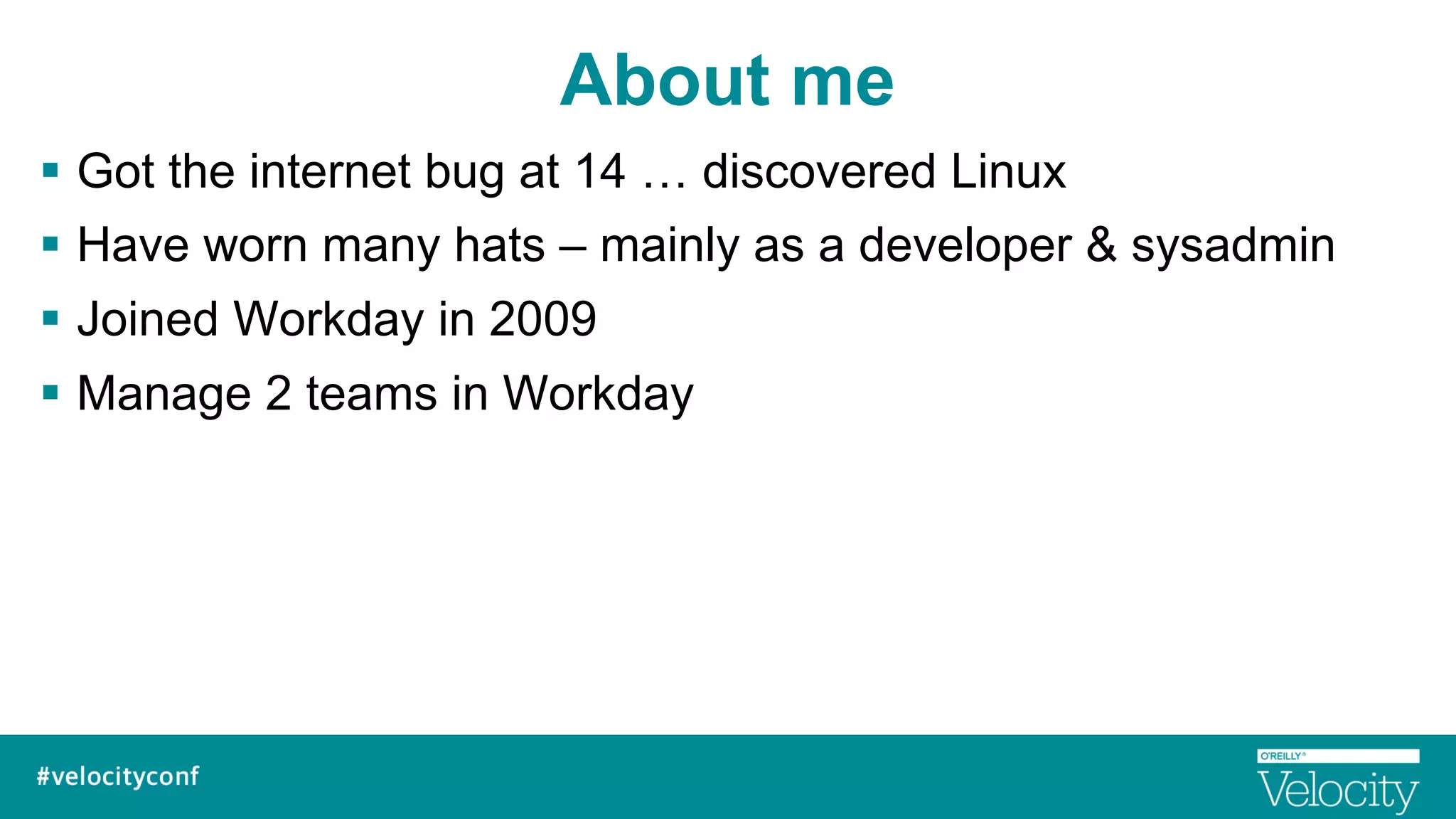
About me
§  Got the internet bug at 14 … discovered Linux
§  Have worn many hats – mainly as a developer & sysadmin
§  Joined Workday in 2009
§  Manage 2 teams in Workday
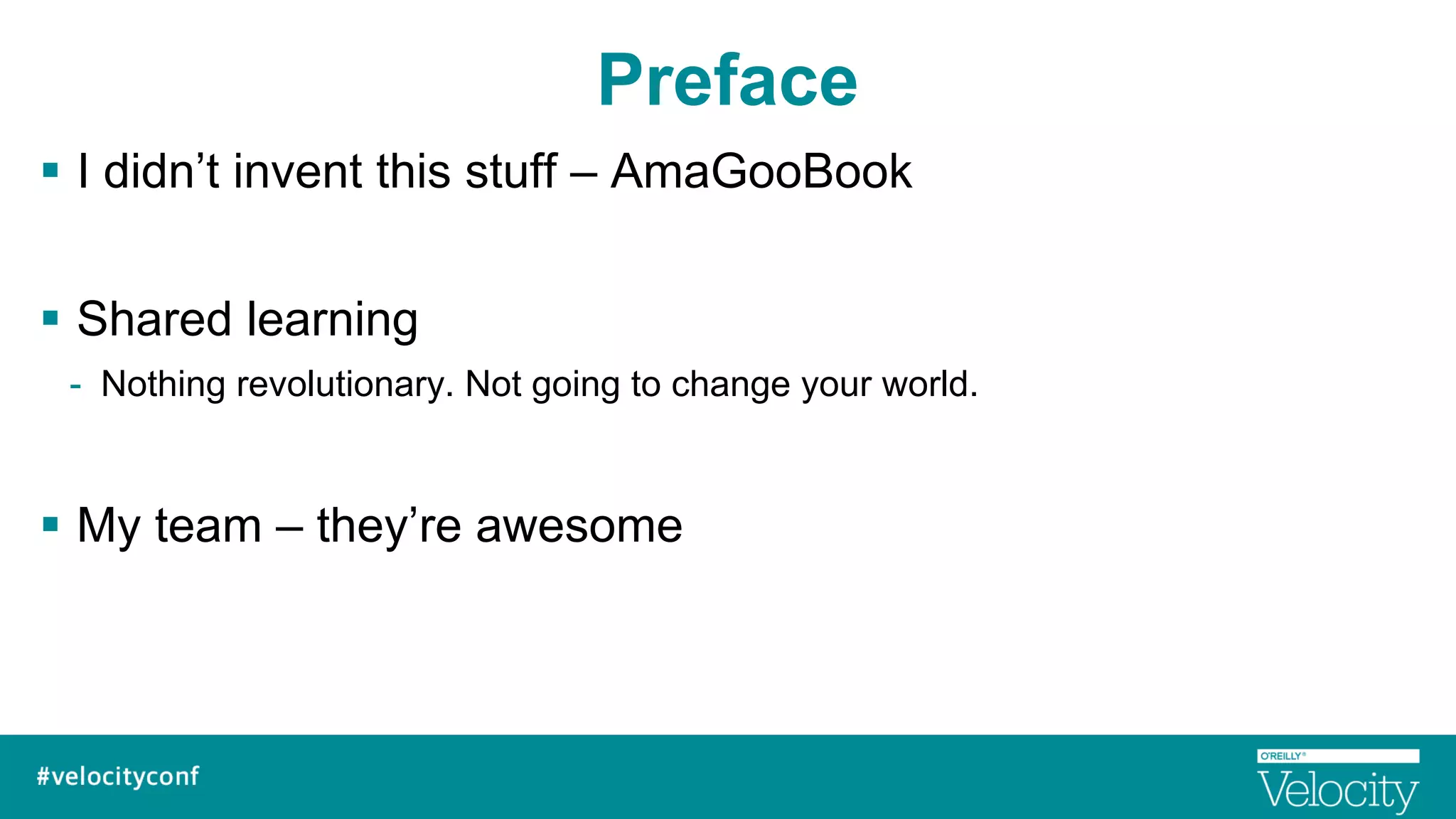
Preface
§  I didn’t invent this stuff – AmaGooBook
§  Shared learning
-  Nothing revolutionary. Not going to change your world.
§  My team – they’re awesome
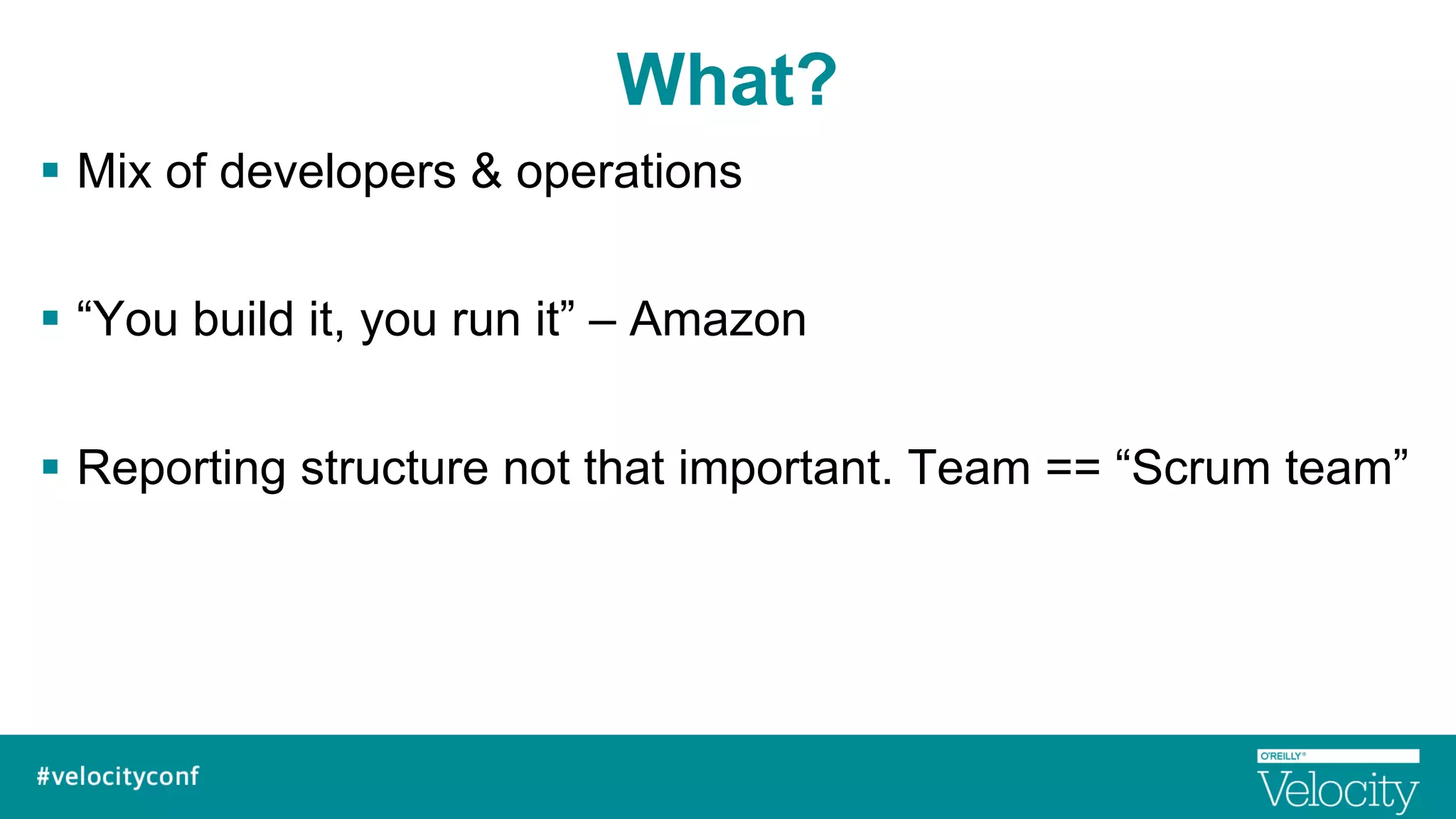
What?
§  Mix of developers & operations
§  “You build it, you run it” – Amazon
§  Reporting structure not that important. Team == “Scrum team”
Why?
§  Process
-  Redundancy vs dependency
-  Seek to minimize external dependencies
-  Scale – Organizational scalability. Easy model to replicate.
Why? (contd.)
§  People
-  Drive deeper understanding of the system – grow true domain experts
-  Autonomy of teams. Allow teams the freedom to make decisions.
-  Cross training
-  Team – strength through unity
-  Resourcing
Why? (contd.)
§  Technical
-  Architecture - Move to Service Orientated architecture
-  Promote certain systems to “first class” systems. Having service teams own
things like monitoring.
How? (Ops team perspective)
§  Hire a senior developer (… a good one!)
-  Lean on your colleagues for help in hiring one or look internally for candidates.
§  Treat all code as code.
-  Python – code
-  Application configuration – that’s code
-  Switch configuration – that’s code too!
§  Build dev infrastructure (build & test infrastructure / tooling)
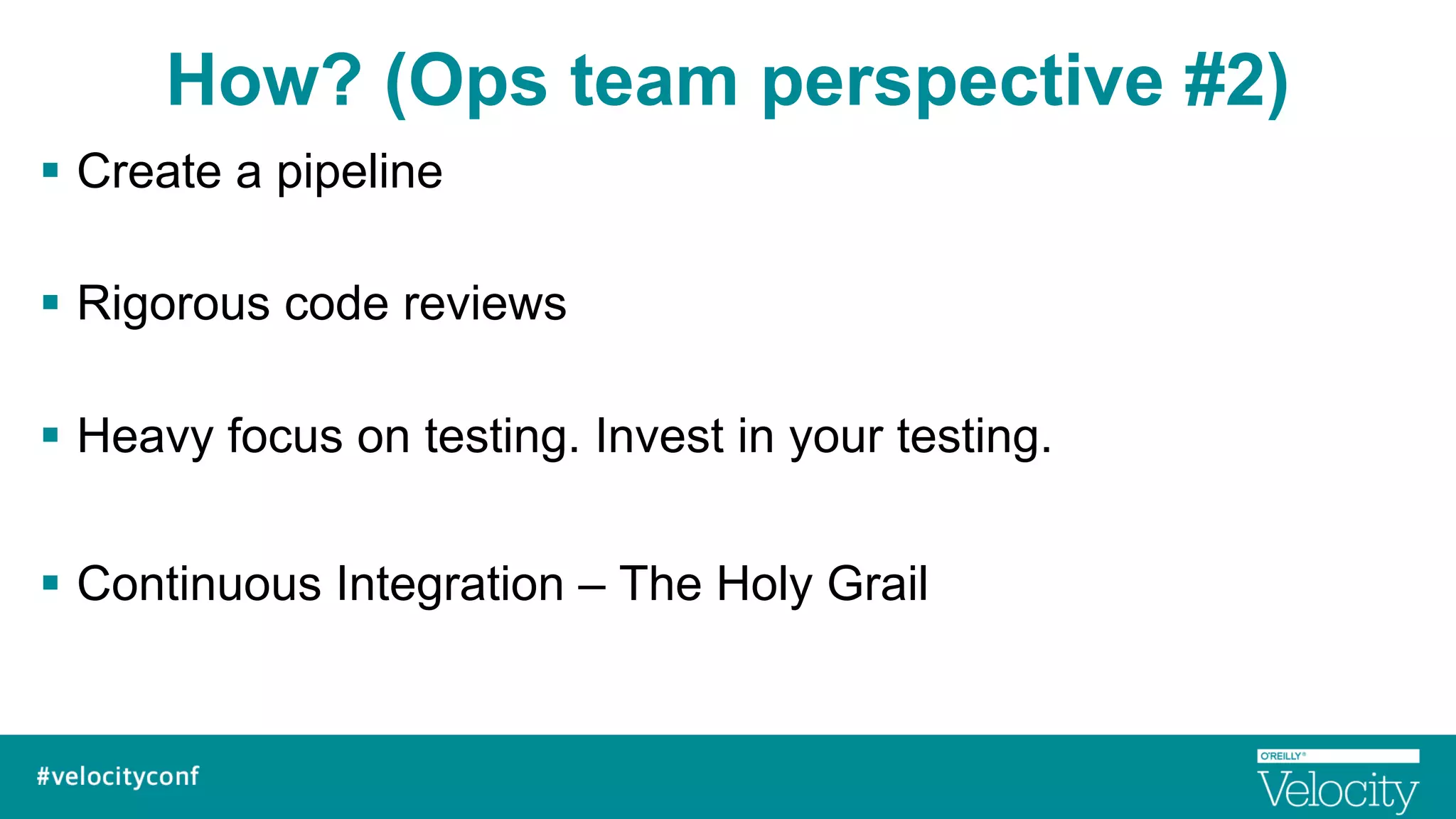
How? (Ops team perspective #2)
§  Create a pipeline
§  Rigorous code reviews
§  Heavy focus on testing. Invest in your testing.
§  Continuous Integration – The Holy Grail
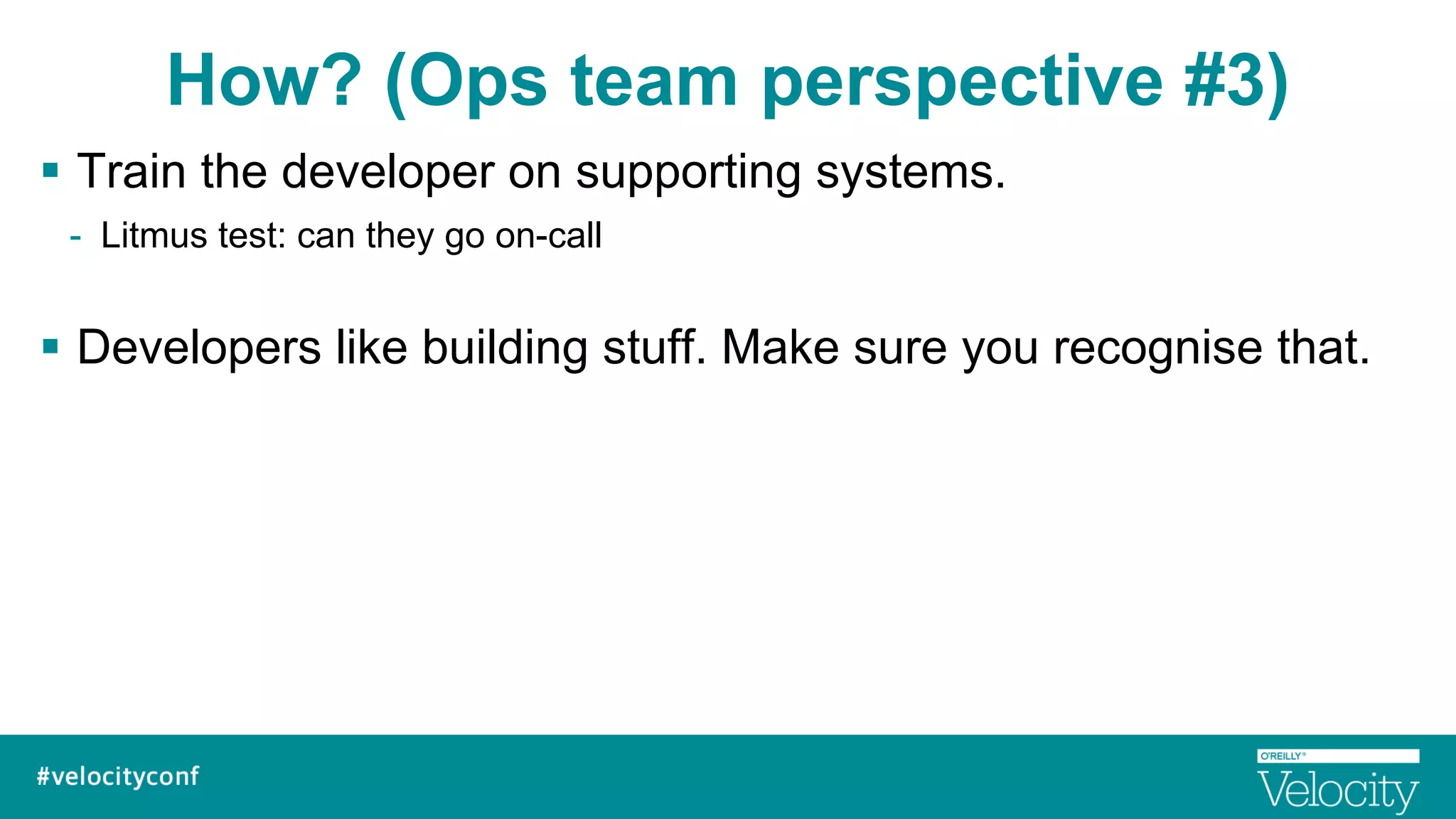
How? (Ops team perspective #3)
§  Train the developer on supporting systems.
-  Litmus test: can they go on-call
§  Developers like building stuff. Make sure you recognise that.
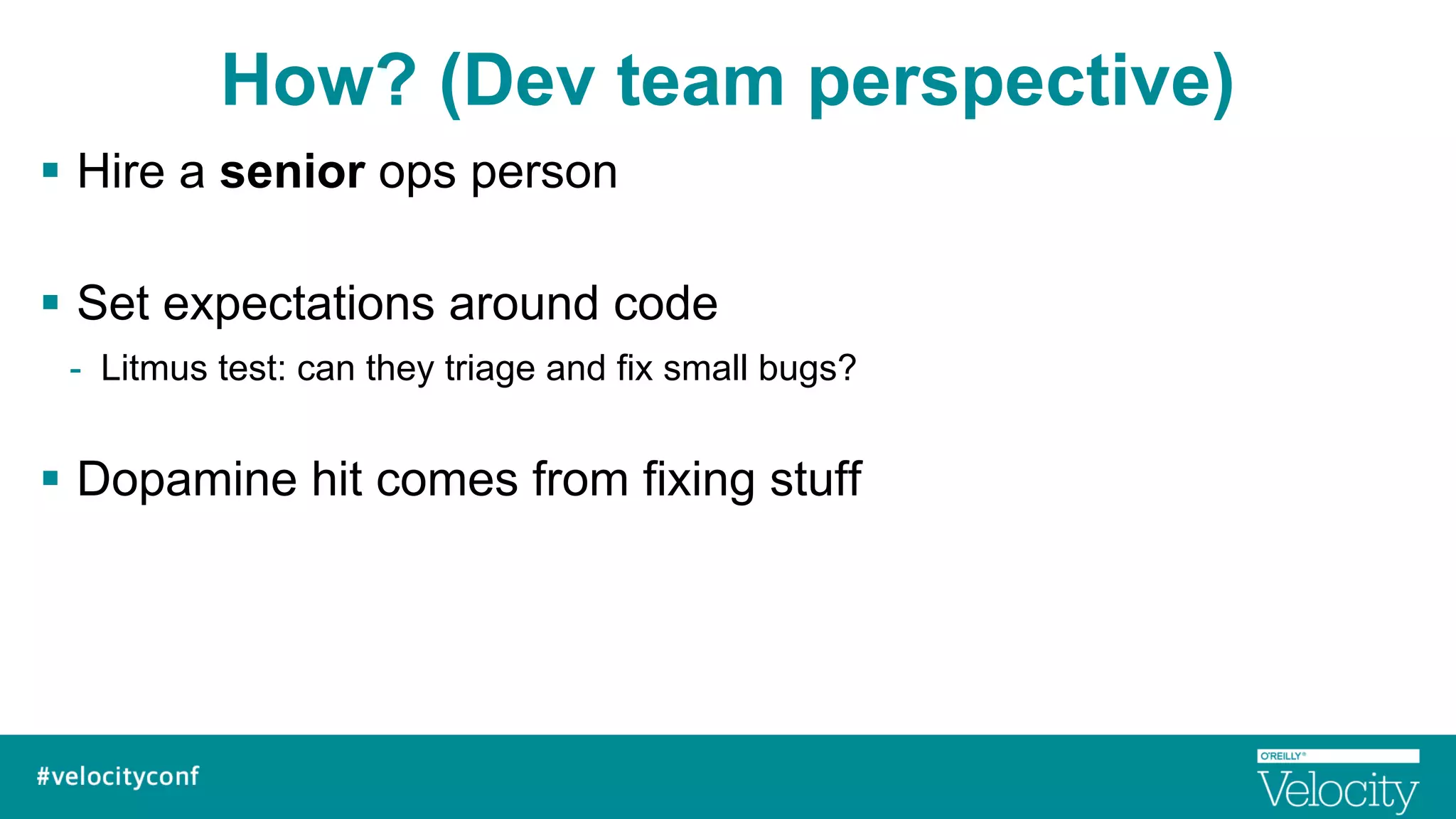
How? (Dev team perspective)
§  Hire a senior ops person
§  Set expectations around code
-  Litmus test: can they triage and fix small bugs?
§  Dopamine hit comes from fixing stuff
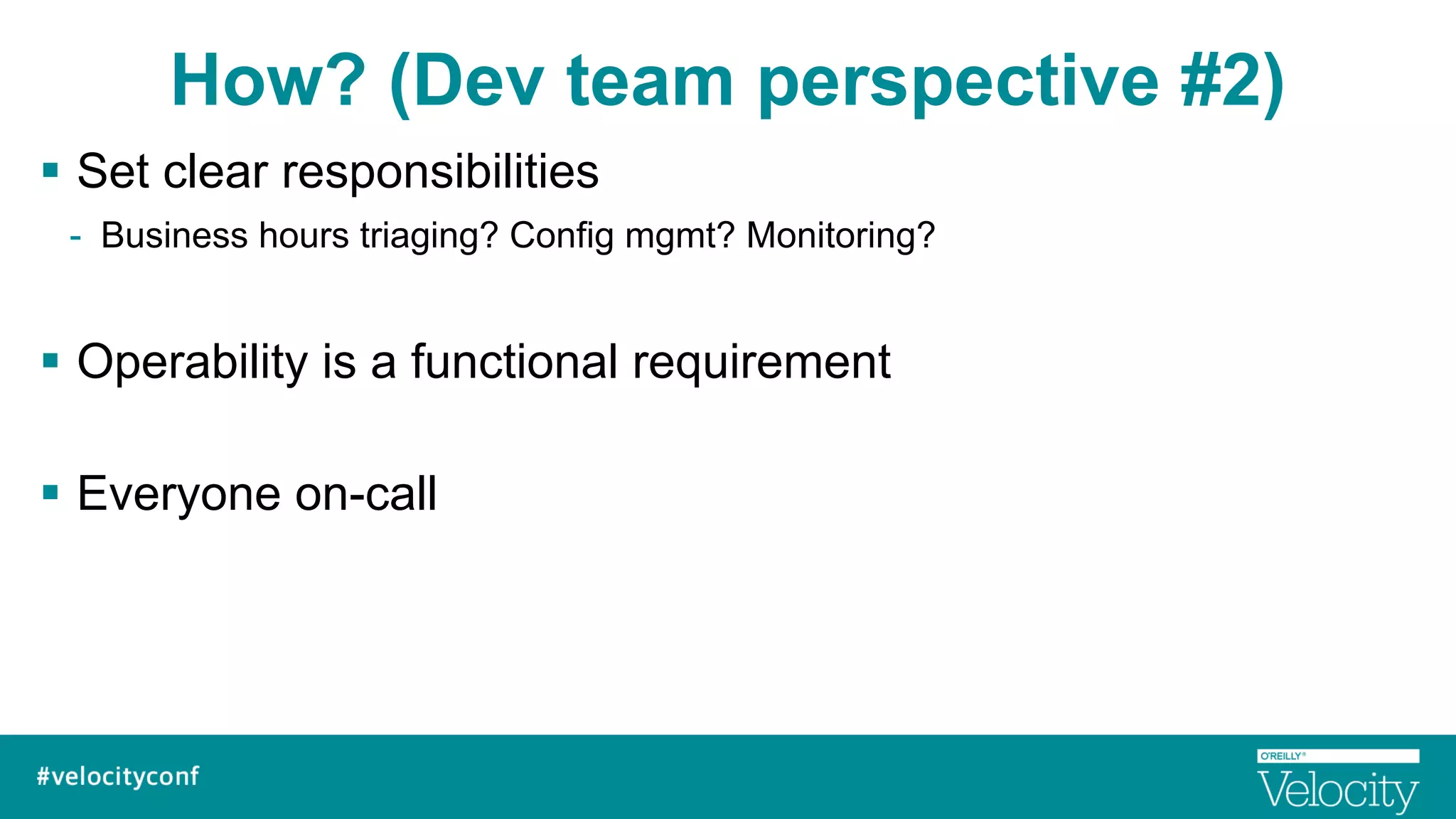
How? (Dev team perspective #2)
§  Set clear responsibilities
-  Business hours triaging? Config mgmt? Monitoring?
§  Operability is a functional requirement
§  Everyone on-call
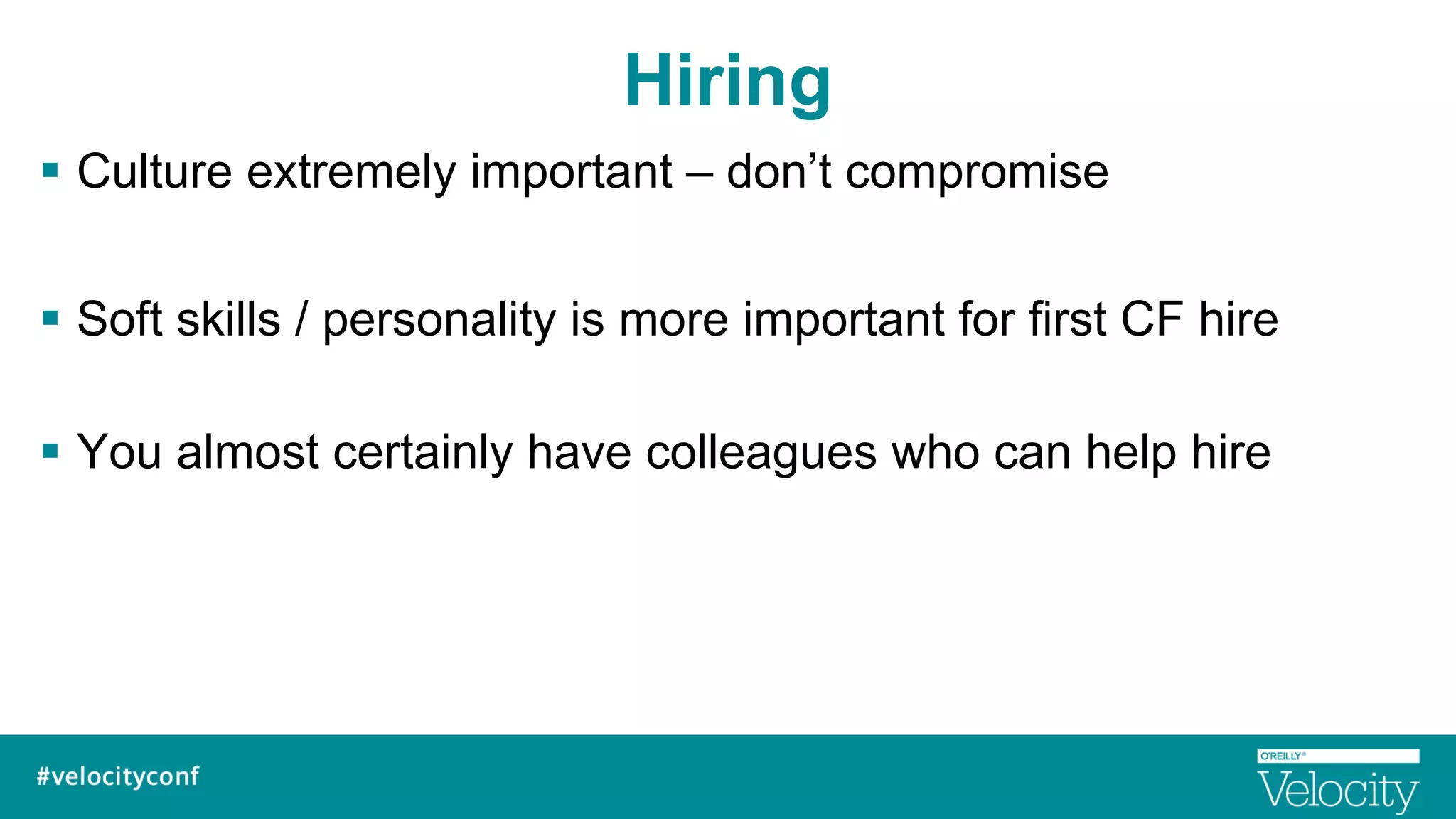
Hiring
§  Culture extremely important – don’t compromise
§  Soft skills / personality is more important for first CF hire
§  You almost certainly have colleagues who can help hire
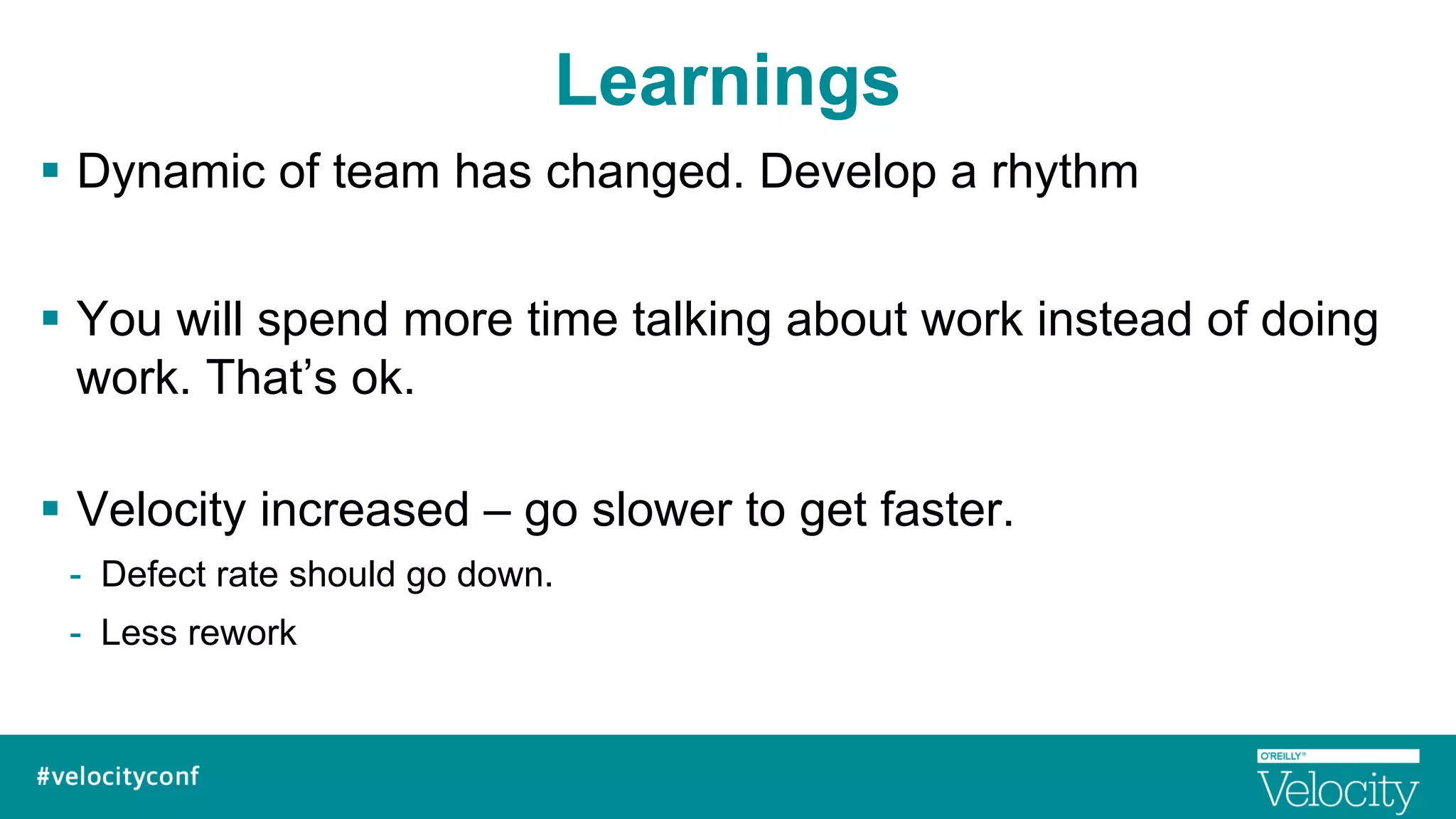
Learnings
§  Dynamic of team has changed. Develop a rhythm
§  You will spend more time talking about work instead of doing
work. That’s ok.
§  Velocity increased – go slower to get faster.
-  Defect rate should go down.
-  Less rework
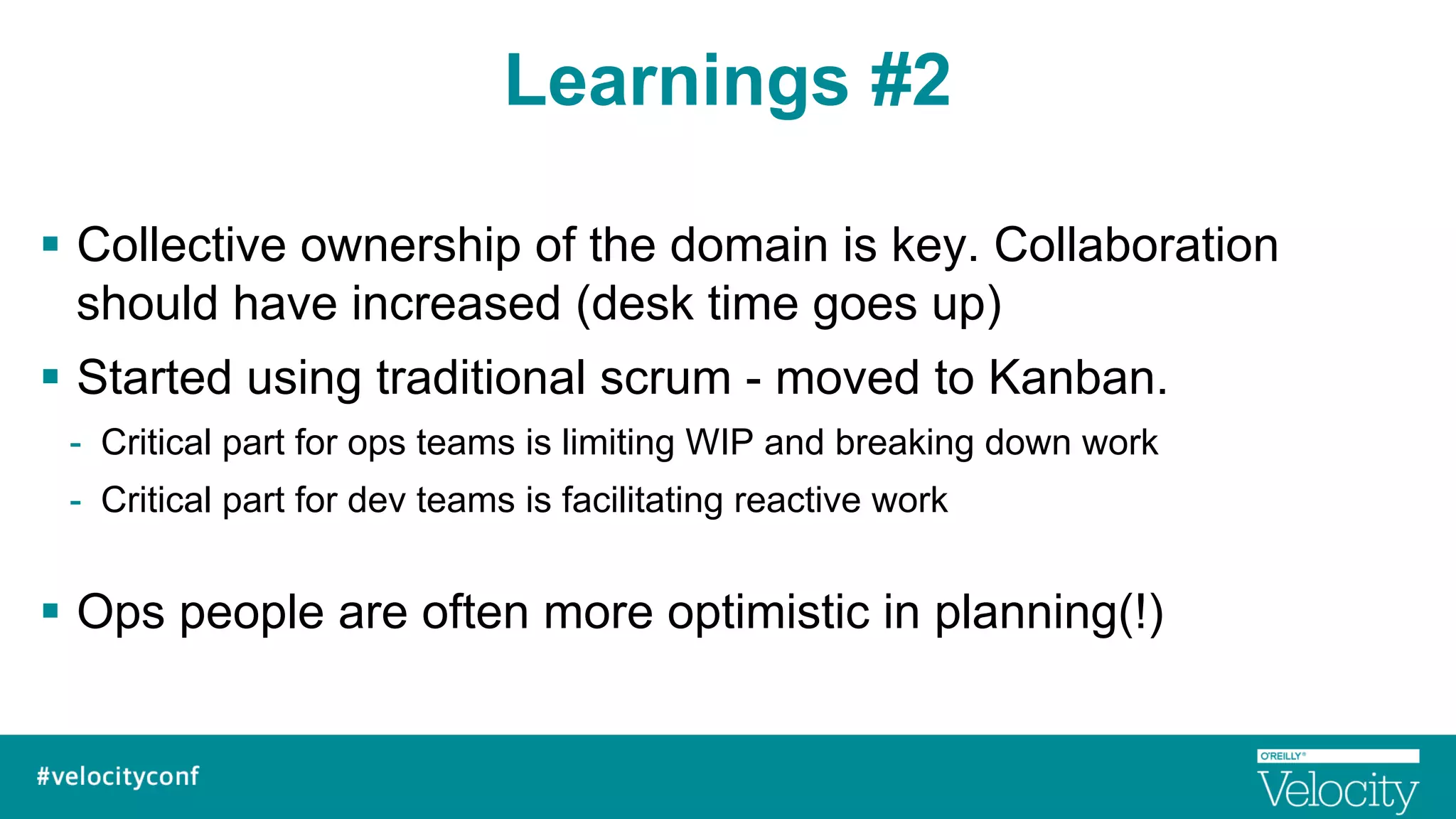
Learnings #2
§  Collective ownership of the domain is key. Collaboration
should have increased (desk time goes up)
§  Started using traditional scrum - moved to Kanban.
-  Critical part for ops teams is limiting WIP and breaking down work
-  Critical part for dev teams is facilitating reactive work
§  Ops people are often more optimistic in planning(!)
Learnings #3
§  Developers are now second-line on call.
-  Not everyone is ok with that. Be up-front through hiring process
Summary
§  Own your service. All of your service
§  Invest in quality
§  Team first
We’re hiring!
@philreynolds
We’re hiring - www.workday.com/careers/

Running cross functional service teams

  • 1.
  • 2.
    About me §  Gotthe internet bug at 14 … discovered Linux §  Have worn many hats – mainly as a developer & sysadmin §  Joined Workday in 2009 §  Manage 2 teams in Workday
  • 3.
    Preface §  I didn’tinvent this stuff – AmaGooBook §  Shared learning -  Nothing revolutionary. Not going to change your world. §  My team – they’re awesome
  • 4.
    What? §  Mix ofdevelopers & operations §  “You build it, you run it” – Amazon §  Reporting structure not that important. Team == “Scrum team”
  • 5.
    Why? §  Process -  Redundancyvs dependency -  Seek to minimize external dependencies -  Scale – Organizational scalability. Easy model to replicate.
  • 6.
    Why? (contd.) §  People - Drive deeper understanding of the system – grow true domain experts -  Autonomy of teams. Allow teams the freedom to make decisions. -  Cross training -  Team – strength through unity -  Resourcing
  • 7.
    Why? (contd.) §  Technical - Architecture - Move to Service Orientated architecture -  Promote certain systems to “first class” systems. Having service teams own things like monitoring.
  • 8.
    How? (Ops teamperspective) §  Hire a senior developer (… a good one!) -  Lean on your colleagues for help in hiring one or look internally for candidates. §  Treat all code as code. -  Python – code -  Application configuration – that’s code -  Switch configuration – that’s code too! §  Build dev infrastructure (build & test infrastructure / tooling)
  • 9.
    How? (Ops teamperspective #2) §  Create a pipeline §  Rigorous code reviews §  Heavy focus on testing. Invest in your testing. §  Continuous Integration – The Holy Grail
  • 10.
    How? (Ops teamperspective #3) §  Train the developer on supporting systems. -  Litmus test: can they go on-call §  Developers like building stuff. Make sure you recognise that.
  • 11.
    How? (Dev teamperspective) §  Hire a senior ops person §  Set expectations around code -  Litmus test: can they triage and fix small bugs? §  Dopamine hit comes from fixing stuff
  • 12.
    How? (Dev teamperspective #2) §  Set clear responsibilities -  Business hours triaging? Config mgmt? Monitoring? §  Operability is a functional requirement §  Everyone on-call
  • 13.
    Hiring §  Culture extremelyimportant – don’t compromise §  Soft skills / personality is more important for first CF hire §  You almost certainly have colleagues who can help hire
  • 14.
    Learnings §  Dynamic ofteam has changed. Develop a rhythm §  You will spend more time talking about work instead of doing work. That’s ok. §  Velocity increased – go slower to get faster. -  Defect rate should go down. -  Less rework
  • 15.
    Learnings #2 §  Collectiveownership of the domain is key. Collaboration should have increased (desk time goes up) §  Started using traditional scrum - moved to Kanban. -  Critical part for ops teams is limiting WIP and breaking down work -  Critical part for dev teams is facilitating reactive work §  Ops people are often more optimistic in planning(!)
  • 16.
    Learnings #3 §  Developersare now second-line on call. -  Not everyone is ok with that. Be up-front through hiring process
  • 17.
    Summary §  Own yourservice. All of your service §  Invest in quality §  Team first
  • 18.