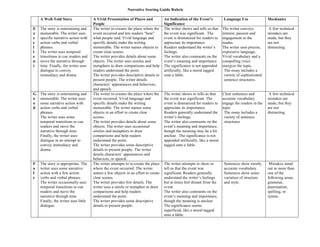
Narrative Scoring Guide Rubric
A Well-Told Story A Vivid Presentation of Places and
People
An Indication of the Event’s
Significance
Language Use Mechanics
E
x
c
e
l
l
e
n
t
The story is entertaining and
memorable. The writer uses
specific narrative action with
action verbs and verbal
phrases.
The writer uses temporal
transitions to cue readers and
move the narrative through
time. Finally, the writer uses
dialogue to convey
immediacy and drama.
The writer re-creates the place where the
event occurred and lets readers “hear”
what people said. Vivid language and
specific details make the writing
memorable. The writer names objects to
create clear scenes.
The writer provides details about some
objects. The writer uses similes and
metaphors to draw comparisons and help
readers understand the point.
The writer provides descriptive details to
present people. The writer details
characters’ appearances and behaviors,
and speech.
The writer shows and tells us that
the event was significant. The
event is dramatized for readers to
appreciate its importance.
Readers understand the writer’s
feelings.
The writer also comments on the
event’s meaning and importance.
The significance is not appended
artificially, like a moral tagged
onto a fable.
The writer conveys
interest, passion and
engagement to the
reader.
The writer uses precise,
expressive language.
Vivid vocabulary and a
compelling voice
energize the topic.
The essay includes a
variety of sophisticated
sentence structures.
A few technical
mistakes are
made, but they
are not
distracting.
G
o
o
d
The story is entertaining and
memorable. The writer uses
some narrative action with
action verbs and verbal
phrases.
The writer uses some
temporal transitions to cue
readers and move the
narrative through time.
Finally, the writer uses
dialogue in an attempt to
convey immediacy and
drama.
The writer re-creates the place where the
event occurred. Vivid language and
specific details make the writing
memorable. The writer names some
objects in an effort to create clear
scenes.
The writer provides details about some
objects. The writer uses occasional
similes and metaphors to draw
comparisons and help readers
understand the point.
The writer provides some descriptive
details to present people. The writer
details characters’ appearances and
behaviors, or speech.
The writer shows or tells us that
the event was significant. The
event is dramatized for readers to
appreciate its importance.
Readers generally understand the
writer’s feelings.
The writer also comments on the
event’s meaning and importance,
though the meaning may be a bit
unclear. The significance is not
appended artificially, like a moral
tagged onto a fable.
Clear sentences and
accurate vocabulary
engage the readers in the
topic
The essay includes a
variety of sentence
structures
A few technical
mistakes are
made, but they
are not
distracting.
F
a
I
r
The story is appropriate. The
writer uses some narrative
action with a few action
verbs and verbal phrases.
The writer occasionally uses
temporal transitions to cue
readers and move the
narrative through time.
Finally, the writer uses little
dialogue.
The writer attempts to re-create the place
where the event occurred. The writer
names a few objects in an effort to create
clear scenes.
The writer provides few details. The
writer uses a simile or metaphor to draw
comparisons and help readers
understand the point.
The writer provides some descriptive
details to present people.
The writer attempts to show or
tell us that the event was
significant. Readers generally
understand the writer’s feelings
but at times feel distant from the
event.
The writer also comments on the
event’s meaning and importance,
though the meaning is unclear.
The significance seems
superficial, like a moral tagged
onto a fable.
Sentences show mostly
accurate vocabulary.
Sentences show some
variation of structure
and style.
Mistakes stand
out in more than
one of the
following areas:
grammar,
punctuation,
spelling, or
syntax.
P
o
o
r
The story is appropriate but
the writer uses little narrative
action. The story is told but
not shown.
The writer does not use
temporal transitions to cue
readers and move the
narrative through time.
Finally, the writer uses little
or no dialogue.
Details about the place where the event
occurred are vague or absent. The writer
does not name objects or identify
sensory detail in an effort to create clear
scenes.
The writer provides few details, similes,
or metaphors to draw comparisons and
help readers understand the point.
The writer lacks descriptive details to
present people.
The writer neither shows nor tells
us that the event was significant.
It is difficult to understand the
writer’s feelings about the event.
The significance of the event
seems superficial, like a moral
tagged onto a fable.
Sentences are very
simple, showing little to
no variation in
structure. Word
choices are very
repetitious or frequently
inaccurate.
Mistakes are so
distracting that it
is difficult to
read the paper.
F
a
I
l
The story is inappropriate or
doesn’t meet the criteria of
the prompt. The story is told
but not shown.
The writer does not use
temporal transitions to cue
readers and move the
narrative through time. The
writer uses no dialogue
The story lacks details about the place
where the event occurred, or there is no
setting.
The writer lacks descriptive details to
present people, or there are no people in
the story.
The writer neither shows nor tells
us that the event was significant.
The writer’s feelings about the
event are not included in the
narrative.
The event is insignificant.
Sentences are unclear
or confusing. Writer has
little control over
structure and flow of
sentences.
Mistakes are so
distracting that it
is difficult to
read the paper.
The essay is
unreadable.

Rubric personal narrative 1 a

  • 1.
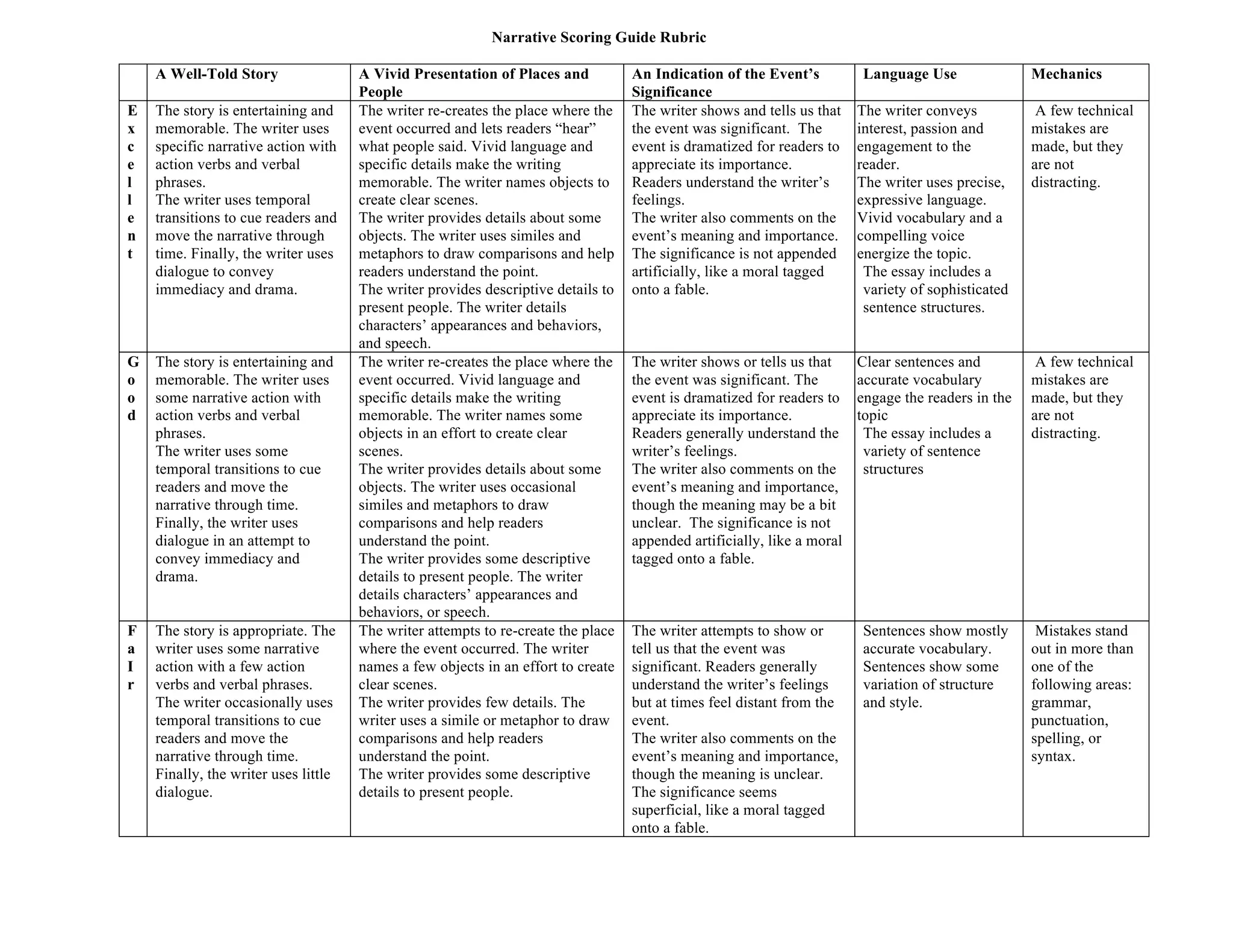
    Narrative Scoring GuideRubric A Well-Told Story A Vivid Presentation of Places and People An Indication of the Event’s Significance Language Use Mechanics E x c e l l e n t The story is entertaining and memorable. The writer uses specific narrative action with action verbs and verbal phrases. The writer uses temporal transitions to cue readers and move the narrative through time. Finally, the writer uses dialogue to convey immediacy and drama. The writer re-creates the place where the event occurred and lets readers “hear” what people said. Vivid language and specific details make the writing memorable. The writer names objects to create clear scenes. The writer provides details about some objects. The writer uses similes and metaphors to draw comparisons and help readers understand the point. The writer provides descriptive details to present people. The writer details characters’ appearances and behaviors, and speech. The writer shows and tells us that the event was significant. The event is dramatized for readers to appreciate its importance. Readers understand the writer’s feelings. The writer also comments on the event’s meaning and importance. The significance is not appended artificially, like a moral tagged onto a fable. The writer conveys interest, passion and engagement to the reader. The writer uses precise, expressive language. Vivid vocabulary and a compelling voice energize the topic. The essay includes a variety of sophisticated sentence structures. A few technical mistakes are made, but they are not distracting. G o o d The story is entertaining and memorable. The writer uses some narrative action with action verbs and verbal phrases. The writer uses some temporal transitions to cue readers and move the narrative through time. Finally, the writer uses dialogue in an attempt to convey immediacy and drama. The writer re-creates the place where the event occurred. Vivid language and specific details make the writing memorable. The writer names some objects in an effort to create clear scenes. The writer provides details about some objects. The writer uses occasional similes and metaphors to draw comparisons and help readers understand the point. The writer provides some descriptive details to present people. The writer details characters’ appearances and behaviors, or speech. The writer shows or tells us that the event was significant. The event is dramatized for readers to appreciate its importance. Readers generally understand the writer’s feelings. The writer also comments on the event’s meaning and importance, though the meaning may be a bit unclear. The significance is not appended artificially, like a moral tagged onto a fable. Clear sentences and accurate vocabulary engage the readers in the topic The essay includes a variety of sentence structures A few technical mistakes are made, but they are not distracting. F a I r The story is appropriate. The writer uses some narrative action with a few action verbs and verbal phrases. The writer occasionally uses temporal transitions to cue readers and move the narrative through time. Finally, the writer uses little dialogue. The writer attempts to re-create the place where the event occurred. The writer names a few objects in an effort to create clear scenes. The writer provides few details. The writer uses a simile or metaphor to draw comparisons and help readers understand the point. The writer provides some descriptive details to present people. The writer attempts to show or tell us that the event was significant. Readers generally understand the writer’s feelings but at times feel distant from the event. The writer also comments on the event’s meaning and importance, though the meaning is unclear. The significance seems superficial, like a moral tagged onto a fable. Sentences show mostly accurate vocabulary. Sentences show some variation of structure and style. Mistakes stand out in more than one of the following areas: grammar, punctuation, spelling, or syntax.
  • 2.
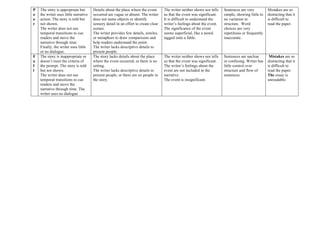
    P o o r The story isappropriate but the writer uses little narrative action. The story is told but not shown. The writer does not use temporal transitions to cue readers and move the narrative through time. Finally, the writer uses little or no dialogue. Details about the place where the event occurred are vague or absent. The writer does not name objects or identify sensory detail in an effort to create clear scenes. The writer provides few details, similes, or metaphors to draw comparisons and help readers understand the point. The writer lacks descriptive details to present people. The writer neither shows nor tells us that the event was significant. It is difficult to understand the writer’s feelings about the event. The significance of the event seems superficial, like a moral tagged onto a fable. Sentences are very simple, showing little to no variation in structure. Word choices are very repetitious or frequently inaccurate. Mistakes are so distracting that it is difficult to read the paper. F a I l The story is inappropriate or doesn’t meet the criteria of the prompt. The story is told but not shown. The writer does not use temporal transitions to cue readers and move the narrative through time. The writer uses no dialogue The story lacks details about the place where the event occurred, or there is no setting. The writer lacks descriptive details to present people, or there are no people in the story. The writer neither shows nor tells us that the event was significant. The writer’s feelings about the event are not included in the narrative. The event is insignificant. Sentences are unclear or confusing. Writer has little control over structure and flow of sentences. Mistakes are so distracting that it is difficult to read the paper. The essay is unreadable.