RPAImplementation
Methodology
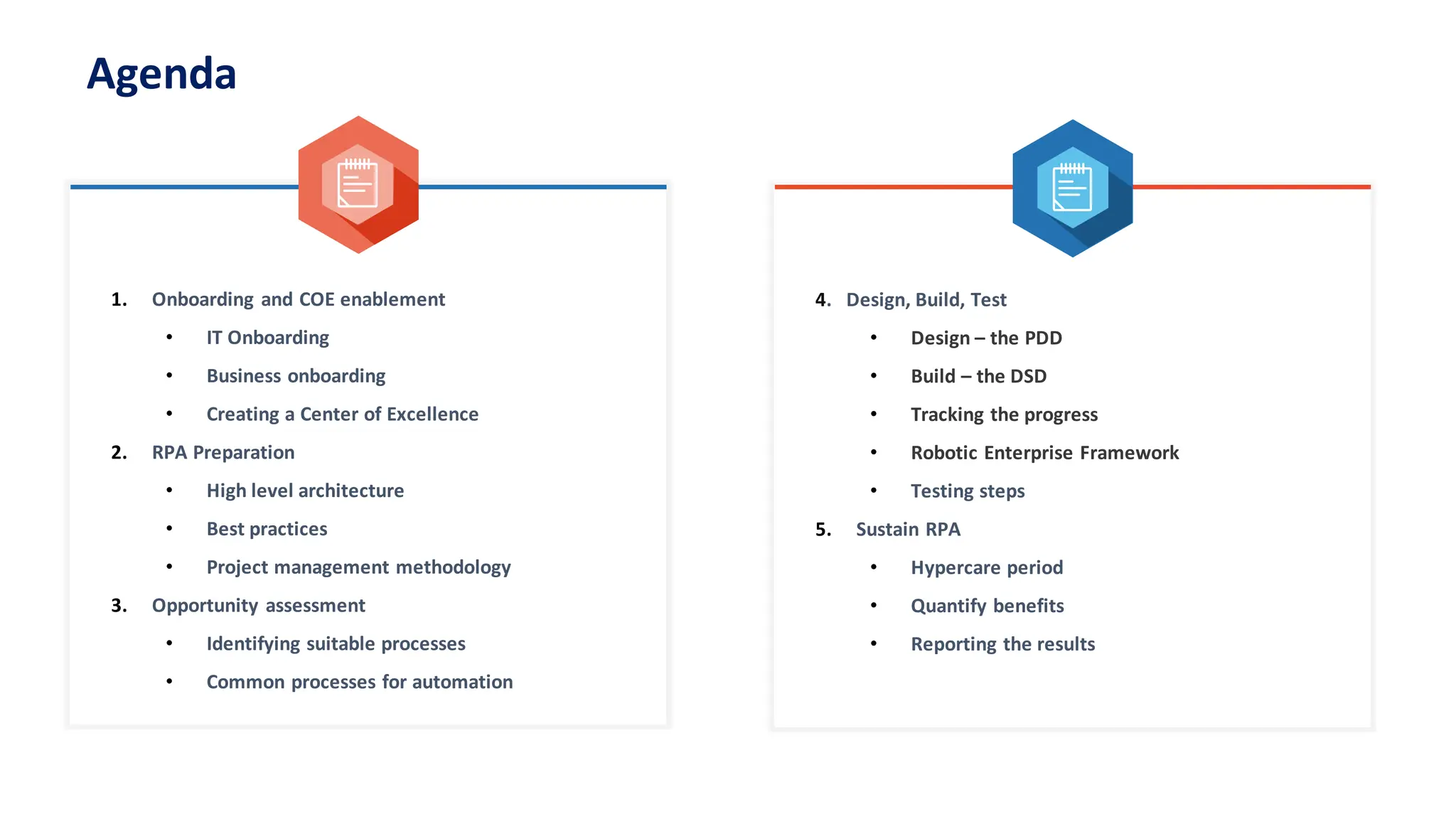
Agenda
1. Onboarding and COE enablement
• IT Onboarding
• Business onboarding
• Creating a Center of Excellence
2. RPA Preparation
• High level architecture
• Best practices
• Project management methodology
3. Opportunity assessment
• Identifying suitable processes
• Common processes for automation
4. Design, Build, Test
• Design – the PDD
• Build – the DSD
• Tracking the progress
• Robotic Enterprise Framework
• Testing steps
5. Sustain RPA
• Hypercare period
• Quantify benefits
• Reporting the results
Program managers & Project managers – understand how to guide the teams and what outputs to expect from an RPA
implementation
Technical leads and solution architects – Perceive the implementation steps and methodology for creating a predictable and
productive environment for the technical teams
All project team members – have a better in-depth understanding of the RPA implementation they are involved in
L
Implementation methodology target audience
Learning Objectives:
Understanding the UiPath recommended RPA implementation methodology
Identifying the different steps of an implementation
L
Learn to drive your RPA project
Review the battle-tested best practices
Create RPA awareness throughout the company
Pick the best automation candidates
Leverage benefit reporting
Course Prerequisites
RPA Awareness
1
Thank You!

RPA Methodology1.pdf

  • 1.
  • 2.
    Agenda 1. Onboarding andCOE enablement • IT Onboarding • Business onboarding • Creating a Center of Excellence 2. RPA Preparation • High level architecture • Best practices • Project management methodology 3. Opportunity assessment • Identifying suitable processes • Common processes for automation 4. Design, Build, Test • Design – the PDD • Build – the DSD • Tracking the progress • Robotic Enterprise Framework • Testing steps 5. Sustain RPA • Hypercare period • Quantify benefits • Reporting the results
  • 3.
    Program managers &Project managers – understand how to guide the teams and what outputs to expect from an RPA implementation Technical leads and solution architects – Perceive the implementation steps and methodology for creating a predictable and productive environment for the technical teams All project team members – have a better in-depth understanding of the RPA implementation they are involved in L Implementation methodology target audience
  • 4.
    Learning Objectives: Understanding theUiPath recommended RPA implementation methodology Identifying the different steps of an implementation L Learn to drive your RPA project Review the battle-tested best practices Create RPA awareness throughout the company Pick the best automation candidates Leverage benefit reporting
  • 5.
  • 6.