Intelligent Document
Automation and
Machine Learning
for insurance
industry
Workflow automation and improvements in
document processing and AI/ML powered
insurance use-cases
February 2023
Introduction
2
Muntis Rudzitis
LEAD DATA SCIENTIST,
EMERGN
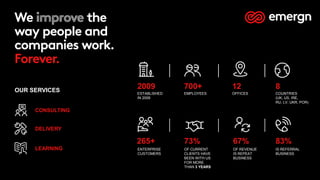
EMPLOYEES
700+
OFFICES
ENTERPRISE
CUSTOMERS
265+
ESTABLISHED
IN 2009
OF CURRENT
CLIENTS HAVE
BEEN WITH US
FOR MORE
THAN 3 YEARS
73%
OF REVENUE
IS REPEAT
BUSINESS
IS REFERRAL
BUSINESS
67% 83%
COUNTRIES
(UK, US, IRE,
RU, LV, UKR, POR)
8
12
2009
OUR SERVICES
DELIVERY
CONSULTING
LEARNING
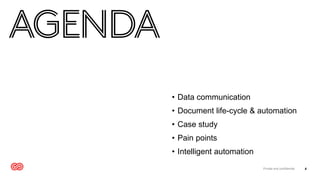
• Data communication
• Document life-cycle & automation
• Case study
• Pain points
• Intelligent automation
4
Private and confidential
Data communication
5
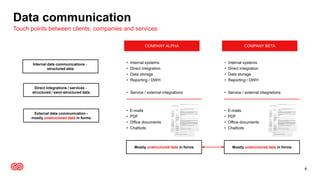
Touch points between clients, companies and services
Mostly unstructured data in forms
• Internal systems
• Direct integration
• Data storage
• Reporting / DWH
COMPANY ALPHA
• E-mails
• PDF
• Office documents
• Chatbots
Internal data communications -
structured data
Direct integrations / services -
structured / semi-structured data
External data communication -
mostly unstructured data in forms
Mostly unstructured data in forms
• Internal systems
• Direct integration
• Data storage
• Reporting / DWH
COMPANY BETA
• E-mails
• PDF
• Office documents
• Chatbots
• Service / external integrations • Service / external integrations
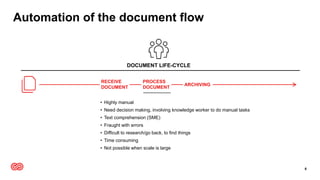
Automation of the document flow
DOCUMENT LIFE-CYCLE
RECEIVE
DOCUMENT
PROCESS
DOCUMENT
ARCHIVING
• Highly manual
• Need decision making, involving knowledge worker to do manual tasks
• Text comprehension (SME)
• Fraught with errors
• Difficult to research/go back, to find things
• Time consuming
• Not possible when scale is large
6
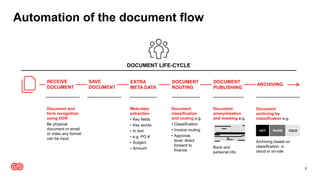
Automation of the document flow
DOCUMENT LIFE-CYCLE
RECEIVE
DOCUMENT
SAVE
DOCUMENT
EXTRA
META DATA
7
DOCUMENT
ROUTING
DOCUMENT
PUBLISHING
ARCHIVING
Document and
form recognition
using OCR
Be physical
document or email
or video any format
can be input
Meta-data
extraction
• Key fields
• Key words
• In text
• e.g. PO #
• Subject
• Amount
Document
classification
and routing e.g.
• Classification
• Invoice routing
• Approval,
level, direct
forward to
finance
Document
anonymization
and masking e.g.
Bank and
personal info
Document
archiving by
classification e.g.
Archiving based on
classification: in
cloud or on-site
HOT WARM COLD
Case study
Insurance claim processing
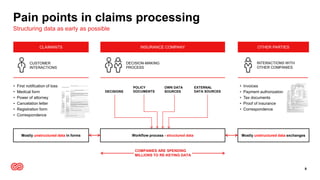
Pain points in claims processing
9
Structuring data as early as possible
DECISION-MAKING
PROCESS
CUSTOMER
INTERACTIONS
INTERACTIONS WITH
OTHER COMPANIES
Mostly unstructured data in forms
• First notification of loss
• Medical form
• Power of attorney
• Cancelation letter
• Registration form
• Correspondence
• Invoices
• Payment authorization
• Tax documents
• Proof of insurance
• Correspondence
COMPANIES ARE SPENDING
MILLIONS TO RE-KEYING DATA
DECISIONS
POLICY
DOCUMENTS
OWN DATA
SOURCES
EXTERNAL
DATA SOURCES
Workflow process - structured data
INSURANCE COMPANY
Mostly unstructured data exchanges
CLAIMANTS OTHER PARTIES
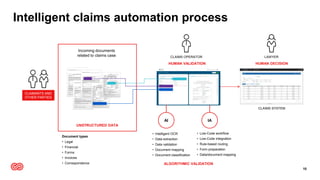
Intelligent claims automation process
10
Incoming documents
related to claims case CLAIMS OPERATOR LAWYER
AI
• Intelligent OCR
• Data extraction
• Data validation
• Document mapping
• Document classification
ALGORITHMIC VALIDATION
IA
• Low-Code workflow
• Low-Code integration
• Rule-based routing
• Form preparation
• Data/document mapping
HUMAN VALIDATION HUMAN DECISION
UNSTRUCTURED DATA
Document types
• Legal
• Financial
• Forms
• Invoices
• Correspondence
CLAIMS SYSTEM
CLAIMANTS AND
OTHER PARTIES
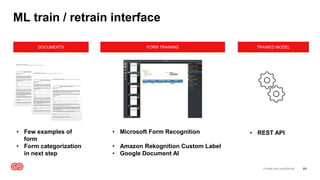
ML train / retrain interface
11
Private and confidential
• Microsoft Form Recognition
• Amazon Rekognition Custom Label
• Google Document AI
• Few examples of
form
• Form categorization
in next step
• REST API
FORM TRAINING
DOCUMENTS TRAINED MODEL
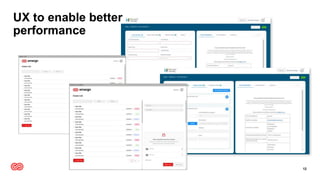
UX to enable better
performance
12
Benefits of claims
automation
This Intelligent Automation approach could reduce
average admin handling time from 12.5 to 2 minutes.
A 84% reduction in processing time.
Handling 500 claims per day with team of 15 employees
you can save about 55 hours per working day.
If you have 1000 claims per month – you can get quick
ROI with intelligent claims automation.
13
Time spent on processing new claims will be
reduced from weeks to less than few hours,
reducing costs and also enabling the team
to quickly add new business opportunities.
It will also completely remove the burden of
administration from lawyers – freeing them
up to focus entirely on legal work.
With a cloud-based approach the
solution could be deployed in 6 weeks
Using cloud-based industry leading Pre-trained AI
for form recognition you use best in class always
updated for recognition and intelligent OCR engine
Low-Code workflow and integration tool help to
automate file transfer and internal/external
correspondence with minimal development effort
14
Muntis Rudzitis
muntis.rudzitis@emergn.com

RIGA COMM 2021 Claims automation

  • 1.
    Intelligent Document Automation and MachineLearning for insurance industry Workflow automation and improvements in document processing and AI/ML powered insurance use-cases February 2023
  • 2.
  • 3.
    EMPLOYEES 700+ OFFICES ENTERPRISE CUSTOMERS 265+ ESTABLISHED IN 2009 OF CURRENT CLIENTSHAVE BEEN WITH US FOR MORE THAN 3 YEARS 73% OF REVENUE IS REPEAT BUSINESS IS REFERRAL BUSINESS 67% 83% COUNTRIES (UK, US, IRE, RU, LV, UKR, POR) 8 12 2009 OUR SERVICES DELIVERY CONSULTING LEARNING
  • 4.
    • Data communication •Document life-cycle & automation • Case study • Pain points • Intelligent automation 4 Private and confidential
  • 5.
    Data communication 5 Touch pointsbetween clients, companies and services Mostly unstructured data in forms • Internal systems • Direct integration • Data storage • Reporting / DWH COMPANY ALPHA • E-mails • PDF • Office documents • Chatbots Internal data communications - structured data Direct integrations / services - structured / semi-structured data External data communication - mostly unstructured data in forms Mostly unstructured data in forms • Internal systems • Direct integration • Data storage • Reporting / DWH COMPANY BETA • E-mails • PDF • Office documents • Chatbots • Service / external integrations • Service / external integrations
  • 6.
    Automation of thedocument flow DOCUMENT LIFE-CYCLE RECEIVE DOCUMENT PROCESS DOCUMENT ARCHIVING • Highly manual • Need decision making, involving knowledge worker to do manual tasks • Text comprehension (SME) • Fraught with errors • Difficult to research/go back, to find things • Time consuming • Not possible when scale is large 6
  • 7.
    Automation of thedocument flow DOCUMENT LIFE-CYCLE RECEIVE DOCUMENT SAVE DOCUMENT EXTRA META DATA 7 DOCUMENT ROUTING DOCUMENT PUBLISHING ARCHIVING Document and form recognition using OCR Be physical document or email or video any format can be input Meta-data extraction • Key fields • Key words • In text • e.g. PO # • Subject • Amount Document classification and routing e.g. • Classification • Invoice routing • Approval, level, direct forward to finance Document anonymization and masking e.g. Bank and personal info Document archiving by classification e.g. Archiving based on classification: in cloud or on-site HOT WARM COLD
  • 8.
  • 9.
    Pain points inclaims processing 9 Structuring data as early as possible DECISION-MAKING PROCESS CUSTOMER INTERACTIONS INTERACTIONS WITH OTHER COMPANIES Mostly unstructured data in forms • First notification of loss • Medical form • Power of attorney • Cancelation letter • Registration form • Correspondence • Invoices • Payment authorization • Tax documents • Proof of insurance • Correspondence COMPANIES ARE SPENDING MILLIONS TO RE-KEYING DATA DECISIONS POLICY DOCUMENTS OWN DATA SOURCES EXTERNAL DATA SOURCES Workflow process - structured data INSURANCE COMPANY Mostly unstructured data exchanges CLAIMANTS OTHER PARTIES
  • 10.
    Intelligent claims automationprocess 10 Incoming documents related to claims case CLAIMS OPERATOR LAWYER AI • Intelligent OCR • Data extraction • Data validation • Document mapping • Document classification ALGORITHMIC VALIDATION IA • Low-Code workflow • Low-Code integration • Rule-based routing • Form preparation • Data/document mapping HUMAN VALIDATION HUMAN DECISION UNSTRUCTURED DATA Document types • Legal • Financial • Forms • Invoices • Correspondence CLAIMS SYSTEM CLAIMANTS AND OTHER PARTIES
  • 11.
    ML train /retrain interface 11 Private and confidential • Microsoft Form Recognition • Amazon Rekognition Custom Label • Google Document AI • Few examples of form • Form categorization in next step • REST API FORM TRAINING DOCUMENTS TRAINED MODEL
  • 12.
    UX to enablebetter performance 12
  • 13.
    Benefits of claims automation ThisIntelligent Automation approach could reduce average admin handling time from 12.5 to 2 minutes. A 84% reduction in processing time. Handling 500 claims per day with team of 15 employees you can save about 55 hours per working day. If you have 1000 claims per month – you can get quick ROI with intelligent claims automation. 13 Time spent on processing new claims will be reduced from weeks to less than few hours, reducing costs and also enabling the team to quickly add new business opportunities. It will also completely remove the burden of administration from lawyers – freeing them up to focus entirely on legal work. With a cloud-based approach the solution could be deployed in 6 weeks Using cloud-based industry leading Pre-trained AI for form recognition you use best in class always updated for recognition and intelligent OCR engine Low-Code workflow and integration tool help to automate file transfer and internal/external correspondence with minimal development effort
  • 14.
  • 15.