Reza Abdoh
emily | sabrina | bryan | jackie | alyssa
present to you
1965 - 1995
major ideas
recurrent themes
-
Mainly his plays surrounded the subject matter of sex, death and identity which incorporated
issues such as the AIDs crisis, racism and homophobia into the themes.
“There’s nothing in his work that calls for pity or points a finger of blame at any group.”
There is no call for action.
He created discussions, despite how he might have personally felt on the issue.
environmental theatre, multimedia elements
-
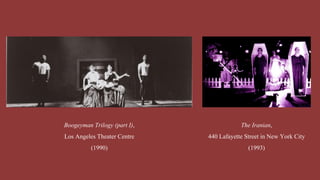
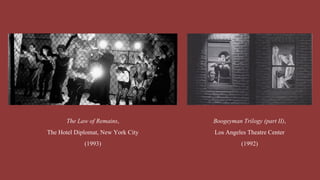
His works had elements of multimedia (eg. tv screens, projections on walls) and
usually took place in abandoned warehouses, dilapidated hotels, storefronts, side
streets, gymnasiums ,etc.
Boogeyman Trilogy (part I),
Los Angeles Theater Centre
(1990)
The Iranian,
440 Lafayette Street in New York City
(1993)
The Law of Remains,
The Hotel Diplomat, New York City
(1993)
Boogeyman Trilogy (part II),
Los Angeles Theatre Center
(1992)
dance
-
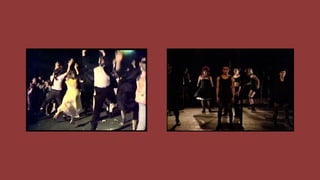
Dance numbers would take place, often of traditional dances and sometimes those from different
periods of time in history eg. the dance number in Tight Right White. Abdoh loved to use folk
dance traditions, and brought in people who could choreograph and possibly perform a Brazilian
dance, a Jewish wedding dance, a Viennese waltz. At the same time, the shows feature dance
sections that are apropos of hip-hop videos one would see on MTV.
gallows humour
-
Gallows humor, which Abdoh called “the most important part of my aesthetic,” is recurrent.
Gallows humor can take the form of an absurd juxtaposition of images, of a comic conception of
a character’s costume, of the insertion of a camp segment into a scene that has hitherto been
violent or otherwise repugnant, or of “sick jokes,” short question and answer routines that are as
silly as they are perverse and (in a good way) tasteless.
consistencies in presentational style + influences
-
His theatre had influences of Brecht’s alienation technique and Artaud’s Theatre of Cruelty as
well as consistent trends in presentational style that might have been drawing influence from
Ta’ziyeh or Brecht.
The unusually loud amplifications of the actor’s voice on mic that was deliberately shown,
dance numbers taking place to interrupt action, but one that comments-or provides a contrast
that invites comment-on the preceding and following scenes.
social relevance
In the US, his plays would often be staged in venues such as abandoned houses, dilapidated
hotels, storefronts, side streets, etc. In Europe, his plays would be featured in urban theatre
festivals and such.
He was the recipient of a CalArts/Alpert Theater award in 1995 and a posthumous "Bessie," the
Choreographer and Creator Award for Sustained Achievement. Several of his plays toured
extensively in Europe.
A documentary was made by his long-time friend and co-operator, Adam Soch , finished in 2016.
Abdoh’s work is still revered and referenced in the theater community today and according to
Soch, “Reza’s work has become regularly incorporated into college and university syllabi. It has
become legendary…”
“Every so often there is an artist whose body of work is so profound and impactful that it needs to
be brought to the forefront, even twenty years after his passing. In this case, the May 2015 premier
will mark the twentieth anniversary of Reza’s death.”
Abdoh passed away at a time where his work was starting to gain more recognition
than ever. Just before his passing, he was granted $50,000 and commissioned by The
Vienna Festival for his latest play.
“Few artists share Abdoh’s impulse to use a post-modern vocabulary to express a
socio-politically committed point of view” therefore it’d be difficult to watch his plays
remade. “Neither print, nor still photos that accompany articles, can create an adequate
sense of experience that relies heavily on the extraordinary kinetic energy and use of
montage” that was Abdoh’s work.
personal responses
questions?
thank you

Reza Abdoh

  • 1.
    Reza Abdoh emily |sabrina | bryan | jackie | alyssa present to you 1965 - 1995
  • 2.
  • 3.
    recurrent themes - Mainly hisplays surrounded the subject matter of sex, death and identity which incorporated issues such as the AIDs crisis, racism and homophobia into the themes. “There’s nothing in his work that calls for pity or points a finger of blame at any group.” There is no call for action. He created discussions, despite how he might have personally felt on the issue.
  • 4.
    environmental theatre, multimediaelements - His works had elements of multimedia (eg. tv screens, projections on walls) and usually took place in abandoned warehouses, dilapidated hotels, storefronts, side streets, gymnasiums ,etc.
  • 5.
    Boogeyman Trilogy (partI), Los Angeles Theater Centre (1990) The Iranian, 440 Lafayette Street in New York City (1993)
  • 6.
    The Law ofRemains, The Hotel Diplomat, New York City (1993) Boogeyman Trilogy (part II), Los Angeles Theatre Center (1992)
  • 7.
    dance - Dance numbers wouldtake place, often of traditional dances and sometimes those from different periods of time in history eg. the dance number in Tight Right White. Abdoh loved to use folk dance traditions, and brought in people who could choreograph and possibly perform a Brazilian dance, a Jewish wedding dance, a Viennese waltz. At the same time, the shows feature dance sections that are apropos of hip-hop videos one would see on MTV.
  • 9.
    gallows humour - Gallows humor,which Abdoh called “the most important part of my aesthetic,” is recurrent. Gallows humor can take the form of an absurd juxtaposition of images, of a comic conception of a character’s costume, of the insertion of a camp segment into a scene that has hitherto been violent or otherwise repugnant, or of “sick jokes,” short question and answer routines that are as silly as they are perverse and (in a good way) tasteless.
  • 10.
    consistencies in presentationalstyle + influences - His theatre had influences of Brecht’s alienation technique and Artaud’s Theatre of Cruelty as well as consistent trends in presentational style that might have been drawing influence from Ta’ziyeh or Brecht. The unusually loud amplifications of the actor’s voice on mic that was deliberately shown, dance numbers taking place to interrupt action, but one that comments-or provides a contrast that invites comment-on the preceding and following scenes.
  • 11.
  • 12.
    In the US,his plays would often be staged in venues such as abandoned houses, dilapidated hotels, storefronts, side streets, etc. In Europe, his plays would be featured in urban theatre festivals and such. He was the recipient of a CalArts/Alpert Theater award in 1995 and a posthumous "Bessie," the Choreographer and Creator Award for Sustained Achievement. Several of his plays toured extensively in Europe.
  • 13.
    A documentary wasmade by his long-time friend and co-operator, Adam Soch , finished in 2016. Abdoh’s work is still revered and referenced in the theater community today and according to Soch, “Reza’s work has become regularly incorporated into college and university syllabi. It has become legendary…” “Every so often there is an artist whose body of work is so profound and impactful that it needs to be brought to the forefront, even twenty years after his passing. In this case, the May 2015 premier will mark the twentieth anniversary of Reza’s death.”
  • 14.
    Abdoh passed awayat a time where his work was starting to gain more recognition than ever. Just before his passing, he was granted $50,000 and commissioned by The Vienna Festival for his latest play.
  • 15.
    “Few artists shareAbdoh’s impulse to use a post-modern vocabulary to express a socio-politically committed point of view” therefore it’d be difficult to watch his plays remade. “Neither print, nor still photos that accompany articles, can create an adequate sense of experience that relies heavily on the extraordinary kinetic energy and use of montage” that was Abdoh’s work.
  • 16.
  • 17.
  • 18.