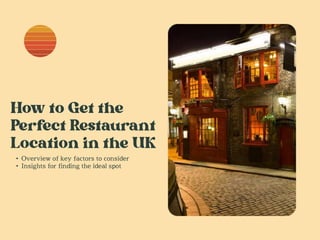
• Overview of key factors to consider
• Insights for finding the ideal spot
• Understanding the Market
• Types of Restaurant Locations
• Factors to Consider When Choosing a Location
• Exploring the Alternative: Building a Ghost Kitchen
• Conclusion
• Key Takeaways
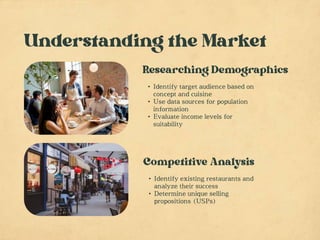
• Identify target audience based on
concept and cuisine
• Use data sources for population
information
• Evaluate income levels for
suitability
• Identify existing restaurants and
analyze their success
• Determine unique selling
propositions (USPs)
• Look for underserved areas and
emerging trends
• Gauge community needs through
surveys and polls
• Nearby businesses can increase
foot traffic and visibility
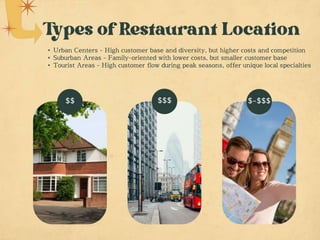
$$$ $-$$$
$$
• Urban Centers - High customer base and diversity, but higher costs and competition
• Suburban Areas - Family-oriented with lower costs, but smaller customer base
• Tourist Areas - High customer flow during peak seasons, offer unique local specialties
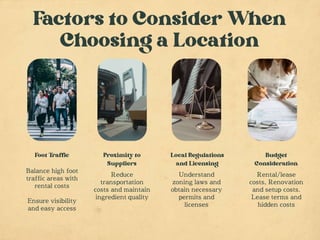
Balance high foot
traffic areas with
rental costs
Ensure visibility
and easy access
Reduce
transportation
costs and maintain
ingredient quality
Understand
zoning laws and
obtain necessary
permits and
licenses
Rental/lease
costs, Renovation
and setup costs.
Lease terms and
hidden costs
• Focus on delivery and takeout
• Save on rent, utilities, and staff
• Flexibility to change menus
and run multiple brands
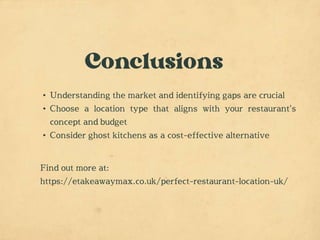
• Understanding the market and identifying gaps are crucial
• Choose a location type that aligns with your restaurant's
concept and budget
• Consider ghost kitchens as a cost-effective alternative
Find out more at:
https://etakeawaymax.co.uk/perfect-restaurant-location-uk/

Restaurant Location Guide for Restaurant Startups

  • 1.
    • Overview ofkey factors to consider • Insights for finding the ideal spot
  • 2.
    • Understanding theMarket • Types of Restaurant Locations • Factors to Consider When Choosing a Location • Exploring the Alternative: Building a Ghost Kitchen • Conclusion • Key Takeaways
  • 3.
    • Identify targetaudience based on concept and cuisine • Use data sources for population information • Evaluate income levels for suitability • Identify existing restaurants and analyze their success • Determine unique selling propositions (USPs)
  • 4.
    • Look forunderserved areas and emerging trends • Gauge community needs through surveys and polls • Nearby businesses can increase foot traffic and visibility
  • 5.
    $$$ $-$$$ $$ • UrbanCenters - High customer base and diversity, but higher costs and competition • Suburban Areas - Family-oriented with lower costs, but smaller customer base • Tourist Areas - High customer flow during peak seasons, offer unique local specialties
  • 6.
    Balance high foot trafficareas with rental costs Ensure visibility and easy access Reduce transportation costs and maintain ingredient quality Understand zoning laws and obtain necessary permits and licenses Rental/lease costs, Renovation and setup costs. Lease terms and hidden costs
  • 7.
    • Focus ondelivery and takeout • Save on rent, utilities, and staff • Flexibility to change menus and run multiple brands
  • 8.
    • Understanding themarket and identifying gaps are crucial • Choose a location type that aligns with your restaurant's concept and budget • Consider ghost kitchens as a cost-effective alternative Find out more at: https://etakeawaymax.co.uk/perfect-restaurant-location-uk/