Resource
Management Theory
or Principle
Resource Management
Resource management is the management of the
resources in an organization. It is the process of
identifying, collecting and tracking all the resources to
achieve a goal. You can also refer to it as resource
planning or simply planning.
Resource management is one of the most important
skills to have in any job. It’s also one of the most
difficult skills to master. It is a process that helps you
ensure that your project has everything it needs to
succeed.
Types of Resource Management
HR Management
Employees are the heart of an organization. Human resource
management includes all the activities that an organization undertakes to
find, attract and retain qualified employees. It also includes training and
development of employees so that they can perform their duties efficiently.
Project Resources Management
Project resources management is an important aspect of project
management. It includes the planning and allocation of resources required
for a project, monitoring their progress and performance during execution,
and evaluating how well they have met expectations at the end of the
project.
Infrastructure Management
Infrastructure management is an important aspect of project management.
It includes the planning, designing, and implementation of the required
infrastructure for a project. Infrastructure can be anything that supports the
business’s operations; it may include facilities, machinery, or software
systems.
Natural Resources Management
Natural resources management is the process of planning, implementing,
and monitoring actions to ensure that natural resources are used in a way
that sustainably meets human needs. This can include renewable and non-
renewable resources, such as water, soil, air, plants, and animals.
Importance of Resource
Management
Reduces
turnaround
time
01. 02. 03.
Maximizes
resource
efficiency
Prevents
miscommunication
mishaps
04.
Better
forecasting
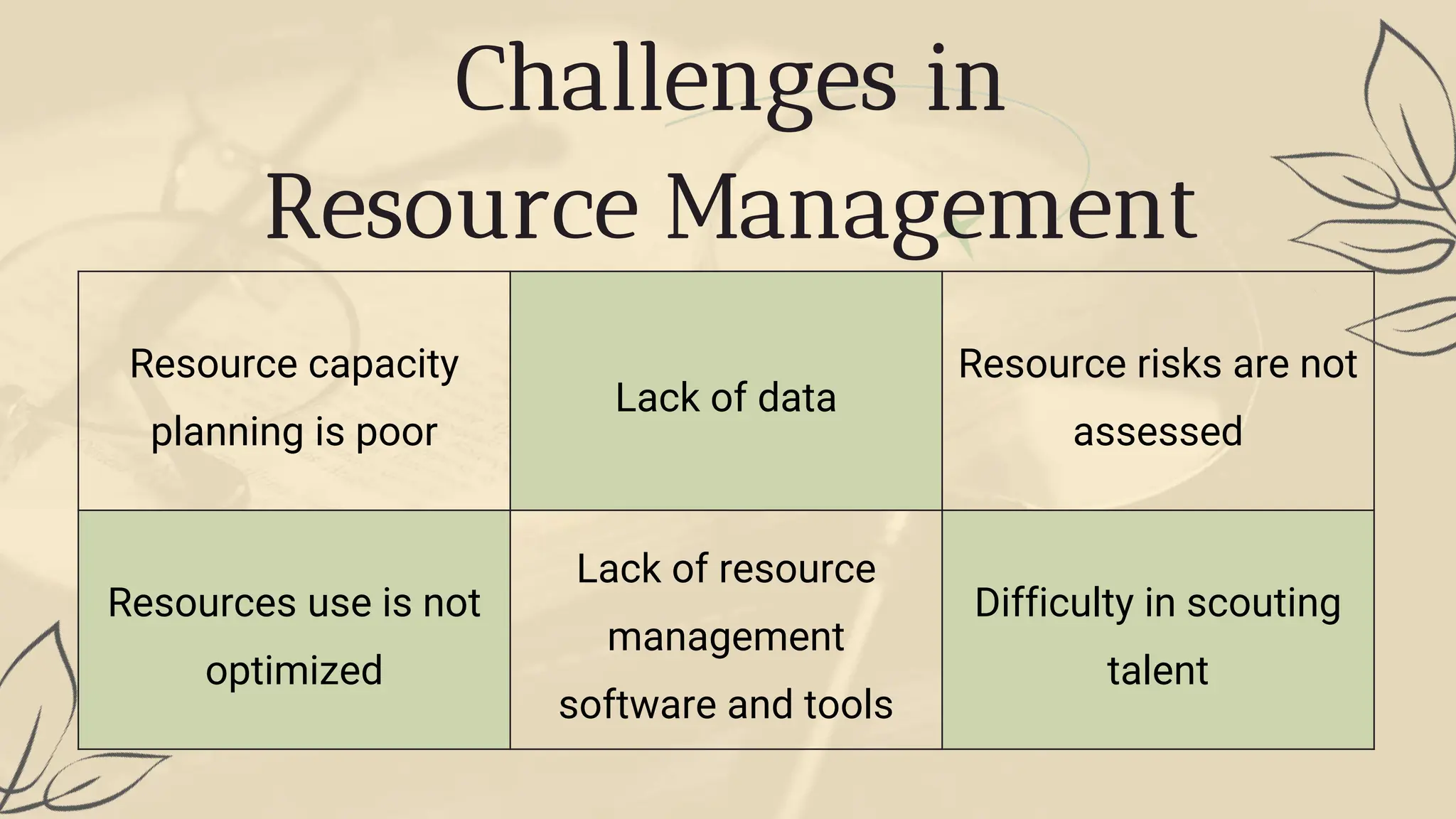
Resource capacity
planning is poor
Lack of data
Resource risks are not
assessed
Resources use is not
optimized
Lack of resource
management
software and tools
Difficulty in scouting
talent
Challenges in
Resource Management
Resource Management
Techniques
Resource
Allocation
01. 02. 03.
Resource
Scheduling
Resource
Smoothing
and
Leveling
04.
Resource
Forecasting
Resource Management Best Practice
 Use of agreements - The use of contracts to ensure that both
parties understand what is required from them and the
consequences should a breach occur.
 Performance reviews - The use of performance reviews to measure
the quality and efficiency of work being done. Performance reviews
help the business understand what changes need to be made in
order to ensure that all resources are being used effectively. – The
use of incentives such as pay bonuses and promotions is another
way to encourage workers to do their best work. This can help
reduce attrition rates and increase morale within the company.
 Frequent meetings - Regular meetings between managers and
employees to discuss issues, review progress and evaluate
performance.
 Project plan - Creating a clear vision of requirements for the
project. Understanding the current state of your resources and how
you can utilize them. Knowing who in your organization has what
skills and competencies. Creating a timeline of when certain tasks
need to be completed and by whom.
 Communication plan - Having an effective communication plan to
share information about the status of projects and their
importance. The most common ones include establishing a set of
clear goals and objectives.
 Regular follow-ups - Regularly checking in with employees,
contractors or freelancers on progress towards those goals.
Regular meetings with staff to ensure that everyone is on the same
page and working in a coordinated fashion. The establishment of
clear goals for review and update is crucial.
 Budget planning - Another strategy is the creation of a budget.
This allows the company to see how much money it has
available for various expenses and how these will affect its
ability to grow. Consider a budget as a tool for controlling costs,
which helps to maximize profits.
 Project management tools - The use of project management
software to manage resources and workflow is another effective
tool. A central database that can be accessed by all parties
involved in a project, including clients and freelancers. A system
should be in place for tracking time spent on each task or
project.
Thank you!

Resource Management Theory or Principle.pptx

  • 1.
  • 2.
    Resource Management Resource managementis the management of the resources in an organization. It is the process of identifying, collecting and tracking all the resources to achieve a goal. You can also refer to it as resource planning or simply planning. Resource management is one of the most important skills to have in any job. It’s also one of the most difficult skills to master. It is a process that helps you ensure that your project has everything it needs to succeed.
  • 3.
    Types of ResourceManagement HR Management Employees are the heart of an organization. Human resource management includes all the activities that an organization undertakes to find, attract and retain qualified employees. It also includes training and development of employees so that they can perform their duties efficiently. Project Resources Management Project resources management is an important aspect of project management. It includes the planning and allocation of resources required for a project, monitoring their progress and performance during execution, and evaluating how well they have met expectations at the end of the project.
  • 4.
    Infrastructure Management Infrastructure managementis an important aspect of project management. It includes the planning, designing, and implementation of the required infrastructure for a project. Infrastructure can be anything that supports the business’s operations; it may include facilities, machinery, or software systems. Natural Resources Management Natural resources management is the process of planning, implementing, and monitoring actions to ensure that natural resources are used in a way that sustainably meets human needs. This can include renewable and non- renewable resources, such as water, soil, air, plants, and animals.
  • 5.
    Importance of Resource Management Reduces turnaround time 01.02. 03. Maximizes resource efficiency Prevents miscommunication mishaps 04. Better forecasting
  • 6.
    Resource capacity planning ispoor Lack of data Resource risks are not assessed Resources use is not optimized Lack of resource management software and tools Difficulty in scouting talent Challenges in Resource Management
  • 7.
    Resource Management Techniques Resource Allocation 01. 02.03. Resource Scheduling Resource Smoothing and Leveling 04. Resource Forecasting
  • 8.
    Resource Management BestPractice  Use of agreements - The use of contracts to ensure that both parties understand what is required from them and the consequences should a breach occur.  Performance reviews - The use of performance reviews to measure the quality and efficiency of work being done. Performance reviews help the business understand what changes need to be made in order to ensure that all resources are being used effectively. – The use of incentives such as pay bonuses and promotions is another way to encourage workers to do their best work. This can help reduce attrition rates and increase morale within the company.
  • 9.
     Frequent meetings- Regular meetings between managers and employees to discuss issues, review progress and evaluate performance.  Project plan - Creating a clear vision of requirements for the project. Understanding the current state of your resources and how you can utilize them. Knowing who in your organization has what skills and competencies. Creating a timeline of when certain tasks need to be completed and by whom.
  • 10.
     Communication plan- Having an effective communication plan to share information about the status of projects and their importance. The most common ones include establishing a set of clear goals and objectives.  Regular follow-ups - Regularly checking in with employees, contractors or freelancers on progress towards those goals. Regular meetings with staff to ensure that everyone is on the same page and working in a coordinated fashion. The establishment of clear goals for review and update is crucial.
  • 11.
     Budget planning- Another strategy is the creation of a budget. This allows the company to see how much money it has available for various expenses and how these will affect its ability to grow. Consider a budget as a tool for controlling costs, which helps to maximize profits.  Project management tools - The use of project management software to manage resources and workflow is another effective tool. A central database that can be accessed by all parties involved in a project, including clients and freelancers. A system should be in place for tracking time spent on each task or project.
  • 12.