Arie Sullivan
8/9/2015
ON THE ACTION
MECHANISM OF
CHLOROTOXIN:
APOPTOSIS
MSc Research Project
Arie Sullivan
1
Contents
Abstract………………………………………………………………………………………………….2
Introduction…………………………………………………………………………………………….3
Materialsand methods………………………………………………………………………….12
Results..…………………………………………………………………………………………………16
Discussion……………………………………………………………………………………………..25
Further investigation…………………………………………………………………………….33
Appendix……………………………………………………………………………………………….34
References…………………………………………………………………………………………….46
Arie Sullivan
2
Abstract.
Scorpionvenomisa complex mixtureof biologicallyactive compounds,of whichsome are being
increasinglystudiedfortheirtherapeuticproperties.Thefamilyof chlorotoxin (CTX) -like peptides
exhibit insecticidal activity with a yet only little known of its mechanism of action. The primary
activity of CTX is in protection against invertebrate predators, however, CTX’s activity is not
restricted to invertebrates, withgrowing incoming research reporting CTX binding specificityto
cells of malignant brain tumors, namely glioma. Additionally, studies investigating CTX-based
tissue stainingclaim CTX-binding extendsto tumors of neuroectodermal origin. Decipheringthe
mode of actionof CTX largelyreliesonunderstandingthe interactionsof CTX ata molecularlevel,
specifically,ascertainingthe exactCTXreceptorswouldprovide the parametersinwhichCTXcan
be used safely and therapeutically. Investigations on alternate forms of CTX (BmKCT) report
apoptosis induction in glioma with IC50 values of 0.28µM. It is shown herein that contrary to
expectation, CTX does not reach an IC50 value for any cell line, potentially demonstrating
alternative mechanisms for CTX in its action on tumorous/non-tumorous cell lines. This report
also discloses no apoptogenic properties for CTX as determined by a series of experiments
including statistical analyses of CTX effect on highly migratory cells of neuroectodermal origin,
specifically SHSY5Y; non-migratory breast cancer cell line MCF7; and migratory non-cancerous
human keratinocyte cell line HaCaT. Rather, a new mechanism of action, necrosis induction in
SHSY5Y, is demonstrated for CTX. Moreover, no significant effect on cell line HaCaT expressing
MMP-2, suggests that MMP-2 as a lone CTX target is questionable.
Arie Sullivan
3
Introduction.
Glioma and Neuroblastoma
The gliomafamilyform65%of primarybraintumors(WangandJi,2005) andinclude Glioblastoma
multiforme (GBM) and anaplastic astrocytomas, the most aggressive of primary brain tumors
which at best, are accompanied by dismal prognoses (Holland, 2000). Neuroblastoma (NB),
suspected of originating from neural crest-derived sympathoadrenal progenitor cells,has a high
metastatic potential, and is the most common extracranial tumor in children, accounting for 8-
10% of childhood cancers (Kim et al., 2014; McHugh, 2007).
Despite the progression made over the last decade, a monogenic Mendelian syndrome of
heritable NBshasnot beenestablished, moreover,the influencesof bothepigeneticfactors and
of the presumedhereditarycomponentsremaintobe determined. Geneticfactorsforadiversity
of human pathologies have beenidentified by whole exome sequencing yetonly recently has it
been applied in ascertaining genetic factors linked to glioma and NB tumorigenesis (Kim et al.,
2015). Thus, efficient therapeutic interventions for both gliomas and NB remain scarce.
NB and glioma cells however, both show an unusual propensity to disperse from the tumor site
with a high metastatic rate, subsequently invading neighboring healthy tissue (Merzak et al.,
1994). As well as sharing metastatic potential, gliomas and NBs have been associated by
embryonic nature, cellular characteristics and tumorigenesis (Kriegstein and Alvarez-Buylla,
2009). Moreover, Notch signaling has been demonstrated to initiate irreversible differentiation
from Neurogenesis to Gliogenesis by dominant inhibition of BMP-2 in neural crest stem cells
(Morrison etal., 2000). Thus,an investigationintothe targetingcapacityof CTXtoNBwouldform
a continuation of the research characterizing CTX’s mechanism of action.
Malignant cell invasion
Invasive tumor cells escape surgical removal and geographically circumvent lethal radiation
exposure and chemotherapy (Nakada et al., 2007). This evading ability stems from a unique
capacity of gliomacellsto activelymigrate throughtwo typesof extracellularspace inthe brain,
the perivascularspace presentaroundall blood vessels, andthe spacesin betweenthe neurons
and glial cells making up the brain parenchyma and white mater fiber tracts (Paw et al., 2015).
The migrationof gliomacellsthroughthese extracellularspace necessitatesparticular changesin
cell morphology. Key signaling GTPases that regulate cell morphology and mediate receptor-
initiatedsignalingintheregulationof gliomainvasionare RhofamilyGTPasesincludingRac,RhoA
and Cdc42 (Kwiakowska and Symons, 2013).
Arie Sullivan
4
The mechanism of action for NB brain metastasis is not as well-characterized as that of glioma,
butthe invasivecapacityof manytumorcellsnecessitatesparticularmechanismsof actionwhich
can be summarized in three sequential steps. The first step is modification of cell adhesion
property by interaction with the extracellular matrix (ECM) via adhesion proteins such as
integrins,specifically αvβ3andαvβ6mediate cell adhesion(DeryuginaandBourdon,1996).Since
NB ishighlymetastatic,upregulatedexpressionof αvβ3iscommonand has beenrecognizedasa
prognostic indicator for NB (Ribatti et al., 2004). The second step is degradation of the
extracellular matrix (ECM) via proteolytic enzymes such as members of the matrix
metalloproteinase (MMP) family. Importantly,the extracellularspace inanatomic arrangements
variesprofoundly,suchas in the basal laminabetweenmyelinatedaxonsor thinfibrousECM of
the bloodvessel basementmembranes(Brown,2011).This indicatesthe presence of more than
one matrix ligand and potentially separate mechanisms for invasion, further complicating the
mode of actionin translocationof neoplasticcellsthroughhostECMbarriers.Finally,achange of
cell shape and volume, is necessitatedfor migration through the narrow spaces formed from
degradationof the ECM(Kim etal., 2004). Thisshape shiftingabilityismediatedviaionflow such
as Cl-
, K+
and their respective volume-regulated ion channels (Kim et al., 2004). The ability to
performall three stepssequentiallyallowsinvasivecellstopenetrateareasthatwouldotherwise
be impossible,specifically,allowinggliomacellstopenetrate the blood-brain-barrier(BBB) (fig.1).
With such distinctive characteristics however, often comes in equal measures, distinctive
mechanisms of action.
Fig.1 The blood brain barrier (BBB) and the diversity of glial and neural cellsimplicated in
glioma /astrocytoma tumorigenesis. Image acquired from Slayden, 2005.
Arie Sullivan
5
Venoms as therapeutics
The first use of scorpion venom as a drug can be traced back to almost 2000 years in China, in
treatingapoplexy,epilepsy,spasm,migraines,tetanusandpyocutaneousamongstmore (Fan et
al., 2010). Interestingly, these diseases are nowadays categorized as channelopathies, implying
the active componentisa keyregulatorof ionchannels(Zhijian etal., 2006; Goudetet al., 2002).
Various other venoms isolated from a number of species have been hailed as possessing
antiproliferative, cytotoxic, apoptogenic, and immunosuppressive properties. They have been
recognizedasarich source fornumerous bioactivecompoundspossessing therapeuticpotentials
like enzyme and non-enzyme proteins, ions, free amino acids, and other organic and inorganic
substances.
Studies on the mode of action of cardiotoxin III, isolated from Naja naja atra snake venom, in
human colorectal cancer (colo205) revealed apoptosis induction, confirmed by DNA
fragmentation(Tsaietal.,2006).Spidervenomisolatedfrom Macrotheleraven hasbeenreported
to affect cell viability in a dose-dependent manner and induce apoptosis and necrosis in breast
cancer (MCF7) cells (Gao et al., 2007). A number of scorpion venom components have been
knowntomediate cellproliferation,cellgrowthand cellcycle(DasGuptaetal.,2007). Specifically,
venomfromthe scorpion Odontobuthusdoriaehasbeenshown todecrease cell viability,induce
reactive nitrogen intermediates, depolarize mitochondria membranes and increase caspase-3
activity and thus, apoptosis in human neuroblastoma (SHSY5Y) cells (Zargan et al., 2011).
Additionally, a recombinant form of the scorpion venom component Chlorotoxin (CTX) Buthus
martensii Karsch Chlorotoxin-like Toxin (BmKCT), divergent by only 7 amino acids of the 36
characterizedinwild-type CTX,(fig.2a) hasbeenreportedtoinduce gliomacell apoptosis(Wang
and Ji, 2005; Fu et al., 2007). Several other related scorpion venom peptides possess similar
amino acid sequences with matching cysteine residues and minimal divergence from the
consensus sequence(Arzamasov etal.,2014). Thisoffersarational hypothesisthatwild-typeCTX,
a natural 36 aminoacidpeptide derivedfromthe venomof scorpionLeiurusquinquestriatus,may
possess similar apoptogenic properties.
2 a)
G
Arie Sullivan
6
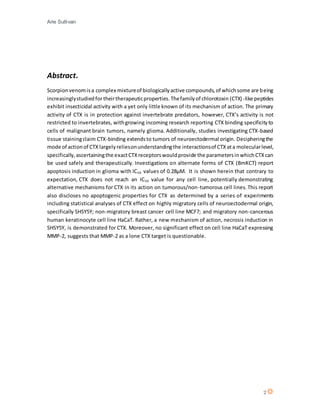
Fig.2 a) Amino acid sequence alignment of BmKCT peptide with Chlorotoxin by matching cysteine
residues. Green pleated sheets indicate the sequences forming β-pleated sheets, the blue helices
represent sequences forming α-helices. This highlights the differences in amino acid sequence and thus,
structuredespite both CTX and BmKCT havinga ββαβ fold b) 3D structure of CTX c) 3D structure of BmKCT.
Image acquired from Dardevet et al., 2015.
Chlorotoxin (CTX)
Leiurus Quinqestriatuschlorotoxin(CTX hereafter),asmall peptide compactinstructure andable
to penetrate the BBB (fig.1), is known among other low molecular-mass and cysteine-rich
peptides, to inhibit recombinant small-conductance chloride channels (DeBin and Strichartz,
1991; DeBin et al., 1993). Cell membrane chloride channels have been implicated in cell
proliferationandinvasivecellmigrationof primarybrain tumorcells,namelyglial andneuralcells
(Olsen etal.,2003). Moreover,cell membranechannelinhibitorsplayanimportantroleincellular
mitogenesis (Ghallagher et al., 1996) and have been associated with the control of signal
transduction in the metastatic cascades (Laniado et al., 2001).
However,despite numerousincomingreportsconfirmingthe bindingspecificityof CTXfortumor
cells,there hasbeencontradictingreportsastothe exactmechanismof actionof CTX,withthree
potential receptorsbeingrecognizedtodate.Cl-
channels,discovered in1993, characterized the
name ‘chlorotoxin’ (DeBin et al., 1993), followed by matrix metalloproteinase -2 (MMP-2) a
decade later.Finally, thelateannexinA2wasdiscoveredasapotentialreceptor,reportedasbeing
the targetforabiotinylated recombinantderivativeof CTX,TM601(Kesavan etal.,2010). Annexin
A2 was confirmed as a molecular target of TM601 by reduced CTX binding as a direct result of
annexin A2 siRNA knockout (Dardevet et al., 2015).
All three receptors,Cl-
channels,MMP-2andannexinA2are involvedincellmigration(Mao etal.,
2007; ReunanenandKahari,2000; Tatenhorst etal., 2006). Assuch, the targetingcapacity of CTX
b) c)
Arie Sullivan
7
has been coupled to migrating cancer cells, namely gliomas, melanomas, small cell lung
carcinomas, neuroblastomas, ganglioneuromas, adrenal pheochromocytomas,
medulloblastomas and Ewings’s sarcomas (Lyons et al., 2002). CTX has been demonstratedas a
highly specificmarkerfortheseselectedtumorsinbiopsytissues,frequentlyassociatingCTXwith
the term ‘tumorpaint’(Butte et al.,2014). However,decipheringthe exactmechanismof action
that allowssuch specifictargetingtotumor cellshasbeenmet withdifficultysince the potential
characterizedCTX targets are associatedwiththe migratorycapacity of cells,primarily knownto
inhibit cell migration. Althoughit is the constituents involved in the invasive facet of malignant
cellsthatare recognized astheprincipaltargetforCTX,expressionof membraneproteinsinvolved
in cell migration is not limitedto malignant cells.Cell migration is a natural mechanism vital for
embryonicdevelopmentandtissuerepair,andthe potential targetreceptorsfor CTXare notonly
expressed in highly invasive tumor cells, but also in healthy migratory cell lines such as human
keratinocyte (HaCaT). Thus, despite receptors such as MMP-2, CL-
ion channels and annexin A2
having altered expression in selected malignant invasive tumor cells, these do not form an
absolute marker for these cells, and non-specific CTX binding remains a potential concern
necessitating further investigation.
Chlorotoxin as ‘tumor paint’
Migratory neural stem cells and neoplastic cells of neuroectodermal origin, including sensory,
sympathoadrenal, enteric and parasympathetic neurons of the peripheral nervous system,
Schwann cells, melanocytes and endocrine cells all share a common embryonic origin. Similarly,
these share geneticandantigenicphenotypeswithgliomas(Lyons etal.,2002). Thissuggeststhat
CTX’s specificity as a marker for gliomas may extend to other tumor cells of neuroectodermal
origin.Indeed,histochemical stainingof humanbiopsytissuesdemonstratedbindingof CTX at a
rate of 90% CTX positive cellsin each section, extending to peripheral neuroectodermal tumors
as well asgliomas(Lyons etal.,2002).This ‘tumorpainting’capacityof CTXhasprovidedsurgeons
with unprecedented, real-time biophotonic information clearly defining tumor margins and
associated cancer cells (Stroud et al., 2012). Beyond the ‘tumor painting’ ability of CTX via
membrane receptor binding, lies the consequential intracellular signaling partly defining the
‘mechanism of action’ of CTX.
Chloride ion channels
Plasma membrane anion chloride channels are implicatedin a number of functions, including
control of excitabilityinneuronandmuscle,cell volume regulation, transepithelialtransport and
sensory transduction (Hartzell et al., 2005). Thus far, three classes of structures have been
identified, voltage-gated ion channels (VGIC), postsynaptic Cl-
channels; the cystic fibrosis
transmembrane conductance regulatorCl-
channels;andthe CLC familyof Cl-
channels(Duran et
al., 2010). Since CTX has been reported to bind specifically to CLC-3 (Rao et al., 2015), the CLC
family of CL-
Channels are of foremost interest.
Arie Sullivan
8
Fig.3 CLC chloride anion channel a) 3D structure of CLC channel b) mechanism of action of CLC channel.
Images acquired from OPM database and Lisal and Maduke, 2009 respectively.
Apoptotic normotonic shrinkage of cells is coupled to facilitation of regulatoryvolume decrease
(RVD) which is attained by parallel operation of Cl-
and K+
channels under hypotonic conditions
(Maeno et al., 2000). Cl-
channel blockers, such as 4,4’-diisothiocyanatostibene-2, have been
shownto inhibitcell shrinkage (Wei etal.,2004), indicatinga necessityforCl-
channel mediated
fluid secretion for invasive migration (fig.4). Thus, the inhibitory effects of CTX on Cl-
channels
holdpromisingprospectsforhaltingthe invasivenessof NBs andgliomas.However,therole of Cl-
channelshave beenhighlightedina numberof cell typestreatedwithapoptoticstimuli (Chen et
al., 2008). Specifically, the rapid outflow of Cl-
ions, triggered by intrinsic or extrinsic apoptotic
stimuli hasbeen recognized andconfirmedby apoptosis inhibition inthe presence of Cl-
channel
blockers (Szabo et al., 1998; Nietsch et al., 2000). Additionally, RVD has also beenprevented by
blocking regulatory Cl-
or K+
channels, halting the succeeding biochemical and morphological
events leading to apoptosis (Maeno et al., 2000).
Fig.4 Cell volume regulatory mechanisms a) cell shrinkagevia efflux of Cl- via Cl- channels along
with obligated water (Sontheimer, 2004) and b) outflow of Cl- during depolarization of the
membrane (Scott and Holmes, 2012)
a) b)
a) b)
Arie Sullivan
9
As well as depolarizationof the mitochondrialmembraneduringapoptosis,depolarizationof the
plasmamembrane (PM) has beenreported ina numberof papersinvestigatingapoptosis (Nolte
et al., 2004; Mann et al., 2001). Moreover, a correlation between modulation of the membrane
potential and protection against apoptosis has been demonstrated (Nuccitelli et al., 2006),
suggesting a protective mechanism from apoptosis by preventing depolarization of the PM.
Despite additional research being necessitated to establish the exact association between
apoptosisand depolarizationof the PM,these reports,atleastinpart, confirmthe implicationof
ion channels in the apoptotic process. A further complication is the overexpression of CIC-3
chloride channels ingliomathatfacilitate outwardrectifyingcurrentsoverwhelmCIC-2channels
that facilitate inward rectifying currents, causing a net outflow of Cl-
and subsequently,
depolarizationof the PM(Olsenetal.,2003). Since depolarizationof the PMisanecessitytopass
the G2/M checkpoint in the cell cycle (Blackiston et al., 2009), overexpression of CIC-3 channels
strongly favors cell proliferation.
Since CTX has been reported to induce apoptosis (Cheng et al., 2014) and Cl-
channels are a
recognizedtargetforCTX,itis perhapsnotsurprisingthatthere existscontradictingreportsasto
the mode of actionof CTX. With reportsclaimingthe inductionof apoptosisbyrecombinant CTX,
BmKCT; and Cl-
channels being well-characterized receptors for CTX, the claim of apoptosis
inductionbyCTX whenconsideredalongsidereportsof CTXCl-
channel inhibition,promptsaneed
forfurtherinvestigation. Furthercomplicatingmatters,astudybyMaertens etal.(2009) revealed
nodetectionof anychange inwhole-cellmembrane currentsbyEPC-7patchclampamplifierpost
CTX treatment, leading to a claim that CTX does not inhibit Cl-
channels.
Matrix metalloproteinase -2 (MMP-2)
Matrix metalloproteinases (MMPs) form a family of multi-domain proteins implicated in the
physiological degradationof the extracellularmatrixandconnectivetissue. MMPsbearacatalytic
site fromwhichtissue inhibitorof matrix metalloproteinase-2(TIMP-2) cancontrol MMP activity.
Specifically,viainteractionbetweenthehemopexindomainof MMP-2andthe C-terminaldomain
of TIMP-2 (fig.5) (Morgunovaetal., 2002). AdditionallytoTIMP-2,inhibitionof MMP-2enzymatic
activityisthoughtto occur viaassociationwithacomplex of proteinscomposedof MMP-9,αvβ3
integrin and membrane-type matrix metalloproteinases (MTI-MMPs). Interestingly, CTX is
suspected of binding to more than one of these receptors resulting in internalization of the
complex by endocytosis (Deshane et al., 2002; McFerrin and Sontheimer, 2006). Endocytosis of
MMP-2/TIMP-2 complex has previously been associated with low density lipoprotein receptor-
related protein (LRP), confirmed by inhibition of endocytosis by exposure to natural LRP ligand
antagonistreceptor-associatedprotein(RAP) (Emonard etal., 2004; SternilightandWerb,2009).
Receptor-mediatedendocytosisof MMP-2/TIMP-2 has not beenconsideredtoa great extentas
a potential mechanismof actionof CTX.However,one studyreportsthatthe maximuminhibitory
capacity of CTX on gliomainvasionwasreducedby50% inthe presence of filipin(Deshane etal.,
2003). Since filipin’s mechanism of action involves inhibition of the raft/caveolae endocytosis
pathway (Schnitzer et al., 1994), this is indicative that CTX induces endocytosis of MMP-2.
Arie Sullivan
10
a)
AsMMP-2 hasbeencharacterizedasamediatorforthe degradationof the ECM, glioma’scapacity
for invasionandmetastasisisowed,atleastin part, to readilydetectable expressionof MMP -2,
-9 and TIMP-2 (Wanget al., 2003) Similarly,NB’s invasivemalignancystageshave beenpositively
correlatedwithexpressionof MMP-2and-9 (Zhuet al., 2010). Moreover,stable nucleicacidlipid
particle (SNALP) internalization in U87 glioblastoma cells (fig.5 b), HEK293T human embryonic
kidney cells and mouse primary astrocytes with CTX-coupled liposomes encapsulating FAM-
labeled anti-miR-21 oligonucleotides revealed intensive red (lipid) and moderate green
(oligonucleotide) fluorescence detectable throughout cellular cytoplasm (Costa et al., 2013).
These findings contribute to the growing bodyof research recognizing the internalization effect
of CTX on PM receptors. Thus, CTX-mediatedendocytosis indeedoffersarational mechanismof
action for CTX in the inhibitionof glioma metastatic capacity, and prompts a need for further
investigation.
Despite the binding specificityand associated ‘tumor painting’ capacity of CTX being associated
with MMP-2 expressing tumors, the growing field of genetic manipulation has allowed for CTX
tumor targeting to extend beyond these parameters. For example, using a chlorotoxin Cy5.5
bioconjugate in targeting breast cancer cells (MCF7), modified to express MMP-2 via MMP-2
encoding plasmid transfection (fig.5 b), facilitates CTX binding, strongly favoring MMP-2 as the
Fig.5 3D structure of MMP-2/TIMP-2 complex and method for MMP-2 transfection. a) The proteinase
(MMP-2) and inhibitor (TIMP-2) interact via the hemopexin domain and C-terminal domain respectively.
Catalytic and structural Zn2+ ions are red and Ca2+ ions are purple. The turquoise ellipsoids (III and V)
indicate areas of interaction between the proteinase and inhibitor b) CTX triggers gene transfection for
cancer cell therapy. Images acquired from Morgunova et al., 2002 and Hmed et al., 2013 respectively
b)
Arie Sullivan
11
Fig.6 Annexin A2 bound to calcium. Calcium is represented by black spheres
bound to the α-helices. Image acquired from Schramel, 2014.
CTX target receptor (Veiseh et al., 2007). This confirms MMP-2 bearing tumor cell lines can be
readily detected by CTX.
Annexin A2
Annexin A2 (fig.6) mediates a number of biological processes and has been implicated in cell
migrationandmetastasis (Zhangetal.,2013). Importantly,annexinA2silencinginhibitsinvasion,
migrationand tumorigenicpotential of cancercells (Yaoetal., 2013). Lossof annexinA2hasalso
been reported to cause tumor cell apoptosis via proapoptotic p38 mitogen activated protein
kinase (p38MAPK), c-Jun N-terminal kinase (JNK) and Akt signaling (Madureira et al., 2011). The
annexinA2 tetramerhas also beenshownto localize onthe surface of human breastcarcinoma
and glioma cells where it is suspected that interaction with procathepsin-B facilitates tumor
invasion and metastasis (Mai et al., 2000). Taken together, these findings suggest an additional
potential mode of action for CTX in halting malignant invasion.
This paperconstitutesaninvestigationintothe hypothesisthatCTX inducesapoptosisintumors
cells of neuroectodermal origin, specifically NB cell line SHSY5Y. In order to determine the
potential target receptors of CTX, the investigationwill include a control non-cancerous human
keratinocyte (HaCaT) migratory cell line for considerationof MMP-2 receptors and Cl-
channels,
as well as a non-invasive breast cancer cell line MCF7, for considering effects of CTX on tumors
lackingsignificantMMP-2expressionand consequentially, withlowerdegreesof overall invasive
capacity.
The study will test this hypothesis by means of a number of experimental procedures based on
determining apoptosis/necrosis levels post-exposure to CTX. Initially, a qualitative cell viability
assaybasedonATPlevelswillbe performed-/+CTXforallcell lines.SinceATPlevels are exquisitely
regulated in cells, detectable loss/gain in ATP levels should reflect loss/gain in cell viability. All
three cell lines will be subsequently treated, stained and observed under inverted fluorescent
microscopy -/+CTX to provide quantitative data regarding apoptotic and necrotic effects of CTX.
A statistical analysis will be performed to determine the significance of the quantitative data
regarding apoptosis and necrosis. Finally, any apoptosis will be confirmed by detection of DNA
Arie Sullivan
12
fragmentation(Nagata,2000) usingethidiumbromidestainedgels.Onthe detectionofapoptosis,
a cytochrome-C assay will finally be performed to confirm depolarization of mitochondrial
membrane, caspase 3 activation and thus, true apoptosis (Fig.2).
A discussionwillconsiderpreviousandcurrentresearchwiththeaimofdeterminingifthe findings
regardingapoptosisinductionbyCTXremainconsistentandwhetherthese are comparable with
studies on other characterized venoms.
The selected cell lines for the current study will provide additional informationregarding CTX
receptors since each cell line differs in MMP-2 expression and thus, in associated capacity for
malignantinvasion.Certainpredictionscanbe drawninsofar as thatdifferingexpressionof each
of the three potential receptorswouldreflectCTXbindingability.AsMMP-2 and annexinA2are
highly expressedinbothNBandHaCaTcells (Blanchard etal.,1996) butnotMCF7 (WangandLin,
2014), aneffectonNBandHaCaT butnot MCF7 wouldfavorMMP-2or annexinA2asthe primary
CTX receptors.If effectisobservedonCTXtreatmentof MCF7, receptorsotherthan MMP-2 and
annexin A2 should be considered. Non-specific binding of CTX to non-tumor cells couldalso be
determinedbyinvestigatingthe bindingcapacityof CTXtonon-tumor,migratorycelllines,known
to expressthe three potential CTX target receptors, such as human keratinocyte cells (HaCaT).
The concentrations of CTX proposed herein are based on minimumconcentrations under which
an apoptoticeffecthasbeenobservedinpreviousstudiesinvestigatingapoptosisingliomatumor
cells (Veiseh et al., 2009; Soroceanu et al., 1999) (appendix 2).
Materials and Methods.
Cell lines and cell cultures
Humanbreastcancer cell line MCF7, andneuroblastomaSHSY5Y(obtainedfromSheffieldHallam
University) were maintained in Minimum Eagle’s medium (Gibco) supplementedwith 2mM L-
glutamine and 10% heat inactivated fetal calf serum, Non-essential amino acids and
penicillin/streptomycin. Human keratinocyte cell line HaCaT (obtained from Sheffield Hallam
University) was maintained in Dulbecco’s modified Eagle’s medium (Gibco) supplemented with
10% heat inactivated fetal calf serum and penicillin/streptomycin.
Fig.7. Flowdiagramof the experimental procedure considered in determining apoptosis induction by CTX.
Arie Sullivan
13
Reagents
All reagents used herein are purchased from Sigma™ unless otherwise stated. CellTiterGlo™ kit
was purchased from Promega™. DNA Ladder Detection kit was purchased from Abcam™.
Chlorotoxin was supplied by the Peptide Institute, Inc.
Bicinchoninic acid (BCA) assay
2mL of bovine serum albumin (BSA) was prepared at a concentration of 2mg/mL and frozen in
100µL aliquots. 10mL of 4% CuSO4 solution was then prepared and stored at 4°C. 60µL of 4%
CuSO4 solution was added to 3mL of BCA stock solution to make a working BCA solution. Two
100µL BSA aliquots(2mg/mL) were thawedandusedtoprepare five BSA standardsrangingfrom
125, 250, 500, 1000 to 2000mg/mL. 20µL of each BSA standard was sequentially transferredtoa
96-well plate intriplicates,followedbythe additionof 200µL of the workingsolutiontoeachwell
containing BSA standards. The plate was covered and incubated at room temperature for 45
minutes.The absorbance was subsequentlyreadina spectrophotometer setat a wavelengthof
570nM.
Cell viability assay -/+CTX
A cell viabilityassaywithoutCTXwasperformedusingBreastcancercells(MCF7) neuroblastoma
cells(SHSY5Y) and human keratinocyte cells(HaCaT) togenerate standardcurvesand determine
optimumconcentrationof cellstobe usedforsubsequentassays+CTX.The capacityrange of the
CellTiterGlo™ kit is from 0-50,000 cells/well in a 96-wellplate format, this was subsequently
confirmedbythe plateauphasewhichoccursatapproximately40,000cells/wellforbothcelllines
MCF7 and SHSY5Y. HaCaT generated a linear standard curve without a plateau phase for up to
50,000 cells. A concentration within the linear luminescence phase for all cell lines was
determined (20,000cells/well),thiswillprovide thelargestvariationinluminescencefromlossof
cell viability.
AnATP standardcurve wasalsogeneratedforqualitycontrol of the viabilityassay.1µMATPwas
preparedinculture medium.Tenfolddilutionsof ATPwere thenprepared(1µMto 10nM). A 96-
well plate was sequentially loaded with the varying concenttrations of ATP. A volume of
CelTiterGlo™ reagent equal to the volume of ATP standards in each well was added and the
platewasshakengentlyonanorbital shakerfor2 minutes.The plate wasthenincubatedatroom
temperature for 10 mimnutes to stabilize the luminescence signal and luminescence was
recorded using a Victor™ multiplate reader. The standard curve for ATP was inset to the cell
viability curves for each cell line (appendix 2a), b) and c)).
A cell viabilityassaywithCTX was performedforMCF7, SHSY5Y, and HaCaT. Cell concentrations
(20,000 cells/well) withinthe luminescencelinearphaseof the cell viabilityassay -CTX(fig.2) were
preparedfor bothcell linesforoptimumdetection of change inluminescence.All cell lineswere
plated out at 250µL on a 96-well format, with the outer wells containing PBS (appendix 4).
Arie Sullivan
14
Cells in three wellswere lysedusing CellLytic™ according to protocol for cell lines MCF7, HaCaT
and SHSY5Y and a BCA assay was performed to determine MCF7 and SHSY5Y cell concentration
relative to HaCaT cell concentration (20,000 cells/well) by determining total protein content in
mg.
Two concentrations of CTX (0.25mM and 0.025mM) were prepared from a stock CTX
concentrationof 10mg/mL. 2.5µL of 0.25mM CTX wasaddedto wellscontaining250µL of cellsin
media (20,000 cells/well) producing a 2.5µM CTX treatment. 2.5µL of 25µM was added to wells
containing 250µL of cells in media (20,000 cells/well) producing a 0.25µM CTX treatment. All
treatments were plated out in triplicates on a 96-well plate format for all three cell lines.A –ve
control was prepared byplating250µL (20,000 cells/well)in3 wellsintriplicate foreachcell line.
Luminescence was recorded at time 1 hour and 24 hours, and the results imported into a
Graphpad™ spreadsheet.
Fluorescent microscopy -/+CTX
A seriesof cell concentrations(31,250 cells/mL- 200,000 cells/mL) were preparedbyserial2-fold
dilutionsandplatedout (250µL/well)ina96-well format.The platewasincubatedfor24hours at
37°C to allowcellsto adhere.10µL of Hoechst33342 stain and10µL of PropidiumIodide (PI) was
addedto 1mL mediafordetectionof live anddeadcellsrespectively.All wellscontainingvarious
cell concentrationswerestainedwith10µLof the prepareddyeandincubatedinthe dark atroom
temperature for30 minutes.Allwellswere subsequentlyobservedunderfluorescentmicroscopy
to determine the optimum cell concentration for fluorescent microscopy +CTX.
The optimum cell concentration (80,000 cells/mL) was plated out (250µL) in triplicates for each
CTX dilution (2.5µM and 0.25µM) and one triplicate untreated to generate a –ve control, for
observationattime 1 and 24 hours.An additional triplicate wasplatedoutforeachcell line fora
BCA assay. The plate was incubated at 37°C for 24 hours to allow cells to adhere before being
treated with CTX. Two concentrations of CTX (0.25mM and 25µM) were prepared from a stock
CTXconcentrationof 10mg/mLas perabove.2.5µL of 0.25mM CTX was addedtowellscontaining
250µL of cellsinmedia(20,000 cells/well) producinga 2.5µM CTX treatment.2.5µL of 25µM was
added to wells containing 250µL of cells in media (20,000 cells/well) producing a 0.25µM CTX
treatment.All wellswere treatedincluding –ve control. The platewasplacedonanorbital shaker
and shaken gently for 10 minutes before returning to the incubator. A Hoechst 33342 and
PropidiumIodidestainwasprepared asperabove.Following30 minutesincubation, 10µL of the
stainwasaddedto eachwell,the platewas incubated inthe dark atroomtemperatureforfurther
30 minutes and all wells were subsequently observed directly under inverted fluorescent
microscopy afteratotal of 1 hourof exposure toCTX.A BCA assaywasperformedtocompare cell
concentration for each cell line. The plate was returned to 37°C incubation and the process
repeated at time 24 hours. A statistical analysis was subsequently performed to determine the
apoptotic index for each time interval.
Arie Sullivan
15
DNA fragmentation detection -/+CTX
7 X 10⁵
cellsforSHSY5Y, MCF7 and HaCaT were gentlytrypsinizedandpelletedbycentrifugation
at 1000rpm for 5 minutes. Cells were washed with PBS brieflyand re-pelleted by centrifugation
at 1000rpm for5 minutes,the supernatantwasremovedcarefullyusingapipette.Cellswere then
lysedwith35µLTE(Tris-HCL/EDTA) bufferwithgentlepipetting.5µLEnzyme A solutionwasadded
and the samplesmixedbygentle vortex,all sampleswere thenincubatedat37°C for 10 minutes.
5µL of Enzyme B solution wasaddedto each sample and all samples were incubatedat 50°C for
30 minutes. The saltconcentrationwasraisedtoprecipitatenucleicacidsoutof solutionbyadding
5µL of AmmoniumAcetate Solution toeachsampleandvortexedtomix well.50µLof Isopropanol
was added to each sample and vortexed to mix well and all samples were kept at -20°C for 10
minutes.All sampleswere thencentrifugedfor10 minutestoprecipitate DNA.All DNA sample’s
viscositywasreduced bypassingsamplesthrougha26.5Gneedleviaan insulinsyringe tofacilitate
sample loadingintothe gel (Hagberget al., 2000; Catalani et al., 2013). The electrophoresistank
was filledwith1X TAE buffercontaining0.5µg/mLethidiumbromide.The sampleswerethenre-
suspended in DNA suspension buffer and loaded into wells of a 1.2% agarose gel containing
0.5µg/mL ethidium bromide (Fig.4). Electrophoresis was performed at 100V for 1 hour and the
gel visualized under UV and photographed.
7 X 10⁵
cellsforSHSY5Y,MCF7 andHaCaT were suspendedin1mLof mediaandloadedinto3rear
wellsof a 6-well plate togenerate a –ve control. 7 X 10⁵
cellsforSHSY5Y, MCF7 and HaCaT were
suspended in 1mL of media in 1mL Eppendorf tubes and 1µL of 2.5mM CTX was added to each
tube, generating a final concentration of 2.5µM CTX treatment. All treated cells were placed in
the corresponding3front wellsof the 6-well plate(appendix 5).The 6-well plate wasincubateat
37°C for 24 hours.
Cellsinthree separate wellswerelysedusingCellLytic™accordingtoprotocol forcell lines MCF7,
HaCaT and SHSY5Y and a BCA assay was performed to determine MCF7 and SHSY5Y cell
concentration relative to HaCaT cell concentration (700,000 cells/well) by determining total
protein content in mg.
Following incubation at 37°C for 24 hours, cells in all wells were washed in PBS, then gently
trypsinized,pelletedandre-suspendedinmedia.All cellswere placedin1.5mLEppendorf tubes.
All subsequentstepswere followedasperthe apoptosisDNA ladderdetection protocol -CTX. All
sampleswere re-suspendedinDNA suspensionbufferandloadedintowellsof a1.2% agarose gel
containing 0.5µg/mL ethidium bromide. Each CTX-treated sample was loaded adjacent to the
corresponding control (Fig.6). Electrophoresis was performed at 100V for 1 hour and the gel
visualized under UV and photographed.
Arie Sullivan
16
Results.
BCA assay
A set of BSA dilutions (125, 250, 500, 1000 and 2000mg/mL) were prepared for a BCA assay to
generate a standard curve which will serve throughout this investigation to compare cell
concentrations plated out for various experiments by measuring differences in protein
concentration in mg/mL.
Cell viability assay -/+CTX
Initially, optimum cell concentrations to use for cell viability assays were determined by
measuringluminescencegeneratedfromserial dilutionsof eachcellline.Thisgeneratedstandard
curves (appendix 1) which reveal the linear phase of luminescence, thus, the optimum cell
concentration to use for subsequent assays +CTX was chosen within this linear phase, namely
20,000 cells. An ATP standard curve was also generated for quality control. It can be observed
that the highest relative light unit (RLU) value for HaCaT (416462) was significantly higher than
that of MCF7 (9127) and SHSY5Y (7175).
Following the calibration to determine optimum cell concentrations, a cell viability assay was
performedforall celllines+CTX inwhich20,000 cellswere platedoutperwellina96-well format
(appendix 3).The cell concentrationsplatedoutforeachcell line werecomparedby BCA assayin
separate wells (appendix 5). The cell concentration was compared to that of the control HaCaT
and displayed in percentage difference from HaCaT (table.1).
Cell Line Absorbance
570nm
Y = Mx + C Protein mg/mL Total
Protein
Difference %
from HaCaT
SHSY5Y 1.798 X = 2,746 2,746mg/mL 687mg 0.29%
MCF7 1.901 X = 2,916 2,916mg/mL 729mg 6.04%
HaCaT 1.795 X = 2,741 2,741mg/mL 685mg --
Table 1. Comparison of total protein concentration for SHSY5Yand MCF7 compared to HaCaT as determined
by BCA assay. Measuredinpercentage difference from HaCaT in cell concentrations for both cell lines.
Arie Sullivan
17
a)
b)
c)
Fig.8 Effect of CTX on cellular
ATP metabolism for human
keratinocyte (HaCaT), breast
cancer (MCF7), and
neuroblastoma (SHSY5Y) cell
lines, presented as percentage
of cell proliferation. a) No loss
of HaCaT cell viability following
1 hour CTX exposure for both
CTX concentrations (0.25µM
and 2.5µM). A small decrease
in cell viability can beobserved
following 24 hours exposure
for both CTX concentrations b)
A similar outcome can be
observed for cell line MCF7,
with no loss of cell viability
following 1 hour exposure but
a small decrease following 24
hours CTX exposure c) For cell
line SHSY5Y, there is no loss of
cell viability followingonehour
exposure to CTX. In contrast,
following 24 hours CTX
exposure, SHSY5Y has a small
decrease in cell viability at a
CTX concentration of 0.25µM
CTX and a more evident loss of
cell viability on 24 hours
exposure to 2.5µM CTX. The
percentage of cell proliferation
in a), b) and c) was normalized
to control cells (untreated).
Values are presented as means
± SD (n=3).
Arie Sullivan
18
Fluorescentmicroscopy -/+CTX
An initial 500,000 cells/mL dilution was prepared from which serial 2-fold dilutions were
performed and plated out in a 96-well format. This will allow to determine optimum cell
concentration for observation of apoptosis and necrosis for all cell lines under inverted
fluorescence microscopy.
A level of necrosiscanbe observedbeyondcell concentrations of 125,000 cells/mL(appendix6),
thus, the optimumcellconcentrationforobservingeffectsof CTXwasselectedat80,000 cells/mL.
It shouldbe notedthat eveninlowconcentrations,SHSY5Yshowsa level of necrosis,thisshould
be taken into account when considering subsequent observations of CTX effects on SHSY5Y.
The optimumcell concentration (80,000cell/mL) wasplatedoutat250µL/well (20,000cells/well),
incubated for 24 hours then treated with 0.25µM and 2.5µM CTX. The plate was subsequently
observedunder inverted fluorescent microscopy following 1 and 24 hours of exposure (Fig.9).
A level of necrosiscan be observed for HaCaT post CTX treatment at a concentration of 0.25µM
for 24 hours.More evidentnecrosiscanbe perceived ataconcentrationof 2.5µM for both1 and
24 hourswhencomparedtocontrol whichappears relativelyunaffectedfollowing 24hours +CTX
incubation time.
100µm
Control 0.25µM CTX 2.5µM CTX
1 Hour
24 Hours
20 X
a) b) c)
d) e) f)
Fig.9 HaCaT under inverted fluorescence microscopy a) HaCaT control after 1 hour incubation b) HaCaT after 1 hour
exposureto 0.25µM CTX, c) HaCaTafter 1 hour exposureto 2.5µM CTX, d) Control after 24 hours incubation, e)HaCaT
after 24 hours exposure to 0.25µM CTX, f) HaCaT after 24 hours exposure to 2.5µM CTX. The arrows inset indicate
apoptosis by observation of nuclei fragmentation and membrane blebbing.
100µm
Arie Sullivan
19
1 Hour
a) b
)
c)
d) e) f)
b)
a) b) c)
d) e) f)
1 Hour
Despite a minimal level of necrosis that can be observed for 24 hour exposure to CTX at a
concentration of 2.5µM, no significant effect is demonstrated. AlthoughMCF7 cells appear to
coagulate and form islands (Fig.10 e and f), this is not the case, the lighter blue cellsare in fact
protruding from the basement cell layer. This was confirmed by the ability to observe 90-100%
confluence of the cells on altering the focus slightly.
SHSY5Y appears to be undergoing a high level of necrosis following 24 hours CTX treatment at
both 0.25µM and 2.5µM concentrations when compared to control. A low level of necrosis can
be perceived throughout but remained relatively constant for the control, whereas there is an
observable increase innecroticcellsupontreatment withCTX.The CTXtreatedSHSY5Yappearto
200µm
Control 0.25µM CTX 2.5µM CTX
24 Hours
Fig.11 SHSY5Y under inverted fluorescence microscopy a) SHSY5Y control after 1 hour incubation, b) SHSY5Y after
1 hour exposure to 0.25µM CTX, c) SHSY5Y after 1 hour exposureto 2.5µM CTX, d) Control after 24 hours incubation,
e) SHSY5Y after 24 hours exposure to 0.25µM CTX, f) SHSY5Y after 24 hours exposure to 2.5µM CTX.
10 X
10 X
Fig.10 MCF7 under inverted fluorescence microscopy a) MCF7 control after 1 hour incubation, b) MCF7 after 1
hour exposure to 0.25µM CTX, c) MCF7 after 1 hour exposure to 2.5µM CTX, d) Control after 24 hours incubation,
e) MCF7 after 24 hours exposure to 0.25µM CTX and f) MCF7 after 24 hours exposure to 2.5µM CTX.
Control 0.25µM CTX 2.5µM CTX
1 Hour
24 Hours
200µm
1 Hour
a)
a)
b)
b) c)
c)
d) e) f)
d) e) f)
Arie Sullivan
20
a) b) c)
d) e)
f)
f)
c)
form clusters of both live and dead cells. The distinct effect CTX on SHSY5Y when compared to
HaCaT andMCF7 cells,promptedarepetitionof theexperiment,andinclude a48hour incubation
time with CTX.
A lowlevel of necrosiscan be observedthroughout (fig.12) asin fig.11, at time 24 hoursthere is
a markedclusteringof liveanddeadcells (fig.12,bandc).Attime 48hours,ahighlevel of necrosis
occurs for SHSY5Y treated withbothconcentrationsof CTX (fig.12,e and f).It istotal necrosisfor
SHSY5Y treated with 2.5µM CTX, demonstrating strong necrotic effects from CTX when
considering the control.
Apoptosis and Necrosis +CTX
Since apoptosis and necrosis can be directly visualized under invertedfluorescent microscopy
(fig.9-12),the acquireddatafrommicroscopycanbe propagatedtoperformquantitativeanalyses
on necroticandapoptoticcells inagivenpopulation.Threeimagesof eachcell linewere takenat
time 1 hour and 24 hours post CTX treatment, all cells were counted and mean values were
generatedfromall threeimagesthenconvertedintopercentage values,thesewere subsequently
plotted in column charts (fig.14-16). Despite some apoptosis (fig.13) observable for HaCaT, this
occurred as an exception rather than a rule, with limited amounts of apoptosis taking place.
Control 0.25µM CTX 2.5µM CTX
24 Hours
48 Hours
Fig.12 SHSY5Y under fluorescence microscopy for 24 hours and 48 hours a) SHSY5Y control after 24 hours
incubation, b) SHSY5Y after 24 hours exposure to 0.25µM CTX, c) SHSY5Y after 24 hours exposure to 2.5µM CTX, d)
Control after 48 hours incubation, e) SHSY5Y after 48 hours exposure to 0.25µM CTX and f) SHSY5Y after 48 hours
exposure to 2.5µM CTX.
10 X
200µma) b) c)
d) e) f)
Arie Sullivan
21
a) b)
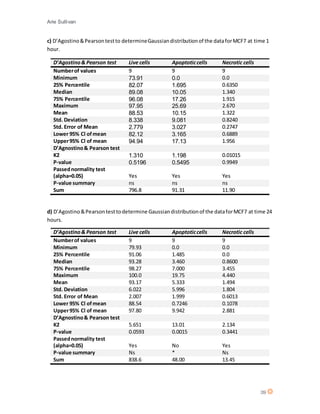
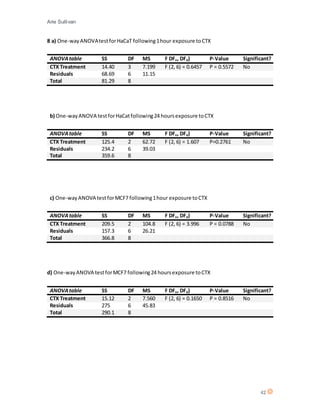
Initially,aD’Agostino&PearsonNormalitytestwasperformedforeachcellline ateachtimepoint
to confirm response variable residuals are normally distributed. A statistical analysis should
determine any significant effect from CTX concentration on cell type, thus the use of a one-way
analysis of variance (one-way ANOVA) statistical test is appropriate.
A D’Agostino & Pearson statistical test confirmed Gaussian distributionof the data from HaCaT
(appendix7a,andb).A one-wayanalysisof variance (one-wayANOVA)wasperformed for1hour
and 24 hours CTX exposure (appendix 8, tables a and b).
The one-way ANOVA revealed no significant effect from CTX concentration on cell type
(live/apoptotic/necrotic) (P value = 0.5572) following 1 hour exposure to CTX. For 24 hours CTX
exposure,there is nosignificanteffectfrom CTX concentrationon celltype (Pvalue=0.2761). The
statistical analysis therefore suggests there is no significant effect from CTX on HaCaT.
Fig.14 Live, apoptotic and necrotic cells as a percentage of cell population for HaCaT at a) time 1 hour (0.25µM and 2.5µM)
and b) time 24 hours (0.25µM and 2.5µM). For each condition (Control, 0.25µM and 2.5µM), results are presented as
percentage of viable, apoptotic and necrotic cells. Values are presented as means ± SD (n=3)
a) b)
Fig.13 HaCaT apoptosis under
20X inverted fluorescent
microscopy. Arrows indicate
nuclei fragmentation and
membrane blebbing. The inset
represents a 40X close up of a
fragmented nucleus.
Arie Sullivan
22
a) b)
A D’Agostino & Pearson statistical test confirmed Gaussian distribution of the data from MCF7
(appendix 7c,and d). A one-wayANOVAstatistical testwasperformed(appendix 8, tablescand
d). One-way ANOVA revealed no significant effect from CTX concentration on cell type after 1
hour exposure (P value = 0.0788), No significant effect from CTX concentration on cell type
following 24 hours exposure (P value = 0.8516) therefore it can be assumed that CTX does not
significantly affect MCF7 cells.
A D’Agostino&Pearsonstatistical testconfirmed Gaussiandistributionof the data fromSHSY5Y
(appendix 7e, andf). A two-wayANOVAstatistical testwasperformed(appendix8, table e and
f).
Again, there is no significant effect from CTX concentration on cell type following one hour
exposure (Pvalue = 0.0993). The one-wayANOVA forSHSY5Y following24 hours of exposure to
Fig.15 Live, apoptotic and necrotic cells as a percentage of cell population for MCF7 at a) time 1 hour (0.25µM and
2.5µM) and b)time 24 hours (0.25µMand 2.5µM). For each condition (Control,0.25µMand 2.5µM),results arepresented
as percentage of viable, apoptotic and necrotic cells. Values are presented as means ± SD (n=3)
Fig.16 Live, apoptotic and necrotic cells as a percentage of cell population for SHSY5Y at a) time 1 hour (0.25µM
and 2.5µM) and b) time 24 hours (0.25µM and 2.5µM). For each condition (Control,0.25µM and 2.5µM), results are
presented as percentage of viable, apoptotic and necrotic cells. Values are presented as means ± SD (n=3)
a) b)
a) b)
Arie Sullivan
23
CTX suggests a significant effect from CTX concentration on cell type (P value = 0.0010), thus
suggesting that CTX affects levels of apoptosis/necrosis in NB cell line SHSY5Y.
A D’Agostino&Pearsonstatistical testconfirmed Gaussiandistributionof the datafromSHSY5Y
(appendix 7g andh). A one-wayANOVA statistical testwasperformedforSHSY5Y following48
hoursCTX exposure (appendix8,table g),andsuggestsa significanteffectfrom CTXonSHSY5Y
(Pvalue = < 0.0001).
DNA fragmentation detection -/+CTX
GenomicDNA wasextracted fromall celllinesandrunona1.2% agarose gel containing 0.5µg/mL
ethidiumbromidefor1hour.GenomicDNA samples proveddifficulttomanipulatewithpipettes,
the high viscosity owing to un-sheared long genomic DNA strands in the cell lysate (Boynton et
al., 1999; Yukl et al., 2014). The result of loading high viscosity samples into the wells of the
agarose gel canbe observed (appendix 9a),the sampleshave aggregatedinthe wellsanddespite
strong signals, the definitionof the bandsis poor. The reason for no signal on SHSY5Y (appendix
9 a) is unknown. Inan effortto reduce the viscosity,the experimentwasrepeatedusinga2-fold
dilutionof cells,producingastainedgel thatrevealedtighterDNA bandsforthesample,however,
the genomic DNA bands are faint and difficult to distinguish (appendix 9 b).
Viscosity of genomic DNA can be reduced mechanically, by enzyme digestion or sonication.
Sonication however,producesDNA fragmentationtoa size of 300-500bp (Sambrookand Russel,
2006) whilstenzyme digestion suchas endonuclease DNA digestioncanproduce randomlysized
DNA fragments (Miyazaki, 2002). Therefore both sonication and enzyme digestionof genomic
a) b)
Fig.17 Live, apoptotic and necrotic cells as a percentage of cell population for SHSY5Y at a) time 24 hours (0.25µM
and 2.5µM) and b) time 48 hours (0.25µM and 2.5µM). For each condition (Control,0.25µM and 2.5µM), results are
presented as percentage of viable, apoptotic and necrotic cells. Values are presented as means ± SD (n=3)
Arie Sullivan
24
DNA are inappropriate for use in sample preparation when detecting apoptotic DNA
fragmentation. Thus, a reduction in viscosity was attempted mechanically, by passing samples
througha 26.5G needleviainsulinsyringe asoutlinedinmethods.PassingGenomicDNA through
a 26.5G needle mechanically shears very long DNA strands, reducing viscosity and easing
manipulation of the samples. However, to maintain a distinction between apoptotic DNA
fragmentation and mechanical shearing, a single pass is recommended so as to avoid a false-
positive result. (Hagberg et al., 2000).
Despite some DNA fragmentationoccurring,the technique revealedbetterdefined genomicDNA
bands (appendix 10) and thus optimized the technique to differentiate genomic DNA from DNA
fragmentation.
Cellsinthree separate wellswerelysedusingCellLytic™accordingtoprotocol forcell lines MCF7,
HaCaT and SHSY5Y and a BCA assay was performed to determine MCF7 and SHSY5Y cell
concentration relative to HaCaT cell concentration (700,000 cells/well) by determining total
protein content in mg (appendix 10).
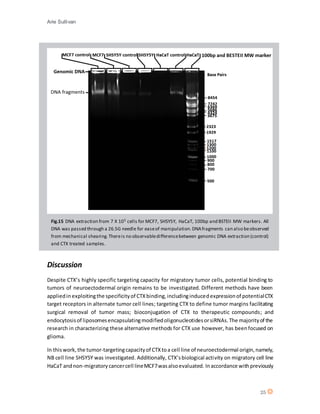
All cell lines were treated with 2.5µM CTX and incubated for 24 hours, DNA was extracted
according to methodsand run on a 1.2% agarose gel containing0.5µg/mL ethidiumbromidefor
1 hour. The gel was subsequently visualized under UV (fig.15).
Genomic DNA bands produce a strong signal for MCF7 control and MCF7; SHSY5Y control and
SHSY5Y. A weakersignal wasgeneratedforHaCaTandno signal forHaCaT control,the reasonfor
this is unknown. The genomic bands are localizedjust below the well as in the case of genomic
DNA extraction.Althoughsome DNA fragmentationoccurs,fragmentscharacteristicof apoptotic
DNA fragmentation are not apparent. Some smearing of DNA fragments can be observed for
MCF7 control and MCF7, but as inthe case of SHSY5Y control and SHSY5Y andHaCaT control and
HaCaT, the fragmentsappearidentical tothose generatedinthe genomicDNA extraction.Thus,
it appears that CTX does not induce apoptotic DNA fragmentation in these cell lines.
Cell Line Absorbance
570nm
Y = Mx + C Protein mg/mL Total
Protein
Difference %
from HaCaT
SHSY5Y 1.132 X = 1,636 1,636g/mL 409mg 11.09%
MCF7 1.235 X = 1,808 1,808mg/mL 452mg 1.74%
HaCaT 1.254 X = 1,839 1,839mg/mL 460mg --
Table 2. Comparison of total protein concentration for SHSY5Yand MCF7 compared to HaCaT as determined
by BCA assay. Measuredinpercentage difference from HaCaT in cell concentrations for both cell lines.
Arie Sullivan
25
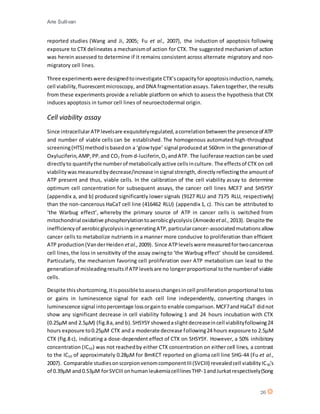
Discussion
Despite CTX’s highly specific targeting capacity for migratory tumor cells, potential binding to
tumors of neuroectodermal origin remains to be investigated. Different methods have been
appliedin exploitingthe specificityof CTXbinding,includinginducedexpressionof potentialCTX
target receptors in alternate tumor cell lines; targeting CTX to define tumor margins facilitating
surgical removal of tumor mass; bioconjugation of CTX to therapeutic compounds; and
endocytosisof liposomesencapsulatingmodifiedoligonucleotidesorsiRNAs.The majorityof the
research in characterizing these alternative methods for CTX use however, has beenfocused on
glioma.
In thiswork, the tumor-targetingcapacityof CTXtoa cell line of neuroectodermal origin,namely,
NB cell line SHSY5Y was investigated. Additionally, CTX’sbiological activity on migratory cell line
HaCaT andnon-migratorycancercell lineMCF7wasalsoevaluated. Inaccordance withpreviously
Fig.15 DNA extraction from 7 X 10⁵ cells for MCF7, SHSY5Y, HaCaT, 100bp and BSTEII MW markers. All
DNA was passed through a 26.5G needle for easeof manipulation.DNAfragments can also beobserved
from mechanical shearing.Thereis no observabledifferencebetween genomic DNA extraction (control)
and CTX treated samples.
Arie Sullivan
26
reported studies (Wang and Ji, 2005; Fu et al., 2007), the induction of apoptosis following
exposure to CTX delineates a mechanismof action for CTX. The suggested mechanism of action
was herein assessed to determine if it remains consistent across alternate migratory and non-
migratory cell lines.
Three experimentswere designedtoinvestigate CTX’scapacityforapoptosisinduction,namely,
cell viability,fluorescentmicroscopy, andDNA fragmentationassays.Takentogether,the results
from these experiments provide a reliable platform on which to assess the hypothesis that CTX
induces apoptosis in tumor cell lines of neuroectodermal origin.
Cell viability assay
Since intracellularATPlevelsare exquisitelyregulated,acorrelationbetweenthe presenceof ATP
and number of viable cells can be established. The homogenous automated high-throughput
screening(HTS) methodisbasedon a ‘glow type’ signal producedat 560nm in the generationof
Oxyluciferin,AMP,PPi and CO2 from d-luciferin,O2 andATP. The luciferase reaction canbe used
directlyto quantifythe numberof metabolicallyactive cellsinculture. The effectsof CTX on cell
viabilitywas measured bydecrease/increase insignal strength, directly reflectingthe amountof
ATP present and thus, viable cells. In the calibration of the cell viability assay to determine
optimum cell concentration for subsequent assays, the cancer cell lines MCF7 and SHSY5Y
(appendix a, and b) produced significantly lower signals (9127 RLU and 7175 RLU, respectively)
than the non-cancerous HaCaT cell line (416462 RLU) (appendix 1, c). This can be attributed to
‘the Warbug effect’, whereby the primary source of ATP in cancer cells is switched from
mitochondrial oxidative phosphorylationtoaerobicglycolysis (Amoedoetal., 2013). Despite the
inefficiencyof aerobicglycolysisingeneratingATP,particularcancer-associatedmutations allow
cancer cells to metabolize nutrients in a manner more conducive to proliferation than efficient
ATP production(VanderHeiden etal.,2009). Since ATPlevelswere measuredfortwocancerous
cell lines,the loss in sensitivity of the assay owingto ‘the Warbug effect’ should be considered.
Particularly, the mechanism favoring cell proliferation over ATP metabolism can lead to the
generationof misleadingresultsif ATPlevelsare no longerproportional tothe numberof viable
cells.
Despite thisshortcoming,itispossible toassesschangesincell proliferation proportional toloss
or gains in luminescence signal for each cell line independently, converting changes in
luminescence signal intopercentage lossorgain to enable comparison.MCF7and HaCaT didnot
show any significant decrease in cell viability following 1 and 24 hours incubation with CTX
(0.25µM and 2.5µM) (fig.8a,and b).SHSY5Y showedaslightdecreaseincell viabilityfollowing24
hours exposure to0.25µM CTX and a moderate decrease following24 hours exposure to 2.5µM
CTX (fig.8 c), indicating a dose-dependent effect of CTX on SHSY5Y. However, a 50% inhibitory
concentration (IC50) was not reachedby either CTX concentration on either cell lines, a contrast
to the IC50 of approximately 0.28µM for BmKCT reported on glioma cell line SHG-44 (Fu et al.,
2007). Comparable studiesonscorpionvenomcomponentIII(SVCIII) revealedcell viabilityIC50’s
of 0.39µM and0.53µM forSVCIII onhumanleukemiacelllinesTHP-1andJurkatrespectively(Song
Arie Sullivan
27
et al., 2012). Taken together, the inhibitory concentrations of these scorpion venomson cancer
cell lines suggests that either CTX has a lower binding affinity for cancer cells than alternate
scorpionvenoms;thatthe target receptorisnot expressedorexpressionissignificantlyreduced
inthe cell linesusedherein;orthatCTXpossessesamechanismof actionotherthan inhibitionof
cell proliferation. Non-the-less, the data from figure 8-c indicates that CTX does impact SHSY5Y
cell viability when compared to control.
Fluorescent Microscopy
The effectof CTXonall cell lineswasfurtherassessedbyvisualizinglivecellsstainedwithHoechst
33342 and dead cells counterstained with PI, 1 and 24 hours post-CTX treatment (fig.9-12).
Visualizing under inverted fluorescent microscopy provides the ability to directly observe the
effectsof CTX on cells,thusgeneratingdataof a more sensitivenature. All dataforeach cell line
and each time interval was statistically analyzed by one-way ANOVA to generate P values
reflecting the probability of a significant effect of CTX concentration on cell type.
The data shown in figure 9 and 14 disclose the effect of CTX on HaCaT with little to no necrosis
observedfollowing 1hourexposureforboth0.25µMand2.5µM CTX(Pvalue =0.5572). Following
24 hoursexposure,aminorlevel of necrosiscanbe observedataconcentrationof 0.25µM anda
small level ofnecrosisataconcentrationof 2.5µM(Pvalue =0.2761).Byone-wayANOVAanalysis,
there is no significant effect of CTX on HaCaT.
Figure 10 and 15 disclose CTXeffecton MCF7 with no significantapoptosis/necrosisthroughout
all CTX treatmentsafter1 hour(P value = 0.0788). Following24 hoursexposure,the one-ANOVA
analysissuggestsan interactionbetweenCTXconcentrationandcell type(Pvalue=0.8516). One-
way ANOVA reveals no significant effect of CTX on MCF7.
Finally, the effects of CTX concentration on SHSY5Y (fig.11, 12, 16 and 17) following 1 hour
exposure disclose no effect from CTX (P value = 0.0993), suggesting that CTX has no significant
effectonapoptosis/necrosisafter1hourexposure toCTX.After24 hoursCTXexposure however,
a significant effect from CTX on cell type can be observed (P value = 0.0010). The results for
SHSY5Y promptedanadditional testusing0.25µMand 2.5µM CTX treatmentfor24 and48 hours
exposure. In confluence with previous experiments, a high level of necrosiscan be observed for
0.25µM CTX, andtotal necrosisfor2.5µM CTX following 48 hours exposure (P value = < 0.0001).
The column charts generated for SHSY5Y reflect the one-way ANOVA test by an observable
increase in necrotic cells for SHSY5Y following 24 hour exposure to 0.25µM CTX and a marked
increase inbothnecroticandapoptoticcellsfor SHSY5Yfollowing24hourexposureto2.5µMCTX.
It is worth noting the clustering of cells following CTX treatment for SHSY5Y when considered
alongside the control (fig.11d, e and f).These clustersof inconsistentsize andshape have been
observed with SHSY5Y when grown onto nanorough substrates (Brunetti et al., 2010). Similar
clustering has been observed on treating SHSY5Y with between 12.5 and 50mg/mL guarana
(Zeidan-Chulia et al., 2013). Despite the aggregation of SHSY5Y cells being previously attributed
Arie Sullivan
28
to the formation of neurospheres (Moors et al., 2009), this is not likely the case since these are
knownto form duringgrowth and are not presentwithinthe control group herein. Additionally,
there wasnocell aggregation onobservationof the cellsfollowing24and48 hours CTX exposure,
indicating the previous clustering could have been an anomaly rather than an organized
formation.
Since CTX has shown to be significant in determining necrosis levels in SHSY5Y, and not HaCaT,
the role of MMP-2 alone as the target receptorfor CTX can be brought intoquestionsince both
these cell linesexpressMMP-2.Asno effectwasobservedforHaCaT, itcan be deducedthatit is
not likely that CTX acts alone on MMP-2 but rather, other receptors are implicated.
Despite CTX affecting SHSY5Y cell viability, investigation into apoptogenic capacity of CTX on
SHSY5Y revealed little to no apoptosis, rather, the different approaches into determining the
mechanism of action of CTX revealed a significantly higher capacity to induce necrosis than
apoptosis.
DNA fragmentation
To further test CTX apoptosis induction, a test for DNA fragmentation was performed on all cell
linesfollowing24hour2.5µM CTX exposure (fig.15) whichgenerated genomicDNA bandsbutno
apoptoticDNA fragmentationdespite anumberof repetitionsof the experimentunderdifferent
conditions. Withoutthe presence of DNA fragmentation,apoptosisisnotlikelyimplicatedin the
mechanism of action of CTX on SHSY5Y.
Following reports of apoptosis induction on glioma cell line SHG-44 and breast cancer cell line
MCF7 by recombinant Buthus martensii Karsch chlorotoxin (BmKCT) (Fu et al., 2007; Li et al.,
2014), the mechanismof actionof Leiurusquinqestriatuschlorotoxin (CTX)wasspeculatedto also
implicate apoptosis, this was not the case. Despite NB having a neuroectodermal origin and
reports claiming 8 positive results of 9 tested for CTX tissue staining (Dardevet et al., 2015), the
reporthereinindicatesCTXdoesnotinduce apoptosis,butrather,necrosis. Thisprompts aneed
for further investigation into the differences in components and structure between the two
molecules that result in the ability of one form to induce apoptosis and the other to induce
necrosis. From the amino acid sequence of BmKCT, it is possible to generate its molecular
structure (fig.16) for comparison with CTX.
Arie Sullivan
29
Fig.16 Molecular structures for
BmKCT and CTX a) Molecular
structure and amino acid sequence
of CTX including all four di-sulfide
bonds, containing a total 36 amino
acid residues (Chemblink database)
b) Molecular structure of
recombinant BmKCT including all
four di-sulfide bonds, containing a
total of 35 amino acids. All differing
or additional amino acids are
presented in blue in both molecular
structures and amino acid
sequences. All amino acids
presented in black are of the same
structure for both BmKCT and CTX.
Glycineresidues at the C-terminal of
BmKCT are presented in red.
Altogether, a total of 9 amino
acids are substituted between
the two molecules, with
additional glycine residues
present at the C-terminal of
BmKCT. Interestingly,the glycine
residues at the C-terminal of
BmKCT are thought to play an
important role in analgesic
activity of the peptide (Zhang et
al., 2010; Zhao et al., 2013), thus
potentially causing BmKCT and
derivatives to possess altered
mechanisms of action. For
example inthe capacityof BmKCT
to induce apoptosis, and CTX to
induce necrosis despite both
molecules possessing a βαββ
conformation and the same di-
sulfide bonds between cysteine
residues. Both molecules have
been reported to inhibit glioma
tumor growth by as of yet,
undefined mechanisms.
a)
b)
Arie Sullivan
30
Glycine receptor(GlyR) Cl-
channels belongtoa familyof ligand-gatedionchannelreceptorsbest
known for mediating inhibitory neurotransmission in motor and sensory reflex circuits of the
spinal cord (fig.17) (WebbandLynch,2007). Disruptionof GlyRexpressioncausesreducedability
to conduct chloride ions resulting in neurological disorder, hyperekplexia (Andrew and Owen,
1997; Xiongetal.,2014). Flatteringly,ionchannelsmediatingneurological signaling are frequently
the target for potent venoms used to paralyze prey (Cannon, 2006).
Studies have demonstrated that glioma cell-GlyRs do not serve as typical neurotransmitter
receptors, with knockdown of GlyR α1 subunit expression resulting in impaired tumorigenicity
(Forsteraetal., 2014). Anotherreportsuggests GlyRscouldhave aninfluence onradial migration
during late embryonic development (Nimmervoll et al., 2011). Moreover, application of glycine
was shown to impede radial migration in neuronal and non-neuronal cells (Avila et al., 2013;
Denderetal.,2010; VandenEynden etal.,2009), suggestingGlyRactivationcausescell migration
arrest. Since GlyRs are widely distributed throughout the whole cortex, it is thought that they
provide significant contributions in controlling cell migration. Studies on rodent models report
glycine-induced inhibition of cell proliferation, migration and tumor growth by 5% (Rosa et al.,
1999). GlyRactivation causingdownstreameffectsoncell migration potentiallyimplicatesGlyRin
the invasive capacity of cells, outlining a potential mode of action for BmKCT’s additional C-
terminal glycine residue. However, to date, there are no reports of GlyR channel inhibitors such
as strychnine or choline having the capacity to circumvent glycine-induced migration inhibition.
The presence of such GlyR antagonists would be expected to blunt the effects of glycine and
downstream processes.
Glycine also triggers calcium influx by activating GlyRs and glycine transporters (GlyTs),
depolarizingthe plasmamembrane.Calciuminflux hasthe potential totriggerapoptosisthrough
plasma membrane channels (fig.18). Specifically, calcium influx into the mitochondrion induces
permeabilitytransitioninthe membrane of anadjacentmitochondrion, formingachainreaction
leading to a significant elevation in cytochrome-c levels initiating downstream caspases and
formation of the apoptosome (Mattson and Chan, 2003). Thus, it could be suggested that the
additional glycine residues at the C-terminal of BmKCT play a pivotal role in the apoptogenic
capacity of BmKCT, perhaps via GlyR Cl-
channel activation.
Determiningthe functionof additional glycine residuesatthe C-terminal of BmKCTmay assistin
deciphering amino acid sequence/molecular structure relationship and couldbe used to predict
the mechanismof actionof relatedvenomcomponentssince these post-translationallymodified
peptides most often share similar sequence consensus, matching cysteine residues, di-sulfide
bonds and thus, structural conformation (Arzamasov et al., 2014).
Arie Sullivan
31
Fig.17 Glycine signaling in macroglial cells. Upon ligand binding,GlyR activation causes chlorideefflux leadingto cellular
depolarization.Thedepolarization causes activation of VGCC resultingin calciuminflux inducingnumerous downstream
effects (cell proliferation,migration and differentiation).Inactivation of the Gl yR may be caused by endocytosis of the
receptor by as of yet unknown mechanisms. Image acquired from Van den Eynden et al., 2009)
Fig.18 The role of GlyR, calcium and cytochrome-c as inter-organellar messengers in apoptosis. a) Upon ligand binding,
GlyR activation causes chloride efflux leading to cellular depolarization. Depolarization causes activation of VGCC
resulting in calcium influx which induces release of cytochrome-c, b) cytochrome-c then diffuses to adjacent
endoplasmic reticulum and binds IP3R receptors c) enhancing calcium release from the endoplasmic reticulum, d)
released calcium causes overall increase in cytoplasmic calcium concentration, e) resulting in calcium uptake by
mitochondria throughout the cell that triggers release of cytochrome-c from all mitochondria. f)cytochrome-c induces
formation of the apoptosome in which caspases are activated, g) caspases and nuclease are the final step in the
apoptotic process, cleaving protein substrates and DNA respectively. Image adapted from Mattson and Chan, 2003
Arie Sullivan
32
Despite indications of different mechanism of action for CTX and BmKCT, studies investigating
glioma tumor growth inhibition report near identical inhibition rates (fig.19) in female SD rats
bearing allografted tumors by subcutaneous injection of C6 glioma cell suspension (Fan et al.,
2010).
Although the study demonstrates GST-CTX and GST-BmKCT have identical tumor growth
inhibition rates, the exact mechanism by which inhibition is achieved remains to be conclusive.
The data drawn from the report herein suggests necrosis induction for CTX whilst other studies
indicate apoptosis induction for BmKCT, both necrosis and apoptosis having the capacity for
tumor growth inhibition.
The internalization of membrane expressedreceptors has also been recognized as a potential
mechanism in halting metastasisof migrating tumor cells but only limited research has focused
on the implicated mechanismof action. A number of nanoparticles have been demonstrated to
internalize successfullywhen bioconjugated with CTX (Stroud et al., 2012; Akcan et al., 2011;
Cheng et al., 2014). Specifically, monomeric and dimeric forms of CTX were demonstrated to
induce internalization in glioma A172 cells, halting migratory capacity (Kasai et al., 2012). MT1-
MMP has been shown to internalize from cell surface by clathrin-mediated and independent
pathways involving caveolae in HT1080 fibrosarcoma cells, downregulating invasive capacity
(Remacle et al., 2003). Moreover, studies investigating mutationsaffecting MT1 internalization,
found a subsequent disruption of invasion-promoting activity whereas those mutations not
affectinginternalization promotedinvasion(Uekitaetal., 2001). Since CTX has beenreportedto
bindtomembrane receptorsCl-
channels,MMP-2andannexinA2leadingtointernalizationof the
complex, these findings suggest a strong association with endocytosis of specific membrane
receptors and subsequent inhibition of migratory capacity of malignant invasive cells.
Fig.19 Tumor growth inhibitory effect of GST-CTX and GST-BmKCT a) Results fromstatistical analysisof averagetumor
weight among groups, with NS and GST treatment as controls. Despite a significant inhibition of tumor growth
demonstrated when compared to control (**), there was no significantdifferencebetween GST-CTX and GST-BmKCT
inhibition rates b) Data of tumor weight and inhibition ratebetween GST-CTX and GST-BmK demonstrated significant
inhibition of tumor growth for both GST-CTX and GST-BmKCT. Results acquired from Fan et al., 2010.
Abbreviations: NS, Normal Saline; GST, Glutathione
transferase; CTX, Leiurus Quinqestriatus chlorotoxin; BmKCT,
Buthus martensii Karsch chlorotoxin.
a) b)
Arie Sullivan
33
Further investigation
Despite increasingreportsnarrowingthe searchfor potential CTX target receptors,a numberof
possibilitiesremainfeasible forthe actionmechanismof CTX. Itispossible tocharacterizethe CTX
targetreceptorbywesternblot.Westernblotanalysiswill enabletoprobe forthe targetreceptor
using an iodinated form of CTX by substitution of tyrosine for iodine at residue 29. The tyrosine
residue at position 29 has been demonstrated as not critical for the function of CTX by intact
activity followingtyr29
iodination (Dardevetetal., 2015).The labelingof CTXandbindingtoprotein
of interestonthe nitrocellulosemembrane shouldallow tovisualize and subsequently determine
the molecular weight of the protein of interest. Alternately circumventing the iodination step,
antibodies can be raised against bound CTX on the nitrocellulose membrane and visualizedby
labelled secondary antibody to primary antibody.
However, bothCLC-2andGlyRas targetCl-
channels forCTX are indistinguishable by westernblot
owingto similarmolecularweightsof 97kDa and 106kDa (Britton et al., 2000). Internalizationof
GlyR causes ubiquitin molecules to induce proteolytic cleavage of the GlyR α1-subunit into a
glycosylated 35kDa N-terminal fragment and a 17kDA COOH-terminal fragment (Lynch, 2004).
Thisallowsforwesternblotanalysis tobe used incombinationwithCTX-bioconjugationmediated
endocytosistodeterminewhichofthe tworeceptorsisthetrue CTXtarget,aswell asascertaining
whether endocytosis of target membrane proteins is occurring.
CTX-bioconjugatedparticlesshowingsuccessful internalizationfollowedby westernblotanalysis
revealingbandsat35kDaand17kDa whichwouldindicatereceptor-mediatedendocytosisof CTX-
target membrane protein GlyR. CTX-bioconjugatedparticles showing successful internalization
and western blot analysis revealing bands at approximately 100kDa would indicate receptor-
mediatedendocytosisof CTX-targetmembraneproteinClC-2.Finally,CTX-bioconjugatedparticles
showingfailedinternalizationandwesternblotanalysisrevealingbandsatapproximately100kDa
would suggest either GlyR or ClC-2 as target membrane proteins and no receptor-mediated
endocytosis.
A further hypothesis to investigate is the ability of CTX as a Cl-
channel blocker to prevent
apoptosis.Thiscouldbe achieved usinggliomacell line SHG-44,replicatingthe conditionsunder
which apoptosis was observed on BmKCT treatment. The experiment could be repeated in the
presence of CTX, with a speculationthat CTX will inhibit apoptosis by Cl-
channel inhibition.This
will assist in determining whether CTX is preventing apoptosis.
Recentadvanceshave beenmade in categorizingandorganizingdata regardingscorpiontoxins.
The construction of molecular databases for scorpion toxins (Srinivasan et al., 2002) forms an
integral part in allowing confluent research to adjoin. Such collaborative databases offer
promising future prospects in deciphering the therapeutic value these numerous compounds
possess.
Arie Sullivan
34
Appendix
1) Standardcurvesdemonstrating the linearphase fora) MCF7, b) SHSY5Y and c) HaCaT to
determine cellconcentrationforoptimum detectionof luminescence variance (20,000
cells) d) ATPstandardcurve for QC.
R² = 0.9992
0
50000
100000
150000
200000
250000
300000
350000
400000
450000
0 10000 20000 30000 40000 50000 60000
Luminescence(RLU)
Cells/well
HaCat
a) b)
)
c)
R² = 1
0
100
200
300
400
500
600
0 0.5 1
RLU
Concentration (µg/mL)
ATP Standard
d)
Arie Sullivan
35
2) Preparationof twoCTX concentrationsfrom10mg/mL stock
1 Mole = 3995g/L
10mg/mL = 10g/L
10 / 3995 = 2.5 X 10-3
M
X 1000 = 2.5mM
a) 10µL (2.5mM) was dilutedin90µL de-ionizedwatertoproduce a0.25mM.
b) 2.5µL (0.25mM) dilutedin250µL media producesa 2.5µM CTX concentration.
c) 10µL (0.25mM) was dilutedin90µL de-ionizedwatertoproduce a 0.025mM.
d) 2.5µL (0.025mM) dilutedim250µL mediaproducesa 0.25µM CTX concentration.
3) 96-well plate setupfor cell viabilityassay+CTX.
Arie Sullivan
36
4) 6-well plate set up, row A) MCF7, SHSY5Y and HaCaT plated out at 7 X 10⁵ cells. Row B) MCF7,
SHSY5Y and HaCaT plated out at 7 X 10 5 cells with 2.5µM CTX treatment.
5) a) Absorbances at570nm for bothcell lines MCF7(1.901) and SHSY5Y (1.798) determine
proteinconcentration inmg/mLbyBCA assay forcell viabilityassay. Valuesfromthe
multiscanare incorporatedintothe BCA standardcurve to determine difference in
proteinconcentrationinmg/mL.
Arie Sullivan
37
b) Absorbancesat 570nm fromthe multiscanare incorporatedintothe BCA standardcurve
to determine difference inproteinconcentrationinmg/mL forSHSY5Y ( ),MCF7 ( ) and
HaCaT ( )
6) Optimizationof cell concentrationforfluorescentmicroscopya) Cell concentration/mLfor
SHSY5Y, b) Cell concentration/mL for MCF7 c) Cell concentration/mL for HaCaT. The optimum cell
concentration was selected at80,000cells/mL.
y = 0.0006x + 0.1502
R² = 0.9956
0
0.2
0.4
0.6
0.8
1
1.2
1.4
1.6
1.8
2
0 500 1000 1500 2000 2500 3000
Absrobance570nM
Concentration µg/mL
BCA Assay
Absorbance Mean
SHSY5Y
MCF7
HaCaT
Linear (Absorbance Mean)
b) MCF7
10X
a) SHSY5Y
10X
c) HaCaT
10X
200µm
200µm
200µm
31,250 cells/mL 62,500 cells/mL 125,000 cells/mL 250,000 cells/mL
Arie Sullivan
38
7 a) D’Agostino&Pearsontesttodetermine Gaussiandistributionof the dataforHaCaT at
time 1 hour.
b) D’Agostino&Pearsontesttodetermine Gaussiandistributionof the data forHaCaT at time
24 hours.
D’Agostino& Pearson test Live cells Apoptoticcells Necrotic cells
Numberof values 9 9 9
Minimum 75.59 0.0 0.9100
25% Percentile 85.61 1.355 2.805
Median 93.33 2.990 4.420
75% Percentile 95.06 3.945 10.43
Maximum 95.45 4.950 24.41
Mean 90.24 2.668 7.094
Std. Deviation 6.704 1.631 7.343
Std. Error of Mean 2.235 0.5436 2.448
Lower 95% Cl ofmean 85.08 1.414 1.450
Upper95% Cl of mean 95.39 3.921 12.74
D’Agnostino& Pearson test
K2 6.336 0.6282 11.62
P-value 0.0421 0.7304 0.0030
Passednormality test
(alpha=0.05) No Yes No
P-value summary * ns *
Sum 812.1 24.01 63.85
D’Agostino& Pearson test Live cells Apoptoticcells Necrotic cells
Numberof values 9 9 9
Minimum 89.80 0.0 0.0
25% Percentile 91.97 0.4100 1.055
Median 94.11 1.690 2.080
75% Percentile 97.72 3.925 4.815
Maximum 98.85 5.620 10.20
Mean 94.75 2.160 3.086
Std. Deviation 3.188 1.940 3.386
Std. Error of Mean 1.063 0.6467 1.129
Lower 95% Cl ofmean 92.30 0.6687 0.4830
Upper95% Cl of mean 97.20 3.651 5.688
D’Agnostino& Pearson test
K2 0.9373 0.9200 6.247
P-value 0.5539 0.3925 0.0440
Passednormality test
(alpha=0.05)
Yes Yes No
P-value summary Ns Ns *
Sum 852.8 19.44 27.77
Arie Sullivan
39
c) D’Agostino&Pearsontestto determineGaussiandistributionof the dataforMCF7 at time 1
hour.
d) D’Agostino&Pearsontesttodetermine Gaussiandistributionof the dataforMCF7 at time 24
hours.
D’Agnostino& Pearson test Live cells Apoptoticcells Necrotic cells
Numberof values 9 9 9
Minimum 73.91 0.0 0.0
25% Percentile 82.07 1.695 0.6350
Median 89.08 10.05 1.340
75% Percentile 96.08 17.26 1.915
Maximum 97.95 25.69 2.670
Mean 88.53 10.15 1.322
Std. Deviation 8.338 9.081 0.8240
Std. Error of Mean 2.779 3.027 0.2747
Lower 95% Cl ofmean 82.12 3.165 0.6889
Upper95% Cl of mean 94.94 17.13 1.956
D’Agnostino& Pearson test
K2 1.310 1.198 0.01015
P-value 0.5196 0.5495 0.9949
Passednormality test
(alpha=0.05) Yes Yes Yes
P-value summary ns ns ns
Sum 796.8 91.31 11.90
D’Agostino& Pearson test Live cells Apoptoticcells Necrotic cells
Numberof values 9 9 9
Minimum 79.93 0.0 0.0
25% Percentile 91.06 1.485 0.0
Median 93.28 3.460 0.8600
75% Percentile 98.27 7.000 3.455
Maximum 100.0 19.75 4.440
Mean 93.17 5.333 1.494
Std. Deviation 6.022 5.996 1.804
Std. Error of Mean 2.007 1.999 0.6013
Lower 95% Cl ofmean 88.54 0.7246 0.1078
Upper95% Cl of mean 97.80 9.942 2.881
D’Agnostino& Pearson test
K2 5.651 13.01 2.134
P-value 0.0593 0.0015 0.3441
Passednormality test
(alpha=0.05) Yes No Yes
P-value summary Ns * Ns
Sum 838.6 48.00 13.45
D’Agostino& Pearson test Live cells Apoptoticcells Necrotic cells
Numberof values 9 9 9
Minimum 73.91 0.0 0.0
25% Percentile 82.07 1.695 0.6350
Median 89.08 10.05 1.340
75% Percentile 96.08 17.26 1.915
Maximum 97.95 25.69 2.670
Mean 88.53 10.15 1.322
Std. Deviation 8.338 9.081 0.8240
Std. Error of Mean 2.779 3.027 0.2747
Lower 95% Cl ofmean 82.12 3.165 0.6889
Upper95% Cl of mean 94.94 17.13 1.956
D’Agnostino& Pearson test
K2 1.310 1.198 0.01015
P-value 0.5196 0.5495 0.9949
Passednormality test
(alpha=0.05) Yes Yes Yes
P-value summary ns ns ns
Sum 796.8 91.31 11.90
Arie Sullivan
40
e) D’Agostino&Pearsontestto determine Gaussiandistributionof the datafor SHSY5Y at time
1 hour
f) D’Agostino&Pearsontesttodetermine Gaussiandistributionof the datafor SHSY5Y at time
24 hours
D’Agostino& Pearson test Live cells Apoptoticcells Necrotic cells
Numberof values 9 9 9
Minimum 78.65 0.0 3.950
25% Percentile 83.32 0.3950 5.955
Median 91.16 0.8800 6.610
75% Percentile 93.16 10.12 7.740
Maximum 96.05 14.61 9.220
Mean 88.58 4.700 6.723
Std. Deviation 5.936 5.572 1.481
Std. Error of Mean 1.979 1.857 0.4935
Lower 95% Cl ofmean 84.01 0.4172 5.585
Upper95% Cl of mean 93.14 8.983 7.861
D’Agnostino& Pearson test
K2 1.262 1.832 0.9792
P-value 0.5319 0.4000 0.6129
Passednormality test
(alpha=0.05) Yes Yes Yes
P-value summary ns ns ns
Sum 797.2 42.30 60.51
D’Agostino& Pearson test Live cells Apoptoticcells Necrotic cells
Numberof values 9 9 9
Minimum 30.44 0.0 6.610
25% Percentile 34.85 0.0 14.33
Median 67.81 9.700 24.16
75% Percentile 75.42 43.23 28.15
Maximum 81.27 50.30 45.71
Mean 58.45 18.08 23.47
Std. Deviation 20.27 21.23 11.22
Std. Error of Mean 6.757 7.076 3.739
Lower 95% Cl ofmean 42.87 1.767 14.84
Upper95% Cl of mean 74.03 34.40 32.09
D’Agnostino& Pearson test
K2 3.256 2.786 1.576
P-value 0.1963 0.2483 0.4549
Passednormality test
(alpha=0.05) Yes Yes Yes
P-value summary ns ns ns
Sum 526.1 162.8 211.2
Arie Sullivan
41
g) D’Agostino&Pearsontesttodetermine Gaussiandistributionof the dataforSHSY5Y at time
24 hours
h) D’Agostino&Pearsontesttodetermine Gaussiandistributionof the dataforSHSY5Y at time
48 hours
D’Agostino& Pearson test Live cells Apoptoticcells Necrotic cells
Numberof values 9 9 9
Minimum 70.17 0.0 1.040
25% Percentile 78.13 0.0 4.305
Median 84.5 0.0 15.49
75% Percentile 95.68 0.0 21.87
Maximum 98.96 0.0 29.83
Mean 85.81 0.0 14.18
Std. Deviation 9.617 0.0 9.619
Std. Error of Mean 3.206 0.0 3.206
Lower 95% Cl ofmean 78.42 0.0 6.787
Upper95% Cl of mean 93.2 0.0 21.58
D’Agnostino& Pearson test 0.3617 0.3611
K2
P-value 0.8346 0.8348
Passednormality test
(alpha=0.05) Yes Yes
P-value summary Ns Ns
Sum 772.3 0.0 127.6
D’Agostino& Pearson test Live cells Apoptoticcells Necrotic cells
Numberof values 9 9 9
Minimum 0.0 0.0 1.29
25% Percentile 1.665 0.0 2.26
Median 27.27 0.0 72.72
75% Percentile 97.48 0.0 98.97
Maximum 98.7 0.0 100
Mean 41.42 0.0 58.66
Std. Deviation 43.69 0.0 43.92
Std. Error of Mean 14.56 0.0 14.64
Lower 95% Cl ofmean 7.832 0.0 24.9
Upper95% Cl of mean 75 0.0 92.43
D’Agnostino& Pearson test 3.231 3.221
K2
P-value 0.1987 0.1998
Passednormality test
(alpha=0.05) Yes Yes
P-value summary Ns Ns
Sum 372.8 0.0 528
Arie Sullivan
42
8 a) One-wayANOVAtestforHaCaT following1hour exposure toCTX
b) One-wayANOVA testforHaCatfollowing24 hoursexposure toCTX
c) One-wayANOVA testforMCF7 following1hour exposure toCTX
d) One-wayANOVA testforMCF7 following24 hoursexposure toCTX
ANOVAtable SS DF MS F DFn, DFd) P-Value Significant?
CTX Treatment 14.40 3 7.199 F (2, 6) = 0.6457 P = 0.5572 No
Residuals 68.69 6 11.15
Total 81.29 8
ANOVAtable SS DF MS F DFn, DFd) P-Value Significant?
CTX Treatment 125.4 2 62.72 F (2, 6) = 1.607 P=0.2761 No
Residuals 234.2 6 39.03
Total 359.6 8
ANOVAtable SS DF MS F DFn, DFd) P-Value Significant?
CTX Treatment 209.5 2 104.8 F (2, 6) = 3.996 P = 0.0788 No
Residuals 157.3 6 26.21
Total 366.8 8
ANOVAtable SS DF MS F DFn, DFd) P-Value Significant?
CTX Treatment 15.12 2 7.560 F (2, 6) = 0.1650 P = 0.8516 No
Residuals 275 6 45.83
Total 290.1 8
Arie Sullivan
43
e) One-wayANOVA testforSHSY5Yfollowing1hourexposure toCTX
f) One-way ANOVA testforSHSY5Y following24hours exposure toCTX
g) One-way ANOVA testforSHSY5Y following48hours exposure toCTX
ANOVAtable SS DF MS F DFn, DFd) P-Value Significant?
CTX Treatment 151.3 2 76.67 F (2, 6) = 3.478 P = 0.0993 No
Residuals 130.5 6 21.76
Total 281.9 8
ANOVAtable SS DF MS F DFn, DFd) P-Value Significant?
CTX Treatment 2954 2 1477 F (2, 6) = 26.55 P = 0.0010 Yes
Residuals 333.8 6 55.63
Total 3288 8
ANOVAtable SS DF MS F DFn, DFd) P-Value Significant?
CTX Treatment 15224 2 7612 F (2, 6) = 929.6 P < 0.0001 Yes
Residuals 49.13 6 8.189
Total 15273 8
Arie Sullivan
44
9 a) Genomic DNA extraction from 10 X 105 cells for MCF7, SHSY5Y, HaCaT, and a 100bp molecular weight
marker (MW). b) Genomic DNA extraction from 5 X 10⁵ cells for MCF7, SHSY5Y, HaCaT, and a 100bp MW
marker.
10) Genomic DNA extraction from 7 X 10⁵ cells for MCF7, SHSY5Y, HaCaT, 100bp and BSTEII MW markers.
The wells were included in the figure so as to distinguish the bands from the wells. Some DNA fragments
can also be observed from mechanical shearing.
a) b)
Arie Sullivan
45
11 a) Absorbances at 570nm for cell lines MCF7 (1.235), SHSY5Y (1.132) and HaCaT (1.254)
determine protein concentration in mg/mL by BCA assay for DNA fragmentation assay. Values
from the multiscan are incorporated into the BCA standard curve to determine difference in
protein concentration in mg/mL.
b) Absorbance at 570nm from the multiscan are incorporated into the BCA standard curve
to determine difference inproteinconcentrationinmg/mL for SHSY5Y ( ),MCF7 ( ) and HaCaT
( ).
y = 0.0006x + 0.1502
R² = 0.9956
0
0.2
0.4
0.6
0.8
1
1.2
1.4
1.6
1.8
2
0 500 1000 1500 2000 2500 3000
Absrobance570nM
Concentration µg/mL
BCA Assay
Absorbance Mean
SHSY5Y
MCF7
HaCaT
Linear (Absorbance Mean)
Arie Sullivan
46
References
AKCAN,M.,STROUD, M. R.,HANSEN,S. J.,CLARK,R. J.,DALY, N. L.,CRAIK,D. J. and OLSON,J.,
M. (2011) ChemicalRe-engineering of Chlorotoxin ImprovesBioconjugation PropertiesforTumor
Imaging and Targeted Therapy.J.Med.Chem.54(3), 782-787 DOI: 10.1012/jm101018r
AMOEDO, N.D., VALENCIA,J.P.,RODRIGUES,M. F.,GALINA,A.and RUMJANEK, F.D. (2013)
HowDoes the Metabolismof TumorCells Differ fromthatof NormalCells. Biosci.Rep.33(6)
e00080 DOI:10.1042/BSR20130066
ANDREW,M. andOWEN, M. J. (1997) Hyperekplexia:AbnormalStartleResponsedueto Glycine
ReceptorMutations.Br.J. Psychiatry.170, 106-108
ARZAMASOV,A.A.,VASSILEVSKI,A.A.andGRISHIN,E. V.(2014) Chlorotoxin and Related
Peptides:ShortInsectToxinsfromScorpion venom.RussianJournal of BioorganicChemistry.
40(4), 359-369 DOI:10.1134/S1068162014040013
AVILA,A.,VIDAL,P.M.,DEAR,T. N.,HARVEY, R. J.,RIGO, J.M. and NGUYEN, L. (2013) Glycine
Receptorα2 SubunitActivation PromotesCorticalInterneuron migration.Cell.Rep.4(4),738-750
DOI: 10.1016/j.cellrep.2013.07.016
BLACKISTON,D.J.,McLAUGHLIN, K.A. and LEVIN,M. (2009) Bioelectric Controlsof Cell
Proliferation:Ion Channels, MembraneVoltageand theCell Cycle.Cell.Cycle.8(21),3527-3536
BLANCHARD,S.,BARWISE,J. L., GERKE, V.GOODALL, A.,VAUGHAN,P.F. and WALKER,J. H.
(1996) Annexinsin the Human Neuroblastoma SH-SY5Y:Demonstration of Relocation of
AnnexinsIIand V to Membranesin Responseto Elevation of IntracellularCalcium by Membrane
Depolarization and by the CalciumIonophoreA23187. J. Neurochem.67(2),805-813
BOBEK-BILLEWICZ,HEBDA,A., STASIK-PRES,G.,MAJCHRZAK,K.,ZMUDA,E. and TROJANOWSKA,
A. (2010) Measurementof Glycine in a Brain and Brain Tumorsby Means of 1H MRS.Folia.
Neuropathol.48(3),130-139
BOYNTOPN,Z.L., KOON,J.J., BRENNAN,E.M., C<LOUART, J. D.,HOROWITZ, D. M., GERNGROSS,
T. U. andHUISMAN, G. W. (1999) Reduction of Cell LysateViscosity during Processing of Poly(3-
Hydroxyalkanoates) by ChromosomalIntegration of theStaphylococcalNucleaseGenein
PseudomonasPutida.Appl.Enviorn.Mircobiol.65(4),1524-1529
BRITTON,F. C.,HATTON,W. J.,ROSSOW,C> F., DUAN, D., HUME, J.,R. and HORROWITZ,B.
(2000) MolecularDistribution of Volume-regulated ChlorideChannels(ClC-2and ClC-3) in Cardiac
Tissues.Am.J. Physiol.Heart.Circ.Physiol.279(5),H2225-33
Arie Sullivan
47
BROWN,N. H. (2011) ExtracellularMatrix in Development:InsightsfromMechanismsConserved
between Invertebratesand Vertebrates.ColdSpringHarb.Perspect.Biol.3(12),p:1005082 DOI:
10.1101/cshperspect.a005082
BRUNETTI, V.,MAIORANO,G.,RIZELLO, L., SORCE,B., SABELLA,S.,CINGOLANI,R.and POMPA,P.
P. (2010) NeuronsSenseNanoscaleRoughnesswith NanometerSensitivity.Proc.Natl.Acad.
USA. 107(14), 6264-6269 DOI: 10.1073/pnas.0914456107
BUTTE, P.V.,MAMELAK, A., PARRISH-NOVAK,J.,DRAZIN,D.,SHWEIKEH,F.,GANGALUM, P. R.,
CHESNOKOVA,A.,LJUBIMOVA,J.Y.and BLACK,K. (2014) Near-InfraredImaging of Brain Tumors
Using the TumorPaintBLZ-100 to AchieveNear-CompleteResection of Brain Tumors.Neurosurg.
Focus.36(2), p: E1 DOI: 10.3171.2013.11.FOCUS13497
CANNON,C.S.(2006) Channelopathiesof theNervousSystem. Prin.Mol.Med.Pp-1088-1096
CATALANI,S.,CARBONARO,V.,PALMA,F.,ARSHAKYAN,M.,GALATI,R.,NUVOLI,B., BATTISTELLI,
S.,CANESTRARI,F.and BENEDETTI, S. (2013) MetabolismModificationsand ApoptosisInduction
afterCellfood™ Administration to Leukemia Cell Lines. J.Exp. Clin.Cancer.Res.32(1),p: 63 DOI:
10.1186/1756-9966-32-63
CHEN, M. J., SEPRAMANIAM,S.,ARMUGAM, A.,CHOY, M. S., MANIKANDAN,J.,MELENDEZ,A.J.,
JEYASEELAN,K.and CHEUNG, N. S. (2008) WaterIon Channels:Crucialin the Initiation and
Progression of Apoptosisin Central NervousSystem.Curr.Neuropharmacol.6(2),102-116 DOI:
10.2174/157015908784533879
CHENG, Y., ZHAO,J.,QIAO,W. and CHEN,K. (2014) Recent Advancesin Diagnosisand Treatment
of Gliomas Using Chlorotoxin-basedBioconjugates.Am.J.Nucl.Mol.Imaging.4(5),384-405
COSTA,P.M.,CASDOSO,A.L., MENDOCA,L. S., SERANI,A.,CUSTODIA,C.,CONCEICAO,M.,
SIMOES, S.,MOREIRA, J.N.,PEREIRA de ALMEIDA, L. and PEDROSOde LIMA, M. (2013) Tumor-
targeted Chlorotoxin-coupled NanoparticlesforNucleicAcid Delivery to Glioblastoma Cells: A
Promising SystemforGlioblastoma Treatment. Mol.Ther. NucleicAcids.2,p: e100 DOI:
10.1038/mtna.2013.30
DARDEVET,L., RANI,D.,AZIZ,T. A.E., BAZIN,I.,SABATIER,J.M.,FADI,M., BRAMBILLA, E. and
WAARD,M. D. (2015) Chlorotoxin:A HelpfulNaturalScorpion Peptideto DiagnoseGlioma and
FightTumor Invasion.Toxins.7(4),1079-1101 DOI: 10.3390/toxins7041079
DAS GUPTA,S., DEBNATH,A.,SAHA,A.,GIRI, B., TRIPATHI,G., VEDASIROMONI,J.R.and GOMES,
A. (2007) Indian Black Scorpion (HeterometrusbengalensisKoch) VenomInduced
Antiproliferativeand apoptogenicActivity AgainstHuman LeukemicCell Lines U937 and K562.
Leuk.Res.31(6), 817-825
DEBIN,J. A. andSTRICHARTZ G. R. (1991) ChlorideChannelInhibition by the Venomof the
Scorpion LeiurusQuinquestriatus.Toxicon.29(11),1403-1408
Arie Sullivan
48
DEBIN,J. A.,MAGGIO, J. E. and STRICHARTZ,G. R. (1993) Purification and Characterization of
Chlorotoxin,a ChlorideChannelLigand fromtheVenomof theScorpion.Am.J. Physiol.264(2Pt
10:C361-9
DENDER, D. G., HECK, N.,RIEDEMANN,T.,WHITE, R.,KILB, W. and LUHMANN,H. J. (2010)
GABACReceptorsare Functionally Expressed in the IntermediateZoneand RegulateRadial
Migration in the EmbryonicMouseNeocortex.Neuroscience.167, 124-134 DOI: 10.1016/j.
neuroscience.2010.01.049
DERYUGINA, E.I.and BOURDON,M. A.(1996) Tenascin MediatesHuman Glioma Cell Migration
and ModulatesCell Migration on Fibronectin. J.Cell.Sci.109 (Pt3),643-652
DESHANE,J., GARNER,C. C. andSONTHEIMER, H. (2002) Chlorotoxin InhibitsGlioma Cell
Invasion via Matrix Metalloproteinase-2.J. Biol. Chem.278,4235-4144 DOI:
10.1074/jbc.M205662200
DURAN,C., THOMPSON,C. H., XIAO,Q.and HARTZELL, H. C. (2010) ChlorideChannels:Often
Enigmatic,Rarely Predictable.Annu.Rev.Physiol.72,95-121.
EMONARD,H., BELLON, G., TROEBERG, L., BERTON,A., ROBINET,A.,HENRIET, P.,MARBAIX,E.,
KIRKEGAARD,K.,PATTHY,L., EECKHOUT, Y., NAGASE,H., HORNEBECK,W.,COURTOY, P. J. (2004)
Low DensityLipoprotein Receptor-related Protein MediatesEndocyticClearanceof pro-MMP-
2.TIMP-2Complex Through a Thrombospondin-independentMechanism.J.Biol.Chem.279(52),
54944-54951
FAN,S.,SUN, Z.,JIANG,D., DAI,C.,MA, Y., ZHAO,Z., LIU, H., WU, Y., CAO,Z. and LI, W. (2010)
BmKCTToxin InhibitsGlioma Proliferation and TumorMetastasis. CancerLetters.291(2),158-
166 DOI:10.1016/j.canlet.2009.10.011
FORSTERA,B., DZAYE,O. D., WINKELMANN,A.,SEMTNER,M., BENEDETTI, B., MARKOVIC,D.S.,
SYNOWITZ,M., WEND, P.,FAHLING,M., JUNIER, M. P.,GLASS, R.,KETTENMANN,H. and MEIER,
J. C. (2014) IntracellularGlycine Receptor Function FacilitatesGlioma Formation in Vivo.J.Cell.
Science.DOI:10.1242/jcs.146662
GALAGHER, J. D.,FAY, M. J., NORTH,W. G., and McCANN,F. V.(1996) IonicSignalsin T47D
Human BreastCancerCells. Cell Signal.8(4),279-284
GAO,L., YU, S.,WU, Y. and SHAN,B.(2007) Effect of Spider Venomon Cell Apoptosisand
NecrosisRates in MCF-7Cells. DNA Cell Biol.26(7),485-489.
GOUDET, C.,CHI, C. W. and TYTGAT, J. (2002) An Overview of Toxinsand Genes fromthe Venom
of the Asian Scorpion ButhusmartensiiKarsch.Toxicon.40,1239-1258
Arie Sullivan
49
HAGBERG, A.,BARBANY,G., KROOK,H.,SAMIOTAKI,M. and LANDERGREN,U. (2000) Expression
Profiling AccrossMany Samplesvia Manifold-assistedmRNA Processing.NucleicacidsRes.
28(11): e54
HARTZELL, C., PUTZIER,I. and ARREOLA,J. (2005) Calcium-activated ChlorideChannels.Annu.
Rev.Physiol.67,719-758
HMED, B., SERRIA,H. T. and MOUNIR,Z., K. (2013) Scorpion Peptides:PotentialUseforNew
Drug Development.J.Toxicol.2013, 958797 DOI: 10.1155/2013/958797
HONG, S.,BI, M., WANG,L., KANG,Z.,LING, L. and ZHAO,C. (2014) CLC-3 Channelsin Cancer.
Onc. Report.507-514 DOI:10.3892/or.2014.3615
KASAI,T.,NAKAMURA,K.,VAIDYANATH,A.,CHEN,L.,SEKHAR,S.,EL-GHLBAN, S.,OKADA,M.,
MIZUTANI,A.,KUDOH, T., MRAKAMI, H. andSENO, M. (2012) Chlorotoxin Fused to IgG-Fc
InhibitsGlioblastoma Cell Motility via Receptor-mediated Endocytosis.J.Drug.Deliv.975763
DOI: 10.1155/2012/975763
KESAVAN,K.,RATLIFF,J.,JOHNSON,E.W.,DAHLBERG, W., ASARA,J.M., MISRA,P.,FRANGIONI,
J. V.and JACOBY,D. B. (2010) Annexin A2is a Molecular Targetfor TM601, a Peptide with
Tumor0targeting and Anti-angiogenicEffects.J.Biol.Chem.285(7),4366-4374 DOI:
10.1074/jbc.M109.066092
KIM, H., ZHENG, S.,AMINI,S. S.,VIRK,S.M., MIKKELSEN,T., BRAT,D. J., GRIMSBY, J.,SOUGNEZ,
C., MULLER, F.,HU, J.,SLOAN,A.E., COHEN,M. L., VAN MEIR, E. G., SCARPACE,L.,LAIRD, P. W.,
WEINSTEIN,J.N.,LANDER, E. S.,GABRIEL, S.,GETZ, G., MEYERSON, M., CHIN,L., BARNHOLTZ-
SLOAN,J.S. and VERHAAK,R.G. (2015) Whole-Genomeand MultisectorExomeSequencing of
Primary and Post-TreatmentGlioblastoma RevealsPatternsof TumourEvolution.Genome.Res.
25(3), 316-327 doi:10.1101/gr.180612.114
KIM, M. J., CHENG, G. and AGRAWALD. K. (2004) Cl-
ChannelsareExpressed in Human Normal
Monocytes:A FunctionalRolein Migration,Adhesion and VolumeChange.Clin.Exp.Immunol.
138(3), 453-459
KIM, Y. S.,LEE, H. A.,LIM, J.Y., KIM, Y., JUNG, C. H.,YOO, S. H. and KIM,Y. (2014) β-Carotene
InhibitsNeuroblastoma CellInvasion and Metastasisin vitro and in vivo by Decreasing Level of
Hypoxia-inducibleFactor-1α.J.Nutr.Biochem.25(6),655-664 DOI:
10.1016/j.jnutbio.2014.02.006
KRIEGSTEIN A. and ALVAREZ-BUYLLA,A.(2009) The Glial Natureof Embryonicand AdultNeural
StemCells. Annual Reviewif Neuroscience.32,149-184 DOI:
10.1146/annurev.neuro.051508.135600
Arie Sullivan
50
KWIATKOWSKA,A.andSYMONS,M. (2013) Signaling Determinantsof Glioma Cell Invasion.Adv.
Exp.Biol.986, 121-141 DOI: 10.1007/978-94-007-4719-7_7
LANIADO,M. E.,FRASER, S.P. and DJAMGOZ,M. B. (2001) Voltage-gated K(+) ChannelActivityin
Human ProstateCancerCell Lines of Markedly DifferentMetastaticPotential:Distinguishing
Characteristicsof PC-3 and LNcaPcells. Prostate.46(4), 262-274
LI, W., LI,Y., ZHAO,Y., YUAN, J.and MAO, W. (2014) Inhibition Effectsof Scorpion Venom
Extracts(ButhusmartensiiKrasch) on theGrowth of Human Breast CancerMCF-7Cells. Afr.J.
Tradit.Complement.Alter.Med.11(5),105-110
LISAL,J. and MADUKE, M. (2009) Proton-coupled Gating in ChlorideChannels.Roy.Soc.Pub.
364(1514) DOI: 10.1098/rstb.2008.0123
LYNCH, W. J. (2004) Molecular Structureand Function of the Glycine Receptor ChlorideChannel.
Physiol.Rev.84(4),1051-1095 DOI:10.1152/physrev.00042.2003
LYONS,S. A.,O’NEAL,J. andSONTHEIMER, H. (2002) Chlorotoxin,a Scorpion-Derived Peptide,
Specifically Bindsto Gliomas and Tumorsof NeuroectodermalOrigin.Glia.39(2),162-173
MADUREIRA, P.A., HILL, R.,MILLER, V.A., GIACOMANTONIO,C.,LEE,P.W. and WAISMAN,D. M.
(2011) Annexin A2is a NovelCellular Redox Regulatory Protein Involved in Tumorigenesis.
Oncotarget.2(12), 1075-1093
MAENO,E., ISHIZAKI,Y.,KANASEKI,T.,HAZAMA,A.andOKADA,Y. (2000) NormotonicCell
ShrinkageBecauseDisordered VolumeRegulation isan Early Prerequisiteto Apoptosis.Proc.
Natl.Acad.Sci. pp:9487-9492
MAERTENS, C.,WEI, L., TYTGAT, J., DROOGMANS,G. and NILIUS,B. (2009) Chlorotoxin doesnot
InhibitVolume-regulated,calcium-activated and cyclicAMP-activatedchloridechannels.B.J.
Pharm.129(4), 791-801
MAI, J.,FINLEY,R. L., WAISMAN,D. M. and SLOANE,B. F. (2000) Human Procathepsin Binteracts
with theAnnexin IITetramer on the Surfaceof TumorCells. J. Biol.CHem.275, 12806-12812
MANN,C. L., BORTHER, C. D.,JEWELL, C. M. and CIDLOWSKI,J.A. (2001) Glucocorticoid-induced
Plasma MembraneDepolarizing During ThymocyteApoptosis:Association with Cell Shrinkage
and Degradation of theNa(+)/K(+) adenosineTriphosphate.Endocrinology.142(12),5059-5068.
MAO, J.,WANG,L., FAN,A.,WANG,J., XU, B.,JACOB,T. J. and CHEN,L. (2007) Blockageof
Volume-activated ChlorideChannelsInhibitsMigration of NasopharyngealCarcinoma Cells.Cell.
Physiol.Biochem.19(5),249-258
MATTSON,M. P.and CHAN,L. (2003) Calcium OrchestratesApoptosis.Nature.CellBiology.5,
1041-1043 DOI: 10.1038/ncb1203-1041
Arie Sullivan
51
McFERRIN, M. B. and SONTHEIMER, H. (2006) A Role forIon Channelsin Glioma Cell Invasion.
Neuron.Glia.Biol.2(1),39-49 DOI: 10.1017/S17440925X06000044
McHUGH, K.(2007) Renal and AdrenalTumorsin Children.Cancer Imaging.7(1),41-51 DOI:
10.1102/1470-7330.2007.0007
MERZAK, A.,McCREA, S.,KOOCHEKPOUR,S. andPILKINGTON,G. J.(1994) Controlof Human
Glioma Cell Growth,Migration and Invasion in Vitro by Transforming Growth FactorBeta 1. BR.
J. Cancer.70(2), 199-203
MIYASAKI,K.(2002) RandomDNA Fragmentation with EndonucleaseV:Application to DNA
shuffling.NucleicAcidsRes.30(24),p: e139
MORGUNOVA,E., TUUTILA, A.,BERGMANN, U. and TRYGGVASON,K.(2002) StructuralInsight
into theComplex Formation of LatentMatrix Metalloproteinase-2with TissueInhibitorof
Metalloproteinase-2.Proc.Natl.Acad. USA.99(11), 7414-7419
MORRISON,S. J.,PEREZ, S.E., QIAO,Z., VERDI,J.M., HICKS,C.,WEINMASTER, G. and
ANDERSON,D.J. (2000) TransientNotch activation initiatesan Irreversible Switch from
Neurogenesisto Gliogenesisby NeuralCrest StemCells. Cell.101, 499-510
MUNSON,J., BONNER,M., FRIED,L., HOFMEKLER, J., ARBISER,J.and BELLAMKONDA,R. (2013)
Identifying NewSmallMolecule Anti-invasiveCompoundsforGlioma Treatment.Cell Cycle.
12(14), 2200-2209 DOI: 10.4161/cc.25334
NAGATA,S.(2000) ApoptoticDNA Fragmentation.Exp.Cell.Res.256(1),12-18
NAKADA,M.,NAKADA,S.,DEMUTH, T., RAN,N.L., HOELZINGER, D. B. and BERENS,M. E. (2007)
MolecularTargets of Glioma Invasion.Cell.Mol.Life.Sci.64(4),458-478
NIETSCH,H. H. ROE,M. W., FIEKERS,J.F., MOORE, A.L. andLIDOFSKY,S. D. (2000) Activationof
PotassiumandChloride ChannelsbyTumorNecrosisAlpha.Role inLiverCell Death.J.Biol.
Chem.275(27), 20556-20561
NIMMERVOLL, B.,DENTER, D. G. SAVA,I.,KILB,W. andLUHMANN, H., J. (2011) Glycine
ReceptorsInfluenceRadialMigration in the EmbryonicMouseNeocortex.Neuroreport.22,509-
513 DOI:10.1097/WNR.obo13e32834Saafe
NOLTE, F.,FRIEDRICH,O., ROJEWSKI,M., FINK,R.H., SCHREZENMEIER, H. and KORPER,S.(2004)
Depolarizationof the PlasmaMembrane inthe ArsenicTrioxide(As2O3)- andanti-CD95-induced
Apoptosisinmyeloidcells.FEBS.Lett.578(1), 85-89
NUCCITELLI, S.,CERELLA, C.,CORDISO,S., ALBERTINI,M. C.,ACCORSI,A.,DeNICOLA,M.,
D’ALESSION,M.,RADOGNA,F.,MAGRINI,A.,BERGAMASCHI,A. and GHIBELLI, L. (2006)
Arie Sullivan
52
Hyperpolarization of Plasma Membraneof TumorCellsSensitiveto Anti-apoptoticEffectsof
MagneticFields. Ann.N.Y. Acad. Sci. 1090, 217-225
OLSEN,M. L., SCHADE,S.,LYONS, S.A., AMARAL,M. D. and SONTHEIMER, H. (2003) Expression
of Voltage-Gated ChlorideChannelsin Human Glioma Cells. J. Neurosci.23(13), 5572-5582
PAULUS, W., BAUR,I., BEUTLER, A.S. and REEVES,S. A. (1996) DiffuseBrain Invasion of Glioma
Cells Requires beta1 Integrins.Lab.Invest.75(6), pp:819-826
PAW,I.,CARPENTER,R. C., WATABE,K.,DEBINSKI,W. and LO,H. W. (2015) Mechanisms
Regulating Glioma Invasion.CancerLetters.362(1),1-7 DOI: 10.1016/j.canlet.2015.03.015
PETRAT,F., BOENGLER, K.,SCHULZ, R. and GROOT, H. (2012) Glycine, a Simple Physiological
Compound Protecting by yetPuzzling Mechanism(s) AgainstIschemia-Reperfusion Injury:Current
Knowledge.Br.J. Pharmacol.165(7), 2059-2071 DOI: 10.1111/j.1476-5381.2011.01711.x
RAO,V.R., PEREZ-NEUT, M., KAJA,S.and GENTILE, S.(2015) Voltage-Gated Ion Channelsin
CancerCell Proliferation.Cancer.7(2),849-875 DOI:10.3390/cancers7020813
REMACLE, A.,MURPHY, G. andROGHI, C. (2003) Membranetype-1matrix Metalloproteinase
(MT1-MMP) isInternalized by two DifferentPathwaysand isRecycled to the Cell Surface.J.Cell.
Sci.3905-3916
REUNANEN,N.and KAHARI,V.(2000) Matrix Metalloproteinasesin CancerCell Invasion.Landes.
Bioscience
RIBATTI, D., MARIMPIETRI,D., PASTORINO,F.,BRIGNOLE,C.,NICO,B.,VACCA,A.andPONZONI,
M. (2004) Angiogenesisin Neuroblastoma.Ann.N.Y.Acad.Sci.1028, 133-142 DOI:
10.1196/annals.1322-014
ROSE, M. L., CATTLEY, R. C., DUNN,C.,WONG, V.,LI, X.and THHURMAN, R. G. (1999) Dietary
Glycine PreventstheDevelopmentof Liver TumorsCaused by the PeroxisomeProliferatorWY-
14,643. Carcinogenesis.20(11),2075-2081
SAMBROOK,J.and RUSSEL, D. W. (2000) Fragmentation of DNA by Sonication.CSH.Protoc.
2006(4), pii.pdb.prot4538DOI:10.1101/pdb.prot4538
SCABO,I.,LEPPLE-WIENHUES,A.,KABA,K. N.,ZORATTI,M., GUBLINS, E. and LANG,F (1998)
TyrosineKinase-dependentApoptosisin T-lymphocytes.Proc.Natl.Acad.Sci.95(11), 6169-74
SCHNITZER,J. E., OH,P., PINNEY,E.and ALLARD,J. (1994) Filipin-sensitiveCaveolae-mediated
Transportin Endothelium:Reduced Transcytosis,ScavengerEndocytosis,and Capillary
Permeabilityof Select Macromolecules.J.Cell.Biol.127(5),1217-1232
SCHRAMEL, S. (2014) Structure– Function of Annexin A2 & A5. Duluth.J.Underg.Res.108-111
Arie Sullivan
53
SCOTT, R. C.and HOLMES, G. L. (2012) BeforeEpilepsy Unfolds:Opening up thepotassiumDoor
in NeonatalSeizures.Nature.Med.18, 1624-1625 DOI: 10.1038/nm.2987
SONG,X.,ZHANG, G., SUN,A.,GUO, J.,TIAN,Z.,WANG, H. and LIU, Y. (2012) Scorpion Venom
ComponentIIIInhibitsCellProliferation by Modulating NF-κBActivation in Human Leukemia
Cells. Exp.Ther. Med.4,146-150 DOI:10.3892/etm.2012.548
SONHEIMER, H. (2009) An Unexpected RoleforIon Channelsin Brain TumorMetastasis.Exop.
Biol.Med.233(7), 779-791 DOI: 10.3181/0711-MR-308
SONTHERIMER, H. (2004) Ion Channelsand Amino Acid TransportersSupporttheGrowth and
Invasion of Primary Brain Tumors.Mol.Neurobiol.29(1),61-71 DOI:10.1385/MN:29:1:61
SOROCEANU,L.,MANNING,T. J. Jr.and SONTHEIMER, H. Modulation of Glioma Cell Migration
and Invasion Using Cl(-) and K(+) Ion ChannelBlockers.J.Neurosci.19(14), 5942-5954
SRINIVASAN,K.N.,GOPALAKRISHNAKONE,P.,TAN,P.T.,CHEW, K. C.,CHENG, B., KINI,R.M.,
KOH,J. L., SEAH, S.H. and BRUSIC, V.(2002) SCORPION,a MolecularDatabaseof Scorpion
Toxins.Toxicon.40(1),23-31
STERNLIGHT, M. D. andWERB, Z. (2009) How Matrix MetalloproteinasesRegulateCellBehavior.
Annu.Rev.Cell.Dev.Biol.17,463-516 DOI: 10.1146/annurev.cellbio.17.1.463
STROUD, M. R.,HANSEN,S.J. and OLSON,J.M. (2012) In Vivo Bio-imaging Using Chlorotoxin-
based Conjugates.Curr.Pharm.Des.17(38), 4362-4371
SZABO,I.,LEPPLE-WIENHUES,A.,KABA,K. N.,ZORATTI,M., GULBINS, E. and LANG,F. (1998)
TyrosineKinase-dependentactivation of a chloridechannelin CD95-induced Apoptosisin T
Lymphocytes.Proc.Natl.Acad.95, pp: 6169-6174
TATENHORST,L., RESCHER, U., GERKE, V. andPAULUS, W. (2006) Knockdown of Annexin 2
DecreasesMigration of Human Glioma Cells in Vitro. Neuropathol.Appl.Neurobiol.32(3),271-
277
TSAI,C. H., YANG,S. H., CHIEN,C. M., LU, M. C., LO, C.S., LIN,Y. H., HU, X.W. and LIN,S. R.
(2006) Mechanismof Cardiotoxin III-induced Apoptosisin Human ColorectalCancerCOLO205
Cells. Clinical andExperimental PharmacologyandPhysiology.33(3),177-182.
DOI:10.1111/j.1440-1681.2006.04334.x
TYSNES,B. B., LARSEN,L F.,NESS,G. O., MAHESPARAN,R.,EDVARDSEN,K.,GARCIA-CABRERA,I.
and BJERKVIG,R.(1996) Stimulation of Glioma-cell Migration by Laminin and Inhibition by Anti-
alpha3and anti-beta1Integrin Antibodies.Int.J.Cancer.67(6), 777-784
Arie Sullivan
54
UEKITA, T.,ITOH, Y., YANA,I.,OHNO,H and SEIKI,M. (2001) CytoplasmicTail-independent
Internalization of Membranetype1 Matrix MetalloproteinaseisImportantforitsInvasive-
promoting activity.J.Cell.Biol.155(7),1345-1356 DOI: 10.1083/jcb.200108112
VAN denEYNDN,J.,ALI, S.S., HORWOOD,N.,CARMANS,S.,BRONE,B., HELLINGS, N.,STEELS, P.,
HARVEY,R. J. and RIGO,J. M. (2009) Glycine and Glycine ReceptorSignaling in Non-Neuronal
Cells. Front.Mol. Neurosci.2,9 DOI: 10.3389/neuro.02.009.2009
VAN derHEIDEN, M. G., CANTLEY, L. C. andTHOMSPON,C. B. (2009) Understanding the
Warburg Effect:The MetabolicRequirementsof Cell Proliferation. Science.324(5930), 1029-
1033 DOI: 10.1126/science.1160809
VEISEH,M., GABIKIAN,P.,BAHRAMI<S. B., VEISEH,O.,ZHANG, M., HACKMAN<R. C.,
RAVANPAY,A.C.,STROUD,M. R.,KUSUMA, Y., HANSEN,S.J., KWOK,D., MUNOZ, N.M., SZE, R.
W., GRADY, W. M., GREENBERG, N. M., ELLENBOGEN, R. G. and OLSON,J.M. (2007) Tumor
Paint:A Chlorotoxin:Cy5.5Bioconjugatefor IntraoperativeVisualization of Cancer Foci.Cancer.
Res.67(14), 6882-6888
VEISEH,O., GUNN,J. W., KIEVIT,F.,SUN,C. and FANG,C. (2009) Inhibition of TumorCell Invasion
with Chlorotoxin-Bound SuperparamagneticNanoparticles.HHS.Small.5(2),256-264 DOI:
10.1002/smll.200800646
VEISEH,O., GUNN,J. W., KIEVIT,F.M., SUN, C.,FANG,C., LEE, J. S. and ZHANG,M. (2009)
Inhibition of Tumor-cell Invasion with Chlorotoxin-bound SuperparamagneticNanoparticles.
Small.5(2),256-264 DOI: 10.1002/smll.200800646
WANG,C. Y. and LIN,C. F. (2014) Annexin A2:Its MolecularRegulation and Cellular Expression in
CancerDevelopment.Disease Markers.Vol 2014, Article ID:308976
WANG,M., WANG, T., LIU, S.,YOSHIDA,D. and Teramoto,A.(2003) The Expression of Matrix
Metalloproteinase-2and -9in Human Gliomas of DifferentPathologicalGrades.Brain.Tumor.
PAthol.20(2),65-72
WEBB, T. I. and LYNCH, J.W. (2007) Molecular Pharmacologyof theGlycine Receptor Chloride
Channel.Curr.Pharm.Des.13(23), 2350-2367
WEI, L., XIAO,A.Y., JIN,C.,YANG,A. LU, Z. Y. and YU, S.P. (2004) Effectsof Chlorideand
PotassiumChannelBlockerson ApoptoticCellShrinkageand Apoptosisin cortical Neurons.
Plugers.Arch.448(3), 325-334
XIONG,W.,CHEN, S. R.,HE, L., CHENG,K., ZHAO,Y. L., CHEN, H.,LI, D. P., HOMANIACS,G.E.,
PEEVER,J., RICE,K. C.,WU, L. G., PAN.,H.L. andZHANG, L. (2014) PresynapticGlycine receptors
as a Potential TherapeuticTargetforHyperekplexia Disease.Nat. Neurosci.17(2),232-239 DOI:
10.1038/nn.3615
Arie Sullivan
55
YAO,D. F., ZHANG,H. J., YAO,M., HUANG, H., WANG,L., YAN,M. J., YAN,X. D.,GU, X.,WU, W.
and LU, S. L. (2013) Annexin A2 Silencing Inhibitsinvasion,migration,and tumorigenicPotential
of Hepatoma Cells. World.J.Gastroenterol.19(24),3792-3801 DOI:10.3748/wjg.v19.i24.3792
YUKL, S. A.,KAISER,P.,KIM, P.,LI, P. and WONG,J. K.(2014) Advantagesof Using the
QIAshredderinstead of Restriction digestion to prepareDNA fordropletdigital PCR.
Biotechniques.56(4),194-196 DOI: 10.2144/000114159
ZARGAN,J.,SAJAD,M., UMAR, S.,NAIME, M., ALI,S. and KHAN,H. A.(2011) Scorpion
(Odontobuthusdoriae) VenomInducesApoptosisand InhibitsDNA Synthesisin Human
Neuroblastoma Cells.Mol. Cell.Biochem.348(1-2), 173-181. DOI: 10.1007/s11010-010-0652-x
ZEIDAN-CHULIA,F.,GELAIN,D. P.,KOLLING,E. A.,RYBARCZYK-Filho,J.L.,AMBROSI,P.,TERRA,S.
R., PIRES,A.,S.,TEIXEIRAdaROCHA,J.B., BEHR, G. A. andMOREIRA,J.C. F. (2013) Major
Componentsof Energy Drinks(Caffeine,Taurine,and Guarana) ExertCytotoxicEffectson Human
NeuronalSH-SY5YCells by Decreasing Reactive Oxygen SpeciesProduction.Oxid.Med.Cell.
Longev.2013, p: 791795
ZHANG,R., CUI, Y., ZHANG,X.,YANG,Z., ZHAO,Y., SONG,Y., WU, C andZHANG, J.(2010) Soluble
Expression,Purification and theRole of C-terminalGlycine Residuesin Scorpion Toxin BmKAGP-
SYPU2.BMB. Rep.43(12). 801-806 DOI: 10.5483/BMBRep.2010.43.12.801
ZHANG,W., ZHAO,P.,XU, X. L., CAI,L., SONG,Z. S.,CAO,D. Y., TAO,K. S., ZHOU, W. P.,CHEN, Z.
N.and DOU, K. F. (2013) Annexin A2PromotestheMigration and Invasion of Human
HepatocellularCarcinoma Cells In Vitro by Regulating theShedding of CD147-Harboring
Microvesicles fromTumorCells. PLoS One.8(8),p: e67268 DOI:10.1371/journal.pone.0067268
ZHAO,Y. S., ZHANG,R., XU, Y., CUI,Y., LIU, Y.F.,SONG,Y. B., ZHANG,H. X. and ZHANG,J.H.
(2013) The Role of Glycine Residuesat the C-terminalPeptideSegmentin Antinociceptive
Activity: a Molecular DynamicsSimulation.J.Mol.Model.19)3), 1295-1299 DOI:10.007/s00894-
012-1666-y
ZHIJIAN,C.,FENG,L., YINGLIANG,W.,XIN,M. andWENXIN,L. (2006) Genetic Mechanismsof
Scorpion VenomPeptideDiversification.Toxicon.47,348-355
ZHU, H., ZHENG, J.,XIAO,X.,ZHENG,S.,DONG, K.,LIU, J. and WANG,Y. (2010) Environmental
EndocrineDisruptorsPromoteInvasion and Metastasisof SK-N-SHNeuroblastoma Cells.Oncol.
Rep.23(1), 129-139

Report CTX 2015

  • 1.
    Arie Sullivan 8/9/2015 ON THEACTION MECHANISM OF CHLOROTOXIN: APOPTOSIS MSc Research Project
  • 2.
    Arie Sullivan 1 Contents Abstract………………………………………………………………………………………………….2 Introduction…………………………………………………………………………………………….3 Materialsand methods………………………………………………………………………….12 Results..…………………………………………………………………………………………………16 Discussion……………………………………………………………………………………………..25 Furtherinvestigation…………………………………………………………………………….33 Appendix……………………………………………………………………………………………….34 References…………………………………………………………………………………………….46
  • 3.
    Arie Sullivan 2 Abstract. Scorpionvenomisa complexmixtureof biologicallyactive compounds,of whichsome are being increasinglystudiedfortheirtherapeuticproperties.Thefamilyof chlorotoxin (CTX) -like peptides exhibit insecticidal activity with a yet only little known of its mechanism of action. The primary activity of CTX is in protection against invertebrate predators, however, CTX’s activity is not restricted to invertebrates, withgrowing incoming research reporting CTX binding specificityto cells of malignant brain tumors, namely glioma. Additionally, studies investigating CTX-based tissue stainingclaim CTX-binding extendsto tumors of neuroectodermal origin. Decipheringthe mode of actionof CTX largelyreliesonunderstandingthe interactionsof CTX ata molecularlevel, specifically,ascertainingthe exactCTXreceptorswouldprovide the parametersinwhichCTXcan be used safely and therapeutically. Investigations on alternate forms of CTX (BmKCT) report apoptosis induction in glioma with IC50 values of 0.28µM. It is shown herein that contrary to expectation, CTX does not reach an IC50 value for any cell line, potentially demonstrating alternative mechanisms for CTX in its action on tumorous/non-tumorous cell lines. This report also discloses no apoptogenic properties for CTX as determined by a series of experiments including statistical analyses of CTX effect on highly migratory cells of neuroectodermal origin, specifically SHSY5Y; non-migratory breast cancer cell line MCF7; and migratory non-cancerous human keratinocyte cell line HaCaT. Rather, a new mechanism of action, necrosis induction in SHSY5Y, is demonstrated for CTX. Moreover, no significant effect on cell line HaCaT expressing MMP-2, suggests that MMP-2 as a lone CTX target is questionable.
  • 4.
    Arie Sullivan 3 Introduction. Glioma andNeuroblastoma The gliomafamilyform65%of primarybraintumors(WangandJi,2005) andinclude Glioblastoma multiforme (GBM) and anaplastic astrocytomas, the most aggressive of primary brain tumors which at best, are accompanied by dismal prognoses (Holland, 2000). Neuroblastoma (NB), suspected of originating from neural crest-derived sympathoadrenal progenitor cells,has a high metastatic potential, and is the most common extracranial tumor in children, accounting for 8- 10% of childhood cancers (Kim et al., 2014; McHugh, 2007). Despite the progression made over the last decade, a monogenic Mendelian syndrome of heritable NBshasnot beenestablished, moreover,the influencesof bothepigeneticfactors and of the presumedhereditarycomponentsremaintobe determined. Geneticfactorsforadiversity of human pathologies have beenidentified by whole exome sequencing yetonly recently has it been applied in ascertaining genetic factors linked to glioma and NB tumorigenesis (Kim et al., 2015). Thus, efficient therapeutic interventions for both gliomas and NB remain scarce. NB and glioma cells however, both show an unusual propensity to disperse from the tumor site with a high metastatic rate, subsequently invading neighboring healthy tissue (Merzak et al., 1994). As well as sharing metastatic potential, gliomas and NBs have been associated by embryonic nature, cellular characteristics and tumorigenesis (Kriegstein and Alvarez-Buylla, 2009). Moreover, Notch signaling has been demonstrated to initiate irreversible differentiation from Neurogenesis to Gliogenesis by dominant inhibition of BMP-2 in neural crest stem cells (Morrison etal., 2000). Thus,an investigationintothe targetingcapacityof CTXtoNBwouldform a continuation of the research characterizing CTX’s mechanism of action. Malignant cell invasion Invasive tumor cells escape surgical removal and geographically circumvent lethal radiation exposure and chemotherapy (Nakada et al., 2007). This evading ability stems from a unique capacity of gliomacellsto activelymigrate throughtwo typesof extracellularspace inthe brain, the perivascularspace presentaroundall blood vessels, andthe spacesin betweenthe neurons and glial cells making up the brain parenchyma and white mater fiber tracts (Paw et al., 2015). The migrationof gliomacellsthroughthese extracellularspace necessitatesparticular changesin cell morphology. Key signaling GTPases that regulate cell morphology and mediate receptor- initiatedsignalingintheregulationof gliomainvasionare RhofamilyGTPasesincludingRac,RhoA and Cdc42 (Kwiakowska and Symons, 2013).
  • 5.
    Arie Sullivan 4 The mechanismof action for NB brain metastasis is not as well-characterized as that of glioma, butthe invasivecapacityof manytumorcellsnecessitatesparticularmechanismsof actionwhich can be summarized in three sequential steps. The first step is modification of cell adhesion property by interaction with the extracellular matrix (ECM) via adhesion proteins such as integrins,specifically αvβ3andαvβ6mediate cell adhesion(DeryuginaandBourdon,1996).Since NB ishighlymetastatic,upregulatedexpressionof αvβ3iscommonand has beenrecognizedasa prognostic indicator for NB (Ribatti et al., 2004). The second step is degradation of the extracellular matrix (ECM) via proteolytic enzymes such as members of the matrix metalloproteinase (MMP) family. Importantly,the extracellularspace inanatomic arrangements variesprofoundly,suchas in the basal laminabetweenmyelinatedaxonsor thinfibrousECM of the bloodvessel basementmembranes(Brown,2011).This indicatesthe presence of more than one matrix ligand and potentially separate mechanisms for invasion, further complicating the mode of actionin translocationof neoplasticcellsthroughhostECMbarriers.Finally,achange of cell shape and volume, is necessitatedfor migration through the narrow spaces formed from degradationof the ECM(Kim etal., 2004). Thisshape shiftingabilityismediatedviaionflow such as Cl- , K+ and their respective volume-regulated ion channels (Kim et al., 2004). The ability to performall three stepssequentiallyallowsinvasivecellstopenetrateareasthatwouldotherwise be impossible,specifically,allowinggliomacellstopenetrate the blood-brain-barrier(BBB) (fig.1). With such distinctive characteristics however, often comes in equal measures, distinctive mechanisms of action. Fig.1 The blood brain barrier (BBB) and the diversity of glial and neural cellsimplicated in glioma /astrocytoma tumorigenesis. Image acquired from Slayden, 2005.
  • 6.
    Arie Sullivan 5 Venoms astherapeutics The first use of scorpion venom as a drug can be traced back to almost 2000 years in China, in treatingapoplexy,epilepsy,spasm,migraines,tetanusandpyocutaneousamongstmore (Fan et al., 2010). Interestingly, these diseases are nowadays categorized as channelopathies, implying the active componentisa keyregulatorof ionchannels(Zhijian etal., 2006; Goudetet al., 2002). Various other venoms isolated from a number of species have been hailed as possessing antiproliferative, cytotoxic, apoptogenic, and immunosuppressive properties. They have been recognizedasarich source fornumerous bioactivecompoundspossessing therapeuticpotentials like enzyme and non-enzyme proteins, ions, free amino acids, and other organic and inorganic substances. Studies on the mode of action of cardiotoxin III, isolated from Naja naja atra snake venom, in human colorectal cancer (colo205) revealed apoptosis induction, confirmed by DNA fragmentation(Tsaietal.,2006).Spidervenomisolatedfrom Macrotheleraven hasbeenreported to affect cell viability in a dose-dependent manner and induce apoptosis and necrosis in breast cancer (MCF7) cells (Gao et al., 2007). A number of scorpion venom components have been knowntomediate cellproliferation,cellgrowthand cellcycle(DasGuptaetal.,2007). Specifically, venomfromthe scorpion Odontobuthusdoriaehasbeenshown todecrease cell viability,induce reactive nitrogen intermediates, depolarize mitochondria membranes and increase caspase-3 activity and thus, apoptosis in human neuroblastoma (SHSY5Y) cells (Zargan et al., 2011). Additionally, a recombinant form of the scorpion venom component Chlorotoxin (CTX) Buthus martensii Karsch Chlorotoxin-like Toxin (BmKCT), divergent by only 7 amino acids of the 36 characterizedinwild-type CTX,(fig.2a) hasbeenreportedtoinduce gliomacell apoptosis(Wang and Ji, 2005; Fu et al., 2007). Several other related scorpion venom peptides possess similar amino acid sequences with matching cysteine residues and minimal divergence from the consensus sequence(Arzamasov etal.,2014). Thisoffersarational hypothesisthatwild-typeCTX, a natural 36 aminoacidpeptide derivedfromthe venomof scorpionLeiurusquinquestriatus,may possess similar apoptogenic properties. 2 a) G
  • 7.
    Arie Sullivan 6 Fig.2 a)Amino acid sequence alignment of BmKCT peptide with Chlorotoxin by matching cysteine residues. Green pleated sheets indicate the sequences forming β-pleated sheets, the blue helices represent sequences forming α-helices. This highlights the differences in amino acid sequence and thus, structuredespite both CTX and BmKCT havinga ββαβ fold b) 3D structure of CTX c) 3D structure of BmKCT. Image acquired from Dardevet et al., 2015. Chlorotoxin (CTX) Leiurus Quinqestriatuschlorotoxin(CTX hereafter),asmall peptide compactinstructure andable to penetrate the BBB (fig.1), is known among other low molecular-mass and cysteine-rich peptides, to inhibit recombinant small-conductance chloride channels (DeBin and Strichartz, 1991; DeBin et al., 1993). Cell membrane chloride channels have been implicated in cell proliferationandinvasivecellmigrationof primarybrain tumorcells,namelyglial andneuralcells (Olsen etal.,2003). Moreover,cell membranechannelinhibitorsplayanimportantroleincellular mitogenesis (Ghallagher et al., 1996) and have been associated with the control of signal transduction in the metastatic cascades (Laniado et al., 2001). However,despite numerousincomingreportsconfirmingthe bindingspecificityof CTXfortumor cells,there hasbeencontradictingreportsastothe exactmechanismof actionof CTX,withthree potential receptorsbeingrecognizedtodate.Cl- channels,discovered in1993, characterized the name ‘chlorotoxin’ (DeBin et al., 1993), followed by matrix metalloproteinase -2 (MMP-2) a decade later.Finally, thelateannexinA2wasdiscoveredasapotentialreceptor,reportedasbeing the targetforabiotinylated recombinantderivativeof CTX,TM601(Kesavan etal.,2010). Annexin A2 was confirmed as a molecular target of TM601 by reduced CTX binding as a direct result of annexin A2 siRNA knockout (Dardevet et al., 2015). All three receptors,Cl- channels,MMP-2andannexinA2are involvedincellmigration(Mao etal., 2007; ReunanenandKahari,2000; Tatenhorst etal., 2006). Assuch, the targetingcapacity of CTX b) c)
  • 8.
    Arie Sullivan 7 has beencoupled to migrating cancer cells, namely gliomas, melanomas, small cell lung carcinomas, neuroblastomas, ganglioneuromas, adrenal pheochromocytomas, medulloblastomas and Ewings’s sarcomas (Lyons et al., 2002). CTX has been demonstratedas a highly specificmarkerfortheseselectedtumorsinbiopsytissues,frequentlyassociatingCTXwith the term ‘tumorpaint’(Butte et al.,2014). However,decipheringthe exactmechanismof action that allowssuch specifictargetingtotumor cellshasbeenmet withdifficultysince the potential characterizedCTX targets are associatedwiththe migratorycapacity of cells,primarily knownto inhibit cell migration. Althoughit is the constituents involved in the invasive facet of malignant cellsthatare recognized astheprincipaltargetforCTX,expressionof membraneproteinsinvolved in cell migration is not limitedto malignant cells.Cell migration is a natural mechanism vital for embryonicdevelopmentandtissuerepair,andthe potential targetreceptorsfor CTXare notonly expressed in highly invasive tumor cells, but also in healthy migratory cell lines such as human keratinocyte (HaCaT). Thus, despite receptors such as MMP-2, CL- ion channels and annexin A2 having altered expression in selected malignant invasive tumor cells, these do not form an absolute marker for these cells, and non-specific CTX binding remains a potential concern necessitating further investigation. Chlorotoxin as ‘tumor paint’ Migratory neural stem cells and neoplastic cells of neuroectodermal origin, including sensory, sympathoadrenal, enteric and parasympathetic neurons of the peripheral nervous system, Schwann cells, melanocytes and endocrine cells all share a common embryonic origin. Similarly, these share geneticandantigenicphenotypeswithgliomas(Lyons etal.,2002). Thissuggeststhat CTX’s specificity as a marker for gliomas may extend to other tumor cells of neuroectodermal origin.Indeed,histochemical stainingof humanbiopsytissuesdemonstratedbindingof CTX at a rate of 90% CTX positive cellsin each section, extending to peripheral neuroectodermal tumors as well asgliomas(Lyons etal.,2002).This ‘tumorpainting’capacityof CTXhasprovidedsurgeons with unprecedented, real-time biophotonic information clearly defining tumor margins and associated cancer cells (Stroud et al., 2012). Beyond the ‘tumor painting’ ability of CTX via membrane receptor binding, lies the consequential intracellular signaling partly defining the ‘mechanism of action’ of CTX. Chloride ion channels Plasma membrane anion chloride channels are implicatedin a number of functions, including control of excitabilityinneuronandmuscle,cell volume regulation, transepithelialtransport and sensory transduction (Hartzell et al., 2005). Thus far, three classes of structures have been identified, voltage-gated ion channels (VGIC), postsynaptic Cl- channels; the cystic fibrosis transmembrane conductance regulatorCl- channels;andthe CLC familyof Cl- channels(Duran et al., 2010). Since CTX has been reported to bind specifically to CLC-3 (Rao et al., 2015), the CLC family of CL- Channels are of foremost interest.
  • 9.
    Arie Sullivan 8 Fig.3 CLCchloride anion channel a) 3D structure of CLC channel b) mechanism of action of CLC channel. Images acquired from OPM database and Lisal and Maduke, 2009 respectively. Apoptotic normotonic shrinkage of cells is coupled to facilitation of regulatoryvolume decrease (RVD) which is attained by parallel operation of Cl- and K+ channels under hypotonic conditions (Maeno et al., 2000). Cl- channel blockers, such as 4,4’-diisothiocyanatostibene-2, have been shownto inhibitcell shrinkage (Wei etal.,2004), indicatinga necessityforCl- channel mediated fluid secretion for invasive migration (fig.4). Thus, the inhibitory effects of CTX on Cl- channels holdpromisingprospectsforhaltingthe invasivenessof NBs andgliomas.However,therole of Cl- channelshave beenhighlightedina numberof cell typestreatedwithapoptoticstimuli (Chen et al., 2008). Specifically, the rapid outflow of Cl- ions, triggered by intrinsic or extrinsic apoptotic stimuli hasbeen recognized andconfirmedby apoptosis inhibition inthe presence of Cl- channel blockers (Szabo et al., 1998; Nietsch et al., 2000). Additionally, RVD has also beenprevented by blocking regulatory Cl- or K+ channels, halting the succeeding biochemical and morphological events leading to apoptosis (Maeno et al., 2000). Fig.4 Cell volume regulatory mechanisms a) cell shrinkagevia efflux of Cl- via Cl- channels along with obligated water (Sontheimer, 2004) and b) outflow of Cl- during depolarization of the membrane (Scott and Holmes, 2012) a) b) a) b)
  • 10.
    Arie Sullivan 9 As wellas depolarizationof the mitochondrialmembraneduringapoptosis,depolarizationof the plasmamembrane (PM) has beenreported ina numberof papersinvestigatingapoptosis (Nolte et al., 2004; Mann et al., 2001). Moreover, a correlation between modulation of the membrane potential and protection against apoptosis has been demonstrated (Nuccitelli et al., 2006), suggesting a protective mechanism from apoptosis by preventing depolarization of the PM. Despite additional research being necessitated to establish the exact association between apoptosisand depolarizationof the PM,these reports,atleastinpart, confirmthe implicationof ion channels in the apoptotic process. A further complication is the overexpression of CIC-3 chloride channels ingliomathatfacilitate outwardrectifyingcurrentsoverwhelmCIC-2channels that facilitate inward rectifying currents, causing a net outflow of Cl- and subsequently, depolarizationof the PM(Olsenetal.,2003). Since depolarizationof the PMisanecessitytopass the G2/M checkpoint in the cell cycle (Blackiston et al., 2009), overexpression of CIC-3 channels strongly favors cell proliferation. Since CTX has been reported to induce apoptosis (Cheng et al., 2014) and Cl- channels are a recognizedtargetforCTX,itis perhapsnotsurprisingthatthere existscontradictingreportsasto the mode of actionof CTX. With reportsclaimingthe inductionof apoptosisbyrecombinant CTX, BmKCT; and Cl- channels being well-characterized receptors for CTX, the claim of apoptosis inductionbyCTX whenconsideredalongsidereportsof CTXCl- channel inhibition,promptsaneed forfurtherinvestigation. Furthercomplicatingmatters,astudybyMaertens etal.(2009) revealed nodetectionof anychange inwhole-cellmembrane currentsbyEPC-7patchclampamplifierpost CTX treatment, leading to a claim that CTX does not inhibit Cl- channels. Matrix metalloproteinase -2 (MMP-2) Matrix metalloproteinases (MMPs) form a family of multi-domain proteins implicated in the physiological degradationof the extracellularmatrixandconnectivetissue. MMPsbearacatalytic site fromwhichtissue inhibitorof matrix metalloproteinase-2(TIMP-2) cancontrol MMP activity. Specifically,viainteractionbetweenthehemopexindomainof MMP-2andthe C-terminaldomain of TIMP-2 (fig.5) (Morgunovaetal., 2002). AdditionallytoTIMP-2,inhibitionof MMP-2enzymatic activityisthoughtto occur viaassociationwithacomplex of proteinscomposedof MMP-9,αvβ3 integrin and membrane-type matrix metalloproteinases (MTI-MMPs). Interestingly, CTX is suspected of binding to more than one of these receptors resulting in internalization of the complex by endocytosis (Deshane et al., 2002; McFerrin and Sontheimer, 2006). Endocytosis of MMP-2/TIMP-2 complex has previously been associated with low density lipoprotein receptor- related protein (LRP), confirmed by inhibition of endocytosis by exposure to natural LRP ligand antagonistreceptor-associatedprotein(RAP) (Emonard etal., 2004; SternilightandWerb,2009). Receptor-mediatedendocytosisof MMP-2/TIMP-2 has not beenconsideredtoa great extentas a potential mechanismof actionof CTX.However,one studyreportsthatthe maximuminhibitory capacity of CTX on gliomainvasionwasreducedby50% inthe presence of filipin(Deshane etal., 2003). Since filipin’s mechanism of action involves inhibition of the raft/caveolae endocytosis pathway (Schnitzer et al., 1994), this is indicative that CTX induces endocytosis of MMP-2.
  • 11.
    Arie Sullivan 10 a) AsMMP-2 hasbeencharacterizedasamediatorforthedegradationof the ECM, glioma’scapacity for invasionandmetastasisisowed,atleastin part, to readilydetectable expressionof MMP -2, -9 and TIMP-2 (Wanget al., 2003) Similarly,NB’s invasivemalignancystageshave beenpositively correlatedwithexpressionof MMP-2and-9 (Zhuet al., 2010). Moreover,stable nucleicacidlipid particle (SNALP) internalization in U87 glioblastoma cells (fig.5 b), HEK293T human embryonic kidney cells and mouse primary astrocytes with CTX-coupled liposomes encapsulating FAM- labeled anti-miR-21 oligonucleotides revealed intensive red (lipid) and moderate green (oligonucleotide) fluorescence detectable throughout cellular cytoplasm (Costa et al., 2013). These findings contribute to the growing bodyof research recognizing the internalization effect of CTX on PM receptors. Thus, CTX-mediatedendocytosis indeedoffersarational mechanismof action for CTX in the inhibitionof glioma metastatic capacity, and prompts a need for further investigation. Despite the binding specificityand associated ‘tumor painting’ capacity of CTX being associated with MMP-2 expressing tumors, the growing field of genetic manipulation has allowed for CTX tumor targeting to extend beyond these parameters. For example, using a chlorotoxin Cy5.5 bioconjugate in targeting breast cancer cells (MCF7), modified to express MMP-2 via MMP-2 encoding plasmid transfection (fig.5 b), facilitates CTX binding, strongly favoring MMP-2 as the Fig.5 3D structure of MMP-2/TIMP-2 complex and method for MMP-2 transfection. a) The proteinase (MMP-2) and inhibitor (TIMP-2) interact via the hemopexin domain and C-terminal domain respectively. Catalytic and structural Zn2+ ions are red and Ca2+ ions are purple. The turquoise ellipsoids (III and V) indicate areas of interaction between the proteinase and inhibitor b) CTX triggers gene transfection for cancer cell therapy. Images acquired from Morgunova et al., 2002 and Hmed et al., 2013 respectively b)
  • 12.
    Arie Sullivan 11 Fig.6 AnnexinA2 bound to calcium. Calcium is represented by black spheres bound to the α-helices. Image acquired from Schramel, 2014. CTX target receptor (Veiseh et al., 2007). This confirms MMP-2 bearing tumor cell lines can be readily detected by CTX. Annexin A2 Annexin A2 (fig.6) mediates a number of biological processes and has been implicated in cell migrationandmetastasis (Zhangetal.,2013). Importantly,annexinA2silencinginhibitsinvasion, migrationand tumorigenicpotential of cancercells (Yaoetal., 2013). Lossof annexinA2hasalso been reported to cause tumor cell apoptosis via proapoptotic p38 mitogen activated protein kinase (p38MAPK), c-Jun N-terminal kinase (JNK) and Akt signaling (Madureira et al., 2011). The annexinA2 tetramerhas also beenshownto localize onthe surface of human breastcarcinoma and glioma cells where it is suspected that interaction with procathepsin-B facilitates tumor invasion and metastasis (Mai et al., 2000). Taken together, these findings suggest an additional potential mode of action for CTX in halting malignant invasion. This paperconstitutesaninvestigationintothe hypothesisthatCTX inducesapoptosisintumors cells of neuroectodermal origin, specifically NB cell line SHSY5Y. In order to determine the potential target receptors of CTX, the investigationwill include a control non-cancerous human keratinocyte (HaCaT) migratory cell line for considerationof MMP-2 receptors and Cl- channels, as well as a non-invasive breast cancer cell line MCF7, for considering effects of CTX on tumors lackingsignificantMMP-2expressionand consequentially, withlowerdegreesof overall invasive capacity. The study will test this hypothesis by means of a number of experimental procedures based on determining apoptosis/necrosis levels post-exposure to CTX. Initially, a qualitative cell viability assaybasedonATPlevelswillbe performed-/+CTXforallcell lines.SinceATPlevels are exquisitely regulated in cells, detectable loss/gain in ATP levels should reflect loss/gain in cell viability. All three cell lines will be subsequently treated, stained and observed under inverted fluorescent microscopy -/+CTX to provide quantitative data regarding apoptotic and necrotic effects of CTX. A statistical analysis will be performed to determine the significance of the quantitative data regarding apoptosis and necrosis. Finally, any apoptosis will be confirmed by detection of DNA
  • 13.
    Arie Sullivan 12 fragmentation(Nagata,2000) usingethidiumbromidestainedgels.Onthedetectionofapoptosis, a cytochrome-C assay will finally be performed to confirm depolarization of mitochondrial membrane, caspase 3 activation and thus, true apoptosis (Fig.2). A discussionwillconsiderpreviousandcurrentresearchwiththeaimofdeterminingifthe findings regardingapoptosisinductionbyCTXremainconsistentandwhetherthese are comparable with studies on other characterized venoms. The selected cell lines for the current study will provide additional informationregarding CTX receptors since each cell line differs in MMP-2 expression and thus, in associated capacity for malignantinvasion.Certainpredictionscanbe drawninsofar as thatdifferingexpressionof each of the three potential receptorswouldreflectCTXbindingability.AsMMP-2 and annexinA2are highly expressedinbothNBandHaCaTcells (Blanchard etal.,1996) butnotMCF7 (WangandLin, 2014), aneffectonNBandHaCaT butnot MCF7 wouldfavorMMP-2or annexinA2asthe primary CTX receptors.If effectisobservedonCTXtreatmentof MCF7, receptorsotherthan MMP-2 and annexin A2 should be considered. Non-specific binding of CTX to non-tumor cells couldalso be determinedbyinvestigatingthe bindingcapacityof CTXtonon-tumor,migratorycelllines,known to expressthe three potential CTX target receptors, such as human keratinocyte cells (HaCaT). The concentrations of CTX proposed herein are based on minimumconcentrations under which an apoptoticeffecthasbeenobservedinpreviousstudiesinvestigatingapoptosisingliomatumor cells (Veiseh et al., 2009; Soroceanu et al., 1999) (appendix 2). Materials and Methods. Cell lines and cell cultures Humanbreastcancer cell line MCF7, andneuroblastomaSHSY5Y(obtainedfromSheffieldHallam University) were maintained in Minimum Eagle’s medium (Gibco) supplementedwith 2mM L- glutamine and 10% heat inactivated fetal calf serum, Non-essential amino acids and penicillin/streptomycin. Human keratinocyte cell line HaCaT (obtained from Sheffield Hallam University) was maintained in Dulbecco’s modified Eagle’s medium (Gibco) supplemented with 10% heat inactivated fetal calf serum and penicillin/streptomycin. Fig.7. Flowdiagramof the experimental procedure considered in determining apoptosis induction by CTX.
  • 14.
    Arie Sullivan 13 Reagents All reagentsused herein are purchased from Sigma™ unless otherwise stated. CellTiterGlo™ kit was purchased from Promega™. DNA Ladder Detection kit was purchased from Abcam™. Chlorotoxin was supplied by the Peptide Institute, Inc. Bicinchoninic acid (BCA) assay 2mL of bovine serum albumin (BSA) was prepared at a concentration of 2mg/mL and frozen in 100µL aliquots. 10mL of 4% CuSO4 solution was then prepared and stored at 4°C. 60µL of 4% CuSO4 solution was added to 3mL of BCA stock solution to make a working BCA solution. Two 100µL BSA aliquots(2mg/mL) were thawedandusedtoprepare five BSA standardsrangingfrom 125, 250, 500, 1000 to 2000mg/mL. 20µL of each BSA standard was sequentially transferredtoa 96-well plate intriplicates,followedbythe additionof 200µL of the workingsolutiontoeachwell containing BSA standards. The plate was covered and incubated at room temperature for 45 minutes.The absorbance was subsequentlyreadina spectrophotometer setat a wavelengthof 570nM. Cell viability assay -/+CTX A cell viabilityassaywithoutCTXwasperformedusingBreastcancercells(MCF7) neuroblastoma cells(SHSY5Y) and human keratinocyte cells(HaCaT) togenerate standardcurvesand determine optimumconcentrationof cellstobe usedforsubsequentassays+CTX.The capacityrange of the CellTiterGlo™ kit is from 0-50,000 cells/well in a 96-wellplate format, this was subsequently confirmedbythe plateauphasewhichoccursatapproximately40,000cells/wellforbothcelllines MCF7 and SHSY5Y. HaCaT generated a linear standard curve without a plateau phase for up to 50,000 cells. A concentration within the linear luminescence phase for all cell lines was determined (20,000cells/well),thiswillprovide thelargestvariationinluminescencefromlossof cell viability. AnATP standardcurve wasalsogeneratedforqualitycontrol of the viabilityassay.1µMATPwas preparedinculture medium.Tenfolddilutionsof ATPwere thenprepared(1µMto 10nM). A 96- well plate was sequentially loaded with the varying concenttrations of ATP. A volume of CelTiterGlo™ reagent equal to the volume of ATP standards in each well was added and the platewasshakengentlyonanorbital shakerfor2 minutes.The plate wasthenincubatedatroom temperature for 10 mimnutes to stabilize the luminescence signal and luminescence was recorded using a Victor™ multiplate reader. The standard curve for ATP was inset to the cell viability curves for each cell line (appendix 2a), b) and c)). A cell viabilityassaywithCTX was performedforMCF7, SHSY5Y, and HaCaT. Cell concentrations (20,000 cells/well) withinthe luminescencelinearphaseof the cell viabilityassay -CTX(fig.2) were preparedfor bothcell linesforoptimumdetection of change inluminescence.All cell lineswere plated out at 250µL on a 96-well format, with the outer wells containing PBS (appendix 4).
  • 15.
    Arie Sullivan 14 Cells inthree wellswere lysedusing CellLytic™ according to protocol for cell lines MCF7, HaCaT and SHSY5Y and a BCA assay was performed to determine MCF7 and SHSY5Y cell concentration relative to HaCaT cell concentration (20,000 cells/well) by determining total protein content in mg. Two concentrations of CTX (0.25mM and 0.025mM) were prepared from a stock CTX concentrationof 10mg/mL. 2.5µL of 0.25mM CTX wasaddedto wellscontaining250µL of cellsin media (20,000 cells/well) producing a 2.5µM CTX treatment. 2.5µL of 25µM was added to wells containing 250µL of cells in media (20,000 cells/well) producing a 0.25µM CTX treatment. All treatments were plated out in triplicates on a 96-well plate format for all three cell lines.A –ve control was prepared byplating250µL (20,000 cells/well)in3 wellsintriplicate foreachcell line. Luminescence was recorded at time 1 hour and 24 hours, and the results imported into a Graphpad™ spreadsheet. Fluorescent microscopy -/+CTX A seriesof cell concentrations(31,250 cells/mL- 200,000 cells/mL) were preparedbyserial2-fold dilutionsandplatedout (250µL/well)ina96-well format.The platewasincubatedfor24hours at 37°C to allowcellsto adhere.10µL of Hoechst33342 stain and10µL of PropidiumIodide (PI) was addedto 1mL mediafordetectionof live anddeadcellsrespectively.All wellscontainingvarious cell concentrationswerestainedwith10µLof the prepareddyeandincubatedinthe dark atroom temperature for30 minutes.Allwellswere subsequentlyobservedunderfluorescentmicroscopy to determine the optimum cell concentration for fluorescent microscopy +CTX. The optimum cell concentration (80,000 cells/mL) was plated out (250µL) in triplicates for each CTX dilution (2.5µM and 0.25µM) and one triplicate untreated to generate a –ve control, for observationattime 1 and 24 hours.An additional triplicate wasplatedoutforeachcell line fora BCA assay. The plate was incubated at 37°C for 24 hours to allow cells to adhere before being treated with CTX. Two concentrations of CTX (0.25mM and 25µM) were prepared from a stock CTXconcentrationof 10mg/mLas perabove.2.5µL of 0.25mM CTX was addedtowellscontaining 250µL of cellsinmedia(20,000 cells/well) producinga 2.5µM CTX treatment.2.5µL of 25µM was added to wells containing 250µL of cells in media (20,000 cells/well) producing a 0.25µM CTX treatment.All wellswere treatedincluding –ve control. The platewasplacedonanorbital shaker and shaken gently for 10 minutes before returning to the incubator. A Hoechst 33342 and PropidiumIodidestainwasprepared asperabove.Following30 minutesincubation, 10µL of the stainwasaddedto eachwell,the platewas incubated inthe dark atroomtemperatureforfurther 30 minutes and all wells were subsequently observed directly under inverted fluorescent microscopy afteratotal of 1 hourof exposure toCTX.A BCA assaywasperformedtocompare cell concentration for each cell line. The plate was returned to 37°C incubation and the process repeated at time 24 hours. A statistical analysis was subsequently performed to determine the apoptotic index for each time interval.
  • 16.
    Arie Sullivan 15 DNA fragmentationdetection -/+CTX 7 X 10⁵ cellsforSHSY5Y, MCF7 and HaCaT were gentlytrypsinizedandpelletedbycentrifugation at 1000rpm for 5 minutes. Cells were washed with PBS brieflyand re-pelleted by centrifugation at 1000rpm for5 minutes,the supernatantwasremovedcarefullyusingapipette.Cellswere then lysedwith35µLTE(Tris-HCL/EDTA) bufferwithgentlepipetting.5µLEnzyme A solutionwasadded and the samplesmixedbygentle vortex,all sampleswere thenincubatedat37°C for 10 minutes. 5µL of Enzyme B solution wasaddedto each sample and all samples were incubatedat 50°C for 30 minutes. The saltconcentrationwasraisedtoprecipitatenucleicacidsoutof solutionbyadding 5µL of AmmoniumAcetate Solution toeachsampleandvortexedtomix well.50µLof Isopropanol was added to each sample and vortexed to mix well and all samples were kept at -20°C for 10 minutes.All sampleswere thencentrifugedfor10 minutestoprecipitate DNA.All DNA sample’s viscositywasreduced bypassingsamplesthrougha26.5Gneedleviaan insulinsyringe tofacilitate sample loadingintothe gel (Hagberget al., 2000; Catalani et al., 2013). The electrophoresistank was filledwith1X TAE buffercontaining0.5µg/mLethidiumbromide.The sampleswerethenre- suspended in DNA suspension buffer and loaded into wells of a 1.2% agarose gel containing 0.5µg/mL ethidium bromide (Fig.4). Electrophoresis was performed at 100V for 1 hour and the gel visualized under UV and photographed. 7 X 10⁵ cellsforSHSY5Y,MCF7 andHaCaT were suspendedin1mLof mediaandloadedinto3rear wellsof a 6-well plate togenerate a –ve control. 7 X 10⁵ cellsforSHSY5Y, MCF7 and HaCaT were suspended in 1mL of media in 1mL Eppendorf tubes and 1µL of 2.5mM CTX was added to each tube, generating a final concentration of 2.5µM CTX treatment. All treated cells were placed in the corresponding3front wellsof the 6-well plate(appendix 5).The 6-well plate wasincubateat 37°C for 24 hours. Cellsinthree separate wellswerelysedusingCellLytic™accordingtoprotocol forcell lines MCF7, HaCaT and SHSY5Y and a BCA assay was performed to determine MCF7 and SHSY5Y cell concentration relative to HaCaT cell concentration (700,000 cells/well) by determining total protein content in mg. Following incubation at 37°C for 24 hours, cells in all wells were washed in PBS, then gently trypsinized,pelletedandre-suspendedinmedia.All cellswere placedin1.5mLEppendorf tubes. All subsequentstepswere followedasperthe apoptosisDNA ladderdetection protocol -CTX. All sampleswere re-suspendedinDNA suspensionbufferandloadedintowellsof a1.2% agarose gel containing 0.5µg/mL ethidium bromide. Each CTX-treated sample was loaded adjacent to the corresponding control (Fig.6). Electrophoresis was performed at 100V for 1 hour and the gel visualized under UV and photographed.
  • 17.
    Arie Sullivan 16 Results. BCA assay Aset of BSA dilutions (125, 250, 500, 1000 and 2000mg/mL) were prepared for a BCA assay to generate a standard curve which will serve throughout this investigation to compare cell concentrations plated out for various experiments by measuring differences in protein concentration in mg/mL. Cell viability assay -/+CTX Initially, optimum cell concentrations to use for cell viability assays were determined by measuringluminescencegeneratedfromserial dilutionsof eachcellline.Thisgeneratedstandard curves (appendix 1) which reveal the linear phase of luminescence, thus, the optimum cell concentration to use for subsequent assays +CTX was chosen within this linear phase, namely 20,000 cells. An ATP standard curve was also generated for quality control. It can be observed that the highest relative light unit (RLU) value for HaCaT (416462) was significantly higher than that of MCF7 (9127) and SHSY5Y (7175). Following the calibration to determine optimum cell concentrations, a cell viability assay was performedforall celllines+CTX inwhich20,000 cellswere platedoutperwellina96-well format (appendix 3).The cell concentrationsplatedoutforeachcell line werecomparedby BCA assayin separate wells (appendix 5). The cell concentration was compared to that of the control HaCaT and displayed in percentage difference from HaCaT (table.1). Cell Line Absorbance 570nm Y = Mx + C Protein mg/mL Total Protein Difference % from HaCaT SHSY5Y 1.798 X = 2,746 2,746mg/mL 687mg 0.29% MCF7 1.901 X = 2,916 2,916mg/mL 729mg 6.04% HaCaT 1.795 X = 2,741 2,741mg/mL 685mg -- Table 1. Comparison of total protein concentration for SHSY5Yand MCF7 compared to HaCaT as determined by BCA assay. Measuredinpercentage difference from HaCaT in cell concentrations for both cell lines.
  • 18.
    Arie Sullivan 17 a) b) c) Fig.8 Effectof CTX on cellular ATP metabolism for human keratinocyte (HaCaT), breast cancer (MCF7), and neuroblastoma (SHSY5Y) cell lines, presented as percentage of cell proliferation. a) No loss of HaCaT cell viability following 1 hour CTX exposure for both CTX concentrations (0.25µM and 2.5µM). A small decrease in cell viability can beobserved following 24 hours exposure for both CTX concentrations b) A similar outcome can be observed for cell line MCF7, with no loss of cell viability following 1 hour exposure but a small decrease following 24 hours CTX exposure c) For cell line SHSY5Y, there is no loss of cell viability followingonehour exposure to CTX. In contrast, following 24 hours CTX exposure, SHSY5Y has a small decrease in cell viability at a CTX concentration of 0.25µM CTX and a more evident loss of cell viability on 24 hours exposure to 2.5µM CTX. The percentage of cell proliferation in a), b) and c) was normalized to control cells (untreated). Values are presented as means ± SD (n=3).
  • 19.
    Arie Sullivan 18 Fluorescentmicroscopy -/+CTX Aninitial 500,000 cells/mL dilution was prepared from which serial 2-fold dilutions were performed and plated out in a 96-well format. This will allow to determine optimum cell concentration for observation of apoptosis and necrosis for all cell lines under inverted fluorescence microscopy. A level of necrosiscanbe observedbeyondcell concentrations of 125,000 cells/mL(appendix6), thus, the optimumcellconcentrationforobservingeffectsof CTXwasselectedat80,000 cells/mL. It shouldbe notedthat eveninlowconcentrations,SHSY5Yshowsa level of necrosis,thisshould be taken into account when considering subsequent observations of CTX effects on SHSY5Y. The optimumcell concentration (80,000cell/mL) wasplatedoutat250µL/well (20,000cells/well), incubated for 24 hours then treated with 0.25µM and 2.5µM CTX. The plate was subsequently observedunder inverted fluorescent microscopy following 1 and 24 hours of exposure (Fig.9). A level of necrosiscan be observed for HaCaT post CTX treatment at a concentration of 0.25µM for 24 hours.More evidentnecrosiscanbe perceived ataconcentrationof 2.5µM for both1 and 24 hourswhencomparedtocontrol whichappears relativelyunaffectedfollowing 24hours +CTX incubation time. 100µm Control 0.25µM CTX 2.5µM CTX 1 Hour 24 Hours 20 X a) b) c) d) e) f) Fig.9 HaCaT under inverted fluorescence microscopy a) HaCaT control after 1 hour incubation b) HaCaT after 1 hour exposureto 0.25µM CTX, c) HaCaTafter 1 hour exposureto 2.5µM CTX, d) Control after 24 hours incubation, e)HaCaT after 24 hours exposure to 0.25µM CTX, f) HaCaT after 24 hours exposure to 2.5µM CTX. The arrows inset indicate apoptosis by observation of nuclei fragmentation and membrane blebbing. 100µm
  • 20.
    Arie Sullivan 19 1 Hour a)b ) c) d) e) f) b) a) b) c) d) e) f) 1 Hour Despite a minimal level of necrosis that can be observed for 24 hour exposure to CTX at a concentration of 2.5µM, no significant effect is demonstrated. AlthoughMCF7 cells appear to coagulate and form islands (Fig.10 e and f), this is not the case, the lighter blue cellsare in fact protruding from the basement cell layer. This was confirmed by the ability to observe 90-100% confluence of the cells on altering the focus slightly. SHSY5Y appears to be undergoing a high level of necrosis following 24 hours CTX treatment at both 0.25µM and 2.5µM concentrations when compared to control. A low level of necrosis can be perceived throughout but remained relatively constant for the control, whereas there is an observable increase innecroticcellsupontreatment withCTX.The CTXtreatedSHSY5Yappearto 200µm Control 0.25µM CTX 2.5µM CTX 24 Hours Fig.11 SHSY5Y under inverted fluorescence microscopy a) SHSY5Y control after 1 hour incubation, b) SHSY5Y after 1 hour exposure to 0.25µM CTX, c) SHSY5Y after 1 hour exposureto 2.5µM CTX, d) Control after 24 hours incubation, e) SHSY5Y after 24 hours exposure to 0.25µM CTX, f) SHSY5Y after 24 hours exposure to 2.5µM CTX. 10 X 10 X Fig.10 MCF7 under inverted fluorescence microscopy a) MCF7 control after 1 hour incubation, b) MCF7 after 1 hour exposure to 0.25µM CTX, c) MCF7 after 1 hour exposure to 2.5µM CTX, d) Control after 24 hours incubation, e) MCF7 after 24 hours exposure to 0.25µM CTX and f) MCF7 after 24 hours exposure to 2.5µM CTX. Control 0.25µM CTX 2.5µM CTX 1 Hour 24 Hours 200µm 1 Hour a) a) b) b) c) c) d) e) f) d) e) f)
  • 21.
    Arie Sullivan 20 a) b)c) d) e) f) f) c) form clusters of both live and dead cells. The distinct effect CTX on SHSY5Y when compared to HaCaT andMCF7 cells,promptedarepetitionof theexperiment,andinclude a48hour incubation time with CTX. A lowlevel of necrosiscan be observedthroughout (fig.12) asin fig.11, at time 24 hoursthere is a markedclusteringof liveanddeadcells (fig.12,bandc).Attime 48hours,ahighlevel of necrosis occurs for SHSY5Y treated withbothconcentrationsof CTX (fig.12,e and f).It istotal necrosisfor SHSY5Y treated with 2.5µM CTX, demonstrating strong necrotic effects from CTX when considering the control. Apoptosis and Necrosis +CTX Since apoptosis and necrosis can be directly visualized under invertedfluorescent microscopy (fig.9-12),the acquireddatafrommicroscopycanbe propagatedtoperformquantitativeanalyses on necroticandapoptoticcells inagivenpopulation.Threeimagesof eachcell linewere takenat time 1 hour and 24 hours post CTX treatment, all cells were counted and mean values were generatedfromall threeimagesthenconvertedintopercentage values,thesewere subsequently plotted in column charts (fig.14-16). Despite some apoptosis (fig.13) observable for HaCaT, this occurred as an exception rather than a rule, with limited amounts of apoptosis taking place. Control 0.25µM CTX 2.5µM CTX 24 Hours 48 Hours Fig.12 SHSY5Y under fluorescence microscopy for 24 hours and 48 hours a) SHSY5Y control after 24 hours incubation, b) SHSY5Y after 24 hours exposure to 0.25µM CTX, c) SHSY5Y after 24 hours exposure to 2.5µM CTX, d) Control after 48 hours incubation, e) SHSY5Y after 48 hours exposure to 0.25µM CTX and f) SHSY5Y after 48 hours exposure to 2.5µM CTX. 10 X 200µma) b) c) d) e) f)
  • 22.
    Arie Sullivan 21 a) b) Initially,aD’Agostino&PearsonNormalitytestwasperformedforeachcelllineateachtimepoint to confirm response variable residuals are normally distributed. A statistical analysis should determine any significant effect from CTX concentration on cell type, thus the use of a one-way analysis of variance (one-way ANOVA) statistical test is appropriate. A D’Agostino & Pearson statistical test confirmed Gaussian distributionof the data from HaCaT (appendix7a,andb).A one-wayanalysisof variance (one-wayANOVA)wasperformed for1hour and 24 hours CTX exposure (appendix 8, tables a and b). The one-way ANOVA revealed no significant effect from CTX concentration on cell type (live/apoptotic/necrotic) (P value = 0.5572) following 1 hour exposure to CTX. For 24 hours CTX exposure,there is nosignificanteffectfrom CTX concentrationon celltype (Pvalue=0.2761). The statistical analysis therefore suggests there is no significant effect from CTX on HaCaT. Fig.14 Live, apoptotic and necrotic cells as a percentage of cell population for HaCaT at a) time 1 hour (0.25µM and 2.5µM) and b) time 24 hours (0.25µM and 2.5µM). For each condition (Control, 0.25µM and 2.5µM), results are presented as percentage of viable, apoptotic and necrotic cells. Values are presented as means ± SD (n=3) a) b) Fig.13 HaCaT apoptosis under 20X inverted fluorescent microscopy. Arrows indicate nuclei fragmentation and membrane blebbing. The inset represents a 40X close up of a fragmented nucleus.
  • 23.
    Arie Sullivan 22 a) b) AD’Agostino & Pearson statistical test confirmed Gaussian distribution of the data from MCF7 (appendix 7c,and d). A one-wayANOVAstatistical testwasperformed(appendix 8, tablescand d). One-way ANOVA revealed no significant effect from CTX concentration on cell type after 1 hour exposure (P value = 0.0788), No significant effect from CTX concentration on cell type following 24 hours exposure (P value = 0.8516) therefore it can be assumed that CTX does not significantly affect MCF7 cells. A D’Agostino&Pearsonstatistical testconfirmed Gaussiandistributionof the data fromSHSY5Y (appendix 7e, andf). A two-wayANOVAstatistical testwasperformed(appendix8, table e and f). Again, there is no significant effect from CTX concentration on cell type following one hour exposure (Pvalue = 0.0993). The one-wayANOVA forSHSY5Y following24 hours of exposure to Fig.15 Live, apoptotic and necrotic cells as a percentage of cell population for MCF7 at a) time 1 hour (0.25µM and 2.5µM) and b)time 24 hours (0.25µMand 2.5µM). For each condition (Control,0.25µMand 2.5µM),results arepresented as percentage of viable, apoptotic and necrotic cells. Values are presented as means ± SD (n=3) Fig.16 Live, apoptotic and necrotic cells as a percentage of cell population for SHSY5Y at a) time 1 hour (0.25µM and 2.5µM) and b) time 24 hours (0.25µM and 2.5µM). For each condition (Control,0.25µM and 2.5µM), results are presented as percentage of viable, apoptotic and necrotic cells. Values are presented as means ± SD (n=3) a) b) a) b)
  • 24.
    Arie Sullivan 23 CTX suggestsa significant effect from CTX concentration on cell type (P value = 0.0010), thus suggesting that CTX affects levels of apoptosis/necrosis in NB cell line SHSY5Y. A D’Agostino&Pearsonstatistical testconfirmed Gaussiandistributionof the datafromSHSY5Y (appendix 7g andh). A one-wayANOVA statistical testwasperformedforSHSY5Y following48 hoursCTX exposure (appendix8,table g),andsuggestsa significanteffectfrom CTXonSHSY5Y (Pvalue = < 0.0001). DNA fragmentation detection -/+CTX GenomicDNA wasextracted fromall celllinesandrunona1.2% agarose gel containing 0.5µg/mL ethidiumbromidefor1hour.GenomicDNA samples proveddifficulttomanipulatewithpipettes, the high viscosity owing to un-sheared long genomic DNA strands in the cell lysate (Boynton et al., 1999; Yukl et al., 2014). The result of loading high viscosity samples into the wells of the agarose gel canbe observed (appendix 9a),the sampleshave aggregatedinthe wellsanddespite strong signals, the definitionof the bandsis poor. The reason for no signal on SHSY5Y (appendix 9 a) is unknown. Inan effortto reduce the viscosity,the experimentwasrepeatedusinga2-fold dilutionof cells,producingastainedgel thatrevealedtighterDNA bandsforthesample,however, the genomic DNA bands are faint and difficult to distinguish (appendix 9 b). Viscosity of genomic DNA can be reduced mechanically, by enzyme digestion or sonication. Sonication however,producesDNA fragmentationtoa size of 300-500bp (Sambrookand Russel, 2006) whilstenzyme digestion suchas endonuclease DNA digestioncanproduce randomlysized DNA fragments (Miyazaki, 2002). Therefore both sonication and enzyme digestionof genomic a) b) Fig.17 Live, apoptotic and necrotic cells as a percentage of cell population for SHSY5Y at a) time 24 hours (0.25µM and 2.5µM) and b) time 48 hours (0.25µM and 2.5µM). For each condition (Control,0.25µM and 2.5µM), results are presented as percentage of viable, apoptotic and necrotic cells. Values are presented as means ± SD (n=3)
  • 25.
    Arie Sullivan 24 DNA areinappropriate for use in sample preparation when detecting apoptotic DNA fragmentation. Thus, a reduction in viscosity was attempted mechanically, by passing samples througha 26.5G needleviainsulinsyringe asoutlinedinmethods.PassingGenomicDNA through a 26.5G needle mechanically shears very long DNA strands, reducing viscosity and easing manipulation of the samples. However, to maintain a distinction between apoptotic DNA fragmentation and mechanical shearing, a single pass is recommended so as to avoid a false- positive result. (Hagberg et al., 2000). Despite some DNA fragmentationoccurring,the technique revealedbetterdefined genomicDNA bands (appendix 10) and thus optimized the technique to differentiate genomic DNA from DNA fragmentation. Cellsinthree separate wellswerelysedusingCellLytic™accordingtoprotocol forcell lines MCF7, HaCaT and SHSY5Y and a BCA assay was performed to determine MCF7 and SHSY5Y cell concentration relative to HaCaT cell concentration (700,000 cells/well) by determining total protein content in mg (appendix 10). All cell lines were treated with 2.5µM CTX and incubated for 24 hours, DNA was extracted according to methodsand run on a 1.2% agarose gel containing0.5µg/mL ethidiumbromidefor 1 hour. The gel was subsequently visualized under UV (fig.15). Genomic DNA bands produce a strong signal for MCF7 control and MCF7; SHSY5Y control and SHSY5Y. A weakersignal wasgeneratedforHaCaTandno signal forHaCaT control,the reasonfor this is unknown. The genomic bands are localizedjust below the well as in the case of genomic DNA extraction.Althoughsome DNA fragmentationoccurs,fragmentscharacteristicof apoptotic DNA fragmentation are not apparent. Some smearing of DNA fragments can be observed for MCF7 control and MCF7, but as inthe case of SHSY5Y control and SHSY5Y andHaCaT control and HaCaT, the fragmentsappearidentical tothose generatedinthe genomicDNA extraction.Thus, it appears that CTX does not induce apoptotic DNA fragmentation in these cell lines. Cell Line Absorbance 570nm Y = Mx + C Protein mg/mL Total Protein Difference % from HaCaT SHSY5Y 1.132 X = 1,636 1,636g/mL 409mg 11.09% MCF7 1.235 X = 1,808 1,808mg/mL 452mg 1.74% HaCaT 1.254 X = 1,839 1,839mg/mL 460mg -- Table 2. Comparison of total protein concentration for SHSY5Yand MCF7 compared to HaCaT as determined by BCA assay. Measuredinpercentage difference from HaCaT in cell concentrations for both cell lines.
  • 26.
    Arie Sullivan 25 Discussion Despite CTX’shighly specific targeting capacity for migratory tumor cells, potential binding to tumors of neuroectodermal origin remains to be investigated. Different methods have been appliedin exploitingthe specificityof CTXbinding,includinginducedexpressionof potentialCTX target receptors in alternate tumor cell lines; targeting CTX to define tumor margins facilitating surgical removal of tumor mass; bioconjugation of CTX to therapeutic compounds; and endocytosisof liposomesencapsulatingmodifiedoligonucleotidesorsiRNAs.The majorityof the research in characterizing these alternative methods for CTX use however, has beenfocused on glioma. In thiswork, the tumor-targetingcapacityof CTXtoa cell line of neuroectodermal origin,namely, NB cell line SHSY5Y was investigated. Additionally, CTX’sbiological activity on migratory cell line HaCaT andnon-migratorycancercell lineMCF7wasalsoevaluated. Inaccordance withpreviously Fig.15 DNA extraction from 7 X 10⁵ cells for MCF7, SHSY5Y, HaCaT, 100bp and BSTEII MW markers. All DNA was passed through a 26.5G needle for easeof manipulation.DNAfragments can also beobserved from mechanical shearing.Thereis no observabledifferencebetween genomic DNA extraction (control) and CTX treated samples.
  • 27.
    Arie Sullivan 26 reported studies(Wang and Ji, 2005; Fu et al., 2007), the induction of apoptosis following exposure to CTX delineates a mechanismof action for CTX. The suggested mechanism of action was herein assessed to determine if it remains consistent across alternate migratory and non- migratory cell lines. Three experimentswere designedtoinvestigate CTX’scapacityforapoptosisinduction,namely, cell viability,fluorescentmicroscopy, andDNA fragmentationassays.Takentogether,the results from these experiments provide a reliable platform on which to assess the hypothesis that CTX induces apoptosis in tumor cell lines of neuroectodermal origin. Cell viability assay Since intracellularATPlevelsare exquisitelyregulated,acorrelationbetweenthe presenceof ATP and number of viable cells can be established. The homogenous automated high-throughput screening(HTS) methodisbasedon a ‘glow type’ signal producedat 560nm in the generationof Oxyluciferin,AMP,PPi and CO2 from d-luciferin,O2 andATP. The luciferase reaction canbe used directlyto quantifythe numberof metabolicallyactive cellsinculture. The effectsof CTX on cell viabilitywas measured bydecrease/increase insignal strength, directly reflectingthe amountof ATP present and thus, viable cells. In the calibration of the cell viability assay to determine optimum cell concentration for subsequent assays, the cancer cell lines MCF7 and SHSY5Y (appendix a, and b) produced significantly lower signals (9127 RLU and 7175 RLU, respectively) than the non-cancerous HaCaT cell line (416462 RLU) (appendix 1, c). This can be attributed to ‘the Warbug effect’, whereby the primary source of ATP in cancer cells is switched from mitochondrial oxidative phosphorylationtoaerobicglycolysis (Amoedoetal., 2013). Despite the inefficiencyof aerobicglycolysisingeneratingATP,particularcancer-associatedmutations allow cancer cells to metabolize nutrients in a manner more conducive to proliferation than efficient ATP production(VanderHeiden etal.,2009). Since ATPlevelswere measuredfortwocancerous cell lines,the loss in sensitivity of the assay owingto ‘the Warbug effect’ should be considered. Particularly, the mechanism favoring cell proliferation over ATP metabolism can lead to the generationof misleadingresultsif ATPlevelsare no longerproportional tothe numberof viable cells. Despite thisshortcoming,itispossible toassesschangesincell proliferation proportional toloss or gains in luminescence signal for each cell line independently, converting changes in luminescence signal intopercentage lossorgain to enable comparison.MCF7and HaCaT didnot show any significant decrease in cell viability following 1 and 24 hours incubation with CTX (0.25µM and 2.5µM) (fig.8a,and b).SHSY5Y showedaslightdecreaseincell viabilityfollowing24 hours exposure to0.25µM CTX and a moderate decrease following24 hours exposure to 2.5µM CTX (fig.8 c), indicating a dose-dependent effect of CTX on SHSY5Y. However, a 50% inhibitory concentration (IC50) was not reachedby either CTX concentration on either cell lines, a contrast to the IC50 of approximately 0.28µM for BmKCT reported on glioma cell line SHG-44 (Fu et al., 2007). Comparable studiesonscorpionvenomcomponentIII(SVCIII) revealedcell viabilityIC50’s of 0.39µM and0.53µM forSVCIII onhumanleukemiacelllinesTHP-1andJurkatrespectively(Song
  • 28.
    Arie Sullivan 27 et al.,2012). Taken together, the inhibitory concentrations of these scorpion venomson cancer cell lines suggests that either CTX has a lower binding affinity for cancer cells than alternate scorpionvenoms;thatthe target receptorisnot expressedorexpressionissignificantlyreduced inthe cell linesusedherein;orthatCTXpossessesamechanismof actionotherthan inhibitionof cell proliferation. Non-the-less, the data from figure 8-c indicates that CTX does impact SHSY5Y cell viability when compared to control. Fluorescent Microscopy The effectof CTXonall cell lineswasfurtherassessedbyvisualizinglivecellsstainedwithHoechst 33342 and dead cells counterstained with PI, 1 and 24 hours post-CTX treatment (fig.9-12). Visualizing under inverted fluorescent microscopy provides the ability to directly observe the effectsof CTX on cells,thusgeneratingdataof a more sensitivenature. All dataforeach cell line and each time interval was statistically analyzed by one-way ANOVA to generate P values reflecting the probability of a significant effect of CTX concentration on cell type. The data shown in figure 9 and 14 disclose the effect of CTX on HaCaT with little to no necrosis observedfollowing 1hourexposureforboth0.25µMand2.5µM CTX(Pvalue =0.5572). Following 24 hoursexposure,aminorlevel of necrosiscanbe observedataconcentrationof 0.25µM anda small level ofnecrosisataconcentrationof 2.5µM(Pvalue =0.2761).Byone-wayANOVAanalysis, there is no significant effect of CTX on HaCaT. Figure 10 and 15 disclose CTXeffecton MCF7 with no significantapoptosis/necrosisthroughout all CTX treatmentsafter1 hour(P value = 0.0788). Following24 hoursexposure,the one-ANOVA analysissuggestsan interactionbetweenCTXconcentrationandcell type(Pvalue=0.8516). One- way ANOVA reveals no significant effect of CTX on MCF7. Finally, the effects of CTX concentration on SHSY5Y (fig.11, 12, 16 and 17) following 1 hour exposure disclose no effect from CTX (P value = 0.0993), suggesting that CTX has no significant effectonapoptosis/necrosisafter1hourexposure toCTX.After24 hoursCTXexposure however, a significant effect from CTX on cell type can be observed (P value = 0.0010). The results for SHSY5Y promptedanadditional testusing0.25µMand 2.5µM CTX treatmentfor24 and48 hours exposure. In confluence with previous experiments, a high level of necrosiscan be observed for 0.25µM CTX, andtotal necrosisfor2.5µM CTX following 48 hours exposure (P value = < 0.0001). The column charts generated for SHSY5Y reflect the one-way ANOVA test by an observable increase in necrotic cells for SHSY5Y following 24 hour exposure to 0.25µM CTX and a marked increase inbothnecroticandapoptoticcellsfor SHSY5Yfollowing24hourexposureto2.5µMCTX. It is worth noting the clustering of cells following CTX treatment for SHSY5Y when considered alongside the control (fig.11d, e and f).These clustersof inconsistentsize andshape have been observed with SHSY5Y when grown onto nanorough substrates (Brunetti et al., 2010). Similar clustering has been observed on treating SHSY5Y with between 12.5 and 50mg/mL guarana (Zeidan-Chulia et al., 2013). Despite the aggregation of SHSY5Y cells being previously attributed
  • 29.
    Arie Sullivan 28 to theformation of neurospheres (Moors et al., 2009), this is not likely the case since these are knownto form duringgrowth and are not presentwithinthe control group herein. Additionally, there wasnocell aggregation onobservationof the cellsfollowing24and48 hours CTX exposure, indicating the previous clustering could have been an anomaly rather than an organized formation. Since CTX has shown to be significant in determining necrosis levels in SHSY5Y, and not HaCaT, the role of MMP-2 alone as the target receptorfor CTX can be brought intoquestionsince both these cell linesexpressMMP-2.Asno effectwasobservedforHaCaT, itcan be deducedthatit is not likely that CTX acts alone on MMP-2 but rather, other receptors are implicated. Despite CTX affecting SHSY5Y cell viability, investigation into apoptogenic capacity of CTX on SHSY5Y revealed little to no apoptosis, rather, the different approaches into determining the mechanism of action of CTX revealed a significantly higher capacity to induce necrosis than apoptosis. DNA fragmentation To further test CTX apoptosis induction, a test for DNA fragmentation was performed on all cell linesfollowing24hour2.5µM CTX exposure (fig.15) whichgenerated genomicDNA bandsbutno apoptoticDNA fragmentationdespite anumberof repetitionsof the experimentunderdifferent conditions. Withoutthe presence of DNA fragmentation,apoptosisisnotlikelyimplicatedin the mechanism of action of CTX on SHSY5Y. Following reports of apoptosis induction on glioma cell line SHG-44 and breast cancer cell line MCF7 by recombinant Buthus martensii Karsch chlorotoxin (BmKCT) (Fu et al., 2007; Li et al., 2014), the mechanismof actionof Leiurusquinqestriatuschlorotoxin (CTX)wasspeculatedto also implicate apoptosis, this was not the case. Despite NB having a neuroectodermal origin and reports claiming 8 positive results of 9 tested for CTX tissue staining (Dardevet et al., 2015), the reporthereinindicatesCTXdoesnotinduce apoptosis,butrather,necrosis. Thisprompts aneed for further investigation into the differences in components and structure between the two molecules that result in the ability of one form to induce apoptosis and the other to induce necrosis. From the amino acid sequence of BmKCT, it is possible to generate its molecular structure (fig.16) for comparison with CTX.
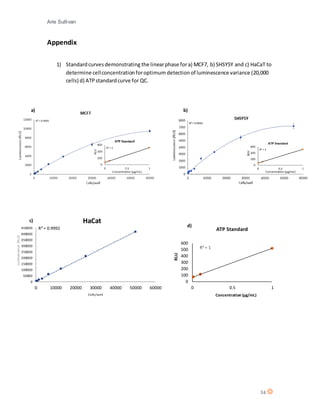
  • 30.
    Arie Sullivan 29 Fig.16 Molecularstructures for BmKCT and CTX a) Molecular structure and amino acid sequence of CTX including all four di-sulfide bonds, containing a total 36 amino acid residues (Chemblink database) b) Molecular structure of recombinant BmKCT including all four di-sulfide bonds, containing a total of 35 amino acids. All differing or additional amino acids are presented in blue in both molecular structures and amino acid sequences. All amino acids presented in black are of the same structure for both BmKCT and CTX. Glycineresidues at the C-terminal of BmKCT are presented in red. Altogether, a total of 9 amino acids are substituted between the two molecules, with additional glycine residues present at the C-terminal of BmKCT. Interestingly,the glycine residues at the C-terminal of BmKCT are thought to play an important role in analgesic activity of the peptide (Zhang et al., 2010; Zhao et al., 2013), thus potentially causing BmKCT and derivatives to possess altered mechanisms of action. For example inthe capacityof BmKCT to induce apoptosis, and CTX to induce necrosis despite both molecules possessing a βαββ conformation and the same di- sulfide bonds between cysteine residues. Both molecules have been reported to inhibit glioma tumor growth by as of yet, undefined mechanisms. a) b)
  • 31.
    Arie Sullivan 30 Glycine receptor(GlyR)Cl- channels belongtoa familyof ligand-gatedionchannelreceptorsbest known for mediating inhibitory neurotransmission in motor and sensory reflex circuits of the spinal cord (fig.17) (WebbandLynch,2007). Disruptionof GlyRexpressioncausesreducedability to conduct chloride ions resulting in neurological disorder, hyperekplexia (Andrew and Owen, 1997; Xiongetal.,2014). Flatteringly,ionchannelsmediatingneurological signaling are frequently the target for potent venoms used to paralyze prey (Cannon, 2006). Studies have demonstrated that glioma cell-GlyRs do not serve as typical neurotransmitter receptors, with knockdown of GlyR α1 subunit expression resulting in impaired tumorigenicity (Forsteraetal., 2014). Anotherreportsuggests GlyRscouldhave aninfluence onradial migration during late embryonic development (Nimmervoll et al., 2011). Moreover, application of glycine was shown to impede radial migration in neuronal and non-neuronal cells (Avila et al., 2013; Denderetal.,2010; VandenEynden etal.,2009), suggestingGlyRactivationcausescell migration arrest. Since GlyRs are widely distributed throughout the whole cortex, it is thought that they provide significant contributions in controlling cell migration. Studies on rodent models report glycine-induced inhibition of cell proliferation, migration and tumor growth by 5% (Rosa et al., 1999). GlyRactivation causingdownstreameffectsoncell migration potentiallyimplicatesGlyRin the invasive capacity of cells, outlining a potential mode of action for BmKCT’s additional C- terminal glycine residue. However, to date, there are no reports of GlyR channel inhibitors such as strychnine or choline having the capacity to circumvent glycine-induced migration inhibition. The presence of such GlyR antagonists would be expected to blunt the effects of glycine and downstream processes. Glycine also triggers calcium influx by activating GlyRs and glycine transporters (GlyTs), depolarizingthe plasmamembrane.Calciuminflux hasthe potential totriggerapoptosisthrough plasma membrane channels (fig.18). Specifically, calcium influx into the mitochondrion induces permeabilitytransitioninthe membrane of anadjacentmitochondrion, formingachainreaction leading to a significant elevation in cytochrome-c levels initiating downstream caspases and formation of the apoptosome (Mattson and Chan, 2003). Thus, it could be suggested that the additional glycine residues at the C-terminal of BmKCT play a pivotal role in the apoptogenic capacity of BmKCT, perhaps via GlyR Cl- channel activation. Determiningthe functionof additional glycine residuesatthe C-terminal of BmKCTmay assistin deciphering amino acid sequence/molecular structure relationship and couldbe used to predict the mechanismof actionof relatedvenomcomponentssince these post-translationallymodified peptides most often share similar sequence consensus, matching cysteine residues, di-sulfide bonds and thus, structural conformation (Arzamasov et al., 2014).
  • 32.
    Arie Sullivan 31 Fig.17 Glycinesignaling in macroglial cells. Upon ligand binding,GlyR activation causes chlorideefflux leadingto cellular depolarization.Thedepolarization causes activation of VGCC resultingin calciuminflux inducingnumerous downstream effects (cell proliferation,migration and differentiation).Inactivation of the Gl yR may be caused by endocytosis of the receptor by as of yet unknown mechanisms. Image acquired from Van den Eynden et al., 2009) Fig.18 The role of GlyR, calcium and cytochrome-c as inter-organellar messengers in apoptosis. a) Upon ligand binding, GlyR activation causes chloride efflux leading to cellular depolarization. Depolarization causes activation of VGCC resulting in calcium influx which induces release of cytochrome-c, b) cytochrome-c then diffuses to adjacent endoplasmic reticulum and binds IP3R receptors c) enhancing calcium release from the endoplasmic reticulum, d) released calcium causes overall increase in cytoplasmic calcium concentration, e) resulting in calcium uptake by mitochondria throughout the cell that triggers release of cytochrome-c from all mitochondria. f)cytochrome-c induces formation of the apoptosome in which caspases are activated, g) caspases and nuclease are the final step in the apoptotic process, cleaving protein substrates and DNA respectively. Image adapted from Mattson and Chan, 2003
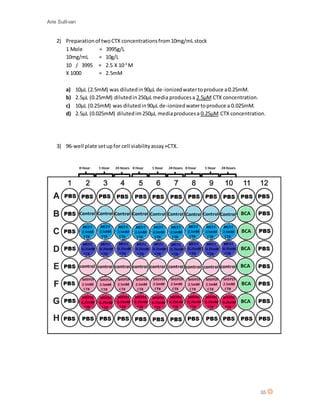
  • 33.
    Arie Sullivan 32 Despite indicationsof different mechanism of action for CTX and BmKCT, studies investigating glioma tumor growth inhibition report near identical inhibition rates (fig.19) in female SD rats bearing allografted tumors by subcutaneous injection of C6 glioma cell suspension (Fan et al., 2010). Although the study demonstrates GST-CTX and GST-BmKCT have identical tumor growth inhibition rates, the exact mechanism by which inhibition is achieved remains to be conclusive. The data drawn from the report herein suggests necrosis induction for CTX whilst other studies indicate apoptosis induction for BmKCT, both necrosis and apoptosis having the capacity for tumor growth inhibition. The internalization of membrane expressedreceptors has also been recognized as a potential mechanism in halting metastasisof migrating tumor cells but only limited research has focused on the implicated mechanismof action. A number of nanoparticles have been demonstrated to internalize successfullywhen bioconjugated with CTX (Stroud et al., 2012; Akcan et al., 2011; Cheng et al., 2014). Specifically, monomeric and dimeric forms of CTX were demonstrated to induce internalization in glioma A172 cells, halting migratory capacity (Kasai et al., 2012). MT1- MMP has been shown to internalize from cell surface by clathrin-mediated and independent pathways involving caveolae in HT1080 fibrosarcoma cells, downregulating invasive capacity (Remacle et al., 2003). Moreover, studies investigating mutationsaffecting MT1 internalization, found a subsequent disruption of invasion-promoting activity whereas those mutations not affectinginternalization promotedinvasion(Uekitaetal., 2001). Since CTX has beenreportedto bindtomembrane receptorsCl- channels,MMP-2andannexinA2leadingtointernalizationof the complex, these findings suggest a strong association with endocytosis of specific membrane receptors and subsequent inhibition of migratory capacity of malignant invasive cells. Fig.19 Tumor growth inhibitory effect of GST-CTX and GST-BmKCT a) Results fromstatistical analysisof averagetumor weight among groups, with NS and GST treatment as controls. Despite a significant inhibition of tumor growth demonstrated when compared to control (**), there was no significantdifferencebetween GST-CTX and GST-BmKCT inhibition rates b) Data of tumor weight and inhibition ratebetween GST-CTX and GST-BmK demonstrated significant inhibition of tumor growth for both GST-CTX and GST-BmKCT. Results acquired from Fan et al., 2010. Abbreviations: NS, Normal Saline; GST, Glutathione transferase; CTX, Leiurus Quinqestriatus chlorotoxin; BmKCT, Buthus martensii Karsch chlorotoxin. a) b)
  • 34.
    Arie Sullivan 33 Further investigation Despiteincreasingreportsnarrowingthe searchfor potential CTX target receptors,a numberof possibilitiesremainfeasible forthe actionmechanismof CTX. Itispossible tocharacterizethe CTX targetreceptorbywesternblot.Westernblotanalysiswill enabletoprobe forthe targetreceptor using an iodinated form of CTX by substitution of tyrosine for iodine at residue 29. The tyrosine residue at position 29 has been demonstrated as not critical for the function of CTX by intact activity followingtyr29 iodination (Dardevetetal., 2015).The labelingof CTXandbindingtoprotein of interestonthe nitrocellulosemembrane shouldallow tovisualize and subsequently determine the molecular weight of the protein of interest. Alternately circumventing the iodination step, antibodies can be raised against bound CTX on the nitrocellulose membrane and visualizedby labelled secondary antibody to primary antibody. However, bothCLC-2andGlyRas targetCl- channels forCTX are indistinguishable by westernblot owingto similarmolecularweightsof 97kDa and 106kDa (Britton et al., 2000). Internalizationof GlyR causes ubiquitin molecules to induce proteolytic cleavage of the GlyR α1-subunit into a glycosylated 35kDa N-terminal fragment and a 17kDA COOH-terminal fragment (Lynch, 2004). Thisallowsforwesternblotanalysis tobe used incombinationwithCTX-bioconjugationmediated endocytosistodeterminewhichofthe tworeceptorsisthetrue CTXtarget,aswell asascertaining whether endocytosis of target membrane proteins is occurring. CTX-bioconjugatedparticlesshowingsuccessful internalizationfollowedby westernblotanalysis revealingbandsat35kDaand17kDa whichwouldindicatereceptor-mediatedendocytosisof CTX- target membrane protein GlyR. CTX-bioconjugatedparticles showing successful internalization and western blot analysis revealing bands at approximately 100kDa would indicate receptor- mediatedendocytosisof CTX-targetmembraneproteinClC-2.Finally,CTX-bioconjugatedparticles showingfailedinternalizationandwesternblotanalysisrevealingbandsatapproximately100kDa would suggest either GlyR or ClC-2 as target membrane proteins and no receptor-mediated endocytosis. A further hypothesis to investigate is the ability of CTX as a Cl- channel blocker to prevent apoptosis.Thiscouldbe achieved usinggliomacell line SHG-44,replicatingthe conditionsunder which apoptosis was observed on BmKCT treatment. The experiment could be repeated in the presence of CTX, with a speculationthat CTX will inhibit apoptosis by Cl- channel inhibition.This will assist in determining whether CTX is preventing apoptosis. Recentadvanceshave beenmade in categorizingandorganizingdata regardingscorpiontoxins. The construction of molecular databases for scorpion toxins (Srinivasan et al., 2002) forms an integral part in allowing confluent research to adjoin. Such collaborative databases offer promising future prospects in deciphering the therapeutic value these numerous compounds possess.
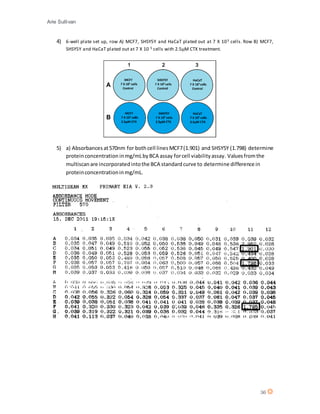
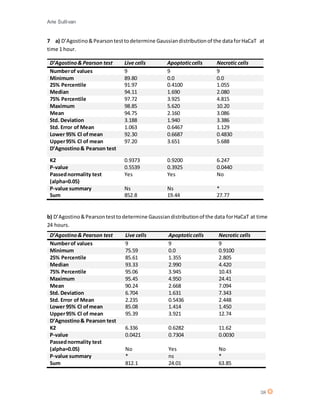
  • 35.
    Arie Sullivan 34 Appendix 1) Standardcurvesdemonstratingthe linearphase fora) MCF7, b) SHSY5Y and c) HaCaT to determine cellconcentrationforoptimum detectionof luminescence variance (20,000 cells) d) ATPstandardcurve for QC. R² = 0.9992 0 50000 100000 150000 200000 250000 300000 350000 400000 450000 0 10000 20000 30000 40000 50000 60000 Luminescence(RLU) Cells/well HaCat a) b) ) c) R² = 1 0 100 200 300 400 500 600 0 0.5 1 RLU Concentration (µg/mL) ATP Standard d)
  • 36.
    Arie Sullivan 35 2) PreparationoftwoCTX concentrationsfrom10mg/mL stock 1 Mole = 3995g/L 10mg/mL = 10g/L 10 / 3995 = 2.5 X 10-3 M X 1000 = 2.5mM a) 10µL (2.5mM) was dilutedin90µL de-ionizedwatertoproduce a0.25mM. b) 2.5µL (0.25mM) dilutedin250µL media producesa 2.5µM CTX concentration. c) 10µL (0.25mM) was dilutedin90µL de-ionizedwatertoproduce a 0.025mM. d) 2.5µL (0.025mM) dilutedim250µL mediaproducesa 0.25µM CTX concentration. 3) 96-well plate setupfor cell viabilityassay+CTX.
  • 37.
    Arie Sullivan 36 4) 6-wellplate set up, row A) MCF7, SHSY5Y and HaCaT plated out at 7 X 10⁵ cells. Row B) MCF7, SHSY5Y and HaCaT plated out at 7 X 10 5 cells with 2.5µM CTX treatment. 5) a) Absorbances at570nm for bothcell lines MCF7(1.901) and SHSY5Y (1.798) determine proteinconcentration inmg/mLbyBCA assay forcell viabilityassay. Valuesfromthe multiscanare incorporatedintothe BCA standardcurve to determine difference in proteinconcentrationinmg/mL.
  • 38.
    Arie Sullivan 37 b) Absorbancesat570nm fromthe multiscanare incorporatedintothe BCA standardcurve to determine difference inproteinconcentrationinmg/mL forSHSY5Y ( ),MCF7 ( ) and HaCaT ( ) 6) Optimizationof cell concentrationforfluorescentmicroscopya) Cell concentration/mLfor SHSY5Y, b) Cell concentration/mL for MCF7 c) Cell concentration/mL for HaCaT. The optimum cell concentration was selected at80,000cells/mL. y = 0.0006x + 0.1502 R² = 0.9956 0 0.2 0.4 0.6 0.8 1 1.2 1.4 1.6 1.8 2 0 500 1000 1500 2000 2500 3000 Absrobance570nM Concentration µg/mL BCA Assay Absorbance Mean SHSY5Y MCF7 HaCaT Linear (Absorbance Mean) b) MCF7 10X a) SHSY5Y 10X c) HaCaT 10X 200µm 200µm 200µm 31,250 cells/mL 62,500 cells/mL 125,000 cells/mL 250,000 cells/mL
  • 39.
    Arie Sullivan 38 7 a)D’Agostino&Pearsontesttodetermine Gaussiandistributionof the dataforHaCaT at time 1 hour. b) D’Agostino&Pearsontesttodetermine Gaussiandistributionof the data forHaCaT at time 24 hours. D’Agostino& Pearson test Live cells Apoptoticcells Necrotic cells Numberof values 9 9 9 Minimum 75.59 0.0 0.9100 25% Percentile 85.61 1.355 2.805 Median 93.33 2.990 4.420 75% Percentile 95.06 3.945 10.43 Maximum 95.45 4.950 24.41 Mean 90.24 2.668 7.094 Std. Deviation 6.704 1.631 7.343 Std. Error of Mean 2.235 0.5436 2.448 Lower 95% Cl ofmean 85.08 1.414 1.450 Upper95% Cl of mean 95.39 3.921 12.74 D’Agnostino& Pearson test K2 6.336 0.6282 11.62 P-value 0.0421 0.7304 0.0030 Passednormality test (alpha=0.05) No Yes No P-value summary * ns * Sum 812.1 24.01 63.85 D’Agostino& Pearson test Live cells Apoptoticcells Necrotic cells Numberof values 9 9 9 Minimum 89.80 0.0 0.0 25% Percentile 91.97 0.4100 1.055 Median 94.11 1.690 2.080 75% Percentile 97.72 3.925 4.815 Maximum 98.85 5.620 10.20 Mean 94.75 2.160 3.086 Std. Deviation 3.188 1.940 3.386 Std. Error of Mean 1.063 0.6467 1.129 Lower 95% Cl ofmean 92.30 0.6687 0.4830 Upper95% Cl of mean 97.20 3.651 5.688 D’Agnostino& Pearson test K2 0.9373 0.9200 6.247 P-value 0.5539 0.3925 0.0440 Passednormality test (alpha=0.05) Yes Yes No P-value summary Ns Ns * Sum 852.8 19.44 27.77
  • 40.
    Arie Sullivan 39 c) D’Agostino&PearsontesttodetermineGaussiandistributionof the dataforMCF7 at time 1 hour. d) D’Agostino&Pearsontesttodetermine Gaussiandistributionof the dataforMCF7 at time 24 hours. D’Agnostino& Pearson test Live cells Apoptoticcells Necrotic cells Numberof values 9 9 9 Minimum 73.91 0.0 0.0 25% Percentile 82.07 1.695 0.6350 Median 89.08 10.05 1.340 75% Percentile 96.08 17.26 1.915 Maximum 97.95 25.69 2.670 Mean 88.53 10.15 1.322 Std. Deviation 8.338 9.081 0.8240 Std. Error of Mean 2.779 3.027 0.2747 Lower 95% Cl ofmean 82.12 3.165 0.6889 Upper95% Cl of mean 94.94 17.13 1.956 D’Agnostino& Pearson test K2 1.310 1.198 0.01015 P-value 0.5196 0.5495 0.9949 Passednormality test (alpha=0.05) Yes Yes Yes P-value summary ns ns ns Sum 796.8 91.31 11.90 D’Agostino& Pearson test Live cells Apoptoticcells Necrotic cells Numberof values 9 9 9 Minimum 79.93 0.0 0.0 25% Percentile 91.06 1.485 0.0 Median 93.28 3.460 0.8600 75% Percentile 98.27 7.000 3.455 Maximum 100.0 19.75 4.440 Mean 93.17 5.333 1.494 Std. Deviation 6.022 5.996 1.804 Std. Error of Mean 2.007 1.999 0.6013 Lower 95% Cl ofmean 88.54 0.7246 0.1078 Upper95% Cl of mean 97.80 9.942 2.881 D’Agnostino& Pearson test K2 5.651 13.01 2.134 P-value 0.0593 0.0015 0.3441 Passednormality test (alpha=0.05) Yes No Yes P-value summary Ns * Ns Sum 838.6 48.00 13.45 D’Agostino& Pearson test Live cells Apoptoticcells Necrotic cells Numberof values 9 9 9 Minimum 73.91 0.0 0.0 25% Percentile 82.07 1.695 0.6350 Median 89.08 10.05 1.340 75% Percentile 96.08 17.26 1.915 Maximum 97.95 25.69 2.670 Mean 88.53 10.15 1.322 Std. Deviation 8.338 9.081 0.8240 Std. Error of Mean 2.779 3.027 0.2747 Lower 95% Cl ofmean 82.12 3.165 0.6889 Upper95% Cl of mean 94.94 17.13 1.956 D’Agnostino& Pearson test K2 1.310 1.198 0.01015 P-value 0.5196 0.5495 0.9949 Passednormality test (alpha=0.05) Yes Yes Yes P-value summary ns ns ns Sum 796.8 91.31 11.90
  • 41.
    Arie Sullivan 40 e) D’Agostino&Pearsontesttodetermine Gaussiandistributionof the datafor SHSY5Y at time 1 hour f) D’Agostino&Pearsontesttodetermine Gaussiandistributionof the datafor SHSY5Y at time 24 hours D’Agostino& Pearson test Live cells Apoptoticcells Necrotic cells Numberof values 9 9 9 Minimum 78.65 0.0 3.950 25% Percentile 83.32 0.3950 5.955 Median 91.16 0.8800 6.610 75% Percentile 93.16 10.12 7.740 Maximum 96.05 14.61 9.220 Mean 88.58 4.700 6.723 Std. Deviation 5.936 5.572 1.481 Std. Error of Mean 1.979 1.857 0.4935 Lower 95% Cl ofmean 84.01 0.4172 5.585 Upper95% Cl of mean 93.14 8.983 7.861 D’Agnostino& Pearson test K2 1.262 1.832 0.9792 P-value 0.5319 0.4000 0.6129 Passednormality test (alpha=0.05) Yes Yes Yes P-value summary ns ns ns Sum 797.2 42.30 60.51 D’Agostino& Pearson test Live cells Apoptoticcells Necrotic cells Numberof values 9 9 9 Minimum 30.44 0.0 6.610 25% Percentile 34.85 0.0 14.33 Median 67.81 9.700 24.16 75% Percentile 75.42 43.23 28.15 Maximum 81.27 50.30 45.71 Mean 58.45 18.08 23.47 Std. Deviation 20.27 21.23 11.22 Std. Error of Mean 6.757 7.076 3.739 Lower 95% Cl ofmean 42.87 1.767 14.84 Upper95% Cl of mean 74.03 34.40 32.09 D’Agnostino& Pearson test K2 3.256 2.786 1.576 P-value 0.1963 0.2483 0.4549 Passednormality test (alpha=0.05) Yes Yes Yes P-value summary ns ns ns Sum 526.1 162.8 211.2
  • 42.
    Arie Sullivan 41 g) D’Agostino&PearsontesttodetermineGaussiandistributionof the dataforSHSY5Y at time 24 hours h) D’Agostino&Pearsontesttodetermine Gaussiandistributionof the dataforSHSY5Y at time 48 hours D’Agostino& Pearson test Live cells Apoptoticcells Necrotic cells Numberof values 9 9 9 Minimum 70.17 0.0 1.040 25% Percentile 78.13 0.0 4.305 Median 84.5 0.0 15.49 75% Percentile 95.68 0.0 21.87 Maximum 98.96 0.0 29.83 Mean 85.81 0.0 14.18 Std. Deviation 9.617 0.0 9.619 Std. Error of Mean 3.206 0.0 3.206 Lower 95% Cl ofmean 78.42 0.0 6.787 Upper95% Cl of mean 93.2 0.0 21.58 D’Agnostino& Pearson test 0.3617 0.3611 K2 P-value 0.8346 0.8348 Passednormality test (alpha=0.05) Yes Yes P-value summary Ns Ns Sum 772.3 0.0 127.6 D’Agostino& Pearson test Live cells Apoptoticcells Necrotic cells Numberof values 9 9 9 Minimum 0.0 0.0 1.29 25% Percentile 1.665 0.0 2.26 Median 27.27 0.0 72.72 75% Percentile 97.48 0.0 98.97 Maximum 98.7 0.0 100 Mean 41.42 0.0 58.66 Std. Deviation 43.69 0.0 43.92 Std. Error of Mean 14.56 0.0 14.64 Lower 95% Cl ofmean 7.832 0.0 24.9 Upper95% Cl of mean 75 0.0 92.43 D’Agnostino& Pearson test 3.231 3.221 K2 P-value 0.1987 0.1998 Passednormality test (alpha=0.05) Yes Yes P-value summary Ns Ns Sum 372.8 0.0 528
  • 43.
    Arie Sullivan 42 8 a)One-wayANOVAtestforHaCaT following1hour exposure toCTX b) One-wayANOVA testforHaCatfollowing24 hoursexposure toCTX c) One-wayANOVA testforMCF7 following1hour exposure toCTX d) One-wayANOVA testforMCF7 following24 hoursexposure toCTX ANOVAtable SS DF MS F DFn, DFd) P-Value Significant? CTX Treatment 14.40 3 7.199 F (2, 6) = 0.6457 P = 0.5572 No Residuals 68.69 6 11.15 Total 81.29 8 ANOVAtable SS DF MS F DFn, DFd) P-Value Significant? CTX Treatment 125.4 2 62.72 F (2, 6) = 1.607 P=0.2761 No Residuals 234.2 6 39.03 Total 359.6 8 ANOVAtable SS DF MS F DFn, DFd) P-Value Significant? CTX Treatment 209.5 2 104.8 F (2, 6) = 3.996 P = 0.0788 No Residuals 157.3 6 26.21 Total 366.8 8 ANOVAtable SS DF MS F DFn, DFd) P-Value Significant? CTX Treatment 15.12 2 7.560 F (2, 6) = 0.1650 P = 0.8516 No Residuals 275 6 45.83 Total 290.1 8
  • 44.
    Arie Sullivan 43 e) One-wayANOVAtestforSHSY5Yfollowing1hourexposure toCTX f) One-way ANOVA testforSHSY5Y following24hours exposure toCTX g) One-way ANOVA testforSHSY5Y following48hours exposure toCTX ANOVAtable SS DF MS F DFn, DFd) P-Value Significant? CTX Treatment 151.3 2 76.67 F (2, 6) = 3.478 P = 0.0993 No Residuals 130.5 6 21.76 Total 281.9 8 ANOVAtable SS DF MS F DFn, DFd) P-Value Significant? CTX Treatment 2954 2 1477 F (2, 6) = 26.55 P = 0.0010 Yes Residuals 333.8 6 55.63 Total 3288 8 ANOVAtable SS DF MS F DFn, DFd) P-Value Significant? CTX Treatment 15224 2 7612 F (2, 6) = 929.6 P < 0.0001 Yes Residuals 49.13 6 8.189 Total 15273 8
  • 45.
    Arie Sullivan 44 9 a)Genomic DNA extraction from 10 X 105 cells for MCF7, SHSY5Y, HaCaT, and a 100bp molecular weight marker (MW). b) Genomic DNA extraction from 5 X 10⁵ cells for MCF7, SHSY5Y, HaCaT, and a 100bp MW marker. 10) Genomic DNA extraction from 7 X 10⁵ cells for MCF7, SHSY5Y, HaCaT, 100bp and BSTEII MW markers. The wells were included in the figure so as to distinguish the bands from the wells. Some DNA fragments can also be observed from mechanical shearing. a) b)
  • 46.
    Arie Sullivan 45 11 a)Absorbances at 570nm for cell lines MCF7 (1.235), SHSY5Y (1.132) and HaCaT (1.254) determine protein concentration in mg/mL by BCA assay for DNA fragmentation assay. Values from the multiscan are incorporated into the BCA standard curve to determine difference in protein concentration in mg/mL. b) Absorbance at 570nm from the multiscan are incorporated into the BCA standard curve to determine difference inproteinconcentrationinmg/mL for SHSY5Y ( ),MCF7 ( ) and HaCaT ( ). y = 0.0006x + 0.1502 R² = 0.9956 0 0.2 0.4 0.6 0.8 1 1.2 1.4 1.6 1.8 2 0 500 1000 1500 2000 2500 3000 Absrobance570nM Concentration µg/mL BCA Assay Absorbance Mean SHSY5Y MCF7 HaCaT Linear (Absorbance Mean)
  • 47.
    Arie Sullivan 46 References AKCAN,M.,STROUD, M.R.,HANSEN,S. J.,CLARK,R. J.,DALY, N. L.,CRAIK,D. J. and OLSON,J., M. (2011) ChemicalRe-engineering of Chlorotoxin ImprovesBioconjugation PropertiesforTumor Imaging and Targeted Therapy.J.Med.Chem.54(3), 782-787 DOI: 10.1012/jm101018r AMOEDO, N.D., VALENCIA,J.P.,RODRIGUES,M. F.,GALINA,A.and RUMJANEK, F.D. (2013) HowDoes the Metabolismof TumorCells Differ fromthatof NormalCells. Biosci.Rep.33(6) e00080 DOI:10.1042/BSR20130066 ANDREW,M. andOWEN, M. J. (1997) Hyperekplexia:AbnormalStartleResponsedueto Glycine ReceptorMutations.Br.J. Psychiatry.170, 106-108 ARZAMASOV,A.A.,VASSILEVSKI,A.A.andGRISHIN,E. V.(2014) Chlorotoxin and Related Peptides:ShortInsectToxinsfromScorpion venom.RussianJournal of BioorganicChemistry. 40(4), 359-369 DOI:10.1134/S1068162014040013 AVILA,A.,VIDAL,P.M.,DEAR,T. N.,HARVEY, R. J.,RIGO, J.M. and NGUYEN, L. (2013) Glycine Receptorα2 SubunitActivation PromotesCorticalInterneuron migration.Cell.Rep.4(4),738-750 DOI: 10.1016/j.cellrep.2013.07.016 BLACKISTON,D.J.,McLAUGHLIN, K.A. and LEVIN,M. (2009) Bioelectric Controlsof Cell Proliferation:Ion Channels, MembraneVoltageand theCell Cycle.Cell.Cycle.8(21),3527-3536 BLANCHARD,S.,BARWISE,J. L., GERKE, V.GOODALL, A.,VAUGHAN,P.F. and WALKER,J. H. (1996) Annexinsin the Human Neuroblastoma SH-SY5Y:Demonstration of Relocation of AnnexinsIIand V to Membranesin Responseto Elevation of IntracellularCalcium by Membrane Depolarization and by the CalciumIonophoreA23187. J. Neurochem.67(2),805-813 BOBEK-BILLEWICZ,HEBDA,A., STASIK-PRES,G.,MAJCHRZAK,K.,ZMUDA,E. and TROJANOWSKA, A. (2010) Measurementof Glycine in a Brain and Brain Tumorsby Means of 1H MRS.Folia. Neuropathol.48(3),130-139 BOYNTOPN,Z.L., KOON,J.J., BRENNAN,E.M., C<LOUART, J. D.,HOROWITZ, D. M., GERNGROSS, T. U. andHUISMAN, G. W. (1999) Reduction of Cell LysateViscosity during Processing of Poly(3- Hydroxyalkanoates) by ChromosomalIntegration of theStaphylococcalNucleaseGenein PseudomonasPutida.Appl.Enviorn.Mircobiol.65(4),1524-1529 BRITTON,F. C.,HATTON,W. J.,ROSSOW,C> F., DUAN, D., HUME, J.,R. and HORROWITZ,B. (2000) MolecularDistribution of Volume-regulated ChlorideChannels(ClC-2and ClC-3) in Cardiac Tissues.Am.J. Physiol.Heart.Circ.Physiol.279(5),H2225-33
  • 48.
    Arie Sullivan 47 BROWN,N. H.(2011) ExtracellularMatrix in Development:InsightsfromMechanismsConserved between Invertebratesand Vertebrates.ColdSpringHarb.Perspect.Biol.3(12),p:1005082 DOI: 10.1101/cshperspect.a005082 BRUNETTI, V.,MAIORANO,G.,RIZELLO, L., SORCE,B., SABELLA,S.,CINGOLANI,R.and POMPA,P. P. (2010) NeuronsSenseNanoscaleRoughnesswith NanometerSensitivity.Proc.Natl.Acad. USA. 107(14), 6264-6269 DOI: 10.1073/pnas.0914456107 BUTTE, P.V.,MAMELAK, A., PARRISH-NOVAK,J.,DRAZIN,D.,SHWEIKEH,F.,GANGALUM, P. R., CHESNOKOVA,A.,LJUBIMOVA,J.Y.and BLACK,K. (2014) Near-InfraredImaging of Brain Tumors Using the TumorPaintBLZ-100 to AchieveNear-CompleteResection of Brain Tumors.Neurosurg. Focus.36(2), p: E1 DOI: 10.3171.2013.11.FOCUS13497 CANNON,C.S.(2006) Channelopathiesof theNervousSystem. Prin.Mol.Med.Pp-1088-1096 CATALANI,S.,CARBONARO,V.,PALMA,F.,ARSHAKYAN,M.,GALATI,R.,NUVOLI,B., BATTISTELLI, S.,CANESTRARI,F.and BENEDETTI, S. (2013) MetabolismModificationsand ApoptosisInduction afterCellfood™ Administration to Leukemia Cell Lines. J.Exp. Clin.Cancer.Res.32(1),p: 63 DOI: 10.1186/1756-9966-32-63 CHEN, M. J., SEPRAMANIAM,S.,ARMUGAM, A.,CHOY, M. S., MANIKANDAN,J.,MELENDEZ,A.J., JEYASEELAN,K.and CHEUNG, N. S. (2008) WaterIon Channels:Crucialin the Initiation and Progression of Apoptosisin Central NervousSystem.Curr.Neuropharmacol.6(2),102-116 DOI: 10.2174/157015908784533879 CHENG, Y., ZHAO,J.,QIAO,W. and CHEN,K. (2014) Recent Advancesin Diagnosisand Treatment of Gliomas Using Chlorotoxin-basedBioconjugates.Am.J.Nucl.Mol.Imaging.4(5),384-405 COSTA,P.M.,CASDOSO,A.L., MENDOCA,L. S., SERANI,A.,CUSTODIA,C.,CONCEICAO,M., SIMOES, S.,MOREIRA, J.N.,PEREIRA de ALMEIDA, L. and PEDROSOde LIMA, M. (2013) Tumor- targeted Chlorotoxin-coupled NanoparticlesforNucleicAcid Delivery to Glioblastoma Cells: A Promising SystemforGlioblastoma Treatment. Mol.Ther. NucleicAcids.2,p: e100 DOI: 10.1038/mtna.2013.30 DARDEVET,L., RANI,D.,AZIZ,T. A.E., BAZIN,I.,SABATIER,J.M.,FADI,M., BRAMBILLA, E. and WAARD,M. D. (2015) Chlorotoxin:A HelpfulNaturalScorpion Peptideto DiagnoseGlioma and FightTumor Invasion.Toxins.7(4),1079-1101 DOI: 10.3390/toxins7041079 DAS GUPTA,S., DEBNATH,A.,SAHA,A.,GIRI, B., TRIPATHI,G., VEDASIROMONI,J.R.and GOMES, A. (2007) Indian Black Scorpion (HeterometrusbengalensisKoch) VenomInduced Antiproliferativeand apoptogenicActivity AgainstHuman LeukemicCell Lines U937 and K562. Leuk.Res.31(6), 817-825 DEBIN,J. A. andSTRICHARTZ G. R. (1991) ChlorideChannelInhibition by the Venomof the Scorpion LeiurusQuinquestriatus.Toxicon.29(11),1403-1408
  • 49.
    Arie Sullivan 48 DEBIN,J. A.,MAGGIO,J. E. and STRICHARTZ,G. R. (1993) Purification and Characterization of Chlorotoxin,a ChlorideChannelLigand fromtheVenomof theScorpion.Am.J. Physiol.264(2Pt 10:C361-9 DENDER, D. G., HECK, N.,RIEDEMANN,T.,WHITE, R.,KILB, W. and LUHMANN,H. J. (2010) GABACReceptorsare Functionally Expressed in the IntermediateZoneand RegulateRadial Migration in the EmbryonicMouseNeocortex.Neuroscience.167, 124-134 DOI: 10.1016/j. neuroscience.2010.01.049 DERYUGINA, E.I.and BOURDON,M. A.(1996) Tenascin MediatesHuman Glioma Cell Migration and ModulatesCell Migration on Fibronectin. J.Cell.Sci.109 (Pt3),643-652 DESHANE,J., GARNER,C. C. andSONTHEIMER, H. (2002) Chlorotoxin InhibitsGlioma Cell Invasion via Matrix Metalloproteinase-2.J. Biol. Chem.278,4235-4144 DOI: 10.1074/jbc.M205662200 DURAN,C., THOMPSON,C. H., XIAO,Q.and HARTZELL, H. C. (2010) ChlorideChannels:Often Enigmatic,Rarely Predictable.Annu.Rev.Physiol.72,95-121. EMONARD,H., BELLON, G., TROEBERG, L., BERTON,A., ROBINET,A.,HENRIET, P.,MARBAIX,E., KIRKEGAARD,K.,PATTHY,L., EECKHOUT, Y., NAGASE,H., HORNEBECK,W.,COURTOY, P. J. (2004) Low DensityLipoprotein Receptor-related Protein MediatesEndocyticClearanceof pro-MMP- 2.TIMP-2Complex Through a Thrombospondin-independentMechanism.J.Biol.Chem.279(52), 54944-54951 FAN,S.,SUN, Z.,JIANG,D., DAI,C.,MA, Y., ZHAO,Z., LIU, H., WU, Y., CAO,Z. and LI, W. (2010) BmKCTToxin InhibitsGlioma Proliferation and TumorMetastasis. CancerLetters.291(2),158- 166 DOI:10.1016/j.canlet.2009.10.011 FORSTERA,B., DZAYE,O. D., WINKELMANN,A.,SEMTNER,M., BENEDETTI, B., MARKOVIC,D.S., SYNOWITZ,M., WEND, P.,FAHLING,M., JUNIER, M. P.,GLASS, R.,KETTENMANN,H. and MEIER, J. C. (2014) IntracellularGlycine Receptor Function FacilitatesGlioma Formation in Vivo.J.Cell. Science.DOI:10.1242/jcs.146662 GALAGHER, J. D.,FAY, M. J., NORTH,W. G., and McCANN,F. V.(1996) IonicSignalsin T47D Human BreastCancerCells. Cell Signal.8(4),279-284 GAO,L., YU, S.,WU, Y. and SHAN,B.(2007) Effect of Spider Venomon Cell Apoptosisand NecrosisRates in MCF-7Cells. DNA Cell Biol.26(7),485-489. GOUDET, C.,CHI, C. W. and TYTGAT, J. (2002) An Overview of Toxinsand Genes fromthe Venom of the Asian Scorpion ButhusmartensiiKarsch.Toxicon.40,1239-1258
  • 50.
    Arie Sullivan 49 HAGBERG, A.,BARBANY,G.,KROOK,H.,SAMIOTAKI,M. and LANDERGREN,U. (2000) Expression Profiling AccrossMany Samplesvia Manifold-assistedmRNA Processing.NucleicacidsRes. 28(11): e54 HARTZELL, C., PUTZIER,I. and ARREOLA,J. (2005) Calcium-activated ChlorideChannels.Annu. Rev.Physiol.67,719-758 HMED, B., SERRIA,H. T. and MOUNIR,Z., K. (2013) Scorpion Peptides:PotentialUseforNew Drug Development.J.Toxicol.2013, 958797 DOI: 10.1155/2013/958797 HONG, S.,BI, M., WANG,L., KANG,Z.,LING, L. and ZHAO,C. (2014) CLC-3 Channelsin Cancer. Onc. Report.507-514 DOI:10.3892/or.2014.3615 KASAI,T.,NAKAMURA,K.,VAIDYANATH,A.,CHEN,L.,SEKHAR,S.,EL-GHLBAN, S.,OKADA,M., MIZUTANI,A.,KUDOH, T., MRAKAMI, H. andSENO, M. (2012) Chlorotoxin Fused to IgG-Fc InhibitsGlioblastoma Cell Motility via Receptor-mediated Endocytosis.J.Drug.Deliv.975763 DOI: 10.1155/2012/975763 KESAVAN,K.,RATLIFF,J.,JOHNSON,E.W.,DAHLBERG, W., ASARA,J.M., MISRA,P.,FRANGIONI, J. V.and JACOBY,D. B. (2010) Annexin A2is a Molecular Targetfor TM601, a Peptide with Tumor0targeting and Anti-angiogenicEffects.J.Biol.Chem.285(7),4366-4374 DOI: 10.1074/jbc.M109.066092 KIM, H., ZHENG, S.,AMINI,S. S.,VIRK,S.M., MIKKELSEN,T., BRAT,D. J., GRIMSBY, J.,SOUGNEZ, C., MULLER, F.,HU, J.,SLOAN,A.E., COHEN,M. L., VAN MEIR, E. G., SCARPACE,L.,LAIRD, P. W., WEINSTEIN,J.N.,LANDER, E. S.,GABRIEL, S.,GETZ, G., MEYERSON, M., CHIN,L., BARNHOLTZ- SLOAN,J.S. and VERHAAK,R.G. (2015) Whole-Genomeand MultisectorExomeSequencing of Primary and Post-TreatmentGlioblastoma RevealsPatternsof TumourEvolution.Genome.Res. 25(3), 316-327 doi:10.1101/gr.180612.114 KIM, M. J., CHENG, G. and AGRAWALD. K. (2004) Cl- ChannelsareExpressed in Human Normal Monocytes:A FunctionalRolein Migration,Adhesion and VolumeChange.Clin.Exp.Immunol. 138(3), 453-459 KIM, Y. S.,LEE, H. A.,LIM, J.Y., KIM, Y., JUNG, C. H.,YOO, S. H. and KIM,Y. (2014) β-Carotene InhibitsNeuroblastoma CellInvasion and Metastasisin vitro and in vivo by Decreasing Level of Hypoxia-inducibleFactor-1α.J.Nutr.Biochem.25(6),655-664 DOI: 10.1016/j.jnutbio.2014.02.006 KRIEGSTEIN A. and ALVAREZ-BUYLLA,A.(2009) The Glial Natureof Embryonicand AdultNeural StemCells. Annual Reviewif Neuroscience.32,149-184 DOI: 10.1146/annurev.neuro.051508.135600
  • 51.
    Arie Sullivan 50 KWIATKOWSKA,A.andSYMONS,M. (2013)Signaling Determinantsof Glioma Cell Invasion.Adv. Exp.Biol.986, 121-141 DOI: 10.1007/978-94-007-4719-7_7 LANIADO,M. E.,FRASER, S.P. and DJAMGOZ,M. B. (2001) Voltage-gated K(+) ChannelActivityin Human ProstateCancerCell Lines of Markedly DifferentMetastaticPotential:Distinguishing Characteristicsof PC-3 and LNcaPcells. Prostate.46(4), 262-274 LI, W., LI,Y., ZHAO,Y., YUAN, J.and MAO, W. (2014) Inhibition Effectsof Scorpion Venom Extracts(ButhusmartensiiKrasch) on theGrowth of Human Breast CancerMCF-7Cells. Afr.J. Tradit.Complement.Alter.Med.11(5),105-110 LISAL,J. and MADUKE, M. (2009) Proton-coupled Gating in ChlorideChannels.Roy.Soc.Pub. 364(1514) DOI: 10.1098/rstb.2008.0123 LYNCH, W. J. (2004) Molecular Structureand Function of the Glycine Receptor ChlorideChannel. Physiol.Rev.84(4),1051-1095 DOI:10.1152/physrev.00042.2003 LYONS,S. A.,O’NEAL,J. andSONTHEIMER, H. (2002) Chlorotoxin,a Scorpion-Derived Peptide, Specifically Bindsto Gliomas and Tumorsof NeuroectodermalOrigin.Glia.39(2),162-173 MADUREIRA, P.A., HILL, R.,MILLER, V.A., GIACOMANTONIO,C.,LEE,P.W. and WAISMAN,D. M. (2011) Annexin A2is a NovelCellular Redox Regulatory Protein Involved in Tumorigenesis. Oncotarget.2(12), 1075-1093 MAENO,E., ISHIZAKI,Y.,KANASEKI,T.,HAZAMA,A.andOKADA,Y. (2000) NormotonicCell ShrinkageBecauseDisordered VolumeRegulation isan Early Prerequisiteto Apoptosis.Proc. Natl.Acad.Sci. pp:9487-9492 MAERTENS, C.,WEI, L., TYTGAT, J., DROOGMANS,G. and NILIUS,B. (2009) Chlorotoxin doesnot InhibitVolume-regulated,calcium-activated and cyclicAMP-activatedchloridechannels.B.J. Pharm.129(4), 791-801 MAI, J.,FINLEY,R. L., WAISMAN,D. M. and SLOANE,B. F. (2000) Human Procathepsin Binteracts with theAnnexin IITetramer on the Surfaceof TumorCells. J. Biol.CHem.275, 12806-12812 MANN,C. L., BORTHER, C. D.,JEWELL, C. M. and CIDLOWSKI,J.A. (2001) Glucocorticoid-induced Plasma MembraneDepolarizing During ThymocyteApoptosis:Association with Cell Shrinkage and Degradation of theNa(+)/K(+) adenosineTriphosphate.Endocrinology.142(12),5059-5068. MAO, J.,WANG,L., FAN,A.,WANG,J., XU, B.,JACOB,T. J. and CHEN,L. (2007) Blockageof Volume-activated ChlorideChannelsInhibitsMigration of NasopharyngealCarcinoma Cells.Cell. Physiol.Biochem.19(5),249-258 MATTSON,M. P.and CHAN,L. (2003) Calcium OrchestratesApoptosis.Nature.CellBiology.5, 1041-1043 DOI: 10.1038/ncb1203-1041
  • 52.
    Arie Sullivan 51 McFERRIN, M.B. and SONTHEIMER, H. (2006) A Role forIon Channelsin Glioma Cell Invasion. Neuron.Glia.Biol.2(1),39-49 DOI: 10.1017/S17440925X06000044 McHUGH, K.(2007) Renal and AdrenalTumorsin Children.Cancer Imaging.7(1),41-51 DOI: 10.1102/1470-7330.2007.0007 MERZAK, A.,McCREA, S.,KOOCHEKPOUR,S. andPILKINGTON,G. J.(1994) Controlof Human Glioma Cell Growth,Migration and Invasion in Vitro by Transforming Growth FactorBeta 1. BR. J. Cancer.70(2), 199-203 MIYASAKI,K.(2002) RandomDNA Fragmentation with EndonucleaseV:Application to DNA shuffling.NucleicAcidsRes.30(24),p: e139 MORGUNOVA,E., TUUTILA, A.,BERGMANN, U. and TRYGGVASON,K.(2002) StructuralInsight into theComplex Formation of LatentMatrix Metalloproteinase-2with TissueInhibitorof Metalloproteinase-2.Proc.Natl.Acad. USA.99(11), 7414-7419 MORRISON,S. J.,PEREZ, S.E., QIAO,Z., VERDI,J.M., HICKS,C.,WEINMASTER, G. and ANDERSON,D.J. (2000) TransientNotch activation initiatesan Irreversible Switch from Neurogenesisto Gliogenesisby NeuralCrest StemCells. Cell.101, 499-510 MUNSON,J., BONNER,M., FRIED,L., HOFMEKLER, J., ARBISER,J.and BELLAMKONDA,R. (2013) Identifying NewSmallMolecule Anti-invasiveCompoundsforGlioma Treatment.Cell Cycle. 12(14), 2200-2209 DOI: 10.4161/cc.25334 NAGATA,S.(2000) ApoptoticDNA Fragmentation.Exp.Cell.Res.256(1),12-18 NAKADA,M.,NAKADA,S.,DEMUTH, T., RAN,N.L., HOELZINGER, D. B. and BERENS,M. E. (2007) MolecularTargets of Glioma Invasion.Cell.Mol.Life.Sci.64(4),458-478 NIETSCH,H. H. ROE,M. W., FIEKERS,J.F., MOORE, A.L. andLIDOFSKY,S. D. (2000) Activationof PotassiumandChloride ChannelsbyTumorNecrosisAlpha.Role inLiverCell Death.J.Biol. Chem.275(27), 20556-20561 NIMMERVOLL, B.,DENTER, D. G. SAVA,I.,KILB,W. andLUHMANN, H., J. (2011) Glycine ReceptorsInfluenceRadialMigration in the EmbryonicMouseNeocortex.Neuroreport.22,509- 513 DOI:10.1097/WNR.obo13e32834Saafe NOLTE, F.,FRIEDRICH,O., ROJEWSKI,M., FINK,R.H., SCHREZENMEIER, H. and KORPER,S.(2004) Depolarizationof the PlasmaMembrane inthe ArsenicTrioxide(As2O3)- andanti-CD95-induced Apoptosisinmyeloidcells.FEBS.Lett.578(1), 85-89 NUCCITELLI, S.,CERELLA, C.,CORDISO,S., ALBERTINI,M. C.,ACCORSI,A.,DeNICOLA,M., D’ALESSION,M.,RADOGNA,F.,MAGRINI,A.,BERGAMASCHI,A. and GHIBELLI, L. (2006)
  • 53.
    Arie Sullivan 52 Hyperpolarization ofPlasma Membraneof TumorCellsSensitiveto Anti-apoptoticEffectsof MagneticFields. Ann.N.Y. Acad. Sci. 1090, 217-225 OLSEN,M. L., SCHADE,S.,LYONS, S.A., AMARAL,M. D. and SONTHEIMER, H. (2003) Expression of Voltage-Gated ChlorideChannelsin Human Glioma Cells. J. Neurosci.23(13), 5572-5582 PAULUS, W., BAUR,I., BEUTLER, A.S. and REEVES,S. A. (1996) DiffuseBrain Invasion of Glioma Cells Requires beta1 Integrins.Lab.Invest.75(6), pp:819-826 PAW,I.,CARPENTER,R. C., WATABE,K.,DEBINSKI,W. and LO,H. W. (2015) Mechanisms Regulating Glioma Invasion.CancerLetters.362(1),1-7 DOI: 10.1016/j.canlet.2015.03.015 PETRAT,F., BOENGLER, K.,SCHULZ, R. and GROOT, H. (2012) Glycine, a Simple Physiological Compound Protecting by yetPuzzling Mechanism(s) AgainstIschemia-Reperfusion Injury:Current Knowledge.Br.J. Pharmacol.165(7), 2059-2071 DOI: 10.1111/j.1476-5381.2011.01711.x RAO,V.R., PEREZ-NEUT, M., KAJA,S.and GENTILE, S.(2015) Voltage-Gated Ion Channelsin CancerCell Proliferation.Cancer.7(2),849-875 DOI:10.3390/cancers7020813 REMACLE, A.,MURPHY, G. andROGHI, C. (2003) Membranetype-1matrix Metalloproteinase (MT1-MMP) isInternalized by two DifferentPathwaysand isRecycled to the Cell Surface.J.Cell. Sci.3905-3916 REUNANEN,N.and KAHARI,V.(2000) Matrix Metalloproteinasesin CancerCell Invasion.Landes. Bioscience RIBATTI, D., MARIMPIETRI,D., PASTORINO,F.,BRIGNOLE,C.,NICO,B.,VACCA,A.andPONZONI, M. (2004) Angiogenesisin Neuroblastoma.Ann.N.Y.Acad.Sci.1028, 133-142 DOI: 10.1196/annals.1322-014 ROSE, M. L., CATTLEY, R. C., DUNN,C.,WONG, V.,LI, X.and THHURMAN, R. G. (1999) Dietary Glycine PreventstheDevelopmentof Liver TumorsCaused by the PeroxisomeProliferatorWY- 14,643. Carcinogenesis.20(11),2075-2081 SAMBROOK,J.and RUSSEL, D. W. (2000) Fragmentation of DNA by Sonication.CSH.Protoc. 2006(4), pii.pdb.prot4538DOI:10.1101/pdb.prot4538 SCABO,I.,LEPPLE-WIENHUES,A.,KABA,K. N.,ZORATTI,M., GUBLINS, E. and LANG,F (1998) TyrosineKinase-dependentApoptosisin T-lymphocytes.Proc.Natl.Acad.Sci.95(11), 6169-74 SCHNITZER,J. E., OH,P., PINNEY,E.and ALLARD,J. (1994) Filipin-sensitiveCaveolae-mediated Transportin Endothelium:Reduced Transcytosis,ScavengerEndocytosis,and Capillary Permeabilityof Select Macromolecules.J.Cell.Biol.127(5),1217-1232 SCHRAMEL, S. (2014) Structure– Function of Annexin A2 & A5. Duluth.J.Underg.Res.108-111
  • 54.
    Arie Sullivan 53 SCOTT, R.C.and HOLMES, G. L. (2012) BeforeEpilepsy Unfolds:Opening up thepotassiumDoor in NeonatalSeizures.Nature.Med.18, 1624-1625 DOI: 10.1038/nm.2987 SONG,X.,ZHANG, G., SUN,A.,GUO, J.,TIAN,Z.,WANG, H. and LIU, Y. (2012) Scorpion Venom ComponentIIIInhibitsCellProliferation by Modulating NF-κBActivation in Human Leukemia Cells. Exp.Ther. Med.4,146-150 DOI:10.3892/etm.2012.548 SONHEIMER, H. (2009) An Unexpected RoleforIon Channelsin Brain TumorMetastasis.Exop. Biol.Med.233(7), 779-791 DOI: 10.3181/0711-MR-308 SONTHERIMER, H. (2004) Ion Channelsand Amino Acid TransportersSupporttheGrowth and Invasion of Primary Brain Tumors.Mol.Neurobiol.29(1),61-71 DOI:10.1385/MN:29:1:61 SOROCEANU,L.,MANNING,T. J. Jr.and SONTHEIMER, H. Modulation of Glioma Cell Migration and Invasion Using Cl(-) and K(+) Ion ChannelBlockers.J.Neurosci.19(14), 5942-5954 SRINIVASAN,K.N.,GOPALAKRISHNAKONE,P.,TAN,P.T.,CHEW, K. C.,CHENG, B., KINI,R.M., KOH,J. L., SEAH, S.H. and BRUSIC, V.(2002) SCORPION,a MolecularDatabaseof Scorpion Toxins.Toxicon.40(1),23-31 STERNLIGHT, M. D. andWERB, Z. (2009) How Matrix MetalloproteinasesRegulateCellBehavior. Annu.Rev.Cell.Dev.Biol.17,463-516 DOI: 10.1146/annurev.cellbio.17.1.463 STROUD, M. R.,HANSEN,S.J. and OLSON,J.M. (2012) In Vivo Bio-imaging Using Chlorotoxin- based Conjugates.Curr.Pharm.Des.17(38), 4362-4371 SZABO,I.,LEPPLE-WIENHUES,A.,KABA,K. N.,ZORATTI,M., GULBINS, E. and LANG,F. (1998) TyrosineKinase-dependentactivation of a chloridechannelin CD95-induced Apoptosisin T Lymphocytes.Proc.Natl.Acad.95, pp: 6169-6174 TATENHORST,L., RESCHER, U., GERKE, V. andPAULUS, W. (2006) Knockdown of Annexin 2 DecreasesMigration of Human Glioma Cells in Vitro. Neuropathol.Appl.Neurobiol.32(3),271- 277 TSAI,C. H., YANG,S. H., CHIEN,C. M., LU, M. C., LO, C.S., LIN,Y. H., HU, X.W. and LIN,S. R. (2006) Mechanismof Cardiotoxin III-induced Apoptosisin Human ColorectalCancerCOLO205 Cells. Clinical andExperimental PharmacologyandPhysiology.33(3),177-182. DOI:10.1111/j.1440-1681.2006.04334.x TYSNES,B. B., LARSEN,L F.,NESS,G. O., MAHESPARAN,R.,EDVARDSEN,K.,GARCIA-CABRERA,I. and BJERKVIG,R.(1996) Stimulation of Glioma-cell Migration by Laminin and Inhibition by Anti- alpha3and anti-beta1Integrin Antibodies.Int.J.Cancer.67(6), 777-784
  • 55.
    Arie Sullivan 54 UEKITA, T.,ITOH,Y., YANA,I.,OHNO,H and SEIKI,M. (2001) CytoplasmicTail-independent Internalization of Membranetype1 Matrix MetalloproteinaseisImportantforitsInvasive- promoting activity.J.Cell.Biol.155(7),1345-1356 DOI: 10.1083/jcb.200108112 VAN denEYNDN,J.,ALI, S.S., HORWOOD,N.,CARMANS,S.,BRONE,B., HELLINGS, N.,STEELS, P., HARVEY,R. J. and RIGO,J. M. (2009) Glycine and Glycine ReceptorSignaling in Non-Neuronal Cells. Front.Mol. Neurosci.2,9 DOI: 10.3389/neuro.02.009.2009 VAN derHEIDEN, M. G., CANTLEY, L. C. andTHOMSPON,C. B. (2009) Understanding the Warburg Effect:The MetabolicRequirementsof Cell Proliferation. Science.324(5930), 1029- 1033 DOI: 10.1126/science.1160809 VEISEH,M., GABIKIAN,P.,BAHRAMI<S. B., VEISEH,O.,ZHANG, M., HACKMAN<R. C., RAVANPAY,A.C.,STROUD,M. R.,KUSUMA, Y., HANSEN,S.J., KWOK,D., MUNOZ, N.M., SZE, R. W., GRADY, W. M., GREENBERG, N. M., ELLENBOGEN, R. G. and OLSON,J.M. (2007) Tumor Paint:A Chlorotoxin:Cy5.5Bioconjugatefor IntraoperativeVisualization of Cancer Foci.Cancer. Res.67(14), 6882-6888 VEISEH,O., GUNN,J. W., KIEVIT,F.,SUN,C. and FANG,C. (2009) Inhibition of TumorCell Invasion with Chlorotoxin-Bound SuperparamagneticNanoparticles.HHS.Small.5(2),256-264 DOI: 10.1002/smll.200800646 VEISEH,O., GUNN,J. W., KIEVIT,F.M., SUN, C.,FANG,C., LEE, J. S. and ZHANG,M. (2009) Inhibition of Tumor-cell Invasion with Chlorotoxin-bound SuperparamagneticNanoparticles. Small.5(2),256-264 DOI: 10.1002/smll.200800646 WANG,C. Y. and LIN,C. F. (2014) Annexin A2:Its MolecularRegulation and Cellular Expression in CancerDevelopment.Disease Markers.Vol 2014, Article ID:308976 WANG,M., WANG, T., LIU, S.,YOSHIDA,D. and Teramoto,A.(2003) The Expression of Matrix Metalloproteinase-2and -9in Human Gliomas of DifferentPathologicalGrades.Brain.Tumor. PAthol.20(2),65-72 WEBB, T. I. and LYNCH, J.W. (2007) Molecular Pharmacologyof theGlycine Receptor Chloride Channel.Curr.Pharm.Des.13(23), 2350-2367 WEI, L., XIAO,A.Y., JIN,C.,YANG,A. LU, Z. Y. and YU, S.P. (2004) Effectsof Chlorideand PotassiumChannelBlockerson ApoptoticCellShrinkageand Apoptosisin cortical Neurons. Plugers.Arch.448(3), 325-334 XIONG,W.,CHEN, S. R.,HE, L., CHENG,K., ZHAO,Y. L., CHEN, H.,LI, D. P., HOMANIACS,G.E., PEEVER,J., RICE,K. C.,WU, L. G., PAN.,H.L. andZHANG, L. (2014) PresynapticGlycine receptors as a Potential TherapeuticTargetforHyperekplexia Disease.Nat. Neurosci.17(2),232-239 DOI: 10.1038/nn.3615
  • 56.
    Arie Sullivan 55 YAO,D. F.,ZHANG,H. J., YAO,M., HUANG, H., WANG,L., YAN,M. J., YAN,X. D.,GU, X.,WU, W. and LU, S. L. (2013) Annexin A2 Silencing Inhibitsinvasion,migration,and tumorigenicPotential of Hepatoma Cells. World.J.Gastroenterol.19(24),3792-3801 DOI:10.3748/wjg.v19.i24.3792 YUKL, S. A.,KAISER,P.,KIM, P.,LI, P. and WONG,J. K.(2014) Advantagesof Using the QIAshredderinstead of Restriction digestion to prepareDNA fordropletdigital PCR. Biotechniques.56(4),194-196 DOI: 10.2144/000114159 ZARGAN,J.,SAJAD,M., UMAR, S.,NAIME, M., ALI,S. and KHAN,H. A.(2011) Scorpion (Odontobuthusdoriae) VenomInducesApoptosisand InhibitsDNA Synthesisin Human Neuroblastoma Cells.Mol. Cell.Biochem.348(1-2), 173-181. DOI: 10.1007/s11010-010-0652-x ZEIDAN-CHULIA,F.,GELAIN,D. P.,KOLLING,E. A.,RYBARCZYK-Filho,J.L.,AMBROSI,P.,TERRA,S. R., PIRES,A.,S.,TEIXEIRAdaROCHA,J.B., BEHR, G. A. andMOREIRA,J.C. F. (2013) Major Componentsof Energy Drinks(Caffeine,Taurine,and Guarana) ExertCytotoxicEffectson Human NeuronalSH-SY5YCells by Decreasing Reactive Oxygen SpeciesProduction.Oxid.Med.Cell. Longev.2013, p: 791795 ZHANG,R., CUI, Y., ZHANG,X.,YANG,Z., ZHAO,Y., SONG,Y., WU, C andZHANG, J.(2010) Soluble Expression,Purification and theRole of C-terminalGlycine Residuesin Scorpion Toxin BmKAGP- SYPU2.BMB. Rep.43(12). 801-806 DOI: 10.5483/BMBRep.2010.43.12.801 ZHANG,W., ZHAO,P.,XU, X. L., CAI,L., SONG,Z. S.,CAO,D. Y., TAO,K. S., ZHOU, W. P.,CHEN, Z. N.and DOU, K. F. (2013) Annexin A2PromotestheMigration and Invasion of Human HepatocellularCarcinoma Cells In Vitro by Regulating theShedding of CD147-Harboring Microvesicles fromTumorCells. PLoS One.8(8),p: e67268 DOI:10.1371/journal.pone.0067268 ZHAO,Y. S., ZHANG,R., XU, Y., CUI,Y., LIU, Y.F.,SONG,Y. B., ZHANG,H. X. and ZHANG,J.H. (2013) The Role of Glycine Residuesat the C-terminalPeptideSegmentin Antinociceptive Activity: a Molecular DynamicsSimulation.J.Mol.Model.19)3), 1295-1299 DOI:10.007/s00894- 012-1666-y ZHIJIAN,C.,FENG,L., YINGLIANG,W.,XIN,M. andWENXIN,L. (2006) Genetic Mechanismsof Scorpion VenomPeptideDiversification.Toxicon.47,348-355 ZHU, H., ZHENG, J.,XIAO,X.,ZHENG,S.,DONG, K.,LIU, J. and WANG,Y. (2010) Environmental EndocrineDisruptorsPromoteInvasion and Metastasisof SK-N-SHNeuroblastoma Cells.Oncol. Rep.23(1), 129-139