Relative Effectiveness of
Quality Techniques
Group Members
 Maham Babar
Percentage of Defects Detected
 One way to evaluate defect-detection methods is to determine the percentage of
defects they find out of the total defects found over the life of a product.
 The strong implication is that if project developers are striving for a higher defect-
detection rate, they need to use a combination of techniques. Myers confirmed this
implication with a group of programmers using following techniques:
● Execution testing against the specification
● Execution testing against the specification with the source code
● Walkthrough/inspection using the specification and the source code
Observations:
 Myers found a huge variation in the number of defects detected in the program,
ranging from 1.0 to 9.0 defects found. The average number found was 5.1, or about
a third of those known.
 When used individually, no method had a statistically significant advantage over
any of the others.
 Any combination of two methods increased the total number of defects found by a
factor of almost 2.
Result:
 Defect-detection methods work better in combination than they do singly.
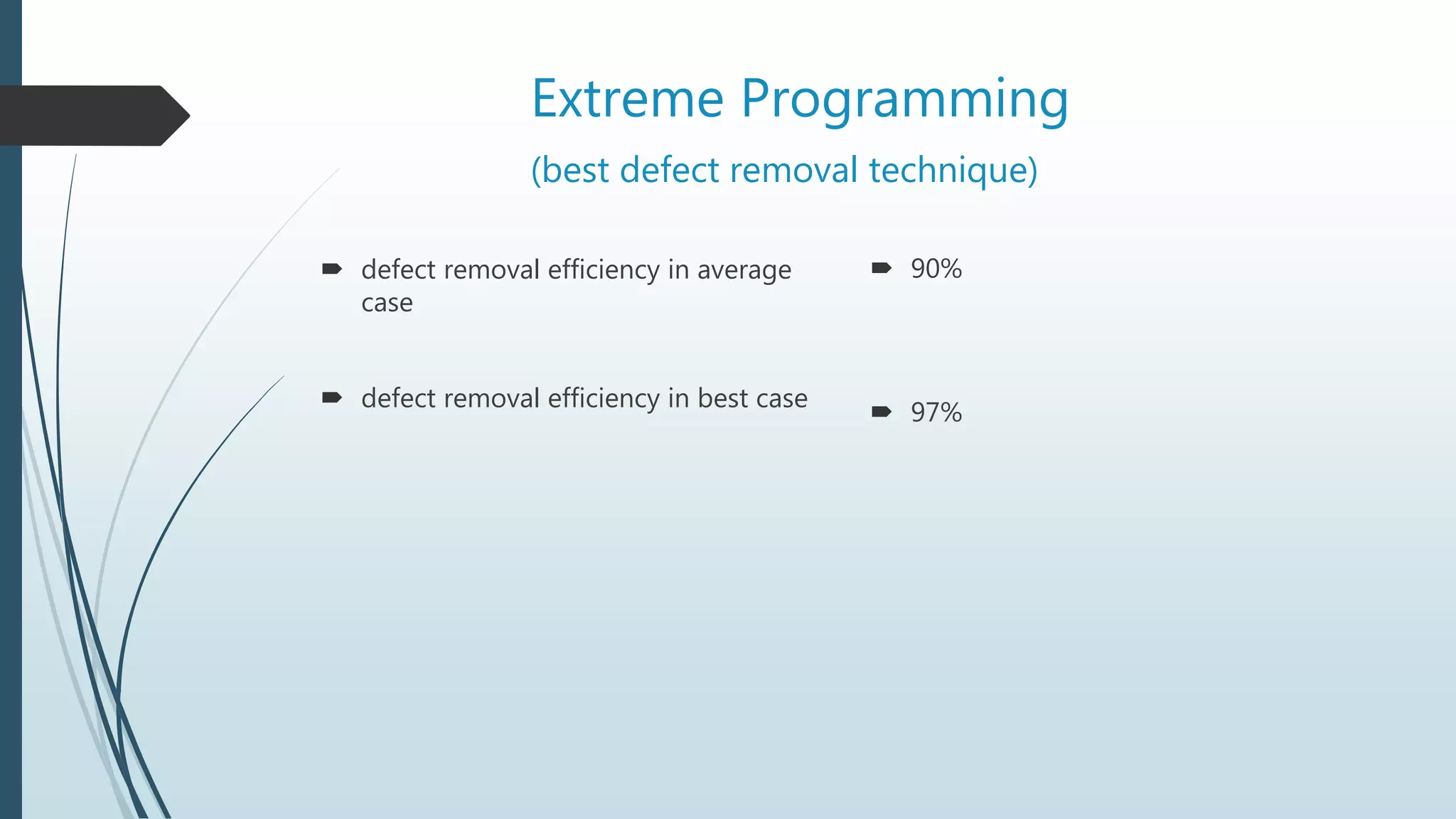
Extreme Programming
(best defect removal technique)
 defect removal efficiency in average
case
 defect removal efficiency in best case
 90%
 97%
Cost of finding defects:
 Some defect-detection practices cost more than others. The most economical
practices result in the least cost per defect found, all other things being equal.
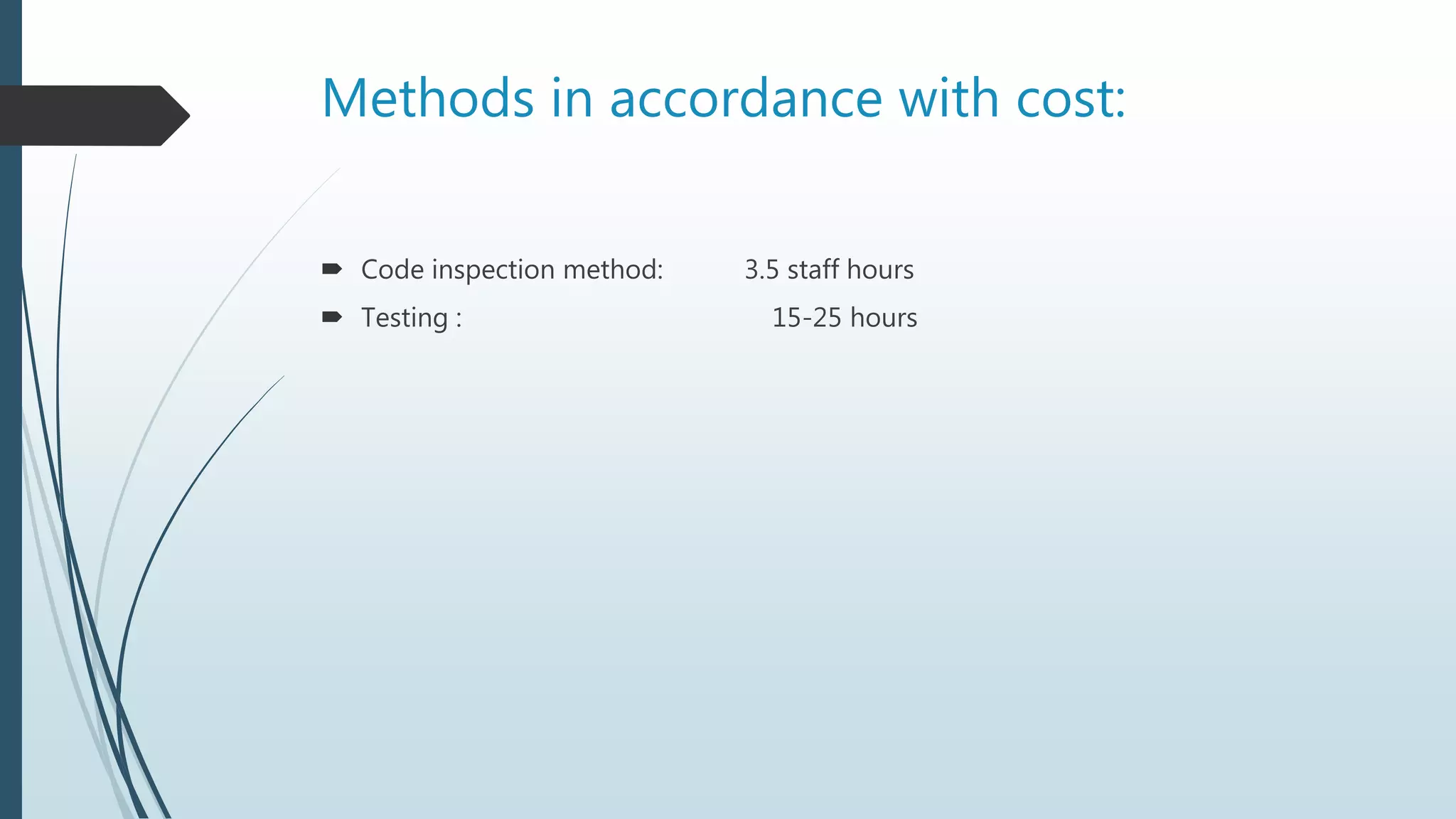
Methods in accordance with cost:
 Code inspection method: 3.5 staff hours
 Testing : 15-25 hours
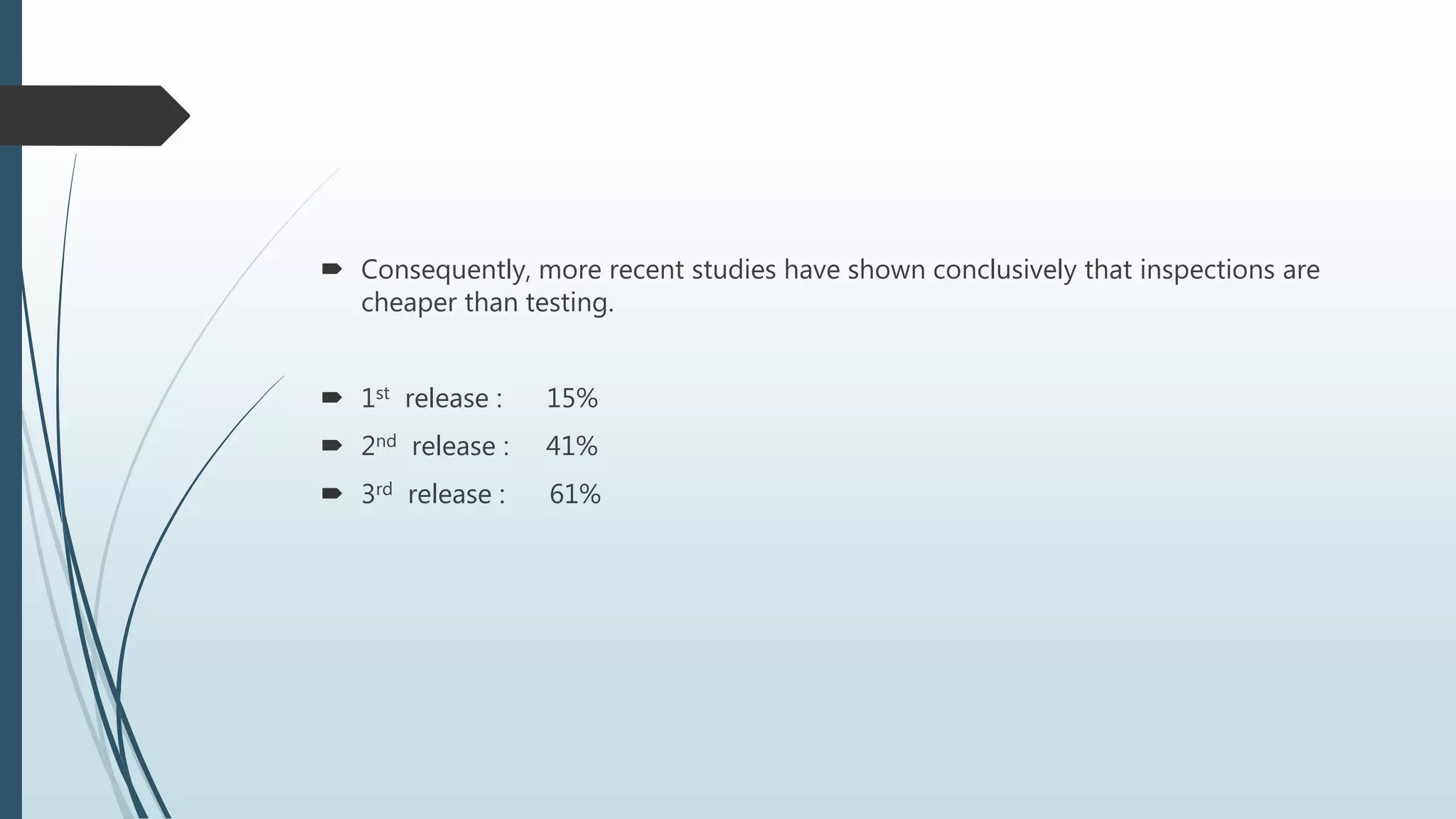
 Consequently, more recent studies have shown conclusively that inspections are
cheaper than testing.
 1st release : 15%
 2nd release : 41%
 3rd release : 61%
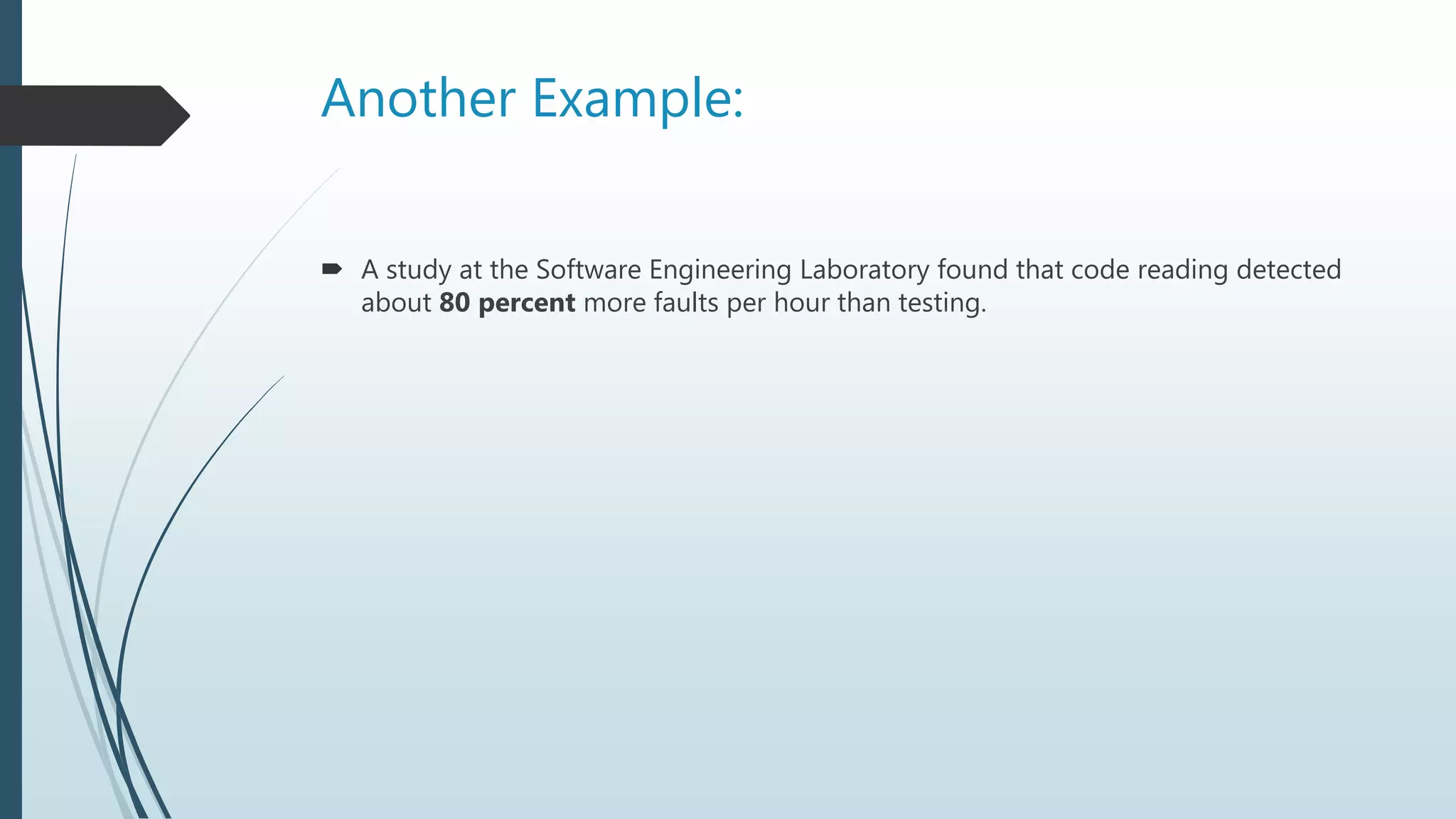
Another Example:
 A study at the Software Engineering Laboratory found that code reading detected
about 80 percent more faults per hour than testing.
Cost of fixing defects:
 Cost of fixing defects ≠ Cost of finding defects
 The longer a defect remains in the system, the more expensive it becomes to
remove.
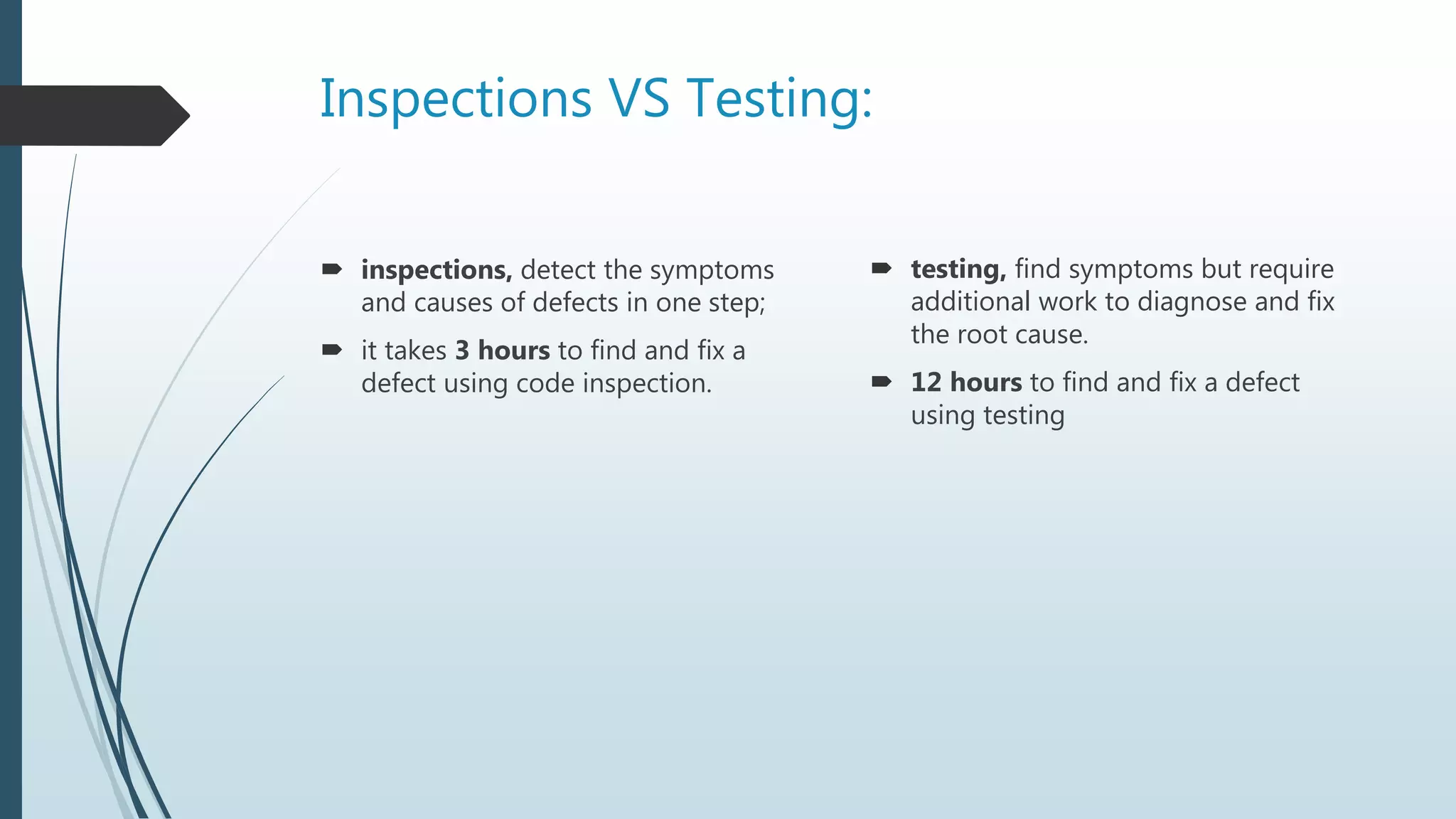
Inspections VS Testing:
 inspections, detect the symptoms
and causes of defects in one step;
 it takes 3 hours to find and fix a
defect using code inspection.
 testing, find symptoms but require
additional work to diagnose and fix
the root cause.
 12 hours to find and fix a defect
using testing
An effective software-quality program must include a combination of
techniques that apply to all stages of development. Here’s a recommended
combination:
● Formal design inspections of the critical parts of a system
● Modeling or prototyping using a rapid prototyping technique
● Code reading or inspections
● Execution testing
Relative Effectiveness of Quality Techniques

Relative Effectiveness of Quality Techniques

  • 2.
  • 3.
  • 4.
    Percentage of DefectsDetected  One way to evaluate defect-detection methods is to determine the percentage of defects they find out of the total defects found over the life of a product.
  • 5.
     The strongimplication is that if project developers are striving for a higher defect- detection rate, they need to use a combination of techniques. Myers confirmed this implication with a group of programmers using following techniques: ● Execution testing against the specification ● Execution testing against the specification with the source code ● Walkthrough/inspection using the specification and the source code
  • 6.
    Observations:  Myers founda huge variation in the number of defects detected in the program, ranging from 1.0 to 9.0 defects found. The average number found was 5.1, or about a third of those known.  When used individually, no method had a statistically significant advantage over any of the others.  Any combination of two methods increased the total number of defects found by a factor of almost 2.
  • 7.
    Result:  Defect-detection methodswork better in combination than they do singly.
  • 8.
    Extreme Programming (best defectremoval technique)  defect removal efficiency in average case  defect removal efficiency in best case  90%  97%
  • 9.
    Cost of findingdefects:  Some defect-detection practices cost more than others. The most economical practices result in the least cost per defect found, all other things being equal.
  • 10.
    Methods in accordancewith cost:  Code inspection method: 3.5 staff hours  Testing : 15-25 hours
  • 11.
     Consequently, morerecent studies have shown conclusively that inspections are cheaper than testing.  1st release : 15%  2nd release : 41%  3rd release : 61%
  • 12.
    Another Example:  Astudy at the Software Engineering Laboratory found that code reading detected about 80 percent more faults per hour than testing.
  • 13.
    Cost of fixingdefects:  Cost of fixing defects ≠ Cost of finding defects  The longer a defect remains in the system, the more expensive it becomes to remove.
  • 14.
    Inspections VS Testing: inspections, detect the symptoms and causes of defects in one step;  it takes 3 hours to find and fix a defect using code inspection.  testing, find symptoms but require additional work to diagnose and fix the root cause.  12 hours to find and fix a defect using testing
  • 15.
    An effective software-qualityprogram must include a combination of techniques that apply to all stages of development. Here’s a recommended combination: ● Formal design inspections of the critical parts of a system ● Modeling or prototyping using a rapid prototyping technique ● Code reading or inspections ● Execution testing