Mesothelioma Changes 
Relationships and Roles 
By Dana Nolan 
Licensed Mental Health Counselor
Relationships/Roles 
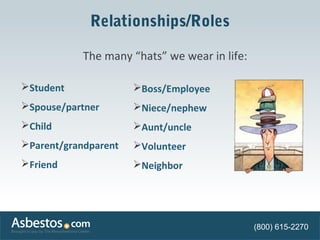
The many “hats” we wear in life: 
(800) 615-2270 
Student 
Spouse/partner 
Child 
Parent/grandparent 
Friend 
Boss/Employee 
Niece/nephew 
Aunt/uncle 
Volunteer 
Neighbor
Transitions and Changes in Roles 
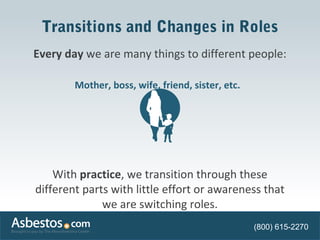
Every day we are many things to different people: 
Mother, boss, wife, friend, sister, etc. 
With practice, we transition through these 
different parts with little effort or awareness that 
we are switching roles. 
(800) 615-2270
A Mesothelioma Diagnosis 
Creates New Roles 
You and your loved ones adjust to being Patient & 
Caregiver. 
Expectations: 
Yours, Your loved ones’ and Society’s 
How are these 
expectations formed? 
How exactly should a mesothelioma patient feel and behave? 
Strong and confident? | Scared and withdrawn? | Be a warrior? 
(800) 615-2270
Adjusting to a New Role 
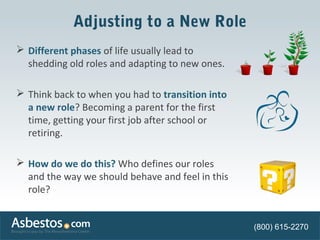
 Different phases of life usually lead to 
shedding old roles and adapting to new ones. 
 Think back to when you had to transition into 
a new role? Becoming a parent for the first 
time, getting your first job after school or 
retiring. 
 How do we do this? Who defines our roles 
and the way we should behave and feel in this 
role? 
(800) 615-2270
The Patient Role 
Effects of mesothelioma or its treatment may mean 
patients may have to let go or cut back on some 
responsibilities related to their roles. 
Examples: 
A patient may have to limit or quit working to release themselves of the 
employee role. 
A patient may not have the energy to babysit their young grandchildren 
anymore, which can lead to the patient feeling unable to fulfill their role as 
a grandparent. 
(800) 615-2270
The Patient Role (cont.) 
Is there a right way to be a mesothelioma patient? 
What are the challenges of adapting to a 
more dependent role? 
Common Roles: 
Fighter | Business-as-usual | Realist | Quiet One 
(800) 615-2270
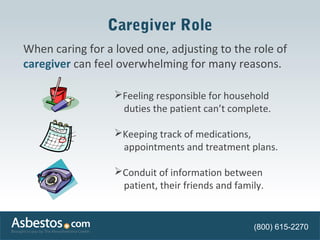
Caregiver Role 
When caring for a loved one, adjusting to the role of 
caregiver can feel overwhelming for many reasons. 
Feeling responsible for household 
duties the patient can’t complete. 
Keeping track of medications, 
appointments and treatment plans. 
Conduit of information between 
patient, their friends and family. 
(800) 615-2270
Potential Struggles of Adjusting to Roles 
Patient and caregiver must clarify 
their needs and abilities. 
(800) 615-2270 
The patient must determine 
what kind and how much 
support - practical and 
emotional - they want and 
ask for it. 
The caregiver needs to 
determine type and 
amount of support they 
can give and communicate 
that to the patient. 
Conflict arises between patients and caregivers when there 
are assumptions about someone’s needs, duties and 
feelings.
Suggestions 
Everyone adjusts to the role of caregiver and patient 
differently. There is no “right way” to be a patient or a 
caregiver… just YOUR way. 
Don’t be pressured to be the kind of patient or caregiver who 
someone expects or says you should be. 
Focus on your needs, communicate them and ask for help 
when you feel overwhelmed. 
(800) 615-2270
Conclusions 
Many patients and caregivers need some time 
to adjust to their new roles when coping with a 
diagnosis of mesothelioma. 
Clarifying our own needs and what we can 
or can’t do as patients and caregivers 
opens the opportunity to discuss how to 
adjust to these changing roles. 
(800) 615-2270
Contact Information 
1-800-615-2270 
(800) 615-2270

The Mesothelioma Center's November Support Group - Mesothelioma Changes Relationships and Roles

  • 1.
    Mesothelioma Changes Relationshipsand Roles By Dana Nolan Licensed Mental Health Counselor
  • 2.
    Relationships/Roles The many“hats” we wear in life: (800) 615-2270 Student Spouse/partner Child Parent/grandparent Friend Boss/Employee Niece/nephew Aunt/uncle Volunteer Neighbor
  • 3.
    Transitions and Changesin Roles Every day we are many things to different people: Mother, boss, wife, friend, sister, etc. With practice, we transition through these different parts with little effort or awareness that we are switching roles. (800) 615-2270
  • 4.
    A Mesothelioma Diagnosis Creates New Roles You and your loved ones adjust to being Patient & Caregiver. Expectations: Yours, Your loved ones’ and Society’s How are these expectations formed? How exactly should a mesothelioma patient feel and behave? Strong and confident? | Scared and withdrawn? | Be a warrior? (800) 615-2270
  • 5.
    Adjusting to aNew Role  Different phases of life usually lead to shedding old roles and adapting to new ones.  Think back to when you had to transition into a new role? Becoming a parent for the first time, getting your first job after school or retiring.  How do we do this? Who defines our roles and the way we should behave and feel in this role? (800) 615-2270
  • 6.
    The Patient Role Effects of mesothelioma or its treatment may mean patients may have to let go or cut back on some responsibilities related to their roles. Examples: A patient may have to limit or quit working to release themselves of the employee role. A patient may not have the energy to babysit their young grandchildren anymore, which can lead to the patient feeling unable to fulfill their role as a grandparent. (800) 615-2270
  • 7.
    The Patient Role(cont.) Is there a right way to be a mesothelioma patient? What are the challenges of adapting to a more dependent role? Common Roles: Fighter | Business-as-usual | Realist | Quiet One (800) 615-2270
  • 8.
    Caregiver Role Whencaring for a loved one, adjusting to the role of caregiver can feel overwhelming for many reasons. Feeling responsible for household duties the patient can’t complete. Keeping track of medications, appointments and treatment plans. Conduit of information between patient, their friends and family. (800) 615-2270
  • 9.
    Potential Struggles ofAdjusting to Roles Patient and caregiver must clarify their needs and abilities. (800) 615-2270 The patient must determine what kind and how much support - practical and emotional - they want and ask for it. The caregiver needs to determine type and amount of support they can give and communicate that to the patient. Conflict arises between patients and caregivers when there are assumptions about someone’s needs, duties and feelings.
  • 10.
    Suggestions Everyone adjuststo the role of caregiver and patient differently. There is no “right way” to be a patient or a caregiver… just YOUR way. Don’t be pressured to be the kind of patient or caregiver who someone expects or says you should be. Focus on your needs, communicate them and ask for help when you feel overwhelmed. (800) 615-2270
  • 11.
    Conclusions Many patientsand caregivers need some time to adjust to their new roles when coping with a diagnosis of mesothelioma. Clarifying our own needs and what we can or can’t do as patients and caregivers opens the opportunity to discuss how to adjust to these changing roles. (800) 615-2270
  • 12.