References are "Nice" Pointers
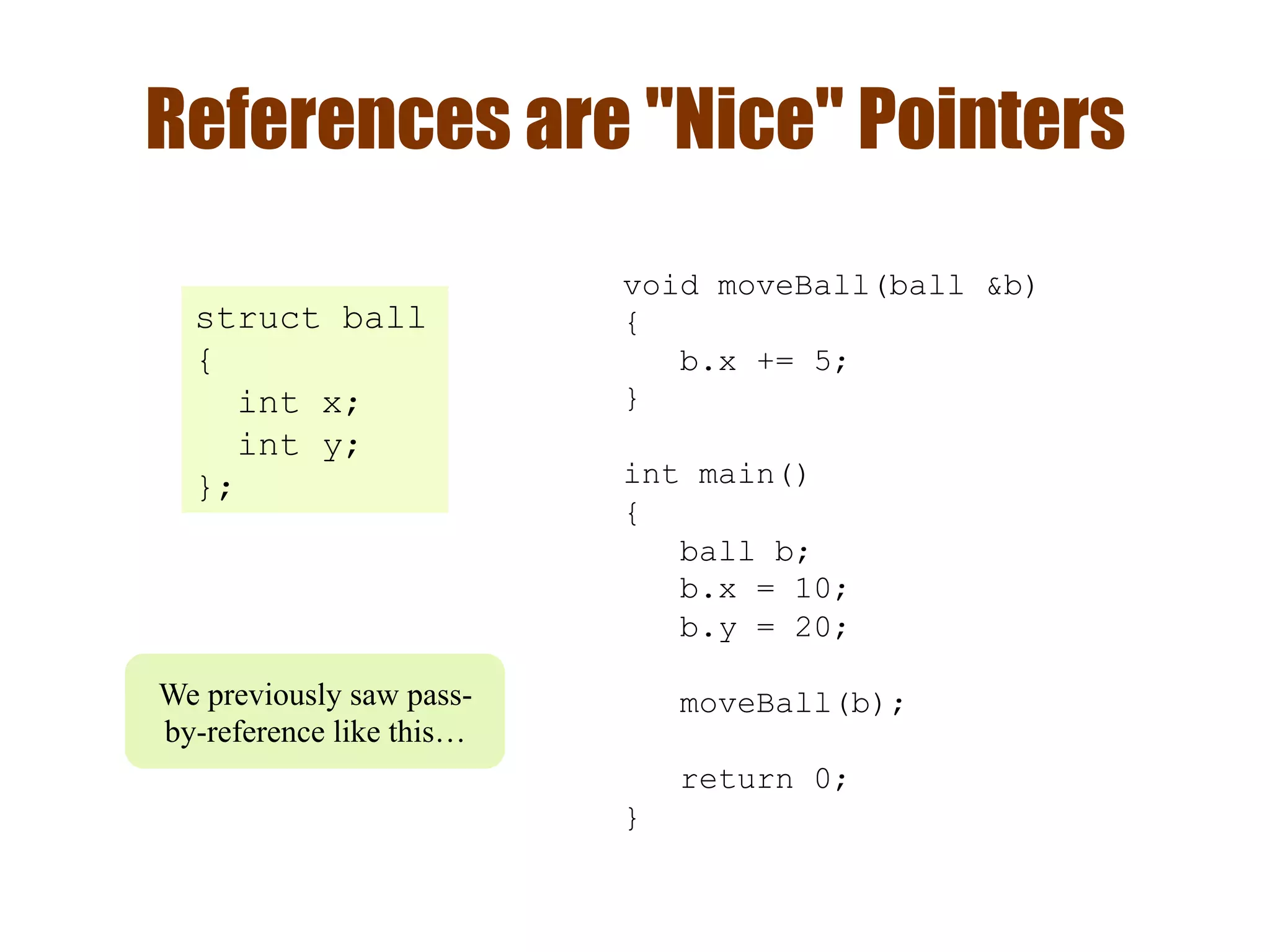
void moveBall(ball &b)
{
b.x += 5;
}
int main()
{
ball b;
b.x = 10;
b.y = 20;
moveBall(b);
return 0;
}
struct ball
{
int x;
int y;
};
We previously saw pass-
by-reference like this…
References are "Nice" Pointers
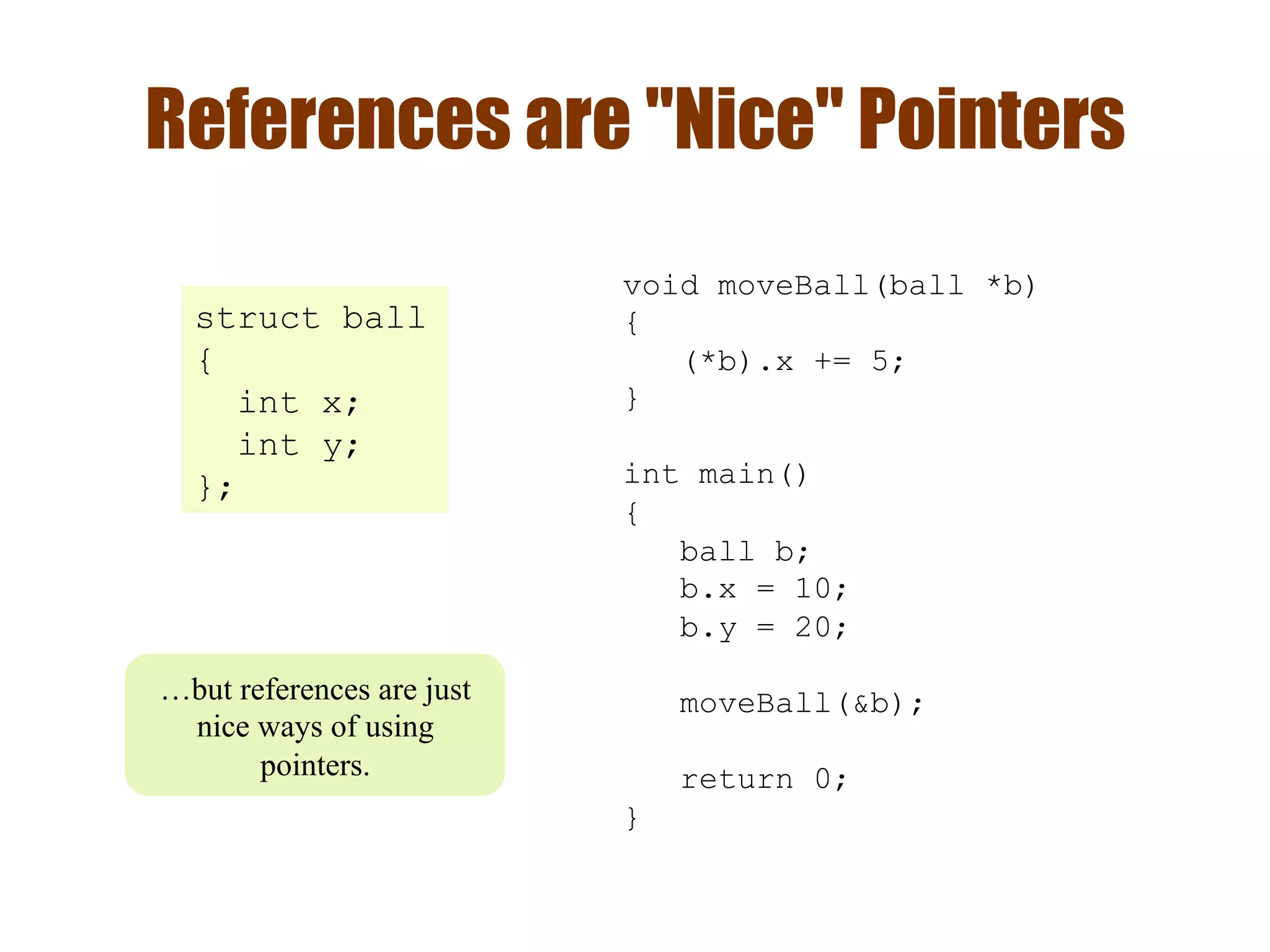
void moveBall(ball *b)
{
(*b).x += 5;
}
int main()
{
ball b;
b.x = 10;
b.y = 20;
moveBall(&b);
return 0;
}
…but references are just
nice ways of using
pointers.
struct ball
{
int x;
int y;
};
References are "Nice" Pointers
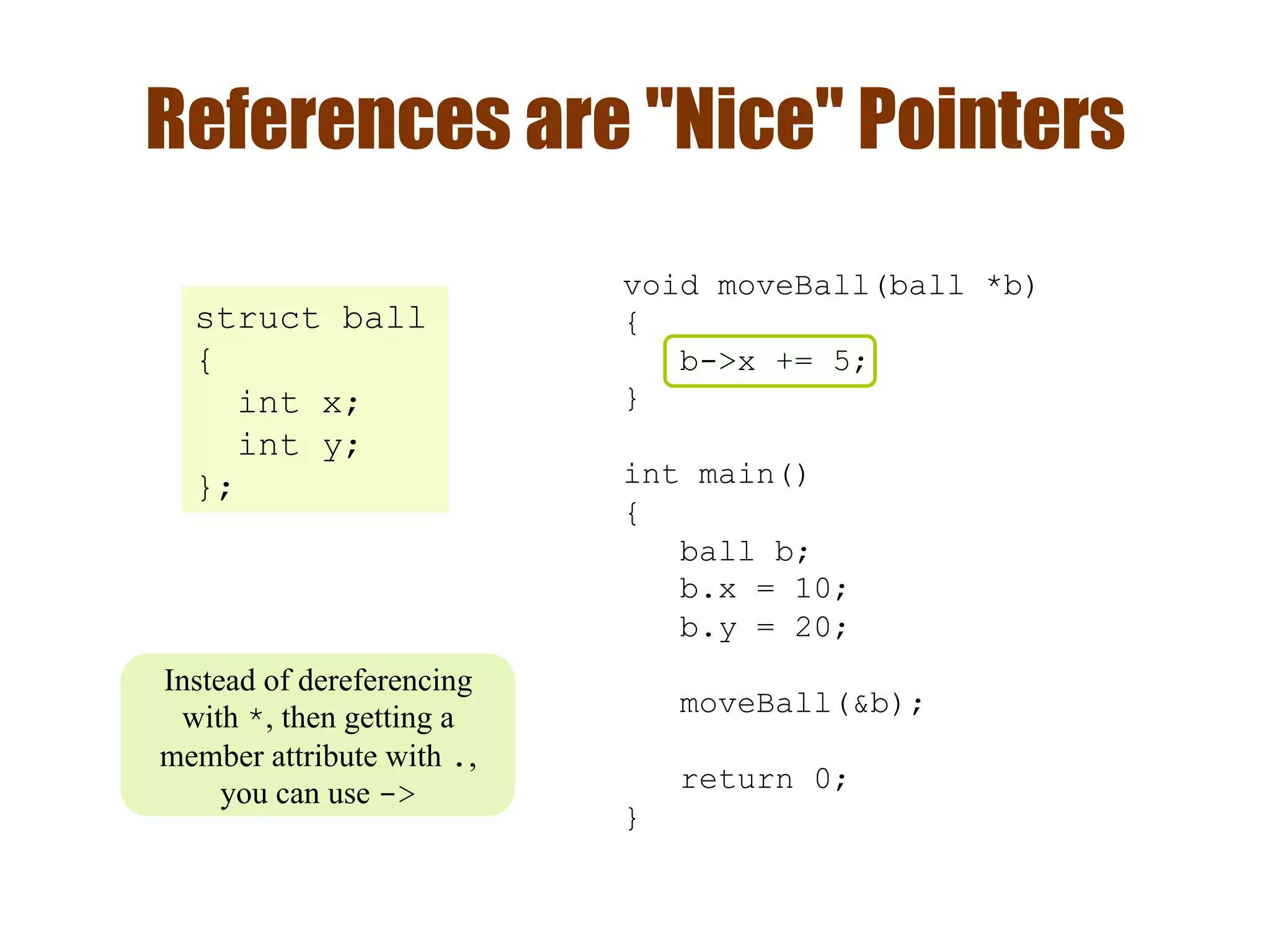
void moveBall(ball *b)
{
b->x += 5;
}
int main()
{
ball b;
b.x = 10;
b.y = 20;
moveBall(&b);
return 0;
}
Instead of dereferencing
with *, then getting a
member attribute with .,
you can use ->
struct ball
{
int x;
int y;
};

References Are 'Nice' Pointers

  • 1.
    References are "Nice"Pointers void moveBall(ball &b) { b.x += 5; } int main() { ball b; b.x = 10; b.y = 20; moveBall(b); return 0; } struct ball { int x; int y; }; We previously saw pass- by-reference like this…
  • 2.
    References are "Nice"Pointers void moveBall(ball *b) { (*b).x += 5; } int main() { ball b; b.x = 10; b.y = 20; moveBall(&b); return 0; } …but references are just nice ways of using pointers. struct ball { int x; int y; };
  • 3.
    References are "Nice"Pointers void moveBall(ball *b) { b->x += 5; } int main() { ball b; b.x = 10; b.y = 20; moveBall(&b); return 0; } Instead of dereferencing with *, then getting a member attribute with ., you can use -> struct ball { int x; int y; };