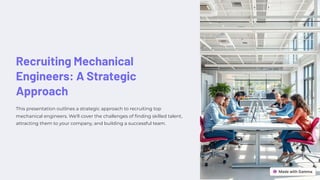
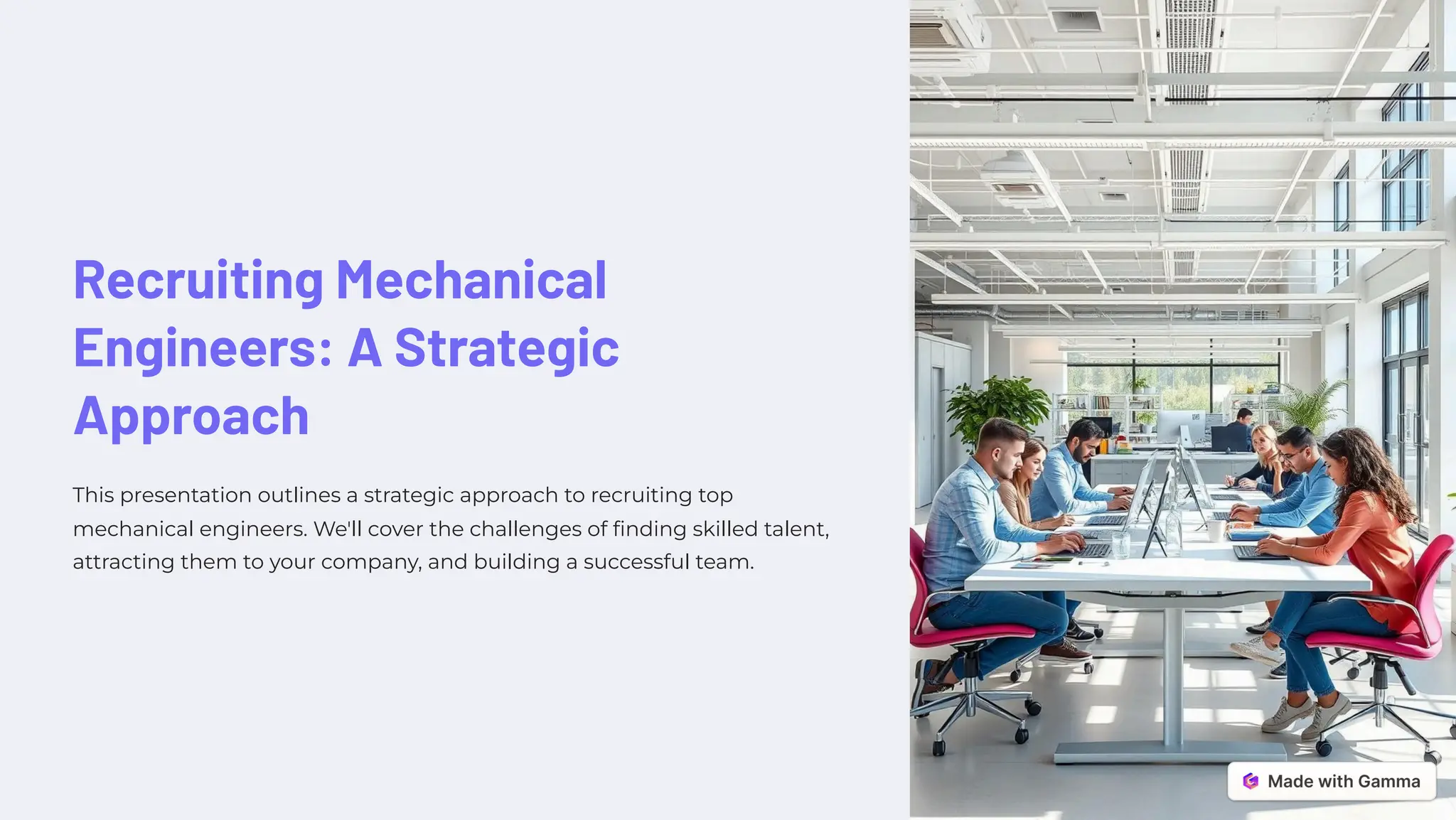
Recruiting Mechanical
Engineers: A Strategic
Approach
This presentation outlines a strategic approach to recruiting top
mechanical engineers. We'll cover the challenges of finding skilled talent,
attracting them to your company, and building a successful team.
Why Mechanical Engineers are in High Demand
Innovation Drives Demand
The rapid advancement of technology across industries,
from automotive to aerospace, fuels the demand for
engineers skilled in design, development, and
manufacturing.
Solving Global Challenges
Mechanical engineers are critical to solving global
challenges like climate change, resource scarcity, and
infrastructure development.
Crafting an Attractive Employer
Brand
Highlight Your Culture
Show potential candidates your
company's values, work
environment, and benefits
package, demonstrating a
commitment to employee well-
being.
Showcase Your Impact
Emphasize how your company
is contributing to a bigger
cause, whether it's
environmental sustainability or
technological breakthroughs.
Engage on Social Media
Use platforms like LinkedIn and Twitter to share stories about your
company, employees, and projects, fostering a sense of connection
with potential candidates.
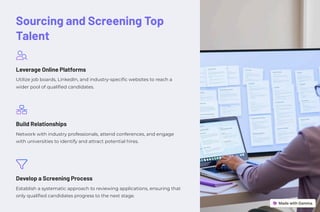
Sourcing and Screening Top
Talent
Leverage Online Platforms
Utilize job boards, LinkedIn, and industry-specific websites to reach a
wider pool of qualified candidates.
Build Relationships
Network with industry professionals, attend conferences, and engage
with universities to identify and attract potential hires.
Develop a Screening Process
Establish a systematic approach to reviewing applications, ensuring that
only qualified candidates progress to the next stage.
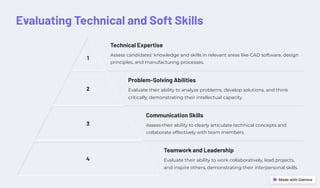
Evaluating Technical and Soft Skills
1
Technical Expertise
Assess candidates' knowledge and skills in relevant areas like CAD software, design
principles, and manufacturing processes.
2
Problem-Solving Abilities
Evaluate their ability to analyze problems, develop solutions, and think
critically, demonstrating their intellectual capacity.
3
Communication Skills
Assess their ability to clearly articulate technical concepts and
collaborate effectively with team members.
4
Teamwork and Leadership
Evaluate their ability to work collaboratively, lead projects,
and inspire others, demonstrating their interpersonal skills.
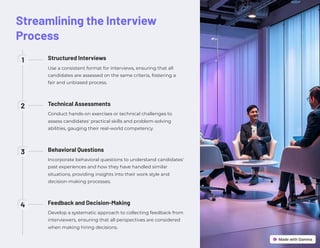
Streamlining the Interview
Process
1 Structured Interviews
Use a consistent format for interviews, ensuring that all
candidates are assessed on the same criteria, fostering a
fair and unbiased process.
2 Technical Assessments
Conduct hands-on exercises or technical challenges to
assess candidates' practical skills and problem-solving
abilities, gauging their real-world competency.
3 Behavioral Questions
Incorporate behavioral questions to understand candidates'
past experiences and how they have handled similar
situations, providing insights into their work style and
decision-making processes.
4 Feedback and Decision-Making
Develop a systematic approach to collecting feedback from
interviewers, ensuring that all perspectives are considered
when making hiring decisions.
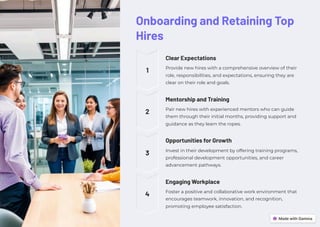
Onboarding and Retaining Top
Hires
1
Clear Expectations
Provide new hires with a comprehensive overview of their
role, responsibilities, and expectations, ensuring they are
clear on their role and goals.
2
Mentorship and Training
Pair new hires with experienced mentors who can guide
them through their initial months, providing support and
guidance as they learn the ropes.
3
Opportunities for Growth
Invest in their development by offering training programs,
professional development opportunities, and career
advancement pathways.
4
Engaging Workplace
Foster a positive and collaborative work environment that
encourages teamwork, innovation, and recognition,
promoting employee satisfaction.
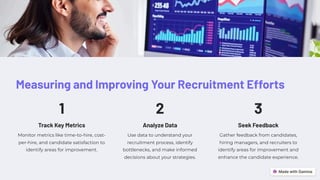
Measuring and Improving Your Recruitment Efforts
1
Track Key Metrics
Monitor metrics like time-to-hire, cost-
per-hire, and candidate satisfaction to
identify areas for improvement.
2
Analyze Data
Use data to understand your
recruitment process, identify
bottlenecks, and make informed
decisions about your strategies.
3
Seek Feedback
Gather feedback from candidates,
hiring managers, and recruiters to
identify areas for improvement and
enhance the candidate experience.

Recruiting-Mechanical-Engineers-A-Strategic-Approach.pdf

  • 1.
    Recruiting Mechanical Engineers: AStrategic Approach This presentation outlines a strategic approach to recruiting top mechanical engineers. We'll cover the challenges of finding skilled talent, attracting them to your company, and building a successful team.
  • 2.
    Why Mechanical Engineersare in High Demand Innovation Drives Demand The rapid advancement of technology across industries, from automotive to aerospace, fuels the demand for engineers skilled in design, development, and manufacturing. Solving Global Challenges Mechanical engineers are critical to solving global challenges like climate change, resource scarcity, and infrastructure development.
  • 3.
    Crafting an AttractiveEmployer Brand Highlight Your Culture Show potential candidates your company's values, work environment, and benefits package, demonstrating a commitment to employee well- being. Showcase Your Impact Emphasize how your company is contributing to a bigger cause, whether it's environmental sustainability or technological breakthroughs. Engage on Social Media Use platforms like LinkedIn and Twitter to share stories about your company, employees, and projects, fostering a sense of connection with potential candidates.
  • 4.
    Sourcing and ScreeningTop Talent Leverage Online Platforms Utilize job boards, LinkedIn, and industry-specific websites to reach a wider pool of qualified candidates. Build Relationships Network with industry professionals, attend conferences, and engage with universities to identify and attract potential hires. Develop a Screening Process Establish a systematic approach to reviewing applications, ensuring that only qualified candidates progress to the next stage.
  • 5.
    Evaluating Technical andSoft Skills 1 Technical Expertise Assess candidates' knowledge and skills in relevant areas like CAD software, design principles, and manufacturing processes. 2 Problem-Solving Abilities Evaluate their ability to analyze problems, develop solutions, and think critically, demonstrating their intellectual capacity. 3 Communication Skills Assess their ability to clearly articulate technical concepts and collaborate effectively with team members. 4 Teamwork and Leadership Evaluate their ability to work collaboratively, lead projects, and inspire others, demonstrating their interpersonal skills.
  • 6.
    Streamlining the Interview Process 1Structured Interviews Use a consistent format for interviews, ensuring that all candidates are assessed on the same criteria, fostering a fair and unbiased process. 2 Technical Assessments Conduct hands-on exercises or technical challenges to assess candidates' practical skills and problem-solving abilities, gauging their real-world competency. 3 Behavioral Questions Incorporate behavioral questions to understand candidates' past experiences and how they have handled similar situations, providing insights into their work style and decision-making processes. 4 Feedback and Decision-Making Develop a systematic approach to collecting feedback from interviewers, ensuring that all perspectives are considered when making hiring decisions.
  • 7.
    Onboarding and RetainingTop Hires 1 Clear Expectations Provide new hires with a comprehensive overview of their role, responsibilities, and expectations, ensuring they are clear on their role and goals. 2 Mentorship and Training Pair new hires with experienced mentors who can guide them through their initial months, providing support and guidance as they learn the ropes. 3 Opportunities for Growth Invest in their development by offering training programs, professional development opportunities, and career advancement pathways. 4 Engaging Workplace Foster a positive and collaborative work environment that encourages teamwork, innovation, and recognition, promoting employee satisfaction.
  • 8.
    Measuring and ImprovingYour Recruitment Efforts 1 Track Key Metrics Monitor metrics like time-to-hire, cost- per-hire, and candidate satisfaction to identify areas for improvement. 2 Analyze Data Use data to understand your recruitment process, identify bottlenecks, and make informed decisions about your strategies. 3 Seek Feedback Gather feedback from candidates, hiring managers, and recruiters to identify areas for improvement and enhance the candidate experience.