through a Bourdieuian theory of practice
Costa, C., & Harris, L. (2017). Reconsidering the technologies of
intellectual inquiry in curriculum design. The Curriculum Journal,
28(4), 559–577. https://doi.org/10.1080/09585176.2017.1308260
Costa, C., Murphy, M., Pereira, A. L., & Taylor,Y. (2018). Higher
education students’ experiences of digital learning and
(dis)empowerment. Australasian Journal of Educational Technology,
0(0). https://doi.org/10.14742/ajet.3979
A form of
digital scholarship
Know your field of research well!
Read! Read! Read!
And
question!
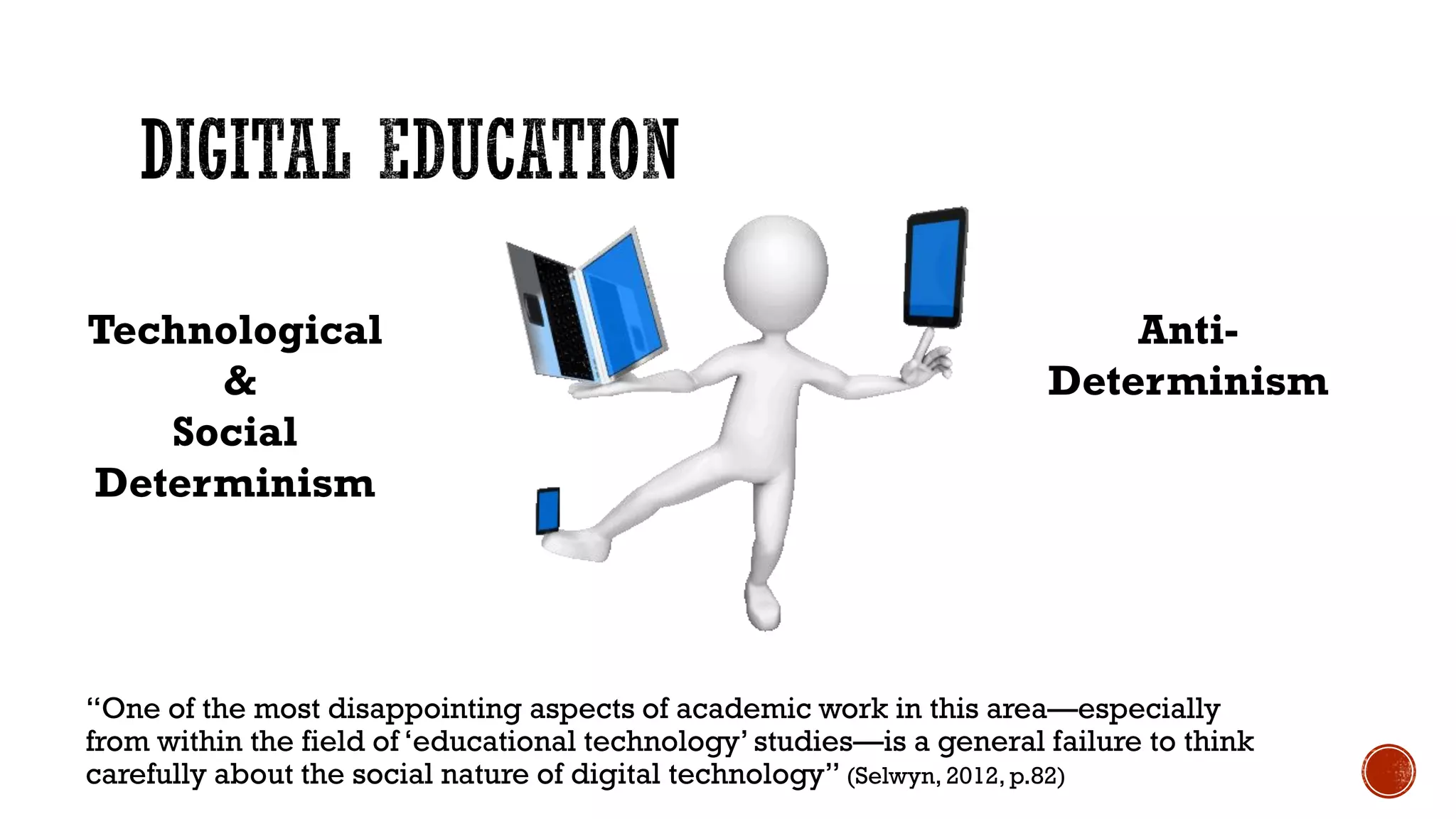
“One of the most disappointing aspects of academic work in this area—especially
from within the field of ‘educational technology’ studies—is a general failure to think
carefully about the social nature of digital technology” (Selwyn, 2012, p.82)
Technological
&
Social
Determinism
Anti-
Determinism
Many available theoretical perspectives have
advanced the case for taking both the technological
and the social seriously. In seeking to make sense of
the many issues surrounding young people,
education and digital technology, there is little value
in lapsing into a determinist mindset either where
digital technologies are shaped exclusively by
stakeholders and end-users or are seen as
autonomous shaping forces in their own right. (Selwyn,
2012, p. 91)
Selwyn, N. (2012). Making sense of young people, education and digital technology: the role of
sociological theory. Oxford Review of Education,38(1), 81–96.
https://doi.org/10.1080/03054985.2011.577949
And recognising the social and interactional
circumstances in which digital technologies
exist and through which they attain their
meaning(s) (Selwyn, 2012, p.92)
The digital learning practices of HE students
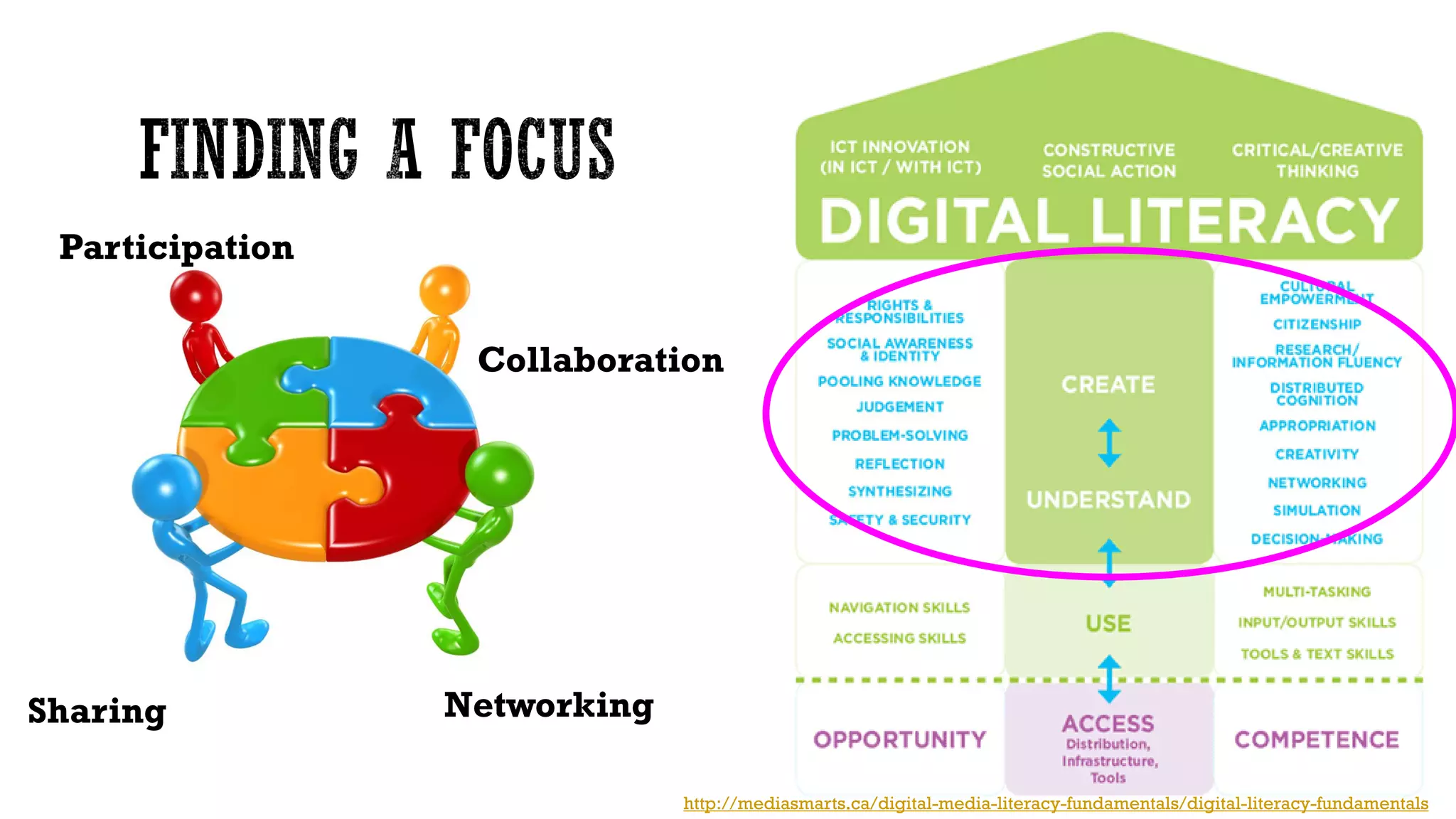
Digital
Cultures
Digital
Literacies
http://mediasmarts.ca/digital-media-literacy-fundamentals/digital-literacy-fundamentals
Participation
Collaboration
Sharing Networking
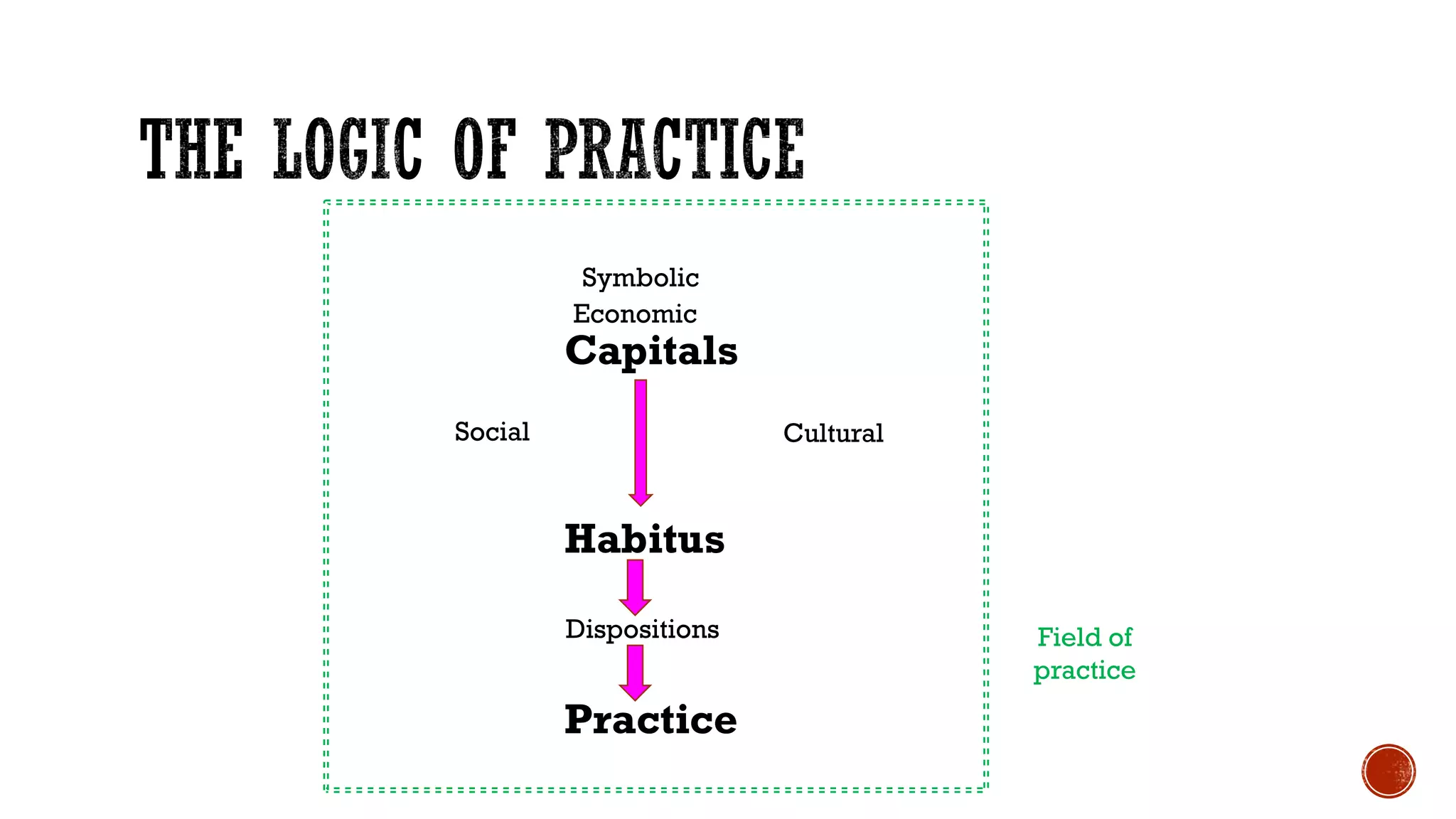
Symbolic
Social Cultural
Capitals
Habitus
Dispositions
Practice
Economic
Field of
practice
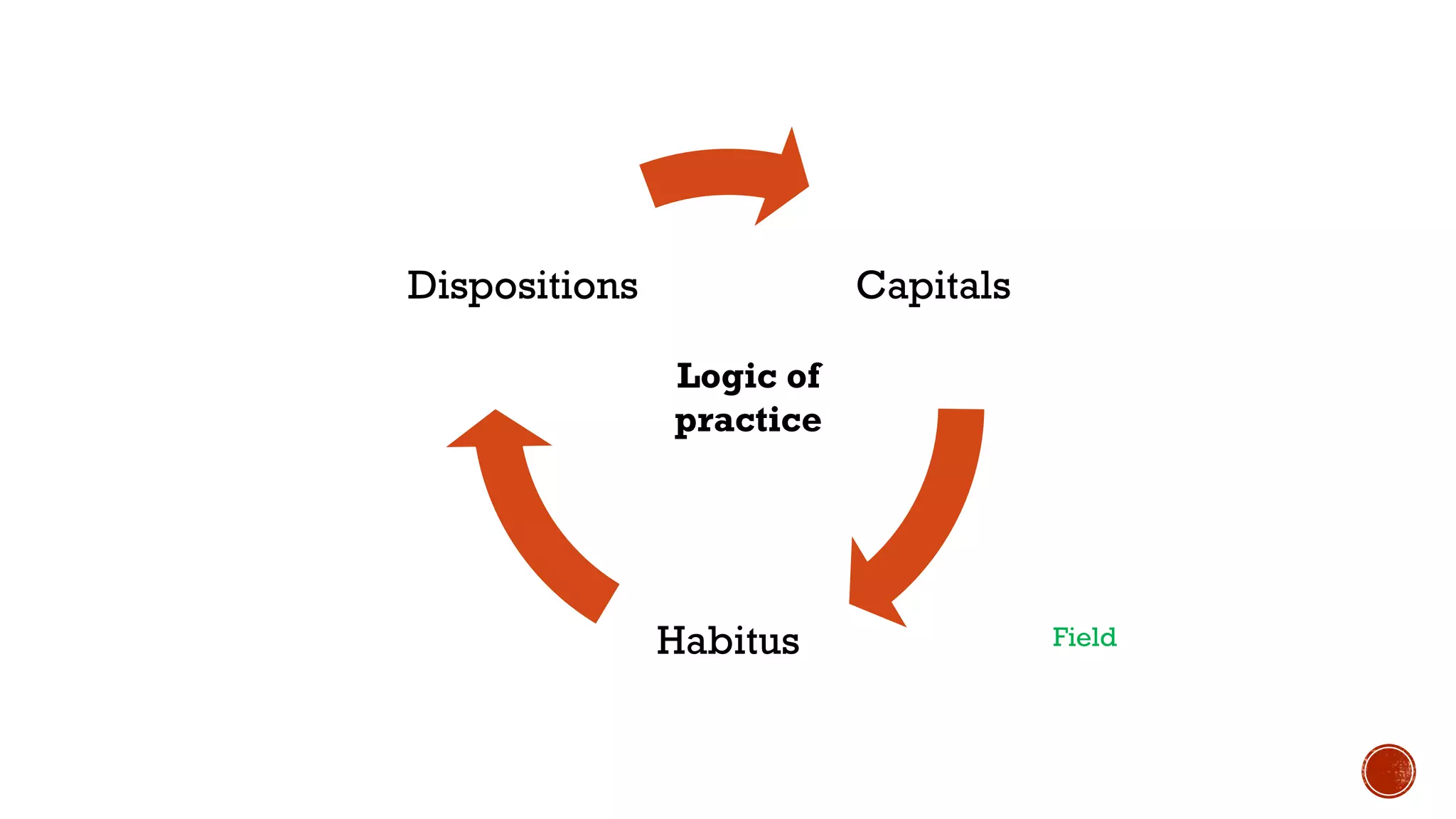
Capitals
Habitus
Dispositions
Logic of
practice
Field
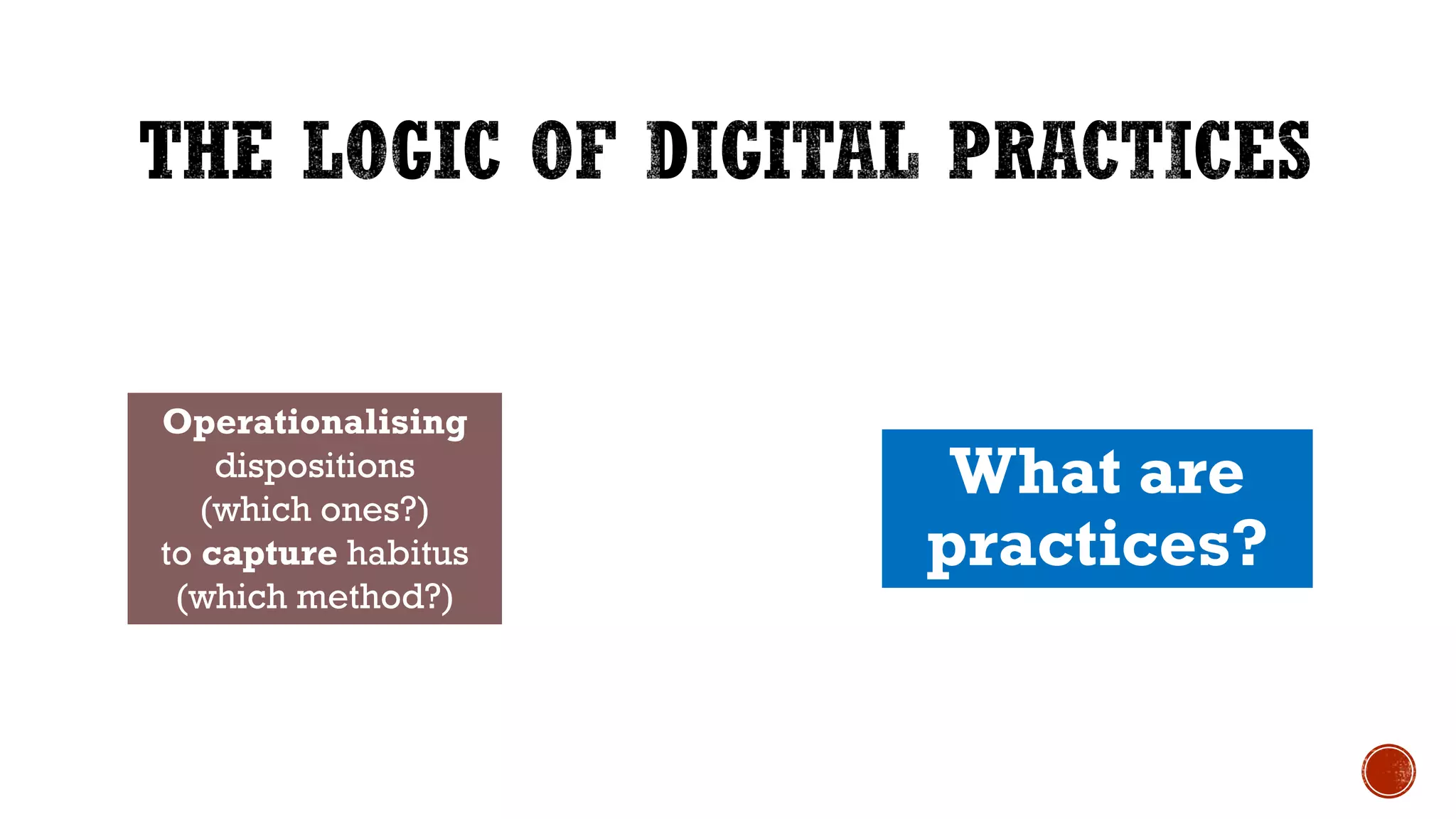
What are
practices?
Operationalising
dispositions
(which ones?)
to capture habitus
(which method?)
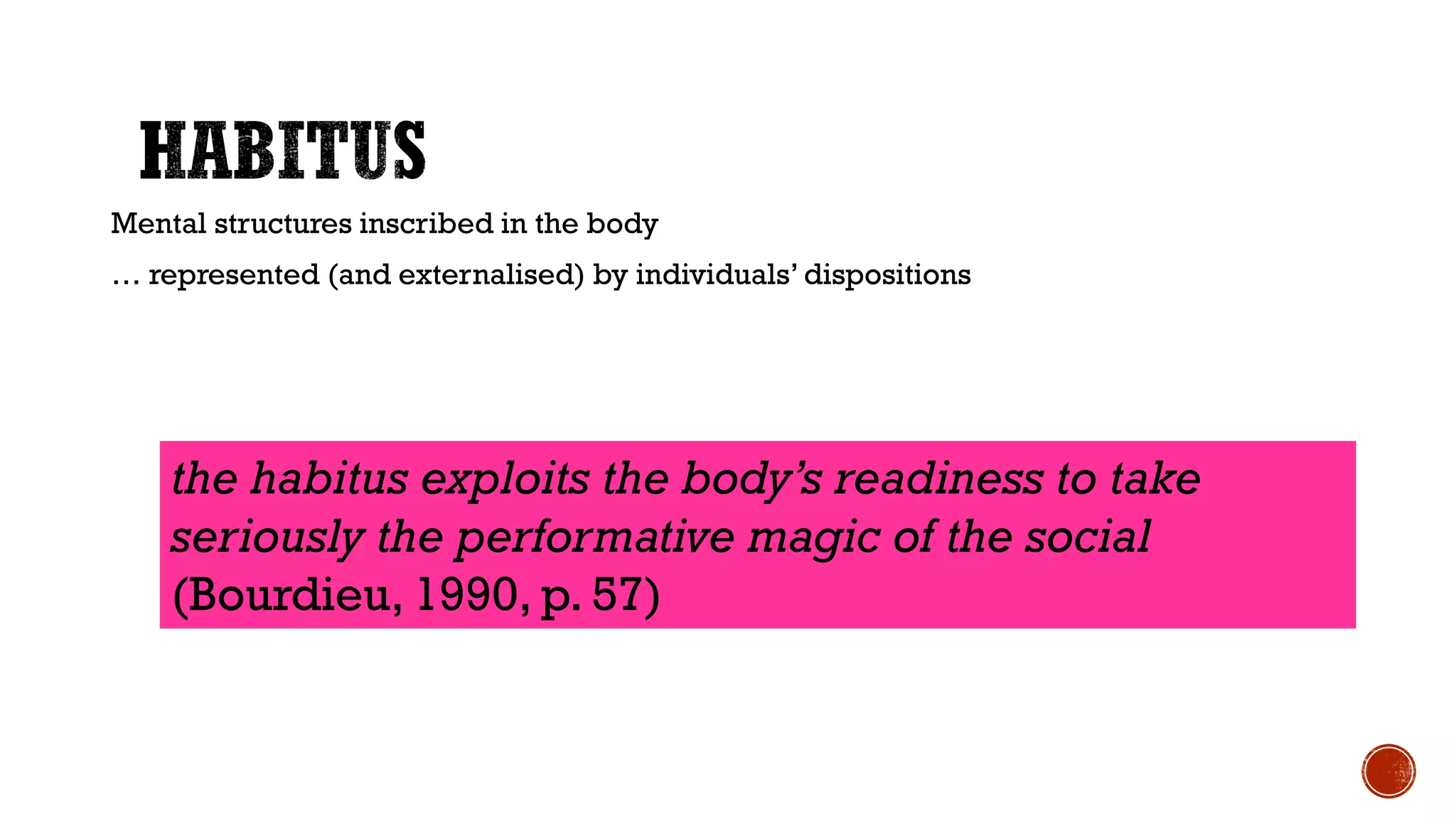
Mental structures inscribed in the body
… represented (and externalised) by individuals’ dispositions
the habitus exploits the body’s readiness to take
seriously the performative magic of the social
(Bourdieu, 1990, p. 57)
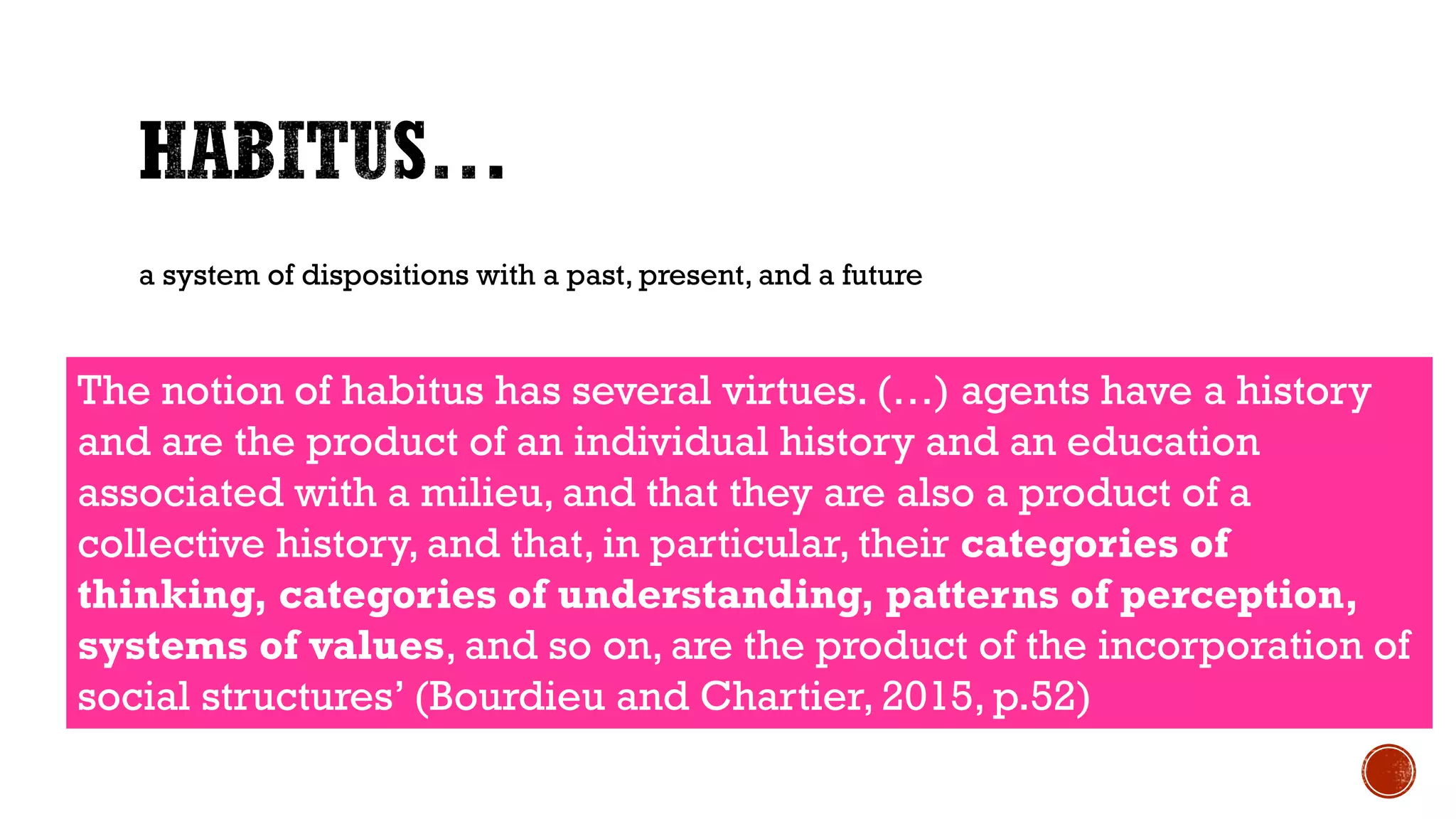
a system of dispositions with a past, present, and a future
The notion of habitus has several virtues. (…) agents have a history
and are the product of an individual history and an education
associated with a milieu, and that they are also a product of a
collective history, and that, in particular, their categories of
thinking, categories of understanding, patterns of perception,
systems of values, and so on, are the product of the incorporation of
social structures’ (Bourdieu and Chartier, 2015, p.52)
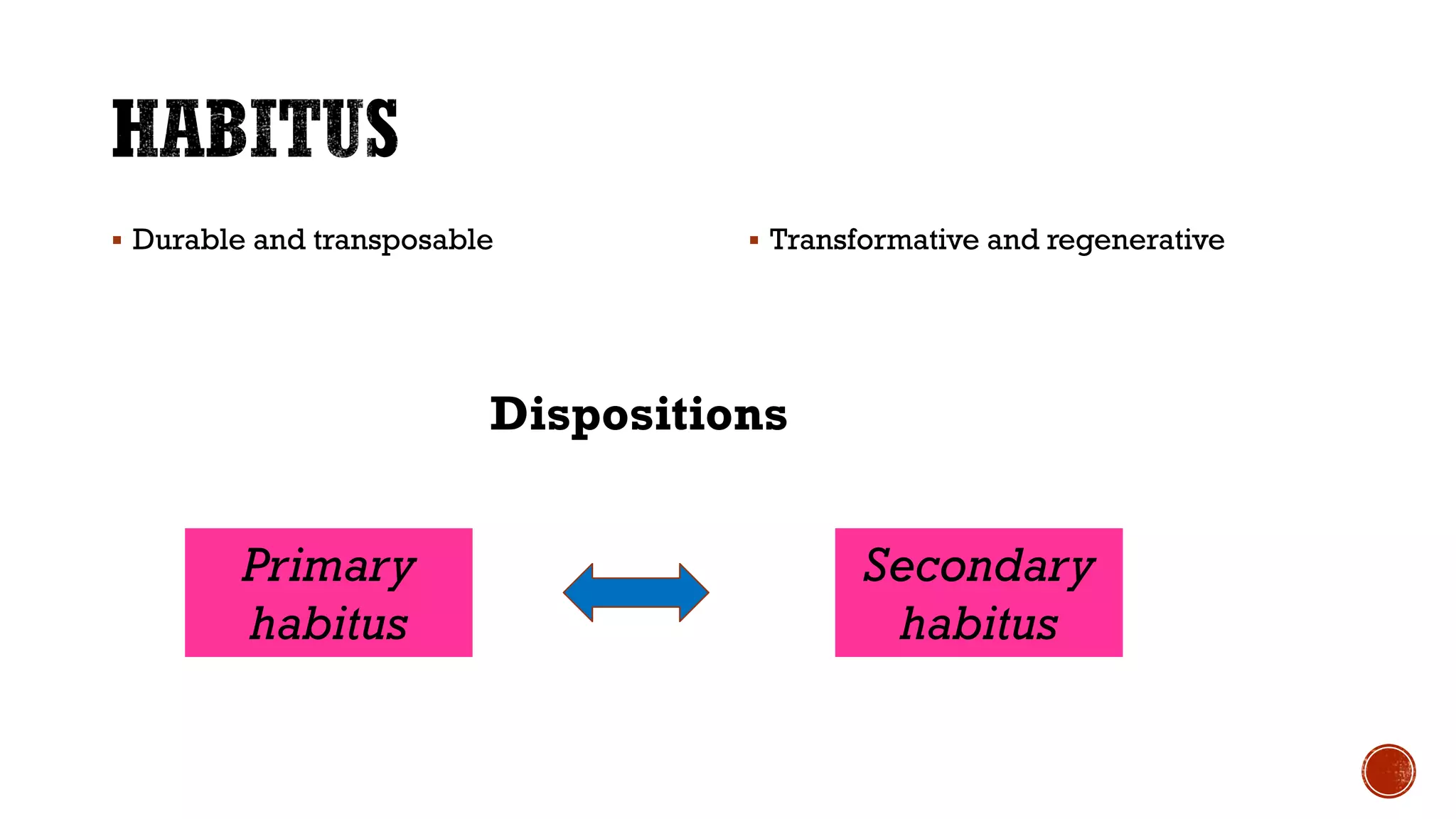
 Durable and transposable  Transformative and regenerative
Dispositions
Primary
habitus
Secondary
habitus
Bourdieu defends the flexibility of the research
process as a form of challenging assumptions
and rectifying taken for granted conceptions.
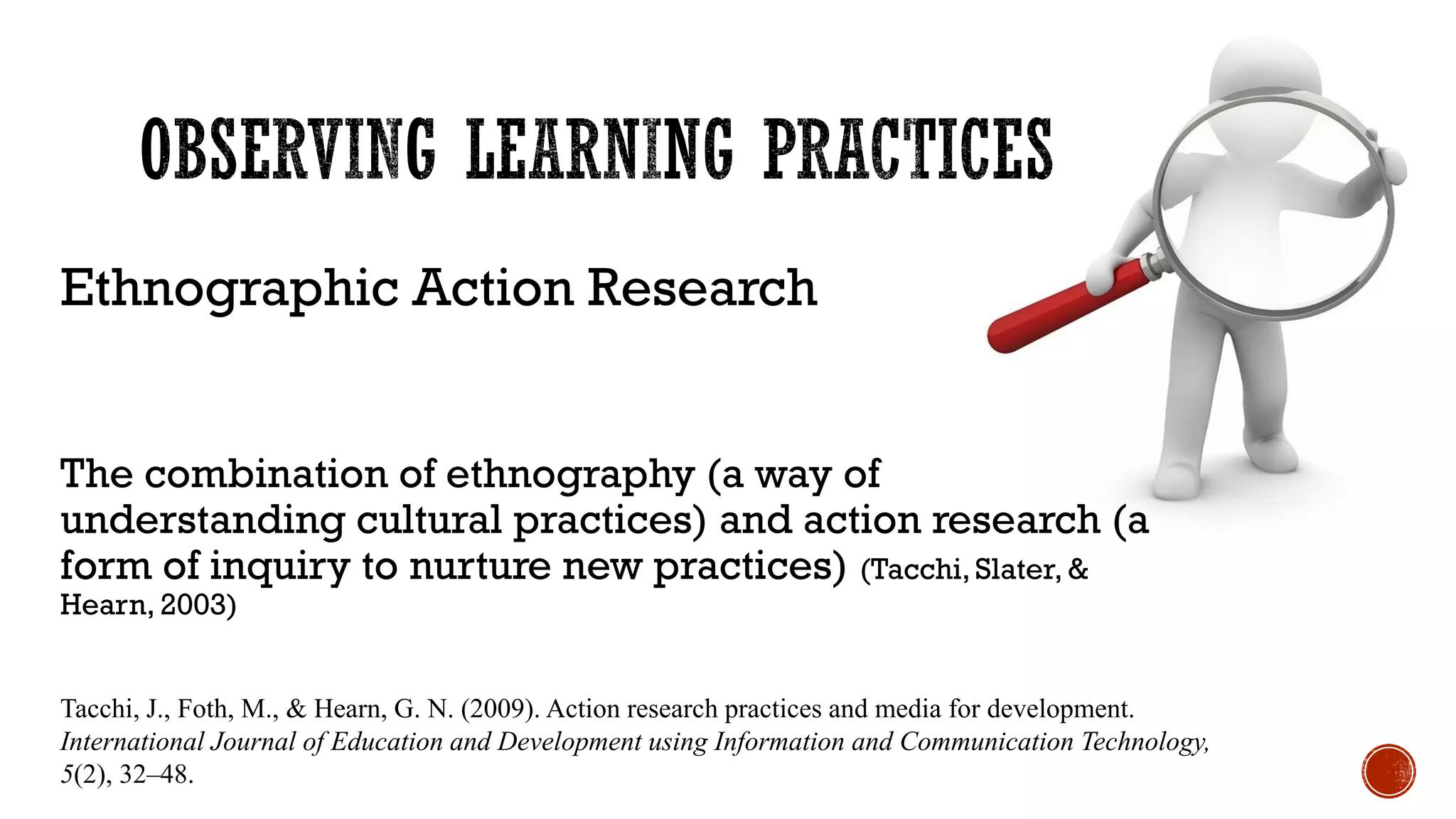
Ethnographic Action Research
The combination of ethnography (a way of
understanding cultural practices) and action research (a
form of inquiry to nurture new practices) (Tacchi, Slater, &
Hearn, 2003)
Tacchi, J., Foth, M., & Hearn, G. N. (2009). Action research practices and media for development.
International Journal of Education and Development using Information and Communication Technology,
5(2), 32–48.
 An open and flexible curriculum: a change of approach
 Ambivalence and digital learner autonomy
 Continuous assessment: new rules for an old game
 Online learning as exposure
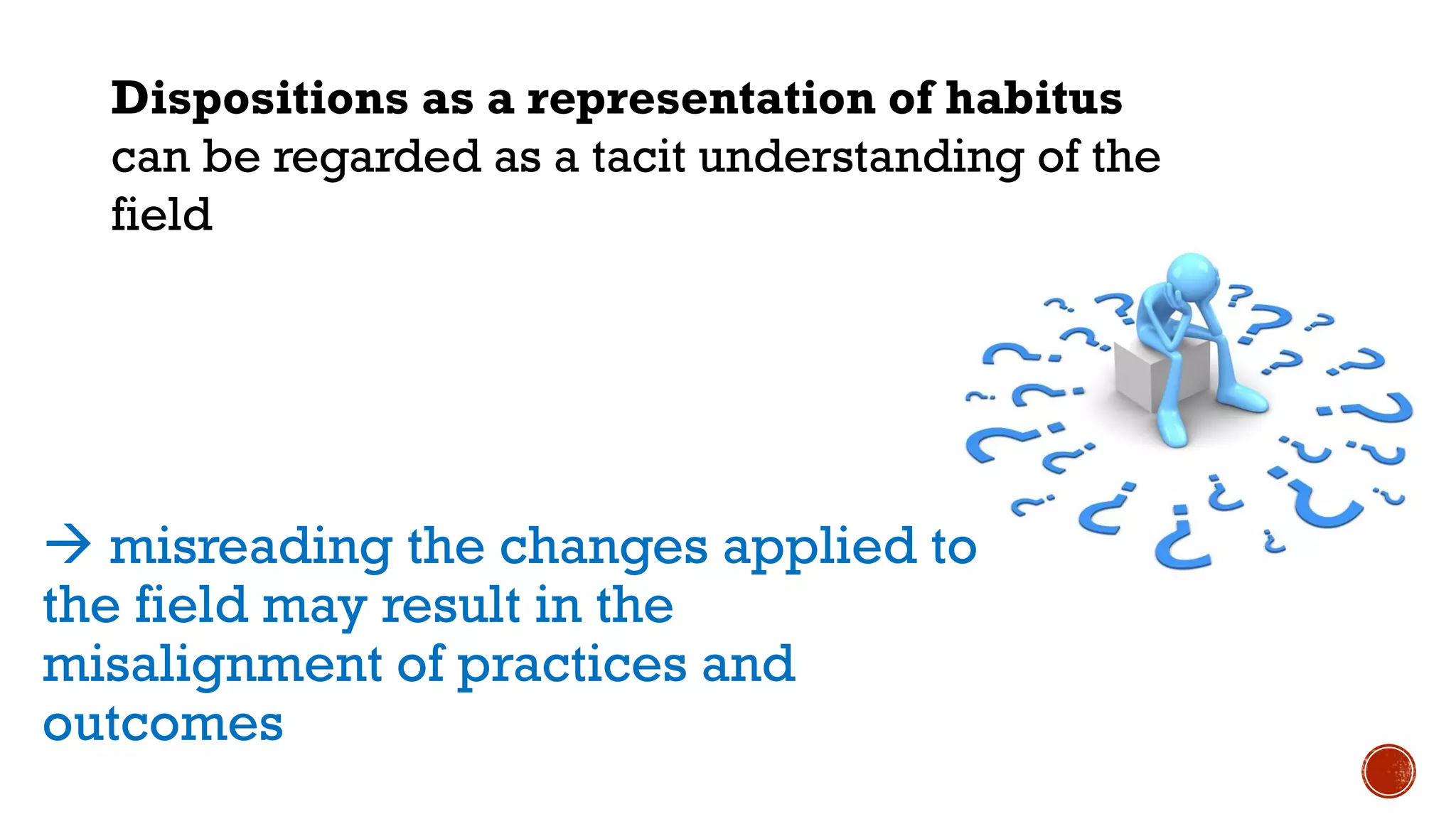
 misreading the changes applied to
the field may result in the
misalignment of practices and
outcomes
Dispositions as a representation of habitus
can be regarded as a tacit understanding of the
field
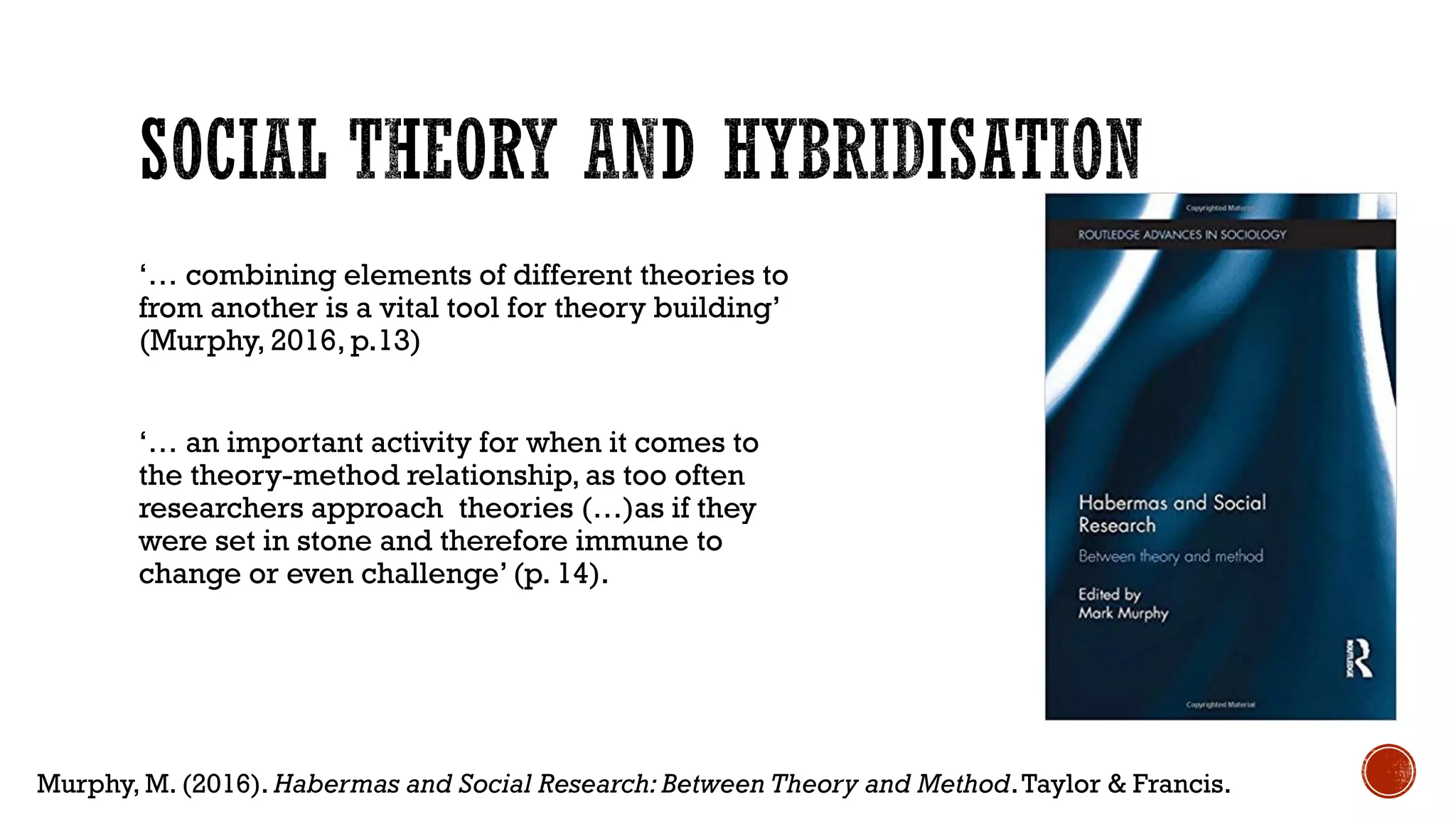
‘… combining elements of different theories to
from another is a vital tool for theory building’
(Murphy, 2016, p.13)
‘… an important activity for when it comes to
the theory-method relationship, as too often
researchers approach theories (…)as if they
were set in stone and therefore immune to
change or even challenge’ (p. 14).
Murphy, M. (2016). Habermas and Social Research: Between Theory and Method.Taylor & Francis.
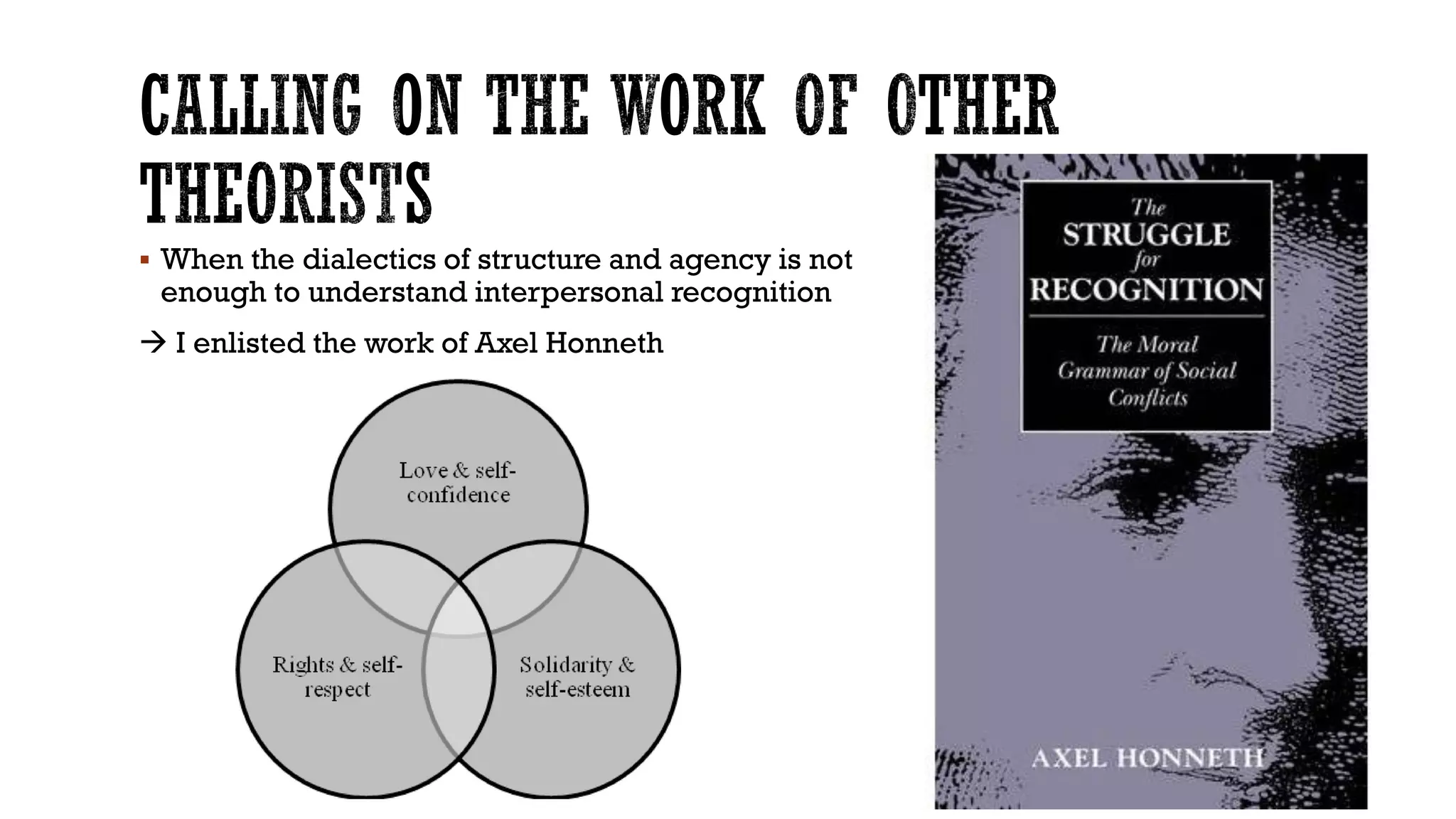
 When the dialectics of structure and agency is not
enough to understand interpersonal recognition
 I enlisted the work of Axel Honneth
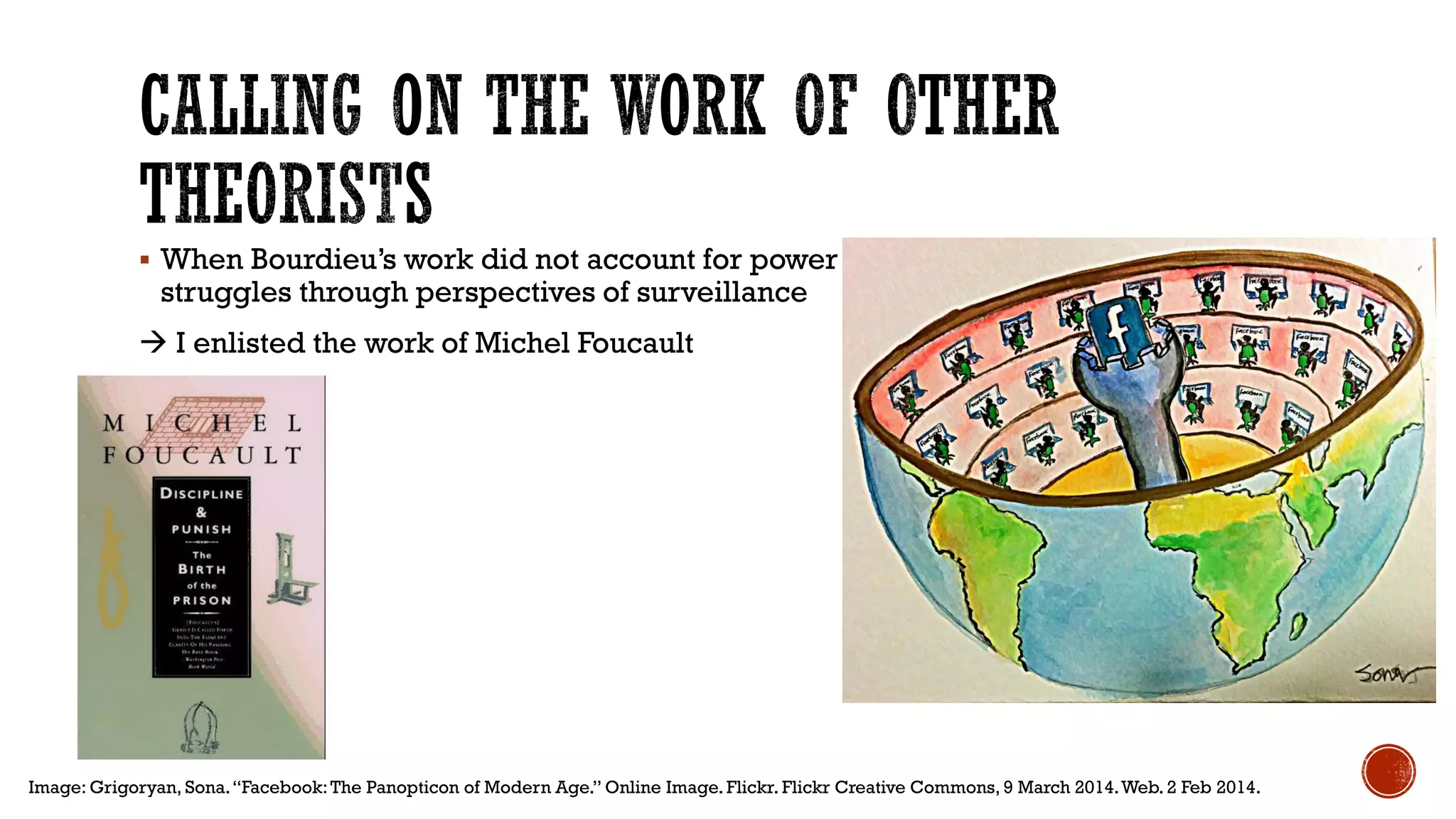
 When Bourdieu’s work did not account for power
struggles through perspectives of surveillance
 I enlisted the work of Michel Foucault
Image: Grigoryan, Sona.“Facebook:The Panopticon of Modern Age.” Online Image. Flickr. Flickr Creative Commons, 9 March 2014.Web. 2 Feb 2014.
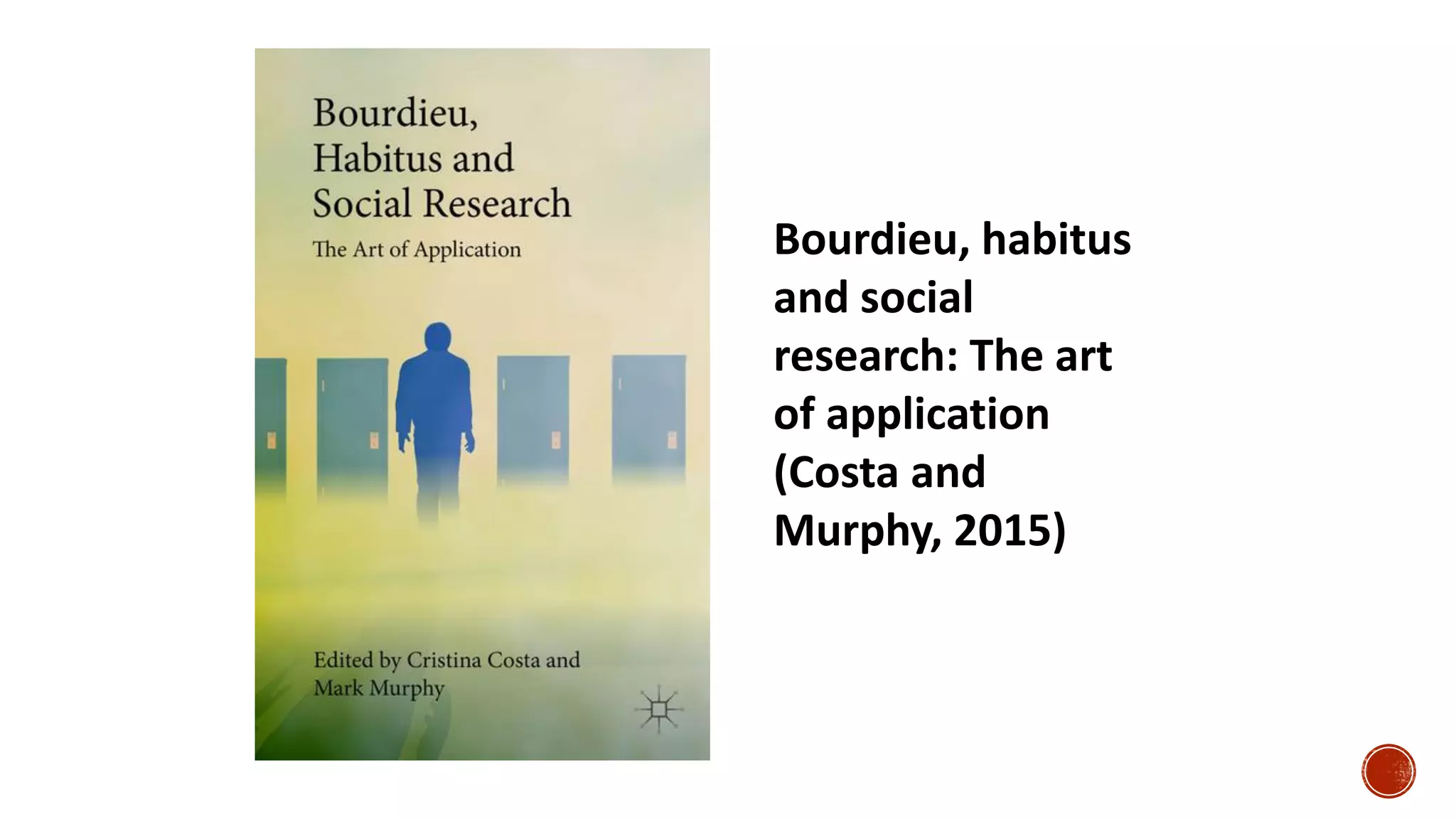
Bourdieu, habitus
and social
research: The art
of application
(Costa and
Murphy, 2015)
Reconsidering digital education through a theory of practice

Reconsidering digital education through a theory of practice

  • 1.
    through a Bourdieuiantheory of practice
  • 2.
    Costa, C., &Harris, L. (2017). Reconsidering the technologies of intellectual inquiry in curriculum design. The Curriculum Journal, 28(4), 559–577. https://doi.org/10.1080/09585176.2017.1308260 Costa, C., Murphy, M., Pereira, A. L., & Taylor,Y. (2018). Higher education students’ experiences of digital learning and (dis)empowerment. Australasian Journal of Educational Technology, 0(0). https://doi.org/10.14742/ajet.3979 A form of digital scholarship
  • 3.
    Know your fieldof research well! Read! Read! Read! And question!
  • 4.
    “One of themost disappointing aspects of academic work in this area—especially from within the field of ‘educational technology’ studies—is a general failure to think carefully about the social nature of digital technology” (Selwyn, 2012, p.82) Technological & Social Determinism Anti- Determinism
  • 5.
    Many available theoreticalperspectives have advanced the case for taking both the technological and the social seriously. In seeking to make sense of the many issues surrounding young people, education and digital technology, there is little value in lapsing into a determinist mindset either where digital technologies are shaped exclusively by stakeholders and end-users or are seen as autonomous shaping forces in their own right. (Selwyn, 2012, p. 91) Selwyn, N. (2012). Making sense of young people, education and digital technology: the role of sociological theory. Oxford Review of Education,38(1), 81–96. https://doi.org/10.1080/03054985.2011.577949
  • 6.
    And recognising thesocial and interactional circumstances in which digital technologies exist and through which they attain their meaning(s) (Selwyn, 2012, p.92)
  • 7.
    The digital learningpractices of HE students
  • 8.
  • 9.
  • 10.
  • 11.
  • 12.
    Mental structures inscribedin the body … represented (and externalised) by individuals’ dispositions the habitus exploits the body’s readiness to take seriously the performative magic of the social (Bourdieu, 1990, p. 57)
  • 13.
    a system ofdispositions with a past, present, and a future The notion of habitus has several virtues. (…) agents have a history and are the product of an individual history and an education associated with a milieu, and that they are also a product of a collective history, and that, in particular, their categories of thinking, categories of understanding, patterns of perception, systems of values, and so on, are the product of the incorporation of social structures’ (Bourdieu and Chartier, 2015, p.52)
  • 14.
     Durable andtransposable  Transformative and regenerative Dispositions Primary habitus Secondary habitus
  • 16.
    Bourdieu defends theflexibility of the research process as a form of challenging assumptions and rectifying taken for granted conceptions.
  • 17.
    Ethnographic Action Research Thecombination of ethnography (a way of understanding cultural practices) and action research (a form of inquiry to nurture new practices) (Tacchi, Slater, & Hearn, 2003) Tacchi, J., Foth, M., & Hearn, G. N. (2009). Action research practices and media for development. International Journal of Education and Development using Information and Communication Technology, 5(2), 32–48.
  • 18.
     An openand flexible curriculum: a change of approach  Ambivalence and digital learner autonomy  Continuous assessment: new rules for an old game  Online learning as exposure
  • 19.
     misreading thechanges applied to the field may result in the misalignment of practices and outcomes Dispositions as a representation of habitus can be regarded as a tacit understanding of the field
  • 20.
    ‘… combining elementsof different theories to from another is a vital tool for theory building’ (Murphy, 2016, p.13) ‘… an important activity for when it comes to the theory-method relationship, as too often researchers approach theories (…)as if they were set in stone and therefore immune to change or even challenge’ (p. 14). Murphy, M. (2016). Habermas and Social Research: Between Theory and Method.Taylor & Francis.
  • 21.
     When thedialectics of structure and agency is not enough to understand interpersonal recognition  I enlisted the work of Axel Honneth
  • 22.
     When Bourdieu’swork did not account for power struggles through perspectives of surveillance  I enlisted the work of Michel Foucault Image: Grigoryan, Sona.“Facebook:The Panopticon of Modern Age.” Online Image. Flickr. Flickr Creative Commons, 9 March 2014.Web. 2 Feb 2014.
  • 23.
    Bourdieu, habitus and social research:The art of application (Costa and Murphy, 2015)