



The Ph.D journey

1
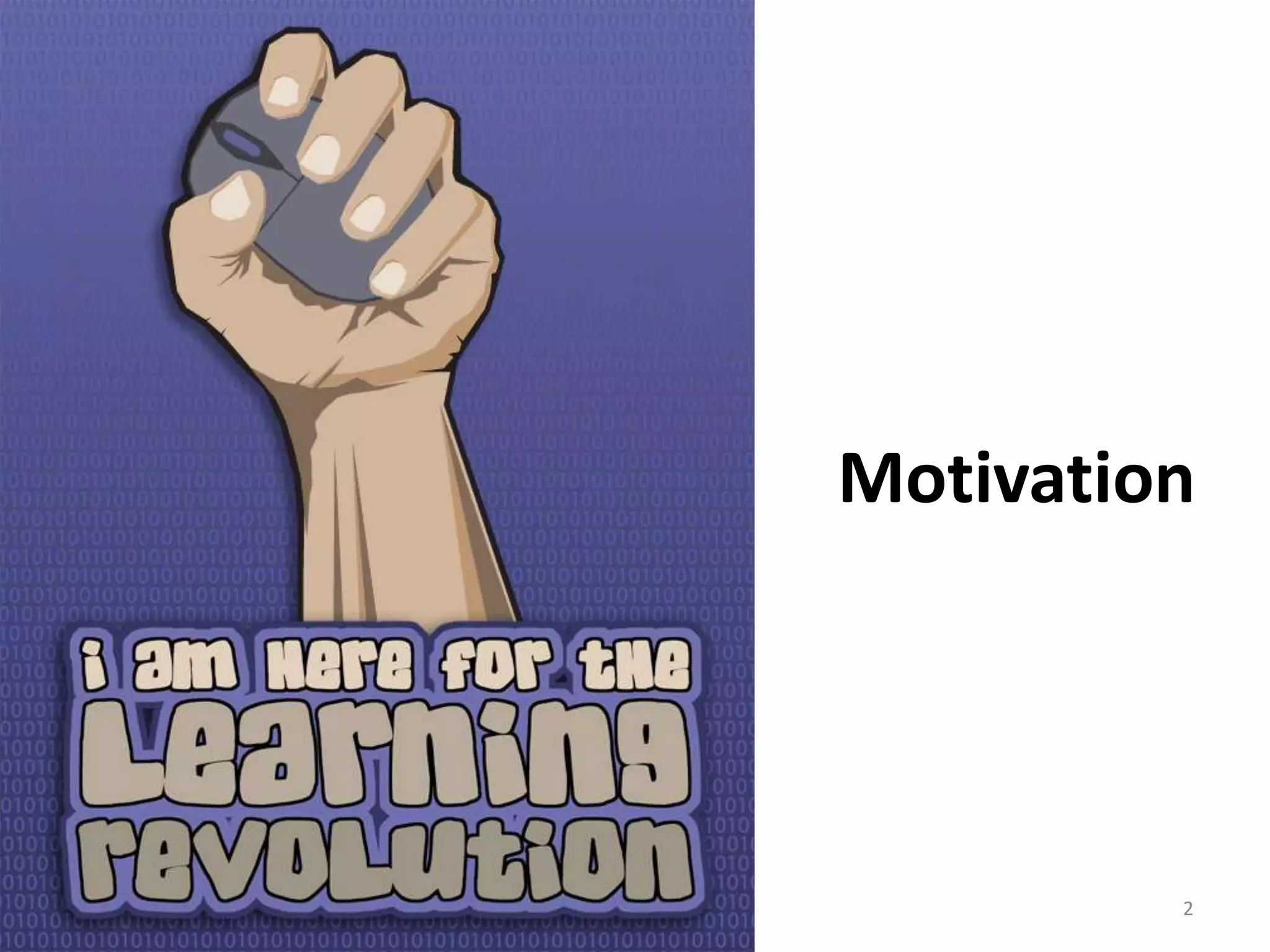
Motivation

2
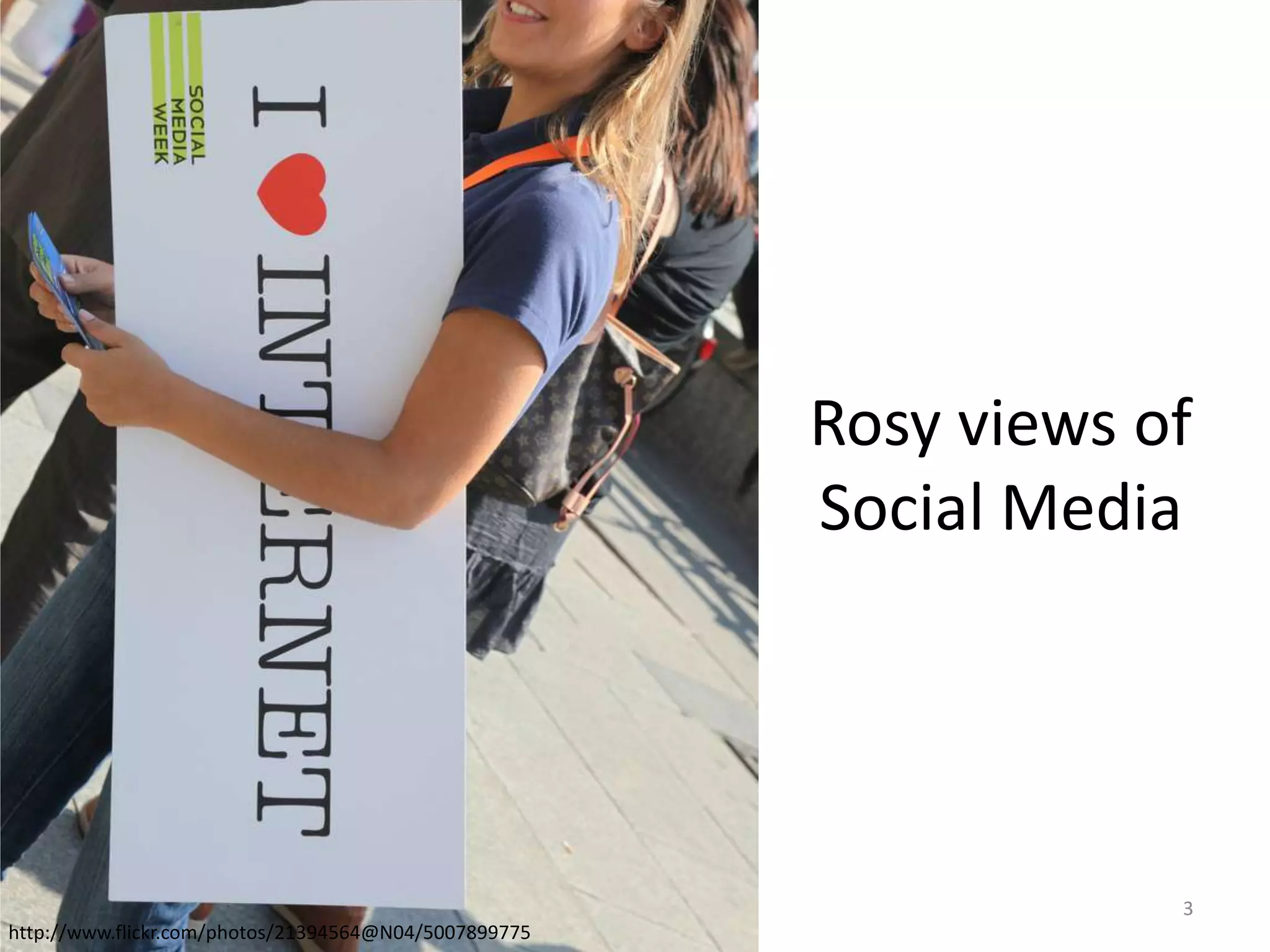
Rosy views of
Social Media

3
http://www.flickr.com/photos/21394564@N04/5007899775
Narrative Inquiry

4
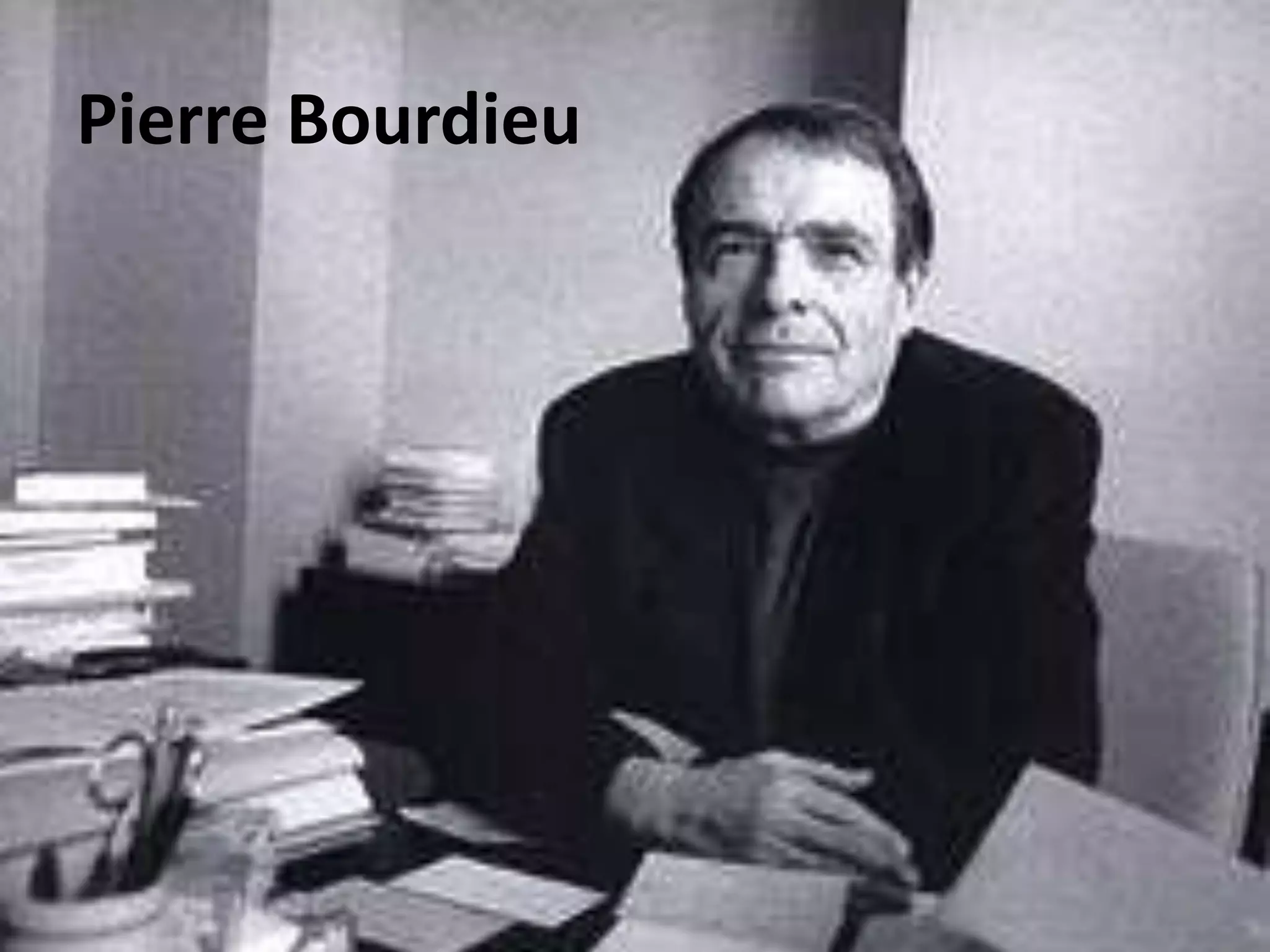
Pierre Bourdieu

5
Field
• Fields as spaces of struggle have “their own
rules, histories, star players, legends and lore”
(Thomson, 2008, p.69)

6
Habitus
“ (…) the habitus, a product of history, produces
individual and collective practices – more
history”. (Bourdieu, 1990a, p.54).
“(…)as an acquired system of generative
schemes, the habitus makes possible the free
production of all the thoughts, perceptions and
actions inherent in the particular conditions of
its productions” (Bourdieu, 1990a, p. 55),
7
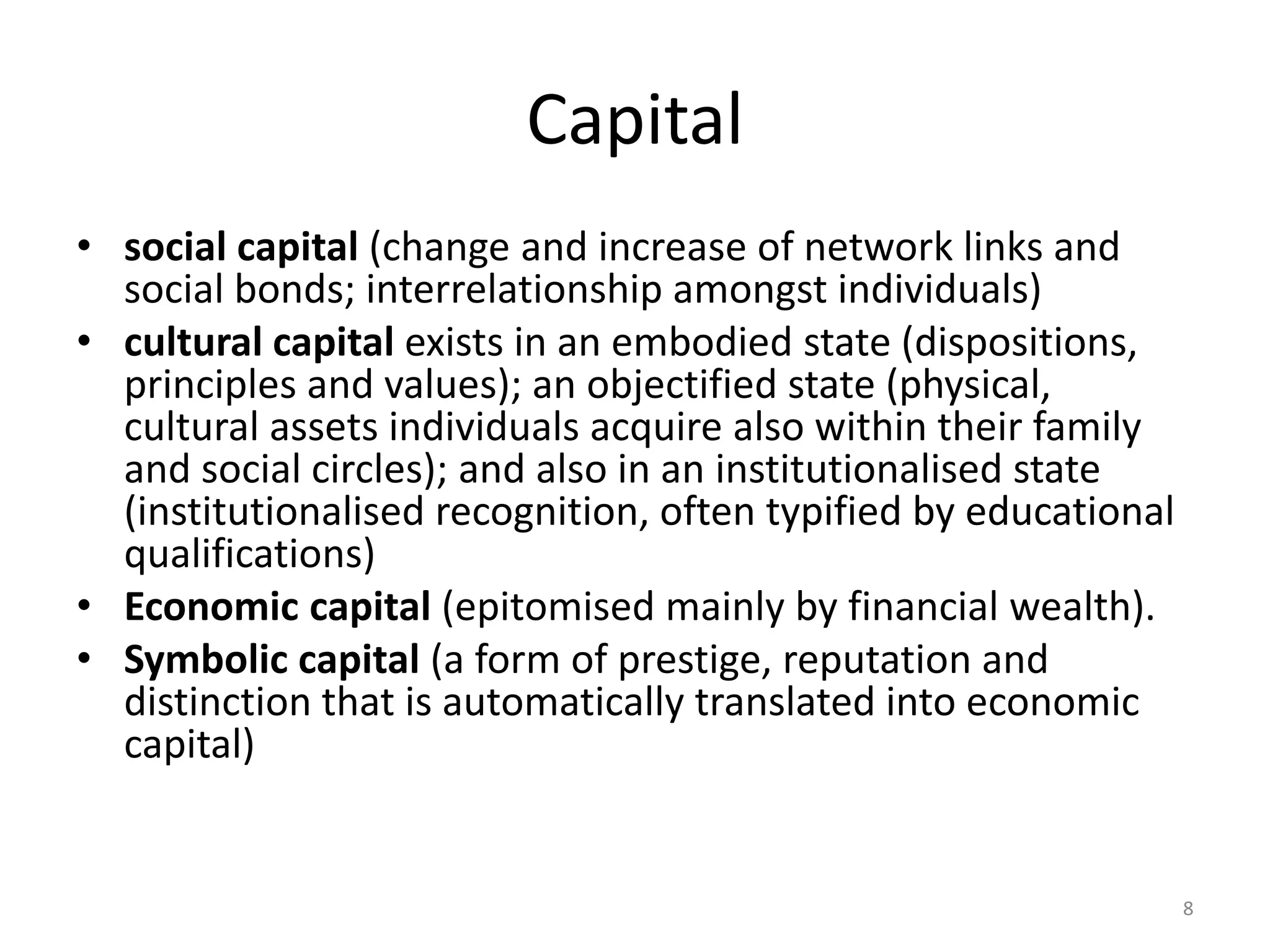
Capital
• social capital (change and increase of network links and
social bonds; interrelationship amongst individuals)
• cultural capital exists in an embodied state (dispositions,
principles and values); an objectified state (physical,
cultural assets individuals acquire also within their family
and social circles); and also in an institutionalised state
(institutionalised recognition, often typified by educational
qualifications)
• Economic capital (epitomised mainly by financial wealth).
• Symbolic capital (a form of prestige, reputation and
distinction that is automatically translated into economic
capital)

8
Symbolic Violence
doxa

9
Social Theory as Method

10
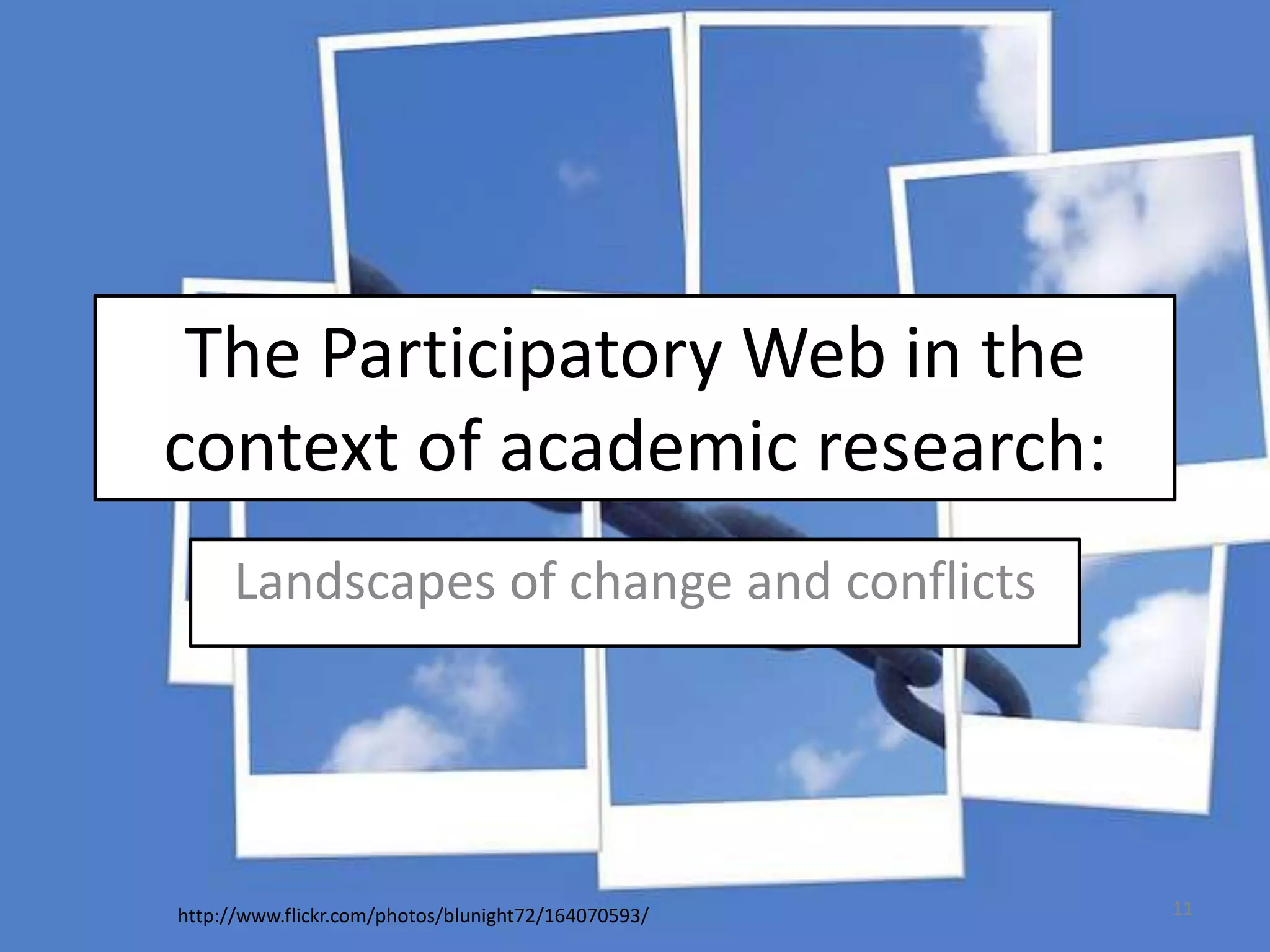
The Participatory Web in the
context of academic research:
Landscapes of change and conflicts

http://www.flickr.com/photos/blunight72/164070593/

11
12
13
14
The habitus of digital Scholars

15
Modes of domination
vs
acts of resistance

16
Playing the game

17
What does it mean to:

•Knowledge
•Practice
•Policy
18
Final reflections

19

The PhD journey

  • 1.
  • 2.
  • 3.
    Rosy views of SocialMedia 3 http://www.flickr.com/photos/21394564@N04/5007899775
  • 4.
  • 5.
  • 6.
    Field • Fields asspaces of struggle have “their own rules, histories, star players, legends and lore” (Thomson, 2008, p.69) 6
  • 7.
    Habitus “ (…) thehabitus, a product of history, produces individual and collective practices – more history”. (Bourdieu, 1990a, p.54). “(…)as an acquired system of generative schemes, the habitus makes possible the free production of all the thoughts, perceptions and actions inherent in the particular conditions of its productions” (Bourdieu, 1990a, p. 55), 7
  • 8.
    Capital • social capital(change and increase of network links and social bonds; interrelationship amongst individuals) • cultural capital exists in an embodied state (dispositions, principles and values); an objectified state (physical, cultural assets individuals acquire also within their family and social circles); and also in an institutionalised state (institutionalised recognition, often typified by educational qualifications) • Economic capital (epitomised mainly by financial wealth). • Symbolic capital (a form of prestige, reputation and distinction that is automatically translated into economic capital) 8
  • 9.
  • 10.
  • 11.
    The Participatory Webin the context of academic research: Landscapes of change and conflicts http://www.flickr.com/photos/blunight72/164070593/ 11
  • 12.
  • 13.
  • 14.
  • 15.
    The habitus ofdigital Scholars 15
  • 16.
  • 17.
  • 18.
    What does itmean to: •Knowledge •Practice •Policy 18
  • 19.