Chapter 6
Listening
• Outline the listening process and styles of
listening
• List the reasons why we listen
• Identify challenges to good listening and
their remedies
• Identify attitudinal and ethical factors that
inhibit listening
• Describe how context affects listening
Chapter Outcomes
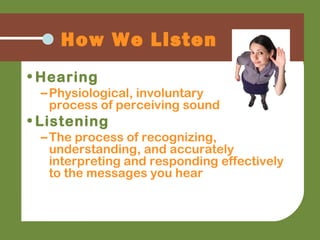
• Hearing
–Physiological, involuntary
process of perceiving sound
• Listening
–The process of recognizing,
understanding, and accurately
interpreting and responding effectively
to the messages you hear
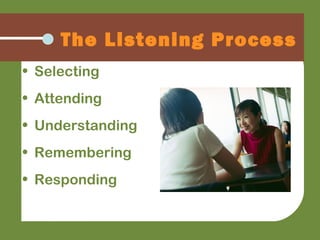
How We Listen
• Selecting
• Attending
• Understanding
• Remembering
• Responding
The Listening Process
(cont.)
• Active listening
– Requires active participation in making
choices about selecting, attending, and
so on
• Passive listening
– Means failing to make active choices
• Listening fidelity
– How well the listener’s thoughts match
those of the message producer
• People-oriented listeners
– Listen with relationships in mind
• Action-oriented listeners
– Focus on tasks
Personal Listening
Preferences
Personal Listening
Preferences (cont.)
• Content-oriented listeners
– Evaluate what they hear
• Time-oriented listeners
– Consider efficiency most of all
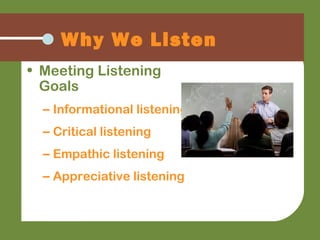
• Meeting Listening
Goals
– Informational listening
– Critical listening
– Empathic listening
– Appreciative listening
Why We Listen
• The Value of Listening Well
– Helps your career
– Saves you time and money
– Creates opportunities
– Strengthens relationships
Why We Listen (cont.)
• Listening barriers:
– Factors that interfere with our ability to
comprehend information and respond
appropriately
Listening Challenges
• Environmental factors include:
– Loud noise, unpleasant temperatures,
visual distractions
• Hearing and processing challenges
include:
– Medical issues related to age, physical
condition
Listening Challenges
(cont.)
Listening Challenges
(cont.)
• Multitasking
– Impairs our ability to focus on any one thing
• Boredom and overexcitement
– Distract effective listening
• Attitudes about listening
– Talking seems more powerful
– Overconfidence and laziness
– Listening apprehension
• Unethical Listening Behaviors
– Defensive listening involves
responding with aggression without fully
listening.
– Selective listening zeros in on bits of
interesting information.
– Selfish listening means hearing only
what will help listeners meet their own
goals.
• Monopolistic listening: listening to
control the interaction
Listening Challenges
(cont.)
• Unethical Listening Behaviors (cont.)
– Hurtful listening may include attacking
or ambushing.
– Insensitive listening means missing
the emotional content of a message.
– Pseudolistening means pretending to
listen by nodding or saying “uh-huh.”
Listening Challenges
(cont.)
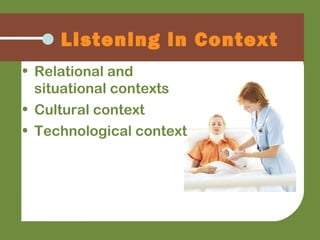
• Relational and
situational contexts
• Cultural context
• Technological context
Listening in Context

Real comm2e ch6

  • 1.
  • 2.
    • Outline thelistening process and styles of listening • List the reasons why we listen • Identify challenges to good listening and their remedies • Identify attitudinal and ethical factors that inhibit listening • Describe how context affects listening Chapter Outcomes
  • 3.
    • Hearing –Physiological, involuntary processof perceiving sound • Listening –The process of recognizing, understanding, and accurately interpreting and responding effectively to the messages you hear How We Listen
  • 4.
    • Selecting • Attending •Understanding • Remembering • Responding The Listening Process
  • 5.
    The Listening Process (cont.) •Active listening – Requires active participation in making choices about selecting, attending, and so on • Passive listening – Means failing to make active choices • Listening fidelity – How well the listener’s thoughts match those of the message producer
  • 6.
    • People-oriented listeners –Listen with relationships in mind • Action-oriented listeners – Focus on tasks Personal Listening Preferences
  • 7.
    Personal Listening Preferences (cont.) •Content-oriented listeners – Evaluate what they hear • Time-oriented listeners – Consider efficiency most of all
  • 8.
    • Meeting Listening Goals –Informational listening – Critical listening – Empathic listening – Appreciative listening Why We Listen
  • 9.
    • The Valueof Listening Well – Helps your career – Saves you time and money – Creates opportunities – Strengthens relationships Why We Listen (cont.)
  • 10.
    • Listening barriers: –Factors that interfere with our ability to comprehend information and respond appropriately Listening Challenges
  • 11.
    • Environmental factorsinclude: – Loud noise, unpleasant temperatures, visual distractions • Hearing and processing challenges include: – Medical issues related to age, physical condition Listening Challenges (cont.)
  • 12.
    Listening Challenges (cont.) • Multitasking –Impairs our ability to focus on any one thing • Boredom and overexcitement – Distract effective listening • Attitudes about listening – Talking seems more powerful – Overconfidence and laziness – Listening apprehension
  • 13.
    • Unethical ListeningBehaviors – Defensive listening involves responding with aggression without fully listening. – Selective listening zeros in on bits of interesting information. – Selfish listening means hearing only what will help listeners meet their own goals. • Monopolistic listening: listening to control the interaction Listening Challenges (cont.)
  • 14.
    • Unethical ListeningBehaviors (cont.) – Hurtful listening may include attacking or ambushing. – Insensitive listening means missing the emotional content of a message. – Pseudolistening means pretending to listen by nodding or saying “uh-huh.” Listening Challenges (cont.)
  • 15.
    • Relational and situationalcontexts • Cultural context • Technological context Listening in Context