The Geography of Britain 
Reading British and American Culture 
Week 4 
Professor Hayashi
Today’s Class 
Attendance 
Article Discussion (for professionalism points!) 
Review 
Physical Geography 
Human Geography 
BREAK 
Note Taking 
British Geography
Review 
Why should we use reading strategies? 
1)Strategies help to improve reading comprehension 
as well as efficiency in reading 
2)By using strategies, you will read in the way that 
expert readers do 
3)Strategies help readers to process the text actively, 
to monitor comprehension, and to connect what 
they are reading to their own knowledge and to 
other parts of the text
Review 
Name six reading strategies 
PREDICT 
CLARIFY 
VISUALIZE 
ASK QUESTIONS 
MAKE CONNECTIONS 
SUMMARIZE
Review 
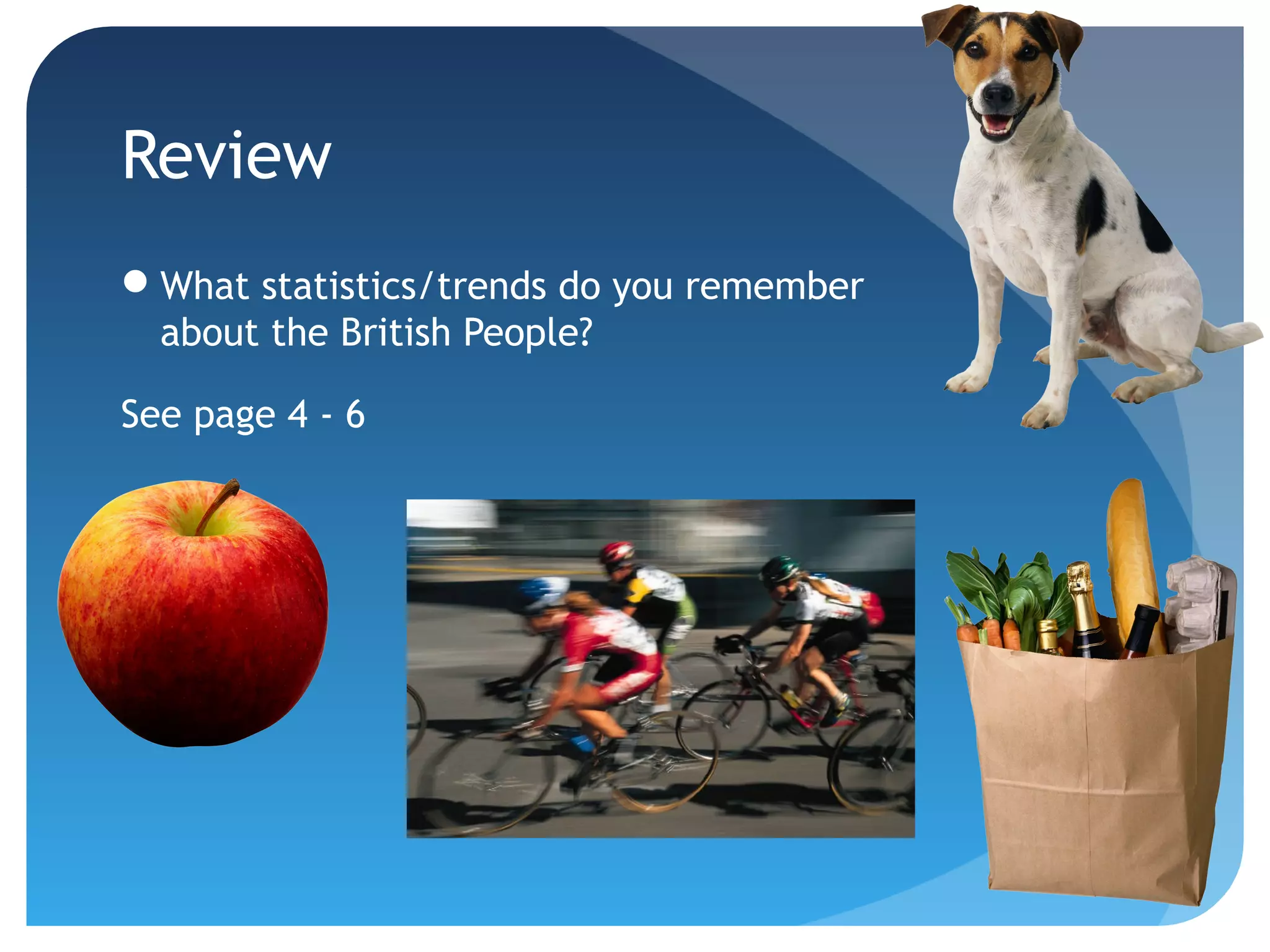
What statistics/trends do you remember 
about the British People? 
See page 4 - 6
Physical Geography 
In pairs, read page 8 – 9 and complete the exercises 
EXERCISE 1 
1. The British Isles – A group of islands including Britain 
and Ireland 
Britain – England, Scotland and Wales 
The United Kingdom – England, Scotland, Wales, Northern 
Ireland and a number of small islands 
2. Eire is the Irish Republic, which does not include 
Northern Ireland.
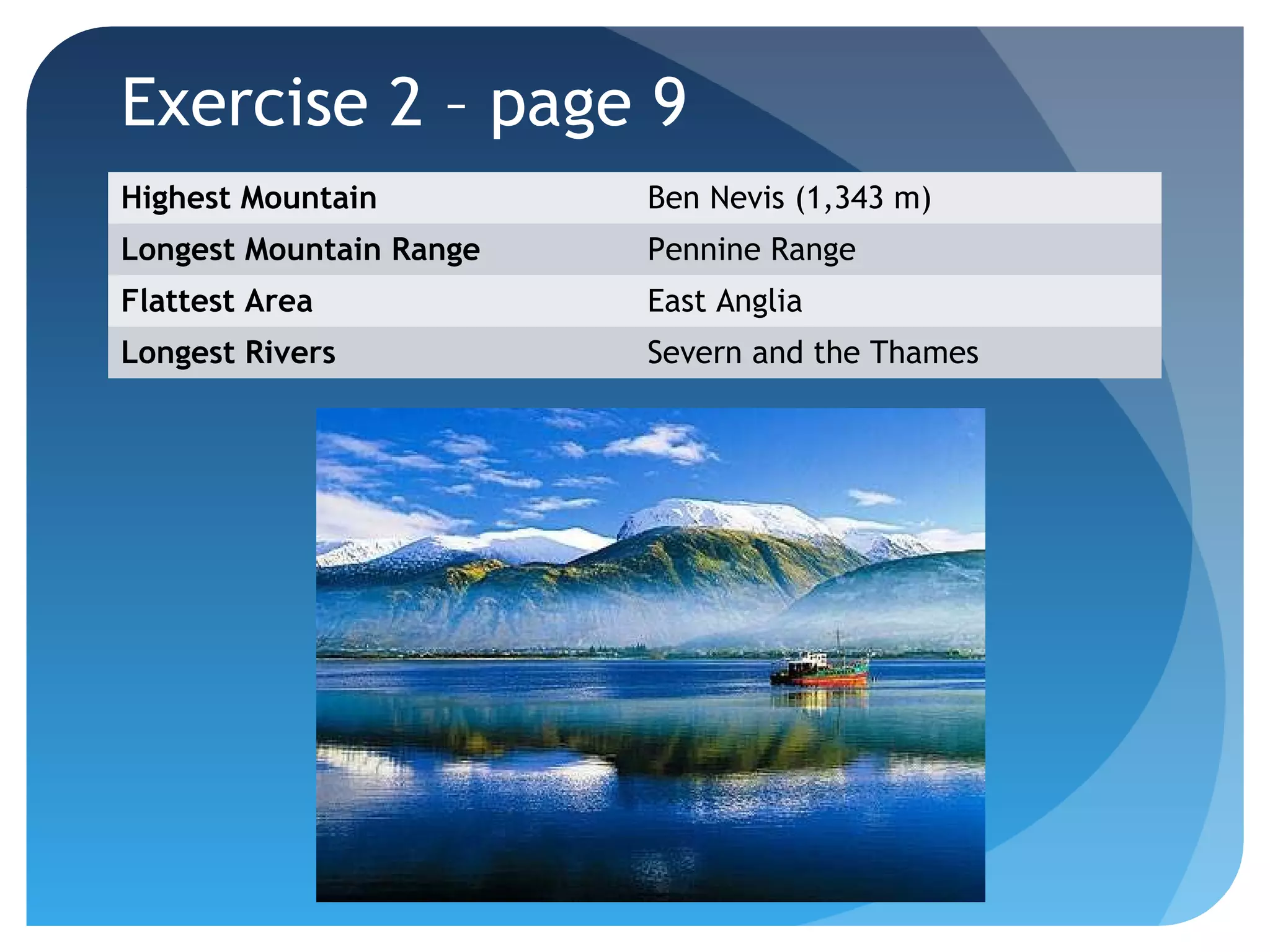
Exercise 2 – page 9 
Highest Mountain Ben Nevis (1,343 m) 
Longest Mountain Range Pennine Range 
Flattest Area East Anglia 
Longest Rivers Severn and the Thames
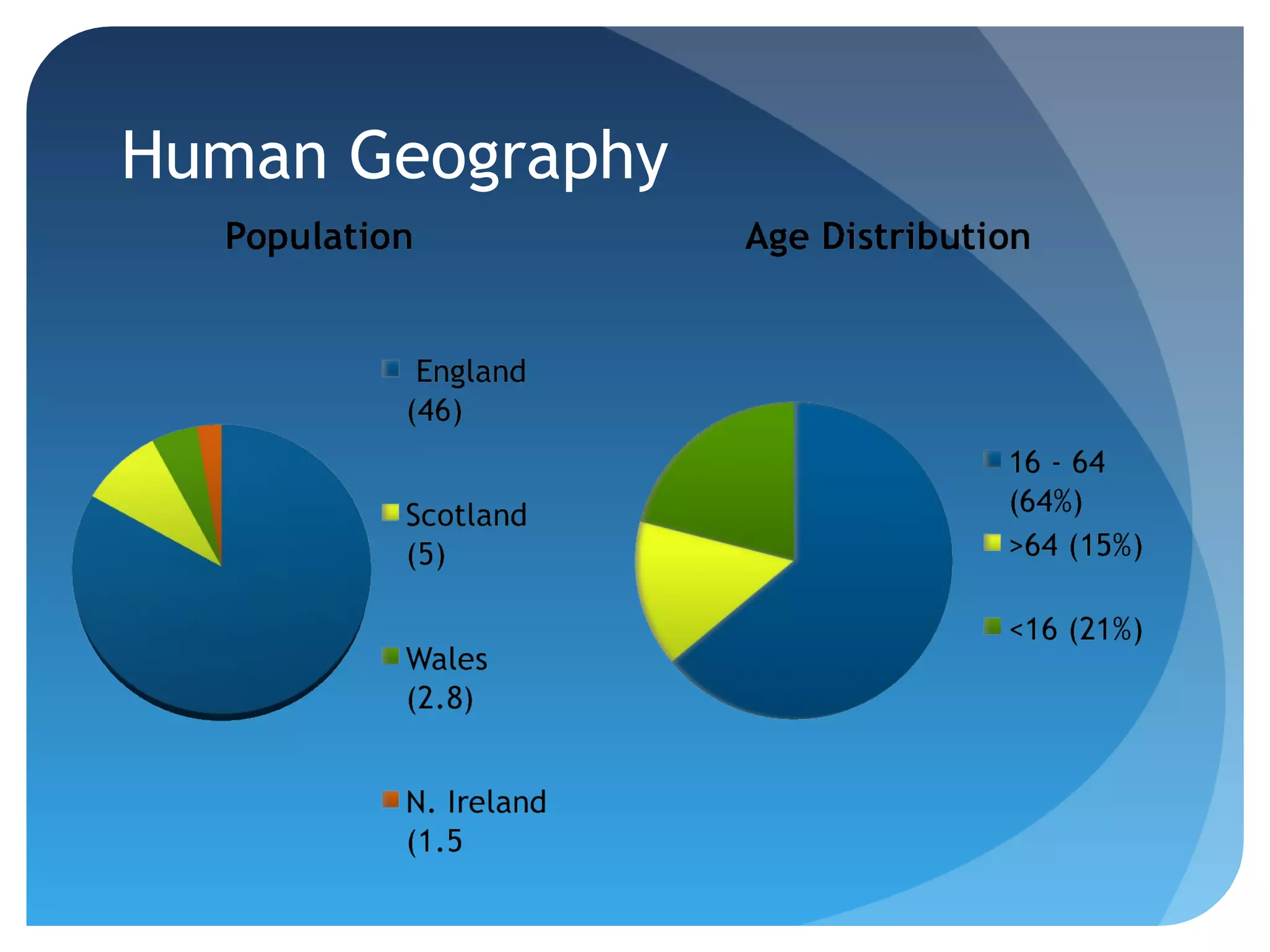
Human Geography
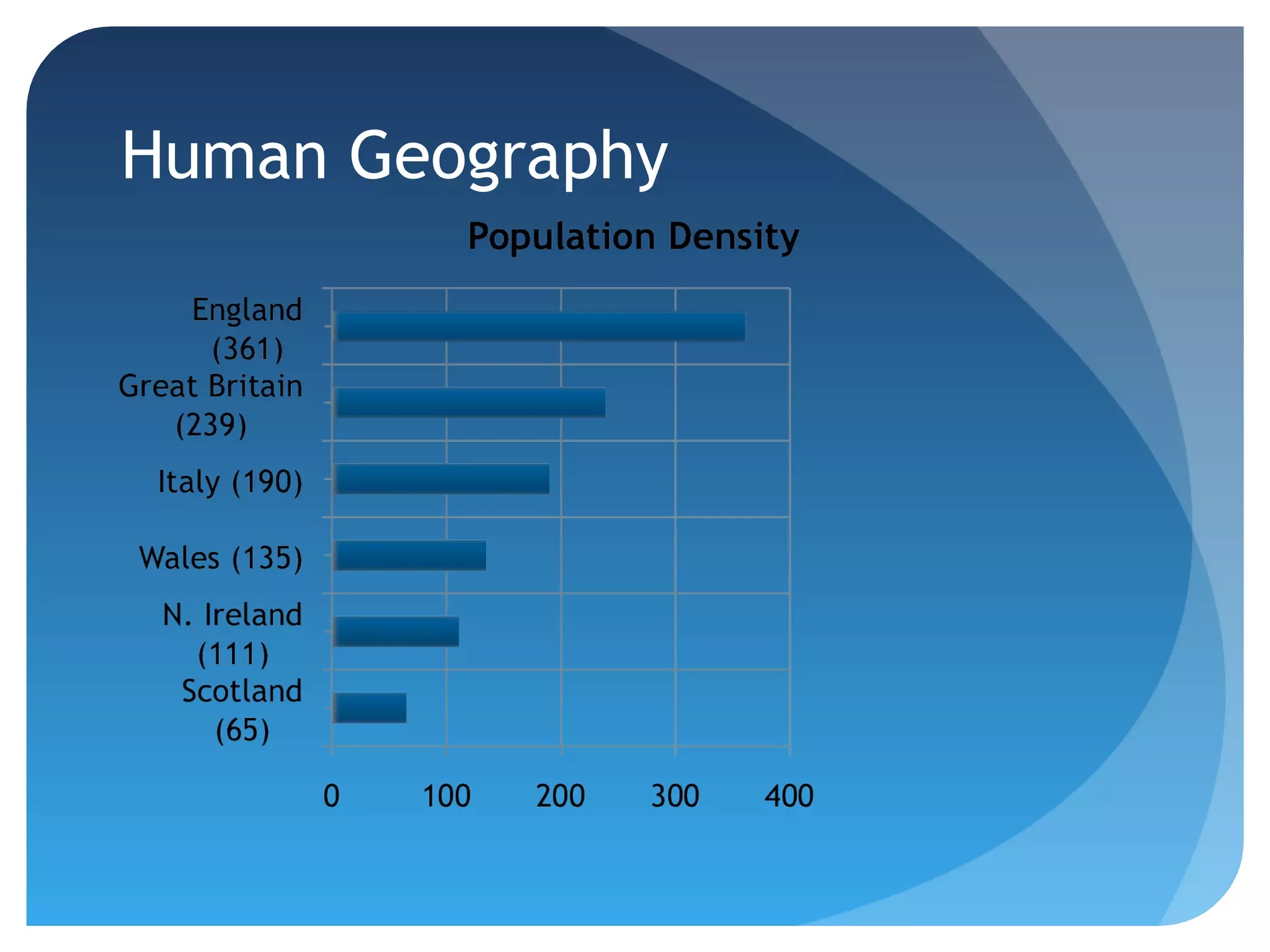
Human Geography
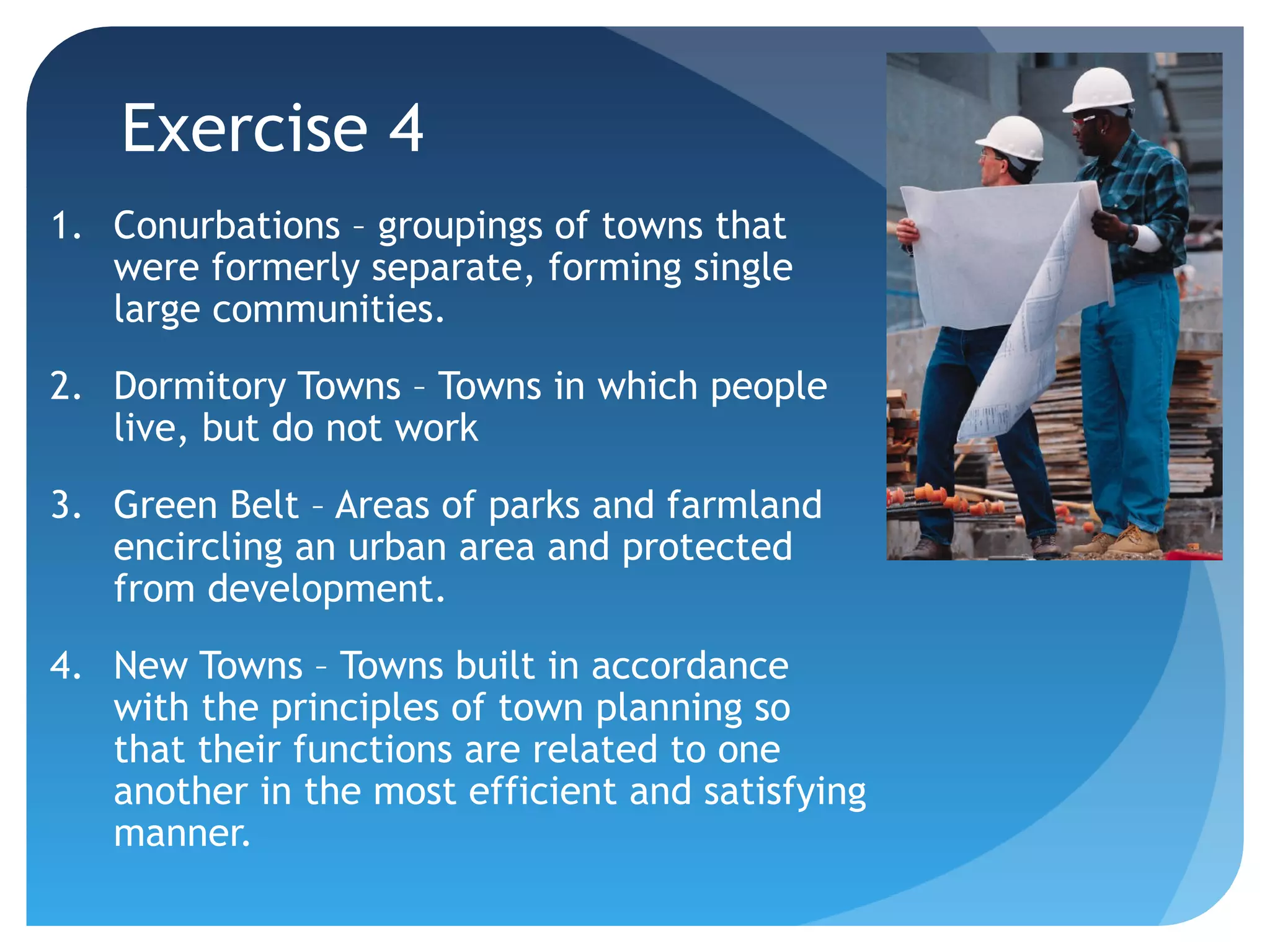
Exercise 4 
1. Conurbations – groupings of towns that 
were formerly separate, forming single 
large communities. 
2. Dormitory Towns – Towns in which people 
live, but do not work 
3. Green Belt – Areas of parks and farmland 
encircling an urban area and protected 
from development. 
4. New Towns – Towns built in accordance 
with the principles of town planning so 
that their functions are related to one 
another in the most efficient and satisfying 
manner.
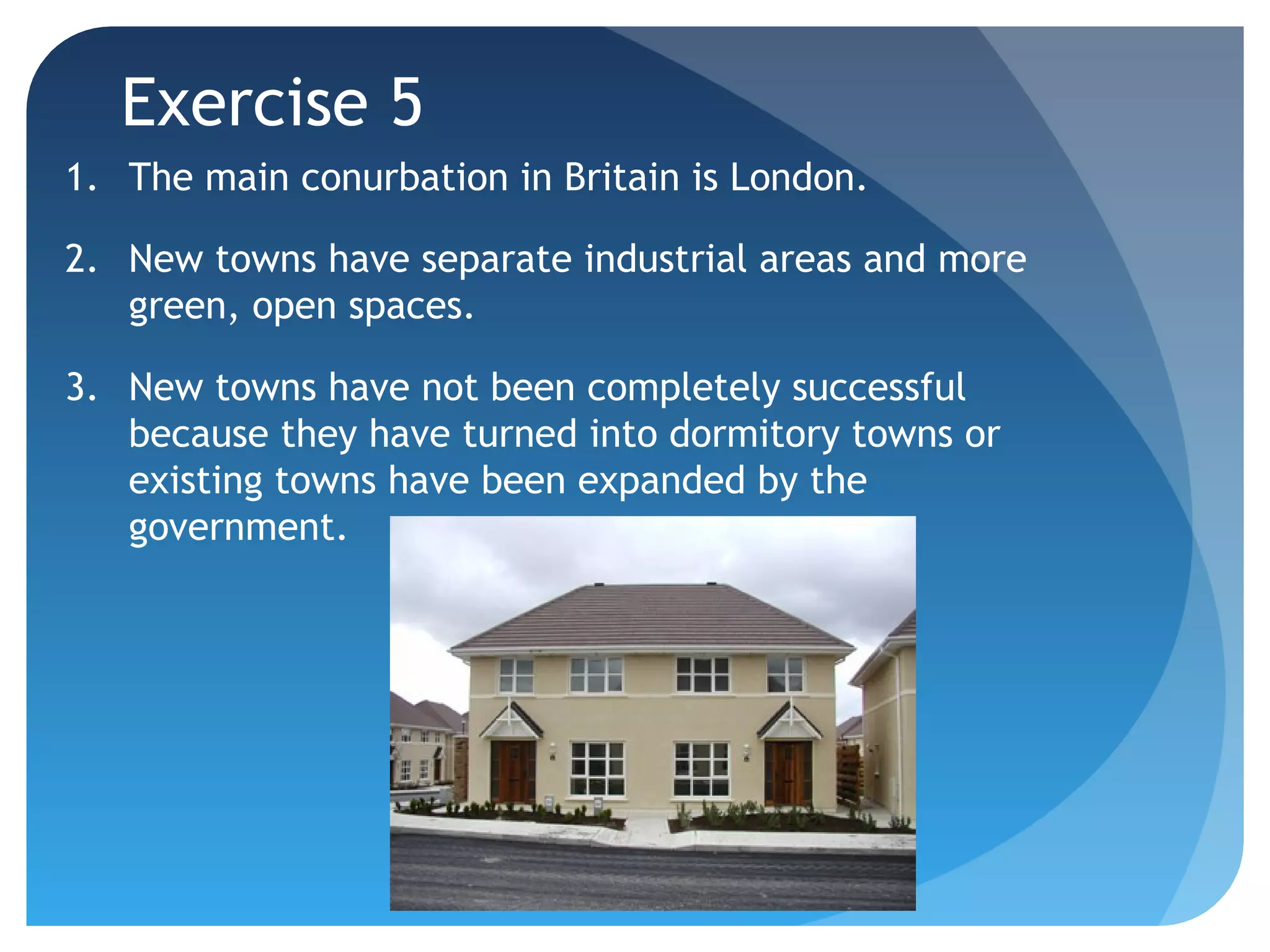
Exercise 5 
1. The main conurbation in Britain is London. 
2. New towns have separate industrial areas and more 
green, open spaces. 
3. New towns have not been completely successful 
because they have turned into dormitory towns or 
existing towns have been expanded by the 
government.
Exercise 6 
1. Jewish Refugees – end of 19th century, 1930’s, after 1945 
West Indies & S. Asian – 1950’s – 1960’s 
Ugandan, Asians, Latin America, Indo-China, Sri Lanka – 
recently 
2. Many immigrants have sought refuge in Britain. 
3. The non-white population of GB was about 2.4 million 
(4.5% of the total population). 57% of the non-white 
population were immigrants. 
4. The majority of the non-white population lives in areas of 
great deprivation in the inner cities.
Note Taking 
http://www.scribd.com/doc/4386767/Cornell-Note-Taking-Method 
http://www.scribd.com/doc/13065273/Taking-Cornell- 
Notes
Note Taking Example 
THE GEOGRAPHY OF BRITAIN 
MAIN IDEA DETAILS 
Weather & Climate -mild, temperate climate (prevailing SW winds) 
-changeable weather patterns (different air masses) 
-temperature extremes (-10 to 32 C) 
-South warmer than North (latitude) 
-West milder than East (North Atlantic Drift) 
-rainfall range 800mm central/eastern– 1600 mm 
west/north 
SUMMARY: Britain’s temperature is generally mild, but changeable depending 
on different air masses. The temperatures range from -10 to 32 degrees 
Celsius and rainfall more prevalent in the mountainous west and north.
Your Turn! 
Go through the rest of the chapter in pairs/groups 
Practice taking notes using the Cornell System 
Relax, have fun and smile!
Next Week… 
Please bring your novels to class!

Reading week4

  • 1.
    The Geography ofBritain Reading British and American Culture Week 4 Professor Hayashi
  • 2.
    Today’s Class Attendance Article Discussion (for professionalism points!) Review Physical Geography Human Geography BREAK Note Taking British Geography
  • 3.
    Review Why shouldwe use reading strategies? 1)Strategies help to improve reading comprehension as well as efficiency in reading 2)By using strategies, you will read in the way that expert readers do 3)Strategies help readers to process the text actively, to monitor comprehension, and to connect what they are reading to their own knowledge and to other parts of the text
  • 4.
    Review Name sixreading strategies PREDICT CLARIFY VISUALIZE ASK QUESTIONS MAKE CONNECTIONS SUMMARIZE
  • 5.
    Review What statistics/trendsdo you remember about the British People? See page 4 - 6
  • 6.
    Physical Geography Inpairs, read page 8 – 9 and complete the exercises EXERCISE 1 1. The British Isles – A group of islands including Britain and Ireland Britain – England, Scotland and Wales The United Kingdom – England, Scotland, Wales, Northern Ireland and a number of small islands 2. Eire is the Irish Republic, which does not include Northern Ireland.
  • 7.
    Exercise 2 –page 9 Highest Mountain Ben Nevis (1,343 m) Longest Mountain Range Pennine Range Flattest Area East Anglia Longest Rivers Severn and the Thames
  • 8.
  • 9.
  • 10.
    Exercise 4 1.Conurbations – groupings of towns that were formerly separate, forming single large communities. 2. Dormitory Towns – Towns in which people live, but do not work 3. Green Belt – Areas of parks and farmland encircling an urban area and protected from development. 4. New Towns – Towns built in accordance with the principles of town planning so that their functions are related to one another in the most efficient and satisfying manner.
  • 11.
    Exercise 5 1.The main conurbation in Britain is London. 2. New towns have separate industrial areas and more green, open spaces. 3. New towns have not been completely successful because they have turned into dormitory towns or existing towns have been expanded by the government.
  • 12.
    Exercise 6 1.Jewish Refugees – end of 19th century, 1930’s, after 1945 West Indies & S. Asian – 1950’s – 1960’s Ugandan, Asians, Latin America, Indo-China, Sri Lanka – recently 2. Many immigrants have sought refuge in Britain. 3. The non-white population of GB was about 2.4 million (4.5% of the total population). 57% of the non-white population were immigrants. 4. The majority of the non-white population lives in areas of great deprivation in the inner cities.
  • 13.
    Note Taking http://www.scribd.com/doc/4386767/Cornell-Note-Taking-Method http://www.scribd.com/doc/13065273/Taking-Cornell- Notes
  • 14.
    Note Taking Example THE GEOGRAPHY OF BRITAIN MAIN IDEA DETAILS Weather & Climate -mild, temperate climate (prevailing SW winds) -changeable weather patterns (different air masses) -temperature extremes (-10 to 32 C) -South warmer than North (latitude) -West milder than East (North Atlantic Drift) -rainfall range 800mm central/eastern– 1600 mm west/north SUMMARY: Britain’s temperature is generally mild, but changeable depending on different air masses. The temperatures range from -10 to 32 degrees Celsius and rainfall more prevalent in the mountainous west and north.
  • 15.
    Your Turn! Gothrough the rest of the chapter in pairs/groups Practice taking notes using the Cornell System Relax, have fun and smile!
  • 16.
    Next Week… Pleasebring your novels to class!