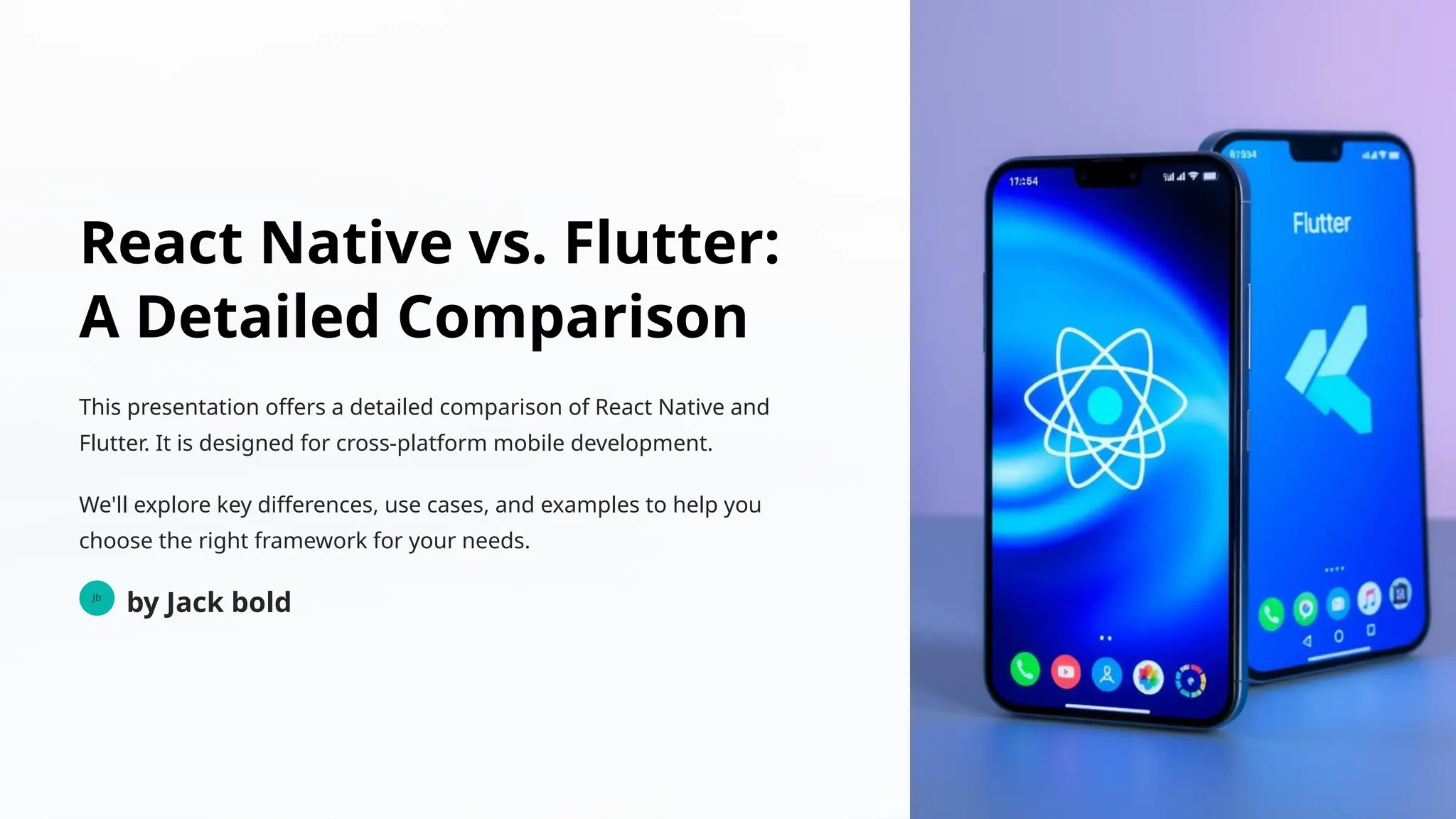
React Native vs.Flutter:
A Detailed Comparison
This presentation offers a detailed comparison of React Native and
Flutter. It is designed for cross-platform mobile development.
We'll explore key differences, use cases, and examples to help you
choose the right framework for your needs.
Jb
by Jack bold
2.
Architecture & Performance
ReactNative
• JavaScript bridge for UI rendering
• Performance bottlenecks
• Relies on native components
• Average app size: 7-15 MB
Flutter
• Skia rendering engine
• Dart AOT compilation
• Widgets rendered from scratch
• Average app size: 10-20 MB
React Native uses a JavaScript bridge, which can cause performance bottlenecks. Flutter uses its own rendering engine for
pixel-perfect control.
3.
Development Experience
React Native
LeveragesJavaScript/TypeScript familiarity.
Offers hot reloading for faster development.
Flutter
Uses Dart language, easy for Java/JS devs.
Features hot reload & restart for updates.
React Native benefits from a large JavaScript ecosystem. Flutter boasts a
rich set of pre-designed widgets.
4.
UI & Customization
ReactNative
Leverages native UI components.
Flutter
Offers fully customizable widgets.
React Native provides UI consistency with a platform-specific look and feel. Flutter provides pixel-perfect rendering across
platforms.
5.
Community & Ecosystem
1
ReactNative
Mature community backed by Facebook.
Extensive online resources and tutorials.
2
Flutter
Growing community backed by Google.
Comprehensive documentation.
React Native has a vast number of third-party libraries and tools. Flutter has a comprehensive package repository.
6.
Use Cases &Examples
React Native
Suited for apps requiring a native look and feel.
Ideal for projects leveraging existing JS expertise.
Flutter
Excellent for visually rich and branded experiences.
Great for apps targeting multiple platforms.
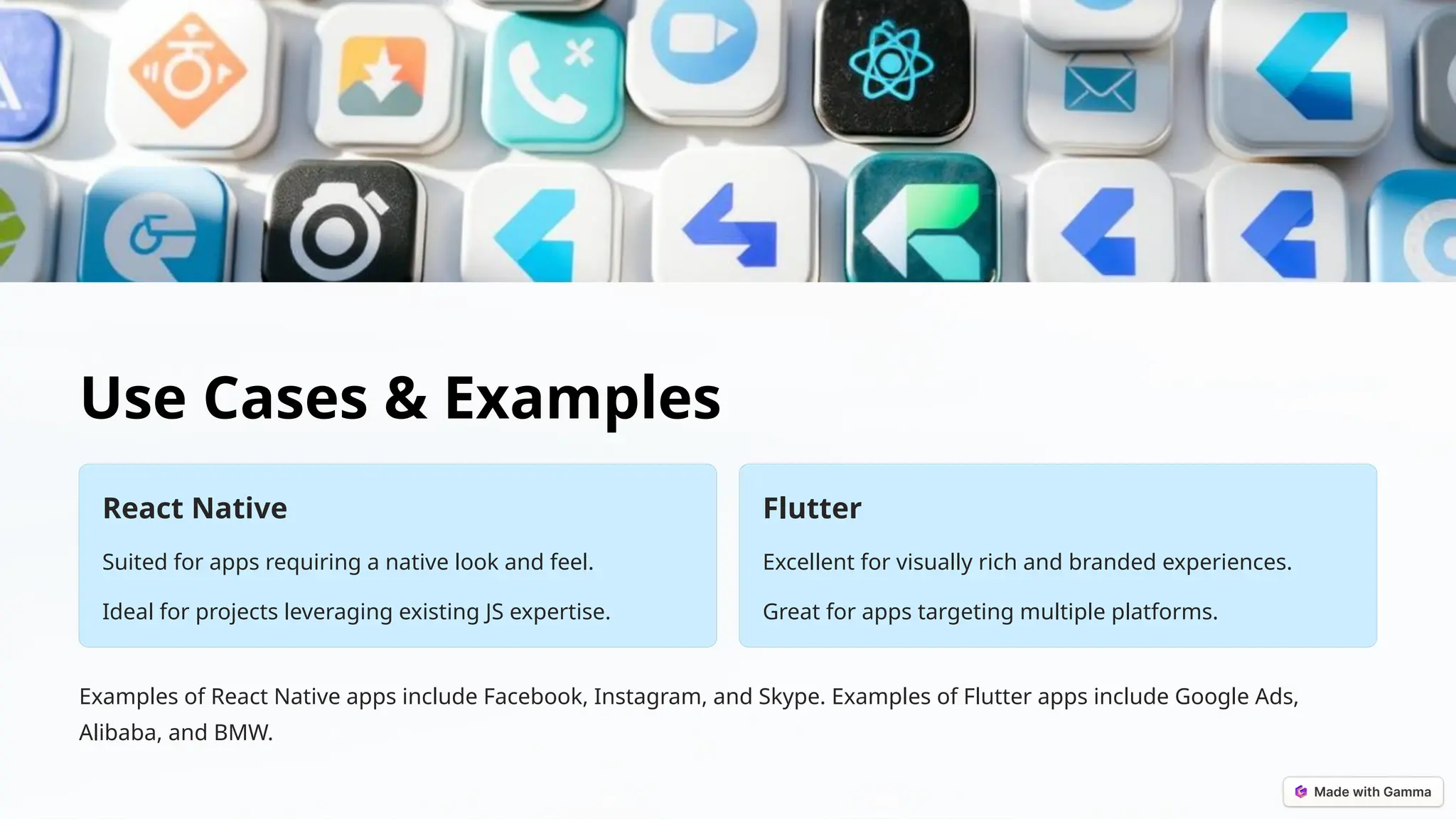
Examples of React Native apps include Facebook, Instagram, and Skype. Examples of Flutter apps include Google Ads,
Alibaba, and BMW.
7.
Testing & CI/CD
ReactNative
Integration with JS testing frameworks.
CI/CD pipelines.
Flutter
Rich testing framework.
Simplified CI/CD setup.
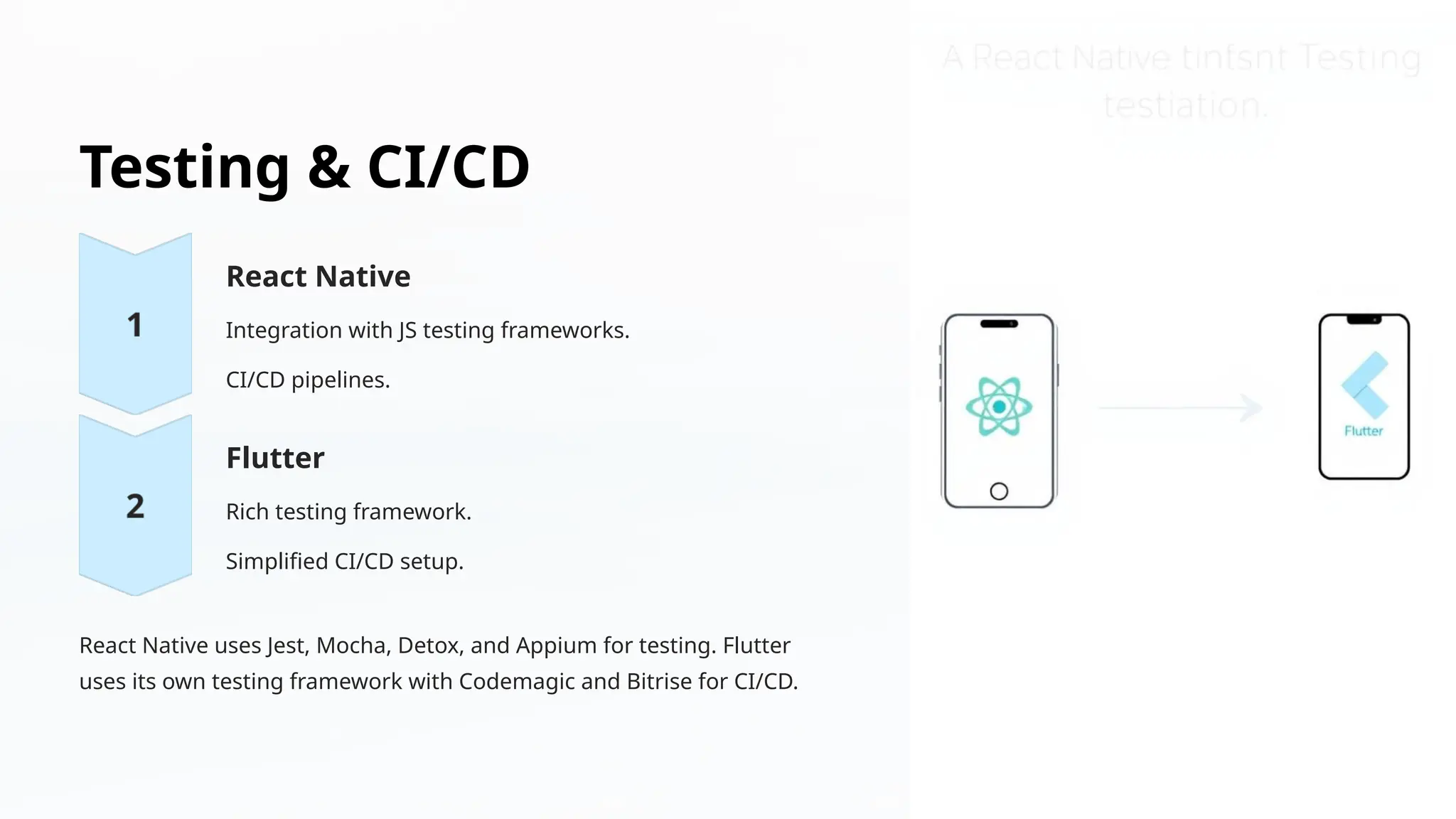
React Native uses Jest, Mocha, Detox, and Appium for testing. Flutter
uses its own testing framework with Codemagic and Bitrise for CI/CD.
8.
Conclusion: Choosing theRight Framework
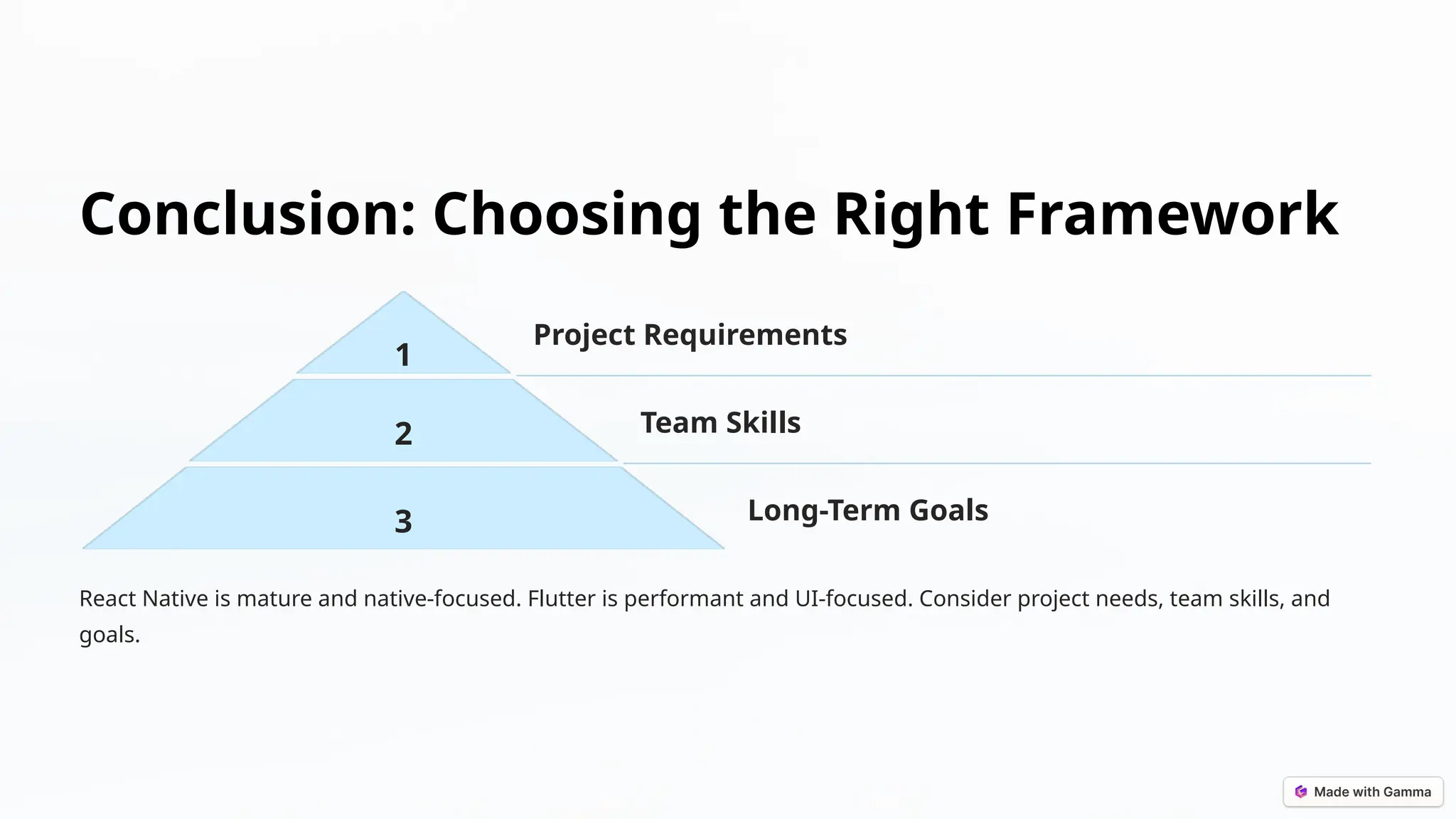
1
Project Requirements
2 Team Skills
3 Long-Term Goals
React Native is mature and native-focused. Flutter is performant and UI-focused. Consider project needs, team skills, and
goals.
9.
Comparing React Nativeand Flutter: Key
Takeaways
1
Architecture: JS Bridge vs. Skia
Rendering Engine
2
Development: JavaScript/TypeScript vs.
Dart
3
UI: Native Components vs. Custom
Widgets
Both frameworks offer robust solutions for cross-platform development.


![Flutter vs react native head to toe comparison [2021 edition]](https://cdn.slidesharecdn.com/ss_thumbnails/fluttervsreactnativeheadtotoecomparison2021edition-210216110025-thumbnail.jpg?width=640&height=640&fit=bounds)


