RAD Model
Rapid application development (RAD) is an effective
software development paradigm that provides a
systematic and automatable means of developing a
software system under circumstances where initial
requirements are not well known or where
requirements change frequently during development
the principles of RAD-based testing.
• Capture Testing Information: The testing process begins by capturing
relevant information from the RAD process. This includes understanding
the requirements, assumptions, and design specifications that the
development team is working with.
• Suitable Testing Form: The information captured from the RAD process
must be translated into a suitable testing form. This means creating test
cases, test scripts, and test scenarios that align with the system's
requirements and design
• Understanding Assumptions and Requirements: Testers must have a deep
understanding of both the assumptions made during the RAD process and
the explicit requirements that the system is expected to fulfill.
• Building Test Series: Based on the captured information and
requirements, testers construct a series of test cases and scenarios.
• Requirement Analysis: RAD-based testing also involves tools and methods
for analyzing system requirements.
• Change Management: Requirement changes are common in RAD projects
due to the iterative nature of development. Testers need to be equipped
with processes and tools to manage and adapt to these changes
four concerns testers should have
about RAD-based testing.
• Testing Iterations
• Testing Components
• Testing Performance
• Recording Test Information
Input
• The only input to this test process is the RAD
requirements
• The requirements will be continually
developed throughout various iterations.
Do Procedures
• Testing Within Iterative RAD
• The most obvious approach to testing during
RAD would be to treat each development
iteration as one software life cycle.
Spiral testing
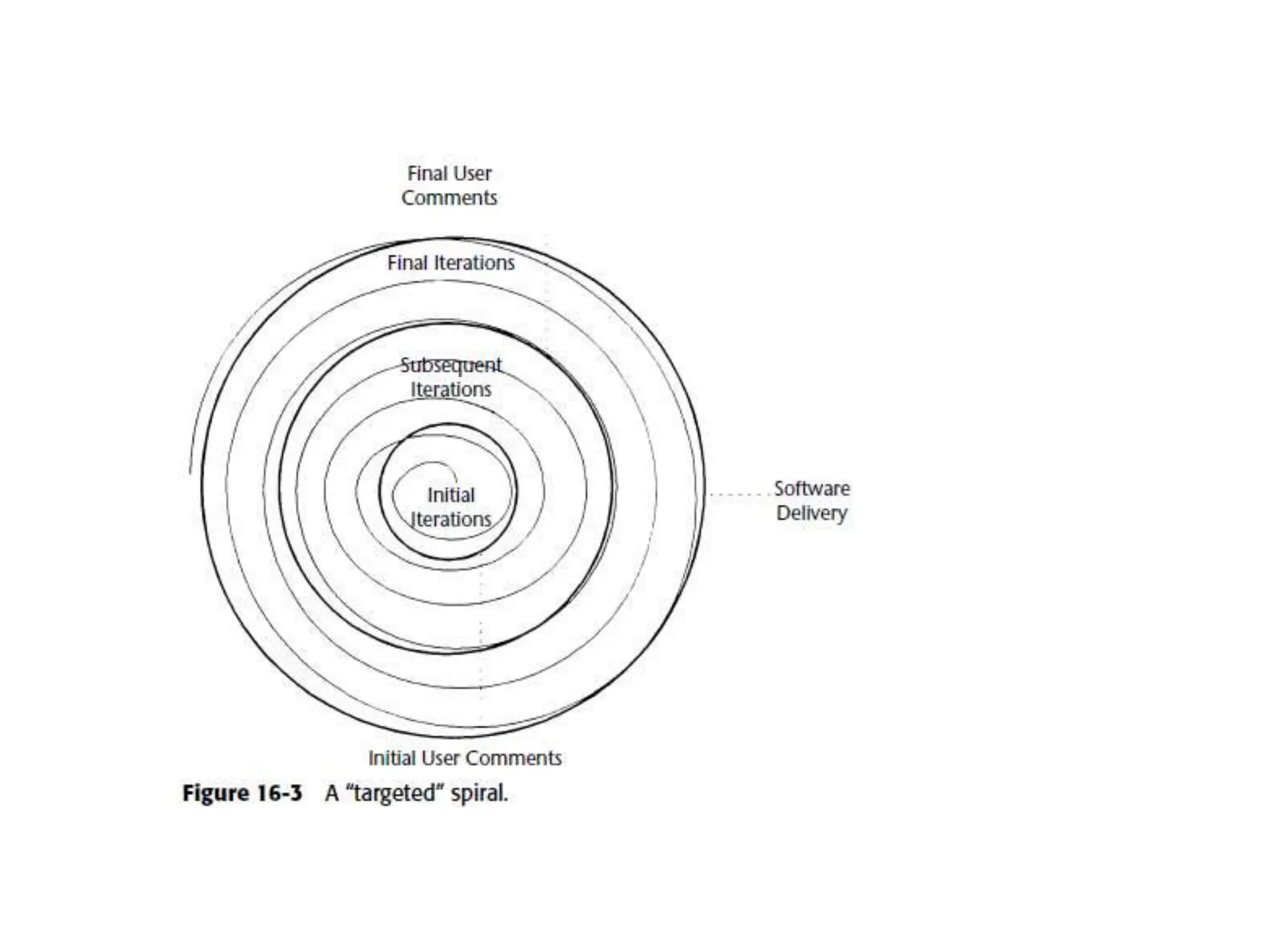
• In the context of RAD (Rapid Application Development), the testing
strategy called "spiral testing" follows the iterative nature of RAD itself..
• Initial RAD Iterations: In the early phases of RAD, especially for anything
more than small-scale systems, the primary focus is on test planning and
structuring. This involves establishing priorities and identifying areas that
need testing emphasis. These initial iterations lay the groundwork for the
testing process.
• Intermediate Testing: As RAD progresses, a framework for intermediate
testing activities, including test derivation, starts taking shape. This is
where unit and integration testing come into play. These testing activities
are likely to be concentrated in subsequent iterations.
• Final RAD Iterations: The final iterations in RAD are distinct. Developers
return to their RAD to address identified errors, while testers conduct final
integration, acceptance, and regression testing. These iterations mark the
last stage of system refinement and validation.
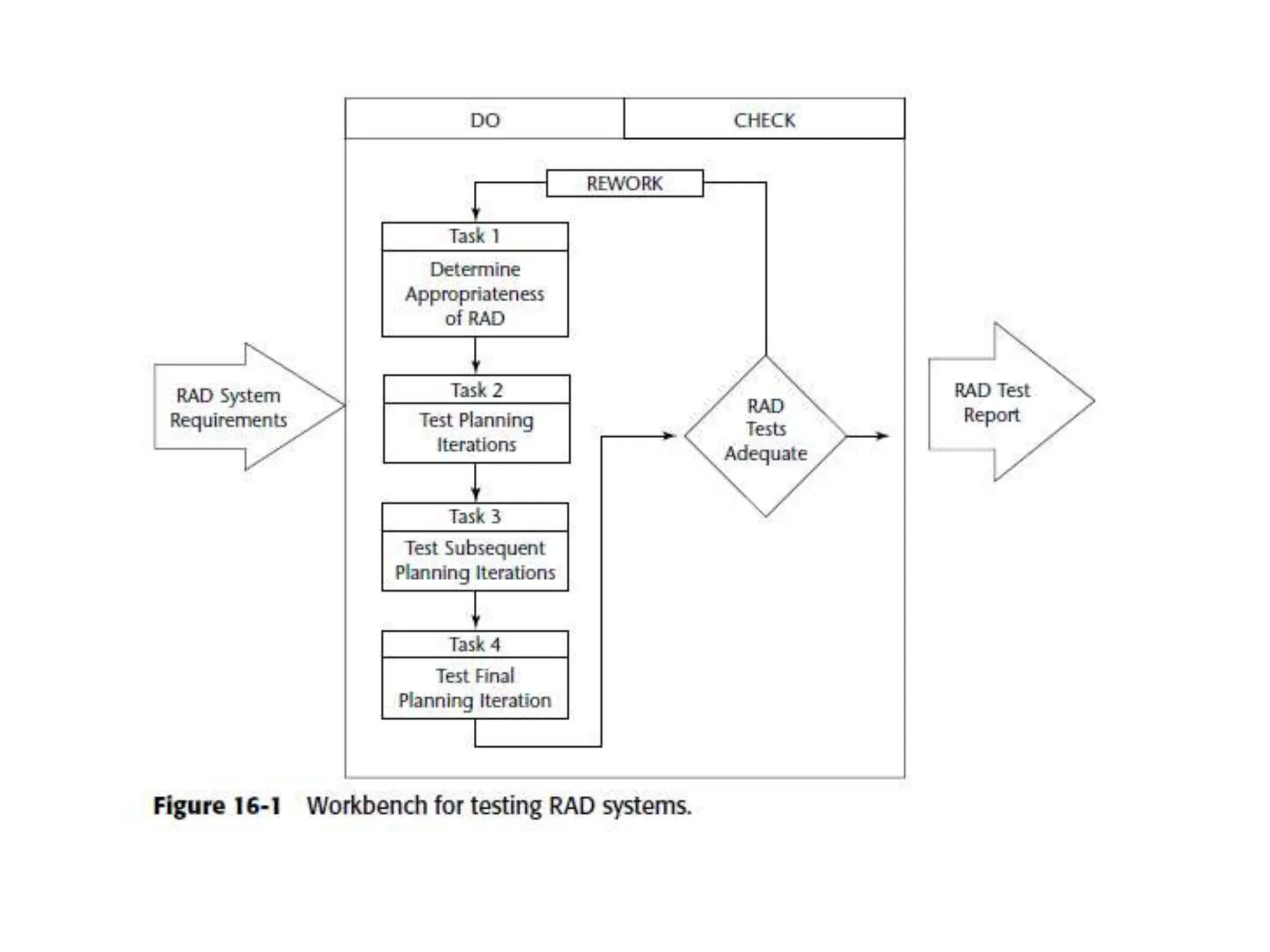
Task 1: Determine Appropriateness of
RAD
• Understanding the strengths and weaknesses
of the RAD model, testers should assess
whether RAD is a desirable model for a
specific software system
Task 2: Test Planning Iterations
• In RAD, the early stages of development have different
goals depending on the project. They either create the
basic design or figure out if the project is feasible. Test
planning goes hand in hand with development,
concentrating on important parts of the system and
adjusting plans. Checking user feedback separately
helps make the project better. Initial testing gets ready
for more detailed tests and builds the plan for
acceptance testing. It's also a good idea to check the
documentation regularly to ensure everything stays on
track.
•
Task 3: Test Subsequent Planning
Iterations
• Once the basic RAD framework is established,
subsequent iterations commence additional
requirements are identified and the design
matures in parallel over multiple iterations.
Both are validated in the review process. The
subsequent testing iterations will be
characterized by unit testing, integration
testing, and continued requirements review to
determine whether any requirements are
missing.
Task 4: Test the Final Planning Iteration
• In the final iterations of RAD development, developers
focus on implementing remaining functionality and
error correction. Testers shift their focus to completing
acceptance testing, remaining unit testing, and
subsection integration testing. Final test planning
iterations occur after system completion, covering any
new requirements or changes, completing the
acceptance test plan, and conducting acceptance
testing. The cycle continues until the system passes all
tests, and any remaining time can be used for
additional testing if needed, ensuring a thoroughly
tested software system
Output
• This testing process will have multiple outputs of
approximately the same composition.
• These outputs are test reports that indicate
findings at the end of the testing of each
iteration of the RAD development. The test
reports should indicate what works and what
does not work. They should also contain testers’
recommendations for improvement.

Rapid Application Development(RAD) model

  • 1.
    RAD Model Rapid applicationdevelopment (RAD) is an effective software development paradigm that provides a systematic and automatable means of developing a software system under circumstances where initial requirements are not well known or where requirements change frequently during development
  • 2.
    the principles ofRAD-based testing. • Capture Testing Information: The testing process begins by capturing relevant information from the RAD process. This includes understanding the requirements, assumptions, and design specifications that the development team is working with. • Suitable Testing Form: The information captured from the RAD process must be translated into a suitable testing form. This means creating test cases, test scripts, and test scenarios that align with the system's requirements and design • Understanding Assumptions and Requirements: Testers must have a deep understanding of both the assumptions made during the RAD process and the explicit requirements that the system is expected to fulfill. • Building Test Series: Based on the captured information and requirements, testers construct a series of test cases and scenarios. • Requirement Analysis: RAD-based testing also involves tools and methods for analyzing system requirements. • Change Management: Requirement changes are common in RAD projects due to the iterative nature of development. Testers need to be equipped with processes and tools to manage and adapt to these changes
  • 3.
    four concerns testersshould have about RAD-based testing. • Testing Iterations • Testing Components • Testing Performance • Recording Test Information
  • 5.
    Input • The onlyinput to this test process is the RAD requirements • The requirements will be continually developed throughout various iterations.
  • 6.
    Do Procedures • TestingWithin Iterative RAD • The most obvious approach to testing during RAD would be to treat each development iteration as one software life cycle.
  • 8.
    Spiral testing • Inthe context of RAD (Rapid Application Development), the testing strategy called "spiral testing" follows the iterative nature of RAD itself.. • Initial RAD Iterations: In the early phases of RAD, especially for anything more than small-scale systems, the primary focus is on test planning and structuring. This involves establishing priorities and identifying areas that need testing emphasis. These initial iterations lay the groundwork for the testing process. • Intermediate Testing: As RAD progresses, a framework for intermediate testing activities, including test derivation, starts taking shape. This is where unit and integration testing come into play. These testing activities are likely to be concentrated in subsequent iterations. • Final RAD Iterations: The final iterations in RAD are distinct. Developers return to their RAD to address identified errors, while testers conduct final integration, acceptance, and regression testing. These iterations mark the last stage of system refinement and validation.
  • 9.
    Task 1: DetermineAppropriateness of RAD • Understanding the strengths and weaknesses of the RAD model, testers should assess whether RAD is a desirable model for a specific software system
  • 10.
    Task 2: TestPlanning Iterations • In RAD, the early stages of development have different goals depending on the project. They either create the basic design or figure out if the project is feasible. Test planning goes hand in hand with development, concentrating on important parts of the system and adjusting plans. Checking user feedback separately helps make the project better. Initial testing gets ready for more detailed tests and builds the plan for acceptance testing. It's also a good idea to check the documentation regularly to ensure everything stays on track. •
  • 11.
    Task 3: TestSubsequent Planning Iterations • Once the basic RAD framework is established, subsequent iterations commence additional requirements are identified and the design matures in parallel over multiple iterations. Both are validated in the review process. The subsequent testing iterations will be characterized by unit testing, integration testing, and continued requirements review to determine whether any requirements are missing.
  • 12.
    Task 4: Testthe Final Planning Iteration • In the final iterations of RAD development, developers focus on implementing remaining functionality and error correction. Testers shift their focus to completing acceptance testing, remaining unit testing, and subsection integration testing. Final test planning iterations occur after system completion, covering any new requirements or changes, completing the acceptance test plan, and conducting acceptance testing. The cycle continues until the system passes all tests, and any remaining time can be used for additional testing if needed, ensuring a thoroughly tested software system
  • 13.
    Output • This testingprocess will have multiple outputs of approximately the same composition. • These outputs are test reports that indicate findings at the end of the testing of each iteration of the RAD development. The test reports should indicate what works and what does not work. They should also contain testers’ recommendations for improvement.