
 INTRODUCTION
 NEEDS
 METHODS
 ADVANTAGES
 CURRENT STATUS IN INDIA
 CONCLUSION
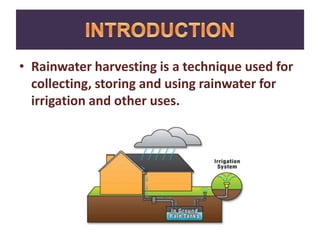
• Rainwater harvesting is a technique used for
collecting, storing and using rainwater for
irrigation and other uses.
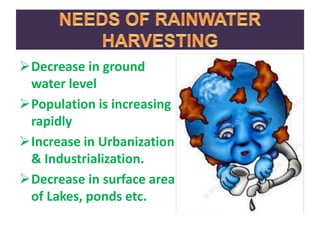
Decrease in ground
water level
Population is increasing
rapidly
Increase in Urbanization
& Industrialization.
Decrease in surface area
of Lakes, ponds etc.
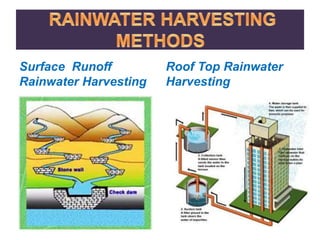
Surface Runoff
Rainwater Harvesting
Roof Top Rainwater
Harvesting
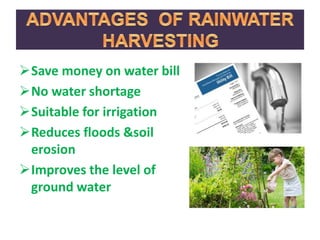
Save money on water bill
No water shortage
Suitable for irrigation
Reduces floods &soil
erosion
Improves the level of
ground water
 Tamil Nadu was the first state to make
rainwater harvesting compulsory for
every building to avoid groundwater
depletion.
 Karnataka: In Bangalore, adoption of
rainwater harvesting is mandatory for
every owner or the occupier of a building.
Rainwater Harvesting Saves Water ,Money
And The Environment
Rainwater  harvesting

Rainwater harvesting

  • 2.
     INTRODUCTION  NEEDS METHODS  ADVANTAGES  CURRENT STATUS IN INDIA  CONCLUSION
  • 3.
    • Rainwater harvestingis a technique used for collecting, storing and using rainwater for irrigation and other uses.
  • 4.
    Decrease in ground waterlevel Population is increasing rapidly Increase in Urbanization & Industrialization. Decrease in surface area of Lakes, ponds etc.
  • 5.
  • 6.
    Save money onwater bill No water shortage Suitable for irrigation Reduces floods &soil erosion Improves the level of ground water
  • 7.
     Tamil Naduwas the first state to make rainwater harvesting compulsory for every building to avoid groundwater depletion.  Karnataka: In Bangalore, adoption of rainwater harvesting is mandatory for every owner or the occupier of a building.
  • 8.
    Rainwater Harvesting SavesWater ,Money And The Environment