English 8
Analyzing the Afro-Asian short
story within:
Structural Context
• identify the plot elements of an
Afro-Asian short story that
follows a linear or parallel plot
structure;
• distinguish the different points of
view of narration of an Afro-Asian
short story.
• determine the different types of
conflict of an Afro-Asian short
story; and
Learning
Objectives
Activity: Complete the Table
Essential Question:
How does engaging with Afro-Asian
literature deepen our understanding of
diverse cultures and self, and how can we
effectively express our evolving cultural
identity through our creative writing?
Character &
Characterization
A character is a person, animal,
being, creature, or thing
represented in a story. Writers use
characters to perform the actions
and speak dialogue, moving the
story along a plot line. A story may
have only one character
(protagonist) and still be a
complete story.
Character
Round
Characters can be...
Fully developed personalities that are
affected by the story’s events; they can
learn, grow, or deteriorate by the end of
the story.
Flat A one-dimensional character
Dynamic/
Developing
A character who goes through change and
“grows” during a story
Static A character who does not go through a
change
• Characterization is the description of a
character’s physical traits (how a
character looks), point of view,
personality, private thoughts, and
actions.
Characterization
• Characterization is an essential element
in fiction; it helps you understand the
characters, and how each character’s
personality and perspectives can help
drive the plot forward.
The characteristics of a character can be revealed
through:
• his/her physical appearance
• what he/she says, thinks, feels, dreams and what
he/she does or does not do
• what others say about him/her and how others
react to him/her
Methods of
Characterization
Read the Excerpt from The Mouse Maiden from Panchatantra,
“The Priest and his Daughter with the Sun God and the Cloud
God” then answer the following questions:
Questions:
1. Who are the characters in the excerpt?
2. What types of characters are they?
3. Describe the priest and the daughter. Cite lines to prove
your
answer.
4. How are the characters revealed in the excerpt?
Let’s Try This!
Activity 1: Story Sleuths: Uncovering the
Meaning
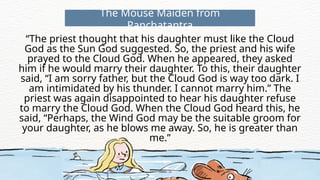
“The priest thought that his daughter must like the Cloud
God as the Sun God suggested. So, the priest and his wife
prayed to the Cloud God. When he appeared, they asked
him if he would marry their daughter. To this, their daughter
said, “I am sorry father, but the Cloud God is way too dark. I
am intimidated by his thunder. I cannot marry him.” The
priest was again disappointed to hear his daughter refuse
to marry the Cloud God. When the Cloud God heard this, he
said, “Perhaps, the Wind God may be the suitable groom for
your daughter, as he blows me away. So, he is greater than
me.”
The Mouse Maiden from
Panchatantra
Read another Panchatantra Story: “The Four Friends and
The Hunter” Story. After reading the short story, complete
the table below:
Activity 2: Characterization Analysis
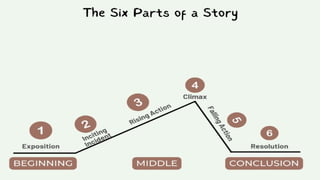
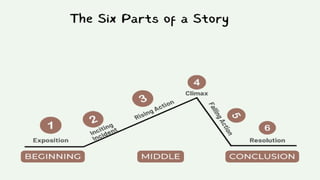
Refers to how the author arranges
events to develop the basic idea; it is
the sequence of events in a story or
play.
Plot
The plot is a planned, logical series of
events having a beginning, middle, and
end. The short story usually has one
plot so it can be read in one sitting.
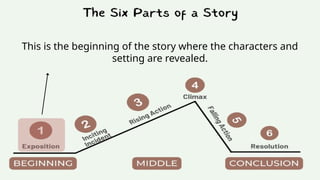
This is the beginning of the story where the characters and
setting are revealed.
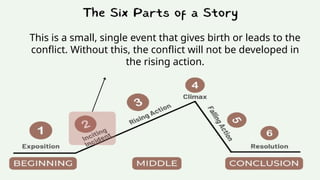
This is a small, single event that gives birth or leads to the
conflict. Without this, the conflict will not be developed in
the rising action.
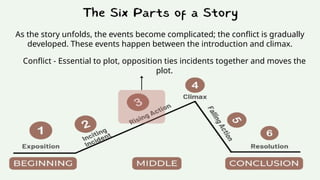
As the story unfolds, the events become complicated; the conflict is gradually
developed. These events happen between the introduction and climax.
Conflict - Essential to plot, opposition ties incidents together and moves the
plot.
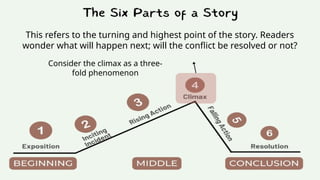
This refers to the turning and highest point of the story. Readers
wonder what will happen next; will the conflict be resolved or not?
Consider the climax as a three-
fold phenomenon
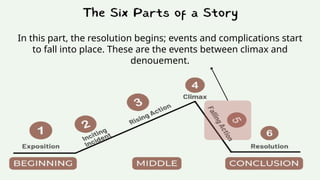
In this part, the resolution begins; events and complications start
to fall into place. These are the events between climax and
denouement.
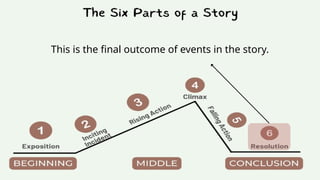
This is the final outcome of events in the story.
It is the main struggle that a character
faces. There are general and specific
types of conflict in a story.
Conflict
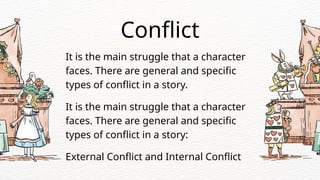
It is the main struggle that a character
faces. There are general and specific
types of conflict in a story:
External Conflict and Internal Conflict
Character vs. Character - It is clear and universally understood
as a good-vs.-evil story in which an unambiguous character
opposes the main character.
External Conflict
Character vs. Nature - This type of conflict counters a character
against some force of nature, such as an animal or the
weather.
Character vs. Society - When a story sets a character against a
tradition, an institution, a law, or some other societal
construct, it is a character-vs.-society story.
Character vs. Technology - When science moves beyond
human control, conflict of character vs. technology is
developed.
External Conflict
Character vs. Supernatural - Vampires, werewolves, aliens,
ghosts and any typically unbelievable, supernatural, or
inexplicable phenomena provide character vs. supernatural
conflicts.
Character vs. Self - A character battling inner demons, one who
has an inner moral conflict (e.g., Hamlet), or is simply striving
to become a better person is in this type of conflict.
Internal Conflict
Character vs. Fate (God/ Luck/ Fate) - This is an ambiguous
conflict type. Sometimes aspects of it get split up and parsed
out among the other categories. For example, since accepting
fate can be seen as an inner personal struggle, some define it
as character vs. self instead.
Activity 3: Puzzle Plot Race
Directions: Place the shuffled plot set in
correct order on the giant plot diagram.
“The Four Friends and The Hunter
Story”
Q1 G8 L3 - CHARACTERS, CHARACTERIZATION & STRUCTURE.pptx

Q1 G8 L3 - CHARACTERS, CHARACTERIZATION & STRUCTURE.pptx

  • 1.
    English 8 Analyzing theAfro-Asian short story within: Structural Context
  • 2.
    • identify theplot elements of an Afro-Asian short story that follows a linear or parallel plot structure; • distinguish the different points of view of narration of an Afro-Asian short story. • determine the different types of conflict of an Afro-Asian short story; and Learning Objectives
  • 3.
  • 4.
    Essential Question: How doesengaging with Afro-Asian literature deepen our understanding of diverse cultures and self, and how can we effectively express our evolving cultural identity through our creative writing?
  • 5.
  • 6.
    A character isa person, animal, being, creature, or thing represented in a story. Writers use characters to perform the actions and speak dialogue, moving the story along a plot line. A story may have only one character (protagonist) and still be a complete story. Character
  • 7.
    Round Characters can be... Fullydeveloped personalities that are affected by the story’s events; they can learn, grow, or deteriorate by the end of the story. Flat A one-dimensional character Dynamic/ Developing A character who goes through change and “grows” during a story Static A character who does not go through a change
  • 8.
    • Characterization isthe description of a character’s physical traits (how a character looks), point of view, personality, private thoughts, and actions. Characterization • Characterization is an essential element in fiction; it helps you understand the characters, and how each character’s personality and perspectives can help drive the plot forward.
  • 9.
    The characteristics ofa character can be revealed through: • his/her physical appearance • what he/she says, thinks, feels, dreams and what he/she does or does not do • what others say about him/her and how others react to him/her Methods of Characterization
  • 10.
    Read the Excerptfrom The Mouse Maiden from Panchatantra, “The Priest and his Daughter with the Sun God and the Cloud God” then answer the following questions: Questions: 1. Who are the characters in the excerpt? 2. What types of characters are they? 3. Describe the priest and the daughter. Cite lines to prove your answer. 4. How are the characters revealed in the excerpt? Let’s Try This! Activity 1: Story Sleuths: Uncovering the Meaning
  • 11.
    “The priest thoughtthat his daughter must like the Cloud God as the Sun God suggested. So, the priest and his wife prayed to the Cloud God. When he appeared, they asked him if he would marry their daughter. To this, their daughter said, “I am sorry father, but the Cloud God is way too dark. I am intimidated by his thunder. I cannot marry him.” The priest was again disappointed to hear his daughter refuse to marry the Cloud God. When the Cloud God heard this, he said, “Perhaps, the Wind God may be the suitable groom for your daughter, as he blows me away. So, he is greater than me.” The Mouse Maiden from Panchatantra
  • 12.
    Read another PanchatantraStory: “The Four Friends and The Hunter” Story. After reading the short story, complete the table below: Activity 2: Characterization Analysis
  • 13.
    Refers to howthe author arranges events to develop the basic idea; it is the sequence of events in a story or play. Plot The plot is a planned, logical series of events having a beginning, middle, and end. The short story usually has one plot so it can be read in one sitting.
  • 15.
    This is thebeginning of the story where the characters and setting are revealed.
  • 16.
    This is asmall, single event that gives birth or leads to the conflict. Without this, the conflict will not be developed in the rising action.
  • 17.
    As the storyunfolds, the events become complicated; the conflict is gradually developed. These events happen between the introduction and climax. Conflict - Essential to plot, opposition ties incidents together and moves the plot.
  • 18.
    This refers tothe turning and highest point of the story. Readers wonder what will happen next; will the conflict be resolved or not? Consider the climax as a three- fold phenomenon
  • 19.
    In this part,the resolution begins; events and complications start to fall into place. These are the events between climax and denouement.
  • 20.
    This is thefinal outcome of events in the story.
  • 21.
    It is themain struggle that a character faces. There are general and specific types of conflict in a story. Conflict It is the main struggle that a character faces. There are general and specific types of conflict in a story: External Conflict and Internal Conflict
  • 22.
    Character vs. Character- It is clear and universally understood as a good-vs.-evil story in which an unambiguous character opposes the main character. External Conflict Character vs. Nature - This type of conflict counters a character against some force of nature, such as an animal or the weather. Character vs. Society - When a story sets a character against a tradition, an institution, a law, or some other societal construct, it is a character-vs.-society story.
  • 23.
    Character vs. Technology- When science moves beyond human control, conflict of character vs. technology is developed. External Conflict Character vs. Supernatural - Vampires, werewolves, aliens, ghosts and any typically unbelievable, supernatural, or inexplicable phenomena provide character vs. supernatural conflicts.
  • 24.
    Character vs. Self- A character battling inner demons, one who has an inner moral conflict (e.g., Hamlet), or is simply striving to become a better person is in this type of conflict. Internal Conflict Character vs. Fate (God/ Luck/ Fate) - This is an ambiguous conflict type. Sometimes aspects of it get split up and parsed out among the other categories. For example, since accepting fate can be seen as an inner personal struggle, some define it as character vs. self instead.
  • 25.
    Activity 3: PuzzlePlot Race Directions: Place the shuffled plot set in correct order on the giant plot diagram. “The Four Friends and The Hunter Story”