PYTHON
PROGRAMMING
LANGUAGE
CASABAL, LOREN
LIMBO, CAROLLYN
MENDOZA, MA. ELLAINE
SICAPIRO, ALDWIN JOHN
CONTENTS
• Introduction to programming language
• Brief history
• Developer of Python (Programming Language)
• Why use python
• Keywords
• Syntax
• Python’s Coding style
• Platform
INTRODUCTION TO PROGRAMMING LANGUAGE
• It’s a set of rules that provides a way of telling the computer what
operations to performs as it describe computation
• English language has words, symbols and grammatical rules
• Also programming languages has words and symbols and rule of
grammar
• The grammatical rules are called Syntax!
• Each programming language has it’s own syntax rules.
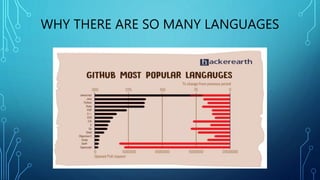
WHY THERE ARE SO MANY LANGUAGES
• Different tools for different jobs!
• Ruby and java script are great job for web sites
• C are good in Embedded systems
• Objective C used for developing ios applications
• C++ used to develop software, videos and games and more
WHY THERE ARE SO MANY LANGUAGES
BRIEF HISTORY
• Python was used by thousands of people to do things from testing
microchips at Intel, to powering Instagram, to building video games with
the Pygame library.
• The programming language Python was conceived in the late 1980s.
• its implementation was started in December 1989.
• It was a successor to the ABC (programming language) capable of
exception handling and interfacing with the Amoeba operating system.
• February 20, 1991; Python was finally introduced to the public.
• Python was derived from a novel entitled Monty Python’s Flying Circus.
• Python 2.0 was released on 16 October 2000 and had many major new
features, including a cycle-detecting, garbage collector and support
for Unicode.
• Python 3.0 (initially described as Python 3000 or py3k), is a major,
backward-incompatible release that was released after a long period of
testing on 3 December 2008.
• Python 2.7
BRIEF HISTORY
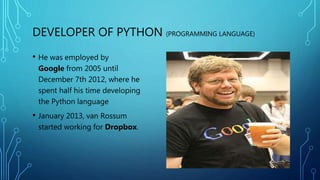
DEVELOPER OF PYTHON (PROGRAMMING LANGUAGE)
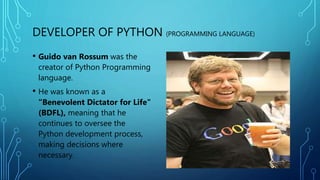
• Guido van Rossum was the
creator of Python Programming
language.
• He was known as a
“Benevolent Dictator for Life"
(BDFL), meaning that he
continues to oversee the
Python development process,
making decisions where
necessary.
DEVELOPER OF PYTHON (PROGRAMMING LANGUAGE)
• He was employed by
Google from 2005 until
December 7th 2012, where he
spent half his time developing
the Python language
• January 2013, van Rossum
started working for Dropbox.
WHY USE PYTHON?!
• Open source & free (Thanks Guidi van Rossum)!
• Portable- works on every operating systems
• Easy to learn
• No compilation necessary. Prototype and run!
• Powerful libraries
• Used for desktop, web applications ,write GUI interfaces, Mobile app
development and embedded system design
• and
• as
• assert
• Async
• Await
• break
• class
• continue
• def
• del
• elif
• else
• except
• Exec
• False
• finally
• for
• from
• global
• if
• import
• in
• is
• lambda
• None
• Nonlocal
• not
• or
• pass
• Print
• raise
• return
• True
• try
• while
• with
• yield
KEYWORDS
PYTHON’S KEYWORDS OR RESERVED WORDS; BUT THEY CANNOT BE USED AS
IDENTIFIERS
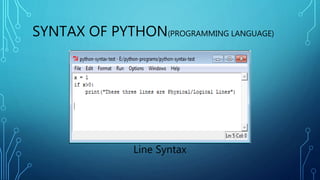
SYNTAX OF PYTHON(PROGRAMMING LANGUAGE)
Line Syntax
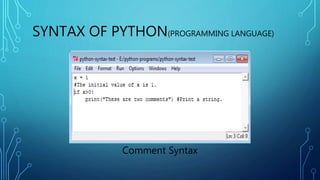
SYNTAX OF PYTHON(PROGRAMMING LANGUAGE)
Comment Syntax
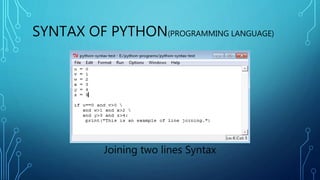
SYNTAX OF PYTHON(PROGRAMMING LANGUAGE)
Joining two lines Syntax
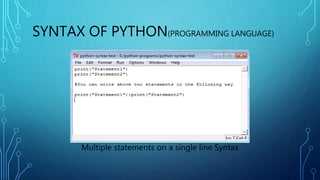
SYNTAX OF PYTHON(PROGRAMMING LANGUAGE)
Multiple statements on a single line Syntax
SYNTAX OF PYTHON(PROGRAMMING LANGUAGE)
Indentation Syntax
PYTHON’S CODING STYLE
• Use 4 spaces per indentation and no tabs.
• Do not mix tabs and spaces. Tabs create confusion and it is recommended
to use only spaces.
• Maximum line length : 79 characters which help users with a small display.
• Use blank lines to separate top-level function and class definitions and single
blank line to separate methods definitions inside a class and larger blocks of
code inside functions.
• When possible, put inline comments (should be complete sentences).
• Use spaces around expressions and statements.
WHERE IS PYTHON (PROGRAMMING LANGUAGE) USED
• It can be used for web programming (django, Zope, Google App
Engine, and much more).
• But it also can be used for desktop applications (Blender 3D, or even
for games pygame).
• Python can also be translated into binary code like java.
• Python is simply used for developing sites.
PLATFORMS OR IDE’S FOR PYTHON (PROGRAMMING LANGUAGE)
• Eric
• Wing IDE
• PyCharm
• PyDev
• Spyder
• IDLE
• KOMODO
• Visual Studio
• Stani’s Python Editor
• PsyScripter
• Komodo IDE
• Atom
• Geany
• Thonny
• KDevelop
• Cloud9 IDE
• PIDA
• PythonAnywhere
• Anjuta
• SharpDevelop
• DrPython
• Rodeo
• JuPyter Notebook
BEST PLATFORMS OR IDE’S FOR PYTHON(PROGRAMMING LANGUAGE)
•Atom
•Rodeo
•Pycharm
•Spyder
•Jupyter Notebook
•Django
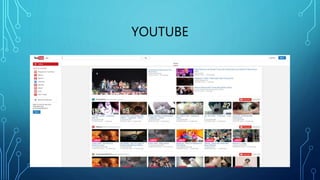
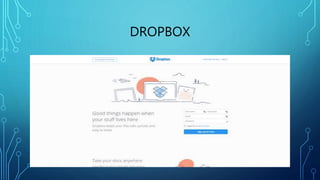
SAMPLE WEBSITES THAT PYTHON
AND DJANGO WHERE USED
YOUTUBE
DROPBOX
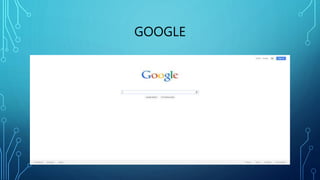
GOOGLE
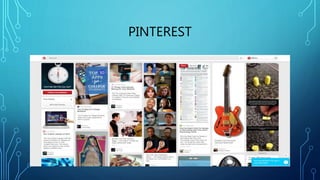
PINTEREST
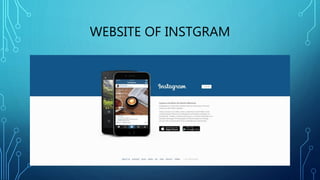
WEBSITE OF INSTGRAM
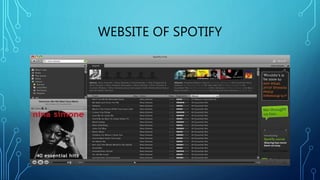
WEBSITE OF SPOTIFY
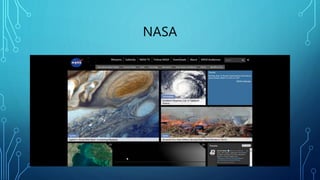
NASA
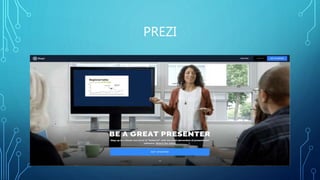
PREZI
THANK YOU!

Python programming language (2017)

  • 1.
  • 2.
    CONTENTS • Introduction toprogramming language • Brief history • Developer of Python (Programming Language) • Why use python • Keywords • Syntax • Python’s Coding style • Platform
  • 3.
    INTRODUCTION TO PROGRAMMINGLANGUAGE • It’s a set of rules that provides a way of telling the computer what operations to performs as it describe computation • English language has words, symbols and grammatical rules • Also programming languages has words and symbols and rule of grammar • The grammatical rules are called Syntax! • Each programming language has it’s own syntax rules.
  • 4.
    WHY THERE ARESO MANY LANGUAGES
  • 5.
    • Different toolsfor different jobs! • Ruby and java script are great job for web sites • C are good in Embedded systems • Objective C used for developing ios applications • C++ used to develop software, videos and games and more WHY THERE ARE SO MANY LANGUAGES
  • 6.
    BRIEF HISTORY • Pythonwas used by thousands of people to do things from testing microchips at Intel, to powering Instagram, to building video games with the Pygame library. • The programming language Python was conceived in the late 1980s. • its implementation was started in December 1989. • It was a successor to the ABC (programming language) capable of exception handling and interfacing with the Amoeba operating system. • February 20, 1991; Python was finally introduced to the public.
  • 7.
    • Python wasderived from a novel entitled Monty Python’s Flying Circus. • Python 2.0 was released on 16 October 2000 and had many major new features, including a cycle-detecting, garbage collector and support for Unicode. • Python 3.0 (initially described as Python 3000 or py3k), is a major, backward-incompatible release that was released after a long period of testing on 3 December 2008. • Python 2.7 BRIEF HISTORY
  • 8.
    DEVELOPER OF PYTHON(PROGRAMMING LANGUAGE) • Guido van Rossum was the creator of Python Programming language. • He was known as a “Benevolent Dictator for Life" (BDFL), meaning that he continues to oversee the Python development process, making decisions where necessary.
  • 9.
    DEVELOPER OF PYTHON(PROGRAMMING LANGUAGE) • He was employed by Google from 2005 until December 7th 2012, where he spent half his time developing the Python language • January 2013, van Rossum started working for Dropbox.
  • 10.
    WHY USE PYTHON?! •Open source & free (Thanks Guidi van Rossum)! • Portable- works on every operating systems • Easy to learn • No compilation necessary. Prototype and run! • Powerful libraries • Used for desktop, web applications ,write GUI interfaces, Mobile app development and embedded system design
  • 11.
    • and • as •assert • Async • Await • break • class • continue • def • del • elif • else • except • Exec • False • finally • for • from • global • if • import • in • is • lambda • None • Nonlocal • not • or • pass • Print • raise • return • True • try • while • with • yield KEYWORDS PYTHON’S KEYWORDS OR RESERVED WORDS; BUT THEY CANNOT BE USED AS IDENTIFIERS
  • 12.
    SYNTAX OF PYTHON(PROGRAMMINGLANGUAGE) Line Syntax
  • 13.
    SYNTAX OF PYTHON(PROGRAMMINGLANGUAGE) Comment Syntax
  • 14.
    SYNTAX OF PYTHON(PROGRAMMINGLANGUAGE) Joining two lines Syntax
  • 15.
    SYNTAX OF PYTHON(PROGRAMMINGLANGUAGE) Multiple statements on a single line Syntax
  • 16.
    SYNTAX OF PYTHON(PROGRAMMINGLANGUAGE) Indentation Syntax
  • 17.
    PYTHON’S CODING STYLE •Use 4 spaces per indentation and no tabs. • Do not mix tabs and spaces. Tabs create confusion and it is recommended to use only spaces. • Maximum line length : 79 characters which help users with a small display. • Use blank lines to separate top-level function and class definitions and single blank line to separate methods definitions inside a class and larger blocks of code inside functions. • When possible, put inline comments (should be complete sentences). • Use spaces around expressions and statements.
  • 18.
    WHERE IS PYTHON(PROGRAMMING LANGUAGE) USED • It can be used for web programming (django, Zope, Google App Engine, and much more). • But it also can be used for desktop applications (Blender 3D, or even for games pygame). • Python can also be translated into binary code like java. • Python is simply used for developing sites.
  • 19.
    PLATFORMS OR IDE’SFOR PYTHON (PROGRAMMING LANGUAGE) • Eric • Wing IDE • PyCharm • PyDev • Spyder • IDLE • KOMODO • Visual Studio • Stani’s Python Editor • PsyScripter • Komodo IDE • Atom • Geany • Thonny • KDevelop • Cloud9 IDE • PIDA • PythonAnywhere • Anjuta • SharpDevelop • DrPython • Rodeo • JuPyter Notebook
  • 20.
    BEST PLATFORMS ORIDE’S FOR PYTHON(PROGRAMMING LANGUAGE) •Atom •Rodeo •Pycharm •Spyder •Jupyter Notebook •Django
  • 21.
    SAMPLE WEBSITES THATPYTHON AND DJANGO WHERE USED
  • 22.
  • 23.
  • 24.
  • 25.
  • 26.
  • 27.
  • 28.
  • 29.
  • 30.