Ageng Tiara Pramudya
            031108040
Knowing your Material
 Pick a topic you are
  interested in
 Know more about it than
  you include in your
  speech
 Use humor, personal
  stories and conversational
  language
Practice! Practice! Practice!
 Rehearse out loud with all
  equipment you plan on
  using
 Revise as necessary
 Work to control filler
  words
 Practice with a timer and
  allow time for the
  unexpected
Knowing your Audience
 Greet some of the
  audience members as
  they arrive
 It’s easier to speak to a
  group of friends than to
  strangers
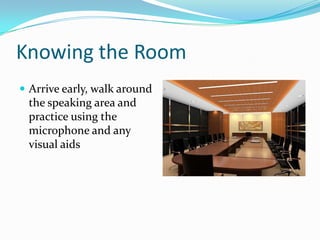
Knowing the Room
 Arrive early, walk around
 the speaking area and
 practice using the
 microphone and any
 visual aids
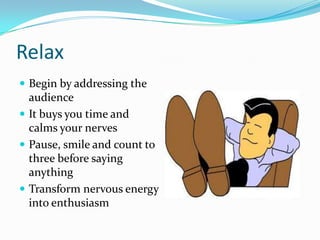
Relax
 Begin by addressing the
  audience
 It buys you time and
  calms your nerves
 Pause, smile and count to
  three before saying
  anything
 Transform nervous energy
  into enthusiasm
Visualize yourself giving your
speech
 Imagine yourself
  speaking, your voice loud,
  clear and confident
 Visualize the audience
  clapping (it will boost
  your confidence)
Realize that people want you to
succeed
 Audiences want you to be
  interesting, stimulating, i
  nformative and
  entertaining
 They’re rooting for you
Don’t apologize for any
nervousness or problem
 the audience probably
 never noticed it
Concentrate on the message
(not medium)
 Focus your attention away
 from your own anxieties
 and concentrate on your
 message and your
 audience
Gain experience
 Mainly, your speech
  should represent you —
  as an authority and as a
  person
 Experience builds
  confidence, which is the
  key to effective speaking
Thank You
    http://www.toastmasters.org

Public speaking

  • 1.
  • 2.
    Knowing your Material Pick a topic you are interested in  Know more about it than you include in your speech  Use humor, personal stories and conversational language
  • 3.
    Practice! Practice! Practice! Rehearse out loud with all equipment you plan on using  Revise as necessary  Work to control filler words  Practice with a timer and allow time for the unexpected
  • 4.
    Knowing your Audience Greet some of the audience members as they arrive  It’s easier to speak to a group of friends than to strangers
  • 5.
    Knowing the Room Arrive early, walk around the speaking area and practice using the microphone and any visual aids
  • 6.
    Relax  Begin byaddressing the audience  It buys you time and calms your nerves  Pause, smile and count to three before saying anything  Transform nervous energy into enthusiasm
  • 7.
    Visualize yourself givingyour speech  Imagine yourself speaking, your voice loud, clear and confident  Visualize the audience clapping (it will boost your confidence)
  • 8.
    Realize that peoplewant you to succeed  Audiences want you to be interesting, stimulating, i nformative and entertaining  They’re rooting for you
  • 9.
    Don’t apologize forany nervousness or problem  the audience probably never noticed it
  • 10.
    Concentrate on themessage (not medium)  Focus your attention away from your own anxieties and concentrate on your message and your audience
  • 11.
    Gain experience  Mainly,your speech should represent you — as an authority and as a person  Experience builds confidence, which is the key to effective speaking
  • 12.
    Thank You http://www.toastmasters.org