Proteinuria Primer
Sheldon Tobe,MD, MScCH (HPTE), FRCPC, FACP, FAHA
Hypertension and Nephrology
Professor of Medicine, University of Toronto and Northern Ontario School of Medicine
Post Graduate Fellowship Director, Adult Nephrology, University of Toronto
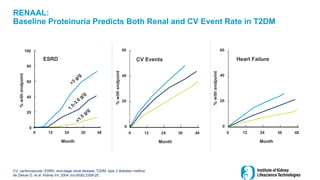
CV Events
0 1224 36 48
Month
0
20
40
60
Month
Heart Failure
0 12 24 36 48
0
20
40
60
0 12 24 36 48
Month
0
20
40
60
80
100
%
with
endpoint
ESRD
%
with
endpoint
%
with
endpoint
RENAAL:
Baseline Proteinuria Predicts Both Renal and CV Event Rate in T2DM
CV, cardiovascular; ESRD, end-stage renal disease; T2DM, type 2 diabetes mellitus
de Zeeuw D, et al. Kidney Int. 2004 Jun;65(6):2309-20.
6.
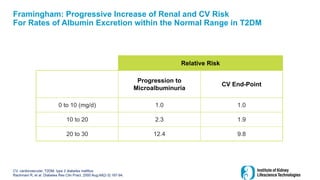
Framingham: Progressive Increaseof Renal and CV Risk
For Rates of Albumin Excretion within the Normal Range in T2DM
CV, cardiovascular; T2DM, type 2 diabetes mellitus
Rachmani R, et al. Diabetes Res Clin Pract. 2000 Aug;49(2-3):187-94.
Relative Risk
Progression to
Microalbuminuria
CV End-Point
0 to 10 (mg/d) 1.0 1.0
10 to 20 2.3 1.9
20 to 30 12.4 9.8
7.
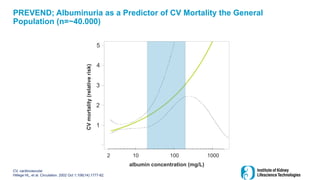
CV, cardiovascular
Hillege HL,et al. Circulation. 2002 Oct 1;106(14):1777-82.
albumin concentration (mg/L)
1
2
3
4
5
2 10 100 1000
CV
mortality
(relative
risk)
PREVEND; Albuminuria as a Predictor of CV Mortality the General
Population (n=~40.000)
8.
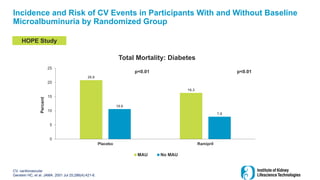
Incidence and Riskof CV Events in Participants With and Without Baseline
Microalbuminuria by Randomized Group
CV, cardiovascular
Gerstein HC, et al. JAMA. 2001 Jul 25;286(4):421-6.
20.8
16.3
10.6
7.9
0
5
10
15
20
25
Placebo Ramipril
Percent
Total Mortality: Diabetes
MAU No MAU
p<0.01
p<0.01
HOPE Study
9.
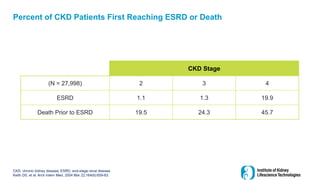
CKD, chronic kidneydisease; ESRD, end-stage renal disease
Keith DS, et al. Arch Intern Med. 2004 Mar 22;164(6):659-63.
CKD Stage
(N = 27,998) 2 3 4
ESRD 1.1 1.3 19.9
Death Prior to ESRD 19.5 24.3 45.7
Percent of CKD Patients First Reaching ESRD or Death
10.
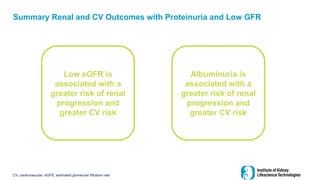
Summary Renal andCV Outcomes with Proteinuria and Low GFR
CV, cardiovascular; eGFR, estimated glomerular filtration rate
Low eGFR is
associated with a
greater risk of renal
progression and
greater CV risk
Albuminuria is
associated with a
greater risk of renal
progression and
greater CV risk
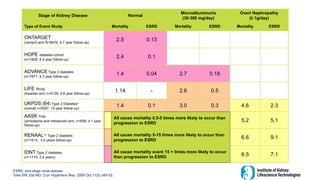
11.
ESRD, end-stage renaldisease
Tobe SW, Dai MO. Curr Hypertens Rep. 2009 Oct;11(5):345-53.
Stage of Kidney Disease Normal
Microalbuminuria
(30-300 mg/day)
Overt Nephropathy
(≥ 1g/day)
Type of Event Study Mortality ESRD Mortality ESRD Mortality ESRD
ONTARGET
(ramipril arm N=8576, 4.7 year follow-up)
2.5 0.13
HOPE diabetes cohort
(n=1808, 4.5 year follow-up)
2.4 0.1
ADVANCE Type 2 diabetes
(n=7877, 4.3 year follow-up)
1.4 0.04 2.7 0.18
LIFE Study
(losartan arm n=4126, 4.8 year follow-up)
1.14 - 2.6 0.5
UKPDS (64) Type 2 Diabetes*
(overall n=5097, 10 year follow-up)
1.4 0.1 3.0 0.3 4.6 2.3
AASK Trial
(amlodipine and metoprolol arm, n=658, 4.1 year
follow-up)
5.2 5.1
RENAAL** Type 2 diabetes
(n=1513, 3.4 years follow-up)
6.6 9.1
IDNT Type 2 diabetes
(n=1715, 2.5 years)
6.5 7.1
All cause mortality 0.5-5 times more likely to occur than
progression to ESRD
All cause mortality 5-15 times more likely to occur than
progression to ESRD
All cause mortality event 15 + times more likely to occur
than progression to ESRD
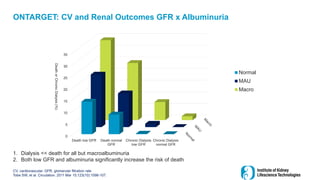
12.
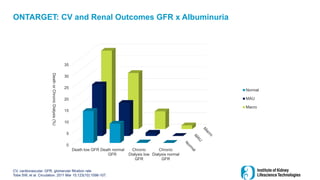
ONTARGET: CV andRenal Outcomes GFR x Albuminuria
CV, cardiovascular; GFR, glomerular filtration rate
Tobe SW, et al. Circulation. 2011 Mar 15;123(10):1098-107.
0
5
10
15
20
25
30
35
Death low GFR Death normal
GFR
Chronic Dialysis
low GFR
Chronic Dialysis
normal GFR
Death
or
Chronic
Dialysis
(%)
Normal
MAU
Macro
1. Dialysis << death for all but macroalbuminuria
2. Both low GFR and albuminuria significantly increase the risk of death
ESRD, end-stage renaldisease
Tobe SW, Dai MO. Curr Hypertens Rep. 2009 Oct;11(5):345-53.
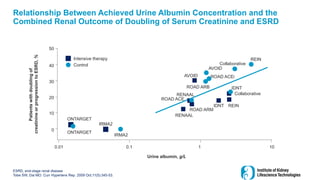
Relationship Between Achieved Urine Albumin Concentration and the
Combined Renal Outcome of Doubling of Serum Creatinine and ESRD
Intensive therapy
Control
ONTARGET
ONTARGET
IRMA2
IRMA2
RENAAL
0.01 0.1 1 10
Urine albumin, g/L
Patients
with
doubling
of
creatinine
or
progression
to
ESRD,
%
0
10
20
30
40
50
ROAD ARM
ROAD ACE
RENAAL
IDNT REIN
IDNT
Collaborative
ROAD ACEi
ROAD ARB
AVOID
AVOID
REIN
Collaborative
15.
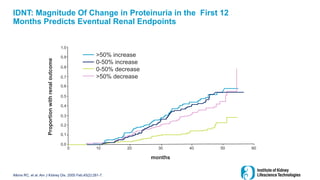
IDNT: Magnitude OfChange in Proteinuria in the First 12
Months Predicts Eventual Renal Endpoints
Atkins RC, et al. Am J Kidney Dis. 2005 Feb;45(2):281-7.
months
Proportion
with
renal
outcome
10
0 20 30 40 50 60
0.0
0.1
0.2
0.3
0.4
0.5
0.6
0.7
0.8
0.9
1.0
>50% increase
0-50% increase
0-50% decrease
>50% decrease
16.
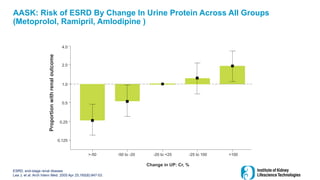
Change in UP:Cr, %
AASK: Risk of ESRD By Change In Urine Protein Across All Groups
(Metoprolol, Ramipril, Amlodipine )
ESRD, end-stage renal disease
Lea J, et al. Arch Intern Med. 2005 Apr 25;165(8):947-53.
Proportion
with
renal
outcome
0.125
>-50 -50 to -20 -20 to +25 -25 to 100 >100
0.25
0.5
1.0
2.0
4.0
17.
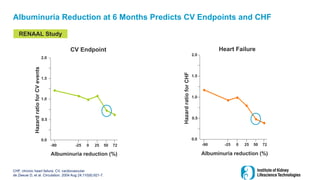
Albuminuria Reduction at6 Months Predicts CV Endpoints and CHF
CHF, chronic heart failure; CV, cardiovascular
de Zeeuw D, et al. Circulation. 2004 Aug 24;110(8):921-7.
2.0
1.5
1.0
0.5
0.0
-90 -25 0 25 50 72
Albuminuria reduction (%)
Hazard
ratio
for
CV
events
CV Endpoint
RENAAL Study
2.0
1.5
1.0
0.5
0.0
-90 -25 0 25 50 72
Albuminuria reduction (%)
Heart Failure
18.
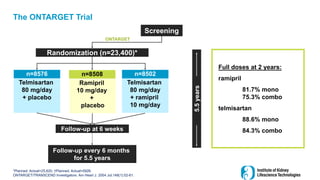
The ONTARGET Trial
*Planned.Actual=25,620; †Planned. Actual=5926.
ONTARGET/TRANSCEND Investigators. Am Heart J. 2004 Jul;148(1):52-61.
Screening
Follow-up at 6 weeks
Follow-up every 6 months
for 5.5 years
Randomization (n=23,400)*
ONTARGET
n=8576
Telmisartan
80 mg/day
+ placebo
n=8502
Telmisartan
80 mg/day
+ ramipril
10 mg/day
n=8508
Ramipril
10 mg/day
+
placebo
5.5
years
Full doses at 2 years:
ramipril
81.7% mono
75.3% combo
telmisartan
88.6% mono
84.3% combo
19.
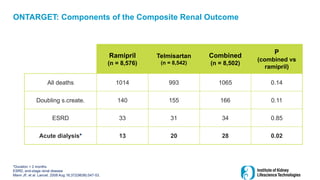
Ramipril
(n = 8,576)
Telmisartan
(n= 8,542)
Combined
(n = 8,502)
P
(combined vs
ramipril)
All deaths 1014 993 1065 0.14
Doubling s.create. 140 155 166 0.11
ESRD 33 31 34 0.85
Acute dialysis* 13 20 28 0.02
ONTARGET: Components of the Composite Renal Outcome
*Duration < 2 months
ESRD, end-stage renal disease
Mann JF, et al. Lancet. 2008 Aug 16;372(9638):547-53.
20.
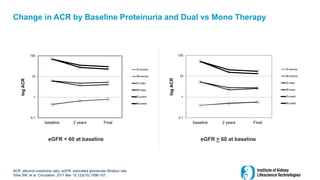
0.1
1
10
100
baseline 2 yearsFinal
log
ACR
D-normo
M-normo
D-mau
M-mau
D-overt
M-overt
0.1
1
10
100
baseline 2 years Final
log
ACR
D-normo
M-normo
D-mau
M-mau
D-overt
M-overt
eGFR < 60 at baseline eGFR > 60 at baseline
Change in ACR by Baseline Proteinuria and Dual vs Mono Therapy
ACR, albumin-creatinine ratio; eGFR, estimated glomerular filtration rate
Tobe SW, et al. Circulation. 2011 Mar 15;123(10):1098-107.
21.
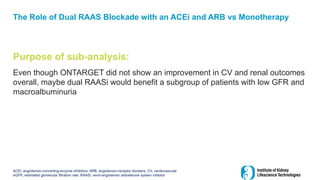
The Role ofDual RAAS Blockade with an ACEi and ARB vs Monotherapy
Purpose of sub-analysis:
Even though ONTARGET did not show an improvement in CV and renal outcomes
overall, maybe dual RAASi would benefit a subgroup of patients with low GFR and
macroalbuminuria
ACEi, angiotensin-converting-enzyme inhibitors; ARB, angiotensin-receptor blockers; CV, cardiovascular
eGFR, estimated glomerular filtration rate; RAASi, renin-angiotensin aldosterone system inhibitor
22.
Tobe SW, etal. Circulation. 2011 Mar 15;123(10):1098-107.
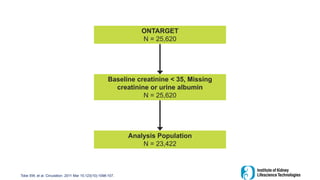
ONTARGET
N = 25,620
Baseline creatinine < 35, Missing
creatinine or urine albumin
N = 25,620
Analysis Population
N = 23,422
23.
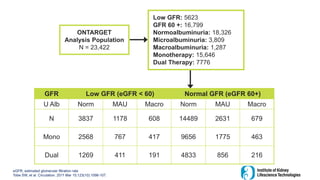
ONTARGET
Analysis Population
N =23,422
Low GFR: 5623
GFR 60 +: 16,799
Normoalbuminuria: 18,326
Microalbuminuria: 3,809
Macroalbuminuria: 1,287
Monotherapy: 15,646
Dual Therapy: 7776
GFR Low GFR (eGFR < 60) Normal GFR (eGFR 60+)
U Alb Norm MAU Macro Norm MAU Macro
N 3837 1178 608 14489 2631 679
Mono 2568 767 417 9656 1775 463
Dual 1269 411 191 4833 856 216
eGFR, estimated glomerular filtration rate
Tobe SW, et al. Circulation. 2011 Mar 15;123(10):1098-107.
24.
ONTARGET: CV andRenal Outcomes GFR x Albuminuria
CV, cardiovascular; GFR, glomerular filtration rate
Tobe SW, et al. Circulation. 2011 Mar 15;123(10):1098-107.
0
5
10
15
20
25
30
35
Death low GFR Death normal
GFR
Chronic
Dialysis low
GFR
Chronic
Dialysis normal
GFR
Death
or
Chronic
Dialysis
(%)
Normal
MAU
Macro
25.
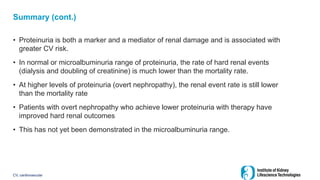
Summary (cont.)
• Proteinuriais both a marker and a mediator of renal damage and is associated with
greater CV risk.
• In normal or microalbuminuria range of proteinuria, the rate of hard renal events
(dialysis and doubling of creatinine) is much lower than the mortality rate.
• At higher levels of proteinuria (overt nephropathy), the renal event rate is still lower
than the mortality rate
• Patients with overt nephropathy who achieve lower proteinuria with therapy have
improved hard renal outcomes
• This has not yet been demonstrated in the microalbuminuria range.
CV, cardiovascular
26.
Summary
ACEi, angiotensin-converting-enzyme inhibitors;ARB, angiotensin-receptor blockers; AKI, acute kidney injury; RAAS, renin-
angiotensin aldosterone system
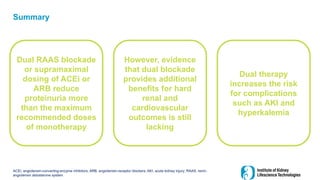
Dual RAAS blockade
or supramaximal
dosing of ACEi or
ARB reduce
proteinuria more
than the maximum
recommended doses
of monotherapy
However, evidence
that dual blockade
provides additional
benefits for hard
renal and
cardiovascular
outcomes is still
lacking
Dual therapy
increases the risk
for complications
such as AKI and
hyperkalemia
27.
Conclusions: Therapy forpatients with nephropathy
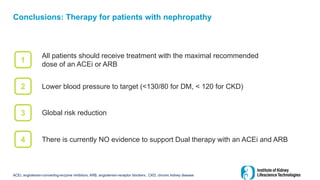
All patients should receive treatment with the maximal recommended
dose of an ACEi or ARB
ACEi, angiotensin-converting-enzyme inhibitors; ARB, angiotensin-receptor blockers , CKD, chronic kidney disease
1
2
3
4
Lower blood pressure to target (<130/80 for DM, < 120 for CKD)
Global risk reduction
There is currently NO evidence to support Dual therapy with an ACEi and ARB
28.
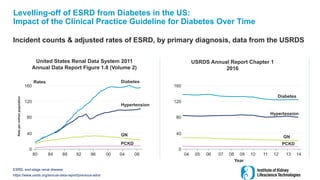
Levelling-off of ESRDfrom Diabetes in the US:
Impact of the Clinical Practice Guideline for Diabetes Over Time
Incident counts & adjusted rates of ESRD, by primary diagnosis, data from the USRDS
ESRD, end-stage renal disease
https://www.usrds.org/annual-data-report/previous-adrs/
United States Renal Data System 2011
Annual Data Report Figure 1.8 (Volume 2)
USRDS Annual Report Chapter 1
2016
Rates
160
120
80
40
0
80 84 88 92 96 00 04 08
Rate
per
million
population
Diabetes
Hypertension
GN
PCKD
160
120
80
40
0
04 05 07 08 09 10 12 13
06 11 14
Diabetes
Hypertension
GN
PCKD
Year
29.
Mogensen Demonstrates theImpact of Albuminuria as a Predictor of Risk for
Progressive Renal Disease and Mortality in T2D
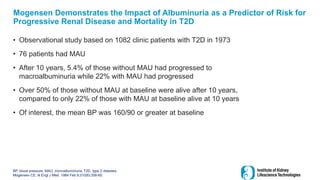
• Observational study based on 1082 clinic patients with T2D in 1973
• 76 patients had MAU
• After 10 years, 5.4% of those without MAU had progressed to
macroalbuminuria while 22% with MAU had progressed
• Over 50% of those without MAU at baseline were alive after 10 years,
compared to only 22% of those with MAU at baseline alive at 10 years
• Of interest, the mean BP was 160/90 or greater at baseline
BP, blood pressure; MAU, microalbuminuria; T2D, type 2 diabetes
Mogensen CE. N Engl J Med. 1984 Feb 9;310(6):356-60.
30.
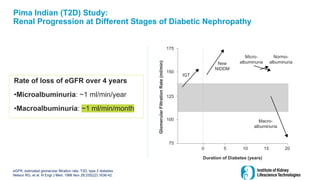
Pima Indian (T2D)Study:
Renal Progression at Different Stages of Diabetic Nephropathy
eGFR, estimated glomerular filtration rate; T2D, type 2 diabetes
Nelson RG, et al. N Engl J Med. 1996 Nov 28;335(22):1636-42.
Rate of loss of eGFR over 4 years
•Microalbuminuria: ~1 ml/min/year
•Macroalbuminuria: ~1 ml/min/month
175
150
125
100
75
Duration of Diabetes (years)
0 5 10 15 20
Glomerular
Filtration
Rate
(ml/min)
Macro-
albuminuria
Normo-
albuminuria
Micro-
albuminuria
New
NIDDM
IGT
31.
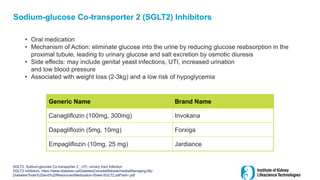
Sodium-glucose Co-transporter 2(SGLT2) Inhibitors
• Oral medication
• Mechanism of Action: eliminate glucose into the urine by reducing glucose reabsorption in the
proximal tubule, leading to urinary glucose and salt excretion by osmotic diuresis
• Side effects: may include genital yeast infections, UTI, increased urination
and low blood pressure
• Associated with weight loss (2-3kg) and a low risk of hypoglycemia
SGLT2, Sodium-glucose Co-transporter 2 ; UTI, urinary tract infection
SGLT2 Inhibitors. https://www.diabetes.ca/DiabetesCanadaWebsite/media/Managing-My-
Diabetes/Tools%20and%20Resources/Medication-Sheet-SGLT2.pdf?ext=.pdf
Generic Name Brand Name
Canagliflozin (100mg, 300mg) Invokana
Dapagliflozin (5mg, 10mg) Forxiga
Empagliflozin (10mg, 25 mg) Jardiance
32.
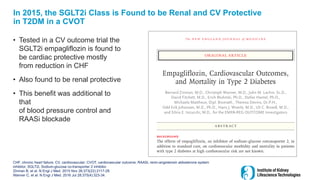
In 2015, theSGLT2i Class is Found to be Renal and CV Protective
in T2DM in a CVOT
• Tested in a CV outcome trial the
SGLT2i empagliflozin is found to
be cardiac protective mostly
from reduction in CHF
• Also found to be renal protective
• This benefit was additional to
that
of blood pressure control and
RAASi blockade
CHF, chronic heart failure; CV, cardiovascular; CVOT, cardiovascular outcome; RAASi, renin-angiotensin aldosterone system
inhibitor; SGLT2i, Sodium-glucose co-transporter 2 inhibitor
Zinman B, et al. N Engl J Med. 2015 Nov 26;373(22):2117-28.
Wanner C, et al. N Engl J Med. 2016 Jul 28;375(4):323-34.
33.
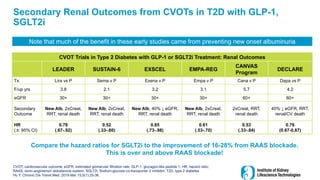
Secondary Renal Outcomesfrom CVOTs in T2D with GLP-1,
SGLT2i
CVOT, cardiovascular outcome; eGFR, estimated glomerular filtration rate; GLP-1, glucagon-like peptide 1; HR, hazard ratio;
RAAS, renin-angiotensin aldosterone system; SGLT2i, Sodium-glucose co-transporter 2 inhibitor; T2D, type 2 diabetes
Hu Y. Chronic Dis Transl Med. 2019 Mar 15;5(1):25-36.
CVOT Trials in Type 2 Diabetes with GLP-1 or SGLT2i Treatment: Renal Outcomes
LEADER SUSTAIN-6 EXSCEL EMPA-REG
CANVAS
Program
DECLARE
Tx Lira vs P Sema v P Exena v P Empa v P Cana v P Dapa vs P
F/up yrs 3.8 2.1 3.2 3.1 5.7 4.2
eGFR 30+ 30+ 30+ 30+ 60+ 60+
Secondary
Outcome
New Alb, 2xCreat,
RRT, renal death
New Alb, 2xCreat,
RRT, renal death
New Alb, 40% ↓ eGFR,
RRT, renal death
New Alb, 2xCreat,
RRT, renal death
2xCreat, RRT,
renal death
40% ↓ eGFR, RRT,
renal/CV death
HR
(± 95% CI)
0.78
(.67-.92)
0.52
(.33-.80)
0.85
(.73-.98)
0.61
(.53-.70)
0.53
(.33-.84)
0.76
(0.67-0.87)
Compare the hazard ratios for SGLT2i to the improvement of 16-28% from RAAS blockade.
This is over and above RAAS blockade!
Note that much of the benefit in these early studies came from preventing new onset albuminuria
34.
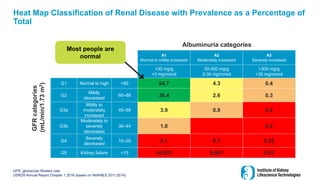
A1
Normal to mildlyincreased
A2
Moderately increased
A3
Severely increased
<30 mg/g
<3 mg/mmol
30-300 mg/g
3-30 mg/mmol
>300 mg/g
>30 mg/mmol
G1 Normal to high >90 54.7 4.3 0.4
G2
Mildly
decreased
60–89 30.4 2.6 0.3
G3a
Mildly to
moderately
increased
45–59 3.9 0.9 0.2
G3b
Moderately to
severely
decreased
30–44 1.0 0.2
G4
Severely
decreased
15–29 0.1 0.1 0.22
G5 Kidney failure <15 <0.001 0.001 0.01
Heat Map Classification of Renal Disease with Prevalence as a Percentage of
Total
GFR, glomerular filtration rate;
USRDS Annual Report Chapter 1 2016 (based on NHANES 2011-2014).
Most people are
normal
Albuminuria categories
GFR
categories
(mL/min/1.73
m
2
)
35.
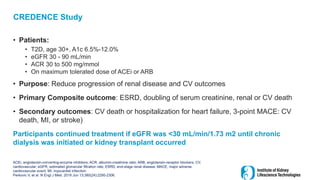
CREDENCE Study
• Patients:
•T2D, age 30+, A1c 6.5%-12.0%
• eGFR 30 - 90 mL/min
• ACR 30 to 500 mg/mmol
• On maximum tolerated dose of ACEi or ARB
• Purpose: Reduce progression of renal disease and CV outcomes
• Primary Composite outcome: ESRD, doubling of serum creatinine, renal or CV death
• Secondary outcomes: CV death or hospitalization for heart failure, 3-point MACE: CV
death, MI, or stroke)
Participants continued treatment if eGFR was <30 mL/min/1.73 m2 until chronic
dialysis was initiated or kidney transplant occurred
ACEi, angiotensin-converting-enzyme inhibitors; ACR, albumin-creatinine ratio; ARB, angiotensin-receptor blockers; CV,
cardiovascular; eGFR, estimated glomerular filtration rate; ESRD, end-stage renal disease; MACE, major adverse
cardiovascular event; MI, myocardial infarction
Perkovic V, et al. N Engl J Med. 2019 Jun 13;380(24):2295-2306.
36.
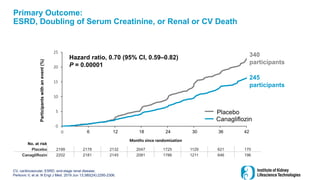
Primary Outcome:
ESRD, Doublingof Serum Creatinine, or Renal or CV Death
CV, cardiovascular; ESRD, end-stage renal disease;
Perkovic V, et al. N Engl J Med. 2019 Jun 13;380(24):2295-2306.
No. at risk
Placebo 2199 2178 2132 2047 1725 1129 621 170
Canagliflozin 2202 2181 2145 2081 1786 1211 646 196
0
5
10
15
20
25
0 26 52 78 104 130 156 182
Months since randomization
Hazard ratio, 0.70 (95% CI, 0.59–0.82)
P = 0.00001
6 12 18 24 30 36 42
340
participants
245
participants
Placebo
Canagliflozin
Participants
with
an
event
(%)
37.
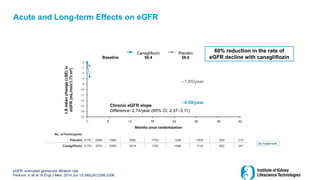
Acute and Long-termEffects on eGFR
eGFR, estimated glomerular filtration rate
Perkovic V, et al. N Engl J Med. 2019 Jun 13;380(24):2295-2306.
-20
-18
-16
-14
-12
-10
-8
-6
-4
-2
0
0 26 52 78 104 130 156 182
Months since randomization
No. of Participants
Placebo 2178 2084 1985 1882 1720 1536 1006 583 210
Canagliflozin 2179 2074 2005 1919 1782 1648 1116 652 241
56.4 56.0
Canagliflozin Placebo
Chronic eGFR slope
Difference: 2.74/year (95% CI, 2.37–3.11)
LS
mean
change
(±SE)
in
eGFR
(mL/min/1.73
m
2
)
Baseline
60% reduction in the rate of
eGFR decline with canagliflozin
On treatment
–1.85/year
6 12 18 24 30 36 42
–4.59/year
38.
Summary
CV, cardiovascular; ESRD,end-stage renal disease; MI, myocardial infarction
Perkovic V, et al. N Engl J Med. 2019 Jun 13;380(24):2295-2306.
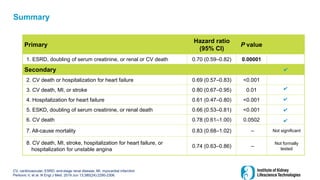
Primary
Hazard ratio
(95% CI)
P value
1. ESRD, doubling of serum creatinine, or renal or CV death 0.70 (0.59–0.82) 0.00001
Secondary
2. CV death or hospitalization for heart failure 0.69 (0.57–0.83) <0.001
3. CV death, MI, or stroke 0.80 (0.67–0.95) 0.01
4. Hospitalization for heart failure 0.61 (0.47–0.80) <0.001
5. ESKD, doubling of serum creatinine, or renal death 0.66 (0.53–0.81) <0.001
6. CV death 0.78 (0.61–1.00) 0.0502
7. All-cause mortality 0.83 (0.68–1.02) – Not significant
8. CV death, MI, stroke, hospitalization for heart failure, or
hospitalization for unstable angina
0.74 (0.63–0.86) –
Not formally
tested
✔
✔
✔
✔
✔
39.
Summary
CV, cardiovascular; ESRD,end-stage renal disease; MI, myocardial infarction
Perkovic V, et al. N Engl J Med. 2019 Jun 13;380(24):2295-2306.
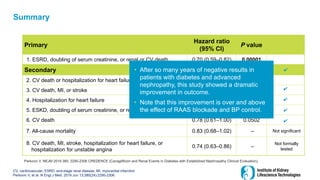
Primary
Hazard ratio
(95% CI)
P value
1. ESRD, doubling of serum creatinine, or renal or CV death 0.70 (0.59–0.82) 0.00001
Secondary
2. CV death or hospitalization for heart failure 0.69 (0.57–0.83) <0.001
3. CV death, MI, or stroke 0.80 (0.67–0.95) 0.01
4. Hospitalization for heart failure 0.61 (0.47–0.80) <0.001
5. ESKD, doubling of serum creatinine, or renal death 0.66 (0.53–0.81) <0.001
6. CV death 0.78 (0.61–1.00) 0.0502
7. All-cause mortality 0.83 (0.68–1.02) – Not significant
8. CV death, MI, stroke, hospitalization for heart failure, or
hospitalization for unstable angina
0.74 (0.63–0.86) –
Not formally
tested
✔
✔
✔
✔
✔
• After so many years of negative results in
patients with diabetes and advanced
nephropathy, this study showed a dramatic
improvement in outcome.
• Note that this improvement is over and above
the effect of RAAS blockade and BP control.
Perkovic V, NEJM 2019 380: 2295-2306 CREDENCE (Canagliflozin and Renal Events in Diabetes with Established Nephropathy Clinical Evaluation).
40.
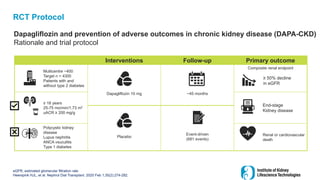
RCT Protocol
Dapagliflozin andprevention of adverse outcomes in chronic kidney disease (DAPA-CKD)
Rationale and trial protocol
eGFR, estimated glomerular filtration rate
Heerspink HJL, et al. Nephrol Dial Transplant. 2020 Feb 1;35(2):274-282.
Interventions Follow-up Primary outcome
Multicentre ~400
Target n = 4300
Patients with and
without type 2 diabetes
Dapagliflozin 10 mg ~45 months
Composite renal endpoint
≥ 18 years
25-75 mo/min/1.73 m2
uACR ≥ 200 mg/g
End-stage
Kidney disease
Placebo
Event-driven
(681 events)
Polycystic kidney
disease
Lupus nephritis
ANCA vsuculitis
Type 1 diabetes
Renal or cardiovascular
death
≥ 50% decline
in eGFR
DAPA CKD
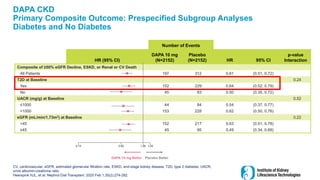
Primary CompositeOutcome: Prespecified Subgroup Analyses
Diabetes and No Diabetes
CV, cardiovascular; eGFR, estimated glomerular filtration rate; ESKD, end-stage kidney disease; T2D, type 2 diabetes; UACR,
urine albumin-creatinine ratio
Heerspink HJL, et al. Nephrol Dial Transplant. 2020 Feb 1;35(2):274-282.
Number of Events
HR (95% CI)
DAPA 10 mg
(N=2152)
Placebo
(N=2152) HR 95% CI
p-value
Interaction
Composite of ≥50% eGFR Decline, ESKD, or Renal or CV Death
All Patients 197 312 0.61 (0.51, 0.72)
T2D at Baseline 0.24
Yes 152 229 0.64 (0.52, 0.79)
No 45 83 0.50 (0.35, 0.72)
UACR (mg/g) at Baseline 0.52
≤1000 44 84 0.54 (0.37, 0.77)
>1000 153 228 0.62 (0.50, 0.76)
eGFR (mL/min/1.73m2) at Baseline 0.22
<45 152 217 0.63 (0.51, 0.78)
≥45 45 95 0.49 (0.34, 0.69)
0.13 0.50 1.00 1.25
DAPA 10 mg Better Placebo Better
43.
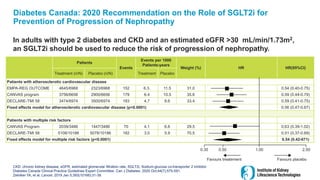
Diabetes Canada: 2020Recommendation on the Role of SGLT2i for
Prevention of Progression of Nephropathy
In adults with type 2 diabetes and CKD and an estimated eGFR >30 mL/min/1.73m2,
an SGLT2i should be used to reduce the risk of progression of nephropathy.
CKD, chronic kidney disease; eGFR, estimated glomerular filtration rate; SGLT2i, Sodium-glucose co-transporter 2 inhibitor
Diabetes Canada Clinical Practice Guidelines Expert Committee. Can J Diabetes. 2020 Oct;44(7):575-591.
Zelniker TA, et al. Lancet. 2019 Jan 5;393(10166):31-39.
Patients
Events
Events per 1000
Patients-years
Weight (%) HR HR(95%CI)
Treatment (n/N) Placebo (n/N) Treatment Placebo
Patients with atherosclerotic cardiovascular disease
EMPA-REG OUTCOME 4645/6968 2323/6968 152 6.3. 11.5 31.0 0.54 (0.40-0.75)
CANVAS program 3756/6656 2900/6656 179 6.4 10.5 35.6 0.59 (0.44-0.79)
DECLARE-TMI 58 3474/6974 3500/6974 183 4.7 8.6 33.4 0.59 (0.41-0.75)
Fixed effects model for atherosclerotic cardiovascular disease (p<0.0001) 0.56 (0.47-0.67)
Patients with multiple risk factors
CANVAS Program 2039/3486 1447/3486 70 4.1 6.6 29.5 0.63 (0.39-1.02)
DECLARE-TMI 58 5108/10186 5078/10186 182 3.0 5.9 70.5 0.51 (0.37-0.69)
Fixed effects model for multiple risk factors (p<0.0001) 0.54 (0.42-071)
0.35 0.50 1.00 2.50
Favours treatement Favours placebo
44.
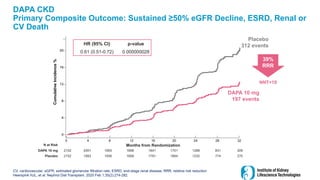
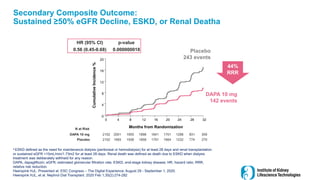
Secondary Composite Outcome:
Sustained≥50% eGFR Decline, ESKD, or Renal Deatha
a ESKD defined as the need for maintenance dialysis (peritoneal or hemodialysis) for at least 28 days and renal transplantation
or sustained eGFR <15mL/min/1.73m2 for at least 28 days. Renal death was defined as death due to ESKD when dialysis
treatment was deliberately withheld for any reason.
DAPA, dapagliflozin; eGFR, estimated glomerular filtration rate; ESKD, end-stage kidney disease; HR, hazard ratio; RRR,
relative risk reduction.
Heerspink HJL. Presented at: ESC Congress – The Digital Experience; August 29 - September 1, 2020.
Heerspink HJL, et al. Nephrol Dial Transplant. 2020 Feb 1;35(2):274-282
2152 2001 1955 1898 1841 1701 1288 831 309
2152 1993 1936 1858 1791 1664 1232 774 270
DAPA 10 mg
Placebo
DAPA 10 mg
142 events
Placebo
243 events
0
4
8
12
16
20
0 4 8 12 16 20 24 28 32
Months from Randomization
Cumulative
Incidence
%
N at Risk
HR (95% CI) p-value
0.56 (0.45-0.68) 0.000000018
44%
RRR
45.
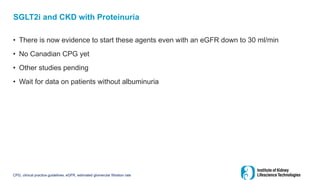
SGLT2i and CKDwith Proteinuria
• There is now evidence to start these agents even with an eGFR down to 30 ml/min
• No Canadian CPG yet
• Other studies pending
• Wait for data on patients without albuminuria
CPG, clinical practice guidelines; eGFR, estimated glomerular filtration rate
46.
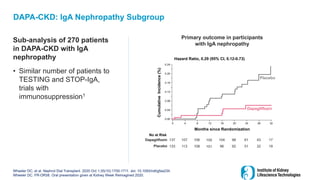
DAPA-CKD: IgA NephropathySubgroup
Sub-analysis of 270 patients
in DAPA-CKD with IgA
nephropathy
• Similar number of patients to
TESTING and STOP-IgA,
trials with
immunosuppression1
Wheeler DC, et al. Nephrol Dial Transplant. 2020 Oct 1;35(10):1700-1711. doi: 10.1093/ndt/gfaa234.
Wheeler DC. FR-OR58. Oral presentation given at Kidney Week Reimagined 2020.
Primary outcome in participants
with IgA nephropathy
0.00
0.12
0.04
0.24
Months since Randomization
Cumulative
Incidence
(%)
0 4 12 16 20 24 28 32
Hazard Ratio, 0.29 (95% CI, 0.12-0.73)
8
0.08
0.16
0.20
Placebo
Dapagliflozin
No at Risk
137 107 106 104 98 61 43 17
Dapagliflozin 105
133 113 108 96 92 51 32 19
Placebo 101
47.
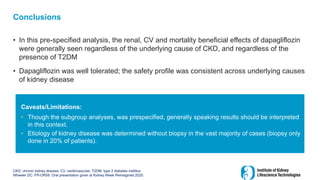
Conclusions
• In thispre-specified analysis, the renal, CV and mortality beneficial effects of dapagliflozin
were generally seen regardless of the underlying cause of CKD, and regardless of the
presence of T2DM
• Dapagliflozin was well tolerated; the safety profile was consistent across underlying causes
of kidney disease
CKD, chronic kidney disease; CV, cardiovascular; T2DM, type 2 diabetes mellitus
Wheeler DC. FR-OR58. Oral presentation given at Kidney Week Reimagined 2020.
Caveats/Limitations:
• Though the subgroup analyses, was prespecified, generally speaking results should be interpreted
in this context.
• Etiology of kidney disease was determined without biopsy in the vast majority of cases (biopsy only
done in 20% of patients).
48.
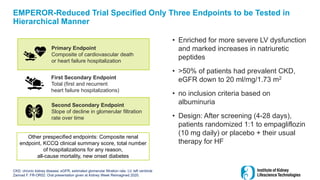
Primary Endpoint
Composite ofcardiovascular death
or heart failure hospitalization
First Secondary Endpoint
Total (first and recurrent
heart failure hospitalizations)
Second Secondary Endpoint
Slope of decline in glomerular filtration
rate over time
Other prespecified endpoints: Composite renal
endpoint, KCCQ clinical summary score, total number
of hospitalizations for any reason,
all-cause mortality, new onset diabetes
EMPEROR-Reduced Trial Specified Only Three Endpoints to be Tested in
Hierarchical Manner
• Enriched for more severe LV dysfunction
and marked increases in natriuretic
peptides
• >50% of patients had prevalent CKD,
eGFR down to 20 ml/mg/1.73 m2
• no inclusion criteria based on
albuminuria
• Design: After screening (4-28 days),
patients randomized 1:1 to empagliflozin
(10 mg daily) or placebo + their usual
therapy for HF
48
CKD, chronic kidney disease; eGFR, estimated glomerular filtration rate; LV, left ventricle
Zannad F. FR-OR52: Oral presentation given at Kidney Week Reimagined 2020.
49.
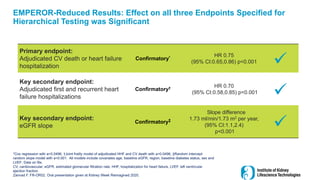
EMPEROR-Reduced Results: Effecton all three Endpoints Specified for
Hierarchical Testing was Significant
Primary endpoint:
Adjudicated CV death or heart failure
hospitalization
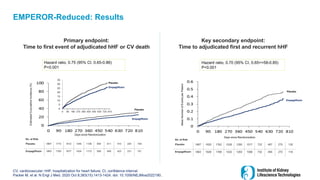
Confirmatory* HR 0.75
(95% CI:0.65,0.86) p<0.001
Key secondary endpoint:
Adjudicated first and recurrent heart
failure hospitalizations
Confirmatory† HR 0.70
(95% CI:0.58,0.85) p<0.001
Key secondary endpoint:
eGFR slope
Confirmatory‡
Slope difference
1.73 ml/min/1.73 m2 per year,
(95% CI:1.1,2.4)
p<0.001
*Cox regression with a=0.0496, †Joint frailty model of adjudicated HHF and CV death with a=0.0496, ‡Random intercept
random slope model with a=0.001. All models include covariates age, baseline eGFR, region, baseline diabetes status, sex and
LVEF; Data on file.
CV, cardiovascular; eGFR, estimated glomerular filtration rate; HHF, hospitalization for heart failure, LVEF, left ventricular
ejection fraction.
Zannad F. FR-OR52. Oral presentation given at Kidney Week Reimagined 2020.
50.
EMPEROR-Reduced: Results
CV, cardiovascular;hHF, hospitalization for heart failure; CI, confidence interval.
Packer M, et al. N Engl J Med. 2020 Oct 8;383(15):1413-1424. doi: 10.1056/NEJMoa2022190..
Days since Randomization
Estimated
Cumulative
Incidence
(%)
No. at Risk
Placebo 1867 1715 1612 1345 1108 854 611 410 224 109
Empagliflozin 1863 1763 1677 1424 1172 909 645 423 231 101
0
5
10
15
20
25
30
35
0 90 180 270 360 450 540 630 720 810
Hazard ratio, 0.75 (95% CI, 0.65-0.86)
P<0.001
Placebo
Empagliflozin
Placebo
Empagliflozin
No. at Risk
Placebo 1867 1820 1762 1526 1285 1017 732 497 275 135
Empagliflozin 1863 1826 1768 1532 1283 1008 732 495 272 118
Days since Randomization
Mean
Number
of
Events
per
Patient
Placebo
Empagliflozin
Hazard ratio, 0.70 (95% CI, 0.65==58-0.85)
P<0.001
Primary endpoint:
Time to first event of adjudicated hHF or CV death
Key secondary endpoint:
Time to adjudicated first and recurrent hHF
51.
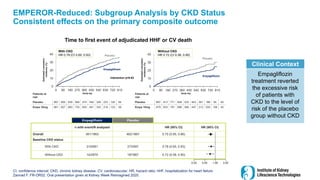
EMPEROR-Reduced: Subgroup Analysisby CKD Status
Consistent effects on the primary composite outcome
CI, confidence interval; CKD, chronic kidney disease; CV, cardiovascular; HR, hazard ratio; hHF, hospitalization for heart failure
Zannad F. FR-OR52. Oral presentation given at Kidney Week Reimagined 2020.
Empagliflozin
treatment reverted
the excessive risk
of patients with
CKD to the level of
risk of the placebo
group without CKD
Clinical Context
Patients at
risk
Placebo 867 813 771 658 533 403 281 186 95 45
Empa 10mg 879 833 791 696 566 447 313 205 108 43
0
10
20
30
40
0 90 180 270 360 450 540 630 720 810
0
10
20
30
40
0 90 180 270 360 450 540 630 720 810
Time to first event of adjudicated HHF or CV death
Estimated
cumulative
incidence
(%)
Estimated
cumulative
incidence
(%)
Study day
Without CKD
HR 0.72 (CI 0.58, 0.90)
With CKD
HR 0.78 (CI 0.65, 0.93)
Interaction p=0.63
Empagliflozin
Empagliflozin
Placebo
Placebo
Patients at
risk
Placebo 997 900 839 685 574 450 329 223 126 64
Empa 10mg 981 927 883 725 604 461 332 218 123 58
Empagliflozin Placebo
n with event/N analyzed HR (95% CI) HR (95% CI)
Overall 361/1863 462/1867 0.75 (0.65, 0.86)
Baseline CKD status
With CKD 219/981 273/997 0.78 (0.65, 0.93)
Without CKD 142/879 187/867 0.72 (0.58, 0.90)
0.25 0.50 1.00 2.00
Study day
52.
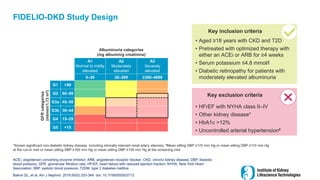
FIDELIO-DKD Study Design
52
ACEi,angiotensin converting enzyme inhibitor; ARB, angiotensin receptor blocker; CKD, chronic kidney disease; DBP, diastolic
blood pressure; GFR, glomerular filtration rate; HFrEF, heart failure with reduced ejection fraction; NYHA, New York Heart
Association; SBP, systolic blood pressure; T2DM, type 2 diabetes mellitus
Bakris GL, et al. Am J Nephrol. 2019;50(5):333-344. doi: 10.1159/000503713.
*Known significant non-diabetic kidney disease, including clinically relevant renal artery stenosis; #Mean sitting SBP ≥170 mm Hg or mean sitting DBP ≥110 mm Hg
at the run-in visit or mean sitting SBP ≥160 mm Hg or mean sitting DBP ≥100 mm Hg at the screening visit
Albuminuria categories
(mg albumin/g creatinine)
A1
Normal to mildly
elevated
A2
Moderately
elevated
A3
Severely
elevated
0–29 30–299 ≥300–4999
GFR
categories
(ml/min/1.73
m
2
)
G1 >90
G2 60–89
G3a 45–59
G3b 30–44
G4 15–29
G5 <15
• Aged ≥18 years with CKD and T2D
• Pretreated with optimized therapy with
either an ACEi or ARB for ≥4 weeks
• Serum potassium ≤4.8 mmol/l
• Diabetic retinopathy for patients with
moderately elevated albuminuria
Key inclusion criteria
• HFrEF with NYHA class II–IV
• Other kidney disease*
• HbA1c >12%
• Uncontrolled arterial hypertension#
Key exclusion criteria
53.
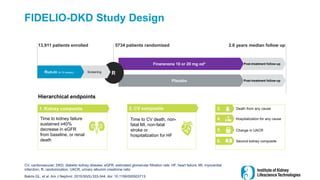
FIDELIO-DKD Study Design
CV,cardiovascular; DKD, diabetic kidney disease; eGFR, estimated glomerular filtration rate; HF, heart failure; MI, myocardial
infarction; R, randomization; UACR, urinary albumin creatinine ratio
Bakris GL, et al. Am J Nephrol. 2019;50(5):333-344. doi: 10.1159/000503713.
Post-treatment follow-up
Post-treatment follow-up
Finerenone 10 or 20 mg od*
Placebo
R
Screening
Run-in (4-16 weeks)
13,911 patients enrolled 5734 patients randomized 2.6 years median follow up
Hierarchical endpoints
2. CV composite
Time to CV death, non-
fatal MI, non-fatal
stroke or
hospitalization for HF
1. Kidney composite
Time to kidney failure
sustained ≥40%
decrease in eGFR
from baseline, or renal
death
Death from any cause
Second kidney composite
Hospitalization for any cause
Change in UACR
3.
4.
5.
6.
54.
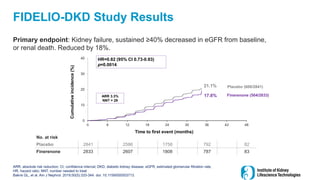
FIDELIO-DKD Study Results
Primaryendpoint: Kidney failure, sustained ≥40% decreased in eGFR from baseline,
or renal death. Reduced by 18%.
ARR, absolute risk reduction; CI, confidence interval; DKD, diabetic kidney disease; eGFR, estimated glomerular filtration rate;
HR, hazard ratio; NNT, number needed to treat
Bakris GL, et al. Am J Nephrol. 2019;50(5):333-344. doi: 10.1159/000503713.
No. at risk
Placebo 2841 2586 1758 792 82
Finerenone 2833 2607 1808 787 83
0
10
20
30
40
0 6 12 18 24 30 36 42 48
HR=0.82 (95% CI 0.73-0.93)
p=0.0014
Cumulative
incidence
(%)
Time to first event (months)
Placebo (600/2841)
Finerenone (504/2833)
ARR 3.3%
NNT = 29
21.1%
17.8%
55.
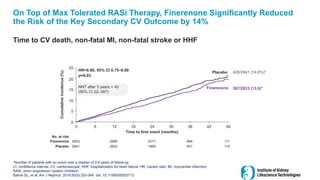
On Top ofMax Tolerated RASi Therapy, Finerenone Significantly Reduced
the Risk of the Key Secondary CV Outcome by 14%
Time to CV death, non-fatal MI, non-fatal stroke or HHF
*Number of patients with an event over a median of 2.6 years of follow-up
CI, confidence interval; CV, cardiovascular; HHF, hospitalization for heart failure; HR, hazard ratio; MI, myocardial infarction;
RASi, renin–angiotensin system inhibition
Bakris GL, et al. Am J Nephrol. 2019;50(5):333-344. doi: 10.1159/000503713.
Cumulative
incidence
(%)
Time to first event (months)
2841 2653 1969 951 115
2833 2688 2017 984 111
No. at risk
Placebo
Finerenone
HR=0.86; 95% CI 0.75–0.99
p=0.03
NNT after 3 years = 42
(95% CI 22–397)
0
0
6 12 18 24 30 36 42 48
10
20
15
25
5
Placebo
Finerenone 367/2833 (13.0)*
420/2841 (14.8%)*
56.
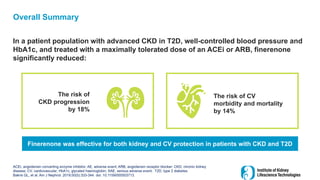
Overall Summary
In apatient population with advanced CKD in T2D, well-controlled blood pressure and
HbA1c, and treated with a maximally tolerated dose of an ACEi or ARB, finerenone
significantly reduced:
ACEi, angiotensin converting enzyme inhibitor; AE, adverse event; ARB, angiotensin receptor blocker; CKD, chronic kidney
disease; CV, cardiovascular; HbA1c, glycated haemoglobin; SAE, serious adverse event; T2D, type 2 diabetes
Bakris GL, et al. Am J Nephrol. 2019;50(5):333-344. doi: 10.1159/000503713.
The risk of
CKD progression
by 18%
The risk of CV
morbidity and mortality
by 14%
Finerenone was effective for both kidney and CV protection in patients with CKD and T2D
57.
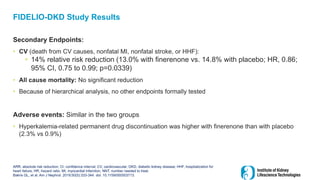
FIDELIO-DKD Study Results
SecondaryEndpoints:
• CV (death from CV causes, nonfatal MI, nonfatal stroke, or HHF):
• 14% relative risk reduction (13.0% with finerenone vs. 14.8% with placebo; HR, 0.86;
95% CI, 0.75 to 0.99; p=0.0339)
• All cause mortality: No significant reduction
• Because of hierarchical analysis, no other endpoints formally tested
Adverse events: Similar in the two groups
• Hyperkalemia-related permanent drug discontinuation was higher with finerenone than with placebo
(2.3% vs 0.9%)
ARR, absolute risk reduction; CI, confidence interval; CV, cardiovascular; DKD, diabetic kidney disease; HHF, hospitalization for
heart failure; HR, hazard ratio; MI, myocardial infarction; NNT, number needed to treat.
Bakris GL, et al. Am J Nephrol. 2019;50(5):333-344. doi: 10.1159/000503713.
58.
Conclusions
ACEi, angiotensin convertingenzyme inhibitor; ARB, angiotensin receptor blocker; CKD, chronic kidney disease;
SGLT2i, sodium-glucose cotransporter-2 inhibitor
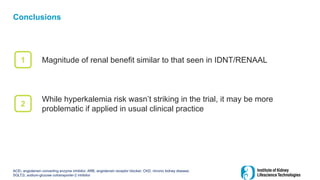
Magnitude of renal benefit similar to that seen in IDNT/RENAAL
1
2
While hyperkalemia risk wasn’t striking in the trial, it may be more
problematic if applied in usual clinical practice
59.
Implications for CanadianClinical Practice
CKD, chronic kidney disease; ACEi, angiotensin converting enzyme inhibitor; ARB, angiotensin receptor blocker; SGLT2i,
sodium-glucose cotransporter-2 inhibitor.
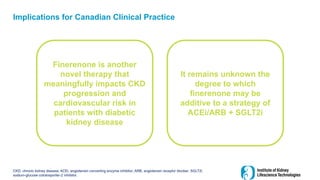
Finerenone is another
novel therapy that
meaningfully impacts CKD
progression and
cardiovascular risk in
patients with diabetic
kidney disease
It remains unknown the
degree to which
finerenone may be
additive to a strategy of
ACEi/ARB + SGLT2i