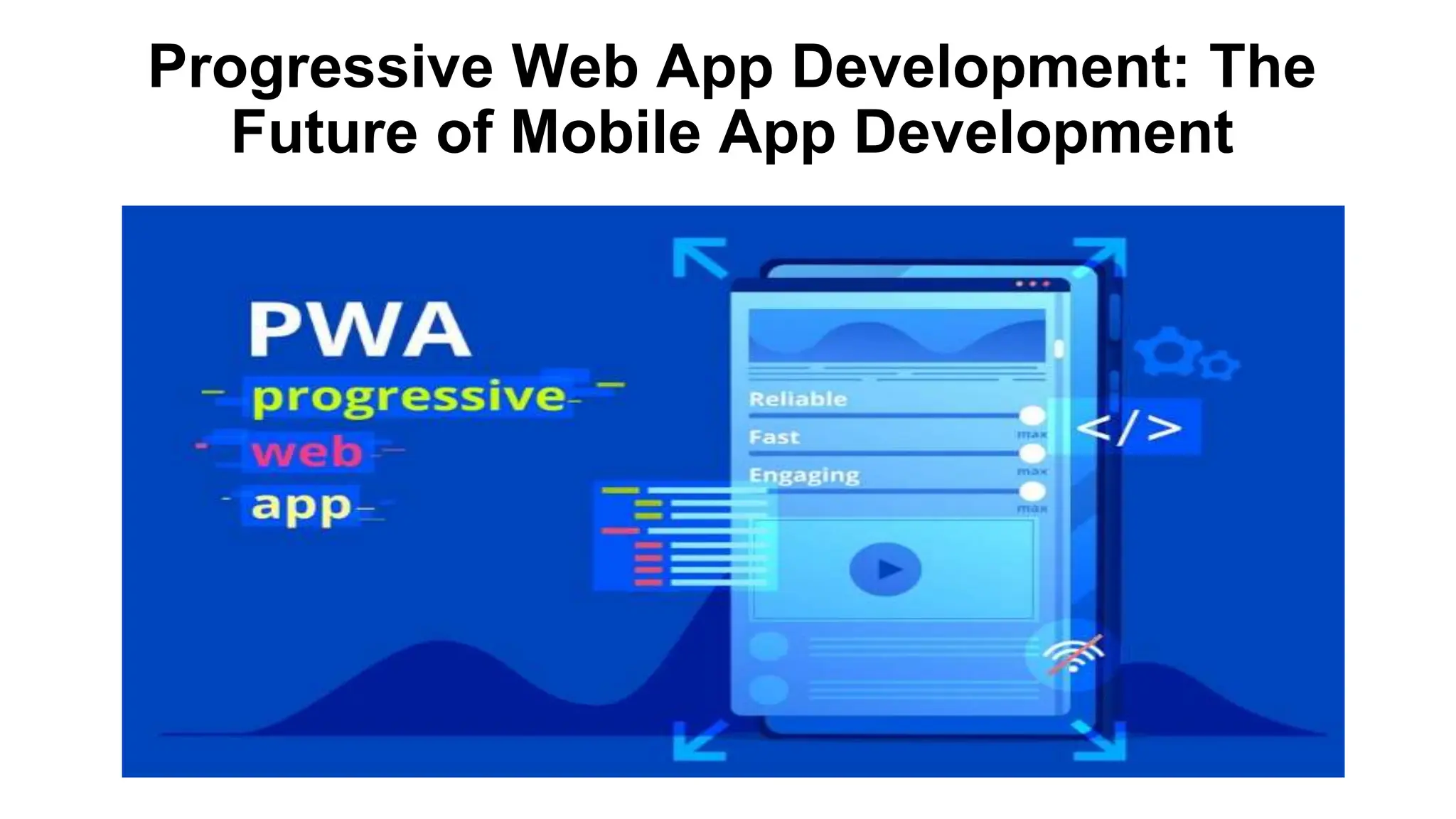
Progressive Web App Development: The
Future of Mobile App Development
Introduction
• In today's fast-paced digital world, businesses need to deliver seamless, engaging
experiences to their users.
• Mobile app development has evolved significantly, offering various approaches to meet
these needs.
• One of the most promising advancements in this field is Progressive Web App (PWA)
development.
• PWAs combine the best of web and mobile apps, providing a robust, user-friendly
solution that works across all devices.
What is a Progressive Web App (PWA)?
• A Progressive Web App (PWA) is a type of application software delivered through
the web, built using common web technologies including HTML, CSS, and
JavaScript.
• Unlike traditional web applications, PWAs are designed to work on any platform
that uses a standards-compliant browser.
• This includes both desktop and mobile devices.
Key Features of Progressive Web Apps
• Responsive Design: PWAs are designed to work on various screen sizes, ensuring a seamless
user experience on both desktop and mobile devices.
• Offline Capability: PWAs can work offline or on low-quality networks by caching essential
resources, providing an uninterrupted experience.
• App-like Feel: They offer a user experience similar to native apps, including fast loading
times, smooth animations, and a full-screen mode.
• Push Notifications: PWAs can send push notifications, keeping users engaged even when the
app is not in use.
• Automatic Updates: Unlike traditional apps, PWAs update automatically, ensuring users
always have the latest version.
• Secure: PWAs are served via HTTPS, ensuring that the connection between the user and the
app is secure.
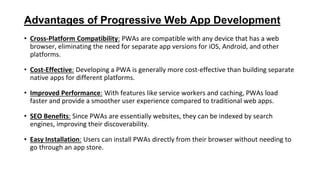
Advantages of Progressive Web App Development
• Cross-Platform Compatibility: PWAs are compatible with any device that has a web
browser, eliminating the need for separate app versions for iOS, Android, and other
platforms.
• Cost-Effective: Developing a PWA is generally more cost-effective than building separate
native apps for different platforms.
• Improved Performance: With features like service workers and caching, PWAs load
faster and provide a smoother user experience compared to traditional web apps.
• SEO Benefits: Since PWAs are essentially websites, they can be indexed by search
engines, improving their discoverability.
• Easy Installation: Users can install PWAs directly from their browser without needing to
go through an app store.
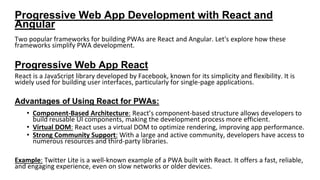
Progressive Web App Development with React and
Angular
Two popular frameworks for building PWAs are React and Angular. Let's explore how these
frameworks simplify PWA development.
Progressive Web App React
React is a JavaScript library developed by Facebook, known for its simplicity and flexibility. It is
widely used for building user interfaces, particularly for single-page applications.
Advantages of Using React for PWAs:
• Component-Based Architecture: React’s component-based structure allows developers to
build reusable UI components, making the development process more efficient.
• Virtual DOM: React uses a virtual DOM to optimize rendering, improving app performance.
• Strong Community Support: With a large and active community, developers have access to
numerous resources and third-party libraries.
Example: Twitter Lite is a well-known example of a PWA built with React. It offers a fast, reliable,
and engaging experience, even on slow networks or older devices.
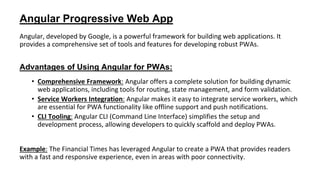
Angular Progressive Web App
Angular, developed by Google, is a powerful framework for building web applications. It
provides a comprehensive set of tools and features for developing robust PWAs.
Advantages of Using Angular for PWAs:
• Comprehensive Framework: Angular offers a complete solution for building dynamic
web applications, including tools for routing, state management, and form validation.
• Service Workers Integration: Angular makes it easy to integrate service workers, which
are essential for PWA functionality like offline support and push notifications.
• CLI Tooling: Angular CLI (Command Line Interface) simplifies the setup and
development process, allowing developers to quickly scaffold and deploy PWAs.
Example: The Financial Times has leveraged Angular to create a PWA that provides readers
with a fast and responsive experience, even in areas with poor connectivity.
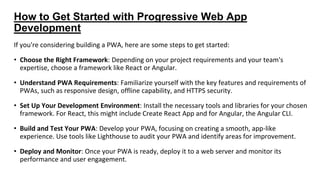
How to Get Started with Progressive Web App
Development
If you're considering building a PWA, here are some steps to get started:
• Choose the Right Framework: Depending on your project requirements and your team's
expertise, choose a framework like React or Angular.
• Understand PWA Requirements: Familiarize yourself with the key features and requirements of
PWAs, such as responsive design, offline capability, and HTTPS security.
• Set Up Your Development Environment: Install the necessary tools and libraries for your chosen
framework. For React, this might include Create React App and for Angular, the Angular CLI.
• Build and Test Your PWA: Develop your PWA, focusing on creating a smooth, app-like
experience. Use tools like Lighthouse to audit your PWA and identify areas for improvement.
• Deploy and Monitor: Once your PWA is ready, deploy it to a web server and monitor its
performance and user engagement.
Conclusion
• Progressive Web App development represents the future of mobile app development,
offering a powerful alternative to traditional web and native apps.
• With frameworks like React and Angular, building a PWA is more accessible than ever.
• Whether you're looking to improve user engagement, reduce development costs, or
enhance performance, PWAs offer a compelling solution.
• Ready to enhance your web app experience? Contact us at Stigasoft for expert
Progressive Web App development services that you can trust.

Progressive Web App Development: The Future of Mobile App Development

  • 1.
    Progressive Web AppDevelopment: The Future of Mobile App Development
  • 2.
    Introduction • In today'sfast-paced digital world, businesses need to deliver seamless, engaging experiences to their users. • Mobile app development has evolved significantly, offering various approaches to meet these needs. • One of the most promising advancements in this field is Progressive Web App (PWA) development. • PWAs combine the best of web and mobile apps, providing a robust, user-friendly solution that works across all devices.
  • 3.
    What is aProgressive Web App (PWA)? • A Progressive Web App (PWA) is a type of application software delivered through the web, built using common web technologies including HTML, CSS, and JavaScript. • Unlike traditional web applications, PWAs are designed to work on any platform that uses a standards-compliant browser. • This includes both desktop and mobile devices.
  • 4.
    Key Features ofProgressive Web Apps • Responsive Design: PWAs are designed to work on various screen sizes, ensuring a seamless user experience on both desktop and mobile devices. • Offline Capability: PWAs can work offline or on low-quality networks by caching essential resources, providing an uninterrupted experience. • App-like Feel: They offer a user experience similar to native apps, including fast loading times, smooth animations, and a full-screen mode. • Push Notifications: PWAs can send push notifications, keeping users engaged even when the app is not in use. • Automatic Updates: Unlike traditional apps, PWAs update automatically, ensuring users always have the latest version. • Secure: PWAs are served via HTTPS, ensuring that the connection between the user and the app is secure.
  • 5.
    Advantages of ProgressiveWeb App Development • Cross-Platform Compatibility: PWAs are compatible with any device that has a web browser, eliminating the need for separate app versions for iOS, Android, and other platforms. • Cost-Effective: Developing a PWA is generally more cost-effective than building separate native apps for different platforms. • Improved Performance: With features like service workers and caching, PWAs load faster and provide a smoother user experience compared to traditional web apps. • SEO Benefits: Since PWAs are essentially websites, they can be indexed by search engines, improving their discoverability. • Easy Installation: Users can install PWAs directly from their browser without needing to go through an app store.
  • 6.
    Progressive Web AppDevelopment with React and Angular Two popular frameworks for building PWAs are React and Angular. Let's explore how these frameworks simplify PWA development. Progressive Web App React React is a JavaScript library developed by Facebook, known for its simplicity and flexibility. It is widely used for building user interfaces, particularly for single-page applications. Advantages of Using React for PWAs: • Component-Based Architecture: React’s component-based structure allows developers to build reusable UI components, making the development process more efficient. • Virtual DOM: React uses a virtual DOM to optimize rendering, improving app performance. • Strong Community Support: With a large and active community, developers have access to numerous resources and third-party libraries. Example: Twitter Lite is a well-known example of a PWA built with React. It offers a fast, reliable, and engaging experience, even on slow networks or older devices.
  • 7.
    Angular Progressive WebApp Angular, developed by Google, is a powerful framework for building web applications. It provides a comprehensive set of tools and features for developing robust PWAs. Advantages of Using Angular for PWAs: • Comprehensive Framework: Angular offers a complete solution for building dynamic web applications, including tools for routing, state management, and form validation. • Service Workers Integration: Angular makes it easy to integrate service workers, which are essential for PWA functionality like offline support and push notifications. • CLI Tooling: Angular CLI (Command Line Interface) simplifies the setup and development process, allowing developers to quickly scaffold and deploy PWAs. Example: The Financial Times has leveraged Angular to create a PWA that provides readers with a fast and responsive experience, even in areas with poor connectivity.
  • 8.
    How to GetStarted with Progressive Web App Development If you're considering building a PWA, here are some steps to get started: • Choose the Right Framework: Depending on your project requirements and your team's expertise, choose a framework like React or Angular. • Understand PWA Requirements: Familiarize yourself with the key features and requirements of PWAs, such as responsive design, offline capability, and HTTPS security. • Set Up Your Development Environment: Install the necessary tools and libraries for your chosen framework. For React, this might include Create React App and for Angular, the Angular CLI. • Build and Test Your PWA: Develop your PWA, focusing on creating a smooth, app-like experience. Use tools like Lighthouse to audit your PWA and identify areas for improvement. • Deploy and Monitor: Once your PWA is ready, deploy it to a web server and monitor its performance and user engagement.
  • 9.
    Conclusion • Progressive WebApp development represents the future of mobile app development, offering a powerful alternative to traditional web and native apps. • With frameworks like React and Angular, building a PWA is more accessible than ever. • Whether you're looking to improve user engagement, reduce development costs, or enhance performance, PWAs offer a compelling solution. • Ready to enhance your web app experience? Contact us at Stigasoft for expert Progressive Web App development services that you can trust.