Programmazione di base e avanzata con Java Walter Savitch
Programmazione di base e avanzata con Java Walter Savitch
Programmazione di base e avanzata con Java Walter Savitch
Programmazione di base e avanzata con Java Walter Savitch
Programmazione di base e avanzata con Java Walter Savitch
1.
Programmazione di basee avanzata con Java Walter
Savitch download pdf
https://ebookmass.com/product/programmazione-di-base-e-avanzata-con-
java-walter-savitch/
Visit ebookmass.com today to download the complete set of
ebook or textbook!
2.
Here are somerecommended products for you. Click the link to
download, or explore more at ebookmass.com
Il linguaggio C - Fondamenti e tecniche di programmazione
9th Edition Paul J. Deitel
https://ebookmass.com/product/il-linguaggio-c-fondamenti-e-tecniche-
di-programmazione-9th-edition-paul-j-deitel/
Analisi matematica 1. Esercizi con richiami di teoria
Cristina Marcelli
https://ebookmass.com/product/analisi-matematica-1-esercizi-con-
richiami-di-teoria-cristina-marcelli/
Manuale di psichiatria e psicologia clinica Cinzia Bressi
https://ebookmass.com/product/manuale-di-psichiatria-e-psicologia-
clinica-cinzia-bressi/
Arte di ascoltare e mondi possibili. Come si esce dalle
cornici di cui siamo parte Marianella Sclavi
https://ebookmass.com/product/arte-di-ascoltare-e-mondi-possibili-
come-si-esce-dalle-cornici-di-cui-siamo-parte-marianella-sclavi/
3.
E-book Bersama NabiDi Bulan Suci (seri 1) Syahrul Fatwa
https://ebookmass.com/product/e-book-bersama-nabi-di-bulan-suci-
seri-1-syahrul-fatwa/
E-book Kemungkaran Wanita di Bulan Ramadhan (seri 3)
Syahrul Fatwa
https://ebookmass.com/product/e-book-kemungkaran-wanita-di-bulan-
ramadhan-seri-3-syahrul-fatwa/
Fondamenti Di Botanica Generale. Teoria E Pratica In
Laboratorio Simonetta Pancaldi
https://ebookmass.com/product/fondamenti-di-botanica-generale-teoria-
e-pratica-in-laboratorio-simonetta-pancaldi/
E-book Ibadah Muslimah Di Bulan Penuh Berkah (seri 2)
Syahrul Fatwa
https://ebookmass.com/product/e-book-ibadah-muslimah-di-bulan-penuh-
berkah-seri-2-syahrul-fatwa/
E-book Catatan Faidah Ilmu di Bulan Ramadhan (Revisi) Abu
Ubaidah Yusuf Sidawi
https://ebookmass.com/product/e-book-catatan-faidah-ilmu-di-bulan-
ramadhan-revisi-abu-ubaidah-yusuf-sidawi/
5.
W alter Savitch
PROGRAMMAZIONE
DIBASE E AVANZATA
CON
A cura di Daniela Micucci
JAVA
/
Pearson Learning Solution
Codice di accesso a M y La b
Aula virtuale
Risorse multimediali
Test ed esercizi
Autovalutazione
Pearson eTéxt
a l w a y : l e a r n i n g
6.
Walter Savitch
con lacollaborazione di
Kenrick Mock
I
PROGRAMMAZIONE
DI BASE E AVANZATA
CON JA>^
I Daniela Micucci
Università degli Studi
I di Milano - Bicocca .
Indice
Prefazione aH’edizione italiana
Prefazioneper gli studenti
Guida alla lettura
XV
XIX
XXIII
1.1.2
1.1.3
1.1.4
1.1.5
1.2
Capìtolo 1 Introduzione ai computer e a lava
1.1 Concetti di base sui computer 1
1.1.1 Hardware e memoria 2
Programmi 4
Linguaggi di programmazione, compilatorie interpreti 5
Bytecode Java 7
Class Loader 9
Un assaggio di Java 9
1.2.1 Storia del linguaggio Java 9
1.2.2 Applicazioni e applet 10
1.2.3 II primo programma Java 10
1.2.4 Scrivere, compilare ed eseguireprogrammi Java 14
Concetti di base di programmazione 16
1.3.1 Programmazione a oggetti 16
1.3.2 Algoritmi 19
1.3.3 Collaudo e debugging 20
1.3.4 Riutilizzo del software 21
Riepilogo 23
Esercizi 24
Progetti 25
1.3
1.4
1.5
1.6
Capìtolo 2
2.1
Nozioni dì base
Variabili ed espressioni 27
2.1.1 Variabili 28
2.1.2 Tipi 30
2.1.3 Identificatori Java 32
2.1.4 Istruzioni di assegnamento 34
2.1.5 Semplici operazioni di input 36
2.1.6 Un esempio di output su schermo 37
2.1.7 Costanti 38
2.1.8 Costanti con nome 40
2.1.9 Compatibilità di assegnamento 41
9.
2.1.10 Conversioni ditipo
2.1.11 Operatori aritmetici
2.1.12 Parentesi e regole di precedenza
2.1.13 Operatori di assegnamento ausiliari
2.1.14 Operatori di incremento e decremento
2.1.15 Note aggiuntive sugli operatori di incremento e decremento
Capitolo 3 Flusso di controllo: la selezione
3.1 Istruzione if - e ls e
3.1.1 Istruzione if - e ls e semplice
3.1.2 Espressioni booleane
3.1.3 Istruzioni if - e ls e annidate
3.1.4 Istruzioni if - e ls e multi-ramo
3.1.5 Confronto tra stringhe
3.1.6 Operatore condizionale (opzionale)
3.1.7 11metodo e x it
Tipo boolean
3.2.1 Variabili booleane
3.2.2 Regole di precedenza
3.2.3 Input e output di valori booleani
Istruzione sw itch
3.3.1 Enumerazioni
3.2
3.3
42
44
46
47
53
54
53
2.2 La classe S trin g 55
2.2.1 Stringhe costanti e variabili 55
2.2.2 Concatenazione di stringhe 57
2.2.3 Metodi di S tr in g 60
2.2.4 Elaborazione delle stringhe 61
2.2.5 Caratteri di escape 62
2.2.6 Set di caratteri Unicode 63
2.3 Operazioni di I/O: la tastiera e lo schermo 63
2.3.1 Output su schermo 65
2.3.2 Input da tastiera 70
2.3.3 Altri delimitatori di input (opzionale) 72
2.3.4 Output formattato con p r in tf 73
2.4 Documentazione e stile 74
2.4.1 Nomi significativi per le variabili 74
2.4.2 Commenti 77
2.4.3 Indentazione 77
2.4.4 Utilizzare le costanti con nome 79
2.5 Riepilogo 80
2.6 Esercizi 82
2.7 Progetti
86
86
91
96
98
104
108
109
110
110
112
114
115
119
10.
Indice
Vi,
3.4 Riepilogo
3.5 Esercizi
3.6Progetti
Capitolo 4 Flusso di controllo: i cicli
4.1 Cicli in Java
4.1.1 Istruzione w hi le
4.1.2 Istruzione d o -w h ile
4.1.3 Istruzione fo r
4.1.4 Dichiarare variabili aH’interno di un’istruzione fo r
4.1.5 Usare una virgola in un’istruzione fo r
4.1.6 Istruzione f o r -e a c h
4.2 Programmare con i cicli
4.2.1 II corpo del ciclo
Istruzioni di inizializzazione
Controllare il numero di iterazioni in un ciclo
Istruzioni b re a k e c o n tin u e nei cicli (opzionale)
Cicli difettosi
Tracciare le variabili
Controllo delle asserzioni
4.3
4.4
4.5
4.2.2
4.2.3
4.2.4
4.2.5
4.2.6
4.2.7
Riepilogo
Esercizi
Progetti
120
121
124
127
128
131
142
146
147
148
149
149
150
151
158
159
161
162
164
165
167
Capitolo 5 I metodi: concetti base
5.1 Definizione e invocazioni di metodi
5.1.1 Definire e invocare metodi v o id
5.1.2 Definire metodi che restituiscono un valore
5.1.3 Variabili locali
5.1.4 Blocchi
5.1.5 Parametri di tipo primitivo
5.1.6 Ancora sulPistruzione return
La classe Math
Cosa accade realmente quando si invoca un metodo?
Come scrivere i metodi
5.4.1 Decomposizione
5.4.2 Affrontare i problemi di compilazione
5.4.3 Collaudare i metodi
Riepilogo
Esercizi
Progetti
5.2
5.3
5.4
5.5
5.6
5.7
171
173
175
178
180
181
186
189
191
196
202
202
203
204
205
208
11.
VM I
Indice
6.2
Capitolo 6Array
6.1 Concetti di base sufli array
6.1.1 Creazione « accesso a un array
Dettagli sugli array
La propriesà le n g th
Ulteriori dettagli sugli indici di un array
Inizializzarc gli array
Array parzialmente riempiti
Utilizzare ili ciclo fo r -e a c h con gli array
Utilizzare gli array nei metodi
6.2.1 Variabili indicizzate come argomenti di un metodo
Array come argomenti di un metodo
Argomenti del metodo m ain
Assegnamenta e uguaglianza di array
Metodi che restituiscono array
Metodi con un numero variabile di parametri
Ordinamento e ricerca con gli array
6.3.1 Selection Sort
6.3.2 Altri algoritmi di ordinamento
6.3.3 Ricerca negli array
Array multidimensionali
6.4.1 Fondamenti sugli array multidimensionali
Array multidimensionali come parametri
e come valori restituiti
Rappresentazione Java di array multidimensionali
Array irregobri (opzionale)
6.1.2
6.1.3
6.1.4
6.1.5
6.1.6
6.1.7
6.2.2
6.2.3
6.2.4
6.2.5
6.2.6
6.3
6.4
6.4.2
6.5
6.6
6.7
6.4.3
6.4.4
Riepilogo
Esercizi
Progetti
211
212
215
218
220
223
223
224
226
226
228
230
231
234
236
240
240
244
245
245
247
249
251
252
254
255
258
Capìtolo 7 Rìcorsìone
7.1 Le basi della ricorsionc
7.1.1 Come funziona la ticorsione
7.1.2 Ricorsionc infinita
7.1.3 Lo stack e la ticorsione
7.1.4 Confronto tra metodi ricorsivi e iterativi
7.1.5 Metodi ricorsivi che restituiscono un valore
7.2 Programmare utilizzando la ticorsione
7.2.1 Tecniche di progettazione ricorsiva
7.3 Riepilogo
7.4 Esercizi
7.5 Progetti
263
270
274
275
276
277
283
283
296
297
299
12.
Indice ix
Capitolo 8Definire classi e creare oggetti
8.1 Definizione di classi
8.1.1 File delle classi e compilazione
8.1.2 Variabili di istanza
8.1.3 Metodi di istanza
8.1.4 La parola chiave t h is
8.2 Information hiding e incapsulamento
8.2.1 Information hiding
8.2.2 Commenti con precondizioni e postcondizioni
8.2.3 I modificatori d’accesso p u b lic e p r iv a te
8.2.4 Metodi get e set
8.2.5 La parola chiave t h is applicata alle variabih di istanza
8.2.6 Metodi che invocano altri metodi
8.2.7 Incapsulamento
8.2.8 Documentazione automatica con javad o c
8.2.9 Diagrammi di classe UML
8.3 Oggetti e riferimenti
8.3.1 Variabili di tipo classe
Definire un metodo e q u a ls per una classe
Metodi booleani
Test di unità
Parametri di tipo classe
8.4
8.5
8.6
8.3.2
8.3.3
8.3.4
8.3.5
Riepilogo
Esercizi
Progetti
306
308
308
311
316
317
318
318
319
325
331
332
337
340
340
341
341
348
352
354
356
361
363
366
Capitolo 9 Approfondimenti su classi, oggetti e metodi
9.1 Costruttori 374
9.1.1 Definire i costruttori 374
9.1.2 Invocare metodi da costruttori 382
9.1.3 Invocare un costruttore da un altro costruttore 384
9.1.4 La costante n u li 386
9.2 Variabili statiche e metodi statici 388
9.2.1 Variabili statiche 388
9.2.2 Metodi statici 389
9.2.3 Suddividere le attività del metodo mainin sotto-attività 395
9.2.4 Aggiungere un metodo m ain a una classe 397
9.2.5 Classi wrapper 398
9.3 Overloading 402
9.3.1 Concetti di base deU’overloading 402
9.3.2 Overloading e conversione automaticadi tipo 405
9.3.3 Overloading e tipo di ritorno 408
9.4 Information hiding rivisitato 414
9.4.1 Privacy leale 414
13.
X Indice
9.5 Rappresentarein UML le relazioni associative fra classi 418
9.6 Array nelle definizioni di classe 421
9.6.1 Array di tipi primitivi 421
9.6.2 Array di riferimenti 427
9.7 Enumerazioni come classi 441
9.8 Package 443
9.8.1 Package e istruzione im port 443
9.8.2 Nomi di package e cartelle 445
9.8.3 Conflitti tra nomi 447
9.9 Riepilogo 448
9.10 Esercizi 449
9.11 Progetti 453
Capitolo 10 Ereditarietà
10.1 Concetti di base sull’ereditarietà
10.1.1 Classi derivate
10.1.2 Metodi ridefiniti (overriding)
10.1.3 Cambiare il tipo di ritorno di un metodo ridefinito
10.1.4 Cambiare i modificatori d’accesso di un metodo ridefinito
10.1.5 Overriding vs. overloading
10.1.6 Ereditarietà nei diagrammi UML
Incapsulamento ed ereditarietà
10.2.1 Uso delle variabili di istanza private della classe base
10.2.2 I metodi privati non sono accessibili
10.2.3 Modalità d’accesso p ro tected (opzionale)
Programmare con l’ereditarietà
10.3.1 Costruttori nelle classi derivate
10.3.2 Ancora sul metodo th is
10.3.3 Invocare un metodo ridefinito
10.3.4 Un altro modo per definire il metodo equals
i
nNonLaureato
Compatibilità di tipo
La classe Object
Un metodo equals migliorato
10.2
10.3
10.4
10.5
10.6
10.3.5
10.3.6
10.3.7
Riepilogo
Esercizi
Progetti
Capitolo 11
11.1
Polimorfismo, classi astratte e interfacce
461
462
466
467
468
468
469
470
471
472
473
474
474
476
477
481
482
485
486
488
489
490
Polimorfismo 496
11.1.1 BLnding dinamico 496
11.1.2 Binding dinamico con toString 505
11.1.3 Il modificatore final 506
11.1.4 Metodi per cui il binding dinamico non viene applicato 507
11.1.5 Downcast e upcast 509
14.
Indice XI
11.2 Classiastratte
11.2.1 Concetti di base
11.2.2 La classe astratta è un tipo
11.2.3 Ulteriori dettagli
11.3 Interfacce
11.3.1 Interfacce di classi
11.3.2 Interfacce Java
11.3.3 Implementare un’interfaccia
11.3.4 Un interfaccia come un tipo
11.3.5 Estendere un’interfaccia
11.4 Riepilogo
11.5 Esercizi
11.6 Progetti
523
523
526
527
531
531
532
533
536
537
542
542
544
Capitolo 12 ArrayList e generici
12.1 Strutture di dati basate su array 550
12.1.1 La c
l
a
s
s
eArrayList 550
12.1.2 Creare un’istanza di ArrayList 551
12.1.3 Utilizzare i metodi di ArrayList 552
12.1.4 Classi parametriche e tipi di dato generico 557
12.2 Generici 558
12.2.1 Fondamenti 558
12.2.2 Vincoli sui tipi parametrici 568
12.2.3 Metodi generici 570
12.2.4 Ereditarietà con classi generiche 571
12.3 Riepilogo 573
12.4 Esercizi 573
12.5 Progetti 574
Capitolo 13 Eccezioni
13.1 Concetti di base sulla gestione delle eccezioni
13.1.1 Eccezioni in Java
13.1.2 Classi di eccezioni predefinite
13.2 Definire nuove classi di eccezioni
13.3 Approfondimenti sulle classi di eccezioni
13.3.1 Dichiarare le eccezioni
Tipi di eccezioni
Errori
Throw e catch multipli
Blocco finally
Rilanciare un’eccezione (opzionale)
13.4
13.5
13.6
13.3.2
13.3.3
13.3.4
13.3.5
13.3.6
Riepilogo
Esercizi
Progetti
575
576
585
586
592
592
595
596
598
603
604
614
614
617
15.
Visit https://ebookmass.com todayto explore
a vast collection of ebooks across various
genres, available in popular formats like
PDF, EPUB, and MOBI, fully compatible with
all devices. Enjoy a seamless reading
experience and effortlessly download high-
quality materials in just a few simple steps.
Plus, don’t miss out on exciting offers that
let you access a wealth of knowledge at the
best prices!
16.
xn Indice
Capitolo 14Stream e I/O da file
14.1 Introduzione ai flussi dati e all’I/O su file
14.1.1 II concetto di stream
14.1.2 Perché utilizzare TI/O su file?
14.1.3 File di testo e file binari
14.2 I/O con file di testo
14.2.1 Creare un file di testo
14.2.2 Aggiungere dati a un file di testo
14.2.3 Leggere da un file di testo
14.2.4 Leggere un file di testo con la classe Scanner
14.2.5 Leggere un file di testo con la classe BufferedReader
Tecniche generiche per la gestione dei file
14.3.1 La classe F ile
14.3.2 Percorsi
14.3.3 Metodi della classe File
Basi deiri/O con file binali
14.4.1 Creare un file binario
14.4.2 Scrivere valori di tipo primitivo in un file binario
14.4.3 Scrivere stringhe in un file binario
14.4.4 Alcuni dettagli sul metodo writeUTF
14.4.5 Leggere da un file binario
14.4.6 La classe EOFException
I/O su file binari di oggetti e array
14.5.1 I/O binario con oggetti di tipo classe
14.5.2 Alcuni dettagli sulla serializzazione
14.5.3 Array nei file binari
Riepilogo
Esercizi
Progetti
14.3
14.4
14.5
14.6
14.7
14.8
Capìtolo 15 Strutture dati dinamiche
15.1 Liste concatenate
15.1.1 Generalità sulle liste concatenate
15.1.2 Implementare le operazioni di una lista concatenata
15.1.3 Privacy leak
15.1.4 Inner class
15.1.5 Classi nodo come inner class
15.1.6 Iteratori
15.1.7 Iteratori interni ed esterni (opzionale)
15.1.8 L’interfaccia Java I te r a to r
15.1.9 Gestione delle eccezioni con le liste concatenate
15.2 Varianti delle liste concatenate
15.2.1 Liste concatenate doppie
15.2.2 Pile
623
623
624
625
626
626
632
633
633
635
639
640
641
642
647
647
649
651
652
653
657
662
662
666
667
669
669
672
676
676
679
685
685
686
687
697
697
697
702
702
704
17.
Indice X III
15.2.3Code
15.3 Tabelle di hash
15.3.1 Una funzione di hash per le stringhe
15.3.2 Efficienza delle tabelle di
15.4 Insiemi
15.4.1
15.4.2
15.5 Alberi
15.5.1
15.5.2
15.6 Riepilogo
15.7 Esercizi
15.8 Progetti
Operazioni di base sugli insiemi
Efficienza degli insiemi realizzati mediante liste concatenate
Proprietà degli alberi
Efficienza degli alberi di ricerca binaria
Capitolo 16 Collezioni, mappe e iteratoti
16.1
16.2
16.3
16.4
16.5
16.6
Le collezioni
16.1.1 Wildcard
La libreria delle collezioni (Collection Framework)
Classi concrete di tipo collezione
Differenze tra ArrayList<T> e Vector<T>
Versione non parametrica della libreria delle collezioni
16.1.2
16.1.3
16.1.4
16.1.5
Mappe
16.2.1
Iteratori
16.3.1
16.3.2
16.3.3
Riepilogo
Esercizi
Progetti
Classi mappa concrete
Il concetto di iteratore
L’interfaccia Iterator<T>
Iteratori di lista
Capitolo 17 Interfacce utente grafiche
711
714
715
718
719
722
724
725
725
731
732
733
735
741
742
743
749
757
758
759
761
764
764
765
768
772
773
773
17.1 Introduzione 778
17.1.1 Interfacce utente grafiche 778
17.1.2 Programmazione a eventi 778
17.2 Caratteristiche di base della libreria Swing 780
17.2.1 Ulteriori dettagli sui window listener 786
17.2.2 Unità di misura per le dimensioni degli oggetti sullo schermo 786
17.2.3 Ulteriori dettagli sul metodo setvisible 788
17.2.4 Alcuni metodi della classe JFrame 797
17.2.5 Gestori di layout 797
17.3 Pulsanti e action listener 803
17.3.1 Pulsanti 805
17.3.2 Action listener ed eventi di tipo azione 807
18.
X iV
)nriic£_
17.4
17.5
17.6
17.7
17.8
17.9
17.3.3 IIpattern Model-View-Controller
Approfondimenti su finestre ed eventi
17.4.1 L’interfaccia WindowListener
17.4.2 Programmare il pulsante di chiusura
Classi contenitore
17.5.1 La classe JPanel
17.5.2 La c
l
a
s
s
eContainer
I/O di testo nelle interfacce utente grafiche
17.6.1 Aree e campi di testo
17.6.2 Input e output di numeri
17.6.3 Gestire una NumberFormatException
Riepilogo
Esercizi
Progetti
811
813
813
817
822
822
826
832
833
841
846
854
835
857
Appendici
Appendice 1
Appendice 2
Appendice 3
Appendice 4
Come ottenere una copia di Java
Javadoc
Il set di caratteri Unicode
Keyword (parole chiave)
861
863
867
869
Indice analitico
871
19.
Prefazione aiPedizione italiana_________
Lobiettivodel testo Programmazione di base e avanzata con Java è di introdurre gli stu
denti alla programmazione e al prohlem utilizzando Java come strumento program-
mativo. Il testo propone un percorso formativo che include sia i contenuti di un corso
di programmazione di base sia un insieme di approfondimenti che supportano lo svol
gimento di progetti software complessi. Tale percorso è ottenuto aggiungendo ai dodici
capitoli del testo Programmazione con Java cinque nuovi capitoli che approfondiscono
alcune rilevanti tematiche quali la gestione delle eccezioni, la lettura e la scrittura su file,
le strutture dati dinamiche, le collezioni e la realizzazione di interfacce utente grafiche.
Questo testo è il risultato della mia diretta esperienza personale nell’insegnamento
della programmazione. Quando mi è stato assegnato per la prima volta un insegnamen
to di programmazione rivolto a studenti universitari del primo anno mi sono posta il
problema di quale testo adottare. L’obiettivo deirinsegnamento era chiaro: gli studenti
dovevano imparare a programmare utilizzando sia il paradigma della programmazione
strutturata sia quello della programmazione orientata agli oggetti perché tali paradigmi
programmativi sarebbero stati, con tutta probabilità, quelli che avrebbero incontrato più
di frequente nel corso dei propri studi e, successivamente, in ambito lavorativo. Lo speci
fico linguaggio di programmazione adottato doveva essere solo il mezzo attraverso cui gli
studenti avrebbero messo in pratica le nozioni acquisite. Il linguaggio doveva essere unico
e semplice, perché lo scopo era appunto insegnare le basi della programmazione, ma i
concetti appresi dovevano essere facilmente trasferibili agli altri linguaggi di programma
zione. La scelta è ricaduta su Java: un lingus^gio di programmazione semplice e idoneo a
essere utilizzato per programmare sia secondo il paradigma strutturato, sia secondo quello
a oggetti. Cercando in rete e consultando quanto gentilmente inviato dalle case editrici ho
riscontrato un problema piuttosto diffuso: quasi tutti i testi si concentravano sul linguag
gio Java e dedicavano minore attenzione alle tecniche di programmazione. Molti di essi,
inoltre, introducevano contemporaneamente le basi della programmazione strutturata e il
concetto di classe mischiando, a mio avviso, due paradigmi di programmazione.
Quando Pearson mi inviò il testo Java: An Introduction to Computer Science and
Programming di Walter Savitch non ho avuto esitazione ad adottarlo in accordo con i miei
colleghi. Era un testo strutturato secondo la nostra impostazione del corso di program
mazione. Col tempo, però, ci siamo resi conto che in un corso erogato al primo anno di
studi il libro di testo in inglese costituiva per gli studenti una grossa difficoltà per la com
prensione degli argomenti. Da qui l’idea di tradurre il volume in italiano.
Il testo scritto da Walter Savitch si caratterizza per alcune peculiarità che lo contrad
distinguono dagli altri. La principale è l’obiettivo che il testo si pone: insegnare le tecniche
di programmazione, non semplicemente il linguaggio di programmazione Java. Il testo
spazia dalle tecniche per la risoluzione di problemi di programmazione al debugging^ dalle
regole di buon codingT^Xz. progettazione a oggetti (includendo cenni di UML) mostrando
come utilizzare Java quale linguaggio di programmazione per la loro attuazione. La trat
tazione è corredata da una vasta gamma di esempi completi e chiaramente documentati,
evitando l’errore di sfruttare frammenti di codice decontestualizzati. Gli esempi proposti
20.
X V IPrefazione aH'edizione italiana
sono particolarmente utili alla comprensione dei concetti base perché, grazie alla loro
immediatezza e semplicità, permettono allo studente di concentrarsi suirargomento di
scusso e non sulla comprensione deiresempio. Il testo propone anche esercizi di program
mazione e casi di studio che aiutano lo studente nelFapprofondimento della compren
sione del problema. L’ordine di presentazione degli argomenti, infine, è molto naturale:
viene affrontata prima la programmazione strutturata e successivamente quella a oggetti.
Questo è fondamentale, poiché partire dalla programmazione a oggetti può limitare la
comprensione della programmazione strutturata come paradigma programmativo indi-
pendente. Pur facendo riferimento a un linguaggio orientato agli oggetti, il testo riesce
elegantemente a trattare le tecniche di programmazione strutturata anticipando in modo
semplice quei concetti relativi a classi e oggetti necessari alla comprensione degli esempi
pratici, senza però complicare la trattazione. Successivamente viene affrontata la program
mazione a oggetti per intero, cioè dai concetti fondamentali alPutilizzo dei generici.
La versione italiana non è solo il risultato di una traduzione della sesta edizione di
Java an Introduction to Prohlem Solving & Programmingy ma è il risultato di un impor
tante processo di revisione il cui obiettivo è stato quello di separare in maniera più netta
la parte inerente la programmazione strutturata da quella a oggetti. In questo modo il
testo può essere adottato sia in un corso introduttivo alla programmazione strutturata,
sia in un corso dedicato alla programmazione a oggetti, e sia in un corso che affronti sia
la programmazione strutturata che quella a oggetti. Infine, i cinque nuovi capitoli costi
tuiscono un ottima base per iniziare ad affrontare problematiche applicative che possono
comprendere, ad esempio, Tinterfacciamento con i file, la realizzazione di interfacce uten
te e Tutilizzo di collezioni. Questo fa sì che il testo possa essere adottato in diversi corsi a
seconda degli specifici obiettivi formativi e che lo studente possa avere un unico testo di
riferimento.
Il raggiungimento di questo obiettivo ha comportato diversi cambiamenti rispetto
al testo originale inglese. In particolare, è stato introdotto un nuovo capitolo interamente
dedicato ai metodi nella parte iniziale del testo, in modo tale che la programmazione
strutturata possa essere appresa e utilizzata anche in contesti non necessariamente legati
alla programmazione a oggetti. Loriginale Capitolo 7 dedicato agli array è stato suddiviso
in due capitoli in modo da trattare separatamente array di tipi primitivi e array di riferi
menti. È stato inserito il capitolo dedicato alla ricorsione che chiude la parte riguardante
la programmazione strutturata. I capitoli relativi alla definizione delle classi e degli oggetti
sono stati rivisitati in modo da presentare i metodi dal punto di vista del paradigma ad
oggetti. Il Capitolo 9 include una sezione che approfondisce la modellazione delle asso
ciazioni fra classi con UML e la corrispondente implementazione in Java. Ereditarietà
e polimorfismo sono trattati in due capitoli che, utilizzando anche contenuti estratti e
opportunamente riadattati dal testo A hsoluteJa va sempre di Walter Savitch, trattano con
maggiore profondità ciascuno dei due argomenti. È stato incluso un capitolo che illustra
in maniera dettagliata come realizzare strutture dati dinamiche ed è il risultato di un’op
portuna rivisitazione e adattamento di due capitoli, uno dei quali tratto dal lesto Ahsolute
Java, Sono stati quindi introdotti capitoli più specifici indirizzati a un corso successivo
sulla programmazione che riguardano l’I/O su file e la creazione di interfacce utente gra
fiche. Infine, il capitolo sulle collezioni, tratto da A hsoluteJa va e adattato rispetto alla filo
sofia del testo originale, illustra alcuni tipi di collezioni e le proprietà che le caratterizzano.
21.
Prefazione alTedizione italianaX V II
Organizzazione
Il testo è organizzato in tre parti principali. I Capitoli da 1 a 7 illustrano la programma
zione strutturata. I Capitoli da 8 a 12 sono dedicati alla programmazione orientata 2iglì
oggetti e alcune sue applicazioni. I Capitoli da 13 a 17 affrontano alcuni concetti avanzati
relativi alla programmazione.
Il Capitolo 1 fornisce una panoramica sintetica sui componenti hardware e software
degli elaboratori e sulle tecniche base di progettazione del software, con particolare enfasi
verso la programmazione a oggetti.
Il Capitolo 2 introduce le prime nozioni di programmazione che permettono di
sviluppare semplici programmi. In particolare sono descritte le variabili, i tipi primitivi e
Tinput e l’output in Java.
I Capitoli 3 e 4 introducono il flusso di controllo. In particolare il Capitolo 3 illustra
le strutture decisionali e le espressioni booleane, mentre il Capitolo 4 illustra i cicli e le
tecniche per progettare i cicli.
II Capitolo 5 introduce i metodi enfatizzando il loro ruolo nella programmazione
strutturata.
Il Capitolo 6 presenta gli array di tipi primitivi e illustra alcuni algoritmi notevoli
di ordinamento.
Il Capitolo 7 descrive il concetto di ricorsione e illustra il suo utilizzo. Gli esempi
sono numerosi e riguardano anche algoritmi notevoli di ordinamento.
I Capitoli 8 e 9 illustrano la programmazione a oggetti, introducendo le classi, gli
oggetti, i metodi di istanza e statici e le variabili di istanza e di classe. In particolare, il Ca
pitolo 9 discute approfonditamente information hiding, ponendo enfasi sulle situazioni
in cui può verificarsi una privacy lack e fornendo suggerimenti su come evitarla. Infine, il
Capitolo 9 tratta array di tipi riferimento.
I Capitoli 10 e 11 illustrano l’ereditarietà e concetti avanzati ad essa legati. In par
ticolare, il Capitolo 10 presenta le basi dell’ereditarietà, mentre il Capitolo 11 illustra il
polimorfismo, le classi astratte e le interfacce.
II Capitolo 12 presenta l
’
ArrayList come esempio di struttura dati dinamica e
conclude presentando i generici in Java.
Il Capitolo 13 illustra la gestione delle eccezioni.
Il Capitolo 14 introduce TI/O sia sui file di testo e sia su quelli binari.
Il Capitolo 15 presenta alcune strutture dati dinamiche. In particolare il capitolo
tratta le liste concatenate, gli insiemi, le tabelle di hash e gli alberi. Il Capitolo 16 fornisce
una panoramica delle collezioni già presenti nelle librerie standard di Java.
Infine, il Capitolo 17 introduce la programmazione ad eventi e la realizzazione di
alcune semplici interfacce utente grafiche.
Ogni capitolo è corredato da esempi completi e casi di studio, che comprendono
la descrizione del problema e la costruzione guidata di una soluzione. Ciascun capitolo
si conclude con diversi esercizi e proposte di progetto che gli studenti sono invitati a
svolgere.
D aniela M icucci
D ipartim ento di Informatica, Sistemistica e Comunicazione
Università degli Studi di M ilano —Bicocca
22.
XVIII Prefiìzione all'edizioneitaliana
Pearson Learning Solution
Il volume è corredato da un codice di registrazione che consente laccesso per diciotto m
esi
alla piattaforma e-Learning MyLab. Questa nuova piattaforma integra Fattività di studio
con un sistema di tutoring, esercitazioni e strumenti per FautovaJutazione. In particolare
sono disponibili materiali di supporto e approfondimento tra cui domande di autoverifica
(in italiano), video-note e codice sorgente di alcuni programmi.
Le video-note e il codice sorgente sono segnalati nel libro dalla seguente icona:
MyLab
0
23.
Prefazione per glistudenti
!^ucsto testo è stato progettato per l’insegnamento del linguaggio di programmazione
[ava e, cosa ancora più importante, delle tecniche di programmazione di base. Non ri-
:hiede esperienza di programmazione né particolari conoscenze di matematica, se non
ilcuni concetti elementari di algebra. Per trarre dal testo il massimo beneficio, sarebbe
opportuno avere installato Java sul proprio computer per poter dare pratica attuazione
alle tecniche illustrate.
L’Appendice 1 fornisce dei link a siti web per scaricare i compilatori e gli ambienti
di programmazione Java. Per i principianti si consiglia inizialmente il JDK Oracle, per il
compilatore e i relativi software, e TextPad come semplice editor per il codice. Quando si
scarica il JDK, ci si assicuri di ottenere l’ultima versione disponibile.
Se non si ha esperienza di programmazione_____
Non occorre esperienza di programmazione per utilizzare questo testo. Se si sono avute
esperienze con altri linguaggi di programmazione, non bisogna presupporre che Java sia
analogo ai linguaggi sperimentati. I linguaggi sono diversi fra loro e le differenze, anche
se piccole, possono creare problemi. Si sfoglino almeno i primi sei capitoli del testo e si
leggano i box di riepilogo.
Qualora in precedenza si sia programmato in C o in C++, il passaggio a Java può
sembrare semplice e privo di complicazioni. Anche se a prima vista può sembrare molto
simile al C o al C++, in realtà Java è molto diverso da questi linguaggi ed è necessario
essere consapevoli delle differenze.
Supporto alPapprendimento
Ogni capitolo contiene molte caratteristiche che aiutano nella comprensione del mate
riale presentato:
♦ la panoramica di apertura comprende un breve sommario dei contenuti, gli obietti
vi, i prerequisiti e una descrizione sugli argomenti trattati dal capitolo;
♦ i box di riepilogo riassumono sinteticamente gli aspetti principali della sintassi Java
e altri importanti concetti;
♦ le FAQ, o “domande frequenti”, rispondono alle domande che già altri studenti
hanno posto;
♦ i box che evidenziano le idee importanti che bisognerebbe tenere a mente sempre;
♦ i box che suggeriscono modi per migliorare le competenze di programmazione;
♦ i box che identificano alcuni potenziali errori che si possono commettere durante la
programmazione;
♦ il riepilogo a fine capitolo sintetizza i concetti importanti.
24.
XX Prefazione pergii studenti
Questo testo è anche un manuale di riferimento
Oltre che assolvere alla funzione di libro di testo del corso, questo volume può essere
utilizzato come manuale di riferimento. Quando si ha la necessità di verificare un con
cetto che si è dimenticato o di cui si è sentito parlare ma ancora non si è studiato, basta
ricercarlo nelfindice. Molte voci delfindice analitico riportano Findicazione della pagina
in cui si trova un box di riepilogo. Si vada a quella pagina e si troverà una breve sintesi che
fornisce i punti salienti sulFargomento. La stessa procedura si applica per verificare sia i
dettagli del linguaggio Java sia quelli delle tecniche di programmazione. In ogni capitolo
le sezioni di riepilogo forniscono una sintesi veloce dei principali punti trattati.
Ringraziamenti
Ringraziamo le numerose persone che hanno reso possibile la sesta edizione di questo testo,
nonché le persone che hanno contribuito alle prime cinque edizioni. Iniziamo col ringra
ziare le persone coinvolte nello sviluppo di questa nuova edizione. I commenti e i suggeri
menti dei seguenti revisori sono stati di inestimabile valore e ampiamente apprezzati.
Asa Ben-Hur - Colorado State University
Joan Boone - University ofN orth Carolina at Chapel Hill
Dennis Brylow - Tempie University
Billie Goldstein - Tempie University
Hellen H. Hu - Westminster College
Tammy VanDeGrift - University o f Portland
Molti altri revisori hanno letto le prime bozze delle edizioni precedenti del libro. Questa
nuova edizione continua a beneficiare dei loro consigli. Grazie ancora una volta a:
Gerald Baumgartner —
Louisiana State University
Jim Buffenbarger —Idaho State University
Robert P. Burton —Brigham Young University
Mary Eiaine Califf—Illinois State University
Steve Cater - Kettering University
Martin Chelten —
Moorpark Community College
Ashraful A. Chowdhury —Geor^a Perimeter College
Ping-Chu Chu —
Fayetteville State University
Michael Clancy —University o f CaliforniUy Berkeley
Tom Cortina ~State University ofN ew York at Stony Brook
Prasun Dewan - University ofNorth Carolina
Laird Dornan - Stm Microsystems, Ine.
H. E. Dunsmore - Purdue University, Lafayette
Adel Elmaghraby ~ University ofLouisville
Ed Gellenbeck - Central Washington University
Adrian German - Indiana University
25.
Prefazione per glistudenti XX I
Gobi Gopinarh - Sujfolk County Community College
Le Grucnwald - University o f Oklahoma
Gopal Gupra -<University ofTexasy Dallas
Ricci Heishman ~ Nortb Virpnia Community College
Robert Herrmann - Sun Microsystems, Inc., Java Soft
Chris Hoffmann - University o fMassachusetts, Amherst
Robert Holloway - University o f Wisconsin, Madison
Charles Hoot - Oklahoma City University
Lily Hou - Carnegie Mellon University
Richard A. Johnson - Missouri State University
Rob Kelly - State University ofN ew York at Stony Brook
Michele Kleckner - Elon College
Stan Kwasny - Washington University
Anthony Larrain - Depaul University
Mike Litman - Western Illinois University
Y. Annie Liu - State University ofN ew York at Stony Brook
Michael Long —California State University
Blayne Mayfìeld —Oklahoma State University
Drew McDermott - Yale University
Gerald H. Meyer —
LaGuardia Community College
John Morii —California State University, Northridge
Michael Olan - Stockton State
Richard Ord —University o f California, San Diego
James Roberts - Carnegie Mellon University
Alan Saleski - Loyola University Chicago
Dolly Samson - Hawaii Pacific University
Nan C. Schaller —
Rochester Institute o f Technology
Arijit Sengupta - Raj Sion College o fBusiness, Wright State University
Ryan Shoemaker - Sun Microsystems, Ine.
Liuba Shrira —Brandeis University
Ken Slonneger - University o flowa
Donald E. Smith —
Rutgers University
Peter Spoerri —
Fairfield University
Howard Strambing —
Boston College
Navabi Tadayon —
Arizona State University
Boyd Trolinger - Butte College
Tom Van Drunen - Wheaton College
Subramanian Vijayarangam - University o fMassachusetts, Lowell
Stephen RWeiss —University ofNorth Carolina, Chapel Hill
Richard Whitehouse —
Arizona State University
Michael Young - University o f Oregon
Infine, ma non per questo ultimo, ringraziamo i numerosi studenti della University of
California San Diego (UCSD) che ci hanno aiutato a correggere le versioni preliminari di
questo testo cosi come lo sono stati i docenti che hanno utilizzato in aula queste versioni
26.
Visit https://ebookmass.com todayto explore
a vast collection of ebooks across various
genres, available in popular formats like
PDF, EPUB, and MOBI, fully compatible with
all devices. Enjoy a seamless reading
experience and effortlessly download high-
quality materials in just a few simple steps.
Plus, don’t miss out on exciting offers that
let you access a wealth of knowledge at the
best prices!
by the gate,and an oriole flew madly from tree to tree in pursuit of
a fair creature of the reluctant sex.
The inconsistency, if such it was, was quickly punished. For, alas!
when I spoke of my morning’s pilgrimage to an old resident of the
town, he told me that Murat never lived in the house, nor anywhere
else in Tallahassee, and of course was never its postmaster,
alderman, or mayor. The Princess, he said, built the house after her
husband’s death, and lived there, a widow. I appealed to the guide-
book. My informant sneered,—politely,—and brought me a still older
Tallahassean, Judge, whose venerable name I am sorry to have
forgotten, and that indisputable citizen confirmed all that his
neighbor had said. For once, the guide-book compiler must have
been misinformed.
The question, happily, was one of no great consequence. If the
Prince had never lived in the house, the Princess had; and she, by all
accounts (and I make certain her husband would have said the
same), was the worthier person of the two. And even if neither of
them had lived there, if my sentiment had been all wasted (but there
was no question of tears), the place itself was sightly, the house was
old, and the way thither a pleasant one—first down the hill in a zig-
zag course to the vicinity of the railway station, then by a winding
country road through the valley past a few negro cabins, and up the
slope on the farther side. Prince Murat, or no Prince Murat, I should
love to travel that road to-day, instead of sitting before a
Massachusetts fire, with the ground deep under snow, and the air
full of thirty or forty degrees of frost.
In the front yard of one of the cabins opposite the car-wheel
foundry, and near the station, as I now remember, a middle-aged
negress was cutting up an oak log. She swung the axe with vigor
and precision, and the chips flew; but I could not help saying, “You
ought to make the man do that.”
She answered on the instant. “I would,” she said, “if I had a man
to make.”
29.
“I’m sure youwould,” I thought. Her tongue was as sharp as her
axe.
Ought I to have ventured a word in her behalf, I wonder, when a
man of her own color, and a pretty near neighbor, told me with
admirable näiveté the story of his bereavement and his hopes? His
wife had died a year before, he said, and so far, though he had not
let the grass grow under his feet, he had found no one to take her
place. He still meant to do so, if he could. He was only seventy-four
years old, and it was not good for a man to be alone. He seemed a
gentle spirit, and I withheld all mention of the stalwart and manless
wood-cutter. I hope he went farther, and fared better. So youthful as
he was, surely there was no occasion for haste.
When I had skirted a cotton-field—the crop just out of the
ground—and a bit of wood on the right, and a swamp with a
splendid display of white water-lilies on the left, and had begun to
ascend the gentle slope, I met a man of considerably more than
seventy-four years.
“Can you tell me just where the Murat place is?” I inquired.
He grinned broadly, and thought he could. He was one of the old
Murat servants, as his father had been before him. “I was borned on
to him,” he said, speaking of the Prince. Murat was “a gentleman,
sah.” That was a statement which it seemed impossible for him to
repeat often enough. He spoke from a slave’s point of view. Murat
was a good master. The old man had heard him say that he kept
servants “for the like of the thing.” He didn’t abuse them. He “never
was for barbarizing a poor colored person at all.” Whipping? Oh, yes.
“He didn’t miss your fault. No, sah, he didn’t miss your fault.” But his
servants never were “ironed.” He “didn’t believe in barbarousment.”
The old man was thankful to be free; but to his mind
emancipation had not made everything heavenly. The younger set of
negroes (“my people” was his word) were on the wrong road. They
had “sold their birthright,” though exactly what he meant by that
30.
remark I didnot gather. “They ain’t got no sense,” he declared, “and
what sense they has got don’t do 'em no good.”
I told him finally that I was from the North. “Oh, I knows it,” he
exclaimed, “I knows it;” and he beamed with delight. How did he
know, I inquired. “Oh, I knows it. I can see it in you. Anybody would
know it that had any jedgment at all. You’s a perfect gentleman,
sah.” He was too old to be quarreled with, and I swallowed the
compliment.
I tore myself away, or he might have run on till night—about his
old master and mistress, the division of the estate, an abusive
overseer (“he was a perfect dog, sah! ”), and sundry other things.
He had lived a long time, and had nothing to do now but to recall
the past and tell it over. So it will be with us, if we live so long. May
we find once in a while a patient listener.
This patriarch’s unfavorable opinion as to the prospects of the
colored people was shared by my hopeful young widower before
mentioned, who expressed himself quite as emphatically. He was
brought up among white people (“I’s been taughted a heap,” he
said), and believed that the salvation of the blacks lay in their
recognition of white supremacy. But he was less perspicacious than
the older man. He was one of the very few persons whom I met at
the South who did not recognize me at sight as a Yankee. “Are you a
legislator-man?” he asked, at the end of our talk. The legislature was
in session on the hill. But perhaps, after all, he only meant to flatter
me.
If I am long on the way, it is because, as I love always to have it,
the going and coming were the better part of the pilgrimage. The
estate itself is beautifully situated, with far-away horizons; but it has
fallen into great neglect, while the house, almost in ruins, and
occupied by colored people, is to Northern eyes hardly more than a
larger cabin. It put me in mind of the question of a Western
gentleman whom I met at St. Augustine. He had come to Florida
against his will, the weather and the doctor having combined against
31.
him, and waslooking at everything through very blue spectacles.
“Have you seen any of those fine old country mansions,” he asked,
“about which we read so often in descriptions of Southern life?” He
had been on the lookout for them, he averred, ever since he left
home, and had yet to find the first one; and from his tone it was
evident that he thought the Southern idea of a “fine old mansion”
must be different from his.
The Murat house, certainly, was never a palace, except as love
may have made it so. But it was old; people had lived in it, and died
in it; those who once owned it, whose name and memory still clung
to it, were now in narrower houses; and it was easy for the visitor—
for one visitor, at least—to fall into pensive meditation. I strolled
about the grounds; stood between the last year’s cotton-rows, while
a Carolina wren poured out his soul from an oleander bush near by;
admired the confidence of a pair of shrikes, who had made a nest in
a honeysuckle vine in the front yard; listened to the sweet music of
mocking-birds, cardinals, and orchard orioles; watched the martins
circling above the trees; thought of the Princess, and smiled at the
black children who thrust their heads out of the windows of her “big
house;” and then, with a sprig of honeysuckle for a keepsake, I
started slowly homeward.
The sun by this time was straight overhead, but my umbrella
saved me from absolute discomfort, while birds furnished here and
there an agreeable diversion. I recall in particular some white-
crowned sparrows, the first ones I had seen in Florida. At a bend in
the road opposite the water-lily swamp, while I was cooling myself in
the shade of a friendly pine-tree,—enjoying at the same time a fence
overrun with Cherokee roses,—a man and his little boy came along
in a wagon. The man seemed really disappointed when I told him
that I was going into town, instead of coming from it. It was pretty
warm weather for walking, and he had meant to offer me a lift. He
was a Scandinavian, who had been for some years in Florida. He
owned a good farm not far from the Murat estate, which latter he
had been urged to buy; but he thought a man wasn’t any better off
32.
for owning toomuch land. He talked of his crops, his children, the
climate, and so on, all in a cheerful strain, pleasant to hear. If the
pessimists are right,—which may I be kept from believing,—the
optimists are certainly more comfortable to live with, though it be
only for ten minutes under a roadside shade-tree.
When I reached the street-car track at the foot of the hill, the
one car which plies back and forth through the city was in its place,
with the driver beside it, but no mules.
“Are you going to start directly?” I asked.
“Yes, sah,” he answered; and then, looking toward the stable, he
shouted in a peremptory voice, “Do about, there! Do about!”
“What does that mean?” said I. “Hurry up?”
“Yes, sah, that’s it. ‘T ain’t everybody that wants to be hurried
up; so we tells 'em, 'Do about!’”
Half a minute afterwards two very neatly dressed little colored
boys stepped upon the rear platform.
“Where you goin'?” said the driver. “Uptown?”
They said they were.
“Well, come inside. Stay out there, and you’ll git hurt and cost
this dried-up company more money than you’s wuth.”
They dropped into seats by the rear door. He motioned them to
the front corner. “Sit down there,” he said, “right there.” They
obeyed, and as he turned away he added, what I found more and
more to be true, as I saw more of him, “I ain’t de boss, but I’s got
right smart to say.”
Then he whistled to the mules, flourished his whip, and to a
persistent accompaniment of whacks and whistles we went crawling
up the hill.
33.
WALKS ABOUT TALLAHASSEE.
Iarrived at Tallahassee, from Jacksonville, late in the afternoon,
after a hot and dusty ride of more than eight hours. The distance is
only a hundred and sixty odd miles, I believe; but with some bright
exceptions. Southern railroads, like Southern men, seem to be under
the climate, and schedule time is more or less a formality.
For the first two thirds of the way the country is flat and barren.
Happily, I sat within earshot of an amateur political economist, who,
like myself, was journeying to the State capital. By birth and
education he was a New York State man, I heard him say; an old
abolitionist, who had voted for Birney, Fremont, and all their
successors down to Hayes—the only vote he was ever ashamed of.
Now he was a “greenbacker.” The country was going to the dogs,
and all because the government did not furnish money enough. The
people would find it out some time, he guessed. He talked as a bird
sings—for his own pleasure. But I was pleased, too. His was an
amiable enthusiasm, quite exempt, as it seemed, from all that
bitterness, which an exclusive possession of the truth so commonly
engenders. He was greatly in earnest; he knew he was right; but he
could still see the comical side of things; he still had a sense of the
ludicrous; and in that lay his salvation. For a sense of the ludicrous is
the best of mental antiseptics; it, if anything, will keep our
perishable human nature sweet, and save it from the madhouse. His
discourse was punctuated throughout with quiet laughter. Thus,
when he said, “I call it the late Republican party,” it was with a
chuckle so good-natured, so free from acidity and self-conceit, that
only a pretty stiff partisan could have taken offense. Even his
predictions of impending national ruin were delivered with
numberless merry quips and twinkles. Many good Republicans and
good Democrats (the adjective is used in its political sense) might
have envied him his sunny temper, joined, as it was, to a good stock
34.
of native shrewdness.For something in his eye made it plain that,
with all his other qualities, our merry greenbacker was a reasonably
competent band at a bargain; so that I was not in the least surprised
when his seat-mate told me afterward, in a tone of much respect,
that the “Colonel” owned a very comfortable property at St.
Augustine. But his best possession, I still thought, was his humor
and his own generous appreciation of it. To enjoy one’s own jokes is
to have a pretty safe insurance against inward adversity.
Happily, I say, this good-humored talker sat within hearing.
Happily, too, it was now—April 4—the height of the season for
flowering dogwood, pink azalea, fringe-bushes, Cherokee roses, and
water lilies. All these had blossomed abundantly, and mile after mile
the wilderness and the solitary place were glad for them. Here and
there, also, I caught flying glimpses of some unknown plant bearing
a long upright raceme of creamy-white flowers. It might be a white
lupine, I thought, till at one of our stops between stations it
happened to be growing within reach. Then I guessed it to be a
Baptisia, which guess was afterward confirmed—to my regret; for
the flowers lost at once all their attractiveness. So ineffaceable
(oftenest for good, but this time for ill) is an early impression upon
the least honorably esteemed of the five senses! As a boy, it was
one of my tasks to keep down with a scythe the weeds and bushes
in a rocky, thin-soiled cattle pasture. In that task,—which, at the
best, was a little too much like work—my most troublesome enemy
was the common wild indigo (Baptisia tinctoria), partly from the
wicked pertinacity with which it sprang up again after every mowing,
but especially from the fact that the cut or bruised stalk exhaled
what in my nostrils was a most abominable odor. Other people do
not find it so offensive, I suspect, but to me it was, and is, ten times
worse than the more pungent but comparatively salubrious perfume
which a certain handsome little black-and-white quadruped—
handsome, but impolite—is given to scattering upon the nocturnal
breeze in moments of extreme perturbation.
35.
Somewhere beyond theSuwanee River (at which I looked as
long as it remained in sight—and thought of Christine Nilsson) there
came a sudden change in the aspect of the country, coincident with
a change in the nature of the soil, from white sand to red clay; a
change indescribably exhilarating to a New Englander who had been
living, if only for two months, in a country without hills. How good it
was to see the land rising, though never so gently, as it stretched
away toward the horizon! My spirits rose with it. By and by we
passed extensive hillside plantations, on which little groups of
negroes, men and women, were at work. I seemed to see the old
South of which I had read and dreamed, a South not in the least like
anything to be found in the wilds of southern and eastern Florida; a
land of cotton, and, better still, a land of Southern people, instead of
Northern tourists and settlers. And when we stopped at a thrifty-
looking village, with neat, homelike houses, open grounds, and
lordly shade-trees, I found myself saying under my breath, “Now,
then, we are getting back into God’s country.”
As for Tallahassee itself, it was exactly what I had hoped to find
it: a typical Southern town; not a camp in the woods, nor an old city
metamorphosed into a fashionable winter resort; a place untainted
by “Northern enterprise,” whose inhabitants were unmistakably at
home, and whose houses, many of them, at least, had no
appearance of being for sale. It is compactly built on a hill,—the
state capitol crowning the top,—down the pretty steep sides of
which run roads into the open country all about. The roads, too, are
not so sandy but that it is comparatively comfortable to walk in them
—a blessing which the pedestrian sorely misses in the towns of
lower Florida: at St. Augustine, for example, where, as soon as one
leaves the streets of the city itself, walking and carriage-riding alike
become burdensome and, for any considerable distance, all but
impossible. Here at Tallahassee, it was plain, I should not be kept
indoors for want of invitations from without.
I arrived, as I have said, rather late in the afternoon; so late that
I did nothing more than ramble a little about the city, noting by the
36.
way the adventof the chimney swifts, which I had not found
elsewhere, and returning to my lodgings with a handful of “banana-
shrub” blossoms,—smelling wonderfully like their name,—which a
good woman had insisted upon giving me when I stopped beside the
fence to ask her the name of the bush. It was my first, but by no
means my last, experience of the floral generosity of Tallahassee
people.
The next morning I woke betimes, and to my astonishment
found the city enveloped in a dense fog. The hotel clerk, an old
resident, to whom I went in my perplexity, was as much surprised as
his questioner. He did not know what it could mean, he was sure; it
was very unusual; but he thought it did not indicate foul weather.
For a man so slightly acquainted with such phenomena, he proved to
be a remarkably good prophet; for though, during my fortnight’s
stay, there must have been at least eight foggy mornings, every day
was sunny, and not a drop of rain fell.
That first bright forenoon is still a bright memory. For one thing,
the mocking-birds outsang themselves till I felt, and wrote, that I
had never heard mocking-birds before. That they really did surpass
their brethren of St. Augustine and Sanford would perhaps be too
much to assert, but so it seemed; and I was pleased, some months
afterward, to come upon a confirmatory judgment by Mr. Maurice
Thompson, who, if any one, must be competent to speak.
“If I were going to risk the reputation of our country on the
singing of a mocking-bird against a European nightingale,” says Mr.
Thompson,[11] “I should choose my champion from the hill-country
in the neighborhood of Tallahassee, or from the environs of
Mobile.... I have found no birds elsewhere to compare with those in
that belt of country about thirty miles wide, stretching from Live Oak
in Florida, by way of Tallahassee, to some miles west of Mobile.”
[11] By-Ways and Bird-Notes, p. 20.
37.
I had gonedown the hill past some negro cabins, into a small,
straggling wood, and through the wood to a gate which let me into a
plantation lane. It was the fairest of summer forenoons (to me, I
mean; by the almanac it was only the 5th of April), and one of the
fairest of quiet landscapes; broad fields rising gently to the horizon,
and before me, winding upward, a grassy lane open on one side,
and bordered on the other by a deep red gulch and a zig-zag fence,
along which grew vines, shrubs, and tall trees. The tender and
varied tints of the new leaves, the lively green of the young grain,
the dark ploughed fields, the red earth of the wayside—I can see
them yet, with all that Florida sunshine on them. In the bushes by
the fence-row were a pair of cardinal grosbeaks, the male whistling
divinely, quite unabashed by the volubility of a mocking-bird who
balanced himself on the treetop overhead,
“Superb and sole, upon a pluméd spray,”
and seemed determined to show a Yankee stranger what
mocking-birds could really do when they set out. He did his work
well; the love notes of the flicker could not have been improved by
the flicker himself; but, right or wrong, I could not help feeling that
the cardinal struck a truer and deeper note; while both together did
not hinder me from hearing the faint songs of grasshopper sparrows
rising from the ground on either side of the lane. It was a fine
contrast: the mocker flooding the air from the topmost bough, and
the sparrows whispering their few almost inaudible notes out of the
grass. Yes, and at the self-same moment the eye also had its
contrast; for a marsh hawk was skimming over the field, while up in
the sky soared a pair of hen-hawks.
In the wood, composed of large trees, both hard wood and pine,
I had found a group of three summer tanagers, two males and one
female,—the usual proportion with birds generally, one may almost
say, in the pairing season. The female was the first of her sex that I
had seen, and I remarked with pleasure the comparative brightness
of her dress. Among tanagers, as among negroes, red and yellow
38.
are esteemed apretty good match. At this point, too, in a cluster of
pines, I caught a new song—faint and listless, like the indigo-bird’s, I
thought; and at the word I started forward eagerly. Here, doubtless,
was the indigo-bird’s southern congener, the nonpareil, or painted
bunting, a beauty which I had begun to fear I was to miss. I had
recognized my first tanager from afar, ten days before, his voice and
theme were so like his Northern relative’s; but this time I was too
hasty. My listless singer was not the nonpareil, nor even a finch of
any kind, but a yellow-throated warbler. For a month I had seen
birds of his species almost daily, but always in hard wood trees, and
silent. Henceforth, as long as I remained in Florida, they were
invariably in pines,—their summer quarters,—and in free song. Their
plumage is of the neatest and most exquisite; few, even among
warblers, surpass them in that regard: black and white (reminding
one of the black-and-white creeper, which they resemble also in their
feeding habits), with a splendid yellow gorget. Myrtle warblers
(yellow-rumps) were still here (the peninsula is alive with them in
the winter), and a ruby-crowned kinglet mingled its lovely voice with
the simple trills of pine warblers, while out of a dense low treetop
some invisible singer was pouring a stream of fine-spun melody. It
should have been a house wren, I thought (another was singing
close by), only its tune was several times too long.
At least four of my longer excursions into the surrounding
country (long, not intrinsically, but by reason of the heat) were made
with a view to possible ivory-billed woodpeckers. Just out of the
town northward, beyond what appeared to be the court end of
Marion Street, the principal business street of the city, I had
accosted a gentleman in a dooryard in front of a long, low, vine-
covered, romantic-looking house. He was evidently at home, and not
so busy as to make an interruption probably intrusive. I inquired the
name of a tree, I believe. At all events, I engaged him in
conversation, and found him most agreeable—an Ohio gentleman, a
man of science, who had been in the South long enough to have
acquired large measures of Southern insouciance (there are times
when a French word has a politer sound than any English
39.
equivalent), which takeslife as made for something better than
worry and pleasanter than hard work. He had seen ivory-bills, he
said, and thought I might be equally fortunate if I would visit a
certain swamp, about which he would tell me, or, better still, if I
would go out to Lake Bradford.
First, because it was nearer, I went to the swamp, taking an early
breakfast and setting forth in a fog that was almost a mist, to make
as much of the distance as possible before the sun came out. My
course lay westward, some four miles, along the railway track,
which, thanks to somebody, is provided with a comfortable footpath
of hard clay covering the sleepers midway between the rails. If all
railroads were thus furnished they might be recommended as among
the best of routes for walking naturalists, since they go straight
through the wild country. This one carried me by turns through
woodland and cultivated field, upland and swamp, pine land and
hammock; and, happily, my expectations of the ivory-bill were not
lively enough to quicken my steps or render me heedless of things
along the way.
Here I was equally surprised and delighted by the sight of yellow
jessamine still in flower more than a month after I had seen the end
of its brief season, only a hundred miles further south. So great,
apparently, is the difference between the peninsula and this
Tallahassee hill-country, which by its physical geography seems
rather to be a part of Georgia than of Florida. Here, too, the pink
azalea was at its prettiest, and the flowering dogwood, also, true
queen of the woods in Florida as in Massachusetts. The fringe-bush,
likewise, stood here and there in solitary state, and thorn-bushes
flourished in bewildering variety. Nearer the track were the
omnipresent blackberry vines, some patches of which are especially
remembered for their bright rosy flowers.
Out of the dense vegetation of a swamp came the cries of Florida
gallinules, and then, of a sudden, I caught, or seemed to catch, the
sweet kurwee whistle of a Carolina rail. Instinctively I turned my ear
for its repetition, and by so doing admitted to myself that I was not
40.
certain of whatI had heard, although the sora’s call is familiar, and
the bird was reasonably near. I had been taken unawares, and every
ornithologist knows how hard it is to be sure of one’s self in such a
case. He knows, too, how uncertain he feels of any brother observer
who in a similar case seems troubled by no distrust of his own
senses. The whistle, whatever it had been, was not repeated, and I
lost my only opportunity of adding the sora’s name to my Florida
catalogue—a loss, fortunately, of no consequence to any but myself,
since the bird is well known as a winter visitor to the State.
Further along, a great blue heron was stalking about the edge of
a marshy pool, and further still, in a woody swamp, stood three little
blue herons, one of them in white plumage. In the drier and more
open parts of the way cardinals, mocking-birds, and thrashers were
singing, ground doves were cooing, quails were prophesying, and
loggerhead shrikes sat, trim and silent, on the telegraph wire. In the
pine lands were plenty of brown-headed nuthatches, full, as always,
of friendly gossip; two red-shouldered hawks, for whom life seemed
to wear a more serious aspect; three Maryland yellow-throats; a pair
of bluebirds, rare enough now to be twice welcome; a black-and-
white creeper, and a yellow redpoll warbler. In the same pine-woods,
too, there was much good music: house wrens, Carolina wrens, red-
eyed and white-eyed vireos, pine warblers, yellow-throated warblers,
blue yellow-backs, red-eyed chewinks, and, twice welcome, like the
bluebirds, a Carolina chickadee.
A little beyond this point, in a cut through a low sand bank, I
found two pairs of rough-winged swallows, and stopped for some
time to stare at them, being myself, meanwhile, a gazing-stock for
two or three negroes lounging about the door of a cabin not far
away. It is a happy chance when a man’s time is doubly improved.
Two of the birds—the first ones I had ever seen, to be sure of them
—perched directly before me on the wire, one facing me, the other
with his back turned. It was kindly done; and then, as if still further
to gratify my curiosity, they visited a bole in the bank. A second bole
was doubtless the property of the other pair. Living alternately in
41.
heaven and ina hole in the ground, they wore the livery of the
earth.
“They are not fair to outward view
As many swallows be,”
I said to myself. But I was not the less glad to see them.
I should have been gladder for a sight of the big woodpecker,
whose reputed dwelling-place lay not far ahead. But, though I
waited and listened, and went through the swamp, and beyond it, I
beard no strange about, nor saw any strange bird; and toward noon,
just as the sun brushed away the fog, I left the railway track for a
carriage byway which, I felt sure, must somehow bring me back to
the city. And so it did, past here and there a house, till I came to the
main road, and then to the Murat estate, and was again on familiar
ground.
Two mornings afterward I made another early and foggy start,
this time for Lake Bradford. My instructions were to follow the
railway for a mile or so beyond the station, and then take a road
bearing away sharply to the left. This I did, making sure I was on
the right road by inquiring of the first man I saw—a negro at work
before his cabin. I had gone perhaps half a mile further when a
white man, on his way after a load of wood, as I judged, drove up
behind me. “Won’t you ride?” he asked. “You are going to Lake
Bradford, I believe, and I am going a piece in the same direction.” I
jumped up behind (the wagon consisting of two long planks
fastened to the two axles), thankful, but not without a little
bewilderment. The good-hearted negro, it appeared, had asked the
man to look out for me; and he, on his part, seemed glad to do a
kindness as well as to find company. We jolted along, chatting at
arm’s length, as it were, about this and that. He knew nothing of the
ivory-bill; but wild turkeys—oh, yes, he had seen a flock of eight, as
well as he could count, not long before, crossing the road in the very
woods through which I was going. As for snakes, they were plenty
enough, he guessed. One of his horses was bitten while ploughing,
42.
and died inhalf an hour. (A Florida man who cannot tell at least one
snake story may be set down as having land to sell.) He thought it a
pretty good jaunt to the lake, and the road wasn’t any too plain,
though no doubt I should get there; but I began to perceive that a
white man who traveled such distances on foot in that country was
more of a rara avis than any woodpecker.
Our roads diverged after a while, and my own soon ran into a
wood with an undergrowth of saw palmetto. This was the place for
the ivory-bill, and as at the swamp two days before, so now I
stopped and listened, and then stopped and listened again. The
Fates were still against me. There was neither woodpecker nor
turkey, and I pushed on, mostly through pine-woods—full of birds,
but nothing new—till I came out at the lake. Here, beside an idle
sawmill and heaps of sawdust, I was greeted by a solitary negro ,
well along in years, who demanded, in a tone of almost comical
astonishment, where in the world I had come from. I told him from
Tallahassee, and he seemed so taken aback that I began to think I
must look uncommonly like an invalid, a “Northern consumptive,”
perhaps. Otherwise, why should a walk of six miles, or something
less, be treated as such a marvel? However, the negro and I were
soon on the friendliest of terms, talking of the old times, the war, the
prospects of the colored people (the younger ones were fast going
to the bad, he thought), while I stood looking out over the lake, a
pretty sheet of water, surrounded mostly by cypress woods, but
disfigured for the present by the doings of lumbermen. What
interested me most (such is the fate of the devotee) was a single
barn swallow, the first and only one that I saw on my Southern trip.
On my way back to the city, after much fatherly advice about the
road on the part of the negro, who seemed to feel that I ran the
greatest risk of getting lost, I made two more additions to my Florida
catalogue—the wood duck and the yellow-billed cuckoo, the latter
unexpectedly early (April 11), since Mr. Chapman had recorded it as
arriving at Gainesville at a date sixteen days later than this.
43.
I did notrepeat my visit to Lake Bradford; but, not to give up the
ivory-bill too easily,—and because I must walk somewhere,—I went
again as far as the palmetto scrub. This time, though I still missed
the woodpecker, I was fortunate enough to come upon a turkey. In
the thickest part of the wood, as I turned a corner, there she stood
before me in the middle of the road. She ran along the horse-track
for perhaps a rod, and then disappeared among the palmetto leaves.
Meanwhile, two or three days before, while returning from St.
Mark’s, whither I had gone for a day on the river, I had noticed from
the car window a swamp, or baygall, which looked so promising that
I went the very next morning to see what it would yield. I had taken
it for a cypress swamp, but it proved to be composed mainly of
oaks; very tall but rather slender trees, heavily draped with hanging
moss and standing in black water. Among them were the swollen
stumps, three or four feet high, of larger trees which had been
felled. I pushed in through the surrounding shrubbery and bay-trees,
and waited for some time, leaning against one of the larger trunks
and listening to the noises, of which the air of the swamp was full.
Great-crested flycatchers, two Acadian flycatchers, a multitude of
blue yellow-backed warblers, and what I supposed to be some loud-
voiced frogs were especially conspicuous in the concert; but a
Carolina wren, a cardinal, a red-eyed vireo, and a blue-gray
gnatcatcher, the last with the merest thread of a voice, contributed
their share to the medley, and once a chickadee struck up his sweet
and gentle strain in the very depths of the swamp—like an angel
singing in hell.
My walk on the railway, that wonderful St. Mark’s branch (I could
never have imagined the possibility of running trains over so crazy a
track), took me through the choicest of bird country. The bushes
were alive, and the air rang with music. In the midst of the chorus I
suddenly caught somewhere before me what I had no doubt was the
song of a purple finch, a bird that I had not yet seen in Florida. I
quickened my steps, and to my delight the singer proved to be a
blue grosbeak. I had caught a glimpse of one two days before, as I
44.
have described inanother chapter, but with no opportunity for a final
identification. Here, as it soon turned out, there were at least four
birds, all males, and all singing; chasing each other about after the
most persistent fashion, in a piece of close shrubbery with tall trees
interspersed, and acting—the four of them—just as two birds are
often seen to do when contending for the possession of a building
site. At a first hearing the song seems not so long sustained as the
purple finch’s commonly is, but exceedingly like it in voice and
manner, though not equal to it, I should be inclined to say, in either
respect. The birds made frequent use of a monosyllabic call,
corresponding to the calls of the purple finch and the rose-breasted
grosbeak, but readily distinguishable from both. I was greatly
pleased to see them, and thought them extremely handsome, with
their dark blue plumage set off by wing patches of rich chestnut.
A little farther, and I was saluted by the saucy cry of my first
Florida chat. The fellow had chosen just such a tangled thicket as he
favors in Massachusetts, and whistled and kept out of sight after the
most approved manner of his kind. On the other side of the track a
white-eyed vireo was asserting himself, as he had been doing since
the day I reached St. Augustine; but though he seems a pretty
clever substitute for the chat in the chat’s absence, his light is
quickly put out when the clown himself steps into the ring. Ground
doves cooed, cardinals whistled, and mocking-birds sang and
mocked by turns. Orchard orioles, no unworthy companions of
mocking-birds and cardinals, sang here and there from a low
treetop, especially in the vicinity of houses. To judge from what I
saw, they are among the most characteristic of Tallahassee birds,—
as numerous as Baltimore orioles are in Massachusetts towns, and
frequenting much the same kind of places. In one day’s walk I
counted twenty-five. Elegantly dressed as they are,—and elegance is
better than brilliancy, perhaps, even in a bird,—they seem to be
thoroughly democratic. It was a pleasure to see them so fond of
cabin dooryards.
45.
Of the otherbirds along the St. Mark’s railway, let it be enough to
mention white-throated and white-crowned sparrows, red-eyed
chewinks (the white-eye was not found in the Tallahassee region), a
red-bellied woodpecker, two red-shouldered hawks, shrikes,
kingbirds, yellow-throated warblers, Maryland yellow-throats, pine
warblers, palm warblers,—which in spite of their name seek their
summer homes north of the United States,—myrtle warblers, now
grown scarce, house wrens, summer tanagers, and quails. The last-
named birds, by the way, I had expected to find known as
“partridges” at the South, but as a matter of fact I heard that name
applied to them only once. On the St. Augustine road, before
breakfast, I met an old negro setting out for his day’s work behind a
pair of oxen. “Taking some good exercise?” he asked, by way of a
neighborly greeting; and, not to be less neighborly than he, I
responded with some remark about a big shot-gun which occupied a
conspicuous place in his cart. “Oh,” he said, "game is plenty out
where we are going, about eight miles, and I take the gun along."
“What kind of game?” “Well, sir, we may sometimes find a
partridge.” I smiled at the anti-climax, but was glad to hear Bob
White honored for once with his Southern title.
A good many of my jaunts took me past the gallinule swamp
before mentioned, and almost always I stopped and went near. It
was worth while to hear the poultry cries of the gallinules if nothing
more; and often several of the birds would be seen swimming about
among the big white lilies and the green tussocks. Once I discovered
one of them sitting upright on a stake,—a precarious seat, off which
he soon tumbled awkwardly into the water. At another time, on the
same stake, sat some dark, strange-looking object. The opera-glass
showed it at once to be a large bird sitting with its back toward me,
and holding its wings uplifted in the familiar heraldic, e-pluribus-
unum attitude of our American spread-eagle; but even then it was
some seconds before I recognized it as an anhinga,—water-turkey,—
though it was a male in full nuptial garb. I drew nearer and nearer,
and meanwhile it turned squarely about,—a slow and ticklish
operation,—so that its back was presented to the sun; as if it had
46.
dried one sideof its wings and tail,—for the latter, too, was fully
spread,—and now would dry the other. There for some time it sat
preening its feathers, with monstrous twistings and untwistings of its
snaky neck. If the chat is a clown, the water-turkey would make its
fortune as a contortionist. Finally it rose, circled about till it got well
aloft, and then, setting its wings, sailed away southward and
vanished, leaving me in a state of wonder as to where it had come
from, and whether it was often to be seen in such a place—perfectly
open, close beside the highway, and not far from houses. I did not
expect ever to see another, but the next morning, on my way up the
railroad to pay a second visit to the ivory-bill’s swamp, I looked up
by chance,—a brown thrush was singing on the telegraph wire,—and
saw two anhingas soaring overhead, their silvery wings glistening in
the sun as they wheeled. I kept my glass on them till the distance
swallowed them up.
Of one long forenoon’s ramble I retain particular remembrance,
not on account of any birds, but for a half hour of pleasant human
intercourse. I went out of the city by an untried road, hoping to find
some trace of migrating birds, especially of certain warblers, the
prospect of whose acquaintance was one of the lesser considerations
which had brought me so far from home. No such trace appeared,
however, nor, in my fortnight’s stay in Tallahassee, in almost the
height of the migratory season, did I, so far as I could tell, see a
single passenger bird of any sort. Some species arrived from the
South—cuckoos and orioles, for example; others, no doubt, took
their departure for the North; but to the best of my knowledge not
one passed through. It was a strange contrast to what is witnessed
everywhere in New England. By some other route swarms of birds
must at that moment have been entering the United States from
Mexico and beyond; but unless my observation was at fault,—and I
am assured that sharper eyes than mine have had a similar
experience,—their line of march did not bring them into the Florida
hill-country. My morning’s road not only showed me no birds, but led
me nowhere, and, growing discouraged, I turned back till I came to
a lane leading off to the left at right angles. This I followed so far
47.
that it seemedwise, if possible, to make my way back to the city
without retracing my steps. Not to spend my strength for naught,
however (the noonday sun having always to be treated with
respect), I made for a solitary house in the distance. Another lane
ran past it. That, perhaps, would answer my purpose. I entered the
yard, all ablaze with roses, and in response to my knock a
gentleman appeared upon the doorstep. Yes, he said, the lane would
carry me straight to the Meridian road (so I think he called it), and
thence into the city. “Past Dr. H.'s?” I asked, “Yes.” And then I knew
where I was.
First, however, I must let my new acquaintance show me his
garden. His name was G., he said. Most likely I had heard of him, for
the legislature was just then having a good deal to say about his
sheep, in connection with some proposed dog-law. Did I like roses?
As he talked he cut one after another, naming each as he put it into
my hand. Then I must look at his Japanese persimmon trees, and
many other things. Here was a pretty shrub. Perhaps I could tell
what it was by crushing and smelling a leaf? No; it was something
familiar; I sniffed, and looked foolish, and after all he had to tell me
its name—camphor. So we went the rounds of the garden,—
frightening a mocking-bird off her nest in an orange-tree,—till my
hands were full. It is too bad I have forgotten how many pecan-
trees he had planted, and how many sheep he kept. A well-
regulated memory would have held fast to such figures: mine is
certain only that there were four eggs in the mocking-bird’s nest. Mr.
G. was a man of enterprise, at any rate; a match for any Yankee,
although he had come to Florida not from Yankeeland, but from
northern Georgia. I hope all his crops are still thriving, especially his
white roses and his Marshal Niels.
In the lane, after skirting some pleasant woods, which I meant to
visit again, but found no opportunity, I was suddenly assaulted by a
pair of brown thrashers, half beside themselves after their manner
because of my approach to their nest. How close my approach was I
cannot say; but it must be confessed that I played upon their fears
48.
to the utmostof my ability, wishing to see as many of their
neighbors as the disturbance would bring together. Several other
thrashers, a catbird, and two house wrens appeared (all these, since
“blood is thicker than water,” may have felt some special cousinly
solicitude, for aught I know), with a ruby-crowned kinglet and a field
sparrow.
In the valley, near a little pond, as I came out into the Meridian
road, a solitary vireo was singing, in the very spot where one had
been heard six days before. Was it the same bird? I asked myself.
And was it settled for the summer? Such an explanation seemed the
more likely because I had found no solitary vireo anywhere else
about the city though the species had been common earlier in the
season in eastern and southern Florida, where I had seen my last
one—at New Smyrna—March 26.
At this same dip in the Meridian road, on a previous visit, I had
experienced one of the pleasantest of my Tallahassee sensations.
The morning was one of those when every bird is in tune. By the
roadside I had just passed Carolina wrens, house wrens, a chipper, a
field sparrow, two thrashers, an abundance of chewinks, two orchard
orioles, several tanagers, a flock of quail, and mocking-birds and
cardinals uncounted. In a pine-wood near by, a wood pewee, a pine
warbler, a yellow-throated warbler, and a pine-wood sparrow were
singing—a most peculiarly select and modest chorus. Just at the
lowest point in the valley I stopped to listen to a song which I did
not recognize, but which, by and by, I settled upon as probably the
work of a freakish prairie warbler. At that moment, as if to confirm
my conjecture,—which in the retrospect becomes almost ridiculous,
—a prairie warbler hopped into sight on an outer twig of the water-
oak out of which the music had proceeded. Still something said, “Are
you sure?” and I stepped inside the fence. There on the ground
were two or three white-crowned sparrows, and in an instant the
truth of the case flashed upon me. I remembered the saying of a
friend, that the song of the white-crown had reminded him of the
vesper sparrow and the black-throated green warbler. That was my
49.
bird; and Ilistened again, though I could no longer be said to feel in
doubt. A long time I waited. Again and again the birds sang, and at
last I discovered one of them perched at the top of the oak, tossing
back his head and warbling—a white-crowned sparrow: the one
regular Massachusetts migrant which I had often seen, but had
never heard utter a sound.
The strain opens with smooth, sweet notes almost exactly like
the introductory syllables of the vesper sparrow. Then the tone
changes, and the remainder of the song is in something like the
pleasingly hoarse voice of a prairie warbler, or a black-throated
green. It is soft and very pretty; not so perfect a piece of art as the
vesper sparrow’s tune,—few bird-songs are,—but taking for its very
oddity, and at the same time tender and sweet. More than one
writer has described it as resembling the song of the white-throat.
Even Minot, who in general was the most painstaking and accurate
of observers, as he is one of the most interesting of our systematic
writers, says that the two songs are “almost exactly” alike. There
could be no better example of the fallibility which attaches, and in
the nature of the case must attach, to all writing upon such subjects.
The two songs have about as much in common as those of the
hermit thrush and the brown thrasher, or those of the song sparrow
and the chipper. In other words, they have nothing in common.
Probably in Minot’s case, as in so many others of a similar nature,
the simple explanation is that when he thought he was listening to
one bird he was really listening to another.
The Tallahassee road to which I had oftenest resorted, to which,
now, from far Massachusetts, I oftenest look back, the St. Augustine
road, so called, I have spoken of elsewhere. Thither, after packing
my trunk on the morning of the 18th, I betook myself for a farewell
stroll. My holiday was done. For the last time, perhaps, I listened to
the mocking-bird and the cardinal, as by and by, when the grand
holiday is over, I shall listen to my last wood thrush and my last
bluebird. But what then? Florida fields are still bright, and neither
50.
mocking-bird nor cardinalknows aught of my absence. And so it will
be.
“When you and I behind the Veil are past,
Oh, but the long, long while the World shall last.”
None the less, it is good to have lived our day and taken our
peep at the mighty show. Ten thousand things we may have fretted
ourselves about, uselessly or worse. But to have lived in the sun, to
have loved natural beauty, to have felt the majesty of trees, to have
enjoyed the sweetness of flowers and the music of birds,—so much,
at least, is not vanity nor vexation of spirit.
INDEX.
A B C D E F G H
I J K L M N O P
Q R S T V W Y
Air-plants, 104.
Alligator, 131, 146.
Azalea, 172, 206, 216.
Baptisia, 206.
Beggar’s-ticks, 27.
Blackberry, 27, 29, 117, 152, 163, 217.
Blackbird, red-wing, 97, 106, 134, 145, 147, 161, 167.
Bladderwort, 29.
Bluebird, 4, 115, 147, 170, 218.
Blue-eyed Grass, 30.
Butterworts, 27, 28, 29, 173.
Buzzard, turkey, 20, 36, 38, 66, 126, 128, 145.
Welcome to ourwebsite – the perfect destination for book lovers and
knowledge seekers. We believe that every book holds a new world,
offering opportunities for learning, discovery, and personal growth.
That’s why we are dedicated to bringing you a diverse collection of
books, ranging from classic literature and specialized publications to
self-development guides and children's books.
More than just a book-buying platform, we strive to be a bridge
connecting you with timeless cultural and intellectual values. With an
elegant, user-friendly interface and a smart search system, you can
quickly find the books that best suit your interests. Additionally,
our special promotions and home delivery services help you save time
and fully enjoy the joy of reading.
Join us on a journey of knowledge exploration, passion nurturing, and
personal growth every day!
ebookmasss.com


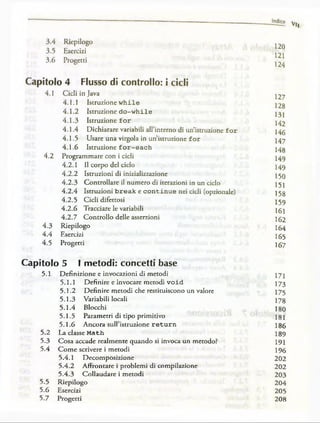


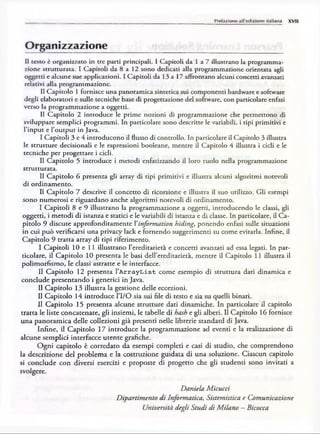







![way the advent of the chimney swifts, which I had not found
elsewhere, and returning to my lodgings with a handful of “banana-
shrub” blossoms,—smelling wonderfully like their name,—which a
good woman had insisted upon giving me when I stopped beside the
fence to ask her the name of the bush. It was my first, but by no
means my last, experience of the floral generosity of Tallahassee
people.
The next morning I woke betimes, and to my astonishment
found the city enveloped in a dense fog. The hotel clerk, an old
resident, to whom I went in my perplexity, was as much surprised as
his questioner. He did not know what it could mean, he was sure; it
was very unusual; but he thought it did not indicate foul weather.
For a man so slightly acquainted with such phenomena, he proved to
be a remarkably good prophet; for though, during my fortnight’s
stay, there must have been at least eight foggy mornings, every day
was sunny, and not a drop of rain fell.
That first bright forenoon is still a bright memory. For one thing,
the mocking-birds outsang themselves till I felt, and wrote, that I
had never heard mocking-birds before. That they really did surpass
their brethren of St. Augustine and Sanford would perhaps be too
much to assert, but so it seemed; and I was pleased, some months
afterward, to come upon a confirmatory judgment by Mr. Maurice
Thompson, who, if any one, must be competent to speak.
“If I were going to risk the reputation of our country on the
singing of a mocking-bird against a European nightingale,” says Mr.
Thompson,[11] “I should choose my champion from the hill-country
in the neighborhood of Tallahassee, or from the environs of
Mobile.... I have found no birds elsewhere to compare with those in
that belt of country about thirty miles wide, stretching from Live Oak
in Florida, by way of Tallahassee, to some miles west of Mobile.”
[11] By-Ways and Bird-Notes, p. 20.](https://image.slidesharecdn.com/21455-250620103311-962484dd/85/Programmazione-di-base-e-avanzata-con-Java-Walter-Savitch-36-320.jpg)