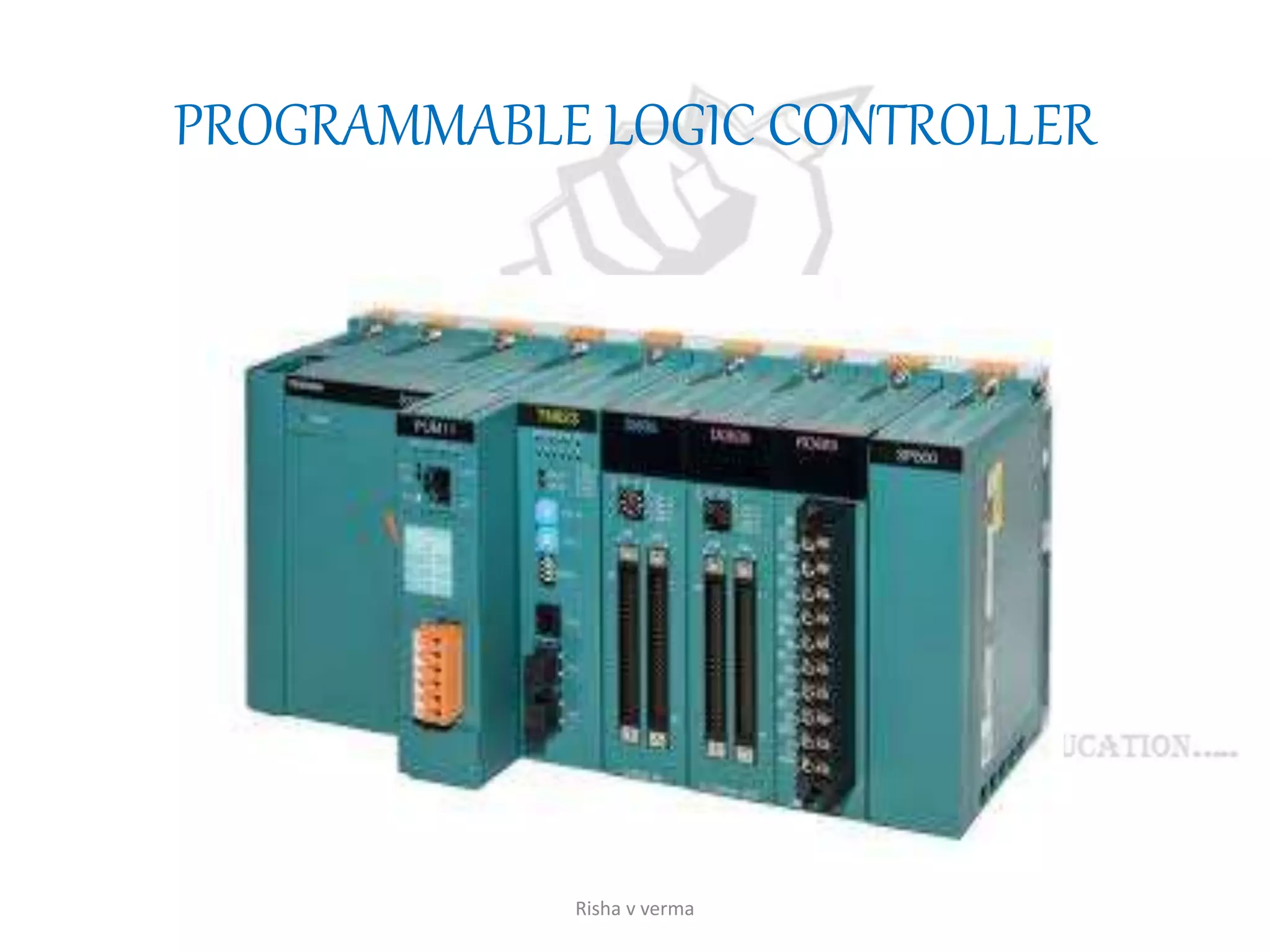
PROGRAMMABLE LOGIC CONTROLLER
Risha v verma
• PLC is a microprocessor based
solid state device, works on the
principle of logic gates.
• PLC is stand for programmable
logic controller.
• PLC is designed for multiple
inputs and output Arrangements,
extended temperature ranges
and resistance to vibration and
impact.
• PLC is an digital electronics device
to work in an industrial
environment.
• PLC एक माइक्रोप्रोसेसर आधाररत
solid state device, है, जो लॉजजक
गेट्स के ससदधाांत पर काम करता
है।
• PLC को कई इनपुट और आउटपुट
व्यवस्था, ववस्ताररत तापमान रेंज
और कां पन और प्रभाव के प्रततरोध
के सलए डिजाइन ककया गया है।
• PLC एक औदयोगगक वातावरण में
काम करने के सलए एक डिजजटल
इलेक्ट्रॉतनक्ट्स डिवाइस है।
What is PLC ?
Risha v verma
History of PLC
 In late 1960 “Modicon”
developed a computer
application named as
programmable controllers.
 Programmable controllers was
introduced to replace the
hardwired control system.
 Later in the late 1970 PLC was
a registered trademark of the
“Allen Bradley.”
• 1960 के अांत में "मोडिकॉन" ने
एक कां प्यूटर अनुप्रयोग ववकससत
ककया, जजसका नाम प्रोग्रामेबल
कां रोलसस था।
• प्रोग्राम कां रोलर को hardwired
कां रोल ससस्टम को बदलने के सलए
पेश ककया गया था।
• बाद में 1970 के अांत में पीएलसी
"एलन ब्रैिली" का एक पांजीकृ त
रेिमाकस था।
Risha v verma
Need for PLC
• The following requirements for
PLC to replaced hardwired
panels-
1. Easy to modify input and
output devices.
2. Easily programmed and
maintained by plant
electricians.
3. Be able to function in an
industrial environment.
• पीएलसी के सलए तनम्न
आवश्यकताओां को प्रततस्थावपत
पैनलों को बदल ददया गया है-
• इनपुट और आउटपुट डिवाइस
को सांशोगधत करना आसान है।
• प्लाांट इलेक्ट्रीसशयन दवारा
आसानी से प्रोग्राम और
रखरखाव ककया जाता है।
• औदयोगगक वातावरण में कायस
करने में सक्षम हो।
Risha v verma
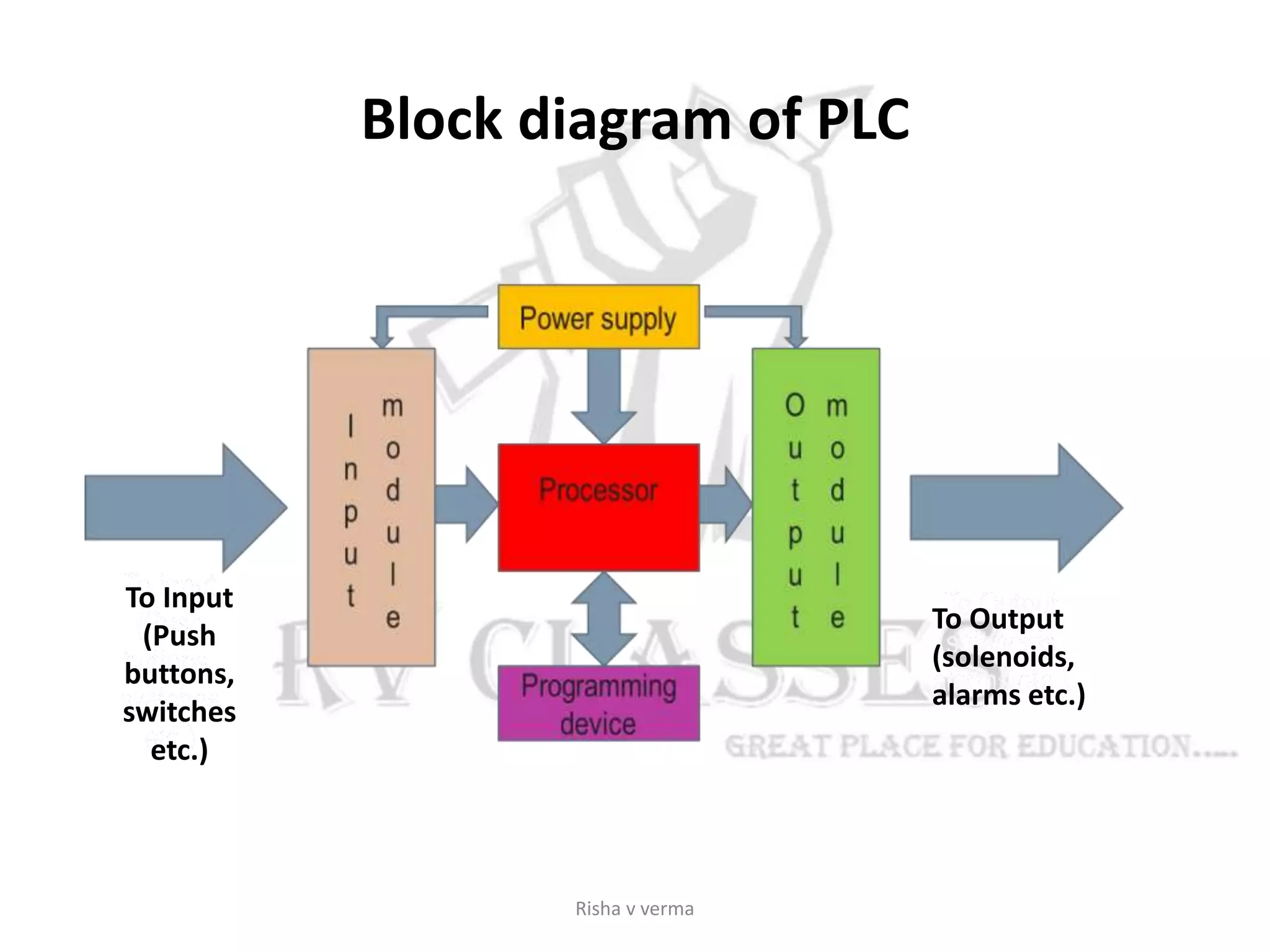
Block diagram of PLC
To Input
(Push
buttons,
switches
etc.)
To Output
(solenoids,
alarms etc.)
Risha v verma
Major components of plc
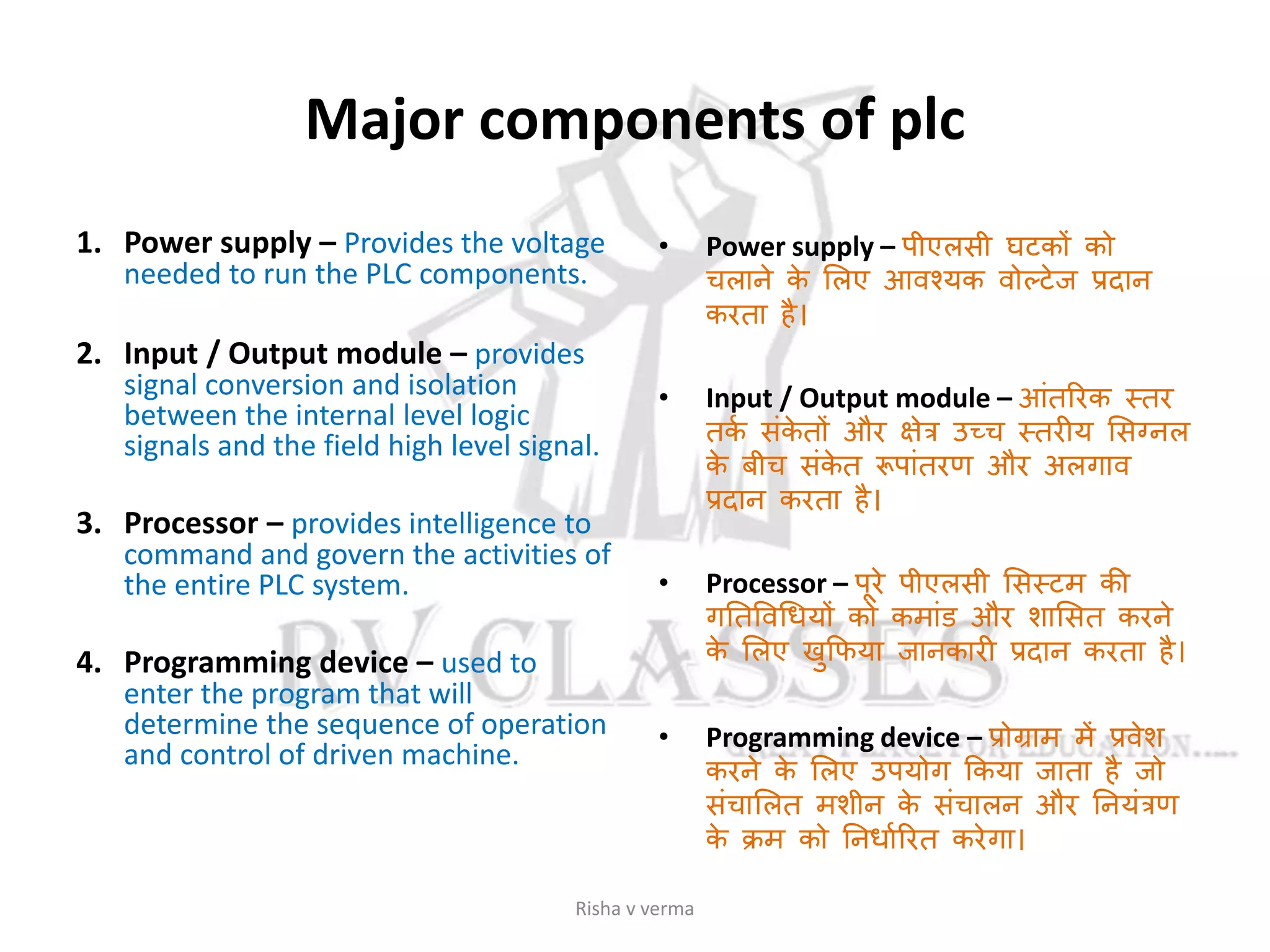
1. Power supply – Provides the voltage
needed to run the PLC components.
2. Input / Output module – provides
signal conversion and isolation
between the internal level logic
signals and the field high level signal.
3. Processor – provides intelligence to
command and govern the activities of
the entire PLC system.
4. Programming device – used to
enter the program that will
determine the sequence of operation
and control of driven machine.
• Power supply – पीएलसी घटकों को
चलाने के सलए आवश्यक वोल्टेज प्रदान
करता है।
• Input / Output module – आांतररक स्तर
तकस सांके तों और क्षेत्र उच्च स्तरीय ससग्नल
के बीच सांके त रूपाांतरण और अलगाव
प्रदान करता है।
• Processor – पूरे पीएलसी ससस्टम की
गततववगधयों को कमाांि और शाससत करने
के सलए खुकिया जानकारी प्रदान करता है।
• Programming device – प्रोग्राम में प्रवेश
करने के सलए उपयोग ककया जाता है जो
सांचासलत मशीन के सांचालन और तनयांत्रण
के क्रम को तनधासररत करेगा।
Risha v verma
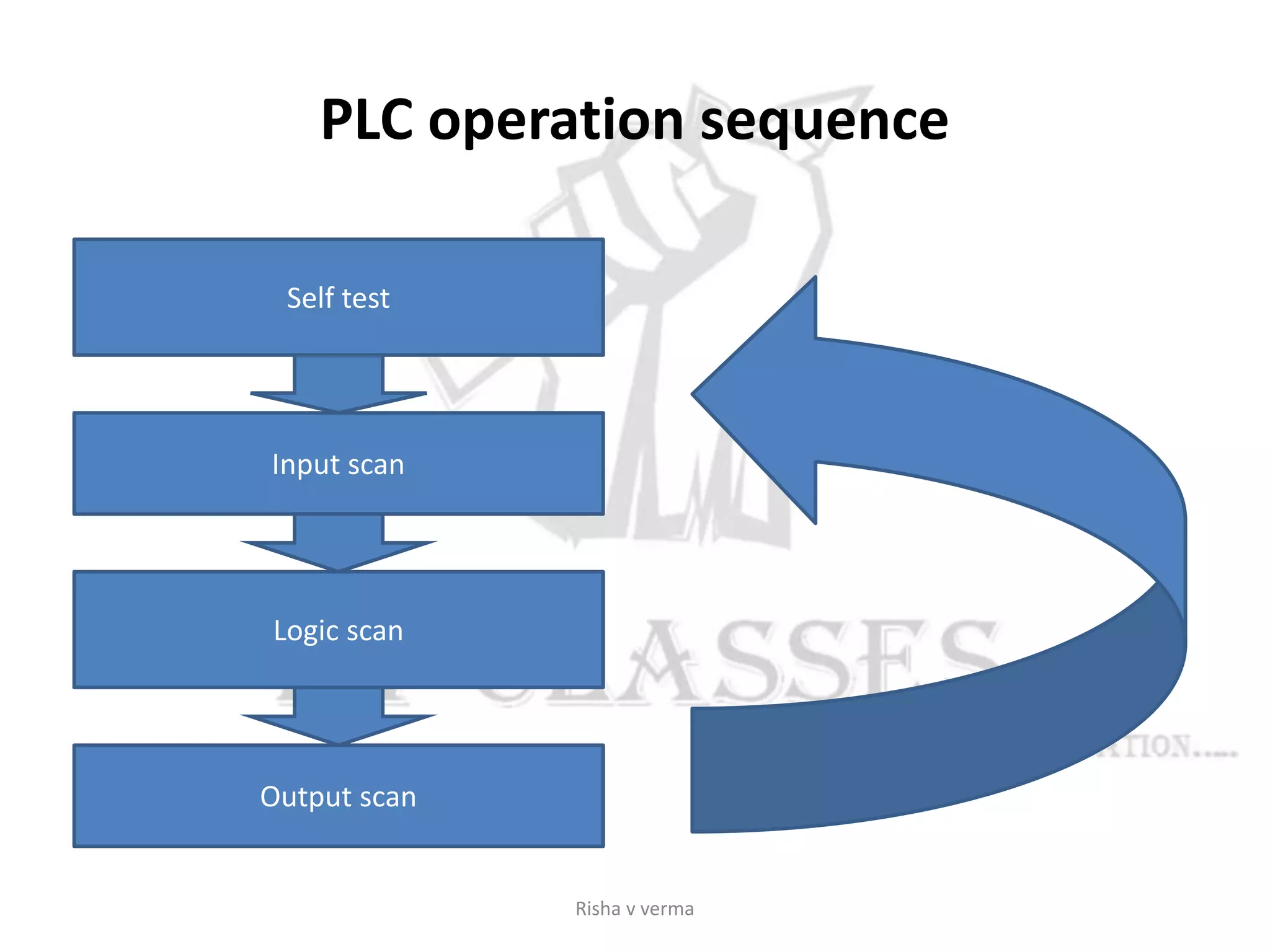
PLC operation sequence
Self test
Input scan
Logic scan
Output scan
Risha v verma
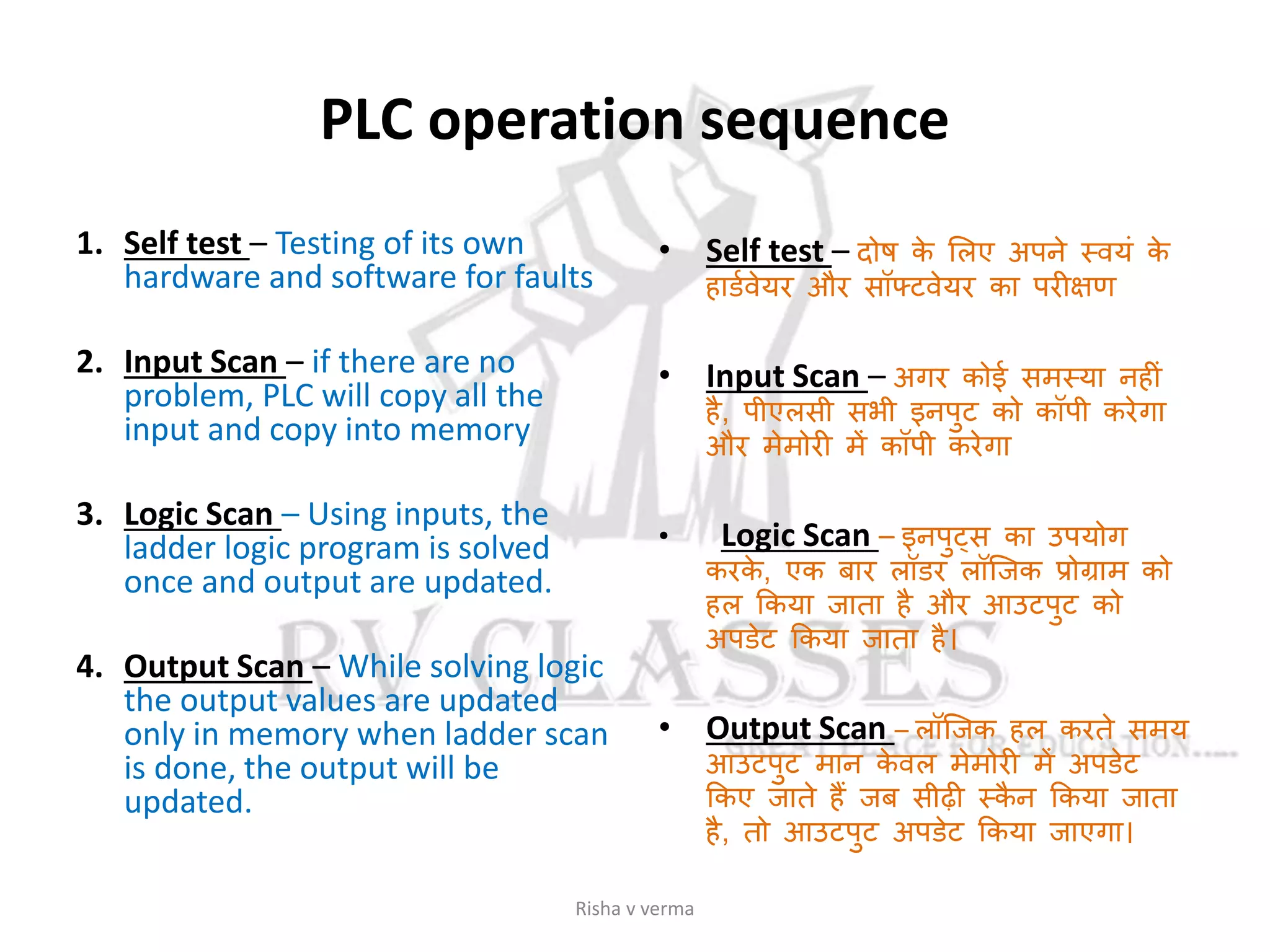
PLC operation sequence
1. Self test – Testing of its own
hardware and software for faults
2. Input Scan – if there are no
problem, PLC will copy all the
input and copy into memory
3. Logic Scan – Using inputs, the
ladder logic program is solved
once and output are updated.
4. Output Scan – While solving logic
the output values are updated
only in memory when ladder scan
is done, the output will be
updated.
• Self test – दोष के सलए अपने स्वयां के
हािसवेयर और सॉफ्टवेयर का परीक्षण
• Input Scan – अगर कोई समस्या नहीां
है, पीएलसी सभी इनपुट को कॉपी करेगा
और मेमोरी में कॉपी करेगा
• Logic Scan – इनपुट्स का उपयोग
करके , एक बार लॉिर लॉजजक प्रोग्राम को
हल ककया जाता है और आउटपुट को
अपिेट ककया जाता है।
• Output Scan – लॉजजक हल करते समय
आउटपुट मान के वल मेमोरी में अपिेट
ककए जाते हैं जब सीढी स्कै न ककया जाता
है, तो आउटपुट अपिेट ककया जाएगा।
Risha v verma
Programming languages of plc
1. Ladder Logic
2. Functional Block
Diagram
3. Sequential Functional
Chart
4. Boolean Mnemonics
• सीढी का तकस
• िां क्ट्शनल ब्लॉक
िायग्राम
• अनुक्रसमक कायासत्मक
चाटस
• बूसलयन मेनेसमक्ट्स
Risha v verma
Advantages of PLC
 Reliability
 Flexibility in programming
 Ease of maintenance
 Reduced space
 High speed of operation
 Shorter project time
 Energy saving
 Ability to communicate with computer
system in the plant
• ववश्वसनीयता
• प्रोग्रासमांग में लचीलापन
• रखरखाव में आसानी
• कम जगह
• ऑपरेशन की उच्च गतत
• लघु पररयोजना समय
• ऊजास की बचत
• सांयांत्र में कां प्यूटर प्रणाली के साथ सांवाद
करने की क्षमता
Risha v verma
applications
 Wherever automation is desired the
PLCs are best suited to meet the task.
 Few examples of industries where
PLCs are used :-
 Robots manufacturing and control
 Car park control
 Food processing
 Materials handling
 Machine tools
 Conveyer system etc.
• जहााँ भी स्वचालन की इच्छा है, PLC कायस
को पूरा करने के सलए सबसे उपयुक्ट्त हैं।
• उदयोगों के कु छ उदाहरण जहाां पीएलसी
का उपयोग ककया जाता है :-
• रोबोट तनमासण और तनयांत्रण
• कार पाकस तनयांत्रण
• खादय प्रसांस्करण
• सामग्री प्रबांधन
• मशीन टूल्स
• कन्वेयर ससस्टम आदद।
Risha v verma
Programmable logic controller (PLC)

  • 1.
  • 2.
    • PLC isa microprocessor based solid state device, works on the principle of logic gates. • PLC is stand for programmable logic controller. • PLC is designed for multiple inputs and output Arrangements, extended temperature ranges and resistance to vibration and impact. • PLC is an digital electronics device to work in an industrial environment. • PLC एक माइक्रोप्रोसेसर आधाररत solid state device, है, जो लॉजजक गेट्स के ससदधाांत पर काम करता है। • PLC को कई इनपुट और आउटपुट व्यवस्था, ववस्ताररत तापमान रेंज और कां पन और प्रभाव के प्रततरोध के सलए डिजाइन ककया गया है। • PLC एक औदयोगगक वातावरण में काम करने के सलए एक डिजजटल इलेक्ट्रॉतनक्ट्स डिवाइस है। What is PLC ? Risha v verma
  • 3.
    History of PLC In late 1960 “Modicon” developed a computer application named as programmable controllers.  Programmable controllers was introduced to replace the hardwired control system.  Later in the late 1970 PLC was a registered trademark of the “Allen Bradley.” • 1960 के अांत में "मोडिकॉन" ने एक कां प्यूटर अनुप्रयोग ववकससत ककया, जजसका नाम प्रोग्रामेबल कां रोलसस था। • प्रोग्राम कां रोलर को hardwired कां रोल ससस्टम को बदलने के सलए पेश ककया गया था। • बाद में 1970 के अांत में पीएलसी "एलन ब्रैिली" का एक पांजीकृ त रेिमाकस था। Risha v verma
  • 4.
    Need for PLC •The following requirements for PLC to replaced hardwired panels- 1. Easy to modify input and output devices. 2. Easily programmed and maintained by plant electricians. 3. Be able to function in an industrial environment. • पीएलसी के सलए तनम्न आवश्यकताओां को प्रततस्थावपत पैनलों को बदल ददया गया है- • इनपुट और आउटपुट डिवाइस को सांशोगधत करना आसान है। • प्लाांट इलेक्ट्रीसशयन दवारा आसानी से प्रोग्राम और रखरखाव ककया जाता है। • औदयोगगक वातावरण में कायस करने में सक्षम हो। Risha v verma
  • 5.
    Block diagram ofPLC To Input (Push buttons, switches etc.) To Output (solenoids, alarms etc.) Risha v verma
  • 6.
    Major components ofplc 1. Power supply – Provides the voltage needed to run the PLC components. 2. Input / Output module – provides signal conversion and isolation between the internal level logic signals and the field high level signal. 3. Processor – provides intelligence to command and govern the activities of the entire PLC system. 4. Programming device – used to enter the program that will determine the sequence of operation and control of driven machine. • Power supply – पीएलसी घटकों को चलाने के सलए आवश्यक वोल्टेज प्रदान करता है। • Input / Output module – आांतररक स्तर तकस सांके तों और क्षेत्र उच्च स्तरीय ससग्नल के बीच सांके त रूपाांतरण और अलगाव प्रदान करता है। • Processor – पूरे पीएलसी ससस्टम की गततववगधयों को कमाांि और शाससत करने के सलए खुकिया जानकारी प्रदान करता है। • Programming device – प्रोग्राम में प्रवेश करने के सलए उपयोग ककया जाता है जो सांचासलत मशीन के सांचालन और तनयांत्रण के क्रम को तनधासररत करेगा। Risha v verma
  • 7.
    PLC operation sequence Selftest Input scan Logic scan Output scan Risha v verma
  • 8.
    PLC operation sequence 1.Self test – Testing of its own hardware and software for faults 2. Input Scan – if there are no problem, PLC will copy all the input and copy into memory 3. Logic Scan – Using inputs, the ladder logic program is solved once and output are updated. 4. Output Scan – While solving logic the output values are updated only in memory when ladder scan is done, the output will be updated. • Self test – दोष के सलए अपने स्वयां के हािसवेयर और सॉफ्टवेयर का परीक्षण • Input Scan – अगर कोई समस्या नहीां है, पीएलसी सभी इनपुट को कॉपी करेगा और मेमोरी में कॉपी करेगा • Logic Scan – इनपुट्स का उपयोग करके , एक बार लॉिर लॉजजक प्रोग्राम को हल ककया जाता है और आउटपुट को अपिेट ककया जाता है। • Output Scan – लॉजजक हल करते समय आउटपुट मान के वल मेमोरी में अपिेट ककए जाते हैं जब सीढी स्कै न ककया जाता है, तो आउटपुट अपिेट ककया जाएगा। Risha v verma
  • 9.
    Programming languages ofplc 1. Ladder Logic 2. Functional Block Diagram 3. Sequential Functional Chart 4. Boolean Mnemonics • सीढी का तकस • िां क्ट्शनल ब्लॉक िायग्राम • अनुक्रसमक कायासत्मक चाटस • बूसलयन मेनेसमक्ट्स Risha v verma
  • 10.
    Advantages of PLC Reliability  Flexibility in programming  Ease of maintenance  Reduced space  High speed of operation  Shorter project time  Energy saving  Ability to communicate with computer system in the plant • ववश्वसनीयता • प्रोग्रासमांग में लचीलापन • रखरखाव में आसानी • कम जगह • ऑपरेशन की उच्च गतत • लघु पररयोजना समय • ऊजास की बचत • सांयांत्र में कां प्यूटर प्रणाली के साथ सांवाद करने की क्षमता Risha v verma
  • 11.
    applications  Wherever automationis desired the PLCs are best suited to meet the task.  Few examples of industries where PLCs are used :-  Robots manufacturing and control  Car park control  Food processing  Materials handling  Machine tools  Conveyer system etc. • जहााँ भी स्वचालन की इच्छा है, PLC कायस को पूरा करने के सलए सबसे उपयुक्ट्त हैं। • उदयोगों के कु छ उदाहरण जहाां पीएलसी का उपयोग ककया जाता है :- • रोबोट तनमासण और तनयांत्रण • कार पाकस तनयांत्रण • खादय प्रसांस्करण • सामग्री प्रबांधन • मशीन टूल्स • कन्वेयर ससस्टम आदद। Risha v verma