Jan Stephanson Adjunct instructor
College of Southern Maryland
AFACCT ‘18 Conference
Anne Arundel Community College
Jan. 12, Session 6:12
10:00 a.m.
 What is a way to keep students engaged with
the text? I wanted to have students use it
more than just for reading assignments!
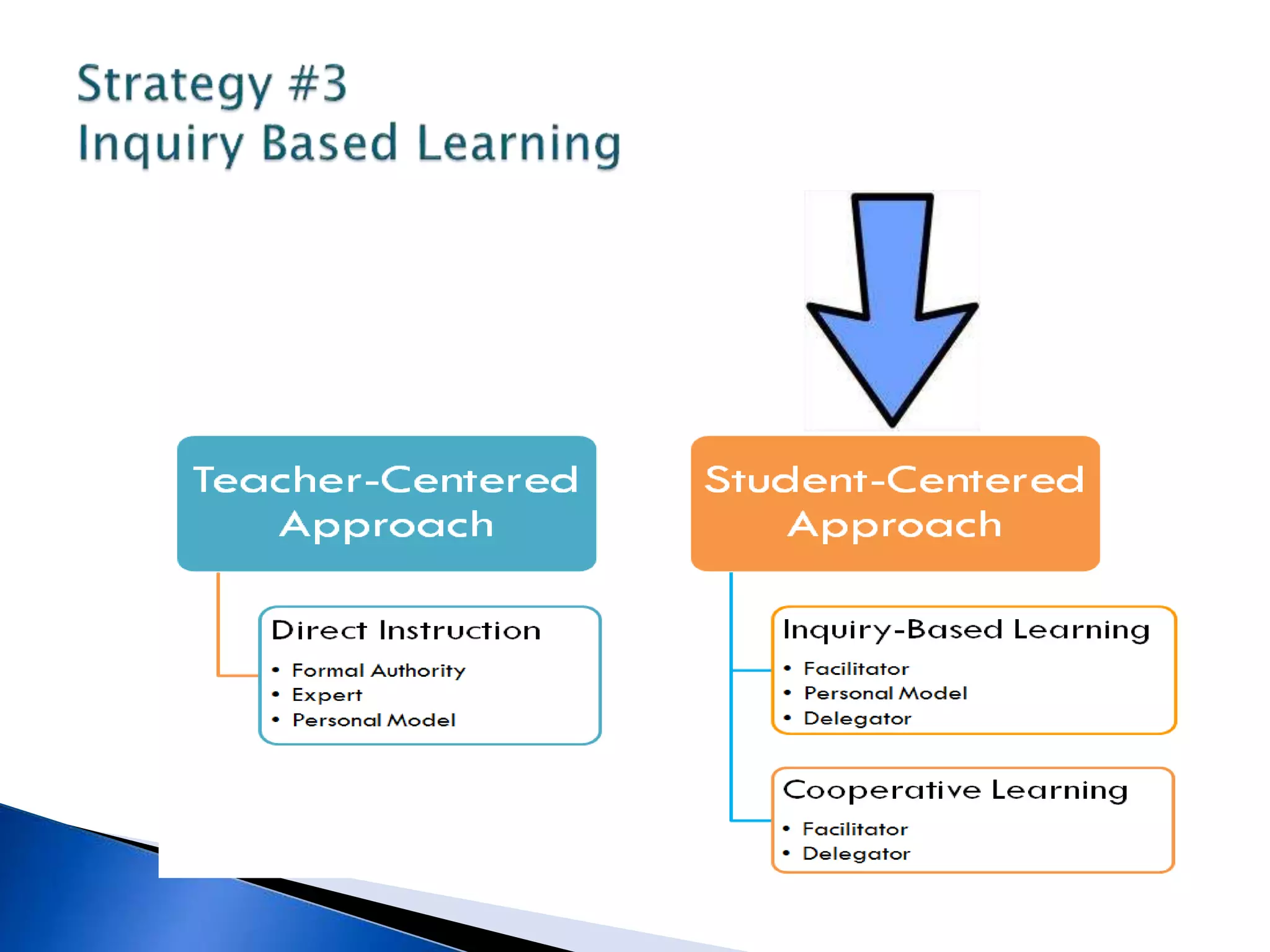
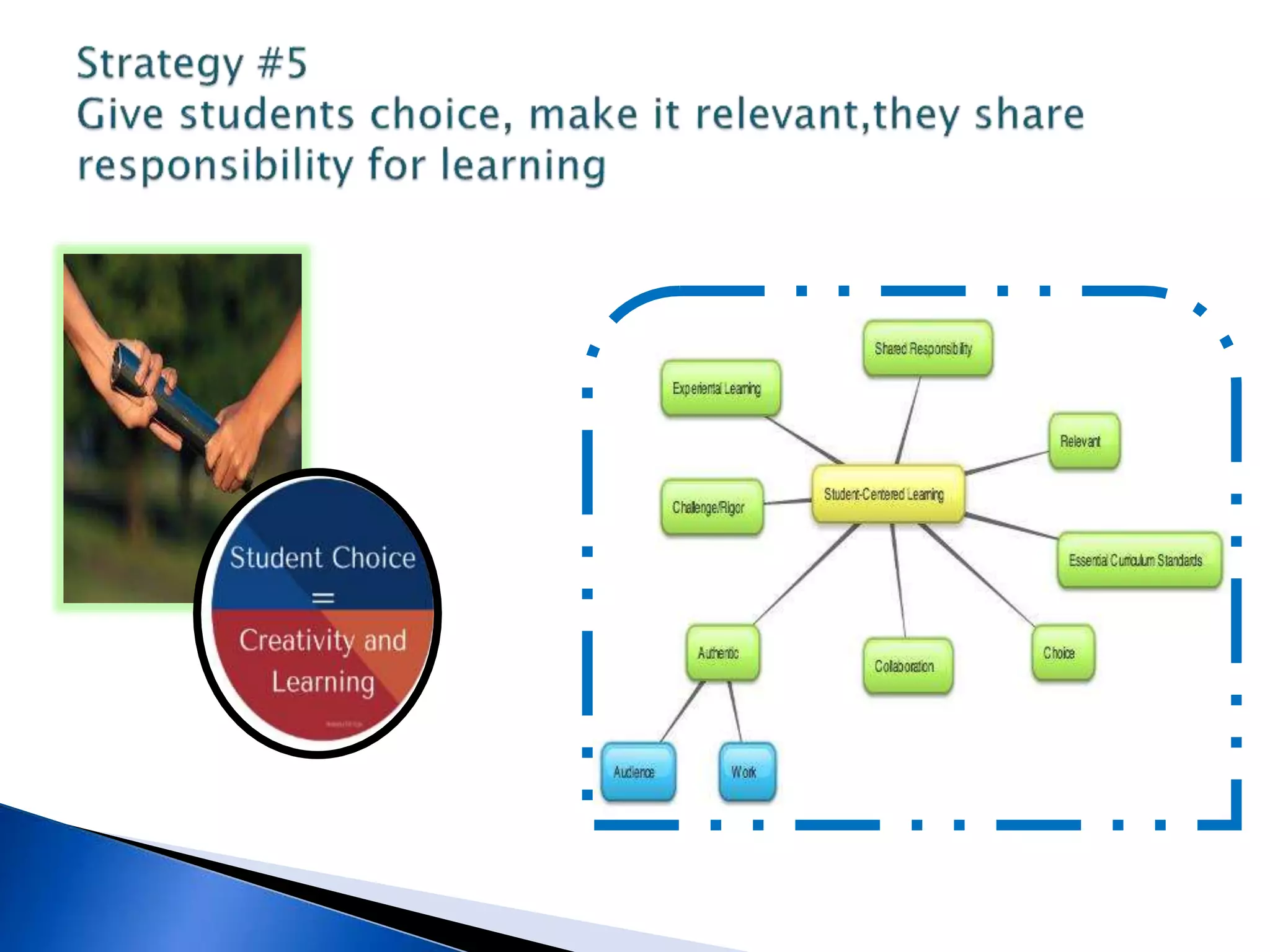
 After looking at various student centered
strategies I made a compilation of ones that
would work best for my classes.
 English 1010 Chapter Summary Assignment
 Prepare a brief PowerPoint to highlight and illustrate the key points in your assigned chapter.
 Include 7-10 frames with visuals. (photos, google images, clipart, etc.)
 The title (first) frame should include your name, my name, date, section, and the name of the
chapter.
 Example: Chapter 1: Argument; An Introduction
 Present the PowerPoint to the class.

 ***Be sure to go through the chapter and list the important details. Look for the section
headings that are highlighted in blue. Then make a brief listing of the important things to
include in the PowerPoint.
 Before starting your PowerPoint, find and view relevant YouTube videos and materials that I
have posted that correspond to the chapter that you are researching. If you can- cite and use
excerpts from the material. However make sure you have included main points from the
chapter that you read.
 **The general categories to focus on in each chapter are:

 Chapter 1: What is an Argument?
 Chapter 2: How to read and analyze an argument?
 Chapter 3: What are the key elements of an argument? What is the basic structure?
 Chapter 4: What is a claim, reason, evidence, assumption? What is the Toulmin system of
argument?
 Chapter 5: What is evidence? Examples?
 Chapter 6: Explain the appeals of argument: ethos, pathos,
logos, kairos. What are grounds, warrant, enthymemes?
 Chapter 7: How do you respond to objections in your argument?
 Chapter 8: What is rhetorical analysis of a text? What are some
questions to ask?
 Chapter 9: What is a visual argument? Types?
 Chapter 10: What are the different types of argument claims?
 Chapter 11: What is a definition argument? The parts?
 Chapter 12: What is a causal argument? Terms to use in a causal
argument?
 Chapter 13: What are evaluation arguments? What are the
necessary ingredients?
 Chapter 14: What is a proposal argument? Its features?
 Chapter 15: Kinds of resources to use for papers
 Chapter 16: How to incorporate sources into your argument
 Chapter 17: Citing and Documenting sources
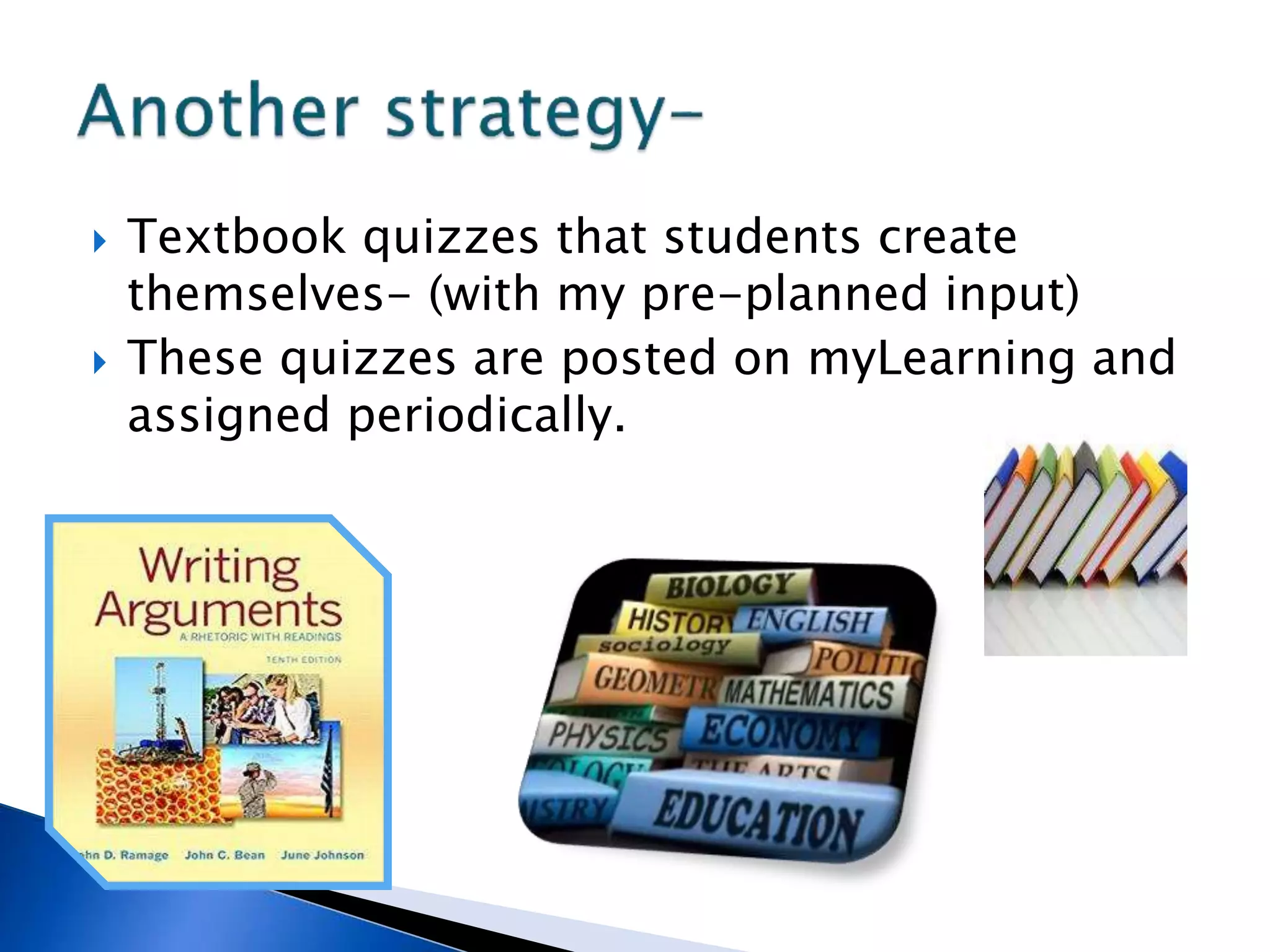
 Textbook quizzes that students create
themselves- (with my pre-planned input)
 These quizzes are posted on myLearning and
assigned periodically.
Textbook Quizzes
 The text quizzes are designed to have students go
through the chapter noting the highlights and then create
questions and answers for the topics. I have listed the
topics on the PowerPoint. Students can then work on the
quizzes in or outside of class. Students can also work
individually or with a partner so it is a flexible
assignment.
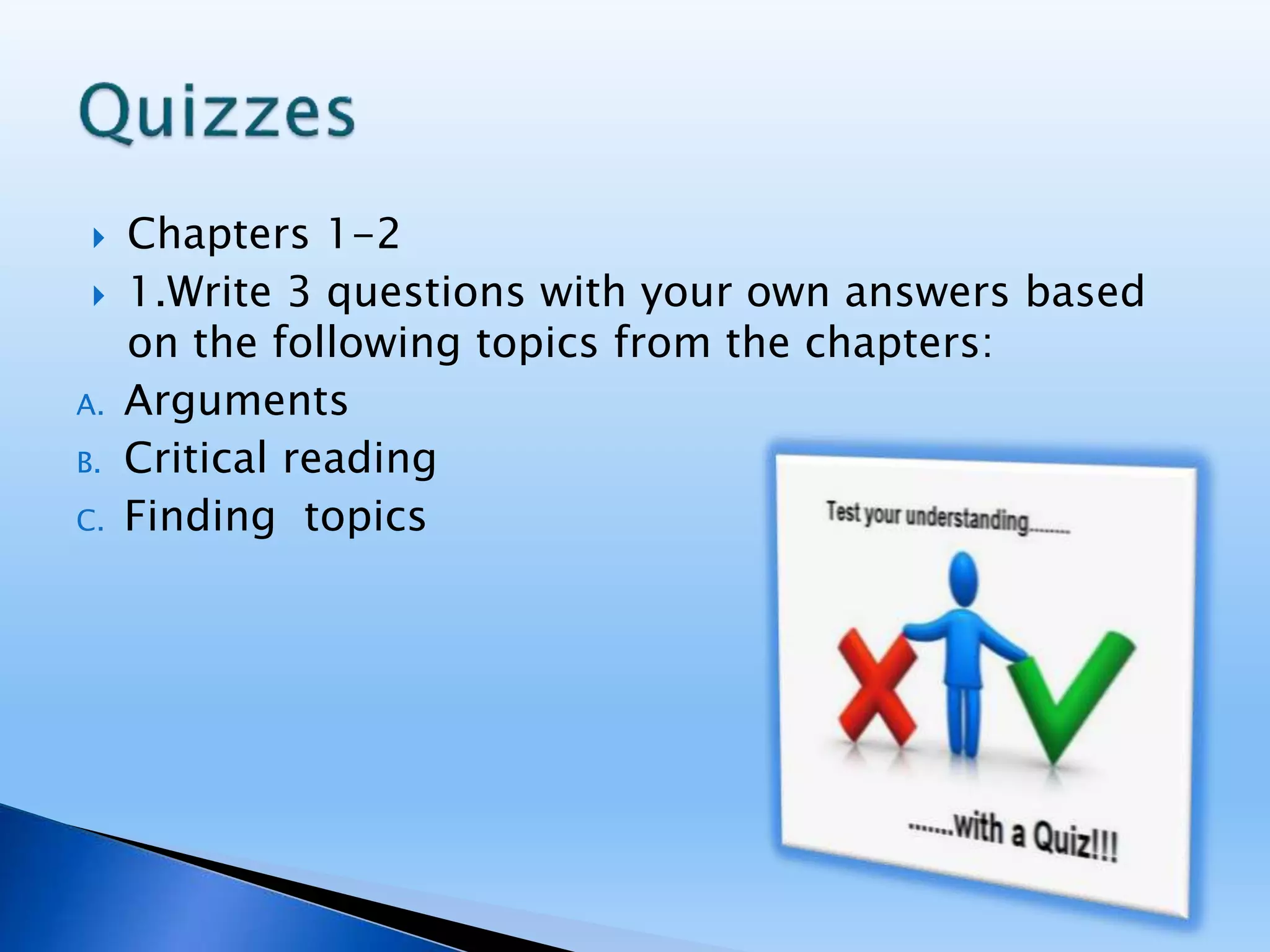
 Chapters 1-2
 1.Write 3 questions with your own answers based
on the following topics from the chapters:
A. Arguments
B. Critical reading
C. Finding topics
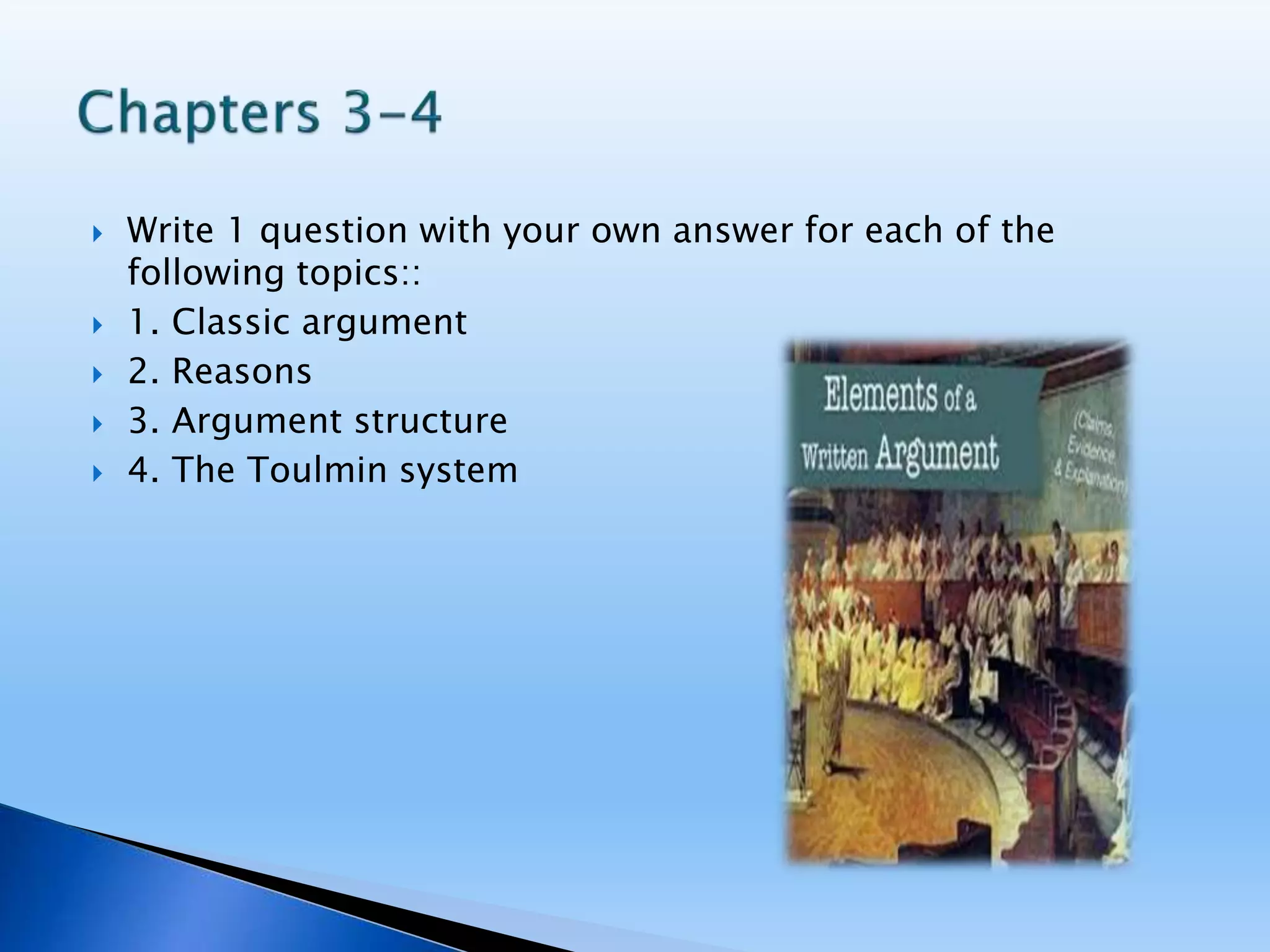
 Write 1 question with your own answer for each of the
following topics::
 1. Classic argument
 2. Reasons
 3. Argument structure
 4. The Toulmin system
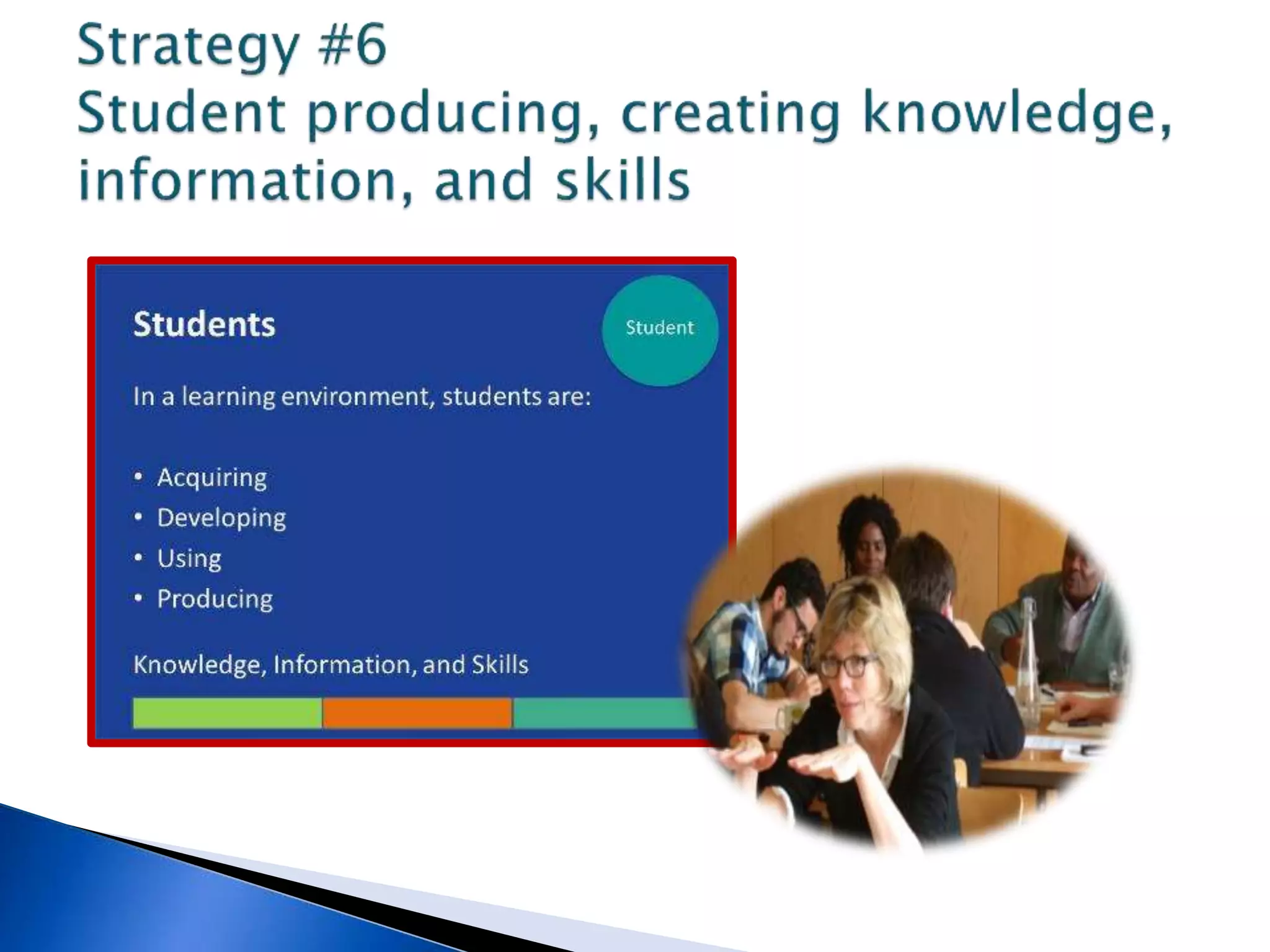
 I have utilized the text by formulating several
student centered assignments:
 1. Chapter Summary Powerpoint Projects
 2. Textbook Quizzes (student generated)
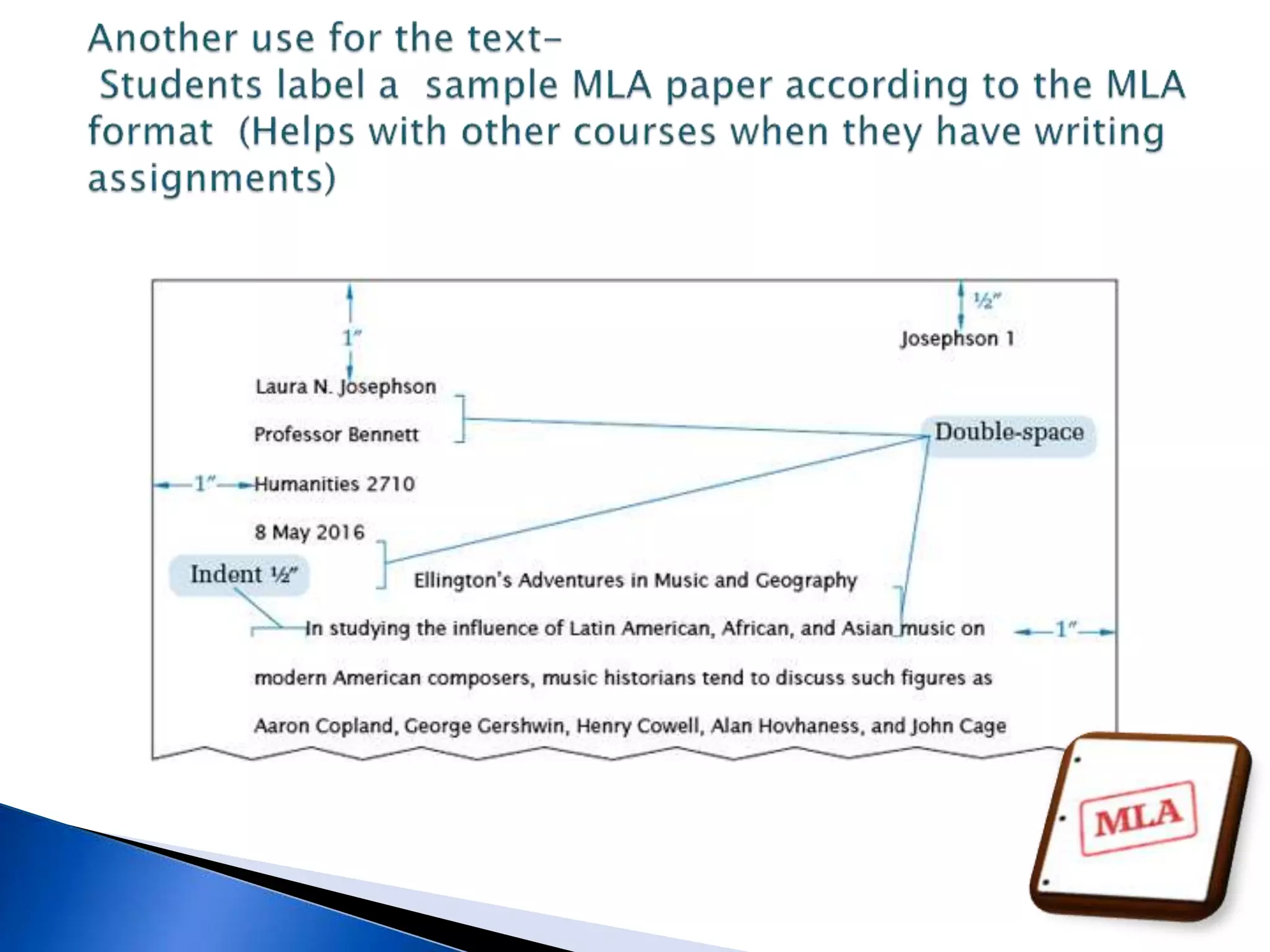
 3. Labeling of an MLA paper (using the text)
 If you’d like a copy of my textbook quizzes
PowerPoint, please email me at:
 jstephanson@csmd.edu
 Please take a paper copy of instructions for
the Chapter summary assignment.
 Thank you for attending my presentation and
I hope the information will be useful!!

Professors as Facilitators: Utilizing your Textbook

  • 1.
    Jan Stephanson Adjunctinstructor College of Southern Maryland AFACCT ‘18 Conference Anne Arundel Community College Jan. 12, Session 6:12 10:00 a.m.
  • 2.
     What isa way to keep students engaged with the text? I wanted to have students use it more than just for reading assignments!  After looking at various student centered strategies I made a compilation of ones that would work best for my classes.
  • 9.
     English 1010Chapter Summary Assignment  Prepare a brief PowerPoint to highlight and illustrate the key points in your assigned chapter.  Include 7-10 frames with visuals. (photos, google images, clipart, etc.)  The title (first) frame should include your name, my name, date, section, and the name of the chapter.  Example: Chapter 1: Argument; An Introduction  Present the PowerPoint to the class.   ***Be sure to go through the chapter and list the important details. Look for the section headings that are highlighted in blue. Then make a brief listing of the important things to include in the PowerPoint.  Before starting your PowerPoint, find and view relevant YouTube videos and materials that I have posted that correspond to the chapter that you are researching. If you can- cite and use excerpts from the material. However make sure you have included main points from the chapter that you read.  **The general categories to focus on in each chapter are:   Chapter 1: What is an Argument?  Chapter 2: How to read and analyze an argument?  Chapter 3: What are the key elements of an argument? What is the basic structure?  Chapter 4: What is a claim, reason, evidence, assumption? What is the Toulmin system of argument?  Chapter 5: What is evidence? Examples?
  • 10.
     Chapter 6:Explain the appeals of argument: ethos, pathos, logos, kairos. What are grounds, warrant, enthymemes?  Chapter 7: How do you respond to objections in your argument?  Chapter 8: What is rhetorical analysis of a text? What are some questions to ask?  Chapter 9: What is a visual argument? Types?  Chapter 10: What are the different types of argument claims?  Chapter 11: What is a definition argument? The parts?  Chapter 12: What is a causal argument? Terms to use in a causal argument?  Chapter 13: What are evaluation arguments? What are the necessary ingredients?  Chapter 14: What is a proposal argument? Its features?  Chapter 15: Kinds of resources to use for papers  Chapter 16: How to incorporate sources into your argument  Chapter 17: Citing and Documenting sources
  • 11.
     Textbook quizzesthat students create themselves- (with my pre-planned input)  These quizzes are posted on myLearning and assigned periodically.
  • 12.
  • 13.
     The textquizzes are designed to have students go through the chapter noting the highlights and then create questions and answers for the topics. I have listed the topics on the PowerPoint. Students can then work on the quizzes in or outside of class. Students can also work individually or with a partner so it is a flexible assignment.
  • 14.
     Chapters 1-2 1.Write 3 questions with your own answers based on the following topics from the chapters: A. Arguments B. Critical reading C. Finding topics
  • 15.
     Write 1question with your own answer for each of the following topics::  1. Classic argument  2. Reasons  3. Argument structure  4. The Toulmin system
  • 17.
     I haveutilized the text by formulating several student centered assignments:  1. Chapter Summary Powerpoint Projects  2. Textbook Quizzes (student generated)  3. Labeling of an MLA paper (using the text)
  • 18.
     If you’dlike a copy of my textbook quizzes PowerPoint, please email me at:  jstephanson@csmd.edu  Please take a paper copy of instructions for the Chapter summary assignment.  Thank you for attending my presentation and I hope the information will be useful!!

Editor's Notes

  • #13 NOTE: To change the image on this slide, select the picture and delete it. Then click the Pictures icon in the placeholder to insert your own image.