Professional values
Professional values
Our roles and responsibilities
as GPs
as GPs
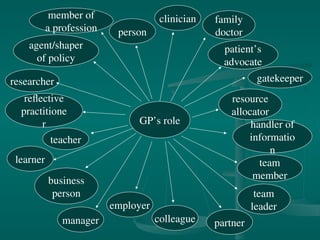
GP’s role
clinician
person
member of
a profession
agent/shaper
of policy
researcher
reflective
practitione
r
teacher
learner
business
person
manager
employer
colleague partner
team
leader
team
member
handler of
informatio
n
resource
allocator
gatekeeper
patient’s
advocate
family
doctor
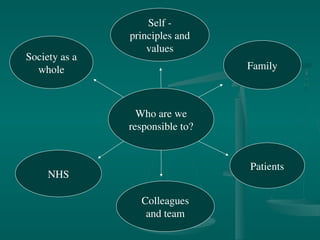
Who are we
responsible to?
Colleagues
and team
Patients
Family
Self -
principles and
values
NHS
Society as a
whole
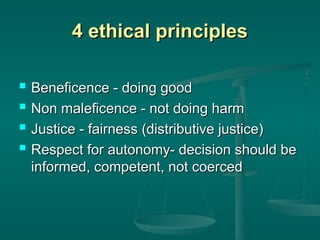
4 ethical principles
 Beneficence - doing good
Beneficence - doing good
 Non maleficence - not doing harm
Non maleficence - not doing harm
 Justice - fairness (distributive justice)
Justice - fairness (distributive justice)
 Respect for autonomy- decision should be
Respect for autonomy- decision should be
informed, competent, not coerced
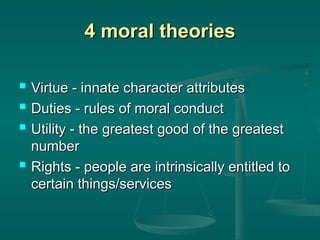
4 moral theories
4 moral theories
 Virtue - innate character attributes
Virtue - innate character attributes
 Duties - rules of moral conduct
Duties - rules of moral conduct
 Utility - the greatest good of the greatest
Utility - the greatest good of the greatest
number
number
 Rights - people are intrinsically entitled to
Rights - people are intrinsically entitled to
certain things/services
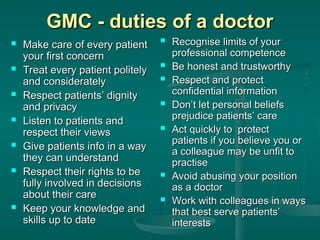
GMC - duties of a doctor
 Make care of every patient
Make care of every patient
your first concern
your first concern
 Treat every patient politely
Treat every patient politely
and considerately
and considerately
 Respect patients’ dignity
Respect patients’ dignity
and privacy
and privacy
 Listen to patients and
Listen to patients and
respect their views
respect their views
 Give patients info in a way
Give patients info in a way
they can understand
they can understand
 Respect their rights to be
Respect their rights to be
fully involved in decisions
about their care
about their care
 Keep your knowledge and
Keep your knowledge and
skills up to date
skills up to date
 Recognise limits of your
Recognise limits of your
professional competence
 Be honest and trustworthy
Be honest and trustworthy
 Respect and protect
Respect and protect
confidential information
 Don’t let personal beliefs
Don’t let personal beliefs
prejudice patients’ care
 Act quickly to protect
Act quickly to protect
patients if you believe you or
a colleague may be unfit to
practise
practise
 Avoid abusing your position
Avoid abusing your position
as a doctor
as a doctor
 Work with colleagues in ways
Work with colleagues in ways
that best serve patients’
interests
interests
Some other sources of
guidance
guidance
 Law (e g access to medical records,
Law (e g access to medical records,
fitness to drive, consent issues, Mental
Health Act, employment law, Human
Rights Act)
Rights Act)
 Contractual (Terms and Conditions of
Contractual (Terms and Conditions of
Service, agreements with PCT, practice
agreements, contracts of employment)

professional values .ppt

  • 1.
    Professional values Professional values Ourroles and responsibilities Our roles and responsibilities as GPs as GPs
  • 2.
    GP’s role clinician person member of aprofession agent/shaper of policy researcher reflective practitione r teacher learner business person manager employer colleague partner team leader team member handler of informatio n resource allocator gatekeeper patient’s advocate family doctor
  • 3.
    Who are we responsibleto? Colleagues and team Patients Family Self - principles and values NHS Society as a whole
  • 4.
    4 ethical principles 4ethical principles  Beneficence - doing good Beneficence - doing good  Non maleficence - not doing harm Non maleficence - not doing harm  Justice - fairness (distributive justice) Justice - fairness (distributive justice)  Respect for autonomy- decision should be Respect for autonomy- decision should be informed, competent, not coerced informed, competent, not coerced
  • 5.
    4 moral theories 4moral theories  Virtue - innate character attributes Virtue - innate character attributes  Duties - rules of moral conduct Duties - rules of moral conduct  Utility - the greatest good of the greatest Utility - the greatest good of the greatest number number  Rights - people are intrinsically entitled to Rights - people are intrinsically entitled to certain things/services certain things/services
  • 6.
    GMC - dutiesof a doctor GMC - duties of a doctor  Make care of every patient Make care of every patient your first concern your first concern  Treat every patient politely Treat every patient politely and considerately and considerately  Respect patients’ dignity Respect patients’ dignity and privacy and privacy  Listen to patients and Listen to patients and respect their views respect their views  Give patients info in a way Give patients info in a way they can understand they can understand  Respect their rights to be Respect their rights to be fully involved in decisions fully involved in decisions about their care about their care  Keep your knowledge and Keep your knowledge and skills up to date skills up to date  Recognise limits of your Recognise limits of your professional competence professional competence  Be honest and trustworthy Be honest and trustworthy  Respect and protect Respect and protect confidential information confidential information  Don’t let personal beliefs Don’t let personal beliefs prejudice patients’ care prejudice patients’ care  Act quickly to protect Act quickly to protect patients if you believe you or patients if you believe you or a colleague may be unfit to a colleague may be unfit to practise practise  Avoid abusing your position Avoid abusing your position as a doctor as a doctor  Work with colleagues in ways Work with colleagues in ways that best serve patients’ that best serve patients’ interests interests
  • 7.
    Some other sourcesof Some other sources of guidance guidance  Law (e g access to medical records, Law (e g access to medical records, fitness to drive, consent issues, Mental fitness to drive, consent issues, Mental Health Act, employment law, Human Health Act, employment law, Human Rights Act) Rights Act)  Contractual (Terms and Conditions of Contractual (Terms and Conditions of Service, agreements with PCT, practice Service, agreements with PCT, practice agreements, contracts of employment) agreements, contracts of employment)