Eco-Center of the World
An ethical economy
Ethical management of our economy, this is the
way in which the National Government has
decided to reinforce the rights of our society and
of the environment, through innovative and clear
regulations that foster efficient entrepreneurial
activities that guarantee respect for the
environment, laborers and our society in general.
Reduction of the income tax from 25% to
22%. The reduction will be 1% each year
following the approval of the code.
The following are exempt from the minimum
tax: the increased expenditures for new jobs or
wage increases; acquisition of new assets for
the improvement of productivity and
technology; cleaner production; and all the
incentives in this code.
For new companies: exemption from the
payment of the minimum tax during the first 5
years.
Exemption from the tax on foreign exchange
outflow for payments going abroad for credits
with a deadline of more than one year, and a
rate not higher than that authorized by the
Central Bank of Ecuador.
Additional deductions from the income tax, as
mechanisms to encourage the improvement of
productivity, innovation and eco-efficient
production.
Benefits for the opening of capital, such as
deferment of income tax payment for
companies that open up capital abroad.
 Those established for Special Economic
Development Zones, as long as they fulfill the
criteria for their approval.
• Total exemption of the income tax for 5
years and its down payment for new
investments in the prioritized sectors of the
economy:
• Fresh and processed foods
• Forestry products
• Metalworking/metal processing
• Petro chemistry
• Pharmaceutical
• Tourism
• Renewable energies
• Logistical services
• Biotechnology and applied software
• Sectors of strategic substitution of
imports and promotion of exports as
determined by the President of the
Republic
• Obligation of inclusive purchasing for the
government for these sectors.
• Prioritized public investment and
specialized programs.
• EPS law will be codified as part of the
production code when it is sent to and
approved by the legislative assembly.
• National Fund of Guarantees: System of
guarantees according to their situation
(amount and types of collateral).
• Regime for entering into the stock market.
• Government programs of co-financing for the
improvement of productivity, innovation,
quality, exportable products and their
promotion.
• Co-financing programs for entrepreneurship
and innovation.
• Additional deductions of the income tax, for
expenditures and investments in the
following areas:
1. Technical training aimed at research,
development and technological
innovation (up to 1% of the
expenditure of annual salaries).
2. Expenditures for the improvement of
productivity of the company (up to 1%
of the sales).
3. Expenses of international promotion of
the company and its products (up to
50% of the promotion and publicity
expenses).
Of the Cost of Credit
• Elimination of the mandatory withholding of
income tax, for interest payments going
abroad due to credits that have been
awarded by or through international
financial institutions.
• The benefit will not be conceded when the
credits are awarded by or through
institutions based in tax havens.
• Reduction of costs through the elimination
of the foreign exchange outflow taxes for
financing.
• Regarding the income tax, there will be an
additional deduction of 100% of
expenditures for the purchase of machinery
and equipment for a more clean production,
and for the implementation of renewable
energy systems (solar, wind and other
similar ones) or for the mitigation of
environmental impact.
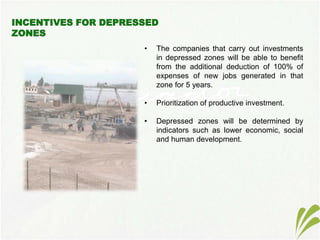
• The companies that carry out investments
in depressed zones will be able to benefit
from the additional deduction of 100% of
expenses of new jobs generated in that
zone for 5 years.
• Prioritization of productive investment.
• Depressed zones will be determined by
indicators such as lower economic, social
and human development.
• Additional reduction of 5% of the income
tax for the administrators and operators of
the ZEDEs to 17%. If they are in a
preferential sector and it is a new
investment, the rate of 0% income tax for 5
years applies.
• The importation of goods will have a Value
Added Tax (VAT) rate of 0%.
• Foreign goods will benefit from the
exemption of the payment of customs
duties while they remain in the ZEDE.
• The administrators and operators will have
a tax credit for the VAT associated with
local purchasing (services, goods and
prime/raw materials for productive
processes).
• Exemption of taxes on foreign exchange
outflows in the payment of imports and in
the payments going abroad for foreign
financing.
• Companies that decide to open up their
capital and sell stock to their employees will
enjoy the following benefits:
1. Defer down payment and income tax
for 5 years.
2. In case companies opt for a financing
credit for purchasing stock, the
interests will be exempt from the
income tax.
Production´s Incentives

Production´s Incentives

  • 1.
  • 2.
    An ethical economy Ethicalmanagement of our economy, this is the way in which the National Government has decided to reinforce the rights of our society and of the environment, through innovative and clear regulations that foster efficient entrepreneurial activities that guarantee respect for the environment, laborers and our society in general.
  • 3.
    Reduction of theincome tax from 25% to 22%. The reduction will be 1% each year following the approval of the code. The following are exempt from the minimum tax: the increased expenditures for new jobs or wage increases; acquisition of new assets for the improvement of productivity and technology; cleaner production; and all the incentives in this code. For new companies: exemption from the payment of the minimum tax during the first 5 years. Exemption from the tax on foreign exchange outflow for payments going abroad for credits with a deadline of more than one year, and a rate not higher than that authorized by the Central Bank of Ecuador.
  • 4.
    Additional deductions fromthe income tax, as mechanisms to encourage the improvement of productivity, innovation and eco-efficient production. Benefits for the opening of capital, such as deferment of income tax payment for companies that open up capital abroad.  Those established for Special Economic Development Zones, as long as they fulfill the criteria for their approval.
  • 5.
    • Total exemptionof the income tax for 5 years and its down payment for new investments in the prioritized sectors of the economy: • Fresh and processed foods • Forestry products • Metalworking/metal processing • Petro chemistry • Pharmaceutical • Tourism • Renewable energies • Logistical services • Biotechnology and applied software • Sectors of strategic substitution of imports and promotion of exports as determined by the President of the Republic
  • 6.
    • Obligation ofinclusive purchasing for the government for these sectors. • Prioritized public investment and specialized programs. • EPS law will be codified as part of the production code when it is sent to and approved by the legislative assembly.
  • 7.
    • National Fundof Guarantees: System of guarantees according to their situation (amount and types of collateral). • Regime for entering into the stock market. • Government programs of co-financing for the improvement of productivity, innovation, quality, exportable products and their promotion. • Co-financing programs for entrepreneurship and innovation.
  • 8.
    • Additional deductionsof the income tax, for expenditures and investments in the following areas: 1. Technical training aimed at research, development and technological innovation (up to 1% of the expenditure of annual salaries). 2. Expenditures for the improvement of productivity of the company (up to 1% of the sales). 3. Expenses of international promotion of the company and its products (up to 50% of the promotion and publicity expenses).
  • 9.
    Of the Costof Credit • Elimination of the mandatory withholding of income tax, for interest payments going abroad due to credits that have been awarded by or through international financial institutions. • The benefit will not be conceded when the credits are awarded by or through institutions based in tax havens. • Reduction of costs through the elimination of the foreign exchange outflow taxes for financing.
  • 10.
    • Regarding theincome tax, there will be an additional deduction of 100% of expenditures for the purchase of machinery and equipment for a more clean production, and for the implementation of renewable energy systems (solar, wind and other similar ones) or for the mitigation of environmental impact.
  • 11.
    • The companiesthat carry out investments in depressed zones will be able to benefit from the additional deduction of 100% of expenses of new jobs generated in that zone for 5 years. • Prioritization of productive investment. • Depressed zones will be determined by indicators such as lower economic, social and human development.
  • 12.
    • Additional reductionof 5% of the income tax for the administrators and operators of the ZEDEs to 17%. If they are in a preferential sector and it is a new investment, the rate of 0% income tax for 5 years applies. • The importation of goods will have a Value Added Tax (VAT) rate of 0%. • Foreign goods will benefit from the exemption of the payment of customs duties while they remain in the ZEDE. • The administrators and operators will have a tax credit for the VAT associated with local purchasing (services, goods and prime/raw materials for productive processes). • Exemption of taxes on foreign exchange outflows in the payment of imports and in the payments going abroad for foreign financing.
  • 13.
    • Companies thatdecide to open up their capital and sell stock to their employees will enjoy the following benefits: 1. Defer down payment and income tax for 5 years. 2. In case companies opt for a financing credit for purchasing stock, the interests will be exempt from the income tax.