7 Quality Tools
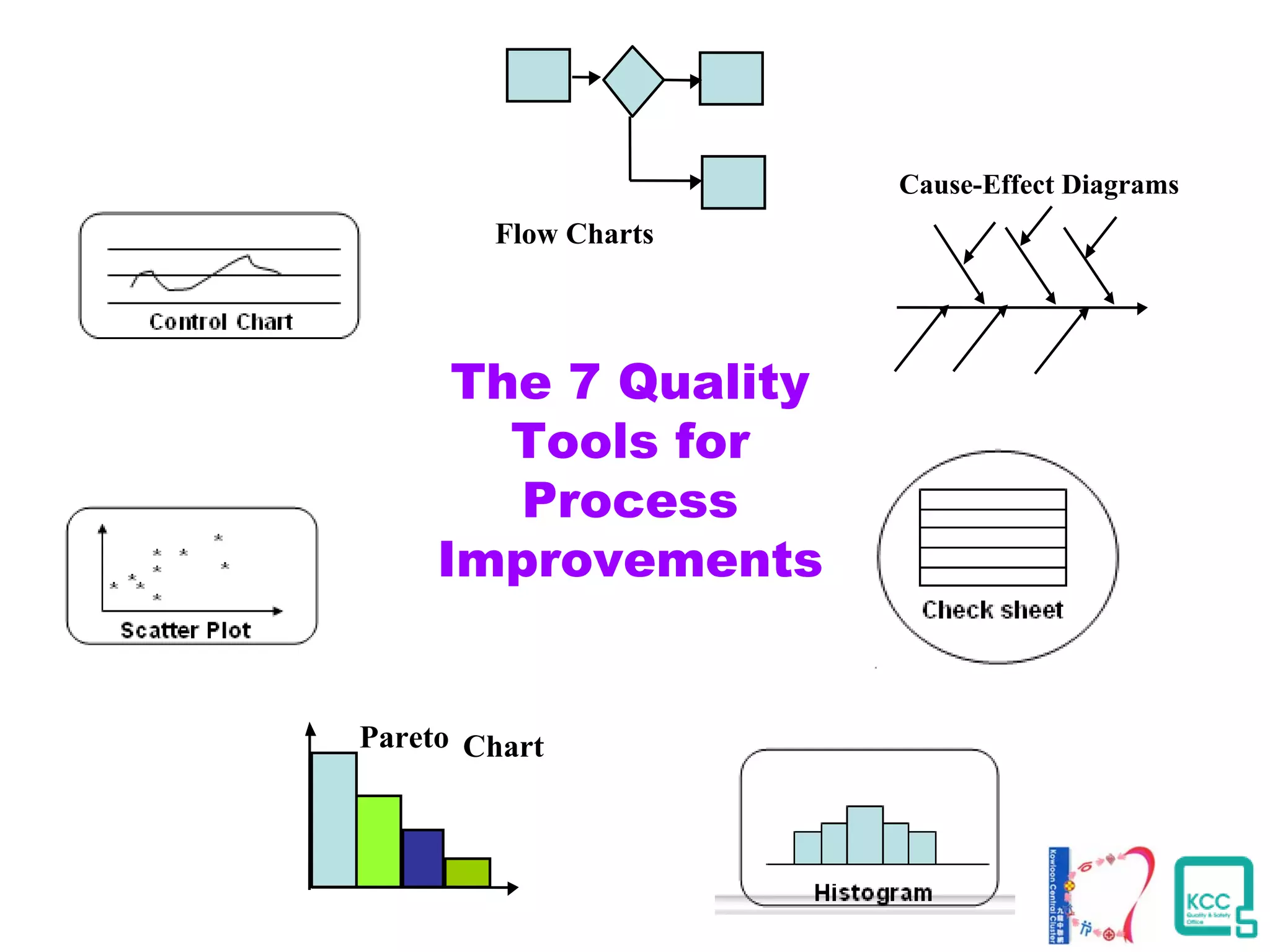
The 7 Quality
Tools for
Process
Improvements
Pareto Chart
Flow Charts
Cause-Effect Diagrams
Where did the Basic Seven
come from?
Kaoru Ishikawa
• Known for “Democratizing Statistics”
• The Basic Seven Tools made statistical analysis less
complicated for the average person
• Good Visual Aids make statistical and quality control
more comprehendible.
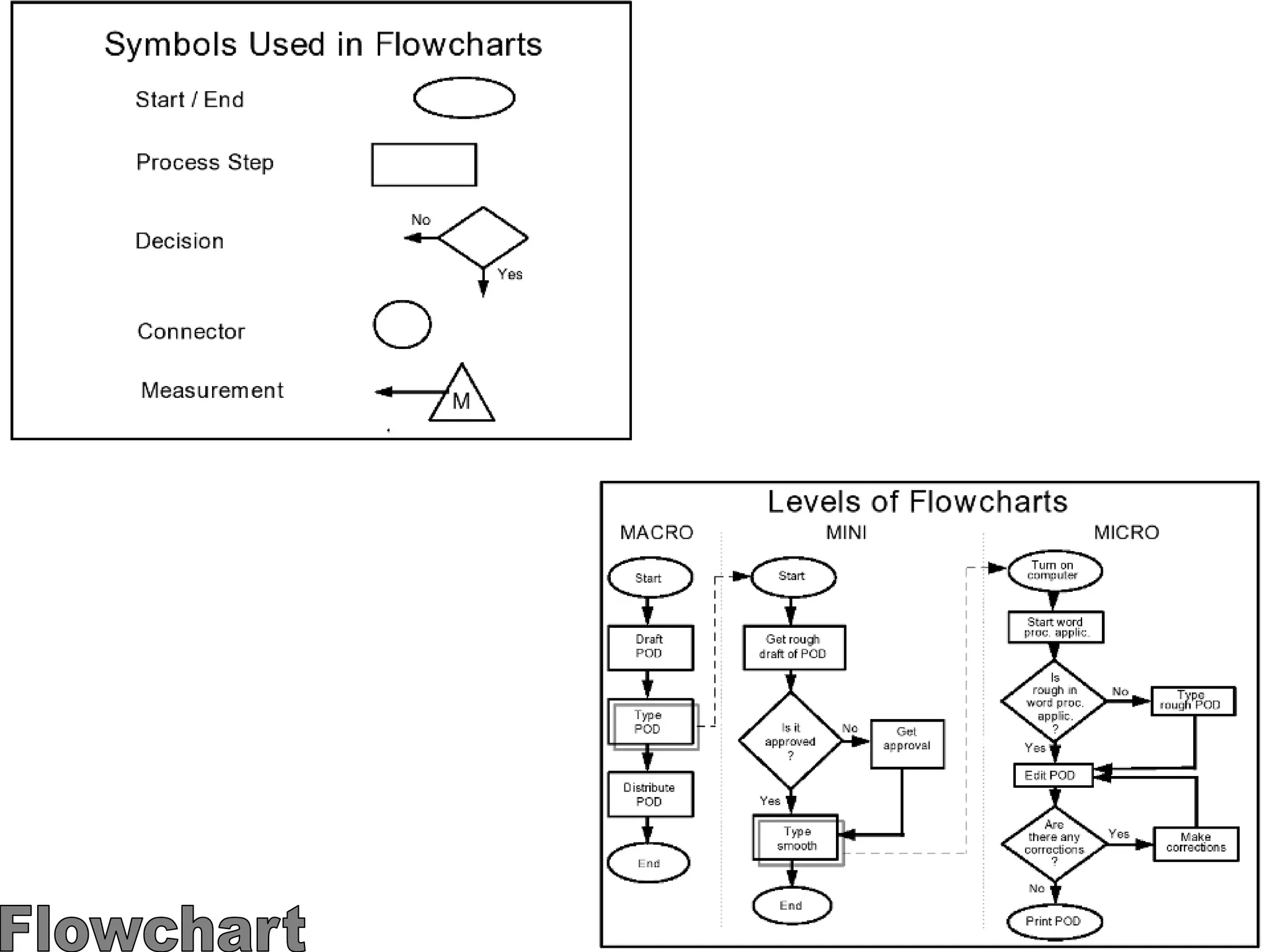
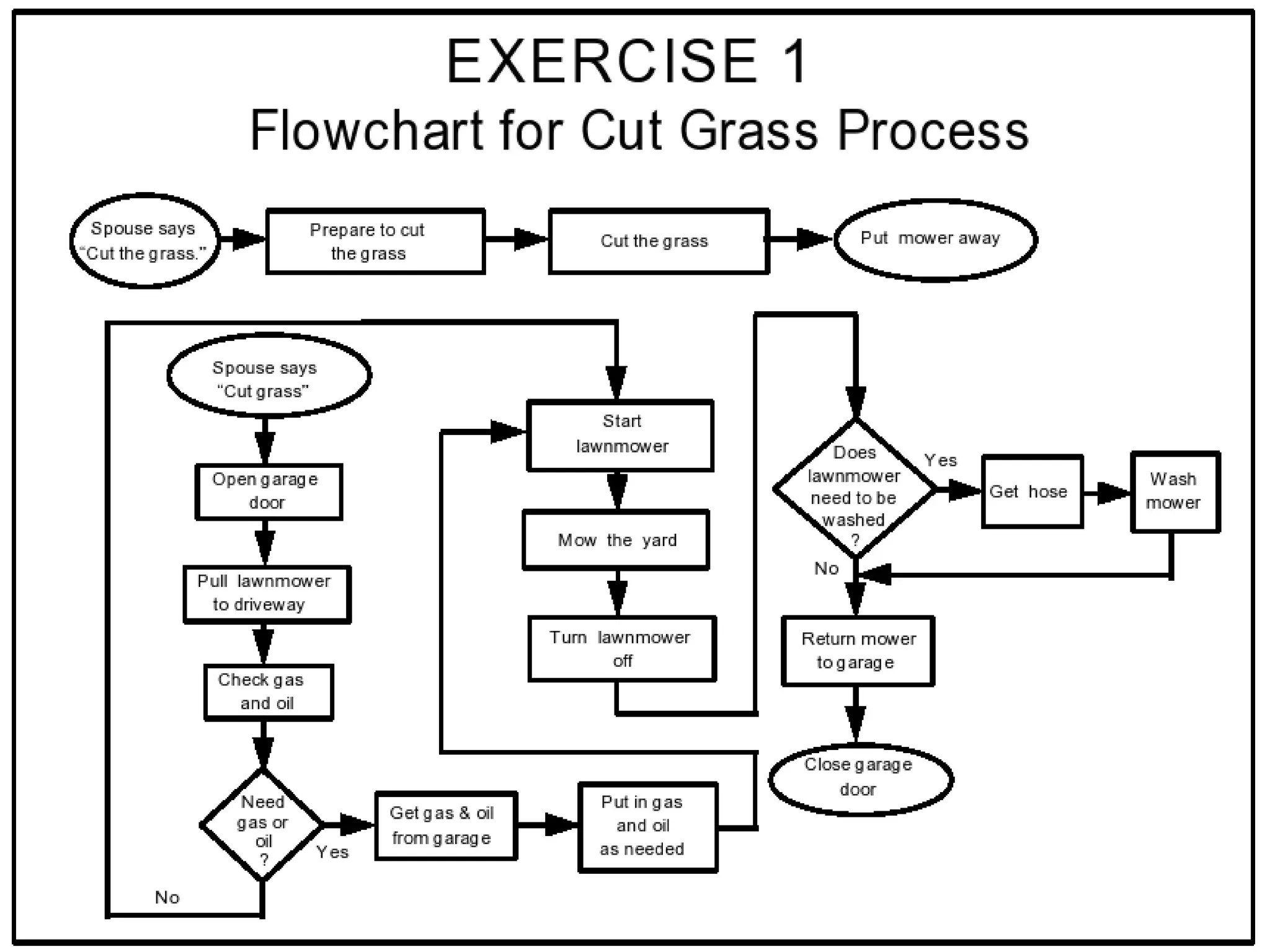
What Is a Flowchart?
A diagram that uses graphic symbols
to depict the nature
and flow of the steps in a process.
Benefits of Using Flowcharts
• Promote process understanding
• Provide tool for training
• Identify problem areas and improvement
opportunities
" Draw a flowchart for whatever you do. Until you do, you do not know
what you are doing, you just have a job.”
-- Dr. W. Edwards Deming.
Keys to Success
• Start with the big picture
• Observe the current process
• Record process steps
• Arrange the sequence of steps
• Draw the Flowchart
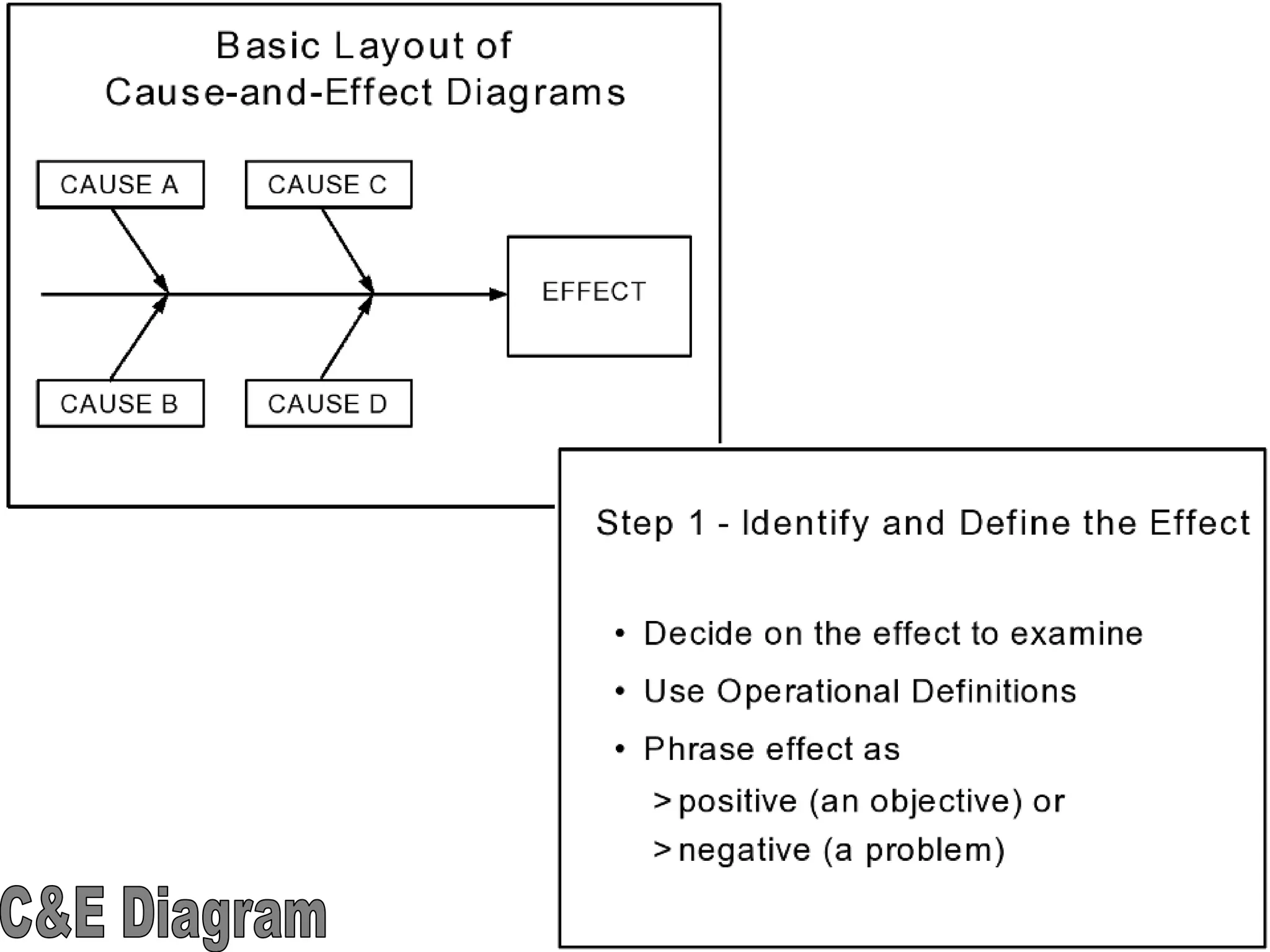
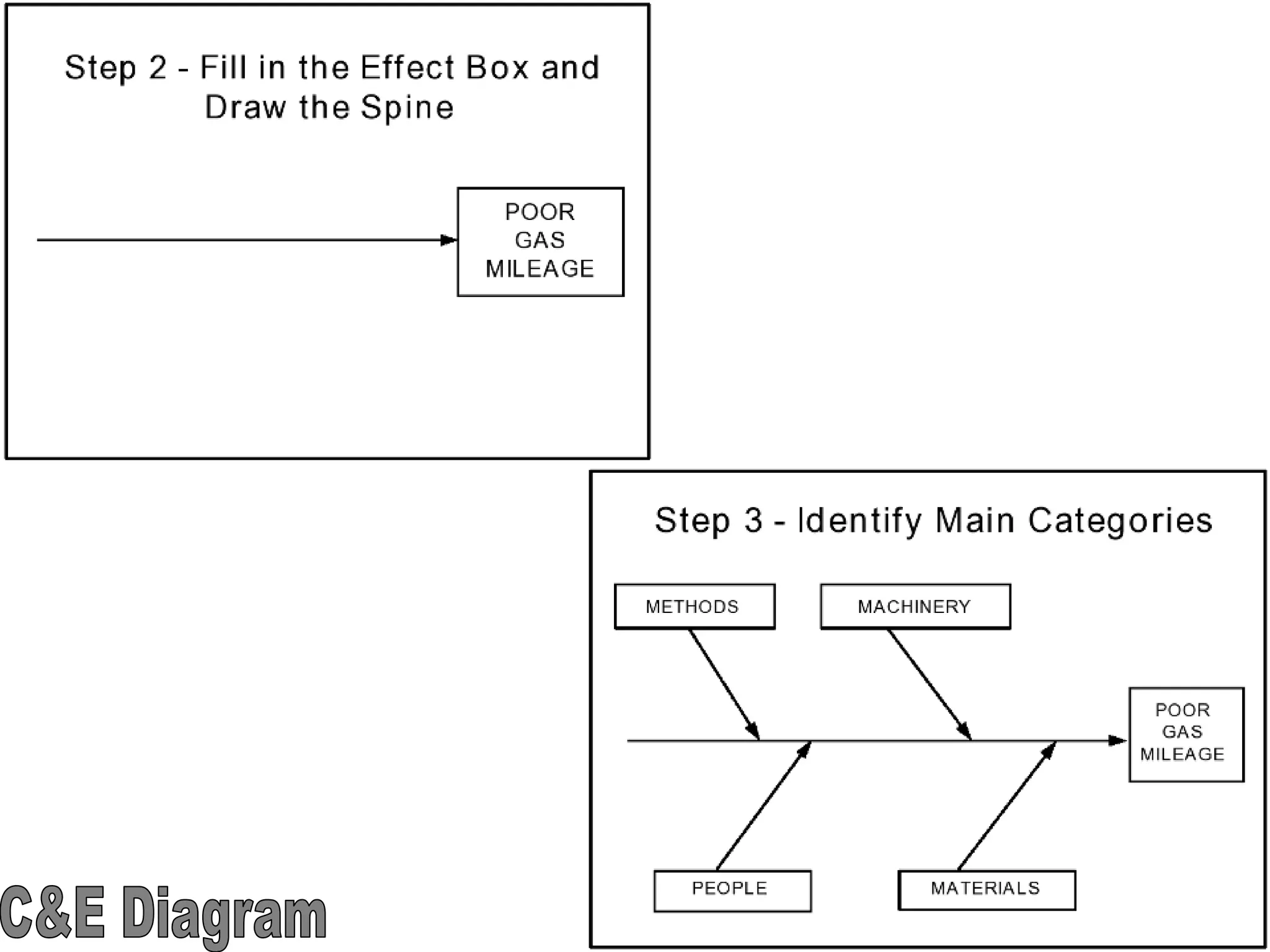
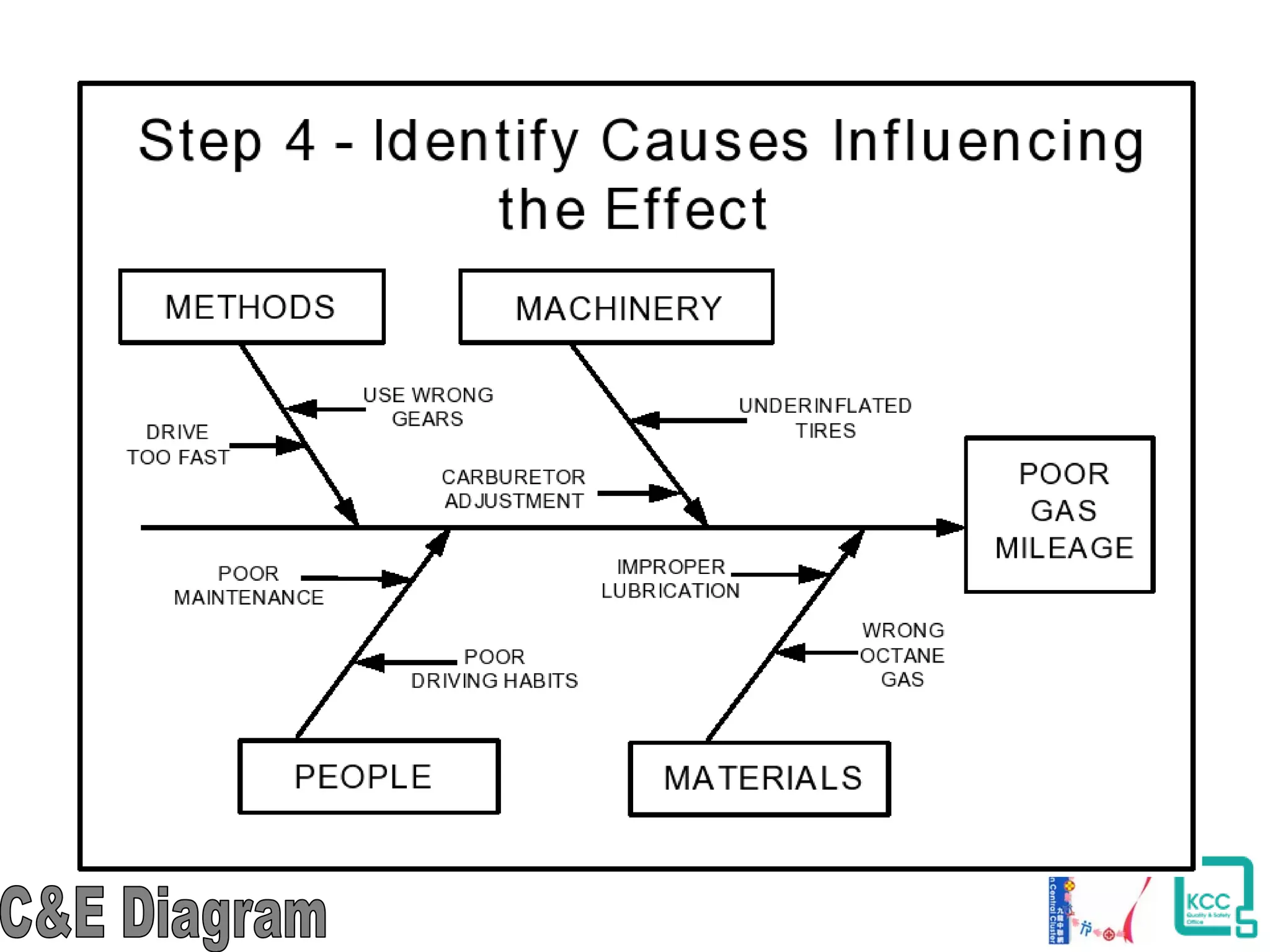
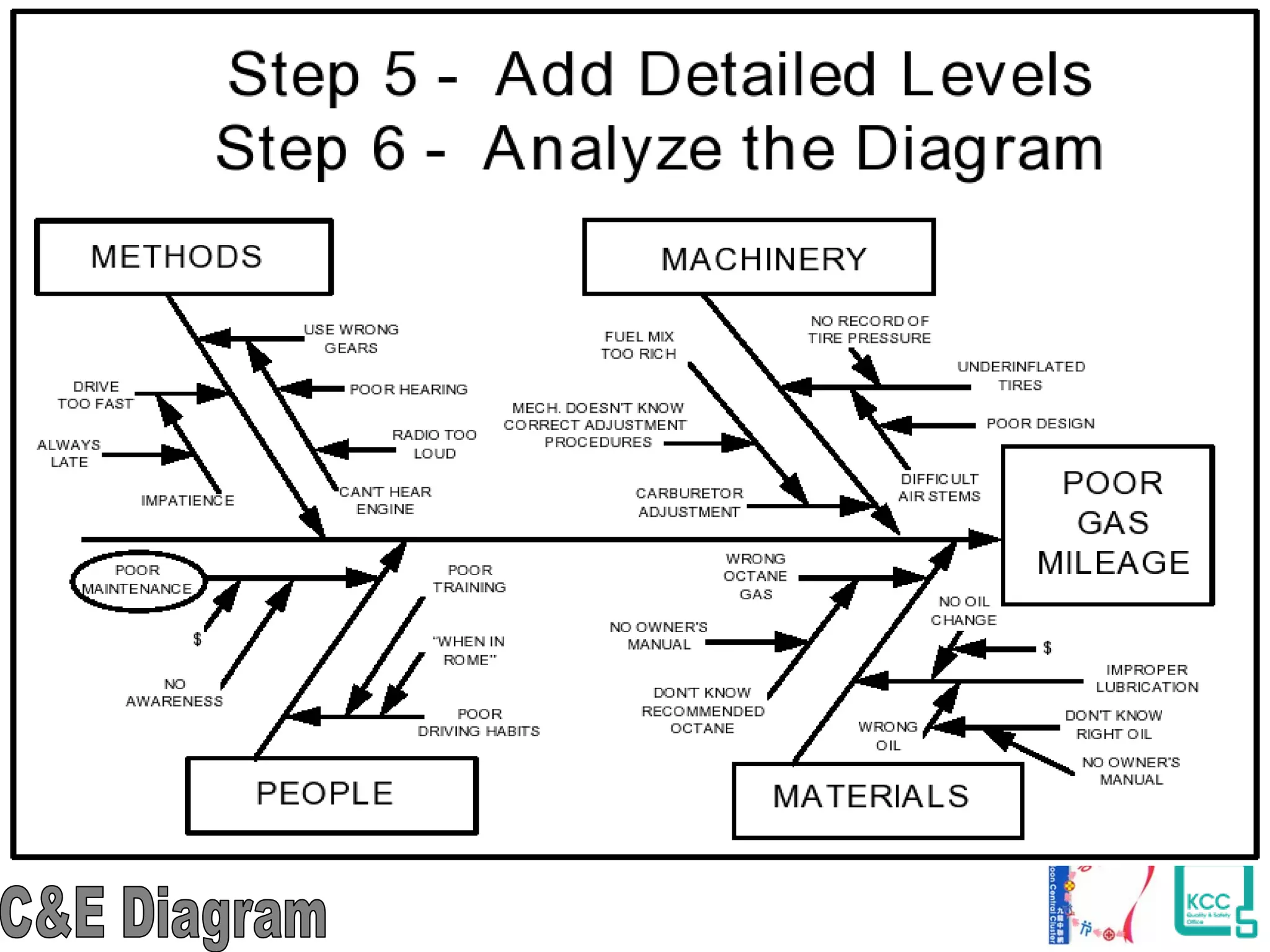
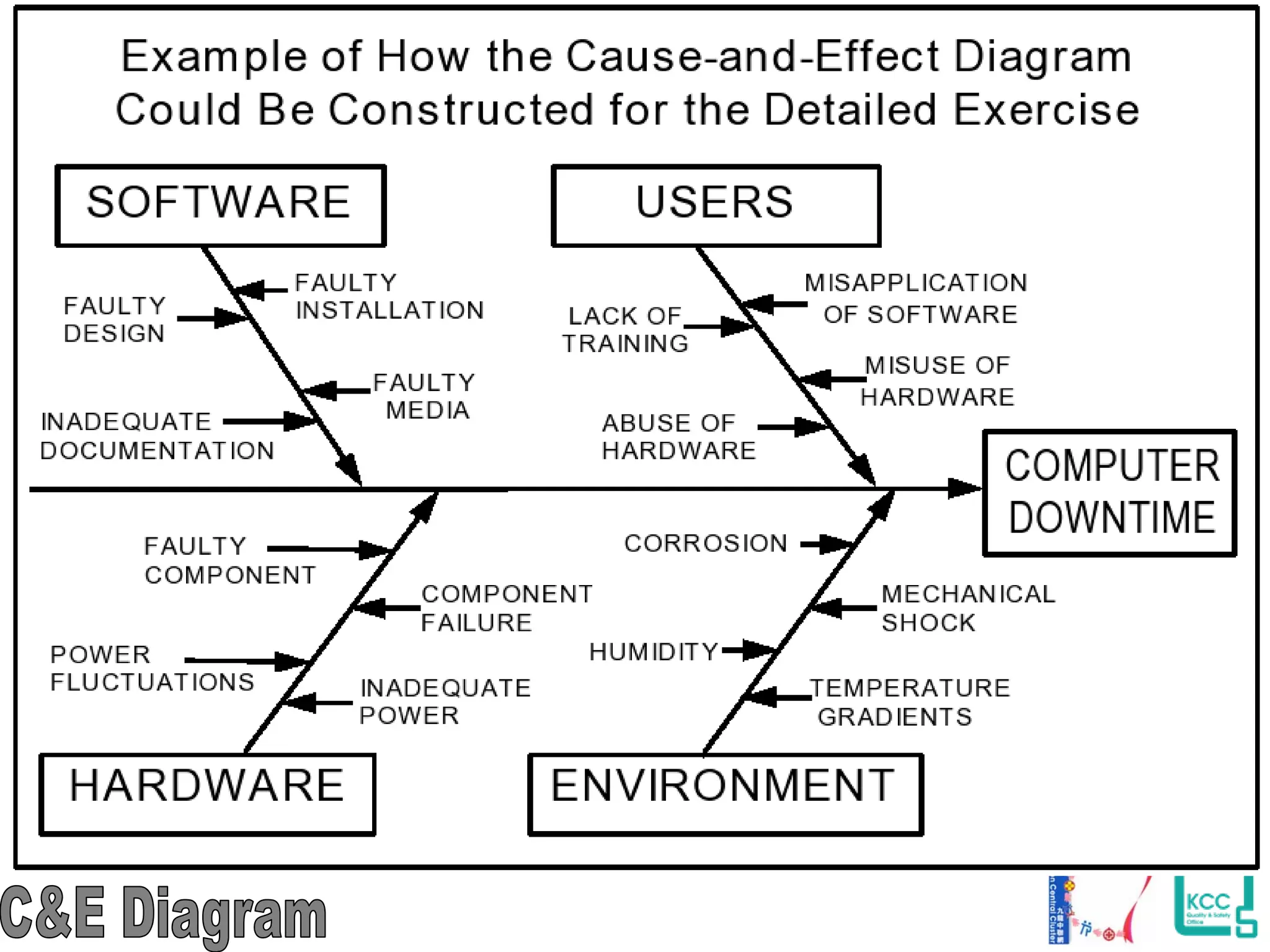
What Is a Cause and Effect
Diagram?
A graphic tool that helps identify, sort, and
display possible causes of a problem or
quality characteristic.
Benefits of Using
a Cause-and-Effect Diagram
• Helps determine root causes
• Encourages group participation
• Uses an orderly, easy-to-read format
• Indicates possible causes of variation
• Increases process knowledge
• Identifies areas for collecting data
Data Collection
• Where
• What
• Who
• How
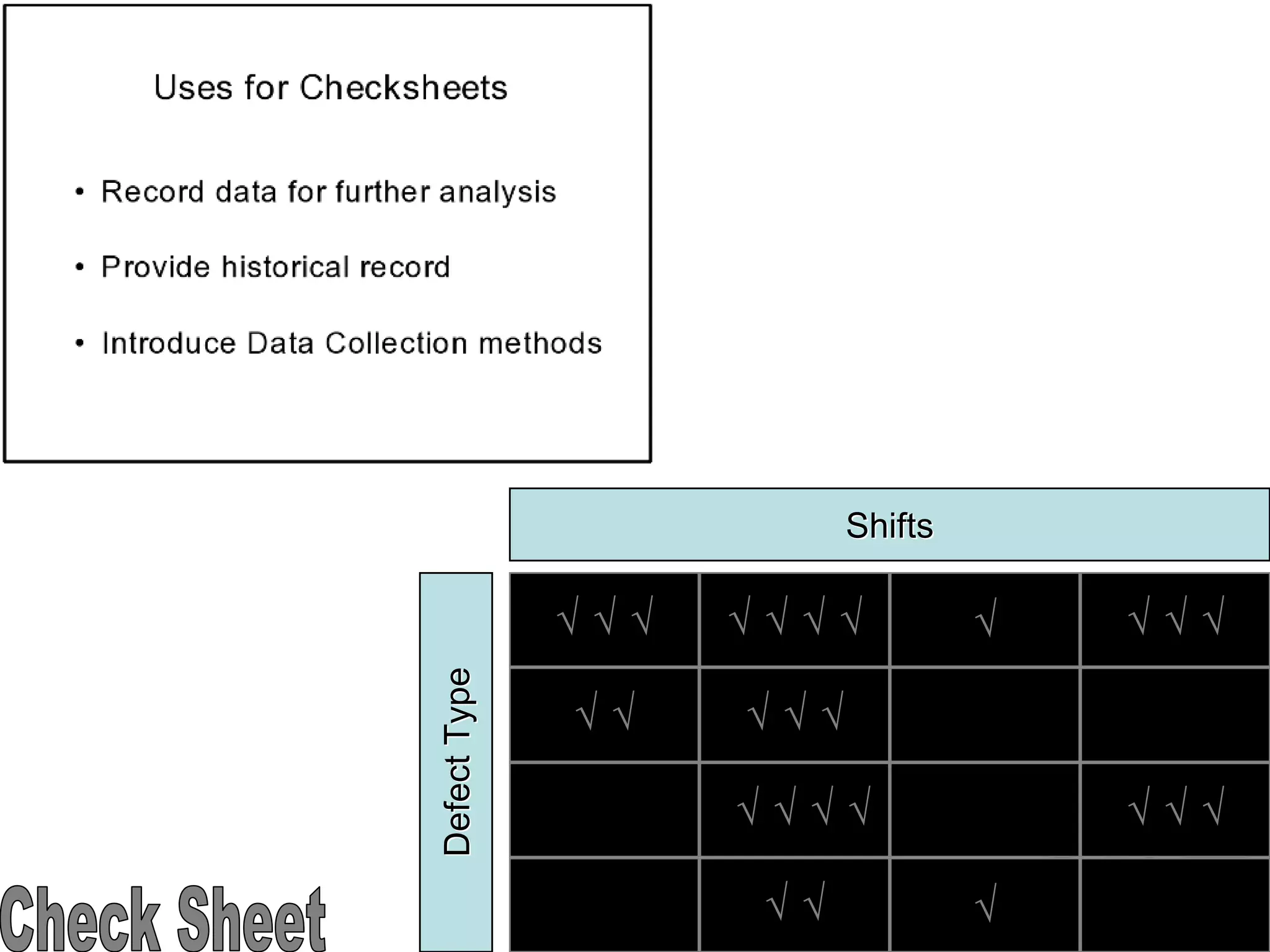
√ √ √ √ √ √ √ √ √ √ √
√ √ √ √ √
√ √ √
√ √ √
ShiftsShiftsDefectTypeDefectType
√ √ √ √
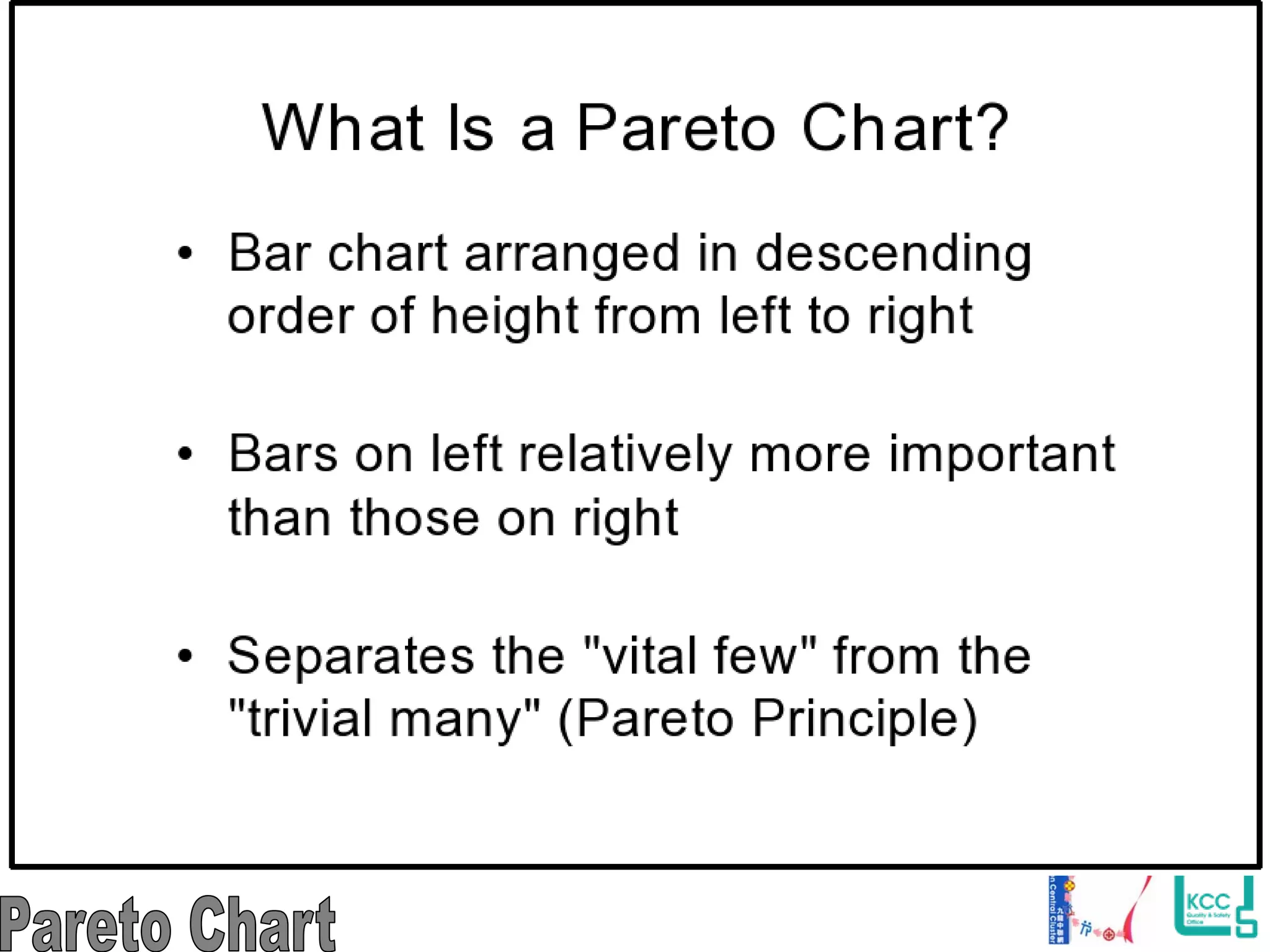
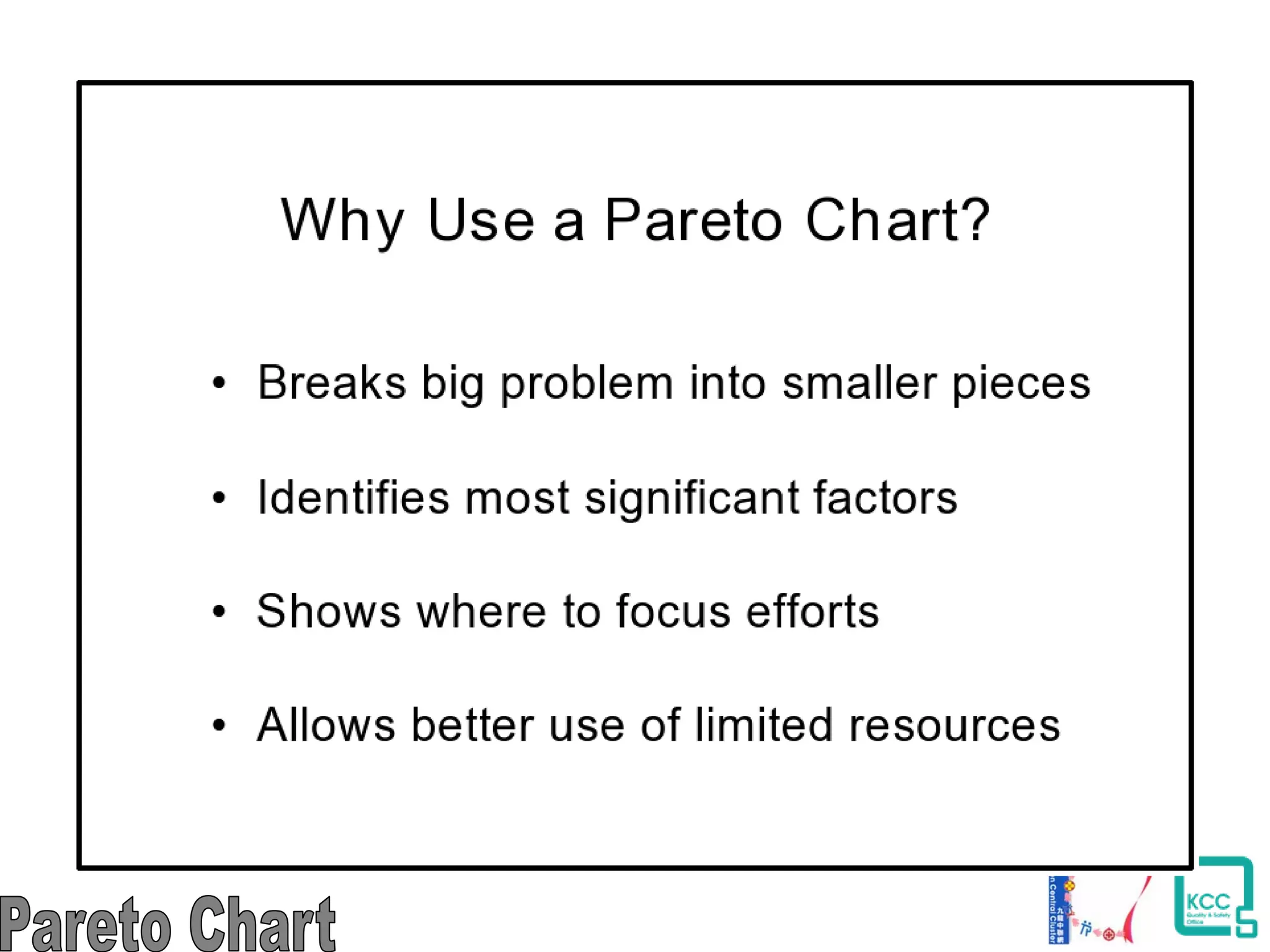
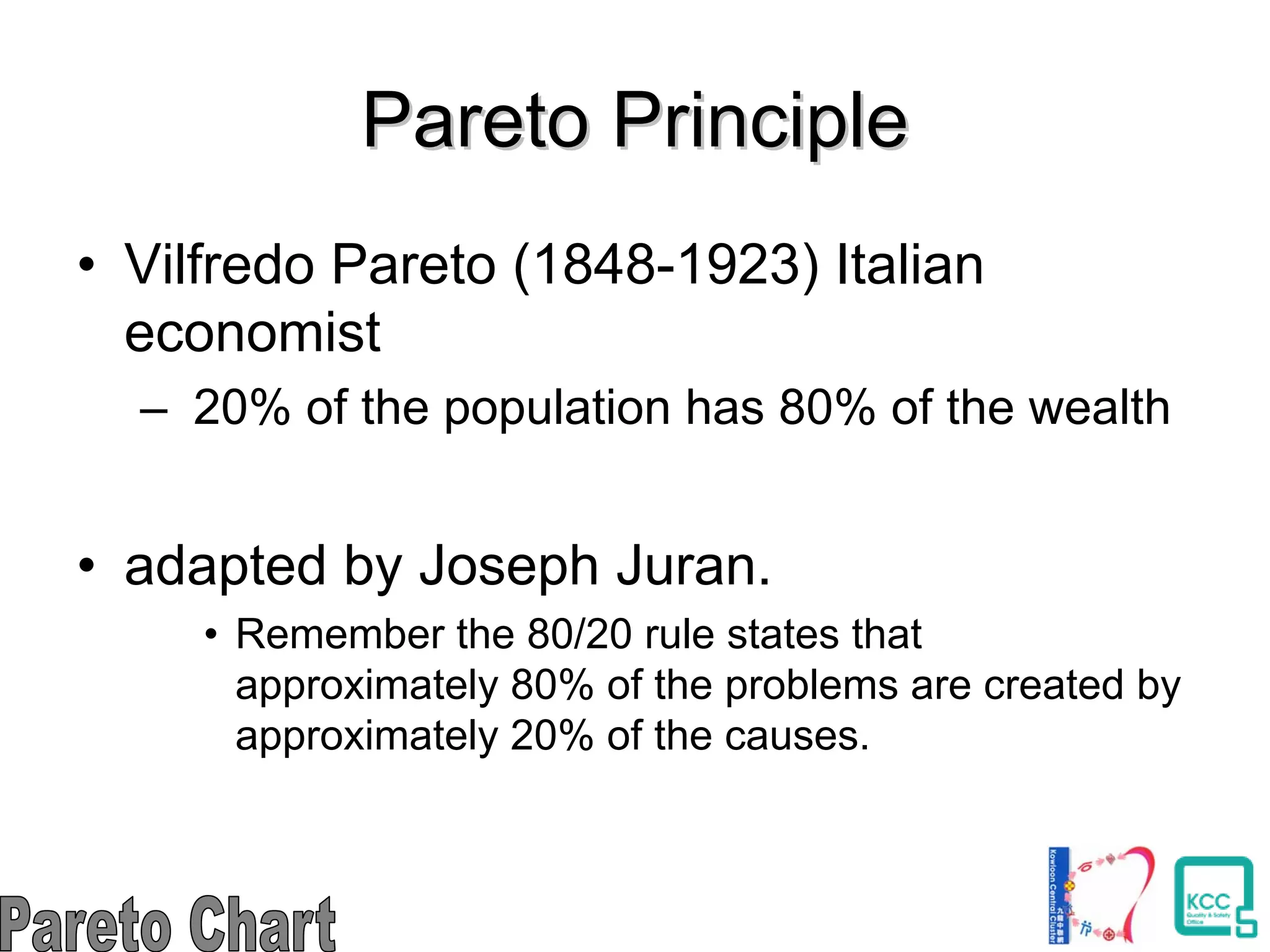
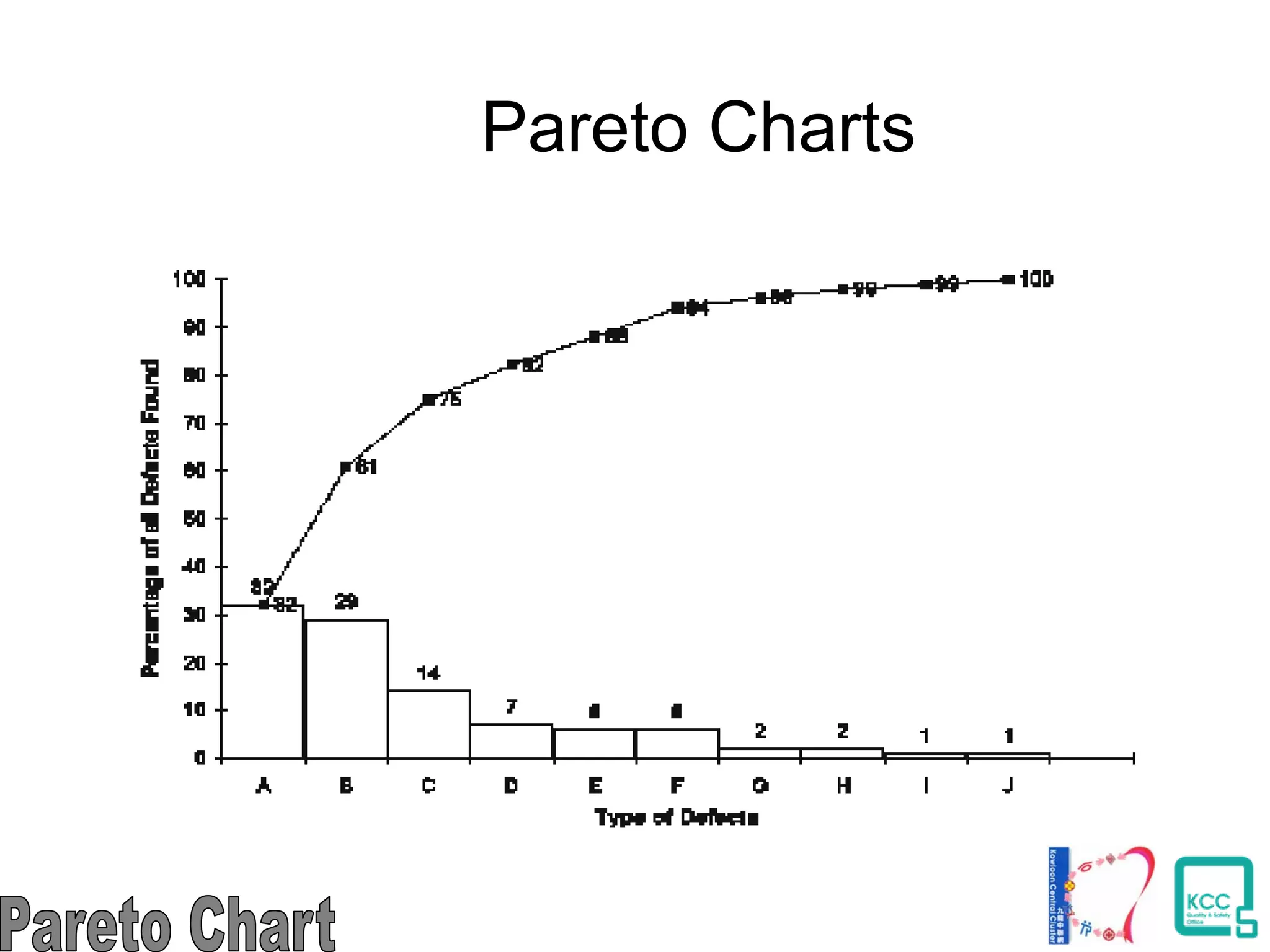
Pareto PrinciplePareto Principle
• Vilfredo Pareto (1848-1923) Italian
economist
– 20% of the population has 80% of the wealth
• adapted by Joseph Juran.
• Remember the 80/20 rule states that
approximately 80% of the problems are created by
approximately 20% of the causes.
Pareto Charts
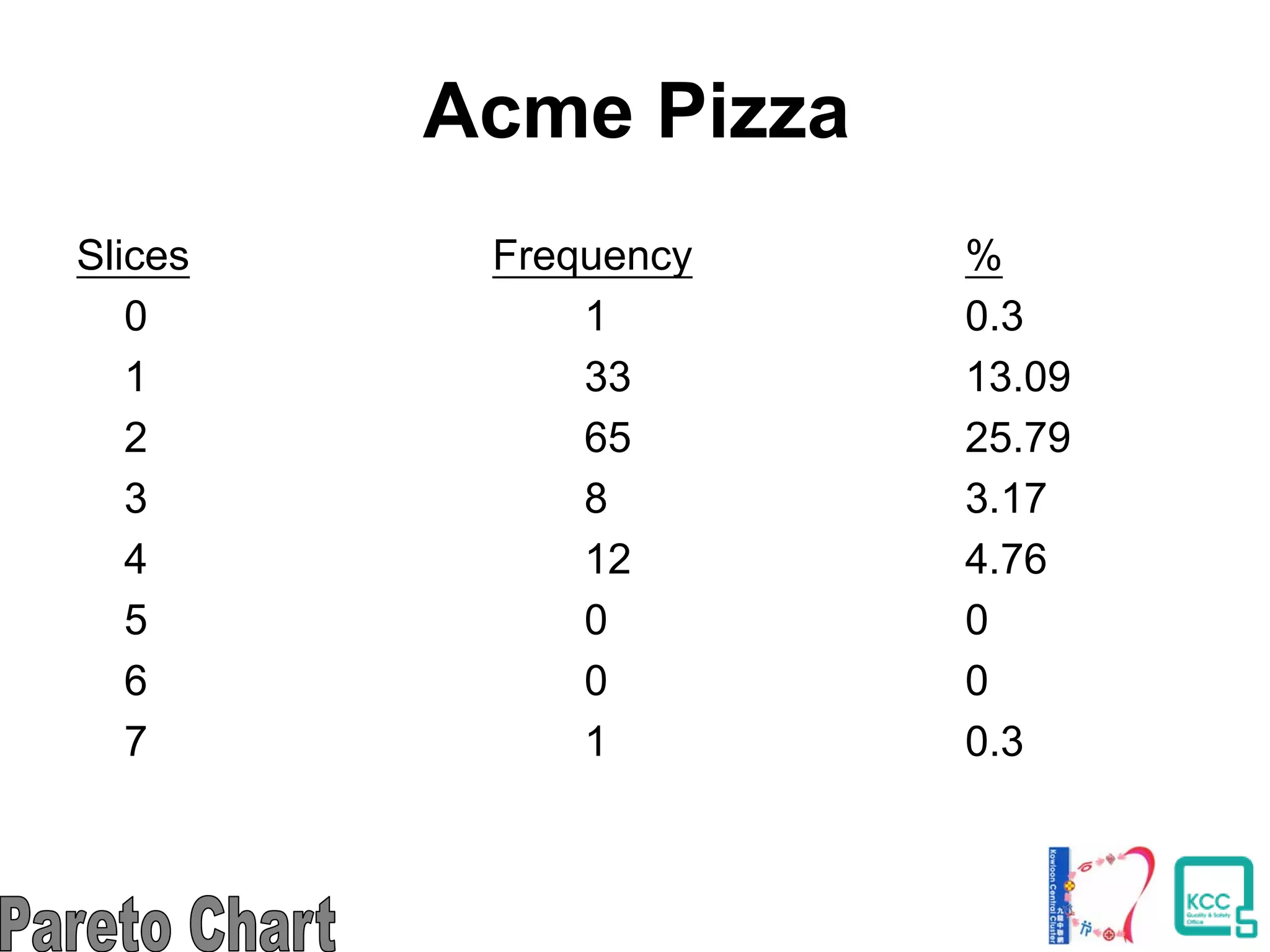
Acme Pizza
Slices Frequency %
0 1 0.3
1 33 13.09
2 65 25.79
3 8 3.17
4 12 4.76
5 0 0
6 0 0
7 1 0.3
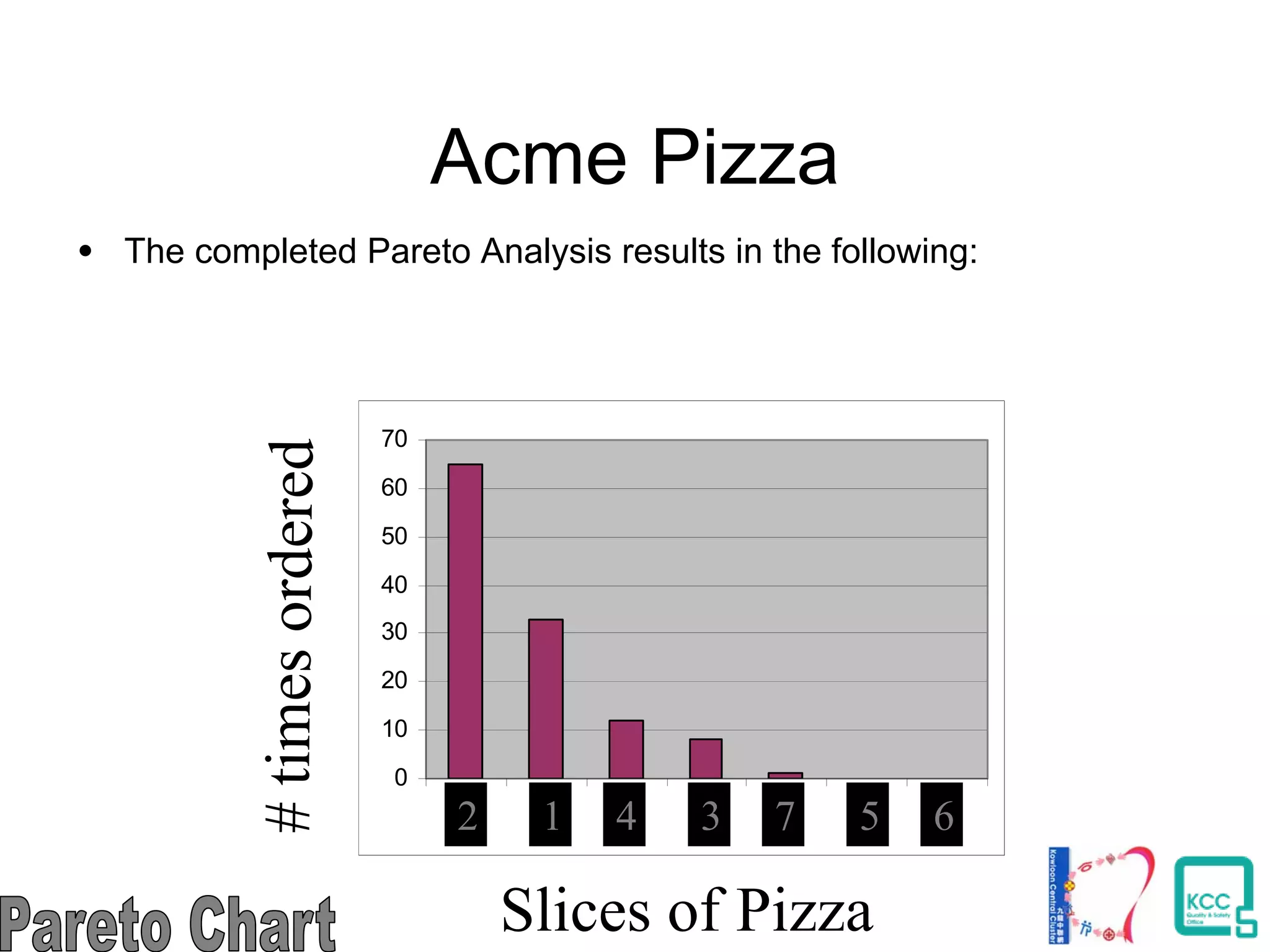
Acme Pizza
• The completed Pareto Analysis results in the following:
0
10
20
30
40
50
60
70
1 2 3 4 5 6 7
Slices of Pizza
#timesordered
2 1 4 3 7 5 6
Scatter Diagrams
Slide 1 of 4
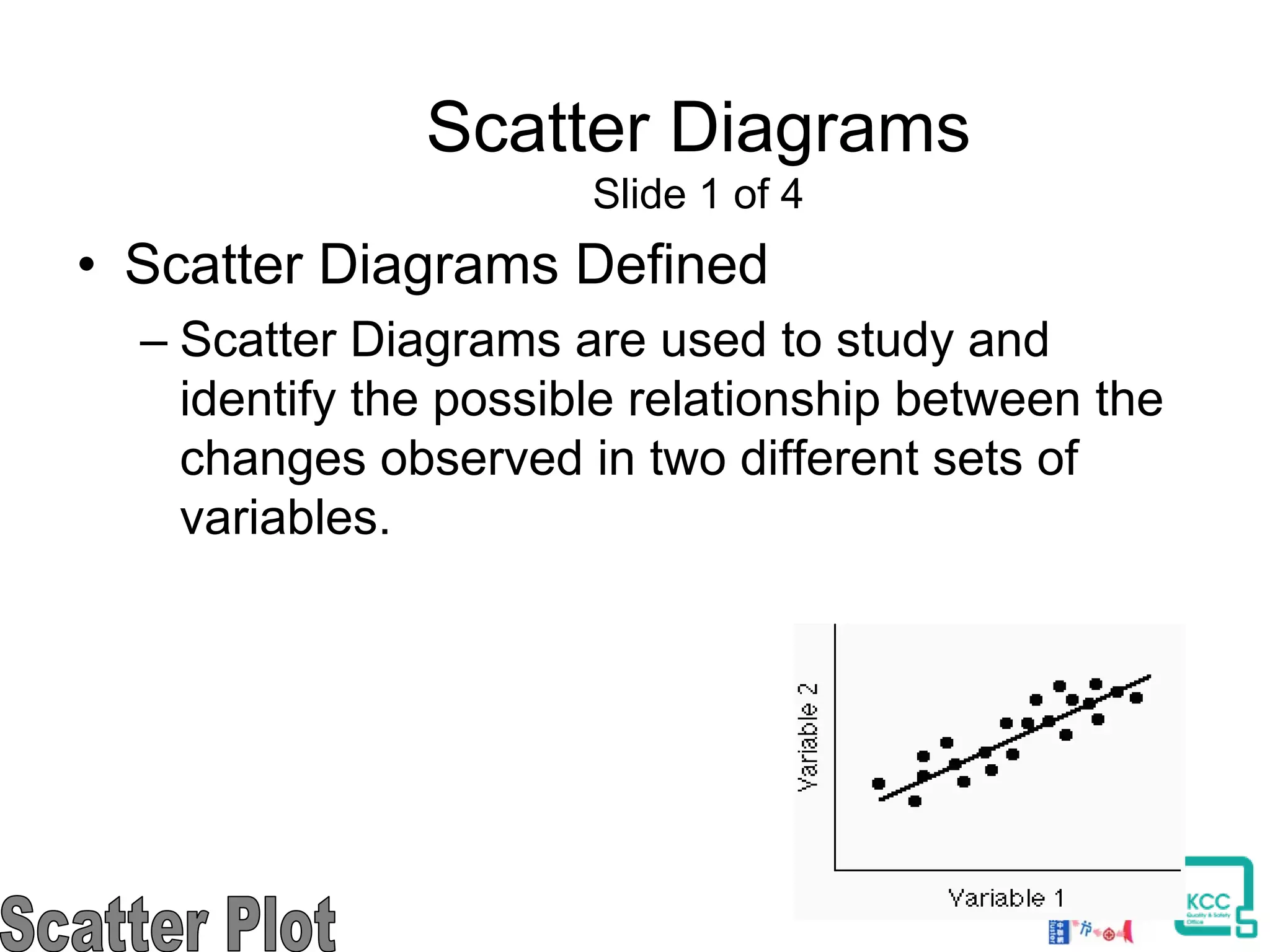
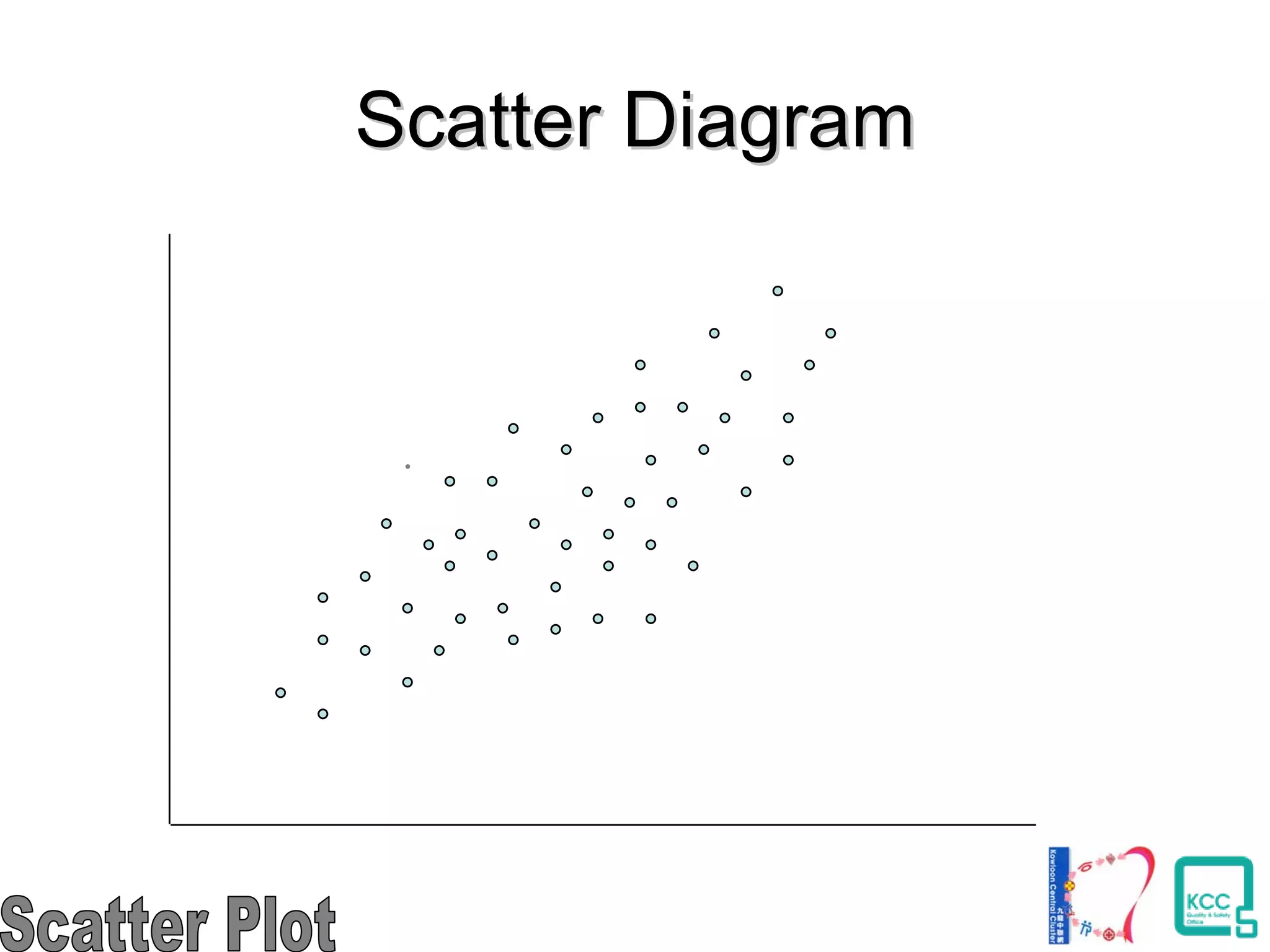
• Scatter Diagrams Defined
– Scatter Diagrams are used to study and
identify the possible relationship between the
changes observed in two different sets of
variables.
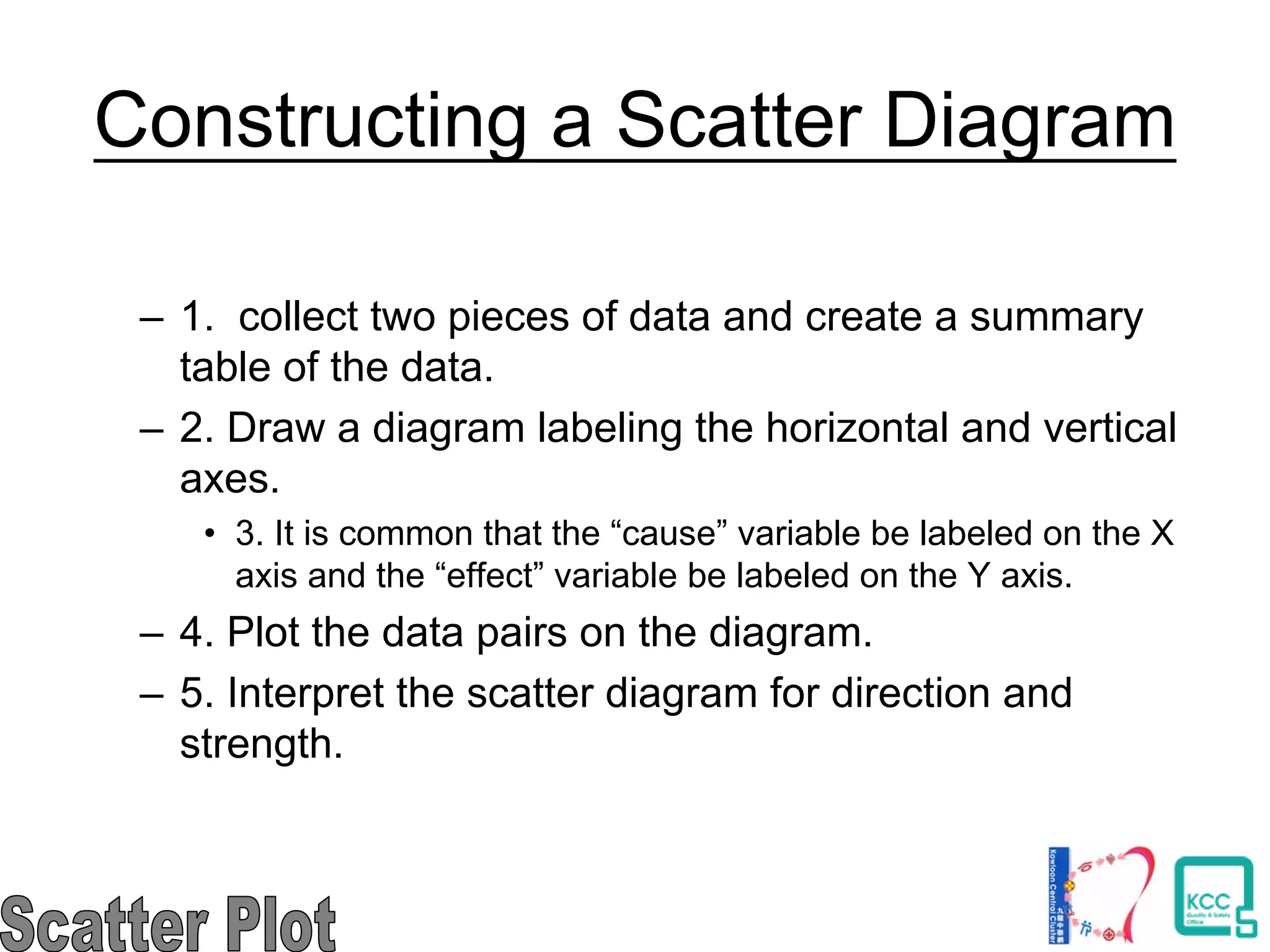
Constructing a Scatter Diagram
– 1. collect two pieces of data and create a summary
table of the data.
– 2. Draw a diagram labeling the horizontal and vertical
axes.
• 3. It is common that the “cause” variable be labeled on the X
axis and the “effect” variable be labeled on the Y axis.
– 4. Plot the data pairs on the diagram.
– 5. Interpret the scatter diagram for direction and
strength.
Scatter DiagramScatter Diagram
.
Production and Quality Tools: Seven Quality Tools and Introduction to Statistics

Production and Quality Tools: Seven Quality Tools and Introduction to Statistics

  • 1.
  • 2.
    The 7 Quality Toolsfor Process Improvements Pareto Chart Flow Charts Cause-Effect Diagrams
  • 3.
    Where did theBasic Seven come from? Kaoru Ishikawa • Known for “Democratizing Statistics” • The Basic Seven Tools made statistical analysis less complicated for the average person • Good Visual Aids make statistical and quality control more comprehendible.
  • 4.
    What Is aFlowchart? A diagram that uses graphic symbols to depict the nature and flow of the steps in a process.
  • 5.
    Benefits of UsingFlowcharts • Promote process understanding • Provide tool for training • Identify problem areas and improvement opportunities " Draw a flowchart for whatever you do. Until you do, you do not know what you are doing, you just have a job.” -- Dr. W. Edwards Deming.
  • 7.
    Keys to Success •Start with the big picture • Observe the current process • Record process steps • Arrange the sequence of steps • Draw the Flowchart
  • 10.
    What Is aCause and Effect Diagram? A graphic tool that helps identify, sort, and display possible causes of a problem or quality characteristic.
  • 11.
    Benefits of Using aCause-and-Effect Diagram • Helps determine root causes • Encourages group participation • Uses an orderly, easy-to-read format • Indicates possible causes of variation • Increases process knowledge • Identifies areas for collecting data
  • 17.
    Data Collection • Where •What • Who • How
  • 18.
    √ √ √√ √ √ √ √ √ √ √ √ √ √ √ √ √ √ √ √ √ √ ShiftsShiftsDefectTypeDefectType √ √ √ √
  • 31.
    Pareto PrinciplePareto Principle •Vilfredo Pareto (1848-1923) Italian economist – 20% of the population has 80% of the wealth • adapted by Joseph Juran. • Remember the 80/20 rule states that approximately 80% of the problems are created by approximately 20% of the causes.
  • 33.
  • 34.
    Acme Pizza Slices Frequency% 0 1 0.3 1 33 13.09 2 65 25.79 3 8 3.17 4 12 4.76 5 0 0 6 0 0 7 1 0.3
  • 35.
    Acme Pizza • Thecompleted Pareto Analysis results in the following: 0 10 20 30 40 50 60 70 1 2 3 4 5 6 7 Slices of Pizza #timesordered 2 1 4 3 7 5 6
  • 36.
    Scatter Diagrams Slide 1of 4 • Scatter Diagrams Defined – Scatter Diagrams are used to study and identify the possible relationship between the changes observed in two different sets of variables.
  • 37.
    Constructing a ScatterDiagram – 1. collect two pieces of data and create a summary table of the data. – 2. Draw a diagram labeling the horizontal and vertical axes. • 3. It is common that the “cause” variable be labeled on the X axis and the “effect” variable be labeled on the Y axis. – 4. Plot the data pairs on the diagram. – 5. Interpret the scatter diagram for direction and strength.
  • 38.