PRODUCT
LIFE CYCLE
Product Life Cycle
 The term product life cycle refers to the length of time a product is
introduced to consumers into the market until it's removed from the
shelves.
 This concept is used by management and by marketing professionals as
a factor in deciding when it is appropriate to increase advertising, reduce
prices, expand to new markets, or redesign packaging.
Stages of PLC
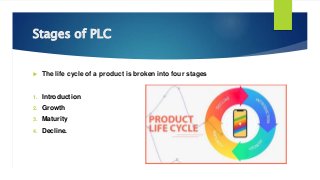
 The life cycle of a product is broken into four stages
1. Introduction
2. Growth
3. Maturity
4. Decline.
Introduction :
 This phase generally includes a
substantial investment in
advertising and a marketing
campaign focused on making
consumers aware of the product
and its benefits.
Growth :
 If the product is successful, it then
moves to the growth stage.
 This is characterized by
growing demand, an increase in
production, and expansion in its
availability.
Maturity :
 This is the most profitable stage,
while the costs of producing and
marketing decline.
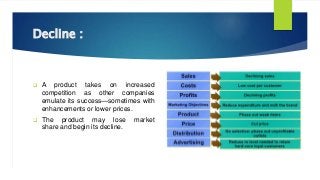
Decline :
 A product takes on increased
competition as other companies
emulate its success—sometimes with
enhancements or lower prices.
 The product may lose market
share and begin its decline.
Product life cycle (PLC).pptx

Product life cycle (PLC).pptx

  • 1.
  • 2.
    Product Life Cycle The term product life cycle refers to the length of time a product is introduced to consumers into the market until it's removed from the shelves.  This concept is used by management and by marketing professionals as a factor in deciding when it is appropriate to increase advertising, reduce prices, expand to new markets, or redesign packaging.
  • 3.
    Stages of PLC The life cycle of a product is broken into four stages 1. Introduction 2. Growth 3. Maturity 4. Decline.
  • 4.
    Introduction :  Thisphase generally includes a substantial investment in advertising and a marketing campaign focused on making consumers aware of the product and its benefits.
  • 5.
    Growth :  Ifthe product is successful, it then moves to the growth stage.  This is characterized by growing demand, an increase in production, and expansion in its availability.
  • 6.
    Maturity :  Thisis the most profitable stage, while the costs of producing and marketing decline.
  • 7.
    Decline :  Aproduct takes on increased competition as other companies emulate its success—sometimes with enhancements or lower prices.  The product may lose market share and begin its decline.