Privacy, Security And Forensics in The Internet of Things (IoT) Reza Montasari
Privacy, Security And Forensics in The Internet of Things (IoT) Reza Montasari
Privacy, Security And Forensics in The Internet of Things (IoT) Reza Montasari
Privacy, Security And Forensics in The Internet of Things (IoT) Reza Montasari
Privacy, Security And Forensics in The Internet of Things (IoT) Reza Montasari
1.
Privacy, Security AndForensics in The Internet
of Things (IoT) Reza Montasari install download
https://ebookmeta.com/product/privacy-security-and-forensics-in-
the-internet-of-things-iot-reza-montasari/
Download more ebook from https://ebookmeta.com
2.
We believe theseproducts will be a great fit for you. Click
the link to download now, or visit ebookmeta.com
to discover even more!
Security and Privacy in the Internet of Things
Architectures Techniques and Applications 1st Edition
Ali Ismail Awad (Editor)
https://ebookmeta.com/product/security-and-privacy-in-the-
internet-of-things-architectures-techniques-and-applications-1st-
edition-ali-ismail-awad-editor/
Network Forensics: Privacy and Security 1st Edition
Anchit Bijalwan
https://ebookmeta.com/product/network-forensics-privacy-and-
security-1st-edition-anchit-bijalwan/
Network Forensics Privacy and Security 1st Edition
Anchit Bijalwan
https://ebookmeta.com/product/network-forensics-privacy-and-
security-1st-edition-anchit-bijalwan-2/
Four Laws Book 06 -Back to Yonder 1st Edition Burke
https://ebookmeta.com/product/four-laws-book-06-back-to-
yonder-1st-edition-burke/
3.
Ten Laws ofOperational Risk: Understanding its
Behaviours to Improve its Management 1st Edition
Michael Grimwade
https://ebookmeta.com/product/ten-laws-of-operational-risk-
understanding-its-behaviours-to-improve-its-management-1st-
edition-michael-grimwade/
Genetics and the Behavior of Domestic Animals 3rd
Edition Temple Grandin
https://ebookmeta.com/product/genetics-and-the-behavior-of-
domestic-animals-3rd-edition-temple-grandin/
Basic and Clinical Pharmacology, 15th Edition Bertram
G. Katzung
https://ebookmeta.com/product/basic-and-clinical-
pharmacology-15th-edition-bertram-g-katzung/
Parallel Paradise 1st Edition Mayapee Chowdhury
https://ebookmeta.com/product/parallel-paradise-1st-edition-
mayapee-chowdhury/
Relativistic Quantum Field Theory Michael T. Strickland
https://ebookmeta.com/product/relativistic-quantum-field-theory-
michael-t-strickland/
Reza Montasari •Fiona Carroll • Ian Mitchell
Sukhvinder Hara • Rachel Bolton-King
Editors
Privacy, Security And
Forensics in The Internet of
Things (IoT)
Introduction: Critical Analysisof the
Challenges Police and Law Enforcement
Face in Policing Cyberspace
The digital world has transformed society enabling new ways of communication
and exchanging information. This innovation simultaneously poses a plethora of
new challenges as cyberspace is vulnerable to extensive misuse. Technological
shifts in the criminal landscape poses a myriad of challenges for policing and
law enforcement that undermine the efficacy of crime control online. In view
of this, this chapter provides a comprehensive account of the challenges faced
by police and law enforcement in keeping cyberspace secure. This chapter will
proceed in two stages. Firstly, four key challenges of policing in the digital realm
will be identified: legislation, jurisdiction, anonymity and reporting. Following
analysis of the challenges, this chapter will recommend possible avenues for future
research to assist both in addressing the threat of cyberspace as well as the digital
investigation of cybercrime. The chapter concludes that international cooperation
and multi-agency partnership between state actors, private companies, academics,
architects and users will provide the most advantageous response in the fight against
cybercrime.
Introduction
In the twenty-first century, the internet and associate technologies such as the
Internet of Things (IoT) solutions, Cloud-Based Services (CBSs), Cyber-Physical
Systems (CPSs) and mobile devices have become the defining feature of modern
life (Montasari & Hill, 2019; Montasari, 2017). We live in a hyper connected world
that has expanded accessibility, capability and reach. The digital age has constructed
a ubiquitous environment for individuals to interact, connect and share information.
Technology is fundamentally advantageous for society to fuel our ability to interact
across the world. However, the internet remains a double-edged sword. As the use
of technology continues to grow exponentially, so do the opportunities for criminals
to exploit vulnerabilities in cyberspace.
v
10.
vi Introduction: CriticalAnalysis of the Challenges Police and Law Enforcement...
In 2016, the Crime Survey for England and Wales introduced new victimi-
sation questions concerning fraud and computer misuse. This data revealed the
unprecedented scale and nature of the problem society faces as cyber-related
crime accounted for almost half of all crimes committed (Caneppele & Aebi,
2019). The threat has evolved significantly, becoming increasingly sophisticated
and multifaceted, targeting not only individuals but critical infrastructure, industries
and governments. Cybercrime has become one of the fastest growing types of
crime in the United Kingdom (UK) and is now recognised on the National Risk
Register as a Tier 1 threat to national security (Stoddart, 2016). For the purpose of
this chapter, the broad umbrella term of cybercrime will be employed to include
both cyber-dependant and cyber-enabled crime. The advent of technology provides
cybercriminals an opportunity to change their modus operandi, this poses significant
implications for policing. Traditional models of policing and law enforcement
have derived from assumptions that crime occurs in physical proximity, in limited
scale with traceable evidence (Harkin et al., 2018). The digital era has disrupted
conventional law and understanding of enforcement as cybercrime does not operate
under the same spatial and temporal constraints. Therefore, traditional policing
strategies such as localised foot patrols and hierarchically organised models are
not applicable to cyberspace. Whilst adversaries proved adaptive in leveraging
new technological innovation to overwhelm the capabilities of state security, law
enforcement agencies were ill-prepared for this transformative shift from offline
to online operations. Thus, it is apparent that the domain of cybercrime is rapidly
“increasing in frequency, scale, sophistication and severity” (Harkin et al., 2018).
Drawing upon an increasing body of literature, this chapter will critically evalu-
ate the challenges police and law enforcement endure in policing cyberspace. This
chapter will explore four key policing obstacles: an archaic and time-consuming
legislative process, a lack of international consensus, the anonymous nature of
cyberspace, and the under-reporting of cybercrime. Following critical analysis, this
chapter will provide recommendations as to how to strengthen police and law
enforcement responses against cybercrime. Fundamentally, the internet is a digital
environment that is changing the way criminals and law enforcement operate. Given
the complexities of cybercrime, there is no one solution. Therefore, this chapter
will propose that no singular agency or government can police cyberspace by itself.
Instead, government, industry, engineers, users, policymakers and academics must
combine efforts to tackle cybersecurity challenges.
Challenges
Addressing the challenge that cyberspace represents is fraught with difficulties
as new technologies and events present a myriad of legal, policy and technical
work that requires months or even years to establish. Yet the pace of innovation
appears relentless and cascading, threatening to overwhelm and in many cases
11.
Introduction: Critical Analysisof the Challenges Police and Law Enforcement... vii
overtake policymakers and regulatory bodies at a national and international level.
Criminals by sheer innovation are redefining cyberspace which is in turn shaping
and driving current approaches to cybersecurity. The following sections will outline
the key challenges police and law enforcement face in establishing a sustainable and
comprehensive response to criminal activity in cyberspace.
Legislation
A key challenge in policing cybercrime in contemporary society is the apparent
disconnect between legislation and technology. The penal system is an inherently
retroactive and lengthy process which generates numerous obstacles in regulating
the cyber domain. Technological forces are evolving at a rapid rate that is far
outpacing the development of policy and legislation. Consequently, cyberspace
is typically governed by a patchwork of weak, under-developed and competing
legislation as illustrated by the Computer Misuse Act 1990, which is the primary
piece of legislation for prosecuting cyber-related offenders (Criminal Law Reform
Now Network, 2020; Montasari et al., 2016). This Act was established three decades
ago with no foresight into the rapid pace of technological advancements. Therefore,
the concepts embodied in the Computer Misuse Act 1990 were intended to be
technologically neutral, in order to pertain to both current and future technologies.
Despite attempts to future-proof, the emergence of unprecedented technology
has created a number of loopholes and ambiguity in the application of the law.
Consequently, Ashworth (2013) argues that legislation merely sustains a myth of
control and legitimacy of the sovereign state, as legislation is often impromptu,
expressive and inconsistent in an attempt to cater to public pressures with little
consideration of an evidence-base and expert knowledge.
Private and public sectors are typically eager to spend money, time and resources
into the enforcement of computer misuse laws in terms of the apprehension
and prosecution of offenders. However, the legal foundation is sorely lacking in
substance. Legislation has demonstrated an inability to target the right people and
establish defences which enable private enforcement to work effectively alongside
public enforcement in order to best address cyber threats. Thus, the cybersecurity
industry remains constrained and inadvertently criminalised by the Computer
Misuse Act (Criminal Law Reform Now Network, 2020). For this reason, critics,
namely the Criminal Law Reform Now Network (2020), have claimed that the
Computer Misuse Act 1990 is outdated and does not reflect the current problems
police and law enforcement face. Subsequently, they deduce that cyber legislation
needs to undertake radical reform. Evidently, establishing legislation to coincide
with ever-evolving technology proves challenging. Despite uncertainties, it is
critical to not wholly dismiss the role of law and policy on the basis that technology
will always evolve more rapidly (Sallavaci, 2017). Ultimately, legislation remains a
crucial component in the fight against cybercrime. An Act of Parliament provides
police and law enforcement with a fundamental blueprint that guides behaviour
12.
viii Introduction: CriticalAnalysis of the Challenges Police and Law Enforcement...
and establishes standards and frameworks. Nonetheless, in an ever-changing highly
digitised realm, substantial amendments to the rule of law are necessary to evolve
in line with society.
Jurisdiction
The infrastructure of the internet is a physical construct that exists in time and
space within physical borders of sovereign countries. However, the data flowing
throughout this infrastructure spans across multiple national jurisdictions, which
remains an inherent challenge of cyberspace. Whilst criminal activity in cyberspace
penetrates effortlessly across geographical borders, law enforcement does not. As
a result, nationally bounded law enforcement is required to operate within a realm
that is geographically unbounded, thereby evoking a large number of complications
(Kennedy & Warren, 2020). The most prominent international instrument concern-
ing cybercrime is ‘The Council of Europe Convention on Cybercrime’, also known
as the Budapest convention. The convention seeks to harmonise national laws on
cybercrime, improve investigative techniques and increase cooperation between
nations (Kennedy & Warren, 2020). However, achieving consensus proves a con-
tentious issue as each nation possesses their own independent norms, beliefs and
practices, and thus promote differing visions for cyberspace. For instance, various
governments advocate for cyber sovereignty contending that national borders apply
to cyberspace and each country should have the right to govern how people and
businesses use the internet within their territory. Whereas other nations support
internet freedom, the concept that every citizen should be free to express themselves
and spread new ideas online with anyone, anywhere (Kennedy & Warren, 2020).
This fragmentation between nations renders it almost impossible to establish an
international consensus concerning internet governance and regulation. However,
this is not to say the Budapest Convention as a whole is obsolete. Despite its
limitations, the treaty provides a fundamental framework in facilitating international
cooperation and the harmonisation of legislation. Evidently, what makes cybercrime
difficult to monitor and enforce is its transgressive form, one that does not respect
international borders. The internet and computers have enabled individuals to steal
electronic data remotely without physical proximity. Thus, criminal actors operating
across borders adds a level of complexity to policing as victims, perpetrators
and evidence can all reside within differing jurisdictions (Montasari, 2017). Con-
sequently, police forces must request data preservation and access to electronic
evidence residing in other jurisdictions. This reliance upon mutual assistance makes
it incredibly complex, time consuming and costly to bring offenders to justice
outside of the United Kingdom. As a result, recent studies, including Świa̧tkowska’s,
call (2020) for more effective and synchronised international efforts to mitigate
digital vulnerabilities. She determines that a lack of international consensus can
offer cybercriminals a spatial safe haven whereby they operate outside the scope of
law enforcement and international legislation. These safe havens provide a domain
13.
Introduction: Critical Analysisof the Challenges Police and Law Enforcement... ix
for adversaries to better evade government restrictions, detection and prosecution.
Amid the global disagreement, technological innovation continues to accelerate at
a tremendous speed. Therefore, international cooperation is vital to eradicate the
safe haven for cyber criminals, promote information sharing and eventually enhance
global investigations.
Anonymity
A further challenge the police face in the apprehension of cyber criminals is
anonymity. There are many publicly available and accessible tools that allow
users’ internet activity to remain anonymous. The most commonly used anonymous
system is the Tor browser, this is a powerful tool that offers online end-to-end
encryption through masking a user’s IP address (Davies, 2020). This offers the
ability to protect privacy and effectively prevent governments from accessing data
and tracking online activities. This freedom from censorship is therefore deemed
by civil rights activists as a powerful tool to be utilised in heavily monitored
and authoritarian states. Whilst encrypted communication protects the security and
privacy of its users, it also presents significant disadvantages as users of illegal
sites leverage this cloak of anonymity to evade police and law enforcement. There
remain a series of websites hidden under a layer of protection that can only be
accessed utilising specialised anonymous browsers. This realm has been deemed
the dark net. Criminals can mask their identities and hide their locations by re-
directing communication and activity through a distributed network of relays around
the world. Whilst the dark web is not exclusively used by criminals, these hidden
services can create a centralised repository of illicit marketplaces facilitating the
selling and distributing of illegal goods such as firearms, drugs, counterfeit currency
and child pornography (Davies, 2020). Consequently, the nature of cyberspace is
problematic for policing as the risk of apprehension can be easily mitigated through
utilising Tor browsers, cryptocurrency and virtual private networks.
The dark net is constantly evolving and adapting as these illicit markets operate
on the fringes of the internet and are quick to adopt readily available technology
in order to provide greater anonymity. This is exemplified in Ladegaard’s research
(2019) into the most prolific dark net investigation, Operation Onymous. Ladegaard
(2019) reported that criminals will typically migrate to alternate cryptomarkets
once their current darknet market is detected and removed by law enforcement.
From these findings there is evidence to suggest that the cybercrime ecosystem is
resilient to law enforcement takedowns as operations merely lead to a displacement
of criminal activity. Arguably police crackdowns can trigger criminal innovation
as infiltration forces darknet markets to enhance their security and infrastructure.
Overall, anonymity in cyberspace remains a significant challenge for police investi-
gations as criminals continue to circumvent government surveillance and detection.
14.
x Introduction: CriticalAnalysis of the Challenges Police and Law Enforcement...
Reporting
There is a vast amount of crime that goes unnoticed, unreported and undetected.
This generates what scholars term, the dark figure of crime (Kemp et al., 2020).
Action Fraud is the centralised reporting agency of fraud and cyber offences.
However, according to the Office for National Statistics (2020) only 338,255 cases
of fraud and cyber-crime were recorded by Action Fraud within a 12-month period.
Whereas the Crime Survey for England and Wales recorded approximately 4.5
million incidents (Office for National Statistics, 2020). This reveals that only 7%
of victims reported incidents of cybercrime and fraud to the police, as such there
remains a large discrepancy between what people experience and what they report
to the police. Therefore, police recorded crime does not represent the true nature and
scale of the cyber problem the United Kingdom is facing. This variation between
statistics highlights the advantages of victim surveys to shed light upon the dark
figure of crime and the severe limitations associated with relying upon police-
recorded data (Kemp et al., 2020).
There remains a significant problem with under-reporting within the realm of
cybercrime as it depends upon a victim’s willingness to report a crime. There are a
multitude of reasons why individuals and businesses may not report a cybercrime
to the police for instance, a lack of awareness of victimisation, fear of stigma,
poor reporting mechanisms and potential reputation damage (Bailey et al., 2021).
Cybercrime does not always have a readily identifiable victim, and it may be difficult
to determine and recognise one’s own victimisation, consequently computer-related
crime is often referred to as ‘hidden crime’. Moreover, even supposing an individual
is aware of their own victimisation, they may feel too embarrassed or ashamed
to report the incident. This notion is evidenced by several academics, including
scholars Bailey et al. (2021), who determined that victim blaming discourse
permeates cybercrime. Findings from in-depth qualitative interviews found that
cyber victims frequently view themselves as partly to blame for their victimisation
as participants often referred to themselves as ‘gullible’, ‘stupid’ and ‘naïve’. Many
participants suffered from severe psychological harm including anxiety and para-
noia and experienced a breakdown of personal relationships following victimisation.
Subsequently, internalised and externalised stigma may seek to explain the high
levels of underreporting within cyber-related crime. It is important to note that
(Bailey et al., 2021) dataset pertains to a small sample size of 80 victims; despite
this methodological limitation, the study provides a rich insight into the lived
experiences of cyber victimisation and the challenges of reporting cybercrime.
Official statistics that represent an accurate figure of crime are an important
aspect of police operations as data can assist in detecting trends and patterns
amongst criminal activity. Therefore, data analysis can help inform financial budgets
and resource allocation to ensure police interventions are implemented successfully
and effectively. Police ought to coordinate activity and focus their enforcement
resources upon problem areas; however, with a limited dataset due to under-
reporting, this proves challenging (Caneppele & Aebi, 2019).
15.
Introduction: Critical Analysisof the Challenges Police and Law Enforcement... xi
Future Direction
Given the compounding challenges police face in cyberspace, a nodal network of
regulation is required that combines private and public, state and nonstate, national
and international institutions. A multifaceted threat requires a multi-layered, global,
dynamic and decentralised regulatory system in order for the problem to be
addressed. The following sections will offer recommendations to improve cyber
protection, investigations and response.
Legistlation Reform
The Criminal Law Reform Now Network (2020) determines that legislation is
“crying out for reform”. In the Computer Misuse Act 1990, judicial lexicon
remains broad and notoriously vague; subsequently, it permits a vast amount of
flexibility in the application of the law. However, exercising prosecutorial discretion
may result in inconsistent and unjust rulings. As evidenced in the case of R v
Cuthbert, a computer security consultant was convicted for performing unauthorised
penetration testing on a suspected inauthentic website. This ruling sparked many
concerns in the penetration testing community due to fears that the law makes
no distinction between good faith and malicious intent (Criminal Law Reform
Now Network, 2020). Consequently, Guinchard (2021) echoes the Criminal Law
Reform Now Network (2020) and proposes a radical reform of cyber legislation.
Currently, an individual can be prosecuted under the Computer Misuse Act without
the requirement for malicious intent; therefore, the act invertedly criminalises cyber
security researchers. Most notably, the making, supplying or obtaining of hacking
tools equates a computer misuse offense which inhibits vulnerability testing and
threat research. Therefore, Guinchard’s (2021) chapter recommends the introduction
of a ‘public interest’ defence to allow detected vulnerabilities in systems and
networks to be safely disclosed without fear of legal persecution. Guinchard’s
argument is persuasive as reform of the Computer Misuse Act 1990 to include
a public interest defence can enable more freedom for security professionals to
investigate vulnerabilities in critical national infrastructure.
The Covid-19 pandemic has highlighted the increasing need for a modernised
legislative framework for law enforcement as society becomes ever more reliant
upon digital technology. The pandemic saw a rapid acceleration and significant
uptake of individuals around the world working from home. This greatly increased
the potential pool of victims as a number of companies and individuals struggled
to provide rapid security and infrastructure. Criminal organisations attempted to
capitalise upon this unforeseen shift as new vulnerabilities surfaced from remote
working (Buil-Gil et al., 2021). The pandemic demonstrates the need to establish
adaptable and resilient judicial responses as the nature of the cyber threat is dynamic
and evolving at an alarming rate.
16.
xii Introduction: CriticalAnalysis of the Challenges Police and Law Enforcement...
Multi-Agency Response
Cybercrime is inherently networked and sophisticated thus the nature of the threat
demands an integrated and collective regulatory response. Therefore, the policing of
cyberspace calls for a multi-agency layered approach to establish a comprehensive
and decentralised defence framework. Therefore, internet governance must operate
seamlessly between public and private sectors, state and non-state actors, and
national and international bodies. However, coordinating a sustainable and efficient
collaborative effort when different organisations and administrations have differ-
ing agendas is a complex process (Leppänen & Kankaanranta, 2020). Typically,
national security strategies have overlooked the role of private industry as essential
stakeholders. However, private entities own and operate the infrastructure within
cyberspace and are often the victim of cybercrime; therefore, it is imperative
to incorporate the private sector into the policing of cyberspace. In the United
Kingdom, the National Cyber Security Centre (NCSC) is a central hub of expertise
that provides a significant foundation in improving public-private collaboration;
however, much more work remains to be done (Stoddart, 2016). The NCSC was
established to simplify the landscape for cybersecurity and devise a single point of
contact. In doing so, the NCSC harmonises the way law enforcement and the private
sector communicate with one another to better detect threat actors and conduct
better investigations (Stoddart, 2016). Whilst the work the NCSC do has enhanced
collaboration and information sharing, it is necessary to build upon this further
by encouraging greater cooperation between organisations and law enforcement to
better disrupt cyber criminals. This can be accomplished through a modernised legal
and regulatory framework that encourages multi-agency collaboration.
The United Kingdom lives in an era whereby digital evidence is rampant in nearly
every crime. Despite this, there remains tension between the transnational horizontal
nature of the internet and the vertical structure of the United Kingdom’s jurisdic-
tional system based upon the geographical conception of nation states with distinct
borders. Cybercrime is truly a global problem; it has no respect for traditional police
force boundaries. This new era of connectivity underscores the need for international
arrangements that encourage responsible cyber practices. A fundamental aspect that
requires development is the capacity to exchange information amongst private and
public entities across jurisdictions. Cybercriminals have the ability to operate in a
flexible and agile way across borders; however, law enforcement remain restricted
to local jurisdictions (Leppänen & Kankaanranta, 2020). As has already been
highlighted, cybercrime is not a closed border issue, policymakers and academia
must view this domain from an international perspective.
17.
Introduction: Critical Analysisof the Challenges Police and Law Enforcement... xiii
Evidence-Based Policing and Training
Police and law enforcement who attempt to solve issues of cyberspace in the sense
of policymaking, legislation and enforcement often lack knowledge of the space
they are regulating. Therefore, in a domain that is technologically diverse and
dynamic, collaboration between police agencies and the academic sector is critical
to accumulate a comprehensive evidence base. Evidence-based approaches bring a
powerful tool of systematic analysis, evaluation, testing and empirical studies to
policing. Evidence-based policing focuses upon knowledge that is derived from
rigorous evaluations of new and existing tactics and strategies (Koziarski & Lee,
2020). Thus, this is a concept that comes from partnership between researchers
and practitioners to understand the relationship between action and outcomes.
Evidence-based policing has increasingly permeated UK police forces; despite this,
responses to cybercrime remain an underdeveloped domain. Knowledge of ‘what
works’ or does not work in policing cyberspace is scarce (Koziarski & Lee, 2020).
As policing becomes more complex, mechanisms of oversight and scrutiny will
become increasingly important to guarantee a significant degree of public trust
and confidence. Therefore, it is essential for governing bodies in collaboration
with researchers to evaluate and review cybercrime policing approaches in order
to determine the most effective strategies for law enforcement to implement.
Cyber criminals have developed an integrated and sophisticated web of skills;
therefore, investigations are complex and require specialist tools and skillsets. As a
result, cybercrime requires augmenting the skill set within the police and judicial
system at all levels to meet this changing environment. However, typically, law
enforcement has not been well equipped to deal with emerging threats and the
increasing demands placed upon it. The majority of literature concerning cyber-
crime and policing acknowledge training as a prevalent issue for staff; however,
there remains a shortage of detailed insight. In order to expand the knowledge
base, Schreuders et al. (2018) conducted in-depth interviews with officers from
a United Kingdom police force. They subsequently found that officers did not
possess the necessary skills or technological background required for everyday
digital investigations. This chapter indicates that there must be an upskilling of
police officers beyond cyber-specific agencies as cybercrime is a wider problem
that intersects all types of crime. Thus, cyber knowledge and awareness needs to
transpire across the core of police activity.
This claim is supported by the National Police Chief’s Council (2016) in their
Policing Vision 2025 report whereby they acknowledge that the advances in digital
technology are presenting significant challenges and opportunities to policing.
The chapter calls for transformative change and outlines a vision as to how the
incorporation of technology in policing can address current and future threats in
the digital era (National Police Chiefs Council, 2016). As society digitally evolves
it becomes increasingly important for law enforcement agencies to be equipped
18.
xiv Introduction: CriticalAnalysis of the Challenges Police and Law Enforcement...
with the appropriate skills, knowledge and investigative capabilities to leverage this
technology. Police forces must enhance their ability to train and upskill existing
personnel to meet this changing environment and capitalise upon an existing
knowledge base within the workforce. Ultimately, this chapter recognises the
requirement for evidence-based digital policing to permeate wider police training
and tactical strategies moving forward.
Public Awareness
There is a growing role of human factors in shaping the likelihood of cyber security
breaches as users are the gatekeepers of sensitive data and systems. Understanding
how human error shapes the threat landscape is therefore vitally important in
attempting to mitigate cybercrime (Monteith et al., 2016). In line with this notion,
Williams (2016) determines that cyber defence rests upon the commitment of every
citizen and thus recommends a radical overhaul of conventional reactive policing
methods. Williams analysed Eurobarometer survey data and suggests that routine
activity theory is applicable to the conditions of cyberspace as users’ online conduct
can influence the commission of an offence. Routine activity theory determines that
a crime is likely to occur with the convergence of a suitable target, potential offender
and absence of a capable guardian. Consequently, within cyberspace, individuals
can mitigate their risk of victimisation by employing passive guardianship measures
in the form of secure browsers and antivirus software (Williams, 2016). Ensuring
the public are educated in how to protect their devices appropriately can increase
cybersecurity, thereby decreasing the need for police intervention. However, a key
challenge lies in ensuring that citizens understand the significance of cyber threats
and the role individual users play in cyber security.
In order to encourage user compliance, Brenner (2007) proposes a new punitive
crime-control strategy that relies upon self-policing and user ‘responsibilisation’.
She determines that individual users should be held liable for their own cyber-
security under criminal law. Therefore, if a victim fails to implement up-to-date
security measures in order to protect one’s own computer system, they will no
longer be entitled to a response from law enforcement. Brenner (2007) extends
this principle and determines that users who harm others as a result of their own
lack of security measures should be found liable of a criminal offence under the
principle of negligence. Whilst it is critical to encourage users to prevent their own
victimisation, this punitive approach remains fundamentally flawed as it is rooted in
notions of victim blaming. Denying cyber victims the right to a police investigation
overlooks offenders’ culpability and places the onus entirely upon victims. As
aforementioned, there is now a considerable body of research which suggests that
victims often encounter shame and stigma when reporting cybercrime; therefore,
Brenner’s framework (2007) perpetuates the notion that victims are to blame for
19.
Introduction: Critical Analysisof the Challenges Police and Law Enforcement... xv
not adequately protecting themselves. Instead, victims of cybercrime should be
supported and offered resources to prevent any future victimisation (Monteith et
al., 2016).
For future research and interventions, it is imperative to diversify cyber security
beyond traditional law enforcement to consider the implications of user behaviour
and action. A poor understanding of technology and its vulnerabilities puts users
and companies at risk. Therefore, human factors present an opportunity for making
systems safer, more robust and more resilient. Thus, there is reason to conclude
that designing public awareness campaigns to educate communities on the dangers
of cyberspace and develop cyber skills can help build resilience to crime in an
increasingly digital world. Ultimately, a comprehensive strategy must focus not
only upon the apprehension of offenders and legal pursuit but also the prevention of
victimisation.
Conclusions and Recommendations
Evidently, the ecosystem of internet governance is a multifaceted issue with no
singular solution. Due to the sheer volume and breadth of cyberspace, police and
law enforcement efforts alone cannot fully address the challenge of cybercrime.
Cybercrime is not an area that can be comprehensively tackled by an exclusive focus
on cybercrime as a legal, policy or technical problem, but rather an understanding
of these individual domains requires an understanding of the others. With the
proliferation of new technology formulating new capabilities throughout homes,
namely the advancement of artificial intelligence and the Internet of Things, it
stands with good reason that cybercrime will continue to escalate in the near future.
This illuminates the imminent need for policing and law enforcement practices
to evolve in line with technological advances to enhance cyber-resilience within
critical infrastructures. As the threat landscape is growing in complexity, there
are fundamental hurdles in addressing cybercrime. This chapter has investigated
the core challenges for policing cyberspace; cybercrime transgresses jurisdictional
boundaries, provides anonymity, creates legislative ambiguity and experiences high
levels of under-reporting. Consequently, police and law enforcement require an
innovation revolution that enables the workforce to evolve with an increasingly
digitised and networked society. Moving forward, preventative measures to increase
community resilience and user responsibility ought to be accompanied by a skilled
criminal justice taskforce to investigate and prosecute offenders at a regional and
international level. Alongside this, there is a need for evidence-based cyber policing
to inform and evaluate strategies and ensure practices are fundamentally rooted in
an effective knowledge base. This chapter has critically evaluated the avenues for
future research and work in the policing of cyberspace. Ultimately, as society moves
20.
xvi Introduction: CriticalAnalysis of the Challenges Police and Law Enforcement...
forward, there is a need for national and international collaboration between private
companies, public agencies, academia and users to ensure a robust and effective
response to cybercrime.
Hillary Rodham Clinton School of Law, Aime Sullivan
Swansea University, Swansea, UK
Hillary Rodham Clinton School of Law, Reza Montasari
Swansea University, Swansea, UK
References
Ashworth, A. (2013). Positive obligations in criminal law. Bloomsbury Publishing.
Bailey, J., Taylor, L., Kingston, P., & Watts, G. (2021). Older adults and “scams”:
Evidence from the mass observation archive. The Journal of Adult Protection.
http://hdl.handle.net/10034/624222
Brenner, S. W. (2007). Cybercrime: Re-thinking crime control strategies. In Y.
Jewkes (Ed.), Crime online (pp. 12–28). See ncj-218881.
Buil-Gil, D., Miró-Llinares, F., Moneva, A., Kemp, S., & Díaz-Castaño, N. (2021).
Cybercrime and shifts in opportunities during covid-19: A preliminary analysis
in the UK. European Societies, 23(Suppl. 1), S47–S59.
Caneppele, S., & Aebi, M. F. (2019). Crime drop or police recording flop? On the
relationship between the decrease of offline crime and the increase of online and
hybrid crimes. Policing: A Journal of Policy and Practice, 13(1), 66–79.
Criminal Law Reform Now Network. (2020). Reforming the Computer Misuse Act
1990. http://www.clrnn.co.uk/media/1018/clrnn-cma-report.pdf. Accessed June
07, 2021.
Davies, G. (2020). Shining a light on policing of the dark web: An analysis of UK
investigatory powers. The Journal of Criminal Law, 84(5), 407–426.
Guinchard, A. (2021). The criminalisation of tools under the computer misuse act
1990. The need to rethink cybercrime offences to effectively protect legitimate
activities and deter cybercriminals. In Rethinking cybercrime (pp. 41–61).
Springer.
Harkin, D., Whelan, C., & Chang, L. (2018). The challenges facing specialist police
cyber-crime units: An empirical analysis. Police Practice and Research, 19(6),
519–536.
Kemp, S., Miró-Llinares, F., & Moneva, A. (2020). The dark figure and the cyber
fraud rise in Europe: Evidence from Spain. European Journal on Criminal Policy
and Research, 26(3), 293–312.
Kennedy, S., & Warren, I. (2020). The legal geographies of extradition and
sovereign power. Internet Policy Review, 9(3), 1–18.
Koziarski, J., & Lee, J. R. (2020). Connecting evidence-based policing and
cybercrime. Policing: An International Journal, 43(1), 198–211.
21.
Introduction: Critical Analysisof the Challenges Police and Law Enforcement... xvii
Ladegaard, I. (2019). Crime displacement in digital drug markets. International
Journal of Drug Policy, 63, 113–121.
Leppänen, A., & Kankaanranta, T. (2020). Co-production of cybersecurity: A case
of reported data system break-ins. Police Practice and Research, 21(1), 78–94.
Montasari, R. (2017). An overview of cloud forensics strategy: Capabilities,
challenges, and opportunities. In Strategic Engineering for Cloud Computing
and Big Data Analytics (pp. 189–205).
Montasari, R., & Hill, R. (2019). Next-generation digital forensics: challenges
and future paradigms. In 2019 IEEE 12th International Conference on Global
Security, Safety and Sustainability (ICGS3) (205–212). IEEE.
Montasari, R., Peltola, P., & Carpenter, V. (2016). Gauging the effectiveness of
computer misuse act in dealing with cybercrimes. In 2016 International Confer-
ence on Cyber Security and Protection of Digital Services (Cyber Security) (pp.
1–5). IEEE.
Monteith, S., Bauer, M., Alda, M., Geddes, J., Whybrow, P. C., & Glenn, T. (2016).
Increasing cybercrime since the pandemic: Concerns for psychiatry. Current
Psychiatry Reports, 23(4), 1–9.
National Police Chiefs Council. (2016). Policing Vision 2025. https://www.npcc.
police.uk/documents/Policing%20Vision.pdf. Accessed June 07, 2021.
Office for National Statistics. (2020). Crime in England and Wales: Year
ending March 2020. https://www.ons.gov.uk/peoplepopulationandcommunity/
crimeandjustice/bulletins/crimeinenglandandwales/yearendingmarch2020.
Accessed June 07, 2021.
Sallavaci, O. (2017). Combating cyber dependent crimes: The legal framework
in the UK. In International Conference on Global Security, Safety, and
Sustainability (pp. 53–66). Springer.
Schreuders, Z. C., Cockcroft, T. W., Butterfield, E. M., Elliott, J. R., Soobhany,
A. R., et al. (2018). Needs assessment of cybercrime and digital evidence in a
UK police force. International Journal of Cyber Criminology, 14(1), 316–340.
Stoddart, K. (2016). Uk cyber security and critical national infrastructure protection.
International Affairs, 92(5), 1079–1105.
Świa̧tkowska, J. (2020). Tackling cybercrime to unleash developing countries’
digital potential. In Pathways for Prosperity Commission on Technology and
Inclusive Development (p. 2020–01).
Williams, M. L. (2016). Guardians upon high: An application of routine activities
theory to online identity theft in Europe at the country and individual level.
British Journal of Criminology, 56(1), 21–48.
22.
Contents
Part I Privacy,Security and Challenges in the IoT
Ethics and the Internet of Everything: A Glimpse into People’s
Perceptions of IoT Privacy and Security ...................................... 3
Fiona Carroll, Ana Calderon, and Mohamed Mostafa
Covid-19 Era: Trust, Privacy and Security ................................... 31
Vinden Wylde, Edmond Prakash, Chaminda Hewage, and Jon Platts
Privacy and Security Challenges and Opportunities for IoT
Technologies During and Beyond COVID-19 ................................. 51
V. Bentotahewa, M. Yousef, C. Hewage, L. Nawaf, and J. Williams
The Challenges of the Internet of Things Considering Industrial
Control Systems .................................................................. 77
Kim Smith and Ian Wilson
Part II Digital Forensics and Machine Learning in the IoT
An Introduction to Cryptocurrency Investigations........................... 97
Iqbal Azad
The Application of Machine Learning Algorithms
in Classification of Malicious Websites ........................................ 131
Tabassom Sedighi, Reza Montasari, and Amin Hosseinian-Far
Part III Cyber Terrorism and Violent Extremism in the IoT
The Use of the Internet and the Internet of Things in Modern
Terrorism and Violent Extremism ............................................. 151
Aime Sullivan and Reza Montasari
The Impact of the Internet and Social Media Platforms
on Radicalisation to Terrorism and Violent Extremism ..................... 167
Kate Gunton
xix
23.
xx Contents
The Internet,Social Media and the Internet of Things
in Radicalisation to Terrorism and Violent Extremism ...................... 179
Megan Thomas-Evans
The Internet of Things and Terrorism: A Cause for Concern .............. 197
Joseph Rees
Index............................................................................... 203
4 F. Carrollet al.
privacy. The chapter concludes with a discussion on the main points of interest from
the studies and then an overview of the bigger IoT picture. In particular, how IoT
is not only transforming the sphere of big businesses of today but also the impact
(positive and negative) it is having in people’s daily lives.
2 The Ethics of IoT
We cannot deny that IoT offers great benefits to productivity; however, as Williams
et al. (2018) highlights, IoT is also increasingly pervading our lives. We are seeing
more and more of our critical societal services (CSSs) that provide electricity,
water, heat and ways to travel, communicate and trade (i.e. vital systems) becoming
part of the Internet of Things (IoT) (Asplund Nadjm-Tehrani, 2016). And in
this IoT scenario, the satisfaction of security and privacy requirements, such as
data confidentiality and authentication, access control within the IoT network and
privacy and trust among users and things, and the enforcement of security and
privacy policies need to play a fundamental role (Sicari et al., 2015). Interestingly,
in their paper, Zheng et al. (2018) highlight several recurring themes, one of
which centres around users’ desires for convenience and connectedness and how
these desires dictate their privacy-related behaviours for dealing with external
entities, such as device manufacturers, Internet Service Providers, governments and
advertisers. Essentially, as IoT is built on the basis of the Internet, security problems
of the Internet will also show up in IoT (Tewari Gupta, 2020).
A core aspect of this lies in the fact that IoT collects and deals with unprecedented
volumes of private, real-time and detailed data (AlHogail, 2018). But what happens
with this data, what happens to our privacy and security around this data? In the
midst of all this unprecedented amount of data being collected, Mashhadi et al.
(2014) raise an important question: who owns this data and who should have access
to it? From an end users perspective, it is hard to see and understand the scale
of the full IoT picture. As van Deursen et al. (2019) describe ownership can be
ascribed to a relatively limited set of devices: activity trackers, heart rate monitors,
sport watches, smart thermostats and lightning systems. However, in reality, how
many other million devices are collecting information on us? There is no doubt that
trust management needs to play an important role in IoT for reliable data fusion
and mining, qualified services with context awareness and enhanced user privacy
and information security (Yan et al., 2014). However, in their research, Alraja
et al. (2019) showed the trust in the IoT was also affected by both the users’ risk
perception and their attitudes towards using the IoT.
Thus, it creates, as Tzafestas (2018, p. 1) describes ‘a new social, economic,
political, and ethical landscape that needs new enhanced legal and ethical measures
for privacy protection, data security, ownership protection, trust improvement, and
the development of proper standards’. Indeed, the world of IoT has huge potential
to enhance society, but it has all the traits that could also destroy it.
27.
Understanding People’s Perceptionsof IoT Privacy and Security 5
2.1 Ownership
What does ownership really mean in our online world? For example, when we buy
a movie and/or music from iTunes, Amazon or other, do we actually own this item?
As Rosenblatt (2016, p. 1) highlights ‘the answer is mostly no: you are licensing it
on some terms that the retailer sets, which usually don’t amount to ownership’. To
further complicate matters, IoT is enabling new digitally enhanced products and has
the power to alter existing products in such different ways. Indeed, buying digital
media is not the same as buying a physical book, what you are buying is a lifetime
licence to use this digital file rather than a physical tangible asset. Unknown to many
of us, the digital book or film or song is not our property to sell or share with others.
In that sense, the experience of buying an asset in the physical is very different to
that of the virtual world. Moreover, the concept of ownership and what constitutes
property does not fully square up with what we know and experience in the physical
world. In detail, ownership can be described as the state of having complete legal
control of the status of something (i.e. with the right to transfer possession to others),
whilst property is something that is owned.
In the virtual IoT world, when we buy a digital book, we do not have the same
right of ownership and it is a different type of property when compared to the
buying of that book in the physical shop. As Stallings (2011) asserts, there are three
primary types of property. The first is what he calls real property which is something
we are all very familiar with in the physical world; this includes land and things
permanently attached to the land such as trees, buildings etc. The second is personal
property which can be personal effects, moveable property and goods such as cars,
bank accounts, wages securities etc. And, the third is intellectual property which is
any intangible asset that consists of human knowledge and ideas such as software,
data, novels, sound recordings etc. So, in terms of the physical and digital book, we
see a shift from the personal property to the intellectual property and with this comes
different ownership rights. In their book The End of Ownership: Personal Property
in the Digital Economy, Perzanowski and Schultz (2016, p. 1) highlight that this
is a problem, they question what property really means in the online environment
and what should be done about it in law. Interestingly, in 2006, it was described as a
bigger problem where the solutions need to come not just from the law itself but also
from three other modalities of regulation: technology, the market and behavioural
norms (Lessig, 2006).
Regardless, what is of interest to the authors of this chapter is that ‘most
consumers are poorly informed about the disparities between ownership and
licensing’, vary—from retailer to retailer, from publisher to publisher and from
product to product (Perzanowski Schultz, 2016, pp. 6–7). In terms of IoT, this
is complicated even further as there is a great number of players involved in the
process of generating, collecting and processing IoT. It becomes a complicated legal
question (i.e. who will be the owner of such data and hence who is legally entitled
to carry out ‘business’ with such data etc.). In line with this, we ask the question
of do we even have ownership of our own privacy with IoT? In the physical world,
28.
6 F. Carrollet al.
retailers generally cannot easily keep track of who buys, owns, shares or resells a
physical book. However, the nature of IoT as well as ‘the architecture of online
media allows unprecedented surveillance of consumer behaviour’ (Perzanowski
Schultz, 2016, p. 7).
2.2 Trust
As the Internet of Things (IoT) matures, it continues to have a profound effect on
businesses and business models. However, it is becoming clear that IoT’s success
for businesses really depends on the level of trust consumers have in it. Consumer
confidence is crucial for IoT to thrive. Yet, many of today’s digital products and
services are rushed to market at the lowest possible cost with little consideration for
people’s basic security and privacy protections (Online Trust Alliance, 2017, p. 1).
Beyond a doubt, consumers today need to trust businesses not only to collect, store
and use their digital information in a manner that is of value to them but also to
protect them. The Online Trust Alliance (OTA, 2017) is an initiative of the Internet
Society that aims to achieve this by raising the level of security for IoT devices
to better protect consumers and the privacy of their data. As Hudson (2018, p. 15)
highlights, we have reached a point where we are needing TIPPSS for IoT: ‘Trust
(allow only designated people or services to have device or data access); Identity
(validate the identity of people, services, and “things”); Privacy (ensure device,
personal, and sensitive data are kept private); Protection (protect devices and users
from physical, financial, and reputational harm); Safety (provide safety for devices,
infrastructure, and people); and finally Security (maintain security of data, devices,
people etc.)’.
It goes without saying that to fully utilize the potential capabilities of IoT,
trust existence among these connected ‘things’ is essential and traditional security
measures are not enough to provide the comprehensive security to this connected
world (Altaf et al., 2019). As Voas et al. (2018, p. 1) highlight many ‘IoT devices
interact with the physical world in ways conventional IT devices usually do not
and many IoT devices cannot be accessed, managed, or monitored in the same ways
conventional IT devices can’. Furthermore, recently Mohammadi et al. (2019) found
that despite a crucial demand for a trust model to guarantee security, authentication,
authorization and confidentiality of connected things, in their study, they also
identified several hardware and software challenges which remain unsolved due
to heterogeneity essence and incremental growth in the number of IoT nodes. In
further detail, Meng (2018) showed that the IoT allows smart objects to be sensed
and controlled remotely under certain network frameworks, and as a result cyber
criminals can hijack the communication among sensors or directly control a sensor
by spreading malicious applications. Moreover, as Caminha et al. (2018) note,
attacks such as the On–Off attack can threaten the IoT trust security through nodes
performing good and bad behaviours randomly, to avoid being rated as a menace.
29.
Understanding People’s Perceptionsof IoT Privacy and Security 7
To counter these vulnerabilities, cutting edge research such as blockchain
technologies are being explored to address these challenges by providing a tamper-
proof audit trail of supply chain events and data associated with a product life
cycle (Barakati Almagwashi, 2020). However, it does not solve the trust problem
associated with the data itself, and as Barakati and Almagwashi (2020) point out,
reputation systems might be the answer (i.e. might be a more effective approach
to solve this trust problem). Also, in their paper, Kotis et al. (2018) talk about
supporting the selection and deployment of IoT entities based on the notion of
trust semantics, using fuzzy ontologies to serve as a secure selection key to an IoT
application (or service) for selecting the entities that the application should trust for
its effective deployment in the specific environment/context. Despite movement to
solve the trust problems, the high-profile attacks, combined with uncertainty about
security best practices and their associated costs, are still keeping many businesses
from fully adopting the technology. As a recent survey (IS, 2019) shows, 75% of
people distrust the way data is shared and 63% of people find connected devices
‘creepy’. Interestingly, a high number think that privacy and security standards
should be assured by regulators (88%), followed by manufacturers (81%) and
championed by retailers (80%) (IS, 2019).
2.3 Accountability
As we have seen, the complex ecosystem surrounding IoT devices means trusting
IoT is not a given; the diversity and heterogeneity of components in the IoT makes
it challenging to build it both secure and accountable. In terms of businesses, many
of the potential benefits will not be fully realized unless people are comfortable with
and embrace the technologies. As Singh et al. (2018, p. 1) highlight, ‘accountability
is crucial for trust, as it relates to the responsibilities, incentives, and means for
recourse regarding those building, deploying, managing, and using IoT systems and
services’. Yet the physical, ubiquitous and autonomous nature of IoT naturally lends
itself to various accountability challenges relating to safety and security, privacy
and surveillance, and governance and responsibility (Singh et al., 2018). In detail,
Urquhart et al. (2019, p. 1) point out the need to build accountability into the IoT
is motivated by ‘the opaque nature of distributed data flows, inadequate consent
mechanisms and lack of interfaces enabling end-user control over the behaviours of
Internet-enabled devices’.
Interestingly, in their longitudinal study, Jakobi et al. (2018) report on a design
case study in which they equipped twelve households with DIY smart home systems
for two years and studied participants’ strategies for maintaining system awareness,
from learning about its workings to monitoring its behaviour. They found that
people’s needs regarding system accountability changed over time. Their privacy
needs were also affected over the same period. They found that participants initially
looked for in-depth awareness information, but in the later phases, their focus
was on the system only when things were ‘went wrong’. In terms of system
30.
8 F. Carrollet al.
accountability, they found that ‘a system’s self-declaration should focus on being
socially meaningful rather than technically complete, for instance by relating itself
to people’s activities and the home routines’ (Jakobi et al., 2018, p. 1).
Accountability can be described as key to building consumer trust and is
mandated by the European Union’s general data protection regulation (GDPR)
(Crabtree et al., 2018). However, how do we enforce and encourage best practice on
the ground? As Ciardiello and Di Liddo (2020) suggest, penalties provide incentives
to data sharing since they redistribute firms’ responsibility against data breaches.
Also, the Internet Engineering Task Force (IETF) has taken the initiative to bring a
standard (RFC8520), which will encourage manufacturers of IoT devices to provide
a Manufacturer Usage Description (MUD) for their IoT devices (Yadav et al., 2019).
Whilst there is still much work to be done to tackle the accountability IoT challenge,
the authors of this chapter are confident that we are starting to move in the right
direction.
2.4 Privacy and Security
Privacy and security are among the significant challenges of the Internet of Things
(IoT). As Tawalbeh et al. (2020, p. 1) highlight ‘improper device updates, lack of
efficient and robust security protocols, user unawareness, and famous active device
monitoring are among the challenges that IoT is facing’. Part of the problem is that
information about the privacy and security of IoT devices is not readily available to
consumers who want to consider it before making purchase decisions. Whilst legis-
lators have recommended ‘adding succinct, consumer accessible, labels, they do not
provide guidance on the content of these labels’ (Emami-Naeini et al., 2020, p. 1).
As the IoT ecosystem continues to grow, it has never been more urgent to prevent
IoT from causing an unacceptable risk of human injury or physical damage. It is
important to consider social behaviour etc. time to consider social behaviour and
ethical use of IoT technologies to enable effective security and safety (Atlam
Wills, 2020). However, in their paper, Alshohoumi et al. (2019) present findings
that disclose that none of the IoT architectures that they investigated considered
privacy concerns which they feel needs to be considered as a critical factor of
IoT sustainability and success. In fact, they stress the inevitable need to consider
security and privacy solutions when designing IoT architecture (Alshohoumi et al.,
2019). Furthermore, Zhou et al. (2019, p. 1) acknowledge that ‘IoT has caused
acute security and privacy threats in recent years’, and despite there being increasing
research works to ease these threats, many problems still remain open.
Looking at some of this research, Alfandi et al. (2021) investigate blockchain
technology as a key pillar to overcome many of IoT security and privacy problems.
Yao et al. (2020) clarify the complicated security and privacy issues and divide
the life cycle of a physical object into three stages of pre-working, in-working and
post-working. On this premise, they put forward a physical object-based security
architecture for the IoT (Yao et al., 2020). For example, a physical object often needs
31.
Understanding People’s Perceptionsof IoT Privacy and Security 9
to communicate with an unfamiliar object in another different security domain. The
establishment of a basic trust relationship for the two physical objects that do not
know each other is the foundation of their security and privacy (Yao et al., 2020).
Furthermore, Sharma et al. (2020) point out the shift of IoT to smart, connected and
mobile IoT (M-IoT) devices. With this, they describe extended security, privacy and
trust concerns for such networks and ‘insufficient enforcement of these requirements
introduces non-negligible threats to M-IoT devices and platforms’ (Sharma et al.,
2020, p. 1).
Again, despite this work, Ogonji et al. (2020, p. 1) highlight whilst IoT is still a
growing and expanding platform, the current research in privacy and security shows
there is ‘little integration and unification of security and privacy that may affect user
adoption of the technology because of fear of personal data exposure’. In the book
IoT: Security and Privacy Paradigm, Pal et al. (2020) focus on bringing all security
and privacy-related technologies into one source, so that students, researchers and
practitioners can refer to this book for easy understanding of IoT security and
privacy issues. This management of information into one resource is definitely a
worthwhile endeavour and a way forward to understanding the wider IoT system and
challenges at hand. Especially, as very recent research (Tian et al., 2020) concludes
the security and privacy of IoT still faces a major challenge.
3 Studies
3.1 Study 1: Investigating People’s Perceptions of Their Online
Experience
The goal of this study 1 is to investigate the perceptions of people’s online
experiences (particularly around personal data, ownership, trust, accountability,
privacy and security). It took place at Cardiff Met University in Autumn 2020
and aims to give insight into individuals’ understanding and feelings around their
data privacy whilst using online digital technologies. The study took approximately
fifteen/twenty minutes in duration and allowed for statistical as well as qualitative
analyses. The study was approved by the Ethics Board of School of Technologies,
Cardiffmet and subjects provided online consent for study participation and the
academic use of de-identified data.
Participant Demographics One hundred and thirteen participants completed the
study. 46% of the participants were male, 53% female and 1% chose ‘other’. 52.08%
were aged 17–25, 20% aged 26–35, 14.58% aged 36–45, 7.29% between 46 and 55
and the remainder over 56 years of age. With regard to their educational background,
21.88% had a bachelor’s degree, 13.54% a master’s and 6.25% a PhD. With regard
to IT proficiency, 58.24% were ‘extremely comfortable’ using technologies in
computers and smart phones and 26.37% ‘moderately comfortable’. 15.79% of all
participants spend an average of less than 2 hours a week on social media, 37.89%
32.
10 F. Carrollet al.
spend more than 2 hours a week but less than 2 hours a day, 28.42% spend 2–4
hours a day and 17.89% spend more than 4 hours a day.
Data Collection The study was conducted using the Qualtrics online survey
software. Participants were presented with a series of quantitative and qualitative
questions. In detail, some of these questions around ownership included: How much
music/movies/books do you download in a typical week? and To what extent, do you
feel you own music/movies/books you download or stream to a device? They were
also asked about their feelings on: In 2009, Amazon withdrew the book 1984 from
Kindle. This affected users who had already paid and downloaded it. How do you
feel about that? and If a bookstore had requested users return already paid for books
and not offered a refund, how fair would you rate this move?
Moreover, the study collected data on participants’ feelings around trust: Do you
trust search engines such as Google to keep your data safe? Participants were asked:
In your opinion, do you feel that your data is safe when you see a data protection
cookie blocker? and In your opinion, do you feel that the big Five (Google, Amazon,
Facebook, Netflix and Apple) handle your data responsibly?
The study also collected participants’ impressions around the access and sharing
of their data: How comfortable are you with governmental surveillance programmes
that can access your personal text messages for the purposes of national security?
Participants were asked: How comfortable are you with social media giants
accessing your data on their product, for the purposes of offering you a better
service? and How comfortable are you with social media giants accessing your
data outside their product, for the purposes of offering you a better service? For
example, there have been reports that Facebook traces users after they have logged
off. Finally, participants were asked: You are filling out a job application and your
prospective employer requires full access to your social media posts, how likely are
you to comply?. Participants were also asked: You are filling out a job application
and your prospective employer requires full access to your personal text messages,
how likely are you to comply? and In general, how do you feel about your privacy
when you go online? For the statistical analysis, we focused on issues of ownership
and trust. The results are detailed below.
Statistical Analysis As expected, there was correlation with how many movies,
music and books were downloaded/streamed with how much time the participants
spent on social media. There was no difference between ‘ownership feel’ in
streaming or downloading.
In 2009, Amazon withdrew the book 1984 from Kindle. This affected the users
who had already paid and downloaded it. We asked users how fair they found this
move and we asked the same question if a physical book store had demanded the
book back. The options were:
– It was extremely unfair/unjustifiable
– It was somewhat unfair/unjustifiable
– Neutral/not sure
– It was somewhat their choice/fair/justifiable
– It was fully their choice/fair/justifiable
33.
Understanding People’s Perceptionsof IoT Privacy and Security 11
An unexpected finding was that whilst most participants claimed they feel they
‘somewhat owned’ movies, books and music they downloaded or streamed onto
their phones and computers, when asked about the controversial Amazon story, a
small number (6%) of the same participants said they thought it was a ‘fair move’,
yet had the same move been done in the real world they would find it unfair. This
was a small number of participants, but it highlights the difference in how the virtual
world is perceived. This was also correlated with age, as all those under 35 found
the move unfair in both instances. As would have been expected, those who felt
they did not own the material on their electronic devices were comfortable to have
companies remove them at will.
We also conducted an ANOVA with the real-world behaviour as a baseline and
social media and online behaviour as an ‘intervention’ to investigate how that affects
people’s behaviour. The scale used was:
– (−1) No ownership
– (0) Neutral/unsure
– (1) I somewhat own it
– (2) I own it to a large extent
– (3) I have full ownership and can copy it to other devices
The difference between music and movies is virtually none, and hence we only
report one of them, there was however a difference for books, and the statistical tests
are reported below: Fig. 1 is the t-test result of music downloaded with music bought
in the form of a physical artefact. Figure 2 is the t-test result of music streamed
vs music bought in the form of a physical artefact. In both the previous cases t
Stat −t Critical two-tail so we reject the null hypothesis, and we observe that
the difference between the sample means on both cases above convincing enough
to suggest a significant difference in expectations of ownership online and in the
physical word. That is not the case with books as we can see from the results below.
Fig. 1 The t-test result of music downloaded with music bought in the form of a physical artefact
34.
12 F. Carrollet al.
Fig. 2 The t-test result of music streamed vs music bought in the form of a physical artefact
Fig. 3 The t-test result of books downloaded vs books bought physically
One interesting observation from the ownership questions is that although
85.26% of participants stated they did not download movies (and 31.58% did not
stream), 40.13% scored on the scale of 1–3 for ownership of downloaded movies,
against 20.36% for ownership of streamed movies. Figure 3 is the t-test result of
books downloaded vs books bought physically.
When asked whether they trusted the Big Five (Google, Amazon, Facebook,
Netflix and Apple) to handle their data responsibly, there was no significant
difference between those who use social media more frequently and those who do
not, for example, 27.91% of those who use social media 4 or more hours a day
stated that they ‘somewhat trusted’ them, and the same modality of trust was found
in 19.67% of those who use it less than 2 hours a day. Moreover, t-test comparisons
between those who use social media less than 2 hours a day, between 2 and 4 hours
a day and over 4 hours a day showed no statistically significant discrepancies. This
35.
Understanding People’s Perceptionsof IoT Privacy and Security 13
Nervous: Calm
Relaxed: Worried
Attentive: Inattentive
Unaware:Aware
Confident:Not Confident
Secure:Insecure
Indifferent:Concerned
1
2
3
4
5
0 5 10 15 20 25 30
Fig. 4 How participants feel about being on social media with regard to the safety and privacy of
their data
suggests that trust in data handling plays no effect in those who choose to opt out
of social media completely or choose to moderate their usage. Figure 4 shows how
participants feel about being on social media with regard to the safety and privacy
of their data. When asked whether people should care more about privacy when
online 45.68% strongly agreed and 29.63% agreed, whereas only 1.23% disagreed
and 1.23% strongly disagreed.
To try and understand how participants might share data and trust their data to
be handled properly, we asked them ‘In your opinion, do you feel that your data is
safe when you see a data protection cookie blocker?’ and analysed the responses
against how they trust in search engines to keep their data safe. We found that the
two were strongly correlated as a Spearman correlation test returned a coefficient of
approximately 0.51 showing them to be strongly correlated (Bobko, 2012; Bonett,
2008; Chen Popovich, 2011).
Thematic Analysis For the qualitative analysis, we focused on issues of privacy,
security and accountability. We have applied a thematic analysis to the data retrieved
36.
14 F. Carrollet al.
from the questionnaire. Firstly, the answers were read and re-read to enable
the researchers to get an impression for what the participants were feeling. For
example, words that were appearing most frequently in the dataset included privacy
(22 times), data (18 times), need (18 times), care (10 times), information (10 times),
aware (6 times) and consequences (4 times), to name a few. From these, themes
such as ‘education, governance, safeguards, awareness, care, accessibility, honesty,
nothing will work, no idea, consequences, financial loss, no technology, research,
evidence and caution’ started to emerge. Time was then taken to gather all data
relevant to each potential theme. Finally, a period of reviewing and refinement was
undertaken and the following themes—education, governance, technical safeguard,
awareness, caution, consequences and no technology—were determined to best
demonstrate what participants believe needs to happen for them (and people in
general) to care more about their privacy online.
As participant (2) highlighted, ‘Educate users. It is a trade-off between level
of privacy and level of service expected. Users should be educated enough to
factor in the risks and use the services and expose their data as appropriate’.
Another participant (1) spoke about the need for ‘Far simpler information that is
easily accessible for the public. Better governance of corporate behaviour, whilst
maintaining a free Web’. In line with this, technical safeguards were another entity
that was noted as being important: ‘Antivirus and anti-cookies programs should be a
part of the package when you buy a computer, not something you have to pay again
and again after the purchase. No car is sold without a security belt or anti-crash in-
built structures. Same should apply here’ (participant (16)). Overall, it was felt that
‘More people need to be made aware that really there is no privacy on the internet’
(participant (18)) and that in general, people need to be more cautious ‘People just
need to make sure that they take care of their data’ (participant (89)).
Moreover, the data quite strongly showed that exposing the consequences would
be an effective motivation for people to care more about their privacy online. One
participant (105) noted: ‘I think it would require an invasion of someone’s privacy
to make them care more about their online privacy. Like someone who has their
identity stolen or their credit card used without their permission online may be more
concerned’. Whilst another stated: ‘Something bad would need to happen for me to
actually start caring. I currently do not understand the consequences of what my
current privacy online is’ (participant (103)). And again, ‘I think that something bad
would actually need to happen to me, like actually experience getting hacked rather
than just hear other people’s experiences’ (participant (63)). A few participants had
no idea how to solve this problem; however, there was one participant (111) who
strongly felt: ‘. . . I believe we need to move further away from technology if we
want to protect our privacy’.
The overall analysis of these answers indicates to us that there is a range of
suggestions being offered however, exposure to the consequences, and seeing ‘the
dangers of what can happen to their data’ (participant (108)) is one theme that
was strongly highlighted as needing to happen in order for the test participant (and
people in general) to care more about their privacy online.
37.
Understanding People’s Perceptionsof IoT Privacy and Security 15
Conclusion This study highlighted the compromises between privacy and security
that people make on social media platforms and other IoT connected online
venues. It presented statistically significant data to suggest a strong correlation
between willingness to share data and trust in it being handled properly. It also
presented results on data ownership and perceived rights as well as a glimpse at
how people are feeling around accountability online. Emerging themes such as
‘education, governance, technical safeguard, awareness, caution, consequences and
no technology’ highlight that people currently feel the need for more assurance and
support as they interact and exist online. The main concern lies in the unrelenting
growth of this need or more so, the lack of response or urgency to address these
needs. As the IoT ecosystem opens up more and more opportunities for online
communication and interaction, innovations emerge. In line with this, the need of
society for clarity on data ownership, trust, accountability and privacy and society
will exponentially grow too.
3.2 Study 2: The Digital Community’s Perception to the
Security in IoT
Social networks can provide a deep insight into people’s interaction online. They
can be an efficient method to extract the views of different individuals to understand
how a community reacts to a certain topic (Agrawal et al., 2014). For this study,
we started a Twitter collection service around the keywords IoT security, IoT data
and IoT privacy with no location restrictions. In one week, we collected around 50K
tweets.
Preprocessing the Data In detail, this study explores people’s digital reaction to
the concept of security in IoT. As the text is the dominant natural format of social
networks (i.e. Twitter), the first step is to preprocess the data and then clean the text.
– Tokenizing. In natural language processing, one of the earliest steps during
processing of the text is Tokenization (Grefenstette, 1999). It simply means
dividing the tweet into one lower case version of the string where it feds to the
following processing step.
– Removal of Stop Words and Punctuation. Stop words are a vital part of the
natural language. It is common to remove the stop words and punctuation in the
preprocessing phase because they create noise around the text, making extracting
insightful information out of the text more difficult. In general, the text and the
social network are articles, prepositions and pronouns. These do not give/add
to the meaning of the sentence or the document (Vijayarani et al., 2015). Some
examples for stop words include the, in, a, an, with. It is similar for punctuation
(HaCohen-Kerner et al., 2020), and the removal of punctuation can improve the
quality of the text and therefore increase the accuracy for the next steps in the
process.
38.
16 F. Carrollet al.
– Lemmatize. In the language we speak and write and more often in social
networks, we use words that derived from another word, for example, (running,
runs, they have one root run). The lemmatization is to return the word to the
original/root form. The lemmatization proof needs to be very efficient in the
natural language process (NLP) in order to improve the quality of the dataset
and in doing so to prevent the redundancy in functionality and reduce the noise
(Pradha et al., 2019; HaCohen-Kerner et al., 2020).
Exploring the Data In most NLP tasks, it is important to start the analysis by
exploring the overview of the dataset. As explained earlier, the dataset used in
this study consisted of 50K tweets around the #IoT. The WordCloud represents the
frequency or the importance of each word, the bigger the word in the figure reflects
the greater occurrence of it in the text. Figure 5 shows the word cloud that was
generated after combining the full text of the 50K tweets. It is clear from this word
cloud that the words security, cyber security, privacy and artificial intelligent (AI)
stand out straight away. This highlights how important these words are with respect
to the subject of IoT (Heimerl et al., 2014).
Fig. 5 Word cloud in Twitter around IoT
39.
Understanding People’s Perceptionsof IoT Privacy and Security 17
The word cloud certainly gives an excellent context to the text. Similarly, another
approach is to explore the emotions raised in the text. For many years, the detection
of emotions in the text has been a hot area of research for the field of NLP
(Seyeditabari et al., 2018).
Furthermore, the tweets are associated with hashtags, which are essentially labels
for the content. These hashtags help to gather similar content (i.e. bring similar
content together under the same hashtag). This makes it easier for others to find
content which discusses the same topic hashtags; these are commonly used in social
networks. Although Twitter initially introduced hashtags, they have been adopted
by other social networks (i.e. Facebook and Instagram) on their social media sites
(Kouloumpis et al., 2011). Using a hashtag can be an effective way to quickly
contextualize what the topic is about without using up valuable characters or writing
repetitive captions. Therefore, it is essential to extract the hashtags to add a context
to the tweets (Bruns Stieglitz, 2013).
Figure 6 reflects on the top 10 hashtags around the topic of IoT. These match
the findings from the word cloud around #cybersecurity, #security and #AI and then
show a big difference between the remaining hashtags. Moreover, there are other
popular handlers in the social network world, such as @ which used to mention a
certain user. Figure 7 shows the top 10 users who were mentioned in the context of
IoT. The top three users were all experts in the field of data science, which shows
the high correlation between the two domains (i.e. data science and IOT). Also, it is
4000
3000
2000
1000
0
occurences
#iot
#cybersecurity
#security
#ai
#infosec
#technology
#machinelearning
#datascience
#artifi
#bigdata
hashtag
Top 10 Hashtags for keyword: IoT
Fig. 6 Top 10 hashtags—IoT
40.
18 F. Carrollet al.
Fig. 7 Top users @mentioned—IoT
worth mentioning the fourth top user is a researcher in cybersecurity, which again
highlights the association of IoT and cybersecurity.
In terms of the affective, there are commonly two approaches to extract emotions
from text, Machine learning (ML) and Lexicon approach. There are plenty of
methods within the machine learning approach to classify the text and then associate
an emotion to the text. However, in this study, we are using the Lexicon approach
(Li Xu, 2014), as it has been proven to have a more effective output with
regard to tweets, especially as the nature of the tweets has a limited number of
characters. We have applied a widely used library called NRC Lexicon (Mohammad
Turney, 2013), which is based on the NRC dictionary to extract the frequency of
the emotions. The eight common basic emotions are defined as trust, anticipation,
anger, fear, surprise, sadness, disgust and joy (Izard, 1992).
Figure 8 shows the overall emotions; the distribution of the emotions in the
text highlights that trust, anticipation, fear and joy have a higher percentage of
domination 28.4%, 18.9%, 17.9% and 16.2%, respectively. On the other hand, the
41.
Understanding People’s Perceptionsof IoT Privacy and Security 19
Fig. 8 Overall emotions in Twitter around IoT
emotions disgust, sadness and surprise are the lowest with 2.2%, 4.4% and 4.7%,
respectively.
Further drilling into the emotions, Fig. 8 presents a breakdown to understand the
context of each emotion. A word cloud per emotion demonstrates the frequency of
words within each emotion (see the breakdown in Fig. 9). It is clear that the security
keyword is a buzz word around the topic IoT except for the emotions joy and disgust.
However, for the other emotions, there is also an association with other keywords,
for example, in anger the buzz words associated with it are machine learning,
privacy, hacking, data breach and data security. Trust was also one of the top
42.
20 F. Carrollet al.
Fig. 9 Word cloud for each individual emotion
43.
Understanding People’s Perceptionsof IoT Privacy and Security 21
emotions raised in the overall analysis. Further drilling of the keywords highlights
major buzz words such as intelligence, block chain, exploiting and improve.
Applying Topic Modelling In this section, we apply topic modelling to the
collected dataset to add more context to the analysis. In NLP, topic detection
is the function of grouping words in a corpus of text (Onan et al., 2016). One
of the common applications for topic modelling is to derive useful content from
unstructured text (i.e. Twitter). The approach we follow for the topic modelling is
latent Dirichlet allocation (LDA). LDA is a Bayesian Hierarchy model, in which a
corpus of text is divided into entities namely words, documents and corpora. Word
defines a keyword, and it is the smallest unit in the document, and it builds the
document. A document is a group of N words. Corpus is a collection of documents.
However, topics are the vocabulary distribution, and each document contains a
certain distribution of the topics (Negara et al., 2019).
In this study, we apply topic modelling (LDA) to our collection of tweets to
extract the topics. It is important to note that LDA initially does not label the topic.
It groups relevant words to build a topic. In Fig. 10, the topics from our tweets were
distributed as shown. From the structure of the keywords, we can assume a label for
each topic as follows:
– Topic 0 = AI and Data Science
– Topic 1 = Privacy
– Topic 2 = Cyber Security
– Topic 3 = Future of IoT
In addition, we attempt to explain how emotions are contributing in each topic,
by diving into the topic and extracting emotions per topic as seen in Fig. 11. In topic
0 (AI and data science), the dominant emotions are fear, trust, anticipation and
joy, in topic 1 (privacy), emotions are fear, trust, anticipation and anger, in topic 2
(cyber security), emotions are anticipation and trust and in topic 3 (future of IoT),
emotions are slight of fear, joy and high value of anticipation and trust.
Conclusion Although cybersecurity is a big part of the conversation, as the
previous analysis revealed in Figs. 8 and 9, the most dominant emotion is trust
with 28.4%. The numbers indicate that although the online community is fully
aware of the potential risks of IoT (i.e. cyber security, phishing and data breach),
the vast majority believe in the science and feel that trust can overcome these
obstacles. Interestingly, the second top major emotion was fear (17.9%), which can
be understood as the IoT ecosystem is now touching everyone’s daily routines/lives
and homes. On the other hand, the third top emotion was joy (16.2%), which also
reflects that these technologies and devices are agreeable and accepted with some
precautions. All these meanings and emotions are strongly evident in the data.
Notably, anger is associated with privacy, security and hack, which is a big
concern for the digital community. Furthermore, fear features similar concerns but
with a smaller magnitude than the overall emotions. The trust indicates that the
technology of data science and machine learning can overcome these issues.
44.
22 F. Carrollet al.
Fig. 10 Applying LDA topic modelling to the IoT tweets
The output of the LDA concluded the topics could label into four main topics: (1)
AI and Data Science, (2) Privacy, (3) Cyber Security and (4) Future of IoT. As we
have discussed, LDA (topic modelling) was applied to reveal these topics and show
the distribution of the topic among the full dataset. Figure 11 explained the emotions
among each individual topic. In the topic AI and data science, the overall mean of
emotion is 0.16, and the four emotions dominating this topic are fear, anticipation,
trust and joy. Despite the four being very close in values, the data does show the
contradictions in the thoughts and ideas around IoT as a domain and the association
of the data science and AI to solve and ease the fear. Furthermore, the topic Future
of IoT is very similarly distributed to that of previous topic but with a wider gap
between the trust and the fear and anticipation and joy. These findings confirm that
the digital community trusts that the future is positive, and they are fully aware of the
particular issues and risks. On the other hand, the topics privacy and cyber security
enjoy the same pattern of emotions, except for anger. The topic of privacy is higher
for anger than the topic of cyber security. A reasonable explanation would be that
humans are emotively triggered when their privacy is invaded, and this will raise
their anger more than the fear emotion in both topics.
45.
Understanding People’s Perceptionsof IoT Privacy and Security 23
Fig. 11 Extract emotions by topics
4 Discussion
Statistical results on data ownership and perceived rights show correlations with
how movies, music and books downloaded/streamed with how much time the
participants spent on social media. There were, however, no differences between
‘ownership feel’ in streaming and downloading. With regard to ownership of content
downloaded or bought in the physical world, our t-test analyses showed that the
difference between the sample means on both cases was convincing enough to
suggest a significant difference in expectations of ownership online and in the
physical word (on all content analysed). With regard to frequency of usage, we noted
no significant difference between those who use social media more frequently and
those who do not in terms of trusting tech giants with regard to the safety and privacy
of their data. Finally, we found that trust and willingness to share data were strongly
46.
24 F. Carrollet al.
correlated as a Spearman correlation test returned a coefficient of approximately
0.51 showing them to be strongly correlated.
Humans are hardwired to trust one another, and they have a social instinct to get
along with other people. With the rise of IoT (and the new means of communication
and interaction it affords), we have seen an intensification of this human need for
trust, approval and to be admired. We have also seen an increase of opportunities to
manipulate trust, to spread misinformation and disinformation, to influence public
opinion and exercise control, to undermine and divide societies etc. To the extent,
that it is having huge implications not only on people’s privacy and security but
also on their self-respect and self-worth. The more devices connected, the more
data shared and potentially the more revenue generated. In the midst of this, people
are resigned to giving up most of their privacy for the stamp of social approval,
sense of personal value and convenience that IoT applications can enable and afford
(Mineo, 2017). To add further to this complex situation, in our study 1, we have
found that 45.68% of participants strongly agreed and 29.63% agreed that people
should care more about privacy when online. The analysis highlights themes such as
education, governance, technical safeguard, awareness, caution, consequences and
no technology to best demonstrate what participants believe needs to happen for
them (and people in general) to care more about their privacy online. The findings
show thoughts about better governance and technical securities and exposing the
consequences as an effective motivation for people to care more about their privacy
online.
Furthermore, this chapter discussed the reflections (feelings) of people on
IoT (privacy and security) on Twitter. Indeed, nowadays, social networks play a
significant role in people’s daily lives, and social network analysis is a successful
way to explore people’s behaviours and their pattern of relationships (i.e. it can
reflect topics, trends, services and domains). As we have seen, study 2 collected
tweets with the keyword IoT which had no location restriction. This investigation of
50K tweets shows a clear indication that security and cybersecurity are central to the
conversation around IoT (see Fig. 5). In addition, other buzz words such as artificial
intelligence and machine learning are noted in these conversations. These findings
highlight the importance of artificial intelligence in the IoT domain. It is not hugely
surprising as AI nowadays plays a core role in most research areas, which reflect in
Fig. 6. Moreover, the top ten hashtags highlight the association of AI and machine
learning with cybersecurity, representing how AI and ML use tools to combat the
cybersecurity threats in the IoT world.
The analysis also indicates that in a conversation around IoT, there is an explicit
mention of cybersecurity, AI and data science experts, again reinforcing the previous
findings to highlight how these three domains are tightly interlinked. Overall, the
analysis shows that people are fully aware of IoT risks yet are ready to combat these
risks with science and technology. Furthermore, the reflection on the future of the
IoT is positive and promising despite these risks and concerns. It is evident from the
findings that the risks and concerns do not detract from or eliminate the happiness
gained from the convenience achieved by using these IoT technologies for daily life.
47.
Understanding People’s Perceptionsof IoT Privacy and Security 25
5 Conclusion
Big tech companies have created empires from people’s data; their likes, dislikes,
photos and comments have generated them billions in revenue. It seems that the
everyday person has become the product they sell, yet these people (us) have no
control over how or what exactly they sell, we are blocked from even seeing our
data, and the profiles they build from our activities. The concern here is that with IoT
being deployed everywhere and billions of devices connected and being used, these
existing problems around ownership, trust, accountability and privacy and security
will be fully exacerbated.
Indeed, for decades, society has blindly used products, trusting some faceless
corporation to somehow have decent codes of ethics in how they use our data;
the situation is no longer the same. As people acquire and implement more and
more interconnected IoT devices, the risks to privacy and security increase. The
more devices on the network, the more vulnerabilities that are created and the more
data that flow. It goes without saying that data ownership (particularly IoT data
ownership) gets confusing, accountability is hard to pin down and trust goes out the
window.
Following several documentaries and journalistic exposes, the personal privacy
and security situation is becoming increasingly unnerving to anyone paying atten-
tion. Among the most concerning issues are now well documented, interference in
elections, the ability to sway large numbers to vote for a candidate or particular
political party. But this was not an issue born overnight; we slowly allowed these
corporations to encroach on our privacy and our data rights in exchange for the
convenience of their (seemingly free) technology. As we have seen in this chapter,
IoT brings with it significant risks to our security and privacy; however, the
convenience and benefits of connectivity continue to outweigh the risks and attract
users. It has, in fact, come at a very high price. This has been highlighted in the
academic community (Determann, 2012; Madden, 2012; Smith et al., 2012).
In parallel, due to the rise of IoT and the exponential increase of available
information, we are seeing more and more opportunities for misinformation and
fake news. Not only are we essentially watching our democracies get high-jacked
for profit, but also the spread of misinformation has come at deadly consequences
during the on-going Covid pandemic (Roozenbeek et al., 2020; Tasnim et al., 2020).
Academics, scientists and medical practitioners have attempted to combat the spread
of dangerous untruths, to direct people to verifying sources before listening to what
is being said or written, but it is very difficult for these posts to combat the vast seas
of conspiracy theories created through the vast network of IoT devices.
Social media giants have made public claims and seem to have ramped up the
effort to combat misinformation, and however there’s very little legal incentive
for them to do so. One of the most important Internet laws lies in Section 230
of the Communications Decency Act, whilst giving giants like Facebook, Twitter,
YouTube the right to moderate content, it also protects these companies from being
held responsible for what is posted on their sites. This law was written long before
48.
26 F. Carrollet al.
these companies and the world of IoT was born and in a world where Netscape,
AOL and mnbjhhn dominated. These are very different from what we are using
today. Similar laws exist in democracies throughout the world, for example, the
Defamation Act 2013 passed in the United Kingdom in a way removes responsibility
to those hosting offensive content, if they can prove that they did not post the
offence. This provides immunity to social media giants for cases where defamatory
statements are posted on their platforms.
In this chapter, we have presented people’s perception of their own data rights
online and how it differs from the external rights they enjoy in the real world. The
authors have also provided a snapshot of how people are currently feeling about
IoT and its impact on their privacy and security. The findings have clearly shown
that people are willing to oversee the risks of IoT for the convenience that the IoT
ecosystem affords. Yet, the authors have also shown the many values that people
expect to maintain (around ownership, trust, accountability, privacy and security)
when crossing over to their virtual presence. The question now lies in how we
continue to move forward to design an IoT infrastructure that mitigates the risks
to human well-being yet enables and ensures these desired values?
References
Agrawal, D., Budak, C., El Abbadi, A., Georgiou, T., Yan, X. (2014). Big data in online social
networks: User interaction analysis to model user behavior in social networks. In A. Madaan,
S. Kikuchi, S. Bhalla (Eds.), Databases in networked information systems (pp. 1–16). Cham:
Springer International Publishing.
Alfandi, O., Khanji, S., Ahmad, L., Khattak, A. (2021). A survey on boosting IoT security and
privacy through blockchain: Exploration, requirements, and open issues. Cluster Computing,
24(1), 37–55.
AlHogail, A. (2018). Improving IoT technology adoption through improving consumer trust.
Technologies, 6(3), 64.
Alraja, M. N., Farooque, M. M. J., Khashab, B. (2019). The effect of security, privacy,
familiarity, and trust on users’ attitudes toward the use of the IoT-based healthcare: The
mediation role of risk perception. IEEE Access, 7, 111341–111354.
Alshohoumi, F., Sarrab, M., AlHamadani, A., Al-Abri, D. (2019). Systematic review of existing
IoT architectures security and privacy issues and concerns. International Journal of Advanced
Computer Science and Applications, 10(7), 232–251.
Altaf, A., Abbas, H., Iqbal, F., Derhab, A. (2019). Trust models of Internet of smart things: A
survey, open issues, and future directions. Journal of Network and Computer Applications,
137, 93–111.
Asplund, M., Nadjm-Tehrani, S. (2016). Attitudes and perceptions of IoT security in critical
societal services. IEEE Access, 4, 2130–2138.
Atlam, H. F., Wills, G. B. (2020). IoT security, privacy, safety and ethics. In Internet of Things.
Barakati, B. A., Almagwashi, H. (2020). IoT of trust: Toward ownership management by using
blockchain. International Journal of Computer Science and Information Security (IJCSIS),
18(3).
Bobko, P. (2012). Correlation and regression: Applications for industrial organizational psychol-
ogy and management. Sage
49.
Understanding People’s Perceptionsof IoT Privacy and Security 27
Bonett, D. G. (2008). Meta-analytic interval estimation for bivariate correlations. Psychological
Methods, 13(3), 173.
Bruns, A., Stieglitz, S. (2013). Towards more systematic twitter analysis: Metrics for tweeting
activities. International Journal of Social Research Methodology, 16(2), 91–108.
Caminha, J., Perkusich, A., Perkusich, M. (2018). A smart trust management method to detect
on-off attacks in the internet of things. Security and Communication Networks. https://doi.org/
10.1155/2018/6063456
Chen, P. Y., Popovich, P. M. (2011). Correlation: Parametric and nonparametric measures.
Sage.
Ciardiello, F., Di Liddo, A. (2020). Privacy accountability and penalties for IoT firms. Risk
Analysis. https://doi.org/10.1111/risa.13661
Crabtree, A., Lodge, T., Colley, J., Greenhalgh, C., Glover, K., Haddadi, H., Amar, Y., Mortier,
R., Li, Q., Moore, J., Wang, L., Yadav, P., Zhao, J., Brown, A., Urquhart, L., McAuley, D.
(2018). Building accountability into the Internet of Things: The IoT Databox model. Journal
of Reliable Intelligent Environments, 4(1), 39–55.
Determann, L. (2012). Social media privacy: A dozen myths and facts. Stanford Technology Law
Review, 7, 1–14.
Economides, A. A. (2017). User perceptions of Internet of Things (IoT) systems. In Communica-
tions in Computer and Information Science.
Emami-Naeini, P., Agarwal, Y., Faith Cranor, L., Hibshi, H. (2020). Ask the experts: What
should be on an IoT privacy and security label? In Proceedings - IEEE Symposium on Security
and Privacy.
Grefenstette, G. (1999). Tokenization. In Syntactic Wordclass Tagging (pp. 117–133). Springer.
HaCohen-Kerner, Y., Miller, D., Yigal, Y. (2020). The influence of preprocessing on text
classification using a bag-of-words representation. PLoS ONE 15(5), e0232525.
Heimerl, F., Lohmann, S., Lange, S., Ertl, T. (2014). Word cloud explorer: Text analytics based
on word clouds. In 2014 47th Hawaii International Conference on System Sciences (pp. 1833–
1842). IEEE.
Hudson, F. D. (2018). Enabling trust and security: TIPPSS for IoT. IT Professional, 20(2), 15–18.
IS. (2019). The Trust Opportunity: Exploring Consumer Attitudes to the Internet of Things. Inter-
net Society. https://www.internetsociety.org/resources/doc/2019/trust-opportunity-exploring-
consumer-attitudes-to-iot/
Izard, C. E. (1992). Basic emotions, relations among emotions, and emotion-cognition relations.
Jakobi, T., Stevens, G., Castelli, N., Ogonowski, C., Schaub, F., Vindice, N., Randall, D., Tolmie,
P., Wulf, V. (2018) Evolving needs in IoT control and accountability. In Proceedings of the
ACM on Interactive, Mobile, Wearable and Ubiquitous Technologies.
Kotis, K., Athanasakis, I., Vouros, G. A. (2018). Semantically enabling IoT trust to ensure and
secure deployment of IoT entities. International Journal of Internet of Things and Cyber-
Assurance, 1(1), 3–21.
Kouloumpis, E., Wilson, T., Moore, J. (2011). Twitter sentiment analysis: The good the bad and
the OMG! In Proceedings of the International AAAI Conference on Web and Social Media
(Vol. 5).
Lessig, L. (2006). IOT. Codev2 - LESSIG. https://lessig.org/product/codev2. April 04, 2021.
Li, W., Xu, H. (2014). Text-based emotion classification using emotion cause extraction. Expert
Systems with Applications, 41(4), 1742–1749.
Madden, M. (2012). Privacy management on social media sites. Pew Internet Report, 24, 1–20.
Mashhadi, A., Kawsar, F., Acer, U. G. (2014). Human data interaction in IoT: The ownership
aspect. In 2014 IEEE World Forum on Internet of Things, WF-IoT 2014.
Meng, W. (2018). Intrusion detection in the Era of IoT: Building trust via traffic filtering and
sampling. Computer, 51(7), 36–43.
Mineo, L. (2017). When it comes to Internet privacy, be very afraid, analyst suggests –
Harvard Gazette. https://news.harvard.edu/gazette/story/2017/08/when-it-comes-to-internet-
privacy-be-very-afraid-analyst-suggests/
— Montauran, arvoisaneiti, — sanoi kreivi, — on ylhäistä sukua,
hän on hyvin kasvatettu ja kaunis poika. Mutta ritarillisesta
kohteliaisuudesta ei hänellä ole aavistustakaan. Hän on liian nuori,
jotta olisi voinut nähdä Versaillesia. Hänen kasvatukseensa on
kuitenkin jäänyt aukko, ja sen sijaan, että iskisi toiseen mustelmia,
jakelee hän tikarinpistoja. Hän saattaa kyllä rajusti rakastaa, mutta
hän ei koskaan ole saavuttava tuota hienon hienoa käytöstapaa,
josta Lauzun, Adhémar, Coigny ja monet muut olivat niin kuuluisat.
Hänellä ei ole tuota rakastettavaa tapaa sanoa naisille noita
viehättäviä vähäpätöisyyksiä, jotka oikeastaan miellyttävät heitä
enemmän kuin intohimon purkaukset, joilla pian on heidät
väsyttänyt. Niin, vaikka markiisi on naisten suosikki, ei hänellä silti
ole ylimyksen hienoutta ja luontevuutta.
— Sen kyllä olen huomannut, — sanoi Marie.
Kas vaan, ajatteli kreivi, tuossa äänessä ja tuossa katseessa on
jotakin, mikä todistaa, että minä ennen pitkää tulen mitä parhaimpiin
väleihin häneen, ja tullakseni hänen omakseen uskon kernaasti
kaiken mitä hän ikinä vaatii.
Päivällinen oli valmis, ja kreivi tarjosi parisittarelle kätensä. Neiti
de Verneuil hoiti pöydässä emännän tehtäviä niin kohteliaasti ja
hienoaistisesti, että huomasi hänen sellaiseen tottuneen ainoastaan
hovipiireissä.
— Poistukaa te täältä, herra päällikkö, — sanoi parisitar Hulot'lle,
mennessään hänen kanssaan ateria loputtua toiseen huoneeseen. —
Te saatatte hänet levottomaksi, kun sitä vastoin minä kahden kesken
hänen kanssaan pian saan tietää kaiken, mikä tarvitsee tietää. Hän
on nyt siinä tilassa, jossa mies sanoo minulle kaiken, mitä ajattelee,
ja näkee kaiken vaan minun silmilläni.
52.
— Entä jälestäpäin?— kysyi päällikkö, joka näytti aikovan vaatia
takaisin vankia.
— Oh, hän pääsee vapaaksi, — vastasi neiti, — vapaaksi kuin
taivaan lintu.
— Mutta hänet vangittiin aseet kädessä.
— Eipä niin, — sanoi parisitar, leikkisän viisastelevana kuin nainen
ainakin, kun hän tahtoo vastustaa järkähtämätöntä järkiperustetta,
— minähän olin riisunut häneltä aseet.
— Kreivi, — sanoi parisitar palatessaan siihen huoneeseen, missä
oli aterioitu, — minun on juuri onnistunut saada teidät vapautetuksi.
Mutta tässä matoisessa maailmassa ei tehdä mitään ilmaiseksi! —
hän lisäsi kallistaen päätään, ikäänkuin odottaen hänen vastaustaan.
— Vaatikaa minulta kaikkea, vaikkapa nimeäni ja kunniaani! —
huudahti kreivi huumauksissaan, — lasken kaiken teidän jalkojenne
juureen.
Ja hän lähestyi, tarttuakseen parisittaren käteen, koettaen
uskotella hänelle, että hänen intohimoiset pyyteensä olivat
kiitollisuutta. Mutta neiti de Verneuil ei ollut se nainen, joka antoi
pettää itseään.
Hän hymyili, ikäänkuin olisi tälle uudelle ihailijalle antanut hiukan
toivoa, ja virkkoi, peräytyen pari askelta:
— Tulettekohan antamaan minulle aihetta katua luottamustani?
— Nuoren neitosen mielikuvitus on vilkkaampi kuin varttuneen
naisen, — vastasi kreivi nauraen.
53.
— Nuorella neitosellaon enemmän menetettävissä kuin
varttuneella naisella.
— Se on totta. Tulee olla epäluuloinen, kun kätkee aarretta.
— Jättäkäämme tämä puhetapa, — sanoi parisitar, — ja
puhukaamme vakavasti. Teikäläiset panevat toimeen tanssihuvit
Saint-Jamesissa. Olen kuullut kerrottavan, että olette sinne
sijoittaneet ruoka- ja ampumavaranne sekä hallituksenne… Milloin
nuo tanssihuvit ovat?
— Huomis-iltana.
— Ette kai ihmettele, herra kreivi, että nainen, jota on parjattu,
naisen itsepäisyydellä tahtoo saada loistavan hyvityksen solvauksista
samojen henkilöiden läsnäollessa, jotka olivat niiden todistajina. Aion
siis tulla teidän tanssihuveihinne. Pyydän teiltä suojelustanne siitä
hetkestä alkaen, jona sinne ilmestyn, siihen hetkeen asti kun sieltä
poistun… En huoli teidän sanastanne, — sanoi hän nähdessään
kreivin painavan kättään sydämelleen. — Kammoksun valoja, ne kun
liiaksi muistuttavat varokeinoja. Sanokaa minulle vaan, että
sitoudutte suojelemaan minua jokaiselta rikolliselta tai häpeälliseltä
hankkeelta. Luvatkaa minulle hyvittävänne vääryytenne julistamalla,
että minä todella olen herttua de Verneuilin tytär, mutta jättäkää
mainitsematta kaikki ne onnettomuudet, jotka olen kärsinyt
sentähden, ettei isäni minua tarpeeksi suojellut. Sillä tavoin olemme
kuitit toisistamme. Vai ovatko kaksi tuntia, jotka keskellä
tanssihuveja uhraatte naisen suojelemiseen, liian raskaat lunnaat?…
Totisesti, ette maksa ropoakaan sen enempää… Ja hymyillen hän
poisti kaiken katkeruuden näistä sanoista.
— Mitä vaaditte pyssystäni? — kysyi kreivi nauraen.
54.
— Enemmän kuinteistä itsestänne.
— Mitä sitten?
— Vaiteliaisuutta. Uskokaa minua, kreivi de Bouvan, ainoastaan
nainen voi arvata toisen naisen salaisuuden. Olen varma siitä, että
jos te tästä hiiskutte sanankin, minä matkalla syöksyn tuhoon. Eilen
muutamat luodit ilmoittivat minulle, mitkä vaarat minua uhkaavat
tiellä. Oh! tuo nainen on yhtä taitava ampuja kuin nopea
pukuhommissa. Kamarineitsyt ei ole koskaan riisunut minulta
vaatteita niin nopeasti. Ah, anteeksi, — hän sanoi, — asettakaa niin,
ettei minulla kemuissa ole mitään sellaista pelättävissä.
— Te tulette siellä olemaan minun suojelukseni alaisena, — vastasi
kreivi ylpeänä. — Mutta aiotteko tulla Saint-Jamesiin Montauranin
tähden? — hän kysyi surullisen näköisenä.
— Te tahdotte tietää enemmän kuin mitä itse tiedän, — sanoi
parisitar nauraen. — Mutta rientäkää nyt pois täältä, — hän lisäsi
hetken vaiettuaan. — Lähden itse saattamaan teitä ulos
kaupungista, sillä tiedättehän, että täällä vallitsee ilmisota.
— Te tunnette siis hiukan mielenkiintoa minuun? — huudahti
kreivi. — Sallikaa, armollinen neiti, minun toivoa, että ette tule
olemaan välinpitämätön minun ystävyyteeni nähden. Sillä minun kai
täytyy tyytyä tähän tunteeseen, vai kuinka? — hän lisäsi
itsetietoisena.
— Joutukaa, te profeetta! — parisitar virkkoi, kasvoissa sellainen
iloinen ilme, jonka huomaa naisella, kun hän on tekemäisillään
tunnustuksen, joka ei saata huonoon valoon hänen arvokkaisuuttaan
eikä hänen salaisuuttaan.
55.
Sitten hän pukiylleen turkis-vaipan ja saattoi kreiviä aina
Nid-aux-Croc'iin asti. Saavuttuaan polun päähän hän sanoi kreiville:
— Herra kreivi, säilyttäkää ehdottomasti päätökseni salaisuutena,
markiisinkin edessä.
Ja hän painoi sormensa huulilleen.
Kreivi, joka rohkaistui neiti de Verneuilin hyvänsuovasta ilmeestä,
tarttui häneen käteensä, parisitar antoi hänen kosketella sitä, sallien
sen suurena suosiona, ja kreivi suuteli sitä hellästi.
— Oi, neitiseni, luottakaa minuun kuoloon asti! — hän huudahti,
huomatessaan olevansa kokonaan vapaa vaarasta. — Vaikka olen
teille melkein yhtä suuressa kiitollisuuden velassa kuin äidilleni, on
minun hyvin vaikea olla tuntematta teitä kohtaan muutakin kuin
kunnioitusta…
Hän riensi pois polkua pitkin. Marie nyökäytti tyytyväisenä päätään
ja ajatteli:
Tuo tanakka poika on antanut minulle korvaukseksi elämästään
enemmän kuin henkensä.
Näin ajatellen hän loi taivasta kohti epätoivoisen katseen ja palasi
hitaasti Pyhän Leonardin portille, missä Hulot ja Corentin häntä
odottivat.
— Vielä kaksi päivää, — hän huudahti, — ja… Hän keskeytti
puheensa, huomatessaan, että he eivät olleet yksin.
— Ja hän on kaatuva luotienne lävistämänä, — hän kuiskasi
Hulot'n korvaan.
56.
Päällikkö astui pariaskelta taaksepäin ja katseli tuota naista, jonka
ryhti ja kasvot eivät ilmaisseet vähintäkään tunnontuskaa,
ivanhalulla, jota on vaikea kuvata. Merkillistä naisissa on se, etteivät
he koskaan punnitse moitittavimpia tekojaan; tunne tempaa heidät
mukaansa. Heidän teeskentelyssäänkin on jotain luonnollista, ja
ainoastaan heissä rikos voi esiintyä vapaana halpamaisuudesta.
Useimmissa tapauksissa he eivät tiedä, miten se on tapahtunut.
— Lähden Saint-Jamesiin, kemuihin, jotka chouanit huomenna
panevat toimeen ja…
— Mutta, — sanoi Corentin, — sinne on viisi Ranskan
peninkulmaa; tahdotteko, että saatan teitä sinne?
— Te ajattelette paljon seikkaa, jota minä en koskaan ajattele,
nimittäin itseänne, — virkkoi parisitar.
Marien Corentinia kohtaan osoittama ylenkatse miellytti suuresti
Hulot'a, joka irvisteli nähdessään tuon naisen poistuvan Pyhän
Leonardin kirkolle päin. Corentin seurasi häntä katseillaan, ja hänen
kasvoihinsa kuvastui epämääräinen tietoisuus siitä, että hän vielä oli
saava valtoihinsa tuon viehättävän olennon hallitsemalla hänen
intohimojaan.
* * * * *
Palattuaan asuntoonsa neiti de Verneuil ryhtyi kiireisesti
tuumimaan, miten pukeutuisi näihin tanssihuveihin. Francine, joka oli
tottunut tottelemaan ymmärtämättä emäntänsä tarkoituksia, rupesi
kaivelemaan pahvilaatikoista ja ehdoitti viimein kreikkalaiskuosista
pukua. Kreikkalainen tyyli oli siihen aikaan kaikessa vallalla. Se puku,
57.
jonka Marie hyväksyi,sopi hyvin pahvilaatikkoon, jota oli helppo
kuljettaa.
— Francine, lemmikkini, minä lähden samoilemaan maita
mantereita.
Päätä, tahdotko jäädä tänne vai seurata minua.
— Minäkö jäisin tänne! — huudahti Francine. — Kuka teidät sitten
pukisi?
— Minne olet pannut sen hansikkaan, jonka tänä aamuna annoin
sinulle?
— Se on tässä.
— Ompele tuohon hansikkaaseen vihreä nauha, äläkä suinkaan
unhoita ottaa rahaa mukaan.
Mutta huomatessaan, että Francine pani taskuunsa vasta lyötyjä
tasavaltalaisia rahoja, hän huudahti:
— Muuta ei tarvita, jotta meidät surmattaisiin tiellä! Lähetä
palvelija Corentinin luo… Mutta ei, tuo katala mies seuraisi meitä!
Lähetä palvelija päällikön luo pyytämään minulle muutamia kuuden
frangin riksejä.
Tarkkanäköisenä kuin nainen ainakin, joka ottaa huomioon
pienimmätkin seikat, Marie ajatteli kaikkea. Sillä aikaa kuin Francine
valmisti kaikki Marien käsittämätöntä matkaa varten, tämä koetti
matkia pöllön ääntä, ja viimein hänen onnistin vallan erhetyttävästi
jäljentää Marche-à-Terren merkkivihellystä. Puoliyön aikaan hän
poistui kaupungista Pyhän Leonardin portista, saapui Nid-aux-Croc'iin
johtavalle pienelle polulle ja uskalsi Francinen seurassa kulkea
58.
Gibarryn laakson poikki,samoten varmoin askelin, sillä häntä elähytti
sellainen lujatahtoinen päätös, joka luo ryhtiin ja koko ruumiiseen
selittämätöntä voimaa. Palata tanssiaisista niin, että välttää
vilustumista, on naisille hyvin tärkeää; mutta jos heillä on intohimon
tulta suonissaan, muuttuu heidän ruumiinsa teräksiseksi. Rohkeakin
mies olisi kauan mielessään punninnut tällaista yritystä, mutta tuskin
oli se pälkähtänyt neiti de Verneuilin päähän, kun sen vaarat
tuntuivat hänestä houkuttelevan viehättäviltä.
— Te lähdette matkaan, uskomatta itseänne Jumalan haltuun, —
sanoi Francine, joka oli kääntynyt luomaan katseen Pyhän Leonardin
kellotapuliin.
Ja tuo hurskas bretagnetar pysähtyi, pani kädet ristiin ja kääntyi
rukouksessa Pyhän Annan puoleen, anoen, että hän saattaisi tämän
retken onnelliseksi. Hänen emäntänsä sitävastoin oli ajatuksiinsa
vaipunut, katsellen vuoroin hartaasti rukoilevan kamarineitsyensä
teeskentelemätöntä asentoa ja pilven lomitse esille pilkistävää
kuunvaloa, joka soluen kirkon lovikoristeiden läpi pani graniitin
vivahtamaan hienoon kultasepän korutyöhön.
Molemmat naiset saapuivat pian Galope-Chopinen majalle. Vaikka
he astuivatkin hyvin kevyesti, heräsi toinen niistä isoista koirista,
joiden uskollisen vartioimisen huostaan bretagnelaiset uskovat
ovisäppinsä. Koira juoksi molempia outoja naisia vastaan, ja sen
haukunta kävi niin uhkaavaksi, että heidän oli pakko väistyä
muutama askel taaksepäin ja huutaa apua Mutta ei mikään
ihmisolento liikahtanut. Neiti de Verneuil vihelsi silloin pöllön tavoin;
heti asunnon oven ruosteiset saranat narahtivat, ja Galope-Chopine,
joka kiireessä oli kavahtanut ylös vuoteeltaan, tuli esille synkän
59.
näköisenä. Marie näyttiFougères'n vartijalle markiisi de Montauranin
hansikasta ja sanoi:
— Minun täytyy joutuin lähteä Saint-Jamesiin. Kreivi de Bouvan
sanoi, että sinun tulee saattaa minua sinne ja puolustaa minua.
Hanki siis, hyvä Galope-Chopine, meille kaksi aasia ratsuretkeämme
varten ja valmistaudu seuraamaan meitä. Aika on kallista, sillä jos
emme saavu ennen huomisiltaa Saint-Jamesiin, emme tule
näkemään Garsia emmekä tanssijaisia.
Ihan tyrmistyneenä Galope-Chopine otti käteensä hansikkaan ja
sytytti pihkasta tehdyn kynttilän, joka oli pikkusormen paksuinen ja
piparikakun värinen. Tämä kauppatavara, joka tuotiin Bretagneen
Pohjois-Europasta, osoitti, samoin kuin kaikki muu, minkä saa nähdä
tässä omituisessa maassa, alkeellisimmankin kaupankäynnin älyn
täydellistä puutetta. Huomattuaan vihreän nauhan, katseltuaan neiti
de Verneuilia, kynsittyään korvallistaan, juotuaan kulauksen
omenaviiniä ja tarjottuaan sitä lasillisen kauniille neidille, Galope-
Chopine jätti hänet pöydän edessä olevalle silatusta kastanjapuusta
tehdylle penkille istumaan ja läksi noutamaan kahta aasia.
Tuon ulkomaalaisen kynttilän levittämä sinervä valo ei ollut
tarpeeksi vahva hallitsemaan haaveellista kuunvaloa, joka hohtavilla
täplillään vilkastutti katon ja savuttuneen tuvan huonekalujen
tummia värihäiveitä. Pikku poika oli kohottanut hämmästyneenä
soman päänsä, ja hänen kauniiden hiustensa yläpuolella kaksi
lehmää näytti seinän aukoista punaisia turpiaan ja suuria kirkkaita
silmiään. Iso koira, jonka kasvot eivät suinkaan olleet typerimmät
tässä perheessä, näytti tutkivan vieraita naisia yhtä uteliaana kuin
poikanen. Maalaaja olisi kauan ihaillut tämän yöllisen taulun
vaikuttavaisuutta. Mutta Marie, jota ei ollenkaan huvittanut ruveta
60.
juttelemaan Barbetten kanssa,joka aaveen tavoin kavahti istumaan
ja joka tuntiessaan parisittaren alkoi silmät suurina tuijottaa häneen,
lähti pois välttääkseen hengittämästä tämän luolan saastaista ilmaa
ja päästäkseen kuulemasta vaimon monia kysymyksiä.
Hän nousi notkeasti ylös sen kallion portaita, joka tuki Galope-
Chopinen majaa, ja ihaili tämän äärettömän avaran maiseman
yksityiskohtia, joka vaihtui sen mukaan kiipesikö kallioiden huippua
kohti, vai laskeutuiko alas laaksoon. Kuutamo verhosi silloin valoisan
usvan tavoin Couësnonin laaksoa. Epäilemättä nainen, joka kantoi
sydämessään hylättyä rakkautta, tunsi mielessään surumielisyyttä,
jonka tämä valo herätti muuttamalla esineet haaveellisen näköisiksi
ja panemalla veden välkkymään vaihtelevin värivivahduksin.
Samassa hiljaisuuden keskeytti aasien mäkätys. Marie riensi
nopeasti alas chouanin mökille, ja he lähtivät heti matkaan. Galope-
Chopinella, jonka aseena oli kaksipiippuinen pyssy, oli yllään pitkä
vuohentalja, joka teki hänet Robinson Crusoen näköiseksi. Hänen
näppyjen ja ryppyjen peittämiä kasvojaan tuskin näki sen
leveälierisen hatun alta, jota kansa näillä seuduin vielä käyttää
vanhan tavan mukaan, ylpeänä siitä, että maaorjuudessaan on
saanut käytäntöön tämän vanhan lääninherrain päähineen. Tämä
yöllinen retkikunta, oppaanaan mies, jonka puvussa, ryhdissä ja
kasvoissa oli jotain patriarkallista, muistutti Rembrandtin maalaamaa
synkkäväristä taulua Pako Egyptiin. Galope-Chopine vältti
huolellisesti valtatietä ja ohjasi molempia vieraita naisia Bretagnen
syrjäpolkujen äärettömän sokkelon kautta.
Neiti de Verneuilille selveni silloin chouanien sotimistapa. Vasta
samoillessaan näillä teillä hän saattoi paremmin arvostella näiden
ketojen laatua, jotka ylemmästä paikasta nähtyinä olivat hänestä
61.
näyttäneet viehättäviltä, muttajoita täytyy kulkea ristiin rastiin,
käsittääkseen mitä vaaroja ja voittamattomia vaikeuksia niissä piilee.
Joka pellon ympärille ovat talonpojat ammoisista ajoista luoneet
kuuden jalan korkuisen, särmäisen multavallin, jonka harjalla kasvaa
kastanjapuita, tammia tai pyökkejä. Tätä puilla istutettua vallia
sanotaan normandilaiseksi pensasaidaksi, ja sen huipulla kasvavien
puiden pitkät oksat riippuvat melkein aina tien yläpuolella,
muodostaen äärettömän lehtimaja-katoksen.
Nämä synkät tiet, joita reunustavat savisesta maasta luodut vallit,
muistuttavat linnoitusten vallihautoja, ja kun graniitti, joka näillä
seuduin melkein aina kohoaa maanpinnan tasalle, ei muodosta
jonkunlaista epätasaista kivitystä, ovat nämä tiet niin
vaikeakulkuiset, etteivät pienimmätkään ajoneuvot niillä liiku
eteenpäin muutoin kuin härkäparin tai kahden hevosen vetäminä,
jotka tosin ovat pieniä, mutta yleensä vahvoja. Nämä tiet ovat
tavallisesti niin kuraisia, että on ollut pakko jalkalaisia varten
muodostaa joko pellon laitaan tai pitkin pensasaitaa polku, joka
ulottuu pellon toisesta päästä toiseen. Kun tahtoo siirtyä toiselta
pellolta toiselle, on nouseminen pensasaidan yli useita portaita, jotka
sade usein tekee liukkaiksi.
Matkustajilla oli vielä useita muita vastuksia voitettavina näillä
mutkaisilla poluilla. Jokaisella täten turvatulla pellolla on aukko, joka
on noin kymmenen jalan levyinen, ja jonka sulkee niin sanottu
pölkkyveräjä. Tämän muodostaa hirsi tai vahva oksa, jonka toisessa
päässä on reikä, ja se lepää toisen pölkyn varassa, joka tapin tavoin
on pistetty tuohon reikään. Kohtisuoran pölkyn pää jatkuu kappaleen
toiselle puolelle tuota tappia, niin että tämä pitennys voi kantaa
melkoisen raskaan kiven, joka on vastapainona ja joka saattaa
mahdolliseksi lapsellekin liikutella tätä omituista veräjää, jonka
62.
toinen pää nojaapensasaidan sisäpuolelle kaivettuun kuoppaan.
Joskus tämän seudun asukkaat jättävät vastapainona olevan kiven
pois, antaen hirren tai oksan paksumman pään ulettua kauemmaksi
tapin toiselle puolelle.
Veräjän muoto vaihtelee omistajan kekseliäisyyden mukaan. Usein
sen muodostaa yksi ainoa oksa, jonka molemmat päät savella ovat
kiinnitetyt pensasaitaan. Toiste se taas on neliskulmaisen portin
kaltainen, jonka muodostavat useat ohuet oksat, jotka ovat asetetut
matkan päähän toisistaan, kuin tikapuiden astuimet. Tämä portti
avautuu pölkkyveräjän tavoin ja pyörähtää toisessa päässään
olevalla pienellä rattaalla. Nämä pensasaidat ja pölkkyveräjät
saattavat maa-alueen äärettömän suuren shakkilaudan näköiseksi,
missä joka pelto muodostaa tarkasti toisesta eroitetun ruudun, vallan
kuin eristetty ja vallien suojelema linnoitus. Veräjä, jota on helppo
puolustaa, tarjoaa mahdollisille hyökkääjille mitä suurimpia
vaikeuksia valloitusyrityksessä.
Bretagnelaiset talonpojat luulevat lannoittavansa kesantopeltojaan
edistämällä niissä isojen kinsteripensaiden kasvua, joita näillä
seuduin hoidetaan niin hyvin, että ne vähässä ajassa tulevat miehen
korkuisiksi. Tämä harhaluulo, joka on hyvin ymmärrettävissä, kun
ajattelee, että nämä samat henkilöt asettavat lantatunkionsa
pihojensa ylimpiin paikkoihin, on syynä siihen, että kokonaiset
kinsteripensasmetsiköt täyttävät neljänneksen peltoa, ja ne tarjoavat
runsaasti tilaisuutta väijytykseen. Sitäpaitsi tuskin on ainoatakaan
peltoa, jolla ei kasvaisi vanha omenaviinipuu, joka levittää matalalla
olevat oksansa yli maanpinnan, täten tukahuttaen kasvullisuuden
siinä paikassa. Jos siis ottaa huomioon, että peltojen pinta-ala on
vähäinen ja että kaikki aitausvallit kannattavat kookkaita puita,
joiden ahmivat juuret anastavat neljänneksen pellon pinnasta, voi
63.
kuvitella sen seudunviljelystä ja ulkomuotoa, jolla neiti de Verneuil
retkellään samoili.
Ei tiedetä, onko tarve välttää rajariitoja vai laiskuutta suosiva tapa
sulkea karja paimenetta aidatulle alueelle ollut syynä näiden
hirvittävien aitausten rakentamiseen, joiden asettamat pysyvät
esteet tekevät tämän maan valloittamattomaksi ja joukkotaistelun
mahdottomaksi. Kun askel askeleelta on tutkinut tätä maanlaatua,
huomaa, kuinka tehoton täällä on taistelu säännöllisten
sotajoukkojen ja sissien välillä; sillä viisisataa miestä saattaa täällä
vastustaa koko kuningaskunnan sotavoimaa.
Siinä piili chouani-sodan koko salaisuus. Neiti de Verneuil käsitti
silloin, miksi tasavallan oli pakko tukahuttaa riitaisuutta pikemmin
poliisin ja valtiotaidon, kuin sotavoiman tehottomalla avulla. Mitä
tehdä todella väestölle, joka oli kyllin viekasta ylenkatsomaan
kaupunkien omistuksen, sensijaan ottaen haltuunsa nämä
maaseudut hävittämättömine luonnollisine linnoituksineen? Miksi ei
hieroa sovintoa, kun näiden harhaan vietyjen maalaisten koko voima
nojasi taitavaan ja yritteliääseen johtajaan?
* * * * *
Parisitar ihaili sen ministerin neroa, joka työhuoneessaan arvasi,
missä piili rauhan salaisuus. Hän luuli oivaltavansa ne vaikuttimet,
mitkä johtavat sellaisten miesten tekoja, jotka ovat kyllin voimakkaat
yhdellä ainoalla katseella käsittämään mitä koko valtakunnan
menestyminen vaatii ja joiden toimenpiteet kansan silmissä usein
näyttävät rikollisilta, mutta itse teossa ovatkin tavattoman
tarmokkaan ajatustyön tulos. Nämä voimakkaat sielut tuntuvat
ikäänkuin olevan osalliset sallimuksen ja kohtalon voimasta ja
jossakin määrin aavistavan tulevia tapahtumia, joten äkkiä tulevat
64.
huomatuiksi; rahvas hakeeheitä jonkun aikaa keskeltään, mutta
nostaessaan katseensa, se huomaakin heidän liitelevän korkealla.
Nämä ajatukset tuntuivat oikeuttavan, jopa jalostavan neiti de
Verneuilin kostontuumia; lisäksi tämä ajatusten askartelu vahvisti
hänen tarmoansa, auttaen häntä kestämään oudon matkansa
vastukset.
* * * * *
Joka pellon rajalla oli Galope-Chopinen pakko auttaa molemmat
naiset aasien selästä, tukeakseen heitä heidän noustessaan
vaikeapääsyisten pensasaitauksien yli, ja kun säännölliset tiet
loppuivat, täytyi heidän taas nousta juhtiensa selkään ja poiketa
takaisille teille, jotka jo ilmaisivat talven lähestymistä. Kookkaat puut,
oksien peittämät tiet ja pensasaidat ylläpitivät alangoilla kosteutta,
joka usein verhosi nuo kolme matkustajaa jäätävään vaippaansa.
Sanomattomia vaivoja kestettyään he auringonnousun aikaan
saapuivat Marignayn metsään. Matka kävi nyt helpommaksi leveällä
metsätiellä. Oksien muodostama lehtiholvi ja puiden tiheys suojelivat
heitä raa'an kolealta ilmalta, ja alkumatkan vaikeudet eivät enää
esiintyneet.
Tuskin olivat he kulkeneet peninkulman verran tässä metsässä,
kun kuulivat kaukaa kumeita ääniä ja kellon kilinää, jonka hopeaääni
ei tuntunut niin yksitoikkoiselta kuin laitumella käyvän karjan kellojen
äänet. Edelleen kulkiessaan Galope-Chopine kuunteli hyvin
tarkkaavasti tätä ääntä. Pian tuulenpuuska kantoi hänen korvaansa
muutaman saarnalauseen, joiden kaiku näytti tekevän häneen syvän
vaikutuksen, sillä hän ohjasi väsyneet aasit polulle, joka ilmeisesti vei
matkustajat syrjään Saint-Jamesin tieltä, eikä hän ottanut kuuleviin
65.
korviinsa neiti deVerneuilin vastustavia huomautuksia, kun tämä
seudun muuttuessa jylhemmäksi kävi yhä levottomammaksi.
Polun oikealla ja vasemmalla puolen olevat suunnattomat
graniittilohkareet, jotka olivat kasautuneina päälletysten,
muodostivat omituisen näköisiä möhkäleitä. Näiden lohkareiden
lomitse kiemurteli tavattoman isoja juuria, jotka kaukaa noutivat
ravintomehuja muutamille satavuotisille pyökeille. Molemmat
tienvieret muistuttivat tuollaisia tippukivistään kuuluisia maanalaisia
luolia. Kookkaat kivipylväät, joiden ympärille oli kietoutunut tumman
vihreitä rautatammen oksia ja sanajalkoja sekä vihertävää ja
vaaleata sammalta, piiloittivat äkkijyrkänteitä ja syviä onkaloita. Kun
nuo kolme matkustajaa olivat kulkeneet muutaman askeleen kaitaa
polkua pitkin, aukeni mitä ihmeellisin näky neiti de Verneuilin
katseille, selittäen hänelle Galope-Chopinen itsepäisyyden.
Puoliympyrän muotoinen onkalo, jonka seininä oli kauttaaltaan
graniitti, muodosti amfiteatterin, jonka jylhillä partailla kasvoi
korkeita tummia kuusia ja kellerviä kastanjapuita, näyttäen
suunnattoman suurelta sirkukselta, johon syysaurinko pikemmin
näytti luovan vaaleita väripilkkuja kuin valoa ja johon syksy
kauttaaltaan oli levittänyt kuihtuneiden lehtiensä verhon. Keskellä
tätä luonnon muodostamaa salia, jonka rakennusmestarina
vedenpaisumus tuntui olleen, kohosi kolme mahtavaa druiidi-
patsasta, muodostaen avaran alttarin, johon oli kiinnitetty vanha
kirkollisissa juhlakulkueissa käytetty lippu.
Noin sataan nouseva ihmisjoukko oli paljastanut päänsä ja rukoili
polvistuneena ja hartaana tässä kallio-onkalossa, missä eräs pappi
kahden toisen hengellisen miehen avustamana toimitti
jumalanpalvelusta. Pappien yksinkertaiset puvut ja pääpapin heikko
66.
ääni, joka humunalevisi ympäristöön, nuo vakaumuksen täyttämät
ihmiset, jotka sama tunne yhdisti, ja jotka olivat polvistuneina
koruttoman alttarin edessä, alaston risti, temppelin maalais-jylhyys,
aika, paikka, kaikki tämä loi tähän kohtaukseen sen alkuperäisyyden
leiman, joka oli ominainen kristikunnan ensi ajoille.
Ihailu valtasi neiti de Verneuilin mielen. Tämä metsän sydämessä
toimeenpantu jumalanpalvelus, joka vainon kautta oli palannut
alkuperäiseen muotoonsa, muinaisajan runous rohkeasti siirrettynä
keskelle eriskummaista ja haaveenomaista luontoa, nämä muulloin
aseita kantavat, täällä aseensa riisuneet chouanit, samalla täysi-
ikäisiä ja lapsia — tämä kaikki erosi kaikesta muusta, minkä parisitar
siihen asti oli nähnyt ja mitä oli kuvitellut. Hän muisti kyllä lapsena
ihailleensa roomankatolisen kirkon komeita menoja, jotka niin
suuresti kiehtoivat aisteja. Mutta hän ei vielä tuntenut Jumalaa yksin,
hänen ristiänsä alttarilla ja hänen alttariansa paljaalla maalla. Tässä
niiden veisteltyjen lehtikoristeiden asemesta, jotka goottilaisissa
tuomiokirkoissa koristavat holvikaaria, syyspukuiset puut kannattivat
taivaankupua; maalatuista lasiruuduista loistavien tuhansien värien
asemesta aurinko loi himmeän punaiset säteensä alttarille, papin ja
seurakunnan yli. Ihmiset olivat täällä pelkkä tosiseikka, eivätkä
minkään periaatteen edustajia, tässä esiintyi pelkkä rukous, eikä
mikään uskonto. Mutta inhimilliset intohimot, joiden hetkellinen
polkeminen loi tähän tauluun sopusuhtaisuutensa, ilmestyivät pian
jälleen keskellä tätä salaperäistä kohtausta ja vilkastuttivat sitä
voimakkaasti.
Neiti de Verneuilin saapuessa lopetettiin juuri evankeliumin
lukeminen. Tuntien sielussaan jonkunmoista kauhistusta, neiti de
Verneuil näki, että tätä jumalanpalvelusta toimeenpaneva pappi oli
abotti Gudin, ja hän vältti joutumasta tuon miehen näkyviin
67.
vetäytymällä äkkiä piiloonkookkaan graniittilohkareen taakse, minne
joutuin veti mukaansa Francinenkin. Mutta turhaan koetti hän saada
Galope-Chopinea vetäytymään pois siitä paikasta, johon hän oli
asettunut tullakseen osalliseksi tämän jumalanpalveluksen
hyväntekevästä vaikutuksesta. Mutta huomattuaan, että tämän
kallioseudun laatu tarjosi hänelle tilaisuuden poistua ennen muita
läsnäolijoita, hän toivoi välttävänsä vaaran. Hän näki abotti Gudinin
leveätä kallionhalkeamaa myöten nousevan graniitti möhkäleelle,
joka teki saarnatuolin virkaa, ja sillä seisoen hän alkoi saarnansa
sanoilla: In nomine Patris, et Filii, et Spiritus Sancti (Nimeen Isän,
Pojan ja Pyhän Hengen).
Näitä sanoja lausuttaessa kaikki läsnäolijat tekivät hartaasti
ristinmerkin.
— Rakkaat veljet, — jatkoi abotti äänekkäästi, rukoilkaamme ensin
vainajien puolesta, jotka ovat Jean Cochegrue, Nicolas Laferté,
Joseph Brouet, François Parquoi, Sulpice Coupiau — kaikki tästä
seurakunnasta ja surmansa saaneet haavoista, jotka heille tuottivat
Pèlerine-vuoren ja Fougères'n taistelut. De profundis clamavi ad te,
Domine, j.n.e. (Syvyydestä huusin sinun puoleesi, Herra.)
Tämä psalmi lausuttiin tavan mukaisesti siten, että läsnäolijat ja
pappi vuoroin sanoivat säkeistön, ja molemmat osoittivat siinä
hartautta, joka näytti ennustavan tulevan saarnan tehokkaisuutta.
Kun rukous kuolleiden puolesta oli päättynyt, jatkoi abotti Gudin yhä
kiihtyvämmällä äänellä, sillä tuo entinen jesuiitta tiesi varsin hyvin,
että esityksen hehku oli paras keino herättää vakaumus näissä
alkuperäisellä kehitysasteella olevissa kuulijoissa.
— Kristityt, — hän puhui, — nämä Jumalan valtakunnan
puolustajat ovat antaneet teille velvollisuuden täytännön esikuvan.
68.
Ettekö häpeä sitä,mitä teistä voidaan sanoa paratiisissa? Ellei siellä
olisi niitä autuaita sieluja, jotka kaikki pyhät epäilemättä ovat
vastaanottaneet avosylin, saattaisi Herra Jumala luulla, että meidän
seurakuntamme on täynnä pakanoita ja turkkilaisia!… Tiedättekö,
ystäväni, mitä teistä sanotaan Bretagnessa ja kuninkaan edessä?…
Te ette kaiketi sitä tiedä, mutta minäpä sen teille sanon: Siniset
ovat kaataneet kumoon alttarit, ovat surmanneet papit, ovat
tappaneet kuninkaan ja kuningattaren, ja nyt he tahtovat ottaa
kaikki Bretagnen kristillismieliset seurakuntalaiset, tehdäkseen
heistäkin sinisiä ja lähettääkseen heidät taistelemaan kauas pitäjänsä
rajojen ulkopuolelle, missä ovat alttiina kuolemanvaaralle,
pääsemättä ripille, siten joutuen ijankaikkiseen kadotukseen. Ja
Marignayn miehet, joiden kirkko poltettiin poroksi, ovat pysyneet
toimettomina! Tämä kirottu tasavalta on myynyt julkisella
huutokaupalla Herran ja aatelisten omaisuuden ja on jakanut täten
saamansa rahat sinisten kesken. Ja ravitakseen itseään rahalla,
samoin kuin on ravinnut itseään verellä, se on tehnyt sellaisen
päätöksen, että kuuden frangin riksistä vähennetään puolet, vallan
samoin kuin se haluaa riistää sotaväkeensä kolme miestä kuudesta.
Eivätkä Marignayn miehet ole tarttuneet pyssyihinsä karkoittaakseen
siniset Bretagnesta! Totisesti, paratiisi tulee olemaan heiltä suljettu,
eivätkä he koskaan voi tulla autuaiksi! Tällaista puhutaan teistä.
Tässä on siis kyseessä teidän sielujenne autuus, kristityt. Te
pelastatte sielunne taistelemalla uskonnon ja kuninkaan hyväksi. Itse
Pyhä Anna ilmestyi minulle eilen kello puoli kolme. Hän sanoi minulle
näin: Sinähän olet pappi Marignayssa? Olenpa kyllä, armollinen
rouva, mitä käskette? No hyvä, minä olen Pyhä Anna, Jumalan täti,
kuten Bretagnessa uskotaan. Asustan aina Aurayssa, mutta olen
vartavasten tullut tänne huomauttamaan sinulle, että sanoisit
Marignayn miehille heillä ei olevan mitään autuuden toivoa, elleivät
69.
ryhdy aseisiin. Sinuntäytyy kieltää heiltä synninpäästö, elleivät
palvele Jumalaa. Sinun tulee siunata heidän pyssynsä, eivätkä ne ole
osaamatta sinisiin, jos he ovat synnistä vapaat, koska heidän
aseensa vihityt ovat!… Ja Pyhä Anna katosi jättäen jälkeensä tien
risteyksessä olevan tammen juurelle pyhänsavun tuoksua. Paninpa
merkille tämän paikan. Saint-Jamesin pastori pystytti siihen kauniin
puusta veistellyn Neitsyen kuvan. Pierre Leroin eli Marche-à-Terren
äiti, joka eilis-iltana kävi rukoilemassa tuon kuvan juurella, parani
kivuistaan poikansa hyvien tekojen tähden. Näette hänet
keskellänne, ja katsokaa, silmänne näkevät hänen astuvan omin
voimin. Tämä on ilmeinen ihme, samoin kuin autuaan Marie
Lambrequinin ylösnousemus, jotta teille todistettu olisi, että Herra
Jumala ei koskaan hylkää bretagnelaisten asiaa, silloin kun he
taistelevat hänen palvelijainsa ja kuninkaan puolesta. Siis, rakkaat
veljet, jos tahdotte autuaiksi tulla, ja osoittautua kuninkaan,
hallitsijamme puolustajiksi, täytyy teidän totella kaikkea sitä, minkä
käskee se, jonka kuningas lähettänyt on, ja jota Garsiksi
mainitsemme. Silloin ette enää ole kuin pakanat ja turkkilaiset, vaan
teidät löydetään kaiken Bretagnen väen kanssa Jumalan lippujen
alla. Teidän on lupa ottaa sinisten taskuista kaikki ne rahat, jotka he
ovat varastaneet, sillä jos teidän sotiessanne ei teidän peltojanne
kylvetä, niin luovuttavat Herra Jumala ja kuningas teille
vihollisiltanne riistetyn saaliin. Tahdotteko, kristityt, että sanottaisiin
Marignayn garsien olevan jälellä Morbihanin garseista, Saint-
Georges'n pojista, Vitrén ja Antrainin pojista, jotka kaikki ovat
Jumalan ja kuninkaan palveluksessa? Sallitteko, että he ottavat
kaiken? Aiotteko te, kerettiläisten tavoin, seisoa kädet ristissä, sillä
välin kun niin monet muut bretagnelaiset ansaitsevat sielunsa
autuuden ja pelastavat kuninkaansa? — Teidän tulee hylätä kaikki
minun tähteni — näin sanoo evankeliumi. Olemmehan me papit jo
70.
luopuneet kymmenneksistämme! Luopukaate kaikesta ryhtyäksenne
tähän pyhään sotaan! Ja katsokaa, te tulette olemaan kuin
makkabealaiset, ja kaikki tulee teille anteeksi annettavaksi.
Keskellänne tulette näkemään pappinne, ja te tulette voittamaan!
Painakaa tarkoin mieleenne tämä, oi kristityt! — hän vielä lopuksi
virkkoi: — ainoastaan tänään meillä on valta siunata aseenne. Ne,
jotka eivät hyväkseen käytä tätä armoa, eivät enää saa tuta Pyhän
Annan armoa, eikä hän tule heitä kuulemaan, niinkuin teki viime
sodassa.
Tämä saarna, joka oli esitetty mahtipontisella äänellä ja runsaiden
liikkeiden säestämänä, jotka panivat puhujan hikoilemaan, vaikutti
mikäli ulkoapäin saattoi päättää varsin vähän. Nämä maalaiset,
seisoen liikkumattomina ja tuijottaen puhujaan, näyttivät
kuvapatsailta. Mutta neiti de Verneuil huomasi pian, että tämä
yleinen jäykkyys oli lamausta, jonka alaiseksi abotti oli saattanut
rahvaanjoukon. Hän oli suurten näyttelijäin tavoin kohdellut koko
yleisöänsä yhtenä ainoana ihmisenä, vedoten etuihin ja intohimoihin.
Olihan hän edeltäpäin antanut synninpäästön kaikista
väkivallanteoista ja irroittanut ne ainoat siteet, jotka kiinnittivät
nämä raa'at ihmiset uskonnollisten ja yhteiskunnallisten
velvollisuuksien täyttämiseen. Hän oli alentanut pappisvirkansa
politiikan etujen palvelijaksi. Mutta noina sekavina vallankumouksen
aikoina jokainen käytti puolueensa hyväksi sitä asetta, joka hänellä
oli tarjona, ja Jeesuksen rauhallinen risti muuttui sodan
välikappaleeksi, samoin kuin aurankärki.
Kun neiti de Verneuil ei nähnyt ainoatakaan ihmistä, jonka kanssa
olisi voinut vaihtaa ajatuksia, hän kääntyi katsomaan Francinea, eikä
hänen ihmetyksensä ollut vähäinen, huomatessaan tämän naisen
ottavan osaa yleiseen uskonintoon, sillä hän rukoili hartaasti
71.
käyttäen Galope-Chopinen rukousnauhaa,jonka tämä epäilemättä oli
jättänyt hänelle saarnan ajaksi.
— Francine, — sanoi hän hänelle puoliääneen, — pelkäätkö, että
voisit olla pakana tai turkkilainen?
— Oi, hyvä neiti, katsokaahan kuinka tuolla alhaalla Marche-à-
Terren äiti astuu ihan omin voimin…
Francinen olemuksessa ilmeni niin syvä vakaumus, että Marie
täysin käsitti tuon saarnan salaisuuden, papiston vaikutuksen
maalaisiin ja nyt alkavan kohtauksen suunnattomat seuraukset.
Alttaria lähinnä olevat miehet lähestyivät yksitellen ja polvistuivat
ojentaen pyssynsä saarnaajalle, joka laski ne alttarille. Myöskin
Galope-Chopin riensi esille ojentamaan vanhaa metsästyspyssyään.
Nuo kolme pappia lauloivat Veni Creator hymnin, ja samaan aikaan
äskeinen saarnaaja verhosi nuo murha-aseet sinervällä
suitsutussavulla, muodostaen ilmassa pyhänsavun huiskuttimella
toisiinsa liittyviä kiemurakuvioita. Kun tuuli oli hajoittanut
pyhänsavun, jaettiin pyssyt järjestyksessä omistajilleen. Joka mies
vastaanotti polvistuen aseensa pappien käsistä, samalla kun nämä
mutisivat latinalaista rukousta. Asestettujen miesten palatessa
paikoilleen, puhkesi läsnäolijain siihen asti pidätetty innostus
hirvittävänä, mutta samalla liikuttavana.
— Domine, salvum fac regem. [Herra, suojele kuningasta. Suom.]
Näin alkoi se rukous, jonka saarnaaja kaiutti sointuvalla äänellä ja
jonka seurakunta voimakkaasti laulaen toisti kahteen kertaan. Tässä
laulussa oli jotain hurjaa ja sotaisaa. Ne molemmat sävelet, jotka
vastasivat regem-sanaa, minkä merkityksen rahvas helposti ymmärsi,
laulettiin niin tarmokkaasti, ettei neiti de Verneuil voinut olla
72.
hartaasti ajattelematta maanpakoonajettua Bourbonien
hallitsijasukua.
Nämä ajatukset elvyttivät hänen kuluneen elämänsä muistot.
Mielikuvituksessaan hän palautti sillä haavaa hajoitetun hovin juhlat,
joissa hän oli loistanut. Näihin haaveiluihin yhtyi markiisin kuva.
Ollen vaihtuvainen kuin nainen ainakin, hän unhoitti edessään olevan
näyn ja palasi kostotuumiinsa, joiden toteuttaminen oli
hengenvaarallinen ja jotka saattoivat raueta yhdestä ainoasta
katseesta. Hänen mieleensä juolahti, että hänen tuona elämänsä
ratkaisevimpana hetkenä tuli esiintyä kauniina, ja silloin hän muisti,
ettei hänellä ollut mukanaan koristeita, joilla somistaisi päätään
tanssiaisiin, ja hän viehättyi tuumasta koristaa päänsä rautatammen
oksalla, jonka kiherät lehdet ja punaiset marjat sinä hetkenä vetivät
hänen huomionsa puoleensa.
— Ohoh! pyssyni voi ampua harhaan, jos tähtään lintuihin, mutta
tähdätessäni sinisiin… ei ikinä! — sanoi Galope-Chopine tyytyväisenä
nyökäyttäen päätään.
Marie katseli tarkemmin oppaansa kasvoja ja tunsi niissä kaikkien
niiden perikuvan, jotka juuri oli nähnyt. Tuon chouanin kasvoissa ei
kuvastunut niin paljo ajatuksia kuin lapsella. Teeskentelemätön ilo
loisti hänen poskillaan ja otsallaan hänen katsellessaan pyssyään;
mutta samalla uskonnollinen vakaumus loi hänen iloonsa kiihkoa,
joka hetkeksi painoi noihin villeihin kasvoihin sivistyksen tuottamien
paheiden välkkeen.
Ennen pitkää he saapuivat kylään, nimittäin paikkaan, jossa oli
neljä tai viisi Galope Chopinen majan näköistä hökkeliä. Sillä aikaa
kuin neiti de Verneuil siellä söi aterian, jonka muodostivat voi, leipä
ja maito, saapuivat sinne vasta värvätyt chouanit.







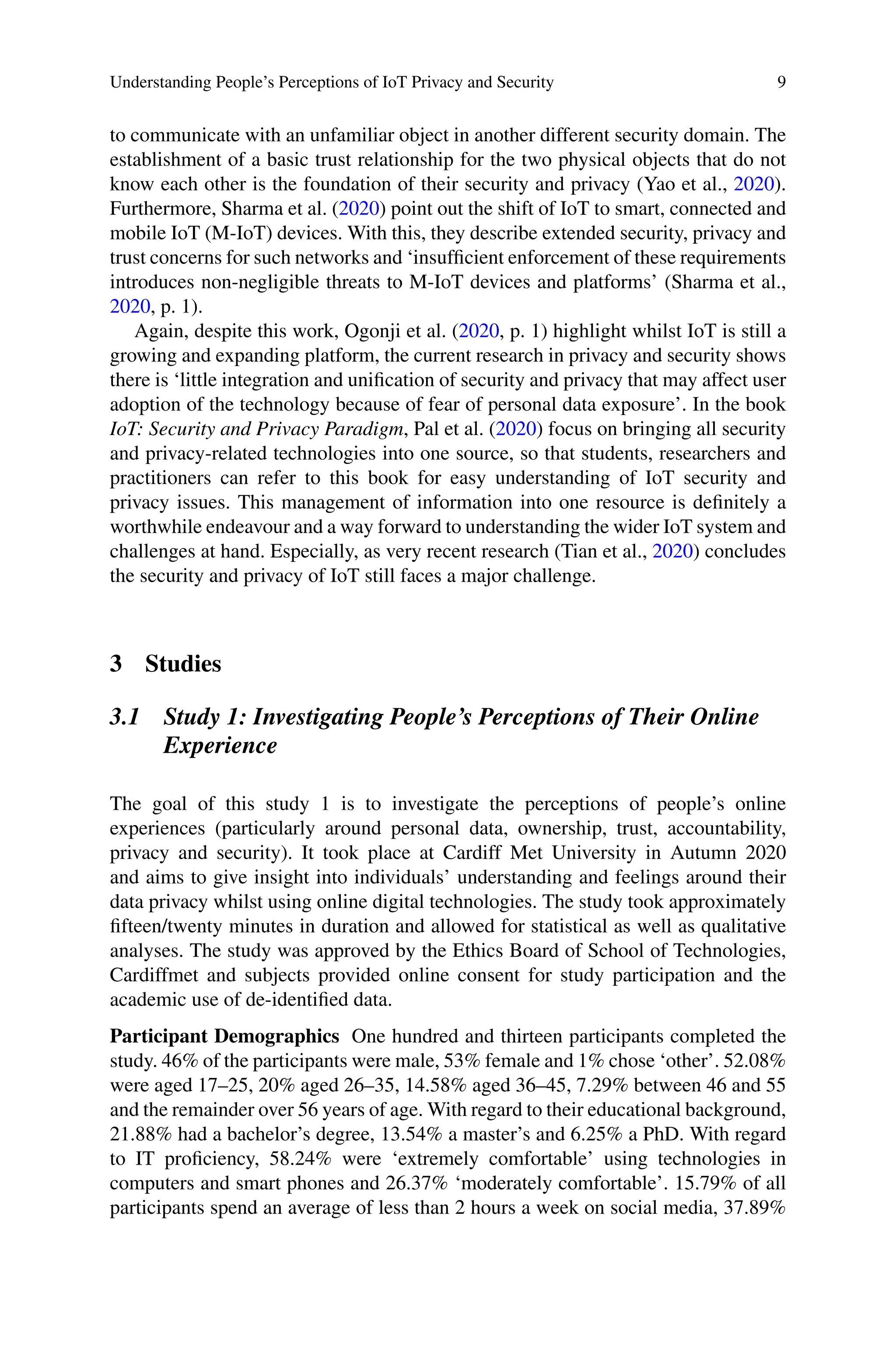
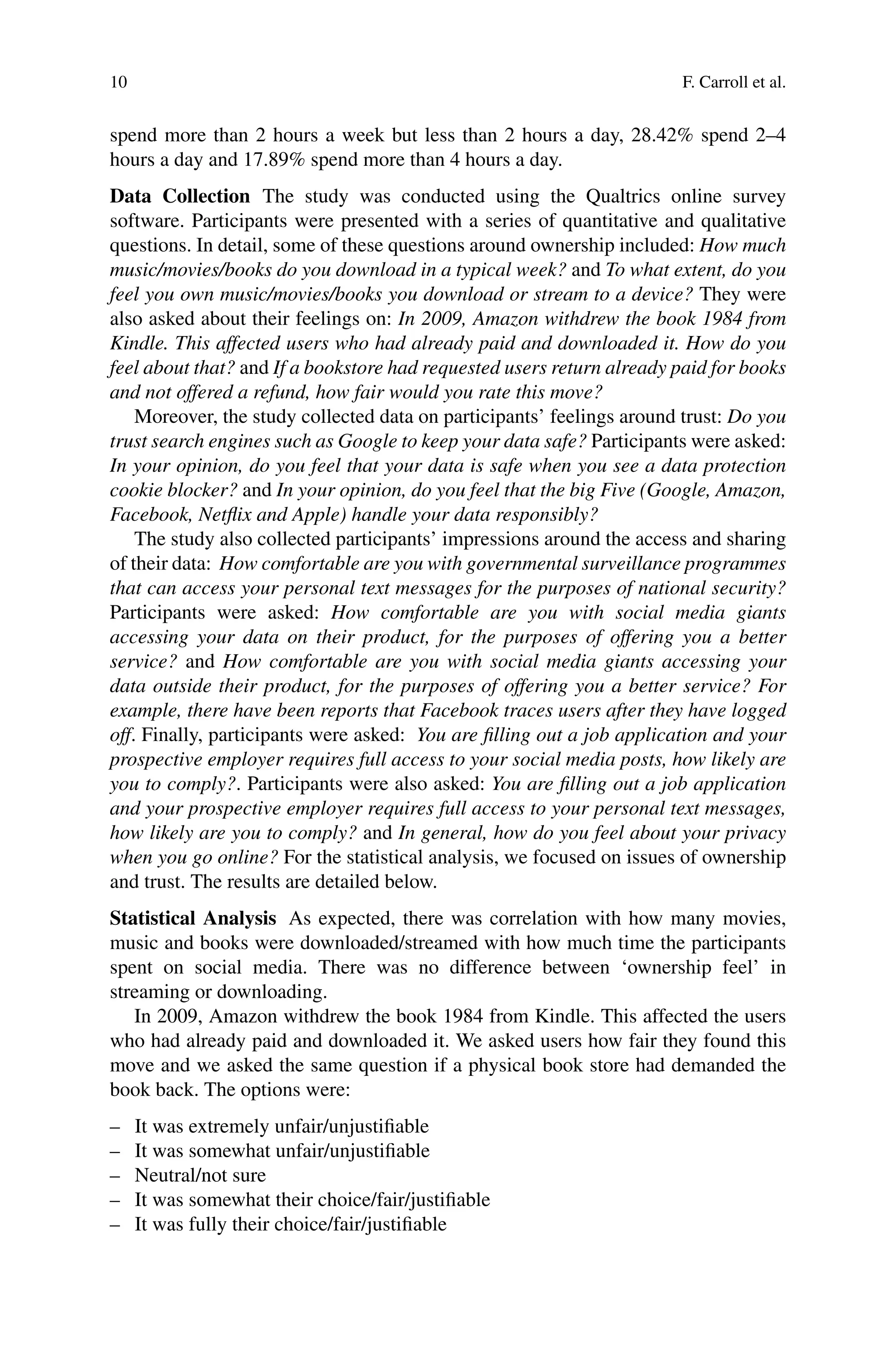
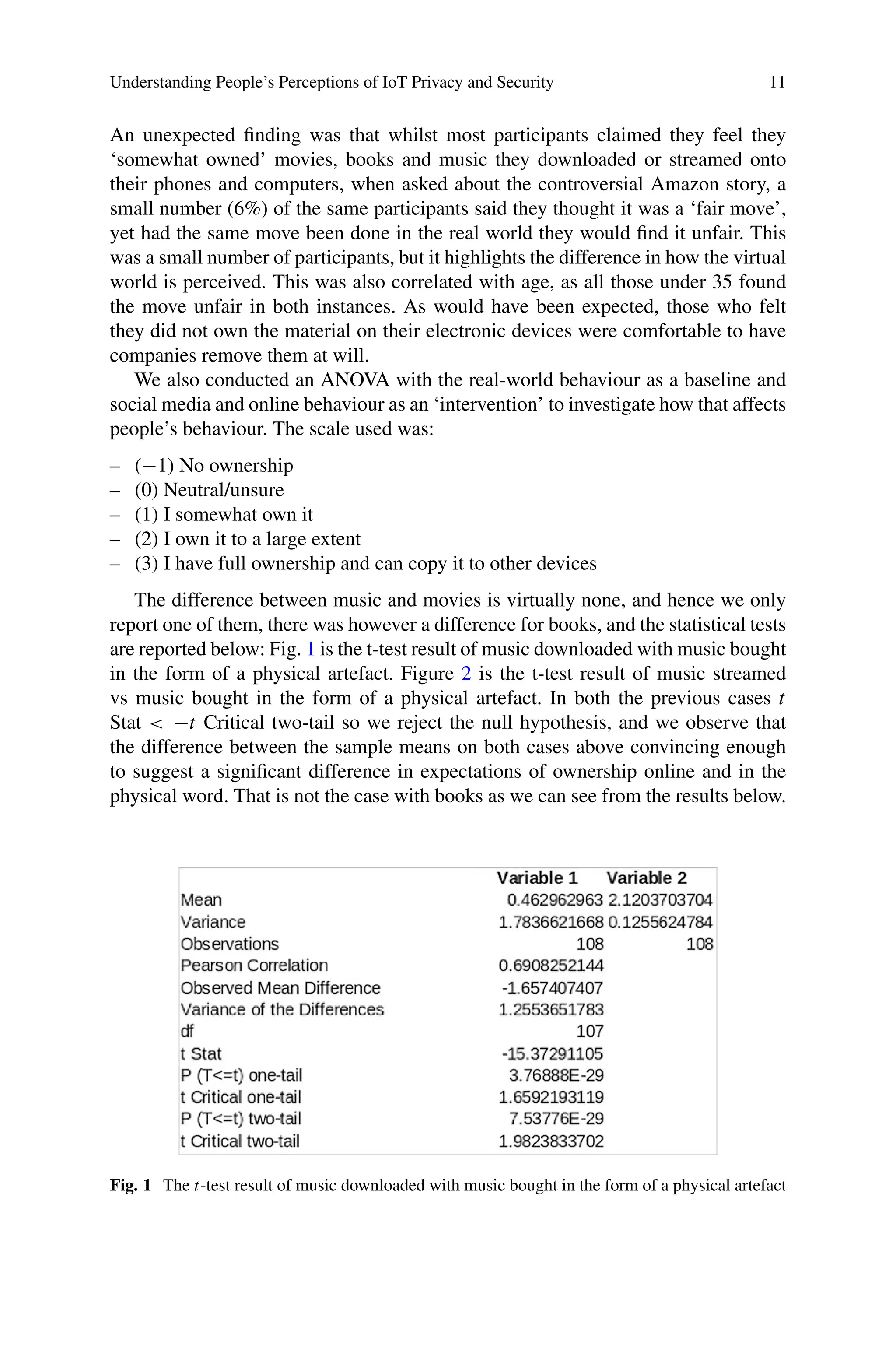
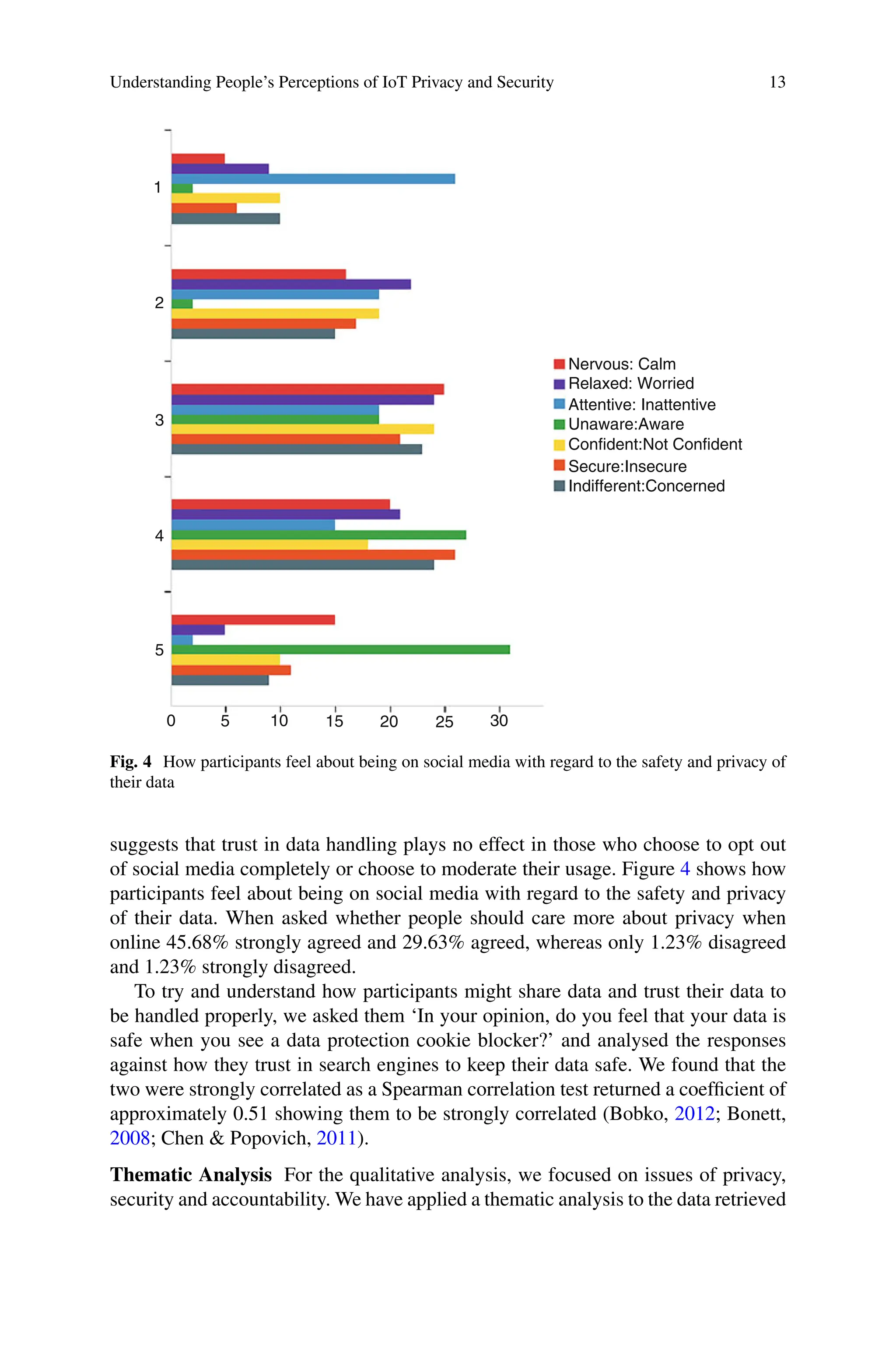
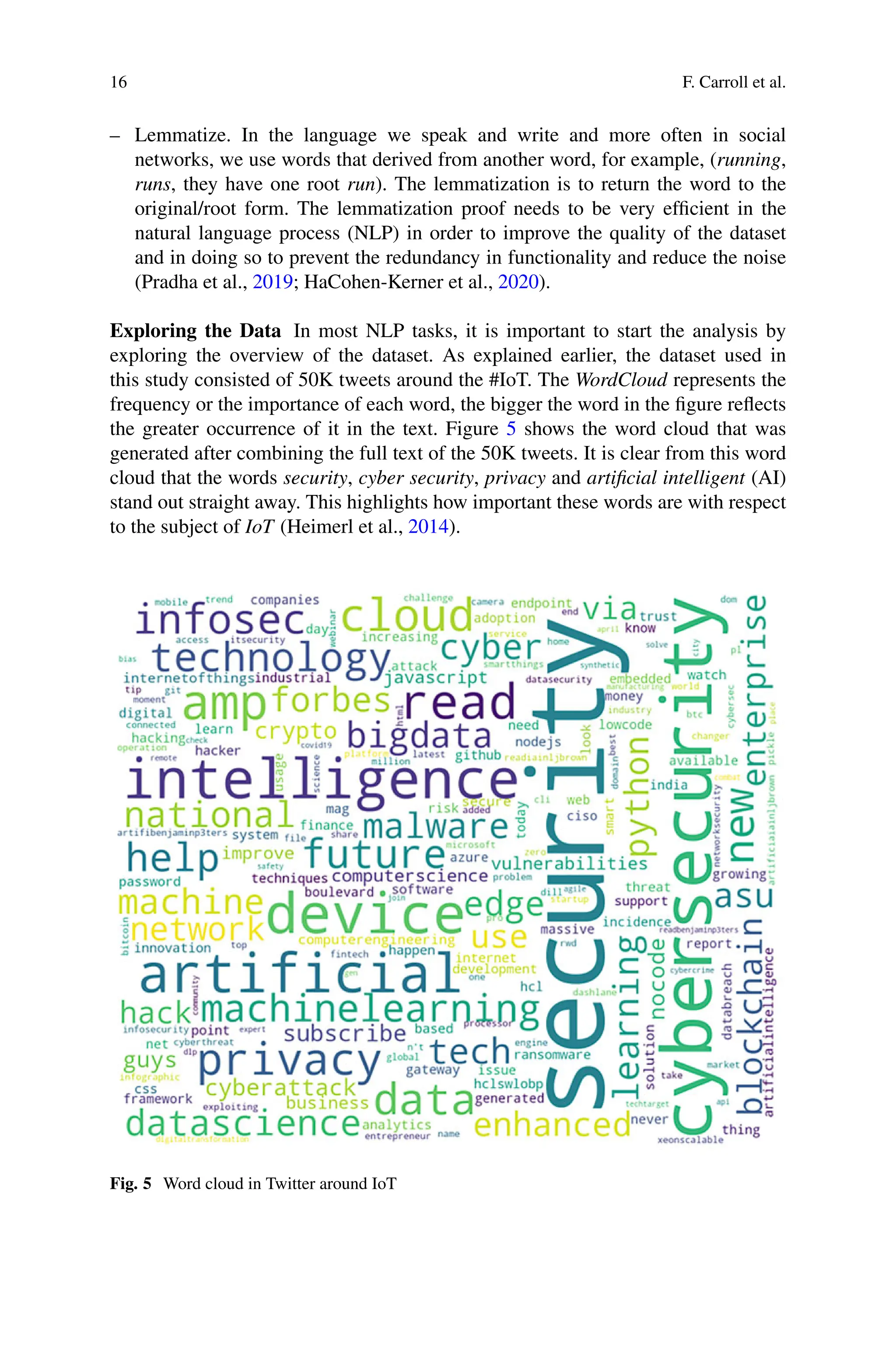
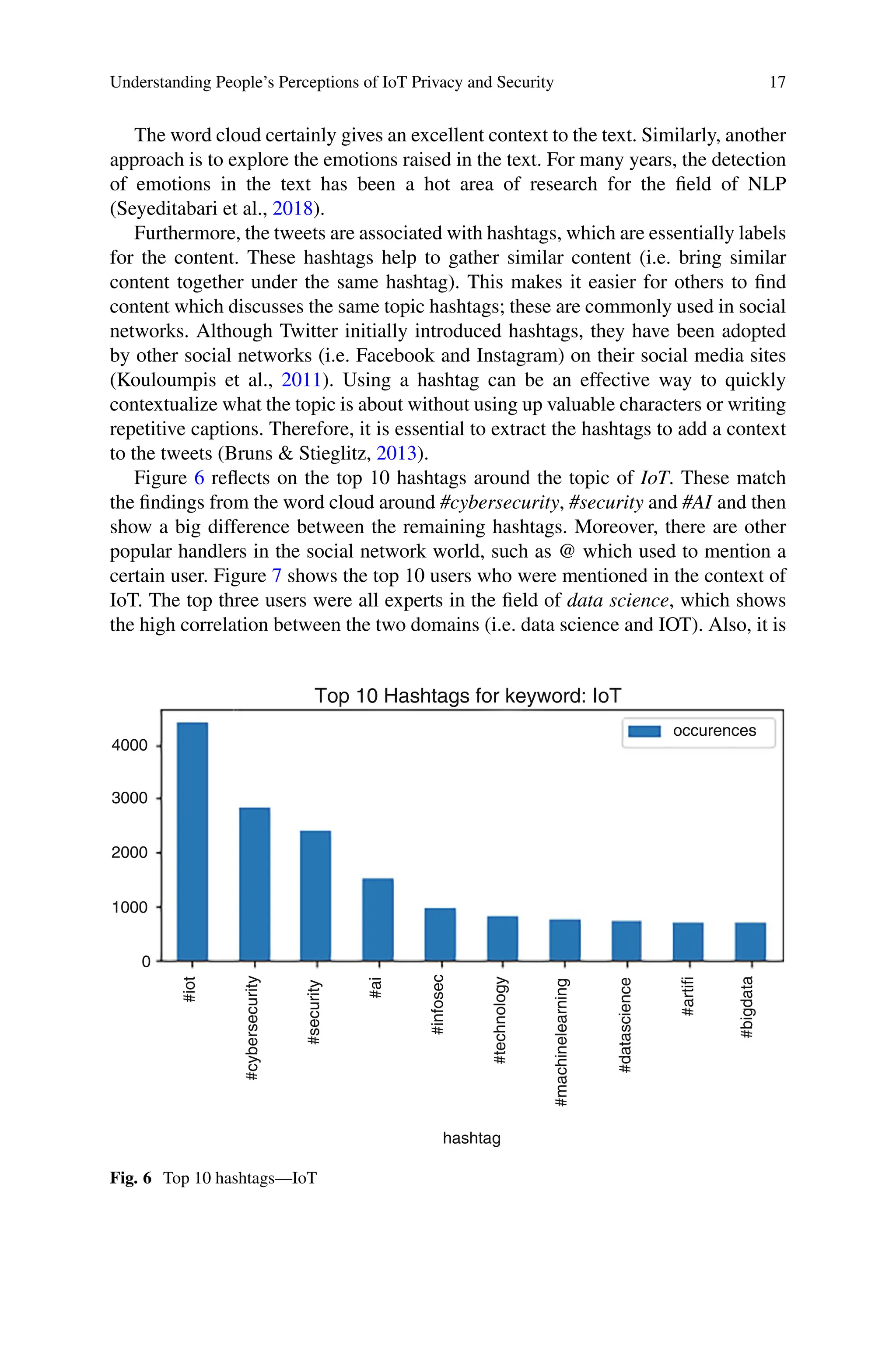
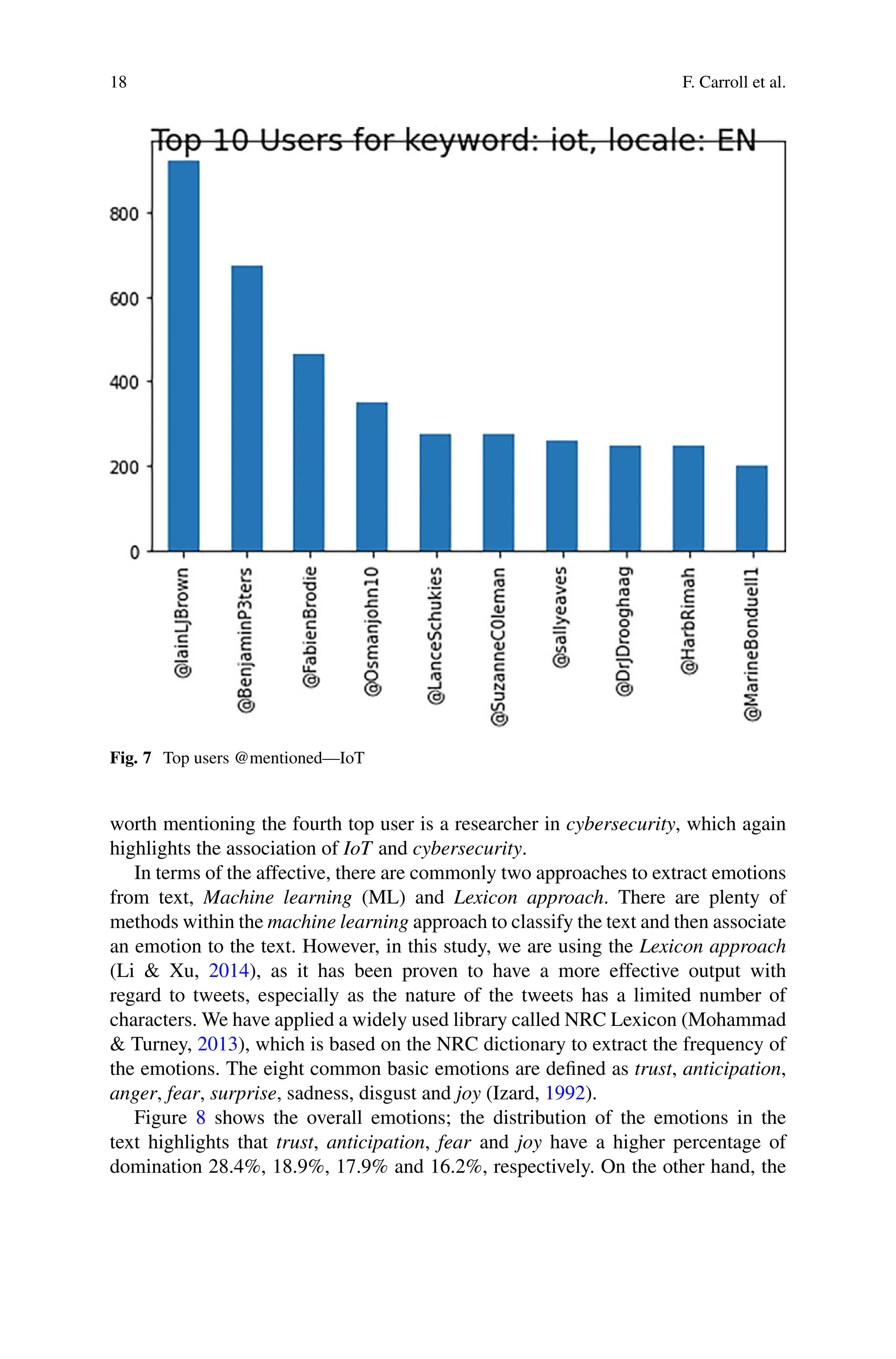
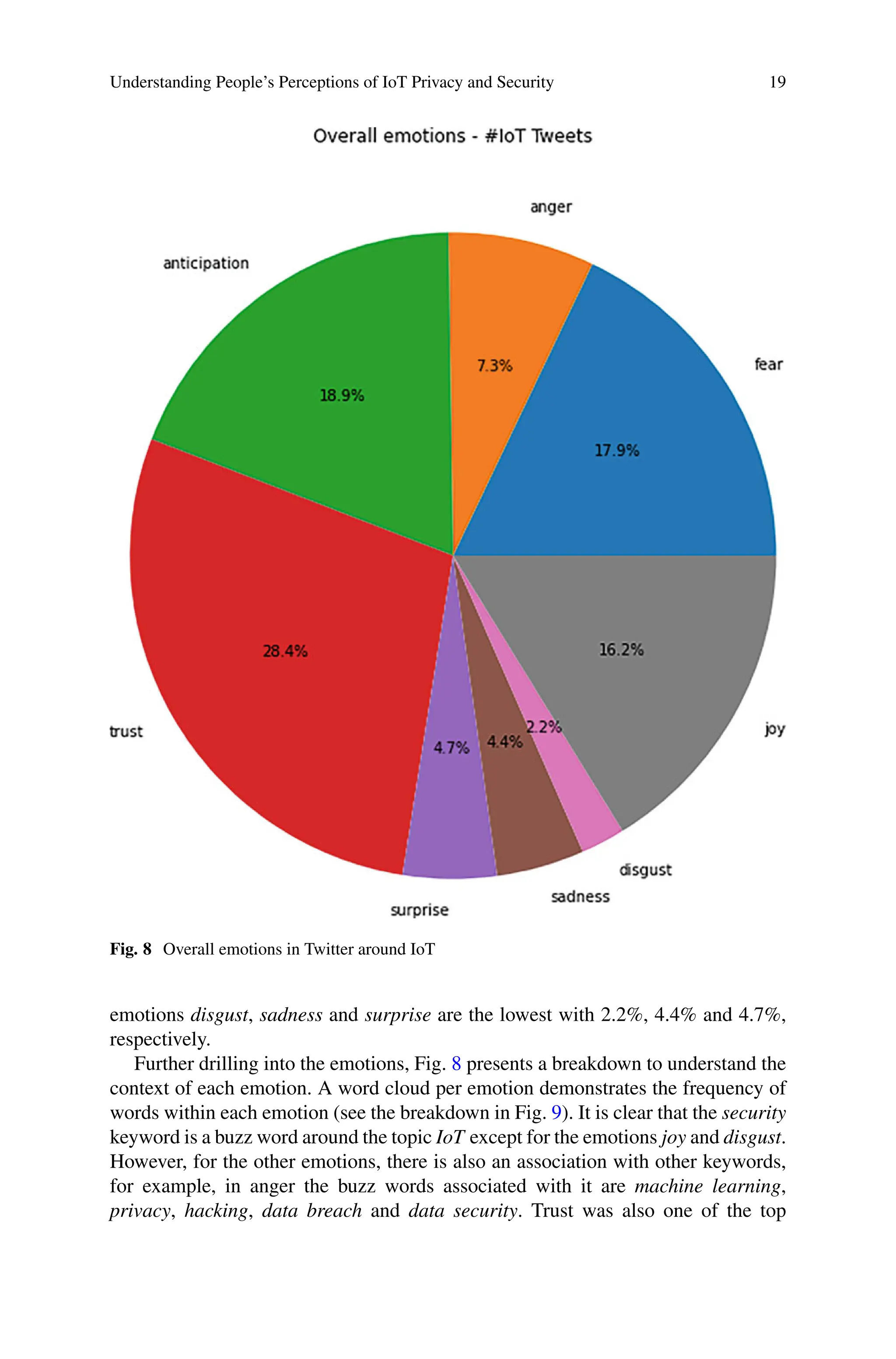
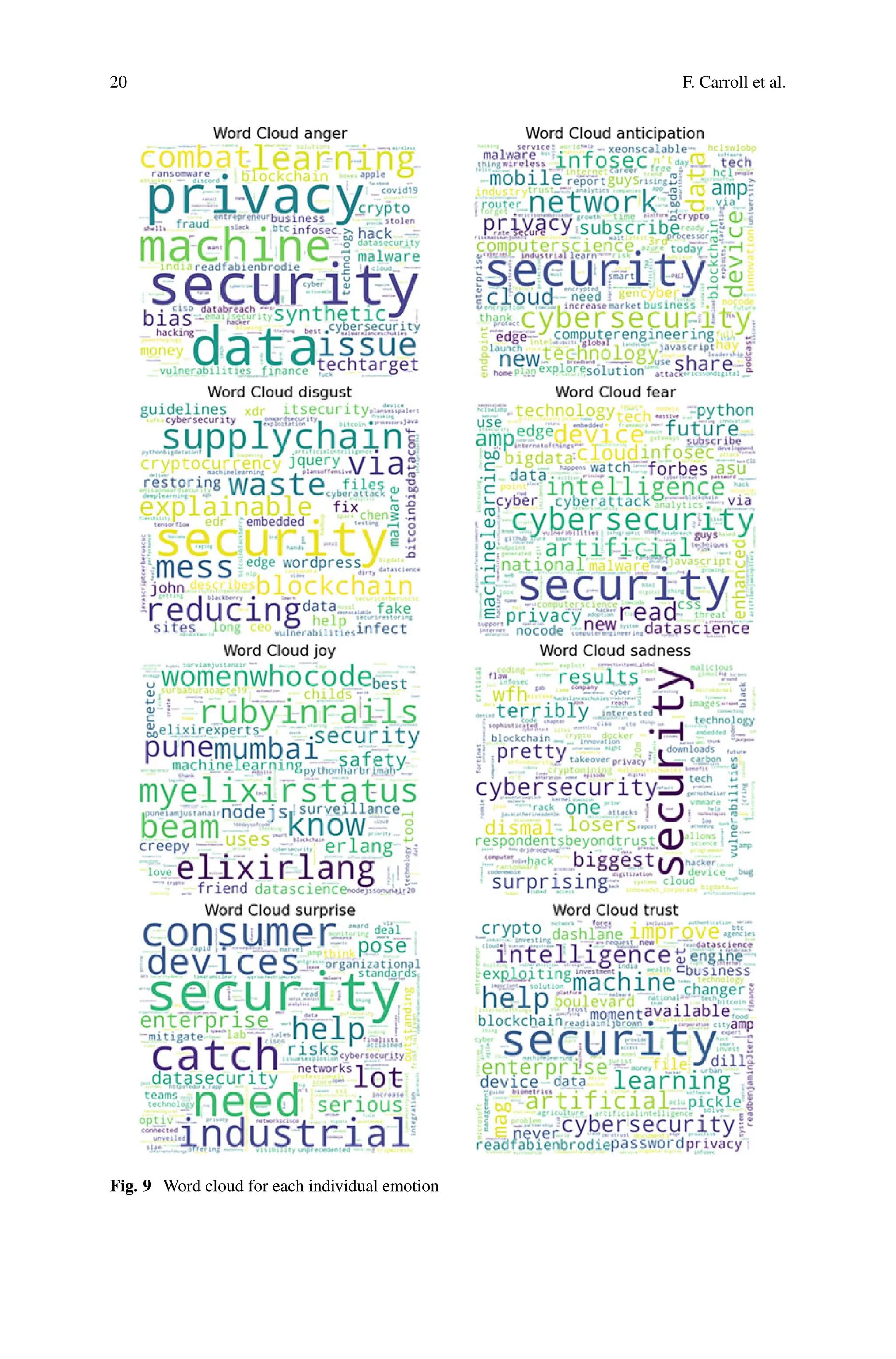
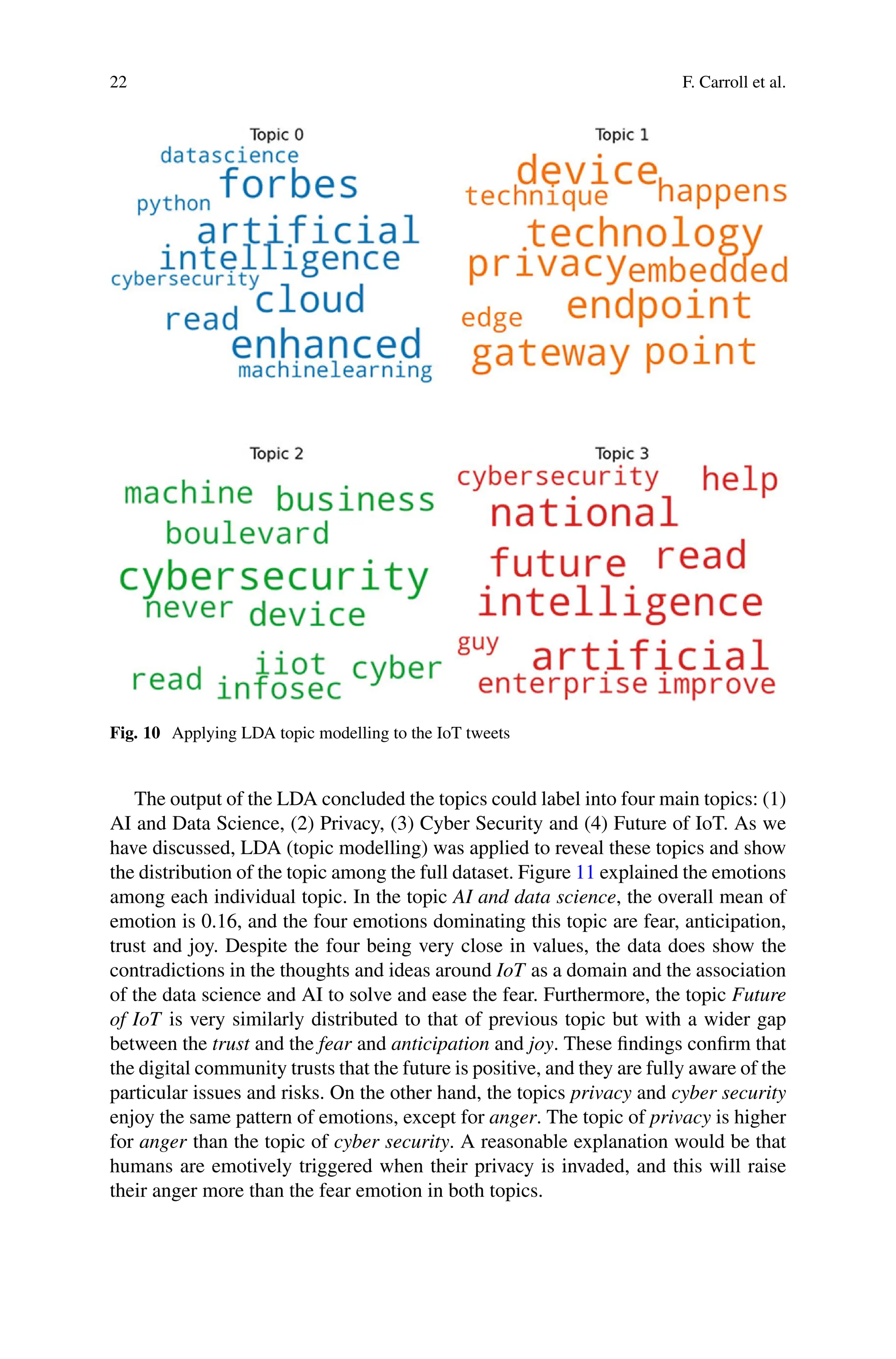
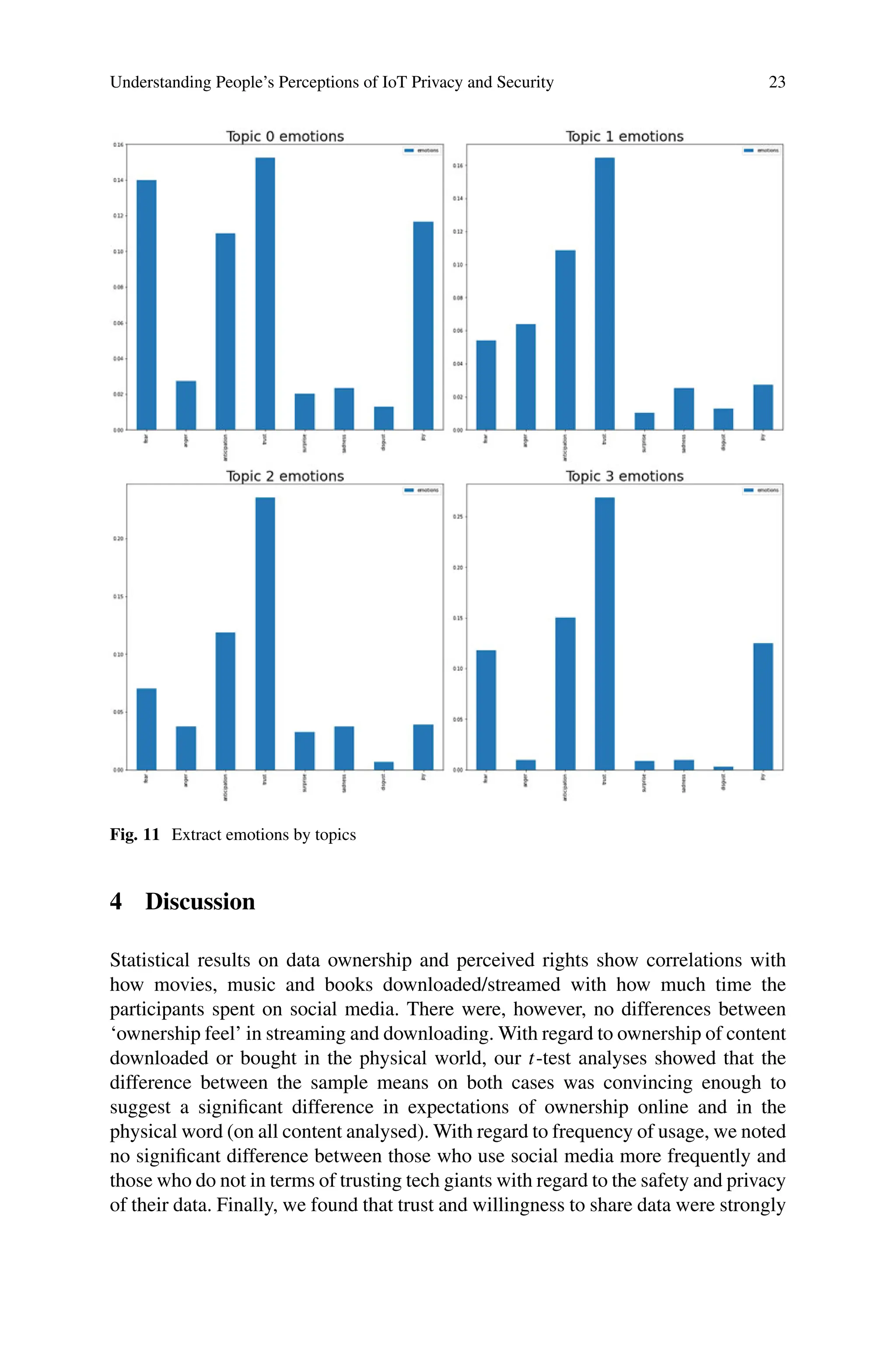


![käyttäen Galope-Chopinen rukousnauhaa, jonka tämä epäilemättä oli
jättänyt hänelle saarnan ajaksi.
— Francine, — sanoi hän hänelle puoliääneen, — pelkäätkö, että
voisit olla pakana tai turkkilainen?
— Oi, hyvä neiti, katsokaahan kuinka tuolla alhaalla Marche-à-
Terren äiti astuu ihan omin voimin…
Francinen olemuksessa ilmeni niin syvä vakaumus, että Marie
täysin käsitti tuon saarnan salaisuuden, papiston vaikutuksen
maalaisiin ja nyt alkavan kohtauksen suunnattomat seuraukset.
Alttaria lähinnä olevat miehet lähestyivät yksitellen ja polvistuivat
ojentaen pyssynsä saarnaajalle, joka laski ne alttarille. Myöskin
Galope-Chopin riensi esille ojentamaan vanhaa metsästyspyssyään.
Nuo kolme pappia lauloivat Veni Creator hymnin, ja samaan aikaan
äskeinen saarnaaja verhosi nuo murha-aseet sinervällä
suitsutussavulla, muodostaen ilmassa pyhänsavun huiskuttimella
toisiinsa liittyviä kiemurakuvioita. Kun tuuli oli hajoittanut
pyhänsavun, jaettiin pyssyt järjestyksessä omistajilleen. Joka mies
vastaanotti polvistuen aseensa pappien käsistä, samalla kun nämä
mutisivat latinalaista rukousta. Asestettujen miesten palatessa
paikoilleen, puhkesi läsnäolijain siihen asti pidätetty innostus
hirvittävänä, mutta samalla liikuttavana.
— Domine, salvum fac regem. [Herra, suojele kuningasta. Suom.]
Näin alkoi se rukous, jonka saarnaaja kaiutti sointuvalla äänellä ja
jonka seurakunta voimakkaasti laulaen toisti kahteen kertaan. Tässä
laulussa oli jotain hurjaa ja sotaisaa. Ne molemmat sävelet, jotka
vastasivat regem-sanaa, minkä merkityksen rahvas helposti ymmärsi,
laulettiin niin tarmokkaasti, ettei neiti de Verneuil voinut olla](https://image.slidesharecdn.com/41041-250517153544-875f523e/75/Privacy-Security-And-Forensics-in-The-Internet-of-Things-IoT-Reza-Montasari-71-2048.jpg)