Pricing Strategies
for
SaaS Startups
Hello!
I am Abdullah Al Nady
I build products at BasharSoft / WUZZUF
What is SaaS?And all this cloud computing stuff
“I don’t need a hard disk
in my computer if I can
get to the server faster.”
~ Steve Jobs
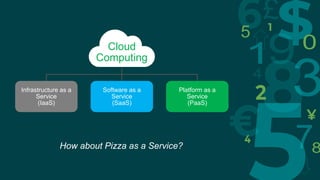
Cloud
Computing
Infrastructure as a
Service
(IaaS)
Software as a
Service
(SaaS)
Platform as a
Service
(PaaS)
How about Pizza as a Service?
Type of service changes
=
Pricing strategy changes
SaaS Pricing Models
Balance value and revenue
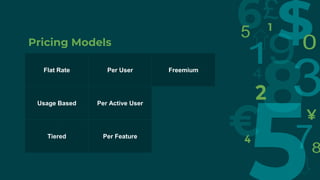
Pricing Models
Flat Rate Per User Freemium
Usage Based Per Active User
Tiered Per Feature
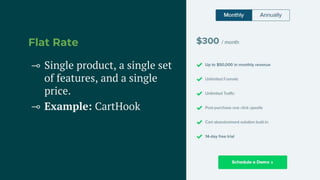
Flat Rate
⊸ Single product, a single set
of features, and a single
price.
⊸ Example: CartHook
Flat Rate
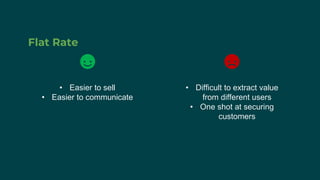
• Easier to sell
• Easier to communicate
• Difficult to extract value
from different users
• One shot at securing
customers
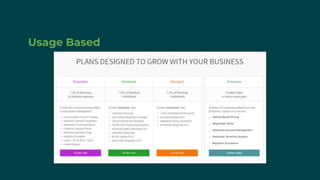
Usage Based
Usage Based
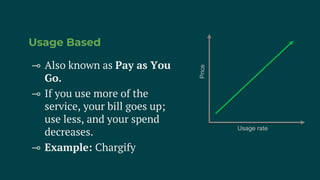
⊸ Also known as Pay as You
Go.
⊸ If you use more of the
service, your bill goes up;
use less, and your spend
decreases.
⊸ Example: Chargify
Usage rate
Price
Usage Based
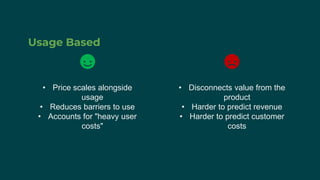
• Price scales alongside
usage
• Reduces barriers to use
• Accounts for "heavy user
costs"
• Disconnects value from the
product
• Harder to predict revenue
• Harder to predict customer
costs
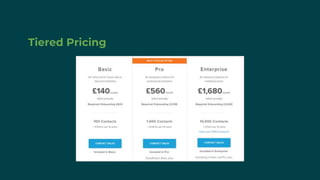
Tiered Pricing
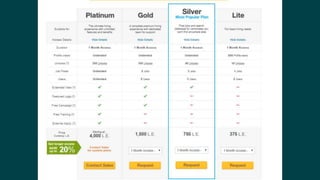
Tiered Pricing
⊸ The most popular model used in SaaS
⊸ Offer multiple "packages", with different
combinations of features offered at different
price points
⊸ Example: WUZZUF
Tiered Pricing
• Appeal to multiple personas
• Leave less money on the
table
• Clear upselling route
• Potentially confusing
• Appeals to too many people
• "Heavy user risk"
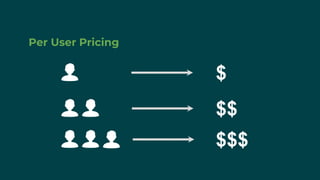
Per User Pricing
$
$$
$$$
Per User Pricing
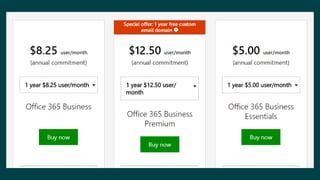
⊸ A single user pays a fixed monthly price;
add another user, and that price doubles
⊸ Example: Microsoft Office 365
Per User Pricing
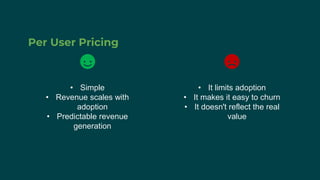
Per User Pricing
• Simple
• Revenue scales with
adoption
• Predictable revenue
generation
• It limits adoption
• It makes it easy to churn
• It doesn't reflect the real
value
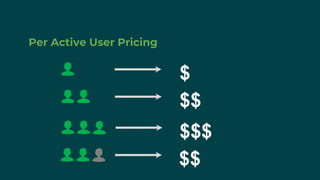
Per Active User Pricing
$
$$
$$$
$$
Per Active User Pricing
⊸ A variant of the Per User Pricing
⊸ Encouraging customers to sign-up as many
users as possible, with the safeguard that
only active users will actually be billed for.
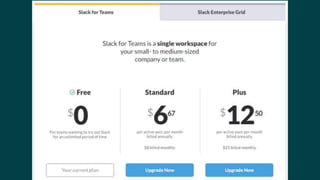
⊸ Example: Slack, Microsoft TFS
Per Active User Pricing
• Customers only pay for
active users
• Reduces the risk of
widespread adoption
• Doesn't work so well for
SMBs
Per Feature Pricing
$
$$$
$$
$$$$
Per Feature Pricing
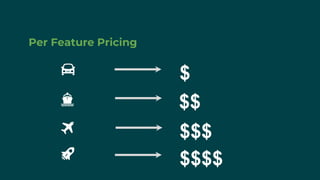
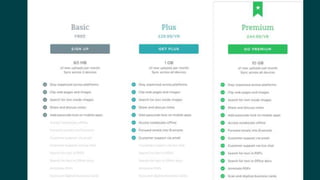
⊸ Separates out different pricing tiers
according to the functionality available in
each
⊸ Higher priced packages = Greater number
of available features
⊸ Example: Evernote
Per Feature Pricing
• Strong upgrade incentive
• Compensate for delivery-
heavy
• Difficult to get right
• Leaves a bad taste
Freemium Model
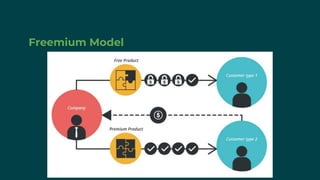
Freemium Model
⊸ Offering a free-to-use product, supplemented by
additional paid packages
⊸ Typically used as part of a tiered pricing strategy: the
regular paid packages are supplemented with a free,
entry-level tier.
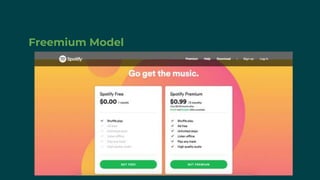
Freemium Model
Freemium Model
• It's a foot in the door
• Viral potential
• A real revenue killer
• It's easier to churn on a free
package
• It can devalue your core
service
Pricing Strategies
Achieve your growth goals
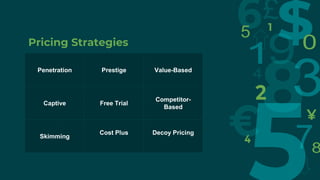
Pricing Strategies
Penetration Prestige Value-Based
Captive Free Trial
Competitor-
Based
Skimming
Cost Plus Decoy Pricing
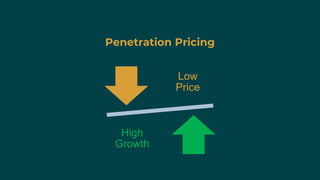
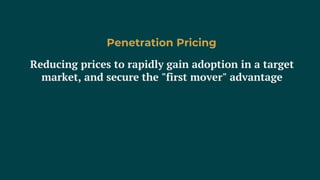
Reducing prices to rapidly gain adoption in a target
market, and secure the "first mover" advantage
Penetration Pricing
Penetration Pricing
Low
Price
High
Growth
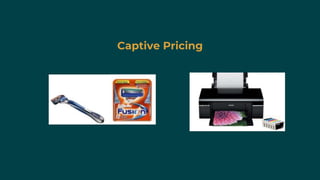
Offer a “core” product for a lower-than-expected
price but charge extra for extra required products
Captive Pricing
Captive Pricing
Setting a high initial price for a new product,
before slowly lowering the price over time
Why would success in SaaS?
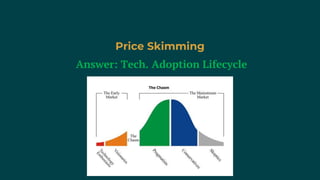
Answer: Tech. Adoption Lifecycle
Price Skimming
Answer: Tech. Adoption Lifecycle
Price Skimming
Maintaining high prices, in order to convey a sense
of quality, exclusivity or luxury
Example: WUZZUF ReDirect
Prestige Pricing
“What’s the difference between an $8,000 Rolex and a
$40 Seiko watch?
The Seiko is a better time piece. It’s far more accurate. The
difference is your ability to sell”
Prestige Pricing
Free Trial Pricing
Offering the product for free, for a limited time, you
provide a quick foot-in-the-door
typically time-limited (the most common length is 30 days), but it's also possible to
restrict it by usage
Free Trial Pricing
Adding a target profit margin to the costs (say,
20%), and setting that as the price for your product
Cost Plus Pricing
100
20 120
Total Cost Profit Margin Price
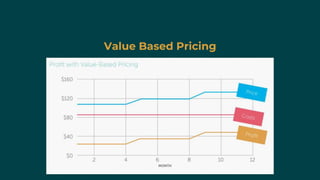
Using the perceived value of the product as the
benchmark for price setting, instead of costs,
competitors or target margins
Value Based Pricing
Value Based Pricing
Pricing depends on offerings of other businesses
This may not yield maximum benefits to your brand as you
may tend to ignore nuances of your own product
Competitor Based Pricing
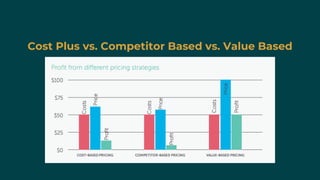
Cost Plus vs. Competitor Based vs. Value Based
a phenomenon where people tend to have a change in
preference between two options when presented
with a third option that is asymmetrically
dominated
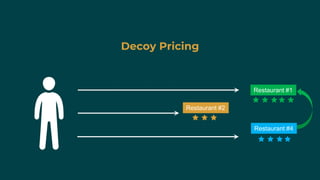
Decoy Pricing
Decoy Pricing
Restaurant #1
Restaurant #2
Restaurant #4
Thanks!
Any questions?
Feel free to reach out
Tweet @abnady - Connect @LinkedIn - Drop an email
References
⊸ The Ultimate Guide To SaaS Pricing Models, Strategies & Psychological Hacks by
Ryan Law, cobloom
⊸ SaaS Startup Strategy | Three SaaS Sales Models by Joel York, Chaotic Flow
⊸ Picking a pricing strategy for your product by Des Traynor, Co-Founder & CSO,
Intercom
⊸ An Enormous Guide to Pricing Psychology by Nick Kolenda
⊸ The Pricing Strategy Guideline Framework for SaaS Vendors by Marco Spruit &
Nizar Abdat The Research Gate
Credits
⊸ Presentation template by SlidesCarnival

Pricing Strategies for SaaS Startups

  • 1.
  • 2.
    Hello! I am AbdullahAl Nady I build products at BasharSoft / WUZZUF
  • 3.
    What is SaaS?Andall this cloud computing stuff
  • 4.
    “I don’t needa hard disk in my computer if I can get to the server faster.” ~ Steve Jobs
  • 5.
    Cloud Computing Infrastructure as a Service (IaaS) Softwareas a Service (SaaS) Platform as a Service (PaaS) How about Pizza as a Service?
  • 8.
    Type of servicechanges = Pricing strategy changes
  • 9.
    SaaS Pricing Models Balancevalue and revenue
  • 10.
    Pricing Models Flat RatePer User Freemium Usage Based Per Active User Tiered Per Feature
  • 11.
    Flat Rate ⊸ Singleproduct, a single set of features, and a single price. ⊸ Example: CartHook
  • 12.
    Flat Rate • Easierto sell • Easier to communicate • Difficult to extract value from different users • One shot at securing customers
  • 13.
  • 14.
    Usage Based ⊸ Alsoknown as Pay as You Go. ⊸ If you use more of the service, your bill goes up; use less, and your spend decreases. ⊸ Example: Chargify Usage rate Price
  • 15.
    Usage Based • Pricescales alongside usage • Reduces barriers to use • Accounts for "heavy user costs" • Disconnects value from the product • Harder to predict revenue • Harder to predict customer costs
  • 16.
  • 17.
    Tiered Pricing ⊸ Themost popular model used in SaaS ⊸ Offer multiple "packages", with different combinations of features offered at different price points ⊸ Example: WUZZUF
  • 19.
    Tiered Pricing • Appealto multiple personas • Leave less money on the table • Clear upselling route • Potentially confusing • Appeals to too many people • "Heavy user risk"
  • 20.
  • 21.
    Per User Pricing ⊸A single user pays a fixed monthly price; add another user, and that price doubles ⊸ Example: Microsoft Office 365
  • 22.
  • 23.
    Per User Pricing •Simple • Revenue scales with adoption • Predictable revenue generation • It limits adoption • It makes it easy to churn • It doesn't reflect the real value
  • 24.
    Per Active UserPricing $ $$ $$$ $$
  • 25.
    Per Active UserPricing ⊸ A variant of the Per User Pricing ⊸ Encouraging customers to sign-up as many users as possible, with the safeguard that only active users will actually be billed for. ⊸ Example: Slack, Microsoft TFS
  • 27.
    Per Active UserPricing • Customers only pay for active users • Reduces the risk of widespread adoption • Doesn't work so well for SMBs
  • 28.
  • 29.
    Per Feature Pricing ⊸Separates out different pricing tiers according to the functionality available in each ⊸ Higher priced packages = Greater number of available features ⊸ Example: Evernote
  • 31.
    Per Feature Pricing •Strong upgrade incentive • Compensate for delivery- heavy • Difficult to get right • Leaves a bad taste
  • 32.
  • 33.
    Freemium Model ⊸ Offeringa free-to-use product, supplemented by additional paid packages ⊸ Typically used as part of a tiered pricing strategy: the regular paid packages are supplemented with a free, entry-level tier.
  • 34.
  • 35.
    Freemium Model • It'sa foot in the door • Viral potential • A real revenue killer • It's easier to churn on a free package • It can devalue your core service
  • 36.
  • 37.
    Pricing Strategies Penetration PrestigeValue-Based Captive Free Trial Competitor- Based Skimming Cost Plus Decoy Pricing
  • 38.
    Reducing prices torapidly gain adoption in a target market, and secure the "first mover" advantage Penetration Pricing
  • 39.
  • 40.
    Offer a “core”product for a lower-than-expected price but charge extra for extra required products Captive Pricing
  • 41.
  • 42.
    Setting a highinitial price for a new product, before slowly lowering the price over time Why would success in SaaS? Answer: Tech. Adoption Lifecycle Price Skimming
  • 43.
    Answer: Tech. AdoptionLifecycle Price Skimming
  • 44.
    Maintaining high prices,in order to convey a sense of quality, exclusivity or luxury Example: WUZZUF ReDirect Prestige Pricing
  • 45.
    “What’s the differencebetween an $8,000 Rolex and a $40 Seiko watch? The Seiko is a better time piece. It’s far more accurate. The difference is your ability to sell” Prestige Pricing
  • 46.
  • 47.
    Offering the productfor free, for a limited time, you provide a quick foot-in-the-door typically time-limited (the most common length is 30 days), but it's also possible to restrict it by usage Free Trial Pricing
  • 48.
    Adding a targetprofit margin to the costs (say, 20%), and setting that as the price for your product Cost Plus Pricing 100 20 120 Total Cost Profit Margin Price
  • 49.
    Using the perceivedvalue of the product as the benchmark for price setting, instead of costs, competitors or target margins Value Based Pricing
  • 50.
  • 51.
    Pricing depends onofferings of other businesses This may not yield maximum benefits to your brand as you may tend to ignore nuances of your own product Competitor Based Pricing
  • 52.
    Cost Plus vs.Competitor Based vs. Value Based
  • 53.
    a phenomenon wherepeople tend to have a change in preference between two options when presented with a third option that is asymmetrically dominated Decoy Pricing
  • 54.
  • 55.
    Thanks! Any questions? Feel freeto reach out Tweet @abnady - Connect @LinkedIn - Drop an email
  • 56.
    References ⊸ The UltimateGuide To SaaS Pricing Models, Strategies & Psychological Hacks by Ryan Law, cobloom ⊸ SaaS Startup Strategy | Three SaaS Sales Models by Joel York, Chaotic Flow ⊸ Picking a pricing strategy for your product by Des Traynor, Co-Founder & CSO, Intercom ⊸ An Enormous Guide to Pricing Psychology by Nick Kolenda ⊸ The Pricing Strategy Guideline Framework for SaaS Vendors by Marco Spruit & Nizar Abdat The Research Gate
  • 57.

Editor's Notes

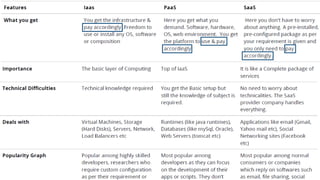
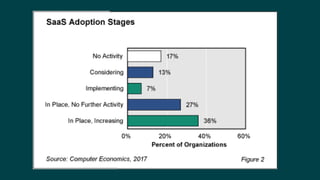
  • #4 A software licensing and delivery model in which software is licensed on a subscription basis and is centrally hosted. It is sometimes referred to as "on-demand software“. SaaS is typically accessed by users using a thin client via a web browser. SaaS has become a common delivery model for many business applications Food ordering: home-delivery or dine-in. Eating methods: Fork and knife or bread With 43% of organizations implementing or increasing their investment in SaaS, adoption rates will continue to grow for the foreseeable future. When deployed correctly, SaaS promises decreased infrastructure, speed of implementation, and comparable customer experience. It can also save on upfront costs Examples: Salesforce, Google Apps, Dropbox, AWS
  • #6 IaaS (Infrastructure as a Service), as the name suggests, provides you the computing infrastructure, physical or (quite often) virtual machines and other resources like virtual-machine disk image library, block and file-based storage, firewalls, load balancers, IP addresses, virtual local area networks etc. Examples: Amazon EC2, Windows Azure, Rackspace, Google Compute Engine. PaaS (Platform as a Service), as the name suggests, provides you computing platforms which typically includes operating system, programming language execution environment, database, web server etc. Examples: AWS Elastic Beanstalk, Windows Azure, Heroku, Force.com, Google App Engine, Apache Stratos. While in SaaS (Software as a Service) model you are provided with access to application software often referred to as "on-demand software". You don't have to worry about the installation, setup and running of the application. Service provider will do that for you. You just have to pay and use it through some client. Examples: Google Apps, Microsoft Office 365.
  • #7 IaaS (Infrastructure as a Service), as the name suggests, provides you the computing infrastructure, physical or (quite often) virtual machines and other resources like virtual-machine disk image library, block and file-based storage, firewalls, load balancers, IP addresses, virtual local area networks etc. Examples: Amazon EC2, Windows Azure, Rackspace, Google Compute Engine. PaaS (Platform as a Service), as the name suggests, provides you computing platforms which typically includes operating system, programming language execution environment, database, web server etc. Examples: AWS Elastic Beanstalk, Windows Azure, Heroku, Force.com, Google App Engine, Apache Stratos. While in SaaS (Software as a Service) model you are provided with access to application software often referred to as "on-demand software". You don't have to worry about the installation, setup and running of the application. Service provider will do that for you. You just have to pay and use it through some client. Examples: Google Apps, Microsoft Office 365.