Improving Quality ofLife for Dementia
Patients through Person-Centered Nursing
Care
Student’s Name
Course Code
Due Date
2.
Introduction
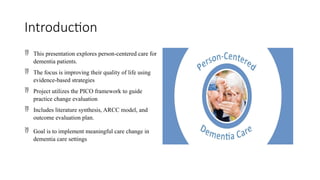
This presentationexplores person-centered care for
dementia patients.
The focus is improving their quality of life using
evidence-based strategies
Project utilizes the PICO framework to guide
practice change evaluation
Includes literature synthesis, ARCC model, and
outcome evaluation plan.
Goal is to implement meaningful care change in
dementia care settings
3.
Description and Significanceof the Problem
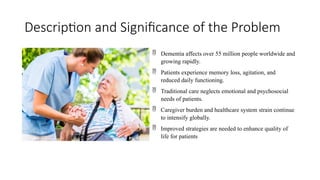
Dementia affects over 55 million people worldwide and
growing rapidly.
Patients experience memory loss, agitation, and
reduced daily functioning.
Traditional care neglects emotional and psychosocial
needs of patients.
Caregiver burden and healthcare system strain continue
to intensify globally.
Improved strategies are needed to enhance quality of
life for patients
4.
The PICO-Format ClinicalQuestion
Population: Elderly patients diagnosed with dementia requiring comprehensive care
Intervention: Person-centered care emphasizing autonomy and engagement strategies
Comparison: Standard care focused on medical needs without personalization
Outcome: Improved quality of life including emotion, cognition, and social connection
PICO: In elderly patients with dementia, how does person-centered nursing care compared to standard care
practices affect quality of life outcomes?
5.
Summary of SearchStrategy and Results
Search conducted using PubMed and CINAHL healthcare databases effectively
Keywords used included dementia, person-centered care, and older adults
Search was limited to last five years, English, full peer-reviewed articles
Initial yield was 65 articles, final eight met inclusion criteria
Studies included systematic reviews, cohort studies, and qualitative designs
6.
Literature Synthesis Supportingthe Change
Studies emphasize emotional, behavioral, and cognitive benefits of person-
centered care
Interventions like doll therapy reduce agitation and improve patient engagement
Memory clinics support primary care and improve access for underserved
populations
Non-pharmacologic strategies promote social interaction and patient dignity
consistently
Multidisciplinary care teams and individualized planning enhance patient quality
of life
7.
Practice Recommendations &Relevance to
Nursing
Nurses must implement care plans based on patient values and preferences
Holistic and collaborative care strategies enhance patient dignity and autonomy
Non-drug interventions reduce behavioral symptoms and emotional distress effectively
Early screening and lifestyle education mitigate dementia progression risks
Nurses advocate, educate, and lead efforts for improved dementia care practices
8.
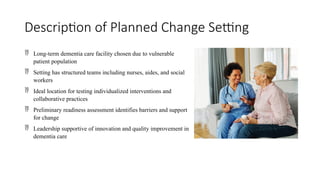
Description of PlannedChange Setting
Long-term dementia care facility chosen due to vulnerable
patient population
Setting has structured teams including nurses, aides, and social
workers
Ideal location for testing individualized interventions and
collaborative practices
Preliminary readiness assessment identifies barriers and support
for change
Leadership supportive of innovation and quality improvement in
dementia care
9.
ARCC Model Step1: Organizational
Assessment
ARCC model used to guide practice change in evidence-based care adoption
Initial step is readiness assessment to evaluate support and barriers effectively
Focus on leadership involvement and staff attitudes toward practice innovation
Identifying facilitators helps prepare facility for change implementation
Assessment informs approach and pace for introducing care model changes
10.
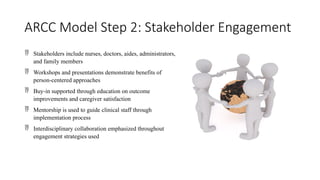
ARCC Model Step2: Stakeholder Engagement
Stakeholders include nurses, doctors, aides, administrators,
and family members
Workshops and presentations demonstrate benefits of
person-centered approaches
Buy-in supported through education on outcome
improvements and caregiver satisfaction
Mentorship is used to guide clinical staff through
implementation process
Interdisciplinary collaboration emphasized throughout
engagement strategies used
11.
ARCC Model Step3: Implementation Plan
Pilot program introduced on one unit within the facility first
Includes training staff on personalized care plans and engagement strategies
Environmental changes reduce stress and promote calm, familiar surroundings
Staff education improves confidence in person-centered practices overall
Implementation guided by ongoing feedback and ARCC model structure
effectively
12.
Evaluation Plan: Measures& Data Collection
Patient quality of life assessed using validated dementia care outcome tools
Data collected on agitation, social involvement, and mood regulation levels
Staff feedback and adherence to intervention monitored regularly and thoroughly
Patient and family satisfaction surveys used to evaluate subjective experience
Quantitative and qualitative data analysis performed to assess intervention impact
13.
Evaluation Plan: DataAnalysis & Sustainability
Data compared pre and post intervention to identify changes in outcomes
Trends analyzed to determine effectiveness and areas needing improvement
Ongoing adjustments based on feedback and outcome metrics used
Success scaled across facility with leadership support and mentoring
Plan ensures long-term adoption of person-centered dementia care practices
14.
Conclusion
Person-centered careimproves emotional, cognitive, and social outcomes in dementia
ARCC model offers structured, supportive approach for practice change implementation
Nurses play key roles in advocating, educating, and sustaining care improvements
Evidence supports wide adoption of individualized dementia care models urgently
This project emphasizes improving lives through meaningful, compassionate care