Understanding Drug Abuse and Addiction:
What Science Says
Developed by the
National Institute on Drug Abuse (NIDA)
National Institutes of Health
Bethesda, Maryland
www.drugabuse.gov
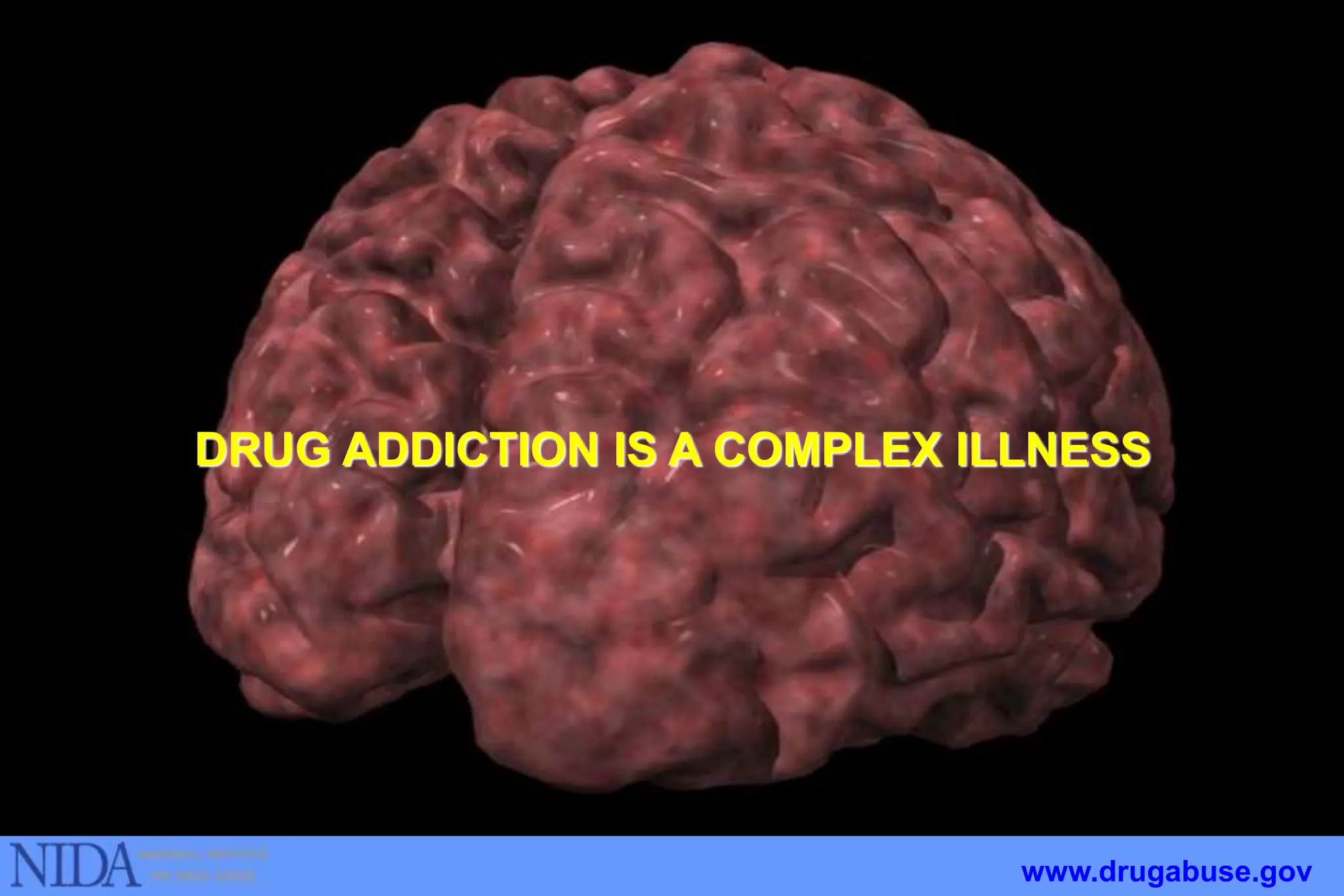
DRUG ADDICTION IS A COMPLEX ILLNESS
www.drugabuse.gov
www.drugabuse.gov
www.drugabuse.gov
www.drugabuse.gov
www.drugabuse.gov
www.drugabuse.gov
www.drugabuse.gov
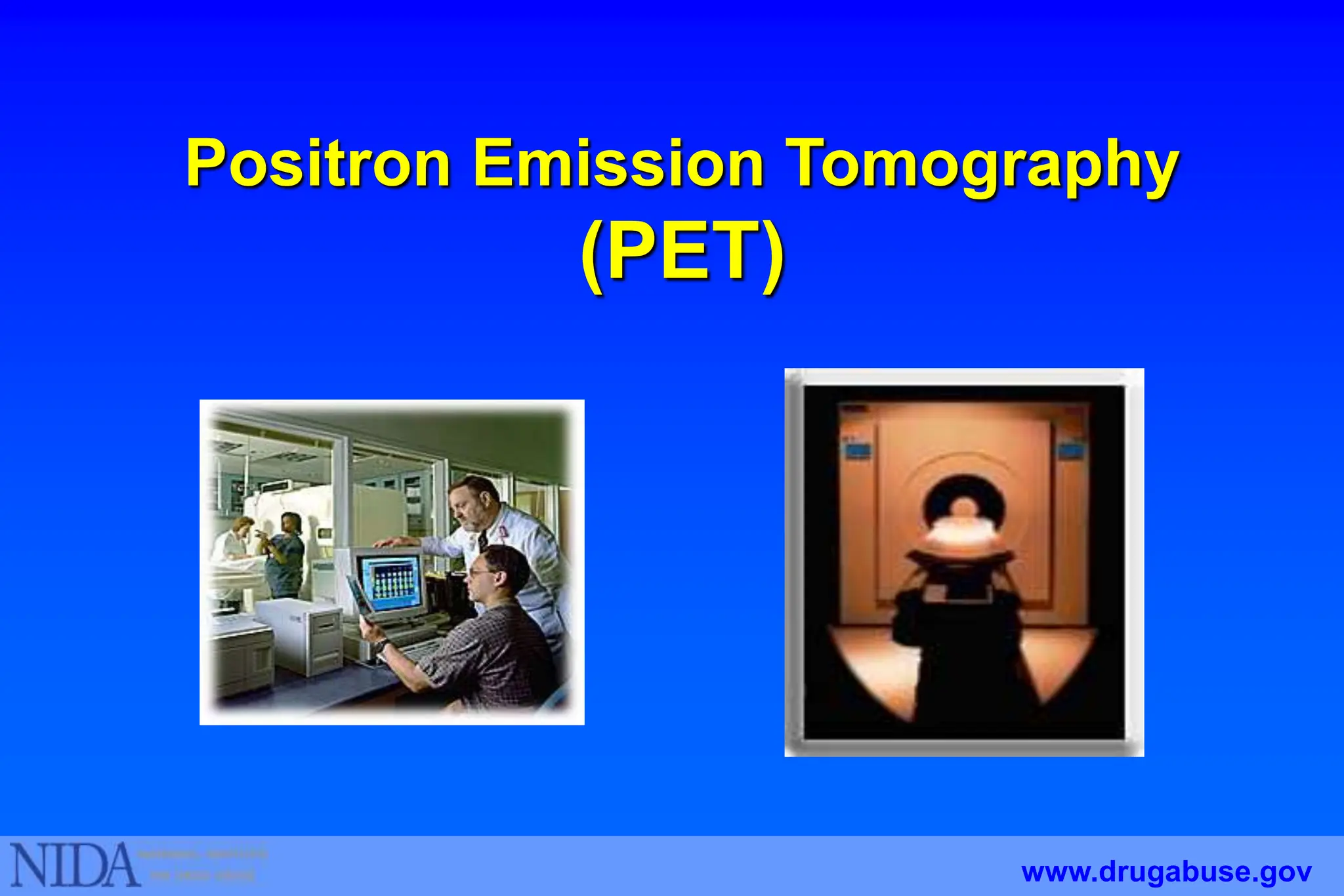
Positron Emission Tomography
(PET)
www.drugabuse.gov
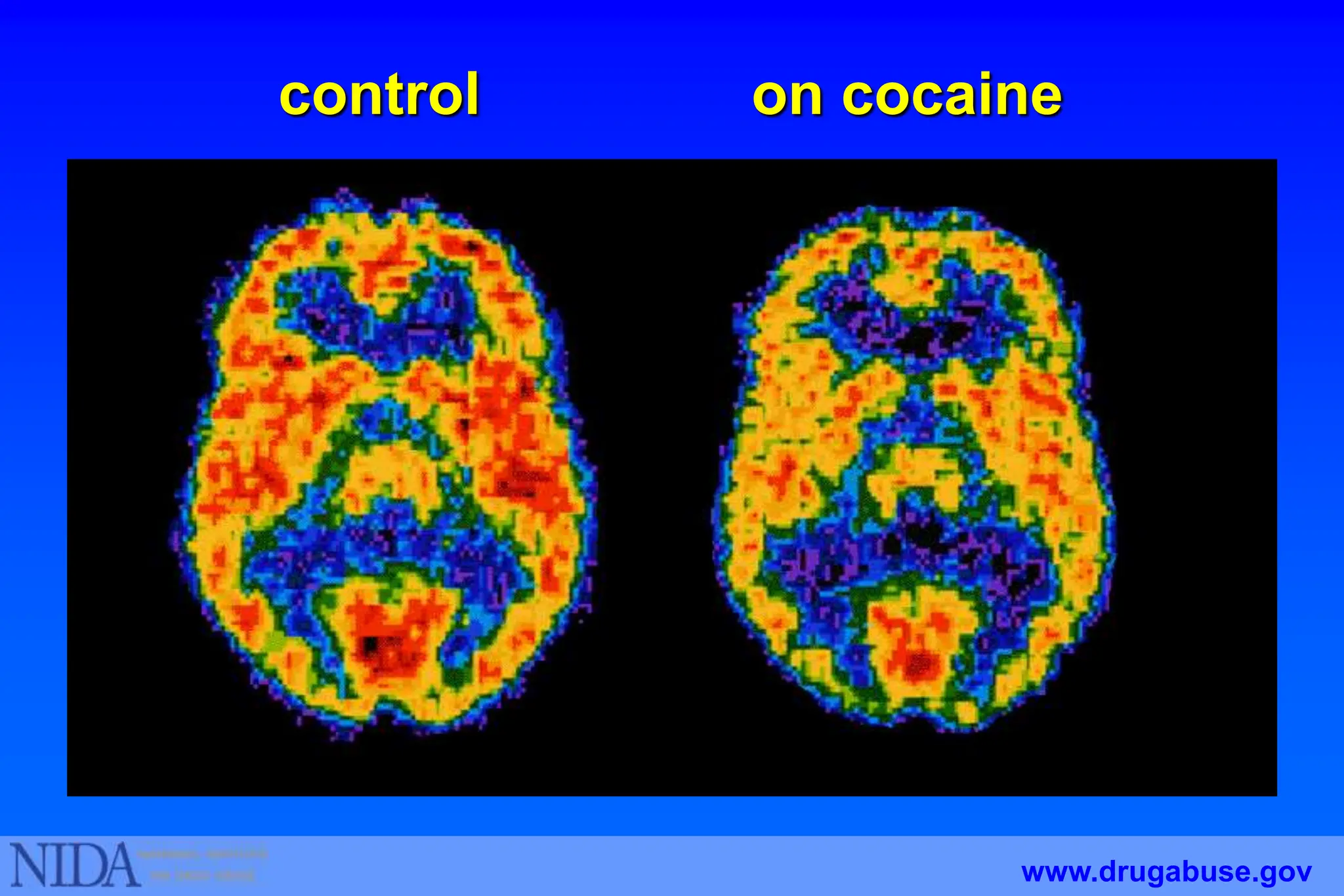
control on cocaine
www.drugabuse.gov
www.drugabuse.gov
 ineffective parenting
 chaotic home environment
 lack of mutual attachments/nurturing
 inappropriate behavior in the classroom
 failure in school performance
 poor social coping skills
 affiliations with deviant peers
 perceptions of approval of drug-using behaviors in
the school, peer, and community environments
Prevention Programs Should . . . .
Reduce Risk Factors
www.drugabuse.gov
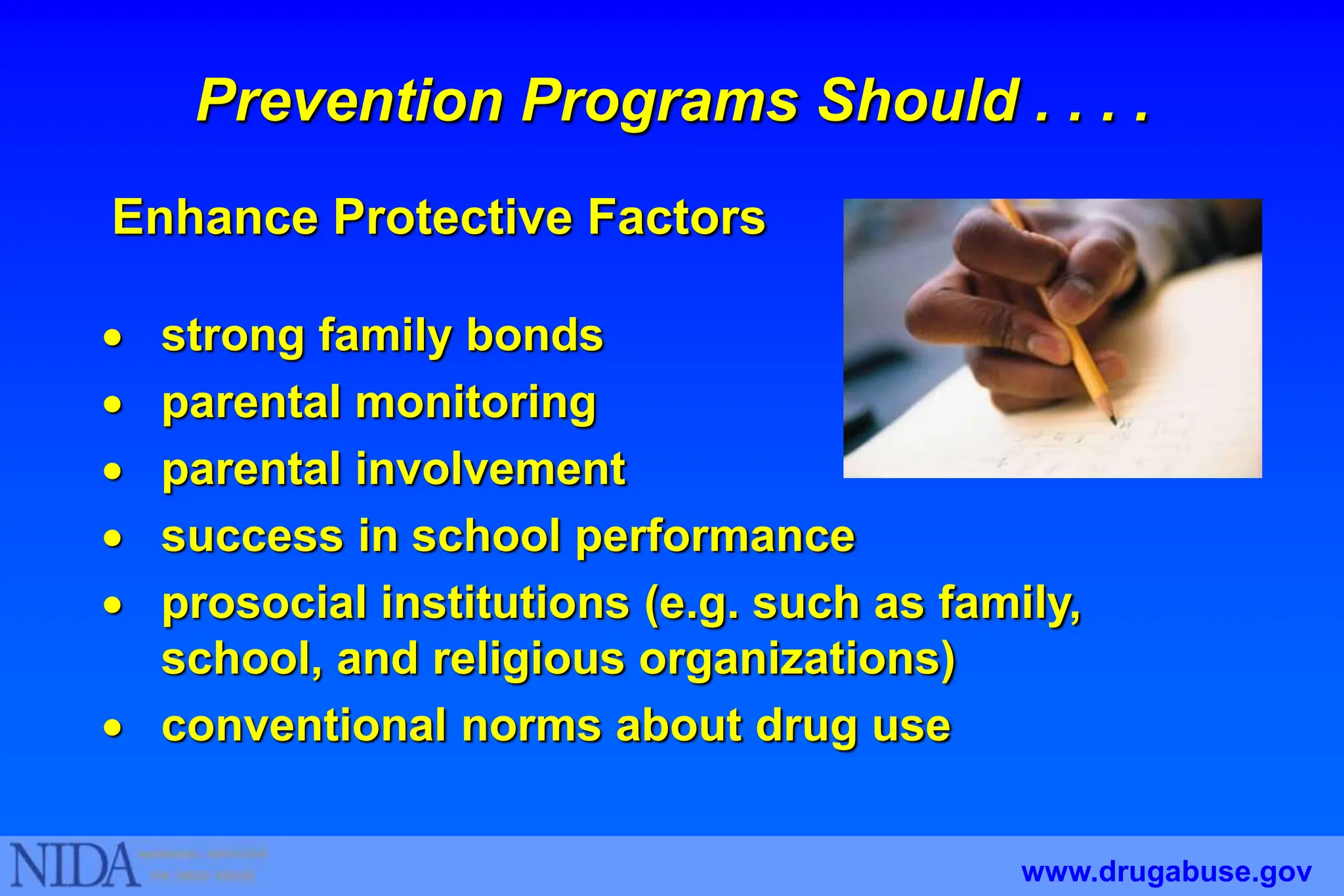
Prevention Programs Should . . . .
 strong family bonds
 parental monitoring
 parental involvement
 success in school performance
 prosocial institutions (e.g. such as family,
school, and religious organizations)
 conventional norms about drug use
www.drugabuse.gov
Enhance Protective Factors
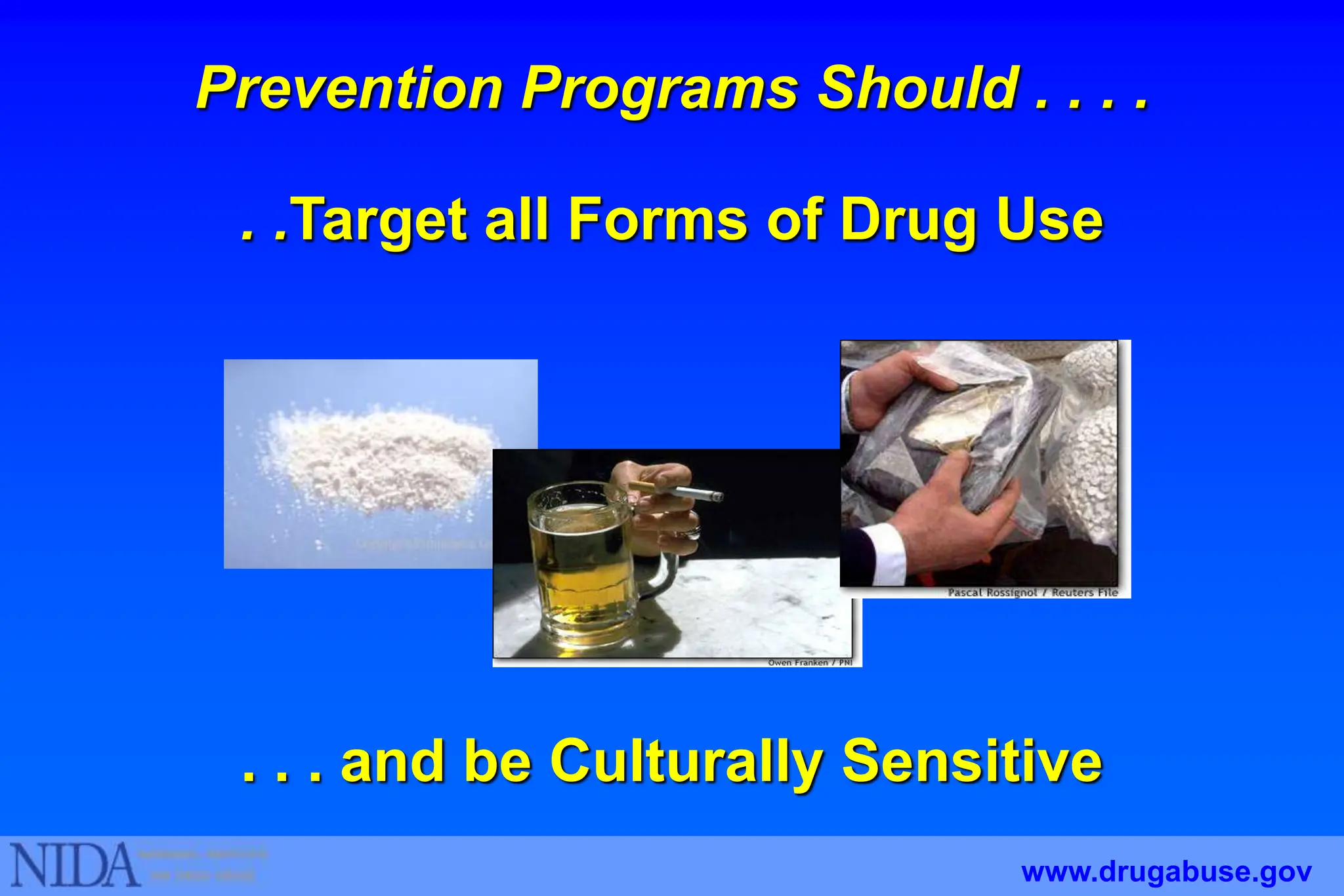
. . . and be Culturally Sensitive
Prevention Programs Should . . . .
. .Target all Forms of Drug Use
www.drugabuse.gov
 Resist drugs
 Strengthen personal commitments
against drug use
 Increase social competency
 Reinforce attitudes against drug use
Prevention Programs Should . . . .
Include Interactive Skills-Based Training
www.drugabuse.gov
 Provide greater impact than parent-
only or child-only programs
 Include at each stage of development
 Involve effective parenting skills
Prevention Programs Should. . . .
Be Family-Focused
www.drugabuse.gov
Prevention Programs Should . . . .
Involve Communities and Schools
 Incorporate media campaigns and
policy changes
 Strengthen norms against drug use
 Address specific nature of local drug
problem
www.drugabuse.gov
www.drugabuse.gov
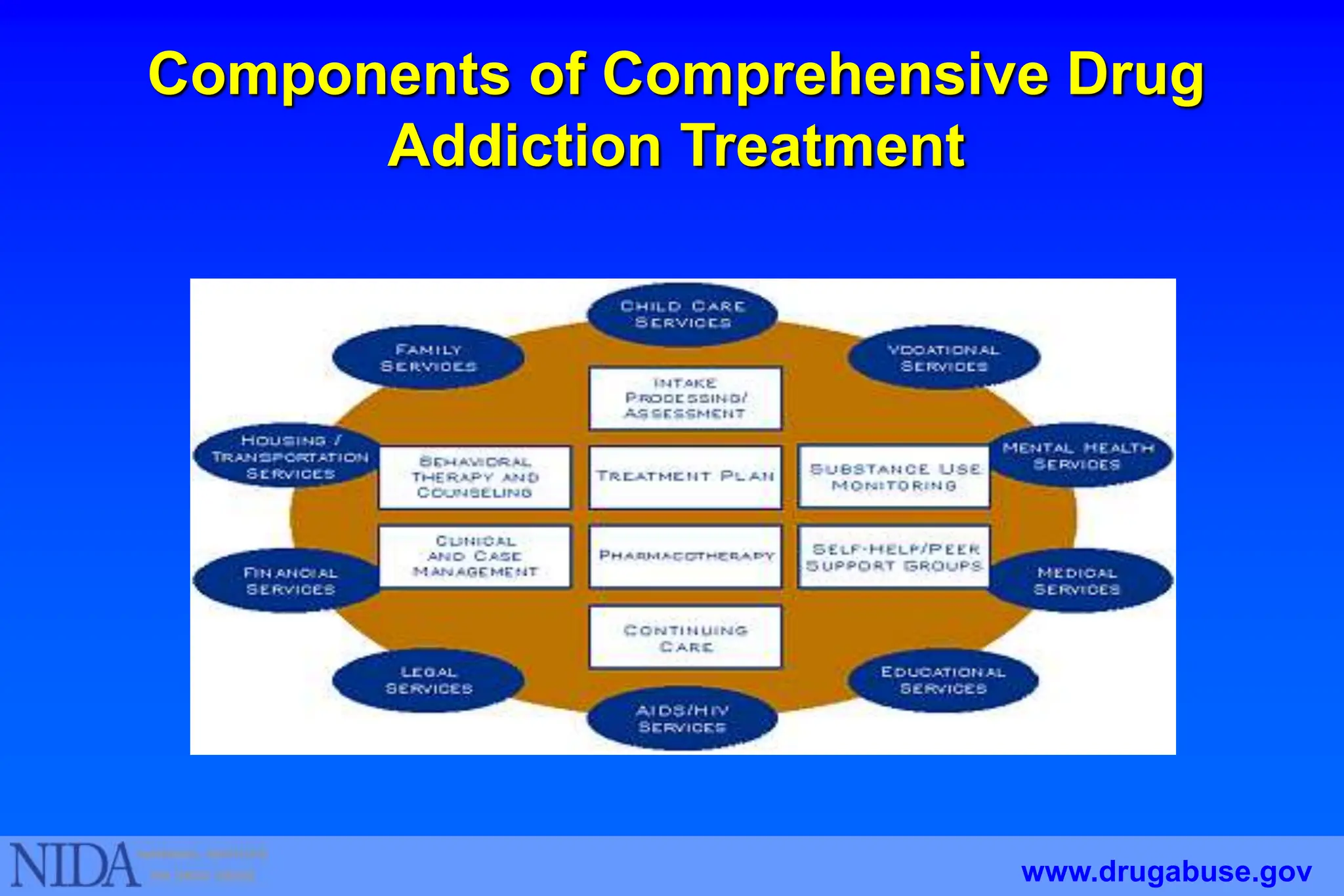
Components of Comprehensive Drug
Addiction Treatment
www.drugabuse.gov
Matching Patients to
Individual Needs
 No single treatment is appropriate for all
individuals
 Effective treatment attends to multiple needs
of the individual, not just his/her drug use
 Treatment must address medical,
psychological, social, vocational, and legal
problems
www.drugabuse.gov
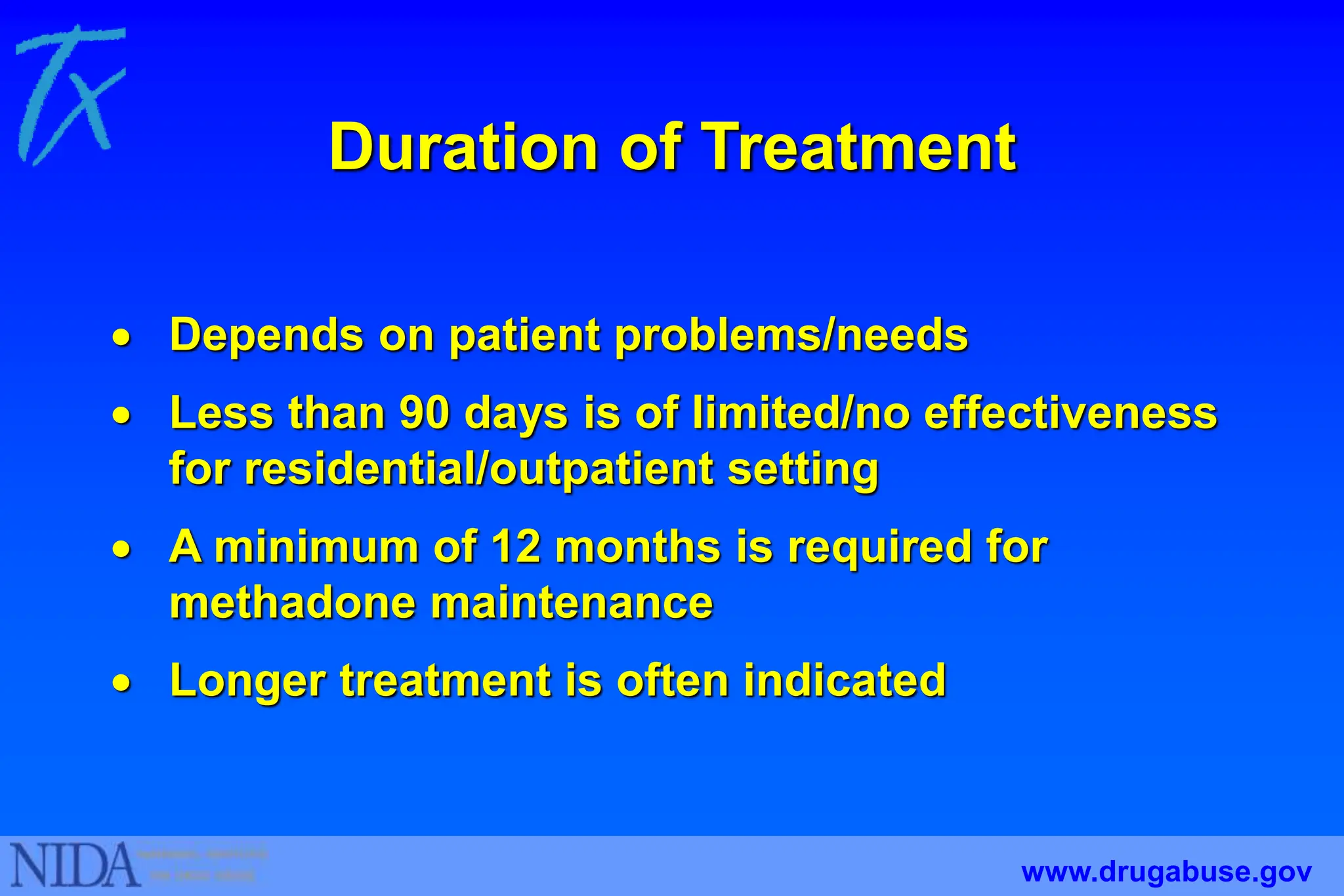
Duration of Treatment
 Depends on patient problems/needs
 Less than 90 days is of limited/no effectiveness
for residential/outpatient setting
 A minimum of 12 months is required for
methadone maintenance
 Longer treatment is often indicated
www.drugabuse.gov
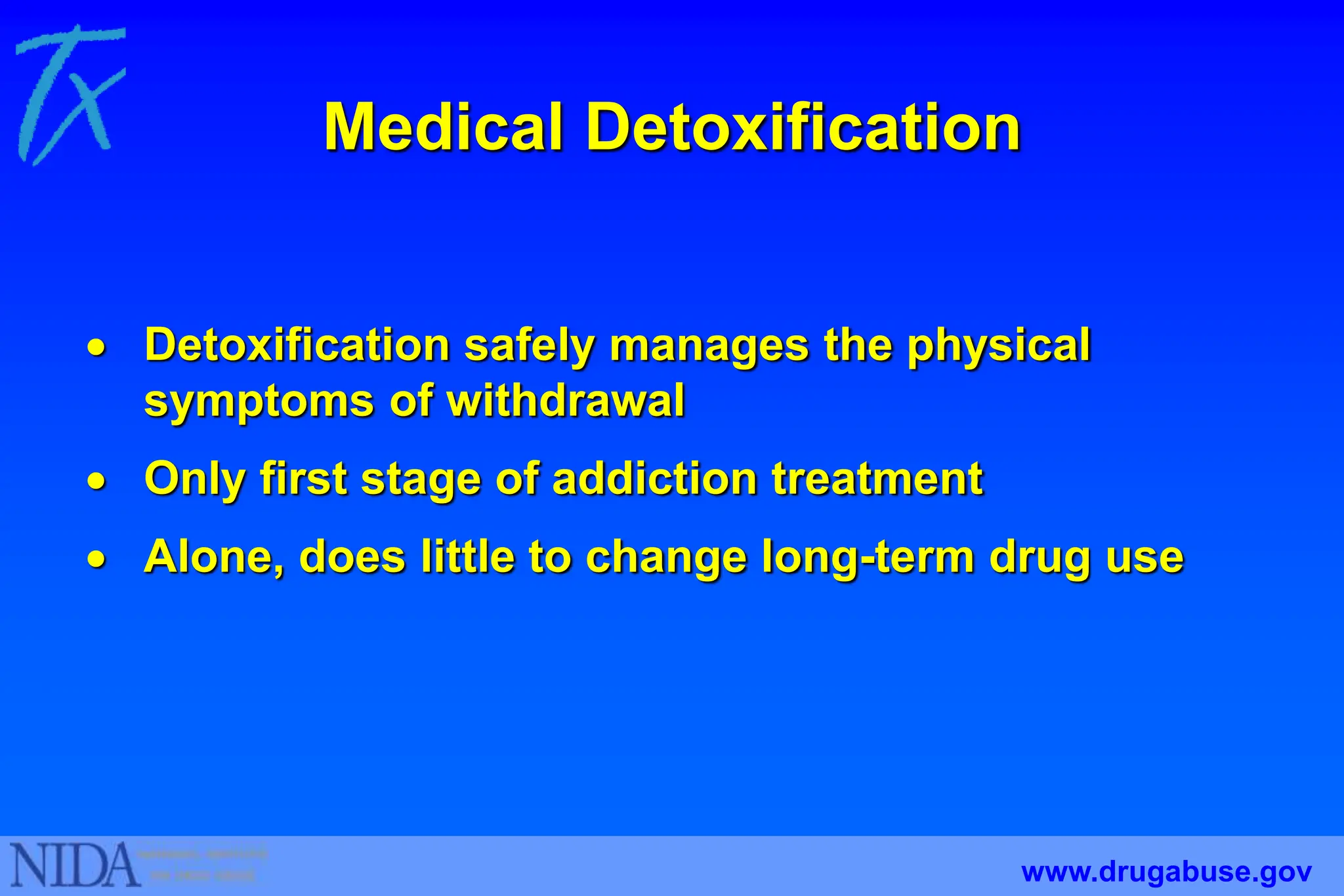
Medical Detoxification
 Detoxification safely manages the physical
symptoms of withdrawal
 Only first stage of addiction treatment
 Alone, does little to change long-term drug use
www.drugabuse.gov
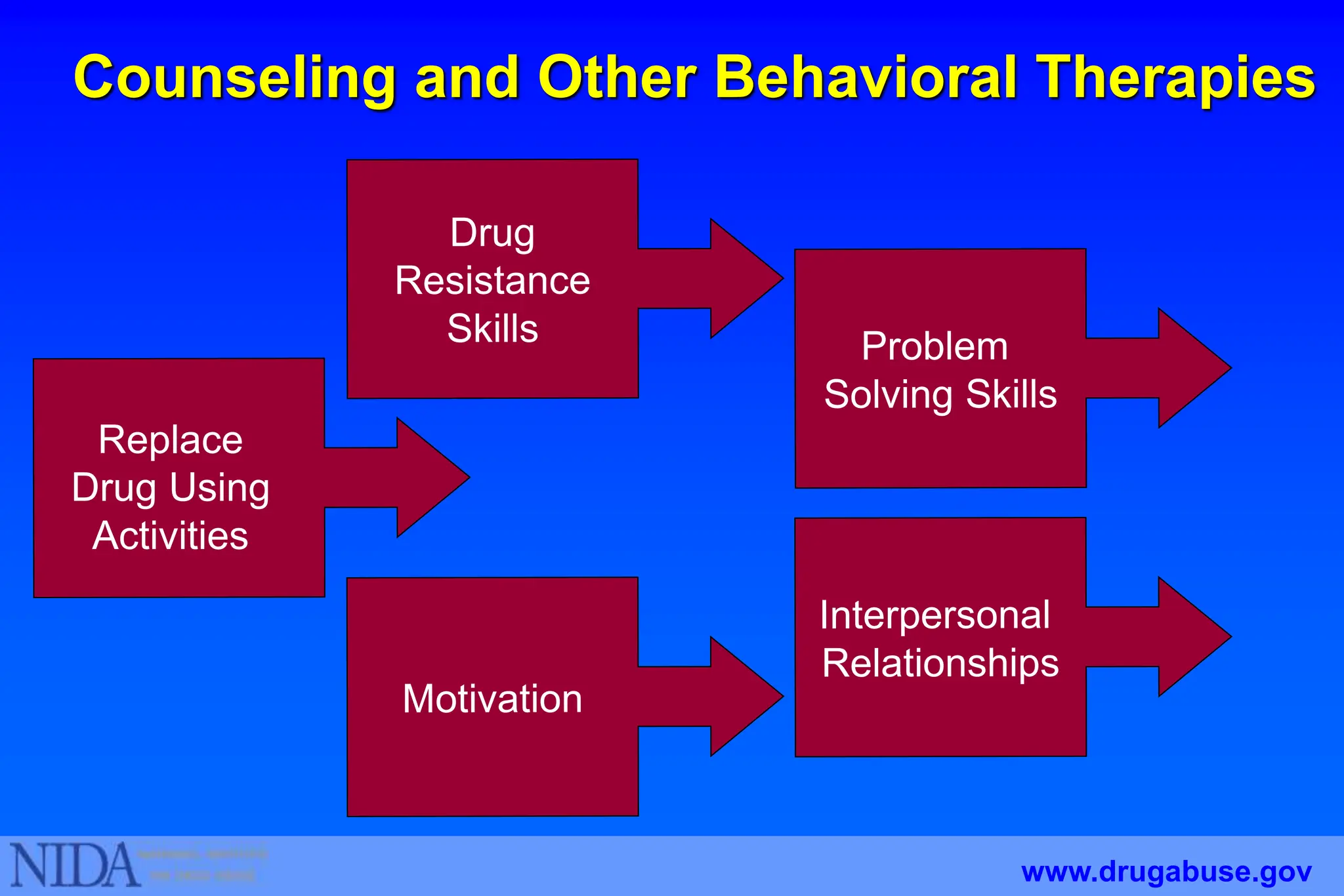
Counseling and Other Behavioral Therapies
Replace
Drug Using
Activities
www.drugabuse.gov
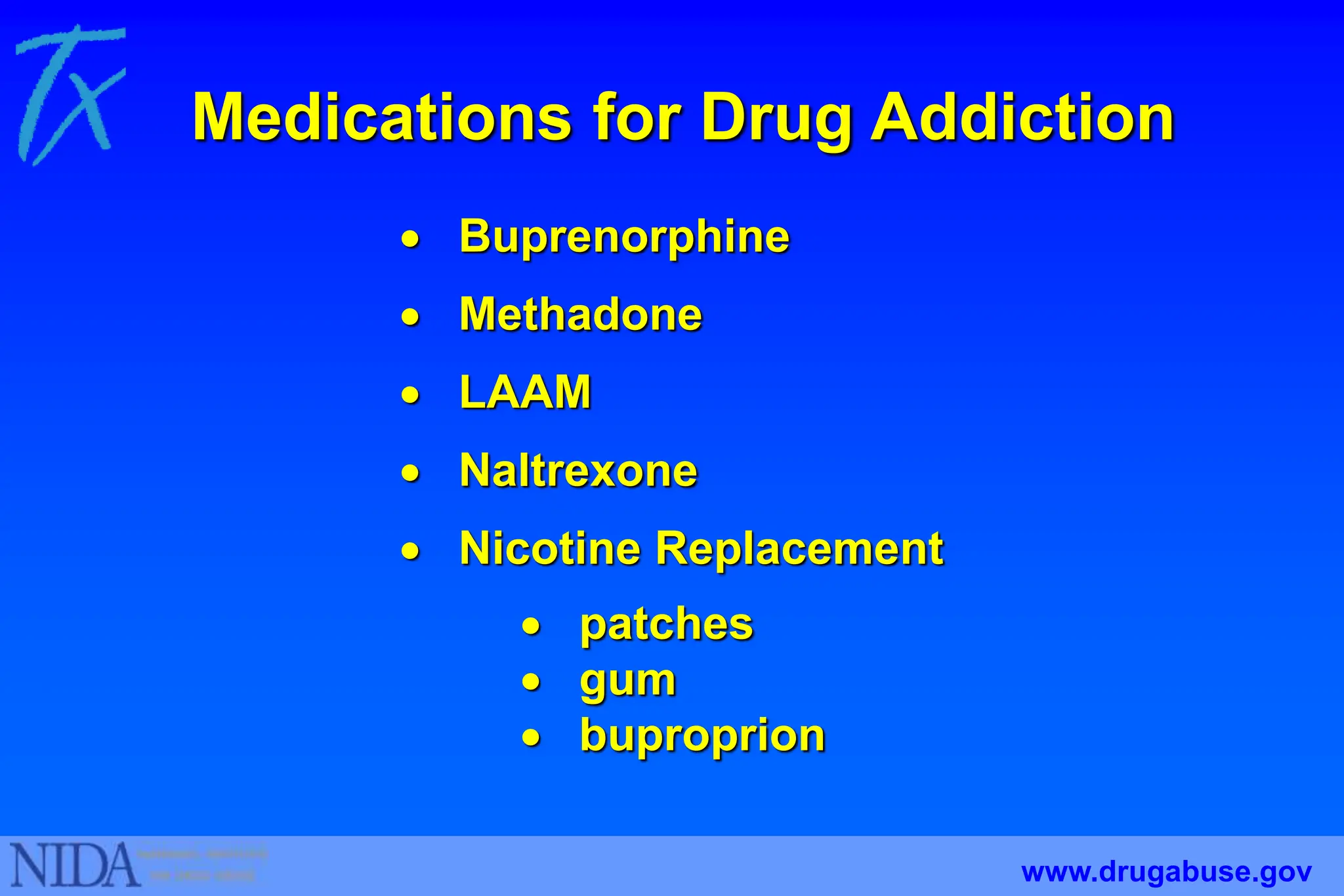
Medications for Drug Addiction
 Buprenorphine
 Methadone
 LAAM
 Naltrexone
 Nicotine Replacement
 patches
 gum
 buproprion
www.drugabuse.gov
Motivation to Enter/
Sustain Treatment
 Effective treatment need not be voluntary
 Sanctions/enticements (family, employer,
criminal justice system) can increase
treatment entry/retention
 Treatment outcomes are similar for those
who enter treatment under legal pressure vs
voluntary
www.drugabuse.gov
HIV/AIDS, Hepatitis and Other
Infectious Diseases
 Drug treatment is disease prevention
 Drug treatment reduces likelihood of HIV
infection by 6 fold in injecting drug users
 Drug treatment presents opportunities for
screening, counseling, and referral
www.drugabuse.gov
Effectiveness of Treatment
 Goal of treatment is to return to productive
functioning
 Treatment reduced drug use by 40-60%
 Treatment reduces crime by 40-60%
 Treatment increases employment prospects
by 40%
 Drug treatment is as successful as treatment
of diabetes, asthma, and hypertension
www.drugabuse.gov
Self-Help and Drug
Addiction Treatment
 Complements and extends treatment efforts
 Most commonly used models include 12-Step
(AA, NA) and Smart Recovery
 Most treatment programs encourage self-help
participation during/after treatment
www.drugabuse.gov
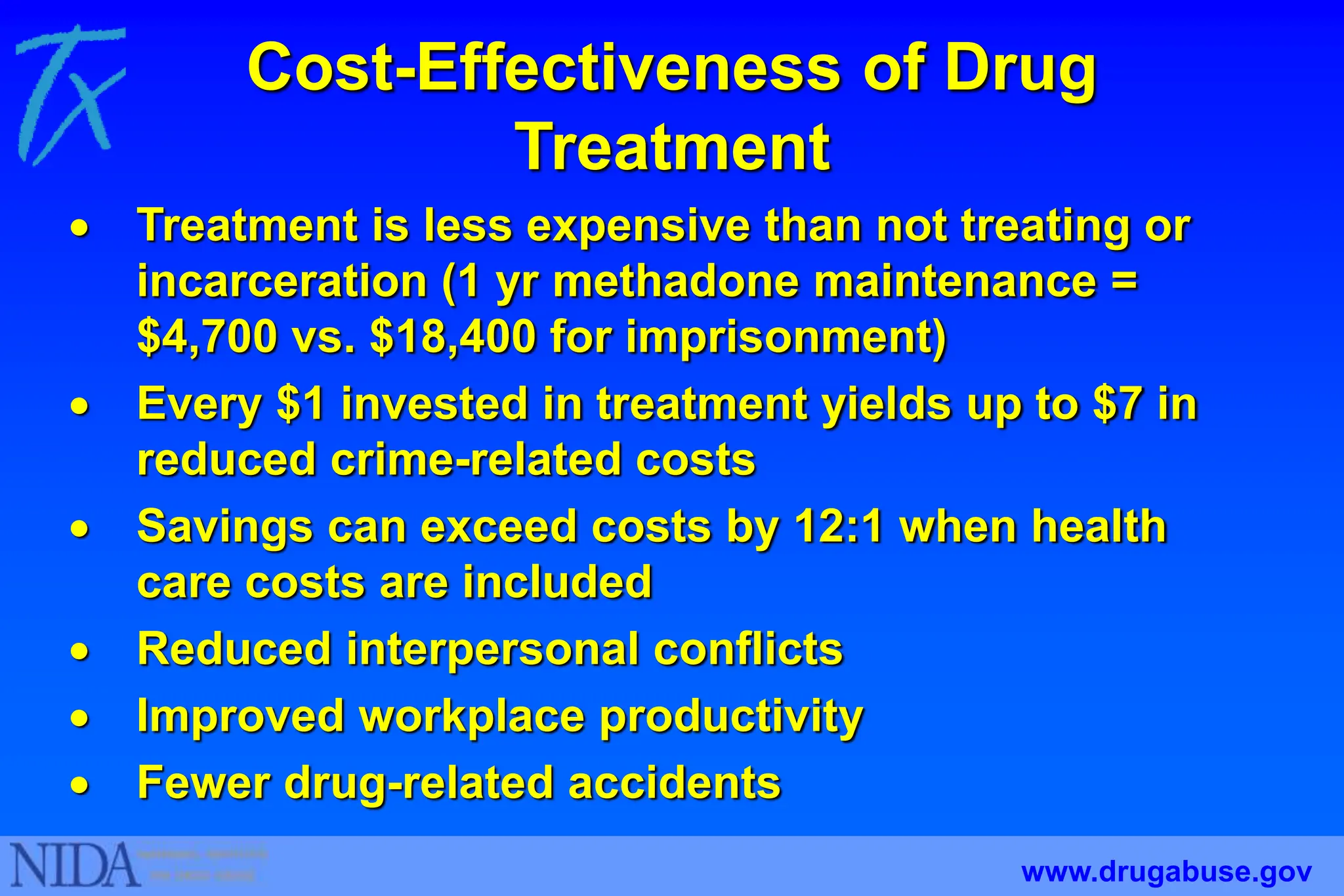
Cost-Effectiveness of Drug
Treatment
 Treatment is less expensive than not treating or
incarceration (1 yr methadone maintenance =
$4,700 vs. $18,400 for imprisonment)
 Every $1 invested in treatment yields up to $7 in
reduced crime-related costs
 Savings can exceed costs by 12:1 when health
care costs are included
 Reduced interpersonal conflicts
 Improved workplace productivity
 Fewer drug-related accidents
www.drugabuse.gov
For More Information
NIDA Public Information Office:
301-443-1124
Or
www.nida.nih.gov
www.drugabuse.gov
National Clearinghouse on Alcohol and
Drug Information (NCADI):
1-800-729-6686
www.drugabuse.gov

Presentation-Understand What Science says.ppt

  • 1.
    Understanding Drug Abuseand Addiction: What Science Says Developed by the National Institute on Drug Abuse (NIDA) National Institutes of Health Bethesda, Maryland www.drugabuse.gov
  • 2.
    DRUG ADDICTION ISA COMPLEX ILLNESS www.drugabuse.gov
  • 3.
  • 4.
  • 5.
  • 6.
  • 7.
  • 8.
  • 9.
  • 10.
  • 11.
  • 12.
     ineffective parenting chaotic home environment  lack of mutual attachments/nurturing  inappropriate behavior in the classroom  failure in school performance  poor social coping skills  affiliations with deviant peers  perceptions of approval of drug-using behaviors in the school, peer, and community environments Prevention Programs Should . . . . Reduce Risk Factors www.drugabuse.gov
  • 13.
    Prevention Programs Should. . . .  strong family bonds  parental monitoring  parental involvement  success in school performance  prosocial institutions (e.g. such as family, school, and religious organizations)  conventional norms about drug use www.drugabuse.gov Enhance Protective Factors
  • 14.
    . . .and be Culturally Sensitive Prevention Programs Should . . . . . .Target all Forms of Drug Use www.drugabuse.gov
  • 15.
     Resist drugs Strengthen personal commitments against drug use  Increase social competency  Reinforce attitudes against drug use Prevention Programs Should . . . . Include Interactive Skills-Based Training www.drugabuse.gov
  • 16.
     Provide greaterimpact than parent- only or child-only programs  Include at each stage of development  Involve effective parenting skills Prevention Programs Should. . . . Be Family-Focused www.drugabuse.gov
  • 17.
    Prevention Programs Should. . . . Involve Communities and Schools  Incorporate media campaigns and policy changes  Strengthen norms against drug use  Address specific nature of local drug problem www.drugabuse.gov
  • 18.
  • 19.
    Components of ComprehensiveDrug Addiction Treatment www.drugabuse.gov
  • 20.
    Matching Patients to IndividualNeeds  No single treatment is appropriate for all individuals  Effective treatment attends to multiple needs of the individual, not just his/her drug use  Treatment must address medical, psychological, social, vocational, and legal problems www.drugabuse.gov
  • 21.
    Duration of Treatment Depends on patient problems/needs  Less than 90 days is of limited/no effectiveness for residential/outpatient setting  A minimum of 12 months is required for methadone maintenance  Longer treatment is often indicated www.drugabuse.gov
  • 22.
    Medical Detoxification  Detoxificationsafely manages the physical symptoms of withdrawal  Only first stage of addiction treatment  Alone, does little to change long-term drug use www.drugabuse.gov
  • 23.
    Counseling and OtherBehavioral Therapies Replace Drug Using Activities www.drugabuse.gov
  • 24.
    Medications for DrugAddiction  Buprenorphine  Methadone  LAAM  Naltrexone  Nicotine Replacement  patches  gum  buproprion www.drugabuse.gov
  • 25.
    Motivation to Enter/ SustainTreatment  Effective treatment need not be voluntary  Sanctions/enticements (family, employer, criminal justice system) can increase treatment entry/retention  Treatment outcomes are similar for those who enter treatment under legal pressure vs voluntary www.drugabuse.gov
  • 26.
    HIV/AIDS, Hepatitis andOther Infectious Diseases  Drug treatment is disease prevention  Drug treatment reduces likelihood of HIV infection by 6 fold in injecting drug users  Drug treatment presents opportunities for screening, counseling, and referral www.drugabuse.gov
  • 27.
    Effectiveness of Treatment Goal of treatment is to return to productive functioning  Treatment reduced drug use by 40-60%  Treatment reduces crime by 40-60%  Treatment increases employment prospects by 40%  Drug treatment is as successful as treatment of diabetes, asthma, and hypertension www.drugabuse.gov
  • 28.
    Self-Help and Drug AddictionTreatment  Complements and extends treatment efforts  Most commonly used models include 12-Step (AA, NA) and Smart Recovery  Most treatment programs encourage self-help participation during/after treatment www.drugabuse.gov
  • 29.
    Cost-Effectiveness of Drug Treatment Treatment is less expensive than not treating or incarceration (1 yr methadone maintenance = $4,700 vs. $18,400 for imprisonment)  Every $1 invested in treatment yields up to $7 in reduced crime-related costs  Savings can exceed costs by 12:1 when health care costs are included  Reduced interpersonal conflicts  Improved workplace productivity  Fewer drug-related accidents www.drugabuse.gov
  • 30.
    For More Information NIDAPublic Information Office: 301-443-1124 Or www.nida.nih.gov www.drugabuse.gov National Clearinghouse on Alcohol and Drug Information (NCADI): 1-800-729-6686 www.drugabuse.gov