Marketing
Management Case
Study
SUBMITTED BY:
Anoop Kumar Mishra 23GSOB2010948
ADITI SRIVASTAVA 23GSOB2010829
ILMA SULTAN 23GSOB2010935
AZHAAN KHAN 23GSOB32010885
ANANT JAIN 23GSOB2010954
SHREYA JANSI 23GSOB2010832
MEEHI VIJAYVERGIYA 23GSOB2010824
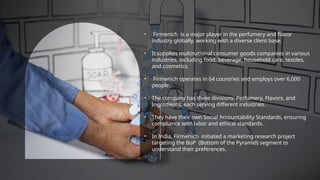
• Firmenich is a major player in the perfumery and flavor
industry globally, working with a diverse client base.
• It supplies multinational consumer goods companies in various
industries, including food, beverage, household care, textiles,
and cosmetics.
• Firmenich operates in 64 countries and employs over 6,000
people.
• The company has three divisions: Perfumery, Flavors, and
Ingredients, each serving different industries.
• They have their own Social Accountability Standards, ensuring
compliance with labor and ethical standards.
• In India, Firmenich initiated a marketing research project
targeting the BoP (Bottom of the Pyramid) segment to
understand their preferences.
The Firmenich Initiative: "Shared
Senses and Sensibilities"
Discover Firmenich's pioneering initiative that focuses on understanding the shared senses
and sensibilities of low-income consumers in India.
1 Market Environment
Analyze the unique market environment that influences the purchasing behaviors of
low-income consumers.
2 Collaborations
Collaborate with consumers in product development.
3 Effective Research Methods
Employed effective research methods to understand their preferences.
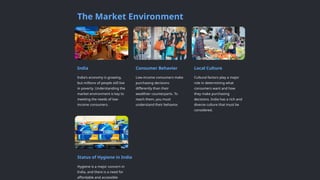
The Market Environment
India
India's economy is growing,
but millions of people still live
in poverty. Understanding the
market environment is key to
meeting the needs of low-
income consumers.
Consumer Behavior
Low-income consumers make
purchasing decisions
differently than their
wealthier counterparts. To
reach them, you must
understand their behavior.
Local Culture
Cultural factors play a major
role in determining what
consumers want and how
they make purchasing
decisions. India has a rich and
diverse culture that must be
considered.
Status of Hygiene in India
Hygiene is a major concern in
India, and there is a need for
affordable and accessible
The Soap Industry in India
Market Size
The soap industry in India is worth $2 billion
and is growing at a steady pace.
Market Segments
The market is divided into urban and rural
segments, with rural areas representing a
significant opportunity for growth.
Competition
There are many players in the soap industry
in India, including large multinationals and
small local players.
Price Sensitivity
Low-income consumers are highly price-
sensitive and need affordable options in
order to purchase hygiene products.
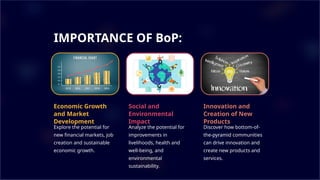
IMPORTANCE OF BoP:
Economic Growth
and Market
Development
Explore the potential for
new financial markets, job
creation and sustainable
economic growth.
Social and
Environmental
Impact
Analyze the potential for
improvements in
livelihoods, health and
well-being, and
environmental
sustainability.
Innovation and
Creation of New
Products
Discover how bottom-of-
the-pyramid communities
can drive innovation and
create new products and
services.
CRITIQUES OF BoP
EXPLOITATION
CONCERNS
Some BoP initiatives
exploit the poor by
profiting from there
vulnerability which can
lead to ethical issues
ACCESS
BARRIERS
The barriers faced by the
poors can be related to
cost, infrastructure,
education and social
norms making it
challenging to serve the
BoP
MARKET
VULNERABILITY
The low earning section is
quiet vulnerable to
market situations which
can lead to genuine
empowerment
Challenges of Marketing Research
in the BoP
Uncover the specific challenges faced when conducting marketing research in the Bottom of
the Pyramid (BoP) segment.
1 Diverse
Consumer
Profile
Navigate the
diversity of low-
income consumers
in India, from
cultural preferences
to varying levels of
2 Data Collection
Limitations
Address the
difficulties in
collecting accurate
and comprehensive
data from hard-to-
reach communities.
3 Resource
Constraints
Tackle the
limitations of
financial and
logistical resources
when conducting
research in low-
Conclusion
Sum up the key findings of Firmenich's marketing research initiative
for low-income consumers in India and emphasize its significance in
shaping successful strategies for emerging markets.

Presentation on Marketing Management Case Study.pptx

  • 1.
    Marketing Management Case Study SUBMITTED BY: AnoopKumar Mishra 23GSOB2010948 ADITI SRIVASTAVA 23GSOB2010829 ILMA SULTAN 23GSOB2010935 AZHAAN KHAN 23GSOB32010885 ANANT JAIN 23GSOB2010954 SHREYA JANSI 23GSOB2010832 MEEHI VIJAYVERGIYA 23GSOB2010824
  • 3.
    • Firmenich isa major player in the perfumery and flavor industry globally, working with a diverse client base. • It supplies multinational consumer goods companies in various industries, including food, beverage, household care, textiles, and cosmetics. • Firmenich operates in 64 countries and employs over 6,000 people. • The company has three divisions: Perfumery, Flavors, and Ingredients, each serving different industries. • They have their own Social Accountability Standards, ensuring compliance with labor and ethical standards. • In India, Firmenich initiated a marketing research project targeting the BoP (Bottom of the Pyramid) segment to understand their preferences.
  • 4.
    The Firmenich Initiative:"Shared Senses and Sensibilities" Discover Firmenich's pioneering initiative that focuses on understanding the shared senses and sensibilities of low-income consumers in India. 1 Market Environment Analyze the unique market environment that influences the purchasing behaviors of low-income consumers. 2 Collaborations Collaborate with consumers in product development. 3 Effective Research Methods Employed effective research methods to understand their preferences.
  • 5.
    The Market Environment India India'seconomy is growing, but millions of people still live in poverty. Understanding the market environment is key to meeting the needs of low- income consumers. Consumer Behavior Low-income consumers make purchasing decisions differently than their wealthier counterparts. To reach them, you must understand their behavior. Local Culture Cultural factors play a major role in determining what consumers want and how they make purchasing decisions. India has a rich and diverse culture that must be considered. Status of Hygiene in India Hygiene is a major concern in India, and there is a need for affordable and accessible
  • 6.
    The Soap Industryin India Market Size The soap industry in India is worth $2 billion and is growing at a steady pace. Market Segments The market is divided into urban and rural segments, with rural areas representing a significant opportunity for growth. Competition There are many players in the soap industry in India, including large multinationals and small local players. Price Sensitivity Low-income consumers are highly price- sensitive and need affordable options in order to purchase hygiene products.
  • 7.
    IMPORTANCE OF BoP: EconomicGrowth and Market Development Explore the potential for new financial markets, job creation and sustainable economic growth. Social and Environmental Impact Analyze the potential for improvements in livelihoods, health and well-being, and environmental sustainability. Innovation and Creation of New Products Discover how bottom-of- the-pyramid communities can drive innovation and create new products and services.
  • 8.
    CRITIQUES OF BoP EXPLOITATION CONCERNS SomeBoP initiatives exploit the poor by profiting from there vulnerability which can lead to ethical issues ACCESS BARRIERS The barriers faced by the poors can be related to cost, infrastructure, education and social norms making it challenging to serve the BoP MARKET VULNERABILITY The low earning section is quiet vulnerable to market situations which can lead to genuine empowerment
  • 9.
    Challenges of MarketingResearch in the BoP Uncover the specific challenges faced when conducting marketing research in the Bottom of the Pyramid (BoP) segment. 1 Diverse Consumer Profile Navigate the diversity of low- income consumers in India, from cultural preferences to varying levels of 2 Data Collection Limitations Address the difficulties in collecting accurate and comprehensive data from hard-to- reach communities. 3 Resource Constraints Tackle the limitations of financial and logistical resources when conducting research in low-
  • 11.
    Conclusion Sum up thekey findings of Firmenich's marketing research initiative for low-income consumers in India and emphasize its significance in shaping successful strategies for emerging markets.