Introduction to Job
Transfer and Promotion
An exciting journey awaits as you embark on the path of job transfer and
promotion. Embrace new challenges, opportunities, and growth prospects,
while enhancing your skills and expertise. Navigate this transformation
with confidence and enthusiasm.
by Aryan prasad
Understanding the need for
a job transfer
When considering a job transfer, it's essential to understand the underlying
factors driving the need for change. It could be for personal growth, career
advancement, or even to facilitate work-life balance. Communicating this
need with clarity and professionalism is crucial for initiating the process.
Identifying Opportunities
for Promotion Within the
Organization
Internal Job Postings: Regularly check internal job postings on the
company's intranet for potential promotion opportunities.
1.
Networking: Connect with leaders and colleagues to learn about
upcoming projects and new roles.
2.
Performance Reviews: Proactively seek feedback and discuss career
development with supervisors during performance reviews.
3.
Preparing for a Successful Job
Transfer or Promotion
1 Self-Assessment
Assess your skills, strengths, and areas for improvement relevant to the new
role.
2 Skills Enhancement
Identify and acquire any additional skills or qualifications required for the
new position.
3 Network Development
Expand your professional network within the organization to gain support and
insights.
Developing necessary skills and
qualifications
Skill Building
Continuous learning
and improvement to
enhance professional
expertise and
knowledge.
Certifications
Earning industry-
specific certifications
to validate skills and
expertise.
Work Experience
Acquiring practical
experience through
internships, projects,
and part-time work.
Networking
Building professional
connections and
relationships to gain
insights and
opportunities.
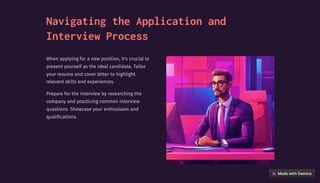
Navigating the Application and
Interview Process
When applying for a new position, it's crucial to
present yourself as the ideal candidate. Tailor
your resume and cover letter to highlight
relevant skills and experiences.
Prepare for the interview by researching the
company and practicing common interview
questions. Showcase your enthusiasm and
qualifications.
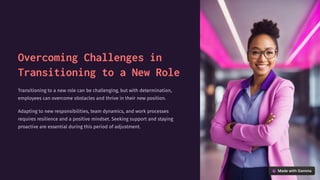
Overcoming Challenges in
Transitioning to a New Role
Transitioning to a new role can be challenging, but with determination,
employees can overcome obstacles and thrive in their new position.
Adapting to new responsibilities, team dynamics, and work processes
requires resilience and a positive mindset. Seeking support and staying
proactive are essential during this period of adjustment.
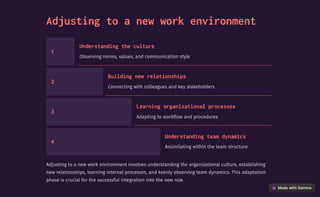
Adjusting to a new work environment
1
Understanding the culture
Observing norms, values, and communication style
2
Building new relationships
Connecting with colleagues and key stakeholders
3
Learning organizational processes
Adapting to workflow and procedures
4
Understanding team dynamics
Assimilating within the team structure
Adjusting to a new work environment involves understanding the organizational culture, establishing
new relationships, learning internal processes, and keenly observing team dynamics. This adaptation
phase is crucial for the successful integration into the new role.
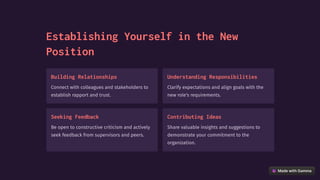
Establishing Yourself in the New
Position
Building Relationships
Connect with colleagues and stakeholders to
establish rapport and trust.
Understanding Responsibilities
Clarify expectations and align goals with the
new role's requirements.
Seeking Feedback
Be open to constructive criticism and actively
seek feedback from supervisors and peers.
Contributing Ideas
Share valuable insights and suggestions to
demonstrate your commitment to the
organization.
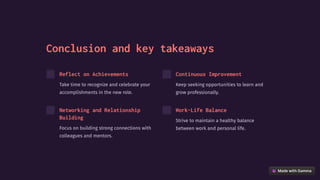
Conclusion and key takeaways
Reflect on Achievements
Take time to recognize and celebrate your
accomplishments in the new role.
Continuous Improvement
Keep seeking opportunities to learn and
grow professionally.
Networking and Relationship
Building
Focus on building strong connections with
colleagues and mentors.
Work-Life Balance
Strive to maintain a healthy balance
between work and personal life.

Presentation on job Transfer and Promotion.pdf

  • 1.
    Introduction to Job Transferand Promotion An exciting journey awaits as you embark on the path of job transfer and promotion. Embrace new challenges, opportunities, and growth prospects, while enhancing your skills and expertise. Navigate this transformation with confidence and enthusiasm. by Aryan prasad
  • 2.
    Understanding the needfor a job transfer When considering a job transfer, it's essential to understand the underlying factors driving the need for change. It could be for personal growth, career advancement, or even to facilitate work-life balance. Communicating this need with clarity and professionalism is crucial for initiating the process.
  • 3.
    Identifying Opportunities for PromotionWithin the Organization Internal Job Postings: Regularly check internal job postings on the company's intranet for potential promotion opportunities. 1. Networking: Connect with leaders and colleagues to learn about upcoming projects and new roles. 2. Performance Reviews: Proactively seek feedback and discuss career development with supervisors during performance reviews. 3.
  • 4.
    Preparing for aSuccessful Job Transfer or Promotion 1 Self-Assessment Assess your skills, strengths, and areas for improvement relevant to the new role. 2 Skills Enhancement Identify and acquire any additional skills or qualifications required for the new position. 3 Network Development Expand your professional network within the organization to gain support and insights.
  • 5.
    Developing necessary skillsand qualifications Skill Building Continuous learning and improvement to enhance professional expertise and knowledge. Certifications Earning industry- specific certifications to validate skills and expertise. Work Experience Acquiring practical experience through internships, projects, and part-time work. Networking Building professional connections and relationships to gain insights and opportunities.
  • 6.
    Navigating the Applicationand Interview Process When applying for a new position, it's crucial to present yourself as the ideal candidate. Tailor your resume and cover letter to highlight relevant skills and experiences. Prepare for the interview by researching the company and practicing common interview questions. Showcase your enthusiasm and qualifications.
  • 7.
    Overcoming Challenges in Transitioningto a New Role Transitioning to a new role can be challenging, but with determination, employees can overcome obstacles and thrive in their new position. Adapting to new responsibilities, team dynamics, and work processes requires resilience and a positive mindset. Seeking support and staying proactive are essential during this period of adjustment.
  • 8.
    Adjusting to anew work environment 1 Understanding the culture Observing norms, values, and communication style 2 Building new relationships Connecting with colleagues and key stakeholders 3 Learning organizational processes Adapting to workflow and procedures 4 Understanding team dynamics Assimilating within the team structure Adjusting to a new work environment involves understanding the organizational culture, establishing new relationships, learning internal processes, and keenly observing team dynamics. This adaptation phase is crucial for the successful integration into the new role.
  • 9.
    Establishing Yourself inthe New Position Building Relationships Connect with colleagues and stakeholders to establish rapport and trust. Understanding Responsibilities Clarify expectations and align goals with the new role's requirements. Seeking Feedback Be open to constructive criticism and actively seek feedback from supervisors and peers. Contributing Ideas Share valuable insights and suggestions to demonstrate your commitment to the organization.
  • 10.
    Conclusion and keytakeaways Reflect on Achievements Take time to recognize and celebrate your accomplishments in the new role. Continuous Improvement Keep seeking opportunities to learn and grow professionally. Networking and Relationship Building Focus on building strong connections with colleagues and mentors. Work-Life Balance Strive to maintain a healthy balance between work and personal life.