Clinical Trials: A Balancing Act
Presentation By Dr. Muhamed Farhaan
Definition of Clinical Trials
• Clinical trials are research studies that test new medical
interventions in people. These interventions can include
drugs, vaccines, medical devices, surgical procedures, or
behavioral treatments.
• They are designed to determine if a new treatment is safe
and effective, and to gather information about its side
effects.
• Public Health Impact: Successful
clinical trials can lead to the
development of public health
interventions that prevent diseases
and improve overall health.
• Economic Benefits: The
development of new medical
treatments can create jobs and
stimulate economic growth.
• New Treatments and Cures: Clinical trials
are the primary way to develop new
drugs, vaccines, and medical devices that
can improve or save lives.
• Improved Patient Care: By testing new
treatments, researchers can identify the
most effective and safest options for
patients.
• Advancement of Medical Knowledge:
Clinical trials contribute to our
understanding of diseases and how the
human body responds to different
treatments.
Importance of Clinical Trials in Medical
Advancement
Phases of Clinical Trials
Clinical trials are typically divided into four phases to
systematically evaluate a new medical intervention.
Clinical trials are essential for developing new and
improved treatments for various diseases and conditions.
Phase I
• Purpose: To determine the safety of a new drug or treatment.
• Participants: A small group of healthy volunteers or patients with the target
disease.
• Focus: Identifying side effects, determining safe dosage ranges, and
understanding how the drug is absorbed, distributed, metabolized, and
excreted (pharmacokinetics).
• Purpose: To assess the drug's effectiveness and to
further evaluate its safety.
• Participants: A larger group of patients with the
target disease.
• Focus: Determining if the drug works, identifying
side effects, and refining dosage.
Phase II
Phase III
• Purpose: To confirm the drug's effectiveness, monitor side effects, and compare
it to standard treatments.
• Participants: A large group of patients with the target disease.
• Focus: Gathering data on efficacy, safety, and optimal dosage for regulatory
approval.
• Purpose: To monitor the drug's long-term safety and
effectiveness after it has been approved and marketed.
• Participants: Patients who use the drug in real-world
conditions.
• Focus: Identifying rare side effects, studying the drug's
benefits and risks in different populations, and
collecting additional information.
Phase IV
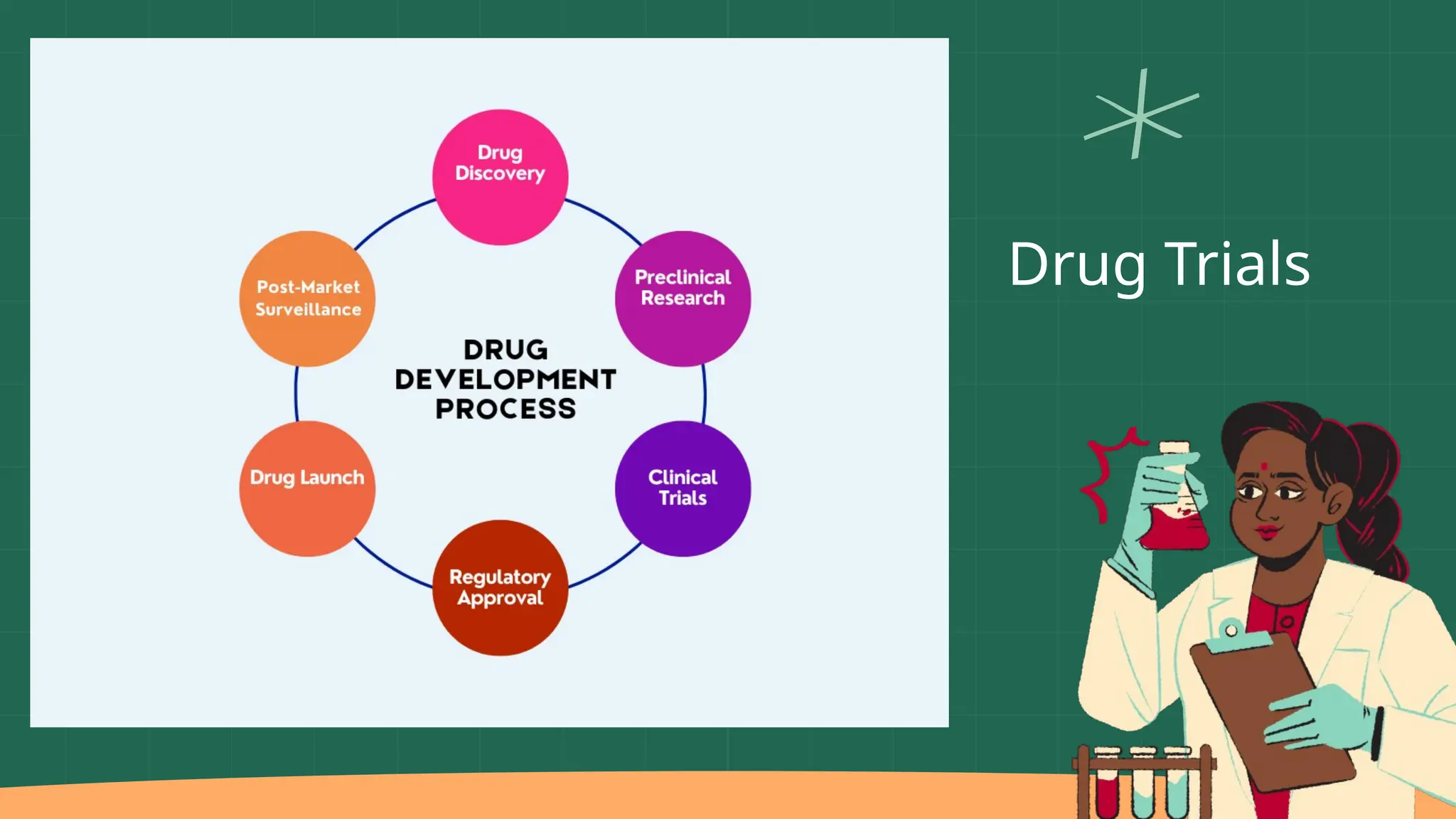
Drug Trials
Placebo-Controlled
Trials
A placebo is a substance that has no therapeutic
effect, often a sugar pill or saline solution. In a
placebo-controlled trial, participants are randomly
assigned to receive either the experimental drug
or a placebo. This design helps to minimize bias
and accurately assess the drug's efficacy.
Randomization and
Blinding
• Randomization: Participants are assigned to treatment
groups (drug or placebo) randomly to ensure equal
distribution of potential confounding factors.
• Blinding: To prevent bias, participants and researchers
may be blinded to the treatment assignment. In a single-
blind study, participants are unaware of their group,
while in a double-blind study, both participants and
researchers are unaware.
Safety Monitoring and Adverse
Events
Throughout a clinical trial, rigorous safety monitoring is
conducted to identify and assess adverse events (unwanted side
effects). This involves collecting and analyzing data on
participants' health and well-being.
Even after a drug is approved, its safety and effectiveness
continue to be monitored through post-market surveillance.
This involves collecting data from healthcare providers and
patients to identify any new or unexpected risks.
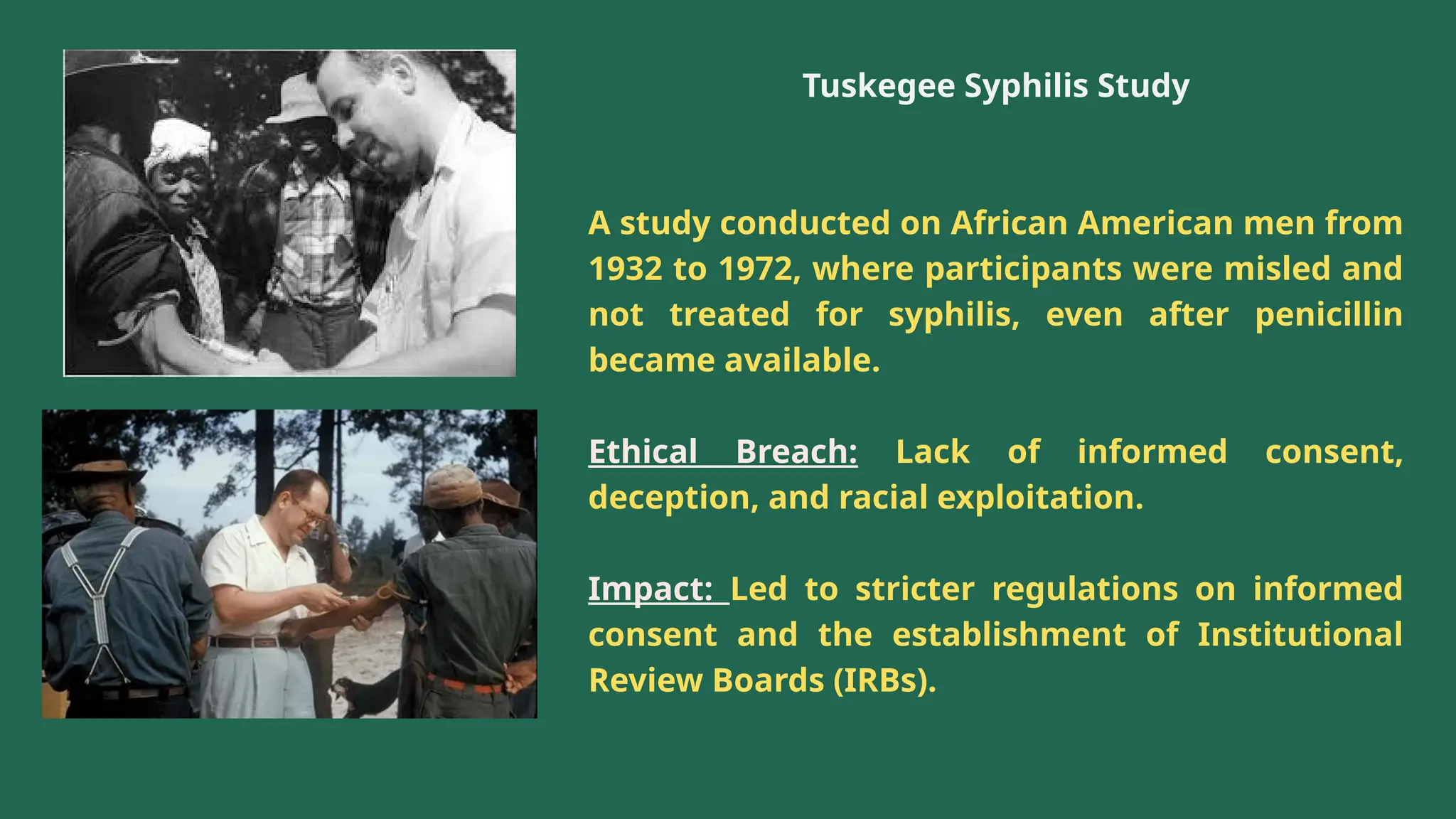
Tuskegee Syphilis Study
A study conducted on African American men from
1932 to 1972, where participants were misled and
not treated for syphilis, even after penicillin
became available.
Ethical Breach: Lack of informed consent,
deception, and racial exploitation.
Impact: Led to stricter regulations on informed
consent and the establishment of Institutional
Review Boards (IRBs).
Thalidomide Tragedy
• Thalidomide, prescribed to pregnant women
in the 1950s, caused severe birth defects due
to inadequate pre-market testing.
• Ethical Breach: Insufficient testing and lack of
regulatory oversight.
• Impact: Resulted in significant reforms in
drug testing and approval processes.
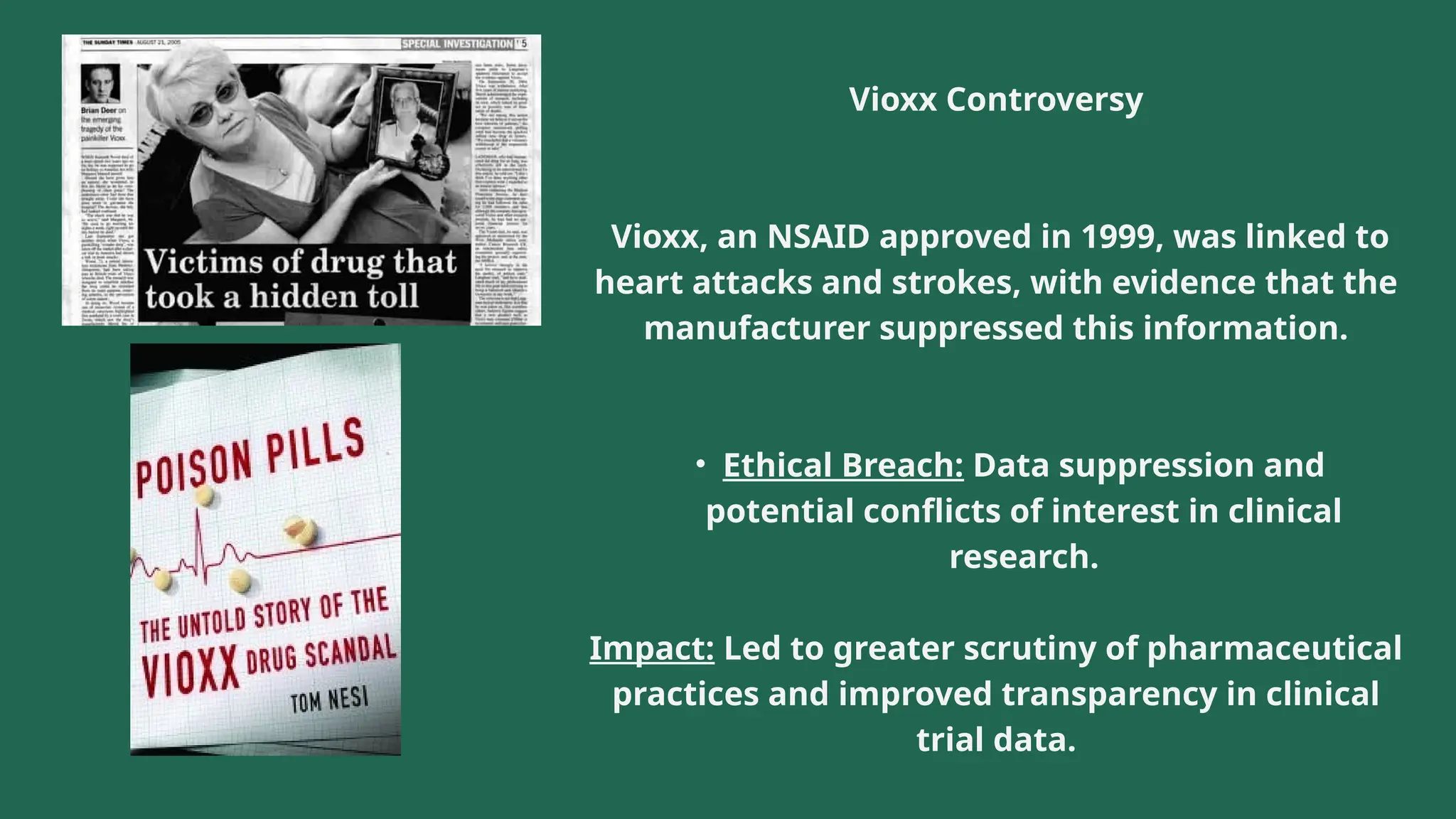
Vioxx Controversy
Vioxx, an NSAID approved in 1999, was linked to
heart attacks and strokes, with evidence that the
manufacturer suppressed this information.
• Ethical Breach: Data suppression and
potential conflicts of interest in clinical
research.
Impact: Led to greater scrutiny of pharmaceutical
practices and improved transparency in clinical
trial data.
VACCINE TRIALS
Challenges in Vaccine Development
Developing a successful vaccine is a complex and time-consuming process,
fraught with challenges:
• Understanding the Pathogen: A deep understanding of the target
pathogen's structure, behavior, and immune response is essential.
• Immune Response: Eliciting a protective immune response is
challenging, as it requires balancing the generation of antibodies and T
cells.
• Safety: Ensuring the vaccine is safe for all populations, including
vulnerable groups, is paramount.
• Efficacy: Demonstrating the vaccine's effectiveness in preventing disease
or reducing its severity is crucial.
• Manufacturing and Distribution: Scaling up vaccine production and
ensuring equitable distribution are logistical hurdles.
VACCINE TRIALS
Immunogenicity and Efficacy Assessment
• Immunogenicity: This measures the vaccine's
ability to trigger an immune response, producing
antibodies and T cells.
• Efficacy: This determines the vaccine's
effectiveness in preventing disease or reducing its
severity. It is assessed through clinical trials
comparing vaccinated and unvaccinated groups.
Covishield: India's COVID-19 Vaccine
Covishield is a COVID-19 vaccine manufactured by the Serum Institute of India (SII)
under license from AstraZeneca. It is essentially a variant of the AstraZeneca-Oxford
COVID-19 vaccine.
Key Points about Covishield
• Technology: Uses a viral vector platform, where a weakened adenovirus (a
common cold virus) is used as a carrier for the SARS-CoV-2 spike protein.
• Dosage: Typically administered in two doses, with a gap of 4-6 weeks between
doses.
• Efficacy: Similar to the AstraZeneca vaccine, Covishield has shown good efficacy
in preventing severe COVID-19 disease and hospitalization.
• Safety: Like any vaccine, Covishield can cause side effects, but most are mild and
temporary. However, the rare blood clotting disorder, VITT (Vaccine-Induced
Immune Thrombotic Thrombocytopenia), has been linked to the AstraZeneca
vaccine and, by extension, Covishield.
• Role in India's Vaccination Drive: Covishield was a cornerstone of India's mass
vaccination program, helping to curb the spread of COVID-19.
Covishield and VITT
As mentioned, Covishield has been associated with the rare blood clotting disorder,
VITT. It's important to note that the risk of VITT is extremely low, and the benefits of
vaccination far outweigh the risks for most people.
• Definition: Medical device trials are clinical studies conducted to
evaluate the safety, efficacy, and overall performance of medical
devices such as pacemakers, stents, implants, and diagnostic tools.
• Purpose: These trials are essential to ensure that medical devices perform as
intended, are safe for patient use, and provide therapeutic or diagnostic
benefits. They are typically required before a device can be approved for
widespread use.
Medical Device
Trials
• Complexity of endpoints: Evaluating the effectiveness of a medical device often requires
complex endpoints that measure improvements in patient outcomes, quality of life, or
functional status.
• Device-specific expertise: Conducting device trials necessitates specialized investigators,
technicians, and data analysts with expertise in the specific device and its intended use.
• Manufacturing variability: Unlike drugs, medical devices are physical objects subject to
manufacturing variability, which can impact trial outcomes.
• Ethical considerations: Unique ethical concerns arise, such as the potential for device
malfunction or implantation complications.
Unique Challenges of Device Trials
Equivalence trials: These aim to
demonstrate that a new device is
equally effective as an established
standard of care. They are often
used for devices with similar
intended uses.
Superiority trials: These aim to prove
that a new device is better than the
existing standard of care. They are
more challenging to conduct and
require larger sample sizes.
Regulatory Standards: Regulatory
bodies like the FDA in the U.S. and
the CE mark in Europe set strict
standards for the approval of
medical devices, requiring evidence
from clinical trials that demonstrate
both safety and efficacy.
Device Safety and Efficacy
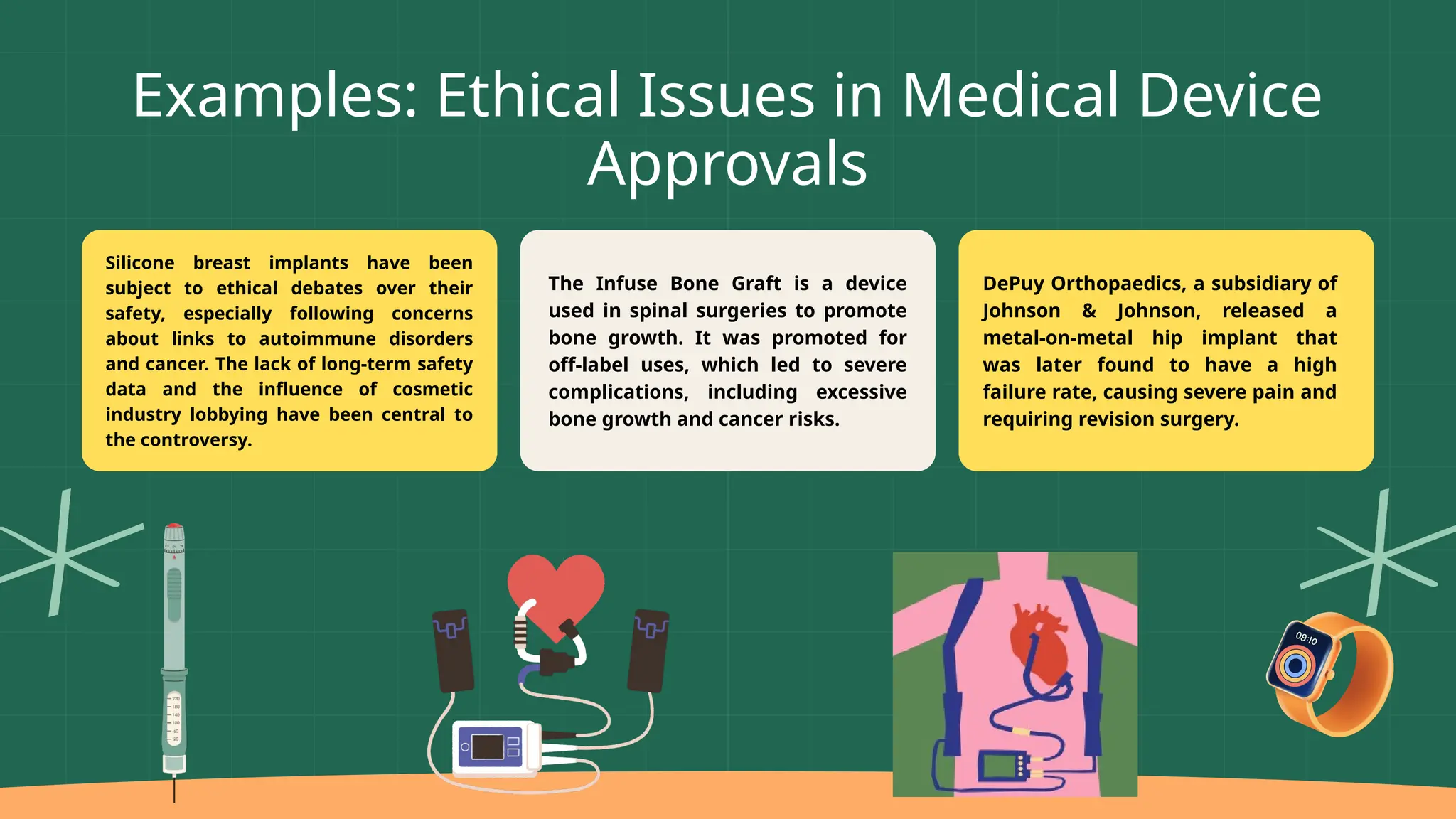
Silicone breast implants have been
subject to ethical debates over their
safety, especially following concerns
about links to autoimmune disorders
and cancer. The lack of long-term safety
data and the influence of cosmetic
industry lobbying have been central to
the controversy.
The Infuse Bone Graft is a device
used in spinal surgeries to promote
bone growth. It was promoted for
off-label uses, which led to severe
complications, including excessive
bone growth and cancer risks.
DePuy Orthopaedics, a subsidiary of
Johnson & Johnson, released a
metal-on-metal hip implant that
was later found to have a high
failure rate, causing severe pain and
requiring revision surgery.
Examples: Ethical Issues in Medical Device
Approvals
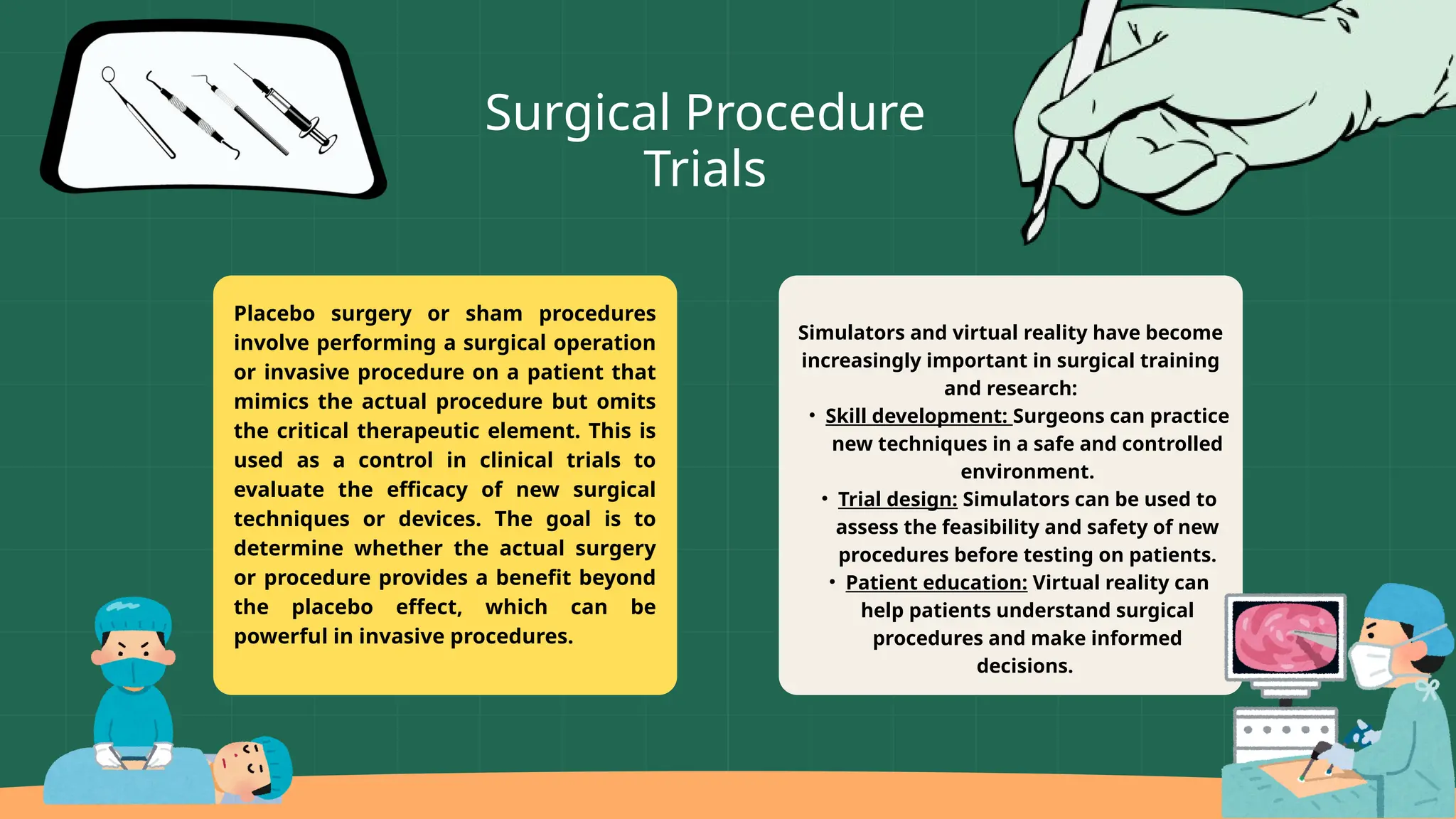
Simulators and virtual reality have become
increasingly important in surgical training
and research:
• Skill development: Surgeons can practice
new techniques in a safe and controlled
environment.
• Trial design: Simulators can be used to
assess the feasibility and safety of new
procedures before testing on patients.
• Patient education: Virtual reality can
help patients understand surgical
procedures and make informed
decisions.
Placebo surgery or sham procedures
involve performing a surgical operation
or invasive procedure on a patient that
mimics the actual procedure but omits
the critical therapeutic element. This is
used as a control in clinical trials to
evaluate the efficacy of new surgical
techniques or devices. The goal is to
determine whether the actual surgery
or procedure provides a benefit beyond
the placebo effect, which can be
powerful in invasive procedures.
Surgical Procedure
Trials
Trials involving radioactive materials necessitate stringent safety
protocols to protect both participants and research personnel:
Containment: Radioactive materials must be handled and
stored in specialized containment facilities to prevent leakage or
dispersal.
Personal Protective Equipment (PPE): Researchers and
healthcare providers must wear appropriate PPE, including lead
aprons, gloves, and masks.
Dosimetry: Regular monitoring of radiation exposure is
essential to track cumulative doses for individuals involved in the
trial.
Emergency Preparedness: Clear emergency plans should be in
place to address accidental spills, contamination, or
overexposure.
Waste Management: Proper disposal of radioactive waste is
crucial to prevent environmental contamination.
Trials Involving Radioactive
Materials
Definition: Radiopharmaceuticals are
radioactive compounds used in the
diagnosis and treatment of diseases,
particularly in nuclear medicine. They are
used for imaging, such as in PET and SPECT
scans, or for therapeutic purposes, such as
treating certain types of cancer (e.g., using
radioactive iodine in thyroid cancer).
Purpose in Trials: Clinical trials involving
radiopharmaceuticals aim to assess their
safety, efficacy, biodistribution, dosimetry,
and therapeutic benefits. These trials are
crucial for determining how these
compounds behave in the body, how
effectively they target specific tissues, and
the potential risks they pose.
Iodine-131 is used to ablate
(destroy) residual thyroid tissue and
metastatic thyroid cancer after
surgery. Clinical trials have been
conducted to optimize dosing,
improve efficacy, and minimize side
effects.
Trials Involving Radiopharmaceuticals
Ethical Issues in Organ Donation and Allocation
Organ transplantation is a critical medical intervention that saves lives,
but it raises complex ethical dilemmas:
• Organ Shortage: The persistent shortage of organs leads to
difficult decisions about who receives transplants.
• Allocation Criteria: Determining fair and equitable criteria for
organ allocation is challenging, considering factors like
medical urgency, blood type, tissue matching, and geographic
location.
• Financial Incentives: The ethics of compensating organ donors
has been debated, with concerns about exploitation and
coercion.
• Underrepresented Donors: Addressing disparities in organ
donation rates among different racial and ethnic groups is
crucial.
The Transplantation of Human Organs & Tissues Act (THOTA), 1994
provides for regulation of removal, storage and transplantation of
human organs & tissues for therapeutic purposes and for
prevention of commercial dealings in human organs & tissues.
Safety and Efficacy of Transplantation
Transplantation involves significant risks and
challenges:
• Immunosuppression: Patients undergoing
transplantation require lifelong
immunosuppression to prevent organ rejection,
increasing the risk of infections.
• Surgical Complications: Transplantation
procedures carry inherent surgical risks, including
bleeding, infection, and graft failure.
• Long-Term Outcomes: Assessing the long-term
safety and efficacy of transplanted organs is crucial
to optimize patient care.
Stem Cell Research Ethics
Stem cell research holds immense promise for treating various diseases but
also raises ethical concerns:
Embryonic Stem Cells: The use of embryonic stem cells involves ethical
debates about the status of the embryo.
Induced Pluripotent Stem Cells (iPSCs): While iPSCs offer an alternative to
embryonic stem cells, their safety and efficacy in clinical applications
require further investigation.
Therapeutic vs. Reproductive Cloning: Distinguishing between
therapeutic and reproductive cloning is essential to maintain ethical
boundaries.
Transplantation and stem cell therapy offer hope for patients with life-
threatening conditions but also carry risks:
Benefits: Improved quality of life, increased life expectancy, and potential
cures for previously incurable diseases.
Risks: Surgical complications, graft rejection, infection, and the potential for
long-term side effects.
THANK
YOU

Presentation on Clinical Trials: A Balancing Act

  • 1.
    Clinical Trials: ABalancing Act Presentation By Dr. Muhamed Farhaan
  • 2.
    Definition of ClinicalTrials • Clinical trials are research studies that test new medical interventions in people. These interventions can include drugs, vaccines, medical devices, surgical procedures, or behavioral treatments. • They are designed to determine if a new treatment is safe and effective, and to gather information about its side effects.
  • 3.
    • Public HealthImpact: Successful clinical trials can lead to the development of public health interventions that prevent diseases and improve overall health. • Economic Benefits: The development of new medical treatments can create jobs and stimulate economic growth. • New Treatments and Cures: Clinical trials are the primary way to develop new drugs, vaccines, and medical devices that can improve or save lives. • Improved Patient Care: By testing new treatments, researchers can identify the most effective and safest options for patients. • Advancement of Medical Knowledge: Clinical trials contribute to our understanding of diseases and how the human body responds to different treatments. Importance of Clinical Trials in Medical Advancement
  • 4.
    Phases of ClinicalTrials Clinical trials are typically divided into four phases to systematically evaluate a new medical intervention. Clinical trials are essential for developing new and improved treatments for various diseases and conditions.
  • 5.
    Phase I • Purpose:To determine the safety of a new drug or treatment. • Participants: A small group of healthy volunteers or patients with the target disease. • Focus: Identifying side effects, determining safe dosage ranges, and understanding how the drug is absorbed, distributed, metabolized, and excreted (pharmacokinetics). • Purpose: To assess the drug's effectiveness and to further evaluate its safety. • Participants: A larger group of patients with the target disease. • Focus: Determining if the drug works, identifying side effects, and refining dosage. Phase II
  • 6.
    Phase III • Purpose:To confirm the drug's effectiveness, monitor side effects, and compare it to standard treatments. • Participants: A large group of patients with the target disease. • Focus: Gathering data on efficacy, safety, and optimal dosage for regulatory approval. • Purpose: To monitor the drug's long-term safety and effectiveness after it has been approved and marketed. • Participants: Patients who use the drug in real-world conditions. • Focus: Identifying rare side effects, studying the drug's benefits and risks in different populations, and collecting additional information. Phase IV
  • 7.
  • 8.
    Placebo-Controlled Trials A placebo isa substance that has no therapeutic effect, often a sugar pill or saline solution. In a placebo-controlled trial, participants are randomly assigned to receive either the experimental drug or a placebo. This design helps to minimize bias and accurately assess the drug's efficacy.
  • 9.
    Randomization and Blinding • Randomization:Participants are assigned to treatment groups (drug or placebo) randomly to ensure equal distribution of potential confounding factors. • Blinding: To prevent bias, participants and researchers may be blinded to the treatment assignment. In a single- blind study, participants are unaware of their group, while in a double-blind study, both participants and researchers are unaware.
  • 10.
    Safety Monitoring andAdverse Events Throughout a clinical trial, rigorous safety monitoring is conducted to identify and assess adverse events (unwanted side effects). This involves collecting and analyzing data on participants' health and well-being. Even after a drug is approved, its safety and effectiveness continue to be monitored through post-market surveillance. This involves collecting data from healthcare providers and patients to identify any new or unexpected risks.
  • 11.
    Tuskegee Syphilis Study Astudy conducted on African American men from 1932 to 1972, where participants were misled and not treated for syphilis, even after penicillin became available. Ethical Breach: Lack of informed consent, deception, and racial exploitation. Impact: Led to stricter regulations on informed consent and the establishment of Institutional Review Boards (IRBs).
  • 12.
    Thalidomide Tragedy • Thalidomide,prescribed to pregnant women in the 1950s, caused severe birth defects due to inadequate pre-market testing. • Ethical Breach: Insufficient testing and lack of regulatory oversight. • Impact: Resulted in significant reforms in drug testing and approval processes.
  • 13.
    Vioxx Controversy Vioxx, anNSAID approved in 1999, was linked to heart attacks and strokes, with evidence that the manufacturer suppressed this information. • Ethical Breach: Data suppression and potential conflicts of interest in clinical research. Impact: Led to greater scrutiny of pharmaceutical practices and improved transparency in clinical trial data.
  • 14.
    VACCINE TRIALS Challenges inVaccine Development Developing a successful vaccine is a complex and time-consuming process, fraught with challenges: • Understanding the Pathogen: A deep understanding of the target pathogen's structure, behavior, and immune response is essential. • Immune Response: Eliciting a protective immune response is challenging, as it requires balancing the generation of antibodies and T cells. • Safety: Ensuring the vaccine is safe for all populations, including vulnerable groups, is paramount. • Efficacy: Demonstrating the vaccine's effectiveness in preventing disease or reducing its severity is crucial. • Manufacturing and Distribution: Scaling up vaccine production and ensuring equitable distribution are logistical hurdles.
  • 15.
    VACCINE TRIALS Immunogenicity andEfficacy Assessment • Immunogenicity: This measures the vaccine's ability to trigger an immune response, producing antibodies and T cells. • Efficacy: This determines the vaccine's effectiveness in preventing disease or reducing its severity. It is assessed through clinical trials comparing vaccinated and unvaccinated groups.
  • 16.
    Covishield: India's COVID-19Vaccine Covishield is a COVID-19 vaccine manufactured by the Serum Institute of India (SII) under license from AstraZeneca. It is essentially a variant of the AstraZeneca-Oxford COVID-19 vaccine. Key Points about Covishield • Technology: Uses a viral vector platform, where a weakened adenovirus (a common cold virus) is used as a carrier for the SARS-CoV-2 spike protein. • Dosage: Typically administered in two doses, with a gap of 4-6 weeks between doses. • Efficacy: Similar to the AstraZeneca vaccine, Covishield has shown good efficacy in preventing severe COVID-19 disease and hospitalization. • Safety: Like any vaccine, Covishield can cause side effects, but most are mild and temporary. However, the rare blood clotting disorder, VITT (Vaccine-Induced Immune Thrombotic Thrombocytopenia), has been linked to the AstraZeneca vaccine and, by extension, Covishield. • Role in India's Vaccination Drive: Covishield was a cornerstone of India's mass vaccination program, helping to curb the spread of COVID-19. Covishield and VITT As mentioned, Covishield has been associated with the rare blood clotting disorder, VITT. It's important to note that the risk of VITT is extremely low, and the benefits of vaccination far outweigh the risks for most people.
  • 17.
    • Definition: Medicaldevice trials are clinical studies conducted to evaluate the safety, efficacy, and overall performance of medical devices such as pacemakers, stents, implants, and diagnostic tools. • Purpose: These trials are essential to ensure that medical devices perform as intended, are safe for patient use, and provide therapeutic or diagnostic benefits. They are typically required before a device can be approved for widespread use. Medical Device Trials
  • 18.
    • Complexity ofendpoints: Evaluating the effectiveness of a medical device often requires complex endpoints that measure improvements in patient outcomes, quality of life, or functional status. • Device-specific expertise: Conducting device trials necessitates specialized investigators, technicians, and data analysts with expertise in the specific device and its intended use. • Manufacturing variability: Unlike drugs, medical devices are physical objects subject to manufacturing variability, which can impact trial outcomes. • Ethical considerations: Unique ethical concerns arise, such as the potential for device malfunction or implantation complications. Unique Challenges of Device Trials
  • 19.
    Equivalence trials: Theseaim to demonstrate that a new device is equally effective as an established standard of care. They are often used for devices with similar intended uses. Superiority trials: These aim to prove that a new device is better than the existing standard of care. They are more challenging to conduct and require larger sample sizes. Regulatory Standards: Regulatory bodies like the FDA in the U.S. and the CE mark in Europe set strict standards for the approval of medical devices, requiring evidence from clinical trials that demonstrate both safety and efficacy. Device Safety and Efficacy
  • 20.
    Silicone breast implantshave been subject to ethical debates over their safety, especially following concerns about links to autoimmune disorders and cancer. The lack of long-term safety data and the influence of cosmetic industry lobbying have been central to the controversy. The Infuse Bone Graft is a device used in spinal surgeries to promote bone growth. It was promoted for off-label uses, which led to severe complications, including excessive bone growth and cancer risks. DePuy Orthopaedics, a subsidiary of Johnson & Johnson, released a metal-on-metal hip implant that was later found to have a high failure rate, causing severe pain and requiring revision surgery. Examples: Ethical Issues in Medical Device Approvals
  • 21.
    Simulators and virtualreality have become increasingly important in surgical training and research: • Skill development: Surgeons can practice new techniques in a safe and controlled environment. • Trial design: Simulators can be used to assess the feasibility and safety of new procedures before testing on patients. • Patient education: Virtual reality can help patients understand surgical procedures and make informed decisions. Placebo surgery or sham procedures involve performing a surgical operation or invasive procedure on a patient that mimics the actual procedure but omits the critical therapeutic element. This is used as a control in clinical trials to evaluate the efficacy of new surgical techniques or devices. The goal is to determine whether the actual surgery or procedure provides a benefit beyond the placebo effect, which can be powerful in invasive procedures. Surgical Procedure Trials
  • 22.
    Trials involving radioactivematerials necessitate stringent safety protocols to protect both participants and research personnel: Containment: Radioactive materials must be handled and stored in specialized containment facilities to prevent leakage or dispersal. Personal Protective Equipment (PPE): Researchers and healthcare providers must wear appropriate PPE, including lead aprons, gloves, and masks. Dosimetry: Regular monitoring of radiation exposure is essential to track cumulative doses for individuals involved in the trial. Emergency Preparedness: Clear emergency plans should be in place to address accidental spills, contamination, or overexposure. Waste Management: Proper disposal of radioactive waste is crucial to prevent environmental contamination. Trials Involving Radioactive Materials
  • 23.
    Definition: Radiopharmaceuticals are radioactivecompounds used in the diagnosis and treatment of diseases, particularly in nuclear medicine. They are used for imaging, such as in PET and SPECT scans, or for therapeutic purposes, such as treating certain types of cancer (e.g., using radioactive iodine in thyroid cancer). Purpose in Trials: Clinical trials involving radiopharmaceuticals aim to assess their safety, efficacy, biodistribution, dosimetry, and therapeutic benefits. These trials are crucial for determining how these compounds behave in the body, how effectively they target specific tissues, and the potential risks they pose. Iodine-131 is used to ablate (destroy) residual thyroid tissue and metastatic thyroid cancer after surgery. Clinical trials have been conducted to optimize dosing, improve efficacy, and minimize side effects. Trials Involving Radiopharmaceuticals
  • 24.
    Ethical Issues inOrgan Donation and Allocation Organ transplantation is a critical medical intervention that saves lives, but it raises complex ethical dilemmas: • Organ Shortage: The persistent shortage of organs leads to difficult decisions about who receives transplants. • Allocation Criteria: Determining fair and equitable criteria for organ allocation is challenging, considering factors like medical urgency, blood type, tissue matching, and geographic location. • Financial Incentives: The ethics of compensating organ donors has been debated, with concerns about exploitation and coercion. • Underrepresented Donors: Addressing disparities in organ donation rates among different racial and ethnic groups is crucial. The Transplantation of Human Organs & Tissues Act (THOTA), 1994 provides for regulation of removal, storage and transplantation of human organs & tissues for therapeutic purposes and for prevention of commercial dealings in human organs & tissues.
  • 25.
    Safety and Efficacyof Transplantation Transplantation involves significant risks and challenges: • Immunosuppression: Patients undergoing transplantation require lifelong immunosuppression to prevent organ rejection, increasing the risk of infections. • Surgical Complications: Transplantation procedures carry inherent surgical risks, including bleeding, infection, and graft failure. • Long-Term Outcomes: Assessing the long-term safety and efficacy of transplanted organs is crucial to optimize patient care.
  • 26.
    Stem Cell ResearchEthics Stem cell research holds immense promise for treating various diseases but also raises ethical concerns: Embryonic Stem Cells: The use of embryonic stem cells involves ethical debates about the status of the embryo. Induced Pluripotent Stem Cells (iPSCs): While iPSCs offer an alternative to embryonic stem cells, their safety and efficacy in clinical applications require further investigation. Therapeutic vs. Reproductive Cloning: Distinguishing between therapeutic and reproductive cloning is essential to maintain ethical boundaries. Transplantation and stem cell therapy offer hope for patients with life- threatening conditions but also carry risks: Benefits: Improved quality of life, increased life expectancy, and potential cures for previously incurable diseases. Risks: Surgical complications, graft rejection, infection, and the potential for long-term side effects.
  • 27.