MODULE – 01
INTRODUCTION TO
BUSINESS ENVIRONMENT
Meaning of business:
A business is defined as an organisation or enterprising entity
engaged in commercial, industrial or professional activities.
In simple words, it also refers to an economic system in which
goods and services are exchanged for one another or money, on
the basis of their perceived worth.
Scope of business
1. Improvement in standard of living.
2. Proper utilization of resources.
3. Better quality and large variety of goods and services.
4. Employment opportunities.
5. Workers welfare.
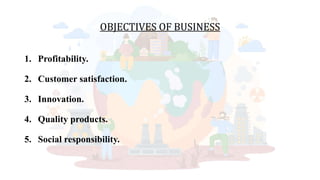
OBJECTIVES OF BUSINESS
1. Profitability.
2. Customer satisfaction.
3. Innovation.
4. Quality products.
5. Social responsibility.
Business environment
Business environment is an environment in which business is
carried out.
Business environment encompasses all those factors that affect a
company’s operations; including regulations, government
activities, the economy, demographics, social and cultural factors,
innovations and technological developments.
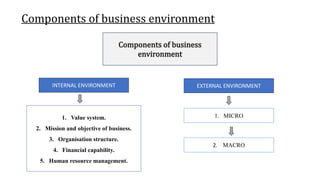
Components of business environment
INTERNAL ENVIRONMENT EXTERNAL ENVIRONMENT
1. MICRO
2. MACRO
1. Value system.
2. Mission and objective of business.
3. Organisation structure.
4. Financial capability.
5. Human resource management.
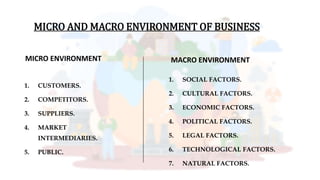
MICRO AND MACRO ENVIRONMENT OF BUSINESS
MICRO ENVIRONMENT
1. CUSTOMERS.
2. COMPETITORS.
3. SUPPLIERS.
4. MARKET
INTERMEDIARIES.
5. PUBLIC.
MACRO ENVIRONMENT
1. SOCIAL FACTORS.
2. CULTURAL FACTORS.
3. ECONOMIC FACTORS.
4. POLITICAL FACTORS.
5. LEGAL FACTORS.
6. TECHNOLOGICAL FACTORS.
7. NATURAL FACTORS.
Impact of micro and macro environment in
decision making
The micro environment, including factors like customers, suppliers, and
competitors, directly influences day-to-day business decisions. Understanding
customer preferences and staying competitive are crucial.
On the other hand, the macro environment, encompassing economic, social, and
political factors, shapes the overall business environment. Economic trends,
government policies, and societal shifts can impact strategic decisions and long-
term planning. Both micro and macro factors are integral for a comprehensive
business strategy.
Environmental Analysis
Meaning:
It is a systematic process that starts from identification of
environmental factors, assessing their nature and impact, auditing
them to find their impact to the business and making various profiles
for positioning a common process of environmental analysis or
scanning.
Process of environmental analysis
1. Scanning.
2. Monitoring.
3. Forecasting.
4. Assessing.
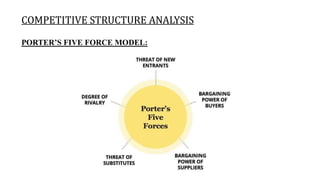
COMPETITIVE STRUCTURE ANALYSIS
PORTER’S FIVE FORCE MODEL:

Presentation on BE module 1_nep_bba_____

  • 1.
    MODULE – 01 INTRODUCTIONTO BUSINESS ENVIRONMENT
  • 2.
    Meaning of business: Abusiness is defined as an organisation or enterprising entity engaged in commercial, industrial or professional activities. In simple words, it also refers to an economic system in which goods and services are exchanged for one another or money, on the basis of their perceived worth.
  • 3.
    Scope of business 1.Improvement in standard of living. 2. Proper utilization of resources. 3. Better quality and large variety of goods and services. 4. Employment opportunities. 5. Workers welfare.
  • 4.
    OBJECTIVES OF BUSINESS 1.Profitability. 2. Customer satisfaction. 3. Innovation. 4. Quality products. 5. Social responsibility.
  • 5.
    Business environment Business environmentis an environment in which business is carried out. Business environment encompasses all those factors that affect a company’s operations; including regulations, government activities, the economy, demographics, social and cultural factors, innovations and technological developments.
  • 6.
    Components of businessenvironment INTERNAL ENVIRONMENT EXTERNAL ENVIRONMENT 1. MICRO 2. MACRO 1. Value system. 2. Mission and objective of business. 3. Organisation structure. 4. Financial capability. 5. Human resource management.
  • 7.
    MICRO AND MACROENVIRONMENT OF BUSINESS MICRO ENVIRONMENT 1. CUSTOMERS. 2. COMPETITORS. 3. SUPPLIERS. 4. MARKET INTERMEDIARIES. 5. PUBLIC. MACRO ENVIRONMENT 1. SOCIAL FACTORS. 2. CULTURAL FACTORS. 3. ECONOMIC FACTORS. 4. POLITICAL FACTORS. 5. LEGAL FACTORS. 6. TECHNOLOGICAL FACTORS. 7. NATURAL FACTORS.
  • 8.
    Impact of microand macro environment in decision making The micro environment, including factors like customers, suppliers, and competitors, directly influences day-to-day business decisions. Understanding customer preferences and staying competitive are crucial. On the other hand, the macro environment, encompassing economic, social, and political factors, shapes the overall business environment. Economic trends, government policies, and societal shifts can impact strategic decisions and long- term planning. Both micro and macro factors are integral for a comprehensive business strategy.
  • 9.
    Environmental Analysis Meaning: It isa systematic process that starts from identification of environmental factors, assessing their nature and impact, auditing them to find their impact to the business and making various profiles for positioning a common process of environmental analysis or scanning.
  • 10.
    Process of environmentalanalysis 1. Scanning. 2. Monitoring. 3. Forecasting. 4. Assessing.
  • 11.