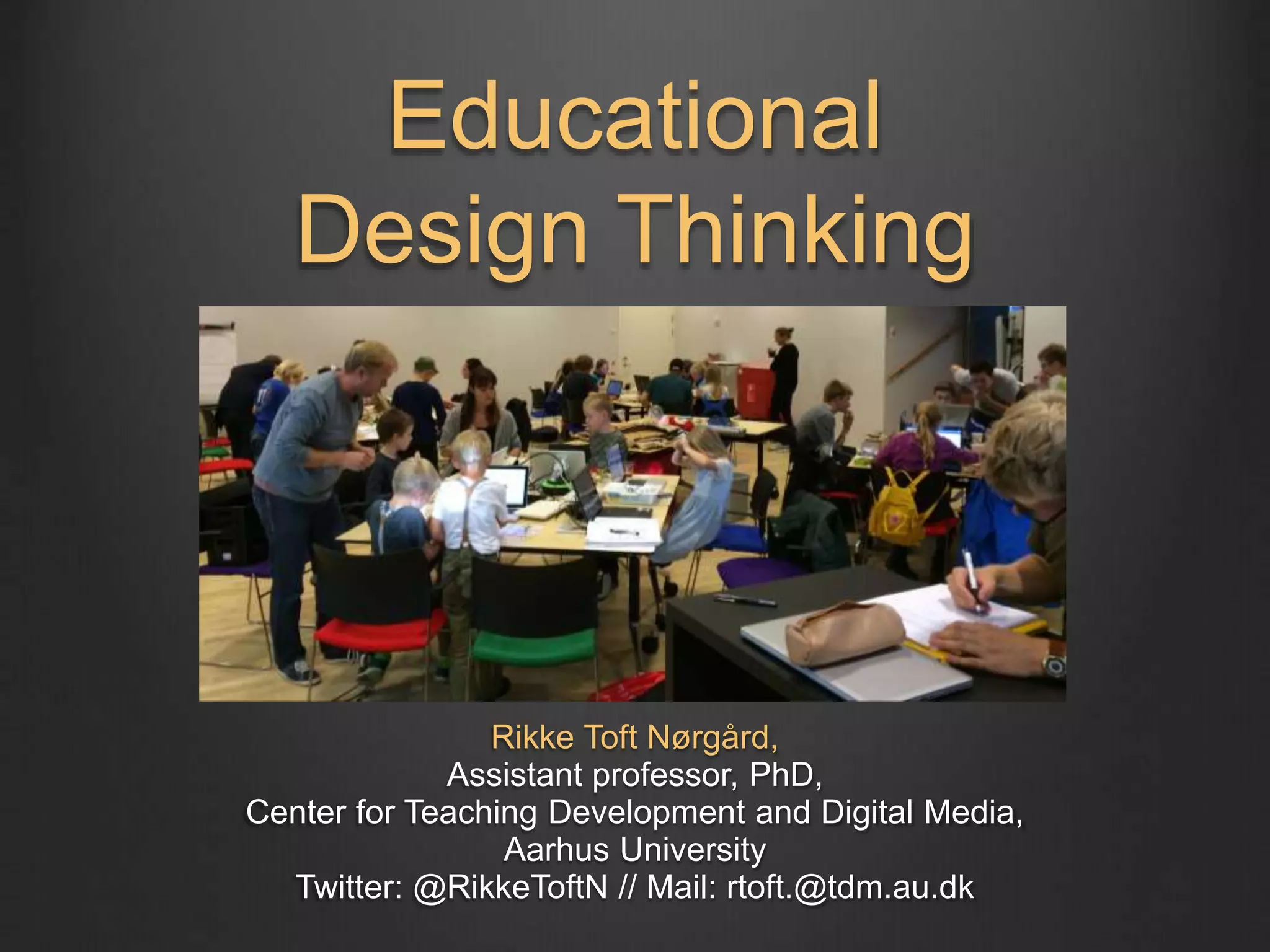
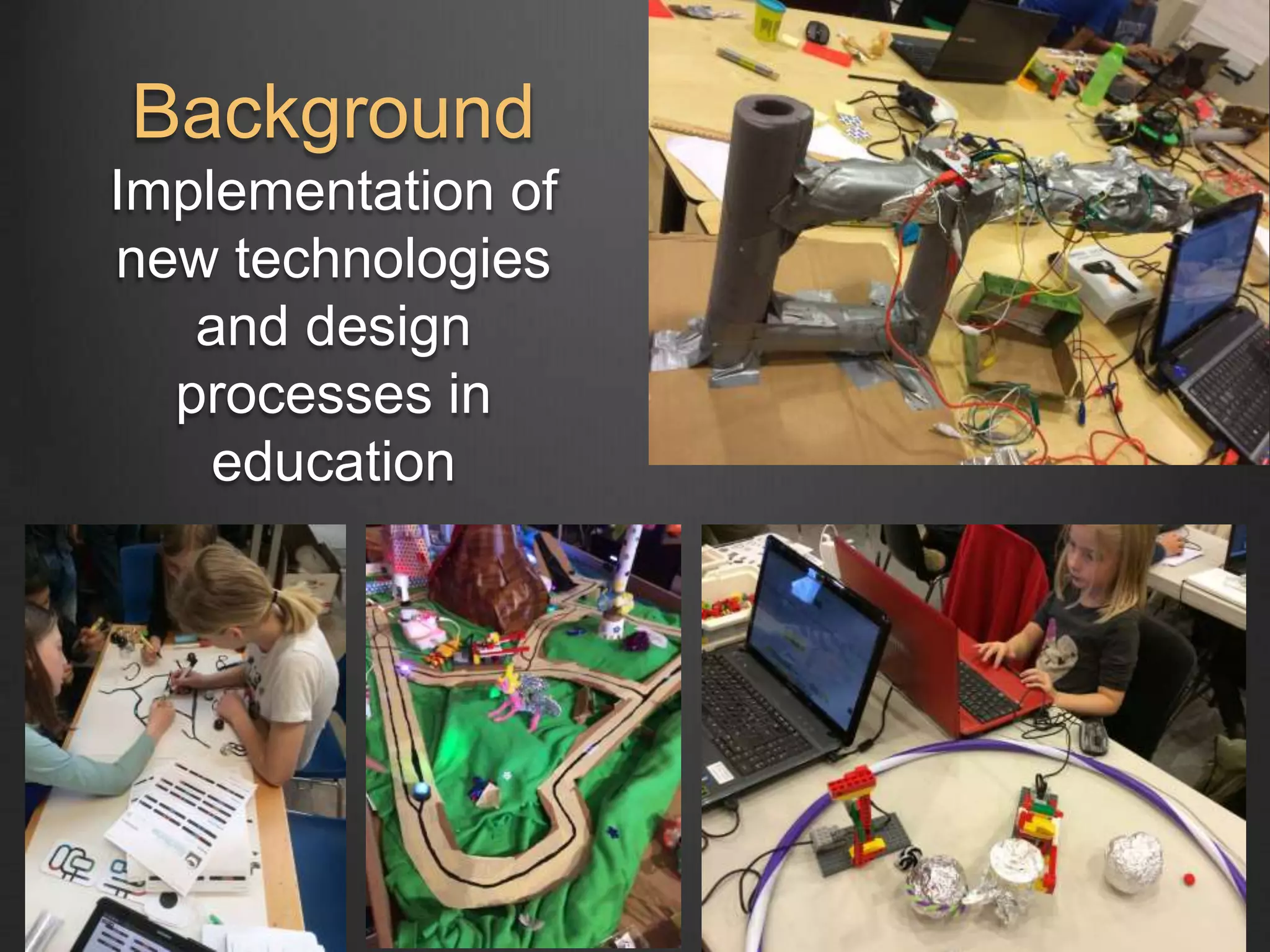
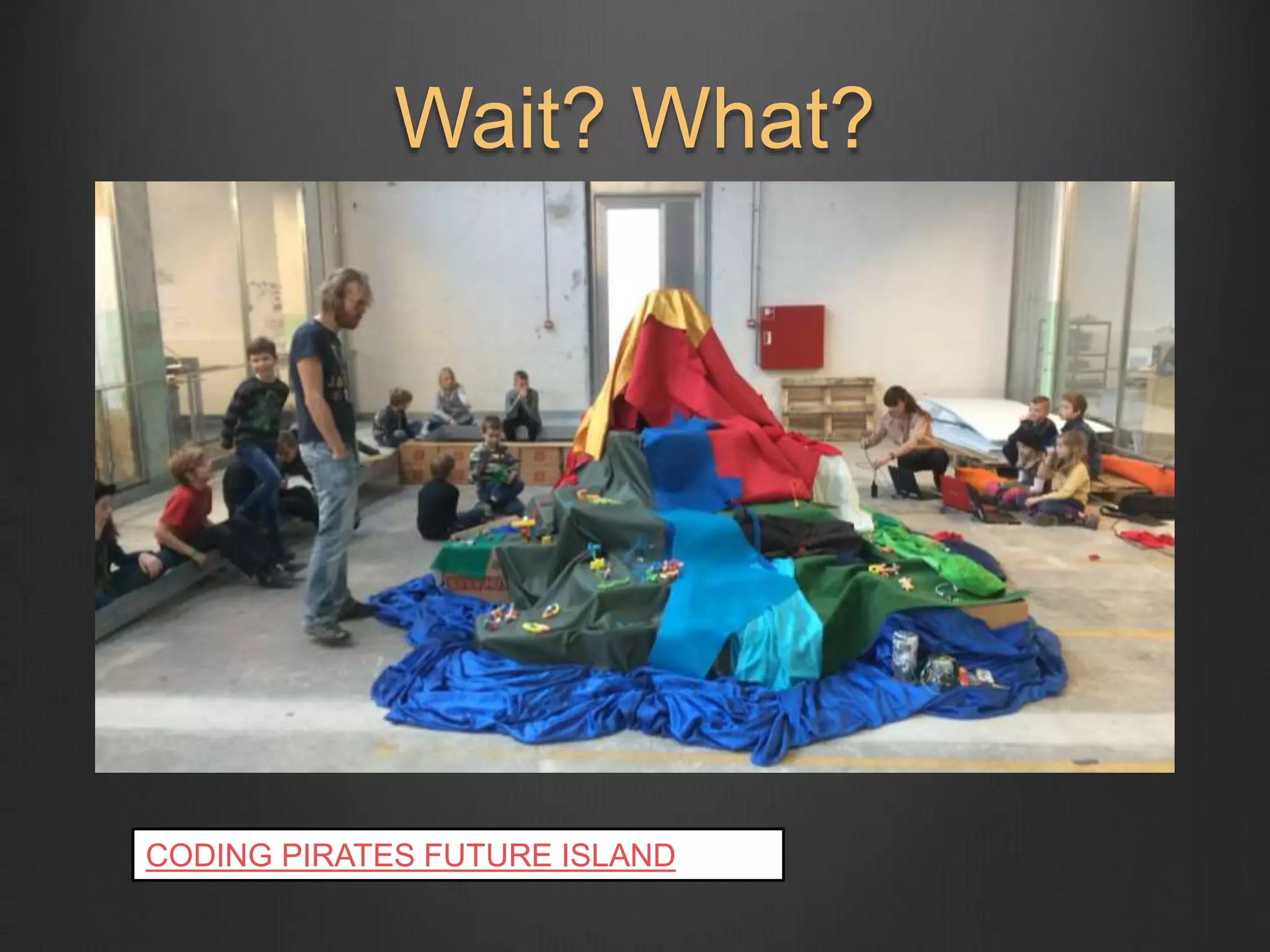
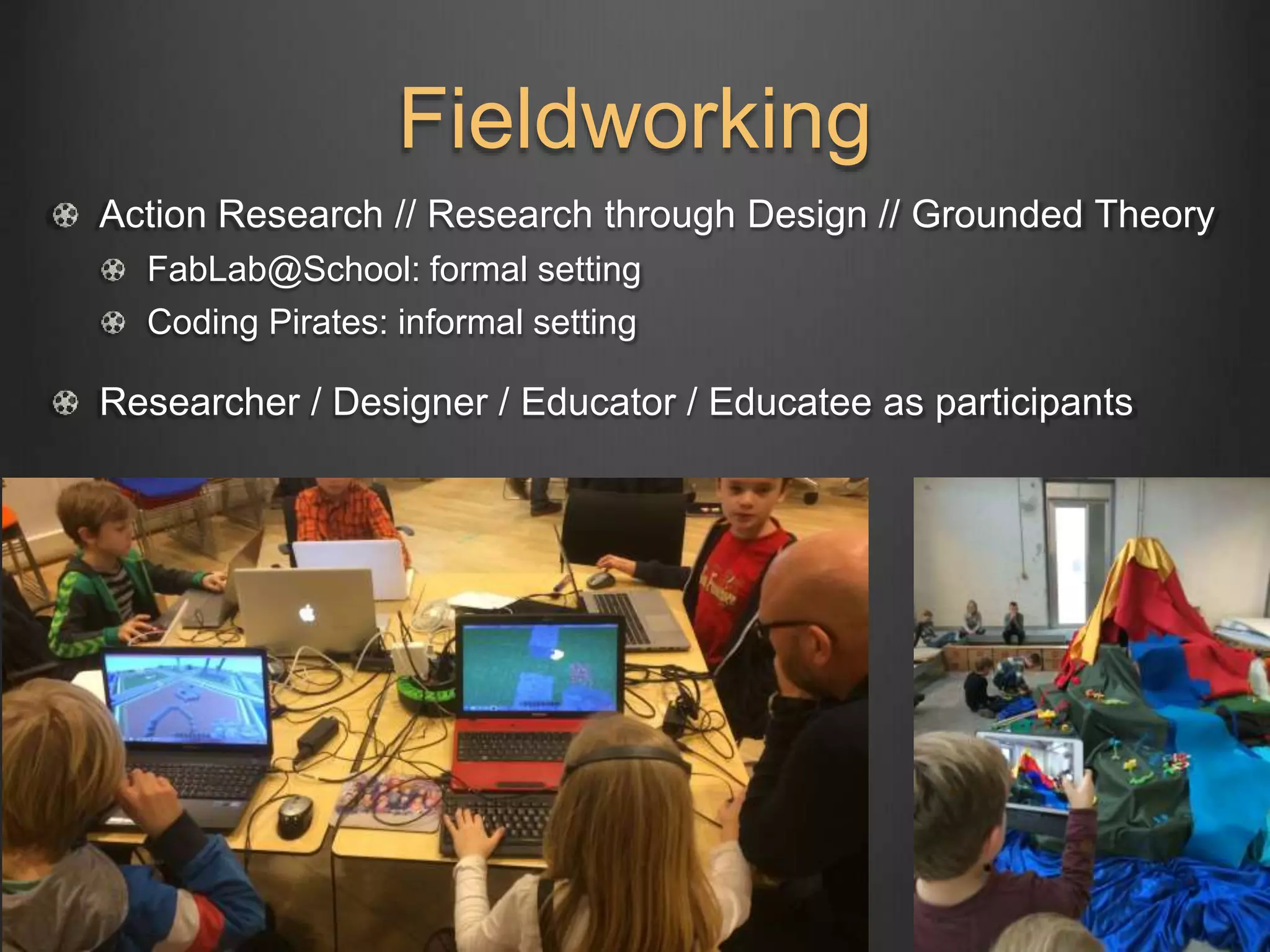
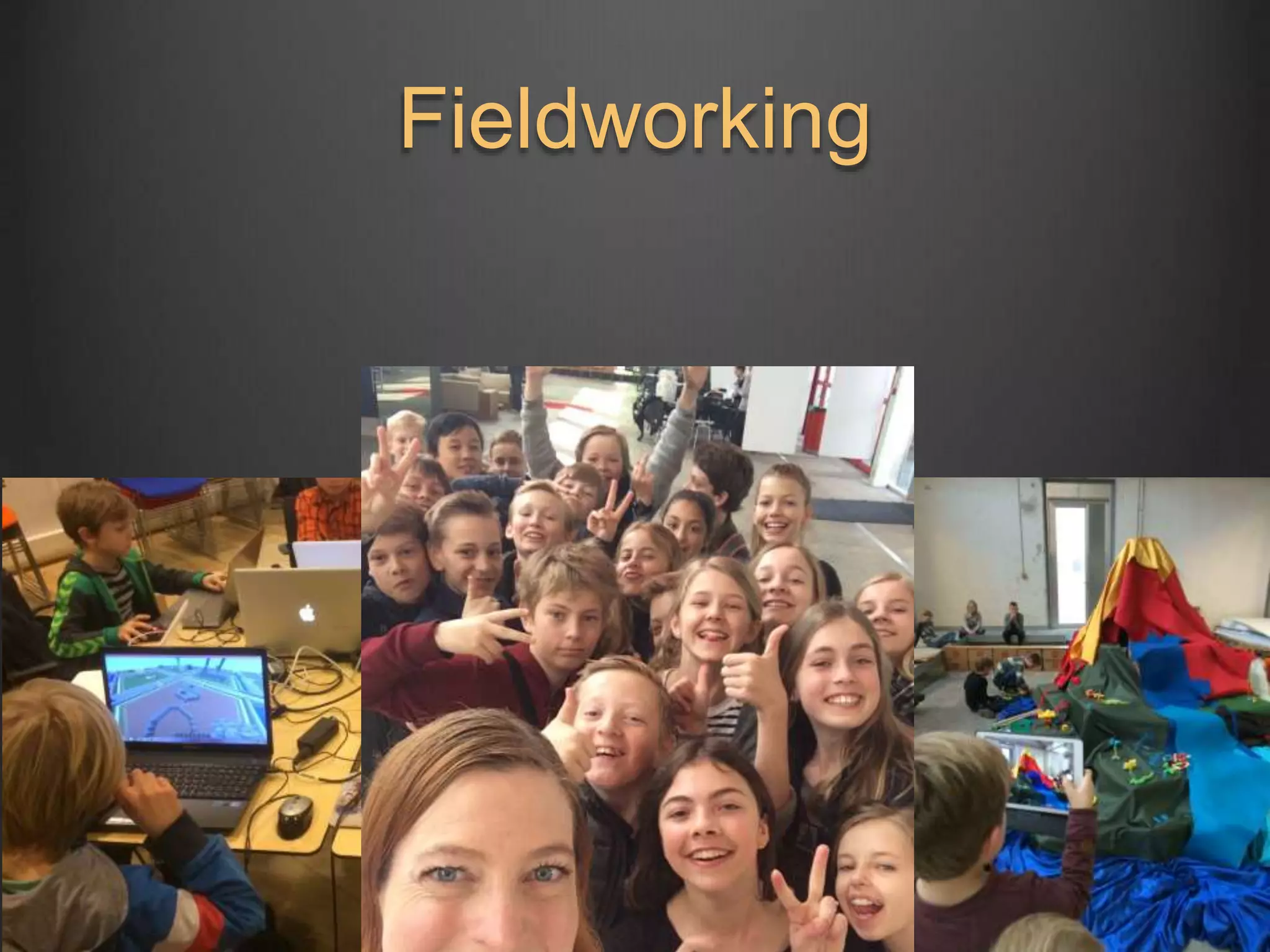
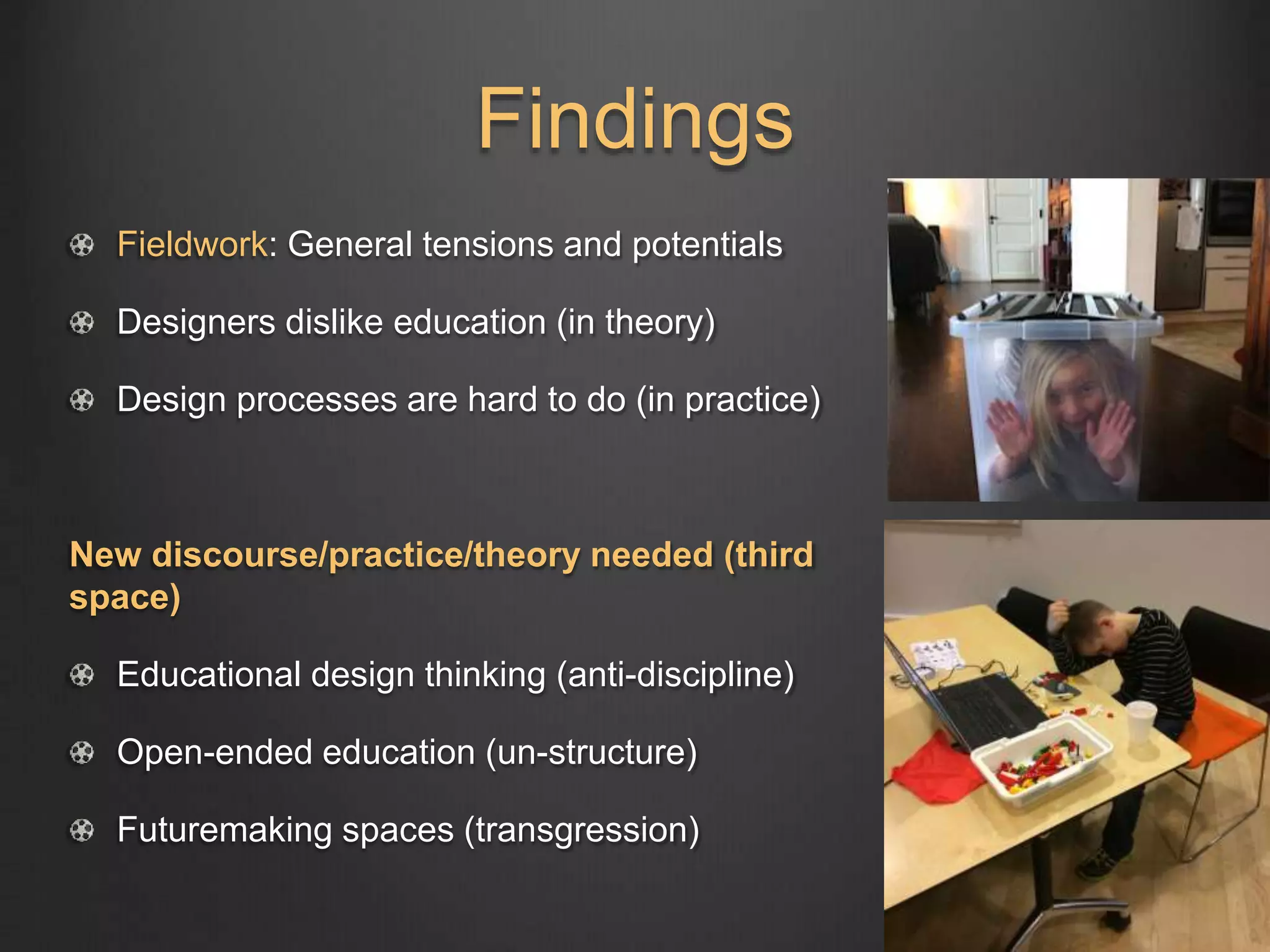
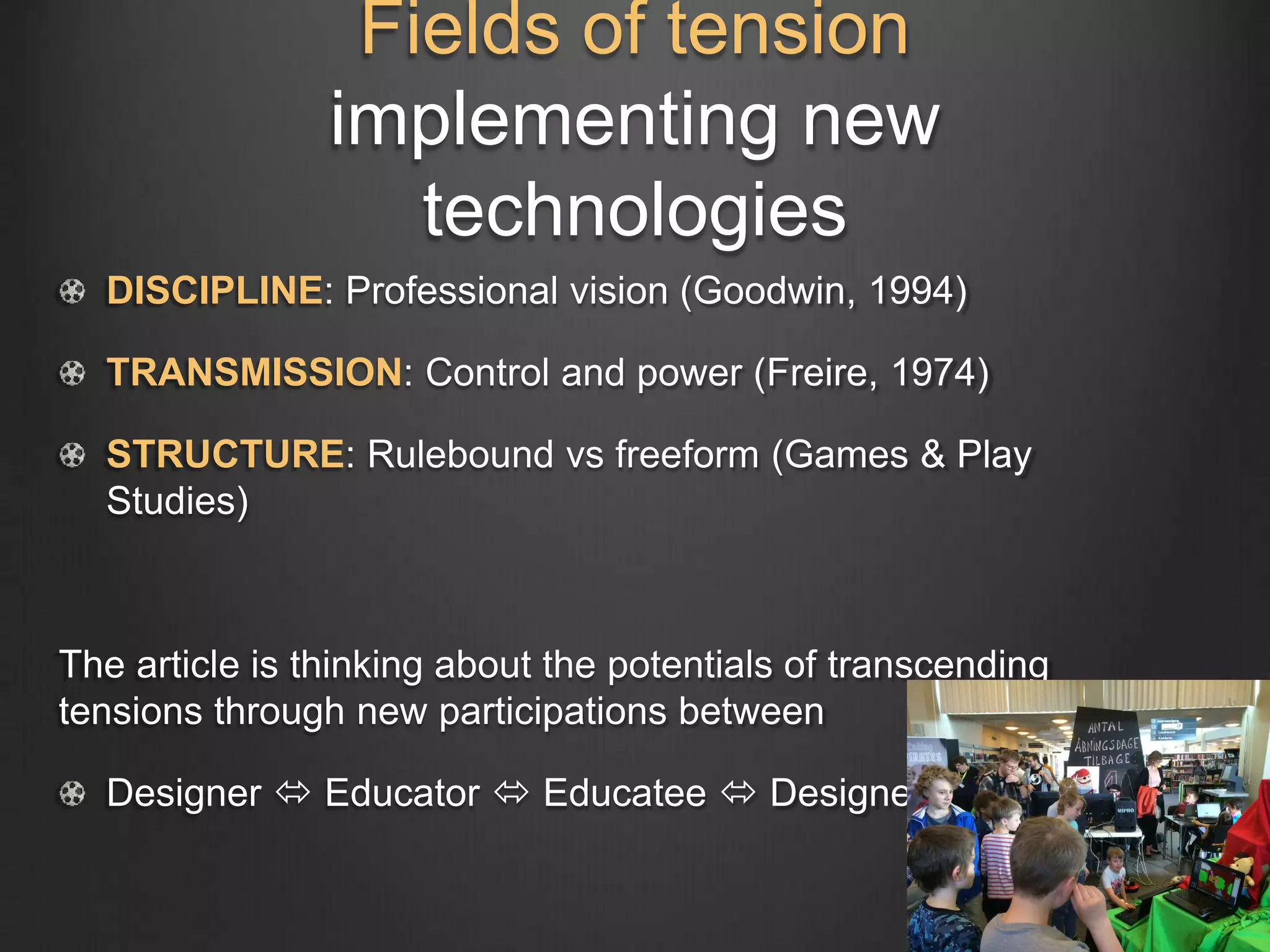
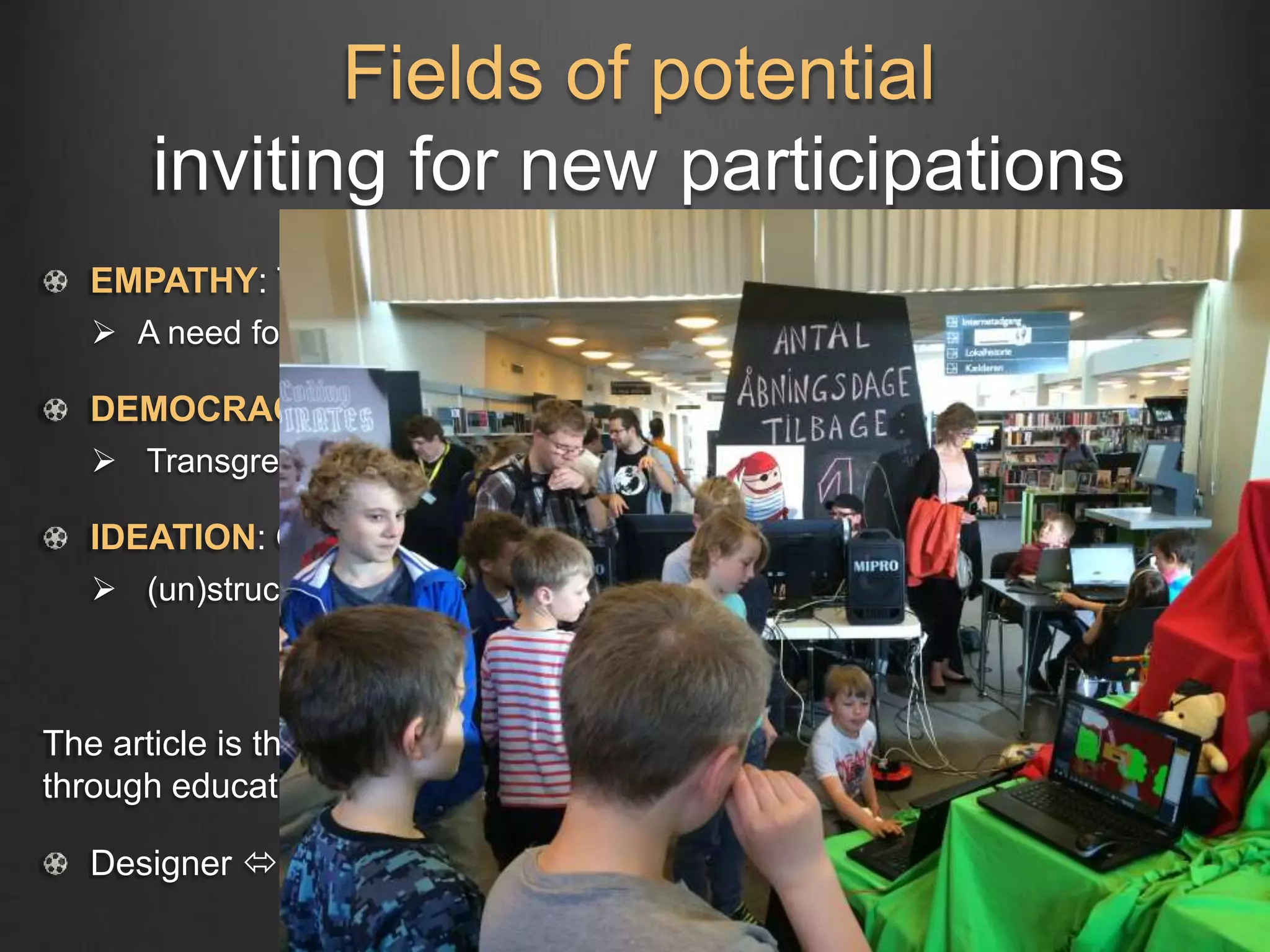

The document discusses implementing new technologies and design processes in education. It explores tensions between traditional education structures and more open-ended approaches through fieldwork at schools using coding and design. Key tensions include discipline vs empathy, transmission vs democracy, and structured vs unstructured learning. However, the author argues new participations between educators, students, and designers could help transcend these, through educational design thinking. This approach emphasizes empathy, democracy, and open-ended ideation to create future-making learning spaces. The author uses the example of Coding Pirates to explore how educational design thinking could support engagement, empowerment and emancipation with technology across ages. Overall, the document considers how design processes and participatory learning models could help develop


