Download to read offline



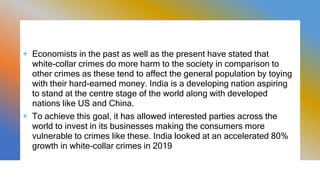
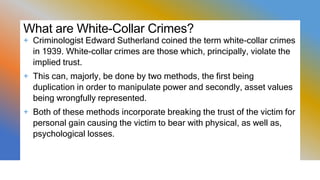
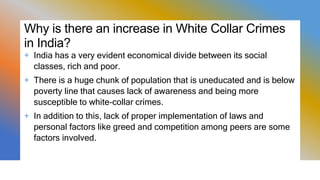
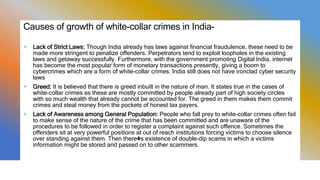

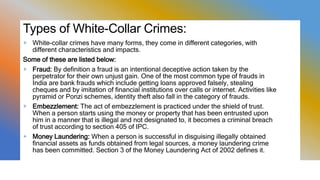
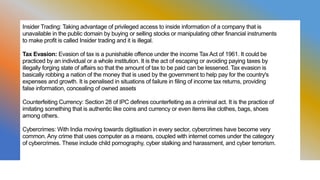
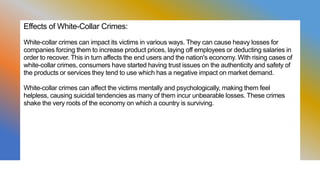
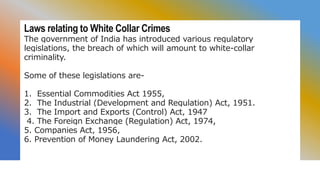
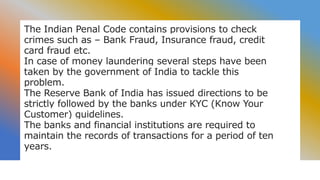
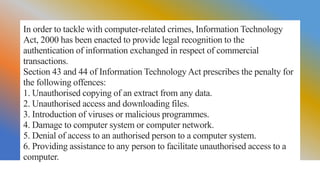


White-collar crimes, defined by criminologist Edward Sutherland in 1939, are non-violent crimes committed by individuals in power that severely impact the economy, especially in developing nations like India, where an economic divide and lack of stringent laws facilitate these offenses. Types of white-collar crimes include fraud, embezzlement, money laundering, insider trading, and tax evasion, which can have devastating economic and psychological effects on victims and lead to widespread distrust in financial systems. The Indian government has implemented various laws, yet challenges remain regarding enforcement and the loopholes that allow offenders to escape punishment.


![ECONOMIC AND FINANCIAL CRIMES [Autosaved].pptx](https://cdn.slidesharecdn.com/ss_thumbnails/economicandfinancialcrimesautosaved-240831075905-4826650f-thumbnail.jpg?width=640&height=640&fit=bounds)


