Living in the Amazon
Who lives in the Amazon rainforest?
How do they get their food?
Children in the Amazon
Do Boys and Girls go to school?
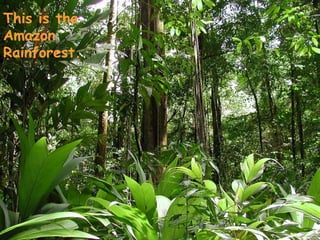
This is the
Amazon
Rainforest.
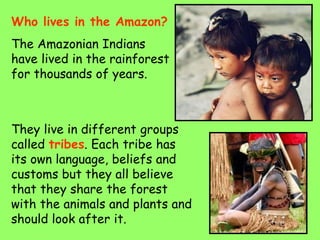
Who lives in the Amazon?
The Amazonian Indians
have lived in the rainforest
for thousands of years.
They live in different groups
called tribes. Each tribe has
its own language, beliefs and
customs but they all believe
that they share the forest
with the animals and plants and
should look after it.
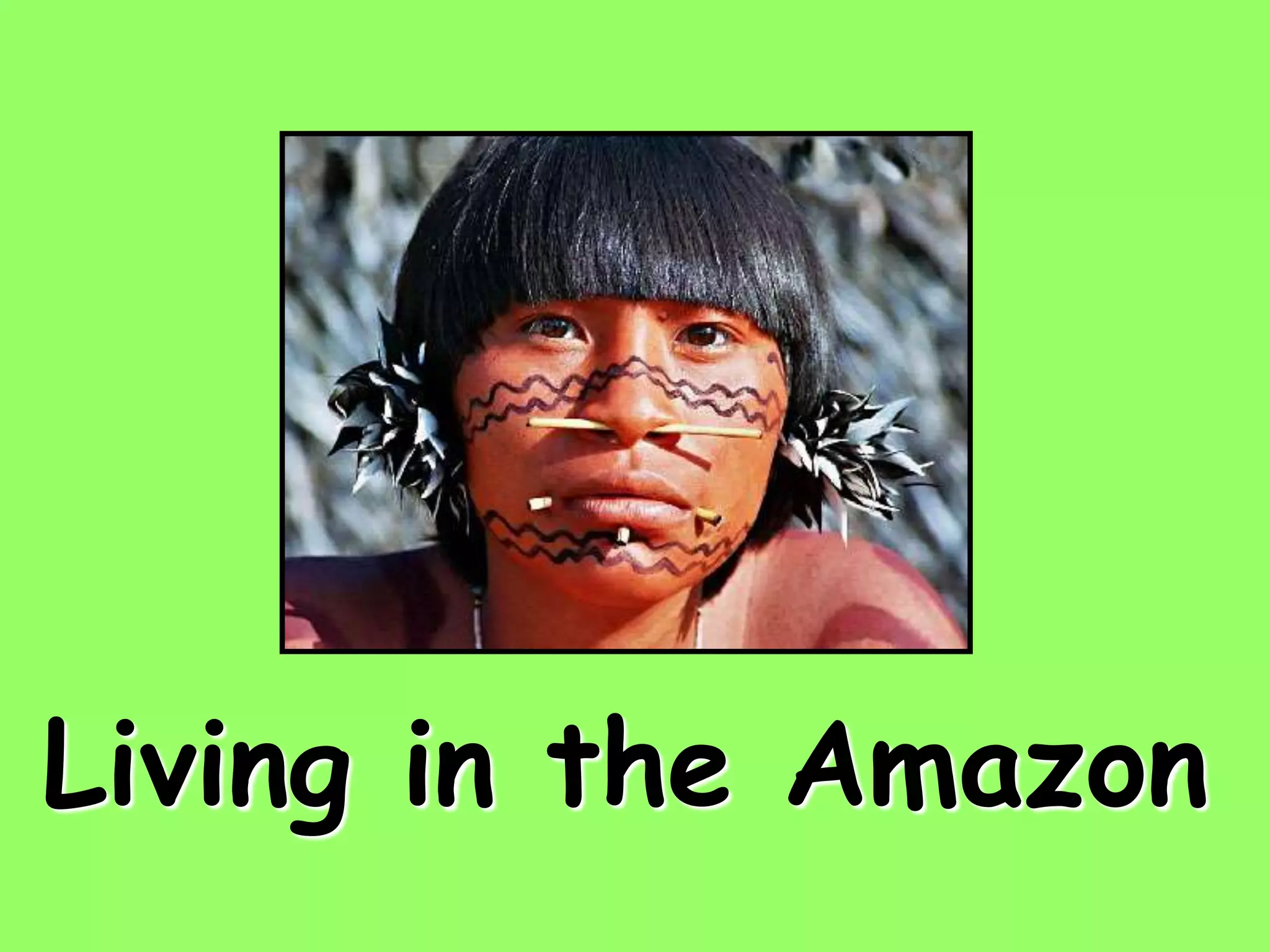
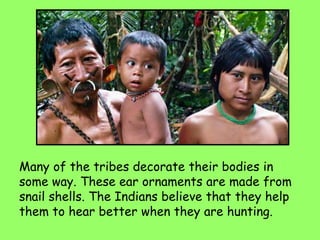
Many of the tribes decorate their bodies in
some way. These ear ornaments are made from
snail shells. The Indians believe that they help
them to hear better when they are hunting.
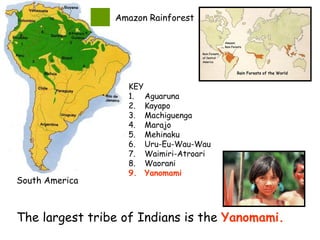
South America
Amazon Rainforest
KEY
1. Aguaruna
2. Kayapo
3. Machiguenga
4. Marajo
5. Mehinaku
6. Uru-Eu-Wau-Wau
7. Waimiri-Atroari
8. Waorani
9. Yanomami
The largest tribe of Indians is the Yanomami.
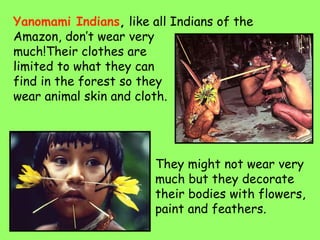
Yanomami Indians, like all Indians of the
Amazon, don’t wear very
much!Their clothes are
limited to what they can
find in the forest so they
wear animal skin and cloth.
They might not wear very
much but they decorate
their bodies with flowers,
paint and feathers.
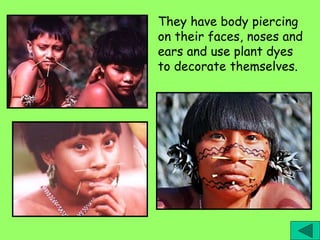
They have body piercing
on their faces, noses and
ears and use plant dyes
to decorate themselves.
How do they get their food?
Indians like the Yanomani eat
whatever they can find in the
Rainforest. The men and boys
hunt for food while the women
grow crops.
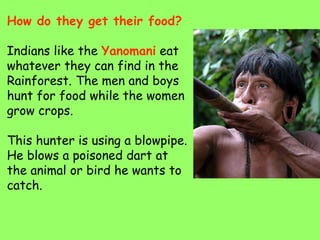
This hunter is using a blowpipe.
He blows a poisoned dart at
the animal or bird he wants to
catch.
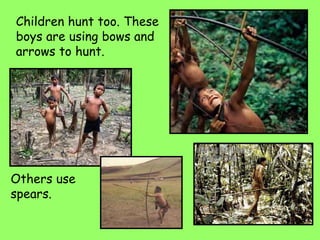
Children hunt too. These
boys are using bows and
arrows to hunt.
Others use
spears.
There are many different fruits and vegetables
grown in the rainforest and there are many
different wild animals and fish to catch and eat.
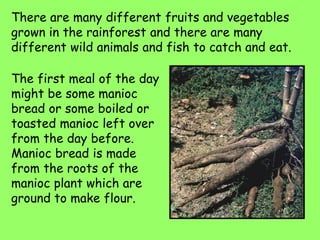
The first meal of the day
might be some manioc
bread or some boiled or
toasted manioc left over
from the day before.
Manioc bread is made
from the roots of the
manioc plant which are
ground to make flour.
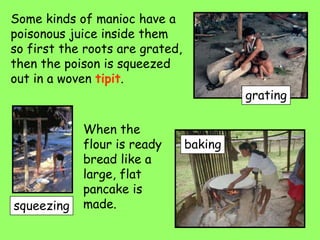
Some kinds of manioc have a
poisonous juice inside them
so first the roots are grated,
then the poison is squeezed
out in a woven tipit.
grating
squeezing
baking
When the
flour is ready
bread like a
large, flat
pancake is
made.
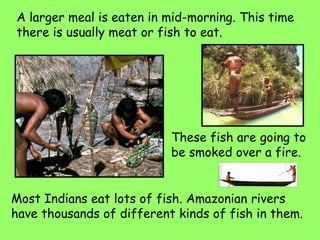
A larger meal is eaten in mid-morning. This time
there is usually meat or fish to eat.
Most Indians eat lots of fish. Amazonian rivers
have thousands of different kinds of fish in them.
These fish are going to
be smoked over a fire.
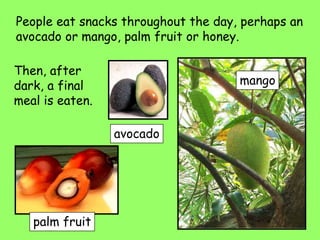
People eat snacks throughout the day, perhaps an
avocado or mango, palm fruit or honey.
Then, after
dark, a final
meal is eaten.
avocado
mango
palm fruit
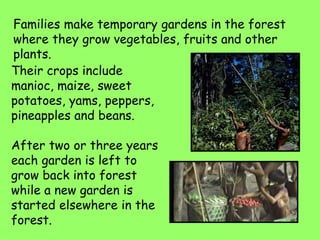
Families make temporary gardens in the forest
where they grow vegetables, fruits and other
plants.
Their crops include
manioc, maize, sweet
potatoes, yams, peppers,
pineapples and beans.
After two or three years
each garden is left to
grow back into forest
while a new garden is
started elsewhere in the
forest.
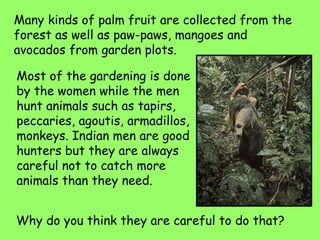
Many kinds of palm fruit are collected from the
forest as well as paw-paws, mangoes and
avocados from garden plots.
Most of the gardening is done
by the women while the men
hunt animals such as tapirs,
peccaries, agoutis, armadillos,
monkeys. Indian men are good
hunters but they are always
careful not to catch more
animals than they need.
Why do you think they are careful to do that?
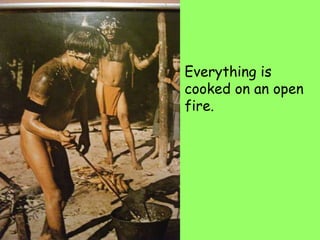
Everything is
cooked on an open
fire.
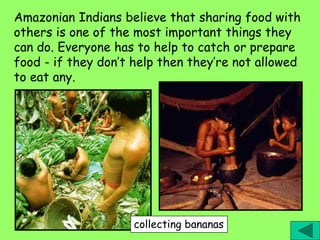
Amazonian Indians believe that sharing food with
others is one of the most important things they
can do. Everyone has to help to catch or prepare
food - if they don’t help then they’re not allowed
to eat any.
collecting bananas
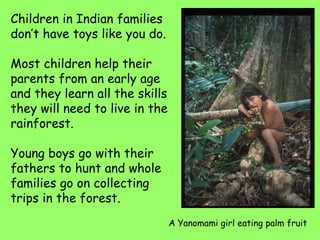
Children in Indian families
don’t have toys like you do.
Most children help their
parents from an early age
and they learn all the skills
they will need to live in the
rainforest.
Young boys go with their
fathers to hunt and whole
families go on collecting
trips in the forest.
A Yanomami girl eating palm fruit
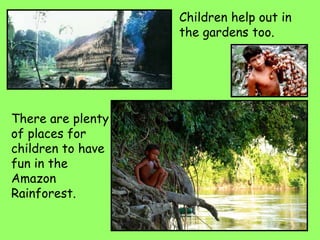
There are plenty
of places for
children to have
fun in the
Amazon
Rainforest.
Children help out in
the gardens too.
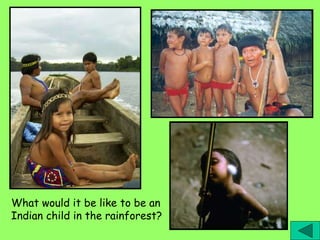
What would it be like to be an
Indian child in the rainforest?
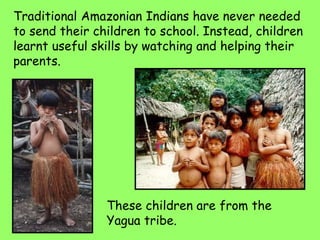
Traditional Amazonian Indians have never needed
to send their children to school. Instead, children
learnt useful skills by watching and helping their
parents.
These children are from the
Yagua tribe.
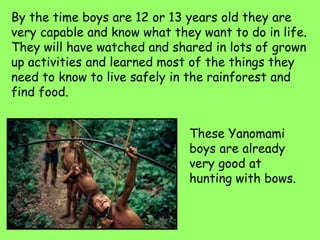
By the time boys are 12 or 13 years old they are
very capable and know what they want to do in life.
They will have watched and shared in lots of grown
up activities and learned most of the things they
need to know to live safely in the rainforest and
find food.
These Yanomami
boys are already
very good at
hunting with bows.
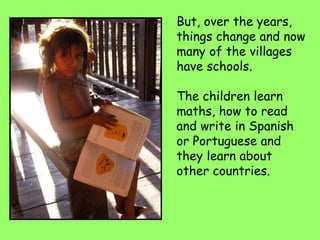
But, over the years,
things change and now
many of the villages
have schools.
The children learn
maths, how to read
and write in Spanish
or Portuguese and
they learn about
other countries.
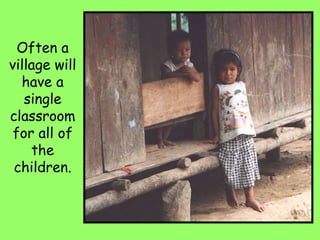
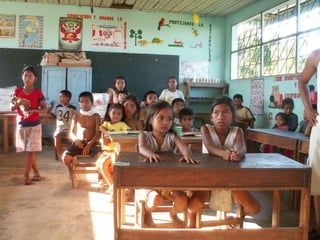
Often a
village will
have a
single
classroom
for all of
the
children.
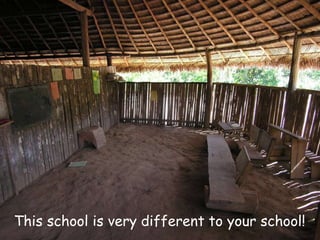
This school is very different to your school!
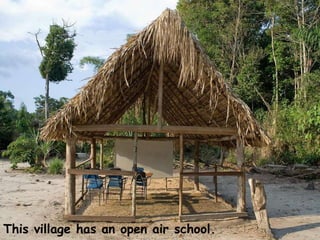
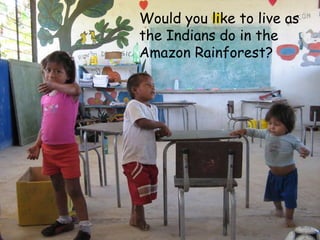
This village has an open air school.
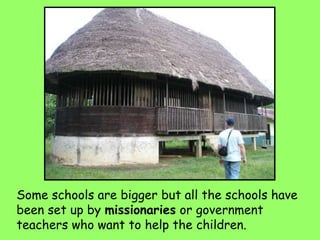
Some schools are bigger but all the schools have
been set up by missionaries or government
teachers who want to help the children.
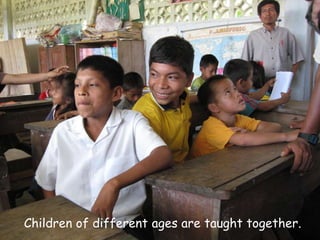
Children of different ages are taught together.
Would you like to live as
the Indians do in the
Amazon Rainforest?
www.ks1resources.co.uk

Powerpoint-Living-in-the-Amazon.ppt

  • 1.
  • 2.
    Who lives inthe Amazon rainforest? How do they get their food? Children in the Amazon Do Boys and Girls go to school?
  • 3.
  • 4.
    Who lives inthe Amazon? The Amazonian Indians have lived in the rainforest for thousands of years. They live in different groups called tribes. Each tribe has its own language, beliefs and customs but they all believe that they share the forest with the animals and plants and should look after it.
  • 5.
    Many of thetribes decorate their bodies in some way. These ear ornaments are made from snail shells. The Indians believe that they help them to hear better when they are hunting.
  • 6.
    South America Amazon Rainforest KEY 1.Aguaruna 2. Kayapo 3. Machiguenga 4. Marajo 5. Mehinaku 6. Uru-Eu-Wau-Wau 7. Waimiri-Atroari 8. Waorani 9. Yanomami The largest tribe of Indians is the Yanomami.
  • 7.
    Yanomami Indians, likeall Indians of the Amazon, don’t wear very much!Their clothes are limited to what they can find in the forest so they wear animal skin and cloth. They might not wear very much but they decorate their bodies with flowers, paint and feathers.
  • 8.
    They have bodypiercing on their faces, noses and ears and use plant dyes to decorate themselves.
  • 9.
    How do theyget their food? Indians like the Yanomani eat whatever they can find in the Rainforest. The men and boys hunt for food while the women grow crops. This hunter is using a blowpipe. He blows a poisoned dart at the animal or bird he wants to catch.
  • 10.
    Children hunt too.These boys are using bows and arrows to hunt. Others use spears.
  • 11.
    There are manydifferent fruits and vegetables grown in the rainforest and there are many different wild animals and fish to catch and eat. The first meal of the day might be some manioc bread or some boiled or toasted manioc left over from the day before. Manioc bread is made from the roots of the manioc plant which are ground to make flour.
  • 12.
    Some kinds ofmanioc have a poisonous juice inside them so first the roots are grated, then the poison is squeezed out in a woven tipit. grating squeezing baking When the flour is ready bread like a large, flat pancake is made.
  • 13.
    A larger mealis eaten in mid-morning. This time there is usually meat or fish to eat. Most Indians eat lots of fish. Amazonian rivers have thousands of different kinds of fish in them. These fish are going to be smoked over a fire.
  • 14.
    People eat snacksthroughout the day, perhaps an avocado or mango, palm fruit or honey. Then, after dark, a final meal is eaten. avocado mango palm fruit
  • 15.
    Families make temporarygardens in the forest where they grow vegetables, fruits and other plants. Their crops include manioc, maize, sweet potatoes, yams, peppers, pineapples and beans. After two or three years each garden is left to grow back into forest while a new garden is started elsewhere in the forest.
  • 16.
    Many kinds ofpalm fruit are collected from the forest as well as paw-paws, mangoes and avocados from garden plots. Most of the gardening is done by the women while the men hunt animals such as tapirs, peccaries, agoutis, armadillos, monkeys. Indian men are good hunters but they are always careful not to catch more animals than they need. Why do you think they are careful to do that?
  • 17.
  • 18.
    Amazonian Indians believethat sharing food with others is one of the most important things they can do. Everyone has to help to catch or prepare food - if they don’t help then they’re not allowed to eat any. collecting bananas
  • 19.
    Children in Indianfamilies don’t have toys like you do. Most children help their parents from an early age and they learn all the skills they will need to live in the rainforest. Young boys go with their fathers to hunt and whole families go on collecting trips in the forest. A Yanomami girl eating palm fruit
  • 20.
    There are plenty ofplaces for children to have fun in the Amazon Rainforest. Children help out in the gardens too.
  • 21.
    What would itbe like to be an Indian child in the rainforest?
  • 22.
    Traditional Amazonian Indianshave never needed to send their children to school. Instead, children learnt useful skills by watching and helping their parents. These children are from the Yagua tribe.
  • 23.
    By the timeboys are 12 or 13 years old they are very capable and know what they want to do in life. They will have watched and shared in lots of grown up activities and learned most of the things they need to know to live safely in the rainforest and find food. These Yanomami boys are already very good at hunting with bows.
  • 24.
    But, over theyears, things change and now many of the villages have schools. The children learn maths, how to read and write in Spanish or Portuguese and they learn about other countries.
  • 25.
    Often a village will havea single classroom for all of the children.
  • 26.
    This school isvery different to your school!
  • 27.
    This village hasan open air school.
  • 28.
    Some schools arebigger but all the schools have been set up by missionaries or government teachers who want to help the children.
  • 29.
    Children of differentages are taught together.
  • 31.
    Would you liketo live as the Indians do in the Amazon Rainforest?
  • 32.