Separating Mixtures:
Through
Magnets!
1. Drill/Review: Let’s have a “Guessing Game”.
Let the pupils identify the type of separating
mixture.
a. I separate pebbles from rice, what I am? ______
b. I separate the grains from the stalks of rice after
harvesting, what I am?_________________
c. I used to separate a dry mixture which contains
substances of different sizes by passing it through
a sieve, what I am? _________________
d. I separate the lighten components from the
heavier ones because of wind or air blow, what I
am? _______
e. I separate solids from fluids, what I am? ____
2. Motivation:
Ask: Are you familiar with
magnet?
Have you played with it at home?
What have you done with the
magnet?
What is your finding after doing
such thing?
Did you enjoy doing so?
Presentation of the Lesson
Separating mixtures
through MAGNET.
Let us have the
following
materials to be
used in our
activity.
Activity 1.
I. Title: Name the materials that are
metallic or non-metallic that can be found
inside
the classroom.
II. Materials: Things inside the classroom
III. Procedure:
1. Look around inside the room.
2. Identify the things that are made of
metal (include your personal things).
3. List down these materials in the table
below.
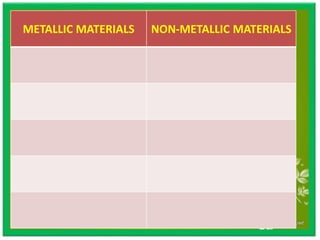
METALLIC MATERIALS NON-METALLIC MATERIALS
IV. Questions:
1. Name the things that
you have seen inside the
classroom.
2. Classify them as to
metallic or non-metallic.
Activity 2.
I. Title: Which material is attracted to magnet, an iron filings
or a salt?
II. Materials: salt, iron filings, plate, magnet
III. Procedure:
1. Prepare the materials needed.
2. Combine the two substances, the salt and the iron filings.
3. Separate one substance to the other substance by using
magnet to attract them.
4. What do you call the process of separating substance in a
mixture using magnet?
IV. Questions:
1. Which substance is attracted to magnet?
2. What do you call this substance?
3. What is the importance of separating substance?
Activity 3.
I. Title: Which substance/s is attracted to
magnet, staple wires, soil dust, or nails?
II. Materials: magnet, staple wires, soil dust,
nails, magnet
III. Procedures:
1. Prepare the materials needed.
2. Put them together in a plate.
3. Use the magnet and hold it near the
mixture.
4. Observe what happen.
IV. Questions:
1. What happen to the staple wires and nails
as the magnet is near into it?
2. What happen to the soil dusts as the
magnet is near into it?
3. What do you call those materials like
staple wires and nails That they were
attracted to magnet?
4. Can you give other substance/s that can
be considered as magnetic?
C. Explanation
1. Allow the pupils to share their
understanding on what is magnetism.
2. Let them give some more examples
of mixtures that can be separated
through magnet.
3. Let them identify those materials
that can be attracted by magnet.
Magnetism is an invisible force that can
attract (or repel) certain materials, such
as iron and steel. This force is called
magnetic field and is created by
magnets. What is magnet?Magnets
are objects made of magnetic materials
that produce a magnetic field. Magnets
pull other objects made of magnetic
materials towards them. They will either
attracts or repel other magnets.
Magnetism is a process of separating mixture
which magnetically susceptible material is attracted
from a mixture using a magnetic force. It is a form
of separating mixtures which involves using a
magnet to attract another magnetic object away
from the substance it is in. Some examples of
separating magnetic substances from no magnetic
substances are: separating iron nails from glass
chippings and separating iron paper clips from saw
dusts. Magnetic separators are used in factories.
Materials are put on a conveyor belt that is spun by
magnetic wheels.
As the objects are moved upside down
the non-magnetic objects fall off and the
magnetic ones stay on. This separation
technique can also be useful in mining as
it is attracted to a magnet. Moreover
magnetic separator is also used in
milling. It removes metal species in
wheat, in order to ensure safety at work.
To remove metal content from wheat
to protect other machines safety. And
to remove metal powder mixed in
flour during milling process and to
ensure product purity, magnetic
separation is needed before finished
product packaging.
2. Generalization:
- How would you describe the
process of separating
mixtures through magnet?
- Is it useful to our daily life?
.
Valuing:
In everything we do, we should
always be extra careful especially in
the food that we are going to
partake. Thus, it is very much
important that in the processing
period it should always be clean and
safe for eating.
Evaluation
A. Choose which of the following are
magnetic. Put (√) in the blank if magnetic
and (X) if not.
______1. Zipper ______6. Iron paper clip
______2. Thumbtacks ______7. Gold ring
______3. Nails ______8. paper
______4. Stainless knife ______9. comb
______5. pencil ______10. Plastic glass
B. Describe the process of separating mixture through
magnet using the given illustration below. (sugar with
iron filings)
Assessment
Andrea Rose wants to remove the staple wires on the
rice that she will be cooking. Using her knowledge on the
process of separating mixtures she is using magnet to
repel the staple wire from the rice.
Questions:
1. Do you think Andrea Rose will be successful in her
plan? _________
2. How would you describe the process of separating
mixture through magnet?_________
3. An object that has the ability to attract the other
substance is called ________.
4. In the given situation, what is considered as the
magnetic object? _________
5. Since rice does not repel with the magnet, what kind
of substance is it? _________
V. Assignment
What is the implication of
separating mixtures
through magnet?

Powerpoint Presentation on Magnetism.pptx

  • 1.
  • 2.
    1. Drill/Review: Let’shave a “Guessing Game”. Let the pupils identify the type of separating mixture. a. I separate pebbles from rice, what I am? ______ b. I separate the grains from the stalks of rice after harvesting, what I am?_________________ c. I used to separate a dry mixture which contains substances of different sizes by passing it through a sieve, what I am? _________________ d. I separate the lighten components from the heavier ones because of wind or air blow, what I am? _______ e. I separate solids from fluids, what I am? ____
  • 3.
    2. Motivation: Ask: Areyou familiar with magnet? Have you played with it at home? What have you done with the magnet? What is your finding after doing such thing? Did you enjoy doing so?
  • 4.
    Presentation of theLesson Separating mixtures through MAGNET.
  • 5.
    Let us havethe following materials to be used in our activity.
  • 6.
    Activity 1. I. Title:Name the materials that are metallic or non-metallic that can be found inside the classroom. II. Materials: Things inside the classroom III. Procedure: 1. Look around inside the room. 2. Identify the things that are made of metal (include your personal things). 3. List down these materials in the table below.
  • 7.
  • 8.
    IV. Questions: 1. Namethe things that you have seen inside the classroom. 2. Classify them as to metallic or non-metallic.
  • 9.
    Activity 2. I. Title:Which material is attracted to magnet, an iron filings or a salt? II. Materials: salt, iron filings, plate, magnet III. Procedure: 1. Prepare the materials needed. 2. Combine the two substances, the salt and the iron filings. 3. Separate one substance to the other substance by using magnet to attract them. 4. What do you call the process of separating substance in a mixture using magnet? IV. Questions: 1. Which substance is attracted to magnet? 2. What do you call this substance? 3. What is the importance of separating substance?
  • 10.
    Activity 3. I. Title:Which substance/s is attracted to magnet, staple wires, soil dust, or nails? II. Materials: magnet, staple wires, soil dust, nails, magnet III. Procedures: 1. Prepare the materials needed. 2. Put them together in a plate. 3. Use the magnet and hold it near the mixture. 4. Observe what happen.
  • 11.
    IV. Questions: 1. Whathappen to the staple wires and nails as the magnet is near into it? 2. What happen to the soil dusts as the magnet is near into it? 3. What do you call those materials like staple wires and nails That they were attracted to magnet? 4. Can you give other substance/s that can be considered as magnetic?
  • 12.
    C. Explanation 1. Allowthe pupils to share their understanding on what is magnetism. 2. Let them give some more examples of mixtures that can be separated through magnet. 3. Let them identify those materials that can be attracted by magnet.
  • 13.
    Magnetism is aninvisible force that can attract (or repel) certain materials, such as iron and steel. This force is called magnetic field and is created by magnets. What is magnet?Magnets are objects made of magnetic materials that produce a magnetic field. Magnets pull other objects made of magnetic materials towards them. They will either attracts or repel other magnets.
  • 14.
    Magnetism is aprocess of separating mixture which magnetically susceptible material is attracted from a mixture using a magnetic force. It is a form of separating mixtures which involves using a magnet to attract another magnetic object away from the substance it is in. Some examples of separating magnetic substances from no magnetic substances are: separating iron nails from glass chippings and separating iron paper clips from saw dusts. Magnetic separators are used in factories. Materials are put on a conveyor belt that is spun by magnetic wheels.
  • 15.
    As the objectsare moved upside down the non-magnetic objects fall off and the magnetic ones stay on. This separation technique can also be useful in mining as it is attracted to a magnet. Moreover magnetic separator is also used in milling. It removes metal species in wheat, in order to ensure safety at work.
  • 16.
    To remove metalcontent from wheat to protect other machines safety. And to remove metal powder mixed in flour during milling process and to ensure product purity, magnetic separation is needed before finished product packaging.
  • 17.
    2. Generalization: - Howwould you describe the process of separating mixtures through magnet? - Is it useful to our daily life? .
  • 18.
    Valuing: In everything wedo, we should always be extra careful especially in the food that we are going to partake. Thus, it is very much important that in the processing period it should always be clean and safe for eating.
  • 19.
    Evaluation A. Choose whichof the following are magnetic. Put (√) in the blank if magnetic and (X) if not. ______1. Zipper ______6. Iron paper clip ______2. Thumbtacks ______7. Gold ring ______3. Nails ______8. paper ______4. Stainless knife ______9. comb ______5. pencil ______10. Plastic glass
  • 20.
    B. Describe theprocess of separating mixture through magnet using the given illustration below. (sugar with iron filings)
  • 21.
    Assessment Andrea Rose wantsto remove the staple wires on the rice that she will be cooking. Using her knowledge on the process of separating mixtures she is using magnet to repel the staple wire from the rice. Questions: 1. Do you think Andrea Rose will be successful in her plan? _________ 2. How would you describe the process of separating mixture through magnet?_________ 3. An object that has the ability to attract the other substance is called ________. 4. In the given situation, what is considered as the magnetic object? _________ 5. Since rice does not repel with the magnet, what kind of substance is it? _________
  • 22.
    V. Assignment What isthe implication of separating mixtures through magnet?