8-55
Copyright ©The McGraw-Hill Companies, Inc. Permission required for reproduction or display
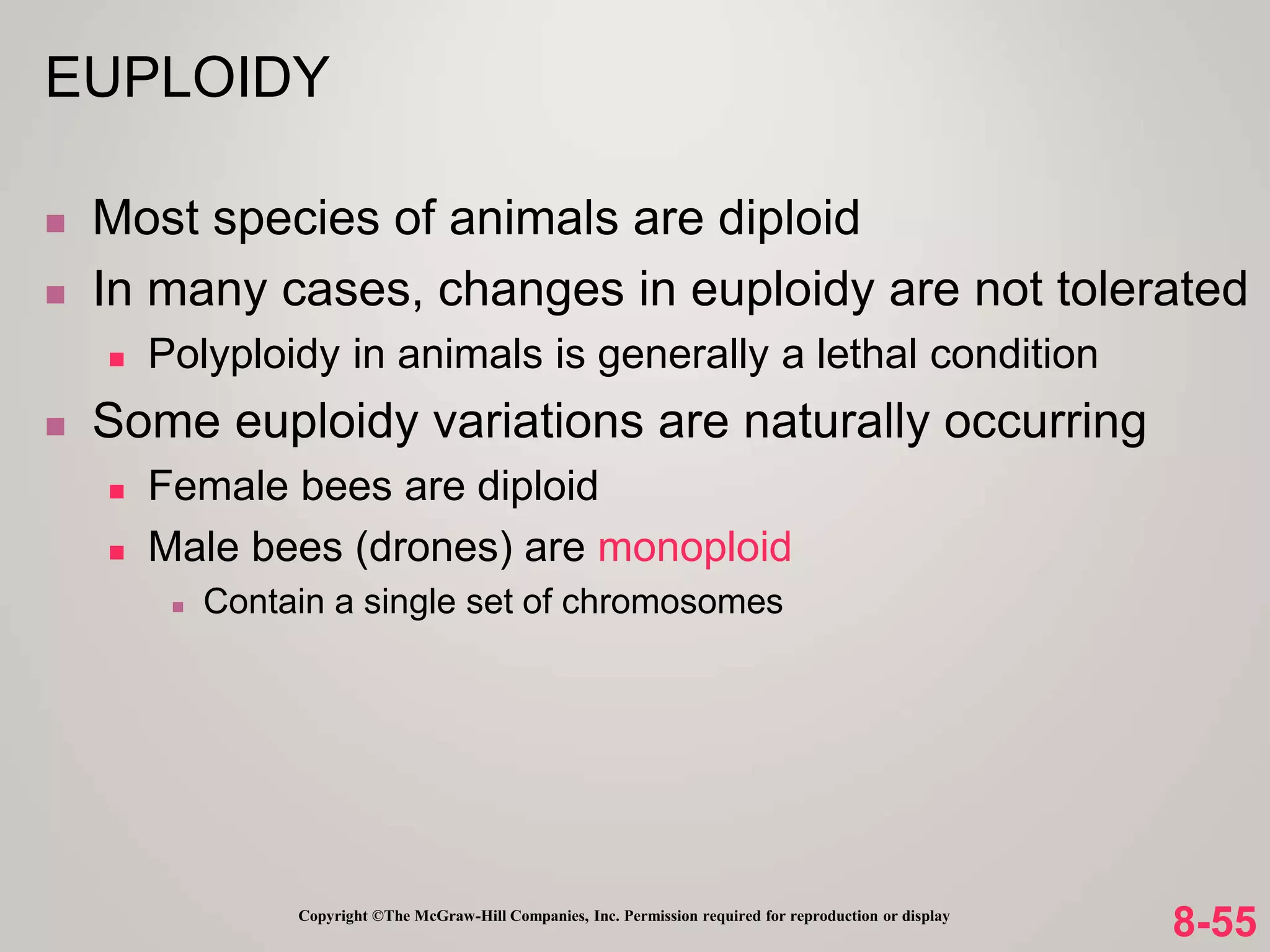
 Most species of animals are diploid
 In many cases, changes in euploidy are not tolerated
 Polyploidy in animals is generally a lethal condition
 Some euploidy variations are naturally occurring
 Female bees are diploid
 Male bees (drones) are monoploid
 Contain a single set of chromosomes
EUPLOIDY
8-56
Copyright ©The McGraw-Hill Companies, Inc. Permission required for reproduction or display
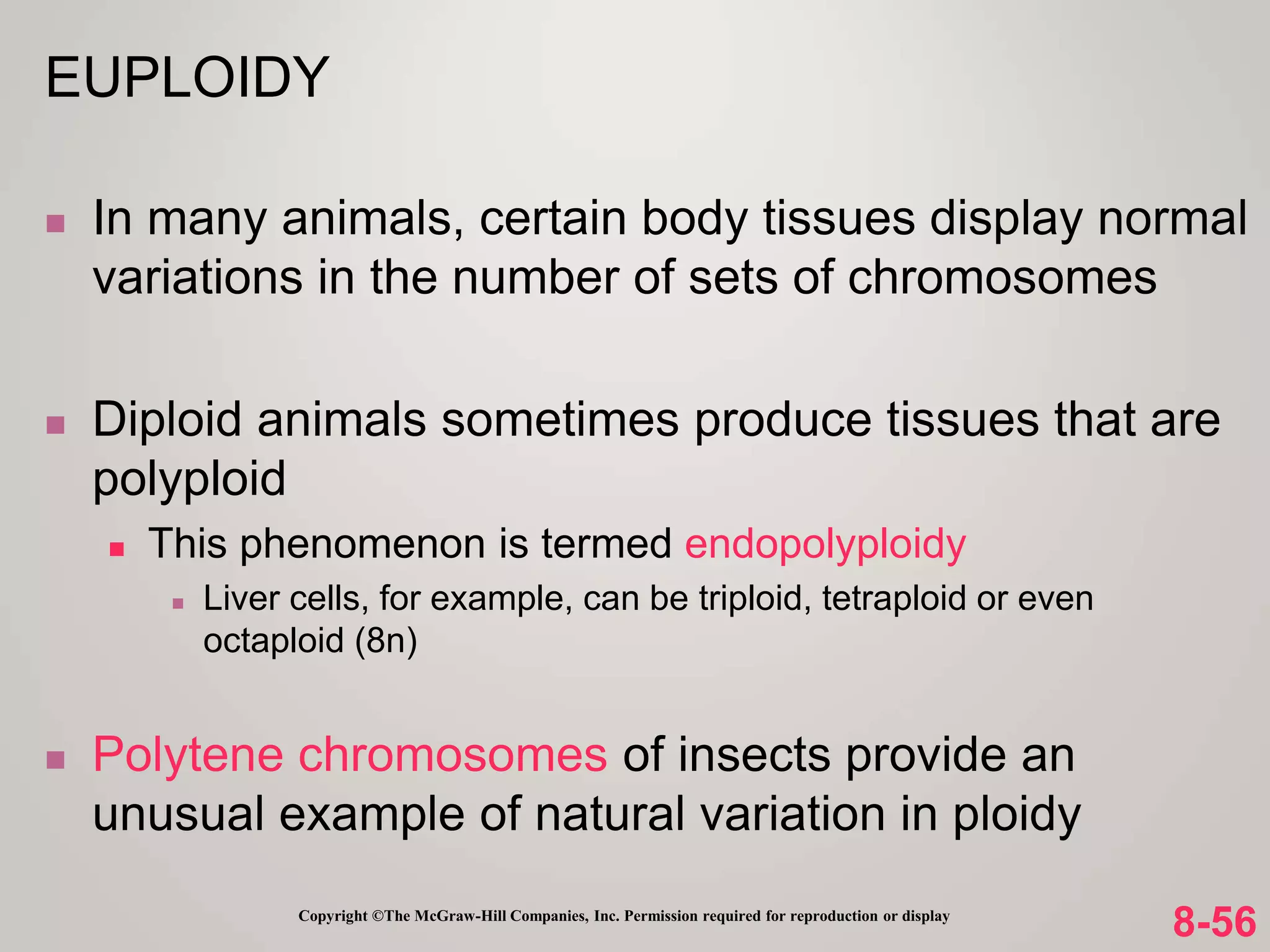
 In many animals, certain body tissues display normal
variations in the number of sets of chromosomes
 Diploid animals sometimes produce tissues that are
polyploid
 This phenomenon is termed endopolyploidy
 Liver cells, for example, can be triploid, tetraploid or even
octaploid (8n)
 Polytene chromosomes of insects provide an
unusual example of natural variation in ploidy
EUPLOIDY
8-57
Copyright ©The McGraw-Hill Companies, Inc. Permission required for reproduction or display
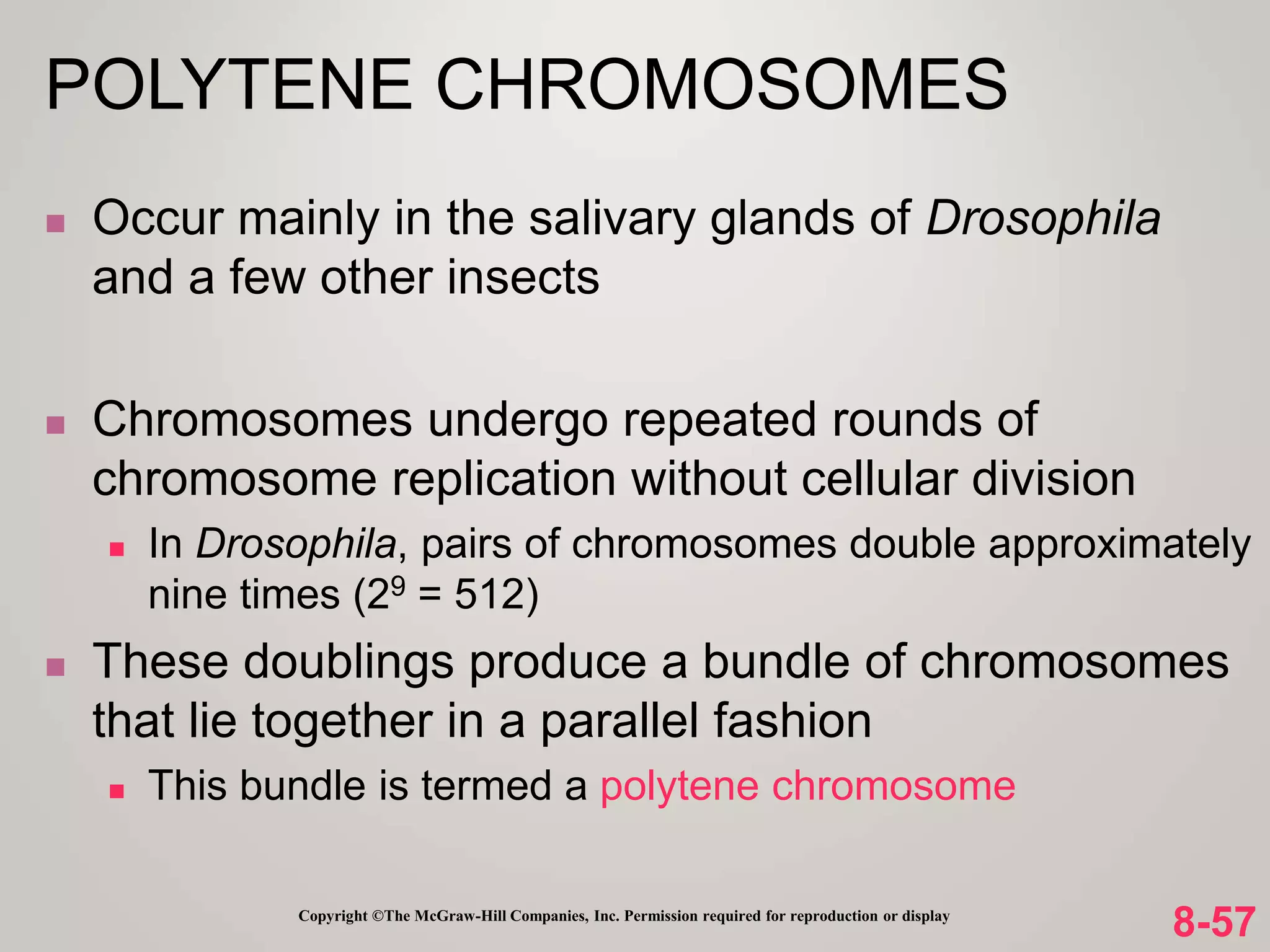
 Occur mainly in the salivary glands of Drosophila
and a few other insects
 Chromosomes undergo repeated rounds of
chromosome replication without cellular division
 In Drosophila, pairs of chromosomes double approximately
nine times (29 = 512)
 These doublings produce a bundle of chromosomes
that lie together in a parallel fashion
 This bundle is termed a polytene chromosome
POLYTENE CHROMOSOMES
8-59
Copyright ©The McGraw-Hill Companies, Inc. Permission required for reproduction or display
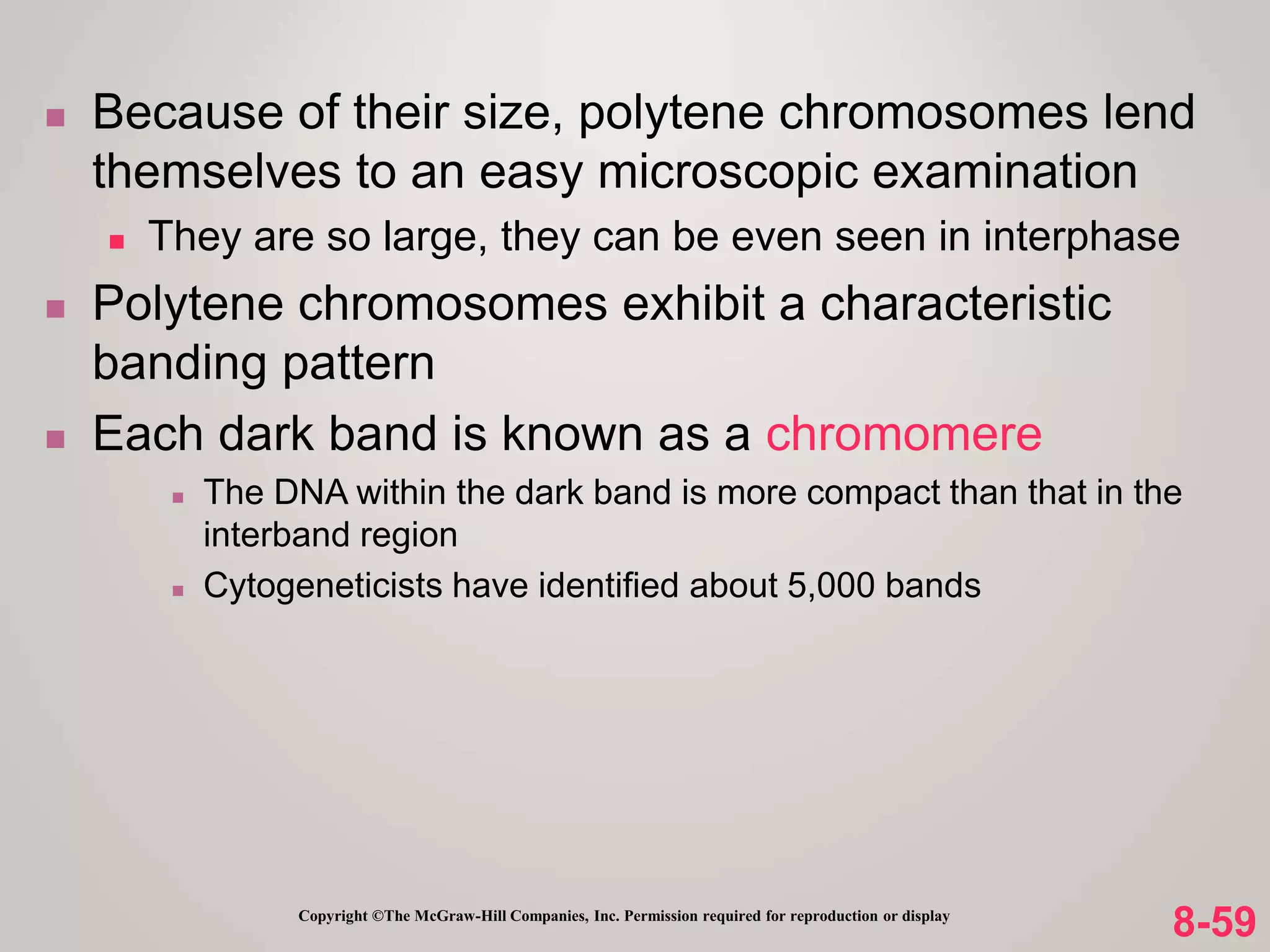
 Because of their size, polytene chromosomes lend
themselves to an easy microscopic examination
 They are so large, they can be even seen in interphase
 Polytene chromosomes exhibit a characteristic
banding pattern
 Each dark band is known as a chromomere
 The DNA within the dark band is more compact than that in the
interband region
 Cytogeneticists have identified about 5,000 bands
8-60
Copyright ©The McGraw-Hill Companies, Inc. Permission required for reproduction or display
 In contrast to animals, plants commonly exhibit
polyploidy
 30-35% of ferns and flowering plants are polyploid
 Many of the fruits and grain we eat come from polyploid
plants
 In many instances, polyploid strains of plants display
outstanding agricultural characteristics
 They are often larger in size and more robust
EUPLOIDY
8-62
Copyright ©The McGraw-Hill Companies, Inc. Permission required for reproduction or display
 Sterility is generally a detrimental trait
 However, it can be agriculturally desirable because it
may result in
 1. Seedless fruit
 Seedless watermelons and bananas
 Triploid varieties
 Asexually propagated by human via cuttings
 2. Seedless flowers
 Marigold flowering plants
 Triploid varieties
POLYPLOID CROPS
• Examples of polyploid crops
• Triploid crops: apple, banana, citrus, ginger,
watermelon
• Tetraploid crops: apple, durum or macaroni wheat,
cotton, potato, cabbage ,leek, tobacco, peanut,
kinnow, Pelargonium
• Hexaploid crops: chrysanthemum, bread wheat,
triticale, oat, kiwifruit
• Octaploid crops: strawberry
AUTOPOLYPLOIDY
• Artificially induced: chloral hydrate,colchicine,mercury chloride
• Prevent mitotic/meiotic spindle fibres
• Colchinine : prevent formation of spindle fibre
• Arrest at metaphase stage
• No alignment at metaphase stage
• Prevention of cytokinesis
AUTOPOLYPLOIDY
• Effects: gigantism in plants (leaves,flowers,fruits)
• > in water content
• < in auxin supply
• < in respiration
ALLOPOLYPLOIDY
• Triticum spelta : hexaploid wheat
• Wheat(T.dicoccoides) * Grass(Aegilops squarrosa)
• 2n=28 * 2n=14
• Treated with colchicine –T. spelta
• 2n=42(artificial wheat )
• six similar sets of seven chromosomes
ALLOPOLYPLOIDY
• Gossypium hirsutum(new world cotton plant)
• Old world cotton * American cotton
• 13pairs (2n=26)* 13 pairs(2n=26)
• Colchicine treatment
• 2n=52
POLYPLOIDS
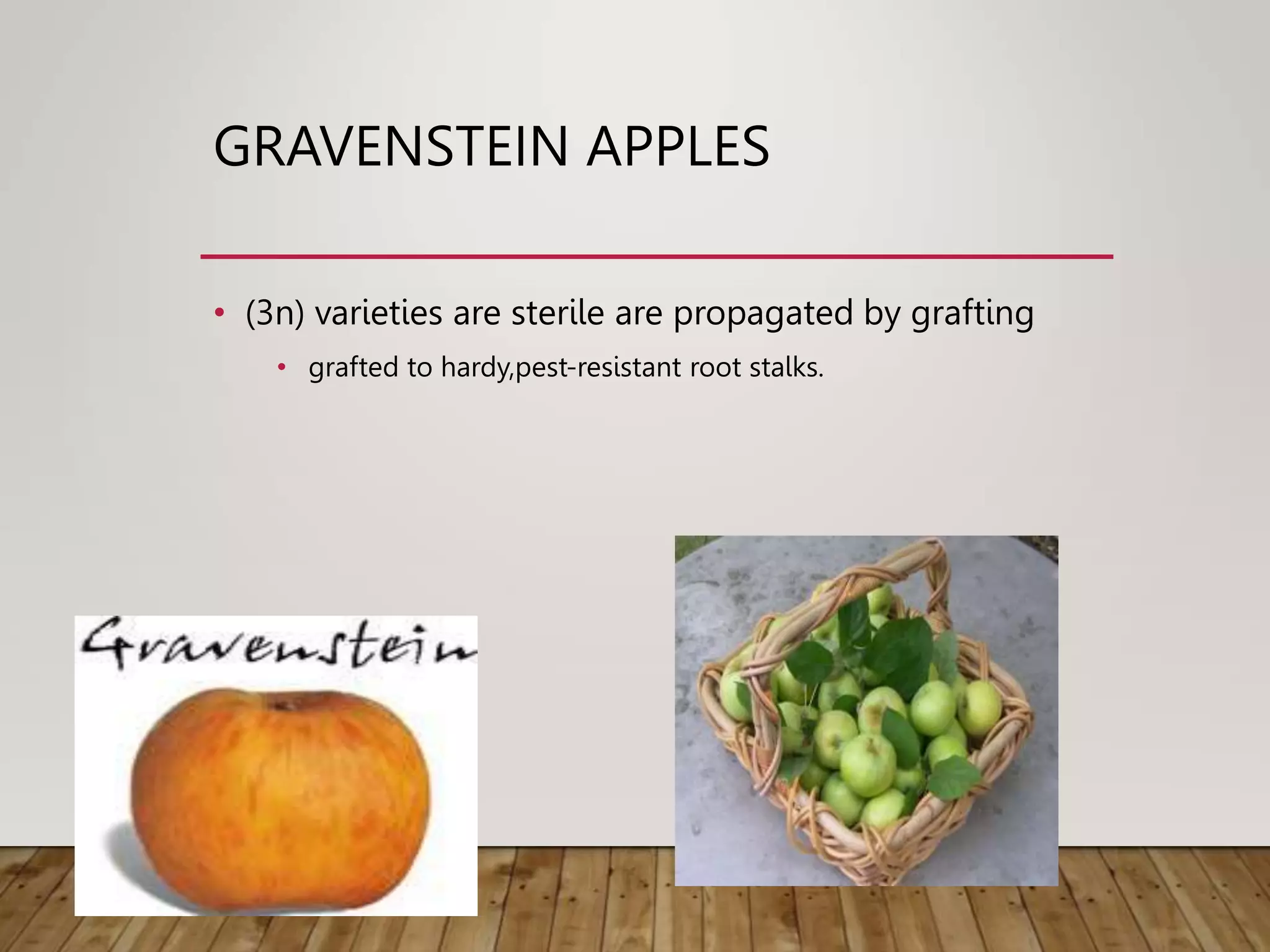
• Apples
• Mostly diploid
• Gravenstein' apples
• triploid chromosome number of 51 (3n=51)
• produced by the union of a diploid egg
(2n=34) and a haploid sperm (n=17).
GRAVENSTEIN APPLES
• (3n) varieties are sterile are propagated by grafting
• grafted to hardy,pest-resistant root stalks.
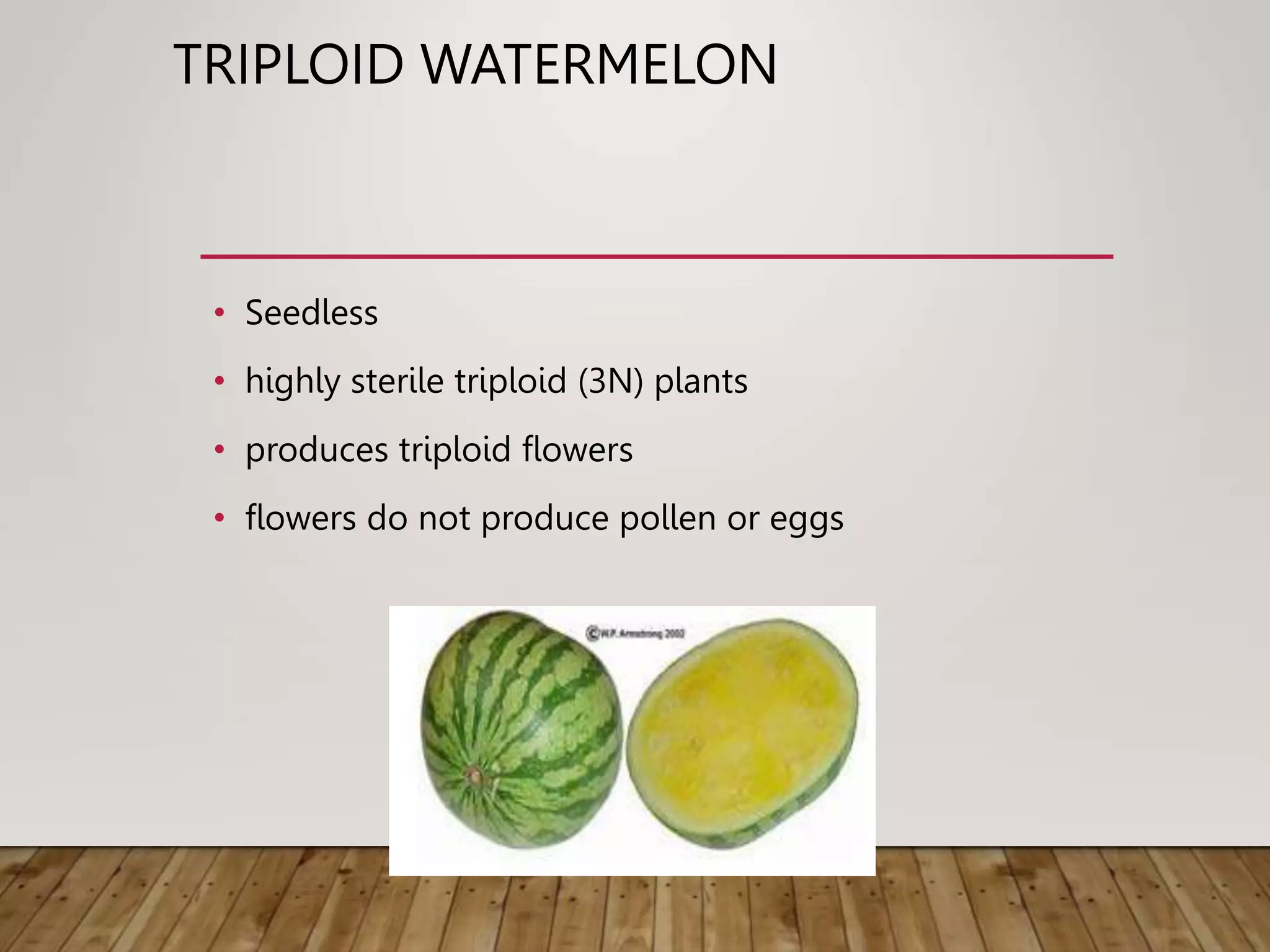
TRIPLOID WATERMELON
• Seedless
• highly sterile triploid (3N) plants
• produces triploid flowers
• flowers do not produce pollen or eggs
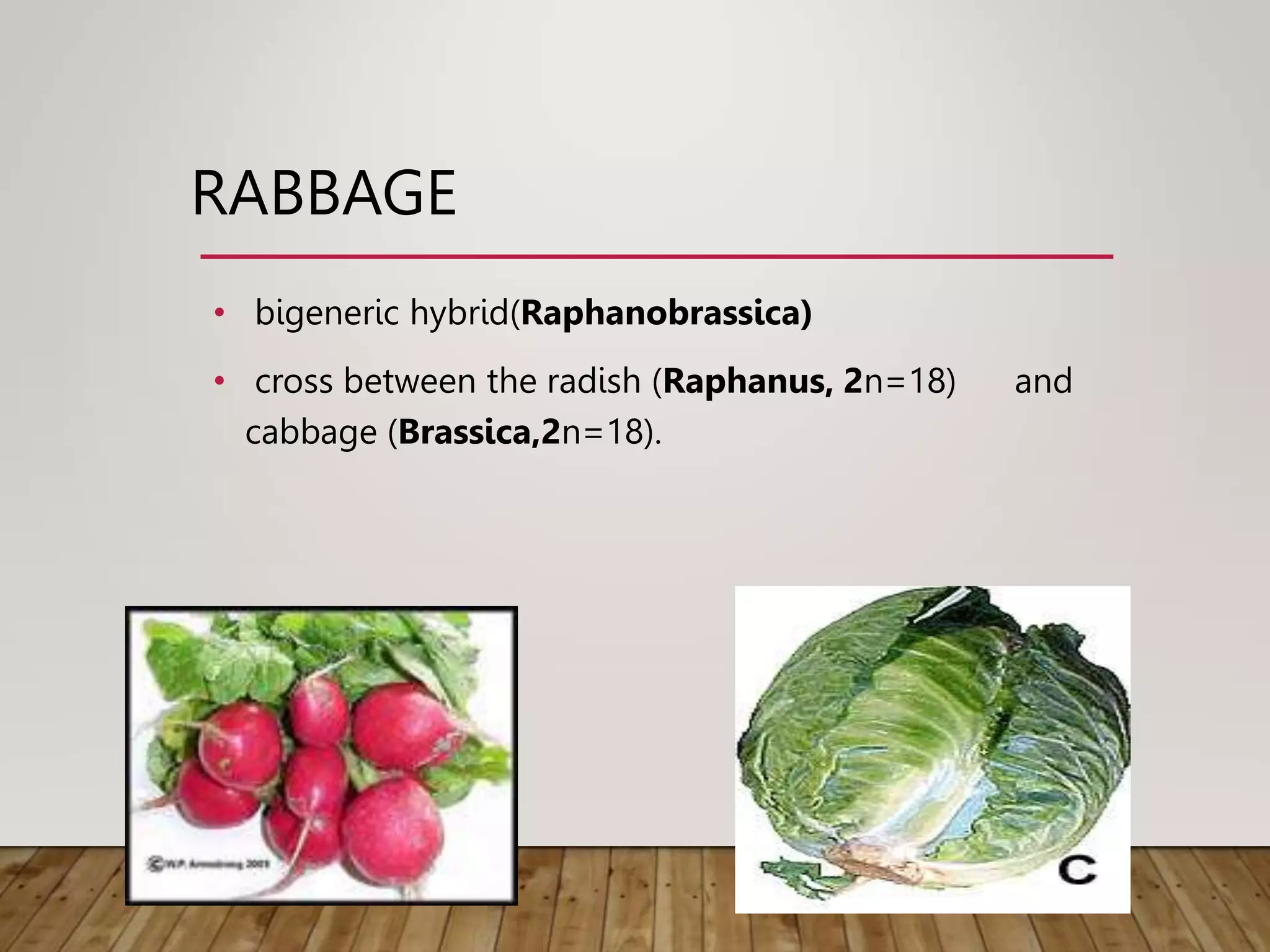
RABBAGE
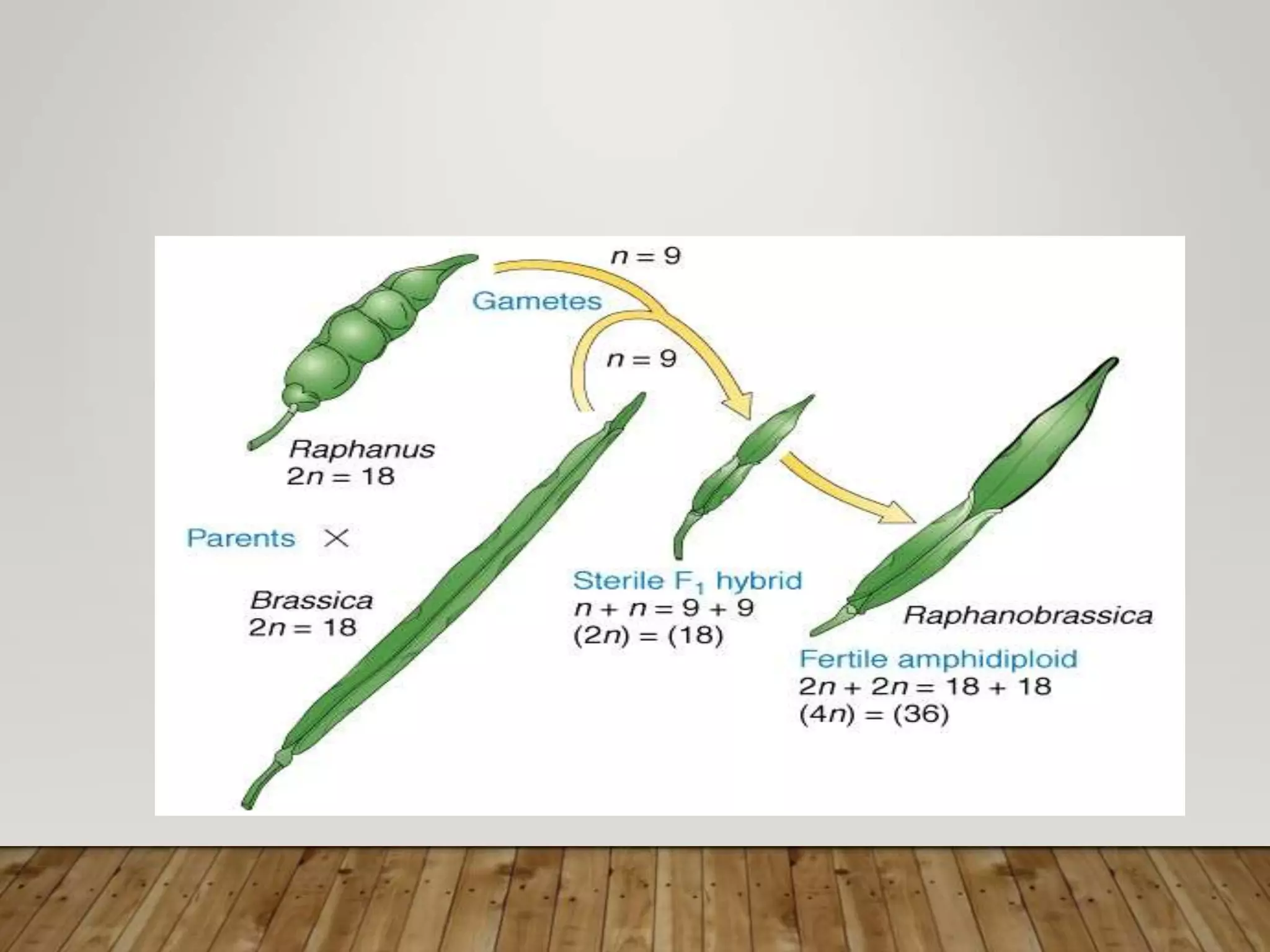
• bigeneric hybrid(Raphanobrassica)
• cross between the radish (Raphanus, 2n=18) and
cabbage (Brassica,2n=18).
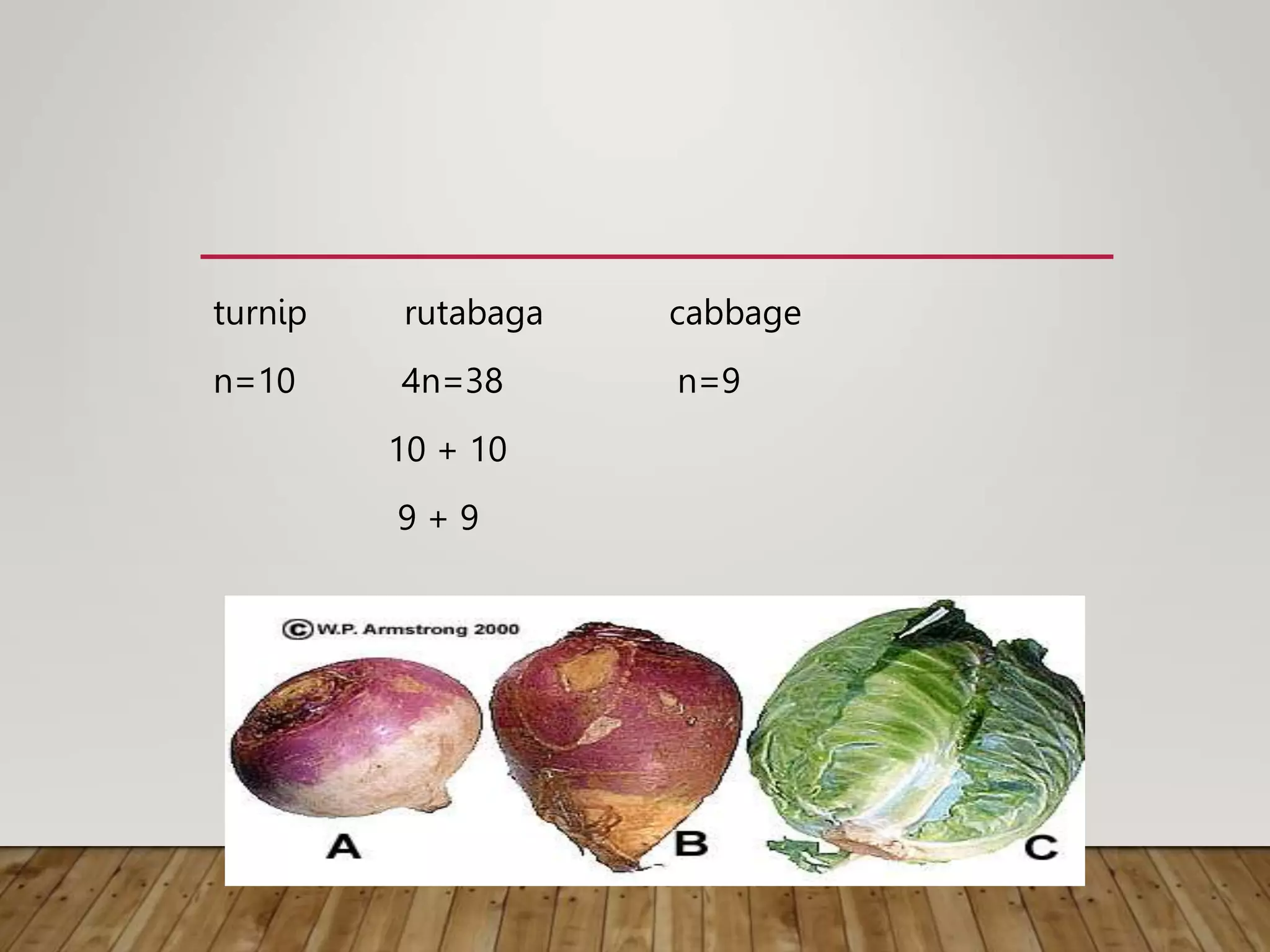
turnip rutabaga cabbage
n=10 4n=38 n=9
10 + 10
9 + 9

polyploidy ..ppt

  • 1.
    8-55 Copyright ©The McGraw-HillCompanies, Inc. Permission required for reproduction or display  Most species of animals are diploid  In many cases, changes in euploidy are not tolerated  Polyploidy in animals is generally a lethal condition  Some euploidy variations are naturally occurring  Female bees are diploid  Male bees (drones) are monoploid  Contain a single set of chromosomes EUPLOIDY
  • 2.
    8-56 Copyright ©The McGraw-HillCompanies, Inc. Permission required for reproduction or display  In many animals, certain body tissues display normal variations in the number of sets of chromosomes  Diploid animals sometimes produce tissues that are polyploid  This phenomenon is termed endopolyploidy  Liver cells, for example, can be triploid, tetraploid or even octaploid (8n)  Polytene chromosomes of insects provide an unusual example of natural variation in ploidy EUPLOIDY
  • 3.
    8-57 Copyright ©The McGraw-HillCompanies, Inc. Permission required for reproduction or display  Occur mainly in the salivary glands of Drosophila and a few other insects  Chromosomes undergo repeated rounds of chromosome replication without cellular division  In Drosophila, pairs of chromosomes double approximately nine times (29 = 512)  These doublings produce a bundle of chromosomes that lie together in a parallel fashion  This bundle is termed a polytene chromosome POLYTENE CHROMOSOMES
  • 4.
    8-59 Copyright ©The McGraw-HillCompanies, Inc. Permission required for reproduction or display  Because of their size, polytene chromosomes lend themselves to an easy microscopic examination  They are so large, they can be even seen in interphase  Polytene chromosomes exhibit a characteristic banding pattern  Each dark band is known as a chromomere  The DNA within the dark band is more compact than that in the interband region  Cytogeneticists have identified about 5,000 bands
  • 5.
    8-60 Copyright ©The McGraw-HillCompanies, Inc. Permission required for reproduction or display  In contrast to animals, plants commonly exhibit polyploidy  30-35% of ferns and flowering plants are polyploid  Many of the fruits and grain we eat come from polyploid plants  In many instances, polyploid strains of plants display outstanding agricultural characteristics  They are often larger in size and more robust EUPLOIDY
  • 6.
    8-62 Copyright ©The McGraw-HillCompanies, Inc. Permission required for reproduction or display  Sterility is generally a detrimental trait  However, it can be agriculturally desirable because it may result in  1. Seedless fruit  Seedless watermelons and bananas  Triploid varieties  Asexually propagated by human via cuttings  2. Seedless flowers  Marigold flowering plants  Triploid varieties
  • 7.
    POLYPLOID CROPS • Examplesof polyploid crops • Triploid crops: apple, banana, citrus, ginger, watermelon • Tetraploid crops: apple, durum or macaroni wheat, cotton, potato, cabbage ,leek, tobacco, peanut, kinnow, Pelargonium • Hexaploid crops: chrysanthemum, bread wheat, triticale, oat, kiwifruit • Octaploid crops: strawberry
  • 8.
    AUTOPOLYPLOIDY • Artificially induced:chloral hydrate,colchicine,mercury chloride • Prevent mitotic/meiotic spindle fibres • Colchinine : prevent formation of spindle fibre • Arrest at metaphase stage • No alignment at metaphase stage • Prevention of cytokinesis
  • 9.
    AUTOPOLYPLOIDY • Effects: gigantismin plants (leaves,flowers,fruits) • > in water content • < in auxin supply • < in respiration
  • 10.
    ALLOPOLYPLOIDY • Triticum spelta: hexaploid wheat • Wheat(T.dicoccoides) * Grass(Aegilops squarrosa) • 2n=28 * 2n=14 • Treated with colchicine –T. spelta • 2n=42(artificial wheat ) • six similar sets of seven chromosomes
  • 11.
    ALLOPOLYPLOIDY • Gossypium hirsutum(newworld cotton plant) • Old world cotton * American cotton • 13pairs (2n=26)* 13 pairs(2n=26) • Colchicine treatment • 2n=52
  • 12.
    POLYPLOIDS • Apples • Mostlydiploid • Gravenstein' apples • triploid chromosome number of 51 (3n=51) • produced by the union of a diploid egg (2n=34) and a haploid sperm (n=17).
  • 13.
    GRAVENSTEIN APPLES • (3n)varieties are sterile are propagated by grafting • grafted to hardy,pest-resistant root stalks.
  • 14.
    TRIPLOID WATERMELON • Seedless •highly sterile triploid (3N) plants • produces triploid flowers • flowers do not produce pollen or eggs
  • 15.
    RABBAGE • bigeneric hybrid(Raphanobrassica) •cross between the radish (Raphanus, 2n=18) and cabbage (Brassica,2n=18).
  • 17.
    turnip rutabaga cabbage n=104n=38 n=9 10 + 10 9 + 9