Done By : Navya
Tesa
Sukhjit
8 -D
What are PLASTICS ????
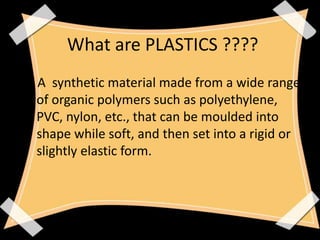
A synthetic material made from a wide range
of organic polymers such as polyethylene,
PVC, nylon, etc., that can be moulded into
shape while soft, and then set into a rigid or
slightly elastic form.
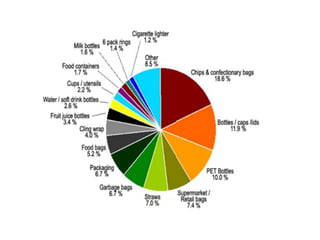
How are plastics used .
How plastics affect
the environment
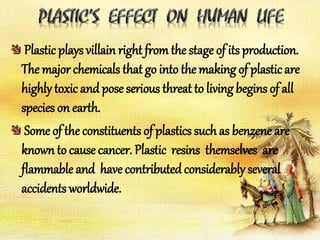
Plastic plays villain right fromthe stage of its production.
The major chemicals that go into the making of plasticare
highly toxic andpose serious threat to living begins of all
species on earth.
Some of the constituents of plastics such as benzene are
known to cause cancer. Plastic resins themselves are
flammable and have contributedconsiderably several
accidents worldwide.
If it goes
on like
In the Future …….
We will drink
only plastic
bottled water.
We will only eat
plastic boxes .
In the Future …….
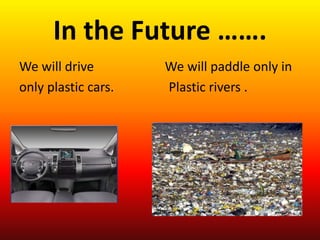
We will drive We will paddle only in
only plastic cars. Plastic rivers .
In the Future …….
We will feed our We will play with these
Animals types of plastic toys .
with plastic .
In the Future …….
We will play on the We will drink plastic
Beach like this . soup
In the Future …….
We will wear plastic We will breathe that
Shoes . Stinky air and admire
the view .
1) Single-use plastic bags have become such a ubiquitous
way of life that it seems as if we simply cannot do
without them. However, if we have the will, we can start
reducing their use in small ways.
2) A tote bag can make a good substitute for holding the
shopping. You can keep the bag with the cashier, and
then put your purchases into it instead of the usual
plastic bag.
3) Recycling a plastic bag you already have is a good idea. These can
come into use for various purposes, like holding your garbage,
instead of purchasing new one.
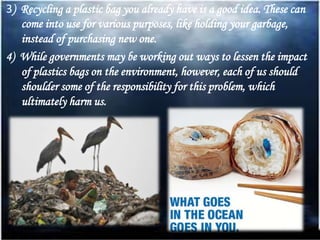
4) While governments may be working out ways to lessen the impact
of plastics bags on the environment, however, each of us should
shoulder some of the responsibility for this problem, which
ultimately harm us.
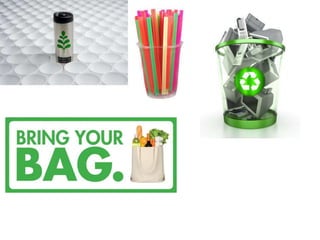
• Say, “No straw, please!” In most cases, drinking out of a straw is simply
not necessary. If you do need a straw, you can get a reusable stainless
steel or glass one.
• Wear clothing made of natural, not synthetic, materials.
• If you must use disposable tableware, get the compostable kind. look for
those made of recycled paper, or biodegradable plastics, which can be
composted. Be aware that such plastics will not biodegrade in a landfill
and must be disposed of in appropriate composting conditions.
• Don’t just discard electronics. Aim to repair or upgrade your devices
instead of buying new ones. Alternately sell gadgets and computer parts,
or find a facility at which you can turn them in for recycling .
• Bring your own container for takeout and leftovers. When ordering
takeout or bringing home leftovers, ask if you can get the food in your own
reusable container.
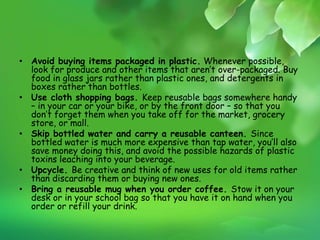
• Avoid buying items packaged in plastic. Whenever possible,
look for produce and other items that aren’t over-packaged. Buy
food in glass jars rather than plastic ones, and detergents in
boxes rather than bottles.
• Use cloth shopping bags. Keep reusable bags somewhere handy
– in your car or your bike, or by the front door – so that you
don’t forget them when you take off for the market, grocery
store, or mall.
• Skip bottled water and carry a reusable canteen. Since
bottled water is much more expensive than tap water, you’ll also
save money doing this, and avoid the possible hazards of plastic
toxins leaching into your beverage.
• Upcycle. Be creative and think of new uses for old items rather
than discarding them or buying new ones.
• Bring a reusable mug when you order coffee. Stow it on your
desk or in your school bag so that you have it on hand when you
order or refill your drink.
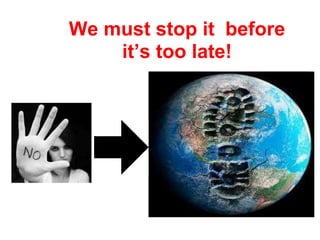
We must stop it before
it’s too late!
DONE BY: NAVYA, TESA, SUKHJIT
8D

Plastics

  • 1.
    Done By :Navya Tesa Sukhjit 8 -D
  • 3.
    What are PLASTICS???? A synthetic material made from a wide range of organic polymers such as polyethylene, PVC, nylon, etc., that can be moulded into shape while soft, and then set into a rigid or slightly elastic form.
  • 4.
  • 6.
  • 9.
    Plastic plays villainright fromthe stage of its production. The major chemicals that go into the making of plasticare highly toxic andpose serious threat to living begins of all species on earth. Some of the constituents of plastics such as benzene are known to cause cancer. Plastic resins themselves are flammable and have contributedconsiderably several accidents worldwide.
  • 11.
  • 12.
    In the Future……. We will drink only plastic bottled water. We will only eat plastic boxes .
  • 13.
    In the Future……. We will drive We will paddle only in only plastic cars. Plastic rivers .
  • 14.
    In the Future……. We will feed our We will play with these Animals types of plastic toys . with plastic .
  • 15.
    In the Future……. We will play on the We will drink plastic Beach like this . soup
  • 16.
    In the Future……. We will wear plastic We will breathe that Shoes . Stinky air and admire the view .
  • 17.
    1) Single-use plasticbags have become such a ubiquitous way of life that it seems as if we simply cannot do without them. However, if we have the will, we can start reducing their use in small ways. 2) A tote bag can make a good substitute for holding the shopping. You can keep the bag with the cashier, and then put your purchases into it instead of the usual plastic bag.
  • 18.
    3) Recycling aplastic bag you already have is a good idea. These can come into use for various purposes, like holding your garbage, instead of purchasing new one. 4) While governments may be working out ways to lessen the impact of plastics bags on the environment, however, each of us should shoulder some of the responsibility for this problem, which ultimately harm us.
  • 19.
    • Say, “Nostraw, please!” In most cases, drinking out of a straw is simply not necessary. If you do need a straw, you can get a reusable stainless steel or glass one. • Wear clothing made of natural, not synthetic, materials. • If you must use disposable tableware, get the compostable kind. look for those made of recycled paper, or biodegradable plastics, which can be composted. Be aware that such plastics will not biodegrade in a landfill and must be disposed of in appropriate composting conditions. • Don’t just discard electronics. Aim to repair or upgrade your devices instead of buying new ones. Alternately sell gadgets and computer parts, or find a facility at which you can turn them in for recycling . • Bring your own container for takeout and leftovers. When ordering takeout or bringing home leftovers, ask if you can get the food in your own reusable container.
  • 20.
    • Avoid buyingitems packaged in plastic. Whenever possible, look for produce and other items that aren’t over-packaged. Buy food in glass jars rather than plastic ones, and detergents in boxes rather than bottles. • Use cloth shopping bags. Keep reusable bags somewhere handy – in your car or your bike, or by the front door – so that you don’t forget them when you take off for the market, grocery store, or mall. • Skip bottled water and carry a reusable canteen. Since bottled water is much more expensive than tap water, you’ll also save money doing this, and avoid the possible hazards of plastic toxins leaching into your beverage. • Upcycle. Be creative and think of new uses for old items rather than discarding them or buying new ones. • Bring a reusable mug when you order coffee. Stow it on your desk or in your school bag so that you have it on hand when you order or refill your drink.
  • 23.
    We must stopit before it’s too late!
  • 24.
    DONE BY: NAVYA,TESA, SUKHJIT 8D