SANDRABEKHOR@BEKHOR.CA
TEL. 416.969.9600
OBA LAW PRACTICE MANAGEMENT PROGRAM
Planning a
Firm Retreat
Before the
Retreat
Purpose
By the end of the year what will have changed?
Consider priorities:
–Identify one, truly significant purpose
–Consider all areas of the practice
–Tie to existing strategic plan
–Ensure purpose is SMART
–Be relevant
–Go deep
Gather data specific to the main purpose
Gather input from partners, clients, referrers or staff:
–Interviews
–Focus groups
–Wider survey
Build the main retreat purpose into a theme
Examples:
•Celebrate teamwork
•Improve work / life balance
•Improve profit
•Shape the culture
•Adjust to changes in the marketplace
•Modify an area of practice
•Attract a different client profile
•Revisit the firm’s mission
•Improve communications
•Begin succession planning
•Revisit compensation
Participants
Along the spectrum of small to mid-sized firms
Smaller firms:
–Outside advisors
–The whole office
–Lawyers and associates
Mid-sized firms:
–Lawyers
–Partners
Larger, mid-sized firms:
–Key non-lawyer managers eg Office Manager, Marketing Manager or Finance Manager
–Senior partners
–Retreat committee
–Partners with a special interest in this year’s objective
–Rotating commitment among partners
–Partners segmented into sub-topics
Location
Support retreat objectives
Outside the office
Creative, relaxed environment
Working setting, not a vacation setting
Fit with firm culture
Supports ‘soft’ objectives
If it’s a flight or a long distance drive away, include 1 or 2 nights stay
The ideal location is a local club / lodge / hotel or a nearby resort with:
―Meeting rooms
―Recreational activities (on site or nearby)
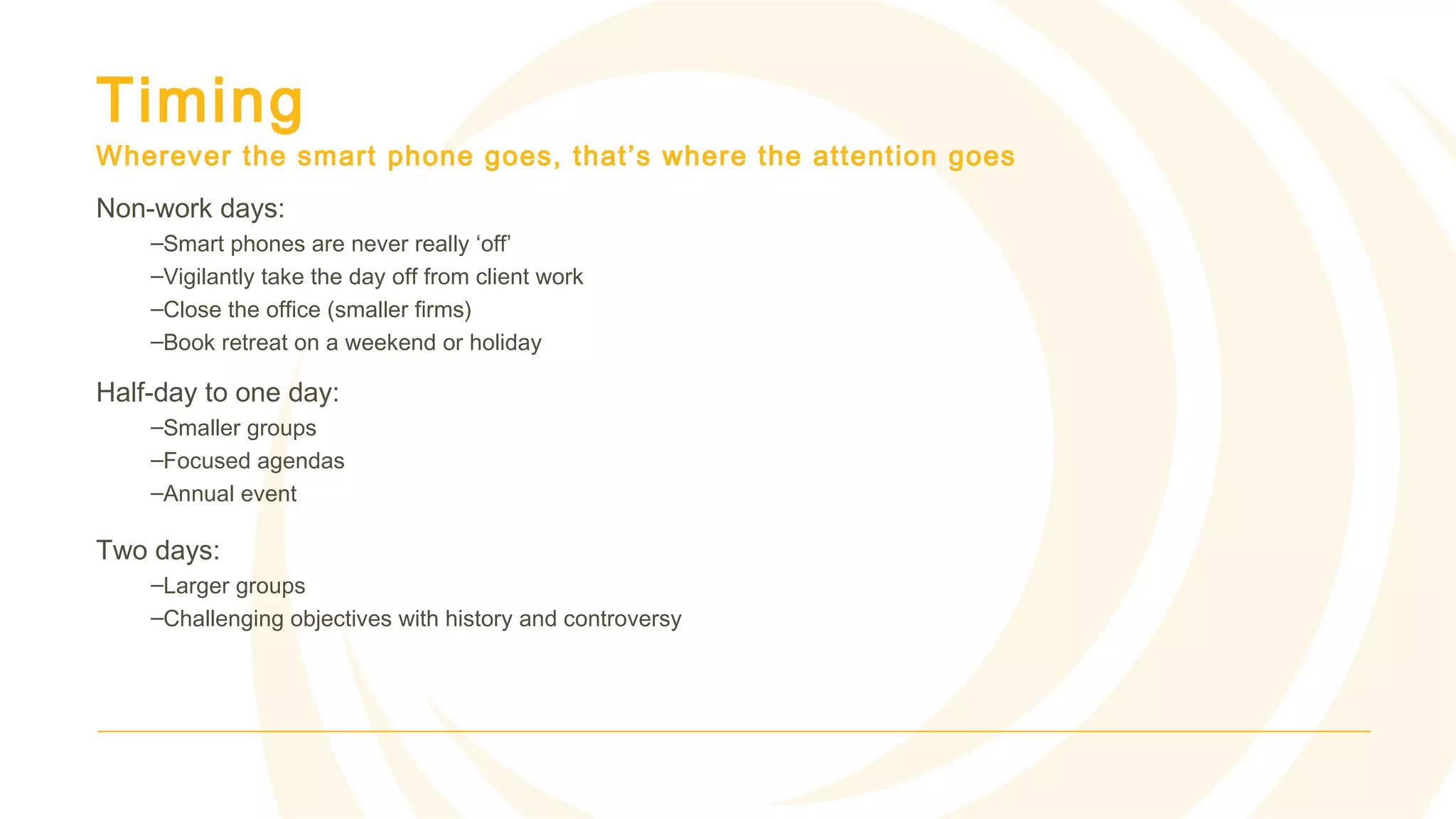
Timing
Wherever the smart phone goes, that’s where the attention goes
Non-work days:
–Smart phones are never really ‘off’
–Vigilantly take the day off from client work
–Close the office (smaller firms)
–Book retreat on a weekend or holiday
Half-day to one day:
–Smaller groups
–Focused agendas
–Annual event
Two days:
–Larger groups
–Challenging objectives with history and controversy
Facilitators
A facilitator is recommended.
A facilitator brings:
– Objectivity:
• No agenda with the work
• No agenda with the people
• Fresh eyes on the topic
– Training:
• Facilitation
• Conflict management
• Subject matter
– Presence of mind:
• Not playing two roles
• The ability to say no
– Professional discipline:
• Stay focused
• Stick to the schedule
– Can also be a speaker
There are exceptions.
Without a facilitator, pick someone:
– Good at:
• Driving true, consensus
• Project management
• Staying focused on a topic
• Leading a meeting
– Not needed as a participant
– Without a vested interest in the agenda
– Familiar with the retreat purpose
– Able to hand off an action plan
During the
Retreat
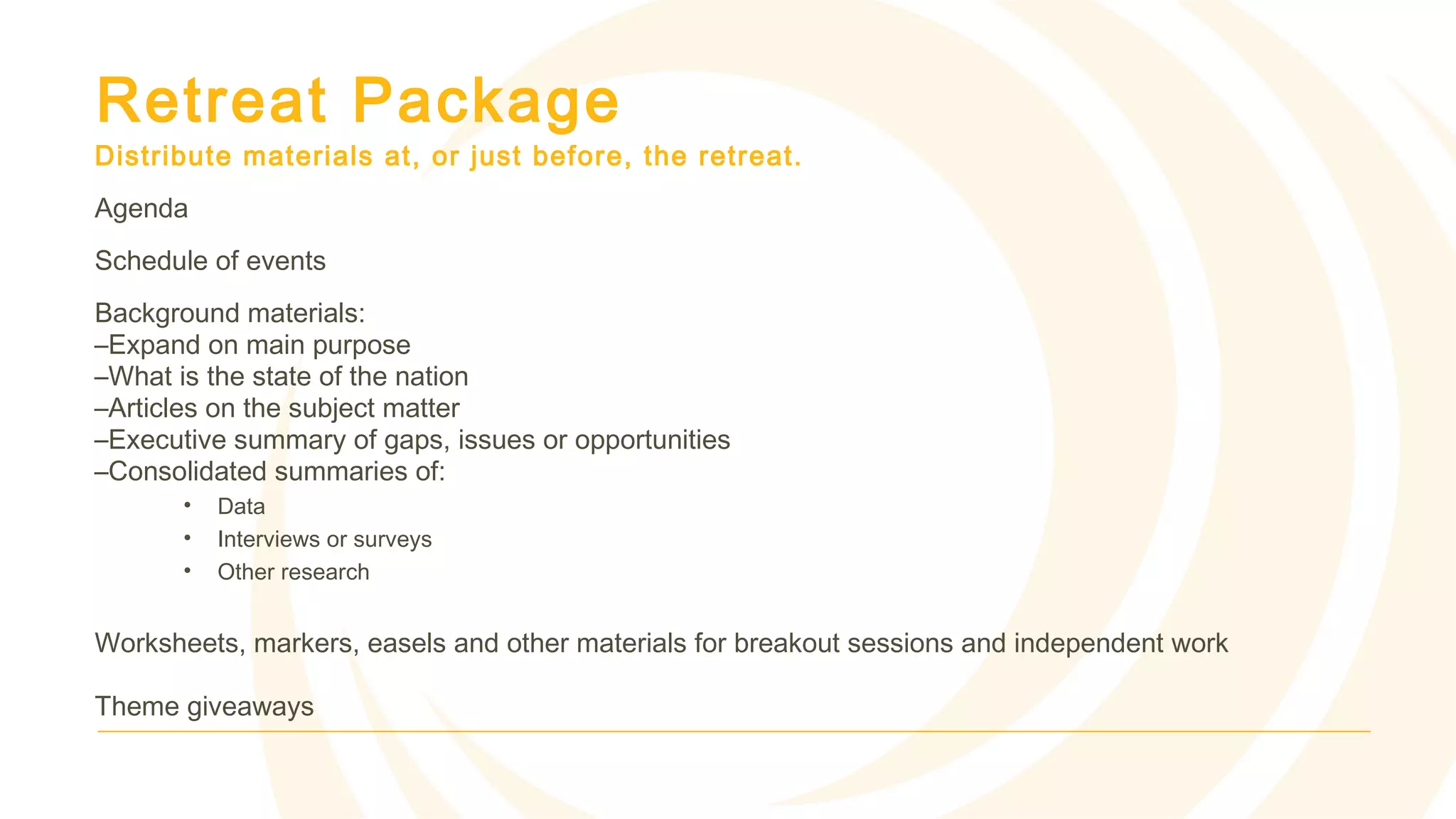
Retreat Package
Distribute materials at, or just before, the retreat.
Agenda
Schedule of events
Background materials:
–Expand on main purpose
–What is the state of the nation
–Articles on the subject matter
–Executive summary of gaps, issues or opportunities
–Consolidated summaries of:
• Data
• Interviews or surveys
• Other research
Worksheets, markers, easels and other materials for breakout sessions and independent work
Theme giveaways
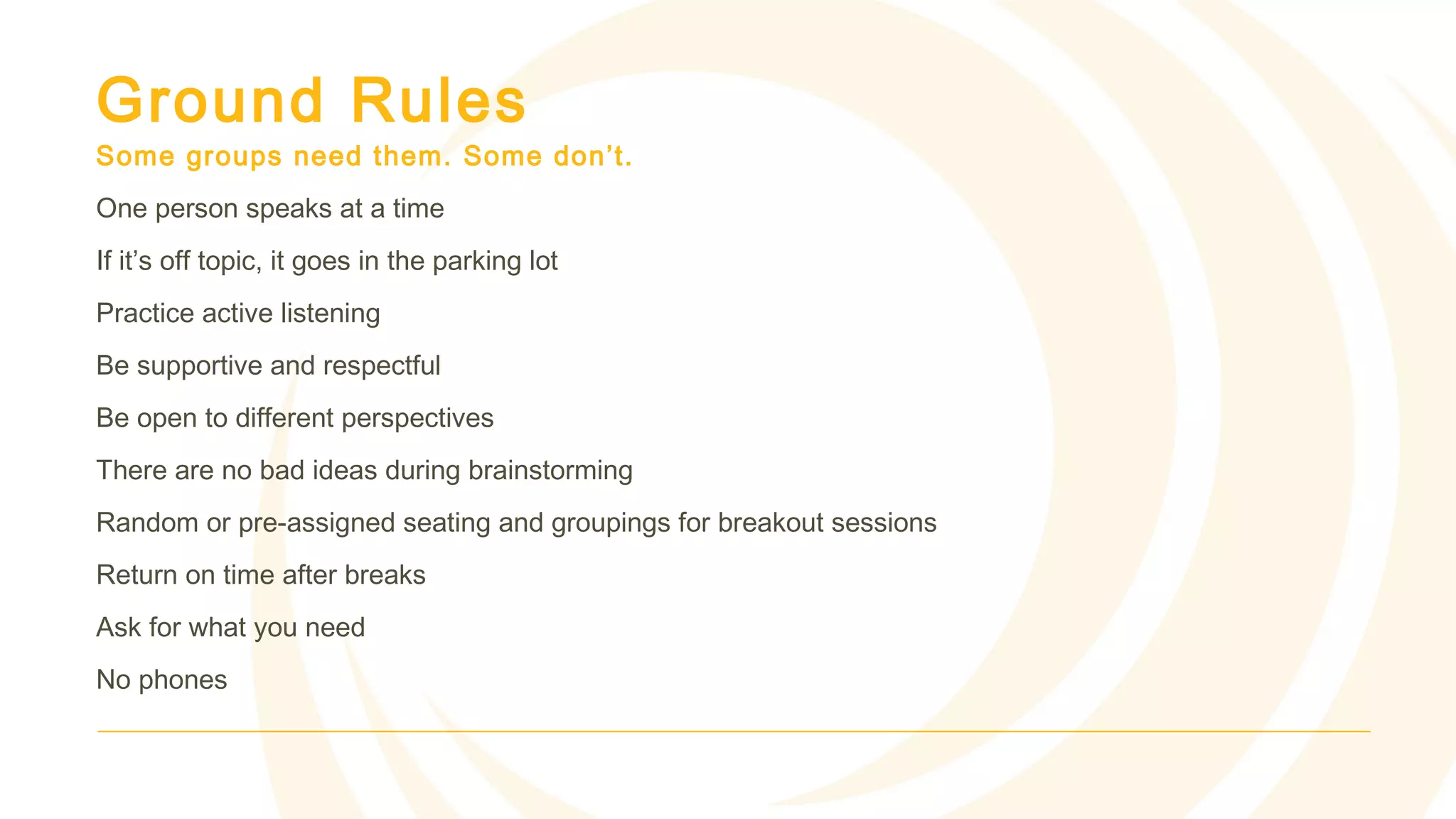
Ground Rules
Some groups need them. Some don’t.
One person speaks at a time
If it’s off topic, it goes in the parking lot
Practice active listening
Be supportive and respectful
Be open to different perspectives
There are no bad ideas during brainstorming
Random or pre-assigned seating and groupings for breakout sessions
Return on time after breaks
Ask for what you need
No phones
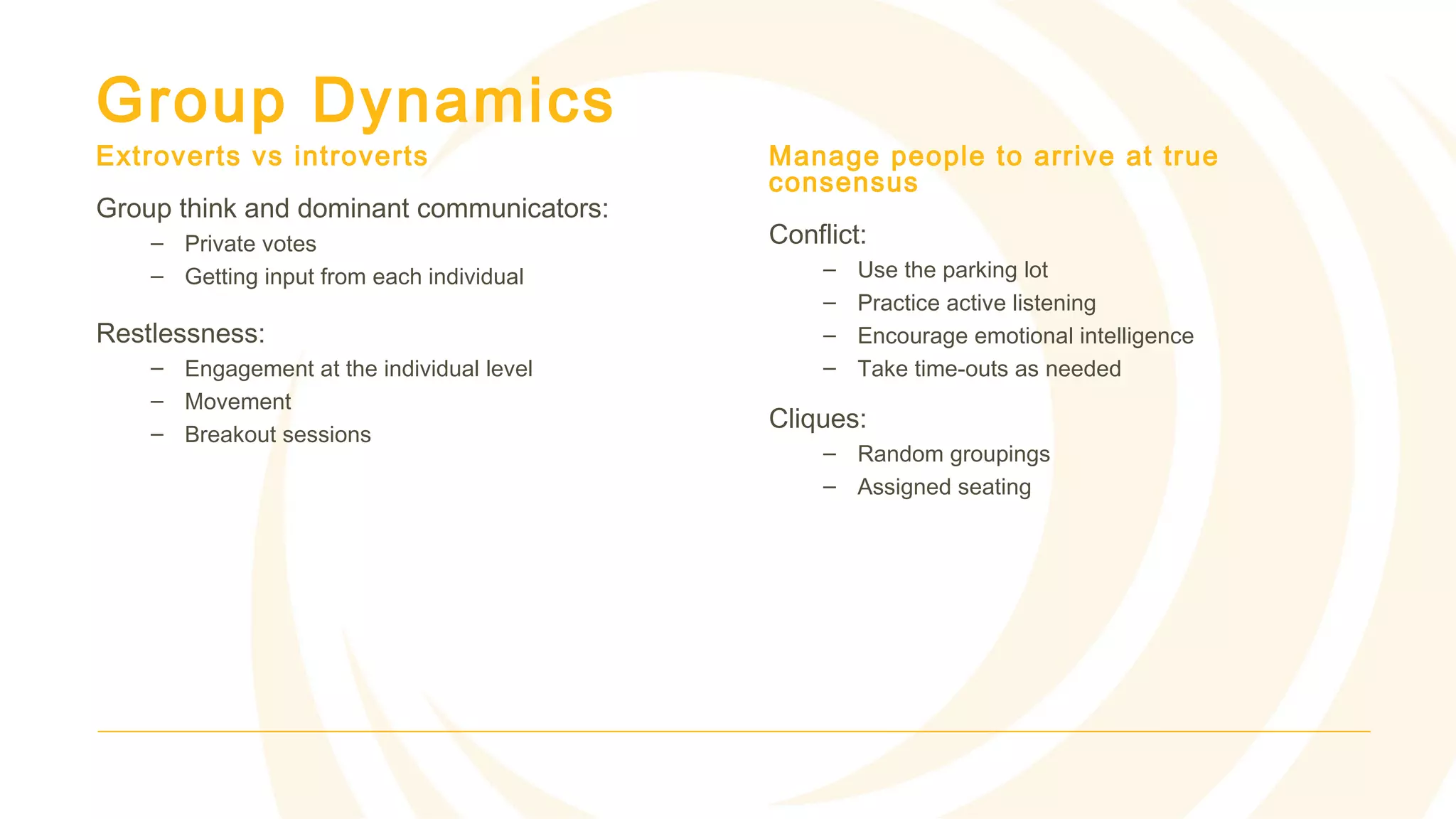
Group Dynamics
Extroverts vs introverts
Group think and dominant communicators:
– Private votes
– Getting input from each individual
Restlessness:
– Engagement at the individual level
– Movement
– Breakout sessions
Manage people to arrive at true
consensus
Conflict:
– Use the parking lot
– Practice active listening
– Encourage emotional intelligence
– Take time-outs as needed
Cliques:
– Random groupings
– Assigned seating
Sustain the Energy
Avoid the dreaded sugar crash
Breaks:
–Bio breaks
–Email breaks
Exercise:
–Nature walks
–Stretch breaks
–Short bursts of cardio activity
Nutrition:
–Healthy meals, snacks and beverages
The Action Plan
How far is far enough?
One action sheet for each strategy / initiative
Outline the parameters of the plan
This is not the time to figure out the details
Specify:
–Roles
–Responsibilities
–Milestones
–Metrics
–Reporting frequencies
After the
Retreat
Follow Up Steps
It’s what happens between retreats that makes the retreat add value
Distribute minutes and action plan
Debrief
Update the rest of the firm
Assign the action plan
Define process to implement the plan
Address the parking lot
Book the next retreat!
CONTACT US TO PLAN YOUR NEXT STEPS:
SANDRABEKHOR@BEKHOR.CA
TEL. 416.969.9600
Planning a
Firm Retreat
Our approach is focused on what really works to build and enhance small to mid-sized, Canadian professional practices.
We invite you to request a proposal or book an initial consultation to discuss your practice development goals.

Planning a law firm retreat (presentation slides)

  • 1.
    SANDRABEKHOR@BEKHOR.CA TEL. 416.969.9600 OBA LAWPRACTICE MANAGEMENT PROGRAM Planning a Firm Retreat
  • 2.
  • 3.
    Purpose By the endof the year what will have changed? Consider priorities: –Identify one, truly significant purpose –Consider all areas of the practice –Tie to existing strategic plan –Ensure purpose is SMART –Be relevant –Go deep Gather data specific to the main purpose Gather input from partners, clients, referrers or staff: –Interviews –Focus groups –Wider survey Build the main retreat purpose into a theme Examples: •Celebrate teamwork •Improve work / life balance •Improve profit •Shape the culture •Adjust to changes in the marketplace •Modify an area of practice •Attract a different client profile •Revisit the firm’s mission •Improve communications •Begin succession planning •Revisit compensation
  • 4.
    Participants Along the spectrumof small to mid-sized firms Smaller firms: –Outside advisors –The whole office –Lawyers and associates Mid-sized firms: –Lawyers –Partners Larger, mid-sized firms: –Key non-lawyer managers eg Office Manager, Marketing Manager or Finance Manager –Senior partners –Retreat committee –Partners with a special interest in this year’s objective –Rotating commitment among partners –Partners segmented into sub-topics
  • 5.
    Location Support retreat objectives Outsidethe office Creative, relaxed environment Working setting, not a vacation setting Fit with firm culture Supports ‘soft’ objectives If it’s a flight or a long distance drive away, include 1 or 2 nights stay The ideal location is a local club / lodge / hotel or a nearby resort with: ―Meeting rooms ―Recreational activities (on site or nearby)
  • 6.
    Timing Wherever the smartphone goes, that’s where the attention goes Non-work days: –Smart phones are never really ‘off’ –Vigilantly take the day off from client work –Close the office (smaller firms) –Book retreat on a weekend or holiday Half-day to one day: –Smaller groups –Focused agendas –Annual event Two days: –Larger groups –Challenging objectives with history and controversy
  • 7.
    Facilitators A facilitator isrecommended. A facilitator brings: – Objectivity: • No agenda with the work • No agenda with the people • Fresh eyes on the topic – Training: • Facilitation • Conflict management • Subject matter – Presence of mind: • Not playing two roles • The ability to say no – Professional discipline: • Stay focused • Stick to the schedule – Can also be a speaker There are exceptions. Without a facilitator, pick someone: – Good at: • Driving true, consensus • Project management • Staying focused on a topic • Leading a meeting – Not needed as a participant – Without a vested interest in the agenda – Familiar with the retreat purpose – Able to hand off an action plan
  • 8.
  • 9.
    Retreat Package Distribute materialsat, or just before, the retreat. Agenda Schedule of events Background materials: –Expand on main purpose –What is the state of the nation –Articles on the subject matter –Executive summary of gaps, issues or opportunities –Consolidated summaries of: • Data • Interviews or surveys • Other research Worksheets, markers, easels and other materials for breakout sessions and independent work Theme giveaways
  • 10.
    Ground Rules Some groupsneed them. Some don’t. One person speaks at a time If it’s off topic, it goes in the parking lot Practice active listening Be supportive and respectful Be open to different perspectives There are no bad ideas during brainstorming Random or pre-assigned seating and groupings for breakout sessions Return on time after breaks Ask for what you need No phones
  • 11.
    Group Dynamics Extroverts vsintroverts Group think and dominant communicators: – Private votes – Getting input from each individual Restlessness: – Engagement at the individual level – Movement – Breakout sessions Manage people to arrive at true consensus Conflict: – Use the parking lot – Practice active listening – Encourage emotional intelligence – Take time-outs as needed Cliques: – Random groupings – Assigned seating
  • 12.
    Sustain the Energy Avoidthe dreaded sugar crash Breaks: –Bio breaks –Email breaks Exercise: –Nature walks –Stretch breaks –Short bursts of cardio activity Nutrition: –Healthy meals, snacks and beverages
  • 13.
    The Action Plan Howfar is far enough? One action sheet for each strategy / initiative Outline the parameters of the plan This is not the time to figure out the details Specify: –Roles –Responsibilities –Milestones –Metrics –Reporting frequencies
  • 14.
  • 15.
    Follow Up Steps It’swhat happens between retreats that makes the retreat add value Distribute minutes and action plan Debrief Update the rest of the firm Assign the action plan Define process to implement the plan Address the parking lot Book the next retreat!
  • 16.
    CONTACT US TOPLAN YOUR NEXT STEPS: SANDRABEKHOR@BEKHOR.CA TEL. 416.969.9600 Planning a Firm Retreat Our approach is focused on what really works to build and enhance small to mid-sized, Canadian professional practices. We invite you to request a proposal or book an initial consultation to discuss your practice development goals.